

Preparation of medical Mg–Zn alloys and the effect of different zinc contents on the alloy
Open accessThe DOI matches its Crossref record; 19 of the 23 references it cites were found in a registry or an index.
Abstract
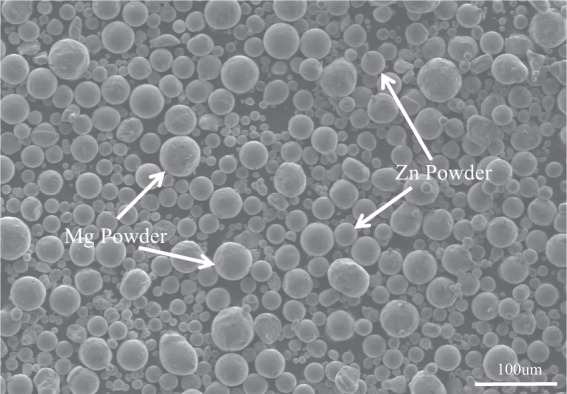
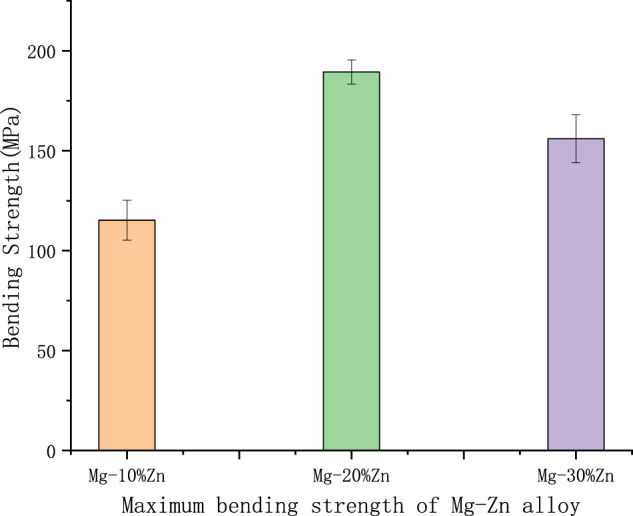
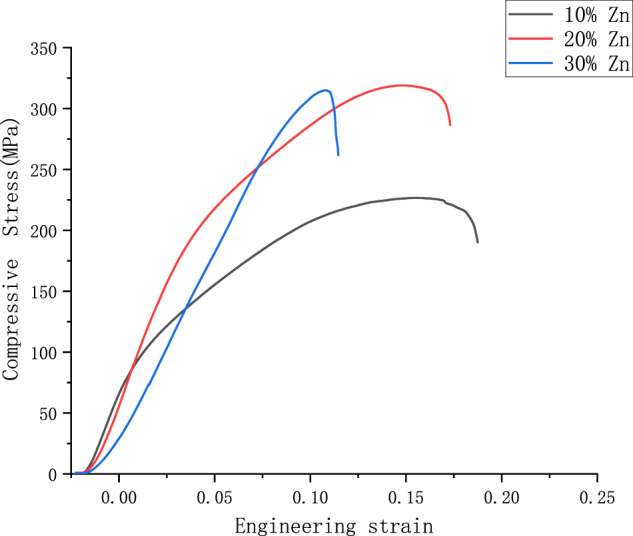
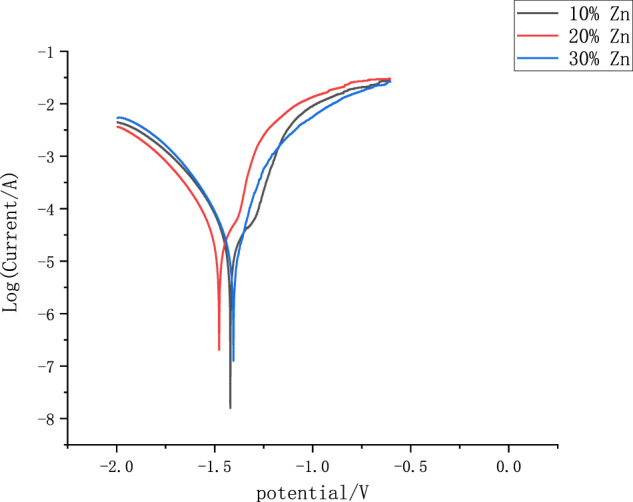
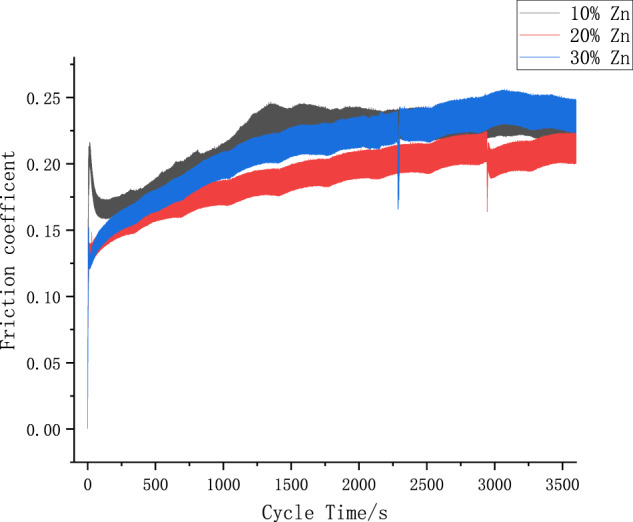
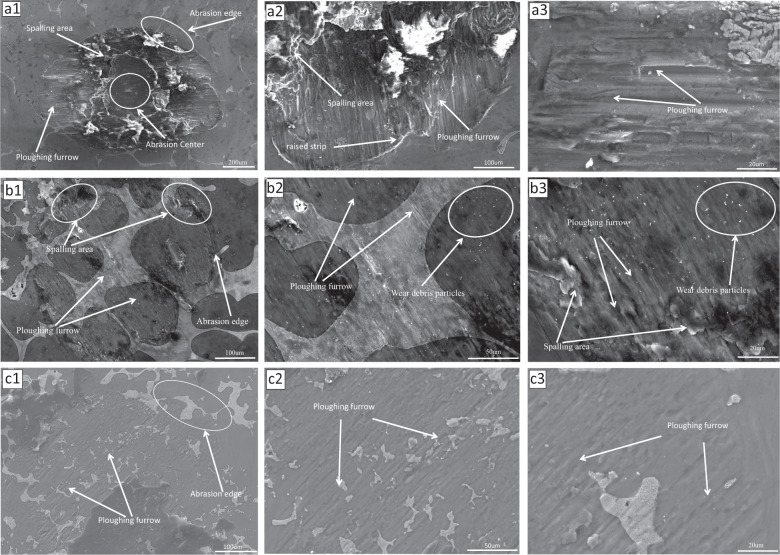
In recent years, along with the development and application of magnesium alloys, magnesium alloys have been widely used in automotive, aerospace, medicine, sports, and other fields. In the field of medical materials, magnesium not only has the advantage of light weight, high strength, and a density similar to that of human bone, but also has good biocompatibility and promotes the growth of human bone. However, the mechanical properties and corrosion resistance of magnesium alloys need to be further improved to meet the requirements for human biodegradable implants. In this study, three alloys (mass fractions: Mg–10Zn, Mg–20Zn, and Mg–30Zn (wt.%)) were prepared using powder metallurgy by homogeneously mixing powders of the above materials in a certain amount with magnesium as the substrate through the addition of zinc elements, which also have good biocompatibility. The effect of zinc on the microstructure, mechanical properties, wear performance, and corrosion resistance of magnesium–zinc alloys was studied when the zinc content was different. The results show that compared with the traditional magnesium alloy using powder metallurgy, prepared magnesium alloy has good resistance to compression and bending, its maximum compressive stress can reach up to 318.96 MPa, the maximum bending strength reached 189.41 MPa, and can meet the mechanical properties of the alloy as a human bone-plate requirements. On the polarization curve, the maximum positive shift of corrosion potential of the specimens was 73 mv and the maximum decrease of corrosion-current density was 53.2%. From the comparison of the above properties, it was concluded that the three prepared alloys of which Mg–20% Zn had the best overall performance. Its maximum compressive stress, maximum bending strength, and corrosion-current density reached 318.96 MPa, 189.41 MPa and 2.08 × 10⁻⁵ A·cm−2 respectively, which are more suitable for use as human implant bone splints in human-body fluid environment.
Overview
The claims and statistics of this paper haven’t been checked yet.
Free: it reads the open-access text and checks the first 5 claims that cite a source we can check. Create a free account to check every claim.
Integrity signals
Registry
Cites
Statistics
Figures
Verification
Claims the paper makes
The claims and statistics of this paper haven’t been checked yet.
Free: it reads the open-access text and checks the first 5 claims that cite a source we can check. Create a free account to check every claim.
Claims other papers make about this one
Each is checked against this paper’s own text: does it say what the citing paper says it does?
The source backs part of the claim, not all of it — or backs it for a different population, condition or comparison.
In the citing paper
“Here, the Mg–Zn alloy substrate is preferred for zinc's multifunctional bioactivity in osteogenic gene expression, signal transduction, and enzyme activation [15,16], as well as its intrinsic antibacterial effect [15], alongside the enhanced mechanical stability via Zn solid-solution strengthening, and potential benefit in degradation control [17].”
From Nanocatalytic magnesium osteoimplants with biodegradable self-adaptive interfaces for therapeutic repair of infected bone defects (2026) · cites this paper as [17]
Experimental — accuracy not yet measured
Self-check
Percentages, sums and reported differences re-computed from the paper’s own numbers.
The self-check needs the paper’s full text.
Citations
Cites
Research on an Mg–Zn alloy as a degradable biomaterial
Zhang, S., Zhang, X., Zhao, C., Li, J., Song, Y., Xie, C., Tao, H., Zhang, Y., He, Y., Jiang, Y., et al. (2010) · Acta Biomaterialia · doi:10.1016/j.actbio.2009.06.028 · Cited by 1,336 · cited 1×
“[9] mentioned that the addition of 6% Zn to the magnesium matrix not only improved its mechanical properties but also reduced the corrosion rate and showed good cytocompatibility.”
BackgroundTrace elements in human physiology and pathology: zinc and metallothioneins
Tapiero, H., & Tew, K. D. (2003) · Biomedicine & Pharmacotherapy · doi:10.1016/s0753-3322(03)00081-7 · Cited by 1,298 · cited 1×
“The human body requires about 15 mg/day of zinc [4], proving that zinc demonstrates good biocompatibility for the human body.”
BackgroundTrace elements in human physiology and pathology. Copper
Tapiero, H., Townsend, D. M., & Tew, K. D. (2003) · Biomedicine & Pharmacotherapy · doi:10.1016/s0753-3322(03)00012-x · Cited by 1,007
Zinc Exhibits Ideal Physiological Corrosion Behavior for Bioabsorbable Stents
Bowen, P. K., Drelich, J., & Goldman, J. (2013) · Advanced Materials · doi:10.1002/adma.201300226 · Cited by 928
Biodegradable magnesium–hydroxyapatite metal matrix composites
Witte, F., Feyerabend, F., Maier, P., Fischer, J., Störmer, M., Blawert, C., Dietzel, W., & Hort, N. (2007) · Biomaterials · doi:10.1016/j.biomaterials.2006.12.027 · Cited by 642 · cited 1×
“[12] successfully prepared a composite material with AZ91D as matrix and HA (hydroxyapatite) particles as synergist by powder metallurgy, and the results showed that the AZ91D/HA composite prepared by powder metallurgy is a biomaterial that can satisfy the mechanical properties.”
MethodMetallic zinc exhibits optimal biocompatibility for bioabsorbable endovascular stents
Bowen, P. K., Guillory, R. J., Shearier, E. R., Seitz, J.-M., Drelich, J., Bocks, M., Zhao, F., & Goldman, J. (2015) · Materials Science and Engineering: C · doi:10.1016/j.msec.2015.07.022 · Cited by 261
Lei, T., Tang, W. N., Cai, S.-H., Feng, F.-F., & Li, N.-F. (2011) · Corrosion Science · doi:10.1016/j.corsci.2011.09.027 · Cited by 145
Microstructure and mechanical properties of AZ91 magnesium alloy developed by Spark Plasma Sintering
Mondet, M., Barraud, E., Lemonnier, S., Guyon, J., Allain-Bonasso, N., & Grosdidier, T. (2016) · Acta Materialia · doi:10.1016/j.actamat.2016.08.006 · Cited by 141
Synthesis, microstructure and mechanical properties of porous MgZn scaffolds
Seyedraoufi, Z. S., & Mirdamadi, S. (2013) · Journal of the mechanical behavior of biomedical materials/Journal of mechanical behavior of biomedical materials · doi:10.1016/j.jmbbm.2013.01.023 · Cited by 112 · cited 1×
“The reason may be that, as the zinc content increases, the plasticity of the alloy rises and then falls, and during the sintering process, the Mg and Zn powders will diffuse violently at 450 °C, because the different diffusion rates of Mg and Zn will lead to different dissolution rates between the powders, and this wi…”
BackgroundTuran, M. E., Sun, Y., & Akgül, Y. (2018) · Journal of Alloys and Compounds · doi:10.1016/j.jallcom.2018.01.103 · Cited by 106 · cited 1×
“Turan [13] who studied the hardness and strength of fullerene-reinforced magnesium matrix composites by powder metallurgical methods concluded that the addition of fullerenes can significantly improve the hardness of magnesium-matrix composites.”
Background
Research works printed but not linked: 1
- Zhang S Zhang X Zhao C Li J Yang S Xie C Tao H Yan Z He Y Yao J Research on an Mg-Zn alloy as a degradable biomaterial Acta Biomater 2010 6 626e640 10.1016/j.actbio.2009.06.028 19545650 · DOI · Paper page
Cited by
3D printing metal implants in orthopedic surgery: Methods, applications and future prospects
Meng, M., Wang, J., Huang, H., Liu, X., Zhang, J., & Li, Z. (2023) · Journal of Orthopaedic Translation · doi:10.1016/j.jot.2023.08.004 · Cited by 220
“For example, Mg–Mn alloys have improved corrosion resistance, and Mg–Zn alloy has higher strength [131,132].”
BackgroundReview on magnesium and magnesium-based alloys as biomaterials for bone immobilization
He, M., Chen, L., Yin, M., Xu, S., & Liang, Z. (2023) · Journal of Materials Research and Technology · doi:10.1016/j.jmrt.2023.02.037 · Cited by 195
Biodegradable Magnesium Biomaterials—Road to the Clinic
Amukarimi, S., & Mozafari, M. (2022) · Bioengineering · doi:10.3390/bioengineering9030107 · Cited by 79
Zhao, S., Tayyebi, M., Yarigarravesh, M., & Hu, G. (2023) · Journal of Materials Science · doi:10.1007/s10853-023-08782-z · Cited by 68
Luo, Y., Zhang, H., Wang, Z., Jiao, J., Wang, Y., Jiang, W., Yu, T., Liu, H., Guan, L., Li, M., et al. (2025) · Regenerative Biomaterials · doi:10.1093/rb/rbaf068 · Cited by 77
He, X. M., Li, Y., Zou, D., Zu, H., Li, W., & Zheng, Y. (2024) · Bioactive Materials · doi:10.1016/j.bioactmat.2024.04.026 · Cited by 78
“When Zn exceeds 5 w% in alloy system, the corrosion resistance and mechanical properties can be weakened by second phase precipitation [71,72].”
BackgroundHassan, N., Krieg, T. M., Zinser, M. J., Schröder, K., & Kröger, N. (2023) · Polymers · doi:10.3390/polym15193854 · Cited by 45
Hassan, S. F., Islam, M. T., Saheb, N., & Baig, M. M. A. (2022) · Materials · doi:10.3390/ma15165669 · Cited by 42
“However, when tested in SBF, the addition of Zn has been reported to lead to decreased corrosion resistance [100].”
BackgroundBiodegradable metallic suture anchors: A review
Nouri, A., Shirvan, A. R., Li, Y., & Wen, C. (2022) · Smart Materials in Manufacturing · doi:10.1016/j.smmf.2022.100005 · Cited by 45
Waqas, M., He, D., Wu, X., Tan, Z., Shao, W., & Guo, X. (2023) · Journal of Materials Research and Technology · doi:10.1016/j.jmrt.2023.09.160 · Cited by 27
Self-citationJolokhani, A., Razaghian, A., Moharami, A., & Emamy, M. (2023) · Journal of Materials Research and Technology · doi:10.1016/j.jmrt.2023.11.205 · Cited by 27
Chauhan, K., Karloopia, J., Walia, R. S., & Dhanda, M. (2024) · Critical reviews in solid state and materials sciences/CRC critical reviews in solid state and materials sciences · doi:10.1080/10408436.2024.2323010 · Cited by 28
Tur, E., & Öztürk, F. (2024) · Kocaeli Journal of Science and Engineering · doi:10.34088/kojose.1334496 · Cited by 25
Corrosion characteristics of single-phase Mg–3Zn alloy thin film for biodegradable electronics
Gu, J., Bae, J., Li, G., Hwang, H. W., Lee, S., Choi, S., Kim, J., Ok, M., Kim, Y.-C., & Kang, S. (2023) · Journal of Magnesium and Alloys · doi:10.1016/j.jma.2023.06.016 · Cited by 26
Elyasi, M., Razaghian, A., Moharami, A., & Emamy, M. (2022) · Journal of Materials Research and Technology · doi:10.1016/j.jmrt.2022.08.155 · Cited by 21
Martynenko, N. S., Anisimova, N. Y., Rybalchenko, O. V., Kiselevskiy, M., Rybalchenko, G. V., Tabachkova, N. Y., Zheleznyi, M. V., Temralieva, D. R., Bazhenov, V. E., Koltygin, A. V., et al. (2022) · Materials · doi:10.3390/ma15249073 · Cited by 23
“The Zn–Mg system is one of the most popular alloying systems for medical zinc alloys [18].”
BackgroundPackkirisamy, V., Ramanathan, S., Mohankumar, A., Sonar, T., & Ananthi, V. (2023) · International Journal of Metalcasting · doi:10.1007/s40962-023-01114-6 · Cited by 21
“Hu et al. 14 developed Mg-Zn binary alloys with three different compositions of zinc through the traditional powder met-allurgy method, resulting in the Mg–20% Zn composite having the overall best performance in mechanical and corrosion properties (318.96, 189.41 MPa, and 2.08 9 10 - 5 A cm - 2 )…”
InfluentialBabu, L., & Radha, R. (2024) · Canadian Metallurgical Quarterly · doi:10.1080/00084433.2024.2427455 · Cited by 31
Azadi, A., Ebel, T., Wolff, M., O’Cearbhaill, E. D., & Çelikin, M. (2025) · Journal of Materials Research and Technology · doi:10.1016/j.jmrt.2025.03.018 · Cited by 23
Hariharasakthisudhan, P., Kumar, A. V., Sathickbasha, K., & Katiyar, J. K. (2025) · Tribology International · doi:10.1016/j.triboint.2025.110824 · Cited by 20
Gonfa, B. K., Jiru, M. G., & Esleman, E. A. (2025) · Results in Engineering · doi:10.1016/j.rineng.2025.106091 · Cited by 21
Chandran, V., Chockalingam, K., Velkannan, V., & Kannan, R. (2023) · Journal of the mechanical behavior of biomedical materials/Journal of mechanical behavior of biomedical materials · doi:10.1016/j.jmbbm.2023.105983 · Cited by 17
Dragomir, L., Antoniac, I., Mănescu, V., Antoniac, A., Miculescu, M., Trante, O., Streza, A., Cotruț, C. M., & Forna, D. A. (2023) · Crystals · doi:10.3390/cryst13081213 · Cited by 17
Mechanism of leaching zinc from low-grade zinc oxide by ultrasonic enhancement
Dang, Y., Yang, Z., Lin, G. B., Zhai, B., Zhang, H., Sheng, X., Li, S., & Zhang, L. (2025) · Chemical Engineering and Processing - Process Intensification · doi:10.1016/j.cep.2025.110203 · Cited by 17
Arunkumar, T., Mohankumar, A., Botta, R. P. R., Chong, W. W. F., Thangamani, G., & Gupta, M. K. (2024) · Crystals · doi:10.3390/cryst14070667 · Cited by 16
Sünbül, S. E., İçi̇n, K., Aydoğdu, H. M., & Öztürk, S. (2025) · Journal of Alloys and Compounds · doi:10.1016/j.jallcom.2025.178463 · Cited by 16
A Review of Non-Powder-Bed Metal Additive Manufacturing: Techniques and Challenges
Xu, J., Fei, Y., Zhu, Y., Yu, W., Yao, D., & Zhou, J. G. (2024) · Materials · doi:10.3390/ma17194717 · Cited by 18
Zhang, Y., Liu, W., Liu, Y., Zhang, M., Tian, Y., & Chen, L. (2022) · Metals · doi:10.3390/met13010071 · Cited by 14
Venkateswarlu, B., Sunil, B. R., & Kumar, R. S. (2023) · Materials Today Proceedings · doi:10.1016/j.matpr.2023.02.342 · Cited by 12
Ekici, M. R., Tabar, E., Hoşgör, G., Bulut, E., & Atasoy, A. (2024) · Nuclear Engineering and Technology · doi:10.1016/j.net.2024.07.039 · Cited by 12
Bone Remodeling Interaction with Magnesium Alloy Implants Studied by SEM and EDX
Drobyshev, A. Y., Komissarov, A. A., Redko, N., Gurganchova, Z., Statnik, E. S., Bazhenov, V. E., Sadykova, I. A., Miterev, A., Romanenko, I., & Yanushevich, O. O. (2022) · Materials · doi:10.3390/ma15217529 · Cited by 11
Moustafa, E. B., Ghandourah, E. I., Youness, R. A., Melaibari, A. A., & Taha, M. A. (2022) · Materials · doi:10.3390/ma15249052 · Cited by 9
Sang, S., Yuan, K., Lv, S. Q., Wang, T., Zhao, G. H., Liu, P., Gao, D., Li, X., & Qiao, Y. (2024) · AIP Advances · doi:10.1063/5.0200822 · Cited by 8
Self-citationWu, Y., Cai, Z., Zhang, Y., Zheng, Y., Liao, L., & Jia, Z. (2026) · Bioactive Materials · doi:10.1016/j.bioactmat.2025.12.018 · Cited by 7
“…’ s multifunctional bioactivity in osteogenic gene expression, signal transduction, and enzyme activation [15,16], as well as its intrinsic antibacterial effect [15], alongside the enhanced mechanical stability via Zn solid-solution strengthening, and potential benefit in degradation control [17].”
The Activation of Magnesium Sintering by Zinc Addition
Teslia, S., Kovalenko, M., Teslia, M., Vterkovskiy, M., Solodkyi, I., Лобода, П. І., & Soloviova, T. (2024) · Alloys · doi:10.3390/alloys3030011 · Cited by 7
“The growth the sintering of Mg–5Zn samples may have a diffusion occurs in a transient liquid (TLP) [23] within the α -Mg solid solution region [20 According to the works of I. Ya Frenkel [24,25], the sintering of multicomponent systems is signi fi cantly dependent on the ratio of interdi ff usion coe…”
BackgroundVignesh, C., Chockalingam, K., Karthic, M., & Athithyan, K. C. (2024) · International Journal of Metalcasting · doi:10.1007/s40962-024-01496-1 · Cited by 6
“8 In cases of zinc deficiency, almost all physiological functions are significantly disrupted.”
Ulaganathan, K., & Sinnaeruvadi, K. (2023) · Materials Chemistry and Physics · doi:10.1016/j.matchemphys.2023.128204 · Cited by 6
Topuz, M. (2025) · Journal of Materials Engineering and Performance · doi:10.1007/s11665-025-12667-4 · Cited by 6
Liu, H.-X., Zhang, T., & Xu, J. (2024) · Vacuum · doi:10.1016/j.vacuum.2024.113249 · Cited by 5
Narayanappa, C. C., Nagappan, B., Packkirisamy, V., & Arunkumar, T. (2024) · Proceedings of the Institution of Mechanical Engineers Part L Journal of Materials Design and Applications · doi:10.1177/14644207241270799 · Cited by 5
“12,19,24,25 The main goal of this research work is to report the synergistic effects that results from incorporating HA, Zn, and Sn with a focus on degrad-ability and bioactivity and to contribute to the scienti fi c advancement in the fi eld of biomaterial and development of advanced medical devices…”
Suitability of Mg-Nd and Mg-Zn Alloys to Obtain Biodegradable Structures for Bone Defects
Mănescu, V., Antoniac, A., Moraru, M.-C., Antoniac, I., Cotruț, C. M., Grădinaru, S., Dreancă, A., Sevastre, B., Pop, R., Tăbăran, F., et al. (2025) · Journal of Functional Biomaterials · doi:10.3390/jfb16110423 · Cited by 4
Venkateswarlu, B., Sunil, B. R., & Kumar, R. S. (2023) · Canadian Metallurgical Quarterly · doi:10.1080/00084433.2023.2287335 · Cited by 4
Debbarma, D., Anand, N., & Pal, K. (2024) · Biomedical Materials · doi:10.1088/1748-605x/ad2c16 · Cited by 4
Krawiec, H., Pierwoła, A., Vignal, V., & Fijołek, A. (2025) · Electrochimica Acta · doi:10.1016/j.electacta.2025.146847 · Cited by 3
Effect of Indium on the Properties of Mg-Zn-Based Alloys
Kowalski, K., Kozlowski, M., Łukaszkiewicz, N., Kobus, M., Bielecki, J., & Jurczyk, M. (2023) · Metals · doi:10.3390/met13101786 · Cited by 3
Djebari, K., Türen, Y., Elen, L., & Ahlatçı, H. (2025) · JOM · doi:10.1007/s11837-025-07394-z · Cited by 3
Bhatt, P., Suman, S., & Pathak, H. (2026) · Metallography Microstructure and Analysis · doi:10.1007/s13632-026-01335-1 · Cited by 2
Guo, C., He, J., Shi, C., Liu, P., & Qiao, Y. (2025) · Materials Today Communications · doi:10.1016/j.mtcomm.2025.112576 · Cited by 2
Self-citationShou, Y., Zhao, X., Yang, F., Bai, X., Gao, F., Li, Z., Liu, Y., & Wang, Y.-C. (2026) · International Journal of Nanomedicine · doi:10.2147/ijn.s592359 · Cited by 1
“102,103 Notably, the introduction of powder metallurgy has effectively overcome the intrinsic limitation of conventional cast or wrought magnesium materials, namely the lack of controllable porous architectures.”
Büyükgenç, Ö. (2026) · International Journal of Metalcasting · doi:10.1007/s40962-026-02027-w · Cited by 1
Zhang, R., Lv, H., Huang, Y., Feng, W., Peng, P., Long, S., Wang, J., Cao, L., & Dai, Q. (2026) · Optics & Laser Technology · doi:10.1016/j.optlastec.2026.115755 · Cited by 1
Shabani, F., Sadrossadat, S. M., & Yeganeh, M. (2026) · Journal of Materials Research and Technology · doi:10.1016/j.jmrt.2026.07.100 · Cited by 1
Lestari, F. P., Juwono, A. L., Kartika, I., Sudiro, T., & Anawati, A. (2025) · Journal of Materials Engineering and Performance · doi:10.1007/s11665-025-12848-1
Shashank Rajkumar, R., & Jeevanantham, A. K. (2026) · Proceedings of the Institution of Mechanical Engineers Part L Journal of Materials Design and Applications · doi:10.1177/14644207261419625
Niu, E., Wu, X. W., Wang, S., Lu, H., & She, J. (2026) · Journal of Materials Research and Technology · doi:10.1016/j.jmrt.2026.06.021
Infection-resistant alloys for implants
Bandyopadhyay, A. K., Upadhayay, L., Goodman, S. B., Kumar, M., & Bose, S. (2026) · Progress in Materials Science · doi:10.1016/j.pmatsci.2026.101773 · Cited by 1
Sudhakar, D., & Kumar, P. (2026) · Journal of Materials Engineering and Performance · doi:10.1007/s11665-026-14571-x
“The second phase must precipitate the larger proportion of Zn content (Ref 9, 35).”
Dar, N. I., Yang, D., Wang, Z., Bin, W. A. N. G., & Wenkai, W. A. N. G. (2026) · Journal of Metals Materials and Minerals · doi:10.55713/jmmm.v36i4.2587
“Again, Zn is particularly suitable for this purpose as it can enhance mechanical strength while maintaining biocompatibility [14].”
Synthesis and Characterization of AZ91D-3Zn-2ZrO2-HAP Hybrid Magnesium Metal Matrix Composites
Jayachandra, R., Kumar, G. B. V., & Rai, P. (2026) · Journal of Materials Engineering and Performance · doi:10.1007/s11665-026-15114-0
Wei, H., Liu, Y., Wang, F., Yuan, L., Han, W., Ding, Y., Chen, Y., Li, T., Zhang, H., Ding, H., et al. (2026) · Chemical Engineering Journal · doi:10.1016/j.cej.2026.182162
Lu, H., Zhou, Y., Dong, Q., Yuan, Q., Tan, J., Shi, G., Wu, G., Qin, X., Jiang, B., & Pan, F. (2026) · International Journal of Minerals Metallurgy and Materials · doi:10.1007/s12613-025-3240-5
Metadata
- Authors
- Hu, Y., Guo, X., Qiao, Y., Wang, X., & Lin, Q.
- Affiliations
- University of Jinan (CN)
- Corresponding author
- Qiao, Yang
- Venue
- Journal of Materials Science Materials in Medicine
- Published
- 2022-01
- Volume
- 33
- Issue
- 1
- Pages
- 9-9
- ISSN
- 0957-4530 (ISSN-L)
- 1573-4838
- PMC
- PMC8727412
- OpenAlex
- W4205671736
- Cited by
- 61
- References
- 23
- Citations by year
- 2026: 13 · 2025: 13 · 2024: 13 · 2023: 14 · 2022: 8
- FWCI
- 3.00
- Type
- journal article
- Language
- en
- Open access
- gold
- doi.org
- Licence
- cc-by
- creativecommons.org/licenses/by/4.0 (tdm)
- creativecommons.org/licenses/by/4.0 (vor, 3 d)
- Locations
- Journal of Materials Science Materials in Medicine (publishedVersion, cc-by)
- PubMed Central (publishedVersion, cc-by)
- PubMed (publishedVersion)
- DOAJ (DOAJ: Directory of Open Access Journals) (submittedVersion, cc-by-sa)
- Funders
- Natural Science Foundation of Shandong Province ((ZR2019QEE032))
- Shandong Higher Education Youth Innovation Technology Support Program ((2019KJB021))
- Topics
- Physical Sciences › Materials Science › Biomaterials › Magnesium Alloys: Properties and Applications
- Physical Sciences › Materials Science › Materials Chemistry › Titanium Alloys Microstructure and Properties
- Health Sciences › Nursing › Nutrition and Dietetics › Magnesium in Health and Disease
- Keywords
- Mg-Zn alloys, zinc content, biodegradable implants, bone plates, powder metallurgy, corrosion resistance, mechanical properties, wear behavior, microstructure, biocompatibility, magnesium alloys
- MeSH terms
- Bone-Implant Interface, Alloys, Biocompatible Materials, Biomechanical Phenomena, Corrosion, Hardness Tests, Humans, Magnesium, Materials Testing, Metallurgy, Surface Properties, X-Ray Diffraction, Zinc, Compressive Strength, Absorbable Implants
About these checks
Registry, retraction, Cites and statistics results are computed, not judged, with one exception: a printed reference that no index lists is read once by a model before it counts as a citation error. Claims are extracted by a model and kept only when their quote appears verbatim in the text; each cited source is then checked, with a model’s help, for whether it says what the claim relies on. Those verdicts can be wrong — read the claim’s quote and the cited source before relying on one.
Statistics and arithmetic are recomputed, not judged.
Confidence bands are shown only for fields calibrated on our annotated test set. None is calibrated yet, so no band is shown.
What counts as a claim ›How we measure confidence ›How we check this ›
Are you an author, or do you see a problem with this page? Request a review
Data sources
Bibliographic data: Semantic Scholar, OpenAlex, Crossref.
Contains information from the Semantic Scholar Academic Graph Datasets, made available under the ODC Attribution License (ODC-BY 1.0).
Semantic Scholar’s data is described in: Kinney, R., et al. (2023). The Semantic Scholar Open Data Platform. arXiv:2301.10140.
