

Machine Learning for Health: Algorithm Auditing & Quality Control
Open accessThe DOI matches its Crossref record; 63 of the 63 references it cites were found in a registry or an index.
Abstract
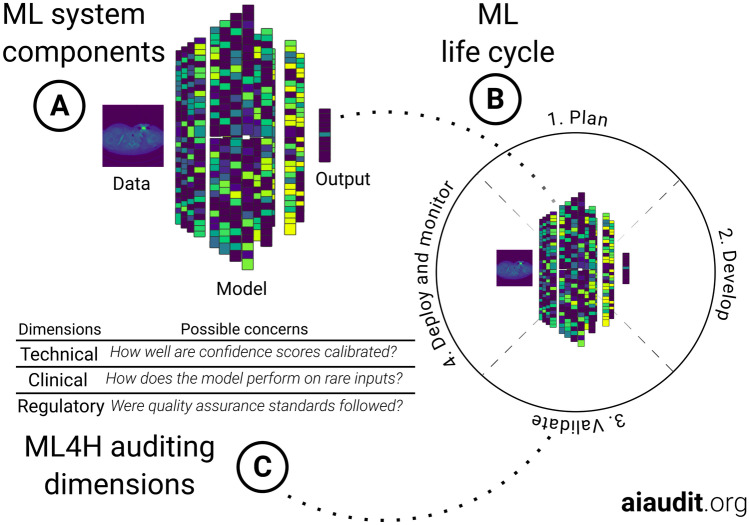
Developers proposing new machine learning for health (ML4H) tools often pledge to match or even surpass the performance of existing tools, yet the reality is usually more complicated. Reliable deployment of ML4H to the real world is challenging as examples from diabetic retinopathy or Covid-19 screening show. We envision an integrated framework of algorithm auditing and quality control that provides a path towards the effective and reliable application of ML systems in healthcare. In this editorial, we give a summary of ongoing work towards that vision and announce a call for participation to the special issue Machine Learning for Health: Algorithm Auditing & Quality Control in this journal to advance the practice of ML4H auditing.
Overview
The claims and statistics of this paper haven’t been checked yet.
Free: it reads the open-access text and checks the first 5 claims that cite a source we can check. Create a free account to check every claim.
Integrity signals
Registry
Cites
Statistics
Figures
Verification
Claims the paper makes
The claims and statistics of this paper haven’t been checked yet.
Free: it reads the open-access text and checks the first 5 claims that cite a source we can check. Create a free account to check every claim.
Claims other papers make about this one
Each is checked against this paper’s own text: does it say what the citing paper says it does?
The source backs part of the claim, not all of it — or backs it for a different population, condition or comparison.
In the citing paper
“AI traceability will also enable continuous auditing of AI models,47 identify risks and limitations, and update the AI models when needed.”
From FUTURE-AI: international consensus guideline for trustworthy and deployable artificial intelligence in healthcare (2025) · cites this paper as [47]
Experimental — accuracy not yet measured
Self-check
Percentages, sums and reported differences re-computed from the paper’s own numbers.
The self-check needs the paper’s full text.
Citations
Cites
On calibration of modern neural networks
Guo, C., Pleiss, G., Sun, Y., & Weinberger, K. Q. (2017) · arXiv · doi:10.48550/arxiv.1706.04599 · Cited by 14,095 · cited 1×
“The decision heuristics a model learns can differ from the heuristics we may expect a human to use [46,39,23, 47], and model predictions may come with ill-calibrated statements of confidence [22, 6,44] or no estimate of uncertainty altogether [37].”
UNet++: A Nested U-Net Architecture for Medical Image Segmentation
Zhou, Z., Rahman Siddiquee, M. M., Tajbakhsh, N., & Liang, J. (2018) · Lecture Notes in Computer Science · doi:10.1007/978-3-030-00889-5_1 · Cited by 9,610
Towards Evaluating the Robustness of Neural Networks
Carlini, N., & Wagner, D. (2017) · 2017 IEEE Symposium on Security and Privacy (SP) · doi:10.1109/sp.2017.49 · Cited by 8,859
Intriguing properties of neural networks
Szegedy, C., Zaremba, W., Sutskever, I., Bruna, J., Erhan, D., Goodfellow, I., & Fergus, R. (2013) · arXiv · doi:10.48550/arxiv.1312.6199 · Cited by 8,143 · cited 1×
“Certain changes to image data that may not change the decision of a human expert can completely alter the output of an image classification [12] or regression [13, 14] model.”
Improved protein structure prediction using potentials from deep learning
Senior, A. W., Evans, R., Jumper, J., Kirkpatrick, J., Sifre, L., Green, T., Qin, C., Žídek, A., Nelson, A. W. R., Bridgland, A., et al. (2020) · Nature · doi:10.1038/s41586-019-1923-7 · Cited by 3,378 · cited 1×
“A large number of institutions and companies are ambitiously working on fulfilling this promise spanning tasks such as medical image classification [23], segmentation [80] or reconstruction [3], protein structure prediction [65] and electrocardiography interpretation [73], among others1.”
BackgroundKey challenges for delivering clinical impact with artificial intelligence
Kelly, C. J., Karthikesalingam, A., Suleyman, M., Corrado, G., & King, D. (2019) · BMC Medicine · doi:10.1186/s12916-019-1426-2 · Cited by 3,136
What Uncertainties Do We Need in Bayesian Deep Learning for Computer Vision?
Kendall, A., & Gal, Y. (2017) · arXiv · doi:10.48550/arxiv.1703.04977 · Cited by 3,088 · cited 2×
“The decision heuristics a model learns can differ from the heuristics we may expect a human to use [1, 18–20], and model predictions may come with illcalibrated statements of confidence [21–23] or no estimate of uncertainty altogether [24].”
Raji, I. D., Smart, A., White, R. N., Mitchell, M., Gebru, T., Hutchinson, B., Smith-Loud, J., Theron, D., & Barnes, P. (2020) · Proceedings of the 2020 Conference on Fairness, Accountability, and Transparency · doi:10.1145/3351095.3372873 · Cited by 2,245
Explaining Deep Neural Networks and Beyond: A Review of Methods and Applications
Samek, W., Montavon, G., Lapuschkin, S., Anders, C. J., & Muller, K.-R. (2021) · Proceedings of the IEEE · doi:10.1109/jproc.2021.3060483 · Cited by 1,477 · cited 1×
“These include model-oriented metrics, such as predictive performance, robustness [33, 34], interpretability [1, 35], disparity [36] or uncertainty [13, 24, 37] but also dataoriented metrics related to sample size determination [38], sparseness [39], bias [40] distribution mismatch [41, 42] and label quality [7].”
Self-citationLiu, X., Cruz Rivera, S., Moher, D., Calvert, M. J., Denniston, A. K., The SPIRIT-AI and CONSORT-AI Working Group, SPIRIT-AI and CONSORT-AI Steering Group, Chan, A.-W., Darzi, A., Holmes, C., et al. (2020) · Nature Medicine · doi:10.1038/s41591-020-1034-x · Cited by 1,421
Self-citation
Research works printed but not linked: 1
- Rivera SC Liu X Chan A-W Denniston AK Calvert MJ Guidelines for clinical trial protocols for interventions involving artificial intelligence: the SPIRIT-AI Extension Bmj 2020 370 m3210 10.1136/bmj.m3210 32907797 PMC7490785 · DOI · Paper page
Cited by
Lekadir, K., Frangi, A. F., Porras, A. R., Glocker, B., Cintas, C., Langlotz, C. P., Weicken, E., Asselbergs, F. W., Prior, F., Collins, G. S., et al. (2025) · BMJ · doi:10.1136/bmj-2024-081554 · Cited by 957
“The AI tool should be developed and deployed with mechanisms for continuous monitoring and quality control of the AI inputs and outputs, 47 such as to identify missing or out-of-range input variables, inconsistent data formats or units, incorrect annotations or data preprocessing, and erroneous or…”
Self-citationFehr, J., Citro, B., Malpani, R., Lippert, C., & Madai, V. I. (2024) · Frontiers in Digital Health · doi:10.3389/fdgth.2024.1267290 · Cited by 188
Self-citationMinkkinen, M., Laine, J., & Mäntymäki, M. (2022) · Digital Society · doi:10.1007/s44206-022-00022-2 · Cited by 88
Cai, Y., Cai, Y.-Q., Tang, L.-Y., Wang, Y.-H., Gong, M., Jing, T.-C., Li, H.-J., Li-Ling, J., Hu, W., Yin, Z., et al. (2024) · BMC Medicine · doi:10.1186/s12916-024-03273-7 · Cited by 122
“…decision-making at various stages in the clinical pathway [161, 189], we still suggest that experts in this field should put more emphasis on establishment and implementation of scientific research guidelines, for example, promoting ML4H supervision and management for AI prediction models [188].”
BackgroundMethodImplementation frameworks for end-to-end clinical AI: derivation of the SALIENT framework
van der Vegt, A. H., Scott, I. A., Dermawan, K., Schnetler, R. J., Kalke, V. R., & Lane, P. J. (2023) · Journal of the American Medical Informatics Association · doi:10.1093/jamia/ocad088 · Cited by 109
Mohammad‐Rahimi, H., Sohrabniya, F., Ourang, S. A., Dianat, O., Aminoshariae, A., Nagendrababu, V., Dummer, P. M. H., Duncan, H. F., & Nosrat, A. (2024) · International Endodontic Journal · doi:10.1111/iej.14128 · Cited by 90
Barrios, M. A. O., Arias-Fonseca, S., Ishizaka, A., Barbati, M., Avendaño-Collante, B., & Navarro-Jiménez, E. (2023) · Journal of Business Research · doi:10.1016/j.jbusres.2023.113806 · Cited by 77
Artificial intelligence bias in medical system designs: a systematic review
Kumar, A., Aelgani, V., Vohra, R., Gupta, S. K., Bhagawati, M., Paul, S., Saba, L., Suri, N., Khanna, N. N., Laird, J. R., et al. (2023) · Multimedia Tools and Applications · doi:10.1007/s11042-023-16029-x · Cited by 65
Emerging Digital Technologies in Healthcare with a Spotlight on Cybersecurity: A Narrative Review
Arafa, A., Sheerah, H. A., & Alsalamah, S. (2023) · Information · doi:10.3390/info14120640 · Cited by 69
“…private patient data remains secure [39–43]. challenges such as regulatory compliance, data standardization data, inadequate interpretations, the lack of a skilled workforce, and regulatory and legal shortages are the main barriers to the wide application of AI and ML in medical facilities [37,38].”
BackgroundSelf-citationReal-World and Regulatory Perspectives of Artificial Intelligence in Cardiovascular Imaging
Wellnhofer, E. (2022) · Frontiers in Cardiovascular Medicine · doi:10.3389/fcvm.2022.890809 · Cited by 56
“Model predictions must be evaluated with confidence limits of uncertainty in mind (37).”
BackgroundThe RETA Benchmark for Retinal Vascular Tree Analysis
Lyu, X., Li, C., & Zhang, S. (2022) · Scientific Data · doi:10.1038/s41597-022-01507-y · Cited by 44
Khan, S. D., Hoodbhoy, Z., Raja, M. H. R., Kim, J. Y., Hogg, H. D. J., Manji, A. A. A., Gulamali, F., Hasan, A., Shaikh, A., Tajuddin, S., et al. (2024) · PLOS Digital Health · doi:10.1371/journal.pdig.0000514 · Cited by 36
Bartels, R., Dudink, J., Haitjema, S., Oberski, D. L., & Veen, A. V. '. (2022) · Frontiers in Digital Health · doi:10.3389/fdgth.2022.942588 · Cited by 36
“It is of great importance that the user has the appropriate expertise to audit (24) and validate AI/ML-CDS tools or else a situation can arise where underperforming and potentially harmful use of AI/ML in clinical practice is not being identified (25).”
BackgroundBarandas, M., Folgado, D., Santos, R., Simão, R., & Gamboa, H. F. S. (2022) · Electronics · doi:10.3390/electronics11030396 · Cited by 37
“For the users of AI systems, UQ increases interpretability and trust in model predictions, answering the question: Can I trust this model? For regulators and certification bodies, it contributes to algorithm auditing and quality control as a path towards the effective and reliable application of ML systems [11].”
BackgroundSabharwal, R., & Miah, S. J. (2022) · Journal Of Big Data · doi:10.1186/s40537-022-00605-3 · Cited by 35
“Existing ML approaches, such as Oala et al. [35] proposed an algorithmic framework that give a path towards the effective and reliable application of ML in the healthcare domain.”
MethodLiefgreen, A., Weinstein, N., Wachter, S., & Mittelstadt, B. (2023) · AI & Society · doi:10.1007/s00146-023-01684-3 · Cited by 35
Methodologic Issues Specific to Prediction Model Development and Evaluation
Jin, Y., & Kattan, M. W. (2023) · CHEST Journal · doi:10.1016/j.chest.2023.06.038 · Cited by 33
Muntean, G. A., Marginean, A. N., Groza, A. P., Damian, I., Roman, S. A., Hapca, M. C., Muntean, M. V., & Nicoară, S. (2023) · Diagnostics · doi:10.3390/diagnostics13142464 · Cited by 37
“As such, the proposed AI audit, carried out at different stages of a model’s deployment, represents a detailed standardized report that can reveal a model’s strengths and limitations [41].”
BackgroundExplainable AI needs formalization
Haufe, S., Wilming, R., Clark, B., Zhumagambetov, R., Boubekki, A., Martin, J., & Panknin, D. (2026) · npj Artificial Intelligence · doi:10.1038/s44387-026-00095-1 · Cited by 32
“…efforts to establish processes for the development of trustworthy XAI such as the artificial intelligence assessment methods (DAISAM) guidelines [56] established by WHO and ITU, a pre-standard of the German Institute for Standardization (DIN) on explainability [57], explainability fact sheets…”
Self-citationFuture Use of AI in Diagnostic Medicine: 2-Wave Cross-Sectional Survey Study
Cabral, B. P., Braga, L. A. M., Filho, C. G. C., Penteado, B. E., Silva, S. L. F. D. C., Castro, L., Fornazin, M., & Mota, F. B. (2025) · Journal of Medical Internet Research · doi:10.2196/53892 · Cited by 36
“AI’s ability to analyze large datasets quickly and accurately can also facilitate early detection of diseases [19-21] and support personalized treatment decisions [22], offering opportunities to improve patient outcomes significantly [23].”
Artificial Intelligence and Statistics: Just the Old Wine in New Wineskins?
Faes, L., Sim, D. A., van Smeden, M., Held, U., Bossuyt, P. M., & Bachmann, L. M. (2022) · Frontiers in Digital Health · doi:10.3389/fdgth.2022.833912 · Cited by 28
AI-powered spatial cell phenomics enhances risk stratification in non-small cell lung cancer
Schallenberg, S., Dernbach, G., Ruane, S., Jurmeister, P. S., Böhm, C., Standvoss, K., Ghosh, S., Frentsch, M., Dragomir, M. P., Keyl, P., et al. (2025) · Nature Communications · doi:10.1038/s41467-025-65783-z · Cited by 25
“We only provided the H&E and respective mIF channel to classify, as pre-liminary experiments indicated a strong tendency for Clever Hans 34,88 – 90 over fi tting if the model is presented with all mIF channels simultaneously.”
Calderon-Ramirez, S., Oala, L., Torrents‐Barrena, J., Yang, S., Elizondo, D. A., Moemeni, A., Colreavy‐Donnelly, S., Samek, W., Molina‐Cabello, M. A., & López‐Rubio, E. (2022) · IEEE Transactions on Artificial Intelligence · doi:10.1109/tai.2022.3168804 · Cited by 26
“Hence, exploring the impact of OOD data in other aspects of SSDL performance, such as robustness [30], explainability [39], and confidence [3], as recommended in [29], [31], is a promising next step for distributionmismatchanalysis.”
BackgroundSelf-citationExtending artificial intelligence research in the clinical domain: a theoretical perspective
Sabharwal, R., Miah, S. J., & Wamba, S. F. (2022) · Annals of Operations Research · doi:10.1007/s10479-022-05035-1 · Cited by 17
“Likewise, Oala et al. (2021) recommended a system for looking at the algorithms that give a path toward the decent and satisfactory use of ML in the clinical domain.”
Decisions are not all equal—Introducing a utility metric based on case-wise raters’ perceptions
Campagner, A., Sternini, F., & Cabitza, F. (2022) · Computer Methods and Programs in Biomedicine · doi:10.1016/j.cmpb.2022.106930 · Cited by 20
Self-citationBukke, S. P. N., Kumarachari, R. K., Rajasekhar, E. S. K., Jamal Basha, D., & Kamati, M. (2024) · Discover Sustainability · doi:10.1007/s43621-024-00575-x · Cited by 15
“Their suggestions include automated audit report generation, standardized test cases, and educational resources for auditors to enhance regulatory oversight [163].”
Logging requirement for continuous auditing of responsible machine learning-based applications
Foalem, P. L., Silva, L. D., Khomh, F., Li, H., & Merlo, E. (2025) · Empirical Software Engineering · doi:10.1007/s10664-025-10656-8 · Cited by 25
“Moreover, in the healthcare domain, Oala et al. (2021) stress the importance of rigorous auditing and quality control for Machine Learning for Health (ML4H) tools.”
Machine learning in health financing: benefits, risks and regulatory needs
Mathauer, I., & Oranje, M. (2024) · Bulletin of the World Health Organization · doi:10.2471/blt.23.290333 · Cited by 17
“18 Risk mitigation measures could also include algorithm auditing and quality control, 33 as well as algorithm validation, for example through the analysis of secondary data.”
Change of Heart: Can Artificial Intelligence Transform Infective Endocarditis Management?
McHugh, J., Challener, D. W., & Tabaja, H. (2025) · Pathogens · doi:10.3390/pathogens14040371 · Cited by 13
“Regular auditing of AI models for bias and fairness is necessary to maintain clinical trust [43].”
Tian, J., Zhao, Z., Tang, L., Song, Y., Li, Y., & Jiang, N. (2026) · Journal of Medical Internet Research · doi:10.2196/92680 · Cited by 12
Inteligencia Artificial y Auditoría: Tendencias de la literatura científica
Pereira, J. F., Hernández, A. E. T., García-Alarcón, H. A., & Ayola, J. R. L. (2023) · Panorama Económico · doi:10.32997/pe-2023-4575 · Cited by 12
Chrysafi, P., Lam, B. D., Carton, S., & Patell, R. D. (2024) · Hämostaseologie · doi:10.1055/a-2415-8408 · Cited by 9
“121 To address and supervise these aspects, institutions have created AI stewardship committees that can assist with model deployment.”
Optimization of process parameters for scanning human face using hand-held scannerPreprint
Kaushik, A., Punia, U., Garg, R. K., Yadav, M. K., Vashistha, R., Rathee, M., Sahdev, R. K., & Chhabra, D. (2022) · Research Square · doi:10.21203/rs.3.rs-2051093/v1 · Cited by 7
The Influence of Artificial Intelligence on the Healthcare Industry in Relation to Sustainability
Shaikh, M. I., Dsilva, J., & Usmani, F. Z. A. (2024) · Approaches to global sustainability, markets, and governance · doi:10.1007/978-981-97-9555-0_5 · Cited by 4
Islam, M. R., Hossain, A., Khan, M. R. R., & Roy, S. (2025) · doi:10.63125/144zbg39 · Cited by 22
The fundamentals of AI ethics in medical imaging
Amann, J., Bürger, V. K., Livne, M., Bui, C. K. T., & Madai, V. I. (2025) · Elsevier eBooks · doi:10.1016/b978-0-44-323761-4.00010-9 · Cited by 3
XGBoost Algorithm for Cervical Cancer Risk Prediction: Multi-dimensional Feature Analysis
Suryadi, S., & Masrizal, M. (2025) · Jurnal RESTI (Rekayasa Sistem dan Teknologi Informasi) · doi:10.29207/resti.v9i3.6587 · Cited by 3
Posselt, C., Avci, M. Y., Yiğitsoy, M., Schuenke, P., Kolbitsch, C., Schaeffter, T., & Remmele, S. (2024) · Journal of medical imaging · doi:10.1117/1.jmi.11.2.024013 · Cited by 2
The evolution of accountancy research: A systematic literature review of trends from 1995 to 2025
Dunakhir, S., & Idrus, M. (2025) · Multidisciplinary Reviews · doi:10.31893/multirev.2026329 · Cited by 2
“Researchers are exploring the challenges of "auditing the algorithm," where the auditor's task is to scrutinize not only the client's transactions but also the complex, often proprietary, models the client uses to process them (Brown et al., 2021; Oala et al., 2021; Boer et al., 2023) .”
CONTINUOUS AUDITING AND EXPLAINABLE AI FOR ENHANCING REAL TIME FINANCIAL ANALYSIS
Wibowo, S. R., & Wibowo, A. (2025) · Jurnal Akuntansi dan Bisnis · doi:10.51903/jiab.v5i2.931 · Cited by 2
Haneh, F. E., Sheriefah, M., & Steva, S. S. (2024) · Researcher Academy Innovation Data Analysis · doi:10.69725/raida.v1i2.166 · Cited by 1
“The prominent problem is the absence of standards and guidelines for deploying ML in auditing (Henriques et al., 2023; Oala et al., 2021).”
Denetimde Makine Öğreniminin Kullanımına Yönelik Bibliyometrik Bir Analiz
Demet, E. V. E. R., & Çankal, A. (2025) · 3 SEKTÖR SOSYAL EKONOMİ DERGİSİ · doi:10.63556/tisej.2025.1465 · Cited by 1
Obafemi-Ajayi, T., Bright, T. J., Wong, E., Wunsch, D. C., Peckham, J., & Moore, J. H. (2025) · International Joint Conference on Neural Networks (IJCNN) · doi:10.1109/ijcnn64981.2025.11227432 · Cited by 1
“To support responsible AI deployment, healthcare systems must adopt continuous auditing practices based on the key tenets of trans-parency and communication [40].”
van Rossum, H. H., van der Schaar, M., Buma, A. I. G., Moritz, R., van Balen, D. E. M., van Herwaarden, A. E., Smeets, R. L., Burgers, J. A., van de Heuvel, M., Smit, J., et al. (2026) · Clinical Chemistry and Laboratory Medicine (CCLM) · doi:10.1515/cclm-2025-1624 · Cited by 1
“Most described QC procedures are based on quality management systems and auditing, rather than true direct controls of algorithmic functioning [34].”
An Evaluation of Medgemma for Anterior Segment Eye Images Classification and Analysis
Abreu-Cardenas, M., Calderón-Ramírez, S., Solano, M. M., Garcia-Pedrero, A., Sharma, K., Dueñas-Ángeles, K., Papa, E. G., Rojas-Soto, E., Gravina, M., & Carlo, S. (2026) · Proceedings - IEEE Symposium on Computer-Based Medical Systems · doi:10.1109/cbms69103.2026.00134 · Cited by 1
“…[1] To address these limitations, in general, for medical image analysis, and in particular, for ophtalmological image analysis, are transitioning from traditional convolutional networks to advanced Vision-Language Models (VLMs) and deep-reasoning foundation models [5], [6], [7], [8], [9], [10].”
Novel concept for systematic testing of AI models for MRI acquisition shifts with simulated data
Posselt, C., Gramotke, E., Parida, A., Yiğitsoy, M., & Remmele, S. (2023) · SPIE Medical Imaging: Image Perception, Observer Performance, and Technology Assessment · doi:10.1117/12.2653883 · Cited by 1
Hu, S. Y., Zhang, G., & Li, Z. (2023) · Proceedings of the Institution of Mechanical Engineers Part E Journal of Process Mechanical Engineering · doi:10.1177/09544089231190308
“1,2 Once the parameters of one industrial process fl uctuate abnormally, the fl uctuations will be transferred staggeringly.”
Data access, data bias, data equity
Shung, D. L., & Laine, L. (2024) · Elsevier eBooks · doi:10.1016/b978-0-323-95068-8.00002-9
Poche, J. N., Hernandez, S., Melder, K. L., Dunham, M. E., Nuss, D. W., & Fang, Z. (2024) · International Forum of Allergy & Rhinology · doi:10.1002/alr.23348
Medina, J. B., Pérez, Y. A. R., Ruiz, D. D., Pereira, J. E. F., & Vergara, T. P. (2025) · Ciencia y reflexión : · doi:10.70747/cr.v4i3.477
Analysis of AI-Bias in Modern Healthcare Systems
Kumar, A., & Singh, D. (2025) · Transactions on computer systems and networks · doi:10.1007/978-981-96-6703-1_14 · Cited by 1
Introduction to Artificial Intelligence in Modern Healthcare
Kumar, A., & Singh, D. (2025) · Transactions on computer systems and networks · doi:10.1007/978-981-96-6703-1_1
van Acht, N., van Gruijthuijsen, D., Bluemink, J. J., Hagelaar, E., & Hurkmans, C. (2025) · Physics and Imaging in Radiation Oncology · doi:10.1016/j.phro.2025.100873 · Cited by 1
“Despite multiple articles mentioning the importance of quality con-trol or assurance towards effective and reliable machine learning (ML), few articles mention a concise approach [16,17].”
“I Cannot Teach it Anything”: Human-in-the-Loop AI After Deployment in Clinical Documentation
Vase, S., & Andersen, T. O. (2026) · ACM Transactions on Computing for Healthcare · doi:10.1145/3815172 · Cited by 1
Odoch, G. (2026) · International Journal of Computer Information Systems and Industrial Management Applications · doi:10.70917/ijcisim-2026-3899
Młyńczak, M., Korzeniewski, K., Rosoł, M., Musielak, M. U., Barcz, E., Grzybowska, M. E., Szopinska, I. S., Kropshofer, S., Spinelli, A., & Borycka, K. (2026) · medRxiv · doi:10.64898/2026.10.08.26365032
Metadata
- Authors
- Oala, L., Murchison, A. G., Balachandran, P., Choudhary, S., Fehr, J., Leite, A. W., Goldschmidt, P. G., Johner, C., Schörverth, E. D. M., Nakasi, R., Meyer, M., Cabitza, F., Baird, P., Prabhu, C., Weicken, E., Liu, X., Wenzel, M., Vogler, S., Akogo, D., Alsalamah, S., Kazim, E., Koshiyama, A., Piechottka, S., Macpherson, S., Shadforth, I., Geierhofer, R., Matek, C., Krois, J., Sanguinetti, B., Arentz, M., Bielik, P., Calderon-Ramirez, S., Abbood, A., Langer, N., Haufe, S., Kherif, F., Pujari, S., Samek, W., & Wiegand, T.
- Affiliations
- Fraunhofer Institute for Telecommunications, Heinrich Hertz Institute (DE)
- Oxford University Hospitals NHS Trust (GB)
- University of Oxford (GB)
- Hasso Plattner Institute (DE)
- Universidade de Brasília (BR)
- Johner Institut (Germany) (DE)
- Makerere University (UG)
- Siemens Healthineers (Germany) (DE)
- University of Milano-Bicocca (IT)
- Office of the Auditor General of Norway (NO)
- University Hospitals Birmingham NHS Foundation Trust (GB)
- Bayer (Germany) (DE)
- King Saud University (SA)
- University College London (GB)
- Helmholtz Munich (DE)
- Charité – Universitätsmedizin Berlin (DE)
- University of Washington (US)
- ETH Zurich (CH)
- Instituto Tecnológico de Costa Rica (CR)
- Robert Koch Institute (DE)
- University of Zurich (CH)
- Technische Universität Berlin (DE)
- Centre Hospitalier Universitaire Vaudois (CH)
- World Health Organization (CH)
- Corresponding author
- Oala, Luis
- ORCID
- Oala, Luis
- Murchison, Andrew G.
- Balachandran, Pradeep
- Fehr, Jana
- Nakasi, Rose
- Meyer, Martin
- Cabitza, Federico
- Weicken, Eva
- Liu, Xiaoxuan
- Wenzel, Markus
- Vogler, Steffen
- Akogo, Darlington
- Alsalamah, Shada
- Kazim, Emre
- Koshiyama, Adriano
- Matek, Christian
- Krois, Joachim
- Arentz, Matthew
- Abbood, Auss
- Langer, Nicolas
- Haufe, Stefan
- Kherif, Ferath
- Pujari, Sameer
- Samek, Wojciech
- Wiegand, Thomas
- Venue
- Journal of Medical Systems
- Published
- 2021-11-02
- Volume
- 45
- Issue
- 12
- Pages
- 105-105
- ISSN
- 0148-5598 (ISSN-L)
- 1573-689X
- PMC
- PMC8562935
- OpenAlex
- W3208920975
- Cited by
- 48
- References
- 63
- Citations by year
- 2026: 3 · 2025: 12 · 2024: 12 · 2023: 10 · 2022: 11
- Type
- journal article
- Language
- en
- Open access
- hybrid
- doi.org
- Licence
- cc-by
- creativecommons.org/licenses/by/4.0 (tdm)
- creativecommons.org/licenses/by/4.0 (vor)
- Locations
- Journal of Medical Systems (publishedVersion, cc-by)
- Europe PMC (PubMed Central) (publishedVersion, other-oa)
- PubMed Central (publishedVersion, cc-by)
- PubMed (publishedVersion)
- Zurich Open Repository and Archive (University of Zurich) (acceptedVersion, cc-by)
- Publication server of the Robert Koch Institute (Robert Kock Institute) (submittedVersion, cc-by)
- PuSH - Publication Server of Helmholtz Zentrum München (submittedVersion, cc-by)
- BOA (University of Milano-Bicocca) (submittedVersion, cc-by)
- Publikationsdatenbank der Fraunhofer-Gesellschaft (Fraunhofer-Gesellschaft) (submittedVersion, other-oa)
- Informationszentrum Lebenswissenschaften (ZB MED) (submittedVersion, cc-by)
- IRIS (submittedVersion, cc-by)
- Site cant be reached (submittedVersion, cc-by)
- Fraunhofer-Publica (Fraunhofer-Gesellschaft) (submittedVersion)
- SERVAL (Université de Lausanne) (submittedVersion, cc-by)
- Repository for Publications and Research Data (ETH Zurich) (submittedVersion, cc-by)
- Zurich Open Repository and Archive (University of Zurich) (submittedVersion, cc-by)
- ETH Zürich Research Collection (cc-by)
- Zurich Open Repository and Archive (University of Zurich)
- Funders
- Fraunhofer-Gesellschaft zur Förderung der angewandten Forschung e.V.
- Topics
- Health Sciences › Medicine › Health Informatics › Artificial Intelligence in Healthcare and Education
- Physical Sciences › Computer Science › Artificial Intelligence › Explainable Artificial Intelligence (XAI)
- Physical Sciences › Computer Science › Artificial Intelligence › Ethics and Social Impacts of AI
- Keywords
- algorithmic auditing, quality control, diabetic retinopathy detection, COVID-19 screening, clinical decision support
- MeSH terms
- Machine Learning, Algorithms, Humans, Quality Control
About these checks
Registry, retraction, Cites and statistics results are computed, not judged, with one exception: a printed reference that no index lists is read once by a model before it counts as a citation error. Claims are extracted by a model and kept only when their quote appears verbatim in the text; each cited source is then checked, with a model’s help, for whether it says what the claim relies on. Those verdicts can be wrong — read the claim’s quote and the cited source before relying on one.
Statistics and arithmetic are recomputed, not judged.
Confidence bands are shown only for fields calibrated on our annotated test set. None is calibrated yet, so no band is shown.
What counts as a claim ›How we measure confidence ›How we check this ›
Are you an author, or do you see a problem with this page? Request a review
Data sources
Bibliographic data: Semantic Scholar, OpenAlex, Crossref.
Contains information from the Semantic Scholar Academic Graph Datasets, made available under the ODC Attribution License (ODC-BY 1.0).
Semantic Scholar’s data is described in: Kinney, R., et al. (2023). The Semantic Scholar Open Data Platform. arXiv:2301.10140.
