

Exploring the Physiological and Psychological Effects of Group Chanting in Australia: Reduced Stress, Cortisol and Enhanced Social Connection
Open accessThe DOI matches its Crossref record; 83 of the 84 references it cites were found in a registry or an index.
Abstract
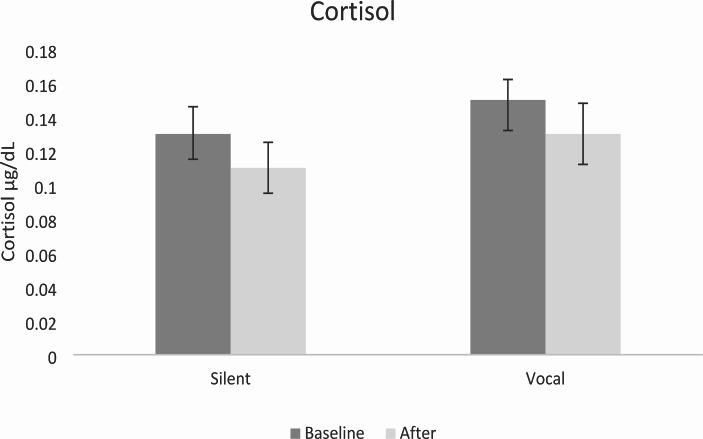
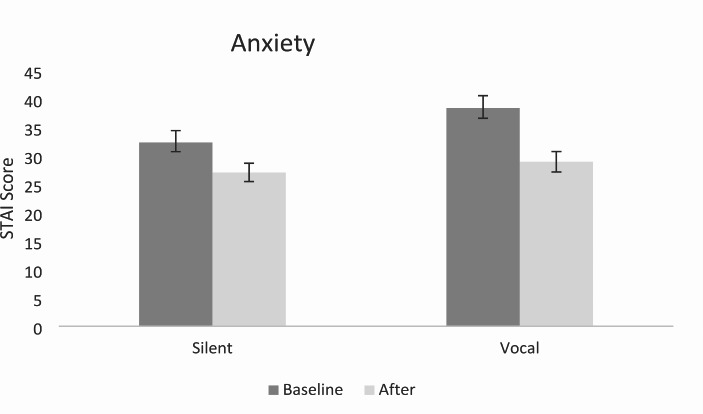
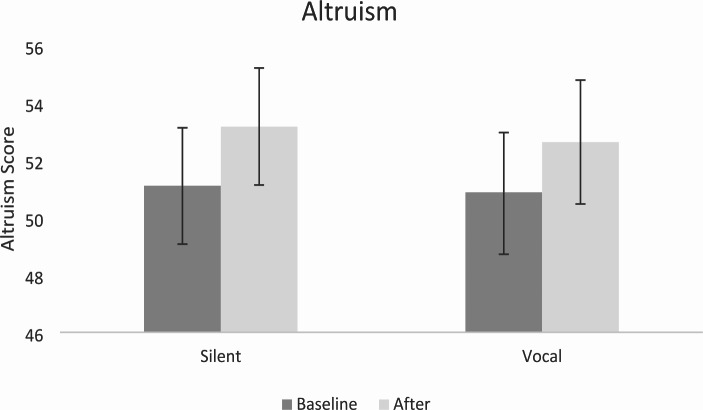
Chanting, an ancient ritual practiced in diverse cultures and traditions worldwide, has typically been employed for meditation, healing, self-awareness, and psychological growth. However, there is little understanding of the physiological and psychological benefits of chanting, and how vocalization might contribute to such effects. This study aimed to determine whether 12-minutes of group chanting, through vocal or silent repetition of the sound “om,“ would reduce stress and anxiety, while increasing feelings of social connection, and whether vocal chanting would yield stronger effects. Thirty-four participants were randomly assigned to vocal or silent group chanting conditions. Saliva samples were collected before and after chanting to assess cortisol levels, while self-report measures included the State Trait Anxiety Inventory and the Adapted Self-Report Altruism Scale (including additional items on cross-cultural altruism). Following chanting, participants also provided a written description of their experiences. Both vocal and silent chanting resulted in significant decreases in cortisol levels and self-reported anxiety. The reduction in cortisol was similar for vocal and silent chanting, but self-reported anxiety decreased more following vocal chanting. Altruism scores increased following both vocal and silent chanting. However, there was no evidence of altruistic tendencies extending toward people from a culture other than one’s own. Results are discussed in relation to the phenomenology of chanting, and to current theory and evidence on the physiological and psychological effects of chanting and singing.
Overview
The claims and statistics of this paper haven’t been checked yet.
Free: it reads the open-access text and checks the first 5 claims that cite a source we can check. Create a free account to check every claim.
Integrity signals
Registry
Cites
Statistics
Figures
Verification
Claims the paper makes
The claims and statistics of this paper haven’t been checked yet.
Free: it reads the open-access text and checks the first 5 claims that cite a source we can check. Create a free account to check every claim.
Self-check
Percentages, sums and reported differences re-computed from the paper’s own numbers.
The self-check needs the paper’s full text.
Citations
Cites
Three Approaches to Qualitative Content Analysis
Hsieh, H.-F., & Shannon, S. E. (2005) · Qualitative Health Research · doi:10.1177/1049732305276687 · Cited by 44,601
(1954) · Cited by 15,935
Rush, A. J., Trivedi, M. H., Wisniewski, S. R., Nierenberg, A. A., Stewart, J. W., Warden, D., Niederehe, G., Thase, M. E., Lavori, P. W., Lebowitz, B. D., et al. (2006) · American Journal of Psychiatry · doi:10.1176/ajp.2006.163.11.1905 · Cited by 5,643
The role of inflammation in depression: from evolutionary imperative to modern treatment target
Miller, A. H., & Raison, C. L. (2016) · Nature Reviews Immunology · doi:10.1038/nri.2015.5 · Cited by 3,942
Measurement and Control of Response Bias
Paulhus, D. L. (1991) · Measures of Personality and Social Psychological Attitudes · doi:10.1016/b978-0-12-590241-0.50006-x · Cited by 3,598
State-Trait Anxiety Inventory for Adults
Spielberger, C. D. (2012) · PsycTESTS Dataset · doi:10.1037/t06496-000 · Cited by 3,479
Fehr, E., & Fischbacher, U. (2003) · Nature · doi:10.1038/nature02043 · Cited by 3,475
Attention regulation and monitoring in meditation
Lutz, A., Slagter, H. A., Dunne, J. D., & Davidson, R. J. (2008) · Trends in Cognitive Sciences · doi:10.1016/j.tics.2008.01.005 · Cited by 2,659
A wandering mind is an unhappy mind
Killingsworth, M. A., & Gilbert, D. T. (2010) · Science · doi:10.1126/science.1192439 · Cited by 2,575
Benson, H., Beary, J. F., & Carol, M. P. (1974) · Psychiatry · doi:10.1080/00332747.1974.11023785 · Cited by 2,317
Research works printed but not linked: 3
- Perry, G., & Polito, V. (2021). Music and Healing rituals. The Science and psychology of music: From Beethoven at the Office to Beyoncé at the Gym (pp. 197-204).
- Walton, K. G., Cavanaugh, K. L., & Pugh, N. D. (2005). Effect of Group Practice of the Transcenden- tal Meditation Program on biochemical indicators of stress in non-meditators: A prospective Time Series Study. Journal of Social Behavior & Personality, 17, 339-373. https://www.proquest.com/ docview/203615959?pq-origsite=gscholar&fromopenview=true
- Wiltermuth, S. S.,H. C (2008). Synchrony and Cooperation. Psychological Science, 20(1), 1-5. · DOI · Paper page
Cited by
Music Engagement as a Source of Cognitive Reserve
Wolff, L., Quan, Y., Perry, G., & Thompson, W. F. (2023) · American Journal of Alzheimer s Disease & Other Dementias® · doi:10.1177/15333175231214833 · Cited by 60
“63 Thus, one source of the bene fi t of music engagement for CR is that it can help to reduce physiological stress, like other leisure activities.”
BackgroundSelf-citationTing, B., Chen, D. T.-L., Hsu, W.-T., Tsai, C.-L., Malau, I. A., Lee, S.-L., & Jingling, L. (2024) · European Journal of Investigation in Health Psychology and Education · doi:10.3390/ejihpe14020024 · Cited by 10
“Om” chanting and its impact on selected neuropsychological functions: a literature overview
Thanneeru, S. K., Sutar, R. F., Singh, V., Kushwah, A., Das, S., Atlani, M. K., Mittal, M., & Agrawal, A. (2022) · Manipal Journal of Medical Sciences · doi:10.55889/2582-5984.1149 · Cited by 6
Neurobiological and psychological effects of reciting the Quran from the Mushaf
Okur, S., & Bayraktar, B. (2026) · Discover Psychology · doi:10.1007/s44202-026-00658-y · Cited by 6
Music in the Human Experience: An Introduction to Music Psychology
Hodges, D. A., & McPherson, G. E. (2025) · Routledge eBooks · doi:10.4324/9781003460244 · Cited by 5
Neural Correlates of Chanting: A Systematic Review
Perry, G., Wolff, L., Powers, N., Thompson, W. F., & Baumann, O. (2025) · Wiley Interdisciplinary Reviews Cognitive Science · doi:10.1002/wcs.70018 · Cited by 5
Self-citationAltered states of consciousness induced by online chanting meditation
Perry, G., Sun, Y., Polito, V., & Thompson, W. F. (2025) · Current Psychology · doi:10.1007/s12144-025-07889-7 · Cited by 4
Self-citationDevelopment and content validation of integrated yoga module for patients with essential tremor
Patidar, M., Joshi, D., & Nathani, N. (2025) · European Journal of Integrative Medicine · doi:10.1016/j.eujim.2025.102463 · Cited by 3
Bridging Science and Spirituality: Investigating the Effects of OM Chanting on Brain Waves
Kanwade, A. B., Thune, N. N., Srimaharaj, W., Chaising, S., Upreti, K., & Jain, R. (2025) · Sakarya University Journal of Computer and Information Sciences · doi:10.35377/saucis...1692343 · Cited by 3
Bhoot, A., Chowdhury, A. B., Shah, H., & Vaishnav, B. S. (2025) · Annals of Neurosciences · doi:10.1177/09727531251390261 · Cited by 3
“17 Beneficial effects of OM chanting combined with yoga nidra, offered 5 days a week, have been shown to improve physiological and psychological parameters.”
Kirkpatrick, M., Priestley, K., Bind, R. H., Rebecchini, L., Borsini, A., Estevao, C., Hazelgrove, K. M., Laijawala, R., Alford, S., Woods, A. J., et al. (2026) · Brain Behavior and Immunity · doi:10.1016/j.bbi.2026.106600 · Cited by 3
Bonakdarpour, B., Schafer, R., Takarabe, C., Barbieri, E., Miller, J. M., & Miller, S. S. (2025) · Journal of Alzheimer s Disease · doi:10.1177/13872877251333155 · Cited by 2
“61,62 Social and physical well-being are improved by group singing through a host of interconnected mechanisms that encompass physiological, psychological, and social domains.”
Perry, G., Sunjo, J., Abass, F., Wolff, L., & Thompson, W. F. (2025) · Music & Science · doi:10.1177/20592043251372321 · Cited by 2
“Engaging in chanting involves deliberate breathingandvocalization,providingatoolforself-regulation (Bernardi et al., 2000; Perry et al., 2023).”
Self-citationImpact of Chanting on the Human Brain Using EEG Analysis and Psychological Assessment
Chauhan, D., Sachdeva, S., kumar, S., & Upasna (2025) · IEEE International Conference on Innovations in Engineering and Next-Generation Technologies for Sustainability (ICINVENTS) · doi:10.1109/icinvents64613.2025.11402503 · Cited by 2
Recitation Mode Is Associated With Salivary CREB and Cortisol Responses during Qur'anic Recitation
Okur, S., TOPYAY, Y., & Bayraktar, B. (2026) · Brain and Behavior · doi:10.1002/brb3.71674 · Cited by 2
“More generally, chanting and other repetitive vocal practices may reduce cortisol and anxiety (Perry et al. 2024 ).”
InfluentialKrisdathiwadh, P., Chaithirayanon, S., Kotchabhakdi, N., & Siripornpanich, V. (2024) · Applied Neuropsychology Child · doi:10.1080/21622965.2024.2424215 · Cited by 2
Chakma, M. A. (2025) · INDIAN JOURNAL OF MULTIDISCIPLINARY RESEARCH · doi:10.70798/ijomr/020040044 · Cited by 1
Ye, Z., Zou, Y., & Jin, D. (2025) · Tourism Management Perspectives · doi:10.1016/j.tmp.2025.101429 · Cited by 1
Jose, P., Punita, P., Kumaran, S. D., Mukkadan, J. K., & Natarajan, M. (2025) · JOURNAL OF CLINICAL AND DIAGNOSTIC RESEARCH · doi:10.7860/jcdr/2025/78881.22293 · Cited by 1
Zhai, F., Lee, Y., Gao, Q., Guo, J., & Xu, H. (2025) · Child & Family Social Work · doi:10.1111/cfs.70085 · Cited by 1
The Underlying Mechanisms of Social Bonding in Choral Singing: A Review of the Literature
Alvarez, V. Y. (2026) · Update Applications of Research in Music Education · doi:10.1177/87551233261445085 · Cited by 1
Liang, W.-M., Griškova-Bulanova, I., Xiao, J., Zhao, Q., Hou, M.-Y., Ren, F.-F., Zhu, Y., Truskauskaitė‐Kunevičienė, I., Xiao, Y.-H., & Rukšėnas, O. (2026) · Frontiers in Psychology · doi:10.3389/fpsyg.2026.1854234 · Cited by 1
“…of vocalization and breathing in Liuzijue may exert effects comparable to or potentially stronger than body scan meditation alone, since 12 min of group chanting the sound “Om” has been proven to reduce cortisol levels and anxiety more evidently than its silent repetition (Perry et al., 2024).”
How Chanting Enhances Well-Being: The Roles of Vocalization, Repetition, and Concentration
Cadieux, S., & Lyubomirsky, S. (2026) · Mindfulness · doi:10.1007/s12671-026-02951-2 · Cited by 1
Joogaa neurologisille asiakkaille : Joogaopettajan opas tuntisuunnitelman rakentamiseen
Millard, E. (2024) · Theseus (Ammattikorkeakoulujen)
Meditation Techniques and Their Relationship to Psychotic-Like and Mystical Experiences
Palmer, T. N. (2025) · PEARL (University of Plymouth) · doi:10.24382/ft5k-0r41
The Therapeutic Essence of Navadha Bhakti: A Synthesized Study
Deeksha, & Sao, A. K. (2026) · Naveen International Journal of Multidisciplinary Sciences (NIJMS) · doi:10.71126/nijms.v2i3.113
Nalluri, V. R. S., & Sonti, V. J. K. K. (2026) · Microchemical Journal · doi:10.1016/j.microc.2026.117411
Tibet Budist İlahilerinde Ritüeller ve Uygulamalardaki Rolü
Küpeli, S. O. (2025) · Idil Journal of Art and Language · doi:10.7816/idil-14-117-19
Sensorimotor spiritual and religious practice in mental health
Malviya, S. (2026) · Elsevier eBooks · doi:10.1016/b978-0-443-40596-9.00004-x
Saṃhitā-Paṭhana (Learning Methodology of Ayurveda Text): A Redundant Tradition or Relevant Practice?
Nidhi, S., Avishek, M., Garima, S., & Panja, A. K. (2026) · Journal of Indian medical heritage · doi:10.4103/jimh.jimh_65_25
Bhardwaj, N. (2026) · Advanced International Journal of Multidisciplinary Research · doi:10.62127/aijmr.2026.v04i04.1387
“The Hindu devotional practices are especially informative as they are a combination of meditation, repetition, music, expression of emotions and participation of the community (Perry et al., 2023).”
Chauhan, D., Sachdeva, S., & Kumar, S. (2026) · Journal of Dharma Studies · doi:10.1007/s42240-026-00279-7
“Researchers such as Kumar et al. ( 2020 ), Candrawati et al. ( 2018 ), and Perry et al. (2023) reported improvements in Heart Rate Variability (HRV), indicating enhanced autonomic regulation and increased parasympathetic nervous system activation.”
Influentialओम जप के चिकित्सीय लाभों एवं शरीर क्रियात्मक प्रभावों का विश्लेषणात्मक अध्ययन
अग्रवाल, स. (2026) · Shodhshauryam International Scientific Refereed Research Journal · doi:10.32628/shisrrj26959
The role of music in meditation practice: A scoping review of practice-based functions
Liu, H., & Jung, Y. S. (2026) · Journal of Public Health · doi:10.1007/s10389-026-02887-w
Rahayu, A., Rasyid, D. F. A., Marzeti, S., & Nuraenah (2026) · INDOGENIUS · doi:10.56359/igj.v5i3.1115
DZIEDĀŠANAS PRASMJU ATTĪSTĪBAS SAISTĪBA AR DZĪVES APMIERINĀTĪBU: EMPĪRISKI DATI NO ZĒNU KORA
Maurītis, R., & Bernhofs, V. (2026) · Mūzikas akadēmijas raksti
Jeffrey, L. M., Fuller, A. M., & Short, A. E. (2026) · Journal of Religion and Health · doi:10.1007/s10943-026-02825-w
Reddy, O. V., Madhavi, K., Kumar, M. S., & Kavitha, N. (2026) · International Journal of Science and Research (IJSR) · doi:10.21275/sr261111123902
Metadata
- Authors
- Perry, G., Polito, V., & Thompson, W. F.
- Affiliations
- Bond University (AU)
- Macquarie University (AU)
- Corresponding author
- Perry, Gemma
- Venue
- Journal of Religion and Health
- Published
- 2023-12-13
- Volume
- 63
- Issue
- 6
- Pages
- 4793-4815
- ISSN
- 0022-4197 (ISSN-L)
- 1573-6571
- PMC
- PMC11576810
- OpenAlex
- W4389672392
- Cited by
- 22
- References
- 84
- Citations by year
- 2026: 12 · 2025: 7 · 2024: 2 · 2023: 1
- FWCI
- 6.50
- Type
- journal article
- Language
- en
- Open access
- hybrid
- doi.org
- Licence
- cc-by
- creativecommons.org/licenses/by/4.0 (tdm)
- creativecommons.org/licenses/by/4.0 (vor)
- Locations
- Journal of Religion and Health (publishedVersion, cc-by)
- PubMed Central (publishedVersion, cc-by)
- Bond University Research Portal (Bond University) (publishedVersion, cc-by)
- PubMed (publishedVersion)
- Funders
- Australian Research Council (DP190102978)
- Topics
- Social Sciences › Psychology › Social Psychology › Music Therapy and Health
- Social Sciences › Psychology › Clinical Psychology › Mindfulness and Compassion Interventions
- Social Sciences › Health › Religion, Spirituality, and Psychology
- Keywords
- Om chanting, stress reduction, anxiety, cortisol, social connectedness, altruism, singing
- MeSH terms
- Adult, Altruism, Anxiety, Australia, Ceremonial Behavior, Female, Humans, Hydrocortisone, Male, Religion and Psychology, Saliva, Stress, Psychological, Young Adult
About these checks
Registry, retraction, Cites and statistics results are computed, not judged, with one exception: a printed reference that no index lists is read once by a model before it counts as a citation error. Claims are extracted by a model and kept only when their quote appears verbatim in the text; each cited source is then checked, with a model’s help, for whether it says what the claim relies on. Those verdicts can be wrong — read the claim’s quote and the cited source before relying on one.
Statistics and arithmetic are recomputed, not judged.
Confidence bands are shown only for fields calibrated on our annotated test set. None is calibrated yet, so no band is shown.
What counts as a claim ›How we measure confidence ›How we check this ›
Are you an author, or do you see a problem with this page? Request a review
Data sources
Bibliographic data: Semantic Scholar, OpenAlex, Crossref.
Contains information from the Semantic Scholar Academic Graph Datasets, made available under the ODC Attribution License (ODC-BY 1.0).
Semantic Scholar’s data is described in: Kinney, R., et al. (2023). The Semantic Scholar Open Data Platform. arXiv:2301.10140.
