

Understanding the determinants of novel technology adoption among teachers: the case of 3D printing
Open accessThe DOI matches its Crossref record, with a small difference in title or year; 50 of the 50 references it cites were found in a registry or an index; 1 of the 36 sources its claims cite were checked for support.
Abstract
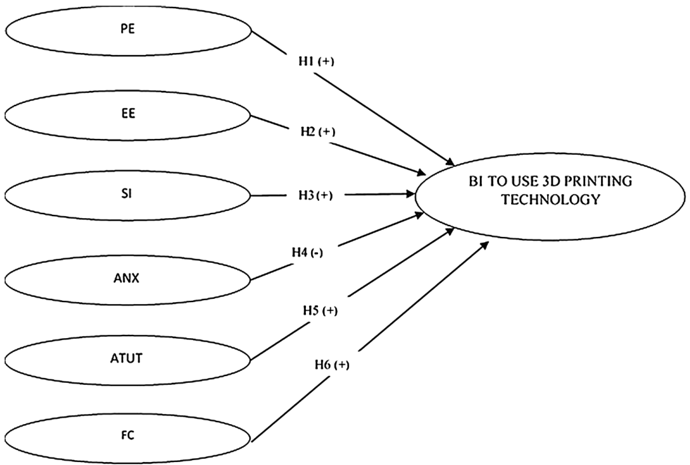
3D printing consists of novel technologies that raised high expectations about their future impact on economy and society. However, despite major efforts of manufacturers and governments to promote the technology, the adoption rate is still low. Among others, the absence of appropriate technology education is considered a major hurdle for adoption. The main goal of this paper is to investigate the behavioral intention of high school teachers to use these novel technologies in class. We propose applying the unified theory of acceptance and use of technology by integrating anxiety and attitude toward using technology. Data from 103 high school teachers is utilized to empirically validate the conceptual model. The results show that performance expectancy, facilitating conditions, anxiety, and attitude toward using technology significantly affect the adoption of novel technology. Contrary to expectations, effort expectancy and social influence do not affect the behavioral intention. Thus, the study adds to prior knowledge by underlining the need for further investigation of the relevance of anxiety and attitude toward using a novel technology in individual adoption processes.
Overview
CoChat Summary
## TL;DR
This study examines what drives high school teachers’ intention to use 3D printing in class, using an extended UTAUT model and survey data from 103 Austrian teachers. The strongest predictors were performance expectancy, facilitating conditions, anxiety, and attitude toward using technology; effort expectancy and social influence were not significant.
## Key findings
- In the multiple linear regression, performance expectancy (estimate = 0.555, *p* = 0.023), attitude toward using technology (estimate = 0.625, *p* = 0.004), anxiety (estimate = -0.451, *p* = 0.006), and facilitating conditions (estimate = 0.478, *p* = 0.026) significantly predicted behavioral intention to use 3D printing.
- Effort expectancy (estimate = -0.248, *p* = 0.229) and social influence (estimate = 0.043, *p* = 0.838) were not significant predictors.
- The model fit was R-square = 0.614 and adjusted R-square = 0.568; the overall regression was significant with F = 11.908 with 6 and 91 df.
- Among controls, early adopter status was positively associated with behavioral intention (estimate = 1.531, *p* = 0.000), while previous 3D printing experience was negatively associated (estimate = -1.087, *p* = 0.027).
## Methods
- The authors conducted an empirical survey study tied to the project “SmartLab goes to school”; teachers from high schools in an Austrian region were invited, and the final analytic sample was 103 teachers after excluding cases with more than 10% missing data.
- They measured behavioral intention, PE, EE, SI, ANX, ATUT, and FC using adapted UTAUT scales on seven-point Likert scales; reliability was assessed with Cronbach’s alpha.
- Main analysis used multiple linear regression predicting behavioral intention to use 3D printing, with controls for early adopter, gender, age, 3D printing experience, and technical subject taught; they also reported independent-sample t-tests, ANOVA, and chi-square tests for group comparisons.
## Limitations
- The paper states that the sample was limited to 103 respondents from one Austrian region, and notes a self-selection bias because more men participated than women.
- It states that, because of the technology’s novelty and low adoption rate, the study could not test whether behavioral intention leads to actual use.
- It also says larger-scale studies are needed and that results may not generalize to different geographical and cultural contexts.
- Evident from the text: the study relies on cross-sectional self-report survey data, so causal claims are not established by the design.
Model-written summary. Check it against the paper before relying on it.
Integrity signals
Registry
Cites
Statistics
Figures
Verification
Claims the paper makes
1 Valid · 0 Not valid · 31 Not checked · 51 Own results and interpretations
Every source the paper cites for this claim was checked and supports it.
In the paper
“This result is consistent with Kabra etal. (2017), for example, who did not find significant effects of social influence on the behavioral intention to use information technology.”
What the sources say
- Supportedcites Kabra et al. 2017 matched to “Understanding behavioural intention to use information technology: Insights from humanitarian practitioners” (2017) source
Table 4 (Summary of hypothesis results) reports that social influence was not significantly associated with behavioural intention to use IT (H3: p>0.10). The Discussion likewise describes a non-significant relationship in the study’s humanitarian-organization context. (LLM, conf=0.95)
plain- Asserted: passes — The authors put it forward as true.
- Checkable: passes — It can be checked against evidence.
- Load-bearing: passes — The paper’s conclusions depend on it.
- Based: passes — The paper gives a reason why it holds.
- Supported
A result the paper reports from its own data — it cites no other source for it, so there is none to check. The quote shows it is in the paper.
In the paper
“There are no significant differences between the three school types (ANOVA).”
plain- Asserted: passes — The authors put it forward as true.
- Checkable: passes — It can be checked against evidence.
- Load-bearing: unclear — It is unclear whether the paper’s conclusions depend on it.
- Based: passes — The paper gives a reason why it holds.
A result the paper reports from its own data — it cites no other source for it, so there is none to check. The quote shows it is in the paper.
In the paper
“The coefficients for gender, age, and subject taught are not significant.”
plain- Asserted: passes — The authors put it forward as true.
- Checkable: passes — It can be checked against evidence.
- Load-bearing: unclear — It is unclear whether the paper’s conclusions depend on it.
- Based: passes — The paper gives a reason why it holds.
A result the paper reports from its own data — it cites no other source for it, so there is none to check. The quote shows it is in the paper.
In the paper
“Contrary to expectations, effort expectancy and social influence do not affect the behavioral intention.”
- Also stated in: § 4 Results · plain
“However, the coefficients of EE and SI are not significant.”
- Also stated in: § 4 Results · plain
“Therefore, we have to reject hypotheses H2 and H3 (Table7).”
plainn = 103- Asserted: passes — The authors put it forward as true.
- Checkable: passes — It can be checked against evidence.
- Load-bearing: passes — The paper’s conclusions depend on it.
- Based: passes — The paper gives a reason why it holds.
- Also stated in: § 4 Results · plain
A result the paper reports from its own data — it cites no other source for it, so there is none to check. The quote shows it is in the paper.
In the paper
“The results show that performance expectancy, facilitating conditions, anxiety, and attitude toward using technology significantly affect the adoption of novel technology.”
- Also stated in: § 4 Results · hedged
“The results of the multiple linear regression analysis indicate that the coefficients of PE, ATUT, and FC are significantly positive.”
- Also stated in: § 4 Results · plain
“The significant coefficients indicate that H1 , H4 , and H5 are supported.”
plainstates an associationn = 103 ·- Asserted: passes — The authors put it forward as true.
- Checkable: passes — It can be checked against evidence.
- Load-bearing: passes — The paper’s conclusions depend on it.
- Based: passes — The paper gives a reason why it holds.
- Also stated in: § 4 Results · hedged
40 more claims
Create a free account to see all 83 claims and every source verdict.
- The quote only partly states this claim. 2
- It may state two separate claims as one. 7
- Probably not a substantial claim. 29
Citations
Cites
The theory of planned behavior
Ajzen, I. (1991) · Organizational Behavior and Human Decision Processes · doi:10.1016/0749-5978(91)90020-t · Cited by 134,657
Perceived usefulness, perceived ease of use, and user acceptance of information technology
Davis, F. D. (1989) · MIS Quarterly · doi:10.2307/249008 · Cited by 68,483 · cited 3×
“It is represented as a subjective norm in TRA, TAM, and TPB (Macedo 2017).”
MethodUser Acceptance of Information Technology: Toward A Unified View1
Venkatesh, V., Morris, M. G., Davis, G. B., & Davis, F. D. (2003) · MIS Quarterly · doi:10.2307/30036540 · Cited by 45,035 · cited 10×
“Performance expectancy (Venkatesh et al. 2003) See Table 4 Effort expectancy (Venkatesh et al.”
BackgroundMethodInfluentialHerne, H., Cooley, W. W., & Lohnes, P. R. (1973) · Journal of the Royal Statistical Society. Series A (General) · doi:10.2307/2344428 · Cited by 35,697
User Acceptance of Computer Technology: A Comparison of Two Theoretical Models
Davis, F. D., Bagozzi, R. P., & Warshaw, P. R. (1989) · Management Science · doi:10.1287/mnsc.35.8.982 · Cited by 25,709 · cited 2×
“It is represented as a subjective norm in TRA, TAM, and TPB (Macedo 2017).”
Method(1985) · Medical Entomology and Zoology · Cited by 19,180
Venkatesh, V., Thong, J. Y. L., & Xu, X. (2012) · MIS Quarterly · doi:10.2307/41410412 · Cited by 15,756
Qu, X. (2007) · Technometrics · doi:10.1198/tech.2007.s455 · Cited by 14,705
Technological Pedagogical Content Knowledge: A Framework for Teacher Knowledge
Mishra, P., & Koehler, M. J. (2006) · Teachers College Record: The Voice of Scholarship in Education · doi:10.1111/j.1467-9620.2006.00684.x · Cited by 12,604
Moore, G. C., & Benbasat, I. (1991) · Information Systems Research · doi:10.1287/isre.2.3.192 · Cited by 9,150 · cited 1×
“1991), and the innovation diffusion theory (IDT) (Moore and Benbasat 1991).”
Background
Research works printed but not linked: 2
- Holzmann, P., Breitenecker, R. J., & Schwarz, E. J. (2015). Business models for disruptive technologiesFindings from the 3D printing industry. In 60th international council on small business (ICSB) world conference (pp. 6-9).
- Taiwo, A. A., & Downe, A. G. (2013). The theory of user acceptance and use of technology (UTAUT): A meta-analytic review of empirical findings. Journal of Theoretical and Applied Information Technology, 49 (1), 48-58.
Cited by
Shin, J., Mollah, M. A., & Choi, J. (2023) · Sustainability · doi:10.3390/su15032027 · Cited by 198
“Traditional business strategies and processes are shifting due to recent breakthroughs in digital technology and the growth of threads in digital transformation [1,2].”
Kumar, A., Mani, V., Jain, V., Gupta, H., & Venkatesh, V. G. (2023) · Computers & Industrial Engineering · doi:10.1016/j.cie.2022.108815 · Cited by 164
“A recent study by Holzmann et al. (2020) aligned with our findings that the behavioral intentions of healthcare professionals about using AI technologies are the most potent indicator of users ’ intention.”
ResultIdentifying relevant segments of AI applications adopters – Expanding the UTAUT2’s variables
Cabrera-Sánchez, J.-P., Villarejo-Ramos, Á. F., Liébana-Cabanillas, F., & Shaikh, A. A. (2021) · Telematics and Informatics · doi:10.1016/j.tele.2020.101529 · Cited by 146
Wang, K., Ruan, Q., Zhang, X., Fu, C., & Duan, B. (2024) · Behavioral Sciences · doi:10.3390/bs14050373 · Cited by 137
Wijaya, T., Cao, Y., Weinhandl, R., Yusron, E., & Lavicza, Z. (2022) · Mathematics · doi:10.3390/math10071008 · Cited by 97
Pre-service teachers’ intention to use learning management system: an integration of UTAUT and TAM
Buabeng-Andoh, C., & Baah, C. (2020) · Interactive Technology and Smart Education · doi:10.1108/itse-02-2020-0028 · Cited by 129
Always connected @ work. Technostress and well-being with academics
Truţă, C., Maican, C. I., Cazan, A., Lixandroiu, R. C., Dovleac, L., & Maican, M. A. (2023) · Computers in Human Behavior · doi:10.1016/j.chb.2023.107675 · Cited by 104
Holzmann, P., Breitenecker, R. J., Schwarz, E. J., & Gregori, P. (2020) · Technological Forecasting and Social Change · doi:10.1016/j.techfore.2020.120193 · Cited by 78
Self-citationAn analysis of the global additive manufacturing response to the COVID-19 pandemic
Kunovjanek, M., & Wankmüller, C. (2020) · Journal of Manufacturing Technology Management · doi:10.1108/jmtm-07-2020-0263 · Cited by 67
MSME technology adoption, entrepreneurial mindset and value creation: a configurational approach
Cunningham, J. A., Damij, N., Modic, D., & Olan, F. (2023) · The Journal of Technology Transfer · doi:10.1007/s10961-023-10022-0 · Cited by 120
Gulati, A., Saini, H., Singh, S., & Kumar, V. (2024) · Marketing Education Review · doi:10.1080/10528008.2023.2300139 · Cited by 61
Wah, L., & Hashim, H. B. (2021) · Sustainability · doi:10.3390/su13147568 · Cited by 81
Effective Teaching Practices for Success During COVID 19 Pandemic: Towards Phygital Learning
Chaturvedi, S., Purohit, S., & Verma, M. (2021) · Frontiers in Education · doi:10.3389/feduc.2021.646557 · Cited by 76
Öngel, V., Günsel, A., ÇELİK, G. G., Altındağ, E., & Tatlı, H. S. (2023) · Behavioral Sciences · doi:10.3390/bs14010003 · Cited by 134
Jevsikova, T., Stupurienė, G., Stumbrienė, D., Juškevičienė, A., & Dagienė, V. (2021) · Informatica · doi:10.15388/21-infor459 · Cited by 71
Factors Affecting the Use of Digital Mathematics Textbooks in Indonesia
Wijaya, T. T., Zhou, Y., Houghton, T., Weinhandl, R., Lavicza, Z., & Yusop, F. D. (2022) · Mathematics · doi:10.3390/math10111808 · Cited by 67
Anđić, B., Ulbrich, E., Dana-Picard, T. N., Cvjetičanin, S., Petrović, F., Lavicza, Z., & Maričić, M. (2022) · Journal of Science Education and Technology · doi:10.1007/s10956-022-10005-0 · Cited by 67
Holzmann, P., Wankmüller, C., Globocnik, D., & Schwarz, E. J. (2021) · International Journal of Physical Distribution & Logistics Management · doi:10.1108/ijpdlm-01-2020-0025 · Cited by 39
Self-citationVerano-Tacoronte, D., Bolívar-Cruz, A., & Sosa-Cabrera, S. (2025) · Education and Information Technologies · doi:10.1007/s10639-025-13585-7 · Cited by 39
“…et al., 2023; Duong et al., 2024; Gunasinghe & Nanayakkara, 2021; Venkatesh et al., 2012), and research has consistently shown that such anxiety can be a significant barrier to adopting new technologies (Gunasinghe et al., 2019; Holzmann et al., 2020; Lakhal & Khechine, 2021; Maican et al., 2019).”
Business model patterns for 3D printer manufacturers
Holzmann, P., Breitenecker, R. J., & Schwarz, E. J. (2019) · Journal of Manufacturing Technology Management · doi:10.1108/jmtm-09-2018-0313 · Cited by 52
Self-citationCritical Success Factors in Accepting Technology in the Classroom
Veiga, F., & Andrade, A. (2021) · International Journal of Emerging Technologies in Learning (iJET) · doi:10.3991/ijet.v16i18.23159 · Cited by 55
Integration of 3D Printing in Art Education: A Multidisciplinary Approach
Menano, L., Fidalgo, P., Santos, I. M., et al. (2019) · Computers in the Schools · doi:10.1080/07380569.2019.1643442 · Cited by 34
Rodríguez, J. M. R., Alonso-García, S., Marín, J. A. M., & García, G. G. (2020) · Future Internet · doi:10.3390/fi12080123 · Cited by 47
Role of ICT in Promoting Entrepreneurial Ecosystems in Pakistan
Tunio, M. N. (2020) · Journal of Business Ecosystems · doi:10.4018/jbe.2020070101 · Cited by 38
Morchid, N. (2019) · Arab World English Journal · doi:10.24093/awej/call5.7 · Cited by 35
Hermita, N., Wijaya, T. T., Yusron, E., Abidin, Y., Alim, J. A., & Putra, Z. H. (2023) · Frontiers in Education · doi:10.3389/feduc.2023.958800 · Cited by 53
Şahin, F., Kızılaslan, A., & Şimşek, Ö. (2023) · Education and Information Technologies · doi:10.1007/s10639-023-12383-3 · Cited by 44
Is Anxiety Affecting the Adoption of ChatGPT in University Teaching? A Gender Perspective
Cruz, A. M. B., & Tacoronte, D. V. (2025) · Technology Knowledge and Learning · doi:10.1007/s10758-025-09830-0 · Cited by 40
Riyath, M. I. M., & Rijah, U. L. M. (2022) · AAOU Journal/AAOU journal · doi:10.1108/aaouj-03-2022-0032 · Cited by 48
Alshahrani, S. M., Mohamed, H. B., Mukhtar, M. B., & Mokhtar, U. A. (2022) · International Journal of Information Management Data Insights · doi:10.1016/j.jjimei.2022.100148 · Cited by 33
Üçgül, M., & Altıok, S. (2023) · Education and Information Technologies · doi:10.1007/s10639-023-11593-z · Cited by 35
Identifying and ranking the critical success factors of fintech adoption: a fuzzy DEMATEL approach
Al-Mawali, H. H., Obeidat, Z. M., Alshurafat, H., & Shbail, M. O. A. (2023) · Competitiveness Review An International Business Journal incorporating Journal of Global Competitiveness · doi:10.1108/cr-04-2023-0090 · Cited by 25
Pedagogical Competence Towards Technology-driven Instruction on Basic Education
Mariscal, L. L., Albarracin, M. R., Mobo, F. D., & Cutillas, A. L. (2023) · International Journal of Multidisciplinary Applied Business and Education Research · doi:10.11594/ijmaber.04.05.18 · Cited by 52
Wu, J., Zhang, X., Zhu, Y., & Yu-Buck, G. F. (2021) · International Journal of Environmental Research and Public Health · doi:10.3390/ijerph18126314 · Cited by 23
Cheng, L., Antonenko, P. D., & Ritzhaupt, A. D. (2024) · Educational Technology Research and Development · doi:10.1007/s11423-023-10276-3 · Cited by 19
Exploring the impact of 3D printing integration on STEM attitudes in elementary schools
Khurma, O. A., Ali, N., & Khine, M. S. (2023) · Contemporary Educational Technology · doi:10.30935/cedtech/13568 · Cited by 37
Schultheiss, T., & Backes‐Gellner, U. (2022) · The Journal of Technology Transfer · doi:10.1007/s10961-022-09971-9 · Cited by 39
3D Printing as an element of teaching—perceptions and perspectives of teachers at German schools
Thyssen, C., & Meier, M. (2023) · Frontiers in Education · doi:10.3389/feduc.2023.1233337 · Cited by 31
Exploring Factors Affecting Elementary School Teachers’ Adoption of 3D Printers In Teaching
Branko, A., Šorgo, A., Helm, C., Weinhandl, R., & Lang, V. (2023) · TechTrends · doi:10.1007/s11528-023-00909-y · Cited by 28
Lin, W., & Jiang, P. (2025) · Behavioral Sciences · doi:10.3390/bs15030295 · Cited by 32
Sustainability of additive manufacturing: a comprehensive review
Singh, G., Mehta, A., & Vasudev, H. (2024) · Progress in Additive Manufacturing · doi:10.1007/s40964-024-00579-z · Cited by 15
Anđić, B., Šorgo, A., Stešević, D., & Lavicza, Z. (2022) · Eurasia Journal of Mathematics Science and Technology Education · doi:10.29333/ejmste/12239 · Cited by 26
Anđić, B., Maričić, M., Weinhandl, R., Mumcu, F., Schmidthaler, E., & Lavicza, Z. (2024) · Education and Information Technologies · doi:10.1007/s10639-023-12408-x · Cited by 22
Factors affecting medical students’ intention to use Rain Classroom: a cross-sectional survey
Lv, H., Low, J. H., Tan, S., Tang, L., & Li, X. (2024) · BMC Medical Education · doi:10.1186/s12909-024-05037-6 · Cited by 18
Twum, K. K., & Yalley, A. A. (2024) · Journal of Science and Technology Policy Management · doi:10.1108/jstpm-01-2022-0001 · Cited by 22
Online spiritual meets (OSMs) and user behavior – A divine application of technology during COVID-19
Katoch, R., & Rana, A. K. (2022) · Computers in Human Behavior · doi:10.1016/j.chb.2022.107514 · Cited by 21
Shahrubudin, N., te, C., & Ramlan, R. (2019) · Istrazivanja i projektovanja za privredu · doi:10.5937/jaes17-21526 · Cited by 19
Solving Ecological Problems through Physical Computing to Ensure Gender Balance in STEM Education
Stupurienė, G., Jevsikova, T., & Juškevičienė, A. (2022) · Sustainability · doi:10.3390/su14094924 · Cited by 23
Holzmann, P., Gregori, P., & Schwarz, E. J. (2025) · Education and Information Technologies · doi:10.1007/s10639-025-13708-0 · Cited by 27
Self-citationGunasinghe, A., & Nanayakkara, S. (2021) · International Journal of Technology Enhanced Learning · doi:10.1504/ijtel.2021.115978 · Cited by 72
Al-Riyami, T., Al-Maskari, A., & Al-Ghnimi, S. (2023) · International Journal of Emerging Technologies in Learning (iJET) · doi:10.3991/ijet.v18i07.37051 · Cited by 11
Sarala, R. M., Tarba, S. Y., Zahoor, N., Khan, H., Cooper, C. L., & Arslan, A. (2024) · The Journal of Technology Transfer · doi:10.1007/s10961-024-10158-7 · Cited by 26
Maita, I., Saide, S., Putri, Y. G., Megawati, M., & Munzir, M. R. (2021) · Technology Analysis and Strategic Management · doi:10.1080/09537325.2021.1915474 · Cited by 18
Aslam, J., Saleem, A., Lai, K., & Kim, Y. B. (2025) · Technological Forecasting and Social Change · doi:10.1016/j.techfore.2025.124041 · Cited by 12
Factors influencing virtual lab adoption in marginalized rural schools: insights from South Africa
Shambare, B., & Jita, T. (2025) · Smart Learning Environments · doi:10.1186/s40561-025-00369-2 · Cited by 26
Rosanda, V., & Starčič, A. I. (2021) · Lecture notes in computer science · doi:10.1007/978-3-030-77431-8_29 · Cited by 10
Ajigini, O. A. (2023) · International Journal of Emerging Technologies in Learning (iJET) · doi:10.3991/ijet.v18i16.42317 · Cited by 12
Zhang, Y., Peng, X. (., Zhao, X., & Lei, Y. (2024) · Production and Operations Management · doi:10.1177/10591478231224958 · Cited by 16
Weinhandl, R., Helm, C., Anđić, B., & Große, C. S. (2025) · Education and Information Technologies · doi:10.1007/s10639-025-13740-0 · Cited by 13
Teachers as makers: How K-12 teachers design 3D making lessons for classroom teaching
Chen, Y., Cao, L., & Zhang, Y. (2022) · Education and Information Technologies · doi:10.1007/s10639-022-11475-w · Cited by 11
Enhancing pharmacy operations: factors shaping the adoption of automated drug dispensing systems
Gupta, S., Singh, J., Ali, L., & Stephan, T. (2025) · International Journal of Quality and Service Sciences · doi:10.1108/ijqss-03-2025-0054 · Cited by 8
What determines 3D printing adoption in the GCC region?
Almahamid, S. M., Almurbati, N., Al‐Alawi, A. I., & Fataih, M. A. (2022) · Journal of Science and Technology Policy Management · doi:10.1108/jstpm-02-2022-0037 · Cited by 9
What Influences People’s Adoption of Cognitive Cybersecurity?
Tam, C., Balau, M. E. C. G., & Oliveira, T. (2023) · International Journal of Human-Computer Interaction · doi:10.1080/10447318.2023.2279411 · Cited by 14
Ulbrich, E., Bernardino, M. C. D. C., Anđić, B., Tejera, M., Dana-Picard, T. N., & Lavicza, Z. (2024) · London Review of Education · doi:10.14324/lre.22.1.12 · Cited by 15
A generative-based design methodology to enable the democratisation of 3D printing
Goudswaard, M., Nassehi, A., & Hicks, B. J. (2023) · Design Science · doi:10.1017/dsj.2023.19 · Cited by 9
Design of an Instrument Measuring P-12 Teachers’ Cognitive Load and Intent to Adopt Technology
Dalinger, T., & Asino, T. I. (2021) · TechTrends · doi:10.1007/s11528-020-00574-5 · Cited by 12
Muchnik-Rozanov, Y., Frei-Landau, R., & Avidov‐Ungar, O. (2022) · Frontiers in Education · doi:10.3389/feduc.2022.1077989 · Cited by 5
Toshniwal, V. P., Jain, R., Soni, G., Mangla, S. K., & Narula, S. (2023) · Management of Environmental Quality An International Journal · doi:10.1108/meq-08-2023-0248 · Cited by 9
3D Printing for Accessible Education: A Case Study in Assistive Technology Adoption
Holloway, L. M., Butler, M., Waddell, A., & Marriott, K. (2025) · CHI Conference on Human Factors in Computing Systems · doi:10.1145/3706598.3713689 · Cited by 11
Unpacking the Dynamics of 3-D Concrete Printing Adoption: An Integrated UTAUT-TOE Approach
Han, Y., Zhu, L., Xue, R., Liu, C., & Ding, T. (2024) · IEEE Transactions on Engineering Management · doi:10.1109/tem.2024.3399227 · Cited by 7
Almaki, S. H., Mazrouei, A. K. A., Mafarja, N., Naseem, W., Sial, M. A., & Naveed, R. T. (2024) · Frontiers in Education · doi:10.3389/feduc.2024.1477659 · Cited by 13
Farias, R., Oliveira, W., & Hamari, J. (2023) · IEEE International Conference on Advanced Learning Technologies (ICALT) · doi:10.1109/icalt58122.2023.00095 · Cited by 8
Weinhandl, R., Helm, C., Anđić, B., & Große, C. S. (2024) · Heliyon · doi:10.1016/j.heliyon.2024.e35381 · Cited by 8
Huang, G.-H., & To, W. M. (2020) · Asian Education and Development Studies · doi:10.1108/aeds-01-2020-0014 · Cited by 6
Vukašinović, V., Gordić, D., Šušteršič, V., et al. (2023) · 3D Printing and Additive Manufacturing · doi:10.1089/3dp.2023.0059 · Cited by 4
Exploring user adaptation behaviors toward mobile technology: a higher education perspective
Kakavand, S., Teimourzadeh, A., & Kakavand, B. (2024) · Information Technology and People · doi:10.1108/itp-01-2024-0070 · Cited by 9
3D Printing as a Multimodal STEM Learning Technology: A Survey Study in Second Chance Schools
Radiopoulou, D., Kantaros, A., Ganetsos, T. K., et al. (2025) · Multimodal Technologies and Interaction · doi:10.3390/mti9090087 · Cited by 3
Fang, C., Zhang, M., Khiatani, P. V., Lin, H., Liu, W., & Wang, S. J. (2026) · Humanities and Social Sciences Communications · doi:10.1057/s41599-026-06796-x · Cited by 16
Intelligent Automatic 3D Printing Machine Based on Wireless Network Communication
Zhang, W., Deng, X., & Cai, J. (2021) · Wireless Communications and Mobile Computing · doi:10.1155/2021/1778281 · Cited by 3
Antecedents of instructors' self-efficacy and satisfaction while using LMS in new normal
Enriquez, L., Gonzales, G. G., Gonzales, R. R., Costan, E., Almacen, R. M., & Costan, F. C. (2022) · Cypriot Journal of Educational Sciences · doi:10.18844/cjes.v17i9.7960 · Cited by 2
Hao, Y., Zeng, X., Yasin, M. A. I., & Sim, N. B. (2024) · SAGE Open · doi:10.1177/21582440241256769 · Cited by 14
Almoslamani, Y. (2025) · The International Journal of Technologies in Learning · doi:10.18848/2327-0144/cgp/v32i02/101-116 · Cited by 4
Li, Y., Zhang, X., & Chen, M. (2025) · International Journal of Chinese Education · doi:10.1177/2212585x251409386 · Cited by 10
Anđić, B., Šorgo, A., Weinhandl, R., Maričić, M., & Lavicza, Z. (2024) · TechTrends · doi:10.1007/s11528-024-01009-1 · Cited by 3
Weinhandl, R., Anđić, B., Riegler, V., Bleckenwegner, V., Baldinger, S., Mayrhofer, J., & Helm, C. (2025) · Computers and Education Open · doi:10.1016/j.caeo.2025.100269 · Cited by 5
Possibilities for STEAM Teachers Using 3D Modelling and 3D Printing
Ulbrich, E., Andjić, B., & Lavicza, Z. (2022) · MINTUS – Beiträge zur mathematisch-naturwissenschaftlichen Bildung · doi:10.1007/978-3-658-38867-6_8 · Cited by 2
Aydınyer, Y., Bautista, G., Tejera, M., & Lavicza, Z. (2026) · Journal of Research on Technology in Education · doi:10.1080/15391523.2026.2650176 · Cited by 1
Amazing Walk Through Mathematics
Ulbrich, E., Haas, B., Elbedewy, S., et al. (2023) · Gaming media and social effects · doi:10.1007/978-981-99-4958-8_2 · Cited by 1
Chen, Y., & Cao, L. (2024) · Journal of Digital Learning in Teacher Education · doi:10.1080/21532974.2024.2345055 · Cited by 3
Alfoudari, A. M., & DURUGBO, C. M. (2025) · British Journal of Educational Technology · doi:10.1111/bjet.70020 · Cited by 4
Et.al, K. K. (2021) · Türk bilgisayar ve matematik eğitimi dergisi · doi:10.17762/turcomat.v12i3.1315 · Cited by 1
Kusmaningtyas, A., & Nugroho, R. (2022) · SWARNA Jurnal Pengabdian Kepada Masyarakat · doi:10.55681/swarna.v1i2.86
Adoption of electric vehicles in India: An extension of utaut model
Jain, P., Purswani, G., & Upadhyay, D. (2022) · Journal of Global Information and Business Strategy · doi:10.5958/2582-6115.2022.00001.7
Meraj, M., Chauhan, J., & Kaur, M. (2023) · SSRN Electronic Journal · doi:10.2139/ssrn.4611309 · Cited by 1
Revolutionizing Dentistry with 3D Printing: Exploring its Benefits and Opportunities
Sharma, A., & Bharti, P. S. (2023) · International Conference on Computational Modelling, Simulation and Optimization (ICCMSO) · doi:10.1109/iccmso59960.2023.00053 · Cited by 1
Employer Perspectives on Bridging Skills Gaps in Romania’s Labor Market
Veres, C., Kardos, M., Ştefănescu, D., & Anitei, M. D. (2025) · Lecture notes in networks and systems · doi:10.1007/978-3-031-81378-8_13
Bezerra, F. L. D. A., Bedin, S., Bonfim-Rocha, L., et al. (2025) · REVISTA ELETRÔNICA EXTENSÃO EM DEBATE · doi:10.28998/10.28998/rexd.v22.18697
Carballo, R. C. (2025) · European Journal of Applied Science Engineering and Technology · doi:10.59324/ejaset.2025.3(4).04
Carmo, M. (2025) · Education and New Developments 2022 – Volume I · doi:10.36315/2025v2end006
Faqih, K. M. S. (2025) · Studies in systems, decision and control · doi:10.1007/978-3-031-90271-0_45
Metadata
- Authors
- Holzmann, P., Schwarz, E. J., & Audretsch, D. B.
- Affiliations
- University of Klagenfurt (AT)
- Indiana University Bloomington (US)
- Corresponding author
- Holzmann, Patrick
- Venue
- The Journal of Technology Transfer
- Published
- 2018-09-14
- Volume
- 45
- Issue
- 1
- Pages
- 259-275
- ISSN
- 0892-9912 (ISSN-L)
- 1573-7047
- OpenAlex
- W2891563739
- Semantic Scholar
- 43a7f89c07f954baa24f24aab4aac4367f390ff6
- Cited by
- 107
- References
- 48
- Citations by year
- 2026: 8 · 2025: 19 · 2024: 17 · 2023: 23 · 2022: 18 · 2021: 11 · 2020: 7 · 2019: 4
- FWCI
- 7.80
- Type
- journal article
- Language
- en
- Open access
- hybrid
- doi.org
- Licence
- cc-by
- creativecommons.org/licenses/by/4.0 (tdm)
- Locations
- The Journal of Technology Transfer (publishedVersion, cc-by)
- RePEc: Research Papers in Economics (submittedVersion)
- IUScholarWorks Open (Indiana University) (submittedVersion)
- Topics
- Social Sciences › Decision Sciences › Information Systems and Management › Technology Adoption and User Behaviour
- Social Sciences › Education › Education and Technology Integration
- Life Sciences › Agricultural and Biological Sciences › General Agricultural and Biological Sciences › Agricultural Innovations and Practices
- Keywords
- 3D printing, technology adoption, teachers, behavioral intention, UTAUT, technology anxiety, attitude toward using technology, performance expectancy, facilitating conditions, effort expectancy, social influence, secondary school teachers, technology education
About these checks
Registry, retraction, Cites and statistics results are computed, not judged, with one exception: a printed reference that no index lists is read once by a model before it counts as a citation error. Claims are extracted by a model and kept only when their quote appears verbatim in the text; each cited source is then checked, with a model’s help, for whether it says what the claim relies on. Those verdicts can be wrong — read the claim’s quote and the cited source before relying on one.
A language model drew the claims from the paper on 2026-10-11, under version 3 of the claim definition (model deepseek-v4.1-flash, prompt extract-v3).
A second model labelled each claim on 2026-10-11 (model jev-1.13-20260917, definition revision gold-guideline-v0.2).
Cited sources are checked with a language model’s help (gpt-6-sol).
Statistics and arithmetic are recomputed, not judged.
Confidence bands are shown only for fields calibrated on our annotated test set. None is calibrated yet, so no band is shown.
What counts as a claim ›How we measure confidence ›How we check this ›
Are you an author, or do you see a problem with this page? Request a review
Data sources
Bibliographic data: Semantic Scholar, OpenAlex, Crossref.
Contains information from the Semantic Scholar Academic Graph Datasets, made available under the ODC Attribution License (ODC-BY 1.0).
Semantic Scholar’s data is described in: Kinney, R., et al. (2023). The Semantic Scholar Open Data Platform. arXiv:2301.10140.
