

Contestable AI by Design: Towards a Framework
Open accessThe DOI matches its Crossref record; 91 of the 91 references it cites were found in a registry or an index; 14 of the 25 sources its claims cite were checked for support.
Abstract
As the use of AI systems continues to increase, so do concerns over their lack of fairness, legitimacy and accountability. Such harmful automated decision-making can be guarded against by ensuring AI systems are contestable by design: responsive to human intervention throughout the system lifecycle. Contestable AI by design is a small but growing field of research. However, most available knowledge requires a significant amount of translation to be applicable in practice. A proven way of conveying intermediate-level, generative design knowledge is in the form of frameworks. In this article we use qualitative-interpretative methods and visual mapping techniques to extract from the literature sociotechnical features and practices that contribute to contestable AI, and synthesize these into a design framework.
Overview
CoChat Summary
TL;DR
The paper synthesizes literature on contestable AI into a preliminary design framework of five system features and six development practices, using qualitative-interpretative methods and visual mapping. It aims to provide intermediate-level generative design knowledge for making AI systems open and responsive to human intervention throughout their lifecycle.
Key findings
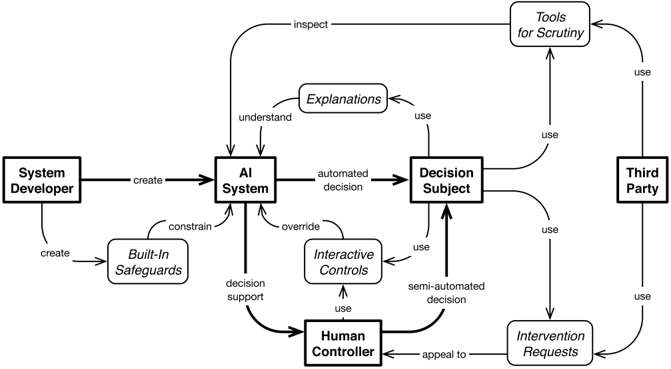
- The framework identifies five features contributing to contestable AI: built-in safeguards against harmful behavior; interactive control over automated decisions; explanations of system behavior; human review and intervention requests; and tools for scrutiny by subjects or third parties.
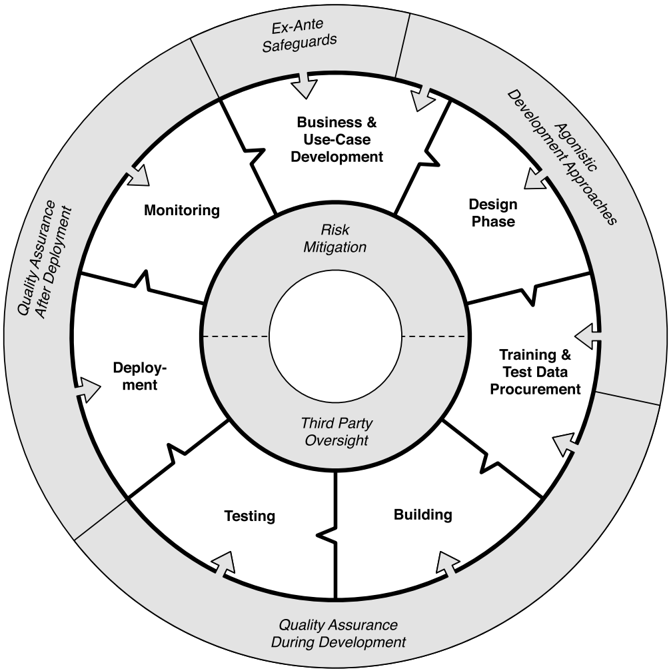
- It identifies six practices: ex-ante safeguards; agonistic approaches to ML development; quality assurance during development; quality assurance after deployment; risk mitigation strategies; and third-party oversight.
- Features are mapped to actors in typical AI systems (system developers, human controllers, decision subjects, third parties), while practices are mapped to AI lifecycle phases from the ICO auditing framework.
- Contestability is framed as a deep system property and procedural justice requiring dialectical exchange, not merely a “human in the loop”; explanations should include both the “how” and the “why”/justification of decisions.
Methods
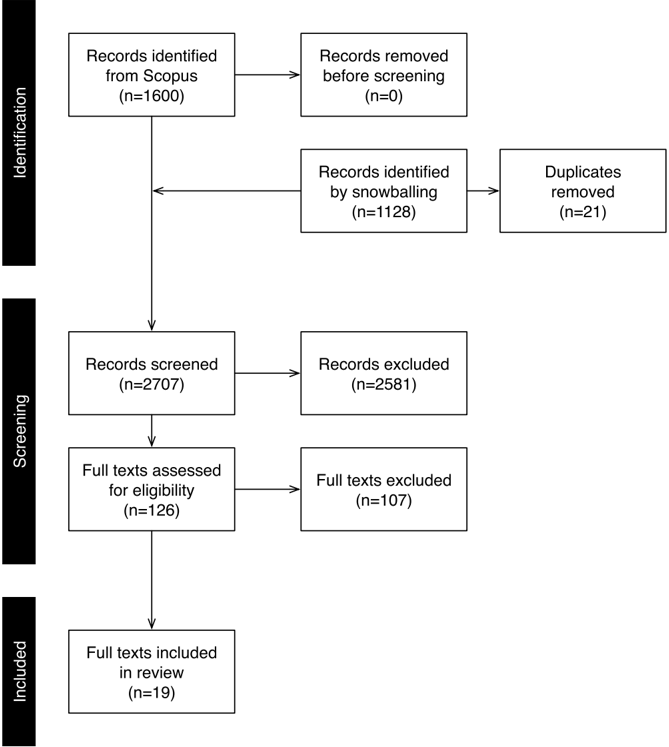
- Systematic review broadly following Moher et al. (2009): Scopus search for journal articles and conference papers published between 2016 and 2021 mentioning “AI,” “contestability,” and “design” plus synonyms; duplicates removed, titles/abstracts screened in Rayyan, full-text eligibility assessed, then backward and forward snowballing.
- Analysis adapted from reflexive thematic analysis (Braun & Clarke, 2006) in Atlas.ti version 22 on MacOS: passages on actionable sociotechnical properties were selected, grouped, labeled, and examined for hierarchical and lateral relationships.
- Synthesis used visual mapping techniques and existing diagrams; the preliminary framework was checked against selected passages and an end-to-end read-through of the source literature.
Limitations
- Stated in the paper: the framework is based on a small sample of academic papers, may have gaps from lack of coverage, draws on sources from specific fields (e.g., ethics of technology, computer science, law), and many source papers are not empirically validated; most content remains “context-free,” validation was not part of the paper, and usability is limited because no directions for using the framework to design contestable AI are offered.
- Stated in the paper: the framework assumes a generic automated decision-making setting with significant impact and relatively low time-sensitivity; it likely does not cover extreme high-stakes contexts such as lethal autonomous weapons or shared control of autonomous vehicles, and the authors’ empirical work is situated in local government public services in OECD countries.
- Evident from the text: the framework is explicitly preliminary and provisional, intended as a starting point for subsequent testing and validation in specific application contexts; no empirical evaluation of its effectiveness is reported.
Model-written summary. Check it against the paper before relying on it.
Integrity signals
Registry
Cites
Statistics
Figures
Verification
Claims the paper makes
13 Valid · 4 Not valid · 6 Not checked · 37 Own results and interpretations
The cited sources support only part of this claim — read each source’s verdict below.
In the paper
“As a result, AI systems contain a particularly high degree of uncertainty and unpredictability.”
§ Contestable AI by Design: Towards a Framework > 3 Responsible Design for AI
What the sources say
- Partly supportedcites van de Poel, 2020 matched to “Embedding Values in Artificial Intelligence (AI) Systems” (2020) sourceExperimental — accuracy not yet measured
The passage labeled “1 3” (page unavailable) says unintended consequences are “probably more endemic” in AI systems because of their learning capabilities. The Conclusion likewise discusses unintended and unforeseen consequences. These passages support heightened unpredictability, but they hedge the comparison and do not establish the claim’s unqualified “particularly high degree” of uncertainty in general. (LLM, conf=0.82)
plain- Asserted: passes — The authors put it forward as true.
- Checkable: passes — It can be checked against evidence.
- Load-bearing: passes — The paper’s conclusions depend on it.
- Based: passes — The paper gives a reason why it holds.
- Partly supported
The sources with a verdict support this claim; the rest weren’t checked yet, have no full text we could read, or their verdicts aren’t rated yet.
In the paper
“Corrections, appeals, and additional contextual information from human controllers and decision subjects can be used as feedback signals for the decision-making process as a whole (Hirsch et al., 2017;Vaccaro et al., 2020).”
§ Contestable AI by Design: Towards a Framework > 6.2.4 Quality Assurance After Deployment
What the sources say
- Supportedcites Hirsch et al., 2017 matched to “Designing Contestability: Interaction Design, Machine Learning, and Mental Health” (2017) source
In “Facilitating Contestation” (page unavailable), the paper calls for users to challenge predictions and provide arguments and contextual details for decisions informed by the system. “Incentivizing Participation” says user corrections revise session reports immediately and user edits can improve models and feedback over time. Together, these passages support the claim that such input can feed back into the decision-making process. (LLM, conf=0.86)
- Not checked — no full text of the sourcecites Vaccaro et al., 2020 matched to “"At the End of the Day Facebook Does What ItWants": How Users Experience Contesting Algorithmic Content Moderation” (2020) source
plainstates a cause- Asserted: passes — The authors put it forward as true.
- Checkable: passes — It can be checked against evidence.
- Load-bearing: passes — The paper’s conclusions depend on it.
- Based: passes — The paper gives a reason why it holds.
- Supported
A result the paper states — it cites no source for it, so there is none to check. The quote shows it is in the paper.
In the paper
“The practices are: 1. ex-ante safeguards; 2. agonistic approaches to machine learning (ML) development; 3. quality assurance during development; 4. quality assurance after deployment; 5. risk mitigation strategies; and 6. third-party oversight.”
§ Contestable AI by Design: Towards a Framework > 1 Introduction
plainstates a cause- Asserted: passes — The authors put it forward as true.
- Checkable: passes — It can be checked against evidence.
- Load-bearing: passes — The paper’s conclusions depend on it.
- Based: passes — The paper gives a reason why it holds.
A result the paper states — it cites no source for it, so there is none to check. The quote shows it is in the paper.
In the paper
“The features are: 1. built-in safeguards against harmful behavior; 2. interactive control over automated decisions; 3. explanations of system behavior; 4. human review and intervention requests; and 5. tools for scrutiny by subjects or third parties.”
§ Contestable AI by Design: Towards a Framework > 1 Introduction
plainstates a cause- Asserted: passes — The authors put it forward as true.
- Checkable: passes — It can be checked against evidence.
- Load-bearing: passes — The paper’s conclusions depend on it.
- Based: passes — The paper gives a reason why it holds.
A result the paper states — it cites no source for it, so there is none to check. The quote shows it is in the paper.
In the paper
“The practices are: 1. ex-ante safeguards; 2. agonistic approaches to machine learning (ML) development; 3. quality assurance during development; 4. quality assurance after deployment; 5. risk mitigation strategies; and 6. third-party oversight.”
§ Contestable AI by Design: Towards a Framework > 1 Introduction
plainstates a cause- Asserted: passes — The authors put it forward as true.
- Checkable: passes — It can be checked against evidence.
- Load-bearing: passes — The paper’s conclusions depend on it.
- Based: passes — The paper gives a reason why it holds.
15 more claims
Create a free account to see all 60 claims and to verify the 5 references still open.
- It may state two separate claims as one. 11
- Probably not a substantial claim. 36
Claims other papers make about this one
Each is checked against this paper’s own text: does it say what the citing paper says it does?
The cited source says what the claim attributes to it.
In the citing paper
“The feld of contestable AI is still growing [3] and many of the guidelines on how to design for contestability are conceptual in nature [3,44,67].”
From Disentangling Fairness Perceptions in Algorithmic Decision-Making: the Effects of Explanations, Human Oversight, and Contestability (2023) · cites this paper as [3]
Citations
Cites
Using thematic analysis in psychology
Braun, V., & Clarke, V. (2006) · Qualitative Research in Psychology · doi:10.1191/1478088706qp063oa · Cited by 194,414
Preferred Reporting Items for Systematic Reviews and Meta-Analyses: The PRISMA Statement
Moher, D., Liberati, A., Tetzlaff, J., Altman, D. G., & The PRISMA Group (2009) · PLoS Medicine · doi:10.1371/journal.pmed.1000097 · Cited by 64,042 · cited 1×
“Our data-collection procedure broadly follows Moher et al. (2009).”
Preferred reporting items for systematic reviews and meta-analyses: The PRISMA statement
Moher, D., Liberati, A., Tetzlaff, J., Altman, D. G., & the PRISMA Group* (2009) · Annals of Internal Medicine · doi:10.7326/0003-4819-151-4-200908180-00135 · Cited by 37,554
Rayyan-a web and mobile app for systematic reviews.
Ouzzani, M., Hammady, H., Fedorowicz, Z., & Elmagarmid, A. (2016) · Systematic Reviews · doi:10.1186/s13643-016-0384-4 · Cited by 26,092 · cited 1×
“Then, using Rayyan (Ouzzani et al., 2016), we manually screened records’ titles and abstracts for actually referring to contestability (rather than e.g. “contest” in the sense of a competition).”
"Why Should I Trust You?": Explaining the Predictions of Any Classifier
Ribeiro, M. T., Singh, S., & Guestrin, C. (2016) · Proceedings of the 22nd ACM SIGKDD International Conference on Knowledge Discovery and Data Mining · doi:10.1145/2939672.2939778 · Cited by 17,555 · cited 1×
“However, once again we emphasize not to fixate on the technical components of AI systems in isolation (Hirsch et al., 2017; Leahu, 2016; Mahendran & Vedaldi, 2015; Ribeiro et al., 2016; Tickle et al., 1998 in Edwards & Veale, 2018).”
“Why Should I Trust You?”: Explaining the Predictions of Any Classifier
Ribeiro, M., Singh, S., & Guestrin, C. (2016) · Proceedings of the 2016 Conference of the North American Chapter of the Association for Computational Linguistics: Demonstrations · doi:10.18653/v1/n16-3020 · Cited by 6,682
The global landscape of AI ethics guidelines
Jobin, A., Ienca, M., & Vayena, E. (2019) · Nature Machine Intelligence · doi:10.1038/s42256-019-0088-2 · Cited by 6,220 · cited 2×
“To illustrate this point we briefly summarize a number of prominent systematic reviews and meta-analyses drawn from across disciplines (Jobin et al., 2019; Morley et al., 2019; Shneiderman, 2020).”
Model Cards for Model Reporting
Mitchell, M., Wu, S., Zaldivar, A., Barnes, P., Vasserman, L., Hutchinson, B., Spitzer, E., Raji, I. D., & Gebru, T. (2019) · Proceedings of the Conference on Fairness, Accountability, and Transparency · doi:10.1145/3287560.3287596 · Cited by 2,681 · cited 1×
“Mitchell et al. (2019) and Gebru et al. (2020) offer examples of possible documentation approaches.”
Gebru, T., Morgenstern, J., Vecchione, B., Vaughan, J. W., Wallach, H., Daumé, H., & Crawford, K. (2018) · arXiv · doi:10.48550/arxiv.1803.09010 · Cited by 2,474
Gebru, T., Morgenstern, J., Vecchione, B., Vaughan, J. W., Wallach, H., III, H. D., & Crawford, K. (2021) · Communications of the ACM · doi:10.1145/3458723 · Cited by 2,469 · cited 1×
“Mitchell et al. (2019) and Gebru et al. (2020) offer examples of possible documentation approaches.”
Research works printed but not linked: 4
- Interactive control over automated decisions Bayamlıoğlu (2021), Hirsch et al. (2017), Jewell (2018), Vaccaro et al. (2019, 2020) Explanations of system behavior Aler Tubella et al. (2020), Almada (2019), Bayamlıoğlu (2021), Brkan (2019), Crawford (2016), Edwards and Veale (2018), Henin and Le Métayer (2021), Hirsch et al. (2017), Lyons et al. (2021), Ploug and Holm (2020), Sarra (2020), Vaccaro et al. (2019, 2021) Human review and intervention requests Almada (2019), Bayamlıoğlu (2021), Brkan (2019), Edwards and Veale (2018), Elkin-Koren (2020), Henin and Le Métayer (2021), Hirsch et al. (2017), Lyons et al. (2021), Ploug and Holm (2020), Sarra (2020), Vaccaro et al. (2019, 2020, 2021), Walmsley (2021) Tools for scrutiny by subjects or third parties Aler Tubella et al. (2020), Almada (2019), Bayamlıoğlu (2021), Henin and Le Métayer (2021), Hirsch et al. (2017), Kariotis and Mir (2020), Lyons et al. (2021), Vaccaro et al. (2019, 2020) Table 4 Practices contributing to contestable AI Practice Sources Ex-ante safeguards Aler Tubella et al. (2020), Almada (2019), Bayamlıoğlu (2021), Brkan (2019), Edwards and Veale (2018), Henin and Le Métayer (2021), Hirsch et al. (2017), Kariotis and Mir (2020), Lyons et al. (2021), Sarra (2020), Walmsley (2021)
- Goodman, B. (2016). Economic models of (algorithmic) discrimination. In 29th conference on neural information processing systems
- Kluttz, D., Kohli, N., & Mulligan, D. K. (2018). Contestability and professionals: From explanations to engagement with algorithmic systems. SSRN Electronic Journal. https:// doi. org/ 10. 2139/ ssrn. 33118 · DOI · Paper page
- Winner, L. (1980). Do artifacts have politics? Daedalus, 109(1), 121-136.
Cited by
Mehrotra, S., Degachi, C., Vereschak, O., Jonker, C. M., & Tielman, M. L. (2024) · ACM Journal on Responsible Computing · doi:10.1145/3696449 · Cited by 144
Yurrita, M., Draws, T., Balayn, A., Murray-Rust, D., Tintarev, N., & Bozzon, A. (2023) · Proceedings of the 2023 CHI Conference on Human Factors in Computing Systems · doi:10.1145/3544548.3581161 · Cited by 108
“Contestability is said to “surface values” [92] and to be a “form of procedural justice, a way of giving voice to decision subjects, which increases perceptions of fairness” [3].”
BackgroundTrust, trustworthiness and AI governance
Lahusen, C., Maggetti, M., & Slavkovik, M. (2024) · Scientific Reports · doi:10.1038/s41598-024-71761-0 · Cited by 68
Verma, H., Mlynář, J., Schaer, R., Reichenbach, J., Jreige, M., Prior, J. O., Évéquoz, F., & Depeursinge, A. (2023) · CHI Conference on Human Factors in Computing Systems · doi:10.1145/3544548.3581506 · Cited by 78
“To overcome the challenges posed by the functional realization of explainability, recommendations have been made to calibrate (clinical) practices surrounding the use of AI, so that their decisions and impact can be contested [2, 40, 62, 74, 103].”
MethodAlfrink, K., Keller, I., Doorn, N., & Kortuem, G. (2023) · CHI Conference on Human Factors in Computing Systems · doi:10.1145/3544548.3580984 · Cited by 69
“Together they show how, as Alfrink et al. [2] propose, “contestability leverages conflict for continuous system improvement.”
BackgroundMethodInfluentialSelf-citationMarres, N., Castelle, M., Gobbo, B., Poletti, C., & Tripp, J. (2024) · Big Data & Society · doi:10.1177/20539517241255103 · Cited by 46
“…workshop — to identify, qualify and evaluate a speci fi c type of AI controversy, namely those with the capacity to problematise AI across domains, to bring new actors into the debate and to unsettle established de fi nitions of harm and risk (see Alfrink et al. (2022) for a similar approach).”
Democratizing AI from a Sociotechnical Perspective
Noorman, M. E., & Swierstra, T. (2023) · Minds and Machines · doi:10.1007/s11023-023-09651-z · Cited by 40
“…the idea of contestability by design “to protect against fallible, unac-countable, illegitimate, and unjust automated decision-making, by ensuring the possibility of human intervention as part of a procedural relationship between decision subjects and human controllers” (Alfrink et al., 2022).”
Integration of data science with product design towards data-driven design
Liu, A., Lu, S. C.-Y., Tao, F., & Anwer, N. (2024) · CIRP Annals · doi:10.1016/j.cirp.2024.06.003 · Cited by 26
From Fitting Participation to Forging Relationships: The Art of Participatory ML
Cooper, N., & Zafiroglu, A. (2024) · Proceedings of the CHI Conference on Human Factors in Computing Systems · doi:10.1145/3613904.3642775 · Cited by 17
Unpacking Human-AI interactions: From Interaction Primitives to a Design Space
Tsiakas, K., & Murray-Rust, D. (2024) · ACM Transactions on Interactive Intelligent Systems · doi:10.1145/3664522 · Cited by 31
Governance for safe and responsible AI in healthcare organisations: a scoping review of frameworks
Wang, A., Freeman, S., & Magrabi, F. (2026) · npj Digital Medicine · doi:10.1038/s41746-026-02679-2 · Cited by 35
“Theprincipleof contestability, which is critical inensuring public trust in AI and upholding the principles of justice and autonomy 84 , was only included in 10 frameworks (13.0”
InfluentialUnfairness in AI Anti-Corruption Tools: Main Drivers and Consequences
Odilla, F. (2024) · Minds and Machines · doi:10.1007/s11023-024-09688-8 · Cited by 31
“It is essential to design AI systems that can be contested, allowing for human intervention at various stages of their lifecycle, to curb potential harm caused by automated decision-making (Alfrink et al., 2022).”
Information that matters: Exploring information needs of people affected by algorithmic decisions
Schmude, T., Koesten, L. M., Möller, T. B., & Tschiatschek, S. (2024) · International Journal of Human-Computer Studies · doi:10.1016/j.ijhcs.2024.103380 · Cited by 20
Alfrink, K., Keller, I., Yurrita, M., Bulygin, D., Kortuem, G., & Doorn, N. (2024) · She ji · doi:10.1016/j.sheji.2024.03.003 · Cited by 22
Self-citationLumos: AI-driven prompt optimisation tool for assisting conceptual design
Chen, X., Ma, Z., Jiang, X., Jian, Y., Yao, X., & Wu, P. (2024) · Journal of Engineering Design · doi:10.1080/09544828.2024.2396195 · Cited by 10
AI, Jobs, and the Automation Trap: Where Is HCI?
Constantinides, M., & Quercia, D. (2025) · Annual Symposium on Human-Computer Interaction for Work (CHIWORK) · doi:10.1145/3729176.3729191 · Cited by 19
“A key component of such integration is the concept of AI contestability, which emphasizes designing systems that allow decisions and processes to be challenged or adapted by those directly or indirectly affected [3].”
Pyle, C., Zhang, Z., Haimson, O. L., & Andalibi, N. (2024) · Proceedings of the ACM on Human-Computer Interaction · doi:10.1145/3637342 · Cited by 13
Design for operator contestability: control over autonomous systems by introducing defeaters
Veluwenkamp, H., & Buijsman, S. (2025) · AI and Ethics · doi:10.1007/s43681-025-00657-0 · Cited by 10
Toward empowering AI governance with redress mechanisms
Pi, Y., & Proctor, M. (2025) · Cambridge Forum on AI Law and Governance · doi:10.1017/cfl.2025.9 · Cited by 20
“…as remedy, recourse and contestability, serves as a vital mechanism for empowering individuals impacted by AI systems to protect their rights, particularly in cases where the principles of equality, inclusiveness and fairness are violated or undermined (Alfrink et al., 2022; Fanni et al., 2023).”
Misabstraction in Sociotechnical Systems
de Troya, Í. M. D. R., Kernahan, J., Doorn, N., Dignum, V., & Dobbe, R. (2025) · ACM Conference on Fairness, Accountability, and Transparency (FAccT) · doi:10.1145/3715275.3732122 · Cited by 15
“…50, 96], enforcement [54, 85, 114], civic advocacy [91], shifting organisational culture [33, 39], affording users meaningful discretionary power to correct erroneous outputs [123], providing organisational mechanisms for recourse [22, 23, 46, 63], facilitating dissent [11, 37, 52, 119] and more.”
Self-citationAudrin, B., & Audrin, C. (2026) · Technology in Society · doi:10.1016/j.techsoc.2026.103289 · Cited by 4
Cammers-Goodwin, S. (2023) · Smart Cities · doi:10.3390/smartcities6020032 · Cited by 5
“This concept is adapted from “contestablity,” which refers to the ability of the public to contest the process and outcomes of AI decision-making algorithms, thereby changing the function of the AI system [24].”
BackgroundSmits, A., Detweiler, C., Bartels, E., Pott, K., van der Stappen, E., van Rossen, S., Cardona, K., Shayan, S., Ziegler, J., & van Turnhout, K. (2024) · Lecture notes in computer science · doi:10.1007/978-3-031-61698-3_17 · Cited by 7
Identifying Algorithmic Decision Subjects' Needs for Meaningful Contestability
Yurrita, M., Verma, H., Balayn, A., Alfrink, K., Gadiraju, U., & Bozzon, A. (2025) · Proc. ACM Hum. Comput. Interact. · doi:10.1145/3757415 · Cited by 7
Self-citationLegally-Informed Explainable AI
Mansi, G., Karusala, N., & Riedl, M. (2025) · arXiv · doi:10.48550/arxiv.2504.10708 · Cited by 4
Maoro, F., & Geierhos, M. (2025) · Frontiers in Artificial Intelligence · doi:10.3389/frai.2025.1602998 · Cited by 10
Civil society and the (im)possibilities of algorithmic contestation in migration governance
Eneva, S. A., & Mora-Gámez, F. (2025) · Frontiers in Sociology · doi:10.3389/fsoc.2025.1641898 · Cited by 4
Lim, G., Kim, J., & Perrault, S. T. (2026) · ACM Transactions on Computer-Human Interaction · doi:10.1145/3771935 · Cited by 7
“This aligns with contestable AI that leverages human intervention to attenuate incorrect decisions by the AI [2].”
Start Using Justifications When Explaining AI Systems to Decision Subjects
Kolářová, K., & Schmude, T. (2025) · Lecture notes in computer science · doi:10.1007/978-3-032-11108-1_14 · Cited by 7
de Winkel, E., Lukszo, Z., Neerincx, M. A., & Dobbe, R. (2026) · Energy Research & Social Science · doi:10.1016/j.erss.2026.104605 · Cited by 5
AI as a socio-technical actor: rethinking definitions for ethics and governance
Hedfeld, P. (2026) · AI and Ethics · doi:10.1007/s43681-026-01123-1 · Cited by 6
Future Design: An Analysis of the Impact of AI on Designers’ Workflow and Skill Sets
Singh, K. D., & Duo, Y. X. (2023) · Lecture notes in networks and systems · doi:10.1007/978-3-031-50330-6_23 · Cited by 6
From Stem to Stern: Contestability Along AI Value Chains
Balayn, A., Pi, Y., Widder, D. G., Alfrink, K., Yurrita, M., Upadhyay, S., Karusala, N., Lyons, H., Turkay, Ç., Tessono, C., et al. (2024) · ACM Conference on Computer Supported Cooperative Work (CSCW) · doi:10.1145/3678884.3681831 · Cited by 10
Self-citationHong, S., Cai, C., Du, S., Feng, H., Liu, S., & Fan, X. (2025) · Lecture notes in computer science · doi:10.1007/978-3-031-98462-4_4 · Cited by 17
How to gain control and influence algorithms: contesting AI to find relevant reasons
Kuilman, S. K., Siebert, L. C., Buijsman, S., & Jonker, C. M. (2024) · AI and Ethics · doi:10.1007/s43681-024-00500-y · Cited by 6
“Essentially every stakeholder that comes into contact with the system or is impacted by it needs to be able to contest the design of the AI such that it can morph into something more desirable [1].”
Embedding caring into remote patient management systems
Offerman, C., Bourgeois, J., & Bozzon, A. (2024) · Nordic Conference on Human-Computer Interaction · doi:10.1145/3679318.3685399 · Cited by 2
Governing the Digital Society: Platforms, Artificial Intelligence, and Public Values
Dijck, J., Es, K., Helmond, A., & Vlist, F. (2025) · Amsterdam University Press eBooks · doi:10.1515/9789048562725 · Cited by 3
Oliveira, A., Hernández-Ramírez, R., & Ayanoğlu, H. (2025) · Lecture notes in computer science · doi:10.1007/978-3-031-93982-2_26 · Cited by 2
Potentials for Friction: Exploring the Design Space Between Playfulness and Agonism
França, N. C., Itzlinger, A., Maurer, B., et al. (2025) · Lecture notes in computer science · doi:10.1007/978-3-032-05005-2_13 · Cited by 2
AI-driven active sourcing in recruitment: addressing contestability in automated hiring systems
Hadžić, B., Brandner, L. T., Weber, T., & Rätsch, M. (2025) · Frontiers in Computer Science · doi:10.3389/fcomp.2025.1629522 · Cited by 8
Hirsbrunner, S. D., Kleemann, S., & Tahraoui, M. (2025) · Frontiers in Communication · doi:10.3389/fcomm.2025.1638257 · Cited by 3
“In their categorization of contestation practices, Alfrink et al. (2022) emphasize the importance of quality assurance after deployment maintaining feedback loops enabling ongoing improvements.”
InfluentialNguyen, H., Rahimi, A., Whitford, V., Fournier, H., Kondratova, I., Richard, R., & Cao, H. (2026) · ACM Transactions on Computing for Healthcare · doi:10.1145/3788686 · Cited by 20
Lan, Z. (2026) · Telecommunications Policy · doi:10.1016/j.telpol.2026.103317 · Cited by 4
Leveraging Data Science for Defence in the Digital Age: Defence AI in the Netherlands
Dooren, M. M. M. H.-V., & Lindelauf, R. H. A. (2024) · Contributions to security and defence studies · doi:10.1007/978-3-031-58649-1_10 · Cited by 2
Azghadi, S. A. R., Nguyen, T. T. H., Fournier, H., Wachowicz, M., Richard, R., Palma, F., & Cao, H. (2025) · SSRN Electronic Journal · doi:10.2139/ssrn.5390384 · Cited by 2
Contesting efficacy: Tensions between risk and inclusion in computer vision technology
Scheuerman, M. K. (2024) · Future Humanities · doi:10.1002/fhu2.12 · Cited by 2
Why Designers Must Contribute to Responsible AI
Smits, A., van der Zandt, L., & van Turnhout, K. (2024) · Lecture notes in computer science · doi:10.1007/978-3-031-60611-3_7 · Cited by 3
Multimedia Verification Through Multi-Agent Deep Research Multimodal Large Language Models
Le, H. H., Nguyen, V. S., Dang, T. L., et al. (2025) · ACM International Conference on Multimedia (ACM MM) · doi:10.1145/3746027.3762033 · Cited by 1
Smits, A., Cardona, K., Berk, M., Hoekman, B. J., Marantika, T., Meeuwse, T., van Rossen, S., Sent, D., & van Turnhout, K. (2026) · Communications in computer and information science · doi:10.1007/978-3-032-15516-0_9 · Cited by 1
Rohlfing, K. J., Alpsancar, S., & Schulte, C. (2026) · Springer eBooks · doi:10.1007/978-981-96-5290-7_9 · Cited by 1
Beyond Explanation: Evidentiary Rights for Algorithmic Accountability
Stewart, M. (2026) · Proceedings of the 2026 ACM Conference on Fairness, Accountability, and Transparency · doi:10.1145/3805689.3806532 · Cited by 1
Ben, L. (2026) · Frontiers in Medicine · doi:10.3389/fmed.2026.1896492
“Contestable AI by design keeps decisions open to dispute, letting individuals and communities contest outputs, data, models, and design choices (49).”
Mask-Like Alignment: A Psychopathy-Informed Heuristic for Persona-Driven LLM Deployment
Danagher, L. (2026) · Philosophy & Technology · doi:10.1007/s13347-026-01188-0 · Cited by 2
“Reason-giving thus helps make institutional decisions contestable, accountable, and legitimate (Colquitt, 2001; Tyler, 2006; Alfrink et al., 2023; Martin & Waldman, 2023; Wachter et al., 2018).”
Upadhyay, S., Pruss, D., DeVrio, A., Gajos, K. Z., & Karusala, N. (2026) · CHI Conference on Human Factors in Computing Systems · doi:10.1145/3772318.3791923 · Cited by 2
“In other scholarship, it is viewed as a sociotechnical problem of supporting responsiveness to human intervention throughout the development lifecycle [9].”
Luo, Y., Gkouskos, D., & Russo, N. L. (2026) · CHI Conference on Human Factors in Computing Systems · doi:10.1145/3772318.3790672
“Existing work has emphasized the importance of supporting steerability through human-in-the-loop systems, direct manipulation, and contestable AI [2, 29, 30, 45, 65].”
From Distribution to Contribution: Negotiating Justice Policies in Grassroots FOSS Communities
Engelbutzeder, P., Jahn, L. G., Ballmaier, A., Lawo, D., Michel, L. K., Jovanovska, S. G., Randall, D. W., & Wulf, V. (2026) · CHI Conference on Human Factors in Computing Systems · doi:10.1145/3772318.3791722 · Cited by 1
Cammers-Goodwin, S. I. (2023) · University of Twente Research Information · doi:10.3990/1.9789036556101 · Cited by 3
Batenipour, N. (2023) · International Association of Societies of Design Research Congress (IASDR) · doi:10.21606/iasdr.2023.515 · Cited by 1
Emerging technology and pedagogical application in Design Education
Ranjan, R., & Rana, P. P. (2023) · International Journal of Emerging and Disruptive Innovation in Education VISIONARIUM · doi:10.62608/2831-3550.1008 · Cited by 1
“Students should be encouraged to critically evaluate AI-generated designs and maintain a human-centric approach, ensuring that AI is employed as a tool to augment human creativity rather than replace it (Alfrink et al., 2022).”
BackgroundDigital Sociocracy: A Decolonial Participatory Governance
Lim, J. B. Y. (2025) · Springer eBooks · doi:10.1007/978-3-031-78211-4_5 · Cited by 2
Beyond Regulation: What 500 Cases Reveal About the Future of AI on the CourtsPreprint
Assunção, I. B. (2025) · SSRN Electronic Journal · doi:10.2139/ssrn.5257124
Autonomy and Urban Life with AI: Autonomous Cities and Everyday Life
McKenna, H. P. (2025) · Springer eBooks · doi:10.1007/978-3-031-88765-9_4
11. Doing Inclusion : Negotiation and Co-creation for People-centric Smart Cities
de Lange, M., Ruijer, E. H. J. M., & Varró, K. (2025) · Amsterdam University Press eBooks · doi:10.1515/9789048562725-015 · Cited by 3
Zannoni, M., & Vignali, V. (2025) · International Conference on Dependable Systems and Networks workshops · doi:10.1109/dsn-w65791.2025.00043
The cost of (data) community: error and repair in data processing pipelines
Metcalf, K. (2025) · BioSocieties · doi:10.1057/s41292-025-00367-0
Zhang, J. (2025) · doi:10.1109/icicr65456.2025.00010
“How to solve these problems has become the focus of research by many AI technologists[4].”
Paradigma, A. M. F. (2025) · AI Law Politics · doi:10.5709/alp-01.02.2025-02
Human-Centered Recommender Systems
Hao, S., Ji, L., & Zhang, D. (2026) · Springer eBooks · doi:10.1007/978-981-97-8440-0_119-1 · Cited by 1
Marwala, T. (2026) · Elsevier eBooks · doi:10.1016/b978-0-443-36322-1.00016-x
Enhancing Explainability and Contestability through AI Pluralism and Rhetorical Argumentation
Rao, P. A. (2026) · Springer eBooks · doi:10.1007/978-3-032-06558-2_3
McCallion, B. (2026) · SSRN Electronic Journal · doi:10.2139/ssrn.6242458
Intelligence Analysis and Decision-Making in Environments of Contested Truth
Selvakumar, P., Venugopal, B. S., Ranjini, B. V., Udayakumar, S., Naidu, S. T., & Satyanarayana, P. (2026) · IGI Global eBooks · doi:10.4018/979-8-3373-6786-6.ch004 · Cited by 1
Kayyali, M. (2026) · Advances in computational intelligence and robotics book series · doi:10.4018/979-8-3373-6776-7.ch008
Velotto, G. (2026) · AI and Ethics · doi:10.1007/s43681-026-01121-3
Understanding the Affordances of Control in AI Reasoning for Human-AI Decision-Making
Moon, J., Huang, C., & Xiao, Z. (2026) · CHI Conference Extended Abstracts on Human Factors in Computing Systems (CHI EA) · doi:10.1145/3772363.3798555 · Cited by 2
Artificial Intelligence Systems and Universal Knowledge Schemes: Designing With African Voices
Odhiambo, K. T. (2026) · Advances in computational intelligence and robotics book series · doi:10.4018/407612
Data Management in AI-Enhanced Democratic Systems
Touliou, K., Panou, M., Spiliotis, A., Chandrinos, N., Symeonidis, I., Mariani, I., Rizzo, F., & Edmond, J. (2026) · Springer series in design and innovation · doi:10.1007/978-3-032-23948-8_4
Kasneci, G., & Kasneci, E. (2026) · AI and Ethics · doi:10.1007/s43681-026-01132-0 · Cited by 6
“…contestability, auditability, source diversity, expert override, and near-miss learning before treating throughput gains as net progress (Alfrink et al., 2023; Casper et al., 2024; Cobbe et al., 2021; European Union, 2024; National Institute of Standards and Technology, 2023, 2024; Raji…”
Human-Centered Recommender Systems
Hao, S., Ji, L., & Zhang, D. (2026) · Springer eBooks · doi:10.1007/978-981-95-3658-0_119
Narrative Plasticity and State Stickiness: Designing Hybrid AI Systems for High-Stakes Communication
Kessler, D. T., Overney, C., Shen, J. J., & Roy, D. K. (2026) · Designing Interactive Systems Conference · doi:10.1145/3800645.3813073 · Cited by 1
Sokolov, A. (2026) · SSRN Electronic Journal · doi:10.2139/ssrn.6964515
Schmude, T., Pahr, D., Koesten, L. M., Möller, T. B., & Tschiatschek, S. (2026) · ACM Conference on Fairness, Accountability, and Transparency (FAccT) · doi:10.1145/3805689.3812271
Baresi, U., & Russo, A. (2026) · Urban Science · doi:10.3390/urbansci10070377 · Cited by 2
“Communities would then express their inputs on ML outputs, assumptions, and distributional impacts [121].”
Alogla, A. A. (2026) · Results in Engineering · doi:10.1016/j.rineng.2026.112192 · Cited by 2
Over-Automation in Higher Education: Ethical Risks and Human-Centered AI
Rathnaraj, N., & Bashir, F. (2026) · Advances in computational intelligence and robotics book series · doi:10.4018/979-8-3373-9484-8.ch014
Shin, D. (2026) · Oxford University Press eBooks · doi:10.1093/9780197849644.003.0014
Legible Machines, Contestable Truths: Explainability and Contestability in AI Fact-Checking
Shin, D. (2026) · Oxford University Press eBooks · doi:10.1093/9780197849644.003.0009
A multi-layer social-theoretical framework for AI ethics
Fakrudeen, M., & Otieno, J. O. (2026) · AI and Ethics · doi:10.1007/s43681-026-01307-9
“Affected stakeholders should, where appropriate, have mechanisms through which deci - sions can be understood, questioned, reviewed, and corrected [25 ].”
InfluentialChun-wang, L. U. I., & Pusheng, W. A. N. G. (2026) · Frontiers in Medicine · doi:10.3389/fmed.2026.1894905 · Cited by 1
“Contestability describes the capacity of affected stakeholders to question an AI-supported decision or governance arrangement, introduce contextual evidence, obtain review, and seek correction or remedy (7, 13).”
InfluentialDesigning Contestability and Employee Appeals Into Artificial Intelligence–Mediated Management
Bello, A., Sule, Z., Musa, I., Adeyemi, G., & Youssef, A. (2025) · Journal of Applied Organizational Systems and Behavior · doi:10.51847/i6a1ccaykk
Justice and Trust Repair in Organizational Decision Systems
Ricci, P., Luca, M. D., Ferraro, G., & Russo, A. (2026) · Journal of Applied Organizational Systems and Behavior · doi:10.51847/1tichauvwh
Mandalunes, J. A. (2026) · Research Square · doi:10.21203/rs.3.rs-10621652/v1
Mühlhoff, R. (2026) · AI & Society · doi:10.1007/s00146-026-03281-6 · Cited by 4
Conceptual Foundations for Scientific Contestability in AI-Driven Materials Decisions
Al-Farsi, M., Al-Harthy, S., & Al-Rawahi, N. (2025) · Journal of Artificial Intelligence for Materials Science · doi:10.68159/n899925668
Sotolani, R. S., Parziale, A., Voria, G., Catolino, G., Palomba, F., & Spinola, R. O. (2026) · SSRN Electronic Journal · doi:10.2139/ssrn.7442691
The ethical friction deficit: rethinking contestability in entrepreneurial technology governance
Harid, S. A. E. H. (2026) · Journal of Ethics in Entrepreneurship and Technology · doi:10.1108/jeet-06-2026-0034
From principlism to practice: a five-principle safeguard framework for workplace AI
Guttmann, M. D. (2026) · AI and Ethics · doi:10.1007/s43681-026-01404-9
Mansi, G., & Riedl, M. O. (2026) · Nature Health · doi:10.1038/s44360-026-00186-y · Cited by 3
Sun, C. (2026) · AI and Ethics · doi:10.1007/s43681-026-01400-z
“Work on contestability by design further specifies that affected persons need explanations, routes to human review and opportunities to challenge decisions throughout the system lifecycle [ 24].”
Metadata
- Authors
- Alfrink, K., Keller, I., Kortuem, G., & Doorn, N.
- Affiliations
- Delft University of Technology (NL)
- Corresponding author
- Alfrink, Kars
- Venue
- Minds and Machines
- Published
- 2022-08-13
- Volume
- 33
- Issue
- 4
- Pages
- 613-639
- ISSN
- 0924-6495 (ISSN-L)
- 1572-8641
- OpenAlex
- W4291197616
- Semantic Scholar
- eb1f83302d3742fe2ad5e1d018db361568632175
- Cited by
- 169
- References
- 79
- Citations by year
- 2026: 97 · 2025: 38 · 2024: 21 · 2023: 13
- FWCI
- 4.82
- Type
- journal article
- Language
- en
- Open access
- hybrid
- doi.org
- Licence
- cc-by
- creativecommons.org/licenses/by/4.0 (tdm)
- creativecommons.org/licenses/by/4.0 (vor)
- Locations
- Minds and Machines (publishedVersion, cc-by)
- Research Repository (Delft University of Technology) (submittedVersion, cc-by)
- Data Archiving and Networked Services (DANS) (submittedVersion, other-oa)
- Funders
- Nederlandse Organisatie voor Wetenschappelijk Onderzoek (CISC.CC.018)
- Topics
- Physical Sciences › Computer Science › Artificial Intelligence › Ethics and Social Impacts of AI
- Physical Sciences › Computer Science › Artificial Intelligence › Explainable Artificial Intelligence (XAI)
- Physical Sciences › Engineering › Safety, Risk, Reliability and Quality › Safety Systems Engineering in Autonomy
- Keywords
- design framework, human intervention, automated decision-making, fairness, accountability, legitimacy, visual mapping
About these checks
Registry, retraction, Cites and statistics results are computed, not judged, with one exception: a printed reference that no index lists is read once by a model before it counts as a citation error. Claims are extracted by a model and kept only when their quote appears verbatim in the text; each cited source is then checked, with a model’s help, for whether it says what the claim relies on. Those verdicts can be wrong — read the claim’s quote and the cited source before relying on one.
The claim verdicts this report counts are experimental: their accuracy is not yet measured.
A language model drew the claims from the paper on 2026-10-05, under version 3 of the claim definition (model deepseek-v4.1-flash, prompt extract-v3).
A second model labelled each claim on 2026-10-05 (model jev-1.13-20260917, definition revision gold-guideline-v0.2).
Cited sources are checked with a language model’s help (gpt-6-sol).
Statistics and arithmetic are recomputed, not judged.
Confidence bands are shown only for fields calibrated on our annotated test set. None is calibrated yet, so no band is shown.
What counts as a claim ›How we measure confidence ›How we check this ›
Are you an author, or do you see a problem with this page? Request a review
Data sources
Bibliographic data: Semantic Scholar, OpenAlex, Crossref.
Contains information from the Semantic Scholar Academic Graph Datasets, made available under the ODC Attribution License (ODC-BY 1.0).
Semantic Scholar’s data is described in: Kinney, R., et al. (2023). The Semantic Scholar Open Data Platform. arXiv:2301.10140.
