

Contestable AI by Design: Towards a Framework
Open accessThe DOI matches its Crossref record; 91 of the 91 references it cites were found in a registry or an index; 14 of the 25 sources its claims cite were checked for support.
Abstract
As the use of AI systems continues to increase, so do concerns over their lack of fairness, legitimacy and accountability. Such harmful automated decision-making can be guarded against by ensuring AI systems are contestable by design: responsive to human intervention throughout the system lifecycle. Contestable AI by design is a small but growing field of research. However, most available knowledge requires a significant amount of translation to be applicable in practice. A proven way of conveying intermediate-level, generative design knowledge is in the form of frameworks. In this article we use qualitative-interpretative methods and visual mapping techniques to extract from the literature sociotechnical features and practices that contribute to contestable AI, and synthesize these into a design framework.
Overview
CoChat Summary
TL;DR
The paper synthesizes literature on contestable AI into a preliminary design framework of five system features and six development practices, using qualitative-interpretative methods and visual mapping. It aims to provide intermediate-level generative design knowledge for making AI systems open and responsive to human intervention throughout their lifecycle.
Key findings
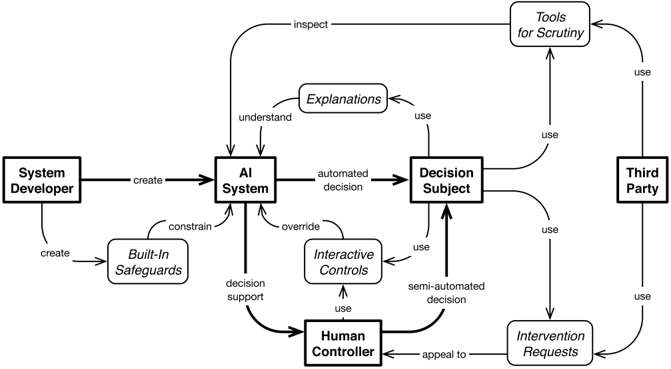
- The framework identifies five features contributing to contestable AI: built-in safeguards against harmful behavior; interactive control over automated decisions; explanations of system behavior; human review and intervention requests; and tools for scrutiny by subjects or third parties.
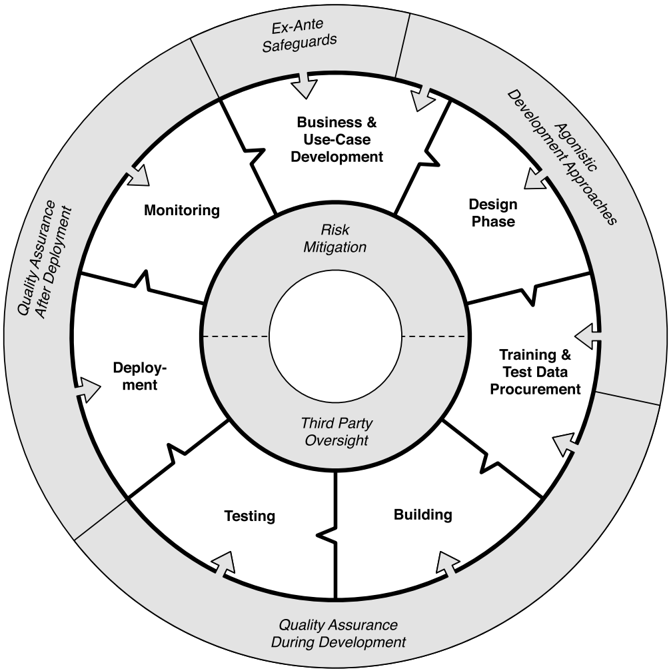
- It identifies six practices: ex-ante safeguards; agonistic approaches to ML development; quality assurance during development; quality assurance after deployment; risk mitigation strategies; and third-party oversight.
- Features are mapped to actors in typical AI systems (system developers, human controllers, decision subjects, third parties), while practices are mapped to AI lifecycle phases from the ICO auditing framework.
- Contestability is framed as a deep system property and procedural justice requiring dialectical exchange, not merely a “human in the loop”; explanations should include both the “how” and the “why”/justification of decisions.
Methods
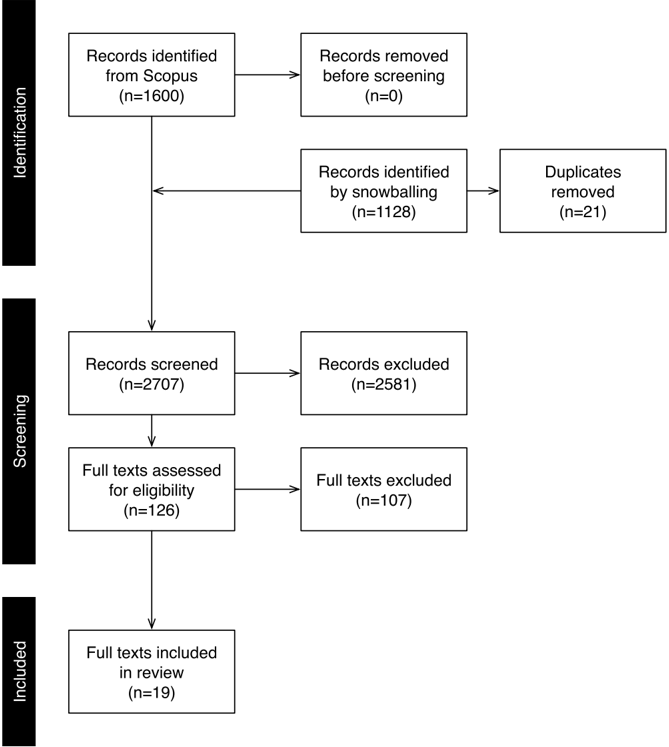
- Systematic review broadly following Moher et al. (2009): Scopus search for journal articles and conference papers published between 2016 and 2021 mentioning “AI,” “contestability,” and “design” plus synonyms; duplicates removed, titles/abstracts screened in Rayyan, full-text eligibility assessed, then backward and forward snowballing.
- Analysis adapted from reflexive thematic analysis (Braun & Clarke, 2006) in Atlas.ti version 22 on MacOS: passages on actionable sociotechnical properties were selected, grouped, labeled, and examined for hierarchical and lateral relationships.
- Synthesis used visual mapping techniques and existing diagrams; the preliminary framework was checked against selected passages and an end-to-end read-through of the source literature.
Limitations
- Stated in the paper: the framework is based on a small sample of academic papers, may have gaps from lack of coverage, draws on sources from specific fields (e.g., ethics of technology, computer science, law), and many source papers are not empirically validated; most content remains “context-free,” validation was not part of the paper, and usability is limited because no directions for using the framework to design contestable AI are offered.
- Stated in the paper: the framework assumes a generic automated decision-making setting with significant impact and relatively low time-sensitivity; it likely does not cover extreme high-stakes contexts such as lethal autonomous weapons or shared control of autonomous vehicles, and the authors’ empirical work is situated in local government public services in OECD countries.
- Evident from the text: the framework is explicitly preliminary and provisional, intended as a starting point for subsequent testing and validation in specific application contexts; no empirical evaluation of its effectiveness is reported.
Model-written summary. Check it against the paper before relying on it.
Integrity signals
Registry
Cites
Statistics
Figures
Verification
Claims the paper makes
13 Valid · 4 Not valid · 6 Not checked · 37 Own results and interpretations
The cited sources support only part of this claim — read each source’s verdict below.
In the paper
“As a result, AI systems contain a particularly high degree of uncertainty and unpredictability.”
§ Contestable AI by Design: Towards a Framework > 3 Responsible Design for AI
What the sources say
- Partly supportedcites van de Poel, 2020 matched to “Embedding Values in Artificial Intelligence (AI) Systems” (2020) sourceExperimental — accuracy not yet measured
The passage labeled “1 3” (page unavailable) says unintended consequences are “probably more endemic” in AI systems because of their learning capabilities. The Conclusion likewise discusses unintended and unforeseen consequences. These passages support heightened unpredictability, but they hedge the comparison and do not establish the claim’s unqualified “particularly high degree” of uncertainty in general. (LLM, conf=0.82)
plain- Asserted: passes — The authors put it forward as true.
- Checkable: passes — It can be checked against evidence.
- Load-bearing: passes — The paper’s conclusions depend on it.
- Based: passes — The paper gives a reason why it holds.
- Partly supported
The sources with a verdict support this claim; the rest weren’t checked yet, have no full text we could read, or their verdicts aren’t rated yet.
In the paper
“Corrections, appeals, and additional contextual information from human controllers and decision subjects can be used as feedback signals for the decision-making process as a whole (Hirsch et al., 2017;Vaccaro et al., 2020).”
§ Contestable AI by Design: Towards a Framework > 6.2.4 Quality Assurance After Deployment
What the sources say
- Supportedcites Hirsch et al., 2017 matched to “Designing Contestability: Interaction Design, Machine Learning, and Mental Health” (2017) source
In “Facilitating Contestation” (page unavailable), the paper calls for users to challenge predictions and provide arguments and contextual details for decisions informed by the system. “Incentivizing Participation” says user corrections revise session reports immediately and user edits can improve models and feedback over time. Together, these passages support the claim that such input can feed back into the decision-making process. (LLM, conf=0.86)
- Not checked — no full text of the sourcecites Vaccaro et al., 2020 matched to “"At the End of the Day Facebook Does What ItWants": How Users Experience Contesting Algorithmic Content Moderation” (2020) source
plainstates a cause- Asserted: passes — The authors put it forward as true.
- Checkable: passes — It can be checked against evidence.
- Load-bearing: passes — The paper’s conclusions depend on it.
- Based: passes — The paper gives a reason why it holds.
- Supported
A result the paper states — it cites no source for it, so there is none to check. The quote shows it is in the paper.
In the paper
“The practices are: 1. ex-ante safeguards; 2. agonistic approaches to machine learning (ML) development; 3. quality assurance during development; 4. quality assurance after deployment; 5. risk mitigation strategies; and 6. third-party oversight.”
§ Contestable AI by Design: Towards a Framework > 1 Introduction
plainstates a cause- Asserted: passes — The authors put it forward as true.
- Checkable: passes — It can be checked against evidence.
- Load-bearing: passes — The paper’s conclusions depend on it.
- Based: passes — The paper gives a reason why it holds.
A result the paper states — it cites no source for it, so there is none to check. The quote shows it is in the paper.
In the paper
“The features are: 1. built-in safeguards against harmful behavior; 2. interactive control over automated decisions; 3. explanations of system behavior; 4. human review and intervention requests; and 5. tools for scrutiny by subjects or third parties.”
§ Contestable AI by Design: Towards a Framework > 1 Introduction
plainstates a cause- Asserted: passes — The authors put it forward as true.
- Checkable: passes — It can be checked against evidence.
- Load-bearing: passes — The paper’s conclusions depend on it.
- Based: passes — The paper gives a reason why it holds.
A result the paper states — it cites no source for it, so there is none to check. The quote shows it is in the paper.
In the paper
“The practices are: 1. ex-ante safeguards; 2. agonistic approaches to machine learning (ML) development; 3. quality assurance during development; 4. quality assurance after deployment; 5. risk mitigation strategies; and 6. third-party oversight.”
§ Contestable AI by Design: Towards a Framework > 1 Introduction
plainstates a cause- Asserted: passes — The authors put it forward as true.
- Checkable: passes — It can be checked against evidence.
- Load-bearing: passes — The paper’s conclusions depend on it.
- Based: passes — The paper gives a reason why it holds.
15 more claims
Create a free account to see all 60 claims and to verify the 5 references still open.
- It may state two separate claims as one. 11
- Probably not a substantial claim. 36
Claims other papers make about this one
Each is checked against this paper’s own text: does it say what the citing paper says it does?
The cited source says what the claim attributes to it.
In the citing paper
“The feld of contestable AI is still growing [3] and many of the guidelines on how to design for contestability are conceptual in nature [3,44,67].”
From Disentangling Fairness Perceptions in Algorithmic Decision-Making: the Effects of Explanations, Human Oversight, and Contestability (2023) · cites this paper as [3]
Citations
Cites
Using thematic analysis in psychology
Braun, V., & Clarke, V. (2006) · Qualitative Research in Psychology · doi:10.1191/1478088706qp063oa · Cited by 194,414
Preferred Reporting Items for Systematic Reviews and Meta-Analyses: The PRISMA Statement
Moher, D., Liberati, A., Tetzlaff, J., Altman, D. G., & The PRISMA Group (2009) · PLoS Medicine · doi:10.1371/journal.pmed.1000097 · Cited by 64,042 · cited 1×
“Our data-collection procedure broadly follows Moher et al. (2009).”
Preferred reporting items for systematic reviews and meta-analyses: The PRISMA statement
Moher, D., Liberati, A., Tetzlaff, J., Altman, D. G., & the PRISMA Group* (2009) · Annals of Internal Medicine · doi:10.7326/0003-4819-151-4-200908180-00135 · Cited by 37,554
Rayyan-a web and mobile app for systematic reviews.
Ouzzani, M., Hammady, H., Fedorowicz, Z., & Elmagarmid, A. (2016) · Systematic Reviews · doi:10.1186/s13643-016-0384-4 · Cited by 26,092 · cited 1×
“Then, using Rayyan (Ouzzani et al., 2016), we manually screened records’ titles and abstracts for actually referring to contestability (rather than e.g. “contest” in the sense of a competition).”
"Why Should I Trust You?": Explaining the Predictions of Any Classifier
Ribeiro, M. T., Singh, S., & Guestrin, C. (2016) · Proceedings of the 22nd ACM SIGKDD International Conference on Knowledge Discovery and Data Mining · doi:10.1145/2939672.2939778 · Cited by 17,555 · cited 1×
“However, once again we emphasize not to fixate on the technical components of AI systems in isolation (Hirsch et al., 2017; Leahu, 2016; Mahendran & Vedaldi, 2015; Ribeiro et al., 2016; Tickle et al., 1998 in Edwards & Veale, 2018).”
“Why Should I Trust You?”: Explaining the Predictions of Any Classifier
Ribeiro, M., Singh, S., & Guestrin, C. (2016) · Proceedings of the 2016 Conference of the North American Chapter of the Association for Computational Linguistics: Demonstrations · doi:10.18653/v1/n16-3020 · Cited by 6,682
The global landscape of AI ethics guidelines
Jobin, A., Ienca, M., & Vayena, E. (2019) · Nature Machine Intelligence · doi:10.1038/s42256-019-0088-2 · Cited by 6,220 · cited 2×
“To illustrate this point we briefly summarize a number of prominent systematic reviews and meta-analyses drawn from across disciplines (Jobin et al., 2019; Morley et al., 2019; Shneiderman, 2020).”
Model Cards for Model Reporting
Mitchell, M., Wu, S., Zaldivar, A., Barnes, P., Vasserman, L., Hutchinson, B., Spitzer, E., Raji, I. D., & Gebru, T. (2019) · Proceedings of the Conference on Fairness, Accountability, and Transparency · doi:10.1145/3287560.3287596 · Cited by 2,681 · cited 1×
“Mitchell et al. (2019) and Gebru et al. (2020) offer examples of possible documentation approaches.”
Gebru, T., Morgenstern, J., Vecchione, B., Vaughan, J. W., Wallach, H., Daumé, H., & Crawford, K. (2018) · arXiv · doi:10.48550/arxiv.1803.09010 · Cited by 2,474
Gebru, T., Morgenstern, J., Vecchione, B., Vaughan, J. W., Wallach, H., III, H. D., & Crawford, K. (2021) · Communications of the ACM · doi:10.1145/3458723 · Cited by 2,469 · cited 1×
“Mitchell et al. (2019) and Gebru et al. (2020) offer examples of possible documentation approaches.”
Creativity in the design process: co-evolution of problem–solution
Dorst, K., & Cross, N. (2001) · Design Studies · doi:10.1016/s0142-694x(01)00009-6 · Cited by 2,357
Raji, I. D., Smart, A., White, R. N., Mitchell, M., Gebru, T., Hutchinson, B., Smith-Loud, J., Theron, D., & Barnes, P. (2020) · Proceedings of the 2020 Conference on Fairness, Accountability, and Transparency · doi:10.1145/3351095.3372873 · Cited by 2,245 · cited 1×
“Future efforts may seek to compare our proposed framework to more generic ethical, responsible and accountable AI frameworks (e.g. Cobbe et al., 2021; Hutchinson et al., 2021; Mohseni 2019; Raji et al., 2020).”
Ananny, M., & Crawford, K. (2018) · New Media & Society · doi:10.1177/1461444816676645 · Cited by 1,836 · cited 1×
“This behavioral approach accounts for the limitations of transparency efforts focusing on “the algorithm” in isolation (Ananny & Crawford, 2018 in Henin & Le Métayer, 2021).”
Understanding deep image representations by inverting them
Mahendran, A., & Vedaldi, A. (2015) · 2015 IEEE Conference on Computer Vision and Pattern Recognition (CVPR) · doi:10.1109/cvpr.2015.7299155 · Cited by 1,827 · cited 1×
“However, once again we emphasize not to fixate on the technical components of AI systems in isolation (Hirsch et al., 2017; Leahu, 2016; Mahendran & Vedaldi, 2015; Ribeiro et al., 2016; Tickle et al., 1998 in Edwards & Veale, 2018).”
What we talk about when we talk about context
Dourish, P. (2004) · Personal and Ubiquitous Computing · doi:10.1007/s00779-003-0253-8 · Cited by 1,529
Morley, J., Floridi, L., Kinsey, L., & Elhalal, A. (2020) · Science and Engineering Ethics · doi:10.1007/s11948-019-00165-5 · Cited by 882 · cited 3×
“Morley et al. (2019) note that many AI ethics tools lack usability in the sense that they are not actionable and do not come with guidance on how they may be put to use in practice.”
The past and future of constructive technology assessment
Schot, J., & Rip, A. (1997) · Technological Forecasting and Social Change · doi:10.1016/s0040-1625(96)00180-1 · Cited by 827 · cited 1×
“Considering AI system development tends to be cyclical and ongoing, anticipation should be revisited with every proposed change (Schot & Rip, 1997 in Kariotis and Mir 2020).”
Shneiderman, B. (2020) · ACM Transactions on Interactive Intelligent Systems · doi:10.1145/3419764 · Cited by 768 · cited 2×
“To illustrate this point we briefly summarize a number of prominent systematic reviews and meta-analyses drawn from across disciplines (Jobin et al., 2019; Morley et al., 2019; Shneiderman, 2020).”
A Contextual Approach to Privacy Online
Nissenbaum, H. (2011) · Daedalus · doi:10.1162/daed_a_00113 · Cited by 649 · cited 1×
“It also seeks to strike a balance between usability and comprehensiveness, in an effort to avoid the “transparency paradox” (Nissenbaum, 2011 in Crawford, 2016).”
Meaningful Human Control over Autonomous Systems: A Philosophical Account
Santoni de Sio, F., & van den Hoven, J. (2018) · Frontiers in Robotics and AI · doi:10.3389/frobt.2018.00015 · Cited by 566 · cited 1×
“…research field more focused on these high-stakes and time sensitive scenarios is meaningful human control (for which see e.g. Methnani et al., 2021; de Sio & van den Hoven, 2018; Umbrello, 2021; Braun et al., 2021; Verdiesen et al., 2021; Wyatt & Galliott, 2021; Cavalcante Siebert et al., 2022).”
Strong concepts: Intermediate-level knowledge in interaction design research
Höök, K., & Löwgren, J. (2012) · ACM Transactions on Computer-Human Interaction · doi:10.1145/2362364.2362371 · Cited by 540 · cited 1×
“One such form of “intermediate-level generative design knowl-edge” (Höök & Löwgren, 2012; Löwgren et al., 2013) are design frameworks .”
Myers West, S. (2018) · New Media & Society · doi:10.1177/1461444818773059 · Cited by 477 · cited 1×
“One way to aid collective action would be to publicize individual appeals cases so subjects can compare their treatment to those of others, and identify fellow sufferers (Matias et al., 2015; Myers West 2018; Sandvig et al., 2014 in Vaccaro et al., 2020).”
A Contextual Approach to Privacy Online
Helen, N. (2012) · Digital Enlightenment Yearbook 2012 · doi:10.3233/978-1-61499-057-4-219 · Cited by 445
Tickle, A. B., Andrews, R., Golea, M., & Diederich, J. (1998) · IEEE Transactions on Neural Networks · doi:10.1109/72.728352 · Cited by 438 · cited 1×
“However, once again we emphasize not to fixate on the technical components of AI systems in isolation (Hirsch et al., 2017; Leahu, 2016; Mahendran & Vedaldi, 2015; Ribeiro et al., 2016; Tickle et al., 1998 in Edwards & Veale, 2018).”
The Intuitive Appeal of Explainable Machines
Selbst, A. D., & Barocas, S. (2018) · doi:10.2139/ssrn.3126971 · Cited by 392 · cited 1×
“Further documentation should describe how the system was constructed (i.e. documentation of the design and development process) (Selbst & Barocas, 2018 in Almada 2019), the role of human decision-makers, group or systemic impacts and how they are safeguarded against (Lyons et al., 2021).”
Social Interdependence: Interrelationships Among Theory, Research, and Practice.
Johnson, D. W. (2003) · American Psychologist · doi:10.1037/0003-066x.58.11.934 · Cited by 350 · cited 1×
“Methods should be used that ensure participants are made aware of and deal with power differentials (Geuens et al., 2018; Johnson, 2003 in Kariotis and Mir 2020).”
Can an Algorithm be Agonistic? Ten Scenes from Life in Calculated Publics
Crawford, K. (2016) · Science, Technology, & Human Values · doi:10.1177/0162243915589635 · Cited by 314 · cited 4×
“Companies may resist opening up proprietary data and models for fear of losing their competitive edge and users “gaming the system” (Crawford, 2016).”
InfluentialHutchinson, B., Smart, A., Hanna, A., Denton, R., Greer, C., Kjartansson, O., Barnes, P., & Mitchell, M. (2021) · Proceedings of the 2021 ACM Conference on Fairness, Accountability, and Transparency · doi:10.1145/3442188.3445918 · Cited by 279 · cited 1×
“Future efforts may seek to compare our proposed framework to more generic ethical, responsible and accountable AI frameworks (e.g. Cobbe et al., 2021; Hutchinson et al., 2021; Mohseni 2019; Raji et al., 2020).”
DesignX: Complex Sociotechnical Systems
Norman, D. A., & Stappers, P. J. (2015) · She Ji: The Journal of Design, Economics, and Innovation · doi:10.1016/j.sheji.2016.01.002 · Cited by 279
Participation Is not a Design Fix for Machine Learning
Sloane, M., Moss, E., Awomolo, O., & Forlano, L. (2022) · Equity and Access in Algorithms, Mechanisms, and Optimization · doi:10.1145/3551624.3555285 · Cited by 267
COVER STORYBeyond interaction: a short introduction to mediation theory
Verbeek, P.-P. (2015) · Interactions · doi:10.1145/2751314 · Cited by 256 · cited 1×
“Developers should make an effort to anticipate the impacts of their system in advance (Brkan, 2019; Henin & Le Métayer, 2021; Sarra, 2020), and pay close attention to how the system may “mediate” new and existing social practices (Verbeek 2015 in Hirsch et al., 2017).”
Embedding Values in Artificial Intelligence (AI) Systems
van de Poel, I. (2020) · Minds and Machines · doi:10.1007/s11023-020-09537-4 · Cited by 255 · cited 1×
“What is more, AI systems are distinct from “traditional” sociotechnical systems because they include “artificial agents” and humans interacting in a dynamic evolving environment (van de Poel, 2020).”
Engineering Justice: Transforming Engineering Education and Practice
(2017) · Wiley eBooks · doi:10.1002/9781118757369 · Cited by 247
Instructional Scaffolding: Reading and Writing as Natural Language Activities
Applebee, A. N., & Langer, J. A. (1983) · Language Arts · doi:10.58680/la198326236 · Cited by 227 · cited 1×
“Mechanisms for requesting human intervention should provide “scaffold-ing for learning” (Applebee & Langer, 1983; Salehi et al., 2017 in Vaccaro et al., 2020).”
Concept-Driven Interaction Design Research
Stolterman, E., & Wiberg, M. (2010) · Human–Computer Interaction · doi:10.1080/07370020903586696 · Cited by 215 · cited 1×
“Following Stolterman and Wiberg (2010), we understand such design artifacts to be either in the service of improving a use situation, or in service of embodying new ideas (concepts) and theories.”
Annotated portfolios and other forms of intermediate-level knowledge
Löwgren, J. (2013) · Interactions · doi:10.1145/2405716.2405725 · Cited by 210 · cited 2×
“One such form of “intermediate-level generative design knowl-edge” (Höök & Löwgren, 2012; Löwgren et al., 2013) are design frameworks .”
Raji, I. D., Smart, A., White, R. N., Mitchell, M., Gebru, T., Hutchinson, B., Smith-Loud, J., Theron, D., & Barnes, P. (2020) · arXiv · doi:10.48550/arxiv.2001.00973 · Cited by 179
The Right Not to be Subject to Automated Decisions Based on Profiling
Mendoza, I., & Bygrave, L. A. (2017) · EU Internet Law · doi:10.1007/978-3-319-64955-9_4 · Cited by 160 · cited 1×
“For true contestation to be the case, not only should the subject be allowed to express their point of view, but there should also be a dialectical exchange between subject and controller (Mendoza & Bygrave, 2017 in Brkan 2019).”
Toward situated interventions for algorithmic equity: lessons from the field
Katell, M., Young, M., Dailey, D., Herman, B., Guetler, V., Tam, A., Bintz, C., Raz, D., & Krafft, P. M. (2020) · Proceedings of the 2020 Conference on Fairness, Accountability, and Transparency · doi:10.1145/3351095.3372874 · Cited by 153 · cited 1×
“Design, human–computer interaction (HCI) design in particular, is uniquely equipped to tackle such sociotechnical challenges, because it draws on both computer science and social science, joining positivist and interpretive traditions (Dour-ish, 2004; Katell et al., 2020; Tonkinwise, 2016).”
Reviewable Automated Decision-Making: A Framework for Accountable Algorithmic Systems
Cobbe, J., Lee, M. S. A., & Singh, J. (2021) · Proceedings of the 2021 ACM Conference on Fairness, Accountability, and Transparency · doi:10.1145/3442188.3445921 · Cited by 150 · cited 1×
“Future efforts may seek to compare our proposed framework to more generic ethical, responsible and accountable AI frameworks (e.g. Cobbe et al., 2021; Hutchinson et al., 2021; Mohseni 2019; Raji et al., 2020).”
The four dimensions of contestable AI diagnostics - A patient-centric approach to explainable AI
Ploug, T., & Holm, S. (2020) · Artificial Intelligence in Medicine · doi:10.1016/j.artmed.2020.101901 · Cited by 148 · cited 4×
“It gives subjects the ability to “ask questions and record disagreements”, both on the individual and the aggregate scale (Hirsch et al., 2017; Ploug & Holm, 2020; Vaccaro et al., 2019).”
InfluentialTreating socio‐technical systems as engineering systems: some conceptual problems
Kroes, P., Franssen, M., Poel, I. V. D., & Ottens, M. (2006) · Systems Research and Behavioral Science · doi:10.1002/sres.703 · Cited by 142 · cited 1×
“This sociotechnical view emphasizes technical and social dimensions are entangled, producing specific outcomes irreducible to constitutive components (Franssen, 2015; Kroes et al., 2006).”
Shè Jì: The Journal of Design, Economics, and Innovation
Friedman, K., Lou, Y., & Ma, J. (2015) · She ji · doi:10.1016/j.sheji.2015.09.002 · Cited by 142
Enslaving the Algorithm: From a “Right to an Explanation” to a “Right to Better Decisions”?
Edwards, L., & Veale, M. (2018) · IEEE Security & Privacy · doi:10.1109/msp.2018.2701152 · Cited by 141 · cited 8×
“This approach stands in contrast to ex-post mechanisms for contestation, which can only go so far in protecting against harmful automated decisions because they are necessarily reactive in nature (Almada, 2019; Edwards & Veale, 2018).”
InfluentialMeaningful human control: actionable properties for AI system development
Cavalcante Siebert, L., Lupetti, M. L., Aizenberg, E., Beckers, N., Zgonnikov, A., Veluwenkamp, H., Abbink, D., Giaccardi, E., Houben, G.-J., Jonker, C. M., et al. (2023) · AI and Ethics · doi:10.1007/s43681-022-00167-3 · Cited by 138 · cited 1×
“…research field more focused on these high-stakes and time sensitive scenarios is meaningful human control (for which see e.g. Methnani et al., 2021; de Sio & van den Hoven, 2018; Umbrello, 2021; Braun et al., 2021; Verdiesen et al., 2021; Wyatt & Galliott, 2021; Cavalcante Siebert et al., 2022).”
The end(s) of critique: data behaviourism versus due process
(2013) · Privacy, Due Process and the Computational Turn · doi:10.4324/9780203427644-16 · Cited by 138 · cited 1×
“This avoids the self-production of norms (Rouvroy, 2012 in Henin & Le Métayer, 2021).”
Artificial intelligence and the value of transparency
Walmsley, J. (2021) · AI & SOCIETY · doi:10.1007/s00146-020-01066-z · Cited by 131 · cited 4×
“In decision-support settings, such signals can also be derived from occurrences where human controllers reject system predictions (Walmsley, 2021).”
InfluentialEngineering justice: Transforming engineering education and practice
Leydens, J. A., & Lucena, J. C. (2018) · International Journal for Service Learning in Engineering, Humanitarian Engineering and Social Entrepreneurship · doi:10.24908/ijsle.v13i1.11855 · Cited by 124
Designing Contestability: Interaction Design, Machine Learning, and Mental Health
Hirsch, T., Merced, K., Narayanan, S., Imel, Z. E., & Atkins, D. C. (2017) · Proceedings of the 2017 Conference on Designing Interactive Systems · doi:10.1145/3064663.3064703 · Cited by 110 · cited 15×
“A small but growing body of research explores the concept of contestable AI (Almada, 2019; Henin & Le Métayer, 2021; Hirsch et al., 2017; Lyons et al., 2021; Sarra, 2020; Vaccaro et al., 2019, 2021).”
InfluentialBrkan, M. (2019) · International Journal of Law and Information Technology · doi:10.1093/ijlit/eay017 · Cited by 106 · cited 6×
“This would include the features identified in our framework, first and foremost means of acquiring explanation and human intervention (Almada, 2019; Brkan, 2019; Walmsley, 2021).”
InfluentialVaccaro, K., Sandvig, C., & Karahalios, K. (2020) · Proceedings of the ACM on Human-Computer Interaction · doi:10.1145/3415238 · Cited by 102 · cited 8×
“Corrections, appeals, and additional contextual information from human controllers and decision subjects can be used as feedback signals for the decision-making process as a whole (Hirsch et al., 2017; Vaccaro et al., 2020).”
InfluentialHuman intervention in automated decision-making: Toward the construction of contestable systems
Almada, M. (2019) · Proceedings of the Seventeenth International Conference on Artificial Intelligence and Law · doi:10.1145/3322640.3326699 · Cited by 95 · cited 21×
“This would include the features identified in our framework, first and foremost means of acquiring explanation and human intervention (Almada, 2019; Brkan, 2019; Walmsley, 2021).”
InfluentialKönig, P. D., & Wenzelburger, G. (2021) · Technology in Society · doi:10.1016/j.techsoc.2021.101688 · Cited by 87 · cited 1×
“König and Wenzelburger (2021) offer an outline of one possible way of structuring such a process.”
Contestability For Content Moderation
Vaccaro, K., Xiao, Z., Hamilton, K., & Karahalios, K. (2021) · Proceedings of the ACM on Human-Computer Interaction · doi:10.1145/3476059 · Cited by 77 · cited 6×
“A small but growing body of research explores the concept of contestable AI (Almada, 2019; Henin & Le Métayer, 2021; Hirsch et al., 2017; Lyons et al., 2021; Sarra, 2020; Vaccaro et al., 2019, 2021).”
InfluentialMorley, J., Floridi, L., Kinsey, L., & Elhalal, A. (2019) · arXiv.org · doi:10.48550/arxiv.1905.06876 · Cited by 76
Design methods for ethical persuasive computing
Davis, J. (2009) · Proceedings of the 4th International Conference on Persuasive Technology · doi:10.1145/1541948.1541957 · Cited by 75 · cited 1×
“In HCI, a well-established means of involving stakeholders in the development of technological systems is participatory design (Davis, 2009 in Almada 2019).”
Beyond explainability: justifiability and contestability of algorithmic decision systems
Henin, C., & Le Métayer, D. (2022) · AI & SOCIETY · doi:10.1007/s00146-021-01251-8 · Cited by 71 · cited 8×
“A small but growing body of research explores the concept of contestable AI (Almada, 2019; Henin & Le Métayer, 2021; Hirsch et al., 2017; Lyons et al., 2021; Sarra, 2020; Vaccaro et al., 2019, 2021).”
InfluentialVerdiesen, I., Santoni de Sio, F., & Dignum, V. (2021) · Minds and Machines · doi:10.1007/s11023-020-09532-9 · Cited by 70 · cited 1×
“…research field more focused on these high-stakes and time sensitive scenarios is meaningful human control (for which see e.g. Methnani et al., 2021; de Sio & van den Hoven, 2018; Umbrello, 2021; Braun et al., 2021; Verdiesen et al., 2021; Wyatt & Galliott, 2021; Cavalcante Siebert et al., 2022).”
Let Me Take Over: Variable Autonomy for Meaningful Human Control
Methnani, L., Aler Tubella, A., Dignum, V., & Theodorou, A. (2021) · Frontiers in Artificial Intelligence · doi:10.3389/frai.2021.737072 · Cited by 66 · cited 1×
“A related research field more focused on these high-stakes and time sensitive scenarios is meaningful human control (for which see e.g. Methnani et al., 2021; de Sio & van den Hoven, 2018; Umbrello, 2021; Braun et al., 2021; Verdiesen et al., 2021; Wyatt & Galliott, 2021; Cavalcante Siebert et al.,…”
Understanding Deep Image Representations by Inverting Them
Mahendran, A., & Vedaldi, A. (2014) · arXiv (Cornell University) · doi:10.48550/arxiv.1412.0035 · Cited by 64
A Leap of Faith: Is There a Formula for “Trustworthy” AI?
Braun, M., Bleher, H., & Hummel, P. (2021) · Hastings Center Report · doi:10.1002/hast.1207 · Cited by 62 · cited 1×
“…research field more focused on these high-stakes and time sensitive scenarios is meaningful human control (for which see e.g. Methnani et al., 2021; de Sio & van den Hoven, 2018; Umbrello, 2021; Braun et al., 2021; Verdiesen et al., 2021; Wyatt & Galliott, 2021; Cavalcante Siebert et al., 2022).”
Contesting the decision: living in (and living with) the smart city
Jewell, M. (2018) · International Review of Law Computers & Technology · doi:10.1080/13600869.2018.1457000 · Cited by 60 · cited 1×
“Where direct override is not a possibility, some form of control can be offered in an indirect manner by allowing users to supplement the data a decision is based on with additional contextual information (Hirsch et al., 2017; Jewell, 2018).”
Contesting algorithms: Restoring the public interest in content filtering by artificial intelligence
Elkin-Koren, N. (2020) · Big Data & Society · doi:10.1177/2053951720932296 · Cited by 60 · cited 5×
“An additional benefit of a second (possibly public) system that decisions need to pass through is the creation of a record of all decisions made, which can aid outside scrutiny (Almada, 2019; Elkin-Koren, 2020; Lyons et al., 2021).”
InfluentialContestability in Algorithmic Systems
Vaccaro, K., Karahalios, K., Mulligan, D. K., Kluttz, D., & Hirsch, T. (2019) · Companion Publication of the 2019 Conference on Computer Supported Cooperative Work and Social Computing · doi:10.1145/3311957.3359435 · Cited by 54 · cited 11×
“A small but growing body of research explores the concept of contestable AI (Almada, 2019; Henin & Le Métayer, 2021; Hirsch et al., 2017; Lyons et al., 2021; Sarra, 2020; Vaccaro et al., 2019, 2021).”
InfluentialArtificial Intelligence in Medicine
(2019) · Routledge eBooks · doi:10.4324/9780429052071 · Cited by 53
What is Mixed-Initiative Interaction?
Novick, D., & Sutton, S. (1997) · Cited by 51
Reporting, Reviewing, and Responding to Harassment on Twitter
Matias, J. N., Johnson, A., Boesel, W. E., Keegan, B., Friedman, J., & DeTar, C. (2015) · arXiv · doi:10.48550/arxiv.1505.03359 · Cited by 48 · cited 1×
“One way to aid collective action would be to publicize individual appeals cases so subjects can compare their treatment to those of others, and identify fellow sufferers (Matias et al., 2015; Myers West 2018; Sandvig et al., 2014 in Vaccaro et al., 2020).”
Humanoid Cognitive Robots That Learn by Imitating: Implications for Consciousness Studies
Reggia, J. A., Katz, G. E., & Davis, G. P. (2018) · Frontiers in Robotics and AI · doi:10.3389/frobt.2018.00001 · Cited by 47
Machine Learning with Personal DataPreprint
Kamarinou, D., Millard, C. J., & Singh, J. P. (2016) · SSRN Electronic Journal · Cited by 47
Ontological Surprises: A Relational Perspective on Machine Learning
Leahu, L. (2016) · Designing Interactive Systems Conference · doi:10.1145/2901790.2901840 · Cited by 45 · cited 1×
“However, once again we emphasize not to fixate on the technical components of AI systems in isolation (Hirsch et al., 2017; Leahu, 2016; Mahendran & Vedaldi, 2015; Ribeiro et al., 2016; Tickle et al., 1998 in Edwards & Veale, 2018).”
Bayamlıoğlu, E. (2022) · Regulation & Governance · doi:10.1111/rego.12391 · Cited by 44 · cited 14×
“A small but growing body of research explores the concept of contestable AI (Almada, 2019; Henin & Le Métayer, 2021; Hirsch et al., 2017; Lyons et al., 2021; Sarra, 2020; Vaccaro et al., 2019, 2021).”
InfluentialAutomated decision support technologies and the legal profession
Kluttz, D., & Mulligan, D. K. (2019) · SSRN Electronic Journal · doi:10.2139/ssrn.3443063 · Cited by 41
Communicating Context to the Crowd for Complex Writing Tasks
Salehi, N., Teevan, J., Iqbal, S., & Kamar, E. (2017) · Proceedings of the 2017 ACM Conference on Computer Supported Cooperative Work and Social Computing · doi:10.1145/2998181.2998332 · Cited by 32 · cited 1×
“Mechanisms for requesting human intervention should provide “scaffold-ing for learning” (Applebee & Langer, 1983; Salehi et al., 2017 in Vaccaro et al., 2020).”
Mulligan, D. K., Kluttz, D., & Kohli, N. (2019) · doi:10.2139/ssrn.3311894 · Cited by 32 · cited 2×
“Care should also be taken to understand the needs and capabilities of human controllers so they will be willing and able to meaningfully intervene when necessary (Kluttz et al., 2018; Kluttz and Mulligan 2019; Leydens & Lucena, 2018 in Almada, 2019; Kariotis & Mir, 2020; Hirsch et al., 2017).”
Enslaving the Algorithm: From a “Right to an Explanation” to a “Right to Better Decisions”?
Edwards, L., & Veale, M. (2018) · doi:10.31228/osf.io/yhs9c · Cited by 30
Obrenović, Ž. (2011) · interactions · doi:10.1145/2008176.2008189 · Cited by 28 · cited 1×
“Our definition of “design framework” is aligned with Obrenović (2011).”
Sarra, C. (2020) · Global Jurist · doi:10.1515/gj-2020-0003 · Cited by 24 · cited 6×
“A small but growing body of research explores the concept of contestable AI (Almada, 2019; Henin & Le Métayer, 2021; Hirsch et al., 2017; Lyons et al., 2021; Sarra, 2020; Vaccaro et al., 2019, 2021).”
InfluentialPrivacy As Protection of the Incomputable Self: Agonistic Machine LearningPreprint
Hildebrandt, M. (2017) · SSRN Electronic Journal · doi:10.2139/ssrn.3081776 · Cited by 24
Design for Values and Operator Roles in Sociotechnical Systems
Franssen, M. (2015) · Springer eBooks · doi:10.1007/978-94-007-6970-0_8 · Cited by 20 · cited 1×
“This sociotechnical view emphasizes technical and social dimensions are entangled, producing specific outcomes irreducible to constitutive components (Franssen, 2015; Kroes et al., 2006).”
Umbrello, S. (2021) · Ethics and Information Technology · doi:10.1007/s10676-021-09588-w · Cited by 20 · cited 1×
“…research field more focused on these high-stakes and time sensitive scenarios is meaningful human control (for which see e.g. Methnani et al., 2021; de Sio & van den Hoven, 2018; Umbrello, 2021; Braun et al., 2021; Verdiesen et al., 2021; Wyatt & Galliott, 2021; Cavalcante Siebert et al., 2022).”
Aler Tubella, A., Theodorou, A., Dignum, V., & Michael, L. (2020) · Lecture Notes in Computer Science · doi:10.1007/978-3-030-57977-7_12 · Cited by 16 · cited 4×
“These would protect against undesired actions, and demonstrate compliance with standards and legislation (Aler Tubella et al., 2020).”
InfluentialGeuens, J., Geurts, L., Swinnen, T. W., Westhovens, R., Mechelen, M. V., & Abeele, V. V. (2018) · Participatory Design Conference · doi:10.1145/3210604.3210649 · Cited by 15 · cited 1×
“Methods should be used that ensure participants are made aware of and deal with power differentials (Geuens et al., 2018; Johnson, 2003 in Kariotis and Mir 2020).”
Toward Design and Evaluation Framework for Interpretable Machine Learning Systems
Mohseni, S. (2019) · Proceedings of the AAAI/ACM Conference on AI Ethics and Society · doi:10.1145/3306618.3314322 · Cited by 13 · cited 1×
“Future efforts may seek to compare our proposed framework to more generic ethical, responsible and accountable AI frameworks (e.g. Cobbe et al., 2021; Hutchinson et al., 2021; Mohseni 2019; Raji et al., 2020).”
Fighting Back Algocracy: The need for new participatory approaches to technology assessment
Kariotis, T. C., & Mir, D. (2020) · Participatory Design Conference · doi:10.1145/3384772.3385151 · Cited by 11 · cited 6×
“Considering AI system development tends to be cyclical and ongoing, anticipation should be revisited with every proposed change (Schot & Rip, 1997 in Kariotis and Mir 2020).”
InfluentialWyatt, A., & Galliott, J. C. (2021) · Information · doi:10.3390/info12120527 · Cited by 9 · cited 1×
“…research field more focused on these high-stakes and time sensitive scenarios is meaningful human control (for which see e.g. Methnani et al., 2021; de Sio & van den Hoven, 2018; Umbrello, 2021; Braun et al., 2021; Verdiesen et al., 2021; Wyatt & Galliott, 2021; Cavalcante Siebert et al., 2022).”
A Glass Box Approach to Adaptive Hypermedia
Höök, K., Karlgren, J., Wærn, A., et al. (1998) · Springer eBooks · doi:10.1007/978-94-017-0617-9_6 · Cited by 8
Conceptualising Contestability: Perspectives on Contesting Algorithmic Decisions
Lyons, H., Velloso, E., & Miller, T. (2021) · Proceedings of the ACM on Human-Computer Interaction · doi:10.1145/3449180 · Cited by 4 · cited 16×
“A small but growing body of research explores the concept of contestable AI (Almada, 2019; Henin & Le Métayer, 2021; Hirsch et al., 2017; Lyons et al., 2021; Sarra, 2020; Vaccaro et al., 2019, 2021).”
InfluentialThe interaction design public intellectual
Tonkinwise, C. (2016) · interactions · doi:10.1145/2907987 · Cited by 1 · cited 1×
“Design, human–computer interaction (HCI) design in particular, is uniquely equipped to tackle such sociotechnical challenges, because it draws on both computer science and social science, joining positivist and interpretive traditions (Dour-ish, 2004; Katell et al., 2020; Tonkinwise, 2016).”
Comprehensive Human Oversight Framework to Ensure Accountability over Autonomous Weapon Systems
Verdiesen, I. (2022) · Proceedings of the AAAI/ACM Conference on AI Ethics and Society · doi:10.1145/3514094.3539523
(2017) · FLASH - Fordham Law Archive of Scholarship & History (Fordham University)
Participation is not a Design Fix for Machine Learning
Sloane, M., Moss, E., Awomolo, O., et al. (2020) · arXiv · doi:10.48550/arxiv.2007.02423
Research works printed but not linked: 4
- Interactive control over automated decisions Bayamlıoğlu (2021), Hirsch et al. (2017), Jewell (2018), Vaccaro et al. (2019, 2020) Explanations of system behavior Aler Tubella et al. (2020), Almada (2019), Bayamlıoğlu (2021), Brkan (2019), Crawford (2016), Edwards and Veale (2018), Henin and Le Métayer (2021), Hirsch et al. (2017), Lyons et al. (2021), Ploug and Holm (2020), Sarra (2020), Vaccaro et al. (2019, 2021) Human review and intervention requests Almada (2019), Bayamlıoğlu (2021), Brkan (2019), Edwards and Veale (2018), Elkin-Koren (2020), Henin and Le Métayer (2021), Hirsch et al. (2017), Lyons et al. (2021), Ploug and Holm (2020), Sarra (2020), Vaccaro et al. (2019, 2020, 2021), Walmsley (2021) Tools for scrutiny by subjects or third parties Aler Tubella et al. (2020), Almada (2019), Bayamlıoğlu (2021), Henin and Le Métayer (2021), Hirsch et al. (2017), Kariotis and Mir (2020), Lyons et al. (2021), Vaccaro et al. (2019, 2020) Table 4 Practices contributing to contestable AI Practice Sources Ex-ante safeguards Aler Tubella et al. (2020), Almada (2019), Bayamlıoğlu (2021), Brkan (2019), Edwards and Veale (2018), Henin and Le Métayer (2021), Hirsch et al. (2017), Kariotis and Mir (2020), Lyons et al. (2021), Sarra (2020), Walmsley (2021)
- Goodman, B. (2016). Economic models of (algorithmic) discrimination. In 29th conference on neural information processing systems
- Kluttz, D., Kohli, N., & Mulligan, D. K. (2018). Contestability and professionals: From explanations to engagement with algorithmic systems. SSRN Electronic Journal. https:// doi. org/ 10. 2139/ ssrn. 33118 · DOI · Paper page
- Winner, L. (1980). Do artifacts have politics? Daedalus, 109(1), 121-136.
Cited by
Mehrotra, S., Degachi, C., Vereschak, O., Jonker, C. M., & Tielman, M. L. (2024) · ACM Journal on Responsible Computing · doi:10.1145/3696449 · Cited by 144
Yurrita, M., Draws, T., Balayn, A., Murray-Rust, D., Tintarev, N., & Bozzon, A. (2023) · Proceedings of the 2023 CHI Conference on Human Factors in Computing Systems · doi:10.1145/3544548.3581161 · Cited by 108
“Contestability is said to “surface values” [92] and to be a “form of procedural justice, a way of giving voice to decision subjects, which increases perceptions of fairness” [3].”
BackgroundTrust, trustworthiness and AI governance
Lahusen, C., Maggetti, M., & Slavkovik, M. (2024) · Scientific Reports · doi:10.1038/s41598-024-71761-0 · Cited by 68
Verma, H., Mlynář, J., Schaer, R., Reichenbach, J., Jreige, M., Prior, J. O., Évéquoz, F., & Depeursinge, A. (2023) · CHI Conference on Human Factors in Computing Systems · doi:10.1145/3544548.3581506 · Cited by 78
“To overcome the challenges posed by the functional realization of explainability, recommendations have been made to calibrate (clinical) practices surrounding the use of AI, so that their decisions and impact can be contested [2, 40, 62, 74, 103].”
MethodAlfrink, K., Keller, I., Doorn, N., & Kortuem, G. (2023) · CHI Conference on Human Factors in Computing Systems · doi:10.1145/3544548.3580984 · Cited by 69
“Together they show how, as Alfrink et al. [2] propose, “contestability leverages conflict for continuous system improvement.”
BackgroundMethodInfluentialSelf-citation
Metadata
- Authors
- Alfrink, K., Keller, I., Kortuem, G., & Doorn, N.
- Affiliations
- Delft University of Technology (NL)
- Corresponding author
- Alfrink, Kars
- Venue
- Minds and Machines
- Published
- 2022-08-13
- Volume
- 33
- Issue
- 4
- Pages
- 613-639
- ISSN
- 0924-6495 (ISSN-L)
- 1572-8641
- OpenAlex
- W4291197616
- Cited by
- 169
- References
- 79
- Citations by year
- 2026: 97 · 2025: 38 · 2024: 21 · 2023: 13
- FWCI
- 4.82
- Type
- journal article
- Language
- en
- Open access
- hybrid
- doi.org
- Licence
- cc-by
- creativecommons.org/licenses/by/4.0 (tdm)
- creativecommons.org/licenses/by/4.0 (vor)
- Locations
- Minds and Machines (publishedVersion, cc-by)
- Research Repository (Delft University of Technology) (submittedVersion, cc-by)
- Data Archiving and Networked Services (DANS) (submittedVersion, other-oa)
- Funders
- Nederlandse Organisatie voor Wetenschappelijk Onderzoek (CISC.CC.018)
- Topics
- Physical Sciences › Computer Science › Artificial Intelligence › Ethics and Social Impacts of AI
- Physical Sciences › Computer Science › Artificial Intelligence › Explainable Artificial Intelligence (XAI)
- Physical Sciences › Engineering › Safety, Risk, Reliability and Quality › Safety Systems Engineering in Autonomy
- Keywords
- design framework, human intervention, automated decision-making, fairness, accountability, legitimacy, visual mapping
About these checks
Registry, retraction, Cites and statistics results are computed, not judged, with one exception: a printed reference that no index lists is read once by a model before it counts as a citation error. Claims are extracted by a model and kept only when their quote appears verbatim in the text; each cited source is then checked, with a model’s help, for whether it says what the claim relies on. Those verdicts can be wrong — read the claim’s quote and the cited source before relying on one.
The claim verdicts this report counts are experimental: their accuracy is not yet measured.
A language model drew the claims from the paper on 2026-10-05, under version 3 of the claim definition (model deepseek-v4.1-flash, prompt extract-v3).
A second model labelled each claim on 2026-10-05 (model jev-1.13-20260917, definition revision gold-guideline-v0.2).
Cited sources are checked with a language model’s help (gpt-6-sol).
Statistics and arithmetic are recomputed, not judged.
Confidence bands are shown only for fields calibrated on our annotated test set. None is calibrated yet, so no band is shown.
What counts as a claim ›How we measure confidence ›How we check this ›
Are you an author, or do you see a problem with this page? Request a review
Data sources
Bibliographic data: Semantic Scholar, OpenAlex, Crossref.
Contains information from the Semantic Scholar Academic Graph Datasets, made available under the ODC Attribution License (ODC-BY 1.0).
Semantic Scholar’s data is described in: Kinney, R., et al. (2023). The Semantic Scholar Open Data Platform. arXiv:2301.10140.
