

The DOI matches its Crossref record; 62 of the 64 references it cites were found in a registry or an index.
Rescue of American chestnut with extraspecific genes following its destruction by a naturalized pathogen
Open accessAbstract
Following the near-obliteration of American chestnut ( Castanea dentata [Marsh.] Borkh.) by the chestnut blight early in the last century, interest in its restoration has been revived by efforts to develop a blight-resistant form of the species. We summarize progress and outline future steps in two approaches: (1) a system of hybridizing with a blight-resistant chestnut species and then backcrossing repeatedly to recover the American type and (2) transformation of American chestnut with a resistance-conferring transgene followed by propagation and conventional breeding. Several decades of effort have been invested in each approach. More work remains, but results indicate that success is within practical reach. The restoration of C. dentata to its native habitat now appears to be less a matter of time and conjecture than ever before in 90 years of work by public and private entities. The difficult and protracted task of incorporating extraspecific genes for resistance into a tree species with lethal susceptibility to a naturalized pathogen represents perhaps the most extreme of restoration challenges. Its pursuit by a small non-governmental organization supported primarily by philanthropy and volunteers may serve as a model for other species threatened by exotic pathogens or insects.
Overview
The claims and statistics of this paper haven’t been checked yet.
Run the check — free, no account needed. It reads the open-access text and checks the sources it cites.
Integrity signals
Registry
Cites
Statistics
Figures
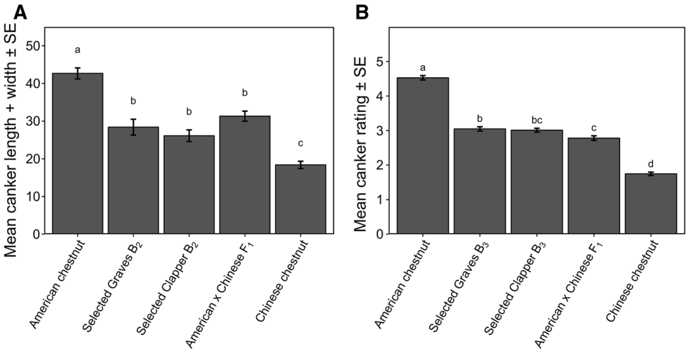
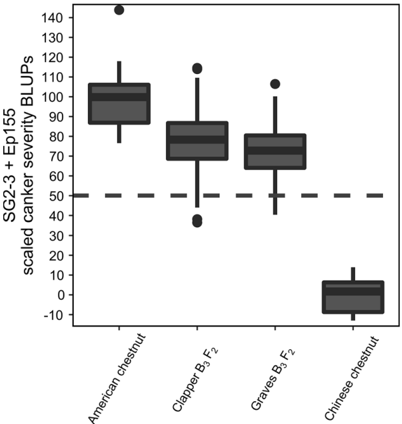
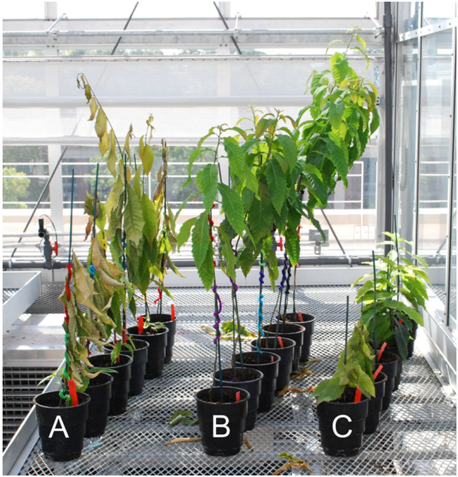
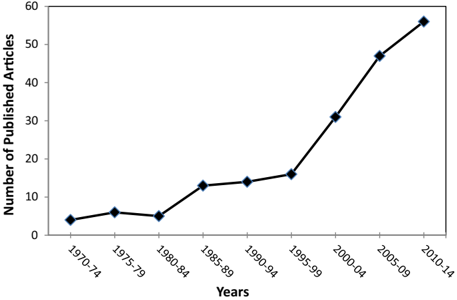
Verification
Claims the paper makes
The claims and statistics of this paper haven’t been checked yet.
Run the check — free, no account needed. It reads the open-access text and checks the sources it cites.
Claims other papers make about this one
Each is checked against this paper’s own text: does it say what the citing paper says it does?
The source backs part of the claim, not all of it — or backs it for a different population, condition or comparison.
In the citing paper
“Through careful selection for blight resistance and desirable phenotype, these backcross hybrids incorporated Chinese chestnut’s blight resistance while retaining the timber and nut-producing characteristics of American chestnut (Hebard 2005; Steiner et al. 2017).”
From Plantation performance of chestnut hybrids and progenitors on reclaimed Appalachian surface mines (2018) · cites this paper as Steiner et al. 2017
Experimental — accuracy not yet measured
Self-check
Percentages, sums and reported differences re-computed from the paper’s own numbers.
The self-check needs the paper’s full text.
Citations
Cites
Prediction of Total Genetic Value Using Genome-Wide Dense Marker Maps
Meuwissen, T. H. E., Hayes, B. J., & Goddard, M. E. (2001) · Genetics · doi:10.1093/genetics/157.4.1819 · Cited by 7,917
Silviculture: Concepts and Applications
Nyland, R. D. (1996) · Medical Entomology and Zoology · Cited by 837
BIOLOGICAL CONTROL OF CHESTNUT BLIGHT WITH HYPOVIRULENCE: A Critical Analysis
Milgroom, M. G., & Cortesi, P. (2004) · Annual Review of Phytopathology · doi:10.1146/annurev.phyto.42.040803.140325 · Cited by 486
Rizzo, D. M., Garbelotto, M. M., & Hansen, E. M. (2005) · Annual Review of Phytopathology · doi:10.1146/annurev.phyto.42.040803.140418 · Cited by 470
Genomic selection in forest tree breeding
Grattapaglia, D., & de Resende, M. D. V. (2010) · Tree Genetics & Genomes · doi:10.1007/s11295-010-0328-4 · Cited by 435
Kim, K. S., Min, J.-Y., & Dickman, M. B. (2008) · Molecular Plant-Microbe Interactions · doi:10.1094/mpmi-21-5-0605 · Cited by 396
European ash (Fraxinus excelsior) dieback – A conservation biology challenge
Pautasso, M., Aas, G., Queloz, V., & Holdenrieder, O. (2012) · Biological Conservation · doi:10.1016/j.biocon.2012.08.026 · Cited by 386
Hu, X., Bidney, D. L., Yalpani, N., Duvick, J. P., Crasta, O. R., Folkerts, O., & Lu, G. (2003) · PLANT PHYSIOLOGY · doi:10.1104/pp.103.024026 · Cited by 317
Chestnut: history and ecology of a transformed species
Paillet, F. L. (2002) · Journal of Biogeography · doi:10.1046/j.1365-2699.2002.00767.x · Cited by 212
Jacobs, D. F., Dalgleish, H. J., & Nelson, C. D. (2013) · New Phytologist · doi:10.1111/nph.12020 · Cited by 183
Research works printed but not linked: 14
- Baier KM (2010) Interspecific suppression subtractive hybridization identifies a differentially expressed Chinese chestnut (Castanea mollissima) laccase-like gene. M.S. thesis, State University of New York College of Environmental Science and Forestry, Syracuse, NY
- Beavis WD (1994) The power and deceit of QTL experiments: Lessons from comparative QTL studies. In: DB Wilkinson (ed) 49th Annual corn and sorghum research conference American seed trade association, Chicago, IL, pp 250–266
- Burnham CR (1981) Blight resistant American chestnut: there’s hope. Plant Dis 65:459–460
- Gingrich SF (1967) Measuring and evaluating stocking and stand density in uplant hardwood forests in the central states. For Sci 13:38–53
- Gravatt F (1949) Chestnut blight in Asia and North America. Unasylva 3:2–7
- Griffin, GJ, Elkins JR, McCurdy D, Griffin SL (2006) Integrated use of resistance, hypovirulence, and forest management to control blight in American chestnut. In: Steiner, KC and JE Carlson (eds) Restoration of American chestnut to forest lands, pp 97–107. Proceedings of a conference and workshop, May 2006, The North Carolina Arboretum. United States National Park Service Natural Resources Report NPS/NCR/CUE/NRR-2006/001
- Hebard FV (1994) The American Chestnut Foundation breeding plan: beginning and intermediate steps. J Am Chestnut Found 8(1):21–28
- Hebard FV (2002) Meadowview notes 2001–2002. J Am Chestnut Found 16(1):7–18
- Hebard FV (2004) Research objectives of the American Chestnut Foundation, 2004–2014. J Am Chestnut Found 18(2):13–19
- Hebard FV (2006) The backcross breeding program of The American Chestnut Foundation. In: Steiner KC, Carlson JE (eds) Restoration of American chestnut to forest lands, pp 61–77. Proceedings of a conference and workshop, May 2006, The North Carolina Arboretum. United States National Park Service Natural Resources Report NPS/NCR/CUE/NRR-2006/001
- Hebard FV (2012) The American Chestnut Foundation breeding program. In: Sniezko RA et al (eds) Proceedings of the fourth international workshop on the genetics of host-parasite interactions in forestry: disease and insect resistance in forest trees, pp 221–234. USDA Forest Service General Technical Report PSW-GTR-240, 372 pp
- Jaynes RA (1978) Selecting and breeding blight-resistant chestnut trees. In: Proceedings of the American Chestnut symposium, Morgantown, WV, pp 4–6
- Jeffers SN, Meadows IM, James JB, Sisco PH (2012) Resistance to Phytophthora cinnamomi among seedlings from backcross families of hybrid American chestnut. In: Sniezko RA et al (eds) Proceedings of the fourth international workshop on the genetics of host-parasite interactions in forestry: disease and insect resistance in forest trees, pp 194–195. USDA Forest Service Gen Tech Rep PSW-GTR-240, 372 pp
- Nelson CD, Powell WA, Merkle SA, Carlson JE, Hebard FV, Islam-Faridi N, Staton ME, Georgi L (2014) Chestnut. In: Ramawat K (ed) Tree biotechnology, chapter 1. CRC Press, Boca Raton, pp 3–35
Cited by
Sorted by citations
Oaks: an evolutionary success story
Kremer, A., & Hipp, A. L. (2019) · New Phytologist · doi:10.1111/nph.16274 · Cited by 268
Conservation and the Genomics of Populations
Allendorf, F. W., Funk, W. C., Aitken, S. N., Byrne, M., Luikart, G., & Antunes, A. (2022) · doi:10.1093/oso/9780198856566.001.0001 · Cited by 207
Breeding trees resistant to insects and diseases: putting theory into application
Sniezko, R. A., & Koch, J. L. (2017) · Biological Invasions · doi:10.1007/s10530-017-1482-5 · Cited by 140
Potter, K. M., Jetton, R. M., Bower, A. D., Jacobs, D. F., Man, G., Hipkins, V. D., & Westwood, M. (2017) · New Forests · doi:10.1007/s11056-017-9582-8 · Cited by 94
New developments in the field of genomic technologies and their relevance to conservation management
Segelbacher, G., Bosse, M., Burger, P. A., Galbusera, P., Godoy, J. A., Helsen, P., Hvilsom, C., Iacolina, L., Kahrić, A., Manfrin, C., et al. (2021) · Conservation Genetics · doi:10.1007/s10592-021-01415-5 · Cited by 93
Westbrook, J. W., Zhang, Q., Mandal, M. K., Jenkins, E. V., Barth, L. E., Jenkins, J. W., Grimwood, J., Schmutz, J., & Holliday, J. A. (2019) · Evolutionary Applications · doi:10.1111/eva.12886 · Cited by 78
Self-citationDeveloping Blight-Tolerant American Chestnut TreesPreprint
Powell, W. A., Newhouse, A. E., & Coffey, V. (2019) · Cold Spring Harbor Perspectives in Biology · doi:10.1101/cshperspect.a034587 · Cited by 74
Self-citationWare, M., Garfield, E. N., Nedimyer, K., Levy, J. S., Kaufman, L., Precht, W. F., Winters, R. S., & Miller, S. L. (2020) · PLoS ONE · doi:10.1371/journal.pone.0231817 · Cited by 73
Genetic engineering of trees: progress and new horizons
Chang, S., Mahon, E. L., MacKay, H. A., Rottmann, W. H., Strauss, S. H., Pijut, P. M., Powell, W. A., Coffey, V., Lu, H., Mansfield, S. D., et al. (2018) · In Vitro Cellular & Developmental Biology - Plant · doi:10.1007/s11627-018-9914-1 · Cited by 73
Self-citationEuropean and American chestnuts: An overview of the main threats and control efforts
Fernandes, P., Colavolpe, M. B., Serrazina, S., & Costa, R. M. L. (2022) · Frontiers in Plant Science · doi:10.3389/fpls.2022.951844 · Cited by 61
Redford, K. H., Brooks, T. M., MacFarlane, N., & Adams, J. S. (2019) · doi:10.2305/iucn.ch.2019.05.en · Cited by 69
Self-citationGustafson, E. J., Miranda, B. R., Dreaden, T. J., Pinchot, C. C., & Jacobs, D. F. (2022) · Ecosphere · doi:10.1002/ecs2.3917 · Cited by 47
A plan to diversify a transgenic blight‐tolerant American chestnut population using citizen science
Westbrook, J. W., Holliday, J. A., Newhouse, A. E., & Powell, W. A. (2019) · Plants People Planet · doi:10.1002/ppp3.10061 · Cited by 46
Self-citationConserving Panamanian harlequin frogs by integrating captive-breeding and research programs
Lewis, C. H. R., Richards‐Zawacki, C. L., Ibáñez, R., Luedtke, J. A., Voyles, J., Houser, P. R., & Gratwicke, B. (2019) · Biological Conservation · doi:10.1016/j.biocon.2019.05.029 · Cited by 45
Newhouse, A. E., & Powell, W. A. (2020) · Conservation Science and Practice · doi:10.1111/csp2.348 · Cited by 44
Self-citationPotter, K. M., Escanferla, M. E., Jetton, R. M., Man, G., & Crane, B. S. (2019) · Global Ecology and Conservation · doi:10.1016/j.gecco.2019.e00622 · Cited by 46
Aitken, S. N., Jordan, R., & Tumas, H. R. (2024) · Annual Review of Plant Biology · doi:10.1146/annurev-arplant-070523-044239 · Cited by 46
Clark, P. W., D’Amato, A. W., Evans, K. S., Schaberg, P. G., & Woodall, C. W. (2021) · Journal of Applied Ecology · doi:10.1111/1365-2664.14056 · Cited by 38
Advancing a New Toolkit for Conservation: From Science to Policy
Novak, B. J., Maloney, T., & Phelan, R. M. (2018) · The CRISPR Journal · doi:10.1089/crispr.2017.0019 · Cited by 37
Staton, M. E., Addo‐Quaye, C., Cannon, N., Sun, Y., Zhebentyayeva, T. N., Huff, M. L., Fan, S., Bellis, E., Islam‐Faridi, N., Yu, J., et al. (2020) · Tree Genetics & Genomes · doi:10.1007/s11295-020-01454-y · Cited by 35
Self-citationClark, S. L., Schlarbaum, S. E., Saxton, A. M., & Baird, R. E. (2018) · Forest Ecology and Management · doi:10.1016/j.foreco.2018.10.060 · Cited by 34
Samuel, M. D., Liao, W., Atkinson, C. T., & LaPointe, D. A. (2019) · Biological Conservation · doi:10.1016/j.biocon.2019.108390 · Cited by 34
Lovat, C., & Donnelly, D. J. (2019) · Forest Pathology · doi:10.1111/efp.12562 · Cited by 33
Newhouse, A. E., Oakes, A. D., Pilkey, H. C., Roden, H., Horton, T. R., & Powell, W. A. (2018) · Frontiers in Plant Science · doi:10.3389/fpls.2018.01046 · Cited by 31
Self-citationSchoettle, A. W., Jacobi, W. R., Waring, K. M., & Burns, K. S. (2018) · New Forests · doi:10.1007/s11056-018-9679-8 · Cited by 30
Zhebentyayeva, T. N., Sisco, P. H., Georgi, L. L., Jeffers, S. N., Perkins, M. T., James, J. B., Hebard, F. V., Saski, C. A., Nelson, C. D., & Abbott, A. G. (2019) · Phytopathology · doi:10.1094/phyto-11-18-0425-r · Cited by 30
Self-citationRethinking restoration targets for American chestnut using species distribution modeling
Barnes, J. C., & Delborne, J. (2019) · Biodiversity and Conservation · doi:10.1007/s10531-019-01814-8 · Cited by 29
Breeding for Resistance to Tree Pests: Successes, Challenges, and a Guide to the Future
Pike, C. C., Koch, J. L., & Nelson, C. D. (2020) · Journal of Forestry · doi:10.1093/jofore/fvaa049 · Cited by 28
Westbrook, J. W., James, J. B., Sisco, P. H., Frampton, J., Lucas, S., & Jeffers, S. N. (2019) · Plant Disease · doi:10.1094/pdis-11-18-1976-re · Cited by 26
Self-citationResurrecting the Lost Flames of American Chestnut
Kane, J. M., Varner, J. M., & Saunders, M. R. (2018) · Ecosystems · doi:10.1007/s10021-018-0318-1 · Cited by 24
From genomes to forest management – tackling invasive Phytophthora species in the era of genomics
Keriö, S., Daniels, H. A., Gómez‐Gallego, M., Tabima, J. F., Lenz, R. R., Søndreli, K. L., Grünwald, N. J., Williams, N., McDougal, R. L., & LeBoldus, J. M. (2019) · Canadian Journal of Plant Pathology · doi:10.1080/07060661.2019.1626910 · Cited by 24
Sandercock, A. M., Westbrook, J. W., Zhang, Q., Johnson, H. A., Saielli, T. M., Scrivani, J. A., Fitzsimmons, S. F., Collins, K., Perkins, M. T., Craddock, J. H., et al. (2022) · Molecular Ecology · doi:10.1111/mec.16629 · Cited by 22
Self-citationThe implications of American chestnut reintroduction on landscape dynamics and carbon storage
Gustafson, E. J., de Bruijn, A. M. G., Lichti, N. I., Jacobs, D. F., Sturtevant, B. R., Foster, J. R., Miranda, B. R., & Dalgleish, H. J. (2017) · Ecosphere · doi:10.1002/ecs2.1773 · Cited by 23
A genome-guided strategy for climate resilience in American chestnut restoration populations
Sandercock, A. M., Westbrook, J. W., Zhang, Q., & Holliday, J. A. (2024) · Proceedings of the National Academy of Sciences · doi:10.1073/pnas.2403505121 · Cited by 22
Self-citationPinchot, C. C., Schlarbaum, S. E., Clark, S. L., Saxton, A. M., Sharp, A. M., Schweitzer, C. J., & Hebard, F. V. (2017) · New Forests · doi:10.1007/s11056-017-9577-5 · Cited by 23
Self-citationEmerging issues for protected and conserved areas in Canada
Dietz, S., Beazley, K., Lemieux, C. J., Clair, C. C. S., Coristine, L. E., Higgs, E. S., Smith, R., Pellatt, M. G., Beaty, C., Cheskey, E. D., et al. (2021) · FACETS · doi:10.1139/facets-2021-0072 · Cited by 28
Tree breeding, a necessary complement to genetic engineering
Nelson, C. D. (2022) · New Forests · doi:10.1007/s11056-022-09931-z · Cited by 20
Bionovelty and ecological restoration
Volpe, J. P., Higgs, E. S., Jeschke, J. M., Barnhill‐Dilling, S. K., Brunk, C. G., Dudney, J. C., Govers, L. L., Hobbs, R. J., Keenleyside, K., Murphy, S. D., et al. (2024) · Restoration Ecology · doi:10.1111/rec.14152 · Cited by 19
Reconsidering the fire ecology of the iconic American chestnut
Kane, J. M., Varner, J. M., Stambaugh, M. C., & Saunders, M. R. (2020) · Ecosphere · doi:10.1002/ecs2.3267 · Cited by 20
McGuigan, L. D., Fernandes, P., Oakes, A. D., Stewart, K., & Powell, W. A. (2020) · Forests · doi:10.3390/f11111196 · Cited by 19
Self-citationGustafson, E. J., Sturtevant, B. R., de Bruijn, A. M. G., Lichti, N. I., Jacobs, D. F., Kashian, D. M., Miranda, B. R., & Townsend, P. A. (2018) · Global Change Biology · doi:10.1111/gcb.14397 · Cited by 18
Effects of transgenic American chestnut leaf litter on growth and survival of wood frog larvae
Goldspiel, H. B., Newhouse, A. E., Powell, W. A., & Gibbs, J. P. (2018) · Restoration Ecology · doi:10.1111/rec.12879 · Cited by 18
Self-citationPlantation performance of chestnut hybrids and progenitors on reclaimed Appalachian surface mines
Skousen, J. G., Dallaire, K., Scagline-Mellor, S., Monteleone, A., Wilson-Kokes, L., Joyce, J., Thomas, C., Keene, T., DeLong, C., Cook, T., et al. (2018) · New Forests · doi:10.1007/s11056-018-9643-7 · Cited by 17
Clark, P. W., Freeman, A. J., D’Amato, A. W., Schaberg, P. G., Hawley, G. J., Evans, K. S., & Woodall, C. W. (2022) · Forest Ecology and Management · doi:10.1016/j.foreco.2022.120505 · Cited by 17
Tulowiecki, S. J. (2020) · Forest Ecology and Management · doi:10.1016/j.foreco.2020.118003 · Cited by 17
Brennan, A. N., McKenna, J. R., Hoban, S., & Jacobs, D. F. (2020) · Frontiers in Plant Science · doi:10.3389/fpls.2020.580693 · Cited by 16
Allendorf, F. W., Funk, W. C., Aitken, S. N., Byrne, M. M., & Luikart, G. (2022) · Oxford University Press eBooks · doi:10.1093/oso/9780198856566.003.0001 · Cited by 16
Gnomoniopsis castaneae : An emerging plant pathogen and global threat to chestnut systems
Dobry, E. P., & Campbell, M. (2022) · Plant Pathology · doi:10.1111/ppa.13670 · Cited by 19
Cipollini, M. L., Dingley, N. R., Felch, P., & Maddox, C. (2017) · Global Ecology and Conservation · doi:10.1016/j.gecco.2017.01.004 · Cited by 16
Montague, M. S., Landhäusser, S. M., McNickle, G. G., & Jacobs, D. F. (2022) · Forest Ecology and Management · doi:10.1016/j.foreco.2022.120078 · Cited by 15
A silvicultural synthesis of sweet (Castanea sativa) and American (C. dentata) chestnuts
Clark, S. L., Marcolin, E., Patrício, M. D. S., & Loewe-Muñoz, V. (2023) · Forest Ecology and Management · doi:10.1016/j.foreco.2023.121041 · Cited by 15
Noah, P. H., Cagle, N. L., Westbrook, J. W., & Fitzsimmons, S. F. (2021) · Climate Change Ecology · doi:10.1016/j.ecochg.2021.100037 · Cited by 15
Self-citationPathogen‐induced expression of a blight tolerance transgene in American chestnut
Carlson, E., Stewart, K., Baier, K. M., McGuigan, L. D., Culpepper, T. J., & Powell, W. A. (2021) · Molecular Plant Pathology · doi:10.1111/mpp.13165 · Cited by 15
Self-citationVolis, S. (2019) · Cambridge University Press eBooks · doi:10.1017/9781108648677 · Cited by 14
Nie, X., Zhao, S., Hao, Y., Gu, S., Zhang, Y., Qi, B., Xing, Y., & Qin, L. (2023) · BMC Plant Biology · doi:10.1186/s12870-023-04072-7 · Cited by 13
Chestnuts bred for blight resistance depart nursery with distinct fungal rhizobiomes
Reazin, C., Baird, R. E., Clark, S. L., & Jumpponen, A. (2019) · Mycorrhiza · doi:10.1007/s00572-019-00897-z · Cited by 13
Lesko, J., & Jacobs, D. F. (2018) · New Forests · doi:10.1007/s11056-018-9683-z · Cited by 13
Key lessons from resistant tree breeding programmes in the Northern Hemisphere
Woodcock, P., Marzano, M., & Quine, C. P. (2019) · Annals of Forest Science · doi:10.1007/s13595-019-0826-y · Cited by 13
Clark, S. L., Schlarbaum, S. E., Saxton, A. M., Jeffers, S. N., & Baird, R. E. (2023) · Forest Ecology and Management · doi:10.1016/j.foreco.2023.120820 · Cited by 11
Conservation Mitonuclear Replacement: Facilitated mitochondrial adaptation for a changing world
Iverson, E. N. K. (2024) · Evolutionary Applications · doi:10.1111/eva.13642 · Cited by 12
Henderson, A. F., Santoro, J. A., & Kremer, P. (2022) · Forest Ecology and Management · doi:10.1016/j.foreco.2022.120741 · Cited by 12
Histology of Adventitious Root Formation and Phytohormone Analysis of American Chestnut Cuttings1
Lu, X., Cuarto, M., & Liang, H. (2023) · Journal of Environmental Horticulture · doi:10.24266/0738-2898-41.3.80 · Cited by 11
Biotechnology and Genomic Approaches to Mitigating Disease Impacts on Forest Health
LeBoldus, J. M., Lynch, S. C., Newhouse, A. E., Søndreli, K. L., Newcombe, G., Bennett, P. I., Muchero, W., Chen, J., Busby, P. E., Gordon, M. I., et al. (2024) · Annual Review of Phytopathology · doi:10.1146/annurev-phyto-021622-114434 · Cited by 11
Petit, J. D., Needham, M. D., & Howe, G. T. (2021) · Forest Policy and Economics · doi:10.1016/j.forpol.2020.102385 · Cited by 11
Restoration of Landscapes and Habitats Affected by Established Invasive Species
Koch, J. L., Pearson, D. E., Huebner, C. D., Young, M. K., & Sniezko, R. A. (2021) · Springer eBooks · doi:10.1007/978-3-030-45367-1_8 · Cited by 10
Small Populations and Genetic Drift
Allendorf, F. W., Funk, W. C., Aitken, S. N., Byrne, M. M., & Luikart, G. (2022) · Oxford University Press eBooks · doi:10.1093/oso/9780198856566.003.0006 · Cited by 10
Henderson, A. F., Santoro, J. A., & Kremer, P. (2022) · Frontiers in Ecology and Evolution · doi:10.3389/fevo.2022.942766 · Cited by 10
Deer browse susceptibility limits chestnut restoration success in northern hardwood forests
Pinchot, C., Royo, A., Stanovick, J., Schlarbaum, S., Sharp, A. M., & Anagnostakis, S. (2022) · Forest Ecology and Management · doi:10.1016/j.foreco.2022.120481 · Cited by 9
Afifi, L., Lapin, K., Tremetsberger, K., & Konrad, H. (2023) · Flora · doi:10.1016/j.flora.2023.152244 · Cited by 9
Adeyemo, S. M., & Granger, J. J. (2022) · Trees Forests and People · doi:10.1016/j.tfp.2022.100360 · Cited by 9
Zhang, S., Bettinger, P., Cieszewski, C. J., Merkle, S. A., Merry, K. L., Obata, S., He, X., & Zheng, H. (2019) · Landscape Ecology · doi:10.1007/s10980-019-00818-7 · Cited by 9
Growth traits of juvenile American chestnut and red oak as adaptations to disturbance
Belair, E. P., Saunders, M. R., & Landhäusser, S. M. (2017) · Restoration Ecology · doi:10.1111/rec.12625 · Cited by 9
Lesko, J. M., Sloan, J. L., Löf, M., & Jacobs, D. F. (2024) · Forest Ecology and Management · doi:10.1016/j.foreco.2024.122102 · Cited by 8
Genomic approaches to accelerate American chestnut restoration
Westbrook, J. W., Malukiewicz, J., Zhang, Q., Sreedasyam, A., Jenkins, J. W., Lakoba, V. T., Fitzsimmons, S. F., Clief, J. V., Collins, K., Hoy, S., et al. (2026) · Science · doi:10.1126/science.adw3225 · Cited by 9
Self-citationSeedbed not rescue effect buffer the role of extreme precipitation on temperate forest regeneration
Clark, P. W., & D’Amato, A. W. (2022) · Ecology · doi:10.1002/ecy.3926 · Cited by 8
Perkins, M. T., Robinson, A. C., Cipollini, M. L., & Craddock, J. H. (2019) · HortScience · doi:10.21273/hortsci13657-18 · Cited by 8
Tools and Technologies for Quantifying Spread and Impacts of Invasive Species
Reeves, M. C., Ibáñez, I., Blumenthal, D. M., Chen, G., Guo, Q., Jarnevich, C. S., Koch, J. L., Sapio, F. J., Schwartz, M. K., Meentemeyer, R. K., et al. (2021) · Springer eBooks · doi:10.1007/978-3-030-45367-1_11 · Cited by 8
Barnes, J. C., & Delborne, J. (2021) · Environment and Planning E Nature and Space · doi:10.1177/25148486211024910 · Cited by 8
Brown, S. P., Clark, S. L., Ford, E., Jumpponen, A., Saxton, A. M., Schlarbaum, S. E., & Baird, R. E. (2022) · Forest Ecology and Management · doi:10.1016/j.foreco.2022.120569 · Cited by 8
Attackers gain the upper hand over plants in the face of rapid global change
Austin, A. T., & Ballaré, C. L. (2023) · Current Biology · doi:10.1016/j.cub.2023.03.082 · Cited by 7
Kenzo, T., Ichie, T., Norichika, Y., Kamiya, K., Inoue, Y., Ngo, K. M., & Lum, S. K. Y. (2023) · Forest Ecology and Management · doi:10.1016/j.foreco.2023.121388 · Cited by 7
Petit, J. D., Needham, M. D., & Howe, G. T. (2021) · Risk Analysis · doi:10.1111/risa.13766 · Cited by 7
Exploring the intersections of governance, constituencies, and risk in genetic interventions
Burgiel, S. W., Baumgartner, B. L., Brister, E., Fisher, J. P., Gordon, D. R., Novak, B. J., Palmer, M. J., Seddon, P. J., & Weber, M. (2021) · Conservation Science and Practice · doi:10.1111/csp2.380 · Cited by 7
Westbrook, J. W., Zhang, Q., Mandal, M. K., Jenkins, E. V., Barth, L. E., Jenkins, J. W., Grimwood, J., Schmutz, J., & Holliday, J. A. (2019) · bioRxiv (Cold Spring Harbor Laboratory) · doi:10.1101/690693 · Cited by 7
Self-citationEthical, Patent, and Regulatory Issues in Microbial Engineering
Meena, S. S., & Mohanty, A. (2020) · Springer eBooks · doi:10.1007/978-981-15-2604-6_8 · Cited by 6
Coughlin, A. O., Shefferson, R. P., Clark, S. L., & Wurzburger, N. (2020) · Restoration Ecology · doi:10.1111/rec.13326 · Cited by 6
Preferences of avian seed-hoarders in advance of potential American chestnut reintroduction
Wright, J. R., Matthews, S. N., Pinchot, C. C., & Tonra, C. M. (2022) · Forest Ecology and Management · doi:10.1016/j.foreco.2022.120133 · Cited by 6
Genome-Wide Sequence-Based Genotyping Supports a Nonhybrid Origin of Castanea alabamensis
Perkins, M. T., Zhebentyayeva, T. N., Sisco, P. H., & Craddock, J. H. (2021) · Systematic Botany · doi:10.1600/036364421x16370109698524 · Cited by 6
Chestnut (Castanea spp. Miller) Breeding
Craddock, J. H., & Perkins, M. T. (2019) · Springer eBooks · doi:10.1007/978-3-030-23112-5_5 · Cited by 5
Cipollini, M. L., Moss, J. P., Walker, W., Bailey, N., Foster, C., Reece, H., & Jennings, C. (2020) · Plant Disease · doi:10.1094/pdis-06-20-1272-re · Cited by 5
Allendorf, F. W., Funk, W. C., Aitken, S. N., Byrne, M. M., & Luikart, G. (2022) · Oxford University Press eBooks · doi:10.1093/oso/9780198856566.003.0020 · Cited by 7
Onwumelu, A., Powell, W. A., Newhouse, A. E., Evans, G., Hilles, G., Matthews, D. F., Coffey, V., & Drake, J. E. (2022) · New Forests · doi:10.1007/s11056-022-09909-x · Cited by 5
Self-citationTemperate Nut Crops: Chestnut, Hazelnut, Pecan, Pistachio, and Walnut
Preece, J. E., & Aradhya, M. K. (2019) · Springer eBooks · doi:10.1007/978-3-319-97121-6_13 · Cited by 5
Brown, A. J., Newhouse, A. E., Powell, W. A., & Parry, D. (2019) · Insect Science · doi:10.1111/1744-7917.12713 · Cited by 5
Self-citationSpeed Breeding Transgenic American Chestnut Trees Toward Restoration
Klak, T., Pilkey, H. C., May, V. G., Matthews, D. F., Oakes, A. D., Tan, E. H., & Newhouse, A. E. (2025) · Plant Direct · doi:10.1002/pld3.70129 · Cited by 5
Allendorf, F. W., Funk, W. C., Aitken, S. N., Byrne, M. M., & Luikart, G. (2022) · Oxford University Press eBooks · doi:10.1093/oso/9780198856566.003.0019 · Cited by 5
Islam‐Faridi, N., Hodnett, G. L., Zhebentyayeva, T. N., Georgi, L. L., Sisco, P. H., Hebard, F. V., & Nelson, C. D. (2024) · Scientific Reports · doi:10.1038/s41598-023-45879-6 · Cited by 4
Self-citationFan, S., Georgi, L. L., Hebard, F. V., Zhebentyayeva, T. N., Yu, J., Sisco, P. H., Fitzsimmons, S. F., Staton, M. E., Abbott, A. G., & Nelson, C. D. (2024) · Frontiers in Plant Science · doi:10.3389/fpls.2024.1365951 · Cited by 4
Self-citationNewhouse, A. E., Allwine, A. E., Oakes, A. D., Matthews, D. F., McArt, S. H., & Powell, W. A. (2021) · Transgenic Research · doi:10.1007/s11248-021-00263-w · Cited by 3
Self-citationRandom mating populations: Hardy–Weinberg Principle
Allendorf, F. W., Funk, W. C., Aitken, S. N., Byrne, M. M., & Luikart, G. (2022) · Oxford University Press eBooks · doi:10.1093/oso/9780198856566.003.0005 · Cited by 3
Metadata
- Authors
- Steiner, K. C., Westbrook, J. W., Hebard, F. V., Georgi, L. L., Powell, W. A., & Fitzsimmons, S. F.
- Affiliations
- Pennsylvania State University (US)
- The American Chestnut Foundation (US)
- State University of New York (US)
- Corresponding author
- Steiner, Kim C.
- Venue
- New Forests
- Published
- 2016-12-10
- Volume
- 48
- Issue
- 2
- Pages
- 317-336
- ISSN
- 0169-4286 (ISSN-L)
- 1573-5095
- OpenAlex
- W2560524150
- Cited by
- 171
- References
- 64
- Citations by year
- 2026: 5 · 2025: 2 · 2024: 10 · 2023: 16 · 2022: 50 · 2021: 16 · 2020: 15 · 2019: 39 · 2018: 11 · 2017: 7
- FWCI
- 18.29
- Type
- journal article
- Language
- en
- Open access
- hybrid
- doi.org
- Locations
- New Forests (publishedVersion, cc-by)
- Topics
- Life Sciences › Immunology and Microbiology › Virology › Plant and Fungal Interactions Research
- Life Sciences › Agricultural and Biological Sciences › Plant Science › Plant Pathogens and Resistance
- Physical Sciences › Environmental Science › Ecology › Forest Insect Ecology and Management
- Keywords
- American chestnut, Castanea dentata, chestnut blight, Cryphonectria parasitica, hybridization, backcrossing, genetic transformation, transgenes, disease resistance, non-governmental organizations, philanthropy, exotic pathogens
About these checks
Registry, retraction, Cites and statistics results are computed, not judged, with one exception: a printed reference that no index lists is read once by a model before it counts as a citation error. Claims are extracted by a model and kept only when their quote appears verbatim in the text; each cited source is then checked, with a model’s help, for whether it says what the claim relies on. Those verdicts can be wrong — read the claim’s quote and the cited source before relying on one.
Statistics and arithmetic are recomputed, not judged.
Confidence bands are shown only for fields calibrated on our annotated test set. None is calibrated yet, so no band is shown.
What counts as a claim ›How we measure confidence ›How we check this ›
Are you an author, or do you see a problem with this page? Request a review
