

Focused ultrasound-mediated enhancement of blood-brain barrier permeability for brain tumor treatment: A systematic review of clinical trials
Open accessThe DOI matches its Crossref record; 59 of the 59 references it cites were found in a registry or an index.
Abstract
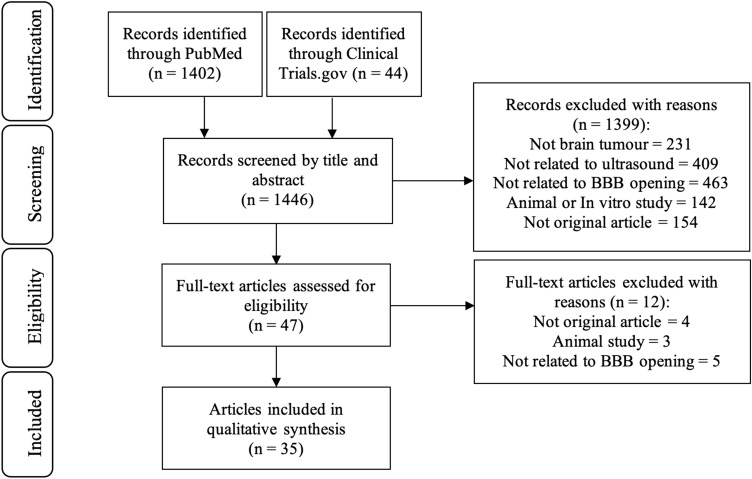
Purpose: Brain tumors, particularly glioblastoma multiforme (GBM), present significant prognostic challenges despite multimodal therapies, including surgical resection, chemotherapy, and radiotherapy. One major obstacle is the limited drug delivery across the blood–brain barrier (BBB). Focused ultrasound (FUS) combined with systemically administered microbubbles has emerged as a non-invasive, targeted, and reversible approach to transiently open the BBB, thus enhancing drug delivery. This review examines clinical trials employing BBB opening techniques to optimise pharmacotherapy for brain tumors, evaluates current challenges, and proposes directions for further research. Methods: A systematic literature search was conducted in PubMed and ClinicalTrials.gov up to November 2023, searching for “ultrasound” AND “brain tumor”. The search yielded 1446 results. After screening by title and abstract, followed by full-text screening (n = 48), 35 studies were included in the analysis. Results: Our analysis includes data from 11 published studies and 24 ongoing trials. The predominant focus of these studies is on glioma, including GMB and astrocytoma. One paper investigated brain metastasis from breast cancer. Evidence indicates that FUS facilitates BBB opening and enhances drug uptake following sonication. Exploration of FUS in the pediatric population is limited, with no published studies and only three ongoing trials dedicated to this demographic. Conclusion: FUS is a promising strategy to safely disrupt the BBB, enabling precise and non-invasive lesion targeting, and enhance drug delivery. However, pharmacokinetic studies are required to quantitatively assess improvements in drug uptake. Most studies are phase I clinical trials, and long-term follow-up investigating patient outcomes is essential to evaluate the clinical benefit of this treatment approach. Further studies involving diverse populations and pathologies will be beneficial.
Overview
The claims and statistics of this paper haven’t been checked yet.
Free: it reads the open-access text and checks the first 5 claims that cite a source we can check. Create a free account to check every claim.
Integrity signals
Registry
Cites
Statistics
Figures
Verification
Claims the paper makes
The claims and statistics of this paper haven’t been checked yet.
Free: it reads the open-access text and checks the first 5 claims that cite a source we can check. Create a free account to check every claim.
Claims other papers make about this one
Each is checked against this paper’s own text: does it say what the citing paper says it does?
The source backs part of the claim, not all of it — or backs it for a different population, condition or comparison.
In the citing paper
“Therefore, FUS combined with MBs is a method that uses ultrasound waves directed at specific areas of the brain to cause oscillation of the MBs circulating in the blood, producing mechanical forces within blood vessels that temporarily and safely loosen the TJs of the BBB.”
From Advances in Strategies to Transport Nanoparticles Across the Blood–Brain Barrier for Drug Delivery into the Brain for the Treatment of Alzheimer’s Disease (2026) · cites this paper as [81]
Experimental — accuracy not yet measuredThe cited source says what the claim attributes to it.
In the citing paper
“Consequently, the BBB becomes more permeable, allowing therapeutic drugs to pass more easily from the bloodstream into the brain tissue”
From Advances in Strategies to Transport Nanoparticles Across the Blood–Brain Barrier for Drug Delivery into the Brain for the Treatment of Alzheimer’s Disease (2026) · cites this paper as [81]
Self-check
Percentages, sums and reported differences re-computed from the paper’s own numbers.
The self-check needs the paper’s full text.
Citations
Cites
The blood–brain barrier: Structure, regulation and drug delivery
Wu, D., Chen, Q., Chen, X., Han, F., Chen, Z., & Wang, Y. (2023) · Signal Transduction and Targeted Therapy · doi:10.1038/s41392-023-01481-w · Cited by 1,906 · cited 2×
“The BBB, formed by microvascular endothelial cells that regulate molecule and ion transfer from the blood into the brain parenchyma, enables homeostasis and normal neuronal functioning [3].”
BackgroundA blood–brain barrier overview on structure, function, impairment, and biomarkers of integrity
Kadry, H., Noorani, B., & Cucullo, L. (2020) · Fluids and Barriers of the CNS · doi:10.1186/s12987-020-00230-3 · Cited by 1,853 · cited 1×
“Consequently, there is growing interest in research focused on safe and reversible BBB opening (BBBO), which holds promise for enhancing the delivery and efficacy of therapeutic agents [4].”
BackgroundWen, P. Y., Weller, M., Lee, E. Q., Alexander, B. M., Barnholtz-Sloan, J. S., Barthel, F. P., Batchelor, T. T., Bindra, R. S., Chang, S. M., Chiocca, E. A., et al. (2020) · Neuro-Oncology · doi:10.1093/neuonc/noaa106 · Cited by 1,168 · cited 1×
“Brain tumors continue to exhibit a poor prognosis, with less than 20% of patients surviving beyond 5 years post-diagnosis [1].”
BackgroundClinical trial of blood-brain barrier disruption by pulsed ultrasound
Carpentier, A., Canney, M., Vignot, A., Reina, V., Beccaria, K., Horodyckid, C., Karachi, C., Leclercq, D., Lafon, C., Chapelon, J.-Y., et al. (2016) · Science Translational Medicine · doi:10.1126/scitranslmed.aaf6086 · Cited by 757 · cited 3×
“The drugs used following FUS-guided BBBO included paclitaxel [25] and carboplatin [26– 28] for recurrent GBM, and temozolomide (TMZ) for GBM [29, 30] and M e ng e t a l .”
MethodMainprize, T., Lipsman, N., Huang, Y., Meng, Y., Bethune, A., Ironside, S., Heyn, C., Alkins, R., Trudeau, M., Sahgal, A., et al. (2019) · Scientific Reports · doi:10.1038/s41598-018-36340-0 · Cited by 618 · cited 7×
“The contrast extravasation occurred in a grid pattern with ExAblate which resolved within 24 h [24, 31], and in a cylindrical pattern with SonoCloud-9, which resolved within an hour [25].”
BackgroundInfluentialBatchelor, T. T., Mulholland, P., Neyns, B., Nabors, L. B., Campone, M., Wick, A., Mason, W., Mikkelsen, T., Phuphanich, S., Ashby, L. S., et al. (2013) · Journal of Clinical Oncology · doi:10.1200/jco.2012.47.2464 · Cited by 614 · cited 1×
“In a placebo-controlled phase III trial, cediranib, an oral pan-vascular endothelial growth factor (VEGF) receptor tyrosine kinase inhibitor, did not improve progression-free survival in patients with recurrent GBM [54].”
BackgroundMcDannold, N., Arvanitis, C. D., Vykhodtseva, N., & Livingstone, M. S. (2012) · Cancer Research · doi:10.1158/0008-5472.can-12-0128 · Cited by 588
Sheikov, N., McDannold, N., Sharma, S., & Hynynen, K. (2008) · Ultrasound in Medicine & Biology · doi:10.1016/j.ultrasmedbio.2007.12.015 · Cited by 493 · cited 1×
“MRgFUS disrupts the BBB through multiple mechanisms, such as direct disruption of tight junctions and induced transcytosis [44].”
BackgroundAbrahao, A., Meng, Y., Llinas, M., Huang, Y., Hamani, C., Mainprize, T., Aubert, I., Heyn, C., Black, S. E., Hynynen, K., et al. (2019) · Nature Communications · doi:10.1038/s41467-019-12426-9 · Cited by 476 · cited 1×
“Its feasibility has also been explored in amyotrophic lateral sclerosis (ALS) [53].”
BackgroundDynamics of CNS Barriers: Evolution, Differentiation, and Modulation
Abbott, N. J. (2005) · Cellular and Molecular Neurobiology · doi:10.1007/s10571-004-1374-y · Cited by 469 · cited 1×
“These cells interact with astrocytes and pericytes to uphold the barrier’s integrity [5].”
Background
Cited by
Wen, P. Y., Weller, M., Lee, E. Q., Touat, M., Khasraw, M., Rahman, R. M., Platten, M., Lim, M. K., Winkler, F., Horbinski, C., et al. (2025) · Neuro-Oncology · doi:10.1093/neuonc/noaf177 · Cited by 136
Nanotherapy of Glioblastoma—Where Hope Grows
Grzegorzewski, J., Michalak, M., Wołoszczuk, M., Bulicz, M., & Majchrzak‐Celińska, A. (2025) · International Journal of Molecular Sciences · doi:10.3390/ijms26051814 · Cited by 54
Kashkooli, F. M., Bhandari, A., Gu, B., Kolios, M. C., Kohandel, M., & Zhan, W. (2025) · Journal of Controlled Release · doi:10.1016/j.jconrel.2025.114138 · Cited by 35
Costea, D., Dobrin, N., Tătaru, C.-I., Toader, C., Șerban, M., Covache-Busuioc, R.-A., Munteanu, O., & Diaconescu, B. I. (2025) · International Journal of Molecular Sciences · doi:10.3390/ijms262110546 · Cited by 31
Acoustic emissions dose and spatial control of blood-brain barrier opening with focused ultrasound
Woodworth, G. F., Anastasiadis, P., Ozair, A., Chen, C., Gandhi, D., Meng, Y., Abrahão, A., Carpenter, J., Cifarelli, C. P., Eisenberg, H. M., et al. (2025) · Device · doi:10.1016/j.device.2025.100894 · Cited by 21
Ultrasound-responsive nanoparticles for imaging and therapy of brain tumors
Chen, Z., Sang, L., Qixi, Z., Li, X., Liu, Y., & Bai, Z. (2025) · Materials Today Bio · doi:10.1016/j.mtbio.2025.101661 · Cited by 24
“In clinical trials, variations in skull thickness, brain tumor location, and BBB characteristics among patients may lead to inconsistent MB-FUS effects [196].”
Decoding Glioblastoma Through Liquid Biopsy: Molecular Insights and Clinical Prospects
Wasiak, T., Jaskólska, M., Filiks, K., Bartkowiak, J., & Rutkowska, A. (2026) · Cells · doi:10.3390/cells15030309 · Cited by 16
“FUS-BBBO is currently limited to select centers and investigational protocols, and its utility for routine monitoring is not established [201–203].”
The curse of blood–brain barrier and blood–tumor barrier in malignant brain tumor treatment
Kawauchi, D., & Narita, Y. (2025) · International Journal of Clinical Oncology · doi:10.1007/s10147-025-02777-3 · Cited by 17
Tanaka, M., Araujo, A. C., Valenti, V. E., Guiguer, E. L., Catharin, V. C. S., Gualhardi, C. M., de Souza Bastos Mazuqueli Pereira, E., de Alvares Goulart, R., de Argolo Haber, R. S., de Carvalho, A. C. A., et al. (2026) · International Journal of Molecular Sciences · doi:10.3390/ijms27052370 · Cited by 13
Holman, R., & McDannold, N. J. (2025) · Frontiers in Oncology · doi:10.3389/fonc.2025.1507940 · Cited by 13
Characteristics of the blood–brain barrier in pediatric brain tumors
Gao, Q., Song, D., Xu, D., Chai, X., & Ge, M. (2025) · Frontiers in Pediatrics · doi:10.3389/fped.2025.1646641 · Cited by 13
Astrocytes in glioblastoma tumor microenvironment
Cui, S., Guan, F., Li, X., Long, X., & Wu, M. (2025) · Biochimica et Biophysica Acta (BBA) - Reviews on Cancer · doi:10.1016/j.bbcan.2025.189518 · Cited by 12
Advances in PLGA-Based Drug Delivery Systems for Glioblastoma Treatment
Roy, S. D., Alday, D., & Cai, Q. (2025) · International Journal of Nanomedicine · doi:10.2147/ijn.s563730 · Cited by 13
“154,155 Wang et al developed negatively charged gambogic acid-loaded PLGA nanobubbles and conjugated them to the surface of cationic lipid microbubbles (CMBs) via electrostatic interactions for ultrasound-triggered drug delivery in GBM therapy.”
Advances and challenges in novel drug delivery systems for glioma therapy
Ma, P., Li, Y., Gu, Y., Zeng, H., Xiang, H., Cao, Z., Han, Y., Cui, Y., & Liu, H. (2025) · Frontiers in Pharmacology · doi:10.3389/fphar.2025.1655241 · Cited by 10
Mechanotransduction as a therapeutic target for brain tumours
Gomes, L., Pardo-Pastor, C., Rosenblatt, J., & Pouliopoulos, A. N. (2025) · EBioMedicine · doi:10.1016/j.ebiom.2025.105808 · Cited by 12
Self-citationDe, R., Shi, S., & Kim, K. (2025) · Advanced Science · doi:10.1002/advs.202517004 · Cited by 20
Glioblastoma cell plasticity: A new paradigm in glioblastoma therapeutic resistance
Xiao, T., Wei, Z., & Wua, M. (2026) · Biochimica et Biophysica Acta (BBA) - Reviews on Cancer · doi:10.1016/j.bbcan.2026.189557 · Cited by 8
Focused Ultrasound in Brain Tumors: Mechanisms, Imaging Guidance, and Emerging Clinical Applications
Nabavizadeh, S. A., Narsinh, K. H., Kaufmann, T. J., Liu, H.-L., Pouliopoulos, A. N., Prada, F. U., Agarwal, V. J., Ellingson, B. M., Sanvito, F., Everson, R. G., et al. (2025) · American Journal of Neuroradiology · doi:10.3174/ajnr.a9126 · Cited by 6
Self-citationSynergy of radiotherapy, focused ultrasound, and immunotherapy in the treatment of brain metastases
Boffelli, L., Fimiani, C., Núñez, N. G., & Kienzler, J. C. (2025) · Journal of Neuro-Oncology · doi:10.1007/s11060-025-05379-1 · Cited by 6
Mirzaahmadi, B., Salahpour‐Anarjan, F., Mousakhani, A., Haddadi, P., Nezamdoust, F. V., Rahbarghazi, R., & Karimipour, M. (2025) · Cancer Cell International · doi:10.1186/s12935-025-04134-w · Cited by 6
“This approach facilitates the entry of therapeutics, including chemotherapeutics (e.g., doxorubicin, temozolomide), nanoparticles, and immunomodulators (e.g., IL-12, PD-1 antibodies), while minimizing systemic toxicity [226].”
InfluentialPediaditakis, I., Tsakali, S., Lemieux, M. R., Brennan, M., Robinson, W. H., Papapetropoulos, S., & Papapetropoulos, A. (2026) · Pharmacological Reviews · doi:10.1016/j.pharmr.2026.100118 · Cited by 10
Panchal, D., Solanki, D., Solanki, R., Yadav, A. K., Bhatia, D. D., & Yadav, P. K. (2026) · ACS Chemical Neuroscience · doi:10.1021/acschemneuro.6c00245 · Cited by 7
Focused ultrasound-responsive artificial killer cells for enhanced closed-loop cancer immunotherapy
Zhang, J., Wang, P., Meng, L., Li, X., Li, F., Kong, N., & Zhu, X. (2025) · Materials Horizons · doi:10.1039/d5mh00644a · Cited by 6
IMPDH and GTP Metabolism in Cancer: Mechanisms, Regulation, and Translational Scope
Ogawa‐Iio, A., Takeuchi, K., Shigemi, K., Genoveso, M. J., Niitsu, H., Koh, I., Yusei, O. T. A., Yamane, K., Hinoi, T., Osaka, N., et al. (2025) · Cancer Science · doi:10.1111/cas.70200 · Cited by 6
Engineering focused ultrasound for glioblastoma
Bell, M. S., Walton, C. M., Williams, M. J., Eckert, T., Brown, J. C., Rowland, N. C., Şahin, Ö., & Strickland, B. A. (2025) · Brain stimulation · doi:10.1016/j.brs.2025.102986 · Cited by 5
Delivering Gd-Labeled IgG Antibodies Into the Mouse Brain Following Focused Ultrasound Treatment
Körük, H., Payne, C., Cressey, P., Thanou, M., & Pouliopoulos, A. N. (2025) · Ultrasound in Medicine & Biology · doi:10.1016/j.ultrasmedbio.2025.02.015 · Cited by 4
Self-citationInterventional Neuro-Oncology: Expanding the Frontiers of Image-Guided Therapy
Geevarghese, R., Lis, E., Cohen, M. A., Lin, A. L., Tabar, V. S., Solomon, S. B., & Cornélis, F. (2025) · Canadian Association of Radiologists Journal · doi:10.1177/08465371251340249 · Cited by 4
“27”
Mechanisms, Imaging Phenotypes, and Therapeutic Advances of Neovascularization in Brain Metastases
Liu, S., Shan, B., Zhang, Y., Xu, L., Zhang, X. C., Ye, L., Diao, H., Cheng, Y., & Tang, J. (2026) · Biomedicines · doi:10.3390/biomedicines14010119 · Cited by 5
“MR-guided low-intensity focused ultrasound (FUS) with microbubbles can reversibly open the BBB/BTB locally, and recent clinical-trial syntheses support feasibility with generally favorable safety when acoustic parameters are controlled [79–81].”
Kamimura, H. A. S., & Sokolov, A. (2025) · Journal of Neural Engineering · doi:10.1088/1741-2552/adc8d2 · Cited by 7
Silva, R., Monteiro, J., Ramalho, M. J., Andrade, S., Loureiro, J. A., & Pereira, M. C. (2026) · Pharmaceuticals · doi:10.3390/ph19050685 · Cited by 2
“Consequently, the BBB becomes more permeable, allowing therapeutic drugs to pass more easily from the bloodstream into the brain tissue [80,81].”
Bera, S., Ganguly, S. C., Manna, P., & Kundu, M. (2025) · Colloids and Surfaces B Biointerfaces · doi:10.1016/j.colsurfb.2025.115053 · Cited by 3
Liu, X., Chen, Z., Wang, X., Yan, P., Zong, D., Guo, W., & He, X. (2025) · iScience · doi:10.1016/j.isci.2025.113521 · Cited by 6
“160 Moreover, the modulation of transporter protein expression (such as GLUT1 and GLUT3) represents a critical strategy for enhancing the delivery of therapeutic agents across the BBB. Recently, a study established GLUT3, traditionally considered a glucose transporter, as a key multifunctional…”
Bar-Letkiewicz, I., Pieczyńska, A., Dudzic, M., Szkudlarek, M., Adamska, K., & Hojan, K. (2025) · Biomedicines · doi:10.3390/biomedicines13112597 · Cited by 2
“Further longitudinal research with extended follow-up periods is required to confirm safety and therapeutic efficacy, as well as to refine ultrasound parameters [49,50].”
Donnini, F., Minniti, G. C., Rubino, G. F., Battaglia, G., Pastina, P., Carfagno, T., Vannini, M., Mazzei, M. A., & Tini, P. (2025) · Neuroglia · doi:10.3390/neuroglia6040044 · Cited by 2
Recent Advances in the Non-viral Delivery of Genes to Central Nervous System Disorders
Marei, H. E. S. (2026) · Cellular and Molecular Neurobiology · doi:10.1007/s10571-026-01703-z · Cited by 4
“When FUS is applied to the brain in con - junction with microbubble-based contrast agents, it creates temporary openings in the tight junctions between endo - thelial cells of the BBB, thereby permitting the influx of larger gene therapies into the CNS(Kong and Chang 2023 ; Zhu et al. 2024 ).”
Li, X., Ning, B., Song, X., & Wang, Z. (2026) · International Communications in Heat and Mass Transfer · doi:10.1016/j.icheatmasstransfer.2026.111369 · Cited by 3
Neurobiological mechanisms and recent advances in drug-based therapeutics in depression
Ahmadnia, H., Abdollahzadeh, R., Hatami, H., Masoumi, S., Moezzi, S. M. I., Shahsavari, K., Khanavi, M., Yazarlu, O., Majd, M. T., & Hasanpour, M. (2025) · Neuroscience · doi:10.1016/j.neuroscience.2025.11.002 · Cited by 1
Feng, J., Tong, Y., Zhang, Z., & He, Y. (2026) · Frontiers in Immunology · doi:10.3389/fimmu.2025.1668995 · Cited by 1
Targeting Brain Networks for Recovery: Multimodal Innovations in Poststroke Therapy
Latifi, S. (2026) · Stroke · doi:10.1161/strokeaha.125.053926 · Cited by 2
What is the future of nanoparticles as a clinical theranostic tool for glioblastoma?
Shevtsov, M. A., Fedorov, V., Yudintceva, N. M., Ilina, A. V., Amissah, H. A., Fofanov, G., Oganesyan, E., Opoku, G., Amissah, T. A., & Combs, S. E. (2026) · Expert Review of Molecular Diagnostics · doi:10.1080/14737159.2026.2656353 · Cited by 2
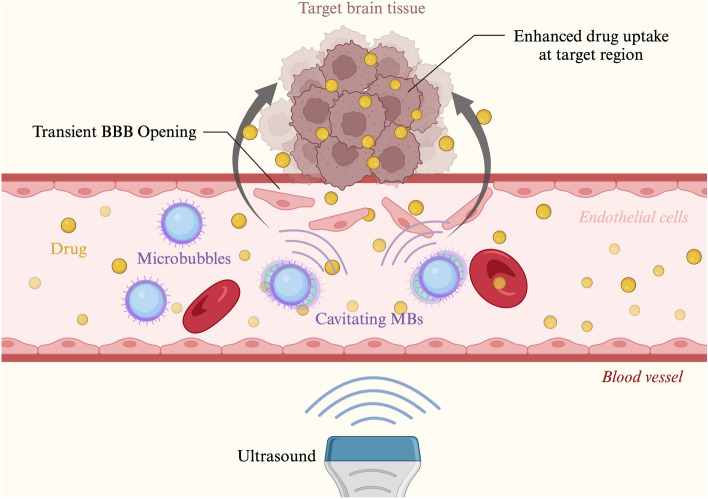
“FUS provides short-term, reversible BBB disruption through acoustic cavitation in the form of microbubbles and intravascular shear stress [62].”
Uti, D. E., Alum, E. U., Okpe, J. M., Egbung, J. E., & Mbah, J. O. (2026) · Tissue and Cell · doi:10.1016/j.tice.2026.103524 · Cited by 1
STING agonism in brain tumours: mechanisms, challenges, and therapeutic advances
Ioannou, Z., Cressey, P., Ahmed, M. H., Pouliopoulos, A. N., Hargrave, D. R., & Thanou, M. (2026) · Frontiers in Oncology · doi:10.3389/fonc.2026.1679361 · Cited by 1
Self-citationAntibody-drug conjugates for primary brain tumors
Castro, L. N. G., & Santagata, S. (2026) · Frontiers in Oncology · doi:10.3389/fonc.2026.1811494 · Cited by 2
“…pre-clinical models of BBB biology (59), improved delivery methods (e.g., convection-en-hanced delivery, BBB-disruption via focused ultrasound (60), strategies that leverage receptor-mediated transcytosis for brain delivery of therapeutics (61), or intratumoral/intrathecal delivery), (2) ADC…”
Friend or foe? Glial–vascular interactions in health and neurodegenerative disease
McQuaid, C., Sewell, M. D. E., & Montagne, A. (2026) · Pharmacological Reviews · doi:10.1016/j.pharmr.2026.100143 · Cited by 1
“221,236 This technology enables transient, reversible BBB opening without inducing acute neuronal damage, representing the only currently available noninvasive and controllable BBB-opening method, although its long-term safety remains uncertain.”
Putra, M. A. R., Ghozali, S., & Annisa, M. F. (2026) · The Indian Journal of Medical Research · doi:10.25259/ijmr_2529_2025 · Cited by 1
Intraoperative technological advances and new frontiers in precision glioma surgery
Faraj, C. A., Young, C. C., Beckham, T. H., & Weinberg, J. S. (2026) · Journal of Neuro-Oncology · doi:10.1007/s11060-026-05686-1 · Cited by 3
Exploring the role of focused ultrasound in neurosurgery and neuro-oncology
Himič, V., Benchouia, A. R., Abikenari, M. A., Jagid, J. R., Cordeiro, J. G., Komotar, R. J., Shah, A. H., Ivan, M. E., Gillies, M. J., Lyon, P. C., et al. (2026) · Journal of Neurology Neurosurgery & Psychiatry · doi:10.1136/jnnp-2026-339017 · Cited by 2
“58 Beyond drug delivery, recent perspectives on the evolution of endovascular neurosurgery suggest that reconsidering interventional approaches and precision, such as those refined in carotid artery stenting, may offer insights into more targeted ultrasound-mediated cerebral delivery systems in the…”
Al‐allaq, A. A., Hassan, H. A., Hidayet, H. M., Abdulhakeem, A. A., & Ahmad, Z. A.-A. Q. (2026) · Micro · doi:10.3390/micro6030065 · Cited by 1
“In clinical trials of brain tumors, FUS-mediated BBB opening has been reported as a non-invasive, reversible, and spatially targeted strategy, with selected studies addressing enhanced uptake of systemically administered therapeutics after sonication [72].”
Zhang, S., Yuan, S., Feng, S., Chen, L., Bai, Y., Wang, H., Jin, Z., & Hu, S. S. (2026) · Journal of Controlled Release · doi:10.1016/j.jconrel.2026.115337 · Cited by 1
Focused ultrasound enhances lazertinib delivery in an EGFR-mutant brain metastasis rat modelPreprint
Kong, C., Oh, S., Chung, Y. S., Han, S., & Chang, W. S. (2025) · Research Square · doi:10.21203/rs.3.rs-7181025/v1
Kolodziejczak, A. S., Selt, F., Peterziel, H., Jamaladdin, N., Mack, N. L., Maaß, K., Meulenbroeks, C., Sigaud, R., Herold‐Mende, C. C., Damaty, A. E., et al. (2025) · iScience · doi:10.1016/j.isci.2025.114564
“75 Identification of LFS-spe-cific biomarkers for adavosertib sensitivity could help enhancing its therapeutic potential, however, these efforts may be impeded by the small number of LFS SHH-MB patients.”
Guo, Y., Foiret, J. L., Seo, J. W., Zhang, N., Wang, J., Raie, M. N., Jan, B. L., Tumbale, S. K., & Ferrara, K. W. (2026) · bioRxiv (Cold Spring Harbor Laboratory) · doi:10.64898/2026.02.06.704523
“This approach has been leveraged in completed and ongoing clinical trials to enhance delivery of a variety of therapeutics, including chemotherapeutics and antibodies, to brain tumors, with demonstrated safety and preliminary evidence of efficacy [28].”
Focused ultrasound for brain metastases
Ozair, A., Moiz, B., Anastasiadis, P., Gandhi, D., Amatya, B., McDermott, M. W., Woodworth, G. F., & Ahluwalia, M. S. (2025) · Neuro-Oncology Advances · doi:10.1093/noajnl/vdaf131 · Cited by 2
“97 When MBs circulate within the targeted sonication zone (i.e. the acoustic field), they undergo volumetric oscillation, a phenomenon that results in cyclic MB expansion and contraction.”
Applications of transcranial focused ultrasound for primary brain tumors
Ozair, A., Moiz, B., Anastasiadis, P., Gandhi, D., Bettegowda, C., Mischel, P. S., Hong, J., Ahluwalia, M. S., & Woodworth, G. F. (2025) · Neuro-Oncology Advances · doi:10.1093/noajnl/vdaf156 · Cited by 4
Crossing the barrier, crossing the line: neurotoxicity of nanomedicines in brain cancer therapy
Rochfort, K. D. (2026) · Elsevier eBooks · doi:10.1016/b978-0-443-44579-8.00001-1
Breza, V. R., Hoch, M. R., Huchthausen, C., Gorick, C. M., Debski, A. C., Conarroe, C. A., Nowak, K. M., Song, J., Purow, B. W., Miller, G. W., et al. (2026) · Journal of Controlled Release · doi:10.1016/j.jconrel.2026.114916
RNA-based precision medicine in glioblastoma driven by oncogenic gene fusions
Bouillon, M., Lapoujade, C., Basset, L., Fontaine, A., Hollenstein, M., Garcion, E., & Rousseau, A. (2026) · Molecular Therapy Oncology · doi:10.1016/j.omton.2026.201213
Astrocyte-associated immunosuppressive programs in brain tumors: a STAT3-centered perspective
Sun, W., Zhang, J.-Q., & Jin, W.-L. (2026) · Cancer and Metastasis Reviews · doi:10.1007/s10555-026-10343-0
“…focused ultrasound (FUS) with microbubbles has advanced through multiple early-phase trials, repeatedly demonstrating transient, localized BBB opening and increased drug uptake in patients, including those with GBM and recurrent GBM using implantable ultrasound emitters (e.g., SonoCloud-9) [101].”
Johnson, S., Odéen, H., Vine, H., Guenkawa, P., Nelson, B., & Payne, A. (2026) · Ultrasound in Medicine & Biology · doi:10.1016/j.ultrasmedbio.2026.04.014
Focused ultrasound is poised to take non-viral gene therapies to the blood-brain barrier—And beyond
Gordon, E. N., Debski, A. C., Breza, V. R., Hoch, M. R., Anwar, N. Z., Imomnazarov, K., Batts, A. J., DeWitt, M. R., Sheybani, N., & Price, R. J. (2026) · Cell Biomaterials · doi:10.1016/j.celbio.2026.100461 · Cited by 1
Feizy, M., Nehal, N., Haider, F., Khan, M., Khan, M. S., Parveen, R., Amin, S., & Ali, J. (2026) · Journal of Drug Delivery Science and Technology · doi:10.1016/j.jddst.2026.108652
Debski, A. C., Gorick, C. M., Breza, V. R., Song, J., & Price, R. J. (2026) · Cell Biomaterials · doi:10.1016/j.celbio.2026.100535
Halabian, N., Park, C., Omoto, L., Bocca, L. F., Ramos-Palacios, G., Wu, K., Hamani, C., Rabin, J. S., Abrahão, A., Davidson, B., et al. (2026) · Biological Psychiatry · doi:10.1016/j.biopsych.2026.07.008 · Cited by 2
Piezo1 Knockdown Sensitizes Brain Cancer Cells to Focused Ultrasound-Induced ApoptosisPreprint
Gomes, L., Pardo-Pastor, C., Bagley, D., Lock, D., Burstow, R., Rosenblatt, J., & Pouliopoulos, A. N. (2026) · Research Square · doi:10.21203/rs.3.rs-10569219/v1
Self-citationNanotechnology in Pediatric Neurology: Applications and Innovations
Teleanu, R. I., Lungescu, I. A., Niculescu, A.-G., Cojocaru, A.-M., Perjoc, R., Chenescu, B. T., Roza, E., Vladâcenco, O. A., Grumezescu, A. M., & Teleanu, D. M. (2026) · Pharmaceutics · doi:10.3390/pharmaceutics18080999
“This synergy represents an attractive paradigm where narrow therapeutic indices and developing brains require precision [67,79,80,85].”
Exploring the landscape of targetable alterations in patients with glioblastoma
Aquilanti, E., Touat, M., French, P. J., Iavarone, A., Capper, D., Geurts, M., Rahman, R. M., Verhaak, R. G. W., Preusser, M., van den Bent, M. J., et al. (2026) · Nature Reviews Clinical Oncology · doi:10.1038/s41571-026-01190-7 · Cited by 2
“An emerging approach designed to increase BBB permeability involves the use of focused ultrasonography (FUS) combined with microbubbles to temporarily open the BBB in a spatially targeted manner 220 .”
Diffuse intrinsic pontine glioma in the era of H3 K27-altered diffuse midline glioma
Wei, S., Bao, J., Xu, X., & Pan, Z. (2026) · Critical Reviews in Oncology/Hematology · doi:10.1016/j.critrevonc.2026.105574
Diagnostic imaging and emerging image-guided neurointervention in brain tumors: a narrative review
Alam, Z., Messer, T., Maddali, A., Heath, J., Desai, K., Sundararajan, S., Monoky, D., & Reddy, B. (2026) · Frontiers in Radiology · doi:10.3389/fradi.2026.1914188
“Microbubble-enhanced transcranial focused ultrasound (MB-FUS) facilitates controlled and localized blood-brain barrier disruption for enhanced drug delivery (41, 42).”
Li, X., Rong-liang, G., Teng, Z., Liu, P.-P., & Liu, C. (2026) · Ageing Research Reviews · doi:10.1016/j.arr.2026.103377
Overcoming Biological Barriers with Sononanomedicine: New Horizons in Oncology and Neurology
Guo, R., Zhao, H., Feng, Z., Wang, Z., Tang, Y., & Qiu, L. (2026) · ACS Nano · doi:10.1021/acsnano.6c12207
Wang, Q., Li, H., Zhang, Y., Zhou, Y., Ran, S., & Li, H. (2026) · Nanoscale · doi:10.1039/d6nr02257j
Focused ultrasound blood-brain barrier opening: a review of post-procedure MRI outcomes
LeBlang, S., Mehta, R. I., D’haese, P.-F., Grinspan, A., Sokolov, A., & Frazzetta, G. (2026) · Expert Review of Neurotherapeutics · doi:10.1080/14737175.2026.2737272
Berardino, S. D., Zarà, M., Ahfaz, H. A., Tacconelli, S., & Patrignani, P. (2026) · Frontiers in Pharmacology · doi:10.3389/fphar.2026.1956969
Precision engineering of nanocarriers for transport across complex biological barriers
Acharya, R., Komedchikova, E., Choi, Y., Yang, J., Kim, J., Son, J., Jang, J., Lee, H., Kadonosono, T., & 최종훈 (2026) · International Journal of Pharmaceutics X · doi:10.1016/j.ijpx.2026.100691
The electrical life of cancer: cancer neuroscience from circuits to patient care
Pittarello, M., Dada, A., & Hervey‐Jumper, S. L. (2026) · Current Opinion in Neurology · doi:10.1097/wco.0000000000001517
Metadata
- Authors
- Zhu, H., Allwin, C., Bassous, M. G., & Pouliopoulos, A. N.
- Affiliations
- King's College London (GB)
- Corresponding author
- Pouliopoulos, Antonios N.
- Venue
- Journal of Neuro-Oncology
- Published
- 2024-08-29
- Volume
- 170
- Issue
- 2
- Pages
- 235-252
- ISSN
- 0167-594X (ISSN-L)
- 1573-7373
- PMC
- PMC11538134
- OpenAlex
- W4402005298
- Semantic Scholar
- d3b4161918e04b949992213e6e571a0617e473d7
- Cited by
- 75
- References
- 58
- Citations by year
- 2026: 43 · 2025: 32
- FWCI
- 2.69
- Type
- journal article
- Language
- en
- Open access
- hybrid
- doi.org
- Licence
- cc-by
- creativecommons.org/licenses/by/4.0 (tdm)
- creativecommons.org/licenses/by/4.0 (vor)
- Locations
- Journal of Neuro-Oncology (publishedVersion, cc-by)
- PubMed Central (publishedVersion, cc-by)
- PubMed (publishedVersion)
- Funders
- Children’s Cancer and Leukaemia Group (CCLG) / Little Princess Trust (CCLGA 2022 25)
- Action Medical Research / LifeArc (GN3017)
- Focused Ultrasound Foundation (FUS1050R1)
- Abbie’s Army / Children’s Brain Tumour Drug Delivery Consortium (KCL/G12/22)
- Topics
- Physical Sciences › Engineering › Biomedical Engineering › Ultrasound and Hyperthermia Applications
- Health Sciences › Medicine › Oncology › Glioma Diagnosis and Treatment
- Life Sciences › Neuroscience › Neurology › Barrier Structure and Function Studies
- Keywords
- focused ultrasound, blood-brain barrier opening, brain tumors, glioblastoma, glioma, astrocytoma, brain metastases, breast cancer, microbubbles, drug delivery, clinical trials, pediatric brain tumors
- MeSH terms
- Antineoplastic Agents, Blood-Brain Barrier, Brain Neoplasms, Clinical Trials as Topic, Humans, Permeability, Ultrasonic Therapy, Drug Delivery Systems, Microbubbles
About these checks
Registry, retraction, Cites and statistics results are computed, not judged, with one exception: a printed reference that no index lists is read once by a model before it counts as a citation error. Claims are extracted by a model and kept only when their quote appears verbatim in the text; each cited source is then checked, with a model’s help, for whether it says what the claim relies on. Those verdicts can be wrong — read the claim’s quote and the cited source before relying on one.
Statistics and arithmetic are recomputed, not judged.
Confidence bands are shown only for fields calibrated on our annotated test set. None is calibrated yet, so no band is shown.
What counts as a claim ›How we measure confidence ›How we check this ›
Are you an author, or do you see a problem with this page? Request a review
Data sources
Bibliographic data: Semantic Scholar, OpenAlex, Crossref.
Contains information from the Semantic Scholar Academic Graph Datasets, made available under the ODC Attribution License (ODC-BY 1.0).
Semantic Scholar’s data is described in: Kinney, R., et al. (2023). The Semantic Scholar Open Data Platform. arXiv:2301.10140.
