

Design of the Novel Protraction Mechanism of Insulin Degludec, an Ultra-long-Acting Basal Insulin
Open accessThe DOI matches its Crossref record; 33 of the 33 references it cites were found in a registry or an index.
Abstract
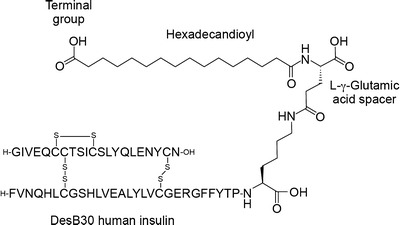
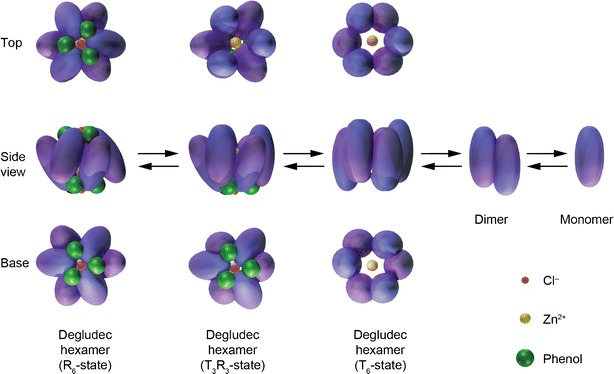
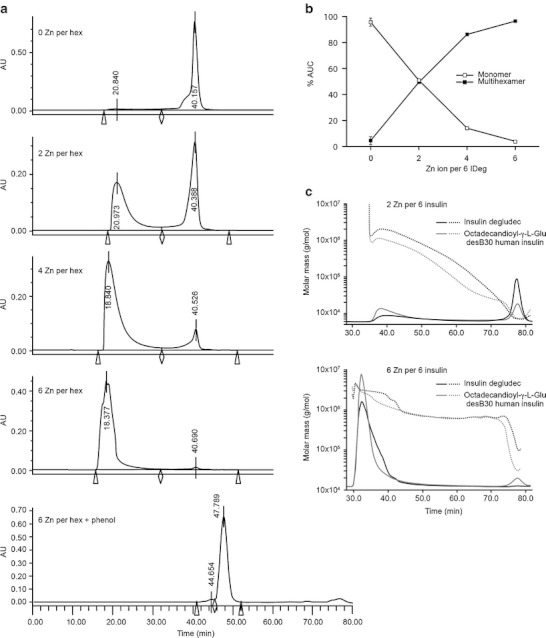
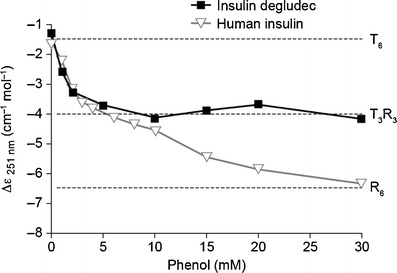
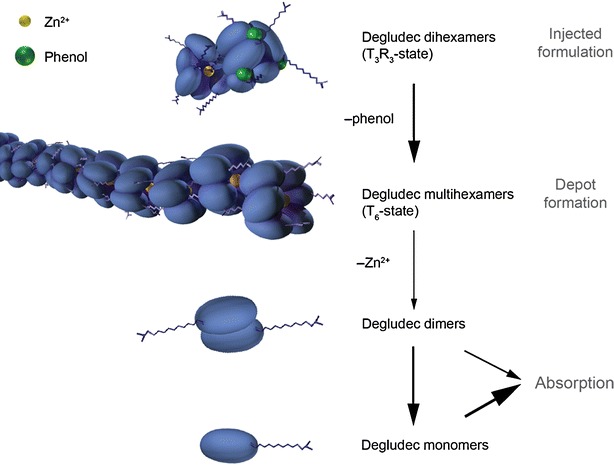
PURPOSE: Basal insulins with improved kinetic properties can potentially be produced using acylation by fatty acids that enable soluble, high-molecular weight complexes to form post-injection. A series of insulins, acylated at B29 with fatty acids via glutamic acid spacers, were examined to deduce the structural requirements. METHODS: Self-association, molecular masses and hexameric conformations of the insulins were studied using size exclusion chromatography monitored by UV or multi-angle light scattering and dynamic light scattering, and circular dichroism spectroscopy (CDS) in environments (changing phenol and zinc concentration) simulating a pharmaceutical formulation and changes following subcutaneous injection. RESULTS: With depletion of phenol, insulin degludec and another fatty diacid-insulin analogue formed high molecular mass filament-like complexes, which disintegrated with depletion of zinc. CDS showed these analogues adopting stable T(3)R(3) conformation in presence of phenol and zinc, changing to T(6) with depletion of phenol. These findings suggest insulin degludec is dihexameric in pharmaceutical formulation becoming multihexameric after injection. The analogues showed weak dimeric association, indicating rapid release of monomers following hexamer disassembly. CONCLUSIONS: Insulins can be engineered that remain soluble but become highly self-associated after injection, slowly releasing monomers; this is critically dependent on the acylation moiety. One such analogue, insulin degludec, has therapeutic potential.
Overview
The claims and statistics of this paper haven’t been checked yet.
Free: it reads the open-access text and checks the first 5 claims that cite a source we can check. Create a free account to check every claim.
Integrity signals
Registry
Cites
Statistics
Figures
Verification
Claims the paper makes
The claims and statistics of this paper haven’t been checked yet.
Free: it reads the open-access text and checks the first 5 claims that cite a source we can check. Create a free account to check every claim.
Claims other papers make about this one
Each is checked against this paper’s own text: does it say what the citing paper says it does?
The source backs part of the claim, not all of it — or backs it for a different population, condition or comparison.
In the citing paper
“In the pharmaceutical formulation, i.e. in the presence of phenol and zinc, the IDeg hexamers adopt a conformation where only one of the ends is available to interact with the side chain of another IDeg hexamer and thus forms stable di-hexamers.”
From A Review of the Pharmacological Properties of Insulin Degludec and Their Clinical Relevance (2014) · cites this paper as [16]
Experimental — accuracy not yet measuredThe source backs part of the claim, not all of it — or backs it for a different population, condition or comparison.
In the citing paper
“With the gradual diffusion of zinc from the ends of the multi-hexamers, terminal IDeg monomers slowly and steadily dissociate, resulting in a slow and gradual delivery of IDeg from the SC injection site into the circulation [16].”
From A Review of the Pharmacological Properties of Insulin Degludec and Their Clinical Relevance (2014) · cites this paper as [16]
Experimental — accuracy not yet measuredThe source backs part of the claim, not all of it — or backs it for a different population, condition or comparison.
In the citing paper
“Upon diffusion of phenol following injection, the IDeg di-hexamers open at both ends and lead to the formation of multi-hexamers [16].”
From A Review of the Pharmacological Properties of Insulin Degludec and Their Clinical Relevance (2014) · cites this paper as [16]
Experimental — accuracy not yet measuredThe source backs part of the claim, not all of it — or backs it for a different population, condition or comparison.
In the citing paper
“To date, IDeg is the only insulin analogue to self-associate into multi-hexamers upon subcutaneous (SC) injection, resulting in a soluble depot from which IDeg is slowly and continuously absorbed into the circulation [15, 16].”
From A Review of the Pharmacological Properties of Insulin Degludec and Their Clinical Relevance (2014) · cites this paper as [16]
Experimental — accuracy not yet measuredThe cited source says what the claim attributes to it.
In the citing paper
“Insulin degludec (IDeg) is a new-generation basal insulin with an ultra-long duration of action developed for once-daily administration [15, 16]”
From A Review of the Pharmacological Properties of Insulin Degludec and Their Clinical Relevance (2014) · cites this paper as [16]
1 more claim about this paper
Create a free account to see every claim other papers make about this one.
Self-check
Percentages, sums and reported differences re-computed from the paper’s own numbers.
The self-check needs the paper’s full text.
Citations
Cites
Effects of protein aggregates: An immunologic perspective
Rosenberg, A. S. (2006) · The AAPS Journal · doi:10.1208/aapsj080359 · Cited by 1,355
Estimation of Molecular Size and Molecular Weights of Biological Compounds by Gel Filtration
Andrew, P. (1970) · Methods of Biochemical Analysis · doi:10.1002/9780470110362.ch1 · Cited by 638
Heise, T., Nosek, L., Rønn, B. B., Endahl, L., Heinemann, L., Kapitza, C., & Draeger, E. (2004) · Diabetes · doi:10.2337/diabetes.53.6.1614 · Cited by 614
Wen, J., Arakawa, T., & Philo, J. S. (1996) · Analytical Biochemistry · doi:10.1006/abio.1996.0345 · Cited by 504
Monomeric insulins obtained by protein engineering and their medical implications
Brange, J., Ribel, U., Hansen, J. F., Dodson, G., Hansen, M. T., Havelund, S., Melberg, S. G., Norris, F., Norris, K., Snel, L., et al. (1988) · Nature · doi:10.1038/333679a0 · Cited by 488
Self-citationThe Mechanism of Protraction of Insulin Detemir, a Long-Acting, Acylated Analog of Human Insulin
Havelund, S., Plum, A., Ribel, U., Jonassen, I., Vølund, A., Markussen, J., & Kurtzhals, P. (2004) · Pharmaceutical Research · doi:10.1023/b:pham.0000036926.54824.37 · Cited by 429
Self-citationHeise, T., Hermanski, L., Nosek, L., Feldman, A., Rasmussen, S., & Haahr, H. (2012) · Diabetes, Obesity and Metabolism · doi:10.1111/j.1463-1326.2012.01627.x · Cited by 397
Immunogenicity of protein therapeutics: The key causes, consequences and challenges
Baker, M., Reynolds, H. M., Lumicisi, B., & Bryson, C. J. (2010) · Self/Nonself · doi:10.4161/self.1.4.13904 · Cited by 372 · cited 1×
“which neutralising antibodies can impact efficacy over time (26).”
BackgroundStrategies for the assessment of protein aggregates in pharmaceutical biotech product development
den Engelsman, J., Garidel, P., Smulders, R., Koll, H., Smith, B., Bassarab, S., Seidl, A., Hainzl, O., & Jiskoot, W. (2011) · Pharmaceutical Research · doi:10.1007/s11095-010-0297-1 · Cited by 348
Kurtzhals, P., Havelund, S., Jonassen, I., Kiehr, B., Larsen, U. D., Ribel, U., & Markussen, J. (1995) · Biochemical Journal · doi:10.1042/bj3120725 · Cited by 334
Self-citation
Research works printed but not linked: 2
- Kruger P Gilge G Cabuk Y Wollmer A Cooperativity and intermediate states in the T;R-structural transformation of insulin Biol Chem Hoppe Seyler 1990 371 669 673 10.1515/bchm3.1990.371.2.669 2206455 · DOI
- Kurzhals P Heise T Strauss HM Bøttcher SG Granhall C Haahr H Jonassen I Multi-hexamer formation is the underlying mechanism behind the ultra-long glucose-lowering effect of insulin degludec Diabetes 2011 60 Suppl. 1 LB12
Cited by
Items 101–200 of 475
Newer insulin analogs: advances in basal insulin replacement
Zinman, B. (2013) · Diabetes Obesity and Metabolism · doi:10.1111/dom.12068 · Cited by 42
Ho, R. J. Y., & Gibaldi, M. (2013) · Wiley eBooks · doi:10.1002/9781118660485.ch16 · Cited by 42
Bech, E. M., Martos-Maldonado, M. C., Wismann, P., Sørensen, K. K., van Witteloostuijn, S. B., Thygesen, M. B., Vrang, N., Jelsing, J., Pedersen, S. L., & Jensen, K. J. (2017) · Journal of Medicinal Chemistry · doi:10.1021/acs.jmedchem.7b00787 · Cited by 39
Mull, R. W., Harrington, A., Sanchez, L. A., & Tal-Gan, Y. (2018) · Current Topics in Medicinal Chemistry · doi:10.2174/1568026618666180518090705 · Cited by 41
The metabolic and mitogenic properties of basal insulin analogues
Tennagels, N., & Ulrich, W. (2013) · Archives of Physiology and Biochemistry · doi:10.3109/13813455.2012.754474 · Cited by 41
Insulin Degludec: Pharmacokinetic Properties in Subjects with Hepatic Impairment
Kupčová, V., Arold, G., Roepstorff, C., Højbjerre, M., Klim, S., & Haahr, H. (2014) · Clinical Drug Investigation · doi:10.1007/s40261-013-0154-1 · Cited by 40
“Upon subcutaneous injection, insulin degludec forms multihexamers, resulting in a soluble depot in the subcutaneous tissue from which monomers gradually separate [6, 7].”
BackgroundPhilis‐Tsimikas, A., Prato, S. D., Satman, İ., Bhargava, A., Dharmalingam, M., Skjøth, T. V., Rasmussen, S., & Garber, A. J. (2013) · Diabetes Obesity and Metabolism · doi:10.1111/dom.12115 · Cited by 40
Insulin degludec/liraglutide (IDegLira) for the treatment of type 2 diabetes
Gough, S. C. L., Jain, R., & Woo, V. C. (2015) · Expert Review of Endocrinology & Metabolism · doi:10.1586/17446651.2016.1113129 · Cited by 40
Hirsch, I. B., Franek, E., Mersebach, H., Bardtrum, L., & Hermansen, K. (2017) · Diabetic Medicine · doi:10.1111/dme.13068 · Cited by 38
Insulin degludec and insulin aspart: novel insulins for the management of diabetes mellitus
Atkin, S. L., Javed, Z., & Fulcher, G. R. (2015) · Therapeutic Advances in Chronic Disease · doi:10.1177/2040622315608646 · Cited by 39
Hollander, P. A., King, A. B., Prato, S. D., Sreenan, S., Balcı, M. K., Muñoz‐Torres, M., Rosenstock, J., Hansen, C. T., Niemeyer, M., & Garber, A. J. (2014) · Diabetes Obesity and Metabolism · doi:10.1111/dom.12411 · Cited by 38
The ABC of Insulin: The Organic Chemistry of a Small Protein
Østergaard, M., Mishra, N. K., & Jensen, K. J. (2020) · Chemistry - A European Journal · doi:10.1002/chem.202000337 · Cited by 38
“Clickable” Albumin Binders for Modulating the Tumor Uptake of Targeted Radiopharmaceuticals
Brandt, F., Ullrich, M., Laube, M., Kopka, K., Bachmann, M. P., Löser, R., Pietzsch, J., Pietzsch, H., van den Hoff, J., & Wodtke, R. (2021) · Journal of Medicinal Chemistry · doi:10.1021/acs.jmedchem.1c01791 · Cited by 38
Davies, M., Sasaki, T., Gross, J. L., Bantwal, G., Ono, Y., Nishida, T., Tojjar, D., & Seino, H. (2016) · Diabetes, Obesity and Metabolism · doi:10.1111/dom.12573 · Cited by 33
A Comprehensive Review of the Evolution of Insulin Development and Its Delivery Method
Sugumar, V., Ang, K. P., Al-Shanon, A. F., Sethi, G., Yong, P. V. C., Looi, C. Y., & Wong, W. F. (2022) · Pharmaceutics · doi:10.3390/pharmaceutics14071406 · Cited by 37
A scavenger peptide prevents methylglyoxal induced pain in mice
Brings, S., Fleming, T., De Buhr, S., Beijer, B., Lindner, T., Wischnjow, A., Kender, Z., Peters, V., Kopf, S., Haberkorn, U., et al. (2017) · Biochimica et Biophysica Acta (BBA) - Molecular Basis of Disease · doi:10.1016/j.bbadis.2016.12.001 · Cited by 37
Setty, S. G., Crasto, W., Jarvis, J., Khunti, K., & Davies, M. J. (2016) · Postgraduate Medical Journal · doi:10.1136/postgradmedj-2015-133716 · Cited by 37
Role of Insulin in the Type 2 Diabetes Therapy: Past, Present and Future
Rotella, C. M., Pala, L., & Mannucci, E. (2013) · Intern J Endocrinol Metab · doi:10.5812/ijem.7551 · Cited by 36
A review of the new GLP-1 receptor agonist/basal insulin fixed-ratio combination products
Nuffer, W. A., Guesnier, A., & Trujillo, J. M. (2018) · Therapeutic Advances in Endocrinology and Metabolism · doi:10.1177/2042018817752315 · Cited by 36
Freemantle, N., Meneghini, L., Christensen, T., Wolden, M. L., JENDLE, J. H., & Ratner, R. E. (2013) · Diabetic Medicine · doi:10.1111/dme.12086 · Cited by 36
Insulin Degludec Aspart: The First Co-formulation of Insulin Analogues
Kalra, S. (2014) · Diabetes Therapy · doi:10.1007/s13300-014-0067-x · Cited by 35
New Long-Acting Basal Insulins: Does Benefit Outweigh Cost?
Standl, E., & Owen, D. R. (2016) · Diabetes Care · doi:10.2337/dcs15-3011 · Cited by 35
Dżygało, K., Golicki, D., Kowalska, A., & Szypowska, A. (2014) · Acta Diabetologica · doi:10.1007/s00592-014-0604-0 · Cited by 35
Mikiewicz, D., Bierczyńska-Krzysik, A., Sobolewska, A., Stadnik, D., Bogiel, M., Pawłowska, M., Wójtowicz-Krawiec, A., Baran, P., Łukasiewicz, N., Romanik-Chruścielewska, A., et al. (2017) · PLoS ONE · doi:10.1371/journal.pone.0172600 · Cited by 35
New Developments in Insulin Therapy for Type 2 Diabetes
SORLI, C. H. (2014) · The American Journal of Medicine · doi:10.1016/j.amjmed.2014.07.006 · Cited by 34
Management of Type 2 Diabetes Mellitus in Older Patients: Current and Emerging Treatment Options
Moghissi, E. S. (2013) · Diabetes Therapy · doi:10.1007/s13300-013-0039-6 · Cited by 35
van Witteloostuijn, S. B., Mannerstedt, K., Wismann, P., Bech, E. M., Thygesen, M. B., Vrang, N., Jelsing, J., Jensen, K. J., & Pedersen, S. L. (2016) · Molecular Pharmaceutics · doi:10.1021/acs.molpharmaceut.6b00787 · Cited by 34
Will the next generation of basal insulins offer clinical advantages?
Garber, A. J. (2013) · Diabetes Obesity and Metabolism · doi:10.1111/dom.12219 · Cited by 33
Yamabe, M., Kuroda, M., Hirosawa, Y., Kamino, H., Ohno, H., & Yoneda, M. (2019) · Journal of Diabetes Investigation · doi:10.1111/jdi.12894 · Cited by 29
Ligand-Mediated Coating of Liposomes with Human Serum Albumin
Sato, H., Nakhaei, E., Kawano, T., Murata, M., Kishimura, A., Mori, T., & Katayama, Y. (2018) · Langmuir · doi:10.1021/acs.langmuir.7b04024 · Cited by 33
Brunner, M., Pieber, T. R., Korsatko, S., Kojzar, H., Svendsen, A. L., & Haahr, H. L. (2015) · Drugs & Aging · doi:10.1007/s40266-015-0272-y · Cited by 33
Iga, R., Uchino, H., Kanazawa, K., Usui, S., Miyagi, M., Kumashiro, N., Yoshino, H., Ando, Y., & Hirose, T. (2017) · Diabetes Therapy · doi:10.1007/s13300-017-0269-0 · Cited by 32
Galasso, S., Facchinetti, A., Bonora, B. M., Mariano, V., Boscari, F., Cipponeri, E., Maran, A., Avogaro, A., Fadini, G. P., & Bruttomesso, D. (2016) · Nutrition Metabolism and Cardiovascular Diseases · doi:10.1016/j.numecd.2016.08.002 · Cited by 31
Nakamura, T., Sakaguchi, K., So, A., Nakajima, S., Takabe, M., Komada, H., Okuno, Y., Hirota, Y., Nakamura, T., Iida, K., et al. (2015) · Diabetologia · doi:10.1007/s00125-015-3648-y · Cited by 31
Patient safety and minimizing risk with insulin administration – role of insulin degludec
Atkin, S. L., & Aye, M. (2014) · Drug Healthcare and Patient Safety · doi:10.2147/dhps.s59566 · Cited by 31
Rege, N. K., Wickramasinghe, N. P., Tustan, A. N., Phillips, N. F. B., Yee, V. C., Ismail‐Beigi, F., & Weiss, M. A. (2018) · Journal of Biological Chemistry · doi:10.1074/jbc.ra118.003650 · Cited by 31
Zhou, W., Tao, J., Zhou, X., & Chen, H. (2019) · Diabetes Therapy · doi:10.1007/s13300-019-0624-4 · Cited by 32
Evans, M., McEwan, P. C., & FOOS, V. (2014) · Journal of Medical Economics · doi:10.3111/13696998.2014.975234 · Cited by 31
Liebl, A., Davidson, J. A., Mersebach, H., Dykiel, P., Tack, C. J., & Heise, T. (2013) · Journal of Diabetes Science and Technology · doi:10.1177/193229681300700524 · Cited by 30
Křížková, K., Veverka, V., Maletínská, L., Hexnerova, R., Brzozowski, A. M., Jiráček, J., & Žáková, L. (2014) · PLoS ONE · doi:10.1371/journal.pone.0112883 · Cited by 30
Koehler, G., Heller, S., Korsatko, S., Roepstorff, C., Rasmussen, S., Haahr, H., & Pieber, T. R. (2014) · Diabetologia · doi:10.1007/s00125-013-3056-0 · Cited by 29
How multispecific molecules are transforming pharmacotherapy
Deshaies, R. J. (2025) · Nature Reviews Drug Discovery · doi:10.1038/s41573-025-01262-w · Cited by 29
New Insulins and New Aspects in Insulin Delivery
Woo, V. C. (2015) · Canadian Journal of Diabetes · doi:10.1016/j.jcjd.2015.04.006 · Cited by 30
Biophysical Optimization of a Therapeutic Protein by Nonstandard Mutagenesis
Pandyarajan, V., Phillips, N. B., Cox, G. P., Yang, Y., Whittaker, J., Ismail‐Beigi, F., & Weiss, M. A. (2014) · Journal of Biological Chemistry · doi:10.1074/jbc.m114.588277 · Cited by 29
Kusunoki, Y., Katsuno, T., Miyakoshi, K., Ikawa, T., Nakae, R., Ochi, F., Tokuda, M., Akagami, T., Murai, K., Miuchi, M., et al. (2013) · Diabetes Therapy · doi:10.1007/s13300-013-0048-5 · Cited by 28
Kapitza, C., Bode, B. W., Ingwersen, S. H., Jacobsen, L. V., & Poulsen, P. (2015) · The Journal of Clinical Pharmacology · doi:10.1002/jcph.549 · Cited by 30
Arai, K., Okumura, M., Lee, Y., Katayama, H., Mizutani, K., Lin, Y., Park, S., Sawada, K., Toyoda, M., Hojo, H., et al. (2023) · Communications Chemistry · doi:10.1038/s42004-023-01056-4 · Cited by 27
Mechanistic insights into the pH-dependent membrane peptide ATRAM
Nguyen, V. P., Palanikumar, L., Kennel, S. J., Alves, D. S., Ye, Y., Wall, J. S., Magzoub, M. M., & Barrera, F. N. (2019) · Journal of Controlled Release · doi:10.1016/j.jconrel.2019.02.010 · Cited by 29
Practical use of insulin degludec/insulin aspart in a multinational setting: beyond the guidelines
Mehta, R., Chen, R., Hirose, T., John, M., Kok, A., Lehmann, R., Unnikrishnan, A., Yavuz, D. G., & Fulcher, G. R. (2020) · Diabetes Obesity and Metabolism · doi:10.1111/dom.14128 · Cited by 27
The ongoing evolution of basal insulin therapy over 100 years and its promise for the future
Retnakaran, R. R., & Zinman, B. (2021) · Diabetes Obesity and Metabolism · doi:10.1111/dom.14552 · Cited by 27
Galindo, R. J., Pasquel, F. J., Vellanki, P., Alicic, R., Lam, D. W., Fayfman, M., Migdal, A. L., Davis, G. M., Cardona, S., Urrutia, M. A., et al. (2022) · Diabetes, Obesity and Metabolism · doi:10.1111/dom.14544 · Cited by 26
“A potential explanation for the low hypoglycaemia rates could be the more relaxed inpatient glucose targets compared with previous ambulatory trials, as well as the mechanism of protraction of degludec, resulting in a slow release of degludec from the subcutaneous injection depot into the circulation.(29) Moreover, we…”
New Horizons: Next-Generation Insulin Analogues: Structural Principles and Clinical Goals
Jarosinski, M. A., Chen, Y., Varas, N., Dhayalan, B., Chatterjee, D., & Weiss, M. A. (2021) · The Journal of Clinical Endocrinology & Metabolism · doi:10.1210/clinem/dgab849 · Cited by 27
Single‐Shot Solid‐Phase Synthesis of Full‐Length H2 Relaxin Disulfide Surrogates
Zhao, R. J., Shi, P., Cui, J., Shi, C., Wei, X., Luo, J., Xia, Z., Shi, W., Zhou, Y., Tang, J., et al. (2022) · Angewandte Chemie International Edition · doi:10.1002/anie.202216365 · Cited by 26
Injectable systems for long-lasting insulin therapy
Niloy, K. K., & Lowe, T. L. (2023) · Advanced Drug Delivery Reviews · doi:10.1016/j.addr.2023.115121 · Cited by 25
Pechenov, S., Bhattacharjee, H., Yin, D., Mittal, S., & Subramony, J. A. (2017) · Advanced Drug Delivery Reviews · doi:10.1016/j.addr.2017.01.006 · Cited by 25
Treatment of type 2 diabetes, lifestyle, GLP1 agonists and DPP4 inhibitors
Tomkin, G. H. (2014) · World Journal of Diabetes · doi:10.4239/wjd.v5.i5.636 · Cited by 24
Flexibly timed once‐daily dosing with degludec: a new ultra‐long‐acting basal insulin
Josse, R. G., & Woo, V. (2013) · Diabetes, Obesity and Metabolism · doi:10.1111/dom.12114 · Cited by 24
“Once in circulation, degludec binds reversibly to albumin, an effect that is likely to help buffer any fluctuations in free insulin [28].”
BackgroundTherapeutic peptides and proteins: Status and developments in drug delivery
Hornsby, B. D., Lee, C. H., Steele, C. A., Tuekpe, J. K. K., & Lim, C. S. (2026) · Journal of Controlled Release · doi:10.1016/j.jconrel.2026.114895 · Cited by 25
NESTOR, J. J. J., Zhang, X., Jaw‐Tsai, S., Parkes, D. G., & Becker, C. (2021) · Peptide Science · doi:10.1002/pep2.24221 · Cited by 24
Basal insulin analogs: From pathophysiology to therapy. What we see, know, and try to comprehend?
Monnier, L., Colette, C., & Owens, D. R. (2013) · Diabetes & Metabolism · doi:10.1016/j.diabet.2013.09.003 · Cited by 24
Half-Life Extending Modifications of Peptide YY3–36 Direct Receptor-Mediated Internalization
Bech, E. M., Kaiser, A., Bellmann‐Sickert, K., Bohr, S. S.-R., Sørensen, K. K., Elster, L., Hatzakis, N. S., Pedersen, S. L., Beck‐Sickinger, A. G., & Jensen, K. J. (2019) · Molecular Pharmaceutics · doi:10.1021/acs.molpharmaceut.9b00554 · Cited by 24
Özçelik, S., Çelik, M., Vural, A., Aydın, B., Özçelik, M., & Gözü, H. I. (2020) · Archives of Medical Science · doi:10.5114/aoms.2020.93264 · Cited by 24
A simple dilute and shoot methodology for the identification and quantification of illegal insulin
Vanhee, C., Janvier, S., Moens, G., Deconinck, E., & Courselle, P. (2016) · Journal of Pharmaceutical Analysis · doi:10.1016/j.jpha.2016.04.006 · Cited by 24
Woo, V. C. (2017) · Clinical Therapeutics · doi:10.1016/j.clinthera.2017.01.007 · Cited by 23
Heise, T., Nosek, L., Klein, O., Coester, H. V., Svendsen, A. L., & Haahr, H. L. (2015) · Diabetes Obesity and Metabolism · doi:10.1111/dom.12463 · Cited by 23
Molecular and Materials Engineering for Delivery of Peptide Drugs to Treat Type 2 Diabetes
Varanko, A. K., & Chilkoti, A. (2019) · Advanced Healthcare Materials · doi:10.1002/adhm.201801509 · Cited by 23
Clinical use of insulin degludec: Practical experience and pragmatic suggestions
Kalra, S., & Gupta, Y. (2015) · North American Journal of Medical Sciences · doi:10.4103/1947-2714.153918 · Cited by 22
Maiorino, M. I., Petrizzo, M., Capuano, A., Giugliano, D., & Esposito, K. (2014) · Expert Opinion on Biological Therapy · doi:10.1517/14712598.2014.895812 · Cited by 22
Yamamoto, K., Miyoshi, H., Fujiwara, Y., Kameda, R., Ichiyama, M., Nomoto, H., Kameda, H., Nakamura, A., & Atsumi, T. (2015) · Endocrine Journal · doi:10.1507/endocrj.ej15-0438 · Cited by 22
Oxidative Modification of Tryptophan-Containing Peptides
Petersen, J., Christensen, K. E., Nielsen, M. T., Mortensen, K. T., Komnatnyy, V. V., Nielsen, T. E., & Qvortrup, K. M. (2018) · ACS Combinatorial Science · doi:10.1021/acscombsci.8b00014 · Cited by 22
The quaternary structure of insulin glargine and glulisine under formulation conditions
Nagel, N., Graewert, M. A., Gao, M., Heyse, W., Jeffries, C. M., Svergun, D. I., & Berchtold, H. (2019) · Biophysical Chemistry · doi:10.1016/j.bpc.2019.106226 · Cited by 22
Jensen, M. H., Wahlund, P., Toft, K. N., Jacobsen, J. K., Steensgaard, D. B., van de Weert, M., Havelund, S., & Vestergaard, B. (2012) · Biochemistry · doi:10.1021/bi3008615 · Cited by 21
Self-citationReduction of glycemic variability with Degludec insulin in patients with unstable diabetes
Henao, D. C., Múñoz, Ó., Gómez, A. M., Rondón, M., Colon, C. A., Chica, L. G., Rubio, C., Vargas, F. M. L., Calvachi, M. A., & Perea, A. M. (2018) · Journal of Clinical & Translational Endocrinology · doi:10.1016/j.jcte.2018.03.003 · Cited by 21
Insulin Centennial: Milestones influencing the development of insulin preparations since 1922
Owens, D. R., Monnier, L., Ceriello, A., & Bolli, G. B. (2021) · Diabetes Obesity and Metabolism · doi:10.1111/dom.14587 · Cited by 22
Schiavon, M., Visentin, R., Giegerich, C., Sieber, J., Dalla Man, C., Cobelli, C., & Klabunde, T. (2020) · Diabetes Technology & Therapeutics · doi:10.1089/dia.2020.0027 · Cited by 19
Hompesch, M., Morrow, L., Watkins, E., Roepstorff, C., Thomsen, H. F., & Haahr, H. (2014) · Clinical Therapeutics · doi:10.1016/j.clinthera.2013.12.014 · Cited by 20
“On subcutaneous injection, IDeg forms long chains of multihexamers that result in a soluble depot in the subcutaneous tissue from which IDeg monomers gradually separate.(6,7) IDeg has a distinct, slow, and continuous absorption into the circulation, leading to a flat and stable glucose-lowering effect at steady state.”
Dong, Z.-Y., Feng, J., & Zhang, J. (2022) · Clinical Therapeutics · doi:10.1016/j.clinthera.2022.09.012 · Cited by 20
Conget, I., Mangas, M. Á., Morales, C., Caro, J., Giménez, M., Borrell, M., & Delgado, E. (2021) · Diabetes Therapy · doi:10.1007/s13300-021-01153-4 · Cited by 20
Poly(trehalose methacrylate) as an Excipient for Insulin Stabilization: Mechanism and Safety
Gelb, M. B., Messina, K. M. M., Vinciguerra, D., Ko, J. H., Collins, J., Tamboline, M., Xu, S., Ibarrondo, F. J., & Maynard, H. D. (2022) · ACS Applied Materials & Interfaces · doi:10.1021/acsami.2c09301 · Cited by 20
Cambuli, V. M., & Baroni, M. G. (2023) · International Journal of Molecular Sciences · doi:10.3390/ijms241713139 · Cited by 20
Kawaguchi, Y., Sawa, J., Hamai, C., & Kumeda, Y. (2019) · Diabetes Therapy · doi:10.1007/s13300-019-0654-y · Cited by 20
SNAITH, J. R., Narongkiatikhun, P., Bjornstad, P., Greenfield, J. R., & Tommerdahl, K. L. (2025) · Diabetes Care · doi:10.2337/dci25-0015 · Cited by 19
The evolving landscape of obesity pharmacotherapy
Petersen, J., Finan, B., Johansen, V. B. I., Müller, T. D., & Clemmensen, C. (2026) · Nature Reviews Drug Discovery · doi:10.1038/s41573-026-01427-1 · Cited by 22
Protein nanocondensates: the next frontier
Toledo, P. L., Gianotti, A. R., Vazquez, D. S., & Ermácora, M. R. (2023) · Biophysical Reviews · doi:10.1007/s12551-023-01105-1 · Cited by 19
Shimoda, S., Sato, M., Sekigami, T., Motoshima, H., Yoshimura, R., Fukuda, K., Matsuo, Y., Noda, H., Okubo, M., Ichimori, S., et al. (2016) · Journal of Diabetes Investigation · doi:10.1111/jdi.12496 · Cited by 19
Vedtofte, L., Knop, F. K., & Vilsbøll, T. (2017) · Expert Opinion on Drug Safety · doi:10.1080/14740338.2017.1288715 · Cited by 19
Insulin degludec/insulin aspart combination for the treatment of type 1 and type 2 diabetes
Miccoli, R., Dardano, A., Bianchi, C., & Prato, S. D. (2014) · Vascular Health and Risk Management · doi:10.2147/vhrm.s40097 · Cited by 19
Beals, J. M., DeFelippis, M. R., Paavola, C. D., Allen, D. P., Garg, A. K., & Baldwin, D. B. (2019) · Springer eBooks · doi:10.1007/978-3-030-00710-2_18 · Cited by 19
Rational Development of Stable PYY3–36 Peptide Y2 Receptor Agonists
Poulsen, C., Pedersen, M. Ø., Wahlund, P., Sjölander, A., Thomsen, J. K., Conde‐Frieboes, K. W., Paulsson, J. F., Wulff, B. S., & Østergaard, S. (2021) · Pharmaceutical Research · doi:10.1007/s11095-021-03077-x · Cited by 18
Self-citationEINHORN, D. F., Handelsman, Y., Bode, B. W., Endahl, L. A., Mersebach, H., & King, A. B. (2015) · Endocrine Practice · doi:10.4158/ep14523.or · Cited by 18
Analysis of Insulin Analogs and the Strategy of Their Further Development
Selivanova, O. M., Grishin, S. Y., Glyakina, A. V., Sadgyan, A. S., Ushakova, N. I., & Galzitskaya, O. V. (2018) · Biochemistry (Moscow) · doi:10.1134/s0006297918140122 · Cited by 18
An Aldehyde Responsive, Cleavable Linker for Glucose Responsive Insulins
Mannerstedt, K., Mishra, N. K., Engholm, E., Lundh, M., Madsen, C. S., Pedersen, P. J., Le‐Huu, P., Pedersen, S. L., Buch‐Månson, N., Borgström, B., et al. (2020) · Chemistry - A European Journal · doi:10.1002/chem.202004878 · Cited by 18
Advances in newer basal and bolus insulins: impact on type 1 diabetes
Vliebergh, J., Lefever, E., & Mathieu, C. (2020) · Current Opinion in Endocrinology Diabetes and Obesity · doi:10.1097/med.0000000000000599 · Cited by 18
Drab, S. R., & Philis‐Tsimikas, A. (2013) · Pharmacotherapy The Journal of Human Pharmacology and Drug Therapy · doi:10.1002/phar.1361 · Cited by 19
Cengiz, E., Danne, T., Ahmad, T., Ayyavoo, A., Beran, D., Codner, E., Ehtisham, S., Jarosz-Chobot, P., Mungai, L. N. W., Ng, S. M., et al. (2025) · Hormone Research in Paediatrics · doi:10.1159/000543169 · Cited by 17
“Because the half-life of degludec is 25 h, dose adjustments are made every 3 – 4 days without insulin stacking [55].”
Insulin degludec/liraglutide: innovation-driven combination for advancement in diabetes therapy
Kumar, A. (2014) · Expert Opinion on Biological Therapy · doi:10.1517/14712598.2014.904851 · Cited by 19
Insulin Degludec: A Novel Basal Insulin Analogue
Goldman, J. D., Patel, D. K., & Schnee, D. M. (2013) · Annals of Pharmacotherapy · doi:10.1345/aph.1r351 · Cited by 17
Lefever, E., Vliebergh, J., & Mathieu, C. (2021) · Expert Opinion on Drug Safety · doi:10.1080/14740338.2021.1856813 · Cited by 17
In Vivo and In Vitro Characterization of Basal Insulin Peglispro: A Novel Insulin Analog
Owens, R. A., Hansen, R. J., Kahl, S. D., Zhang, C., Ruan, X., Koester, A., Li, S., Qian, H.-R., Farmen, M. W., Michael, M. D., et al. (2016) · Journal of Pharmacology and Experimental Therapeutics · doi:10.1124/jpet.115.231035 · Cited by 17
Clinical use of the co-formulation of insulin degludec and insulin aspart
Kumar, A., Awata, T., Bain, S. C., Ceriello, A., Fulcher, G. R., Unnikrishnan, A., Arechavaleta, R., González-Gálvez, G., Hirose, T., Home, P., et al. (2016) · International Journal of Clinical Practice · doi:10.1111/ijcp.12821 · Cited by 17
Metadata
- Authors
- Jonassen, I., Havelund, S., Hoeg-Jensen, T., Steensgaard, D. B., Wahlund, P.-O., & Ribel, U.
- Affiliations
- Novo Nordisk (Denmark) (DK)
- Corresponding author
- Jonassen, Ib
- Venue
- Pharmaceutical Research
- Published
- 2012-04-07
- Volume
- 29
- Issue
- 8
- Pages
- 2104-2114
- ISSN
- 0724-8741 (ISSN-L)
- 1573-904X
- PMC
- PMC3399081
- OpenAlex
- W1986874694
- Semantic Scholar
- d3839c54097347f226274e4103b43b5c1ea37995
- Cited by
- 448
- References
- 32
- Citations by year
- 2026: 7 · 2025: 19 · 2024: 24 · 2023: 19 · 2022: 28 · 2021: 40 · 2020: 24 · 2019: 33 · 2018: 33 · 2017: 30 · 2016: 35 · 2015: 49 · 2014: 45 · 2013: 45 · 2012: 16
- FWCI
- 19.91
- Type
- journal article
- Language
- en
- Open access
- hybrid
- doi.org
- Licence
- cc-by
- Locations
- Pharmaceutical Research (publishedVersion, cc-by)
- PubMed Central (publishedVersion, cc-by)
- PubMed (publishedVersion)
- Funders
- Novo Nordisk
- Topics
- Life Sciences › Biochemistry, Genetics and Molecular Biology › Molecular Biology › Protein purification and stability
- Health Sciences › Medicine › Endocrinology, Diabetes and Metabolism › Diabetes Management and Research
- Health Sciences › Medicine › Endocrinology, Diabetes and Metabolism › Pancreatic function and diabetes
- Keywords
- insulin degludec, fatty acid acylation, insulin conformation, subcutaneous injection, insulin analogues
- MeSH terms
- Acylation, Amino Acid Sequence, Chromatography, Gel, Circular Dichroism, Fatty Acids, Humans, Hypoglycemic Agents, Insulin, Models, Molecular, Molecular Sequence Data, Protein Binding, Serum Albumin
About these checks
Registry, retraction, Cites and statistics results are computed, not judged, with one exception: a printed reference that no index lists is read once by a model before it counts as a citation error. Claims are extracted by a model and kept only when their quote appears verbatim in the text; each cited source is then checked, with a model’s help, for whether it says what the claim relies on. Those verdicts can be wrong — read the claim’s quote and the cited source before relying on one.
Statistics and arithmetic are recomputed, not judged.
Confidence bands are shown only for fields calibrated on our annotated test set. None is calibrated yet, so no band is shown.
What counts as a claim ›How we measure confidence ›How we check this ›
Are you an author, or do you see a problem with this page? Request a review
Data sources
Bibliographic data: Semantic Scholar, OpenAlex, Crossref.
Contains information from the Semantic Scholar Academic Graph Datasets, made available under the ODC Attribution License (ODC-BY 1.0).
Semantic Scholar’s data is described in: Kinney, R., et al. (2023). The Semantic Scholar Open Data Platform. arXiv:2301.10140.
