

The Coconut Water Antimicrobial Peptide CnAMP1 Is Taken up into Intestinal Cells but Does Not Alter P-Glycoprotein Expression and Activity
Open accessThe DOI matches its Crossref record; 32 of the 32 references it cites were found in a registry or an index; 1 of the 8 sources its claims cite were checked for support.
Abstract
Coconut antimicrobial peptide-1 (CnAMP1) is a naturally occurring bioactive peptide from green coconut water (Cocos nucifera L.). Although biological activities have been reported, the physiological relevance of these reports remains elusive as it is unknown if CnAMP1 is taken up into intestinal cells. To address this open question, we investigated the cytotoxicity of CnAMP1 in intestinal cells and its cellular uptake into human intestinal cells. Considering the importance of the P-glycoprotein (P-gp) to the intestinal metabolism of xenobiotics, we also investigated the influence of CnAMP1 on P-gp activity and expression. Both cell lines showed intracellular fluorescence after incubation with fluorescein labelled CnAMP1, indicating cellular uptake of the intact or fragmented peptide. CnAMP1 (12.5–400 μmol/L) showed no signs of cytotoxicity in LS180 and differentiated Caco-2 cells and did not affect P-gp expression and activity. Further research is required to investigate the identity of CnAMP1 hydrolysis fragments and their potential biological activities.
Overview
CoChat Summary
TL;DR
CnAMP1 and fluorescein-labelled CnAMP1 were taken up into LS180 and differentiated Caco-2 intestinal cells, but CnAMP1 showed no cytotoxicity at 12.5–400 μmol/L and did not alter P-glycoprotein expression or activity in LS180 cells. Further work is needed to identify CnAMP1 hydrolysis fragments and their potential biological activities.
Key findings
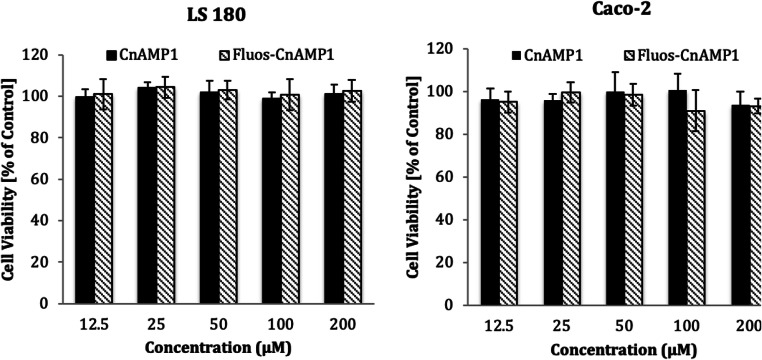
- CnAMP1 and Fluos-CnAMP1 caused no toxic effects in LS180 or differentiated Caco-2 cells after 48 h at concentrations up to 200 μmol/L; MTT assays showed no statistical differences.
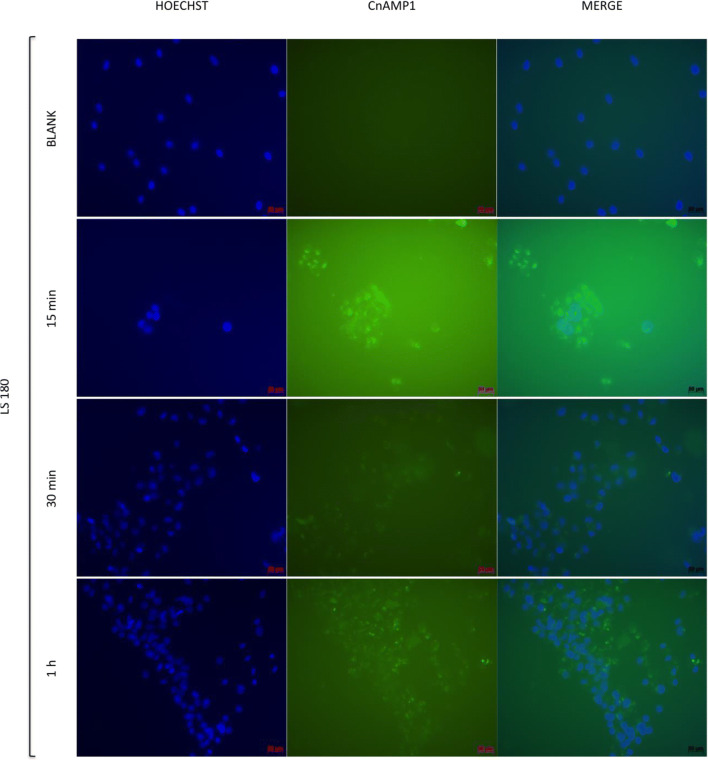
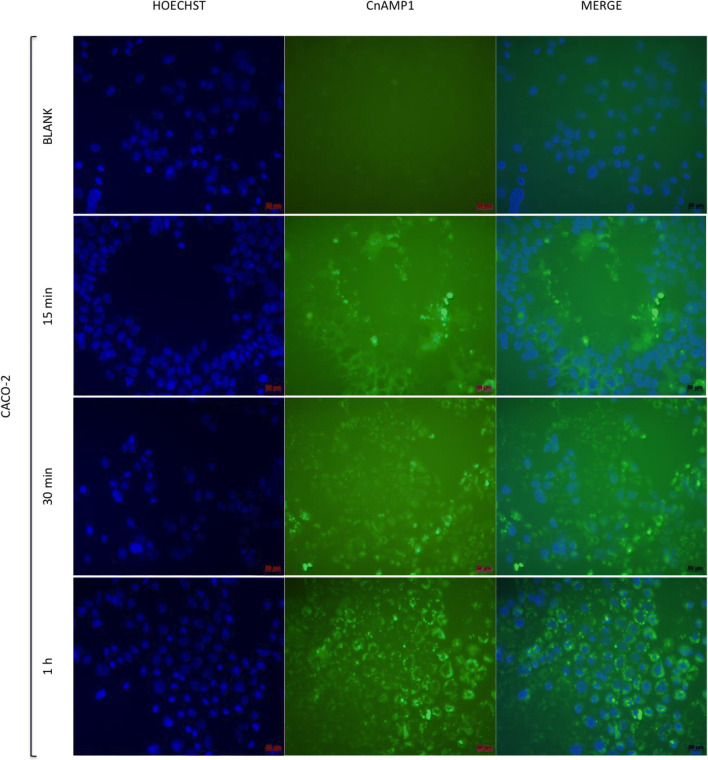
- Fluorescence was detected in both cell lines after 15 min incubation with 100 μmol/L Fluos-CnAMP1; after 1 h the signal was stronger in Caco-2 than LS180 cells, with fluorescent vesicles in the cytosol, indicating uptake of intact or fragmented labelled peptide.
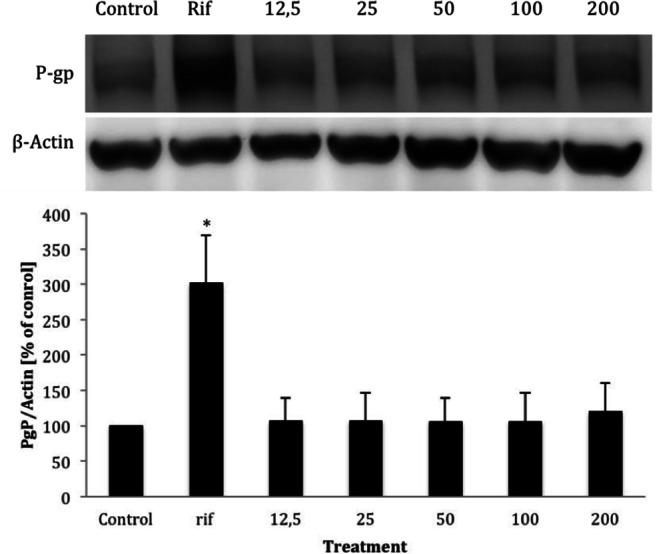
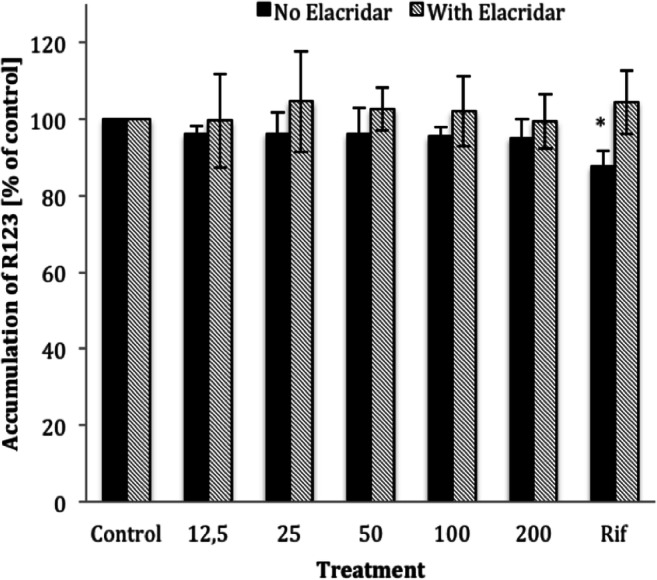
- CnAMP1 at 12.5–200 μmol/L for 48 h did not alter P-gp expression by Western blot or P-gp activity measured as rhodamine 123 accumulation with/without elacridar in LS180 cells.
- The authors conclude that CnAMP1 does not modify the bioavailability of xenobiotics via P-gp and reinforce safety aspects of coconut water consumption and CnAMP1 as a potential antimicrobial compound.
Methods
- LS180 cells were cultured in MEM and Caco-2 cells in DMEM; Caco-2 cells were differentiated for 21 days after confluence. Cytotoxicity was assessed by MTT assay after 48 h with CnAMP1 or Fluos-CnAMP1 at 12.5–400 μmol/L.
- Cellular uptake was examined by fluorescence microscopy after incubation with 100 μmol/L Fluos-CnAMP1 for 15, 30, 60 min or 24 h in LS180 and differentiated Caco-2 cells.
- P-gp expression was determined by Western blotting and P-gp activity by rhodamine 123 accumulation in the presence or absence of elacridar in LS180 cells treated with 12.5–200 μmol/L CnAMP1 for 48 h; rifampicin (25 μmol/L) was used as positive control. Statistics used mean ± SD, one-way ANOVA with Dunnett’s test, and two-way ANOVA with Bonferroni post-test; p < 0.05 was significant.
Limitations
- The paper states that further research is required to identify CnAMP1 hydrolysis fragments and their potential biological activities, and that additional experiments are needed to identify all hydrolysis products and their uptake kinetics.
- The text makes evident that the 24 h uptake micrographs could not be recorded because cells completely detached after washing, and the fluorescence method could not distinguish whether intact peptide or a labelled hydrolysis fragment was internalised.
- The text also makes evident that P-gp expression and activity were tested only in LS180 cells, and the study is in vitro, so in vivo absorption, basolateral secretion, efflux to the gut lumen, and systemic effects were not established.
Model-written summary. Check it against the paper before relying on it.
Integrity signals
Registry
Cites
Statistics
Figures
Verification
Claims the paper makes
1 Valid · 0 Not valid · 6 Not checked · 15 Own results and interpretations
A result the paper reports from its own data — it cites no other source for it, so there is none to check. The quote shows it is in the paper.
In the paper
“neither the expression (Fig. 4), nor the activity of the membrane transporter (Fig. 5) was altered in LS180 cells upon incubation with 12.5-200 μmol/L CnAMP1 for 48 h.”
§ The Coconut Water Antimicrobial Peptide CnAMP1 Is Taken up into Intestinal Cells but Does Not Alter P-Glycoprotein Expression and Activity > P-Glycoprotein Expression and Activity
plain- Asserted: passes — The authors put it forward as true.
- Checkable: passes — It can be checked against evidence.
- Load-bearing: passes — The paper’s conclusions depend on it.
- Based: passes — The paper gives a reason why it holds.
A result the paper reports from its own data — it cites no other source for it, so there is none to check. The quote shows it is in the paper.
In the paper
“After 1 h of incubation, the fluorescence signal was stronger in Caco-2 than in LS180 cells.”
§ The Coconut Water Antimicrobial Peptide CnAMP1 Is Taken up into Intestinal Cells but Does Not Alter P-Glycoprotein Expression and Activity > Uptake of Fluos-CnAMP1 into Intestinal Cells
plain- Asserted: passes — The authors put it forward as true.
- Checkable: passes — It can be checked against evidence.
- Load-bearing: unclear — It is unclear whether the paper’s conclusions depend on it.
- Based: passes — The paper gives a reason why it holds.
A result the paper reports from its own data — it cites no other source for it, so there is none to check. The quote shows it is in the paper.
In the paper
“CnAMP1 (12.5-400 μmol/L) showed no signs of cytotoxicity in LS180 and differentiated Caco-2 cells”
§ The Coconut Water Antimicrobial Peptide CnAMP1 Is Taken up into Intestinal Cells but Does Not Alter P-Glycoprotein Expression and Activity > Abstract
plainn = 2- Asserted: passes — The authors put it forward as true.
- Checkable: passes — It can be checked against evidence.
- Load-bearing: passes — The paper’s conclusions depend on it.
- Based: passes — The paper gives a reason why it holds.
A result the paper reports from its own data — it cites no other source for it, so there is none to check. The quote shows it is in the paper.
In the paper
“Cell viability assays revealed that CnAMP1 and Fluos-CnAMP1, for 48 h at concentrations up to 200 μmol/L, had no toxic effects on LS-180 and differentiated Caco-2 cells (Fig. 1).”
§ The Coconut Water Antimicrobial Peptide CnAMP1 Is Taken up into Intestinal Cells but Does Not Alter P-Glycoprotein Expression and Activity > Cytotoxicity
plain- Asserted: passes — The authors put it forward as true.
- Checkable: passes — It can be checked against evidence.
- Load-bearing: passes — The paper’s conclusions depend on it.
- Based: passes — The paper gives a reason why it holds.
A result the paper reports from its own data — it cites no other source for it, so there is none to check. The quote shows it is in the paper.
In the paper
“neither the expression (Fig. 4), nor the activity of the membrane transporter (Fig. 5) was altered in LS180 cells upon incubation with 12.5-200 μmol/L CnAMP1 for 48 h.”
§ The Coconut Water Antimicrobial Peptide CnAMP1 Is Taken up into Intestinal Cells but Does Not Alter P-Glycoprotein Expression and Activity > P-Glycoprotein Expression and Activity
plain- Asserted: passes — The authors put it forward as true.
- Checkable: passes — It can be checked against evidence.
- Load-bearing: passes — The paper’s conclusions depend on it.
- Based: passes — The paper gives a reason why it holds.
7 more claims
Create a free account to see all 22 claims and to verify the 1 reference still open.
- Probably not a substantial claim. 8
- It may state two separate claims as one. 7
Claims other papers make about this one
Each is checked against this paper’s own text: does it say what the citing paper says it does?
The cited source says what the claim attributes to it.
In the citing paper
“Moreover, natural bioactive antimicrobial peptides have been found from green coconut water [53].”
From Research Progress in Coconut Water: A Review of Nutritional Composition, Biological Activities, and Novel Processing Technologies (2025) · cites this paper as [53]
Citations
Cites
Mosmann, T. (1983) · Journal of Immunological Methods · doi:10.1016/0022-1759(83)90303-4 · Cited by 56,104 · cited 1×
“Cytotoxicity of CnAMP1 and Fluos-CnAMP1 against LS180 and Caco-2 cells was evaluated by MTT reduction assay [10].”
MethodPiacenza, E., Presentato, A., Ambrosi, E., Speghini, A., Turner, R. J., Vallini, G., & Lampis, S. (2018) · Frontiers in Microbiology · doi:10.3389/fmicb.2018.03178 · Cited by 959
Structure, function and regulation of P-glycoprotein and its clinical relevance in drug disposition
Zhou, S.-F. (2008) · Xenobiotica · doi:10.1080/00498250701867889 · Cited by 599 · cited 2×
“P-gp activity in intestinal epithelial cells greatly influences the bioavailability of many compounds and, thus, P-gp is often involved in drug interactions affecting the pharmacokinetics and pharmacodynamics of drugs, which may ultimately alter their safety and efficacy [9].”
BackgroundIwai, K., Hasegawa, T., Taguchi, Y., Morimatsu, F., Sato, K., Nakamura, Y., Higashi, A., Kido, Y., Nakabo, Y., & Ohtsuki, K. (2005) · Journal of Agricultural and Food Chemistry · doi:10.1021/jf050206p · Cited by 405
Xu, Q., Hong, H., Wu, J., & Yan, X. (2019) · Trends in Food Science & Technology · doi:10.1016/j.tifs.2019.02.050 · Cited by 368 · cited 1×
“Before transported into the bloodstream, bioactive sequences could also play new and important roles in regulation of nutrient absorption and modulation of epithelial cell functions [25].”
BackgroundModulation of P-glycoprotein efflux pump: induction and activation as a therapeutic strategy
Silva, R., Vilas-Boas, V., Carmo, H., Dinis-Oliveira, R. J., Carvalho, F., de Lourdes Bastos, M., & Remião, F. (2015) · Pharmacology & Therapeutics · doi:10.1016/j.pharmthera.2014.11.013 · Cited by 339 · cited 1×
“P-gp has a broad substrate affinity and transports a vast array of chemically and structurally unrelated compounds [31, 32].”
BackgroundFoltz, M., Meynen, E. E., Bianco, V., van Platerink, C., Koning, T. M. M. G., & Kloek, J. (2007) · The Journal of Nutrition · doi:10.1093/jn/137.4.953 · Cited by 270
Antimicrobial Peptides and Nanotechnology, Recent Advances and Challenges
Biswaro, L. S., da Costa Sousa, M. G., Rezende, T. M. B., Dias, S. C., & Franco, O. L. (2018) · Frontiers in Microbiology · doi:10.3389/fmicb.2018.00855 · Cited by 227 · cited 1×
“Antimicrobial peptides (AMP) are amino acid polymers with small sequence size, which present activity against microorganisms and are being considered a promising new class of antibiotics [3, 4].”
BackgroundSelf-citationWang, R. B., Kuo, C. L., Lien, L. L., & Lien, E. J. (2003) · Journal of Clinical Pharmacy and Therapeutics · doi:10.1046/j.1365-2710.2003.00487.x · Cited by 225 · cited 1×
“P-gp has a broad substrate affinity and transports a vast array of chemically and structurally unrelated compounds [31, 32].”
Backgroundda Cunha, N. B., Cobacho, N. B., Viana, J. F. C., Lima, L. A., Sampaio, K. B. O., Dohms, S. S. M., Ferreira, A. C. R., de la Fuente-Núñez, C., Costa, F. F., Franco, O. L., et al. (2017) · Drug Discovery Today · doi:10.1016/j.drudis.2016.10.017 · Cited by 192 · cited 1×
“The discovery of new antibacterial molecules is a crucial step to overcome the challenge posed by the emergence of antibiotic resistance [2].”
BackgroundSelf-citationDesigning improved active peptides for therapeutic approaches against infectious diseases
Gomes, B., Augusto, M. T., Felício, M. R., Hollmann, A., Franco, O. L., Gonçalves, S., & Santos, N. C. (2018) · Biotechnology Advances · doi:10.1016/j.biotechadv.2018.01.004 · Cited by 172 · cited 1×
“Antimicrobial peptides (AMP) are amino acid polymers with small sequence size, which present activity against microorganisms and are being considered a promising new class of antibiotics [3, 4].”
BackgroundSelf-citationBioavailability of the antihypertensive peptide LHLPLP: Transepithelial flux of HLPLP
Quirós, A., Dávalos, A., Lasunción, M. A., Ramos, M., & Recio, I. (2008) · International Dairy Journal · doi:10.1016/j.idairyj.2007.09.006 · Cited by 162 · cited 1×
“The LHLPLP hydrolysis product had a higher flux than its precursor and was proposed to be responsible for the antihypertensive effects of LHLPLP in animal models [20].”
BackgroundA gene expression profile that defines colon cell maturation in vitro.
Mariadason, J. M., Arango, D., Corner, G. A., Aranes, M., Hotchkiss, K. A., Yang, W., & Augenlicht, L. H. (2002) · PubMed · Cited by 142
Dietary bioactive peptides: Human studies
Bouglé, D., & Bouhallab, S. (2017) · Critical Reviews in Food Science and Nutrition · doi:10.1080/10408398.2013.873766 · Cited by 139 · cited 1×
“Moreover, the smaller the peptide (di- and tri-peptides) the higher its chance to bemore efficiently internalized by intestinal cells [24].”
BackgroundMandal, S. M., Dey, S., Mandal, M., Sarkar, S., Maria-Neto, S., & Franco, O. L. (2009) · Peptides · doi:10.1016/j.peptides.2008.12.001 · Cited by 136 · cited 1×
“Four peptides have been identified in green coconut water so far: a 10 kDa peptide with antifungal activity [5] and three peptides with antimicrobial activities (AMP), designated CnAMP1, CnAMP2 and CnAMP3 (composed of 9, 12 and 8 amino acids, respectively) [6].”
BackgroundSelf-citationTransepithelial transport of milk derived bioactive peptide VLPVPQK
Vij, R., Reddi, S., Kapila, S., & Kapila, R. (2015) · Food Chemistry · doi:10.1016/j.foodchem.2015.05.121 · Cited by 135 · cited 1×
“Interestingly, another study also observed that the hydrolysis product of a casein-derived peptide (VLPVPQK) was absorbed by Caco-2 cells and secreted into the basolateral chamber in a trans-well assay, indicating that the hydrolysis product might reach the systemic circulation in vivo [19].”
BackgroundSynthetic hydrophobic peptides are substrates for P-glycoprotein and stimulate drug transport
SHAROM, F. J., YU, X., DiDIODATO, G., & CHU, J. W. K. (1996) · Biochemical Journal · doi:10.1042/bj3200421 · Cited by 108 · cited 1×
“Furthermore, peptides have been shown to be substrates and modulators of the activity of the Pglycoprotein (P-gp) efflux transporter [8].”
BackgroundMatsui, T., Tamaya, K., Seki, E., Osajima, K., Matsumoto, K., & Kawasaki, T. (2002) · Biological and Pharmaceutical Bulletin · doi:10.1248/bpb.25.1228 · Cited by 85
Halbleib, J. M., Sääf, A. M., Brown, P. O., & Nelson, W. J. (2007) · Molecular Biology of the Cell · doi:10.1091/mbc.e07-04-0308 · Cited by 78
Gallego, M., Grootaert, C., Mora, L., Aristoy, M. C., Van Camp, J., & Toldrá, F. (2016) · Journal of Functional Foods · doi:10.1016/j.jff.2015.11.046 · Cited by 76
Fleet, J. C., Wang, L., Vitek, O., Craig, B. A., & Edenberg, H. J. (2003) · Physiological Genomics · doi:10.1152/physiolgenomics.00152.2002 · Cited by 69
Christensen, J., El-Gebali, S., Natoli, M., Sengstag, T., Delorenzi, M., Bentz, S., Bouzourène, H., Rumbo, M., Felsani, A., Siissalo, S., et al. (2012) · BMC Genomics · doi:10.1186/1471-2164-13-274 · Cited by 66 · cited 1×
“When grown for 21 days after confluence, Caco-2 cells differentiate into a small intestinal enterocyte-like phenotype [13].”
BackgroundPshezhetsky, A. V., Fedjaev, M., ASHMARINA, L. I., Mazur, A. M., Budman, L. I., Sinnett, D., Labuda, D., Beaulieu, J., Ménard, D., Nifant'ev, I. E., et al. (2007) · PROTEOMICS · doi:10.1002/pmic.200600956 · Cited by 60 · cited 1×
“In particular, the increased expression of brushborder-associated hydrolases (such as aminopeptidase N and dipeptidases), membrane transporters and drug metabolizing enzymes in differentiated Caco-2 cells [15, 17] may explain the differences in susceptibility to CnAMP1-induced toxicity.”
BackgroundGuo, D., Liu, W., Zhang, X., Zhao, M., Zhu, B., Hou, T., & He, H. (2019) · Molecular Nutrition & Food Research · doi:10.1002/mnfr.201900525 · Cited by 58 · cited 2×
“the duck egg white-derived peptide VSEE [26]) or interact with receptors on the surface of the intestinal epithelium.”
BackgroundMultifunctionality of lunasin and peptides released during its simulated gastrointestinal digestion
Indiano‐Romacho, P., Fernández‐Tomé, S., Amigo, L., & Hernández‐Ledesma, B. (2019) · Food Research International · doi:10.1016/j.foodres.2019.108513 · Cited by 53
Cn‐AMP1: A new promiscuous peptide with potential for microbial infections treatment
Silva, O. N., Porto, W. F., Migliolo, L., Mandal, S. M., Gomes, D. G., Holanda, H. H. S., Silva, R. S. P., Dias, S. C., Costa, M. P., Costa, C. R., et al. (2012) · Peptide Science · doi:10.1002/bip.22071 · Cited by 51 · cited 2×
“In agreement with our findings, Silva and coworkers [12] found no CnAMP1-induced cytotoxicity in murine macrophage-like cells (RAW 264.”
BackgroundResultSelf-citationLiu, K., Du, R., & Chen, F. (2020) · Food Chemistry · doi:10.1016/j.foodchem.2020.126540 · Cited by 46
Structure, Content, and Bioactivity of Food-Derived Peptides in the Body
Sato, K. (2018) · Journal of Agricultural and Food Chemistry · doi:10.1021/acs.jafc.8b00390 · Cited by 44
An antifungal peptide from the coconut
Wang, H. X., & Ng, T. B. (2005) · Peptides · doi:10.1016/j.peptides.2005.05.009 · Cited by 40 · cited 1×
“Four peptides have been identified in green coconut water so far: a 10 kDa peptide with antifungal activity [5] and three peptides with antimicrobial activities (AMP), designated CnAMP1, CnAMP2 and CnAMP3 (composed of 9, 12 and 8 amino acids, respectively) [6].”
BackgroundAbuznait, A. H., Qosa, H., O’Connell, N. D., Akbarian-Tefaghi, J., Sylvester, P. W., El Sayed, K. A., & Kaddoumi, A. (2011) · Food and Chemical Toxicology · doi:10.1016/j.fct.2011.08.004 · Cited by 33 · cited 2×
“Induction of P-gp was carried out as previously described by Abuznait and co-workers [11].”
MethodSantana, M. J., de Oliveira, A. L., Queiroz Júnior, L. H. K., Mandal, S. M., Matos, C. O., de O. Dias, R., Franco, O. L., & Lião, L. M. (2015) · FEBS Letters · doi:10.1016/j.febslet.2015.01.029 · Cited by 21 · cited 1×
“CnAMP1 (≈ 860 Da) strongly inhibits the growth of fungi and Gram-positive and Gram-negative bacteria [7].”
BackgroundSelf-citationAnaya, K., Sus, N., Gadelha, C., & Frank, J. (2019) · Amino Acids · doi:10.1007/s00726-018-2675-7 · Cited by 5 · cited 1×
“In our previous study, we observed a gradual decline of nonlabelled CnAMP1 in cell culture supernatant but no CnAMP1 within the cell pellet, suggesting extensive hydrolysis by brush border peptidases [18].”
BackgroundSelf-citation
Cited by
Antioxidant and Antimicrobial Peptides Derived from Food Proteins
López-García, G., Dublan-García, O., Arizmendi-Cotero, D., & Gómez Oliván, L. M. (2022) · Molecules · doi:10.3390/molecules27041343 · Cited by 169
Plant Antimicrobial Peptides (PAMPs): Features, Applications, Production, Expression, and Challenges
Bakare, O. O., Gokul, A., Fadaka, A. O., Wu, R., Niekerk, L., Barker, A. M., Keyster, M., & Klein, A. (2022) · Molecules · doi:10.3390/molecules27123703 · Cited by 82
Yadav, N., & Chauhan, V. S. (2024) · Advances in Colloid and Interface Science · doi:10.1016/j.cis.2024.103282 · Cited by 54
Sharma, P., Kaur, J., Sharma, G., & Kashyap, P. (2022) · Journal of Food Biochemistry · doi:10.1111/jfbc.14348 · Cited by 49
Multiple roles of ribosomal antimicrobial peptides in tackling global antimicrobial resistance
Xuan, H. L., Ngan, H. D., Phuong, H. B. T., Quoc, T. N., & Tùng, T. T. (2022) · Royal Society Open Science · doi:10.1098/rsos.211583 · Cited by 50
Metadata
- Authors
- Anaya, K., Podszun, M., Franco, O. L., de Almeida Gadelha, C. A., & Frank, J.
- Affiliations
- University of Hohenheim (DE)
- Corresponding author
- Anaya, Katya
- Venue
- Plant Foods for Human Nutrition
- Published
- 2020-05-27
- Volume
- 75
- Issue
- 3
- Pages
- 396-403
- ISSN
- 0033-5134 (ISSN-L)
- 0921-9668
- 1573-9104
- PMC
- PMC7378125
- OpenAlex
- W3032618264
- Cited by
- 24
- References
- 32
- Citations by year
- 2026: 1 · 2025: 4 · 2024: 5 · 2023: 4 · 2022: 9 · 2021: 1
- FWCI
- 1.87
- Type
- journal article
- Language
- en
- Open access
- hybrid
- doi.org
- Licence
- cc-by
- creativecommons.org/licenses/by/4.0 (tdm)
- creativecommons.org/licenses/by/4.0 (vor)
- Locations
- Plant Foods for Human Nutrition (publishedVersion, cc-by)
- PubMed Central (publishedVersion, cc-by)
- PubMed (publishedVersion)
- Funders
- Coordenação de Aperfeiçoamento de Pessoal de Nível Superior (-)
- Topics
- Life Sciences › Agricultural and Biological Sciences › Food Science › Coconut Research and Applications
- Life Sciences › Immunology and Microbiology › Microbiology › Antimicrobial Peptides and Activities
- Life Sciences › Agricultural and Biological Sciences › Food Science › Protein Hydrolysis and Bioactive Peptides
- Keywords
- antimicrobial peptides, coconut water, Cocos nucifera, cellular uptake, intestinal cells, P-glycoprotein, multidrug resistance, cytotoxicity, Caco-2 cells, LS180 cells, bioactive peptides
- MeSH terms
- Cocos, Humans, Intestines, ATP Binding Cassette Transporter, Subfamily B, Caco-2 Cells, ATP Binding Cassette Transporter, Subfamily B, Member 1
About these checks
Registry, retraction, Cites and statistics results are computed, not judged, with one exception: a printed reference that no index lists is read once by a model before it counts as a citation error. Claims are extracted by a model and kept only when their quote appears verbatim in the text; each cited source is then checked, with a model’s help, for whether it says what the claim relies on. Those verdicts can be wrong — read the claim’s quote and the cited source before relying on one.
A language model drew the claims from the paper on 2026-10-10, under version 3 of the claim definition (model deepseek-v4.1-flash, prompt extract-v3).
A second model labelled each claim on 2026-10-10 (model jev-1.13-20260917, definition revision gold-guideline-v0.2).
Statistics and arithmetic are recomputed, not judged.
Confidence bands are shown only for fields calibrated on our annotated test set. None is calibrated yet, so no band is shown.
What counts as a claim ›How we measure confidence ›How we check this ›
Are you an author, or do you see a problem with this page? Request a review
Data sources
Bibliographic data: Semantic Scholar, OpenAlex, Crossref.
Contains information from the Semantic Scholar Academic Graph Datasets, made available under the ODC Attribution License (ODC-BY 1.0).
Semantic Scholar’s data is described in: Kinney, R., et al. (2023). The Semantic Scholar Open Data Platform. arXiv:2301.10140.
