

Non-severe nocturnal hypoglycemic events: experience and impacts on patient functioning and well-being
Open accessThe DOI matches its Crossref record; 14 of the 14 references it cites were found in a registry or an index.
Abstract
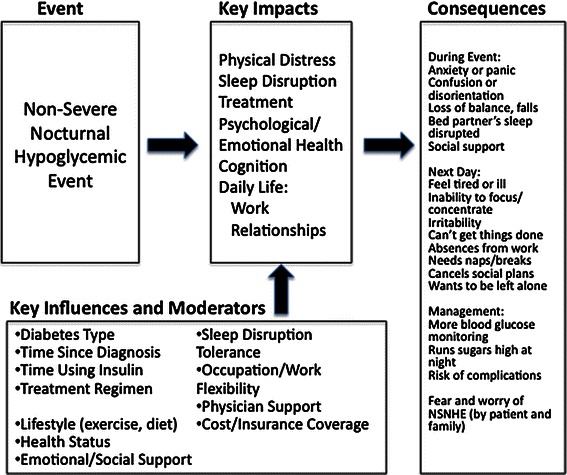
PURPOSE: Non-severe nocturnal hypoglycemic events (NSNHEs) are hypoglycemic events that occur during sleep but do not require medical assistance from another individual. This study was conducted to better understand the NSNHEs as patients actually experience them in their daily life, and how they impacted functioning and well-being. METHODS: Nine focus groups were held in four countries with diabetics (Type 1 and Type 2) who had experienced an NSNHE within the previous month: France (2 groups); Germany (2 groups); United Kingdom (2 groups); and United States (3 groups). These groups were audio-taped, translated to English where applicable, and analyzed thematically. RESULTS: Seventy-eight people with diabetes participated in the focus groups: 41 (53 %) were female and 37 (47 %) were male; 24 (31 %) had Type 1 diabetes, and 54 (69 %) had Type 2 diabetes. Participant reports were grouped into several major themes: next day effects, symptoms, sleep impacts, social impacts, corrective action, practical management, feelings about NSNHEs, and work impacts. CONCLUSIONS: People with both Type 1 and Type 2 diabetes experience NSNHEs. The range of impact on these patients is wide, from very mild to severe with a majority of participants experiencing strong impacts that limit their daily functioning. This finding suggests that NSNHEs are more impactful than previously believed.
Overview
The claims and statistics of this paper haven’t been checked yet.
Free: it reads the open-access text and checks the first 5 claims that cite a source we can check. Create a free account to check every claim.
Integrity signals
Registry
Cites
Statistics
Figures
Verification
Claims the paper makes
The claims and statistics of this paper haven’t been checked yet.
Free: it reads the open-access text and checks the first 5 claims that cite a source we can check. Create a free account to check every claim.
Self-check
Percentages, sums and reported differences re-computed from the paper’s own numbers.
The self-check needs the paper’s full text.
Citations
Cites
The Coding Manual for Qualitative Researchers
Saldana, J. (2025) · SAGE Publications Ltd eBooks · doi:10.4135/9781036235611 · Cited by 17,944
Qualitative research. Introducing focus groups.
Kitzinger, J. (1995) · BMJ · doi:10.1136/bmj.311.7000.299 · Cited by 6,939
(1990) · Cited by 3,957
Morgan, D. L. (1996) · Annual Review of Sociology · doi:10.1146/annurev.soc.22.1.129 · Cited by 2,353
Stewart, D., Shamdasani, P., & Rook, D. (2007) · SAGE Publications Ltd eBooks · doi:10.4135/9781412991841 · Cited by 1,098 · cited 1×
“Focus group interviews are suited to this investigation because they help to identify a ‘‘range of experiences and perspectives’’ as well as provide a forum for both agreement and disagreement between participants, which facilitates insight into the variability of experience and the collection of disconfirming evidenc…”
BackgroundQualitative research and content validity: developing best practices based on science and experience
Brod, M., Tesler, L. E., & Christensen, T. L. (2009) · Quality of Life Research · doi:10.1007/s11136-009-9540-9 · Cited by 935 · cited 1×
“research on patient experiences [12, 13].”
Self-citationThe impact of non-severe hypoglycemic events on work productivity and diabetes management
Brod, M., Christensen, T., Thomsen, T. L., & Bushnell, D. M. (2011) · Value in Health · doi:10.1016/j.jval.2011.02.001 · Cited by 284 · cited 3×
“6 % of the sample reported having at least one NSNHE in the previous month [2].”
BackgroundInfluentialSelf-citationImpact of hypoglycaemia on quality of life and productivity in type 1 and type 2 diabetes
Davis, R. E., Morrissey, M., Peters, J. R., Wittrup-Jensen, K., Kennedy-Martin, T., & Currie, C. J. (2005) · Current Medical Research and Opinion · doi:10.1185/030079905x61929 · Cited by 218 · cited 1×
“Additionally, quality of life decreases as the frequency and severity of hypoglycemic events (day or night) increase [6].”
BackgroundThe Pros and Cons of Data Analysis Software for Qualitative Research
John, W. S., & Johnson, P. (2000) · Journal of Nursing Scholarship · doi:10.1111/j.1547-5069.2000.00393.x · Cited by 201 · cited 1×
“its ability to handle and organize large data sets, provide documentation of the coding process, and assist in organizing disconfirming evidence within the data set [11].”
BackgroundSleep-Related Hypoglycemia-Associated Autonomic Failure in Type 1 Diabetes
Banarer, S., & Cryer, P. E. (2003) · Diabetes · doi:10.2337/diabetes.52.5.1195 · Cited by 187
Cited by
Validation of Time in Range as an Outcome Measure for Diabetes Clinical Trials
Beck, R. W., Bergenstal, R. M., Riddlesworth, T. D., Kollman, C., Li, Z., Brown, A. S., & Close, K. L. (2019) · Diabetes Care · doi:10.2337/dc18-1444 · Cited by 793
Edridge, C. L., Dunkley, A. J., Bodicoat, D. H., Rose, T. C., Gray, L. J., Davies, M. J., & Khunti, K. (2015) · PLOS ONE · doi:10.1371/journal.pone.0126427 · Cited by 225
“This quantity of mild/moderate episodes could substantially impact on work, social life and driving, as well as potentially decreasing general quality of life and increasing risk of severe events if left untreated [39, 40].”
BackgroundOutcome measures for artificial pancreas clinical trials: a consensus report
Maahs, D. M., Buckingham, B. A., Castle, J. R., Cinar, A., Damiano, E. R., Dassau, E., DeVries, J. H., Doyle, F. J., Griffen, S. C., Haidar, A., et al. (2016) · Diabetes Care · doi:10.2337/dc15-2716 · Cited by 211
Self‐reported non‐severe hypoglycaemic events in Europe
Östenson, C. G., Geelhoed‐Duijvestijn, P., Lahtela, J., Weitgasser, R., Markert Jensen, M., & Pedersen‐Bjergaard, U. (2014) · Diabetic Medicine · doi:10.1111/dme.12261 · Cited by 168
Morales, J., & Schneider, D. (2014) · The American Journal of Medicine · doi:10.1016/j.amjmed.2014.07.004 · Cited by 131
Perceptions of insulin use in type 2 diabetes in primary care: a thematic synthesis
Ellis, K., Mulnier, H., & Forbes, A. (2018) · BMC Family Practice · doi:10.1186/s12875-018-0753-2 · Cited by 93
“Brod [87] 2013b It was not possible to differentiate data specific to insulin treated T2DM.”
BackgroundEngström, M. S., Leksell, J. K., Johansson, U., & Guðbjörnsdóttir, S. (2016) · BMJ Open · doi:10.1136/bmjopen-2015-010249 · Cited by 128
Bisio, A., Gonder-Frederick, L., McFadden, R., Cherñavvsky, D., Voelmle, M., Pajewski, M., Yu, P., Bonner, H., & Brown, S. A. (2022) · Journal of Diabetes Science and Technology · doi:10.1177/1932296820986879 · Cited by 76
Nefs, G., Donga, E., Someren, E. J. W. V., Bot, M., Speight, J., & Pouwer, F. (2015) · Diabetes Research and Clinical Practice · doi:10.1016/j.diabres.2015.07.008 · Cited by 80
“Nocturnal hypoglycaemia also appears to have negative effects on sleep quality and quantity [40,41].”
BackgroundBrod, M., Wolden, M., Christensen, T., & Bushnell, D. M. (2013) · Diabetes, Obesity and Metabolism · doi:10.1111/dom.12070 · Cited by 73
“Both qualitative and quantitative research have found that non-severe nocturnal hypoglycaemic events (NSNHEs), occurring while patients are sleeping, create more fear and anxiety for patients than daytime events and have been found to result in greater work loss productivity than events that occur at work [1,7,12].”
BackgroundSelf-citationVanstone, M. G., Rewegan, A., Brundisini, F. K., DeJean, D., & Giacomini, M. K. (2015) · PubMed Central · Cited by 105
Farabi, S. S. (2016) · Diabetes Spectrum · doi:10.2337/diaspect.29.1.10 · Cited by 81
“Adults subjectively report that nonsevere hypoglycemic events disrupt their sleep, and many have difficulty falling back to sleep after treating their hypoglycemia (25,26).”
BackgroundWilson, D. M., Calhoun, P. M., Maahs, D. M., Chase, H. P., Messer, L. H., Buckingham, B. A., Aye, T., Clinton, P. K., HRAMIAK, I. M., Kollman, C., et al. (2015) · Diabetes Technology & Therapeutics · doi:10.1089/dia.2014.0342 · Cited by 66
Fulcher, G., Singer, J., Castañeda, R., Fraige Filho, F., Maffei, L., Snyman, J., & Brod, M. (2014) · Journal of Medical Economics · doi:10.3111/13696998.2014.946992 · Cited by 56
“Previous similar surveys and findings from focus groups conducted prior to survey development have indicated that recall was accurate for up to 1 month 9,10 .”
BackgroundResultSelf-citationBisio, A., Brown, S. A., McFadden, R., Pajewski, M., Yu, P. L., DeBoer, M., Schoelwer, M. J., Bonner, H. G., Wakeman, C. A., Cherñavvsky, D. R., et al. (2021) · Pediatric Diabetes · doi:10.1111/pedi.13164 · Cited by 57
“Previous studies have suggested that extreme levels of both hyper- and hypoglycemic events may disrupt sleep, and inversely, sleep disruptions and subsequent sleep deprivation may be associated with decreased melatonin production and increased insulin resistance, potentially through increased cortisol secretion..(8-13…”
BackgroundBrod, M., Wolden, M., Christensen, T., & Bushnell, D. M. (2013) · Value in Health · doi:10.1016/j.jval.2013.09.002 · Cited by 56
“In addition, nonsevere hypoglycemia has been shown to have an economic burden for patients, employers and health care payer systems [7], increased blood glucose (BG) monitoring, health care resource utilization, and patient out-of-pocket expenses [7,8].”
BackgroundMethodSelf-citationHypoglycaemia in adults with insulin‐treated diabetes in the UK: self‐reported frequency and effects
Frier, B. M., Jensen, M. M., & Chubb, B. D. (2016) · Diabetic Medicine · doi:10.1111/dme.12878 · Cited by 54
Beck, R. W., Bergenstal, R. M., Riddlesworth, T. D., & Kollman, C. (2019) · Diabetes Technology & Therapeutics · doi:10.1089/dia.2018.0362 · Cited by 42
Evans, M., Wolden, M. L., Gundgaard, J., Chubb, B., & Christensen, T. (2014) · Journal of Medical Economics · doi:10.3111/13696998.2014.971160 · Cited by 42
Self-citationThe effect of exercise on sleep in adults with type 1 diabetes
Reddy, R. K. K., Youssef, J. E., Winters‐Stone, K. M., Branigan, D. L., LEITSCHUH, J. A., Castle, J. R., & Jacobs, P. G. (2017) · Diabetes Obesity and Metabolism · doi:10.1111/dom.13065 · Cited by 37
“Nocturnal hypoglycaemia increases anxiety levels and is associated with a negative effect on the quality of life due to its effect on sleep quality and quantity.(5,6) While prior groups have related PA to increased nocturnal hypoglycaemia, no-one has yet quantified the amount of sleep loss either due to nocturnal hypo…”
BackgroundDial, A. G., Monaco, C. M. F., Grafham, G. K., Patel, T. P., Tarnopolsky, M. A., & Hawke, T. J. (2021) · The Journal of Clinical Endocrinology & Metabolism · doi:10.1210/clinem/dgab261 · Cited by 42
Insulin degludec and insulin aspart: novel insulins for the management of diabetes mellitus
Atkin, S. L., Javed, Z., & Fulcher, G. R. (2015) · Therapeutic Advances in Chronic Disease · doi:10.1177/2040622315608646 · Cited by 39
Cordero, T. L., Dai, Z., Arrieta, A., Niu, F., Vella, M., Shin, J., Rhinehart, A. S., McVean, J., Lee, S. W., Slover, R. H., et al. (2023) · Diabetes Technology & Therapeutics · doi:10.1089/dia.2023.0123 · Cited by 30
Self-Reported Frequency and Impact of Hypoglycemic Events in Spain
Orozco‐Beltrán, D., Mezquita‐Raya, P., de Arellano, A. R., & Galán, M. (2014) · Diabetes Therapy · doi:10.1007/s13300-014-0057-z · Cited by 31
“during focus groups on the self-reported impacts of hypoglycemia [20].”
Evans, M., McEwan, P. C., & FOOS, V. (2014) · Journal of Medical Economics · doi:10.3111/13696998.2014.975234 · Cited by 31
Daily sleep quality and daily stressors in couples coping with type 1 diabetes.
Tracy, E. L., Berg, C. A., Baucom, K. J. W., Turner, S. L., Kelly, C. S., Vleet, M. V., Butner, J., & Helgeson, V. S. (2018) · Health Psychology · doi:10.1037/hea0000690 · Cited by 28
“In one qualitative study, patients with T1D or Type 2 diabetes described how sleep disruptions resulted in increased irritability and fatigue, which are emotional and physical manifestations of stress, the next day for both themselves and their partners (Brod et al., 2013).”
The impact of non-severe hypoglycemia on quality of life in patients with type 2 diabetes
Polonsky, W. H., Fisher, L., & Hessler, D. (2018) · Journal of Diabetes and its Complications · doi:10.1016/j.jdiacomp.2018.01.014 · Cited by 32
Chatwin, H., Broadley, M. M., Hendrieckx, C., Carlton, J., Heller, S. R., Amiel, S. A., de Galan, B. E., McCrimmon, R. J., Pedersen‐Bjergaard, U., Pouwer, F., et al. (2022) · Journal of Diabetes and its Complications · doi:10.1016/j.jdiacomp.2022.108232 · Cited by 28
“Clinical Characteristics Age of T1DM onset, years 16 [9-30] T1DM duration, years 25 [14-39] Primary diabetes management regimen Multiple daily injections 44% (447) Insulin pump 40% (409) Artificial pancreas/closed-loop systems (CLS) 16% (166)”
BackgroundToschi, E. (2023) · Endocrinology and Metabolism Clinics of North America · doi:10.1016/j.ecl.2022.10.006 · Cited by 25
Brod, M. I., Wolden, M. L., Groleau, D., & Bushnell, D. M. (2013) · Journal of Medical Economics · doi:10.3111/13696998.2013.857676 · Cited by 25
Self-citationEffect of milk-honey mixture on the sleep quality of coronary patients: A clinical trial study
Fakhr‐Movahedi, A., Mirmohammadkhani, M., & Ramezani, H. (2018) · Clinical Nutrition ESPEN · doi:10.1016/j.clnesp.2018.08.015 · Cited by 24
Ohashi, Y., Wolden, M. L., Hyllested-Winge, J. L., & Brod, M. I. (2017) · Journal of Diabetes Investigation · doi:10.1111/jdi.12642 · Cited by 21
“Sample size with NSHE in the past 3 months (n) 181 104 77 How long ago did last NSHE occur, n (%) <1 week ago 32 (18) 21 (20) 11 (14) <2 weeks ago 45 (25) 28 (27) 17 (22) <3 weeks ago 38 (21) 21 (20) 17 (22) <4 weeks ago 18 (10) 10 (10) 8 (10) 4+ weeks ago 48 (27) 24 (23) 24 (31) What time did the NSHE occur?, n (%) B…”
BackgroundSelf-citationPawaskar, M. D., Witt, E. A., Engel, S. S., Rajpathak, S. N., & Iglay, K. (2018) · Endocrinology Diabetes & Metabolism · doi:10.1002/edm2.11 · Cited by 21
Insomnia and Mild Cognitive Impairment
Hamdy, R. C., Kinser, A. E., Dickerson, K., Kendall-Wilson, T., Dépelteau, A., Copeland, R., & Whalen, K. (2018) · Gerontology and Geriatric Medicine · doi:10.1177/2333721418778421 · Cited by 23
Increasing awareness of hypoglycaemia in patients with Type 2 diabetes treated with oral agents
Barnett, A. H., Brice, R., Hanif, W., James, J., & Langerman, H. (2013) · Current Medical Research and Opinion · doi:10.1185/03007995.2013.834250 · Cited by 20
Design Considerations for Artificial Pancreas Pivotal Studies
Russell, S. J., & Beck, R. W. (2015) · Diabetes Care · doi:10.2337/dc15-2449 · Cited by 18
Tryptophan and Biogenic Amines in the Differentiation and Quality of Honey
Borges, C. V., Nunes, A., Costa, V. E., Orsi, R. D. O., Basílio, L. S. P., Monteiro, G. C., Maraschin, M., & Lima, G. P. P. (2022) · International Journal of Tryptophan Research · doi:10.1177/11786469221102098 · Cited by 16
Germain, N., Genteuil, C. D., Belleton, G., Silva, T. L. D., Exbrayat, C., Degas, F., Hammour, A., Gay, A., Ravey, B., Massoubre, C., et al. (2022) · European Eating Disorders Review · doi:10.1002/erv.2963 · Cited by 21
Brod, M. I., Højbjerre, L., Bushnell, D. M., & Hansen, C. T. (2015) · Quality of Life Research · doi:10.1007/s11136-015-1023-6 · Cited by 16
Self-citationAssessing Prevalence of Hypoglycemia in a Medical Transcription Database
Uzoigwe, C., Hamersky, C. M., Arbit, D. I., Weng, W., & Radin, M. S. (2020) · Diabetes Metabolic Syndrome and Obesity · doi:10.2147/dmso.s235298 · Cited by 14
Lega, I. C., Yale, J.-F., Chadha, A., Paty, B., Roscoe, R., Snider, M., Steier, J., Bajaj, H. S., Barnes, T., Gilbert, J., et al. (2023) · Canadian Journal of Diabetes · doi:10.1016/j.jcjd.2023.08.003 · Cited by 12
“Sleep may often be affected in bed partners, as well as in parents of youths with type 1 diabetes, due to concerns with nocturnal hypoglycemia [74,75].”
BackgroundDeVries, J. H., Meneghini, L., Barnett, A. H., Reid, T., Dain, M., Sanofi, P., Landgraf, W., Vlajnic, A., Traylor, L., & Bergenstal, R. M. (2014) · touchREVIEWS in Endocrinology · doi:10.17925/ee.2014.10.01.23 · Cited by 11
Jensen, M. M., & Pedersen‐Bjergaard, U. (2014) · Diabetes Management · doi:10.2217/dmt.14.54 · Cited by 10
Abdel‐Rahman, N., Manor, O., Valinsky, L. J., Mosenzon, O., Calderon‐Margalit, R., & Roberman, S. (2022) · PLoS ONE · doi:10.1371/journal.pone.0277424 · Cited by 10
Iloh, G. U. P., & Amadi, A. (2018) · Journal of Health Research and Reviews · doi:10.4103/jhrr.jhrr_37_17 · Cited by 14
Kawaguchi, Y., Miyamoto, S., Hajika, Y., Ashida, N., Masumoto, K., Sawa, J., Hamazaki, K., & Kumeda, Y. (2021) · Journal of Diabetes Investigation · doi:10.1111/jdi.13677 · Cited by 8
Linjawi, S., Lee, B., Tabak, Ö., Lövdahl, S., Werther, S., & Abusnana, S. (2017) · Diabetes Therapy · doi:10.1007/s13300-017-0334-8 · Cited by 9
Farahani, P. (2018) · International Journal of Endocrinology · doi:10.1155/2018/3718958 · Cited by 9
Brod, M. I., Galstyan, G. R., Unnikrishnan, A., Harman‐Boehm, I., Prusty, V., Lavalle-Gonzalez, F. J., McGill, M. J., Murphy, A., & Puchulu, F. (2016) · Diabetes Therapy · doi:10.1007/s13300-016-0164-0 · Cited by 7
Self-citationGlucose variability and predicted cardiovascular risk after gastrectomy
Shibamoto, J., Kubota, T., Ohashi, T., Konishi, H., Shiozaki, A., Fujiwara, H., Okamoto, K. K., & Otsuji, E. (2022) · Surgery Today · doi:10.1007/s00595-022-02496-6 · Cited by 10
“Indeed, GV and nocturnal hypoglycemia can impair quality of life, leading to limitations in daily functions [3, 4].”
BackgroundBlack, J. E., Harris, S. B., Ryan, B. L., Zou, G., & Ratzki‐Leewing, A. A. (2023) · Diabetes Therapy · doi:10.1007/s13300-023-01423-3 · Cited by 7
“[32, 33], nocturnal non-severe hypoglycemia causes significant disruption and distress in the majority of people with T1DM and insulinTable 4 Population-average adjusted hypoglycemia rate ratios comparing second-generation to earlier intermediate/basal insulin analogue use, by type of diabetes, event severity, and tim…”
Kindratt, T. B., Boateng, G. O., Brannon, G. E., Sankuratri, B. Y. V., & Brown, K. K. (2023) · PEC Innovation · doi:10.1016/j.pecinn.2023.100185 · Cited by 8
“Socially, uncontrolled diabetes has shown to have an impact on patients' daily interactions and social experiences [5], with the potential to feel alienated from caregivers, family, and friends [12,16,17].”
BackgroundFarahani, P., Khan, S., Oatway, M. A., & Dziarmaga, A. (2015) · PubMed · Cited by 6
He, Y., Kunutsor, S. K., Kingsnorth, A. P., Gillies, C., Choudhary, P., Khunti, K., & Zaccardi, F. (2024) · Diabetes Obesity and Metabolism · doi:10.1111/dom.15677 · Cited by 5
Xie, X., Guo, J., Bremner, K. E., Wang, M., Shah, B. R., & Volodin, A. I. (2021) · Journal of Comparative Effectiveness Research · doi:10.2217/cer-2021-0059 · Cited by 6
“By clinical definition, nonsevere hypoglycemic events (NSHEs) can be self-treated (by eating or drinking food items containing carbohydrates), while severe hypoglycemic events (SHEs) require assistance from another person [1,3,4].”
BackgroundDriving and diabetes: are the changes in the European Union licensing regulations fit for purpose?
Graveling, A. J., & Frier, B. M. (2018) · British Journal of Diabetes · doi:10.15277/bjd.2018.170 · Cited by 5
Bogale, E. K., Getachew, E., Tesfa, H., Endeshaw, D., Tiruneh, M. G., & Bogale, S. K. (2023) · Diabetes Metabolic Syndrome and Obesity · doi:10.2147/dmso.s431914 · Cited by 4
“27 This might be due to a lack of community understanding of diabetes in developing countries.”
BackgroundResultMATUS, A. M., Trout, K. K., Sawyer, A. M., & Riegel, B. J. (2021) · Journal of Advanced Nursing · doi:10.1111/jan.14947 · Cited by 4
Iloh, G. U. P., & Collins, P. (2017) · BLDE University Journal of Health Sciences · doi:10.4103/bjhs.bjhs_5_17 · Cited by 5
Somily, A. M., & Babay, H. A. H. (2008) · Europe PMC (PubMed Central) · Cited by 4
Sleep patterns in adults and children with less common forms of diabetes
Arosemena, M., Salguero, M. V., Greeley, S. A. W., Naylor, R. N., Tasali, E., & Philipson, L. H. (2025) · Frontiers in Endocrinology · doi:10.3389/fendo.2025.1388995 · Cited by 2
“Cross-sectional studies surveying large sample sizes from different countries have shown that nocturnal hypoglycemia, even when it is not severe, correlates with patients having dif fi culty falling back to sleep (37, 38).”
Bogaarts, G., Mitter, M., Bailey, T. S., Glatzer, T., & Theodorou, D. (2026) · Diabetes Research and Clinical Practice · doi:10.1016/j.diabres.2026.113188 · Cited by 2
Unveiling the Significance of the ‘Bathtub’ Shape in Blood Glucose Curve Analysis
Fetian, I. R. (2024) · IntechOpen eBooks · doi:10.5772/intechopen.1003746 · Cited by 1
Frank, M. (2013) · Der Diabetologe · doi:10.1007/s11428-012-0913-2
Fulcher, G. R., Singer, J., & Filho, F. F. (2014)
Chubb, B., Evans, M., Wolden, M. L., Christensen, T., & Gundgaard, J. (2013) · Value in Health · doi:10.1016/j.jval.2013.08.685 · Cited by 1
Self-citationFrequency and Predictors of Hypoglycemia in Type 2 Diabetes: A Population-Based Study
Ibrahim, N. A. (2021) · Journal of Diabetology · doi:10.4103/jod.jod_48_20 · Cited by 1
Fetian, I. R., Maziukas, R., Pisarcikova, Z., Zechmann, S., Dolinar, M., Dolinar, S., & Villiger, L. (2022) · doi:10.36000//hbt.2022.05.001
Kindratt, T. B., Boateng, G. O., Brannon, G. E., Sankuratri, B. Y. V., & Brown, K. K. (2022) · Research Square · doi:10.21203/rs.3.rs-1674088/v1
Amri, A. A., Alshahrani, M. A. A., Asiri, M. A., Abdulrahman, M. A., Alshehri, A. Y. A., Alqahtani, M. M. M., Oraydan, A. A. A., Summan, S. I., Alqahtani, T. S., & Hunaif, A. M. A. (2023) · Cureus · doi:10.7759/cureus.44749 · Cited by 3
“Nevertheless, recent research indicates that patients diagnosed with T2D frequently encounter disruptions in their sleep patterns, which can potentially have adverse consequences on their general health and quality of life [3].”
BackgroundKageyama, M., Horii, T., Oikawa, Y., & Mihara, K. (2026) · Diabetes Research and Clinical Practice · doi:10.1016/j.diabres.2026.113539
Metadata
- Authors
- Brod, M., Pohlman, B., Wolden, M., & Christensen, T.
- Affiliations
- Brod Group (US)
- Novo Nordisk (Denmark) (DK)
- Corresponding author
- Brod, Meryl
- ORCID
- Brod, Meryl
- Venue
- Quality of Life Research
- Published
- 2012-07-24
- Volume
- 22
- Issue
- 5
- Pages
- 997-1004
- ISSN
- 0962-9343 (ISSN-L)
- 1573-2649
- PMC
- PMC3664748
- OpenAlex
- W2162013726
- Cited by
- 71
- References
- 14
- Citations by year
- 2026: 2 · 2025: 1 · 2024: 2 · 2023: 7 · 2022: 7 · 2021: 6 · 2020: 2 · 2018: 11 · 2017: 4 · 2016: 4 · 2015: 9 · 2014: 8 · 2013: 7
- FWCI
- 6.16
- Type
- journal article
- Language
- en
- Open access
- hybrid
- doi.org
- Licence
- cc-by
- creativecommons.org/licenses/by/2.0 (tdm)
- Locations
- Quality of Life Research (publishedVersion, cc-by)
- Europe PMC (PubMed Central) (publishedVersion, cc-by)
- PubMed Central (publishedVersion, cc-by)
- PubMed (publishedVersion)
- Funders
- Novo Nordisk
- Topics
- Health Sciences › Medicine › Endocrinology, Diabetes and Metabolism › Diabetes Management and Research
- Health Sciences › Medicine › Endocrinology, Diabetes and Metabolism › Diabetes Management and Education
- Health Sciences › Medicine › Endocrinology, Diabetes and Metabolism › Diabetes Treatment and Management
- Keywords
- hypoglycemic events, type 1 diabetes, type 2 diabetes, patient experience, daily functioning, well-being, social impact, work impact, corrective actions, hypoglycemia management
- MeSH terms
- Activities of Daily Living, Adult, Aged, Circadian Rhythm, Diabetes Mellitus, Type 1, Diabetes Mellitus, Type 2, Female, France, Germany, United Kingdom, Health Status, Humans, Hypoglycemia, Hypoglycemic Agents, Interviews as Topic, Male, Middle Aged, Personal Satisfaction, Quality of Life, Severity of Illness Index, Sleep, United States, Outcome Assessment, Health Care, Focus Groups, Sickness Impact Profile, Disease Management, Qualitative Research
About these checks
Registry, retraction, Cites and statistics results are computed, not judged, with one exception: a printed reference that no index lists is read once by a model before it counts as a citation error. Claims are extracted by a model and kept only when their quote appears verbatim in the text; each cited source is then checked, with a model’s help, for whether it says what the claim relies on. Those verdicts can be wrong — read the claim’s quote and the cited source before relying on one.
Statistics and arithmetic are recomputed, not judged.
Confidence bands are shown only for fields calibrated on our annotated test set. None is calibrated yet, so no band is shown.
What counts as a claim ›How we measure confidence ›How we check this ›
Are you an author, or do you see a problem with this page? Request a review
Data sources
Bibliographic data: Semantic Scholar, OpenAlex, Crossref.
Contains information from the Semantic Scholar Academic Graph Datasets, made available under the ODC Attribution License (ODC-BY 1.0).
Semantic Scholar’s data is described in: Kinney, R., et al. (2023). The Semantic Scholar Open Data Platform. arXiv:2301.10140.
