

The DOI matches its Crossref record.
Varieties of entrepreneurship: exploring the institutional foundations of different entrepreneurship types through ‘Varieties-of-Capitalism’ arguments
Open accessAbstract
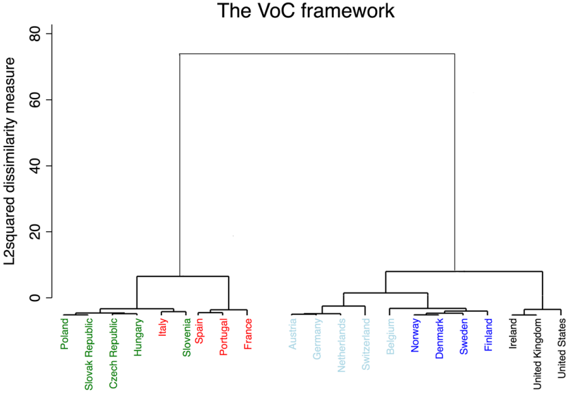
While entrepreneurship researchers agree that institutions ‘matter’ for entrepreneurship, they also have a rather encompassing understanding of institutions as almost any external factor that influences entrepreneurship. Ultimately, this literature thus comes up with a long list of institutional factors that may explain entrepreneurial differences between countries. But which institutions are most influential? How do these institutions relate to different types of entrepreneurship? And to what extent are institutions complementary to each other in the way they sustain different entrepreneurship types? The literature on ‘Varieties-of-Capitalism’ (VoC) offers a parsimonious theoretical framework to address these questions. Based on the VoC literature, we theoretically derive a consistent set of institutional indicators that can explain differences in entrepreneurship types between countries. Based on principal component and cluster analyses, we illustrate how 21 Western developed economies cluster around four distinct institutional settings. Furthermore, we use simple OLS regressions to show how these institutional constellations are related to different types of entrepreneurship. We conclude that four different ‘Varieties of Entrepreneurship’ can be identified across the Western world. The main implication of our findings is that a ‘perfect’ institutional constellation, equally facilitating different types of entrepreneurship, does not exist. Policy-makers seeking to stimulate entrepreneurship are thus faced with the trade-off of targeting policy reforms to that entrepreneurship type they intend to promote—at the expense of other types of entrepreneurship and the broader societal consequences such reforms will have.
Overview
The claims and statistics of this paper haven’t been checked yet.
Run the check — free, no account needed. It reads the open-access text and checks the sources it cites.
Integrity signals
Registry
Cites
Statistics
Figures
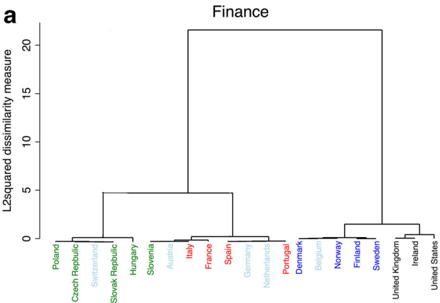
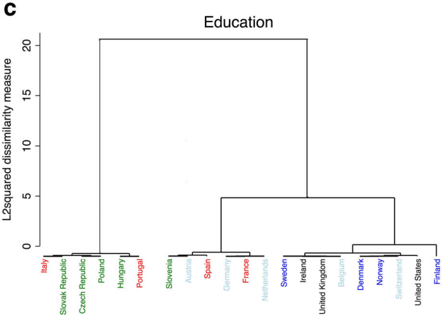
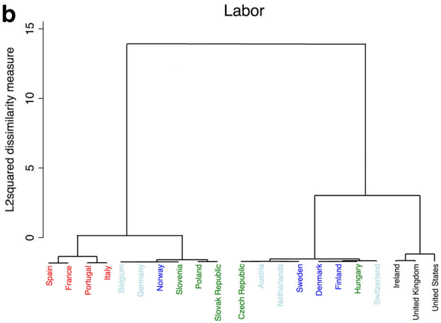
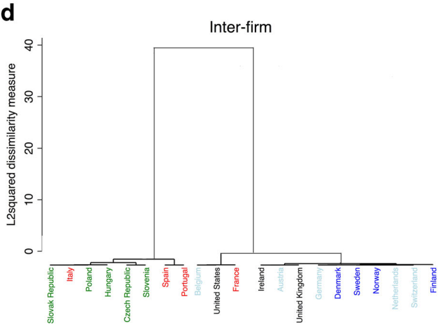
Verification
Claims the paper makes
The claims and statistics of this paper haven’t been checked yet.
Run the check — free, no account needed. It reads the open-access text and checks the sources it cites.
Claims other papers make about this one
Each is checked against this paper’s own text: does it say what the citing paper says it does?
The source backs part of the claim, not all of it — or backs it for a different population, condition or comparison.
In the citing paper
“Empirical evidence is slowly emerging regarding how different ecosystem configurations lead to different entrepreneurship outputs, and even how different clusters within one ecosystem can produce different entrepreneurship outputs (Civera et al., 2019 ; Dilli et al., 2018 ; Neumeyer & Santos, 2018; Neumeyer et al., 2019).”
From Toward an Entrepreneurial Ecosystem Research Program (2022) · cites this paper as Dilli et al., 2018
Experimental — accuracy not yet measuredThe cited source says what the claim attributes to it.
In the citing paper
“distinct institutional settings enable different types of entrepreneurship (e.g., high/medium/low- tech ventures)”
From Toward an Entrepreneurial Ecosystem Research Program (2022) · cites this paper as Dilli, S., Elert, Herrmann, M. (2018)
Self-check
Percentages, sums and reported differences re-computed from the paper’s own numbers.
The self-check needs the paper’s full text.
Citations
Cites
No references could be resolved yet.
Research works printed but not linked: 66
- Acemoglu, D., & Robinson, J. A. (2012). Why nations fail: the origins of power, prosperity, and poverty. New York: Crown Publishers.
- Acs, Z. J. (2008). Foundations of high impact entrepreneurship. Foundations and Trends in Entrepreneurship, 4(6), 535–620. https://doi.org/10.1561/0300000025 . · DOI
- Acs, Z. J., Desai, S., & Hessels, J. (2008). Entrepreneurship, economic development, and institutions. Small Business Economics, 31(3), 219–234. https://doi.org/10.1007/s11187-008-9135-9 . · DOI
- Altindag, E., Zehir, C., & Zafer, A. A. (2011). Strategic orientations and their effects on firm performance in turkish family owned firms. Eurasian Business Review, 1(1), 18–36. https://doi.org/10.14208/BF03353796 . · DOI
- Amable, B. (2003). The diversity of modern capitalism. Oxford: Oxford University Press. · DOI
- Andersen, T. M., & Svarer, M. (2007). Flexicurity—labour market performance in Denmark. CESifo Economic Studies, 53(3), 389–429. https://doi.org/10.1093/cesifo/ifm015 . · DOI
- Autio, E., & Acs, Z. J. (2010). Intellectual property protection and the formation of entrepreneurial growth aspirations. Strategic Entrepreneurship Journal, 4(4), 234–251. · DOI
- Bartelsman, E., Scarpetta, S., & Schivardi, F. (2005). Comparative Analysis of Firm Demographics and Survival: Evidence from Micro-level Sources in OECD Countries. Industrial and Corporate Change, 14(3), 365–391. · DOI
- Baumol, W. (1990). Entrepreneurship: productive, unproductive, and destructive. Journal of Political Economy, 98(5), 893–921. https://doi.org/10.1016/0883-9026(94)00014-X . · DOI · Paper page
- Bjørnskov, C., & Foss, N. J. (2013). How strategic entrepreneurship and the institutional context drive economic growth. Strategic Entrepreneurship Journal, 7(1), 50–69. · DOI
- Bottazzi, L., & Da Rin, M. (2002). Venture capital in Europe and the financing of innovative companies. Economic Policy, 17(34), 229–269. · DOI
- Calcagno, P. T., & Sobel, R. S. (2014). Regulatory costs on entrepreneurship and establishment employment size. Small Business Economics, 42(3), 541–559. https://doi.org/10.1007/s11187-013-9493-9 . · DOI
- Coad, A. (2009). The growth of firms: A survey of theories and empirical evidence. Cheltenham: Edward Elgar Publishing. · DOI
- Coad, A., & Rao, R. (2008). Innovation and firm growth in high-tech sectors: a quantile regression approach. Research Policy, 37(4), 633–648. https://doi.org/10.1016/j.respol.2008.01.003 . · DOI
- Colombo, M. G., & Grilli, L. (2005). Founders’ human capital and the growth of new technology based firms: a competence-based view. Research Policy, 34, 795–816. · DOI
- Corsino, M., & Gabriele, R. (2011). Product innovation and firm growth: evidence from the integrated circuit industry. Industrial and Corporate Change, 20(1), 29–56. https://doi.org/10.1093/icc/dtq050 . · DOI
- Da Rin, M., Nicodano, G., & Sembenelli, A. (2006). Public policy and the creation of active venture capital markets. Journal of Public Economics, 90(8–9), 1699–1723. https://doi.org/10.1016/j.jpubeco.2005.09.013 . · DOI
- Delmar, F., & Wennberg, K. (2010). Knowledge Intensive Entrepreneurship: The Birth, Growth and Demise of Entrepreneurial Firms. Edward Elgar Publishing. · DOI
- Fenn, G., Liang, N., & Prowse, S. (1995). The economics of the private equity market. Washington, D.C.: Board of Governors of the Federal Reserve System.
- Freel, M. S. (2000). Do small innovating firms outperform non-innovators? Small Business Economics, 14(3), 195–210. https://doi.org/10.1023/A:1008100206266 . · DOI
- Geroski, P. A. (1995). What Do We Know about Entry? International Journal of Industrial Organization, 13(4), 421–40. · DOI
- Golpe, A., Millán, J., & Román, C. (2008). Labor market institutions and entrepreneurship. In E. Congregado (Ed.), Measuring entrepreneurship (pp. 279–296). Springer US: International Studies in Entrepreneurship. · DOI
- Gompers, P. A., & Lerner, J. (1999). An analysis of compensation in the U.S. venture capital partnership. Journal of Financial Economics, 51(1), 3–44. https://doi.org/10.1016/S0304-405X(98)00042-7 . · DOI
- Hall, R. E., & Jones, C. I. (1999). Why do some countries produce so much more output per worker than others? Quarterly Journal of Economics, 114(1), 83–116. https://doi.org/10.1162/003355399555954 . · DOI
- Hall, P. A., & Soskice, D. W. (2001). An introduction to varieties of capitalism. In P. A. Hall & D. W. Soskice (Eds.), Varieties of capitalism - the institutional foundations of comparative advantage (pp. 1–68). Oxford: Oxford University Press. · DOI
- Hancké, B., Rhodes, M., & Thatcher, M. (2007). Beyond varieties of capitalism. Oxford: Oxford University Press. · DOI
- Hechavarria, D. M., & Reynolds, P. D. (2009). Cultural norms & business start-ups: the impact of national values on opportunity and necessity entrepreneurs. International Entrepreneurship and Management Journal, 5(4), 417–437. https://doi.org/10.1007/s11365-009-0115-6 . · DOI
- Henrekson, M., & Johansson, D. (2009). Competencies and institutions fostering high-growth firms. Foundations and Trends in Entrepreneurship, 5(1), 1–80. https://doi.org/10.1561/0300000026 . · DOI
- Henrekson, M., & Rosenberg, N. (2001). Designing efficient institutions for science-based entrepreneurship: lessons from the U.S. and Sweden. Journal of Technology Transfer, 26(2), 207–231. https://doi.org/10.1023/A:1011153922906 . · DOI
- Henrekson, M., & Sanadaji, T. (2014). Small business activity does not measure entrepreneurship. PNAS, 111(5), 1760–1765. https://doi.org/10.1073/pnas.1307204111 . · DOI
- Henrekson, M., & Stenkula, M. (2016). Understanding entrepreneurship: definition, function and policy. Lund: Studentlitteratur.
- Herrmann, A. M. (2008). One political economy, one competitive strategy? Comparing pharmaceutical firms in Germany, Italy, and the UK. Oxford: Oxford University Press. · DOI
- Herrmann, A. M., & Peine, A. (2011). When ‘national innovation system’ meet ‘varieties of capitalism’ arguments on labour qualifications: On the skill types and scientific knowledge needed for radical and incremental product innovations. Research Policy, 40(5), 687–701. https://doi.org/10.1016/j.respol.2011.02.004 . · DOI
- Hessels, J., Van Stel, A. J., Brouwer, P., & Wennekers, S. (2007). Social security arrangements and early−stage entrepreneurial activity. Comparative Labor Law & Policy Journal, 28(4) http://papers.ssrn.com/sol3/papers.cfm?abstract_id=1006256 .
- Jackson, G., & Deeg, R. (2012). The Long-Term Trajectories of Institutional Change in European Capitalism. Journal of European Public Policy, 19(8), 1109–1125. · DOI
- Kaiser, H. F. (1960). The application of electronic computers to factor analysis. Educational and Psychological Measurement, 20(1), 141–151. https://doi.org/10.1177/001316446002000116 . · DOI · Paper page
- Keuschnigg, C., & Nielsen, S. B. (2004). Taxation and venture capital backed entrepreneurship. International Tax and Public Finance, 11(4), 369–390. https://doi.org/10.1023/B:ITAX.0000033984.29301.9e . · DOI
- Klein, B. (1996). Why hold-ups occur: the self-enforcing range of contractual relationships. Economic Inquiry, 34(3), 444–463. · DOI
- Lundvall, B. A. (1992). User-producer relationships, national systems of innovation and internationalisation. In B. A. Lundvall (Ed.), National systems of innovation—towards a theory of innovation and interactive learning (pp. 45–67). London: Pinter Publishers.
- Milgrom, P., & Roberts, J. (1992). Economics, organization and management. Englewood Cliffs: Prentice Hall.
- Misher, N. (1984). Tax consequences of exercising an incentive stock option with stock of the granting corporation. Tax Executive, 36, 357–363.
- Molina, O., & Rhodes, M. (2007). The political economy of adjustment in mixed market economies: A study of Spain and Italy. In B. Hancké, M. Rhodes, & M. Tatcher (Eds.), Beyond varieties of capitalism: conflict, contradictions and complementarities in the European economy (pp. 223–252). Oxford: Oxford University Press. · DOI
- Murphy, K. M., Shleifer, A., & Vishny, R. W. (1990). The allocation of talent: implications for growth. Quarterly Journal of Economics, 106(2), 503–530. https://doi.org/10.2307/2937945 . · DOI
- Nölke, A., & Vliegenthart, A. (2009). Enlarging the varieties of capitalism: the emergence of dependent market economies in east Central Europe. World Politics, 61(4), 670–702. https://doi.org/10.1017/S0043887109990098 . · DOI
- North, D. C. (1990). Institutions, institutional change, and economic performance. Cambridge: Cambridge University Press. · DOI · Paper page
- OECD (2003). OECD Science, Technology and Industry Scoreboard 2003. OECD Publishing. · DOI
- Pfeffer, J., & Salancik, G. R. (1978). The external control of organizations: a resource dependence perspective. New York: Harper & Row.
- Rogerson, W. P. (1992). Contractual solutions to the hold-up problem. Review of Economic Studies, 59(4), 777–794. https://doi.org/10.2307/2297997 . · DOI · Paper page
- Román, C., Congregado, E., & Millán, J. M. (2011). “The role of labor market institutions on entrepreneurship dynamics in times of crisis: evidence from European countries.” In G.D. Libecap, & S. Hoskinson (Eds.), Entrepreneurship and Global Competitiveness in Regional Economies: Determinants and Policy Implications (pp. 161–183). Advances in the Study of Entrepreneurship, Innovation & Economic Growth. Bingley: Howard House, Emerald Group Publishing Limited. · DOI
- Schneider, M. R., & Paunescu, M. (2012). Changing varieties of capitalism and revealed comparative advantages from 1990 to 2005: a test of the hall and Soskice claims. Socio-Economic Review, 10(4), 731–753. https://doi.org/10.1093/ser/mwr038 . · DOI
- Sobel, R. S. (2008). Testing Baumol: Institutional quality and the productivity of entrepreneurship. Journal of Business Venturing, 23(6), 641–655. https://doi.org/10.1016/j.jbusvent.2008.01.004 . · DOI · Paper page
- Stam, E. (2014). The Dutch entrepreneurial ecosystem. SSRN Electronic Journal. https://doi.org/10.2139/ssrn.2473475 . · DOI · Paper page
- Stenholm, P., Acs, Z. J., & Wuebker, R. (2013). Exploring country-level institutional arrangements on the rate and type of entrepreneurial activity. Journal of Business Venturing, 28(1), 176–193. https://doi.org/10.1016/j.jbusvent.2011.11.002 . · DOI
- Streeck, W., & Thelen, K. (2005). Introduction: Institutional change in advanced political economies. In W. Streeck & K. Thelen (Eds.), Beyond continuity: Institutional change in advanced political economies (pp. 1–39). Oxford: Oxford University Press.
- Suhr, D. (2005). Principal component analysis vs. exploratory factor analysis. SUGI 30 Proceedings. Retrieved April 30 2017 from http://www2.sas.com/proceedings/sugi30/Leadrs30.pdf .
- Tate, J. (2001). National varieties of standardization. In P. A. Hall & D. W. Soskice (Eds.), Varieties of capitalism - the institutional foundations of comparative advantage (pp. 442–473). Oxford: Oxford University Press. · DOI
- Taylor, M. Z., & Wilson, S. (2012). Does culture still matter? The effects of individualism on National Innovation Rates. Journal of Business Venturing, 27(2), 234–247. https://doi.org/10.1016/j.jbusvent.2010.10.001 . · DOI
- Teece, D. J., & Pisano, G. (1998). The dynamic capabilities of firms. In G. Dosi, D. J. Teece, & J. Chytry (Eds.), (pp. 193–212). Oxford: Oxford University Press.
- Teubner, G. (2001). Legal irritants: How unifying law ends up in new divergences. In P. A. Hall & D. W. Soskice (Eds.), Varieties of capitalism—the institutional foundations of comparative advantage (pp. 417–441). Oxford: Oxford University Press. · DOI
- Urbano, D., & Alvarez, C. (2014). Institutional dimensions and entrepreneurial activity: an international study. Small Business Economics, 42(4), 703–716. https://doi.org/10.1007/s11187-013-9523-7 . · DOI
- Vitols, S. (2001). Varieties of corporate governance: comparing Germany and the UK. In P. A. Hall & D. W. Soskice (Eds.), Varieties of capitalism—the institutional foundations of comparative advantage (pp. 337–360). Oxford: Oxford University Press. · DOI
- Vivarelli, M. (2013). Is entrepreneurship necessarily good? Microeconomic evidence from developed and developing countries. Industrial and Corporate Change, 22(6), 1453–1495. https://doi.org/10.1093/icc/dtt005 . · DOI
- Vivarelli, M., & Audretsch, D. (1998). The link between the entry decision and post-entry performance: evidence from Italy. Industrial and Corporate Change, 7(3), 485–500. https://doi.org/10.1093/icc/7.3.485 . · DOI
- WEF. (2013). Entrepreneurial ecosystems around the globe and company growth dynamics. World Economic Forum: Davos.
- Wennekers, S., & Thurik, A. R. (1999). Linking entrepreneurship and economic growth. Small Business Economics, 13(1), 27–56. https://doi.org/10.1023/A:1008063200484 . · DOI
- Williamson, O. E. (1985). The economic institutions of capitalism: firms, markets, relational contracting. New York: Free Press.
Cited by
Sorted by citations
Toward an Entrepreneurial Ecosystem Research Program
Wurth, B., Stam, E., & Spigel, B. (2022) · Entrepreneurship Theory and Practice · doi:10.1177/1042258721998948 · Cited by 789
“…emerging regarding how different ecosystem configurations lead to different entrepreneurship outputs, and even how different clusters within one ecosystem can produce different entrepreneurship outputs (Civera et al., 2019 ; Dilli et al., 2018 ; Neumeyer & Santos, 2018; Neumeyer et al., 2019).”
Metadata
- Authors
- Dilli, S., Elert, N., & Herrmann, A. M.
- Affiliations
- Utrecht University (NL)
- Research Institute of Industrial Economics (SE)
- Corresponding author
- Dilli, Selin
- Venue
- Small Business Economics
- Published
- 2018-03-29
- Volume
- 51
- Issue
- 2
- Pages
- 293-320
- ISSN
- 0921-898X (ISSN-L)
- 1573-0913
- OpenAlex
- W2795035035
- Cited by
- 149
- References
- 0
- Citations by year
- 2026: 9 · 2025: 23 · 2024: 14 · 2023: 22 · 2022: 15 · 2021: 22 · 2020: 19 · 2019: 15 · 2018: 10
- FWCI
- 22.13
- Type
- journal article
- Language
- en
- Open access
- hybrid
- doi.org
- Licence
- Locations
- Small Business Economics (publishedVersion, cc-by)
- RePEc: Research Papers in Economics (submittedVersion)
- Utrecht University Repository (Utrecht University) (submittedVersion, other-oa)
- Econstor (Econstor) (submittedVersion)
- Radboud Repository (Radboud University) (submittedVersion)
- Funders
- Utrecht University
- Topics
- Social Sciences › Business, Management and Accounting › Management of Technology and Innovation › Entrepreneurship Studies and Influences
- Social Sciences › Development › Culture, Economy, and Development Studies
- Social Sciences › Sociology and Political Science › Migration, Ethnicity, and Economy
- Keywords
- varieties of capitalism, institutional complementarity, entrepreneurship policy, cross-national comparison
About these checks
Registry, retraction, Cites and statistics results are computed, not judged, with one exception: a printed reference that no index lists is read once by a model before it counts as a citation error. Claims are extracted by a model and kept only when their quote appears verbatim in the text; each cited source is then checked, with a model’s help, for whether it says what the claim relies on. Those verdicts can be wrong — read the claim’s quote and the cited source before relying on one.
Statistics and arithmetic are recomputed, not judged.
Confidence bands are shown only for fields calibrated on our annotated test set. None is calibrated yet, so no band is shown.
What counts as a claim ›How we measure confidence ›How we check this ›
Are you an author, or do you see a problem with this page? Request a review
