

The DOI matches its Crossref record; 228 of the 228 references it cites were found in a registry or an index.
The potential of P2X7 receptors as a therapeutic target, including inflammation and tumour progression
Open accessAbstract
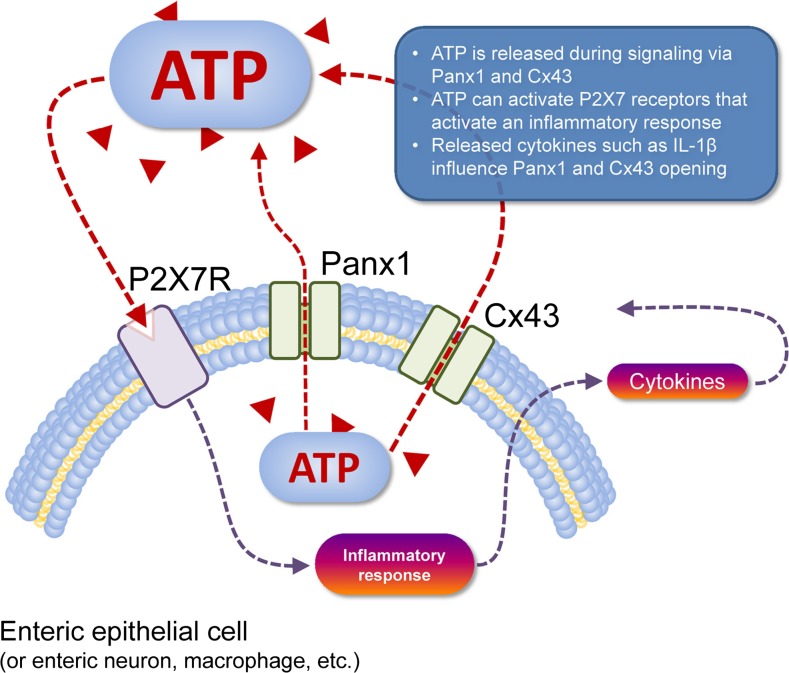
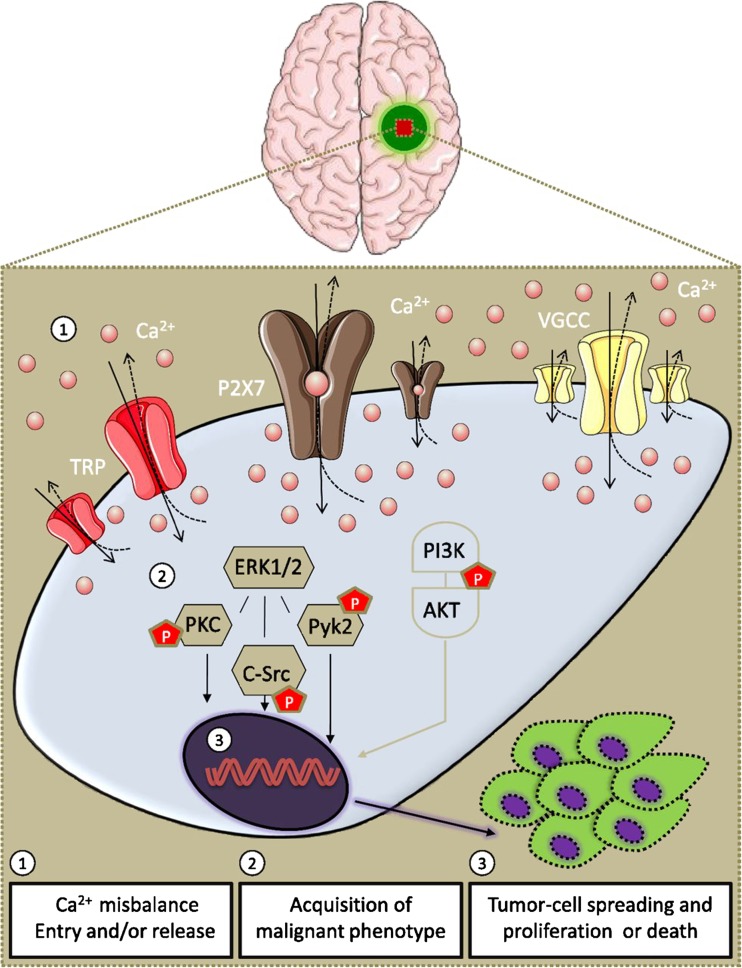
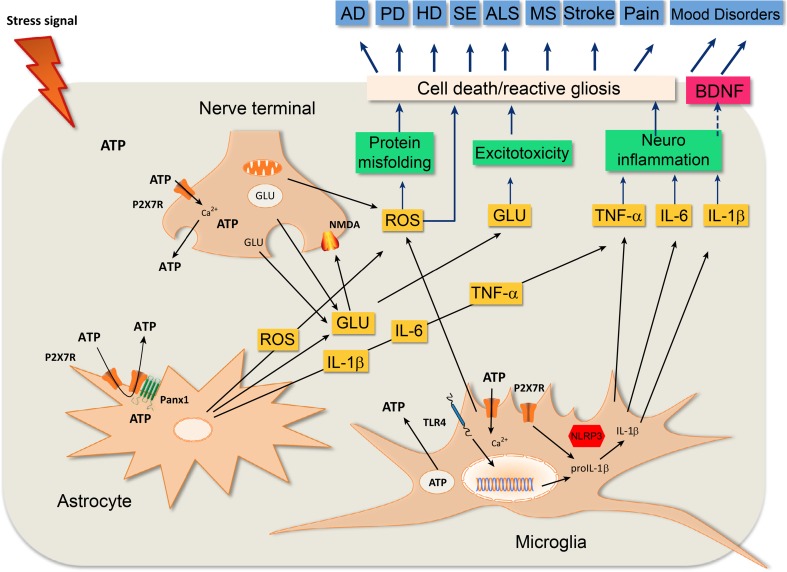
Seven P2X ion channel nucleotide receptor subtypes have been cloned and characterised. P2X7 receptors (P2X7R) are unusual in that there are extra amino acids in the intracellular C terminus. Low concentrations of ATP open cation channels sometimes leading to cell proliferation, whereas high concentrations of ATP open large pores that release inflammatory cytokines and can lead to apoptotic cell death. Since many diseases involve inflammation and immune responses, and the P2X7R regulates inflammation, there has been recent interest in the pathophysiological roles of P2X7R and the potential of P2X7R antagonists to treat a variety of diseases. These include neurodegenerative diseases, psychiatric disorders, epilepsy and a number of diseases of peripheral organs, including the cardiovascular, airways, kidney, liver, bladder, skin and musculoskeletal. The potential of P2X7R drugs to treat tumour progression is discussed.
Overview
The claims and statistics of this paper haven’t been checked yet.
Run the check — free, no account needed. It reads the open-access text and checks the sources it cites.
Integrity signals
Registry
Cites
Statistics
Figures
Verification
Claims the paper makes
The claims and statistics of this paper haven’t been checked yet.
Run the check — free, no account needed. It reads the open-access text and checks the sources it cites.
Claims other papers make about this one
Each is checked against this paper’s own text: does it say what the citing paper says it does?
In the citing paper
“P2X7R-mediated effects, which mainly occurs through activation of the neuroinflammatory response, have been involved in MDD, neurodegenerative diseases, schizophrenia, epilepsy, neuropathic pain and brain injury [28,66,67,68].”
From P2X7 Receptor Signaling in Stress and Depression (2019) · cites this paper as [66]
Self-check
Percentages, sums and reported differences re-computed from the paper’s own numbers.
The self-check needs the paper’s full text.
Citations
Cites
Receptors for Purines and Pyrimidines
Burnstock, G., & Verkhratsky, A. (2012) · Springer eBooks · doi:10.1007/978-3-642-28863-0_5 · Cited by 3,962
Self-citationReceptors for Purines and Pyrimidines
Ralevic, V., & Burnstock, G. (1998) · Pharmacological Reviews · doi:10.1016/s0031-6997(24)01373-5 · Cited by 2,028
Self-citationPhysiology and Pathophysiology of Purinergic Neurotransmission
Burnstock, G. (2007) · Physiological Reviews · doi:10.1152/physrev.00043.2006 · Cited by 1,609
Self-citationThe P2X7 Receptor in Infection and Inflammation
Di Virgilio, F., Dal Ben, D., Sarti, A. C., Giuliani, A. L., & Falzoni, S. (2017) · Immunity · doi:10.1016/j.immuni.2017.06.020 · Cited by 1,267
A P2X purinoceptor expressed by a subset of sensory neurons
Chen, C., Akopian, A. N., Sivilotti, L. G., Colquhoun, D., Burnstock, G., & Wood, J. N. (1995) · Nature · doi:10.1038/377428a0 · Cited by 1,016
Self-citationYang, D., He, Y., Muñoz-Planillo, R., Liu, Q., & Núñez, G. (2015) · Immunity · doi:10.1016/j.immuni.2015.10.009 · Cited by 622
Pathophysiology and Therapeutic Potential of Purinergic Signaling
Burnstock, G. (2006) · Pharmacological Reviews · doi:10.1124/pr.58.1.5 · Cited by 618
Self-citationExtracellular purines, purinergic receptors and tumor growth
Virgilio, F. D., & Adinolfi, E. (2016) · Oncogene · doi:10.1038/onc.2016.206 · Cited by 566
CD73 promotes anthracycline resistance and poor prognosis in triple negative breast cancer
Loi, S., Pommey, S., Haibe‐Kains, B., Beavis, P. A., Darcy, P. K., Smyth, M. J., & Stagg, J. (2013) · Proceedings of the National Academy of Sciences · doi:10.1073/pnas.1222251110 · Cited by 504
Abdulqawi, R., Dockry, R., Holt, K. J., Layton, G. R., McCarthy, B. G., Ford, A. P. D. W., & Smith, J. A. (2014) · The Lancet · doi:10.1016/s0140-6736(14)61255-1 · Cited by 488
Cited by
Sorted by citations
Items 101–200 of 249
Huang, X., Jia, Z., Li, X., Hu, Z., Yu, X., & Xia, J. (2022) · Phytotherapy Research · doi:10.1002/ptr.7692 · Cited by 22
Ben, D. D., Antonioli, L., Lambertucci, C., Fornai, M., Blandizzi, C., & Volpini, R. (2018) · Frontiers in Pharmacology · doi:10.3389/fphar.2018.00212 · Cited by 20
P2X7 receptor antagonist A-438079 alleviates oxidative stress of lung in LPS-induced septic rats
Özkanlar, S., Ulaş, N., Kaynar, Ö., & Satıcı, E. (2023) · Purinergic Signalling · doi:10.1007/s11302-023-09936-z · Cited by 19
Cytokine storm in human monkeypox: A possible involvement of purinergic signaling
da Silva, G. B., Braga, G. D. C., Simões, J. L. B., Kempka, A. P., & Bagatini, M. D. (2024) · Cytokine · doi:10.1016/j.cyto.2024.156560 · Cited by 19
Filippin, K. J., de Souza, K. F. S., Júnior, R. T. D. A., Torquato, H. F. V., Dias, D. A., Parisotto, E. B., Ferreira, A. T., & Paredes‐Gamero, E. J. (2019) · Purinergic Signalling · doi:10.1007/s11302-019-09684-z · Cited by 19
Esculin reduces P2X7 and reverses mitochondrial dysfunction in the renal cortex of diabetic rats
Serralha, R. S., Rodrigues, I., Bertolini, A., Lima, D. Y., Nascimento, M., Mouro, M. G., Punaro, G., Visoná, I., Rodrigues, A. M., & Higa, E. M. S. (2020) · Life Sciences · doi:10.1016/j.lfs.2020.117787 · Cited by 19
The role of single-domain antibodies (or nanobodies) in SARS-CoV-2 neutralization
Zebardast, A., Hosseini, P., Hasanzadeh, A., & Latifi, T. (2021) · Molecular Biology Reports · doi:10.1007/s11033-021-06819-7 · Cited by 19
Cliff, C. L., Williams, B. M., Chadjichristos, C. E., Mouritzen, U., Squires, P. E., & Hills, C. E. (2022) · International Journal of Molecular Sciences · doi:10.3390/ijms23020600 · Cited by 17
The P2 purinoceptors in prostate cancer
Wang, Z., Zhu, S., Tan, S., Zeng, Y., & Zeng, H. (2022) · Purinergic Signalling · doi:10.1007/s11302-022-09874-2 · Cited by 18
Soni, S., Lukhey, M. S., Thawkar, B. S., Chintamaneni, M., Kaur, G., Joshi, H., Ramniwas, S., & Tuli, H. S. (2024) · Naunyn-Schmiedeberg s Archives of Pharmacology · doi:10.1007/s00210-024-02994-z · Cited by 19
The role of microglia in chronic pain and depression: innocent bystander or culprit?
Yin, N., Yan, E., Duan, W., Mao, C., Qin, F., Yang, C., Hu, Y., & Xu, X. (2021) · Psychopharmacology · doi:10.1007/s00213-021-05780-4 · Cited by 18
Górska, A. M., Donoso, M., Valdebenito, S., Prideaux, B., Queen, S. E., Scemes, E., Clements, J. E., & Eugenín, E. A. (2021) · Journal of Neurochemistry · doi:10.1111/jnc.15374 · Cited by 19
Simões, J. L. B., Basso, H. F., Kosvoski, G. C., Gavioli, J., Marafon, F., Assmann, C. E., Carvalho, F. B., & Bagatini, M. D. (2021) · International Immunopharmacology · doi:10.1016/j.intimp.2021.108150 · Cited by 18
How Structural Biology Has Directly Impacted Our Understanding of P2X Receptor Function and Gating
Mansoor, S. (2022) · Methods in molecular biology · doi:10.1007/978-1-0716-2384-8_1 · Cited by 18
Safya, H., Mellouk, A., Legrand, J., Gall, S. M. L., Benbijja, M., Kanellopoulos‐Langevin, C., Kanellopoulos, J., & Bobé, P. (2018) · Frontiers in Immunology · doi:10.3389/fimmu.2018.00360 · Cited by 18
Oken, A. C., Turcu, A. L., Tzortzini, E., Georgiou, K., Nagel, J., Westermann, F. G., Barniol‐Xicota, M., Seidler, J., Kim, G., Lee, S., et al. (2025) · Nature Communications · doi:10.1038/s41467-025-62643-8 · Cited by 17
P2X7 is a cytotoxic receptor….maybe not: implications for cancer
Virgilio, F. D. (2020) · Purinergic Signalling · doi:10.1007/s11302-020-09735-w · Cited by 17
Inflammatory response in epilepsy is mediated by glial cell gap junction pathway (Review)
Wang, G., Wang, J., Xin, C., Xiao, J., Liang, J., & Wu, X. (2021) · Molecular Medicine Reports · doi:10.3892/mmr.2021.12132 · Cited by 18
Purinergic signalling in the urinary bladder – When function becomes dysfunction
Fry, C. H., & McCloskey, K. D. (2021) · Autonomic Neuroscience · doi:10.1016/j.autneu.2021.102852 · Cited by 16
Piperazine squaric acid diamides, a novel class of allosteric P2X7 receptor antagonists
Patberg, M., Isaak, A., Füsser, F. T., Zacarı́as, N. V. O., Vinnenberg, L., Schulte, J., Michetti, L., Grey, L., van der Horst, C., Hundehege, P., et al. (2021) · European Journal of Medicinal Chemistry · doi:10.1016/j.ejmech.2021.113838 · Cited by 16
Yu, Y., He, X., Wang, Y., Zhang, J., Tang, C., & Rong, P. (2022) · Neuroscience Letters · doi:10.1016/j.neulet.2022.136562 · Cited by 16
Souza, C. F., Baldissera, M. D., Barroso, D. C., Val, A. L., & Baldisserotto, B. (2020) · Journal of Thermal Biology · doi:10.1016/j.jtherbio.2020.102569 · Cited by 16
Kennedy, C. (2021) · Purinergic Signalling · doi:10.1007/s11302-021-09763-0 · Cited by 16
Naffaa, M. M. (2025) · Exploration of neuroscience · doi:10.37349/en.2025.100676 · Cited by 20
Rueschpler, L., & Schloer, S. (2025) · Pharmacological Research · doi:10.1016/j.phrs.2025.107884 · Cited by 15
Ion channel P2X7 receptor in the progression of cancer
Zhang, G., Liao, J.-X., Liu, Y.-Y., Zhu, F.-Q., Huang, H.-J., & Zhang, W. (2024) · Frontiers in Oncology · doi:10.3389/fonc.2023.1297775 · Cited by 15
Zhou, J., Feng, D., Zhang, X., Xia, C., Zhang, Z., Kang, J., Tan, Z., & Wu, B. (2019) · General Physiology and Biophysics · doi:10.4149/gpb_2019026 · Cited by 15
Price, G. W., Potter, J. A., Williams, B. M., Cliff, C. L., Squires, P. E., & Hills, C. E. (2019) · Experimental Physiology · doi:10.1113/ep087770 · Cited by 15
Potter, J. A., Price, G. W., Cliff, C. L., Green, C. R., Squires, P. E., & Hills, C. E. (2021) · International Journal of Molecular Sciences · doi:10.3390/ijms22073644 · Cited by 18
Mafra, J. C. M., Boechat, N., Teixeira, G. P., & Faria, R. X. (2023) · European Journal of Pharmacology · doi:10.1016/j.ejphar.2023.175999 · Cited by 14
Slama, N., Abdellatif, A., Bahria, K., Gasmi, S. N., Khames, M., Hadji, A., Birkmayer, G. D., Oumouna, M., Amrani, Y., & Benachour, K. (2024) · Cells · doi:10.3390/cells13100881 · Cited by 14
Novel molecular cues for dental defects in hypophosphatasia
Melms, H., Herrmann, M., Förstner, K. U., Bharti, R., Schneider, D., Mentrup, B., Rudert, M., Schlagenhauf, U., Jakob, F. J., & Graser, S. (2020) · Experimental Cell Research · doi:10.1016/j.yexcr.2020.112026 · Cited by 14
Ortega, F., Gómez‐Villafuertes, R., Benito-León, M., de la Torre, M. M., Olivos-Oré, L. A., Arribas-Blázquez, M., Gómez‐Gaviro, M. V., Azcorra, A., Desco, M., Artalejo, A. R., et al. (2021) · Brain Structure and Function · doi:10.1007/s00429-020-02204-5 · Cited by 14
Agonists, Antagonists, and Modulators of P2X7 Receptors
Müller, C. E., & Namasivayam, V. (2022) · Methods in molecular biology · doi:10.1007/978-1-0716-2384-8_2 · Cited by 14
Danegaptide Prevents TGFβ1-Induced Damage in Human Proximal Tubule Epithelial Cells of the Kidney
Squires, P. E., Price, G. W., Mouritzen, U., Potter, J. A., Williams, B. M., & Hills, C. E. (2021) · International Journal of Molecular Sciences · doi:10.3390/ijms22062809 · Cited by 13
Role of the P2X7 receptor in breast cancer progression
Du, Y., Cao, Y., Song, W., Wang, X., Yu, Q., Peng, X., & Zhao, R. (2024) · Purinergic Signalling · doi:10.1007/s11302-024-10039-6 · Cited by 13
Baldissera, M. D., Souza, C. F., da Silva, H. N. P., Henn, A. S., Duarte, F. A., da Costa, S. T., Silva, A. S. D., & Baldisserotto, B. (2019) · Comparative Biochemistry and Physiology Part C Toxicology & Pharmacology · doi:10.1016/j.cbpc.2019.108624 · Cited by 13
Ledderose, S., Rodler, S., Eismann, L., Ledderose, G., Rudelius, M., JUNGER, W. G., & Ledderose, C. (2023) · Cancers · doi:10.3390/cancers15082321 · Cited by 13
Gondé, H., Demeules, M., Hardet, R., Scarpitta, A., Junge, M., Pinto-Espinoza, C., Varin, R., Koch-Nolte, F., Boyer, O., & Adriouch, S. (2021) · Frontiers in Immunology · doi:10.3389/fimmu.2021.704408 · Cited by 11
Nascimento, M., Punaro, G. R., Serralha, R. S., Lima, D. Y., Mouro, M. G., Oliveira, L. C. G., Casarini, D. E., Rodrigues, A. M., & Higa, E. M. S. (2020) · Life Sciences · doi:10.1016/j.lfs.2020.117640 · Cited by 12
Pradhan, P., Jana, K., Ghosh, S., Debnath, B., Rout, S. K., Rai, V. K., Kar, B., Kar, D. M., Ghosh, G., & Rath, G. (2025) · Current Aging Science · doi:10.2174/0118746098369369250119112935 · Cited by 12
Zhang, W., Luo, H., Liu, J., Xu, Y., Wang, W., & Huang, C. (2025) · International Journal of Surgery · doi:10.1097/js9.0000000000002406 · Cited by 12
Han, S., Suzuki‐Kerr, H., Vlajkovic, S. M., & Thorne, P. R. (2022) · Purinergic Signalling · doi:10.1007/s11302-022-09896-w · Cited by 12
Souza, C. F., Baldissera, M. D., Descovi, S. N., Diniz, S. L. P., Henn, A. S., Flores, É. M. M., da Silva, A. S., & Baldisserotto, B. (2019) · Comparative Biochemistry and Physiology Part C Toxicology & Pharmacology · doi:10.1016/j.cbpc.2019.04.008 · Cited by 12
Targeting the Adenosinergic Axis in Chronic Lymphocytic Leukemia: A Way to Disrupt the Tumor Niche?
Vaisitti, T., Arruga, F., & Deaglio, S. (2018) · International Journal of Molecular Sciences · doi:10.3390/ijms19041167 · Cited by 11
P2X7R and PANX-1 channel relevance in a zebrafish larvae copper-induced inflammation model
de Marchi, F. O., Cruz, F. F., Menezes, F. P., Kist, L. W., Bogo, M. R., & Morrone, F. B. (2019) · Comparative Biochemistry and Physiology Part C Toxicology & Pharmacology · doi:10.1016/j.cbpc.2019.05.012 · Cited by 11
Purinergic ATP triggers moxibustion-induced local anti-nociceptive effect on inflammatory pain model
Yin, H., Fan, Y.-P., Liu, J., Li, D.-T., Guo, J., & Yu, S. (2021) · Purinergic Signalling · doi:10.1007/s11302-021-09815-5 · Cited by 11
P2X7 receptor inhibition alleviates mania-like behavior independently of interleukin-1β
Gölöncsér, F., Baranyi, M., Tod, P., Maácz, F., & Sperlágh, B. (2024) · iScience · doi:10.1016/j.isci.2024.109284 · Cited by 10
AZD-9056, a P2X7 receptor inhibitor, suppresses ATP-induced melanogenesis
Kim, J. Y., Lee, E. J., Seong, Y. J., Ahn, Y., Park, S., Lee, J., & Oh, S. H. (2020) · Journal of Dermatological Science · doi:10.1016/j.jdermsci.2020.09.008 · Cited by 10
Protective Effect of Purinergic P2X7 Receptor Inhibition on Acrolein-Induced Urothelial Cell Damage
Taidi, Z., Mansfield, K. J., Sana-Ur-Rehman, H., Moore, K. H., & Liu, L. (2022) · Frontiers in Physiology · doi:10.3389/fphys.2022.885545 · Cited by 10
Schäfer, W., Stähler, T., Pinto-Espinoza, C., Danquah, W., Knop, J., Rissiek, B., Haag, F., & Koch‐Nolte, F. (2022) · Frontiers in Pharmacology · doi:10.3389/fphar.2022.1033135 · Cited by 10
Souza, C. F., Baldissera, M. D., Abbad, L. B., da Rocha, M. I. D. U. M., da Veiga, M. L., da Silva, A. S., & Baldisserotto, B. (2019) · Microbial Pathogenesis · doi:10.1016/j.micpath.2019.103649 · Cited by 10
P2X7 receptor involved in antitumor activity of atractylenolide I in human cervical cancer cells
Han, Y., Bai, C., He, X.-M., & Qing-ling, R. (2022) · Purinergic Signalling · doi:10.1007/s11302-022-09854-6 · Cited by 10
Research progress on the P2X7 receptor in liver injury and hepatocellular carcinoma
Li, X., Bai, X., Tang, Y., Qiao, C., Zhao, R., & Peng, X. (2022) · Chemical Biology & Drug Design · doi:10.1111/cbdd.14182 · Cited by 11
P2X7 receptor inhibition attenuates podocyte injury by oxLDL through deregulating CXCL16
Zhu, Y., Li, Q., Chen, Y., Tian, M., Xun, W., & Sun, S. (2021) · Cell Biology International · doi:10.1002/cbin.11742 · Cited by 9
Synthesis and biological evaluation of carboxamide and quinoline derivatives as P2X7R antagonists
Shah, Q., Hussain, Z., Khan, B. A., Jacobson, K. A., & Iqbal, J. (2023) · Bioorganic Chemistry · doi:10.1016/j.bioorg.2023.106796 · Cited by 9
Agrawal, A., Kruse, L. S., Vangsted, A. J., Gartland, A., & Jørgensen, N. R. (2020) · Cells · doi:10.3390/cells9112341 · Cited by 9
Volonté, C., & Amadio, S. (2022) · Neuropharmacology · doi:10.1016/j.neuropharm.2022.109278 · Cited by 9
Functional role of P2X7 purinergic receptor in cancer and cancer-related pain
Xu, Y., Xiang, J., & Lin, S. (2024) · Purinergic Signalling · doi:10.1007/s11302-024-10019-w · Cited by 8
Montazeri-Khosh, Z., Ebrahimpour, A., Keshavarz, M., Sheybani‐Arani, M., & Samiei, A. (2025) · Immunopharmacology and Immunotoxicology · doi:10.1080/08923973.2024.2444956 · Cited by 8
Review of sensory systems deployed by epidermal keratinocytes
Denda, M., & Elias, P. M. (2025) · Frontiers in Cell and Developmental Biology · doi:10.3389/fcell.2025.1598326 · Cited by 12
Identification of New Human P2X7 Antagonists Using Ligand- and Structure-Based Virtual Screening
Zuanon, M., Brancale, A., & Young, M. T. (2025) · Journal of Chemical Information and Modeling · doi:10.1021/acs.jcim.5c00552 · Cited by 8
Xu, Y., Zou, B., Fan, B., Li, B., Yu, J., Wang, L., & Zhang, J. (2022) · Aging · doi:10.18632/aging.204087 · Cited by 8
Role of the P2 × 7 receptor in neurodegenerative diseases and its pharmacological properties
Hu, Z., Luo, Y., Zhu, J., Jiang, D., Luo, Z., Wu, L., Jin, L., Peng, S., & Hu, J. (2023) · Cell & Bioscience · doi:10.1186/s13578-023-01161-w · Cited by 8
Antagonistic Roles of P2X7 and P2Y2 Receptors in Neurodegenerative Diseases
Glaser, T., Oliveira‐Giacomelli, Á., Petiz, L. L., Ribeiro, D. E., Andrejew, R., & Ulrich, H. (2021) · Frontiers in Pharmacology · doi:10.3389/fphar.2021.659097 · Cited by 8
Solini, A., Cobuccio, L., Rossi, C., Parolini, F., Biancalana, E., Cosio, S., Chiarugi, M., & Gadducci, A. (2021) · European Surgical Research · doi:10.1159/000519690 · Cited by 8
Salam, A. S. G. A. E., & Elrazik, N. A. A. (2024) · Life Sciences · doi:10.1016/j.lfs.2024.122559 · Cited by 7
Genetic Variations in the P2X7 Receptor: Opportunities and Challenges for Drug Development
Cheah, J. S. Y., Skarratt, K. K., Fuller, S. J., & Balle, T. (2025) · International Journal of Molecular Sciences · doi:10.3390/ijms262110265 · Cited by 7
Ai, X., Dong, X., Guo, Y. C., Yang, P., Hou, Y., Bai, J., Zhang, S., & Wang, X. (2021) · Purinergic Signalling · doi:10.1007/s11302-021-09774-x · Cited by 7
Examining Local Cell-to-Cell Signalling in the Kidney Using ATP Biosensing
Price, G. W., Potter, J. A., Williams, B. M., Cliff, C. L., Wall, M. J., Hills, C. E., & Squires, P. E. (2020) · Methods in molecular biology · doi:10.1007/7651_2020_297 · Cited by 7
Sander, S., Müller, I., García-Alai, M., Nicke, A., & Tidow, H. (2022) · Journal of Biological Chemistry · doi:10.1016/j.jbc.2022.102495 · Cited by 7
Blocking P2X7 receptor ameliorates oxidized LDL-mediated podocyte apoptosis
Zhu, Y., Li, Q., Xun, W., Chen, Y., Zhang, C., & Sun, S. (2019) · Molecular Biology Reports · doi:10.1007/s11033-019-04823-6 · Cited by 7
Higuera-Hernández, M. F., Reyes-Cuapio, E., Gutiérrez-Mendoza, M., Budde, H., Blanco‐Centurion, C., Veras, A. B., Rocha, N., Yamamoto, T., Monteiro, D., Zaldívar-Rae, J., et al. (2019) · Journal of Functional Foods · doi:10.1016/j.jff.2019.06.011 · Cited by 8
Activation of the purinergic receptor P2X7 improves hepatosteatosis by promoting lipophagy
Dong, Z., Wei, Y., Tao, M., & Zhang, L. (2021) · FEBS Letters · doi:10.1002/1873-3468.14207 · Cited by 7
Simões, J. L. B., Sobierai, L. D., Pereira, S. M., dos Santos, M. V. R., & Bagatini, M. D. (2022) · Current Pharmaceutical Design · doi:10.2174/1381612828666220713115906 · Cited by 7
Loesch, A. (2021) · Cell and Tissue Research · doi:10.1007/s00441-021-03411-0 · Cited by 7
Flow cytometry: An accurate tool for screening P2RX7 modulators
Barczyk, A., Roy, H. B., Jouy, N., Renault, N., Hottin, A., Millet, R., Vouret‐Craviari, V., Adriouch, S., Idziorek, T., & Dezitter, X. (2020) · Cytometry Part A · doi:10.1002/cyto.a.24287 · Cited by 6
Purinergic P2X7R as a potential target for pancreatic cancer
Yu, Q., Wang, X., Li, X., Bai, X., Zhao, R., & Peng, X. (2023) · Clinical & Translational Oncology · doi:10.1007/s12094-023-03123-7 · Cited by 6
ADP as a novel stimulus for NLRP3-inflammasome activation in mice fails to translate to humans
Wissemann, J., Heidenreich, A., Zimmermann, H., Engelmann, J., Jansen, J., Suchanek, D., Westermann, D., Wolf, D., Stachon, P., & Merz, J. (2023) · Purinergic Signalling · doi:10.1007/s11302-023-09953-y · Cited by 6
Pannexin channel 1, P2×7 receptors, and Dimethyl Sulfoxide mediate pain responses in zebrafish
Gusso, D., Cruz, F. F., Fritsch, P. M., Gobbo, M. O. D. S., Morrone, F. B., & Bonan, C. D. (2022) · Behavioural Brain Research · doi:10.1016/j.bbr.2022.113786 · Cited by 6
Baldissera, M. D., Souza, C. F., Descovi, S. N., Verdi, C. M., Santos, R. C. V., da Silva, A. S., da Rocha, M. I. D. U. M., da Veiga, M. L., & Baldisserotto, B. (2019) · Aquaculture · doi:10.1016/j.aquaculture.2019.05.061 · Cited by 6
Pacheco, P. A. F., Gonzaga, D. T. G., von Ranke, N. L., Rodrigues, C. R., da Rocha, D. R., da Silva, F. D. C., Ferreira, V. F., & Faria, R. X. (2023) · Molecules · doi:10.3390/molecules28020590 · Cited by 5
Xu, Y., Wei, M., Cheng, X., & Li, X. Y. (2023) · Cancer Control · doi:10.1177/10732748231183496 · Cited by 5
Purines and purinergic receptors in primary tumors of the central nervous system
Soares, A. A., dos Santos, H. M., Domann, K. N., Alves, N. P. R., Böhm, B. R., Haack, C. M., Pretto, K. P., Guimarães, E. S., Rocha, G. F., de Paula, I. R., et al. (2024) · Purinergic Signalling · doi:10.1007/s11302-024-10053-8 · Cited by 5
Pharmacological interaction and immune response of purinergic receptors in therapeutic modulation
Kiaie, S. H., Hatami, Z., Nasr, M. S., Pazooki, P., Hemmati, S., Baradaran, B., & Valizadeh, H. (2023) · Purinergic Signalling · doi:10.1007/s11302-023-09966-7 · Cited by 5
How is the P2X7 receptor signaling pathway involved in epileptogenesis?
Wei, C., Fu, M., Zhang, H., & Yao, B. (2024) · Neurochemistry International · doi:10.1016/j.neuint.2024.105675 · Cited by 6
The impact of cannabinoids on inflammasome signaling in HIV-1 infection
Min, A. K., Keane, A. M., Weinstein, M. P., & Swartz, T. H. (2023) · NeuroImmune Pharmacology and Therapeutics · doi:10.1515/nipt-2023-0002 · Cited by 5
Molecular insights into P2X signalling cascades in acute kidney injury
Mishra, S., Shelke, V., Dagar, N., Lech, M., & Gaikwad, A. B. (2024) · Purinergic Signalling · doi:10.1007/s11302-024-09987-w · Cited by 4
P2X7 receptors: a bibliometric review from 2002 to 2023
Tang, H., Wei, W., Luo, Y., Lu, X., Chen, J., Yang, S., Wu, F., Zhou, H., Ma, W., & Yang, X. (2024) · Purinergic Signalling · doi:10.1007/s11302-024-09996-9 · Cited by 4
Stefanova, E. E., Dychiao, J. V. T., Chinn, M. C., Borhani, M., & Scott, A. L. M. (2024) · Biology Open · doi:10.1242/bio.060270 · Cited by 4
Potential role of the P2X7 receptor in the proliferation of human diffused large B-cell lymphoma
Yang, X. Q., Ji, Y., Mei, L., Jing, W., Yang, X., & Liu, Q. (2023) · Purinergic Signalling · doi:10.1007/s11302-023-09947-w · Cited by 4
Caseley, E. A., Muench, S. P., & Jiang, L. (2020) · Purinergic Signalling · doi:10.1007/s11302-020-09730-1 · Cited by 4
[Diagnostic value of P2X7 receptor and its role in inflammatory reaction in rheumatoid arthritis].
Chen, Y., Su, B., & Shang, M. (2018) · Europe PMC (PubMed Central) · doi:10.12122/j.issn.1673-4254.2018.12.09 · Cited by 4
Pislyagin, Е. А., Menchinskaya, E. S., Gladkikh, I. N., Николаевна, К. А., Sintsova, O. V., Popkova, D. V., Kozlovskiy, S., Gorpenchenko, T. Y., Николаевна, Л. Г., Kaluzhskiy, L. A., et al. (2023) · Marine Drugs · doi:10.3390/md21030192 · Cited by 3
P2X7‐Receptor Pathway Involvement in the Anti‐Inflammatory Activity of Medicinal Plants
Ortíz, S., Šavikin, K., Massicot, F., Olivier, E., Dutot, M., Rat, P., Deguin, B., Gođevac, D. M., Menkovic, N. R., Živković, J., et al. (2023) · Chemistry & Biodiversity · doi:10.1002/cbdv.202300427 · Cited by 3
Dias, D. A., de Souza, K. F. S., Moslaves, I. S. B., Buri, M. V., Basilio, D. C. L. S., Espinoça, I. T., Parisotto, E. B., Silva-Filho, S. E., Migliolo, L., Jaques, J. A. O., et al. (2024) · Purinergic Signalling · doi:10.1007/s11302-024-10032-z · Cited by 3
Purinergic receptor (P2X7R): A Promising Anti-Parkinson's Drug Target
Varshini, M. S., M, L., Krishnamurthy, P. T., Shaji, N., & Reddy, R. A. (2024) · Advanced Pharmaceutical Bulletin · doi:10.34172/apb.43206 · Cited by 3
Mahmood, Z., Bäck, M., Leanderson, P., Thune, R., Skoglund, C., & Jonasson, L. (2025) · Atherosclerosis · doi:10.1016/j.atherosclerosis.2025.119227 · Cited by 3
Zhao, R., Xue, Y., Cao, Y., Yan, M., Li, X., Song, W., Wang, K., Qiao, C., Du, Y., & Peng, X. (2025) · Medical Oncology · doi:10.1007/s12032-025-02932-w · Cited by 3
Moyadee, W., Roytrakul, S., Jaresitthikunchai, J., Phaonakrop, N., Choowongkomon, K., Ploypetch, S., Tansakul, N., Rattanasrisomporn, A., & Rattanasrisomporn, J. (2025) · Scientific Reports · doi:10.1038/s41598-025-03108-2 · Cited by 3
Metadata
- Authors
- Burnstock, G., & Knight, G. E.
- Affiliations
- The University of Melbourne (AU)
- University College London (GB)
- Corresponding author
- Burnstock, Geoffrey
- ORCID
- Burnstock, Geoffrey
- Venue
- Purinergic Signalling
- Published
- 2017-11-21
- Volume
- 14
- Issue
- 1
- Pages
- 1-18
- ISSN
- 1573-9538 (ISSN-L)
- 1573-9546
- PMC
- PMC5842154
- OpenAlex
- W2768734810
- Semantic Scholar
- 1aa37d0f163277fbeb968b6bb8cea0a8afcbe622
- Cited by
- 248
- References
- 228
- Citations by year
- 2026: 13 · 2025: 20 · 2024: 22 · 2023: 25 · 2022: 28 · 2021: 48 · 2020: 52 · 2019: 27 · 2018: 13
- FWCI
- 2.65
- Type
- journal article
- Language
- en
- Open access
- hybrid
- doi.org
- Locations
- Purinergic Signalling (publishedVersion, cc-by)
- Europe PMC (PubMed Central) (publishedVersion, cc-by)
- PubMed Central (publishedVersion, cc-by)
- PubMed (publishedVersion)
- UCL Discovery (University College London) (submittedVersion)
- Minerva Access (University of Melbourne) (submittedVersion, cc-by)
- Funders
- University College London (UCL)
- Topics
- Life Sciences › Biochemistry, Genetics and Molecular Biology › Physiology › Adenosine and Purinergic Signaling
- Health Sciences › Medicine › Physiology (medical) › Pain Mechanisms and Treatments
- Life Sciences › Biochemistry, Genetics and Molecular Biology › Physiology › Calcium signaling and nucleotide metabolism
- Keywords
- P2X7 receptor, ATP, P2X7 receptor antagonists, inflammation, tumor progression, apoptosis, neurodegenerative diseases, mental illness, epilepsy, therapeutic target
- MeSH terms
- Animals, Humans, Inflammation, Neoplasms, Disease Progression, Receptors, Purinergic P2X7, Purinergic P2X Receptor Antagonists
About these checks
Registry, retraction, Cites and statistics results are computed, not judged, with one exception: a printed reference that no index lists is read once by a model before it counts as a citation error. Claims are extracted by a model and kept only when their quote appears verbatim in the text; each cited source is then checked, with a model’s help, for whether it says what the claim relies on. Those verdicts can be wrong — read the claim’s quote and the cited source before relying on one.
Statistics and arithmetic are recomputed, not judged.
Confidence bands are shown only for fields calibrated on our annotated test set. None is calibrated yet, so no band is shown.
What counts as a claim ›How we measure confidence ›How we check this ›
Are you an author, or do you see a problem with this page? Request a review
