

The DOI matches its Crossref record; 228 of the 228 references it cites were found in a registry or an index.
The potential of P2X7 receptors as a therapeutic target, including inflammation and tumour progression
Open accessAbstract
Seven P2X ion channel nucleotide receptor subtypes have been cloned and characterised. P2X7 receptors (P2X7R) are unusual in that there are extra amino acids in the intracellular C terminus. Low concentrations of ATP open cation channels sometimes leading to cell proliferation, whereas high concentrations of ATP open large pores that release inflammatory cytokines and can lead to apoptotic cell death. Since many diseases involve inflammation and immune responses, and the P2X7R regulates inflammation, there has been recent interest in the pathophysiological roles of P2X7R and the potential of P2X7R antagonists to treat a variety of diseases. These include neurodegenerative diseases, psychiatric disorders, epilepsy and a number of diseases of peripheral organs, including the cardiovascular, airways, kidney, liver, bladder, skin and musculoskeletal. The potential of P2X7R drugs to treat tumour progression is discussed.
Overview
The claims and statistics of this paper haven’t been checked yet.
Run the check — free, no account needed. It reads the open-access text and checks the sources it cites.
Integrity signals
Registry
Cites
Statistics
Figures
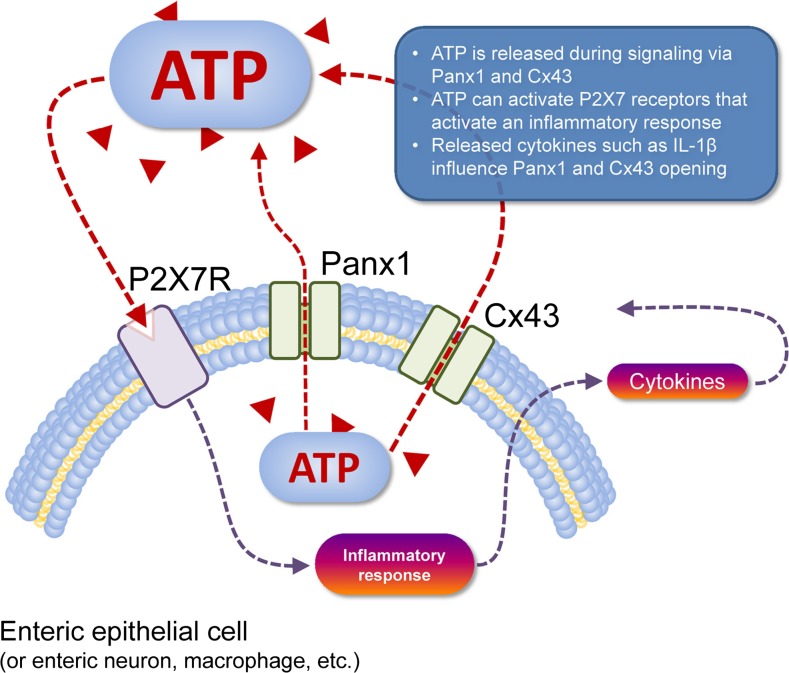
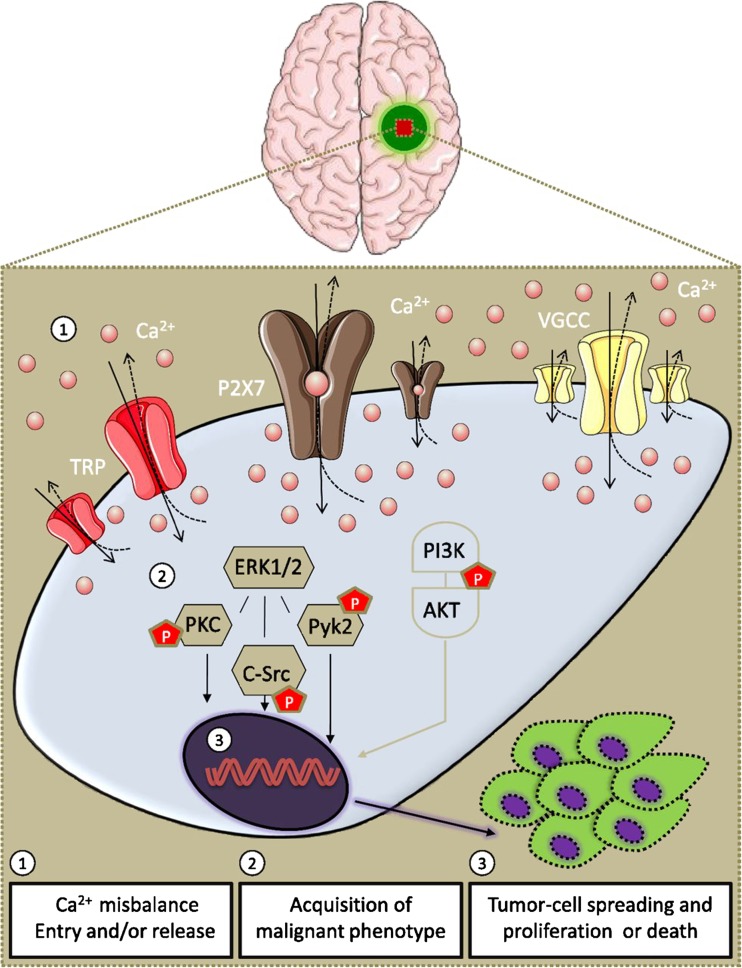
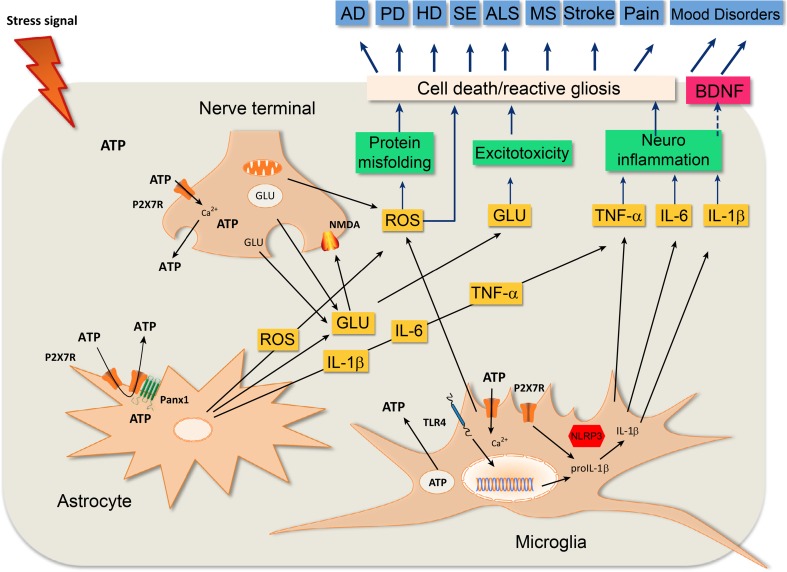
Verification
Claims the paper makes
The claims and statistics of this paper haven’t been checked yet.
Run the check — free, no account needed. It reads the open-access text and checks the sources it cites.
Claims other papers make about this one
Each is checked against this paper’s own text: does it say what the citing paper says it does?
In the citing paper
“P2X7R-mediated effects, which mainly occurs through activation of the neuroinflammatory response, have been involved in MDD, neurodegenerative diseases, schizophrenia, epilepsy, neuropathic pain and brain injury [28,66,67,68].”
From P2X7 Receptor Signaling in Stress and Depression (2019) · cites this paper as [66]
Self-check
Percentages, sums and reported differences re-computed from the paper’s own numbers.
The self-check needs the paper’s full text.
Citations
Cites
Items 201–228 of 228
Pool, L. R., Wagner, R. M., Scott, L. L., Roychowdhury, D., Berhane, R., Wu, C., Pearson, K., Sutton, J. A., & Schaffer, W. T. (2015) · The FASEB Journal · doi:10.1096/fj.14-264358 · Cited by 23
Zheng, X., Li, T., Chen, Y., Pan, H., Zhang, Z., Dai, Y., & Wang, J. (2017) · Infection Genetics and Evolution · doi:10.1016/j.meegid.2017.05.003 · Cited by 22
Non-Functional P2X7: A Novel and Ubiquitous Target in Human Cancer
Barden, J. A. (2014) · Journal of Clinical & Cellular Immunology · doi:10.4172/2155-9899.1000237 · Cited by 21
P2X7 receptor in skin biology and diseases
Geraghty, N. J., Watson, D., Adhikary, S. R., & Sluyter, R. (2016) · World Journal of Dermatology · doi:10.5314/wjd.v5.i2.72 · Cited by 21
Manzoor, S., Akhtar, U., Naseem, S., Khalid, M., Mazhar, M., Parvaiz, F., & Khaliq, S. (2016) · Viral Immunology · doi:10.1089/vim.2016.0008 · Cited by 21
Granado, M., Amor, S., Montoya, J. J., Monge, L., Fernández, N., & Garcı́a-Villalón, Á. L. (2015) · Vascular Pharmacology · doi:10.1016/j.vph.2015.06.003 · Cited by 20
Grol, M. W., Brooks, P. J., Pereverzev, A., & Dixon, S. J. (2016) · Purinergic Signalling · doi:10.1007/s11302-016-9517-4 · Cited by 19
Purinergic signaling in schistosomal infection
Silva, C. L. M. (2016) · Biomedical Journal · doi:10.1016/j.bj.2016.06.006 · Cited by 18
Xiao, H., Si, L., Liu, W., Li, N., Meng, G., Yang, N., Chen, X., Zhou, Y., & Shen, H. (2012) · Acta Histochemica · doi:10.1016/j.acthis.2012.09.002 · Cited by 16
P2X7 receptor antagonist activity of the anti-allergic agent oxatomide
Yoshida, K., Ito, M., & Matsuoka, I. (2015) · European Journal of Pharmacology · doi:10.1016/j.ejphar.2015.10.002 · Cited by 16
Purinergic signalling in neuroregeneration
Burnstock, G. (2015) · Neural Regeneration Research · doi:10.4103/1673-5374.165300 · Cited by 16
Self-citationEscape from adamantane: Scaffold optimization of novel P2X7 antagonists featuring complex polycycles
Barniol‐Xicota, M., Kwak, S., Lee, S., Caseley, E. A., Valverde, E., Jiang, L., Kim, Y., & Vázquez, S. (2017) · Bioorganic & Medicinal Chemistry Letters · doi:10.1016/j.bmcl.2017.01.039 · Cited by 16
UV-B induced alteration in purinergic receptors and signaling on HaCaT keratinocytes
Ruzsnavszky, O., Telek, A., Gönczi, M., Balogh, A., Remenyik, É., & Csernoch, L. J. (2011) · Journal of Photochemistry and Photobiology B Biology · doi:10.1016/j.jphotobiol.2011.07.009 · Cited by 15
Mahi, N., Kumar, A., Jaggi, A. S., Singh, N., & Dhawan, R. K. (2015) · Journal of Surgical Research · doi:10.1016/j.jss.2015.02.050 · Cited by 14
Souza, V. D. C. G., dos Santos, J. T., Cabral, F. L., Barbisan, F., de Azevedo, M. I., Carli, L. F. D., Botton, S. D. Á., Jaques, J. A. D. S., & Leal, D. B. R. (2017) · Microbial Pathogenesis · doi:10.1016/j.micpath.2017.01.002 · Cited by 13
The Search for New Agonists to P2X7R for Clinical Use: Tuberculosis as a Possible Target
Soares‐Bezerra, R. J., Pinho, R. T., Bisaggio, R. D. C., Benévolo-de-Andrade, T. C., & Alves, L. A. (2015) · Cellular Physiology and Biochemistry · doi:10.1159/000430364 · Cited by 11
Zanin, R. F., da Silva, G. L., Erig, T., Sperotto, N. D. D. M., Leite, C. E., Coutinho‐Silva, R., Battastini, A. M. O., & Morrone, F. B. (2015) · Molecular and Cellular Biochemistry · doi:10.1007/s11010-015-2381-7 · Cited by 10
Role of the Purinergic Receptor P2XR4 After Blunt Chest Trauma in Cigarette Smoke-Exposed Mice
Hafner, S., Wagner, K., Weber, S., Gröger, M., Wepler, M., McCook, O., Scheuerle, A., Stahl, B., Huber-Lang, M. S., Jung, B., et al. (2016) · Shock · doi:10.1097/shk.0000000000000726 · Cited by 9
Luo, W., Guth, C. M., Jolayemi, O., Duvall, C. L., Brophy, C. M., & Cheung‐Flynn, J. (2016) · Frontiers in Bioengineering and Biotechnology · doi:10.3389/fbioe.2016.00075 · Cited by 8
Greig, A. V. H., Cuthill, S., Linge, C., Clayton, E., & Burnstock, G. (2006) · Purinergic Signalling · doi:10.1007/s11302-005-5035-5 · Cited by 8
Self-citationGreig, A. V. H., Cuthill, S., Linge, C., Clayton, E., & Burnstock, G. (2006) · Purinergic Signalling · doi:10.1007/s11302-006-9030-2 · Cited by 7
Self-citationTherapeutic Targeting of the Cancer-Specific Cell Surface Biomarker nfP2X7
Barden, J. A., & Baird, A. G. (2016) · Journal of Clinical & Cellular Immunology · doi:10.4172/2155-9899.1000432 · Cited by 7
P2X7 in Bipolar and Depressive Disorders
Barron, M. L., Werry, E. L., McGregor, I. S., & Kassiou, M. (2013) · Springer eBooks · doi:10.1007/978-3-642-40282-1_31 · Cited by 5
European meeting “P2 receptors: new targets for the treatment of osteoporosis”
Jørgensen, N. R., Boeynaems, J., & Virgilio, F. D. (2011) · Purinergic Signalling · doi:10.1007/s11302-011-9223-1 · Cited by 5
Targeting Purinergic Receptors in Islet Transplantation
Aikin, R. A. (2013) · Diabetes · doi:10.2337/db13-0211 · Cited by 4
Ma, B., Jiang, Q., Li, W., & Li, Z. (2016) · The FASEB Journal · doi:10.1096/fasebj.30.1_supplement.1023.4 · Cited by 4
The role of P2X7R purinoreceptor in osteosarcoma
Yadav, M., Singh, A. K., Rizvi, N., Ali, S., Salma, S. A. U., Kumar, V., & Hussain, S. R. (2015) · Advances in Modern Oncology Research · doi:10.18282/amor.v1.i2.27 · Cited by 3
Purinergic Receptors and Pain - An Update
(2016) · BENTHAM SCIENCE PUBLISHERS eBooks · doi:10.2174/9781681082493116090003 · Cited by 3
Cited by
Sorted by citations
Extracellular ATP and P2 purinergic signalling in the tumour microenvironment
Virgilio, F. D., Sarti, A. C., Falzoni, S., Marchi, E. D., & Adinolfi, E. (2018) · Nature reviews. Cancer · doi:10.1038/s41568-018-0037-0 · Cited by 748
The Role of Inflammation in the Pathogenesis of Osteoarthritis
Chow, Y. Y., & Chin, K. (2020) · Mediators of Inflammation · doi:10.1155/2020/8293921 · Cited by 536
Grams, R. J., Santos, W. L., Scorei, I. R., Abad-García, A., Rosenblum, C. A., Biţă, A., Cerecetto, H., Viñas, C., & Soriano-Ursua, M. A. (2024) · Chemical Reviews · doi:10.1021/acs.chemrev.3c00663 · Cited by 389
Interleukin-1β is a potential therapeutic target for periodontitis: a narrative review
Cheng, R., Wu, Z., Li, M., Shao, M., & Hu, T. (2020) · International Journal of Oral Science · doi:10.1038/s41368-019-0068-8 · Cited by 304
Microglia in Alzheimer’s disease: pathogenesis, mechanisms, and therapeutic potentials
Miao, J., Ma, H., Yang, Y., Liao, Y., Lin, C., Zheng, J., Yu, M., & Lan, J. (2023) · Frontiers in Aging Neuroscience · doi:10.3389/fnagi.2023.1201982 · Cited by 293
Metadata
- Authors
- Burnstock, G., & Knight, G. E.
- Affiliations
- The University of Melbourne (AU)
- University College London (GB)
- Corresponding author
- Burnstock, Geoffrey
- ORCID
- Burnstock, Geoffrey
- Venue
- Purinergic Signalling
- Published
- 2017-11-21
- Volume
- 14
- Issue
- 1
- Pages
- 1-18
- ISSN
- 1573-9538 (ISSN-L)
- 1573-9546
- PMC
- PMC5842154
- OpenAlex
- W2768734810
- Semantic Scholar
- 1aa37d0f163277fbeb968b6bb8cea0a8afcbe622
- Cited by
- 248
- References
- 228
- Citations by year
- 2026: 13 · 2025: 20 · 2024: 22 · 2023: 25 · 2022: 28 · 2021: 48 · 2020: 52 · 2019: 27 · 2018: 13
- FWCI
- 2.65
- Type
- journal article
- Language
- en
- Open access
- hybrid
- doi.org
- Locations
- Purinergic Signalling (publishedVersion, cc-by)
- Europe PMC (PubMed Central) (publishedVersion, cc-by)
- PubMed Central (publishedVersion, cc-by)
- PubMed (publishedVersion)
- UCL Discovery (University College London) (submittedVersion)
- Minerva Access (University of Melbourne) (submittedVersion, cc-by)
- Funders
- University College London (UCL)
- Topics
- Life Sciences › Biochemistry, Genetics and Molecular Biology › Physiology › Adenosine and Purinergic Signaling
- Health Sciences › Medicine › Physiology (medical) › Pain Mechanisms and Treatments
- Life Sciences › Biochemistry, Genetics and Molecular Biology › Physiology › Calcium signaling and nucleotide metabolism
- Keywords
- P2X7 receptor, ATP, P2X7 receptor antagonists, inflammation, tumor progression, apoptosis, neurodegenerative diseases, mental illness, epilepsy, therapeutic target
- MeSH terms
- Animals, Humans, Inflammation, Neoplasms, Disease Progression, Receptors, Purinergic P2X7, Purinergic P2X Receptor Antagonists
About these checks
Registry, retraction, Cites and statistics results are computed, not judged, with one exception: a printed reference that no index lists is read once by a model before it counts as a citation error. Claims are extracted by a model and kept only when their quote appears verbatim in the text; each cited source is then checked, with a model’s help, for whether it says what the claim relies on. Those verdicts can be wrong — read the claim’s quote and the cited source before relying on one.
Statistics and arithmetic are recomputed, not judged.
Confidence bands are shown only for fields calibrated on our annotated test set. None is calibrated yet, so no band is shown.
What counts as a claim ›How we measure confidence ›How we check this ›
Are you an author, or do you see a problem with this page? Request a review
