

Women, younger clinicians’, and caregivers’ experiences of burnout and well-being during COVID-19 in a US healthcare system.
Open accessThe DOI matches its Crossref record; 48 of the 48 references it cites were found in a registry or an index.
Abstract
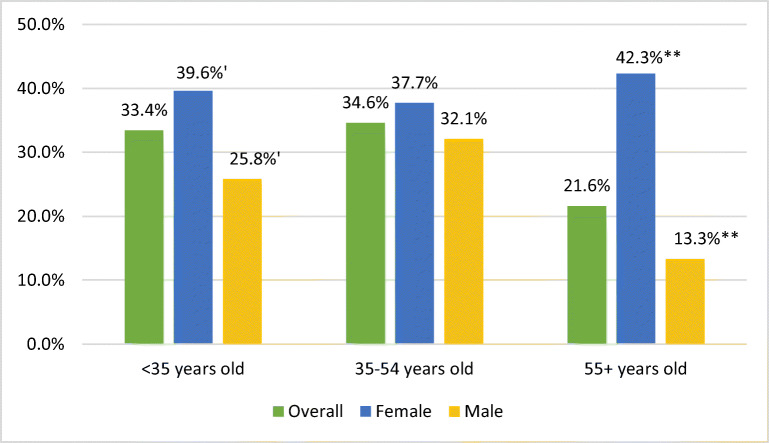
Background: The COVID-19 pandemic brought rapid changes to the work and personal lives of clinicians. Objective: To assess clinician burnout and well-being during the COVID-19 pandemic and guide healthcare system improvement efforts. Design: A survey asking about clinician burnout, well-being, and work experiences. Participants: Surveys distributed to 8141 clinicians from June to August 2020 in 9 medical groups and 17 hospitals at Sutter Health, a large healthcare system in Northern California. Main Measures: Burnout was the primary outcome, and other indicators of well-being and work experience were also measured. Descriptive statistics and multivariate logistic regression analyses were performed. All statistical inferences were based on weighted estimates adjusting for response bias. Key Results: A total of 3176 clinicians (39.0%) responded to the survey. Weighted results showed 29.2% reported burnout, and burnout was more common among women than among men (39.0% vs. 22.7%,p<0.01). In multivariate models, being a woman was associated with increased odds of reporting burnout (OR=2.19, 95% CI: 1.51–3.17) and being 55+ years old with lower odds (OR=0.54, 95% CI: 0.34–0.87). More women than men reported that childcare/caregiving was impacting work (32.9% vs. 19.0%,p<0.01). Even after controlling for age and gender, clinicians who reported childcare/caregiving responsibilities impacted their work had substantially higher odds of reporting burnout (OR=2.19, 95% CI: 1.54–3.11). Other factors associated with higher burnout included worrying about safety at work, being given additional work tasks, concern about losing one’s job, and working in emergency medicine or radiology. Protective factors included believing one’s concerns will be acted upon and feeling highly valued. Conclusions: This large survey found the pandemic disproportionally impacted women, younger clinicians, and those whose caregiving responsibilities impacted their work. These results highlight the need for a holistic and targeted strategy for improving clinician well-being that addresses the needs of women, younger clinicians, and those with caregiving responsibilities.
Overview
The claims and statistics of this paper haven’t been checked yet.
Free: it reads the open-access text and checks the first 5 claims that cite a source we can check. Create a free account to check every claim.
Integrity signals
Registry
Cites
Statistics
Figures
Verification
Claims the paper makes
The claims and statistics of this paper haven’t been checked yet.
Free: it reads the open-access text and checks the first 5 claims that cite a source we can check. Create a free account to check every claim.
Claims other papers make about this one
Each is checked against this paper’s own text: does it say what the citing paper says it does?
The cited source says what the claim attributes to it.
In the citing paper
“overall well-being has declined among physicians and advanced practice clinicians2,3”
From Evaluation of an Ambient Artificial Intelligence Documentation Platform for Clinicians (2025) · cites this paper as [3]
Experimental — accuracy not yet measuredIn the citing paper
“Given the serious toll of the COVID-19 pandemic on health-care workers,160”
From Digital health and telehealth in cancer care: A scoping review of reviews (2023) · cites this paper as [160]
Self-check
Percentages, sums and reported differences re-computed from the paper’s own numbers.
The self-check needs the paper’s full text.
Citations
Cites
The measurement of experienced burnout
Maslach, C., & Jackson, S. E. (1981) · Journal of Organizational Behavior · doi:10.1002/job.4030020205 · Cited by 14,496
PSYCHOLOGICAL CONDITIONS OF PERSONAL ENGAGEMENT AND DISENGAGEMENT AT WORK.
Kahn, W. A. (1990) · Academy of Management Journal · doi:10.2307/256287 · Cited by 10,975 · cited 1×
“Engagement and fulfillment at work are also important considerations in healthcare worker well-being.(39,40) Fewer clinicians in this survey reported burnout, 29%, compared to 49% in a larger national survey using the same burnout measure among various healthcare workers.”
ResultAustin, P. C., & Stuart, E. A. (2015) · Statistics in Medicine · doi:10.1002/sim.6607 · Cited by 4,495 · cited 1×
“Inferential statistics accounted for response bias using the inverse propensity weight method.(37,38) The propensity was estimated by a logistic regression model, where the dependent variable was survey response (yes/no) and predictors included age, gender, primary specialty, and job role (physician vs.”
MethodThe Second Shift: Working Families and the Revolution at Home
Hochschild, A. R., & Machung, A. (2012) · Medical Entomology and Zoology · Cited by 3,785
Shanafelt, T. D., Boone, S., Tan, L., Dyrbye, L. N., Sotile, W., Satele, D., West, C. P., Sloan, J., & Oreskovich, M. R. (2012) · Archives of Internal Medicine · doi:10.1001/archinternmed.2012.3199 · Cited by 3,439
Shanafelt, T. D., Hasan, O., Dyrbye, L. N., Sinsky, C., Satele, D., Sloan, J., & West, C. P. (2015) · Mayo Clinic Proceedings · doi:10.1016/j.mayocp.2015.08.023 · Cited by 2,885
Physician burnout: contributors, consequences and solutions
West, C. P., Dyrbye, L. N., & Shanafelt, T. D. (2018) · Journal of Internal Medicine · doi:10.1111/joim.12752 · Cited by 2,768
The Second Shift: Working Parents and the Revolution at Home
Brines, J., Hochschild, A., & Machung, A. (1990) · Journal of Marriage and the Family · doi:10.2307/352858 · Cited by 2,230
Shanafelt, T., Ripp, J., & Trockel, M. (2020) · JAMA · doi:10.1001/jama.2020.5893 · Cited by 1,956 · cited 1×
“Well-being during the pandemic is influenced by job stress, fear of infection, interpersonal and interprofessional relationships, adequacy of resources, caregiving obligations, and access to rapid testing.(25,26) A 2020 global study of intensive care unit specialists found burnout in North America in the 50–70% range,…”
BackgroundPrevalence of Burnout Among Physicians: A Systematic Review
Rotenstein, L. S., Torre, M., Ramos, M. A., Rosales, R. C., Guille, C., Sen, S., & Mata, D. A. (2018) · JAMA · doi:10.1001/jama.2018.12777 · Cited by 1,904
Cited by
Shanafelt, T. D., West, C. P., Dyrbye, L. N., Trockel, M., Tutty, M., Wang, H., Carlasare, L. E., & Sinsky, C. (2022) · Mayo Clinic Proceedings · doi:10.1016/j.mayocp.2022.09.002 · Cited by 558
Digital health and telehealth in cancer care: A scoping review of reviews
Shaffer, K. M., Turner, K. L., Siwik, C., Gonzalez, B. D., Upasani, R., Glazer, J. V., Ferguson, R. J., Joshua, C., & Low, C. A. (2023) · The Lancet Digital Health · doi:10.1016/s2589-7500(23)00049-3 · Cited by 263
“Given the serious toll of the COVID-19 pandemic on health-care workers, 160 there is an opportunity to establish viable digital health and telehealth interventions to mitigate occupational-health effects under the ongoing pandemic conditions.”
Evaluation of an Ambient Artificial Intelligence Documentation Platform for Clinicians
Stults, C. D., Deng, S., Martinez, M. C., Wilcox, J., Szwerinski, N., Chen, K. H., Driscoll, S., Washburn, J., & Jones, V. G. (2025) · JAMA Network Open · doi:10.1001/jamanetworkopen.2025.8614 · Cited by 147
Self-citationOnline Well-Being Group Coaching Program for Women Physician Trainees: A Randomized Clinical Trial
Mann, A., Shah, A. N., Thibodeau, P. S., Dyrbye, L. N., Syed, A., Woodward, M. A., Thurmon, K., Jones, C. D., Dunbar, K. S., & Fainstad, T. L. (2023) · JAMA Network Open · doi:10.1001/jamanetworkopen.2023.35541 · Cited by 87
Gambaro, E., Gramaglia, C. M., Marangon, D., Probo, M., Rudoni, M., & Zeppegno, P. (2023) · International Journal of Environmental Research and Public Health · doi:10.3390/ijerph20126087 · Cited by 43
“In the current study, it was observed that individual factors related to work or extra work influenced the following (as was the case in [59]): in the first phase of the study [20], higher levels of burnout were observed in the female population, in participants under the age of 30, in those who changed their extra-wo…”
ResultThe Well-Being of Women in Healthcare Professions: A Comprehensive Review
Karakcheyeva, V., Willis-Johnson, H., Corr, P. G., & Frame, L. A. (2024) · Global Advances in Integrative Medicine and Health · doi:10.1177/27536130241232929 · Cited by 41
“16,20,25,27,37,39,52,67,68 Studies indicate that women feel powerless, 10,39,52 more constricted by time pressures, 3 have higher workloads, 7,33 and expend more emotional energy on psychosocially complex patients than their male colleagues.”
BackgroundKwan, J. M., Noch, E., Qiu, Y., Toubat, O., Christophers, B., Azzopardi, S. A., Gilmer, G. G., Wiedmeier, J. E., & Daye, D. (2022) · Academic Medicine · doi:10.1097/acm.0000000000004802 · Cited by 26
“Social isolation experienced 132 (72) 31 (34) < .”
Associations of pediatric nurse burnout with involvement in quality improvement
Quigley, D. D., Slaughter, M. E., Qureshi, N., Gidengil, C. A., & Hays, R. D. (2022) · Journal of Pediatric Nursing · doi:10.1016/j.pedn.2022.11.001 · Cited by 37
Rosen, C. S., Kaplan, A. N., Nelson, D. B., Bash, H. A. J. L., Chard, K. M., Eftekhari, A., Kehle‐Forbes, S., Stirman, S. W., & Sayer, N. A. (2022) · Journal of Affective Disorders · doi:10.1016/j.jad.2022.09.141 · Cited by 31
The protective role of resilience and social support against burnout during the COVID-19 pandemic
Shahwan, S., Tay, E. H., Shafie, S., Tan, Y. B., Gunasekaran, S., Tan, R. H. S., Satghare, P., Zhang, Y., Wang, P., Tan, S. C., et al. (2024) · Frontiers in Public Health · doi:10.3389/fpubh.2024.1374484 · Cited by 36
Nagasaki, K., Seo, E., Maeno, T., & Kobayashi, H. (2022) · Journal of General and Family Medicine · doi:10.1002/jgf2.535 · Cited by 27
Niotis, K., Saperia, C., Saif, N., Carlton, C., & Isaacson, R. (2024) · Nature Mental Health · doi:10.1038/s44220-023-00191-0 · Cited by 21
Sinsky, C. A., Trockel, M., Carlasare, L. E., West, C. P., Wang, H., Tutty, M., Dyrbye, L. N., & Shanafelt, T. D. (2023) · Mayo Clinic Proceedings · doi:10.1016/j.mayocp.2023.07.007 · Cited by 24
Nishizaki, Y., Nagasaki, K., Shikino, K., Kurihara, M., Shinozaki, T., Kataoka, K., Shimizu, T., Yamamoto, Y., Fukui, S., Nishiguchi, S., et al. (2023) · BMJ Open · doi:10.1136/bmjopen-2022-066348 · Cited by 18
Work-Life Experience of Academic Radiologists: Food for Thought
Cankurtaran, C. Z., Reddy, S., Cen, S., Lei, X., & Walker, D. K. (2023) · Academic Radiology · doi:10.1016/j.acra.2023.01.011 · Cited by 18
Ali, H. N., Gittell, J. H., Deng, S., Stults, C. D., Martinez, M. C., Pertsch, S., Weger, L., & Dillon, E. C. (2022) · Health Care Management Review · doi:10.1097/hmr.0000000000000355 · Cited by 20
“, 2015), and the pandemic has further contributed to this challenge (Dillon et al., 2022).”
BackgroundSelf-citationBest Practices: Burnout Is More Than Binary
Thakore, N. L., Lan, M., Winkel, A. F., Vieira, D. L., & Kang, S. K. (2024) · American Journal of Roentgenology · doi:10.2214/ajr.24.31111 · Cited by 14
Burnout Among Public Health Workers During the COVID-19 Pandemic in South Korea
Lee, J., Jang, S., & Kim, N.-S. (2022) · Journal of Occupational and Environmental Medicine · doi:10.1097/jom.0000000000002773 · Cited by 14
“Among individual characteristics, being younger and femalewas related to higher burnout, as in other studies on burnout among health care workers.(14,15) The pandemic has negatively affected younger health”
BackgroundPatel, S., Ghebre, R. G., Dwivedi, R., Macheledt, K. C., Watson, S., Duffy, B. L., Rogers, E. A., Pusalavidyasagar, S., Guo, C., Misono, S., et al. (2023) · Preventive Medicine Reports · doi:10.1016/j.pmedr.2023.102517 · Cited by 11
“(Dillon et al., 2022).”
Trauma-Informed Educational Practices within the Undergraduate Nursing Classroom: A Pilot Study
Mayer, K. A., Rothacker-Peyton, S., & Wilson-Anderson, K. (2023) · Trauma Care · doi:10.3390/traumacare3030012 · Cited by 9
Assessing the prevalence of burnout among female microvascular head and neck surgeons
Benjamin, T., Gulati, A., Zebolsky, A. L., Seth, R., Knott, P. D., Okuyemi, O., & Park, A. M. (2023) · Facial Plastic Surgery & Aesthetic Medicine · doi:10.1089/fpsam.2022.0312 · Cited by 8
Psychological impact of the COVID-19 outbreak in community pharmacists: A longitudinal study
Lange, M., Licaj, I., Boulouard, M., Garon, D., Richard, E., Bas, J. L., Salmon, R., Stroiazzo, R., Bas, F. L., & Humbert, X. (2021) · Journal of the American Pharmacists Association · doi:10.1016/j.japh.2021.12.004 · Cited by 9
Gender analysis of Journal of Perinatology authorship during COVID-19
Gadek, L., Dammann, C. E. L., Savich, R. D., Oji‐Mmuo, C. N., Barrera, L., Gallagher, P. G., & Machut, K. Z. (2022) · Journal of Perinatology · doi:10.1038/s41372-022-01551-x · Cited by 8
“Scholarly production was directly impeded by several work impacts such as stalled research projects [16], but also through disruption of the work-life balance that disproportionately affected women [17].”
BackgroundCarlasare, L. E., Wang, H., West, C. P., Trockel, M., Dyrbye, L. N., Tutty, M., Sinsky, C. A., & Shanafelt, T. D. (2024) · Journal of Healthcare Management · doi:10.1097/jhm-d-23-00124 · Cited by 18
Hutchings, H. A., Rahman, M., Carter, K., Islam, S., O’Neill, C., Roberts, S., John, A. M., Fegan, G., Dave, U., Hawkes, N., et al. (2024) · BMJ Open · doi:10.1136/bmjopen-2023-079350 · Cited by 5
Krischak, M. K., Nam, C. S., Luckenbaugh, A. N., & Herrel, L. A. (2025) · Cancer · doi:10.1002/cncr.35690 · Cited by 6
Bell, K., Shah, S. G. S., Henderson, L. R., & Kiparoglou, V. (2022) · Clinical and Translational Science · doi:10.1111/cts.13289 · Cited by 6
COVID-19 psychological impact in general practitioners: A longitudinal study
Lange, M., Licaj, I., Stroiazzo, R., Rabiaza, A., Bas, J. L., Bas, F. L., & Humbert, X. (2023) · L Encéphale · doi:10.1016/j.encep.2023.03.001 · Cited by 7
Syed, A., Thibodeau, P. S., Dieujuste, N., Jones, C. D., Dunbar, K. S., Mann, A., & Fainstad, T. L. (2024) · Mayo Clinic Proceedings · doi:10.1016/j.mayocp.2024.07.015 · Cited by 9
A Path to Improved Health Care Worker Well-Being: Lessons from the COVID-19 Pandemic
Busis, N. A., Alexander, C. M., Castner, J., Singer, S., Smith, C. D., Bernstein, C. A., Hoyt, D. B., Tran, T. A., Cipriano, P. F., & COVID-19 Working Group (2025) · NAM Perspectives · doi:10.31478/202504a · Cited by 15
Accelerating progress towards gender equity in health and science
de Laat, K., Kaplan, S., & Lu, L. (2024) · The Lancet · doi:10.1016/s0140-6736(24)00404-5 · Cited by 6
Mohr, D. C., Apaydin, E. A., Li, B. M., Molloy-Paolillo, B. K., & Rinne, S. T. (2023) · Journal of Occupational and Environmental Medicine · doi:10.1097/jom.0000000000002861 · Cited by 5
Silistraru, I., Ciubară, A., Olariu, O., Ciureanu, I.-A., Checheriță, L. E., Druguș, D., Dănilă, R., & Roşca, Ș. (2023) · Healthcare · doi:10.3390/healthcare11192667 · Cited by 6
“Our findings suggest that after the pandemic, our respondents reporting change-in-profession intentions are more likely to be women, consistent with recent study results [3,23,40].”
ResultInvestigation of Precepting-Related Burnout in Dietetics Preceptors
Hopkins, H., Eggett, D. L., & Patten, E. V. (2024) · Journal of the Academy of Nutrition and Dietetics · doi:10.1016/j.jand.2024.07.008 · Cited by 5
Rizzo, A., Yıldırım, M., Aziz, I. A., Çağış, Z. G., Szarpak, Ł., Nucera, G., Sitibondo, A., Khabbache, H., Chirico, F., & Nowrouzi‐Kia, B. (2023) · Healthcare · doi:10.3390/healthcare11233044 · Cited by 4
Physician assistant/associate career flexibility: factors associated with specialty transitions
Kozikowski, A., Bruza‐Augatis, M., Morton-Rias, D., Puckett, K. K., Jeffery, C., Cawley, J. F., Hooker, R. S., Quella, A., Mauldin, S. G., & Goodman, J. (2024) · BMC Health Services Research · doi:10.1186/s12913-024-12158-7 · Cited by 3
“Research indicates that women disproportionately contribute to family and caregiving responsibilities, a disparity that was especially pronounced during the pandemic [32–34].”
Akhavan, A. R., Zhan, T., Lall, M. D., Barton, M. A., Reisdorff, E. J., Hu, Y., Bilimoria, K. Y., & Lu, D. W. (2024) · AEM Education and Training · doi:10.1002/aet2.10955 · Cited by 2
The concept of the Center for psychological support of resident doctors during the training period.
Tuillet, P. S. (2023) · Психология и Психотехника · doi:10.7256/2454-0722.2023.4.44150 · Cited by 2
Choudhary, N., & Brookes, G. (2025) · Journal of Work-Applied Management · doi:10.1108/jwam-06-2025-0110 · Cited by 8
Women healthcare professionals’ COVID-19 experiences from a gender perspective: A qualitative study
Abay, H. (2023) · International Journal of Disaster Risk Reduction · doi:10.1016/j.ijdrr.2023.104141 · Cited by 5
Burnout in National Collegiate Athletic Association Physicians: A Cross-Sectional Study
Root, C., Aldag, L., Giusti, N., Mar, D. E., Bernard, C. D., Salazar, L., Henkelman, E., Vopat, B. G., & Randall, J. (2025) · Orthopaedic Journal of Sports Medicine · doi:10.1177/23259671251327684 · Cited by 3
“6,9 Additionally, younger physicians seem to be associated with higher rates of burnout.”
A psychometric evaluation of the Maslach Burnout Inventory in nurse practitioners
Azama, K. A., & Lim, E. (2025) · Journal of the American Association of Nurse Practitioners · doi:10.1097/jxx.0000000000001180 · Cited by 4
Joseph, K., Marrama, A., Susi, A., Hisle-Gorman, E. J., Andreason, P., & Nylund, C. M. (2025) · Military Medicine · doi:10.1093/milmed/usaf187 · Cited by 1
Exploring the impact of ethno‐racial trauma on the well‐being of US physicians: A scoping review
Pattanaik, R., Cohen, A., Ehlenbach, M. L., Khanna, K., Kloster, H. M., Scheinfeld, L., & Oddiri, U. (2025) · Medical Education · doi:10.1111/medu.70058 · Cited by 3
Akinleye, D. D., Wu, M., Efferen, L. S., McCauley, S., Allen, A. N., Bennett, H., Snitkoff, L. S., Cleary, L., Bliss, K., Martiniano, R., et al. (2023) · Journal of Community Health · doi:10.1007/s10900-023-01247-z · Cited by 2
Lost in the pandemic: COVID‐19's impact on health professions educators
Newman, L. R., Nagler, A., Rudd, M. J., Blanchard, R. D., Whicker, S. A., Winn, A. S., Cohen, A., Parry, G. J., Leichtner, A. M., & Kesselheim, J. C. (2024) · The Clinical Teacher · doi:10.1111/tct.13764 · Cited by 3
“30,31 34 – 36 Dillion et al. 33 … members highlighted unmet needs, reporting that academies could have better advocated for HPEs to receive additional funding, protected time, … resources.”
Psychiatric Treatment of Medical Colleagues and Their Families: Potential Risks
Constantino, E. A., & Spina, T. (2023) · Journal of Psychiatric Practice · doi:10.1097/pra.0000000000000745 · Cited by 1
Silistraru, I., Olariu, O., Ciubară, A., Rosca, S., Azoicăi, D., Alexa, A. I., Severin, F., Zainea, P., Anghel, L., Dănilă, R., et al. (2024) · BRAIN BROAD RESEARCH IN ARTIFICIAL INTELLIGENCE AND NEUROSCIENCE · doi:10.18662/brain/15.1/561 · Cited by 1
Cutting-Edge Challenges: How Work Stress and Age Affect Fertility and Pregnancy in Female Surgeons
(2023) · International Journal of Women’s Health Care · doi:10.33140/ijwhc.08.02.06
Creating Systemwide Interdisciplinary Well-Being Committees to Reduce Physician Burnout
Sukhija-Cohen, A. C., Stults, C. D., Deng, S., Gregg, L. C., Sieur, S. L., & Cobb, J. M. K. (2024) · NEJM Catalyst · doi:10.1056/cat.24.0251
Self-citationZivin, K., Harrod, M., Takamine, L. H., Porath, B. R., Burgess, J. L., Kim, H. M., Ortolan, V., Abraham, K. M., & Sripada, R. K. (2025) · SSM - Qualitative Research in Health · doi:10.1016/j.ssmqr.2025.100559 · Cited by 1
Gender differences in secure chat and electronic health records use among hospital‐based physicians
Witte, M., McDermott, C., Levy, K. L., Nelsen, K., Shrestha, S., Tian, S., Paje, D. G., & Sheffield, V. M. (2025) · Journal of Hospital Medicine · doi:10.1002/jhm.70236
Kim, Y., Lee, J. E., Svec, J., & Nemmers, N. L. (2025) · Journal of Social and Personal Relationships · doi:10.1177/02654075251410427
“The caregiving squeeze in the United States is notable as competing demands from women ’ s increased professional obligations are often not compensated by decreased domestic responsibilities, culminating in a higher risk of burnout and overload (Boumans & Dorant, 2014; Dillon et al., 2022).”
Akrivakis, D., Lamprinos, D., Patatoukou, M., Alevizou, S., Zoumpoulis, G., Pouletidis, T., Deligiorgi, P., Georgakopoulos, P., Oikonomou, E. K., Siasos, G., et al. (2026) · Epidemiologia · doi:10.3390/epidemiologia7030073
“A similar study reported that women were more likely to report BO and one of the factors that women reported that exacerbated that probability was childcare or caregiving responsibilities [38].”
Lean management of crisis response and post-pandemic outcomes in US primary care practices
Hung, D. Y., Shortell, S. M., Morris, E., Quach, C. Y., Reponen, E., Rotter, T., Perez-Araos, A., & Schifferdecker, K. E. (2026) · BMC Health Services Research · doi:10.1186/s12913-026-14968-3
“Adherence to both of these guiding principles creates a culture that is sensitive to workforce wellbeing, and aligns with reports that feeling valued by leaders and believing concerns will be acted upon are protective against burnout [23].”
Harry, E., Thompson-Burdine, J., Wang, H., Liebschutz, J. M., Berliner, J., Lin, C., Quinn, M., & Shanafelt, T. D. (2026) · BMJ Quality & Safety · doi:10.1136/bmjqs-2025-019297 · Cited by 1
The COVID-19 Pandemic as a Stress Test of the Intensive Care Unit Workforce
Connell, K. A., Vranas, K. C., Yu, H., & Kerlin, M. P. (2026) · Critical Care Clinics · doi:10.1016/j.ccc.2026.07.004 · Cited by 1
Metadata
- Authors
- Dillon, E. C., Stults, C. D., Deng, S., Martinez, M., Szwerinski, N., Koenig, P. T., Gregg, L., Cobb, J. K., Mahler, E., Frosch, D. L., Le Sieur, S., Hanley, M., & Pertsch, S.
- Affiliations
- Sutter Health (US)
- Sutter Medical Center (US)
- John Muir Health (US)
- Palo Alto Medical Foundation (US)
- Corresponding author
- Dillon, Ellis C.
- Venue
- Journal of General Internal Medicine
- Published
- 2021-11-02
- Volume
- 37
- Issue
- 1
- Pages
- 145-153
- ISSN
- 0884-8734 (ISSN-L)
- 1525-1497
- PMC
- PMC8562379
- OpenAlex
- W3208210191
- Semantic Scholar
- d2f71ace13e4081a7e95d640665a762bb651c448
- Cited by
- 57
- References
- 47
- Citations by year
- 2026: 4 · 2025: 11 · 2024: 14 · 2023: 18 · 2022: 9 · 2021: 1
- FWCI
- 11.79
- Type
- journal article
- Language
- en
- Open access
- hybrid
- doi.org
- Licence
- cc-by
- creativecommons.org/licenses/by/4.0 (tdm)
- creativecommons.org/licenses/by/4.0 (vor)
- Locations
- Journal of General Internal Medicine (publishedVersion, cc-by)
- PubMed Central (publishedVersion, cc-by)
- PubMed (publishedVersion)
- Funders
- Palo Alto Medical Foundation (n/a)
- Sutter Health (n/a)
- Topics
- Health Sciences › Health Professions › General Health Professions › Healthcare professionals’ stress and burnout
- Social Sciences › Psychology › Clinical Psychology › COVID-19 and Mental Health
- Health Sciences › Medicine › Public Health, Environmental and Occupational Health › Occupational Health and Burnout
- Keywords
- clinician burnout, clinician well-being, COVID-19 pandemic, gender differences, caregiving responsibilities, child care, emergency medicine, radiology, job insecurity, occupational safety, feeling valued, healthcare workforce
- MeSH terms
- COVID-19, SARS-CoV-2, Burnout, Professional, Delivery of Health Care, Female, Humans, Male, Middle Aged, Surveys and Questionnaires, Caregivers, Pandemics
About these checks
Registry, retraction, Cites and statistics results are computed, not judged, with one exception: a printed reference that no index lists is read once by a model before it counts as a citation error. Claims are extracted by a model and kept only when their quote appears verbatim in the text; each cited source is then checked, with a model’s help, for whether it says what the claim relies on. Those verdicts can be wrong — read the claim’s quote and the cited source before relying on one.
Statistics and arithmetic are recomputed, not judged.
Confidence bands are shown only for fields calibrated on our annotated test set. None is calibrated yet, so no band is shown.
What counts as a claim ›How we measure confidence ›How we check this ›
Are you an author, or do you see a problem with this page? Request a review
Data sources
Bibliographic data: Semantic Scholar, OpenAlex, Crossref.
Contains information from the Semantic Scholar Academic Graph Datasets, made available under the ODC Attribution License (ODC-BY 1.0).
Semantic Scholar’s data is described in: Kinney, R., et al. (2023). The Semantic Scholar Open Data Platform. arXiv:2301.10140.
