

Recommendation of short tandem repeat profiling for authenticating human cell lines, stem cells, and tissues
Open accessThe DOI matches its Crossref record; 9 of the 13 references it cites were found in a registry or an index.
Abstract
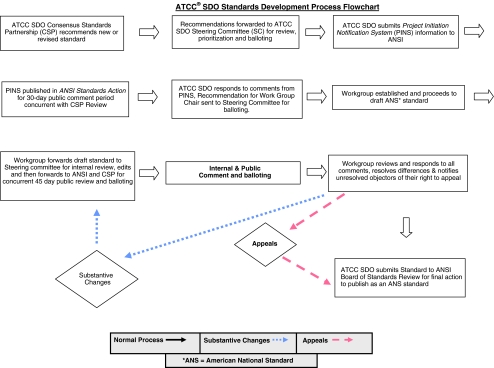
Cell misidentification and cross-contamination have plagued biomedical research for as long as cells have been employed as research tools. Examples of misidentified cell lines continue to surface to this day. Efforts to eradicate the problem by raising awareness of the issue and by asking scientists voluntarily to take appropriate actions have not been successful. Unambiguous cell authentication is an essential step in the scientific process and should be an inherent consideration during peer review of papers submitted for publication or during review of grants submitted for funding. In order to facilitate proper identity testing, accurate, reliable, inexpensive, and standardized methods for authentication of cells and cell lines must be made available. To this end, an international team of scientists is, at this time, preparing a consensus standard on the authentication of human cells using short tandem repeat (STR) profiling. This standard, which will be submitted for review and approval as an American National Standard by the American National Standards Institute, will provide investigators guidance on the use of STR profiling for authenticating human cell lines. Such guidance will include methodological detail on the preparation of the DNA sample, the appropriate numbers and types of loci to be evaluated, and the interpretation and quality control of the results. Associated with the standard itself will be the establishment and maintenance of a public STR profile database under the auspices of the National Center for Biotechnology Information. The consensus standard is anticipated to be adopted by granting agencies and scientific journals as appropriate methodology for authenticating human cell lines, stem cells, and tissues.
Overview
The claims and statistics of this paper haven’t been checked yet.
Free: it reads the open-access text and checks the first 5 claims that cite a source we can check. Create a free account to check every claim.
Integrity signals
Registry
Cites
Statistics
Figures
Verification
Claims the paper makes
The claims and statistics of this paper haven’t been checked yet.
Free: it reads the open-access text and checks the first 5 claims that cite a source we can check. Create a free account to check every claim.
Claims other papers make about this one
Each is checked against this paper’s own text: does it say what the citing paper says it does?
The source backs part of the claim, not all of it — or backs it for a different population, condition or comparison.
In the citing paper
“A variety of methods exist for authentication testing, but short tandem repeat (STR) profiling has been recommended as the most widely used method currently available for human cell lines.7,8”
From Match criteria for human cell line authentication: Where do we draw the line? (2013) · cites this paper as [8]
Experimental — accuracy not yet measuredThe source backs part of the claim, not all of it — or backs it for a different population, condition or comparison.
In the citing paper
“This mishap, later confirmed by Dr. Nelson-Rees, a cell culture expert and early proponent of cell line authentication [51], was significant enough that, had the same oversight occurred today, the polio vaccine would not meet FDA approval standards [14,52].”
From The history, landscape, and outlook of human cell line authentication and security (2024) · cites this paper as [52]
Experimental — accuracy not yet measuredThe cited source says what the claim attributes to it.
In the citing paper
“It was recently recommended by the American Type Culture Collection Standards Development Organization (ATCC SDO) Workgroup ASN-0002 as the best method currently available for human cell line authentication.8,11”
From Match criteria for human cell line authentication: Where do we draw the line? (2013) · cites this paper as [8]
The cited source says what the claim attributes to it.
In the citing paper
“STR profiling is the gold standard for human identity testing (Butler, 2007) and cell line authentication (Barallon et al., 2010), given the uniqueness of each individual and relatively easy PCR-based assay.”
From Short tandem repeat profiling via next-generation sequencing for cell line authentication (2023) · cites this paper as Barallon et al., 2010
Self-check
Percentages, sums and reported differences re-computed from the paper’s own numbers.
The self-check needs the paper’s full text.
Citations
Cites
Schweppe, R. E., Klopper, J. P., Korch, C., Pugazhenthi, U., Benezra, M., Knauf, J. A., Fagin, J. A., Marlow, L. A., Copland, J. A., Smallridge, R. C., et al. (2008) · The Journal of Clinical Endocrinology & Metabolism · doi:10.1210/jc.2008-1102 · Cited by 563 · cited 1×
“Schweppe et al. (2008) evaluated 40 human thyroid cancer cell lines and found that only 23 of these actually had unique genetic profiles, as determined using short tandem repeat (STR) profiling and single nucleotide polymorphism analysis.”
BackgroundCheck your cultures! A list of cross‐contaminated or misidentified cell lines
Capes‐Davis, A., Theodosopoulos, G., Atkin, I., Drexler, H. G., Kohara, A., MacLeod, R. A. F., Masters, J. R., Nakamura, Y., Reid, Y. A., Reddel, R. R., et al. (2010) · International Journal of Cancer · doi:10.1002/ijc.25242 · Cited by 520 · cited 1×
“More extensive lists of misidentified cells are available from a number of sources (e.g., ATCC SDO Workgroup ASN-0002 2010; Capes-Davis et al. 2010).”
BackgroundSelf-citationShort tandem repeat profiling provides an international reference standard for human cell lines
Masters, J. R., Thomson, J. A., Daly-Burns, B., Reid, Y. A., Dirks, W. G., Packer, P., Toji, L. H., Ohno, T., Tanabe, H., Arlett, C. F., et al. (2001) · Proceedings of the National Academy of Sciences · doi:10.1073/pnas.121616198 · Cited by 478
Self-citationCell line misidentification: the beginning of the end
American Type Culture Collection Standards Development Organization Workgroup ASN-0002 (2010) · Nature Reviews Cancer · doi:10.1038/nrc2852 · Cited by 266
Banded Marker Chromosomes as Indicators of Intraspecies Cellular Contamination
Nelson-Rees, W. A., Flandermeyer, R. R., & Hawthorne, P. K. (1974) · Science · doi:10.1126/science.184.4141.1093 · Cited by 210 · cited 1×
“Gartler (e.g., Gartler 1967) and Nelson-Rees (e.g., Nelson-Rees et al. 1974) were among the first and most vocal of those attempting to convince the scientific community of the seriousness of the issue.”
BackgroundSpecies identification in cell culture: a two-pronged molecular approach
Cooper, J. K., Sykes, G., King, S., Cottrill, K., Ivanova, N. V., Hanner, R., & Ikonomi, P. (2007) · In Vitro Cellular & Developmental Biology - Animal · doi:10.1007/s11626-007-9060-2 · Cited by 174 · cited 1×
“For feeder layer-dependent human stem cell preparations, DNA amplification and barcoding (e.g., Cooper et al. 2007), an isoenzyme analysis assay or an alternative species identification method may need to be performed to demonstrate that there are no crosscontaminating mouse feeder cells in the…”
MethodSelf-citationGenetic markers as tracers in cell culture.
Sm, G. (1967) · PubMed · Cited by 141
Eradication of cross-contaminated cell lines: A call for action
Nardone, R. M. (2007) · Cell Biology and Toxicology · doi:10.1007/s10565-007-9019-9 · Cited by 134
Self-citationVerification and Unmasking of Widely Used Human Esophageal Adenocarcinoma Cell Lines
Boonstra, J. J., van Marion, R., Beer, D. G., Lin, L., Chaves, P., Ribeiro, C., Pereira, A. D., Roque, L., Darnton, S. J., Altorki, N. K., et al. (2010) · JNCI: Journal of the National Cancer Institute · doi:10.1093/jnci/djp499 · Cited by 127
Berglind, H., Pawitan, Y., Kato, S., Ishioka, C., & Soussi, T. (2008) · Cancer Biology & Therapy · doi:10.4161/cbt.7.5.5712 · Cited by 102 · cited 1×
“For instance, Berglind et al. (2008) evaluated the p53 status of 1,211 cell lines published between 1989 and 2007 and found discrepancies in the p53 status for 23% of the cell lines.”
Method
Research works printed but not linked: 1
- Nims RW Herbstritt CJ Cell line authentication using isoenzyme analysis: strategies for accurate speciation and case studies for detection of cell line cross-contamination using a commercial kit BioPharm Int. 2005 18 76 82
Cited by
Items 101–121 of 121
Specimen Identification Through DNA Analysis
Bocsi, G. T., Ricci, A., Tsongalis, G. J., & Deerlin, V. M. V. (2016) · Springer eBooks · doi:10.1007/978-3-319-19674-9_57
Fluid handling and environmental management for automated 3-D cell culturing
Green, K., Panchang, A., Meng, H., D'Agostini, E., Bates, R., Bailey, R., & LaViers, A. (2014) · Systems and Information Engineering Design Symposium · doi:10.1109/sieds.2014.6829923
“D Cell Culturing, Automation”
Arya, M. (2011) · UCL Discovery (University College London) · Cited by 1
Padronização da técnica de eletroforese de isoenzimas para certificação de linhagens celulares
de Miranda, A. C. S., Gonçalves, C. R., Ikeda, T. I., & Cruz, Á. S. (2011) · REVISTA DO INSTITUTO ADOLFO LUTZ · doi:10.53393/rial.2011.v70.32594 · Cited by 1
An in-house indirect immunofluorescence test for ensuring that the cell bank is contamination free
Keshavarz, M., Shafiee, A., Tariqi, G. R., Izad, M. H., Yousefi, A., & Hosseinzadeh, M. (2015) · Medical Laboratory Sciences · doi:10.22037/amls.v1i3.11512
Weimer, J. P., Rohwer, F. L., Hedemann, N., Stope, M., Mustea, A., Hilpert, F., Bauerschlag, D., Maass, N., & Arnold, N. (2018) · Current Opinion in Gynecology and Obstetrics · doi:10.18314/cogo.v1i1.1010
Matsusue, A., & Kubo, S. (2018) · Current human cell research and applications · doi:10.1007/978-981-13-2297-6_7
Akbar, H. (2018) · Hacettepe University Institutional Repository (hacettepe.edu.tr) · Cited by 1
Barcelos, D., Funabashi, K. S., Mazloum, S. F., FERNANDES, M. R., & Cardili, L. (2019) · Surgical and Experimental Pathology · doi:10.1186/s42047-019-0050-y
“…Torres, São Paulo, SP CEP 04023-062, Brazil repetitions within each allele, determines the phenotypic profile of each individual, therefore, when encountered with the presence of an additional profile in the given sample, it is suggestive of sample molecular contamination (Barallon et al. 2010).”
BackgroundBabu, S. R., Ali, M. S., Alsaleh, A. B., Venkatraman, A., & Messaoudi, S. A. (2021) · Arab Journal of Forensic Sciences and Forensic Medicine · doi:10.26735/fcoi3663
Steriltechnik — Kontaminationen
Gstraunthaler, G. J. A., & Lindl, T. (2013) · Springer eBooks · doi:10.1007/978-3-642-35997-2_2
RNA-seq-derived sequence variations are excellent features for cell line identification
Müller, L., Müller, S., Mir, K. U. I., Lange, J., Hagemann, S., Wedler, A., Hause, F., Misiak, C., Misiak, D., Gutschner, T., et al. (2025) · Computational and Structural Biotechnology Journal · doi:10.1016/j.csbj.2025.10.039
“This method has been recommended by the American Type Culture Collection (ATCC) [3] and is frequently requested to prove the identity of cell lines used in a specific experiment.”
Qualitätskontrolle und Cell Banking
Gstraunthaler, G. J. A., & Lindl, T. (2013) · Springer eBooks · doi:10.1007/978-3-642-35997-2_14
Eggleston, H., Njoya, K., Anderson, C. E., Holm, I., Eiglmeier, K., Liang, J., Sharakhov, I. V., Vernick, K. D., & Riehle, M. M. (2023) · Figshare · doi:10.6084/m9.figshare.22606838
Lugo, F. S., Abuhantash, M. A., Suárez, G. M., Haideri, S. S., Tomiyama, L., Luc, G., Niidate, M., Sun, L., Barrameda, N. I., Ramirez, T. G., et al. (2026) · Regenerative Medicine · doi:10.1080/17460751.2026.2634720
“As part of the comprehensive QC framework during iPSC differentiation into pancreatic β-cells, STR profiling is a crucial tool for confirming the identity of the final iPSC-derived islet preparations [176].”
新たな大腸癌幹細胞モデルCD44陽性COLO 201細胞の同定ならびにその性質解析
Okuyama, H. (2020) · Institutional Repositories DataBase (IRDB) · doi:10.15017/4060097
Badal, S. (2026) · Springer eBooks · doi:10.1007/978-3-032-28873-8_9
Stop the swap: SNPTrace genotyping as routine authentication for human organoid biobank lines
Zeng, X., Hu, J., Kaur, M., Zhu, M., Muzny, D. M., & Blutt, S. E. (2026) · BMC Research Notes · doi:10.1186/s13104-026-07963-8
Phenotype plasticity and populations’ dynamics : social interactions among cancer cells
André-Ratsimbazafy, M. (2016) · theses.fr (ABES) · doi:10.70675/7fd562f8zc5b8z4d93z8cd4za5bf54ecdbbf
Metadata
- Authors
- Barallon, R., Bauer, S. R., Butler, J., Capes-Davis, A., Dirks, W. G., Elmore, E., Furtado, M., Kline, M. C., Kohara, A., Los, G. V., MacLeod, R. A. F., Masters, J. R. W., Nardone, M., Nardone, R. M., Nims, R. W., Price, P. J., Reid, Y. A., Shewale, J., Sykes, G., Steuer, A. F., Storts, D. R., Thomson, J., Taraporewala, Z., Alston-Roberts, C., & Kerrigan, L.
- Affiliations
- LGC (GB)
- Center for Biologics Evaluation and Research (US)
- National Institute of Standards and Technology (US)
- Leibniz Institute DSMZ – German Collection of Microorganisms and Cell Cultures (DE)
- University of California, Irvine (US)
- National Institute of Biomedical Innovation (JP)
- University of Wisconsin–Madison (US)
- University College London (GB)
- National Institutes of Health (US)
- Catholic University of America (US)
- American Type Culture Collection (US)
- BioReliance (United States) (US)
- Promega (United States) (US)
- Corresponding author
- Elmore, Eugene
- ORCID
- Venue
- In Vitro Cellular & Developmental Biology - Animal
- Published
- 2010-07-08
- Volume
- 46
- Issue
- 9
- Pages
- 727-732
- ISSN
- 1071-2690 (ISSN-L)
- 1543-706X
- PMC
- PMC2965362
- OpenAlex
- W2135405268
- Semantic Scholar
- e1803e336056bd5da4919af75a0283dc5eddd299
- Cited by
- 116
- References
- 12
- Citations by year
- 2026: 2 · 2025: 3 · 2024: 3 · 2023: 9 · 2022: 3 · 2021: 8 · 2020: 7 · 2019: 3 · 2018: 14 · 2017: 10 · 2016: 8 · 2015: 5 · 2014: 9 · 2013: 11 · 2012: 13
- FWCI
- 4.17
- Type
- journal article
- Language
- en
- Open access
- hybrid
- doi.org
- Licence
- cc-by-nc
- Locations
- In Vitro Cellular & Developmental Biology - Animal (publishedVersion, cc-by-nc)
- Europe PMC (PubMed Central) (publishedVersion, cc-by-nc)
- PubMed Central (publishedVersion, cc-by-nc)
- PubMed (publishedVersion)
- UCL Discovery (University College London) (submittedVersion)
- eScholarship (California Digital Library) (submittedVersion)
- Topics
- Life Sciences › Biochemistry, Genetics and Molecular Biology › Molecular Biology › Identification and Quantification in Food
- Life Sciences › Biochemistry, Genetics and Molecular Biology › Molecular Biology › Molecular Biology Techniques and Applications
- Life Sciences › Biochemistry, Genetics and Molecular Biology › Genetics › Forensic and Genetic Research
- Keywords
- short tandem repeat profiling, cell line authentication, cross-contamination, DNA sample preparation
- MeSH terms
- Cell Line, Cell Biology, Humans, Specimen Handling, Stem Cells, Tissue Banks, United States, Microsatellite Repeats, Gene Expression Profiling
About these checks
Registry, retraction, Cites and statistics results are computed, not judged, with one exception: a printed reference that no index lists is read once by a model before it counts as a citation error. Claims are extracted by a model and kept only when their quote appears verbatim in the text; each cited source is then checked, with a model’s help, for whether it says what the claim relies on. Those verdicts can be wrong — read the claim’s quote and the cited source before relying on one.
Statistics and arithmetic are recomputed, not judged.
Confidence bands are shown only for fields calibrated on our annotated test set. None is calibrated yet, so no band is shown.
What counts as a claim ›How we measure confidence ›How we check this ›
Are you an author, or do you see a problem with this page? Request a review
Data sources
Bibliographic data: Semantic Scholar, OpenAlex, Crossref.
Contains information from the Semantic Scholar Academic Graph Datasets, made available under the ODC Attribution License (ODC-BY 1.0).
Semantic Scholar’s data is described in: Kinney, R., et al. (2023). The Semantic Scholar Open Data Platform. arXiv:2301.10140.
