

Sophisticated collective foraging with minimalist agents: a swarm robotics test
Open accessThe DOI matches its Crossref record; 134 of the 134 references it cites were found in a registry or an index.
Abstract
How groups of cooperative foragers can achieve efficient and robust collective foraging is of interest both to biologists studying social insects and engineers designing swarm robotics systems. Of particular interest are distance-quality trade-offs and swarm-size-dependent foraging strategies. Here, we present a collective foraging system based on virtual pheromones, tested in simulation and in swarms of up to 200 physical robots. Our individual agent controllers are highly simplified, as they are based on binary pheromone sensors. Despite being simple, our individual controllers are able to reproduce classical foraging experiments conducted with more capable real ants that sense pheromone concentration and follow its gradient. One key feature of our controllers is a control parameter which balances the trade-off between distance selectivity and quality selectivity of individual foragers. We construct an optimal foraging theory model that accounts for distance and quality of resources, as well as overcrowding, and predicts a swarm-size-dependent strategy. We test swarms implementing our controllers against our optimality model and find that, for moderate swarm sizes, they can be parameterised to approximate the optimal foraging strategy. This study demonstrates the sufficiency of simple individual agent rules to generate sophisticated collective foraging behaviour.
Overview
The claims and statistics of this paper haven’t been checked yet.
Free: it reads the open-access text and checks the first 5 claims that cite a source we can check. Create a free account to check every claim.
Integrity signals
Registry
Cites
Statistics
Figures
Verification
Claims the paper makes
The claims and statistics of this paper haven’t been checked yet.
Free: it reads the open-access text and checks the first 5 claims that cite a source we can check. Create a free account to check every claim.
Claims other papers make about this one
Each is checked against this paper’s own text: does it say what the citing paper says it does?
The source backs part of the claim, not all of it — or backs it for a different population, condition or comparison.
In the citing paper
“In the swarm robotics literature, pheromone-based stigmergy has been predominantly designed manually, via trial and error, to address specific missions under specific conditions 26,34,35 .”
From Automatic design of stigmergy-based behaviours for robot swarms (2024) · cites this paper as [26]
Experimental — accuracy not yet measuredThe source backs part of the claim, not all of it — or backs it for a different population, condition or comparison.
In the citing paper
“In the last two decades, swarm robotics has grown from a small domain initiated by a few studies with a clear biological inspiration [9]- [12] to a mature research field involving several labs and researchers worldwide.”
From Swarm Robotics: Past, Present, and Future [Point of View] (2021) · cites this paper as [10]
Experimental — accuracy not yet measured
Self-check
Percentages, sums and reported differences re-computed from the paper’s own numbers.
The self-check needs the paper’s full text.
Citations
Cites
Hölldobler, B., & Wilson, E. O. (1990) · Springer eBooks · doi:10.1007/978-3-662-10306-7 · Cited by 5,438
Optimal foraging, the marginal value theorem
Charnov, E. L. (1976) · Theoretical Population Biology · doi:10.1016/0040-5809(76)90040-x · Cited by 5,374
Krause, J., & Ruxton, G. D. (2002) · doi:10.1093/oso/9780198508175.001.0001 · Cited by 3,189
Fick, A. (1855) · Annalen der Physik · doi:10.1002/andp.18551700105 · Cited by 2,304
Optimal Foraging Theory: A Critical Review
Pyke, G. H. (1984) · Annual Review of Ecology and Systematics · doi:10.1146/annurev.ecolsys.15.1.523 · Cited by 2,210 · cited 3×
“For the latter, we refer to more comprehensive overviews, e.g. see Charnov (1976); Pyke (1984); Stephens and Krebs (1986); Houston and McNamara (1999).”
BackgroundMethodProgrammable self-assembly in a thousand-robot swarm
Rubenstein, M., Cornejo, A., & Nagpal, R. (2014) · Science · doi:10.1126/science.1254295 · Cited by 1,308 · cited 2×
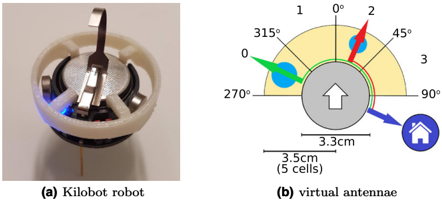
“1a), which are minimalistic robots widely employed in swarm robotics research, with very limited capabilities provided by a small range of sensors and actuators (Rubenstein et al. 2014a).”
BackgroundOptimality theory in evolutionary biology
Parker, G. A., & Smith, J. M. (1990) · Nature · doi:10.1038/348027a0 · Cited by 972 · cited 1×
“Engineering and biology share common core interests in the efficiency of behaviour-generating mechanisms (e.g. Parker and Smith 1990; Houston and McNamara 1999; Ferrante et al. 2013; Gauci et al. 2014; Özdemir et al. 2018), and scalability (e.g. Rubenstein et al. 2014b; Khaluf et al. 2017;…”
BackgroundThe self-organizing exploratory pattern of the argentine ant
Deneubourg, J. L., Aron, S., Goss, S., & Pasteels, J. M. (1990) · Journal of Insect Behavior · doi:10.1007/bf01417909 · Cited by 921 · cited 2×
“…best-quality food source available in the environment (Beckers et al. 1990, 1993; Reid et al. 2012; Shaffer et al. 2013), selecting the shortest path linking the food source to the nest (Goss et al. 1989; Deneubourg et al. 1990), and balancing predation risk and food quality (Nonacs and Dill 1990).”
BackgroundSelf-organized shortcuts in the Argentine ant
Goss, S., Aron, S., Deneubourg, J. L., & Pasteels, J. M. (1989) · Naturwissenschaften · doi:10.1007/bf00462870 · Cited by 919 · cited 3×
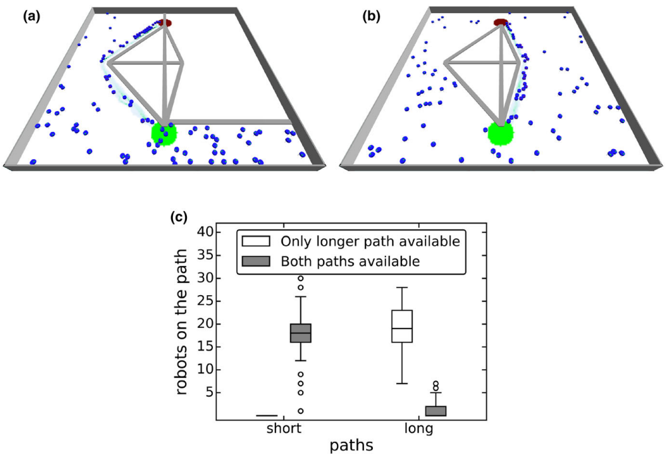
“Obstacle avoidance Figure 7b shows a screenshot of an experiment inspired by the well-known study of Goss et al. (1989) which showed that ants are able to exploit the shorter path in double-bridge experiments with branching paths of different lengths.”
BackgroundResultDeangelis, D. L. (1979) · Journal of Environmental Quality · doi:10.2134/jeq1979.00472425000800040038x · Cited by 836
Stephens, D. W., & Krebs, J. R. (1987) · Princeton University Press eBooks · doi:10.1515/9780691206790 · Cited by 606
ARGoS: a modular, parallel, multi-engine simulator for multi-robot systems
Pinciroli, C., Trianni, V., O’Grady, R., Pini, G., Brutschy, A., Brambilla, M., Mathews, N., Ferrante, E., Di Caro, G., Ducatelle, F., et al. (2012) · Swarm Intelligence · doi:10.1007/s11721-012-0072-5 · Cited by 551 · cited 1×
“The physics-based simulations were conducted with ARGoS (Pinciroli et al. 2012, 2018) which is a state-of-the-art swarm robotics simulator that accurately and efficiently simulates the Kilobots and the ARK system via a dedicated plug-in (Pinciroli et al. 2018).”
MethodModels of Adaptive Behaviour: an approach based on state
Houston, A. I., & McNamara, J. (1999) · Bristol Research (University of Bristol) · Cited by 471
Tsimring, L. S. (2014) · Reports on Progress in Physics · doi:10.1088/0034-4885/77/2/026601 · Cited by 452 · cited 3×
“A more recent study (Fujisawa et al. 2008, 2014) used ethanol for indirect communication signals between robots, with an ethanol pump and an ethanol sensor installed on each robot, which preserved the four characteristics of pheromone: evaporation, diffusion, locality (i.e. pheromone level is only…”
BackgroundMethodTraniello, J. F. A. (1989) · Annual Review of Entomology · doi:10.1146/annurev.en.34.010189.001203 · Cited by 440 · cited 2×
“Collective central-place foraging by super-organismal social insect colonies elegantly and scalably solves the problem of resource collection in a heterogeneous and uncertain environment (Olsson et al. 2008; Traniello 1989; Detrain and Deneubourg 2008).”
BackgroundMemory use in insect visual navigation
Collett, T. S., & Collett, M. (2002) · Nature Reviews Neuroscience · doi:10.1038/nrn872 · Cited by 394 · cited 4×
“Additionally, we assume that robots always know the direction to the depot [similarly to path integration in ants and in other social insects (Collett and Collett 2002; Bregy et al. 2008; Heinze et al. 2018)] and are able to detect walls in front of them.”
BackgroundResultInfluentialInformation Processing in Social Insects
(1999) · Birkhäuser Basel eBooks · doi:10.1007/978-3-0348-8739-7 · Cited by 366 · cited 1×
“There are, however, many ant species where the production of pheromone trails is crucial in the foraging process (Wilson 1962; Hölldobler and Wilson 1990; Detrain et al. 1999; Nicolis and Deneubourg 1999; Sumpter and Pratt 2003).”
BackgroundSwarm Robotics: A Formal Approach
Hamann, H. (2018) · doi:10.1007/978-3-319-74528-2 · Cited by 366 · cited 3×
“collectively solve foraging-like tasks in parallel (Labella et al. 2004; Hamann and Wörn 2006; Liu et al. 2006; Campo and Dorigo 2007; Winfield 2009; Berman et al. 2011; Pini et al. 2014; Reina et al. 2015a; Ferrante et al. 2015; Scheidler et al. 2016; Essche et al. 2015; Pitonakova et al. 2016, 2018; Hamann 2018b).”
BackgroundHoneybees maximize efficiency by not filling their crop
Schmid-Hempel, P., Kacelnik, A., & Houston, A. I. (1985) · Behavioral Ecology and Sociobiology · doi:10.1007/bf00299430 · Cited by 354 · cited 1×
“In honeybees, for example, there ismounting evidence thatmaximising energetic efficiency provides a better account of the observed foraging behaviour (Schmid-Hempel et al. 1985; Seeley 1986, 1994; Cox and Myerscough 2003; Houston and McNamara 2014; Baveco et al. 2016).”
BackgroundWilson, E. O. (1962) · Animal Behaviour · doi:10.1016/0003-3472(62)90141-0 · Cited by 341 · cited 2×
“There are, however, many ant species where the production of pheromone trails is crucial in the foraging process (Wilson 1962; Hölldobler and Wilson 1990; Detrain et al. 1999; Nicolis and Deneubourg 1999; Sumpter and Pratt 2003).”
BackgroundCollective decision making through food recruitment
Beckers, R., Deneubourg, J. L., Goss, S., & Pasteels, J. M. (1990) · Insectes Sociaux · doi:10.1007/bf02224053 · Cited by 338 · cited 3×
“Other evidence of adaptability in ants has been documented by Beckers et al. (1990) who showed that Tetramorium caespitum ants are able to refocus their foraging efforts from a previously selected lower-quality food source, to a newly available higher-quality food source.”
BackgroundPayton, D., Daily, M., Estowski, R., Howard, M., & Lee, C. (2001) · Autonomous Robots · doi:10.1023/a:1012411712038 · Cited by 336
Cuticular hydrocarbons inform task decisions
Greene, M. J., & Gordon, D. M. (2003) · Nature · doi:10.1038/423032a · Cited by 332 · cited 1×
“Forexample,redharvesterants( Pogonomyrmex barbatus ) do not rely on pheromone trails during foraging; rather, interactions between ants at the nest site regulate their foraging behaviour (Gordon 1991; Greene and Gordon 2003; Pagliara et al. 2018).”
BackgroundStop Signals Provide Cross Inhibition in Collective Decision-Making by Honeybee Swarms
Seeley, T. D., Visscher, P. K., Schlegel, T., Hogan, P. M., Franks, N. R., & Marshall, J. A. R. (2012) · Science · doi:10.1126/science.1210361 · Cited by 325 · cited 1×
“…i ) is inspired by similar abandonment behaviours observed in social insects [e.g. foraging ants (Shaffer et al. 2013) and house-hunting honeybees (Seeley et al. 2012)] and allows the robots to abandon exploiting source A i that required a long travel time t i (either because it is distant or has…”
BackgroundSelf-citationCentral Place Foraging in Starlings (Sturnus vulgaris). I. Patch Residence Time
Kacelnik, A. (1984) · The Journal of Animal Ecology · doi:10.2307/4357 · Cited by 313 · cited 3×
“If the animal is a central-place forager (Orians and Pearson 1979; Kacelnik 1984), then its nest is the central place and food needs to be transported from the food source to the nest, where it is consumed.”
BackgroundMethodOptimal traffic organization in ants under crowded conditions
Dussutour, A., Fourcassié, V., Helbing, D., & Deneubourg, J.-L. (2004) · Nature · doi:10.1038/nature02345 · Cited by 293 · cited 4×
“10a), which could be caused by physical ‘pushing’ between individuals, similarly to what is observed in some experiments of ants’ traffic organisation (Dussutour et al. 2004, 2005; Fourcassié et al. 2010).”
BackgroundInfluentialModels of Adaptive Behaviour: An Approach based on State
Bednekoff, P. A. (2000) · Animal Behaviour · doi:10.1006/anbe.1999.1337 · Cited by 292
Dussutour, A., & Simpson, S. J. (2009) · Current Biology · doi:10.1016/j.cub.2009.03.015 · Cited by 286 · cited 2×
“Controlling individuals through this simple PFSM leads to sophisticated collective foraging dynamics animal behaviour where individuals can assess the nutrient quality of the swarm’s reserves and compare against their own (Dussutour and Simpson 2009; Arganda et al. 2014).”
BackgroundSelf-organized structures in a superorganism: do ants “behave” like molecules?
DETRAIN, C., & DENEUBOURG, J. (2006) · Physics of Life Reviews · doi:10.1016/j.plrev.2006.07.001 · Cited by 276 · cited 2×
“In fact, Lasius niger ants only rely on indirect forms of negative feedback, which may arise from physical constraints at the food source (e.g. overcrowding or food depletion) or within the nest (e.g. filling of food reserve) (Detrain and Deneubourg 2006).”
BackgroundInternational Journal of Mechanical Engineering and Robotics Research
(2018) · International Journal of Mechanical Engineering and Robotics Research · doi:10.18178/ijmerr · Cited by 267
Social foraging by honeybees: how colonies allocate foragers among patches of flowers
Seeley, T. D. (1986) · Behavioral Ecology and Sociobiology · doi:10.1007/bf00295707 · Cited by 265 · cited 1×
“In honeybees, forexample,thereismountingevidencethatmaximisingenergeticefficiencyprovidesabetter accountoftheobservedforagingbehaviour(Schmid-Hempeletal.1985;Seeley1986,1994; CoxandMyerscough2003;HoustonandMcNamara2014;Bavecoetal.2016).”
Beckers, R., Deneubourg, J. L., & Goss, S. (1993) · Journal of Insect Behavior · doi:10.1007/bf01201674 · Cited by 253 · cited 5×
“…et al. 2004)] allows ant colonies to reach various collective patterns, such as selecting the best-quality food source available in the environment (Beckers et al. 1990, 1993; Reid et al. 2012; Shaffer et al. 2013), selecting the shortest path linking the food source to the nest (Goss et al. 1989;…”
BackgroundInfluentialHoney bee foragers as sensory units of their colonies
Seeley, T. D. (1994) · Behavioral Ecology and Sociobiology · doi:10.1007/bf00175458 · Cited by 228 · cited 1×
“In honeybees, forexample,thereismountingevidencethatmaximisingenergeticefficiencyprovidesabetter accountoftheobservedforagingbehaviour(Schmid-Hempeletal.1985;Seeley1986,1994; CoxandMyerscough2003;HoustonandMcNamara2014;Bavecoetal.2016).”
Kilobot: A low cost robot with scalable operations designed for collective behaviors
Rubenstein, M., Ahler, C., Hoff, N., Cabrera, A., & Nagpal, R. (2014) · Robotics and Autonomous Systems · doi:10.1016/j.robot.2013.08.006 · Cited by 220 · cited 2×
“1a), which are minimalistic robots widely employed in swarm robotics research, with very limited capabilities provided by a small range of sensors and actuators (Rubenstein et al. 2014a).”
BackgroundBehavioral Flexibility and the Foraging Ecology of Seed-Eating Ants
Gordon, D. M. (1991) · The American Naturalist · doi:10.1086/285223 · Cited by 217 · cited 2×
“For example, red harvester ants (Pogonomyrmex barbatus) do not rely on pheromone trails during foraging; rather, interactions between ants at the nest site regulate their foraging behaviour (Gordon 1991; Greene and Gordon 2003; Pagliara et al. 2018).”
BackgroundMolecular crowding creates traffic jams of kinesin motors on microtubules
Leduc, C., Padberg-Gehle, K., Varga, V., Helbing, D., Diez, S., & Howard, J. (2012) · Proceedings of the National Academy of Sciences · doi:10.1073/pnas.1107281109 · Cited by 211 · cited 1×
“The emergent bidirectional collective movement of foragers between sources and depot is affected by crowdingwhich is expected to reduce the efficiency of forage transportation from popular resources (Burd et al. 2002; Dussutour et al. 2004; Fourcassié et al. 2010; Banks 1999; Leduc et al. 2012).”
BackgroundMortality Risk vs. Food Quality Trade‐Offs in a Common Currency: Ant Patch Preferences
Nonacs, P., & Dill, L. M. (1990) · Ecology · doi:10.2307/1937596 · Cited by 211 · cited 1×
“…best-quality food source available in the environment (Beckers et al. 1990, 1993; Reid et al. 2012; Shaffer et al. 2013), selecting the shortest path linking the food source to the nest (Goss et al. 1989; Deneubourg et al. 1990), and balancing predation risk and food quality (Nonacs and Dill 1990).”
BackgroundPrinciples of insect path integration
Heinze, S., Narendra, A., & Cheung, A. (2018) · Current Biology · doi:10.1016/j.cub.2018.04.058 · Cited by 195 · cited 4×
“Additionally, we assume that robots always know the direction to the depot [similarly to path integration in ants and in other social insects (Collett and Collett 2002; Bregy et al. 2008; Heinze et al. 2018)] and are able to detect walls in front of them.”
BackgroundResultInfluentialCollective Decision-Making and Foraging Patterns in Ants and Honeybees
Detrain, C., & Deneubourg, J.-L. (2008) · Advances in Insect Physiology · doi:10.1016/s0065-2806(08)00002-7 · Cited by 174 · cited 1×
“Collective central-place foraging by super-organismal social insect colonies elegantly and scalably solves the problem of resource collection in a heterogeneous and uncertain environment (Olsson et al. 2008; Traniello 1989; Detrain and Deneubourg 2008).”
Background‘No entry’ signal in ant foraging
Robinson, E. J. H., Jackson, D. E., Holcombe, M., & Ratnieks, F. L. W. (2005) · Nature · doi:10.1038/438442a · Cited by 169 · cited 1×
“A remarkably interesting example is offered by Monomorium pharaonis ants which make use of repellent pheromone as a form of negative feedback (Stickland et al. 1999; Robinson et al. 2005, 2008; Detrain and Deneubourg 2006).”
BackgroundBuilding Terrain-Covering Ant Robots: A Feasibility Study
Svennebring, J., & Koenig, S. (2004) · Autonomous Robots · doi:10.1023/b:auro.0000025793.46961.f6 · Cited by 159 · cited 1×
“For example, one early solution was to install marker pens on robots so they could draw lines on the path as pheromone trails (Svennebring and Koenig 2004).”
BackgroundEmerging Patterns and Food Recruitment in Ants: an Analytical Study
Nicolis, S. C., & Deneubourg, J. L. (1999) · Journal of Theoretical Biology · doi:10.1006/jtbi.1999.0934 · Cited by 158 · cited 1×
“There are, however, many ant species where the production of pheromone trails is crucial in the foraging process (Wilson 1962; Hölldobler and Wilson 1990; Detrain et al. 1999; Nicolis and Deneubourg 1999; Sumpter and Pratt 2003).”
BackgroundTeamwork in Self-Organized Robot Colonies
Nouyan, S., Gross, R., Bonani, M., Mondada, F., & Dorigo, M. (2009) · IEEE Transactions on Evolutionary Computation · doi:10.1109/tevc.2008.2011746 · Cited by 157 · cited 4×
“Significant attention has been given to the use of indirect stigmergic communication to coordinate the collection of resources spread in the environment (Goss et al. 1992; Werger and Matarić 1996; Payton et al. 2001; Nouyan et al. 2009; Campo et al. 2010; Ducatelle et al. 2011b; Hoff et al. 2012; Purnamadjaja and Russ…”
BackgroundInfluentialA modelling framework for understanding social insect foraging
Sumpter, D. J. T., & Pratt, S. C. (2003) · Behavioral Ecology and Sociobiology · doi:10.1007/s00265-002-0549-0 · Cited by 156 · cited 3×
“There are, however, many ant species where the production of pheromone trails is crucial in the foraging process (Wilson 1962; Hölldobler and Wilson 1990; Detrain et al. 1999; Nicolis and Deneubourg 1999; Sumpter and Pratt 2003).”
BackgroundSelf-organized aggregation without computation
Gauci, M., Chen, J., Li, W., Dodd, T. J., & Groß, R. (2014) · The International Journal of Robotics Research · doi:10.1177/0278364914525244 · Cited by 146 · cited 4×
“Our results are complementary to other approaches to minimal controllers necessary for collective behaviour in the swarm robotics field (Gauci et al. 2014; Özdemir et al. 2018).”
BackgroundResultInfluentialFerrante, E., Turgut, A. E., Dorigo, M., & Huepe, C. (2013) · Physical Review Letters · doi:10.1103/physrevlett.111.268302 · Cited by 146 · cited 2×
“Engineering and biology share common core interests in the efficiency of behaviour-generating mechanisms (e.g. Parker and Smith 1990; Houston and McNamara 1999; Ferrante et al. 2013; Gauci et al. 2014; Özdemir et al. 2018), and scalability (e.”
Backgroundde, M. A. M., Ferrante, E., Scheidler, A., Pinciroli, C., Birattari, M., & Dorigo, M. (2011) · Swarm Intelligence · doi:10.1007/s11721-011-0062-z · Cited by 136
Evolution of Self-Organized Task Specialization in Robot Swarms
Ferrante, E., Turgut, A. E., Duéñez-Guzmán, E., Dorigo, M., & Wenseleers, T. (2015) · PLOS Computational Biology · doi:10.1371/journal.pcbi.1004273 · Cited by 123 · cited 1×
“…foraging-like tasks in parallel (Labella et al. 2004; Hamann and Wörn 2006; Liu et al. 2006; Campo and Dorigo 2007; Winfield 2009; Berman et al. 2011; Pini et al. 2014; Reina et al. 2015a; Ferrante et al. 2015; Scheidler et al. 2016; Essche et al. 2015; Pitonakova et al. 2016, 2018; Hamann 2018b).”
BackgroundA guide to central place effects in foraging
Olsson, O., Brown, J. S., & Helf, K. L. (2008) · Theoretical Population Biology · doi:10.1016/j.tpb.2008.04.005 · Cited by 123 · cited 1×
“Collective central-place foraging by super-organismal social insect colonies elegantly and scalably solves the problem of resource collection in a heterogeneous and uncertain environment (Olsson et al. 2008; Traniello 1989; Detrain and Deneubourg 2008).”
BackgroundAlice in Pheromone Land: An Experimental Setup for the Study of Ant-like Robots
Garnier, S., Tache, F., Combe, M., Grimal, A., & Théraulaz, G. (2007) · IEEE Swarm Intelligence Symposium · doi:10.1109/sis.2007.368024 · Cited by 123 · cited 4×
“Perhapsthemostpopularapproachinimplementingpheromonecommunicationisthrough a smart environment (Sugawara et al. 2004; Garnier et al. 2007; Hecker et al. 2012; Garnier et al. 2013; Arvin et al. 2015; Valentini et al. 2018), which has the capability to store and to supply virtual pheromone…”
BackgroundMethodInfluentialAnt foraging on complex trails: route learning and the role of trail pheromones inLasius niger
Czaczkes, T. J., Grüter, C., Ellis, L. V., Wood, E., & Ratnieks, F. L. W. (2012) · Journal of Experimental Biology · doi:10.1242/jeb.076570 · Cited by 120 · cited 1×
“1 Lasius niger ants follow a similar behaviour, laying pheromone trails on their way back to the nest while depositing a quantity of pheromone proportional to the quality of the foraged food (Portha et al. 2004; Czaczkes et al. 2013).”
BackgroundSelf-organized cooperation between robotic swarms
Ducatelle, F., Di, G. A., Pinciroli, C., & Gambardella, L. M. (2011) · Swarm Intelligence · doi:10.1007/s11721-011-0053-0 · Cited by 119 · cited 3×
“…some robots are tasked as static beacon robots (Goss et al. 1992; Werger and Matari´c 1996; Payton et al. 2001; Nouyan et al. 2009; Campo et al. 2010; Ducatelle et al. 2011b; Hoff et al. 2012), which have the functions of storing pheromone levels and communicating with other robots in their…”
BackgroundForaging currencies, metabolism and behavioural routines
Houston, A. I., & McNamara, J. M. (2014) · Journal of Animal Ecology · doi:10.1111/1365-2656.12096 · Cited by 116 · cited 7×
“Whereas the net rate of energy gain is computed as the difference between the forager’s gross rate of gain and its rate of energy expenditure, efficiency is derived by dividing gross rate of energy gain by rate of energy consumption (Houston and McNamara 2014).”
BackgroundMethodInfluentialTraffic Dynamics of the Leaf-Cutting Ant, Atta cephalotes
Burd, M., Archer, D. C., Aranwela, N., & Stradling, D. J. (2002) · The American Naturalist · doi:10.1086/338541 · Cited by 114 · cited 1×
“The emergent bidirectional collective movement of foragers between sources and depot is affected by crowdingwhich is expected to reduce the efficiency of forage transportation from popular resources (Burd et al. 2002; Dussutour et al. 2004; Fourcassié et al. 2010; Banks 1999; Leduc et al. 2012).”
BackgroundUsing robots to understand social behaviour
Mitri, S., Wischmann, S., Floreano, D., & Keller, L. (2013) · Biological Reviews · doi:10.1111/j.1469-185x.2012.00236.x · Cited by 114 · cited 2×
“Thisstudyfollowspreviousworkthatusedswarmroboticsasausefultoolinadvancing theunderstandingofbiologicalsystems(Garnier2011;Webb2012;Wischmannetal.2012; Mitri et al. 2013; Bose et al. 2017).”
BackgroundMethodNoise improves collective decision-making by ants in dynamic environments
Dussutour, A., Beekman, M., Nicolis, S. C., & Meyer, B. E. (2009) · Proceedings of the Royal Society B Biological Sciences · doi:10.1098/rspb.2009.1235 · Cited by 111 · cited 2×
“In addition to the ability of collective resource exploitation, adaptation to environmental fluctuations is a critically important ability for many biological organisms (Tsimring 2014), including foraging ants (Dussutour et al. 2009).”
BackgroundBose, T., Reina, A., & Marshall, J. A. R. (2017) · Current Opinion in Behavioral Sciences · doi:10.1016/j.cobeha.2017.03.004 · Cited by 111 · cited 1×
“Thisstudyfollowspreviousworkthatusedswarmroboticsasausefultoolinadvancing theunderstandingofbiologicalsystems(Garnier2011;Webb2012;Wischmannetal.2012; Mitri et al. 2013; Bose et al. 2017).”
BackgroundSelf-citationCollecting Behavior of Interacting Robots with Virtual Pheromone
Kazama, T., Sugawara, K., & Watanabe, T. (2008) · Springer eBooks · doi:10.1007/978-4-431-35873-2_34 · Cited by 104 · cited 4×
“Perhapsthemostpopularapproachinimplementingpheromonecommunicationisthrough a smart environment (Sugawara et al. 2004; Garnier et al. 2007; Hecker et al. 2012; Garnier et al. 2013; Arvin et al. 2015; Valentini et al. 2018), which has the capability to store and to supply virtual pheromone…”
BackgroundMethodInfluentialSelf-organised path formation in a swarm of robots
Sperati, V., Trianni, V., & Nolfi, S. (2011) · Swarm Intelligence · doi:10.1007/s11721-011-0055-y · Cited by 99 · cited 1×
“These issues can be overcome by the creation of mobile beacon robots, which can contribute to a main task as well as acting as beacons concurrently (Sperati et al. 2011; Ducatelle et al. 2011a).”
BackgroundRandom Walks in Swarm Robotics: An Experiment with Kilobots
Dimidov, C., Oriolo, G., & Trianni, V. (2016) · Lecture notes in computer science · doi:10.1007/978-3-319-44427-7_16 · Cited by 93 · cited 2×
“Due to the Kilobot’s limited capabilities (see Sect.3.2), the exploration is performed via an isotropic random walk which is a simple and efficient method to search for targets in an unknown environment (Dimidov et al. 2016).”
MethodInfluentialForaging behavior of interacting robots with virtual pheromone
Sugawara, K., Kazama, T., & Watanabe, T. (2005) · IEEE/RSJ International Conference on Intelligent Robots and Systems (IROS) · doi:10.1109/iros.2004.1389878 · Cited by 93
The ${k}$ -Unanimity Rule for Self-Organized Decision-Making in Swarms of Robots
Scheidler, A., Brutschy, A., Ferrante, E., & Dorigo, M. (2015) · IEEE Transactions on Cybernetics · doi:10.1109/tcyb.2015.2429118 · Cited by 88 · cited 2×
“7c. Similar double-bridge experimental setups have been emulated and investigated in previous swarm robotics studies such as Montes de Oca et al. 2010 and Scheidler et al. (2016), in which, however, the swarm behaviour and goal were different.”
BackgroundThe Practical Performance Analyst
Günther, N. J., & Jain, R. (1998) · Cited by 85
Scale invariance in natural and artificial collective systems: a review
Khaluf, Y., Ferrante, E., Simoens, P., & Huepe, C. (2017) · Journal of The Royal Society Interface · doi:10.1098/rsif.2017.0662 · Cited by 85 · cited 1×
“…biology share common core interests in the efficiency of behaviour-generating mechanisms (e.g. Parker and Smith 1990; Houston and McNamara 1999; Ferrante et al. 2013; Gauci et al. 2014; Özdemir et al. 2018), and scalability (e.g. Rubenstein et al. 2014b; Khaluf et al. 2017; Poissonnier et al. 2019).”
BackgroundBerman, S., Kumar, V., & Nagpal, R. (2011) · 2011 IEEE International Conference on Robotics and Automation · doi:10.1109/icra.2011.5980440 · Cited by 81 · cited 2×
“collectively solve foraging-like tasks in parallel (Labella et al. 2004; Hamann and Wörn 2006; Liu et al. 2006; Campo and Dorigo 2007; Winfield 2009; Berman et al. 2011; Pini et al. 2014; Reina et al. 2015a; Ferrante et al. 2015; Scheidler et al. 2016; Essche et al. 2015; Pitonakova et al. 2016, 2018; Hamann 2018b).”
BackgroundArtificial pheromone for path selection by a foraging swarm of robots
Campo, A., Gutiérrez, Á., Nouyan, S., Pinciroli, C., Longchamp, V., Garnier, S., & Dorigo, M. (2010) · Biological Cybernetics · doi:10.1007/s00422-010-0402-x · Cited by 81 · cited 4×
“…robotic systems, some robots are tasked as static beacon robots (Goss et al. 1992; Werger and Matari´c 1996; Payton et al. 2001; Nouyan et al. 2009; Campo et al. 2010; Ducatelle et al. 2011b; Hoff et al. 2012), which have the functions of storing pheromone levels and communicating with other…”
BackgroundInfluentialARK: Augmented Reality for Kilobots
Reina, A., Cope, A. J., Nikolaidis, E., Marshall, J. A. R., & Sabo, C. (2017) · IEEE Robotics and Automation Letters · doi:10.1109/lra.2017.2700059 · Cited by 76 · cited 11×
“…for virtual pheromone implementations (Sugawara et al. 2004; Garnier et al. 2007, 2013; Arvin et al. 2015; Valentini et al. 2018) , and (iii) augmented reality tools in which a virtual environment is sensed and acted on by robots using virtual sensors and actuators (Reina et al. 2015b, 2017).”
BackgroundMethodInfluentialSelf-citationFourcassié, V., Dussutour, A., & Deneubourg, J.-L. (2010) · Journal of Experimental Biology · doi:10.1242/jeb.031237 · Cited by 74 · cited 1×
“10a), which could be caused by physical ‘pushing’ between individuals, similarly to what is observed in some experiments of ants’ traffic organisation (Dussutour et al. 2004, 2005; Fourcassié et al. 2010).”
BackgroundFujisawa, R., Dobata, S., Sugawara, K., & Matsuno, F. (2014) · Swarm Intelligence · doi:10.1007/s11721-014-0097-z · Cited by 74 · cited 1×
“A more recent study (Fujisawa et al. 2008, 2014) used ethanol for indirect communication signals between robots, with an ethanol pump and an ethanol sensor installed on each robot, which preserved the four characteristics of pheromone: evaporation, diffusion, locality (i.e. pheromone level is only…”
MethodAntbots: A Feasible Visual Emulation of Pheromone Trails for Swarm Robots
Mayet, R., Roberz, J., Schmickl, T., & Crailsheim, K. (2010) · Lecture notes in computer science · doi:10.1007/978-3-642-15461-4_8 · Cited by 73 · cited 1×
“In (Mayet et al. 2010), a technique of energising phosphorescent paint using UV-LEDS mounted on E-Puck robots to mark the path, as well as sensors for picking up the glowing paint signal representing the pheromone trail, was presented.”
MethodPervasive pheromone-based interaction with RFID tags
Mamei, M., & Zambonelli, F. (2007) · ACM Transactions on Autonomous and Adaptive Systems · doi:10.1145/1242060.1242061 · Cited by 73 · cited 1×
“This category can be further divided into three classes: the usage of (i) radio-frequency identi-fication (RFID) tags (Mamei and Zambonelli 2005, 2007; Herianto et al. 2007; Herianto and Kurabayashi 2009; Bosien et al. 2012; Khaliq et al. 2014); (ii) simulated pheromone environments, using projected…”
BackgroundWinfield, A. F. T. (2009) · Springer eBooks · doi:10.1007/978-0-387-30440-3_217 · Cited by 73 · cited 2×
“collectively solve foraging-like tasks in parallel (Labella et al. 2004; Hamann and Wörn 2006; Liu et al. 2006; Campo and Dorigo 2007; Winfield 2009; Berman et al. 2011; Pini et al. 2014; Reina et al. 2015a; Ferrante et al. 2015; Scheidler et al. 2016; Essche et al. 2015; Pitonakova et al. 2016, 2018; Hamann 2018b).”
Backgroundvon Thienen, W., Metzler, D., Choe, D., & Witte, V. (2014) · Behavioral Ecology and Sociobiology · doi:10.1007/s00265-014-1770-3 · Cited by 72 · cited 2×
“Foraging ants, equipped with pheromone concentration sensors (Thienen et al. 2014), reach food sources by following the deposited pheromone trails with a preference to higher concentration trails (Hangartner 1969; Van Vorhis Key and Baker 1982; Choe et al. 2012).”
BackgroundHarvesting by a group of robots
Goss, S., Deneubourg, J., Bourgine, P., & Varela, E. Z. (1992) · Dépôt institutionnel de l'Université libre de Bruxelles (Université Libre de Bruxelles) · Cited by 71
Temporal organization of bi-directional traffic in the antLasius niger(L.)
Dussutour, A., Deneubourg, J., & Fourcassié, V. (2005) · Journal of Experimental Biology · doi:10.1242/jeb.01711 · Cited by 68 · cited 1×
“10a), which could be caused by physical ‘pushing’ between individuals, similarly to what is observed in some experiments of ants’ traffic organisation (Dussutour et al. 2004, 2005; Fourcassié et al. 2010).”
BackgroundEfficient Multi-foraging in Swarm Robotics
Campo, A., & Dorigo, M. (2007) · Springer eBooks · doi:10.1007/978-3-540-74913-4_70 · Cited by 67 · cited 2×
“collectively solve foraging-like tasks in parallel (Labella et al. 2004; Hamann and Wörn 2006; Liu et al. 2006; Campo and Dorigo 2007; Winfield 2009; Berman et al. 2011; Pini et al. 2014; Reina et al. 2015a; Ferrante et al. 2015; Scheidler et al. 2016; Essche et al. 2015; Pitonakova et al. 2016, 2018; Hamann 2018b).”
BackgroundInvestigation of Some Characteristics of Congested Flow
Banks, J. H. (1999) · Transportation Research Record Journal of the Transportation Research Board · doi:10.3141/1678-16 · Cited by 64 · cited 2×
“Theemergentbidirectionalcollectivemovementofforagersbetween sourcesanddepotisaffectedbycrowdingwhichisexpectedtoreducetheefficiencyofforage transportationfrompopularresources(Burdetal.2002;Dussutouretal.2004;Fourcassié etal.2010;Banks1999;Leducetal.2012).”
BackgroundCommunication assisted navigation in robotic swarms: Self-organization and cooperation
Ducatelle, F., Di, G. A., Pinciroli, C., Francesco Mondada, C., & Gambardella, L. M. (2011) · IEEE/RSJ International Conference on Intelligent Robots and Systems (IROS) · doi:10.1109/iros.2011.6094454 · Cited by 64 · cited 3×
“…some robots are tasked as static beacon robots (Goss et al. 1992; Werger and Matari´c 1996; Payton et al. 2001; Nouyan et al. 2009; Campo et al. 2010; Ducatelle et al. 2011b; Hoff et al. 2012), which have the functions of storing pheromone levels and communicating with other robots in their…”
BackgroundRecruitment Strategies and Colony Size in Ants
Planqué, R., van den Berg, J. B., & Franks, N. R. (2010) · PLoS ONE · doi:10.1371/journal.pone.0011664 · Cited by 63 · cited 1×
“While others have previously considered the effect of colony size on recruitment strategy (Planqué et al. 2010; Pagliara et al. 2018; Mayya et al. 2019), our analysis instead assumes the recruitment strategy, and considers the optimal distribution.”
BackgroundNest-mark orientation versus vector navigation in desert ants
Bregy, P., Sommer, S., & Wehner, R. (2008) · Journal of Experimental Biology · doi:10.1242/jeb.018036 · Cited by 63 · cited 3×
“Additionally, we assume that robots always know the direction to the depot [similarly to path integration in ants and in other social insects (Collett and Collett 2002; Bregy et al. 2008; Heinze et al. 2018)] and are able to detect walls in front of them.”
BackgroundResultLinear recruitment leads to allocation and flexibility in collective foraging by ants
Shaffer, Z., Sasaki, T., & Pratt, S. C. (2013) · Animal Behaviour · doi:10.1016/j.anbehav.2013.08.014 · Cited by 62 · cited 11×
“T. rugatulus ants select the best-quality food source in case of two unequal-quality sources, exploit equally the two sources if they have equal qualities, and refocus their foraging efforts in case of changes in relative qualities (Shaffer et al. 2013).”
BackgroundResultInfluentialReina, A., Miletitch, R., Dorigo, M., & Trianni, V. (2015) · Swarm Intelligence · doi:10.1007/s11721-015-0105-y · Cited by 61 · cited 2×
“…foraging-like tasks in parallel (Labella et al. 2004; Hamann and Wörn 2006; Liu et al. 2006; Campo and Dorigo 2007; Winfield 2009; Berman et al. 2011; Pini et al. 2014; Reina et al. 2015a; Ferrante et al. 2015; Scheidler et al. 2016; Essche et al. 2015; Pitonakova et al. 2016, 2018; Hamann 2018b).”
BackgroundSelf-citationHow food type and brood influence foraging decisions of Lasius niger scouts
Portha, S., Deneubourg, J., & Detrain, C. (2004) · Animal Behaviour · doi:10.1016/j.anbehav.2003.10.016 · Cited by 60 · cited 3×
“The modulation of positive feedback [e.g. as a function of the source quality (Beckers et al. 1993; Portha et al. 2004; Shaffer et al. 2013) or footprint frequency (Devigne et al. 2004)] allows ant colonies to reach various collective patterns, such as selecting the best-quality food source…”
BackgroundFormica ex Machina: Ant Swarm Foraging from Physical to Virtual and Back Again
Hecker, J. P., Letendre, K. A., Stolleis, K. A., Washington, D., & Moses, M. E. (2012) · Lecture notes in computer science · doi:10.1007/978-3-642-32650-9_25 · Cited by 59 · cited 2×
“Perhapsthemostpopularapproachinimplementingpheromonecommunicationisthrough a smart environment (Sugawara et al. 2004; Garnier et al. 2007; Hecker et al. 2012; Garnier et al. 2013; Arvin et al. 2015; Valentini et al. 2018), which has the capability to store and to supply virtual pheromone…”
BackgroundRobinson, E. J. H., Ratnieks, F. L. W., & Holcombe, M. (2008) · Journal of Theoretical Biology · doi:10.1016/j.jtbi.2008.08.015 · Cited by 58 · cited 1×
“A remarkably interesting example is offered by Monomorium pharaonis ants which make use of repellent pheromone as a form of negative feedback (Stickland et al. 1999; Robinson et al. 2005, 2008; Detrain and Deneubourg 2006).”
BackgroundGarnier, S., Combe, M., Jost, C., & Theraulaz, G. (2013) · PLoS Computational Biology · doi:10.1371/journal.pcbi.1002903 · Cited by 58 · cited 6×
“Perhaps themost popular approach in implementing pheromone communication is through a smart environment (Sugawara et al. 2004; Garnier et al. 2007; Hecker et al. 2012; Garnier et al. 2013; Arvin et al. 2015; Valentini et al. 2018), which has the capability to store and to supply virtual pheromone information to robot…”
BackgroundMethodInfluential‘Lazy’ in nature: ant colony time budgets show high ‘inactivity’ in the field as well as in the lab
Charbonneau, D., Hillis, N., & Dornhaus, A. (2014) · Insectes Sociaux · doi:10.1007/s00040-014-0370-6 · Cited by 57 · cited 2×
“Therefore, the swarm incurred a constant cost independent of the collections (this would be different if, as ants do, some individuals would stop exploration to save energy (Charbonneau et al. 2015), or to avoid overcrowding as discussed above).”
BackgroundHamann, H. (2013) · Swarm Intelligence · doi:10.1007/s11721-013-0080-0 · Cited by 56 · cited 3×
“…environments, using projected light or other custom hardware for virtual pheromone implementations (Sugawara et al. 2004; Garnier et al. 2007, 2013; Arvin et al. 2015; Valentini et al. 2018) , and (iii) augmented reality tools in which a virtual environment is sensed and acted on by robots…”
BackgroundMethodRegulation of harvester ant foraging as a closed-loop excitable system
Pagliara, R., Gordon, D. M., & Leonard, N. E. (2018) · PLoS Computational Biology · doi:10.1371/journal.pcbi.1006200 · Cited by 55 · cited 6×
“While others have previously considered the effect of colony size on recruitment strategy (Planqué et al. 2010; Pagliara et al. 2018; Mayya et al. 2019), our analysis instead assumes the recruitment strategy, and considers the optimal distribution.”
BackgroundInfluentialGuiding robots’ behaviors using pheromone communication
Purnamadjaja, A. H., & Russell, R. A. (2007) · Autonomous Robots · doi:10.1007/s10514-007-9035-x · Cited by 53 · cited 3×
“Significant attention has been given to the use of indirect stigmergic communication to coordinate the collection of resources spread in the environment (Goss et al. 1992; Werger and Matarić 1996; Payton et al. 2001; Nouyan et al. 2009; Campo et al. 2010; Ducatelle et al. 2011b; Hoff et al. 2012; Purnamadjaja and Russ…”
BackgroundTrail Pheromone of the Argentine Ant, Linepithema humile (Mayr) (Hymenoptera: Formicidae)
Choe, D., Villafuerte, D. B., & Tsutsui, N. D. (2012) · PLoS ONE · doi:10.1371/journal.pone.0045016 · Cited by 53 · cited 2×
“Foraging ants, equipped with pheromone concentration sensors (Thienen et al. 2014), reach food sources by following the deposited pheromone trails with a preference to higher concentration trails (Hangartner 1969; Van Vorhis Key and Baker 1982; Choe et al. 2012).”
BackgroundCOX, M. D., & Myerscough, M. R. (2003) · Journal of Theoretical Biology · doi:10.1016/s0022-5193(03)00085-7 · Cited by 52 · cited 1×
“In honeybees, for example, there ismounting evidence thatmaximising energetic efficiency provides a better account of the observed foraging behaviour (Schmid-Hempel et al. 1985; Seeley 1986, 1994; Cox and Myerscough 2003; Houston and McNamara 2014; Baveco et al. 2016).”
BackgroundKilogrid: a novel experimental environment for the Kilobot robot
Valentini, G., Antoun, A., Trabattoni, M., Wiandt, B., Tamura, Y., Hocquard, E., Trianni, V., & Dorigo, M. (2018) · Swarm Intelligence · doi:10.1007/s11721-018-0155-z · Cited by 52 · cited 4×
“Two implementations of this technology have been proposed in recent years: the augmented reality for Kilobots (ARK) by Reina et al. (2017) and the Kilogrid by Valentini et al. (2018).”
BackgroundMethodInfluentialWebb, B. (2012) · Philosophical Transactions of the Royal Society B: Biological Sciences · doi:10.1098/rstb.2012.0218 · Cited by 50 · cited 2×
“Thisstudyfollowspreviousworkthatusedswarmroboticsasausefultoolinadvancing theunderstandingofbiologicalsystems(Garnier2011;Webb2012;Wischmannetal.2012; Mitri et al. 2013; Bose et al. 2017).”
BackgroundMethodPositive and negative incentive contrasts lead to relative value perception in ants
Wendt, S., Strunk, K. S., Heınze, J., Roider, A., & Czaczkes, T. J. (2019) · eLife · doi:10.7554/elife.45450 · Cited by 49
Strategies for Energy Optimisation in a Swarm of Foraging Robots
Liu, W., Winfield, A. F. T., Sa, J., Chen, J., & Dou, L. (2007) · Lecture notes in computer science · doi:10.1007/978-3-540-71541-2_2 · Cited by 48 · cited 2×
“collectively solve foraging-like tasks in parallel (Labella et al. 2004; Hamann and Wörn 2006; Liu et al. 2006; Campo and Dorigo 2007; Winfield 2009; Berman et al. 2011; Pini et al. 2014; Reina et al. 2015a; Ferrante et al. 2015; Scheidler et al. 2016; Essche et al. 2015; Pitonakova et al. 2016, 2018; Hamann 2018b).”
BackgroundQuality-Sensitive Foraging by a Robot Swarm Through Virtual Pheromone Trails
Llenas, A. F., Talamali, M. S., Xu, X., Marshall, J. A. R., & Reina, A. (2018) · Lecture notes in computer science · doi:10.1007/978-3-030-00533-7_11 · Cited by 47 · cited 7×
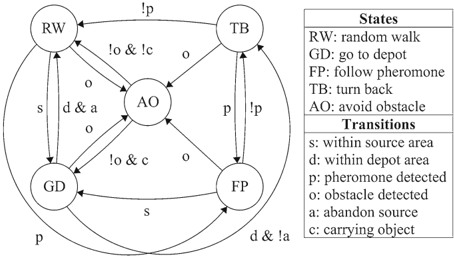
“Compared with previous studies (Font Llenas et al. 2018), the robot’s behaviour has been enriched through the inclusion of obstacle avoidance (state AO in Fig 2).”
BackgroundMethodResultInfluentialSelf-citationOut of sight but not out of mind: modulation of recruitment according to home range marking in ants
Devigne, C., Renon, A. J., & Detrain, C. (2004) · Animal Behaviour · doi:10.1016/j.anbehav.2003.09.012 · Cited by 46 · cited 2×
“2013) or footprint frequency (Devigne et al. 2004)] allows ant colonies to reach various collective patterns, such as selecting the bestquality food source available in the environment (Beckers et al.”
BackgroundInformation flow principles for plasticity in foraging robot swarms
Pitonakova, L., Crowder, R., & Bullock, S. (2016) · Swarm Intelligence · doi:10.1007/s11721-016-0118-1 · Cited by 46 · cited 1×
“…foraging-like tasks in parallel (Labella et al. 2004; Hamann and Wörn 2006; Liu et al. 2006; Campo and Dorigo 2007; Winfield 2009; Berman et al. 2011; Pini et al. 2014; Reina et al. 2015a; Ferrante et al. 2015; Scheidler et al. 2016; Essche et al. 2015; Pitonakova et al. 2016, 2018; Hamann 2018b).”
BackgroundRobotic "Food" Chains: Externalization of State and Program for Minimal-Agent Foraging
Werger, B. B., & Matarić, M. J. (1996) · The MIT Press eBooks · doi:10.7551/mitpress/3118.003.0075 · Cited by 45
Key, S. E. V. V., & Baker, T. C. (1982) · Journal of Chemical Ecology · doi:10.1007/bf00984000 · Cited by 44 · cited 1×
“Foraging ants, equipped with pheromone concentration sensors (Thienen et al. 2014), reach food sources by following the deposited pheromone trails with a preference to higher concentration trails (Hangartner 1969; Van Vorhis Key and Baker 1982; Choe et al. 2012).”
BackgroundSimulating Kilobots Within ARGoS: Models and Experimental Validation
Pinciroli, C., Talamali, M. S., Reina, A., Marshall, J. A. R., & Trianni, V. (2018) · Lecture notes in computer science · doi:10.1007/978-3-030-00533-7_14 · Cited by 44 · cited 3×
“2012, 2018) which is a state-of-the-art swarm robotics simulator that accurately and efficiently simulates the Kilobots and the ARK system via a dedicated plug-in (Pinciroli et al. 2018).”
BackgroundMethodSelf-citationWischmann, S., Floreano, D., & Keller, L. (2012) · Proceedings of the National Academy of Sciences · doi:10.1073/pnas.1104267109 · Cited by 43 · cited 1×
“Thisstudyfollowspreviousworkthatusedswarmroboticsasausefultoolinadvancing theunderstandingofbiologicalsystems(Garnier2011;Webb2012;Wischmannetal.2012; Mitri et al. 2013; Bose et al. 2017).”
BackgroundPhysical deployment of digital pheromones through RFID technology
Mamei, M., & Zambonelli, F. (2005) · IEEE Swarm Intelligence Symposium · doi:10.1109/sis.2005.1501633 · Cited by 43
Distributed Colony-Level Algorithm Switching for Robot Swarm Foraging
Hoff, N. R., Wood, R. J., & Nagpal, R. (2012) · Springer tracts in advanced robotics · doi:10.1007/978-3-642-32723-0_30 · Cited by 41 · cited 2×
“Significant attention has been given to the use of indirect stigmergic communication to coordinate the collection of resources spread in the environment (Goss et al. 1992; Werger and Matarić 1996; Payton et al. 2001; Nouyan et al. 2009; Campo et al. 2010; Ducatelle et al. 2011b; Hoff et al. 2012; Purnamadjaja and Russ…”
BackgroundDependency by Concentration of Pheromone Trail for Multiple Robots
Fujisawa, R., Dobata, S., Kubota, D., Imamura, H., & Matsuno, F. (2008) · ANTS Conference · doi:10.1007/978-3-540-87527-7_28 · Cited by 39 · cited 1×
“A more recent study (Fujisawa et al. 2008, 2014) used ethanol for indirect communication signals between robots, with an ethanol pump and an ethanol sensor installed on each robot, which preserved the four characteristics of pheromone: evaporation, diffusion, locality (i.e. pheromone level is only…”
MethodEfficiency and Task Allocation in Prey Retrieval
Labella, T. H., Dorigo, M., & Deneubourg, J. (2004) · Lecture notes in computer science · doi:10.1007/978-3-540-27835-1_21 · Cited by 38 · cited 2×
“collectively solve foraging-like tasks in parallel (Labella et al. 2004; Hamann and Wörn 2006; Liu et al. 2006; Campo and Dorigo 2007; Winfield 2009; Berman et al. 2011; Pini et al. 2014; Reina et al. 2015a; Ferrante et al. 2015; Scheidler et al. 2016; Essche et al. 2015; Pitonakova et al. 2016, 2018; Hamann 2018b).”
BackgroundArtificial pheromone system using RFID for navigation of autonomous robots
Herianto, H., Sakakibara, T., & Kurabayashi, D. (2007) · Journal of Bionic Engineering · doi:10.1016/s1672-6529(07)60038-9 · Cited by 38 · cited 2×
“This category can be further divided into three classes: the usage of (i) radio-frequency identification (RFID) tags (Mamei and Zambonelli 2005, 2007; Herianto et al. 2007; Herianto and Kurabayashi 2009; Bosien et al. 2012; Khaliq et al. 2014); (ii) simulated pheromone environments, using projected light or other cust…”
BackgroundFrom Ants to Robots and Back: How Robotics Can Contribute to the Study of Collective Animal Behavior
Garnier, S. (2011) · Studies in computational intelligence · doi:10.1007/978-3-642-20760-0_5 · Cited by 36 · cited 2×
“Thisstudyfollowspreviousworkthatusedswarmroboticsasausefultoolinadvancing theunderstandingofbiologicalsystems(Garnier2011;Webb2012;Wischmannetal.2012; Mitri et al. 2013; Bose et al. 2017).”
BackgroundMethodCollective choice in ants: The role of protein and carbohydrates ratios
Arganda, S., Nicolis, S. C., Perochain, A., Péchabadens, C., Latil, G., & Dussutour, A. (2014) · Journal of Insect Physiology · doi:10.1016/j.jinsphys.2014.04.002 · Cited by 35 · cited 2×
“Controlling individuals through this simple PFSM leads to sophisticated collective foraging dynamics animal behaviour where individuals can assess the nutrient quality of the swarm’s reserves and compare against their own (Dussutour and Simpson 2009; Arganda et al. 2014).”
BackgroundThe Information-Cost-Reward framework for understanding robot swarm foraging
Pitonakova, L., Crowder, R., & Bullock, S. (2017) · Swarm Intelligence · doi:10.1007/s11721-017-0148-3 · Cited by 35 · cited 1×
“…foraging-like tasks in parallel (Labella et al. 2004; Hamann and Wörn 2006; Liu et al. 2006; Campo and Dorigo 2007; Winfield 2009; Berman et al. 2011; Pini et al. 2014; Reina et al. 2015a; Ferrante et al. 2015; Scheidler et al. 2016; Essche et al. 2015; Pitonakova et al. 2016, 2018; Hamann 2018b).”
BackgroundAn Analytical and Spatial Model of Foraging in a Swarm of Robots
Hamann, H., & Wörn, H. (2007) · Lecture Notes in Computer Science · doi:10.1007/978-3-540-71541-2_4 · Cited by 32 · cited 2×
“collectively solve foraging-like tasks in parallel (Labella et al. 2004; Hamann and Wörn 2006; Liu et al. 2006; Campo and Dorigo 2007; Winfield 2009; Berman et al. 2011; Pini et al. 2014; Reina et al. 2015a; Ferrante et al. 2015; Scheidler et al. 2016; Essche et al. 2015; Pitonakova et al. 2016, 2018; Hamann 2018b).”
BackgroundStigmergic algorithms for multiple minimalistic robots on an RFID floor
Khaliq, A. A., Rocco, M. D., & Saffiotti, A. (2014) · Swarm Intelligence · doi:10.1007/s11721-014-0096-0 · Cited by 32 · cited 2×
“This category can be further divided into three classes: the usage of (i) radio-frequency identification (RFID) tags (Mamei and Zambonelli 2005, 2007; Herianto et al. 2007; Herianto and Kurabayashi 2009; Bosien et al. 2012; Khaliq et al. 2014); (ii) simulated pheromone environments, using projected light or other cust…”
BackgroundReid, C. R., Latty, T. M., & Beekman, M. (2012) · Animal Behaviour · doi:10.1016/j.anbehav.2012.09.036 · Cited by 31 · cited 2×
“…to reach various collective patterns, such as selecting the best-quality food source available in the environment (Beckers et al. 1990, 1993; Reid et al. 2012; Shaffer et al. 2013), selecting the shortest path linking the food source to the nest (Goss et al. 1989; Deneubourg et al. 1990),…”
BackgroundOptimal Foraging in Seed‐Harvester Ants: Computer‐Aided Simulation
López, J. L. R. (1987) · Ecology · doi:10.2307/1939855 · Cited by 30 · cited 2×
“Anotherstudyinvestigatingseed-harvesterants, whichalwayscarryexactlyoneseed,madeuseofadifferentcurrencyinvolvingtheseed masstostudyoptimalforaging(López1987).”
BackgroundBaveco, J. M., Focks, A., Belgers, D. J. M., der Steen, J. J. M. V., Boesten, J. J. T. I., & Roessink, I. (2016) · PeerJ · doi:10.7717/peerj.2293 · Cited by 29 · cited 1×
“In honeybees, forexample,thereismountingevidencethatmaximisingenergeticefficiencyprovidesabetter accountoftheobservedforagingbehaviour(Schmid-Hempeletal.1985;Seeley1986,1994; CoxandMyerscough2003;HoustonandMcNamara2014;Bavecoetal.2016).”
Augmented reality for robots: Virtual sensing technology applied to a swarm of e-pucks
Reina, A., Salvaro, M., Francesca, G., Garattoni, L., Pinciroli, C., Dorigo, M., & Birattari, M. (2015) · NASA/ESA Conference on Adaptive Hardware and Systems (AHS) · doi:10.1109/ahs.2015.7231154 · Cited by 26 · cited 2×
“…foraging-like tasks in parallel (Labella et al. 2004; Hamann and Wörn 2006; Liu et al. 2006; Campo and Dorigo 2007; Winfield 2009; Berman et al. 2011; Pini et al. 2014; Reina et al. 2015a; Ferrante et al. 2015; Scheidler et al. 2016; Essche et al. 2015; Pitonakova et al. 2016, 2018; Hamann 2018b).”
BackgroundSelf-citationLeaf-cutting ants tease optimal foraging theorists
Kacelnik, A. (1993) · Trends in Ecology & Evolution · doi:10.1016/0169-5347(93)90215-b · Cited by 26 · cited 2×
“However, optimalforagingtheorydoesnotalwaysapplytorealsystems,ashas,forinstance,been notedforleaf-cuttingants(Kacelnik1993).”
BackgroundPini, G., Brutschy, A., Scheidler, A., Dorigo, M., & Birattari, M. (2014) · Artificial Life · doi:10.1162/artl_a_00132 · Cited by 26 · cited 2×
“collectively solve foraging-like tasks in parallel (Labella et al. 2004; Hamann and Wörn 2006; Liu et al. 2006; Campo and Dorigo 2007; Winfield 2009; Berman et al. 2011; Pini et al. 2014; Reina et al. 2015a; Ferrante et al. 2015; Scheidler et al. 2016; Essche et al. 2015; Pitonakova et al. 2016, 2018; Hamann 2018b).”
BackgroundTowards Swarm Calculus: Universal Properties of Swarm Performance and Collective Decisions
Hamann, H. (2012) · Lecture notes in computer science · doi:10.1007/978-3-642-32650-9_15 · Cited by 25 · cited 1×
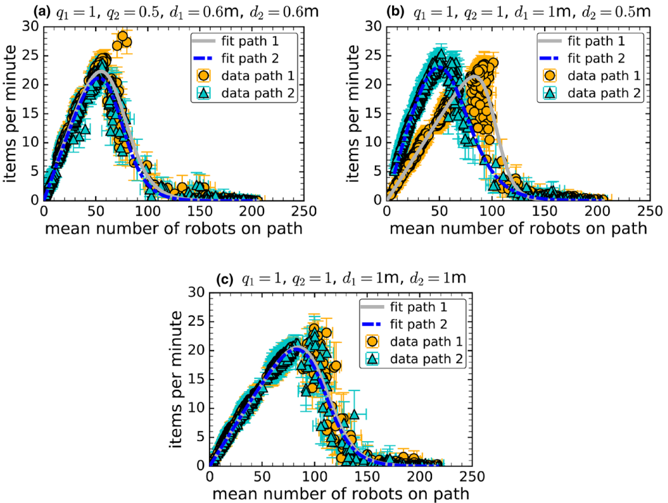
“This type of curve is widespread in several natural and artificial systems and is often indicated as Universal Scalability Law (Gunther 2000; Krause et al. 2002; Hamann 2012, 2013, 2018a).”
BackgroundVoluntary Retreat for Decentralized Interference Reduction in Robot Swarms
Mayya, S., Pierpaoli, P., & Egerstedt, M. (2019) · Proceedings - IEEE International Conference on Robotics and Automation/Proceedings · doi:10.1109/icra.2019.8794124 · Cited by 23 · cited 2×
“While others have previously considered the effect of colony size on recruitment strategy (Planqué et al. 2010; Pagliara et al. 2018; Mayya et al. 2019), our analysis instead assumes the recruitment strategy, and considers the optimal distribution.”
BackgroundOrientierung vonLasius fuliginosus Latr. an einer Gabelung der Geruchsspur
Hangartner, W. (1969) · Insectes Sociaux · doi:10.1007/bf02224462 · Cited by 22 · cited 1×
“Foraging ants, equipped with pheromone concentration sensors (Thienen et al. 2014), reach food sources by following the deposited pheromone trails with a preference to higher concentration trails (Hangartner 1969; Van Vorhis Key and Baker 1982; Choe et al. 2012).”
BackgroundFinding Consensus Without Computation
Ozdemir, A., Gauci, M., Bonnet, S., & Gros, R. (2018) · IEEE Robotics and Automation Letters · doi:10.1109/lra.2018.2795640 · Cited by 22 · cited 4×
“Our results are complementary to other approaches to minimal controllers necessary for collective behaviour in the swarm robotics field (Gauci et al. 2014; Özdemir et al. 2018).”
BackgroundResultInfluentialHamann, H. (2018) · Lecture notes in computer science · doi:10.1007/978-3-319-77610-1_3 · Cited by 21 · cited 2×
“…foraging-like tasks in parallel (Labella et al. 2004; Hamann and Wörn 2006; Liu et al. 2006; Campo and Dorigo 2007; Winfield 2009; Berman et al. 2011; Pini et al. 2014; Reina et al. 2015a; Ferrante et al. 2015; Scheidler et al. 2016; Essche et al. 2015; Pitonakova et al. 2016, 2018; Hamann 2018b).”
BackgroundEffect of density on traffic and velocity on trunk trails of Formica pratensis
Hönicke, C., Bliss, P., & Moritz, R. F. A. (2015) · Die Naturwissenschaften · doi:10.1007/s00114-015-1267-6 · Cited by 20 · cited 1×
“Similarly, our study of swarm size, and the scalability of foraging success, should interest both biologists and engineers, although it is worth noting that at least in some species of ants congestion is much less of a problem compared to robots (Hönicke et al. 2015; Poissonnier et al. 2019).”
BackgroundHerianto, H., & Kurabayashi, D. (2009) · Proceedings - IEEE International Conference on Robotics and Automation/Proceedings · doi:10.1109/robot.2009.5152405 · Cited by 20 · cited 2×
“This category can be further divided into three classes: the usage of (i) radio-frequency identification (RFID) tags (Mamei and Zambonelli 2005, 2007; Herianto et al. 2007; Herianto and Kurabayashi 2009; Bosien et al. 2012; Khaliq et al. 2014); (ii) simulated pheromone environments, using projected light or other cust…”
BackgroundBalancing organization and flexibility in foraging dynamics
Tabone, M. D., Ermentrout, B., & Doiron, B. (2010) · Journal of Theoretical Biology · doi:10.1016/j.jtbi.2010.07.004 · Cited by 18 · cited 2×
“positive feedback) are generally in opposition to those that allow adaptation and flexibility (Tabone et al. 2010; Tsimring 2014); therefore, organisms showing adaptability are generally capable of a more complex behaviour.”
BackgroundModels of information flow in ant foraging: the benefits of both attractive and repulsive signals
Stickland, T. R., Britton, N. F., & Franks, N. R. (1999) · Birkhäuser Basel eBooks · doi:10.1007/978-3-0348-8739-7_5 · Cited by 16 · cited 1×
“A remarkably interesting example is offered by Monomorium pharaonis ants which make use of repellent pheromone as a form of negative feedback (Stickland et al. 1999; Robinson et al. 2005, 2008; Detrain and Deneubourg 2006).”
BackgroundRelative value perception in an insect: positive and negative incentive contrasts in antsPreprint
Wendt, S., Strunk, K. S., Heinze, J., et al. (2018) · bioRxiv (Cold Spring Harbor Laboratory) · doi:10.1101/330241 · Cited by 7 · cited 1×
“…an adaptive strategy allows the swarm to exploit resources as a function of the their relative qualities in a range adapted to the environment the relative quality of food sources, rather than to an absolute quality range, has been recently documented also in foraging ants (Wendt et al. 2018).”
BackgroundApproaches to fast sequential inventory and path following in RFID-enriched environments
Bosien, A., Turau, V., & Zambonelli, F. (2012) · International Journal of Radio Frequency Identification Technology and Applications · doi:10.1504/ijrfita.2012.044649 · Cited by 6 · cited 2×
“…the usage of (i) radio-frequency identi-fication (RFID) tags (Mamei and Zambonelli 2005, 2007; Herianto et al. 2007; Herianto and Kurabayashi 2009; Bosien et al. 2012; Khaliq et al. 2014); (ii) simulated pheromone environments, using projected light or other custom hardware for virtual pheromone…”
BackgroundA Soft-Bodied Modular Reconfigurable Robotic System Composed of Interconnected Kilobots
Pratissoli, F., Reina, A., Lopes, Y. K., Sabattini, L., & Groß, R. (2019) · International Symposium on Multi-Robot and Multi-Agent Systems (MRS) · doi:10.1109/mrs.2019.8901061 · Cited by 6
Self-citationEnvironmental factors promoting the evolution of recruitment strategies in swarms of foraging robots
Essche, S. V., Ferrante, E., Turgut, A. E., van Lon, R. R. S., Holvoet, T., & Wenseleers, T. (2015) · Lirias · Cited by 3
Author response: Experimental investigation of ant traffic under crowded conditions
Poissonnier, L., Motsch, S., Jacques Gautrais, A., Buhl, C., & Dussutour, A. (2019) · eLife · doi:10.7554/elife.48945.024 · Cited by 2
Environmental factors promoting the evolution of recruitment strategies in swarms of foraging robots
Essche, S. V., Ferrante, E., Turgut, A. E., Lon, R. V., Holvoet, T., & Wenseleers, T. (2015) · Data Archiving and Networked Services (DANS) · Cited by 2
Research works printed but not linked: 2
- In M. Dorigo, et al. (Eds.), Swarm intelligence (ANTS 2016), LNCS (Vol. 9882, pp. 185-196). Berlin: Springer.
- Orians, G. H., & Pearson, N. E. (1979). On the theory of central place foraging. In D. J. Horn, R. D. Mitchell, & G. R. Stairs (Eds.), Analysis of ecological systems (pp. 154-177). Columbus: The Ohio State University Press.
Cited by
Swarm Robotics: Past, Present, and Future [Point of View]
Dorigo, M., Theraulaz, G., & Trianni, V. (2021) · Proceedings of the IEEE · doi:10.1109/jproc.2021.3072740 · Cited by 431
“Kilobots were conceived to support the first demonstration of a large robot swarm designed for shape formation [31] and have been later used for several successful studies, allowing swarm robotics to be demonstrated in physical settings with hundreds of robots [32]–[34].”
BackgroundAugmented Reality for Robotics: A Review
Makhataeva, Z., & Varol, H. (2020) · Robotics · doi:10.3390/robotics9020021 · Cited by 266
“The study on the collective foraging behavior continued [122], where behaviors of around 200 Kilobots having access to the sensing data from the virtual sensors and actuators were studied.”
BackgroundWhen less is more: Robot swarms adapt better to changes with constrained communication
Talamali, M. S., Saha, A., Marshall, J. A. R., & Reina, A. (2021) · Science Robotics · doi:10.1126/scirobotics.abf1416 · Cited by 142
“Value sensitivity has been predicted and observed in a variety of natural systems (26, 27, 60, 61) and engineered in robot swarms (9, 28, 62) in a variety of processes, such as decision-making or foraging.”
Self-citationSwarm Robotics: A Perspective on the Latest Reviewed Concepts and Applications
Dias, P. G. F., Silva, M. C., Filho, G. P. R., Vargas, P. A., Cota, L. P., & Pessin, G. (2021) · Sensors · doi:10.3390/s21062062 · Cited by 152
“Talamali et al. [117] introduce a cooperative foraging system supported by virtual pheromones, testing with essays, and swarms of up to 200 physical agents.”
BackgroundSwarm Robotics: Simulators, Platforms and Applications Review
Calderón-Arce, C., Brenes-Torres, J. C., & Solís-Ortega, R. (2022) · Computation · doi:10.3390/computation10060080 · Cited by 54
“Talamali et al. in [63] propose a collective foraging system based on virtual pheromones.”
Background
Metadata
- Authors
- Talamali, M. S., Bose, T., Haire, M., Xu, X., Marshall, J. A. R., & Reina, A.
- Affiliations
- University of Sheffield (GB)
- Sheffield Hallam University (GB)
- Corresponding author
- Talamali, Mohamed S.
- Venue
- Swarm Intelligence
- Published
- 2019-10-10
- Volume
- 14
- Issue
- 1
- Pages
- 25-56
- ISSN
- 1935-3812 (ISSN-L)
- 1935-3820
- OpenAlex
- W2979406491
- Cited by
- 70
- References
- 133
- Citations by year
- 2026: 12 · 2025: 6 · 2024: 10 · 2023: 10 · 2022: 9 · 2021: 14 · 2020: 7 · 2019: 2
- FWCI
- 4.50
- Type
- journal article
- Language
- en
- Open access
- hybrid
- doi.org
- Licence
- cc-by
- creativecommons.org/licenses/by/4.0 (tdm)
- creativecommons.org/licenses/by/4.0 (vor)
- Locations
- Swarm Intelligence (publishedVersion, cc-by)
- White Rose Research Online (University of Leeds, The University of Sheffield, University of York) (acceptedVersion)
- SHURA (Sheffield Hallam University Research Archive) (Sheffield Hallam University) (acceptedVersion)
- Dépôt institutionnel de l'Université libre de Bruxelles (Université Libre de Bruxelles) (submittedVersion, other-oa)
- Funders
- H2020 European Research Council (647704)
- Topics
- Physical Sciences › Engineering › Mechanical Engineering › Modular Robots and Swarm Intelligence
- Physical Sciences › Computer Science › Artificial Intelligence › Metaheuristic Optimization Algorithms Research
- Physical Sciences › Engineering › Control and Systems Engineering › Distributed Control Multi-Agent Systems
- Keywords
- group foraging, swarm robotics, virtual pheromones, swarm size, optimal foraging theory, ant foraging behavior, resource quality, overcrowding
About these checks
Registry, retraction, Cites and statistics results are computed, not judged, with one exception: a printed reference that no index lists is read once by a model before it counts as a citation error. Claims are extracted by a model and kept only when their quote appears verbatim in the text; each cited source is then checked, with a model’s help, for whether it says what the claim relies on. Those verdicts can be wrong — read the claim’s quote and the cited source before relying on one.
Statistics and arithmetic are recomputed, not judged.
Confidence bands are shown only for fields calibrated on our annotated test set. None is calibrated yet, so no band is shown.
What counts as a claim ›How we measure confidence ›How we check this ›
Are you an author, or do you see a problem with this page? Request a review
Data sources
Bibliographic data: Semantic Scholar, OpenAlex, Crossref.
Contains information from the Semantic Scholar Academic Graph Datasets, made available under the ODC Attribution License (ODC-BY 1.0).
Semantic Scholar’s data is described in: Kinney, R., et al. (2023). The Semantic Scholar Open Data Platform. arXiv:2301.10140.
