

Pemafibrate, a New Selective PPARα Modulator: Drug Concept and Its Clinical Applications for Dyslipidemia and Metabolic Diseases
Open accessThe DOI matches its Crossref record; 122 of the 124 references it cites were found in a registry or an index; 12 of the 168 sources its claims cite were checked for support.
Abstract
Purpose of Review: Reduction of serum low-density lipoprotein cholesterol (LDL-C) levels by statins, ezetimibe and proprotein convertase subtilisin/kexin type 9 (PCSK9) inhibitors has been shown to significantly reduce cardiovascular events risk. However, fasting and postprandial hypertriglyceridemia as well as reduced high-density lipoprotein cholesterol (HDL-C) remain as residual risk factors of atherosclerotic cardiovascular diseases (ASCVD). To treat patients with hypertriglyceridemia and/or low HDL-C, drugs such as fibrates, nicotinic acids, and n-3 polyunsaturated fatty acids have been used. However, fibrates were demonstrated to cause side effects such as liver dysfunction and increase in creatinine levels, and thus large-scale clinical trials of fibrates have shown negative results for prevention of ASCVD. The failure could be attributed to their low selectivity and potency for binding to peroxisome proliferator-activated receptor (PPAR) α. To resolve these issues, the concept of selective PPARα modulator (SPPARMα) with a superior balance of efficacy and safety has been proposed and pemafibrate (K-877) has been developed. Recent Findings: Pemafibrate, one of SPPARMsα, was synthesized by Kowa Company, Ltd. for better efficiency and safety. Clinical trials in Japan have established the superiority of pemafibrate on effects on serum triglycerides (TG) reduction and HDL-C elevation as well safety. Although available fibrates showed worsening of liver and kidney function test values, pemafibrate indicated improved liver function test values and was less likely to increase serum creatinine or decrease estimated glomerular filtration rate (eGFR). Very few drug-drug interactions were observed even when used concomitantly with statins. Furthermore, pemafibrate is metabolized in the liver and excreted into the bile, while many of available fibrates are mainly excreted from the kidney. Therefore, pemafibrate can be used safely even in patients with impaired renal function since there is no significant increase in its blood concentration. A large-scale trial of pemafibrate, PROMINENT, for dyslipidemic patients with type 2 diabetes is ongoing. Summary: Pemafibrate is one of novel SPPARMsα and has superior benefit-risk balance compared to conventional fibrates and can be applicable for patients for whom the usage of existing fibrates is difficult such as those who are taking statins or patients with renal dysfunction. In the current review, all the recent data on pemafibrate will be summarized.
Overview
CoChat Summary
TL;DR
Pemafibrate (K-877) is the first selective PPARα modulator (SPPARMα), designed to retain the triglyceride-lowering and HDL-C-raising effects of fibrates while avoiding their off-target liver, kidney, and drug-interaction liabilities. This narrative review summarizes its pharmacology, preclinical data, and Japanese clinical trial program, and notes that the cardiovascular outcome trial PROMINENT is still ongoing.
Key findings
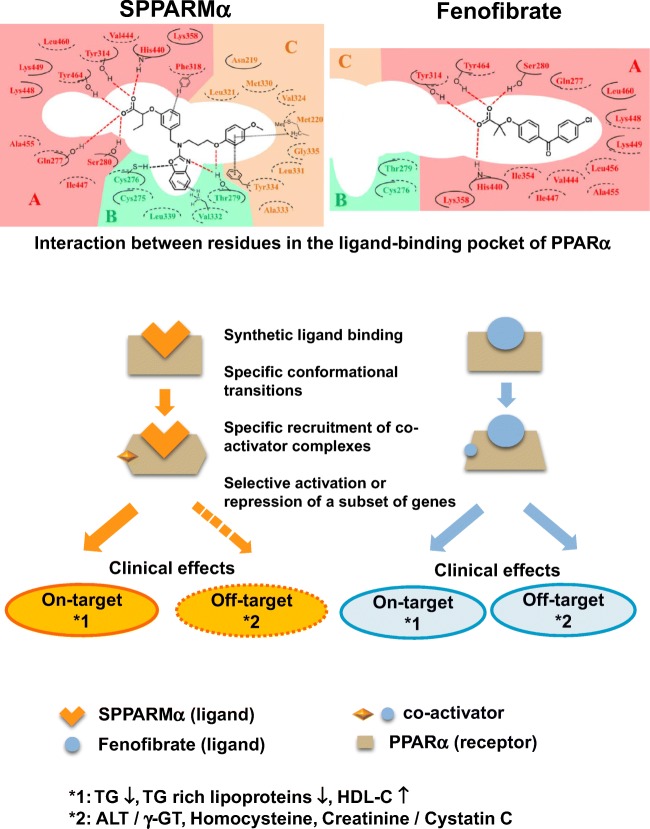
- Pemafibrate's PPARα activation is >2500 times stronger than fenofibric acid, with subtype selectivity >5000-fold for PPARγ and >11,000-fold for PPARδ.
- In clinical trials, pemafibrate 0.4 mg/day lowered TG by ~42.7% (vs 29.7% for fenofibrate 100 mg/day) and raised HDL-C by ~21.0% (vs 14.3%), with effects comparable to fenofibrate 200 mg/day; it reduced ALT, γ-GT, and ALP by ~8 U/L, ~24 U/L, and ~70–80 U/L respectively, whereas fenofibrate worsened these values.
- Co-administered with pitavastatin, pemafibrate reduced fasting TG by 46.1% (0.1 mg/day), 53.4% (0.2 mg/day), and 52.0% (0.4 mg/day) versus 6.9% for placebo, with no major drug–drug interaction with statins.
- Pemafibrate is mainly hepatically metabolized with only 14.5% urinary excretion and <0.5% unmetabolized drug in urine, so exposure does not increase with renal dysfunction; a meta-analysis found total adverse events significantly lower than with fenofibrate, though LDL-C was significantly higher in the pemafibrate group.
Methods
- Narrative review synthesizing preclinical (cell, rodent, pig) and clinical data on pemafibrate, including its development, pharmacokinetics, and mechanism as a SPPARMα.
- Draws on Japanese phase 2/3 randomized controlled trials (K-877-04, -09, -11, -17, -19), a meta-analysis comparing pemafibrate with fenofibrate, and animal models of dyslipidemia, atherosclerosis, NASH, and obesity.
- Summarizes comparative tables of percentage changes in lipid, glycemic, liver, and renal parameters for pemafibrate versus fenofibrate.
Limitations
- As stated by the paper: the cardiovascular benefit of pemafibrate in humans is not yet established—the large-scale PROMINENT trial (planned 10,000 patients with type 2 diabetes, high TG, low HDL-C, across 24 countries) is still ongoing.
- As stated by the paper: pemafibrate was not administered to patients with extremely high TG (>1000 mg/dL) in developmental studies, and its effect in severe hypertriglyceridemia remains to be explored; the PBC evidence comes from a small pilot study.
- Evident from the text: this is a narrative review without primary data or systematic search methodology, and much of the clinical evidence derives from Japanese trials, limiting generalizability to other populations.
Model-written summary. Check it against the paper before relying on it.
Integrity signals
Registry
Cites
Statistics
Figures
Verification
Claims the paper makes
10 Valid · 1 Not valid · 120 Not checked · 29 Own results and interpretations
The cited sources support only part of this claim — read each source’s verdict below.
In the paper
“However, fasting and postprandial hypertriglyceridemia as well as reduced high-density lipoprotein cholesterol (HDL-C) remain as residual risk factors of atherosclerotic cardiovascular diseases (ASCVD).”
§ Pemafibrate, a New Selective PPARα Modulator: Drug Concept and Its Clinical Applications for Dyslipidemia and Metabolic Diseases > Abstract > Purpose of Review
What the sources say
- Partly supportedcites [67] Fujioka Y Ishikawa Y Remnant lipoproteins as strong key particles to atherogenesis J Atheroscler Thromb 2009 16 3 145 154 10.5551/jat.E598 19556722 sourceExperimental — accuracy not yet measured
Our copy supports the lipid components of the claim: the Introduction and Abstract state that hypertriglyceridemia is associated with atherosclerosis independent of other coronary risk factors, the 'Postprandial Hyperlipidemia as the Atherogenic Condition' section reports a relationship between postprandial hyperlipidemia and atherosclerotic disease (especially CAD) and the atherogenicity of fasting RLP-C, and 'Effects on Other Lipoproteins' includes low HDL-C in the atherogenic lipid profile. However, no passage frames these as RESIDUAL risk persisting AFTER LDL-C lowering: the paper's LDL-C comparison is only that triglycerides alone are hard to use for risk selection 'compared with LDL-C', and it never discusses patients treated to lower LDL-C or leftover risk. The residual-risk/after-LDL-lowering part of the attributed claim is therefore not supported by this source. (LLM, conf=0.70)
- Supportedcites [68] Masuda D Yamashita S Postprandial hyperlipidemia and remnant lipoproteins J Atheroscler Thromb 2017 24 2 95 109 10.5551/jat.RV16003 27829582 PMC5305681 source
The opening of the 'Fasting and Postprandial Hypertriglyceridemia' section states that statin-based intensive intervention against hypercholesterolemia/hyper LDL-cholesterolemia improves primary and secondary prevention of CHD events but has not completely suppressed them, and that controlling 'residual risk factors' — hypertriglyceridemia (≥150 mg/dL) and hypo-HDL-cholesterolemia (<40 mg/dL) — has been emphasized for the prevention of ASCVD. The Abstract and the same section further establish that both fasting hypertriglyceridemia (meta-analysis of 35 observational studies; risk on a background of statin treatment after ACS) and postprandial/non-fasting hypertriglyceridemia (Iso et al., Nordestgaard et al.) are associated with CHD/ASCVD risk, covering every element of the paraphrase. (LLM, conf=0.88)
plainstates an association- Asserted: passes — The authors put it forward as true.
- Checkable: passes — It can be checked against evidence.
- Load-bearing: passes — The paper’s conclusions depend on it.
- Based: passes — The paper gives a reason why it holds.
- Partly supported
The cited sources support only part of this claim — read each source’s verdict below.
In the paper
“However, fibrates were demonstrated to cause side effects such as liver dysfunction and increase in creatinine levels, and thus large-scale clinical trials of fibrates have shown negative results for prevention of ASCVD.”
§ Pemafibrate, a New Selective PPARα Modulator: Drug Concept and Its Clinical Applications for Dyslipidemia and Metabolic Diseases > Abstract > Purpose of Review
What the sources say
- Not checked yetcites [7] Bezafibrate Infarction Prevention (BIP) Study Group, Secondary prevention by raising HDL cholesterol and reducing triglycerides in patients with coronary artery disease The Bezafibrate Infarction Prevention (BIP) Study Circulation 2000 102 1 21 27 10.1161/01.CIR.102.1.21 10880410 source
- Not checked yetcites [8] Keech A Simes RJ Barter P Best J Scott R Taskinen MR Effects of long-term fenofibrate therapy on cardiovascular events in 9795 people with type 2 diabetes mellitus (the FIELD study): randomised controlled trial Lancet. 2005 366 9500 1849 1861 10.1016/S0140-6736(05)67667-2 16310551 source
- Partly supportedcites [9] Ginsberg HN Elam MB Lovato LC Crouse JR 3rd Leiter LA Linz P Effects of combination lipid therapy in type 2 diabetes mellitus N Engl J Med 2010 362 17 1563 1574 10.1056/NEJMoa1001282 20228404 PMC2879499 sourceExperimental — accuracy not yet measured
Our copy of ACCORD Lipid supports the general direction only in part: the Abstract (RESULTS) and Results (Clinical Outcomes) report that adding fenofibrate to simvastatin in 5518 patients with type 2 diabetes gave no significant difference in the primary composite of nonfatal MI, nonfatal stroke or cardiovascular death (HR 0.92; 95% CI 0.79–1.08; P = 0.32) — a null, not a harmful, result, and confined to a diabetic, statin-treated population rather than ASCVD prevention generally. The Introduction (Abstract) and Discussion explicitly qualify any blanket 'negative trials' reading: fibrate therapy 'reduced the rate of coronary heart disease events in VA-HIT but not in the FIELD trial', a post hoc FIELD analysis suggested benefit with high triglycerides/low HDL, and the Discussion states the subgroup results 'support the view that the addition of fenofibrate to a statin may benefit patients with type 2 diabetes who have substantial dyslipidemia'. Nothing in our copy links the trial outcome to adverse effects: the Safety section reports only modest ALT elevations (1.9% vs 1.5%) and rises in serum creatinine, and states 'No evidence for such a risk [myositis or rhabdomyolysis] was noted in our study', so the citing sentence's causal framing ('cause side effects ... and thus ... negative results') is not attributable to this source. (LLM, conf=0.72)
boostedstates a cause- Asserted: passes — The authors put it forward as true.
- Checkable: passes — It can be checked against evidence.
- Load-bearing: passes — The paper’s conclusions depend on it.
- Based: passes — The paper gives a reason why it holds.
Every source the paper cites for this claim was checked and supports it.
In the paper
“Therefore, SPPARMα may have a better benefit-risk balance compared to the PPARα agonists such as available fibrates.”
§ Pemafibrate, a New Selective PPARα Modulator: Drug Concept and Its Clinical Applications for Dyslipidemia and Metabolic Diseases > Introduction > Development of a Novel SPPARMα, Pemafibrate
What the sources say
- Supportedcites [43] Fruchart JC Selective peroxisome proliferator-activated receptor alpha modulators (SPPARMalpha): the next generation of peroxisome proliferator-activated receptor alpha-agonists Cardiovasc Diabetol 2013 12 82 10.1186/1475-2840-12-82 23721199 PMC3682868 source
The Conclusions state that fibrates are weak PPARα agonists with limited efficacy due to dose-related AEs, and that the SPPARMαs are a new generation being developed to 'separate the receptor-mediated beneficial effects of the PPARα agonists from their unwanted side effects' — i.e. an improved benefit-risk profile. The Abstract and Conclusions apply this to the first true SPPARMα, K-877, which 'compared to fenofibrate has more potent PPARα-activating efficacy in vitro, greater effects on triglycerides- and HDL-C levels in humans, and a reduced risk of adverse effects' and 'an improved safety/tolerability profile', with the potential to supersede fibrates. The citing sentence is hedged ('may'), matching the paper's own conditional framing ('If successful…'), so the paraphrase is supported. (LLM, conf=0.85)
hedgedstates a possible cause- Asserted: passes — The authors put it forward as true.
- Checkable: passes — It can be checked against evidence.
- Load-bearing: passes — The paper’s conclusions depend on it.
- Based: passes — The paper gives a reason why it holds.
- Supported
The sources with a verdict support this claim; the rest weren’t checked yet, have no full text we could read, or their verdicts aren’t rated yet.
In the paper
“In the Helsinki Heart Study (HHS) [4] and the Veterans Affairs High-Density Lipoprotein Cholesterol Intervention Trial (VA-HIT) [5], administration of gemfibrozil significantly reduced CV event rate, the primary endpoints of the trials.”
§ Pemafibrate, a New Selective PPARα Modulator: Drug Concept and Its Clinical Applications for Dyslipidemia and Metabolic Diseases > Introduction
What the sources say
- Not checked yetcites [4] Frick MH Elo O Haapa K Heinonen OP Heinsalmi P Helo P Helsinki heart study: primary-prevention trial with gemfibrozil in middle-aged men with dyslipidemia. Safety of treatment, changes in risk factors, and incidence of coronary heart disease N Engl J Med 1987 317 20 1237 1245 10.1056/NEJM198711123172001 3313041 source
- Supportedcites [5] Rubins HB Robins SJ Collins D Fye CL Anderson JW Elam MB Gemfibrozil for the secondary prevention of coronary heart disease in men with low levels of high-density lipoprotein cholesterol. Veterans Affairs High-Density Lipoprotein Cholesterol Intervention Trial Study Group N Engl J Med 1999 341 6 410 418 10.1056/NEJM199908053410604 10438259 source
For the part attributed to this source (VA-HIT, reference [5]), our copy states the trial's primary outcome (nonfatal MI or death from coronary causes) occurred in 21.7% of placebo vs 17.3% of gemfibrozil patients, a 22% relative risk reduction (95% CI 7–35, P=0.006) — Outcomes p. 8 and Abstract. The Abstract/Conclusion (p. 4) further states 'Gemfibrozil therapy resulted in a significant reduction in the risk of major cardiovascular events in patients with coronary disease whose primary lipid abnormality was a low HDL cholesterol level.' The Helsinki Heart Study clause belongs to the separate citation [4] and is not judged here. (LLM, conf=0.92)
plainstates a cause- Asserted: passes — The authors put it forward as true.
- Checkable: passes — It can be checked against evidence.
- Load-bearing: unclear — It is unclear whether the paper’s conclusions depend on it.
- Based: passes — The paper gives a reason why it holds.
Every source the paper cites for this claim was checked and supports it.
In the paper
“Calculated insulinogenic index was significantly lower in patients with Tangier disease than in non-diabetic controls.”
§ Pemafibrate, a New Selective PPARα Modulator: Drug Concept and Its Clinical Applications for Dyslipidemia and Metabolic Diseases > Introduction > Other Non-lipid-Related Effects of Pemafibrate
What the sources say
- Supportedcites [98] Koseki M Matsuyama A Nakatani K Inagaki M Nakaoka H Kawase R Impaired insulin secretion in four Tangier disease patients with ABCA1 mutations J Atheroscler Thromb 2009 16 3 292 296 10.5551/jat.E599 19556721 source
The Abstract reports that the calculated insulinogenic index was significantly lower in four Tangier disease patients than in non-diabetic controls (0.055±0.034 versus 0.775±0.538; p<0.05). The Oral Glucose Tolerance Test section also reports a marked decrease compared with normal subjects. (LLM, conf=0.95)
plainstates an association- Asserted: passes — The authors put it forward as true.
- Checkable: passes — It can be checked against evidence.
- Load-bearing: unclear — It is unclear whether the paper’s conclusions depend on it.
- Based: passes — The paper gives a reason why it holds.
- Supported
86 more claims
Create a free account to see all 160 claims and to verify the 156 references still open.
- It may state two separate claims as one. 67
- Probably not a substantial claim. 5
- The quote only partly states this claim. 1
Claims other papers make about this one
Each is checked against this paper’s own text: does it say what the citing paper says it does?
In the citing paper
“Pemafibrate is a new selective peroxisome proliferator-activated receptor-α modulator with a superior benefit-risk balance compared with conventional fibrates.”
From 2023 ESC guidelines for the management of cardiovascular disease in patients with diabetes. (2023) · cites this paper as [272]
Self-check
Percentages, sums and reported differences re-computed from the paper’s own numbers.
Each contradiction between two passages listed here was confirmed by an independent check.
Rated minor: it would not touch a result — a value no result rests on, a p-value that stays on the same side of the significance level, or a conflict that is clerical, resolved elsewhere in the paper, or outside its own findings.
In the paper
§ Pemafibrate, a New Selective PPARα Modulator: Drug Concept and Its Clinical Applications for Dyslipidemia and Metabolic Diseases > Introduction > Clinical Trials of Pemafibrate
“In SHARP trial [90], non-statin drug ezetimibe (intestinal cholesterol transporter inhibitor) showed a significant reduction in CV events.”
§ Pemafibrate, a New Selective PPARα Modulator: Drug Concept and Its Clinical Applications for Dyslipidemia and Metabolic Diseases > References
“90. Cannon CP, Blazing MA, Giugliano RP, McCagg A, White JA, Theroux P, et al; IMPROVE-IT Investigators: Ezetimibe added to statin therapy after acute coronary syndromes.”
Citations
Cites
Cholesterol Treatment Trialists' (CTT) Collaboration (2010) · The Lancet · doi:10.1016/s0140-6736(10)61350-5 · Cited by 6,550
Ezetimibe Added to Statin Therapy after Acute Coronary Syndromes
Cannon, C. P., Blazing, M. A., Giugliano, R. P., McCagg, A., White, J. A., Theroux, P., Darius, H., Lewis, B. S., Ophuis, T. O., Jukema, J. W., et al. (2015) · New England Journal of Medicine · doi:10.1056/nejmoa1410489 · Cited by 4,487
Helsinki Heart Study: Primary-Prevention Trial with Gemfibrozil in Middle-Aged Men with Dyslipidemia
Frick, M. H., Elo, O., Haapa, K., Heinonen, O. P., Heinsalmi, P., Helo, P., Huttunen, J. K., Kaitaniemi, P., Koskinen, P., Manninen, V., et al. (1987) · New England Journal of Medicine · doi:10.1056/nejm198711123172001 · Cited by 3,881
Activation of a member of the steroid hormone receptor superfamily by peroxisome proliferators
Issemann, I., & Green, S. (1990) · Nature · doi:10.1038/347645a0 · Cited by 3,519
Rubins, H. B., Robins, S. J., Collins, D., Fye, C. L., Anderson, J. W., Elam, M. B., Faas, F. H., Linares, E., Schaefer, E. J., Schectman, G., et al. (1999) · New England Journal of Medicine · doi:10.1056/nejm199908053410604 · Cited by 3,439
Effects of Combination Lipid Therapy in Type 2 Diabetes Mellitus
(2010) · New England Journal of Medicine · doi:10.1056/nejmoa1001282 · Cited by 2,837
Atorvastatin in patients with type 2 diabetes mellitus undergoing hemodialysis
Wanner, C., Krane, V., März, W., Olschewski, M., Mann, J. F. E., Ruf, G., & Ritz, E. (2005) · New England Journal of Medicine · doi:10.1056/nejmoa043545 · Cited by 2,614
Rosuvastatin and Cardiovascular Events in Patients Undergoing Hemodialysis
Fellström, B. C., Jardine, A. G., Schmieder, R. E., Holdaas, H., Bannister, K., Beutler, J., Chae, D.-W., Chevaile, A., Cobbe, S. M., Grönhagen-Riska, C., et al. (2009) · New England Journal of Medicine · doi:10.1056/nejmoa0810177 · Cited by 2,036
Research works printed but not linked: 3
- Iwata H Murakami K Ricchiuto P Singh S Libby P Aikawa E The novel PPARα selective agonist K-877 suppresses pro-inflammatory pathways and experimental arterial lesion formation Circ Res 2014 115 e86 e93
- Iwata H Murakami K Ricchiuto P Singh S Libby P Aikawa E The novel PPARα selective agonist K-877 suppresses pro-inflammatory pathways and experimental arterial lesion formation Circ Res 2014 115 e90
- Takizawa T Goto S Inokuchi Y Miyata S Yoshinaka Y Yamazaki H Pharmacological effects of K-877, a potent and selective PPAR alpha modulator (SPPARM alpha)-Controlling the plasma HDL-C and triglycerides, and prevention of atherosclerosis in experimental animals Eur Heart J. 2015 36 257 258
Cited by
2023 ESC guidelines for the management of cardiovascular disease in patients with diabetes.
Marx, N., Federici, M., Schütt, K., Müller-Wieland, D., Ajjan, R. A., Antunes, M. J., Christodorescu, R. M., Crawford, C., Di Angelantonio, E., Eliasson, B., et al. (2023) · European Heart Journal · doi:10.1093/eurheartj/ehad192 · Cited by 1,642
Inflammation and atherosclerosis: signaling pathways and therapeutic intervention
Kong, P., Cui, Z.-Y., Huang, X.-F., Zhang, D.-D., Guo, R.-J., & Han, M. (2022) · Signal Transduction and Targeted Therapy · doi:10.1038/s41392-022-00955-7 · Cited by 1,183
Nakajima, A., Eguchi, Y., Yoneda, M., Imajo, K., Tamaki, N., Suganami, H., Nojima, T., Tanigawa, R., Iizuka, M., Iida, Y., et al. (2021) · Alimentary Pharmacology & Therapeutics · doi:10.1111/apt.16596 · Cited by 213
Nonalcoholic fatty liver disease as a metabolic disease in humans: A literature review
Cariou, B., Byrne, C. D., Loomba, R., & Sanyal, A. J. (2021) · Diabetes, Obesity and Metabolism · doi:10.1111/dom.14322 · Cited by 168
“Pemafibrate is a highly selective PPAR-α agonist that promotes the induction of genes involved in fatty acid oxidation, lipid mobilization and energy metabolism.(116,117) In a clinical trial in patients with”
BackgroundImpact of peroxisome proliferator-activated receptor-α on diabetic cardiomyopathy
Wang, L., Cai, Y., Jian, L., Cheung, C. W., Zhang, L., & Xia, Z. (2021) · Cardiovascular Diabetology · doi:10.1186/s12933-020-01188-0 · Cited by 121
“PPARα-related drugs that might be safe in treating DCM Different from conventional fibrates, pemafibrate (K-877, ParmodiaTM), a novel selective PPARα modulator, is mainly metabolized by the liver [150, 151], and is 2500 times effective in activating PPARα than the conventional fibrates [41, 150] and having a better tr…”
BackgroundUpdates on the Current Treatments for Diabetic Retinopathy and Possibility of Future Oral Therapy
Tomita, Y., Lee, D., Tsubota, K., Negishi, K., & Kurihara, T. (2021) · Journal of Clinical Medicine · doi:10.3390/jcm10204666 · Cited by 123
“Furthermore, we summarize recent promising oral therapies in diabetes; fenofibrate and pemafibrate, well-known agonists of peroxisome proliferator-activated receptor alpha (PPARα) in treatments for dyslipidemia [10] and discuss their recent potentials as promising oral DR treatments.”
BackgroundPPARα Ligand-Binding Domain Structures with Endogenous Fatty Acids and Fibrates
Kamata, S., Oyama, T., Saito, K., Honda, A., Yamamoto, Y., Suda, K., Ishikawa, R., Itoh, T., Watanabe, Y., Shibata, T., et al. (2020) · iScience · doi:10.1016/j.isci.2020.101727 · Cited by 123
Jin, X., Yang, S., Lu, J., & Wu, M. (2022) · Frontiers in Cardiovascular Medicine · doi:10.3389/fcvm.2021.804214 · Cited by 111
New, Novel Lipid-Lowering Agents for Reducing Cardiovascular Risk: Beyond Statins
Kim, K., Ginsberg, H. N., & Choi, S. H. (2022) · Diabetes & Metabolism Journal · doi:10.4093/dmj.2022.0198 · Cited by 80
“Pemafibrate Fibrates are well known TG-lowering drugs and are agonists of peroxisome proliferator-activated receptor alpha (PPARα).”
BackgroundInfluentialJin, P., Duan, X., Huang, Z., Dong, Y., Zhu, J., Guo, H., Tian, H., Zou, C., & Xie, K. (2025) · Signal Transduction and Targeted Therapy · doi:10.1038/s41392-025-02270-3 · Cited by 107
Advances in the Diagnosis and Treatment of Non-Alcoholic Fatty Liver Disease
Yin, X., Guo, X., Liu, Z., & Wang, J. (2023) · International Journal of Molecular Sciences · doi:10.3390/ijms24032844 · Cited by 103
Lipid Lowering Drugs: Present Status and Future Developments
Ruscica, M., Ferri, N., Santos, R. D., Sirtori, C. R., & Corsini, A. (2021) · Current Atherosclerosis Reports · doi:10.1007/s11883-021-00918-3 · Cited by 73
Kamata, S., Honda, A., & Ishii, I. (2023) · Biomolecules · doi:10.3390/biom13081264 · Cited by 81
Mechanisms of Atherosclerosis Induced by Postprandial Lipemia
Zhao, Y., Liu, L., Yang, S., Liu, G., Pan, L., Gu, C., Wang, Y., Li, D. X., Zhao, R., & Wu, M. (2021) · Frontiers in Cardiovascular Medicine · doi:10.3389/fcvm.2021.636947 · Cited by 78
Maevskaya, M. V., Kotovskaya, Y. V., Ivashkin, V. T., Ткачева, О. Н., Troshina, E. A., Shestakova, M. V., Breder, V. V., Geyvandova, N. I., Doshchitsin, V. L., Dudinskaya, Е. N., et al. (2022) · Terapevticheskii arkhiv · doi:10.26442/00403660.2022.02.201363 · Cited by 73
Gong, L., Wei, F., Gonzalez, F. J., & Li, G. (2023) · Hepatology · doi:10.1097/hep.0000000000000182 · Cited by 71
Dyslipidemia in midlife women: Approach and considerations during the menopausal transition
Torosyan, N., Visrodia, P., Torbati, T., Minissian, M., & SHUFELT, C. L. (2022) · Maturitas · doi:10.1016/j.maturitas.2022.08.001 · Cited by 66
Sharma, A., Mah, M., Ritchie, R. H., & Blasio, M. J. D. (2021) · Pharmacology & Therapeutics · doi:10.1016/j.pharmthera.2021.108008 · Cited by 53
Inflammatory Links Between Hypertriglyceridemia and Atherogenesis
Peng, X., & Wu, H. (2022) · Current Atherosclerosis Reports · doi:10.1007/s11883-022-01006-w · Cited by 54
Lipid metabolism in homeostasis and disease
Li, Z., Deng, W., Yang, L., Tang, C., Yue, J.-M., Monteiro, O., Baptista‐Hon, D. T., & Li, T. (2026) · Signal Transduction and Targeted Therapy · doi:10.1038/s41392-025-02357-x · Cited by 74
Bonilha, I., Zimetti, F., Zanotti, I., Papotti, B., & Sposito, A. C. (2021) · Journal of Clinical Medicine · doi:10.3390/jcm10112233 · Cited by 54
“gov Identifier: NCT03071692, accessed on 21 March 2021), is currently evaluating the impact of pemafibrate in dyslipidemic patients with T2DM [140].”
BackgroundPemafibrate Protects Against Retinal Dysfunction in a Murine Model of Diabetic Retinopathy
Tomita, Y., Lee, D., Miwa, Y., Jiang, X., Ohta, M., Tsubota, K., & Kurihara, T. (2020) · International Journal of Molecular Sciences · doi:10.3390/ijms21176243 · Cited by 52
Lin, P., & Duann, P. (2020) · Frontiers in Physiology · doi:10.3389/fphys.2020.01050 · Cited by 48
“Mechanistically, the PPARα agonists activate PPARα, promote peroxisomal and mitochondrial FAO, initiate cellular cascade to upregulate lipoprotein lipase, and ultimately cause more efficient catabolism of VLDL and TAG (Lakhia et al., 2018; Cheng et al., 2019; Yamashita et al., 2020).”
BackgroundKalliora, C., & Drosatos, K. (2020) · Journal of Cardiovascular Pharmacology · doi:10.1097/fjc.0000000000000891 · Cited by 45
The physiology of MASLD: molecular pathways between liver and adipose tissues
Lee, W., Kipp, Z. A., Bates, E. A., Pauss, S. N., Martinez, G. J., & Hinds, T. D. (2025) · Clinical Science · doi:10.1042/cs20257571 · Cited by 56
“For example, pemafibrate is an emerging PPARα agonist that has the potential to reduce adverse side effects while enhancing therapeutic effects [243].”
PPARα Agonist Oral Therapy in Diabetic Retinopathy
Tomita, Y., Lee, D., Tsubota, K., & Kurihara, T. (2020) · Biomedicines · doi:10.3390/biomedicines8100433 · Cited by 47
Pu, Y., Cheng, C. K., Zhang, H., Luo, J., Wang, L., Tomlinson, B., & Huang, Y. (2023) · Medicinal Research Reviews · doi:10.1002/med.21970 · Cited by 47
Bashir, B., Schofield, J., Downie, P., France, M., Ashcroft, D. M., Wright, A. K., Romeo, S., Gouni-Berthold, I., Maan, A., Durrington, P. N., et al. (2024) · Frontiers in Cardiovascular Medicine · doi:10.3389/fcvm.2024.1389106 · Cited by 40
Yamashita, S., Rizzo, M., Su, T., & Masuda, D. (2023) · Metabolites · doi:10.3390/metabo13050626 · Cited by 44
“The effects on basic parameters were markedly different between pemafibrate and fenofibrate [34].”
BackgroundMethodInfluentialSelf-citationTargeting PPARs for therapy of atherosclerosis: A review
Miao, M., Wang, X., Liu, T., Li, Y., Yu, W., Yang, T.-M., & Guo, S. (2023) · International Journal of Biological Macromolecules · doi:10.1016/j.ijbiomac.2023.125008 · Cited by 45
Shinozaki, S., Tahara, T., Lefor, A. K., & Ogura, M. (2021) · Clinical and Experimental Hepatology · doi:10.5114/ceh.2021.106864 · Cited by 40
“PPAR-α upregulated by pemafibrate promotes production of lipoprotein lipase and apolipoprotein, resulting in the reduction of serum triglyceride levels [17].”
BackgroundAn Overview of the Role of Peroxisome Proliferator-activated Receptors in Liver Diseases
Changizi, Z., Kajbaf, F., & Moslehi, A. (2023) · Journal of Clinical and Translational Hepatology · doi:10.14218/jcth.2023.00334 · Cited by 37
“161,162 Although a clinical trial on fibrates has shown negative results for the prevention of atherosclerotic cardio-vascular disease, 163 another clinical trial conducted in Japan confirmed the superior effects of pemafibrate on lowering triglycerides and increasing HDL-cholesterol (HDL-C).”
BackgroundThambiah, S. C., & Lai, L. C. (2021) · Practical Laboratory Medicine · doi:10.1016/j.plabm.2021.e00248 · Cited by 54
Hassan, R. M., Aboutabl, M. E., Bozzi, M., El‐Behairy, M. F., Kerdawy, A. M. E., Sampaolese, B., Desiderio, C., Vincenzoni, F., Sciandra, F., & Ghannam, I. A. Y. (2021) · Bioorganic Chemistry · doi:10.1016/j.bioorg.2021.105170 · Cited by 29
Vyletelová, V., Nováková, M., & Pašková, Ľ. (2022) · Pharmaceuticals · doi:10.3390/ph15101278 · Cited by 31
The Overlooked Transformation Mechanisms of VLCFAs: Peroxisomal β-Oxidation
Lu, Q., Zong, W., Zhang, M., Chen, Z., & Yang, Z. (2022) · Agriculture · doi:10.3390/agriculture12070947 · Cited by 31
Lee, D., Nakai, A., Miwa, Y., Tomita, Y., Kunimi, H., Chen, J., Ikeda, S., Tsubota, K., Negishi, K., & Kurihara, T. (2022) · The FASEB Journal · doi:10.1096/fj.202200455rrr · Cited by 29
Kumrić, M., Urlić, H., Božić, J., Vilović, M., Kurir, T. T., Glavaš, D., Miric, D., Zanchi, J., Bradarić, A., Lozo, M., et al. (2023) · International Journal of Molecular Sciences · doi:10.3390/ijms24098062 · Cited by 28
“Pemafibrate, a selective PPARα modulator, was suggested to decrease triglyceride levels and raise HDL-C levels [94].”
BackgroundRemnant Cholesterol and Residual Risk of Atherosclerotic Cardiovascular Disease
Li, X., Li, Z.-F., & Wu, N. (2025) · Reviews in Cardiovascular Medicine · doi:10.31083/rcm25985 · Cited by 30
Emerging and Established Therapeutic Approaches for Nonalcoholic Fatty Liver Disease
Brown, E. E., Hydes, T., Hamid, A., & Cuthbertson, D. J. (2021) · Clinical Therapeutics · doi:10.1016/j.clinthera.2021.07.013 · Cited by 31
Fibrates and the risk of cardiovascular outcomes in chronic kidney disease patients
Goto, H., Iseri, K., & Hida, N. (2024) · Nephrology Dialysis Transplantation · doi:10.1093/ndt/gfad248 · Cited by 24
Ikeda, S., Sugihara, T., Hoshino, Y., Matsuki, Y., Nagahara, T., Okano, J., Kitao, S., Fujioka, Y., Yamamoto, K., & Isomoto, H. (2020) · Yonago acta medica · doi:10.33160/yam.2020.08.009 · Cited by 31
Fiorucci, S., Sepe, V., Biagioli, M., Fiorillo, B., Rapacciuolo, P., Distrutti, E., & Zampella, A. (2023) · Biochemical Pharmacology · doi:10.1016/j.bcp.2023.115776 · Cited by 23
Effects of pemafibrate on primary biliary cholangitis with dyslipidemia
Yamaguchi, M., Asano, T., Arisaka, T., Mashima, H., Irisawa, A., & Tamano, M. (2022) · Hepatology Research · doi:10.1111/hepr.13747 · Cited by 23
“As such, PEM is also known as a selective PPAR‐α modulator, and its effect on PPARα activation is considered 50 000 times greater than that of BEZ.(25,26) In a mouse model of nonalcoholic steatohepatitis (NASH), PEM has gained much attention because it was shown to suppress the progression of NASH and show histologica…”
BackgroundInfluentialDrugs targeting peroxisome proliferator-activated receptors
Xie, Z., Xin, J., Huang, C.-J., & Liao, C. (2025) · Drug Discovery Today · doi:10.1016/j.drudis.2025.104318 · Cited by 25
New and Emerging lipid-lowering Therapy
Backes, J. M., & Hilleman, D. E. (2021) · Future Cardiology · doi:10.2217/fca-2020-0217 · Cited by 21
Bhardwaj, M., & Mazumder, P. M. (2024) · Naunyn-Schmiedeberg s Archives of Pharmacology · doi:10.1007/s00210-024-03204-6 · Cited by 22
Zhang, Z., Diao, P., Zhang, X., Nakajima, T., Kimura, T., & Tanaka, N. (2022) · Biomedicines · doi:10.3390/biomedicines10071667 · Cited by 21
Fuior, E. V., Zvintzou, E., Filippatos, T. D., Giannatou, K., Mparnia, V., Simionescu, M., Gafencu, A. V., & Kypreos, K. E. (2023) · Biomedicines · doi:10.3390/biomedicines11102696 · Cited by 28
Fujita, N., Sase, K., Tsukahara, C., Arizono, I., Takagi, H., & Kitaoka, Y. (2020) · Molecular Biology Reports · doi:10.1007/s11033-020-06032-y · Cited by 23
Macrophage fatty acid oxidation in atherosclerosis
Xiao, S., Qi, M., Zhou, Q., Gong, H.-Q., Wei, D., Wang, G., Feng, Q., Wang, Z., Liu, Z., Zhou, Y., et al. (2023) · Biomedicine & Pharmacotherapy · doi:10.1016/j.biopha.2023.116092 · Cited by 27
Nakamura, A., Kagaya, Y., Saito, H., Kanazawa, M., Sato, K., Miura, M., Kondo, M., & Endo, H. (2022) · Journal of Atherosclerosis and Thrombosis · doi:10.5551/jat.63659 · Cited by 20
Doi, T., Langsted, A., & Nordestgaard, B. G. (2024) · Atherosclerosis · doi:10.1016/j.atherosclerosis.2024.117556 · Cited by 25
Fruchart, J., Hermans, M. P., & Fruchart‐Najib, J. (2020) · Current Atherosclerosis Reports · doi:10.1007/s11883-020-00860-w · Cited by 19
PPARα-ERRα crosstalk mitigates metabolic dysfunction-associated steatotic liver disease progression
Antwi, M. B., Lefere, S., Clarisse, D., Koorneef, L. L., Heldens, A., Onghena, L., Decroix, K., Fijałkowska, D., Thommis, J., Hellemans, M., et al. (2024) · Metabolism · doi:10.1016/j.metabol.2024.156128 · Cited by 22
Environmental Factors Modifying HDL Functionality
Kostara, C. E., Kosmas, C. E., Sourlas, A., & Guzman, E. (2021) · Current Medicinal Chemistry · doi:10.2174/0929867328666210714155422 · Cited by 18
Hypercaloric Diet Promotes Metabolic Disorders and Impaired Kidney Function
Meléndez-Salcido, C. G., Ramírez-Emiliano, J., & Pérez‐Vázquez, V. (2022) · Current Pharmaceutical Design · doi:10.2174/1381612829666221020162955 · Cited by 21
Colesterol remanente, riesgo vascular y prevención de la arteriosclerosis
Pintó, X., Fanlo‐Maresma, M., Esteve, V., Millán, J., Blanco, A., Blasco, M., Díaz-Díaz, J. L., Rodríguez, Á. D., Mangas, A., Pascual, V., et al. (2023) · Clínica e Investigación en Arteriosclerosis · doi:10.1016/j.arteri.2023.02.001 · Cited by 29
Lessons from PROMINENT and prospects for pemafibrate
Fruchart, J.-C., Fruchart-Najib, J., Yamashita, S., Libby, P., Yokote, K., Kodama, T., Tomita, Y., Ridker, P. M., Hermans, M. P., & Zambon, A. (2024) · Cardiovascular Diabetology · doi:10.1186/s12933-024-02305-z · Cited by 16
“TG lowering with pemafibrate was less than that anticipated based on phase II/III clinical trials in patients treated with less intense statin regimens [21, 24, 26] (~ 45% to > 50”
MethodSelf-citationThe impact of lipid-lowering medications on coronary artery plaque characteristics
Pulipati, V. P., & Alenghat, F. J. (2021) · American Journal of Preventive Cardiology · doi:10.1016/j.ajpc.2021.100294 · Cited by 17
Takeda, Y., Sakuma, I., Hiramitsu, S., Okada, M., Ueda, S., & Sakurai, M. (2023) · Frontiers in Cardiovascular Medicine · doi:10.3389/fcvm.2023.1094100 · Cited by 17
Adiponectin-mediated regulation of the adiponectin cascade in cardiovascular disease: Updates
Hafiane, A. (2023) · Biochemical and Biophysical Research Communications · doi:10.1016/j.bbrc.2023.149406 · Cited by 19
Shaik, A., & Rosenson, R. S. (2021) · Cardiovascular Drugs and Therapy · doi:10.1007/s10557-021-07168-0 · Cited by 16
Yamashita, S., Okazaki, M., Okada, T., Masuda, D., Yokote, K., Arai, H., Araki, E., & Ishibashi, S. (2021) · Journal of Atherosclerosis and Thrombosis · doi:10.5551/jat.60764 · Cited by 14
Self-citationPapafaklis, M. I., Koros, R., Tsigkas, G., Καρανάσος, Α., Μούλιας, Α., & Davlouros, P. A. (2024) · Biomedicines · doi:10.3390/biomedicines12112435 · Cited by 21
“Pemafibrate is a selective peroxisome proliferator-activated receptor α modulator (PPAR α ) modulator that reduces triglyceride levels and improves lipid levels; it has the advantage of a better safety profile for liver and renal function [85].”
Lu, Y., Sun, W., Zhang, Z., Yu, J. H., Zhang, J., & Guo, Q. (2025) · Food Bioscience · doi:10.1016/j.fbio.2025.105848 · Cited by 19
Sblano, S., Cerchia, C., Laghezza, A., Piemontese, L., Brunetti, L., Leuci, R., Gilardi, F., Thomas, A., Genovese, M., Santi, A., et al. (2022) · European Journal of Medicinal Chemistry · doi:10.1016/j.ejmech.2022.114240 · Cited by 15
The Role of Mitochondria in Metabolic Syndrome–Associated Cardiomyopathy
Li, J., Li, J., Chen, Y., Hu, W., Gong, X., Qiu, H., Chen, H., Xin, Y., & Li, H. (2022) · Oxidative Medicine and Cellular Longevity · doi:10.1155/2022/9196232 · Cited by 18
“PPARα-related agents such as K-877, a novel selective PPARα modulate, have a great triglyceride-lowering activity [54].”
BackgroundNuclear SphK2/S1P signaling is a key regulator of ApoE production and Aβ uptake in astrocytes
Komai, M., Noda, Y., Ikeda, A., Kaneshiro, N., Kamikubo, Y., Sakurai, T., Uehara, T., & Takasugi, N. (2024) · Journal of Lipid Research · doi:10.1016/j.jlr.2024.100510 · Cited by 13
“Recently, modulators that alter the conformation of nuclear receptors, thereby modulating their function, have attracted considerable attention (62).”
BackgroundThe Role of Non-statin Lipid-Lowering Medications in Youth with Hypercholesterolemia
Butt, W. Z., & Yee, J. K. (2022) · Current Atherosclerosis Reports · doi:10.1007/s11883-022-01013-x · Cited by 13
Wei, G., Huang, N., Li, M., Guan, F., Chen, L., Liao, Y.-Y., Xie, X., Li, Y., Su, Z., Chen, J., et al. (2024) · European Journal of Pharmacology · doi:10.1016/j.ejphar.2024.176433 · Cited by 16
Peroxisome proliferator-activated receptors (PPARs) agonists as promising neurotherapeutics
Ghannam, I. A. Y., Hassan, R. M., & Abdel‐Maksoud, M. S. (2025) · Bioorganic Chemistry · doi:10.1016/j.bioorg.2025.108226 · Cited by 13
Laghezza, A., Cerchia, C., Genovese, M., Leuci, R., Pranzini, E., Santi, A., Brunetti, L., Piemontese, L., Tortorella, P., Biswas, A., et al. (2023) · Journal of Medicinal Chemistry · doi:10.1021/acs.jmedchem.2c02093 · Cited by 12
Licata, A., Russo, G. T., Giandalia, A., Cammilleri, M., Asero, C., & Cacciola, I. (2023) · Journal of Personalized Medicine · doi:10.3390/jpm13030558 · Cited by 14
Horikawa, T., Kawanami, T., Hamaguchi, Y., Tanaka, Y., Kita, S., Ryorin, R., Takashi, Y., Takahashi, H., Tanabe, M., Yanase, T., et al. (2020) · Heliyon · doi:10.1016/j.heliyon.2020.e05431 · Cited by 12
High-Density Lipoprotein and Cardiovascular Disease—Where do We Stand?
Iatan, I., Choi, H. Y., & Genest, J. J. (2022) · Endocrinology and Metabolism Clinics of North America · doi:10.1016/j.ecl.2022.01.003 · Cited by 12
Hufnagel, B., Zhu, W., Franz, H. M., Proschak, E., & Hernández‐Olmos, V. (2022) · ChemistryOpen · doi:10.1002/open.202200252 · Cited by 11
Saito, S., Cao, D., Bernstein, E. A., Shibata, T., Jones, A. E., Rios, A., Hoshi, A., Stotland, A. B., Nishi, E. E., Eyk, J. E. V., et al. (2025) · Cellular and Molecular Immunology · doi:10.1038/s41423-025-01257-y · Cited by 13
Hou, D., Liu, F., Ren, X., Shen, Q., & Zhou, S. (2021) · Food & Function · doi:10.1039/d1fo02455h · Cited by 12
Remnant cholesterol, vascular risk, and prevention of atherosclerosis
Pintó, X., Fanlo‐Maresma, M., Esteve-Luque, V., & Millán, J. (2023) · Clínica e Investigación en Arteriosclerosis (English Edition) · doi:10.1016/j.artere.2023.07.005 · Cited by 18
Khan, M. S., Ghumman, G. M., Baqi, A., Shah, J., Aziz, M., Mir, T., Tahir, A., Katragadda, S., Singh, H., Taleb, M., et al. (2023) · American Journal of Cardiovascular Drugs · doi:10.1007/s40256-023-00593-6 · Cited by 11
“The addition of benzoxazole and phenoxy alkyl led to a very high potency (> 2500 times than fenofibrate) and very high selectivity for PPAR α with more beneficial effects on the lipids [29].”
BackgroundThe role of PPARα in autosomal dominant polycystic kidney disease
Lakhia, R. (2020) · Current Opinion in Nephrology & Hypertension · doi:10.1097/mnh.0000000000000615 · Cited by 14
Bentanachs, R., Miró, L., Sánchez, R. M., Ramírez-Carrasco, P., Amat, C., Alegret, M., Pérez, A., Roglans, N., & Laguna, J. C. (2024) · Biomedicine & Pharmacotherapy · doi:10.1016/j.biopha.2024.117067 · Cited by 11
“As PemA shows a strong hypotriglyceri-demic effect in other rat models [30,31] and in its clinical use [13,14], this particular behavior of pemafibrate should not have any clinical/- translational implication.”
InfluentialRecent Advances in the Management of Dyslipidemia: A Systematic Review
Feng, H. J. X., Yousaf, A., Moon, J., Ramiz, A., Krishma, U., & Pemminati, S. (2025) · Cureus · doi:10.7759/cureus.81034 · Cited by 22
Tamai, H., & Okamura, J. (2022) · Hepatology Research · doi:10.1111/hepr.13859 · Cited by 11
“found no significant change in Hb after switching to pemafibrate.(4) This discrepancy may be due to the inclusion of patients with declines in Hb as a results of bezafibrate in the present study, but not in the study by Yamaguchi et al.”
BackgroundResultInfluentialApplication of PPAR Ligands and Nanoparticle Technology in Metabolic Steatohepatitis Treatment
Vu, H. T., Nguyen, V. D., Ikenaga, H., & Matsubara, T. (2024) · Biomedicines · doi:10.3390/biomedicines12081876 · Cited by 10
Hassan, M. M., Al-Obaidi, H. O., Karrick, M., Merza, N., Nawras, Y., Saab, O. N., Al‐Obaidi, A. D., Merza, F. A., Hashim, H. T., Zubaidi, K. A., et al. (2024) · Gastroenterology Research · doi:10.14740/gr1750 · Cited by 11
Zeng, Z., Xiao, G., Liu, Y., Wu, M., Wei, X., Xie, C., Wu, G., Jia, D., Li, Y., Li, S., et al. (2024) · Frontiers in Pharmacology · doi:10.3389/fphar.2024.1466114 · Cited by 9
Management of Mild-to-Moderate Hypertriglyceridemia
Pulipati, V. P., Brinton, E. A., & Hatipoğlu, B. (2022) · Endocrine Practice · doi:10.1016/j.eprac.2022.07.003 · Cited by 12
Lee, D., Nakai, A., Miwa, Y., Negishi, K., Tomita, Y., & Kurihara, T. (2023) · PeerJ · doi:10.7717/peerj.14611 · Cited by 11
Budiman, A., Mutmainah, L., Anjelina, M., Fitriawati, M. K., Pilihanto, E. I., Amaliah, S., & Aulifa, D. L. (2025) · International Journal of Nanomedicine · doi:10.2147/ijn.s538100 · Cited by 10
“38”
Not all fibrates are made equal: Learning from biology and clinical trials
Zambon, A., Staels, B., Farnier, M., Vrablík, M., & Catapano, A. L. (2025) · Atherosclerosis · doi:10.1016/j.atherosclerosis.2025.120555 · Cited by 8
Novel oral medications for retinal disease: an update on clinical development
DeBoer, C. M. T., Agrawal, R., & Rahimy, E. (2023) · Current Opinion in Ophthalmology · doi:10.1097/icu.0000000000000948 · Cited by 9
“Pemafibrate (Kowa Company, Ltd, Nagoya, Japan) is a selective PPARa agonist that is designed to have less side effects such as elevated liver enzymes and less effect on the kidney than prior PPARa agonists [61].”
BackgroundPharmacological properties and underlying mechanisms of aurantio‑obtusin (Review)
Liu, Y., Sun, X., Hu, X., Xu, Y., Li, T., & Wu, Z. (2023) · Experimental and Therapeutic Medicine · doi:10.3892/etm.2023.12079 · Cited by 10
Norbixin, a natural dye that improves serum lipid profile in rabbits and prevents LDL oxidation
Somacal, S., Quatrin, A., Ruviaro, A. R., Conte, L., Silva, D. T., Roehrs, M., da Veiga, M. L., Duarte, M. M. M. F., Bem, A. F. D., Augusti, P. R., et al. (2022) · Food Research International · doi:10.1016/j.foodres.2022.111522 · Cited by 8
Isobe, H., Shimoda, M., Kan, Y., Tatsumi, F., Katakura, Y., Kimura, T., Obata, A., Kohara, K., Nakanishi, S., Mune, T., et al. (2021) · BMC Endocrine Disorders · doi:10.1186/s12902-021-00780-z · Cited by 10
A New Insight on Atherosclerosis Mechanism and Lipid-Lowering Drugs
Li, P., & Jiang, W. (2025) · Reviews in Cardiovascular Medicine · doi:10.31083/rcm25321 · Cited by 8
“A recent randomized clinical study indicated that pemafibrate is more effective than fenofibrate in reducing triglyceride levels and has a lower incidence of adverse reactions [110].”
Abrahams, T., & Nicholls, S. J. (2023) · Expert Opinion on Drug Discovery · doi:10.1080/17460441.2023.2292039 · Cited by 8
“As such, PPARα modulators can help reduce levels of LDL cholesterol and triglycerides while increasing HDL cholesterol [40].”
BackgroundBentanachs, R., Velázquez, A. M., Sánchez, R. M., Alegret, M., Laguna, J. C., & Roglans, N. (2022) · Clínica e Investigación en Arteriosclerosis (English Edition) · doi:10.1016/j.artere.2022.03.001 · Cited by 7
Laghezza, A., Falbo, E., Gilardi, F., Thomas, A., Brunetti, L., Leuci, R., Piemontese, L., Tortorella, P., Biswas, A., Singh, R. P., et al. (2025) · European Journal of Medicinal Chemistry · doi:10.1016/j.ejmech.2025.117494 · Cited by 6
Metadata
- Authors
- Yamashita, S., Masuda, D., & Matsuzawa, Y.
- Affiliations
- Rinku General Medical Center (JP)
- Corresponding author
- Yamashita, Shizuya
- Venue
- Current Atherosclerosis Reports
- Published
- 2020-01
- Volume
- 22
- Issue
- 1
- Pages
- 5-5
- ISSN
- 1523-3804 (ISSN-L)
- 1534-6242
- PMC
- PMC6978439
- OpenAlex
- W3002287592
- Semantic Scholar
- 9d0e4ec5ff33ddfa6edba8b0907b5717bcb1bbfe
- Cited by
- 191
- References
- 124
- Citations by year
- 2026: 21 · 2025: 35 · 2024: 29 · 2023: 40 · 2022: 30 · 2021: 24 · 2020: 12
- FWCI
- 2.56
- Type
- journal article
- Language
- en
- Open access
- hybrid
- doi.org
- Licence
- cc-by
- creativecommons.org/licenses/by/4.0 (tdm)
- creativecommons.org/licenses/by/4.0 (vor, 22 d)
- Locations
- Current Atherosclerosis Reports (publishedVersion, cc-by)
- PubMed Central (publishedVersion, cc-by)
- PubMed (publishedVersion)
- Funders
- Kowa Company
- Japan Society for the Promotion of Science (17H02100)
- Topics
- Life Sciences › Biochemistry, Genetics and Molecular Biology › Molecular Biology › Peroxisome Proliferator-Activated Receptors
- Health Sciences › Medicine › Cardiology and Cardiovascular Medicine › Lipoproteins and Cardiovascular Health
- Health Sciences › Medicine › Cardiology and Cardiovascular Medicine › Lipid metabolism and disorders
- Keywords
- pemafibrate, PPARα, hypertriglyceridemia, dyslipidemia, HDL cholesterol, LDL cholesterol, atherosclerotic cardiovascular disease, type 2 diabetes, drug-drug interactions, renal safety, liver safety, fibrates, statins, PCSK9 inhibitors, drug metabolism, drug repurposing
- MeSH terms
- Animals, Hypolipidemic Agents, Benzoxazoles, Butyrates, Diabetes Mellitus, Type 2, Drug Therapy, Combination, Humans, Cholesterol, HDL, Fenofibrate, Triglycerides, Treatment Outcome, Hydroxymethylglutaryl-CoA Reductase Inhibitors, PPAR alpha, Dyslipidemias, Atherosclerosis
About these checks
Registry, retraction, Cites and statistics results are computed, not judged, with one exception: a printed reference that no index lists is read once by a model before it counts as a citation error. Claims are extracted by a model and kept only when their quote appears verbatim in the text; each cited source is then checked, with a model’s help, for whether it says what the claim relies on. Those verdicts can be wrong — read the claim’s quote and the cited source before relying on one.
The claim verdicts this report counts are experimental: their accuracy is not yet measured.
A language model drew the claims from the paper on 2026-10-04, under version 3 of the claim definition (model deepseek-v4.1-flash, prompt extract-v3).
A second model labelled each claim on 2026-10-04 (model jev-1.13-20260917, definition revision gold-guideline-v0.2).
Cited sources are checked with a language model’s help (qwen3.8-omni-flash and gpt-6-sol).
Statistics and arithmetic are recomputed, not judged.
Confidence bands are shown only for fields calibrated on our annotated test set. None is calibrated yet, so no band is shown.
What counts as a claim ›How we measure confidence ›How we check this ›
Are you an author, or do you see a problem with this page? Request a review
Data sources
Bibliographic data: Semantic Scholar, OpenAlex, Crossref.
Contains information from the Semantic Scholar Academic Graph Datasets, made available under the ODC Attribution License (ODC-BY 1.0).
Semantic Scholar’s data is described in: Kinney, R., et al. (2023). The Semantic Scholar Open Data Platform. arXiv:2301.10140.
