

Medicalized Female Genital Mutilation/Cutting: Contentious Practices and Persistent Debates
Open accessThe DOI matches its Crossref record; 64 of the 67 references it cites were found in a registry or an index, and 3 are not checked yet; 23 of the 111 sources its claims cite were checked for support.
Abstract
PURPOSE OF REVIEW: Female genital cutting/mutilation (FGM/C) performed by health care professionals (medicalization) and reduced severity of cutting have been advanced as strategies for minimizing health risks, sparking acrimonious ongoing debates. This study summarizes key debates and critically assesses supporting evidence. RECENT FINDINGS: While medicalization is concentrated in Africa, health professionals worldwide have faced requests to perform FGM/C. Whether medicalization is hindering the decline of FGM/C is unclear. Factors motivating medicalization include, but are not limited to, safety concerns. Involvement of health professionals in advocacy to end FGM/C can address both the supply and demand side of medicalization, but raises ethical concerns regarding dual loyalty. Ongoing debates need to address competing rights claims. SUMMARY: Polarizing debates have brought little resolution. We call for a focus on common goals of protecting the health and welfare of girls living in communities where FGM/C is upheld and encourage more informed and open dialog.
Verified 2026-11-22 · 3 references not checked yet
Overview
CoChat Summary
TL;DR
Medicalized FGM/C—cutting by health professionals or with medical tools/anesthetics—is concentrated in Egypt, Sudan, and Nigeria and is increasing among daughters in most high-prevalence countries except Nigeria. The review finds conflicting evidence on whether medicalization impedes abandonment or reduces cutting severity, and it maps unresolved ethical, legal, and rights debates.
Key findings
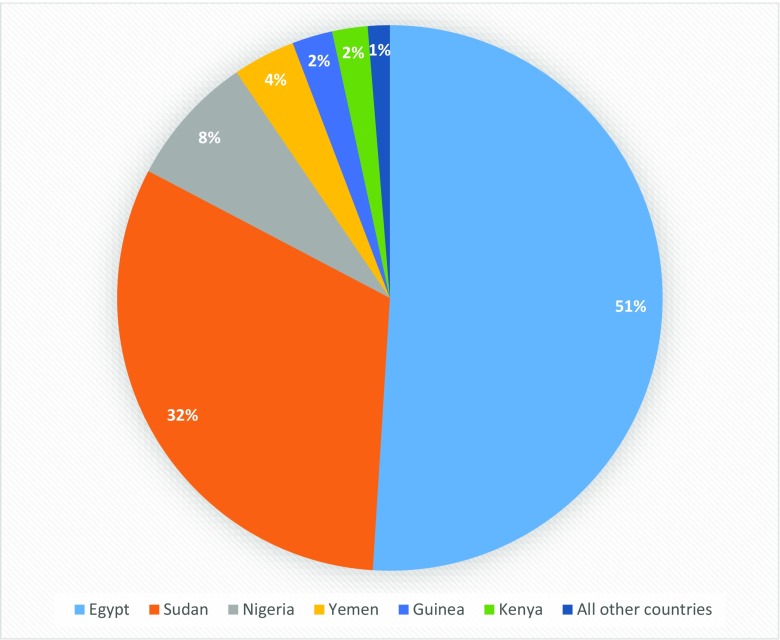
- Among women aged 15–49, medicalization rates are highest in Egypt (38%), Sudan (67%), Guinea (15%), Kenya (15%), and Nigeria (13%); 74% report being cut by traditional practitioners, while 26%—nearly 16 million women—report medicalized cutting. Among medicalized women, 93% live in Egypt, Sudan, and Nigeria, and 51% reside in Egypt alone.
- Among daughters, medicalized cutting is substantial (10% or higher) in Djibouti, Egypt, Guinea, Iraq, Kenya, Nigeria, Sudan, and Yemen; it is increasing in each of these countries except Nigeria. In Egypt, rates more than doubled between women and daughters (38% and 82%, respectively).
- Evidence on effects is mixed: a statistical overview of 25 countries found no significant correlation between medicalized FGM/C among daughters and rates of prevalence decline. Kenya showed sharply declining FGM/C prevalence while medicalization remained high, whereas Egypt and Sudan showed persistently high FGM/C. Severity findings also conflict: some providers promoted nicking, but Indonesian health care providers more commonly performed more severe type I FGM/C than traditional practitioners’ type IV scraping.
- Policy and legal landscape: the 2012 UN General Assembly resolution bans FGM/C “whether committed within or outside a medical institution”; over 40 countries have banned FGM/C, and at least six (Burkina Faso, Cote d’Ivoire, Egypt, Eritrea, Mauritania, and Senegal) specify elevated penalties for medical personnel. Professional medical associations generally oppose medicalization, and the American Association of Pediatrics’ 2010 nicking/pricking policy was retracted after protest.
Methods
- Narrative review and synthesis of scholarly literature, media/political debates, and existing survey data on FGM/C medicalization; no new primary data collection is reported.
- Draws on comparative survey overviews: medicalization among women aged 15–49 from 25 countries; FGM/C prevalence and change from 29 countries (27 African countries plus Yemen and Iraq); and policy review from 30 countries (11 where FGM/C is practiced and 19 hosting migrants from practicing countries).
- Main analysis is descriptive and interpretive, synthesizing patterns, trends, and competing ethical/legal claims; the authors propose distinguishing “regulatory policies” from “harm reduction.”
Limitations
- Stated: nationally representative data on FGM/C prevalence and medicalization are lacking for Indonesia; surveys do not always collect information on type of FGM/C; evidence on whether medicalization counteracts abandonment or reduces severity is conflicting and requires further research.
- Stated: the causal role of medicalization in shifts to less severe cutting is unclear; the legal status of type IV nicking, pricking, piercing, and scraping is less clear where statutes rely on harm rather than zero tolerance; and whether high-profile prosecutions deter providers or drive the practice underground is poorly understood.
- Evident: as a narrative review, the paper does not report a systematic search strategy or formal quality appraisal, and its conclusions rely on available secondary data with the measurement gaps noted above.
Model-written summary. Check it against the paper before relying on it.
Integrity signals
Registry
Cites
Statistics
Figures
Verification
Claims the paper makes
18 Valid · 0 Not valid · 53 Not checked · 15 Own results and interpretations
The cited sources support only part of this claim — read each source’s verdict below.
In the paper
“In at least six of these countries (Burkina Faso, Cote d’Ivoire, Egypt, Eritrea, Mauritania, and Senegal), the criminal code specifies an elevated penalty (prison and/or fine) specifically for medical personnel who perform FGM/C, in addition to the possibility of suspending their licenses [ 43 ].”
What the sources say
- Partly supportedcites [43] Shell-Duncan B Wander K Hernlund Y Moreau A Legislating change? Responses to criminalizing female genital mutilation/cutting in Senegal Law Soc Rev 2013 47 4 803 835 10.1111/lasr.12044 24771947 PMC3997264 sourceExperimental — accuracy not yet measured
The Legislative Approaches section lists increased penalties for medical professionals in Burkina Faso, Côte d’Ivoire, Eritrea, and Mauritania; the comparative table also specifies the maximum prison penalty for medical personnel in Senegal. The table describes possible license suspension in Burkina Faso, Côte d’Ivoire, and Eritrea. It does not specify an elevated penalty for medical personnel in Egypt or license suspension in Egypt, Mauritania, or Senegal (page numbers unavailable). (LLM, conf=0.90)
plain- Asserted: passes — The authors put it forward as true.
- Checkable: passes — It can be checked against evidence.
- Load-bearing: unclear — It is unclear whether the paper’s conclusions depend on it.
- Based: passes — The paper gives a reason why it holds.
- Partly supported
The cited sources support only part of this claim — read each source’s verdict below.
In the paper
“Research on whether medicalization is associated with reduction in severity of cutting also shows mixed results.”
What the sources say
- Not checked — no full text of the sourcecites [46] Orubuloye IO Caldwell P Caldwell J Shell-Duncan B Hernlund Y Female "circumcision" among the Yoruba of Southwestern Nigeria: The beginning of change Female "Circumcision" in Africa: Culture, Controversy and Change 2000 Boulder Lynne Rienner Publishers, Inc. 73 94 source
- Not checked — no full text of the sourcecites [47] Njue C, Askew I. Medicalization of female genital cutting among the Abagusii in Nyanza Province, Kenya. 2004: Nairobi, Kenya: Frontiers in Reproductive Health Program, Population Council. source
- Partly supportedcites [48] Budiharsana M Analiah L Utobmo B Erwinia Female circumcision in Indonesia: extent, implication and possible interventions to uphold women's rights 2003 Jakarta Population Council sourceExperimental — accuracy not yet measured
The ‘Providers and Types of Circumcision’ section reports that midwives more often performed excision than traditional providers, supporting one side of the proposed comparison. The paper does not report mixed findings on whether medicalization reduces cutting severity; its Conclusions and Recommendations instead say the dangers increase with medicalization. Page numbers were not available in our copy. (LLM, conf=0.82)
plainstates an association- Asserted: passes — The authors put it forward as true.
- Checkable: passes — It can be checked against evidence.
- Load-bearing: unclear — It is unclear whether the paper’s conclusions depend on it.
- Based: passes — The paper gives a reason why it holds.
Every source the paper cites for this claim was checked and supports it.
In the paper
“Similarly, in the 1970s, a recommendation by the Somali Women’s Democratic Organization to replace infibulation with pricking performed in hospitals was not followed [ 30 ].”
What the sources say
- Supportedcites [30] Gele AA, Bo BP, Sundby J. Attitudes toward female circumcision among men and women in two districts in Somalia: Is it time to rethink our eradication strategy in Somalia? Obstet Gynecol Int. 2013; 10.1155/2013/312734. PMC3654358 23710186 source
The Background section says the Somali Women’s Democratic Association, founded in 1977, recommended hospital-based pricking in the expectation that it would replace infibulation. It also says the strategy did not work. The citing sentence calls the group an “Organization” rather than an “Association,” but otherwise matches the account. (LLM, conf=0.89)
plain- Asserted: passes — The authors put it forward as true.
- Checkable: passes — It can be checked against evidence.
- Load-bearing: unclear — It is unclear whether the paper’s conclusions depend on it.
- Based: passes — The paper gives a reason why it holds.
- Supported
The cited sources support only part of this claim — read each source’s verdict below.
In the paper
“In parallel, in the 1990s as European and North American countries received increased numbers of immigrants from countries where FGM/C is practiced, several proposals were drafted recommending offering pricking in lieu of more severe forms of cutting in children old enough to give consent and for those families where any prevention strategy did not work.”
What the sources say
- Not matchedcites [28] Obiora LA Bridges and barricades: rethinking polemics and intransigence in the campaign against female circumcision Case Western Law Rev 1997 47 2 275 378
Its entry has no title and year that we can search by.
- Partly supportedcites [39] Coleman DL The Seattle compromise: multicultural sensitivity and Americanization Duke Law J 1998 47 4 717 783 10.2307/1372912 sourceExperimental — accuracy not yet measured
Split into 2 atoms — 0 confirmed, 2 partially supported, 0 disputed, 0 misattributed, 0 unverifiable. Expand the claim to see per-atom verdicts.
- Partly supportedcites [40] Abdulcadir J, Margairaz C, Boulvain M, Irion O. Care of women with female genital mutilation/cutting. Swiss Med Wkly. 2011; 10.4414/smw.2011.13137. 21213149 sourceExperimental — accuracy not yet measured
Split into 2 atoms — 1 confirmed, 1 partially supported, 0 disputed, 0 misattributed, 0 unverifiable. Expand the claim to see per-atom verdicts.
plainstates an association- Asserted: passes — The authors put it forward as true.
- Checkable: passes — It can be checked against evidence.
- Load-bearing: unclear — It is unclear whether the paper’s conclusions depend on it.
- Based: passes — The paper gives a reason why it holds.
- Not matched
Every source the paper cites for this claim was checked and supports it.
In the paper
“Conversely, research in Indonesia documented that while traditional practitioners tended to perform scraping of the clitoris (type IV), health care providers more commonly performed more severe type I FGM/C [ 48 ].”
What the sources say
- Supportedcites [48] Budiharsana M Analiah L Utobmo B Erwinia Female circumcision in Indonesia: extent, implication and possible interventions to uphold women's rights 2003 Jakarta Population Council source
The “Providers and Types of Circumcision” section explicitly says traditional providers tended to perform Type IV procedures, while health care providers tended to perform Type I. It reports rubbing and scraping as common among traditional practitioners and excision as more common among midwives; the Executive Summary likewise contrasts traditional scraping with medical providers’ cutting. (LLM, conf=0.94)
plainstates an association- Asserted: passes — The authors put it forward as true.
- Checkable: passes — It can be checked against evidence.
- Load-bearing: unclear — It is unclear whether the paper’s conclusions depend on it.
- Based: passes — The paper gives a reason why it holds.
- Supported
30 more claims · 3 with their cited sources checked
Create a free account to see all 86 claims and to verify the 3 references still open.
- It may state two separate claims as one. 33
- Probably not a substantial claim. 27
Citations
Cites
Harm reduction: pragmatic strategies for managing high-risk behaviors
(1999) · Choice Reviews Online · doi:10.5860/choice.36-5353 · Cited by 587
Human rights: a political and cultural critique
(2002) · Choice Reviews Online · doi:10.5860/choice.40-1825 · Cited by 503
Human Rights: A Political and Cultural Critique
Mutua, M. (2002) · doi:10.9783/9780812204155 · Cited by 503
Culture and Rights: Anthropological Perspectives
(2001) · Cambridge University Press eBooks · doi:10.1017/cbo9780511804687 · Cited by 485
(2013) · Reproductive Health Matters · doi:10.1016/s0968-8080(13)42747-7 · Cited by 410
Female "circumcision" in Africa: culture, controversy, and change
(2001) · Choice Reviews Online · doi:10.5860/choice.38-3970 · Cited by 369
Self-citationKapur, R. (2005) · SSRN Electronic Journal · Cited by 243
The medicalization of female “circumcision”: harm reduction or promotion of a dangerous practice?
Shell-Duncan, B. (2001) · Social Science & Medicine · doi:10.1016/s0277-9536(00)00208-2 · Cited by 233
Self-citationBohren, M. A., Vogel, J. P., Tunçalp, Ö., Fawole, B., Titiloye, M. A., Olutayo, A. O., Ogunlade, M., Oyeniran, A. A., Osunsan, O. R., Metiboba, L., et al. (2017) · Reproductive Health · doi:10.1186/s12978-016-0265-2 · Cited by 215
'What About 'Female Genital Mutilation'? and Why Understanding Culture Matters in the First Place
Shweder, R. A. (2000) · DigitalGeorgetown (Georgetown University Library) · Cited by 171
Obiora, L. A. (1997) · Case Western Reserve law review · Cited by 133
The Seattle Compromise: Multicultural Sensitivity and Americanization
Coleman, D. L. (1998) · Duke Law Journal · doi:10.2307/1372912 · Cited by 124
From Health to Human Rights: Female Genital Cutting and the Politics of Intervention
SHELL‐DUNCAN, B. (2008) · American Anthropologist · doi:10.1111/j.1548-1433.2008.00028.x · Cited by 124
Self-citationThe decline of female circumcision in Egypt: evidence and interpretation
El-Gibaly, O., Ibrahim, B., Mensch, B. S., & Clark, W. H. (2002) · Social Science & Medicine · doi:10.1016/s0277-9536(01)00020-x · Cited by 121
Female Circumcision: A Critical Appraisal
Slack, A. T. (1988) · Human Rights Quarterly · doi:10.2307/761916 · Cited by 113
Research gaps in the care of women with female genital mutilation: an analysis
Abdulcadir, J., Rodriguez, M., & Say, L. (2015) · BJOG: An International Journal of Obstetrics & Gynaecology · doi:10.1111/1471-0528.13217 · Cited by 111
Johansen, R. E. B., Diop, N. J., Laverack, G., & Leye, E. (2013) · Obstetrics and Gynecology International · doi:10.1155/2013/348248 · Cited by 108
Care of women with female genital mutilation/cutting
Abdulcadir, J., Margairaz, C., Boulvain, M., & Irion, O. (2011) · Swiss Medical Weekly · doi:10.4414/smw.2011.13137 · Cited by 106
Legislating Change? Responses to Criminalizing Female Genital Cutting in Senegal
Shell-Duncan, B., Wander, K., Hernlund, Y., & Moreau, A. (2013) · Law & Society Review · doi:10.1111/lasr.12044 · Cited by 100
Self-citationFemale Genital Mutilation and Cosmetic Surgery: Regulating Non‐Therapeutic Body Modification
Sheldon, S., & Wilkinson, S. (1998) · Bioethics · doi:10.1111/1467-8519.00117 · Cited by 96
Female genital alteration: a compromise solution
Arora, K. S., & Jacobs, A. J. (2016) · Journal of Medical Ethics · doi:10.1136/medethics-2014-102375 · Cited by 93 · cited 1×
“First, it has described the desire to reduce 26 Curr Sex Health Rep (2018) 10:25–34”
BackgroundRitual Genital Cutting of Female Minors
Committee on Bioethics (2010) · Pediatrics · doi:10.1542/peds.2010-0187 · Cited by 91
The ongoing violence against women: Female Genital Mutilation/Cutting
Muteshi, J. K., Miller, S., & Belizán, J. M. (2016) · Reproductive Health · doi:10.1186/s12978-016-0159-3 · Cited by 85
Genital Cutting and Western Discourses on Sexuality
BELL, K. (2005) · Medical Anthropology Quarterly · doi:10.1525/maq.2005.19.2.125 · Cited by 84
Medicalization of female genital mutilation/cutting
Serour, G. I. (2013) · African Journal of Urology · doi:10.1016/j.afju.2013.02.004 · Cited by 82
Dawson, A. J., Homer, C., Turkmani, S., Black, K. I., & Varol, N. (2015) · International Journal of Gynecology & Obstetrics · doi:10.1016/j.ijgo.2015.04.033 · Cited by 81
A state-of-the-art synthesis on female genital mutilation/cutting: What do we know now?
Shell-Duncan, B., Naik, R., & Feldman-Jacobs, C. (2016) · doi:10.31899/rh8.1002 · Cited by 80 · cited 5×
“While medicalized FGM/C is found in greatest concentration in three countries (Egypt, Sudan, and Nigeria), health professionals in countries around the world have been approached with requests to cut girls and women [49–53]. These include countries in Africa, Asia, and the Middle East where FGM/C has long been practic…”
BackgroundInfluentialSelf-citationTraditional Practices Affecting the Health of Women and Children
Baasher, T. A., Bannerman, R. H. O., Rushwan, H., & Sharaf, I. (1982) · Studies in Family Planning · doi:10.2307/1965452 · Cited by 76
Doucet, M.-H., Pallitto, C., & Groleau, D. (2017) · Reproductive Health · doi:10.1186/s12978-017-0306-5 · Cited by 70
Swedish Health Care Providers’ Experience and Knowledge of Female Genital Cutting
Tamaddon, L., Johnsdotter, S., Liljestrand, J., & Essén, B. (2006) · Health Care for Women International · doi:10.1080/07399330600817741 · Cited by 65
Gruenbaum, E. (1982) · Medical Anthropology Newsletter · doi:10.1525/maq.1982.13.2.02a00020 · Cited by 62
Female genital cutting : findings from the Demographic and Health Surveys Program
Carr, D. (1997) · Medical Entomology and Zoology · Cited by 60
Female circumcision: Muslim identities and zero tolerance policies in rural West Java
Newland, L. (2006) · Women's Studies International Forum · doi:10.1016/j.wsif.2006.05.005 · Cited by 59
The normal and the aberrant in female genital cutting: Shifting paradigms
Boddy, J. (2016) · HAU: Journal of Ethnographic Theory · doi:10.14318/hau6.2.008 · Cited by 59
Health sector involvement in the management of female genital mutilation/cutting in 30 countries
Johansen, R. E. B., Ziyada, M. M., Shell-Duncan, B., Kaplan, A. M., & Leye, E. (2018) · BMC Health Services Research · doi:10.1186/s12913-018-3033-x · Cited by 59
Self-citationBetween Moral Relativism and Moral Hypocrisy: Reframing the Debate on “FGM”
Earp, B. D. (2016) · Kennedy Institute of Ethics Journal · doi:10.1353/ken.2016.0009 · Cited by 58
Medicalization of female genital cutting among the Abagusii in Nyanza Province, Kenya
Njue, C., & Askew, I. (2004) · doi:10.31899/rh2.1003 · Cited by 57
Chege, J., Askew, I., & Liku, J. (2001) · doi:10.31899/rh1.1009 · Cited by 55
Darby, R., & Svoboda, J. S. (2007) · Medical Anthropology Quarterly · doi:10.1525/maq.2007.21.3.301 · Cited by 54
The goose and the gander: the genital wars
Shweder, R. A. (2013) · Global Discourse · doi:10.1080/23269995.2013.811923 · Cited by 53
Female genital mutilation: Survey of paediatricians’ knowledge, attitudes and practice
Sureshkumar, P., Zurynski, Y., Moloney, S., Raman, S., Varol, N., & Elliott, E. J. (2016) · Child Abuse & Neglect · doi:10.1016/j.chiabu.2016.03.005 · Cited by 48
Exploration of pathways related to the decline in female circumcision in Egypt
Modrek, S., & Liu, J. X. (2013) · BMC Public Health · doi:10.1186/1471-2458-13-921 · Cited by 47
Gele, A. A., Bø, B. P., & Sundby, J. (2013) · Obstetrics and Gynecology International · doi:10.1155/2013/312734 · Cited by 41
Somali women in western exile: Reassessing female circumcision in the light of Islamic teachings
Johnsdotter, S. (2003) · Journal of Muslim Minority Affairs · doi:10.1080/1360200032000139983 · Cited by 40
The Meaning of the Present: Hope and Foreclosure in Narrations about People with Severe Brain Damage
Antelius, E. (2007) · Medical Anthropology Quarterly · doi:10.1525/maq.2007.21.3.324 · Cited by 40
Budiharsana, M., Amaliah, L., & Utomo, B. (2003) · doi:10.31899/rh2.1005 · Cited by 40
Female genital mutilation in children presenting to a London safeguarding clinic: a case series
Hodes, D., Armitage, A. J., Robinson, K., & Creighton, S. (2015) · Archives of Disease in Childhood · doi:10.1136/archdischild-2015-308243 · Cited by 36
Wahlberg, A., Johnsdotter, S., Ekholm Selling, K., Källestål, C., & Essén, B. (2017) · Reproductive Health · doi:10.1186/s12978-017-0351-0 · Cited by 36
“Taming Tradition”: Medicalized Female Genital Practices in Western Kenya
Christoffersen‐Deb, A. (2005) · Medical Anthropology Quarterly · doi:10.1525/maq.2005.19.4.402 · Cited by 35
A survey on knowledge of female genital mutilation guidelines
Purchase, T. C. D., Lamoudi, M., Colman, S., Allen, S., Latthe, P., & Jolly, K. (2013) · Acta Obstetricia et Gynecologica Scandinavica · doi:10.1111/aogs.12144 · Cited by 33
Turkmani, S., Homer, C., Varol, N., & Dawson, A. (2018) · Women and Birth · doi:10.1016/j.wombi.2017.06.009 · Cited by 32
Moeed, S. M., & Grover, S. R. (2012) · Australian and New Zealand Journal of Obstetrics and Gynaecology · doi:10.1111/j.1479-828x.2012.01476.x · Cited by 31
Trends in medicalisation of female genital mutilation/cutting: What do the data reveal?
Shell‐Duncan, B., Njue, C., & Moore, Z. (2018) · doi:10.31899/rh6.1038 · Cited by 30
Self-citationModrek, S., & Sieverding, M. (2016) · International Perspectives on Sexual and Reproductive Health · doi:10.1363/42e1116 · Cited by 26
A repeat call for complete abandonment of FGM
Askew, I., Chaiban, T., Kalasa, B., & Sen, P. (2016) · Journal of Medical Ethics · doi:10.1136/medethics-2016-103553 · Cited by 23
Carbone, J. (2014) · Pediatrics · doi:10.1542/peds.2014-1394g · Cited by 22
Female Circumcision Among the Yoruba of Southwest Nigeria: The Beginning of Change
Orubuloye, I. O., Caldwell, P., & Caldwell, J. R. (2000) · ANU Open Research (Australian National University) · Cited by 21
Self-Determination and Women's Rights in Muslim Societies
Raghavan, C., & Levine, J. P. (2012) · Brandeis University Press eBooks · doi:10.26812/9781611682816 · Cited by 17
Interpreting Signs of Female Genital Mutilation Within a Risky Legal Framework
Lien, I.-L., & Schultz, J.-H. (2014) · International Journal of Law Policy and the Family · doi:10.1093/lawfam/ebu002 · Cited by 14
Female genital mutilation: why are we so radical?
Valderrama, J. (2002) · The Lancet · doi:10.1016/s0140-6736(02)07655-9 · Cited by 12
Negotiating female genital cutting (sunat) in Southern Thailand
Merli, C. (2010) · Durham Research Online (Durham University) · Cited by 11
Physicians at War: The Dual-Loyalties Challenge
Allhoff, F. (2008) · Springer eBooks · doi:10.1007/978-1-4020-6912-3_1 · Cited by 10
4 Female “Circumcision” Among the Yoruba of Southwestern Nigeria: The Beginning of Change
Orubuloye, I. O., Caldwell, P., & Caldwell, J. C. (2001) · Female "Circumcision" in Africa · doi:10.1515/9781685850036-005 · Cited by 10
Obianwu, O., Adetunji, A., & Dirisu, O. (2018) · doi:10.31899/rh6.1039 · Cited by 8
Mutcherson, K. M. (2007) · Juvenile and Family Court Journal · doi:10.1111/j.1755-6988.2007.tb00139.x · Cited by 4
(2009) · PubMed
15 Harm Reduction and Alcohol Abuse: A Brief Intervention for College-Student Binge Drinking
Marlatt, G. A., & Baer, J. S. (1997) · Harm Reduction · doi:10.3138/9781442657533-018
Research works printed but not linked: 14
- UN Joint Statement Female Genital Mutilation: A Joint WHO/UNICEF/UNFPA Statement 1997 Geneva World Health Organization
- WHO Eliminating Female Genital Mutilation: An Interagency Statement. (WHO, UNFPA, UNICEF, UNIFEM, UNHCHR, UNHCR, UNECA, UNESCO, UNDP, UNAIDS) 2008 Geneva World Health Organization
- UNICEF Female Genital Mutilation/Cutting: A Statistical Overview and Exploration of the Dynamics of Change 2013 New York UNICEF
- UNICEF Female Genital Mutilation/Cutting: What Might the Future Hold? 2014 New York UNICEF
- Muteshi J Sass J Female Genital Mutilation in Africa: An Analysis of Current Abandonment Approaches 2005 Nairobi Program for Appropriate Technology in Health
- Gosselin C Shell-Duncan B Hernlund Y Handing over the knife: Numu women and the campaign against excision in Mali Female "Circumcision" in Africa: Culture, Controversy, and Change 2000 Boulder Lynne Rienner Publishers 193 214
- WHO Female Genital Mutilation: Programmes to date: what works and what Doesn't. A review 1999 Geneva World Health Organization
- UNICEF Dynamics of Social Change: Toward the Abandonment of Female Genital Mutilation/Cutting in Five African Countries 2010 Florence Innocenti Research Center
- WHO Global Strategy to Stop Health-Care Providers from Performing Female Genital Mutilation 2010 Geneva World Health Organization
- Thomas L Shell-Duncan B Hernlund Y "Ngaitana (I will circumcise myself)": Lessons from colonial campaigns to ban excision Meru, Kenya, in Female "Circumcision" in Africa: Culture, Controversy, and Change 2000 Boulder Lynne Rienner Publishers 129 150
- UNESCO. Beijing Declaration and Platform for Action. Fourth World Conference on Women. http://www.unesco.org/education/pdf/BEIJIN_E.PDF. Accessed 1 Sept 2005, 1995.
- Breitung B Interpretation and eradication: national and international responses to female circumcision Emory Int Law Rev 1996 10 2 657 693
- Earp B, Darby R. Circumcision, sexual experience, and harm. University of Pennsylvania Journal of International Law, 2017. 37(2): http://pennjil.com/2017-penn-jil.com-online-symposium-circumcision-in-germany/. Accessed 2 Sept 2017.
- UNICEF Female Genital Mutilation/Cutting: A Statistical Exploration 2005 New York United Nations Children's Fund
Cited by
Re-thinking the Zero Tolerance Approach to FGM/C: the Debate Around Female Genital Cosmetic Surgery
Boddy, J. (2020) · Current Sexual Health Reports · doi:10.1007/s11930-020-00293-1 · Cited by 45
El-Gibaly, O., Aziz, M., & Abou Hussein, S. (2019) · BMC International Health and Human Rights · doi:10.1186/s12914-019-0202-x · Cited by 34
Lane, J. L., Johnson‐Agbakwu, C. E., Warren, N., Budhathoki, C. B., & Cole, E. C. (2018) · Journal of Immigrant and Minority Health · doi:10.1007/s10903-018-0833-3 · Cited by 38
Kimani, S. T., Kabiru, C. W., Muteshi, J. K., & Guyo, J. (2020) · PLoS ONE · doi:10.1371/journal.pone.0228410 · Cited by 36
“The data are from a larger cross-sectional qualitative study that sought to understand shifts in the practice of FGM/C in selected practicing communities in Kenya.”
BackgroundMethodResultInfluentialSelf-citationMorhason-Bello, I. O., Fagbamigbe, A. F., Kareem, Y. O., & Ojengbede, O. A. (2020) · SSM - Population Health · doi:10.1016/j.ssmph.2020.100602 · Cited by 23
Metadata
- Authors
- Kimani, S., & Shell-Duncan, B.
- Affiliations
- University of Nairobi (KE)
- ORCID
- Kimani, Samuel
- Venue
- Current Sexual Health Reports
- Published
- 2018-02-21
- Volume
- 10
- Issue
- 1
- Pages
- 25-34
- ISSN
- 1548-3584 (ISSN-L)
- 1548-3592
- PMC
- PMC5840226
- OpenAlex
- W2791340889
- Cited by
- 65
- References
- 67
- Citations by year
- 2026: 2 · 2025: 6 · 2024: 4 · 2023: 14 · 2022: 5 · 2021: 8 · 2020: 13 · 2019: 8 · 2018: 5
- FWCI
- 1.54
- Type
- journal article
- Language
- en
- Open access
- hybrid
- doi.org
- Licence
- cc-by
- creativecommons.org/licenses/by/4.0 (tdm)
- Locations
- Current Sexual Health Reports (publishedVersion, cc-by)
- Europe PMC (PubMed Central) (publishedVersion, cc-by)
- PubMed Central (publishedVersion, cc-by)
- PubMed (publishedVersion)
- Greater South Information System
- Funders
- Government of the United Kingdom
- Department for International Development, UK Government
- Department for International Development
- Eunice Kennedy Shriver National Institute of Child Health and Human Development (P2CHD042828)
- Topics
- Health Sciences › Medicine › Public Health, Environmental and Occupational Health › Female Genital Mutilation/Cutting Issues
- Health Sciences › Medicine › Surgery › Genital Health and Disease
- Health Sciences › Medicine › Urology › Ureteral procedures and complications
- Keywords
- female genital mutilation, healthcare workers, dual loyalty, girls' welfare
About these checks
Registry, retraction, Cites and statistics results are computed, not judged, with one exception: a printed reference that no index lists is read once by a model before it counts as a citation error. Claims are extracted by a model and kept only when their quote appears verbatim in the text; each cited source is then checked, with a model’s help, for whether it says what the claim relies on. Those verdicts can be wrong — read the claim’s quote and the cited source before relying on one.
The claim verdicts this report counts are experimental: their accuracy is not yet measured.
A language model drew the claims from the paper on 2026-09-28, under version 3 of the claim definition (model deepseek-v4.1-flash, prompt extract-v3).
A second model labelled each claim on 2026-09-28 (model jev-1.13-20260917, definition revision gold-guideline-v0.2).
Cited sources are checked with a language model’s help (gpt-6-sol).
Statistics and arithmetic are recomputed, not judged.
Confidence bands are shown only for fields calibrated on our annotated test set. None is calibrated yet, so no band is shown.
What counts as a claim ›How we measure confidence ›How we check this ›
Are you an author, or do you see a problem with this page? Request a review
Data sources
Bibliographic data: Semantic Scholar, OpenAlex, Crossref.
Contains information from the Semantic Scholar Academic Graph Datasets, made available under the ODC Attribution License (ODC-BY 1.0).
Semantic Scholar’s data is described in: Kinney, R., et al. (2023). The Semantic Scholar Open Data Platform. arXiv:2301.10140.
