

Replacing Animal Testing with Stem Cell-Organoids : Advantages and Limitations
Open accessThe DOI matches its Crossref record; 90 of the 90 references it cites were found in a registry or an index.
Abstract
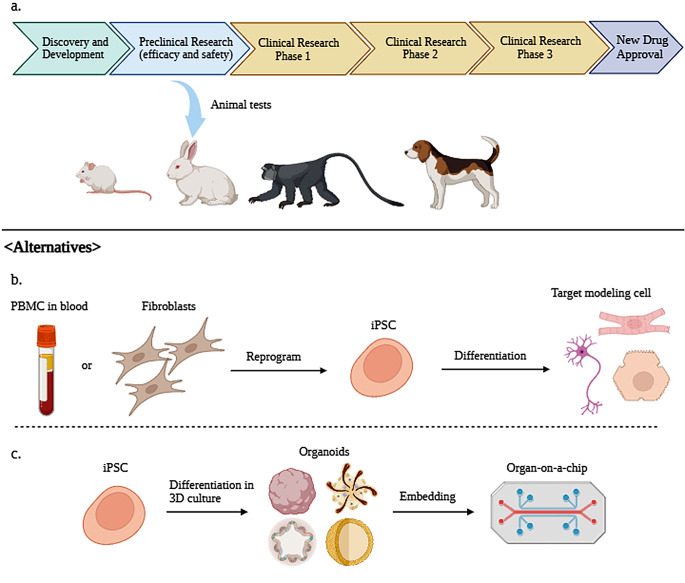
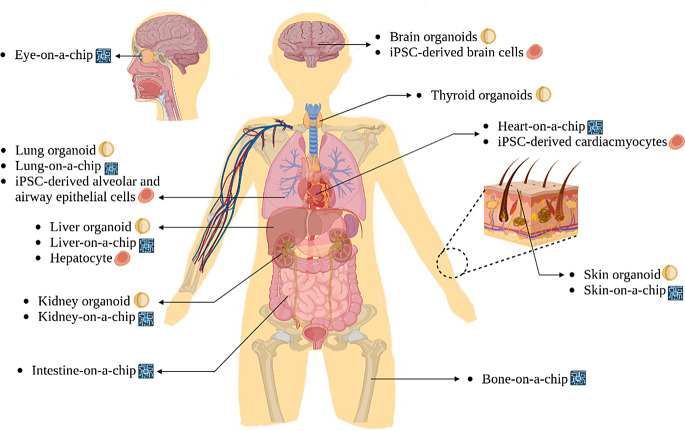
Various groups including animal protection organizations, medical organizations, research centers, and even federal agencies such as the U.S. Food and Drug Administration, are working to minimize animal use in scientific experiments. This movement primarily stems from animal welfare and ethical concerns. However, recent advances in technology and new studies in medicine have contributed to an increase in animal experiments throughout the years. With the rapid increase in animal testing, concerns arise including ethical issues, high cost, complex procedures, and potential inaccuracies. Alternative solutions have recently been investigated to address the problems of animal testing. Some of these technologies are related to stem cell technologies, such as organ-on-a-chip, organoids, and induced pluripotent stem cell models. The aim of the review is to focus on stem cell related methodologies, such as organoids, that can serve as an alternative to animal testing and discuss its advantages and limitations, alongside regulatory considerations. Although stem cell related methodologies has shortcomings, it has potential to replace animal testing. Achieving this requires further research on stem cells, with potential societal and technological benefits. Graphical Abstract
Overview
The claims and statistics of this paper haven’t been checked yet.
Free: it reads the open-access text and checks the first 5 claims that cite a source we can check. Create a free account to check every claim.
Integrity signals
Registry
Cites
Statistics
Figures
Verification
Claims the paper makes
The claims and statistics of this paper haven’t been checked yet.
Free: it reads the open-access text and checks the first 5 claims that cite a source we can check. Create a free account to check every claim.
Self-check
Percentages, sums and reported differences re-computed from the paper’s own numbers.
The self-check needs the paper’s full text.
Citations
Cites
Organoid Models and Applications in Biomedical Research
Xinaris, C., Brizi, V., & Remuzzi, G. (2015) · Nephron · doi:10.1159/000433566 · Cited by 3,515
Bhatia, S. N., & Ingber, D. E. (2014) · Nature Biotechnology · doi:10.1038/nbt.2989 · Cited by 3,305
Modeling Development and Disease with Organoids
Clevers, H. (2016) · Cell · doi:10.1016/j.cell.2016.05.082 · Cited by 3,196 · cited 2×
“This may result in only partial replication, leading to an incomplete disease model [ 38].”
BackgroundVascularized and functional human liver from an iPSC-derived organ bud transplant
Takebe, T., Sekine, K., Enomura, M., Koike, H., Kimura, M., Ogaeri, T., Zhang, R.-R., Ueno, Y., Zheng, Y.-W., Koike, N., et al. (2013) · Nature · doi:10.1038/nature12271 · Cited by 2,170 · cited 1×
“Another study focused on the use of liver hepatoblasts, which could help alleviate hepatotoxicity through liver development and hepatic differentiation [ 85].”
BackgroundWhy 90% of clinical drug development fails and how to improve it?
Sun, D., Gao, W., Hu, H., & Zhou, S. (2022) · Acta Pharmaceutica Sinica B · doi:10.1016/j.apsb.2022.02.002 · Cited by 1,763
In vitro expansion of single Lgr5+ liver stem cells induced by Wnt-driven regeneration
Huch, M., Dorrell, C., Boj, S. F., van Es, J. H., Li, V. S. W., van de Wetering, M., Sato, T., Hamer, K., Sasaki, N., Finegold, M. J., et al. (2013) · Nature · doi:10.1038/nature11826 · Cited by 1,555 · cited 1×
“There are also more direct methods like implantation to test the in vivo functions of organoids [ 65, 70 ] (Table 3 ).”
MethodThe use of animal models in diabetes research
King, A. J. (2012) · British Journal of Pharmacology · doi:10.1111/j.1476-5381.2012.01911.x · Cited by 1,303
A guide to the organ-on-a-chip
Leung, C. M., de Haan, P., Ronaldson-Bouchard, K., Kim, G.-A., Ko, J., Rho, H. S., Chen, Z., Habibovic, P., Jeon, N. L., Takayama, S., et al. (2022) · Nature Reviews Methods Primers · doi:10.1038/s43586-022-00118-6 · Cited by 1,116
Zhao, Z., Chen, X., Dowbaj, A. M., Sljukic, A., Bratlie, K., Lin, L., Fong, E. L. S., Balachander, G. M., Chen, Z., Soragni, A., et al. (2022) · Nature Reviews Methods Primers · doi:10.1038/s43586-022-00174-y · Cited by 1,082
Organs-on-chips: into the next decade
Low, L. A., Mummery, C., Berridge, B. R., Austin, C. P., & Tagle, D. A. (2021) · Nature Reviews Drug Discovery · doi:10.1038/s41573-020-0079-3 · Cited by 1,029 · cited 1×
“Organoid chips(OoC) can be regarded as the outcome of merging biology and microtechnology, serving as micro-fluidic cell culture devices [ 72, 73].”
Background
Research works printed but not linked: 2
- Center for Drug Evaluation and, R., R. Center for Biologics Evaluation and, and H. International Conference on, Guidance for industry: S6 preclinical safety evaluation of biotechnology-derived pharmaceuticals (1997). Rockville, MD: U.S. Dept. of Health and Human Services, Food and Drug Administration, Center for Drug Evaluation and Research: Center for Biologics Evaluation and Research.
- Administration, U. S. F. D. (2021). Advancing New Alternative Methodologies at FDA. Jan U.S. Food & Drug Administration: FDA website. pp. 1–34.
Cited by
Ferroptosis inhibitors: past, present and future
Zhang, L., Luo, Y., Xiang, Y., Bai, X. Y., Qiang, R. R., Zhang, X., Yang, Y. L., & Liu, X. L. (2024) · Frontiers in Pharmacology · doi:10.3389/fphar.2024.1407335 · Cited by 134
Artificial Intelligence Virtual Organoids (AIVOs)
Bai, L., & Su, J. (2025) · Bioactive Materials · doi:10.1016/j.bioactmat.2025.12.030 · Cited by 68
Advances in 3D Organoids and Organ‐on‐a‐Chip Systems for Biomedical Research
Sakthivel, V., Dharshan, S. S., Namasivayam, S. K. R., & Arockiaraj, J. (2026) · Journal of Biomedical Materials Research Part A · doi:10.1002/jbma.70028 · Cited by 57
Neziri, S., Köseoğlu, A. E., Köseoğlu, G. D., Özgültekin, B., & Özgentürk, N. Ö. (2024) · Animal Models and Experimental Medicine · doi:10.1002/ame2.12487 · Cited by 48
Roy, S., Parveen, M., Bala, A., & Sur, D. (2025) · ACS Pharmacology & Translational Science · doi:10.1021/acsptsci.4c00661 · Cited by 26
Organoid research: new concepts and new technologies
Zhang, J., Wu, Y., Shen, T., Mao, Y., Dou, H., Lin, Y., Geng, Z., Li, Z., & Su, J. (2026) · Burns & Trauma · doi:10.1093/burnst/tkag015 · Cited by 26
Advances in 3D Bioprinting: Materials, Processes, and Emerging Applications
Jose, S. A., Evtimow, A., & Menezes, P. L. (2026) · Micromachines · doi:10.3390/mi17030282 · Cited by 25
Advanced Animal Replacement Testing Strategies Using Stem Cell and Organoids
Lee, C.-J., Nam, Y., Rim, Y. A., & Ju, J. H. (2025) · International Journal of Stem Cells · doi:10.15283/ijsc24118 · Cited by 23
Self-citationBiomineralization empowers bone organoids
Zhu, M., Fan, Z., Chen, M., Xu, K., Jiang, Y., & Su, J. (2025) · Biomaterials · doi:10.1016/j.biomaterials.2025.123703 · Cited by 22
Harnessing Organoid Platforms for Nanoparticle Drug Development
Chen, L., Luo, X., Zhang, J., Zhang, J., Yang, C., & Zhao, Y. (2025) · Drug Design Development and Therapy · doi:10.2147/dddt.s530999 · Cited by 21
Fiorenzano, A., Sozzi, E., Kästli, R., Iazzetta, M. R., Bruzelius, A., Arlotta, P., & Parmar, M. (2025) · The EMBO Journal · doi:10.1038/s44318-025-00494-1 · Cited by 19
Intersection of ferroptosis and nanomaterials brings benefits to breast cancer
Gao, J., Ma, N., Ni, S., & Han, X. F. (2025) · Cell Biology and Toxicology · doi:10.1007/s10565-025-10067-x · Cited by 17
Acoustic Bioprinting: A Glimpse Into an Emerging Field
Garciamendez‐Mijares, C. E., Ruiz, D. S. R., Kuang, X., Halabe, A. S. G., Gonzalez, B. S., Ruiz, C. G. R., Mestre, F. L., Nunes, F. C., & Zhang, Y. S. (2025) · Small Methods · doi:10.1002/smtd.202500733 · Cited by 17
The ethical aspects of human organ-on-chip models: A mapping review
Weidema, J., de Vries, M., Mummery, C. L., & de Graeff, N. (2025) · Stem Cell Reports · doi:10.1016/j.stemcr.2025.102686 · Cited by 16
Ucci, A., Giacchi, L., & Rucci, N. (2024) · Biomedicines · doi:10.3390/biomedicines12112451 · Cited by 14
Granjeiro, J. M., Borchio, P. G. D. M., Ribeiro, I. P. B., & Paiva, K. B. S. (2024) · World Journal of Stem Cells · doi:10.4252/wjsc.v16.i10.860 · Cited by 14
Immunosenescence and organoids: pathophysiology and therapeutic opportunities
Kamroo, A., Kakroudi, M. H., Sarmadian, A. J., Firouzabadi, A., Mousavi, S., Yazdanpanah, N., Saleki, K., & Rezaei, N. (2025) · Immunity & Ageing · doi:10.1186/s12979-025-00530-y · Cited by 13
Mishra, R., & Upadhyay, A. (2025) · Cellular and Molecular Life Sciences · doi:10.1007/s00018-025-05668-y · Cited by 12
Recent advances in applications of nanoparticles and decellularized ECM for organoid engineering
Lee, S.-J., Cho, J., Heo, T.-H., Yang, D. H., Chun, H. J., Yoon, J., & Jeong, G. (2025) · Materials Today Bio · doi:10.1016/j.mtbio.2025.102274 · Cited by 12
Advances in neural stem cells in aging and age-related neurodegenerative diseases
Zhong, R., Huang, W., Chen, C., Zhang, B., Pu, J., & Zhang, F. (2025) · Ageing and Neurodegenerative Diseases · doi:10.20517/and.2024.32 · Cited by 11
Koedoot, E., van der Meer, D. J., van Altena, A. M., Ceton, L., Sijsenaar, T. J. P., Montero, M. G., Grillet, F., Piek, J. M. J., Bekkers, R. L. M., van der Vorst, M. J. D. L., et al. (2025) · npj Precision Oncology · doi:10.1038/s41698-025-01080-8 · Cited by 11
Ajekiigbe, V. O., Agbo, C. E., Ogieuhi, I. J., Chidera Stanley Anthony, M., Adewole, O. A., Ahmed, B., Akingbola, A., Nwankwo, C. K., Kayode, A. T., Chima, U. E., et al. (2025) · International Ophthalmology · doi:10.1007/s10792-025-03493-7 · Cited by 11
Taymour, N., Alkandari, M., Alkandari, M., Haque, M. A., Arabi, M. A. E., Atia, G. A. N., Shalaby, H. K., Gamal, O., & Rokaya, D. (2026) · Frontiers in Oral Health · doi:10.3389/froh.2025.1740392 · Cited by 11
Kim, S., Lee, T., Ryu, M., Park, Y., & Moon, S. (2026) · Journal of Applied Toxicology · doi:10.1002/jat.70059 · Cited by 10
Guerrero‐López, P., Alamán‐Díez, P., Hernández-Hatibi, S., Balsas, P., & Garcia-Aznar, J. M. (2026) · Advanced Drug Delivery Reviews · doi:10.1016/j.addr.2026.115836 · Cited by 9
Medical embryology and regenerative medicine: research and applications in clinical practice
Soczyńska, J., Gawełczyk, W., Obrycka, P., Żołyniak, M., Muzyka, A., Majcherczyk, K., Papierkowska, J., & Woźniak, S. (2025) · Frontiers in Cell and Developmental Biology · doi:10.3389/fcell.2025.1619036 · Cited by 9
Harnessing induced pluripotent stem cells and organoids for disease modeling and precision medicine
Lee, C.-J., Nam, Y., Rim, Y. A., & Ju, J. H. (2026) · Stem Cell Research & Therapy · doi:10.1186/s13287-026-04906-9 · Cited by 8
Self-citationHuman organoids: Fit for drug discovery?
Wittich, A., Krieg, K., Gribbon, P. M., Metzger, J. J., Prigione, A., & Pleß, O. (2026) · Stem Cell Reports · doi:10.1016/j.stemcr.2026.102898 · Cited by 7
Establishment and transcriptomic characterization of canine organoids from multiple tissues
Zdyrski, C., Gabriel, V., Ospina, O. E., Nicholson, H. F., Catucci, M., Melvin, B. J., Wickham, H., Sahoo, D. K., Dao, K., Meza, L. S. A., et al. (2025) · Frontiers in Cell and Developmental Biology · doi:10.3389/fcell.2025.1680376 · Cited by 7
Trucas, M., Vincis, M., Intini, C., Johnston, D., Diana, A., & Barry, D. (2025) · Translational Research in Anatomy · doi:10.1016/j.tria.2025.100404 · Cited by 7
Casanova, A., Alimohammadzadeh, E., McCormirk, S., Thomas, Y. R. J., den Dulk, R., Baldi, A., Fernández‐Sánchez, C., Ghaemmaghami, A. M., & Mailley, P. (2026) · Biosensors and Bioelectronics · doi:10.1016/j.bios.2026.118981 · Cited by 6
Lung, C.-F., Lu, H., Chung, C.-Y., Lin, P. T., & Hsu, Y.-C. (2026) · iScience · doi:10.1016/j.isci.2026.114663 · Cited by 6
Ou, L., Wu, T., Qiu, B., Jin, H., Xu, F., Wu, H., Zhang, W., Xue, M., Zhou, Z., Lin, B., et al. (2024) · ACS Applied Materials & Interfaces · doi:10.1021/acsami.4c01585 · Cited by 6
Free-Floating Human Lung Organoids Derived from Induced Pluripotent Stem Cells
Budeus, B., Kroepel, C., Stasch, L. M., & Klein, D. (2025) · Methods in molecular biology · doi:10.1007/7651_2025_621 · Cited by 6
Organoids and 3D In Vitro Models as a Platform for Precision Medicine (PM): An Update
Ganguly, P. (2024) · Organoids · doi:10.3390/organoids3030011 · Cited by 6
Yun, J., Zhang, Y., Zhang, H., Xiao, F., Wang, Y., Xu, P., & Qu, L. (2025) · Molecular Immunology · doi:10.1016/j.molimm.2025.04.015 · Cited by 6
Antonelli, G., Chamorro-García, A., Mencattini, A., Spitalieri, P., Sangiuolo, F. C., Filippi, J., Curci, G., D’Orazio, M., Casti, P., Idili, A., et al. (2025) · Advanced Functional Materials · doi:10.1002/adfm.202501659 · Cited by 6
Oral Mucosa‐on‐a‐Chip for Modeling Chemotherapy‐Induced Mucositis and Evaluating Drug Efficacy
Kim, Y. G., Lee, S., Oh, H., Choi, J., Jung, H., Kwak, B., & Kim, B. H. (2026) · Advanced Functional Materials · doi:10.1002/adfm.202521887 · Cited by 5
A bioprinted model of pregnant human uterine myometrium
Ulrich, C. C., Siddiqui, K., Baldwin, L. K., Hua, W., Kuklok, J. K., Okaikoi, J., Parker, L. L., Petereit, J., Quilici, D. R., da Silva, G. M., et al. (2025) · Frontiers in Bioengineering and Biotechnology · doi:10.3389/fbioe.2025.1632320 · Cited by 5
Klima, S., Hurrell, T., Goolam, M., Gouws, C., Engelbrecht, A., Kaur, M., & van den Bout, I. (2025) · Translational Oncology · doi:10.1016/j.tranon.2025.102391 · Cited by 5
Fabrication of Tissue Constructs and Organoids Using Electrospun Micro/Nanofibers
Wu, T. S., Hao, R., Su, Q., Sun, L., Zhang, T., Du, J., Fu, M., Wang, Y., Xue, J., & Li, X. (2026) · Chemical Reviews · doi:10.1021/acs.chemrev.5c01140 · Cited by 4
Generation of induced pluripotent stem cells from the Asian bats
Lee, Y.-S., Koo, O. J., & Saadeldin, I. M. (2024) · International Journal of Veterinary Science and Medicine · doi:10.1080/23144599.2024.2384835 · Cited by 4
Tereshchenko, Y., Petkov, S., & Behr, R. (2024) · International Journal of Molecular Sciences · doi:10.3390/ijms25158449 · Cited by 4
Capuana, E., Luca, A. D., Costa, V., Raimondi, L., Bellavia, D., Brucato, V., Giavaresi, G., & Carrubba, V. L. (2026) · Journal of Functional Biomaterials · doi:10.3390/jfb17010035 · Cited by 4
Nano-technological advancements in multimodal diagnosis and treatment
Bhatia, D., Acharjee, T., Shukla, S., & Bhatia, M. (2024) · AIMS Biophysics · doi:10.3934/biophy.2024026 · Cited by 4
Bató, L., Fürjes, P., Bozorádi, J. M., Tadić, V., Odry, P., & Vizvári, Z. (2025) · Sensors · doi:10.3390/s25206393 · Cited by 3
Human retinal organoids: from developmental biology to translational applications
Chen, Y., Zhang, L., Jiang, F., 付艳广, Yang, J., & Zhang, M. (2026) · Experimental Eye Research · doi:10.1016/j.exer.2026.111051 · Cited by 3
Breaking and Remaking: Using Organoids to Model Gastric Tissue Damage and Repair
Liddelow, N., Tan, J. Y., & Flanagan, D. J. (2025) · Organoids · doi:10.3390/organoids4030020 · Cited by 3
Incubator-Free Organoid Culture in a Sealed Recirculatory SystemPreprint
Rosen, Y., Doganyigit, K. E., Arul, S., Wachtel, E., Ehrlich, D., Venuturimilli, V., Mouzaya, M., Oriaku, S., Ndiforchu, B., Kaurala, G. A., et al. (2025) · bioRxiv (Cold Spring Harbor Laboratory) · doi:10.1101/2025.09.03.673593 · Cited by 3
Guo, Z., & Nenghua, Z. (2026) · Frontiers in Cell and Developmental Biology · doi:10.3389/fcell.2026.1721946 · Cited by 3
Elias, A., & Stern, S. (2026) · Cells · doi:10.3390/cells15080720 · Cited by 3
Advanced strategies in organoids for metabolic monitoring and metabolic disease modeling
Ma, W., Xu, Y., Gu, Z., & Li, D. (2025) · Nano Research · doi:10.26599/nr.2025.94907988 · Cited by 2
Alternative methods for developmental toxicity testing: features, status and future directions
Hwang, I., & Jeung, E. (2025) · Journal of Veterinary Science · doi:10.4142/jvs.25242 · Cited by 2
dos Santos, C. S., Magalhães, A. C., Pinto, R., Carrilho, C., Pereira, C., Miguel, F., Borges, P., Santos, L. L., & Pereira, L. (2025) · Genes · doi:10.3390/genes16121403 · Cited by 2
From Primary Cell to Organoid: the proliferative fate international conference and workshop
Jèmaà, M., Bourzam, A., Fdilen, M. B., & Mariem, S. (2025) · Biology Open · doi:10.1242/bio.061970 · Cited by 2
Advances in new approach methodologies for assessing ADME properties of nano-formulations
Jain, A. (2026) · Xenobiotica · doi:10.1080/00498254.2026.2653145 · Cited by 2
Nakazawa, M., Court, M. H., & Ambrosini, Y. M. (2025) · Drug Metabolism and Disposition · doi:10.1016/j.dmd.2025.100191 · Cited by 2
Tay, E. S. V., Ting, Y. T., Gan, P., & Ooi, J. D. (2025) · Frontiers in Immunology · doi:10.3389/fimmu.2025.1675251 · Cited by 2
Lim, D., & Kim, H. (2025) · Biomolecules & Therapeutics · doi:10.4062/biomolther.2025.239 · Cited by 2
Alternative Developmental Toxicity Screening Methods Using Chick Embryo‐Based Models
Kim, J. H., Park, C., Kim, D. K., Jeong, W., & Lee, J. (2026) · Journal of Applied Toxicology · doi:10.1002/jat.70193 · Cited by 2
Zhou, J., Abasolo, S. A., Yang, Y., Guo, F., Xing, M. M. Q., & Zhu, D. (2026) · Advanced Functional Materials · doi:10.1002/adfm.202527855 · Cited by 2
Optimal Production of 3D Neuronal Lineage Population by Morphological Classification
Choi, J.-H., Park, Y., Ju, J., Park, S., & Moon, S.-H. (2025) · Tissue Engineering and Regenerative Medicine · doi:10.1007/s13770-025-00721-0 · Cited by 1
Self-citationLi, Y., Shang, Y., Zhang, N., Li, J., & Yang, Z. (2026) · Frontiers in Oncology · doi:10.3389/fonc.2025.1734929 · Cited by 1
García‐Giménez, J. L., Seco-Cervera, M., Cánovas‐Cervera, I., Agúndez, A. B., Dolz-Andrés, E., Mondaray-Muñoz, G., Calpe-Fortea, R., Nácher-Sendra, E., Osca-Verdegal, R., Aparicio-Collado, J. L., et al. (2026) · Materials Today Bio · doi:10.1016/j.mtbio.2026.103194 · Cited by 1
The Mouse as a Cornerstone of Biomedical Research: A Biological Model for Human Health and Disease
Mori, P., Maniya, H., Chauhan, M., Goswami, S., & Kumar, V. (2026) · Springer eBooks · doi:10.1007/978-981-92-0038-2_6 · Cited by 1
Organoid application in virology research: Recent progress and emerging directions
Sheng, W., Wang, H., & LI, Y. (2026) · Infectious Diseases & Immunity · doi:10.1097/id9.0000000000000203 · Cited by 1
Spheroids and organoids to study long noncoding RNAs in cancer: how they could replace animal models
Capela, A. M., Pessoa, J., Arede, H. F. E., & de Jesus, B. B. (2026) · Cancer and Metastasis Reviews · doi:10.1007/s10555-026-10350-1 · Cited by 1
Chang, T.-H., Hou, H., Shieh, Y., Huang, H., & Yuh, D. (2025) · Journal of Dental Sciences · doi:10.1016/j.jds.2025.09.013 · Cited by 1
PHIROS: Integrated microfluidic platform for multi-day high-resolution imaging of organotypic slicesPreprint
Petr, J. B., Lin, M.-S., Gomes, C. M., Hochuli, D., Hierlemann, A. R., Baumgartner, M., & Modena, M. M. (2025) · bioRxiv (Cold Spring Harbor Laboratory) · doi:10.1101/2025.02.28.640791 · Cited by 1
Organoids, Animals and the Question of Moral Status
(2025) · tierethik · doi:10.58848/tierethik.2025.2.64 · Cited by 1
Establishment and Evaluation of Cell Models for Bronchopulmonary Dysplasia: Challenges and Prospects
Zou, Z., Fu, L., Liu, J., & Huang, B. (2025) · The Clinical Respiratory Journal · doi:10.1111/crj.70118 · Cited by 1
Li, J. R., Wu, Z., Zhang, Y., Chen, S., Lin, Y., Chen, S., Xu, T., Meng, X., Zhang, Y., & Lin, J. (2026) · Advanced Science · doi:10.1002/advs.76211
Ercan, N., Yıldırım, E. A., Akgül, Z., & Meraci, B. (2025) · Anatolian Current Medical Journal · doi:10.38053/acmj.1773361
Martinelli, S., & Niccolai, E. (2025) · Biomedicines · doi:10.3390/biomedicines13102540
Ferraz, L. S., & Linardi, A. (2026) · Pharmacological Research - Reports · doi:10.1016/j.prerep.2026.100102
MPOX transmission risks and biosafety protocols in laboratory animal research
Mobolaji, A. A., Ajagbe͓, A. O., Oyeleye, B. S., Olajimbiti, C. O., Zakariya, M. E., Wadan, A.-H. S., & Usende, I. L. (2026) · Laboratory Animal Research · doi:10.1186/s42826-026-00265-x
Krammer, T., & Tanaka, E. M. (2025) · Journal of Visualized Experiments · doi:10.3791/67883
Revisiting organoids and animal models in IBD
Balakrishnan, D. D., Tiwari, R., Goswami, S., Narang, H., & Ahuja, V. (2026) · Trends Open · doi:10.1016/j.treopn.2026.06.018
Pant, T., Rohra, N., Saxena, T., Pathak, S., & Ganguly, P. (2026) · Elsevier eBooks · doi:10.1016/b978-0-443-43934-6.00028-6
Han, N., Hwang, H.-H., Kim, T., Lee, H., Yi, T., Park, H. W., Ko, S., & Moon, P. (2026) · Cancer Cell International · doi:10.1186/s12935-026-04338-8
Organoid Segmentation Using Phase Congruency and Persistent Homology
Cho, H., & Singh, R. (2026) · Lecture notes in computer science · doi:10.1007/978-3-032-14495-9_29
Stem Cell Applications in Pediatric Urology
(2025) · IGI Global eBooks · doi:10.4018/979-8-3693-8829-7.ch008
Song, Y., Li, Y., Mai Nhu, Y., Liu, H., Hong, A., Jain, E., Yang, H., Wang, X. W., & Ma, Z. (2026) · ACS Applied Bio Materials · doi:10.1021/acsabm.6c00364
Zhang, Y., David, A., Nemati, A., & Faure, C. C. (2026) · Cells · doi:10.3390/cells15050448
Three-dimensional models for type 2 diabetes study
Lu, Q.-Q., Zheng, Z. M., Wang, P., Hakim, M. S., & Yin, Y.-B. (2025) · Diabetology International · doi:10.1007/s13340-025-00862-6
Social and Economic Aspects of Single-Cell Analysis
Nguyen, T.-Q., Bui, N. L., Nguyen, M. Q., & Chu, D.-T. (2026) · Springer eBooks · doi:10.1007/978-981-95-9789-5_18
Differentiation of human pluripotent stem cells into hippocampal cultures
Virtaharju, H. (2024) · Tampere University Institutional Repository (Tampere University)
Reprogramming of DPSC to Induced Pluripotent Stem Cells
Yıldırım, S. (2024) · Springer eBooks · doi:10.1007/978-1-0716-4244-3_8
Im Fokus: Forschungshemmnisse und -chancen in Deutschland.
Fehse, B., & Schickl, H. (2025) · Refubium (Universitätsbibliothek der Freien Universität Berlin) · doi:10.17169/refubium-48464
Varghese, L. N. (2026) · Otago University Research Archive (University of Otago) · doi:10.82348/our-archive.00122
Community series: systemic vasculitis: advances in pathogenesis and therapies, volume II
(2026) · Frontiers research topics · doi:10.3389/978-2-8325-7371-6
History and evolution of bioethics in animal experimentation
Fraile Roncero, N. (2025) · Buleria (Universidad de León)
Bastard, C. (2025) · RWTH Publications (RWTH Aachen) · doi:10.18154/rwth-2026-02246
Comparative evaluation of TRIDs : a strategy to improve treatments
Hariss, F., Spelier, S., Damy, L., Pacheco, C. S., Houpe, L., Leroy, C., Thuru, X., Becq, F., & Lejeune, F. (2026) · Journal of Translational Medicine · doi:10.1186/s12967-026-08058-5
Theobromine and Vitamin D Effect on Acute Viral Damage of Intestinal Tract
Žukaitė, D. (2025) · Lithuanian University of Health Sciences
Kadiwala, J., Ciocan, C. M., & Shakur, R. (2025) · Applied In Vitro Toxicology · doi:10.1177/23321539251371828
Jürgen Habermas im Kontext von Biokonservativismus und Stammzellethik
Wirth, M. (2024) · Deutsche Zeitschrift für Philosophie · doi:10.1515/dzph-2024-0059
Shete, Y., Rakshit, S., Satamkar, S., Swapna, N. J., Chandak, A., Chakraborty, A., & Basu, S. K. (2025) · Journal of Laboratory Animal Science · doi:10.48165/jlas.2025.8.2.3
Establishment and characterization of mouse liver organoids in Matrigel domes
Gartner, B. (2026) · Repository of the University of Ljubljana (University of Ljubljana)
Metadata
- Authors
- Park, G., Rim, Y. A., Sohn, Y., Nam, Y., & Ju, J. H.
- Affiliations
- Sungshin Women's University (KR)
- The Catholic University of Korea Seoul St. Mary's Hospital (KR)
- Sungkyunkwan University (KR)
- Corresponding author
- Nam, Yoojun
- Ju, Ji Hyeon
- Venue
- Stem Cell Reviews and Reports
- Published
- 2024-04-19
- Volume
- 20
- Issue
- 6
- Pages
- 1375-1386
- ISSN
- 1550-8943 (ISSN-L)
- 2629-3269
- 2629-3277
- PMC
- PMC11319430
- OpenAlex
- W4394955524
- Cited by
- 92
- References
- 90
- Citations by year
- 2026: 41 · 2025: 41 · 2024: 10
- FWCI
- 6.93
- Type
- journal article
- Language
- en
- Open access
- hybrid
- doi.org
- Licence
- cc-by
- creativecommons.org/licenses/by/4.0 (tdm)
- creativecommons.org/licenses/by/4.0 (vor)
- Locations
- Stem Cell Reviews and Reports (publishedVersion, cc-by)
- PubMed Central (publishedVersion, cc-by)
- PubMed (publishedVersion)
- Funders
- Korea Health Industry Development Institute (HI22C1314)
- Topics
- Health Sciences › Veterinary › Small Animals › Animal testing and alternatives
- Physical Sciences › Engineering › Biomedical Engineering › 3D Printing in Biomedical Research
- Health Sciences › Nursing › Issues, ethics and legal aspects › Biomedical Ethics and Regulation
- Keywords
- alternatives to animal testing, organoids, organ-on-a-chip, induced pluripotent stem cells, 3D cell culture models, animal welfare, animal research ethics, regulatory considerations
- MeSH terms
- Animals, Animal Testing Alternatives, Humans, Organoids, Stem Cells, Induced Pluripotent Stem Cells, Stem Cell Research
About these checks
Registry, retraction, Cites and statistics results are computed, not judged, with one exception: a printed reference that no index lists is read once by a model before it counts as a citation error. Claims are extracted by a model and kept only when their quote appears verbatim in the text; each cited source is then checked, with a model’s help, for whether it says what the claim relies on. Those verdicts can be wrong — read the claim’s quote and the cited source before relying on one.
Statistics and arithmetic are recomputed, not judged.
Confidence bands are shown only for fields calibrated on our annotated test set. None is calibrated yet, so no band is shown.
What counts as a claim ›How we measure confidence ›How we check this ›
Are you an author, or do you see a problem with this page? Request a review
Data sources
Bibliographic data: Semantic Scholar, OpenAlex, Crossref.
Contains information from the Semantic Scholar Academic Graph Datasets, made available under the ODC Attribution License (ODC-BY 1.0).
Semantic Scholar’s data is described in: Kinney, R., et al. (2023). The Semantic Scholar Open Data Platform. arXiv:2301.10140.
