

A Randomized Controlled Trial of Qigong Exercise on Fatigue Symptoms, Functioning, and Telomerase Activity in Persons with Chronic Fatigue or Chronic Fatigue Syndrome
Open accessThe DOI matches its Crossref record; 64 of the 64 references it cites were found in a registry or an index.
Abstract
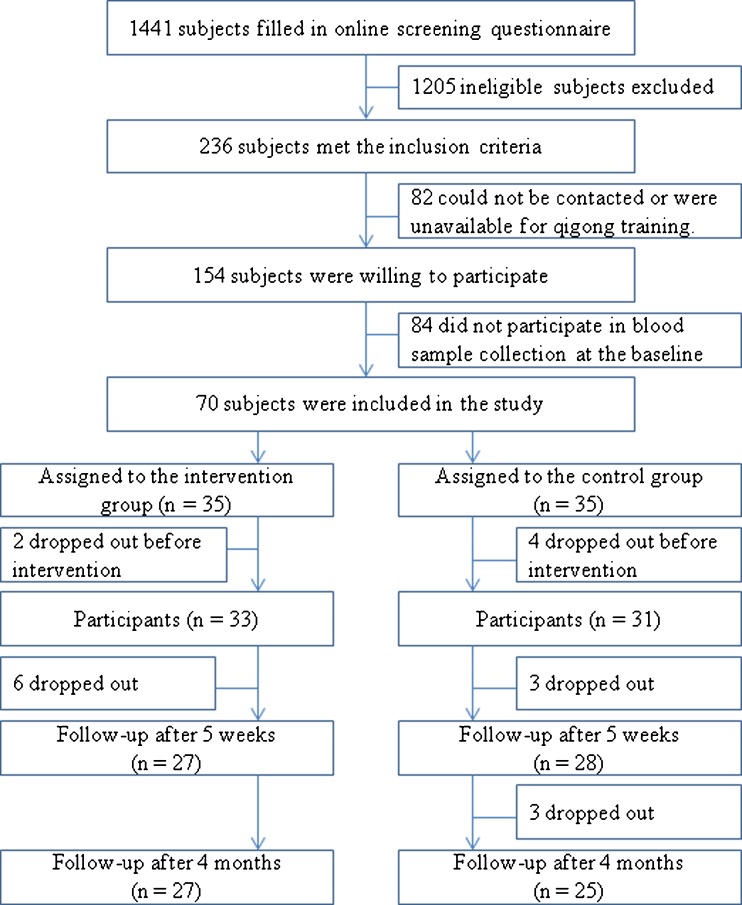
BACKGROUND: Chronic fatigue is common in the general population. Complementary therapies are often used by patients with chronic fatigue or chronic fatigue syndrome to manage their symptoms. PURPOSE: This study aimed to assess the effect of a 4-month qigong intervention program among patients with chronic fatigue or chronic fatigue syndrome. METHODS: Sixty-four participants were randomly assigned to either an intervention group or a wait list control group. Outcome measures included fatigue symptoms, physical functioning, mental functioning, and telomerase activity. RESULTS: Fatigue symptoms and mental functioning were significantly improved in the qigong group compared to controls. Telomerase activity increased in the qigong group from 0.102 to 0.178 arbitrary units (p < 0.05). The change was statistically significant when compared to the control group (p < 0.05). CONCLUSION: Qigong exercise may be used as an alternative and complementary therapy or rehabilitative program for chronic fatigue and chronic fatigue syndrome.
Overview
The claims and statistics of this paper haven’t been checked yet.
Free: it reads the open-access text and checks the first 5 claims that cite a source we can check. Create a free account to check every claim.
Integrity signals
Registry
Cites
Statistics
Figures
Verification
Claims the paper makes
The claims and statistics of this paper haven’t been checked yet.
Free: it reads the open-access text and checks the first 5 claims that cite a source we can check. Create a free account to check every claim.
Claims other papers make about this one
Each is checked against this paper’s own text: does it say what the citing paper says it does?
The source backs part of the claim, not all of it — or backs it for a different population, condition or comparison.
In the citing paper
“In comparison to the control group, quality of life improved in participants receiving Qigong exercise [41,70,71] and cognitive-behavioral stress management [45].”
From Systematic review of mind‐body interventions to treat myalgic encephalomyelitis/chronic fatigue syndrome (2021) · cites this paper as [70]
Experimental — accuracy not yet measured
Self-check
Percentages, sums and reported differences re-computed from the paper’s own numbers.
The self-check needs the paper’s full text.
Citations
Cites
1 retracted
Adams, D., Wu, T., Yang, X., Tai, S., & Vohra, S. (2009) · Cochrane Database of Systematic Reviews · doi:10.1002/14651858.cd006348.pub2 · Cited by 48
RetractedWARE, J. E., KOSINSKI, M., & KELLER, S. D. (1996) · Medical Care · doi:10.1097/00005650-199603000-00003 · Cited by 17,392 · cited 1×
“Physical functioning and mental functioning were assessed by the Chinese version of the Medical Outcomes Study 12Item Short-Form Health Survey [52, 53].”
MethodThe Chronic Fatigue Syndrome: A Comprehensive Approach to Its Definition and Study
Fukuda, K., Straus, S. E., Hickie, I., Sharpe, M. C., Dobbins, J. G., Komaroff, A., & and International Chronic Fatigue Syndrome Study Group. (1994) · Annals of Internal Medicine · doi:10.7326/0003-4819-121-12-199412150-00009 · Cited by 4,969
Structure and function of telomeres
Blackburn, E. H. (1991) · Nature · doi:10.1038/350569a0 · Cited by 3,596
Development of a fatigue scale
Chalder, T., Berelowitz, G., Pawlikowska, T., Watts, L., Wessely, S., Wright, D., & Wallace, E. P. (1993) · Journal of Psychosomatic Research · doi:10.1016/0022-3999(93)90081-p · Cited by 3,032 · cited 4×
“The total fatigue score is obtained by summing all of the items [50].”
MethodInfluentialAccelerated telomere shortening in response to life stress
Epel, E. S., Blackburn, E. H., Lin, J., Dhabhar, F. S., Adler, N. E., Morrow, J. D., & Cawthon, R. M. (2004) · Proceedings of the National Academy of Sciences · doi:10.1073/pnas.0407162101 · Cited by 3,002
Association between telomere length in blood and mortality in people aged 60 years or older
Cawthon, R. M., Smith, K. R., O'Brien, E., Sivatchenko, A., & Kerber, R. A. (2003) · The Lancet · doi:10.1016/s0140-6736(03)12384-7 · Cited by 1,761 · cited 1×
“sion, and premature mortality [37–39].”
A prospective randomized trial
(1995) · Nihon Gekakei Rengo Gakkaishi (Journal of Japanese College of Surgeons) · doi:10.4030/jjcs1979.20.2_191 · Cited by 1,619
Carruthers, B. M., Jain, A. K., De Meirleir, K. L., Peterson, D. L., Klimas, N. G., Lerner, A. M., Bested, A. C., Flor-Henry, P., Joshi, P., Powles, A. C. P., et al. (2003) · Journal of Chronic Fatigue Syndrome · doi:10.1300/j092v11n01_02 · Cited by 1,180 · cited 2×
“established in the USA [1] and Canada [2], chronic fatigue is severe fatigue that persists or relapses for at least 6 months, while chronic fatigue syndrome, which is distinguished from chronic fatigue by severity and chronicity [3], is defined as “medically unexplained” fatigue lasting for six or more months.”
BackgroundChronic Fatigue Syndrome: A Review
Afari, N., & Buchwald, D. (2003) · American Journal of Psychiatry · doi:10.1176/appi.ajp.160.2.221 · Cited by 687
Cited by
Lindqvist, D., Epel, E. S., Mellon, S. H., Penninx, B. W., Révész, D., Verhoeven, J. E., Reus, V. I., Lin, J., Mahan, L., Hough, C. M., et al. (2015) · Neuroscience & Biobehavioral Reviews · doi:10.1016/j.neubiorev.2015.05.007 · Cited by 285
Qigong and Tai-Chi for Mood Regulation
Yeung, A., Chan, J. S. M., Cheung, J. C., & Zou, L. (2018) · Focus · doi:10.1176/appi.focus.20170042 · Cited by 176
Self-citationFung, T. K. H., Lau, B. W. M., Ngai, S. P. C., & Tsang, H. W. H. (2021) · International Journal of Molecular Sciences · doi:10.3390/ijms22094844 · Cited by 171
“Whereas in human studies the severity of depression and anxiety can be assessed via questionnaires or interviews [77], the examination of depression- and anxiety-like state in animals requires standardised tests,”
BackgroundSelf-citationA meta-analytic review of the effects of mindfulness meditation on telomerase activity
Schutte, N. S., & Malouff, J. M. (2014) · Psychoneuroendocrinology · doi:10.1016/j.psyneuen.2013.12.017 · Cited by 171
Smith, M. E. B., Haney, E., McDonagh, M., Pappas, M., Daeges, M., Wasson, N., Fu, R., & Nelson, H. D. (2015) · Annals of Internal Medicine · doi:10.7326/m15-0114 · Cited by 142
“These included GET involving an exercise plan with structured incremental increases in exercise over time (23, 48, 50, 52, 53), qigong exercise (49, 51), and home orthostatic training (54).”
BackgroundMethodChan, J. S. M., Ho, R. T. H., Chung, K.-F., Wang, C.-W., Yao, T.-J., Ng, S.-M., & Chan, C. L. W. (2014) · Evidence-Based Complementary and Alternative Medicine · doi:10.1155/2014/106048 · Cited by 138
Self-citationWormgoor, M. E. A., & Rodenburg, S. C. (2021) · Journal of Translational Medicine · doi:10.1186/s12967-020-02683-4 · Cited by 123
New Frontiers in the Prevention, Diagnosis, and Treatment of Alzheimer’s Disease
Guzmán‐Martínez, L., Calfío, C., Farias, G. A., Vilches, C., Prieto, R., & Maccioni, R. B. (2021) · Journal of Alzheimer s Disease · doi:10.3233/jad-201059 · Cited by 123
Innes, K. E., Selfe, T. K., Brundage, K., Montgomery, C., Wen, S., Kandati, S., Bowles, H., Khalsa, D. S., & Huysmans, Z. (2018) · Journal of Alzheimer’s Disease · doi:10.3233/jad-180164 · Cited by 105
Nan, J. K.-M., & Ho, R. (2017) · Journal of Affective Disorders · doi:10.1016/j.jad.2017.04.013 · Cited by 129
Self-citationCampo, R. A., Agarwal, N., LaStayo, P. C., O’Connor, K., Pappas, L., Boucher, K. M., Gardner, J., Smith, S., Light, K. C., & Kinney, A. Y. (2014) · Journal of Cancer Survivorship · doi:10.1007/s11764-013-0315-5 · Cited by 102
“Finally, in patients with chronic fatigue, a 4month Qigong intervention helped improve fatigue symptoms and mental functioning [37].”
BackgroundHarley, C. B., Liu, W., Flom, P. L., & Raffaele, J. M. (2013) · Rejuvenation Research · doi:10.1089/rej.2013.1430 · Cited by 100
Stress and immunosenescence: The role of telomerase
de Punder, K., Heim, C., Wadhwa, P. D., & Entringer, S. (2019) · Psychoneuroendocrinology · doi:10.1016/j.psyneuen.2018.10.019 · Cited by 90
“(Ho et al., 2012) 64 chronic fatigue syndrome patients (33 intervention, 31 waitlist controls) Qigong exercise, 12 weeks TA ↑ TA increased in the intervention group.”
BackgroundYe, M., Xu, Y., & Yuan, X. (2022) · Journal of International Medical Research · doi:10.1177/03000605221075816 · Cited by 104
“Chronic stress, also called long-term stress, means that the stress process and event that cause stress will last longer.(7) It has been recognized that physiological responses to chronic stress are potent modulators of immune, endocrine, and metabolic pathways.”
BackgroundKim, D.-Y., Lee, J.-S., Park, S.-Y., Kim, S.-J., & Son, C.-G. (2020) · Journal of Translational Medicine · doi:10.1186/s12967-019-02196-9 · Cited by 82
Courtois, I., Cools, F., & Calsius, J. (2014) · Journal of Bodywork and Movement Therapies · doi:10.1016/j.jbmt.2014.04.003 · Cited by 84
Chan, J. S. M., Li, A., Ng, S.-M., Ho, R. T. H., Xu, A., Yao, T.-J., Wang, X.-M., So, K.-F., & Chan, C. L. W. (2017) · Cell Transplantation · doi:10.3727/096368916x694238 · Cited by 71
Self-citationDunn, T. J., & Dimolareva, M. (2022) · Clinical Psychology Review · doi:10.1016/j.cpr.2022.102124 · Cited by 80
Deng, W., Cheung, S. T., Tsao, S. W., Wang, X. M., & Tiwari, A. F. Y. (2016) · Psychoneuroendocrinology · doi:10.1016/j.psyneuen.2015.11.017 · Cited by 65
Qi, D., Wong, N. M. L., Shao, R., Man, I. S. C., Wong, C. H. Y., Yuen, L. P., Chan, C. C. H., & Lee, T. M. C. (2021) · Brain Behavior and Immunity · doi:10.1016/j.bbi.2021.04.011 · Cited by 73
“9 beneficial effects of this exercise in alleviating chronic fatigue symptoms and improving mental function (Chan et al., 2013; Ho et al., 2012).”
InfluentialSelf-citationLeaviss, J., Davis, S., Ren, S., Hamilton, J., Scope, A., Booth, A., Sutton, A., Parry, G., Buszewicz, M., Moss-Morris, R., et al. (2020) · Health Technology Assessment · doi:10.3310/hta24460 · Cited by 61
Chan, C. H. Y., Chan, T. H. Y., Leung, P. P. Y., Brenner, M. J., Wong, V. P. Y., Leung, E. K. T., Wang, X., Lee, M. Y., Chan, J. S. M., & Chan, C. L. W. (2014) · Journal of Ethnic And Cultural Diversity in Social Work · doi:10.1080/15313204.2014.932550 · Cited by 61
“Subjects were recruited from a large-scale effectiveness study of a Chinese movement exercise (qigong) intervention on chronic fatigue syndrome, details of which have been previously published (Ho et al., 2012).”
MethodSelf-citationWang, Y., Li, X., Liu, J.-P., Luo, H., Ma, L., & Alræk, T. (2014) · Complementary Therapies in Medicine · doi:10.1016/j.ctim.2014.06.004 · Cited by 66
Yeh, M., & Chung, Y.-C. (2016) · European Journal of Oncology Nursing · doi:10.1016/j.ejon.2016.05.003 · Cited by 57
Chan, J. S. M., Ho, R. T. H., Wang, C.-W., Yuen, L. P., Sham, J. S. T., & Chan, C. L. W. (2013) · Evidence-Based Complementary and Alternative Medicine · doi:10.1155/2013/485341 · Cited by 57
“Our prior study demonstrated that Qigong exercise was effective in reducing the severity of fatigue symptoms, improving health-related quality of life [22], and increasing telomerase activity for the patients with CFS-like illness [23].”
Self-citationDenham, J., & Sellami, M. (2021) · Ageing Research Reviews · doi:10.1016/j.arr.2021.101411 · Cited by 56
Religiosity and telomere length: One step forward, one step back
VanderWeele, T. J., & Shields, A. E. (2016) · Social Science & Medicine · doi:10.1016/j.socscimed.2016.06.038 · Cited by 47
Verhoeven, J. E., Révész, D., Wolkowitz, O. M., & Penninx, B. W. J. H. (2014) · BioEssays · doi:10.1002/bies.201400068 · Cited by 45
“[118] 64 patients with”
Tsang, H. W. H., Lee, J. L. C., Au, D. W. H., Wong, K. K. W., & Lai, K. W. (2013) · Evidence-based Complementary and Alternative Medicine · doi:10.1155/2013/827392 · Cited by 53
“Most studies reported only self-perceived benefits of qigong on cognitive functioning [28–30].”
BackgroundKlein, P. J., Picard, G., Baumgarden, J., & Schneider, R. (2017) · Medicines · doi:10.3390/medicines4040069 · Cited by 51
“Recent research has confirmed that Qigong practice has the benefits of mediating inflammatory response, raising immune support, and stimulating DNA repair [65].”
BackgroundEffects of Qigong on symptom management in cancer patients: A systematic review
Vu, D. V., Molassiotis, A., Ching, S. S. Y., & Le, T. T. (2017) · Complementary Therapies in Clinical Practice · doi:10.1016/j.ctcp.2017.09.005 · Cited by 38
Cheung, D. S. T., Deng, W., Tsao, S., Ho, R., Chan, C., Fong, D., Chau, P. H., Hong, A. W. L., Fung, H. Y. K. Y., Ma, J. L. C., et al. (2019) · JAMA Network Open · doi:10.1001/jamanetworkopen.2018.6967 · Cited by 34
Self-citationBenefits of Qigong as an integrative and complementary practice for health: a systematic review
Toneti, B. F., Barbosa, R. F. M., Mano, L. Y., Sawada, L. O., de Oliveira, I. G., & Sawada, N. O. (2020) · Revista Latino-Americana de Enfermagem · doi:10.1590/1518-8345.3718.3317 · Cited by 70
“E13(25), conducted with people showing chronic fatigue (n = 52) with a mean age of 42 years old, showed the effectiveness of the intervention (4 months) with important benefits compared to the control group regarding the total fatigue score (p 0.05), physical fatigue (p 0.01), mental fatigue (p 0.05), and mental funct…”
BackgroundInfluentialEndothelial Senescence and Chronic Fatigue Syndrome, a COVID-19 Based Hypothesis
Sfera, A., Osorio, C. P., del Campo, C. M. Z.-M., Pereida, S., Maurer, S., Maldonado, J. C., & Kozlakidis, Z. (2021) · Frontiers in Cellular Neuroscience · doi:10.3389/fncel.2021.673217 · Cited by 38
“Conversely, the telomere-repairing enzyme, telomerase, was reported not only to reverse ANG II-induced telomeres damage but also to ameliorate the symptoms of ME/CFS, further connecting this disorder to premature cellular senescence (Imanishi et al., 2005; Findeisen et al., 2011; Ho et al., 2012; AitAissa et al., 2018…”
BackgroundDiagnosis and Treatment of Myalgic Encephalomyelitis/Chronic Fatigue Syndrome
Smith, M. E. B., Nelson, H. D., Haney, E. M., Pappas, M., Daeges, M., Wasson, N., & McDonagh, M. S. (2014) · doi:10.23970/ahrqepcerta219 · Cited by 39
Qigong and Fibromyalgia: Randomized Controlled Trials and Beyond
Sawynok, J., & Lynch, M. E. (2014) · Evidence-based Complementary and Alternative Medicine · doi:10.1155/2014/379715 · Cited by 37
Khanpour Ardestani, S., Karkhaneh, M., Stein, E., Punja, S., Junqueira, D. R., Kuzmyn, T., Pearson, M., Smith, L., Olson, K., & Vohra, S. (2021) · Medicina · doi:10.3390/medicina57070652 · Cited by 30
“, 2012 [70]as the preliminary study and Li et al.”
BackgroundInfluentialWu, K., Li, Y., Zou, Y., Ren, Y. L., Wang, Y., Hu, X., Wang, Y., Chen, C., Lu, M., Xu, L., et al. (2022) · PLoS ONE · doi:10.1371/journal.pone.0278415 · Cited by 29
Ho, R. T. H., Wan, A. H. Y., Chan, J. S. M., Ng, S. M., Chung, K. F., & Chan, C. L. W. (2017) · BMC Complementary and Alternative Medicine · doi:10.1186/s12906-017-1898-6 · Cited by 26
“Mindfulness meditation is a technique used to cultivate the mind’s ability to influence bodily functions and symptoms by means of focused-awareness training [12], whereas qigong capitalizes on movement and attention to foster the mind-body connection via the physical body [20, 25, 26].”
Self-citationMyalgic Encephalomyelitis/Chronic Fatigue Syndrome After SARS-CoV-2 Infection
Unger, E. R., Lin, J.-M. S., Wisk, L. E., Yu, H., L’Hommedieu, M., Lavretsky, H., Montoy, J. C. C., Gottlieb, M. A., Rising, K. L., Gentile, N. L., et al. (2024) · JAMA Network Open · doi:10.1001/jamanetworkopen.2024.23555 · Cited by 46
Qigong exercise for chronic fatigue syndrome
Chan, J. S. M., Ng, S., Yuen, L.-P., & Chan, C. (2019) · International review of neurobiology · doi:10.1016/bs.irn.2019.08.002 · Cited by 26
Self-citationPortnoff, L. C., McClintock, C. H., Lau, E., Choi, S. H., & Miller, L. (2017) · Spirituality in Clinical Practice · doi:10.1037/scp0000127 · Cited by 68
Individual Stress Prevention through Qigong
van Dam, K. (2020) · International Journal of Environmental Research and Public Health · doi:10.3390/ijerph17197342 · Cited by 34
Efficacy of Qigong Exercise for Treatment of Fatigue: A Systematic Review and Meta-Analysis
Wang, R., Huang, X., Wu, Y., & Sun, D. (2021) · Frontiers in Medicine · doi:10.3389/fmed.2021.684058 · Cited by 35
Functional genomics in the study of mind-body therapies.
Niles, H. F., Mehta, D. H., Corrigan, A. A., Bhasin, M., & Denninger, J. W. (2014) · PubMed Central · Cited by 28
Li, J., Chan, J. S. M., Chow, A. Y. M., Yuen, L. P., & Chan, C. (2015) · Evidence-based Complementary and Alternative Medicine · doi:10.1155/2015/631410 · Cited by 23
“Long-term Qigong practice may be necessary to improve physical functioning [25].”
BackgroundSelf-citationFricke-Comellas, H., Heredia‐Rizo, A. M., Casuso-Holgado, M. J., Salas-González, J., & Fernández-Seguín, L. M. (2024) · Healthcare · doi:10.3390/healthcare12202020 · Cited by 25
Kong, L., Ren, J. P., Fang, S., Li, Y., Wu, Z., Zhou, X., Hao, Q., Fang, M., & Zhang, Y. (2023) · Journal of Global Health · doi:10.7189/jogh.13.04157 · Cited by 17
Tiwari, A., Chan, C., Ho, R., Tsao, G. S., Deng, W., Hong, A. W. L., Fong, D., Fung, H. Y. K. Y., Pang, E. P. S., Cheung, D. S. T., et al. (2014) · BMC Complementary and Alternative Medicine · doi:10.1186/1472-6882-14-300 · Cited by 18
Self-citationEffect of qigong training on fatigue in haemodialysis patients: A non-randomized controlled trial
Wu, C.-Y., Han, H., Huang, M.-C., Chen, Y., Yu, W., & Weng, L. (2014) · Complementary Therapies in Medicine · doi:10.1016/j.ctim.2014.01.004 · Cited by 18
Zhang, J., Su, Q., Loudon, W. G., Lee, K. L., Luo, J., Dethlefs, B. A., & Li, S. C. (2019) · Journal of Functional Morphology and Kinesiology · doi:10.3390/jfmk4040071 · Cited by 15
“” Thus, they concluded, “Qigong exercise may be used as an alternative and complementary therapy or rehabilitative program for chronic fatigue and chronic fatigue syndrome” [25].”
BackgroundBossert, L., Arzberger, K., Dorok, F., Kern, J., Stickler, C., Wunderlich, M., & Tran, U. S. (2023) · Mindfulness · doi:10.1007/s12671-023-02075-x · Cited by 19
Extension Trial of Qigong for Fibromyalgia: A Quantitative and Qualitative Study
Sawynok, J., Lynch, M. E., & Marcon, D. (2013) · Evidence-based Complementary and Alternative Medicine · doi:10.1155/2013/726062 · Cited by 18
“These outcomes are generally supported by other trials of fibromyalgia and related conditions, where sustained qigong practice (daily for 6–12 weeks) is involved [9, 23, 24].”
BackgroundResultOh, B., Yeung, A., Klein, P. J., Larkey, L., Ee, C., Zaslawski, C., Knobf, M. T., Payne, P., Stener‐Victorin, E., Lee, R. T., et al. (2018) · Medicines · doi:10.3390/medicines5020051 · Cited by 15
“Several recent studies have demonstrated that TQ can play a supportive role in management of a diversity of medical conditions to improve the quality of life of individuals with chronic diseases including arthritis [1,2], cancer [3–5], diabetes [6], fatigue [3,7,8] hypertension [9–11], chronic heart failure [12] and p…”
BackgroundSawynok, J., & Lynch, M. E. (2014) · The Journal of Alternative and Complementary Medicine · doi:10.1089/acm.2013.0348 · Cited by 12
The Influence of Meditative Interventions on Immune Functioning: A Meta-Analysis
Oyler, D. L., Hulett, J. M., Pratscher, S. D., Price‐Blackshear, M. A., Murphy, E. A., & Bettencourt, B. A. (2023) · Mindfulness · doi:10.1007/s12671-023-02157-w · Cited by 12
Guo, Y., Xu, M., Zhang, J., Hu, Q., Zhou, Z., Wei, Z., Yan, J., Chen, Y., Lyu, J., Shao, X., et al. (2018) · Medicine · doi:10.1097/md.0000000000012323 · Cited by 18
Safety of Qigong: Protocol for an overview of systematic reviews
Guo, Y., Xu, M., Huang, Y., Ji, M., Wei, Z., Zhang, J., Hu, Q., Yan, J., Chen, Y., Lyu, J., et al. (2018) · Medicine · doi:10.1097/md.0000000000013042 · Cited by 15
Chronic fatigue syndrome: a personalized integrative medicine approach.
Brown, B. I. (2014) · PubMed · Cited by 15
Martín, A. D. V., Salazar, A. D., Pérez, I. M. M., & Pérez, S. E. M. (2025) · International journal of exercise science · doi:10.70252/daya4589 · Cited by 9
“In clinical practice, implementing individualized, gradually progressive exercise interventions can enhance patient outcomes.”
InfluentialHartwig, F. P., Bertoldi, D., Larangeira, M., & Wagner, M. S. (2014) · Aging and Disease · doi:10.14336/ad.2014.050017 · Cited by 8
“Importantly, a recent randomized controlled trial of qigong exercise (4-month intervention in 64 patients with chronic fatigue or chronic fatigue syndrome) showed increased telomerase activity in peripheral blood cells [59], thus providing important evidence for a causal role of physical activity in telomere biology.”
BackgroundWhat telomeres say about activity and health: A rapid review
To‐Miles, F., & Backman, C. L. (2016) · Canadian Journal of Occupational Therapy · doi:10.1177/0008417415627345 · Cited by 9
“Similarly, engaging in qigong improved mental functioning and increased telomerase activity for those with chronic fatigue syndrome, and researchers posit that mindfulness improves health through its effect on mental or psychological variables (Ho et al., 2012).”
BackgroundMethodLong-term QiGong practice is associated with improved self-perceived health and quality of life
Shimazaki, T., Hortobágyi, T., Uematsu, A., Kobayashi, H., Nakamura, M., Kiryu, M., & Suzuki, S. (2018) · International Journal of Sport and Exercise Psychology · doi:10.1080/1612197x.2018.1519842 · Cited by 7
“…of QiGong can improve metabolic syndrome (Liu, Miller, Burton, & Brown, 2010), Type 2 diabetes (Tsujiuchi et al., 2002), chronic fatigue syndrome (Ho et al., 2012), chronic neck pain (Rendant et al., 2011), brain function (Litscher, Wenzel, Nie-derwieser, & Schwarz, 2001), and aerobic capacity…”
BackgroundWan, A. H. Y., Ho, R., Yau, J. C. Y., & Yau, E. F. K. (2023) · Cancer Nursing · doi:10.1097/ncc.0000000000001288 · Cited by 9
Self-citationLiu, Z., Lv, Z., Zhou, X., Shi, J., Hong, S., Huang, H., & Lv, L. (2022) · Medicine · doi:10.1097/md.0000000000031450 · Cited by 7
“[20] Some studies have reported that TCEs have a positive effect on a patient’s physical function and mind, and the mechanism may be an increase in telomerase activity.[21,22] Compared to common exercise therapy, TCEs may have similar health effects, but they are less intense and experience lower energy metabolism, wh…”
BackgroundProblems of scientific methodology related to placebo control in Qigong studies: A systematic review
Gonçalves, M., Matos, L. C., Duarte, L., Machado, J. P., Greten, H. J., & Franconi, G. (2020) · Journal of Bodywork and Movement Therapies · doi:10.1016/j.jbmt.2020.06.035 · Cited by 8
Absent Relations of Religious Coping to Telomere Length in African American and White Women and Men
Ashe, J. J., Evans, M. K., Zonderman, A. B., & Waldstein, S. R. (2023) · Experimental Aging Research · doi:10.1080/0361073x.2023.2219187 · Cited by 4
“…that practiced spirituality and meditation (e.g., practicing yoga or Qigong) are linked to longer telomeres and increased telomerase activity (Ho et al., 2012; Hoge et al., 2013; Jacobs et al., 2011; Lavretsky et al., 2013), we still expected to observe, at minimum, main effects of religious…”
BackgroundPromise of Mindfulness-Based Interventions as Therapies to Prevent Cognitive Decline
Sapozhnikov, D. M. (2015) · McGill Science Undergraduate Research Journal · doi:10.26443/msurj.v10i1.123 · Cited by 6
Sun, L., Zhang, T., Luo, L., Yang, Y., Wang, C. Q. S., & Luo, J. (2025) · Frontiers in Physiology · doi:10.3389/fphys.2025.1627292 · Cited by 3
Self-citationEmery, C. R., Xie, Q., Chan, J. S. M., Leng, L.-L., Chan, C., So, K., Li, A., Po, K. K. T., Chouliara, Z., Chan, C. L. W., et al. (2021) · International Journal of Environmental Research and Public Health · doi:10.3390/ijerph18041619 · Cited by 4
“The self-reported data come from baseline assessments of 262 mild to moderately depressed Hong Kong Chinese adults with sleep disturbance participating in a randomized clinical trial (RCT) conducted in Hong Kong in 2014 [45,46].”
MethodSelf-citationİnsan Sağlığında Koruyucu Yaklaşımlar
Yücel, H., Özgöbek, H. R., Toptaner, N. E., Kolcu, M., Korkmaz, N., Ünveren, Y., Aracı, A., Uzlaşır, S., Sari, M. E., KILINÇ, H. E., et al. (2022) · Akademisyen Kitabevi eBooks · doi:10.37609/akya.944 · Cited by 3
Is Depression Associated With Accelerated Aging? Mechanisms and Implications
Lindqvist, D., Simon, N. M., & Wolkowitz, O. M. (2019) · Elsevier eBooks · doi:10.1016/b978-0-12-813333-0.00019-6 · Cited by 4
Levy, S. H. (2017) · Elsevier eBooks · doi:10.1016/b978-0-323-35868-2.00048-7 · Cited by 3
My Personal Journey of Generating Evidence in Social Work Practice for Social Change
Chan, C. L. W. (2020) · Research on Social Work Practice · doi:10.1177/1049731520961166 · Cited by 3
“…our team was able to develop understanding on how IBMS and exercise intervention, experience of childhood abuse, and marital trust can affect immunity performance on adults such as telomerase and interleukin 6 (IL-6) levels (C. H. Y. Chan et al., 2017; R. T. H. Ho et al., 2012; Ng et al., 2020).”
BackgroundSelf-citationToneti, B. F. (2019) · Digital Library of Theses and Dissertations (Universidade de São Paulo) · doi:10.11606/d.22.2019.tde-22102019-200824 · Cited by 4
Chan, C., & Yan, B. (2015) · Elsevier eBooks · doi:10.1016/b978-0-08-097086-8.28039-2 · Cited by 2
Self-citationQigong and Tai Chi for ME/CFS: A Systematic Review of Randomized Controlled Trials
Markwart, M., Felsenstein, D., Mehta, D. H., Sethi, S., Tsuchiyose, E. A., Lydston, M., Yeh, G. Y., & Hall, D. L. (2024) · Global Advances in Integrative Medicine and Health · doi:10.1177/27536130241275607 · Cited by 1
Wei, Z., Wu, H., Chong, C., Wang, Z., Xiong, H., Song, F., & Ren, J. (2025) · Frontiers in Neurology · doi:10.3389/fneur.2025.1681990 · Cited by 1
Liao, Z., Zhao, S., Fang, S., Ren, J., Wang, S., Kong, L., & Fang, M. (2025) · iScience · doi:10.1016/j.isci.2025.114178 · Cited by 2
Digitale mestringskurs kan gjøre det lettere å delta for CFS/ME-pasienter
Eriksen, A. A., Woldseth, G. M., & Jordbru, A. (2021) · Sykepleien Forskning · doi:10.4220/sykepleiens.2021.84329 · Cited by 1
Kumari, A., Neeraj, N., Yadav, A., & Pal, A. K. (2022) · International Journal of Health Sciences · doi:10.53730/ijhs.v6ns2.7582 · Cited by 1
Participant Perspectives on Community Qigong for People with Multiple Sclerosis
Buttolph, L., Wooliscroft, L., Bradley, R. D., & Zwickey, H. L. (2023) · Integrative Medicine Reports · doi:10.1089/imr.2022.0079 · Cited by 1
Santos, A. J. C. D. P. (2020) · Digital Library of Theses and Dissertations (Universidade de São Paulo) · doi:10.11606/t.47.2020.tde-21012021-003640 · Cited by 1
Bradley, C., & Knigge, B. (2014) · Sound Ideas (University of Puget Sound)
Contemplative Practice, Chronic Fatigue, and Telomerase Activity: a Comment on Ho et al.
Jacobs, T. L. (2012) · Annals of Behavioral Medicine · doi:10.1007/s12160-012-9395-0
Qigong bei Fibromyalgiesyndrom: Ergebnisse einer quantitativen und qualitativen Langzeitstudie
Kiesewetter, E., & Willeboordse, S. (2014) · Chinesische Medizin / Chinese Medicine · doi:10.1007/s00052-014-0030-y
“Diese Ergebnisse werden durch weitere Studien mit täglicher Qigong-Praxis bei Patienten mit FMS und ähnlichen Syndromen bestätigt (3,7,8).”
BackgroundQigong and fibromyalgia: Effects of standardized and extended practice regimens
Sawynok, J. (2016) · Journal of Pain & Relief · doi:10.4172/2167-0846.c1.005
Qigong Practice: Healing and Self-Management for Mental Health and Mental Illness
Chan, J. S. M., & Ng, S. (2019) · Springer eBooks · doi:10.1007/978-981-13-0440-8_23-1
Self-citationIs exercise an effective treatment for patients with chronic fatigue syndrome?
Deavers, J., Rogers, T., & DiGiulio, M. (2018) · Evidence-Based Practice · doi:10.1097/ebp.0000000000000082
Benefits of Qigong as an integrative and complementary practice for health: a systematic review
Toneti, B. F., Barbosa, R. F. M., Mano, L. Y., Sawada, L. O., de Oliveira, I. G., & Sawada, N. O. (2020) · LA Referencia (Red Federada de Repositorios Institucionales de Publicaciones Científicas)
Shirkhani, Y., Peeri, M., Azarbayjani, M. A., & Matinhomaee, H. (2021) · Complementary Medicine Journal · doi:10.32598/cmja.10.4.1046.1
“Other important proteins that play an important role in telomeric structure are telomere repeat binding factors (TRFs) with isoforms 1 and 2 and bind directly to TTAGGG repeats [3].”
BackgroundReimers, C. D. (2013) · Elsevier eBooks · doi:10.1016/b978-3-437-31610-4.00022-9
Reimers, C. D. (2015) · Elsevier eBooks · doi:10.1016/b978-3-437-24265-6.00029-9
Revisión sistemática de la metodología de tratamiento del síndrome de fatiga crónica
Barbeta, S. L., Martínez, M. C., Mesa, A. L., Vieira, A. D., & Díaz-Rodríguez, C. (2024) · Revista Científica de la Sociedad Española de Enfermería Neurológica · doi:10.1016/j.sedene.2024.04.002
Systematic review of chronic fatigue syndrome treatment methodology
Barbeta, S. L., Martínez, M. C., Mesa, A. L., Vieira, A. D., & Díaz-Rodríguez, C. (2024) · Revista Científica de la Sociedad de Enfermería Neurológica (English ed ) · doi:10.1016/j.sedeng.2024.100164
IMPACT OF PHYSICAL THERAPY APPROACH IN SUBJECTS WITH POST-DENGUE FATIGUE SYNDROME
PATRA, R. C., Kaur, G., & Singh, G. (2025) · Asian Journal of Pharmaceutical and Clinical Research · doi:10.22159/ajpcr.2025v18i5.54394
夏, 雨. (2023) · Traditional Chinese Medicine · doi:10.12677/tcm.2023.128322
Research Progress of Chinese and Western Medicine Treatment of Fatigue in Parkinson’s Disease
太, 富. (2025) · Traditional Chinese Medicine · doi:10.12677/tcm.2025.1411706
Cui, J., Xie, F., Gu, Y., Yue, H., Xie, C., Han, H., Wu, Z., Wang, G., & Yao, F. (2026) · Complementary Therapies in Medicine · doi:10.1016/j.ctim.2026.103353
Metadata
- Authors
- Ho, R. T. H., Chan, J. S. M., Wang, C.-W., Lau, B. W. M., So, K. F., Yuen, L. P., Sham, J. S. T., & Chan, C. L. W.
- Affiliations
- University of Hong Kong (HK)
- Venue
- Annals of Behavioral Medicine
- Publisher
- Oxford University Press (OUP)
- Published
- 2012-06-27
- Volume
- 44
- Issue
- 2
- Pages
- 160-170
- ISSN
- 0742-5554 (ISSN-L)
- 0883-6612
- 1532-4796
- PMC
- PMC3442161
- OpenAlex
- W2170909385
- Cited by
- 103
- References
- 64
- Citations by year
- 2026: 3 · 2025: 6 · 2024: 5 · 2023: 7 · 2022: 6 · 2021: 12 · 2020: 8 · 2019: 6 · 2018: 8 · 2017: 7 · 2016: 5 · 2015: 7 · 2014: 16 · 2013: 6 · 2012: 1
- FWCI
- 6.83
- Type
- journal article
- Language
- en
- Open access
- green
- www.ncbi.nlm.nih.gov
- Licence
- cc-by
- Locations
- Annals of Behavioral Medicine (publishedVersion)
- PubMed Central (publishedVersion, cc-by)
- PubMed (publishedVersion)
- The HKU Scholars Hub (University of Hong Kong) (submittedVersion, cc-by-nc-nd)
- Funders
- University of Hong Kong
- Topics
- Health Sciences › Medicine › Psychiatry and Mental health › Fibromyalgia and Chronic Fatigue Syndrome Research
- Health Sciences › Medicine › Complementary and alternative medicine › Biofield Effects and Biophysics
- Life Sciences › Biochemistry, Genetics and Molecular Biology › Molecular Biology › Coenzyme Q10 studies and effects
- Keywords
- qigong, chronic fatigue syndrome, chronic fatigue, complementary therapy, telomerase activity, fatigue symptoms, physical function, psychological functioning, exercise intervention
- MeSH terms
- Activities of Daily Living, Adult, Breathing Exercises, Fatigue, Female, Humans, Male, Middle Aged, Waiting Lists, Fatigue Syndrome, Chronic, Treatment Outcome, Telomerase
About these checks
Registry, retraction, Cites and statistics results are computed, not judged, with one exception: a printed reference that no index lists is read once by a model before it counts as a citation error. Claims are extracted by a model and kept only when their quote appears verbatim in the text; each cited source is then checked, with a model’s help, for whether it says what the claim relies on. Those verdicts can be wrong — read the claim’s quote and the cited source before relying on one.
Statistics and arithmetic are recomputed, not judged.
Confidence bands are shown only for fields calibrated on our annotated test set. None is calibrated yet, so no band is shown.
What counts as a claim ›How we measure confidence ›How we check this ›
Are you an author, or do you see a problem with this page? Request a review
Data sources
Bibliographic data: Semantic Scholar, OpenAlex, Crossref.
Contains information from the Semantic Scholar Academic Graph Datasets, made available under the ODC Attribution License (ODC-BY 1.0).
Semantic Scholar’s data is described in: Kinney, R., et al. (2023). The Semantic Scholar Open Data Platform. arXiv:2301.10140.
