

Factors Affecting Canagliflozin-Induced Transient Urine Volume Increase in Patients with Type 2 Diabetes Mellitus
Open accessThe DOI matches its Crossref record; 36 of the 36 references it cites were found in a registry or an index.
Abstract
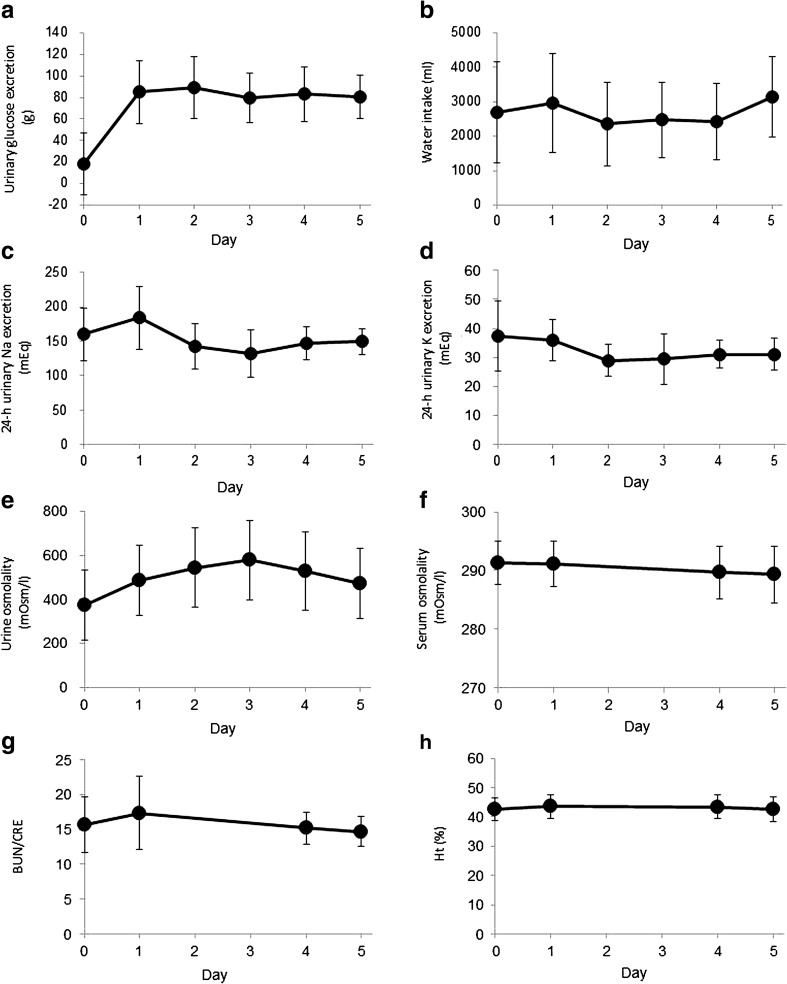
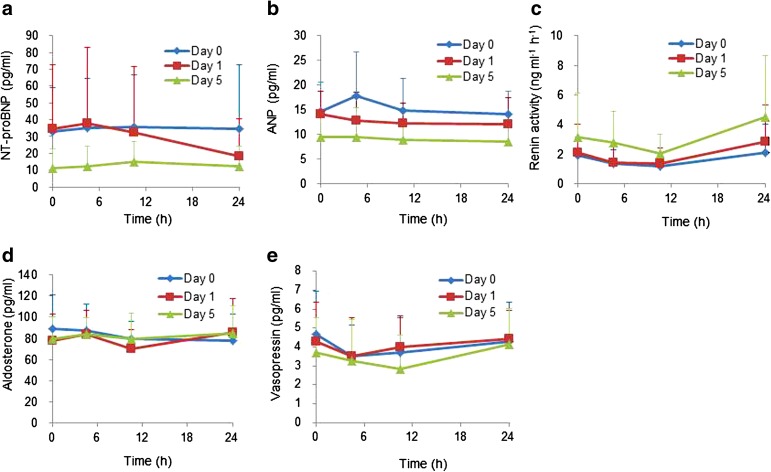
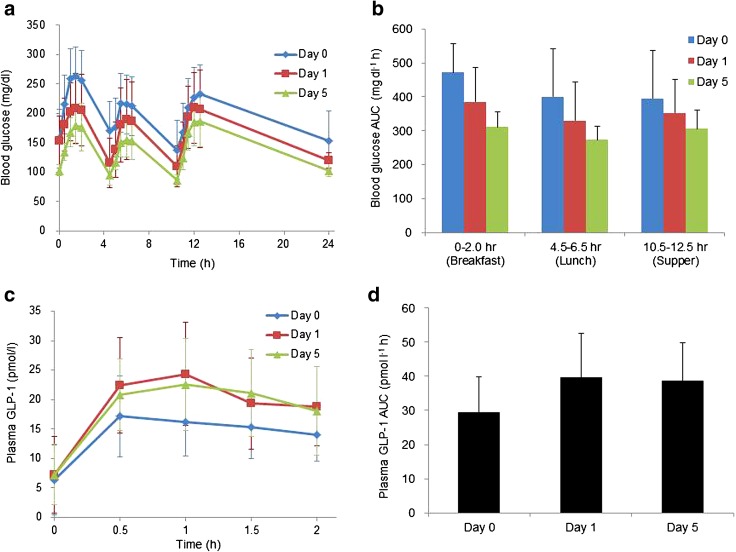
INTRODUCTION: Sodium glucose co-transporter 2 (SGLT2) inhibitors exhibit diuretic activity, which is a possible mechanism underlying the cardiovascular benefit of these inhibitors. However, the osmotic diuresis-induced increase in urine volume, and the risk of dehydration have been of concern with SGLT2 inhibitor treatment. This study aimed to investigate the mechanism underlying SGLT2 inhibitor canagliflozin-induced diuresis in Japanese type 2 diabetes mellitus (T2DM) patients. METHODS: Thirteen T2DM patients received a daily oral dose of 100 mg canagliflozin before breakfast for 6 days. Blood and urine samples were collected at predetermined time points. The primary endpoint was evaluation of correlations between changes from baseline in urine volume and factors that are known to affect urine volume and between actual urine volume and these factors. RESULTS: Canagliflozin transiently increased urine volume and urinary sodium excretion on Day 1 with a return to baseline levels thereafter. Canagliflozin administration increased urinary glucose excretion, which was sustained during repeated-dose administration. Plasma atrial natriuretic peptide (ANP) and N-terminal pro-b-type natriuretic peptide (NT-proBNP) levels decreased, while plasma renin activity increased. On Day 1 of treatment, changes in sodium and potassium excretion were closely correlated with changes in urine output. A post hoc multiple regression analysis showed changes in sodium excretion and water intake as factors that affected urine volume change at Day 1. Furthermore, relative to that at baseline, canagliflozin decreased blood glucose throughout the day and increased plasma total GLP-1 after breakfast. CONCLUSION: Canagliflozin induced transient sodium excretion and did not induce water intake at Day 1; hence, natriuresis rather than glucose-induced osmotic diuresis may be a major factor involved in the canagliflozin-induced transient increase in urine output. In addition, canagliflozin decreased plasma ANP and NT-proBNP levels and increased plasma renin activity, which may be a compensatory mechanism for sodium retention, leading to subsequent urine output recovery. CLINICAL TRIAL REGISTRATION: UMIN000019462. FUNDING: Mitsubishi Tanabe Pharma Corporation.
Overview
The claims and statistics of this paper haven’t been checked yet.
Free: it reads the open-access text and checks the first 5 claims that cite a source we can check. Create a free account to check every claim.
Integrity signals
Registry
Cites
Statistics
Figures
Verification
Claims the paper makes
The claims and statistics of this paper haven’t been checked yet.
Free: it reads the open-access text and checks the first 5 claims that cite a source we can check. Create a free account to check every claim.
Claims other papers make about this one
Each is checked against this paper’s own text: does it say what the citing paper says it does?
The source backs part of the claim, not all of it — or backs it for a different population, condition or comparison.
In the citing paper
“Although clinical studies demonstrated natriuretic/osmotic diuretic effects of SGLT2 inhibitors, it should be mentioned that these studies did not record or standardize sodium intake (Tanaka et al., 2017; Iijima et al., 2015; Wilcox et al., 2018; Mordi et al., 2020; Griffin et al., 2020).”
From A kidney perspective on the mechanism of action of sodium glucose co-transporter 2 inhibitors (2021) · cites this paper as Tanaka et al., 2017
Experimental — accuracy not yet measured
Self-check
Percentages, sums and reported differences re-computed from the paper’s own numbers.
The self-check needs the paper’s full text.
Citations
Cites
Empagliflozin, Cardiovascular Outcomes, and Mortality in Type 2 Diabetes
Zinman, B., Wanner, C., Lachin, J. M., Fitchett, D., Bluhmki, E., Hantel, S., Mattheus, M., Devins, T., Johansen, O. E., Woerle, H. J., et al. (2015) · New England Journal of Medicine · doi:10.1056/nejmoa1504720 · Cited by 12,315
Pathophysiology and treatment of type 2 diabetes: perspectives on the past, present, and future
Kahn, S. E., Cooper, M. E., & Del Prato, S. (2014) · The Lancet · doi:10.1016/s0140-6736(13)62154-6 · Cited by 1,743 · cited 1×
“Typical features of type 2 diabetes mellitus (T2DM) are insulin resistance of various organs and reduced glucose-stimulated insulin secretion [1].”
BackgroundFitchett, D., Zinman, B., Wanner, C., Lachin, J. M., Hantel, S., Salsali, A., Johansen, O. E., Woerle, H. J., Broedl, U. C., & Inzucchi, S. E. (2016) · European Heart Journal · doi:10.1093/eurheartj/ehv728 · Cited by 907
Dapagliflozin a glucose-regulating drug with diuretic properties in subjects with type 2 diabetes
Lambers Heerspink, H. J., de Zeeuw, D., Wie, L., Leslie, B., & List, J. (2013) · Diabetes, Obesity and Metabolism · doi:10.1111/dom.12127 · Cited by 837 · cited 1×
“A 12-week treatment with dapagliflozin was reported to be associated with increases in plasma renin activity and aldosterone [26].”
BackgroundGerich, J. E. (2010) · Diabetic Medicine · doi:10.1111/j.1464-5491.2009.02894.x · Cited by 633
Grempler, R., Thomas, L., Eckhardt, M., Himmelsbach, F., Sauer, A., Sharp, D. E., Bakker, R. A., Mark, M., Klein, T., & Eickelmann, P. (2012) · Diabetes, Obesity and Metabolism · doi:10.1111/j.1463-1326.2011.01517.x · Cited by 608 · cited 1×
“As canagliflozin has modest potency for SGLT1 inhibition relative to that of other highly-selective SGLT2 inhibitors [30], and intestinal SGLT1 inhibition enhanced GLP-1 secretion in a rodent model [31], the increase in total GLP-1 may have arisen through inhibition of SGLT1 in the intestine.”
BackgroundScheen, A. J. (2015) · Drugs · doi:10.1007/s40265-014-0337-y · Cited by 554
The role of the kidneys in glucose homeostasis: a new path towards normalizing glycaemia
DeFronzo, R. A., Davidson, J. A., & Del Prato, S. (2012) · Diabetes, Obesity and Metabolism · doi:10.1111/j.1463-1326.2011.01511.x · Cited by 493 · cited 1×
“SGLT2 expression is increased in T2DM; hence, higher amounts of glucose are reabsorbed by the kidney, thereby contributing to the sustained elevation of serum glucose levels in patients with diabetes [2, 3].”
BackgroundSGLT2 inhibition in diabetes mellitus: rationale and clinical prospects
Ferrannini, E., & Solini, A. (2012) · Nature Reviews Endocrinology · doi:10.1038/nrendo.2011.243 · Cited by 458
Heise, T., Seewaldt‐Becker, E., Macha, S., Hantel, S., Pinnetti, S., Seman, L., & Woerle, H. J. (2013) · Diabetes, Obesity and Metabolism · doi:10.1111/dom.12073 · Cited by 273
Polidori, D., Sha, S., Mudaliar, S., Ciaraldi, T. P., Ghosh, A., Vaccaro, N., Farrell, K., Rothenberg, P., & Henry, R. R. (2013) · Diabetes Care · doi:10.2337/dc12-2391 · Cited by 261 · cited 1×
“Although similar results with higher doses were reported in previous studies on non-Japanese healthy subjects (300 mg) and Japanese healthy subjects (200 mg) [28, 29], this”
ResultSodium–Glucose Cotransporter Inhibitors: Effects on Renal and Intestinal Glucose Transport
Mudaliar, S., Polidori, D., Zambrowicz, B., & Henry, R. R. (2015) · Diabetes Care · doi:10.2337/dc15-0642 · Cited by 225
Importance of cardiovascular disease risk management in patients with type 2 diabetes mellitus
Lorber, D. (2014) · Diabetes, Metabolic Syndrome and Obesity: Targets and Therapy · doi:10.2147/dmso.s61438 · Cited by 168 · cited 1×
“In addition to control of blood glucose, control of body weight and blood pressure play important roles in preventing complications associated with T2DM [6].”
BackgroundShyangdan, D. S., Uthman, O. A., & Waugh, N. (2016) · BMJ Open · doi:10.1136/bmjopen-2015-009417 · Cited by 149
Fujita, Y., & Inagaki, N. (2014) · Journal of Diabetes Investigation · doi:10.1111/jdi.12214 · Cited by 148
Self-citationCanagliflozin: A Review of Its Use in Patients with Type 2 Diabetes Mellitus
Plosker, G. L. (2014) · Drugs · doi:10.1007/s40265-014-0225-5 · Cited by 94
Rosenthal, N., Meininger, G., Ways, K., Polidori, D., Desai, M., Qiu, R., Alba, M., Vercruysse, F., Balis, D., Shaw, W., et al. (2015) · Annals of the New York Academy of Sciences · doi:10.1111/nyas.12852 · Cited by 90
Sinclair, A. J., Bode, B., Harris, S., Vijapurkar, U., Shaw, W., Desai, M., & Meininger, G. (2016) · Journal of the American Geriatrics Society · doi:10.1111/jgs.14028 · Cited by 87 · cited 1×
“However, osmotic diuresis-induced increase in urine volume, loss of body fluid, and risk of dehydration have been of concern with SGLT2 inhibitor treatment [14, 15].”
BackgroundOguma, T., Nakayama, K., Kuriyama, C., Matsushita, Y., Yoshida, K., Hikida, K., Obokata, N., Tsuda-Tsukimoto, M., Saito, A., Arakawa, K., et al. (2015) · Journal of Pharmacology and Experimental Therapeutics · doi:10.1124/jpet.115.225508 · Cited by 79 · cited 1×
“As canagliflozin has modest potency for SGLT1 inhibition relative to that of other highly-selective SGLT2 inhibitors [30], and intestinal SGLT1 inhibition enhanced GLP-1 secretion in a rodent model [31], the increase in total GLP-1 may have arisen through inhibition of SGLT1 in the intestine.”
BackgroundSelf-citationSha, S., Devineni, D., Ghosh, A., Polidori, D., Hompesch, M., Arnolds, S., Morrow, L., Spitzer, H., Demarest, K., & Rothenberg, P. (2014) · PLoS ONE · doi:10.1371/journal.pone.0105638 · Cited by 72
Renal Pathophysiology: The Essentials
Rennke, H. G., & Denker, B. M. (1994) · Medical Entomology and Zoology · Cited by 70
Iijima, H., Kifuji, T., Maruyama, N., & Inagaki, N. (2015) · Advances in Therapy · doi:10.1007/s12325-015-0234-0 · Cited by 70 · cited 6×
“We performed correlation and multiple regression analyses using the data of present and previous studies [19].”
BackgroundMethodResultSelf-citationSeufert, J. (2015) · Diabetes Metabolic Syndrome and Obesity · doi:10.2147/dmso.s90662 · Cited by 65
Ghosh, R. K., Bandyopadhyay, D., Hajra, A., Biswas, M., & Gupta, A. (2016) · International Journal of Cardiology · doi:10.1016/j.ijcard.2016.02.134 · Cited by 56 · cited 1×
“Several studies of SGLT2 inhibitors have been conducted to assess the cardiovascular outcomes [10], and it was reported that the SGLT2 inhibitor empagliflozin reduced heart failure”
BackgroundRenal Pathophysiology—the Essentials
Schwab, T. R. (1989) · Mayo Clinic Proceedings · doi:10.1016/s0025-6196(12)65373-7 · Cited by 54
A mathematical model of the rat nephron: glucose transport
Weinstein, A. M. (2015) · American Journal of Physiology-Renal Physiology · doi:10.1152/ajprenal.00505.2014 · Cited by 43 · cited 1×
“This is consistent with the results of a recent simulation study using a mathematical model of the rat nephron, which demonstrated that SGLT2 inhibition-induced increase in urine volume is expected to reflect natriuresis rather than osmotic diuresis [23].”
ResultTakeuchi, T., Dohi, K., Omori, T., Moriwaki, K., Sato, Y., Nakamori, S., Fujimoto, N., Fujii, E., Yamada, N., & Ito, M. (2015) · International Journal of Cardiology · doi:10.1016/j.ijcard.2015.07.072 · Cited by 40 · cited 2×
“The 4-day ipragliflozin treatment significantly decreased plasma ANP and BNP and increased plasma renin activity, while plasma aldosterone tended to increase, but without statistical significance [24].”
BackgroundResultPiuhola, J., Kerkelä, R., Keenan, J. I., Hampton, M. B., Richards, M., & Pemberton, C. J. (2008) · Clinical Science · doi:10.1042/cs20070229 · Cited by 31 · cited 1×
“The authors offered a possible explanation for these discordant results through a transient rise in erythropoietin, which is known to enhance BNP secretion [27].”
ResultKinoshita, S., & Kondo, K. (2014) · Expert Opinion on Drug Metabolism & Toxicology · doi:10.1517/17425255.2015.982531 · Cited by 26 · cited 1×
“Although similar results with higher doses were reported in previous studies on non-Japanese healthy subjects (300 mg) and Japanese healthy subjects (200 mg) [28, 29], this”
ResultInagaki, N., Goda, M., Yokota, S., Maruyama, N., & Iijima, H. (2015) · Expert Opinion on Pharmacotherapy · doi:10.1517/14656566.2015.1055250 · Cited by 25
Self-citationChanges in Poly(ADP-Ribosyl)ation Patterns in Workers Exposed to BTX
Sha, Y., Zhou, W., Yang, Z., Zhu, X., Xiang, Y., Tiandi, L., Zhu, D., & Yang, X. (2014) · PLoS ONE · doi:10.1371/journal.pone.0106146 · Cited by 23
Sasaki, T., Seino, Y., Fukatsu, A., Ubukata, M., Sakai, S., & Samukawa, Y. (2015) · Advances in Therapy · doi:10.1007/s12325-015-0200-x · Cited by 23
The EMPA-REG outcome study: critical appraisal and potential clinical implications
Perseghin, G., & Solini, A. (2016) · Cardiovascular Diabetology · doi:10.1186/s12933-016-0403-8 · Cited by 22
Lam, K. S. L., Chow, C. C., Tan, K. C. B., Ronald, C. W., Kong, A. P. S., Tong, P. C. Y., Tsang, M. W., Chan, T. M., Tang, S. C. W., Lee, K. K., et al. (2016) · Current Medical Research and Opinion · doi:10.1185/03007995.2016.1161608 · Cited by 20 · cited 1×
“However, osmotic diuresis-induced increase in urine volume, loss of body fluid, and risk of dehydration have been of concern with SGLT2 inhibitor treatment [14, 15].”
BackgroundStaff, T. P. O. (2014) · PLoS ONE · doi:10.1371/journal.pone.0110069 · Cited by 17
Practical guidelines for the use of converting enzyme inhibitors in congestive heart failure
Dickstein, K. (1987) · International Journal of Cardiology · doi:10.1016/0167-5273(87)90286-5 · Cited by 10
Cited by
Mechanisms of Cardiorenal Effects of Sodium-Glucose Cotransporter 2 Inhibitors
Zelniker, T. A., & Braunwald, E. (2020) · Journal of the American College of Cardiology · doi:10.1016/j.jacc.2019.11.031 · Cited by 566
Lytvyn, Y., Bjornstad, P., Udell, J. A., Lovshin, J. A., & Cherney, D. Z. I. (2017) · Circulation · doi:10.1161/circulationaha.117.030012 · Cited by 459
Renoprotective effects of sodium-glucose cotransporter-2 inhibitors
Heerspink, H. J. L., Kosiborod, M., Inzucchi, S. E., & Cherney, D. Z. I. (2018) · Kidney International · doi:10.1016/j.kint.2017.12.027 · Cited by 393
The actions of SGLT2 inhibitors on metabolism, renal function and blood pressure
Thomas, M. C., & Cherney, D. Z. I. (2018) · Diabetologia · doi:10.1007/s00125-018-4669-0 · Cited by 348
Sodium–glucose cotransporter type 2 inhibitors for the treatment of type 2 diabetes mellitus
Scheen, A. J. (2020) · Nature Reviews Endocrinology · doi:10.1038/s41574-020-0392-2 · Cited by 267
Metadata
- Authors
- Tanaka, H., Takano, K., Iijima, H., Kubo, H., Maruyama, N., Hashimoto, T., Arakawa, K., Togo, M., Inagaki, N., & Kaku, K.
- Affiliations
- Tanabe Pharma Corporation (Japan) (JP)
- Kyoto University (JP)
- Kawasaki Medical School (JP)
- Corresponding author
- Iijima, Hiroaki
- Venue
- Advances in Therapy
- Published
- 2016-12-15
- Volume
- 34
- Issue
- 2
- Pages
- 436-451
- ISSN
- 0741-238X (ISSN-L)
- 1865-8652
- PMC
- PMC5331075
- OpenAlex
- W2562563466
- Cited by
- 140
- References
- 36
- Citations by year
- 2026: 7 · 2025: 4 · 2024: 15 · 2023: 17 · 2022: 17 · 2021: 21 · 2020: 25 · 2019: 20 · 2018: 10 · 2017: 4
- FWCI
- 11.38
- Type
- journal article
- Language
- en
- Open access
- hybrid
- doi.org
- Licence
- cc-by-nc
- creativecommons.org/licenses/by/4.0 (tdm)
- Locations
- Advances in Therapy (publishedVersion, cc-by-nc)
- Europe PMC (PubMed Central) (publishedVersion, cc-by-nc)
- PubMed Central (publishedVersion, cc-by-nc)
- PubMed (publishedVersion)
- Funders
- Mitsubishi Tanabe Pharma Corporation
- Topics
- Health Sciences › Medicine › Endocrinology, Diabetes and Metabolism › Diabetes Treatment and Management
- Health Sciences › Medicine › Cardiology and Cardiovascular Medicine › Heart Failure Treatment and Management
- Health Sciences › Medicine › Cardiology and Cardiovascular Medicine › Blood Pressure and Hypertension Studies
- Keywords
- canagliflozin, SGLT2 inhibitors, type 2 diabetes, urine output, diuresis, sodium excretion, osmotic diuresis, atrial natriuretic peptide, NT-proBNP, renin-angiotensin system, glucagon-like peptide-1, water intake, dehydration risk
- MeSH terms
- Canagliflozin, Sodium-Glucose Transporter 2 Inhibitors, Adult, Blood Glucose, Dehydration, Diabetes Mellitus, Type 2, Female, Glycosuria, Humans, Hypoglycemic Agents, Japan, Male, Middle Aged, Peptide Fragments, Treatment Outcome, Natriuretic Peptide, Brain, Sodium-Glucose Transporter 2
About these checks
Registry, retraction, Cites and statistics results are computed, not judged, with one exception: a printed reference that no index lists is read once by a model before it counts as a citation error. Claims are extracted by a model and kept only when their quote appears verbatim in the text; each cited source is then checked, with a model’s help, for whether it says what the claim relies on. Those verdicts can be wrong — read the claim’s quote and the cited source before relying on one.
Statistics and arithmetic are recomputed, not judged.
Confidence bands are shown only for fields calibrated on our annotated test set. None is calibrated yet, so no band is shown.
What counts as a claim ›How we measure confidence ›How we check this ›
Are you an author, or do you see a problem with this page? Request a review
Data sources
Bibliographic data: Semantic Scholar, OpenAlex, Crossref.
Contains information from the Semantic Scholar Academic Graph Datasets, made available under the ODC Attribution License (ODC-BY 1.0).
Semantic Scholar’s data is described in: Kinney, R., et al. (2023). The Semantic Scholar Open Data Platform. arXiv:2301.10140.
