

Factors Affecting Canagliflozin-Induced Transient Urine Volume Increase in Patients with Type 2 Diabetes Mellitus
Open accessThe DOI matches its Crossref record; 36 of the 36 references it cites were found in a registry or an index.
Abstract
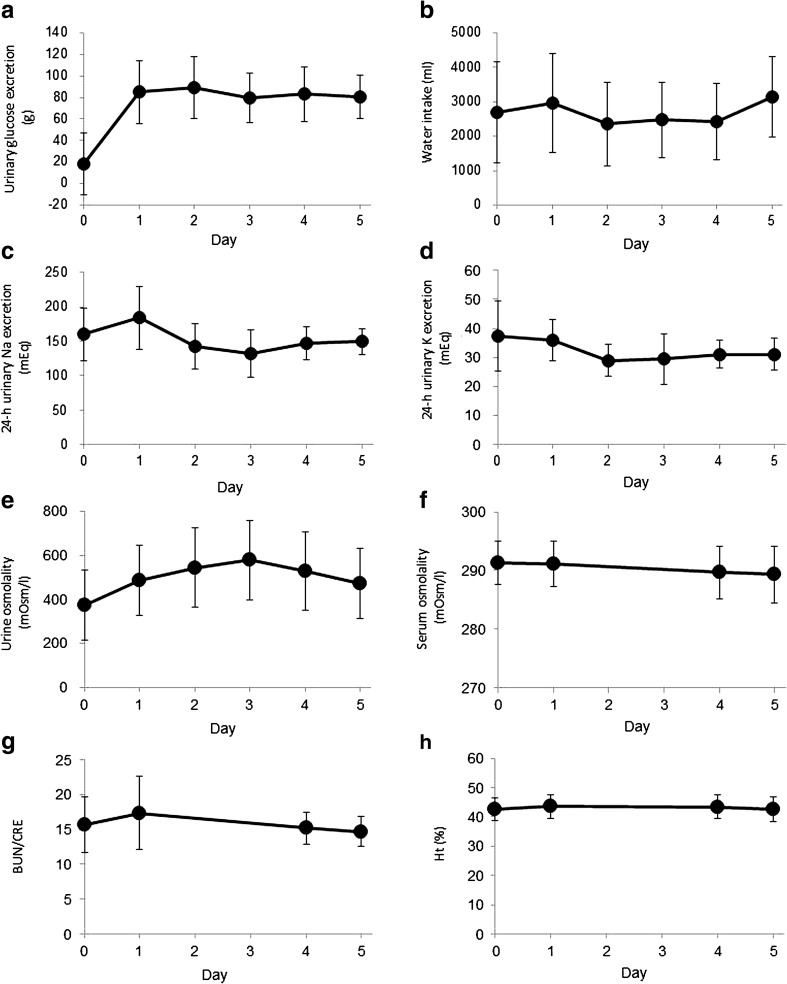
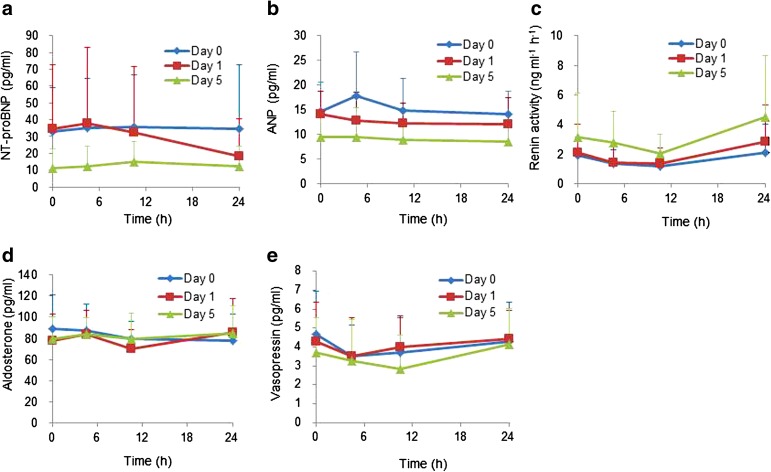
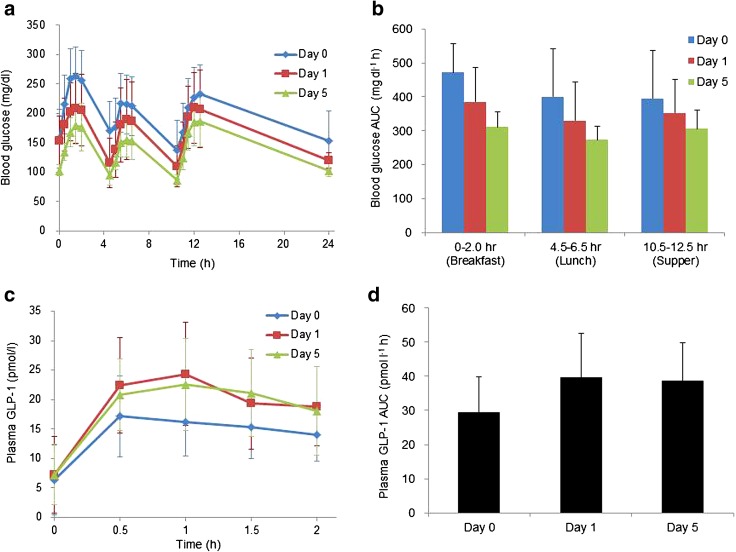
INTRODUCTION: Sodium glucose co-transporter 2 (SGLT2) inhibitors exhibit diuretic activity, which is a possible mechanism underlying the cardiovascular benefit of these inhibitors. However, the osmotic diuresis-induced increase in urine volume, and the risk of dehydration have been of concern with SGLT2 inhibitor treatment. This study aimed to investigate the mechanism underlying SGLT2 inhibitor canagliflozin-induced diuresis in Japanese type 2 diabetes mellitus (T2DM) patients. METHODS: Thirteen T2DM patients received a daily oral dose of 100 mg canagliflozin before breakfast for 6 days. Blood and urine samples were collected at predetermined time points. The primary endpoint was evaluation of correlations between changes from baseline in urine volume and factors that are known to affect urine volume and between actual urine volume and these factors. RESULTS: Canagliflozin transiently increased urine volume and urinary sodium excretion on Day 1 with a return to baseline levels thereafter. Canagliflozin administration increased urinary glucose excretion, which was sustained during repeated-dose administration. Plasma atrial natriuretic peptide (ANP) and N-terminal pro-b-type natriuretic peptide (NT-proBNP) levels decreased, while plasma renin activity increased. On Day 1 of treatment, changes in sodium and potassium excretion were closely correlated with changes in urine output. A post hoc multiple regression analysis showed changes in sodium excretion and water intake as factors that affected urine volume change at Day 1. Furthermore, relative to that at baseline, canagliflozin decreased blood glucose throughout the day and increased plasma total GLP-1 after breakfast. CONCLUSION: Canagliflozin induced transient sodium excretion and did not induce water intake at Day 1; hence, natriuresis rather than glucose-induced osmotic diuresis may be a major factor involved in the canagliflozin-induced transient increase in urine output. In addition, canagliflozin decreased plasma ANP and NT-proBNP levels and increased plasma renin activity, which may be a compensatory mechanism for sodium retention, leading to subsequent urine output recovery. CLINICAL TRIAL REGISTRATION: UMIN000019462. FUNDING: Mitsubishi Tanabe Pharma Corporation.
Overview
The claims and statistics of this paper haven’t been checked yet.
Free: it reads the open-access text and checks the first 5 claims that cite a source we can check. Create a free account to check every claim.
Integrity signals
Registry
Cites
Statistics
Figures
Verification
Claims the paper makes
The claims and statistics of this paper haven’t been checked yet.
Free: it reads the open-access text and checks the first 5 claims that cite a source we can check. Create a free account to check every claim.
Claims other papers make about this one
Each is checked against this paper’s own text: does it say what the citing paper says it does?
The source backs part of the claim, not all of it — or backs it for a different population, condition or comparison.
In the citing paper
“Although clinical studies demonstrated natriuretic/osmotic diuretic effects of SGLT2 inhibitors, it should be mentioned that these studies did not record or standardize sodium intake (Tanaka et al., 2017; Iijima et al., 2015; Wilcox et al., 2018; Mordi et al., 2020; Griffin et al., 2020).”
From A kidney perspective on the mechanism of action of sodium glucose co-transporter 2 inhibitors (2021) · cites this paper as Tanaka et al., 2017
Experimental — accuracy not yet measured
Self-check
Percentages, sums and reported differences re-computed from the paper’s own numbers.
The self-check needs the paper’s full text.
Citations
Cites
Empagliflozin, Cardiovascular Outcomes, and Mortality in Type 2 Diabetes
Zinman, B., Wanner, C., Lachin, J. M., Fitchett, D., Bluhmki, E., Hantel, S., Mattheus, M., Devins, T., Johansen, O. E., Woerle, H. J., et al. (2015) · New England Journal of Medicine · doi:10.1056/nejmoa1504720 · Cited by 12,315
Pathophysiology and treatment of type 2 diabetes: perspectives on the past, present, and future
Kahn, S. E., Cooper, M. E., & Del Prato, S. (2014) · The Lancet · doi:10.1016/s0140-6736(13)62154-6 · Cited by 1,743 · cited 1×
“Typical features of type 2 diabetes mellitus (T2DM) are insulin resistance of various organs and reduced glucose-stimulated insulin secretion [1].”
BackgroundFitchett, D., Zinman, B., Wanner, C., Lachin, J. M., Hantel, S., Salsali, A., Johansen, O. E., Woerle, H. J., Broedl, U. C., & Inzucchi, S. E. (2016) · European Heart Journal · doi:10.1093/eurheartj/ehv728 · Cited by 907
Dapagliflozin a glucose-regulating drug with diuretic properties in subjects with type 2 diabetes
Lambers Heerspink, H. J., de Zeeuw, D., Wie, L., Leslie, B., & List, J. (2013) · Diabetes, Obesity and Metabolism · doi:10.1111/dom.12127 · Cited by 837 · cited 1×
“A 12-week treatment with dapagliflozin was reported to be associated with increases in plasma renin activity and aldosterone [26].”
BackgroundGerich, J. E. (2010) · Diabetic Medicine · doi:10.1111/j.1464-5491.2009.02894.x · Cited by 633
Grempler, R., Thomas, L., Eckhardt, M., Himmelsbach, F., Sauer, A., Sharp, D. E., Bakker, R. A., Mark, M., Klein, T., & Eickelmann, P. (2012) · Diabetes, Obesity and Metabolism · doi:10.1111/j.1463-1326.2011.01517.x · Cited by 608 · cited 1×
“As canagliflozin has modest potency for SGLT1 inhibition relative to that of other highly-selective SGLT2 inhibitors [30], and intestinal SGLT1 inhibition enhanced GLP-1 secretion in a rodent model [31], the increase in total GLP-1 may have arisen through inhibition of SGLT1 in the intestine.”
BackgroundScheen, A. J. (2015) · Drugs · doi:10.1007/s40265-014-0337-y · Cited by 554
The role of the kidneys in glucose homeostasis: a new path towards normalizing glycaemia
DeFronzo, R. A., Davidson, J. A., & Del Prato, S. (2012) · Diabetes, Obesity and Metabolism · doi:10.1111/j.1463-1326.2011.01511.x · Cited by 493 · cited 1×
“SGLT2 expression is increased in T2DM; hence, higher amounts of glucose are reabsorbed by the kidney, thereby contributing to the sustained elevation of serum glucose levels in patients with diabetes [2, 3].”
BackgroundSGLT2 inhibition in diabetes mellitus: rationale and clinical prospects
Ferrannini, E., & Solini, A. (2012) · Nature Reviews Endocrinology · doi:10.1038/nrendo.2011.243 · Cited by 458
Heise, T., Seewaldt‐Becker, E., Macha, S., Hantel, S., Pinnetti, S., Seman, L., & Woerle, H. J. (2013) · Diabetes, Obesity and Metabolism · doi:10.1111/dom.12073 · Cited by 273
Cited by
Mechanisms of Cardiorenal Effects of Sodium-Glucose Cotransporter 2 Inhibitors
Zelniker, T. A., & Braunwald, E. (2020) · Journal of the American College of Cardiology · doi:10.1016/j.jacc.2019.11.031 · Cited by 566
Lytvyn, Y., Bjornstad, P., Udell, J. A., Lovshin, J. A., & Cherney, D. Z. I. (2017) · Circulation · doi:10.1161/circulationaha.117.030012 · Cited by 459
Renoprotective effects of sodium-glucose cotransporter-2 inhibitors
Heerspink, H. J. L., Kosiborod, M., Inzucchi, S. E., & Cherney, D. Z. I. (2018) · Kidney International · doi:10.1016/j.kint.2017.12.027 · Cited by 393
The actions of SGLT2 inhibitors on metabolism, renal function and blood pressure
Thomas, M. C., & Cherney, D. Z. I. (2018) · Diabetologia · doi:10.1007/s00125-018-4669-0 · Cited by 348
Sodium–glucose cotransporter type 2 inhibitors for the treatment of type 2 diabetes mellitus
Scheen, A. J. (2020) · Nature Reviews Endocrinology · doi:10.1038/s41574-020-0392-2 · Cited by 267
Schork, A., Saynisch, J., Vosseler, A., Jaghutriz, B. A., Heyne, N., Peter, A., Häring, H.-U., Stefan, N., Fritsche, A., & Artunc, F. (2019) · Cardiovascular Diabetology · doi:10.1186/s12933-019-0852-y · Cited by 227
Ansary, T. M., Nakano, D., & Nishiyama, A. (2019) · International Journal of Molecular Sciences · doi:10.3390/ijms20030629 · Cited by 174
“canagliflozin [16] Plasma aldosterone no change”
BackgroundA kidney perspective on the mechanism of action of sodium glucose co-transporter 2 inhibitors
Sen, T., & Heerspink, H. J. L. (2021) · Cell Metabolism · doi:10.1016/j.cmet.2021.02.016 · Cited by 161
Yaribeygi, H., Butler, A. E., Atkin, S. L., Katsiki, N., & Sahebkar, A. (2019) · Journal of Cellular Physiology · doi:10.1002/jcp.26851 · Cited by 148
Masuda, T., Muto, S., Fukuda, K., Watanabe, M., Ohara, K., Koepsell, H., Vallon, V., & Nagata, D. (2020) · Physiological Reports · doi:10.14814/phy2.14360 · Cited by 150
“SGLT2 inhibitors exhibit an initial transient diuretic peak within the first week followed by only a moderate sustained diuresis (Masuda et al., 2017; Tanaka et al., 2017; Yasui et al., 2018).”
BackgroundPacker, M., Wilcox, C. S., & Testani, J. M. (2023) · Circulation · doi:10.1161/circulationaha.123.064346 · Cited by 145
Organ protection by SGLT2 inhibitors: role of metabolic energy and water conservation
Marton, A., Kaneko, T., Kovalik, J., Yasui, A., Nishiyama, A., Kitada, K., & Titze, J. M. (2020) · Nature Reviews Nephrology · doi:10.1038/s41581-020-00350-x · Cited by 143
Sodium–Glucose Cotransporter 2 Inhibition and Diabetic Kidney Disease
Alicic, R. Z., Neumiller, J. J., Johnson, E. J., Dieter, B., & Tuttle, K. R. (2019) · Diabetes · doi:10.2337/dbi18-0007 · Cited by 121
Impact of SGLT2 Inhibitors on Heart Failure: From Pathophysiology to Clinical Effects
Palmiero, G., Cesaro, A., Vetrano, E., Pafundi, P. C., Galiero, R., Caturano, A., Moscarella, E., Gragnano, F., Salvatore, T., Rinaldi, L., et al. (2021) · International Journal of Molecular Sciences · doi:10.3390/ijms22115863 · Cited by 110
“By inhibiting SGLT2 in the proximal renal tube, gliflozins induce natriuresis [124] and glucosuria [125].”
BackgroundScholtes, R. A., Muskiet, M. H. A., van Baar, M. J. B., Hesp, A. C., Greasley, P. J., Karlsson, C., Hammarstedt, A., Arya, N., van Raalte, D. H., & Heerspink, H. J. L. (2021) · Diabetes Care · doi:10.2337/dc20-2604 · Cited by 125
“studies in patients with type 2 diabetes reported that SGLT2 inhibitors induce transient increases in urine volume (8,9,19,20) and natriuresis (8–11).”
BackgroundEffect of SGLT2 Inhibitors on the Sympathetic Nervous System and Blood Pressure
Scheen, A. J. (2019) · Current Cardiology Reports · doi:10.1007/s11886-019-1165-1 · Cited by 122
Effects of Sodium-Glucose Cotransporter 2 Inhibitors on Water and Sodium Metabolism
Tang, J., Ye, L., Yan, Q., Zhang, X., & Wang, L. (2022) · Frontiers in Pharmacology · doi:10.3389/fphar.2022.800490 · Cited by 120
Ravindran, S., & Munusamy, S. (2021) · Journal of Cellular Physiology · doi:10.1002/jcp.30621 · Cited by 111
“strated no changes in the plasma aldosterone levels despite increased PRA and urine volume at Day 5 (Tanaka et al., 2017).”
BackgroundDekkers, C. C. J., Sjöström, C. D., Greasley, P. J., Cain, V., Boulton, D. W., & Heerspink, H. J. L. (2019) · Diabetes, Obesity and Metabolism · doi:10.1111/dom.13855 · Cited by 106
Giorgino, F., Vora, J. P., Fenici, P., & Solini, A. (2020) · Cardiovascular Diabetology · doi:10.1186/s12933-020-01163-9 · Cited by 100
Canagliflozin for Japanese patients with chronic heart failure and type II diabetes
Sezai, A., Sekino, H., Unosawa, S., Taoka, M., Osaka, S., & Tanaka, M. (2019) · Cardiovascular Diabetology · doi:10.1186/s12933-019-0877-2 · Cited by 88
Water Conservation Overrides Osmotic Diuresis During SGLT2 Inhibition in Patients With Heart Failure
Marton, A., Saffari, S. E., Rauh, M., Sun, R.-N., Nagel, A. M., Linz, P. R., Lim, T. T., Takase‐Minegishi, K., Pajarillaga, A., Saw, S., et al. (2024) · Journal of the American College of Cardiology · doi:10.1016/j.jacc.2024.02.020 · Cited by 88
Packer, M., Butler, J., Zeller, C., Pocock, S. J., Brueckmann, M., Ferreira, J. P., Filippatos, G., Usman, M. S., Zannad, F., & Anker, S. D. (2023) · Circulation · doi:10.1161/circulationaha.123.065748 · Cited by 86
Garg, V., Verma, S., & Connelly, K. (2019) · Progress in Cardiovascular Diseases · doi:10.1016/j.pcad.2019.07.005 · Cited by 82
Ohara, K., Masuda, T., Murakami, T., Imai, T., Yoshizawa, H., Nakagawa, S., Okada, M., Miki, A., Myoga, A., Sugase, T., et al. (2019) · Nephrology · doi:10.1111/nep.13552 · Cited by 81
Sodium–Glucose Cotransporter 2 Inhibitors: A Case Study in Translational Research
Beitelshees, A. L., Leslie, B. R., & Taylor, S. I. (2019) · Diabetes · doi:10.2337/dbi18-0006 · Cited by 78
“As shown in a study in subjects with type 2 diabetes, levels of atrial natriuretic peptide and N-terminal proB-type natriuretic peptide decreased, and plasma renin activity increased (20).”
BackgroundResultYasui, A., Lee, G., Hirase, T., Kaneko, T., Kaspers, S., von Eynatten, M., & Okamura, T. (2018) · Diabetes Therapy · doi:10.1007/s13300-018-0385-5 · Cited by 75
“showed that treatment with canagliflozin had no effect on vasopressin levels in patients [3], suggesting that the alterations in urine volume mediated by SGLT2 inhibitors could be attributed to vasopressinindependent mechanisms.”
BackgroundCardiometabolic and renal benefits of sodium–glucose cotransporter 2 inhibitors
Lee, Y., Lim, S. K., & Davies, M. J. (2025) · Nature Reviews Endocrinology · doi:10.1038/s41574-025-01170-4 · Cited by 76
“The glucose-rich urine produced by SGLT2 inhibition leads to osmotic diuresis, in which water is pulled into the renal tubular lumen, increasing urine output to ~400 ml per day 157 .”
Natali, A., Nesti, L., Tricò, D., & Ferrannini, E. (2021) · Cardiovascular Diabetology · doi:10.1186/s12933-021-01385-5 · Cited by 76
SGLT2 Inhibitors: A Novel Player in the Treatment and Prevention of Diabetic Cardiomyopathy
Li, N., & Zhou, H. (2020) · Drug Design Development and Therapy · doi:10.2147/dddt.s269514 · Cited by 73
Renal physiology of glucose handling and therapeutic implications
Cherney, D. Z. I., Kanbay, M., & Lovshin, J. A. (2020) · Nephrology Dialysis Transplantation · doi:10.1093/ndt/gfz230 · Cited by 73
“Other supportive evidence for a contraction of plasma volume with these agents includes an increase in circulating and urinary levels of RAS hormones, at least in the short term [19, 44, 45], and increases in serum albumin and hematocrit that are thought to reflect hemoconcentration [12].”
BackgroundDelanaye, P., & Scheen, A. J. (2021) · Diabetes & Metabolism · doi:10.1016/j.diabet.2021.101285 · Cited by 70
Unmasking a sustained negative effect of SGLT2 inhibition on body fluid volume in the rat
Masuda, T., Watanabe, Y., Fukuda, K., Watanabe, M., Onishi, A., Ohara, K., Imai, T., Koepsell, H., Muto, S., Vallon, V., et al. (2018) · American Journal of Physiology-Renal Physiology · doi:10.1152/ajprenal.00143.2018 · Cited by 61
“In accordance, recent studies in humans and animals have shown that SGLT2 inhibitors increase urine volume and Na excretion (19, 21, 25, 39, 41).”
BackgroundThirunavukarasu, S., Jex, N., Chowdhary, A., Hassan, I. U., Straw, S., Craven, T. P., Gorecka, M. M., Broadbent, D. A., Swoboda, P., Witte, K. K., et al. (2021) · Diabetes · doi:10.2337/db21-0270 · Cited by 65
Martínez, J. J. G., Górriz, J. L., Cuenca, A. M. C., Conde, A. C., & Velasco, M. (2024) · Journal of Clinical Medicine · doi:10.3390/jcm13216509 · Cited by 63
van Ruiten, C. C., Smits, M. M., Kok, M. D., Serné, E. H., van Raalte, D. H., Kramer, M. H. H., Nieuwdorp, M., & IJzerman, R. G. (2022) · Cardiovascular Diabetology · doi:10.1186/s12933-022-01492-x · Cited by 55
“However, observed natriuresis with SGLT2i is modest when compared with diuretics, and is transient, as is returns to pretreatment levels within days [37].”
BackgroundCHILTON, R. J. (2019) · Diabetes Obesity and Metabolism · doi:10.1111/dom.13854 · Cited by 56
Kim, Y., Han, S. J., Kim, D. J., Lee, K. W., & Kim, H. J. (2018) · Cardiovascular Diabetology · doi:10.1186/s12933-018-0737-5 · Cited by 53
Nevola, R., Alfano, M., Pafundi, P. C., Brin, C., Gragnano, F., Calabrò, P., Adinolfi, L. E., Rinaldi, L., Sasso, F. C., & Caturano, A. (2022) · Reviews in Cardiovascular Medicine · doi:10.31083/j.rcm2303106 · Cited by 49
“Gliflozins, by inhibiting SGLT2 in the renal proximal tube, would induce natriuresis and glucosuria [44,45].”
BackgroundKoh, E. S., Kim, G., & Chung, S. (2023) · Endocrinology and Metabolism · doi:10.3803/enm.2023.1764 · Cited by 48
Li, C. X., Liu, L. Y., Zhang, C. X., Geng, X. H., Gu, S. M., Wang, Y. Q., Liu, H., Xie, Q., & Liang, S. (2023) · Frontiers in Endocrinology · doi:10.3389/fendo.2023.1238399 · Cited by 46
Chung, S., Kim, S., Son, M., Kim, M., Koh, E. S., Shin, S. J., Ko, S., & Kim, H. (2019) · Frontiers in Physiology · doi:10.3389/fphys.2019.00271 · Cited by 47
Effects of empagliflozin on nondiabetic salt-sensitive hypertension in uninephrectomized rats
Kim, S., Jo, C. H., & Kim, G. (2019) · Hypertension Research · doi:10.1038/s41440-019-0326-3 · Cited by 46
Takata, T., & Isomoto, H. (2021) · International Journal of Molecular Sciences · doi:10.3390/ijms22094374 · Cited by 45
“In patients with diabetes, the administration of SGLT2 inhibitors increased urinary sodium excretion [40,41].”
BackgroundAssociation of SGLT-2 inhibitors with bacterial urinary tract infection in type 2 diabetes
Tanrıverdi, M., Baştemir, M., Demirbakan, H., Ünalan, A., Türkmen, M., & Tanrıverdi, G. Ö. (2023) · BMC Endocrine Disorders · doi:10.1186/s12902-023-01464-6 · Cited by 43
“In one study, pol-lakiuria due to canagliflozin was found to be associated with natriuresis rather than glucosuria, and shown to be transient [32].”
BackgroundSodium–glucose linked transporter 2 inhibitors in liver cirrhosis: Beyond their antidiabetic use
Siafarikas, C., Kapelios, C. J., Papatheodoridi, Μ., Vlachogiannakos, J., Tentolouris, N., & Papatheodoridis, G. (2024) · Liver International · doi:10.1111/liv.15851 · Cited by 43
“Different studies have clearly shown increased natriuresis in both diabetic rats 41 and humans 42 after the onset of SGLT2 inhibitors.”
BackgroundSen, T., Scholtes, R. A., Greasley, P. J., Cherney, D. Z. I., Dekkers, C. C. J., Vervloet, M. G., Danser, A. H. J., Barbour, S. J., Karlsson, C., Hammarstedt, A., et al. (2022) · Diabetes Obesity and Metabolism · doi:10.1111/dom.14729 · Cited by 43
Bjornstad, P., Greasley, P. J., Wheeler, D. C., Chertow, G. M., Langkilde, A. M., Heerspink, H. J. L., & van Raalte, D. H. (2021) · Journal of Cardiac Failure · doi:10.1016/j.cardfail.2021.07.003 · Cited by 42
“, likely present in the first 24 hours after first dosing) and modest when compared with diuretics,(33) and recent findings may even call for re-examination of this hypothesis.”
BackgroundResultZheng, R.-J., Wang, Y., Tang, J.-N., Duan, J.-Y., Yuan, M.-Y., & Zhang, J.-Y. (2022) · Journal of Cardiovascular Pharmacology · doi:10.1097/fjc.0000000000001183 · Cited by 80
Xiang, B., Zhao, X.-Y., & Zhou, X. (2021) · Cardiovascular Diabetology · doi:10.1186/s12933-021-01266-x · Cited by 37
“SGLT2i lead to a rapid increase in urine volume (approximately 110–470 ml/day), which settles at a new stable level over 12 weeks [50], with a persistent decline in plasma volume of about 7% by 12 weeks [51].”
BackgroundGoda, M., Yamakura, T., Sasaki, K., Tajima, T., & Ueno, M. (2017) · Current Medical Research and Opinion · doi:10.1080/03007995.2017.1392293 · Cited by 34
Zhou, H., Peng, W., Li, F., Wang, Y., Wang, B., Ding, Y., Lin, Q., Zhao, Y., Pan, G., & Wang, X. (2022) · Frontiers in Cardiovascular Medicine · doi:10.3389/fcvm.2022.875327 · Cited by 34
Kadowaki, T., Inagaki, N., Kondo, K., Nishimura, K., Kaneko, G., Maruyama, N., Nakanishi, N., Gouda, M., Iijima, H., & Watanabe, Y. (2017) · Diabetes Obesity and Metabolism · doi:10.1111/dom.13079 · Cited by 34
Self-citationAfşar, B., & Afşar, R. E. (2022) · Pharmacological Reports · doi:10.1007/s43440-022-00442-4 · Cited by 32
“showed that canagliflozin did not change plasma aldosterone levels despite increased plasma renin activity and urine volume [88].”
BackgroundSGLT2 inhibitors, sodium and off-target effects: an overview
Pascalis, A. D., Cianciolo, G., Capelli, I., Brunori, G., & Manna, G. L. (2020) · Journal of Nephrology · doi:10.1007/s40620-020-00845-7 · Cited by 32
“, reduction of blood pressure and lower hospitalization rate for heart failure) but evidence is far from conclusive and the real effects of SGLT2i on sodium balance probably remain largely unknown [11, 12].”
BackgroundHamaoka, T., Murai, H., Hirai, T., Sugimoto, H., Mukai, Y., Inoue, O., Takashima, S., Kato, T., Takata, S., Usui, S., et al. (2021) · Journal of the American Heart Association · doi:10.1161/jaha.121.022637 · Cited by 31
Sarzani, R., Giulietti, F., Pentima, C. D., & Spannella, F. (2020) · Nutrition Metabolism and Cardiovascular Diseases · doi:10.1016/j.numecd.2020.05.030 · Cited by 31
Matsumura, K., & Sugiura, T. (2019) · Cardiovascular Ultrasound · doi:10.1186/s12947-019-0177-8 · Cited by 30
Sodium-glucose cotransporter 2 inhibitors’ mechanisms of action in heart failure
Rotkvić, P. G., Berković, M. C., Bulj, N., Rotkvić, L., & Ćelap, I. (2020) · World Journal of Diabetes · doi:10.4239/wjd.v11.i7.269 · Cited by 29
Minireview: are SGLT2 inhibitors heart savers in diabetes?
Rotkvić, P. G., Berković, M. C., Bulj, N., & Rotkvić, L. (2019) · Heart Failure Reviews · doi:10.1007/s10741-019-09849-3 · Cited by 28
Roy, A., Maiti, A., Sinha, A., Baidya, A., Basu, A. K., Sarkar, D., Sanyal, D., Biswas, D., Maisnam, I., Pandit, K., et al. (2020) · Diabetes Therapy · doi:10.1007/s13300-020-00921-y · Cited by 27
Zanchi, A., Pruijm, M. T., Muller, M.-E., Wurzner-Ghajarzadeh, A., Maillard, M. P., Dufour, N., Bonny, O., Wuerzner, G., & Burnier, M. (2022) · Frontiers in Cardiovascular Medicine · doi:10.3389/fcvm.2022.854230 · Cited by 24
Sex-Specific Computational Models of Kidney Function in Patients With Diabetes
Swapnasrita, S., Carlier, A., & Layton, A. T. (2022) · Frontiers in Physiology · doi:10.3389/fphys.2022.741121 · Cited by 25
“The model also predicts higher K in patients under 500 mg/day remogliflozin (120–300% compared to 60% in trials) and Na (25–400% compared to 54%) excretion compared to that seen in clinical trials (Kapur et al., 2013; Cherney et al., 2014; Tanaka et al., 2017; Eickhoff et al., 2019).”
BackgroundResultChandrashekar, M., Philip, S., Nesbitt, A. L., Joshi, A., & Perera, M. (2021) · International Journal of Urology · doi:10.1111/iju.14624 · Cited by 21
Kim, G. S., Park, J. H., & Won, J. C. (2019) · Endocrinology and Metabolism · doi:10.3803/enm.2019.34.2.106 · Cited by 20
Bouter, K. E. C., van Bommel, E. J. M., Jansen, H., van Harskamp, D., Schierbeek, H., Ackermans, M. T., Serlie, M. J. M., Schimmel, A. W. M., Nieuwdorp, M., Dallinga‐Thie, G. M., et al. (2020) · Diabetes Obesity and Metabolism · doi:10.1111/dom.13990 · Cited by 19
Ferrannini, E., Solini, A., Baldi, S., Scozzaro, T., Polidori, D., Natali, A., & Hansen, M. K. (2023) · Diabetes · doi:10.2337/db23-0448 · Cited by 19
Inagaki, N., Nangaku, M., Sakata, Y., Sasaki, K., Mori‐Anai, K., Iwasaki, T., & Hamada, K. (2021) · Advances in Therapy · doi:10.1007/s12325-021-01984-4 · Cited by 18
Self-citationRenal Oxygen Demand and Nephron Function: Is Glucose a Friend or Foe?
Gronda, E., Iacoviello, M., Palazzuoli, A., Benevenuto, M., Gabrielli, D., & Arduini, A. (2023) · International Journal of Molecular Sciences · doi:10.3390/ijms24129957 · Cited by 18
“It is worth noting that in the early phase of SGLT2 inhibitors administration, the osmotic diuresis coupled with increased natriuresis resulted in systemic plasma renin activity elevation [38], which was no longer present after six months of treatment [39] and was not coupled with a significant change in the aldostero…”
BackgroundInagaki, N., Harashima, S., & Iijima, H. (2018) · Expert Opinion on Pharmacotherapy · doi:10.1080/14656566.2018.1473378 · Cited by 18
Self-citationManosroi, W., Danpanichkul, P., & Atthakomol, P. (2022) · Scientific Reports · doi:10.1038/s41598-022-24280-9 · Cited by 18
Sawamura, T., Karashima, S., Nagase, S., Nambo, H., Shimizu, E., Higashitani, T., Aono, D., Ohbatake, A., Kometani, M., Demura, M., et al. (2020) · BMC Endocrine Disorders · doi:10.1186/s12902-020-00656-8 · Cited by 18
Abdelmasih, R., Abdelmaseih, R., Thakker, R. A., Faluk, M. A., Ali, A., Alsamman, M., & Hasan, S. M. (2021) · Cardiology Research · doi:10.14740/cr1268 · Cited by 18
“SGLT2i can also cause natriuresis, at least in the early phase of treatment, by inhibiting the transport of sodium for every molecule of unabsorbed glucose, resulting in systemic reninangiotensin-aldosterone (RAS) activation as a compensatory mechanism [12, 13].”
BackgroundChábová, V. Č., & Zakiyanov, O. (2022) · International Journal of Molecular Sciences · doi:10.3390/ijms23052812 · Cited by 18
“The increased risk of fractures was found to be significant after more classes of antidiabetic drugs, including SGLT2 inhibitors [53].”
BackgroundMonnerat, S., Atila, C., Refardt, J. C., & Christ‐Crain, M. (2023) · Journal of the Endocrine Society · doi:10.1210/jendso/bvad011 · Cited by 17
“In patients with T2DM, natriuresis seems to be transient as well [40].”
BackgroundA profile of SGLT-2 inhibitors in hyponatremia: The evidence to date
Tang, H., Xu, C., Zhang, P., Luo, T., Huang, Y., & Yang, X. (2023) · European Journal of Pharmaceutical Sciences · doi:10.1016/j.ejps.2023.106415 · Cited by 17
Effects of Tofogliflozin on Cardiac Function in Elderly Patients With Diabetes Mellitus
Higashikawa, T., Ito, T., Mizuno, T., Ishigami, K., Kohori, M., Mae, K., Usuda, D., Takagi, S., Sangen, R., Saito, A., et al. (2020) · Journal of Clinical Medicine Research · doi:10.14740/jocmr4098 · Cited by 17
“A previous study demonstrated that canagliflozin increased plasma renin activity while decreased plasma atrial natriuretic peptide and N-terminal pro-b-type natriuretic peptide levels, presumably via compensatory mechanism for sodium retention, leading to subsequent urine output recovery [34].”
BackgroundMatsuba, I., Takihata, M., Takai, M., Maeda, H., Kubota, A., Iemitsu, K., Umezawa, S., Obana, M., Kaneshiro, M., Kawata, T., et al. (2021) · Diabetes Obesity and Metabolism · doi:10.1111/dom.14508 · Cited by 16
Kadowaki, T., Inagaki, N., Kondo, K., Nishimura, K., Kaneko, G., Maruyama, N., Nakanishi, N., Watanabe, Y., Gouda, M., & Iijima, H. (2017) · Diabetes Obesity and Metabolism · doi:10.1111/dom.13038 · Cited by 16
Self-citationGao, Y. J., Liu, X., Gao, Y., Duan, M., Hou, B., & Chen, Y. (2024) · Gut and Liver · doi:10.5009/gnl240038 · Cited by 14
Swertisin, a novel SGLT2 inhibitor, with improved glucose homeostasis for effective diabetes therapy
Bhardwaj, G., Vakani, M., Srivastava, A., Patel, D., Pappachan, A., Murumkar, P. R., Shah, H., Shah, R., & Gupta, S. S. (2021) · Archives of Biochemistry and Biophysics · doi:10.1016/j.abb.2021.108995 · Cited by 14
Scholtes, R. A., Mosterd, C. M., Hesp, A. C., Smits, M. M., Heerspink, H. J. L., & van Raalte, D. H. (2022) · Diabetes Obesity and Metabolism · doi:10.1111/dom.14864 · Cited by 14
Yadav, J., Ahsan, F., Panda, P., Mahmood, T., Ansari, V. A., & Shamim, A. (2024) · Current Diabetes Reviews · doi:10.2174/0115733998271026231127051545 · Cited by 13
Fukuoka, S., Dohi, K., Takeuchi, T., Moriwaki, K., Ishiyama, M., Omori, T., Fujimoto, N., & Ito, M. (2020) · Heart and Vessels · doi:10.1007/s00380-020-01597-x · Cited by 14
Aazar, R. F. M., Arzouni, R., & Nicolaou, P. A. (2026) · Biomedicines · doi:10.3390/biomedicines14010101 · Cited by 12
“Early signals were captured in a six-day study in T2D in which canagliflozin produced transient natriuresis with increased plasma renin activity and reduced natriuretic peptides, suggesting acute volume contraction with counter regulation [58].”
Dapagliflozin and Acute Kidney Injury Following Cardiac Surgery: A Randomized Clinical Trial
Oosterom-Eijmael, M. J. P., Hulst, A. H., de Oliveira, N. P. M., Niesten, E. D., Wietsma, N. E., Gerritse, B. M., Scohy, T. V., Rettig, T. C. D., Snellen, F. T., Voogd, M. F., et al. (2026) · JAMA · doi:10.1001/jama.2026.9268 · Cited by 12
Prevention of cardiac allograft vasculopathy – A new possible indication for SGLT-2 inhibitors?
Rotkvić, P. G., Berković, M. C., Rotkvić, L., & Bulj, N. (2020) · Medical Hypotheses · doi:10.1016/j.mehy.2020.109594 · Cited by 12
A New Hope in Type 2 Diabetes Mellitus Management: Sodium-Glucose Cotransporter 2 Inhibitors
Chaurasia, P., Dholariya, S. J., Kotadiya, F., & Bhavsar, M. H. (2021) · Cureus · doi:10.7759/cureus.18300 · Cited by 12
“Antihypertensive effects of SGLT2 inhibitors are believed to be attributed to natriuresis, weight loss, improved endothelial function, and vascular compliance [33-37].”
BackgroundBeernink, J. M., Jongs, N., Mosterd, C. M., Scholtes, R. A., Caldwell‐McGee, A., Casillas, D. I., Driscoll, L. M., Greasley, P. J., Karlsson, C., Hammarstedt, A., et al. (2025) · Diabetes Obesity and Metabolism · doi:10.1111/dom.16478 · Cited by 11
“15,30,31 Although not statistically significant, we noted a trend towards increased sodium excretion from day – 1 to day 1.”
Erdem, S., Titus, A., Patel, D., Patel, N. N., Sattar, Y., Glazier, J., & Alraies, C. M. (2023) · Cureus · doi:10.7759/cureus.37310 · Cited by 11
“Although they are responsible for increased urine output, this effect normalizes following three months of treatment initiation [68,69] and necessitates more nuanced investigations to provide an accurate profile of medication effects and benefits through the lens of this mechanism.”
Backgroundvan Ruiten, C. C., Hesp, A. C., & van Raalte, D. H. (2022) · European Journal of Internal Medicine · doi:10.1016/j.ejim.2022.03.031 · Cited by 11
Yamazaki, D., Konishi, Y., Morikawa, T., Kobara, H., Masaki, T., Hitomi, H., Osafune, K., Nakano, D., Kittikulsuth, W., & Nishiyama, A. (2020) · Journal of Diabetes Investigation · doi:10.1111/jdi.13205 · Cited by 11
Novel Antidiabetic Agents: Cardiovascular and Safety Outcomes
Siasos, G., Bletsa, E., Stampouloglou, P. K., Paschou, S. Α., Oikonomou, E. K., Tsigkou, V., Antonopoulos, A. S., Vavuranakis, M., & Tousoulis, D. M. (2020) · Current Pharmaceutical Design · doi:10.2174/1381612826666201109110107 · Cited by 10
Kurczyński, D., Hudzik, B., Jagosz, M., Zabierowski, J., Nowak, J. U., Tomasik, A. R., Bądziński, A., Rozentryt, P., & Gąsior, M. (2022) · Journal of Cardiovascular Development and Disease · doi:10.3390/jcdd9070225 · Cited by 11
“Many studies on patients with type 2 diabetes found an increased volume of urine output during the initial phase of treatment [2,33].”
BackgroundFujita, H., Otomo, H., Takahashi, Y., & Yamada, Y. (2022) · Biochemical and Biophysical Research Communications · doi:10.1016/j.bbrc.2022.10.034 · Cited by 10
An evaluation of canagliflozin for the treatment of type 2 diabetes: an update
Minami, T., Kameda, A., & Terauchi, Y. (2021) · Expert Opinion on Pharmacotherapy · doi:10.1080/14656566.2021.1939675 · Cited by 10
Novel Concepts in Nephron Sodium Transport: A Physiological and Clinical Perspective
Beusecum, J. P. V., Rianto, F., Teakell, J. M., Kon, V., Sparks, M. A., Hoorn, E. J., Kirabo, A., & Ramkumar, N. (2023) · Advances in Kidney Disease and Health · doi:10.1053/j.akdh.2022.12.007 · Cited by 8
Tanaka, A., Imai, T., Toyoda, S., Sugimoto, K., Yoshida, R., Furuta, M., Node, K., & the PROTECT Investigators (2023) · Diabetology & Metabolic Syndrome · doi:10.1186/s13098-023-01129-3 · Cited by 8
“Introduction The inhibition of sodium-glucose co-transporter 2 (SGLT2) located at the renal proximal tubules essentially increases the urinary excretion of glucose and sodium, thereby immediately promoting osmotic and natriuretic diuresis [1, 2].”
BackgroundSato, A., Yasukochi, S., Iwanaka, N., Yamauchi, T., Tsuruta, A., Koyanagi, S., & Ohdo, S. (2024) · Journal of Pharmacology and Experimental Therapeutics · doi:10.1124/jpet.123.001856 · Cited by 8
“However, even if large amounts of glucose reabsorption were suppressed by the administration of EMPA at ZT12, the urinary glucose concentrations may have been diluted by the diuretic effects of EMPA because SGLT2 inhibitors also have osmotic diuresis and natriuresis actions (Tanaka et al., 2017).”
BackgroundKasama, S., Masuyama, T., Uemura, S., Sato, Y., Hiramitsu, S., Masuda, I., Yamamoto, K., Komatsu, S., Anzai, T., Nishimura, K., et al. (2019) · Circulation Reports · doi:10.1253/circrep.cr-19-0049 · Cited by 8
“21 , 22 This suggests that canagliflozin may reduce fluid load by immediate natriuresis and persistent osmotic diuresis.”
Self-citation
Metadata
- Authors
- Tanaka, H., Takano, K., Iijima, H., Kubo, H., Maruyama, N., Hashimoto, T., Arakawa, K., Togo, M., Inagaki, N., & Kaku, K.
- Affiliations
- Tanabe Pharma Corporation (Japan) (JP)
- Kyoto University (JP)
- Kawasaki Medical School (JP)
- Corresponding author
- Iijima, Hiroaki
- Venue
- Advances in Therapy
- Published
- 2016-12-15
- Volume
- 34
- Issue
- 2
- Pages
- 436-451
- ISSN
- 0741-238X (ISSN-L)
- 1865-8652
- PMC
- PMC5331075
- OpenAlex
- W2562563466
- Cited by
- 140
- References
- 36
- Citations by year
- 2026: 7 · 2025: 4 · 2024: 15 · 2023: 17 · 2022: 17 · 2021: 21 · 2020: 25 · 2019: 20 · 2018: 10 · 2017: 4
- FWCI
- 11.38
- Type
- journal article
- Language
- en
- Open access
- hybrid
- doi.org
- Licence
- cc-by-nc
- creativecommons.org/licenses/by/4.0 (tdm)
- Locations
- Advances in Therapy (publishedVersion, cc-by-nc)
- Europe PMC (PubMed Central) (publishedVersion, cc-by-nc)
- PubMed Central (publishedVersion, cc-by-nc)
- PubMed (publishedVersion)
- Funders
- Mitsubishi Tanabe Pharma Corporation
- Topics
- Health Sciences › Medicine › Endocrinology, Diabetes and Metabolism › Diabetes Treatment and Management
- Health Sciences › Medicine › Cardiology and Cardiovascular Medicine › Heart Failure Treatment and Management
- Health Sciences › Medicine › Cardiology and Cardiovascular Medicine › Blood Pressure and Hypertension Studies
- Keywords
- canagliflozin, SGLT2 inhibitors, type 2 diabetes, urine output, diuresis, sodium excretion, osmotic diuresis, atrial natriuretic peptide, NT-proBNP, renin-angiotensin system, glucagon-like peptide-1, water intake, dehydration risk
- MeSH terms
- Canagliflozin, Sodium-Glucose Transporter 2 Inhibitors, Adult, Blood Glucose, Dehydration, Diabetes Mellitus, Type 2, Female, Glycosuria, Humans, Hypoglycemic Agents, Japan, Male, Middle Aged, Peptide Fragments, Treatment Outcome, Natriuretic Peptide, Brain, Sodium-Glucose Transporter 2
About these checks
Registry, retraction, Cites and statistics results are computed, not judged, with one exception: a printed reference that no index lists is read once by a model before it counts as a citation error. Claims are extracted by a model and kept only when their quote appears verbatim in the text; each cited source is then checked, with a model’s help, for whether it says what the claim relies on. Those verdicts can be wrong — read the claim’s quote and the cited source before relying on one.
Statistics and arithmetic are recomputed, not judged.
Confidence bands are shown only for fields calibrated on our annotated test set. None is calibrated yet, so no band is shown.
What counts as a claim ›How we measure confidence ›How we check this ›
Are you an author, or do you see a problem with this page? Request a review
Data sources
Bibliographic data: Semantic Scholar, OpenAlex, Crossref.
Contains information from the Semantic Scholar Academic Graph Datasets, made available under the ODC Attribution License (ODC-BY 1.0).
Semantic Scholar’s data is described in: Kinney, R., et al. (2023). The Semantic Scholar Open Data Platform. arXiv:2301.10140.
