

Fatigue in Inflammatory Bowel Diseases: Etiologies and Management
Open accessThe DOI matches its Crossref record; 124 of the 124 references it cites were found in a registry or an index.
Abstract
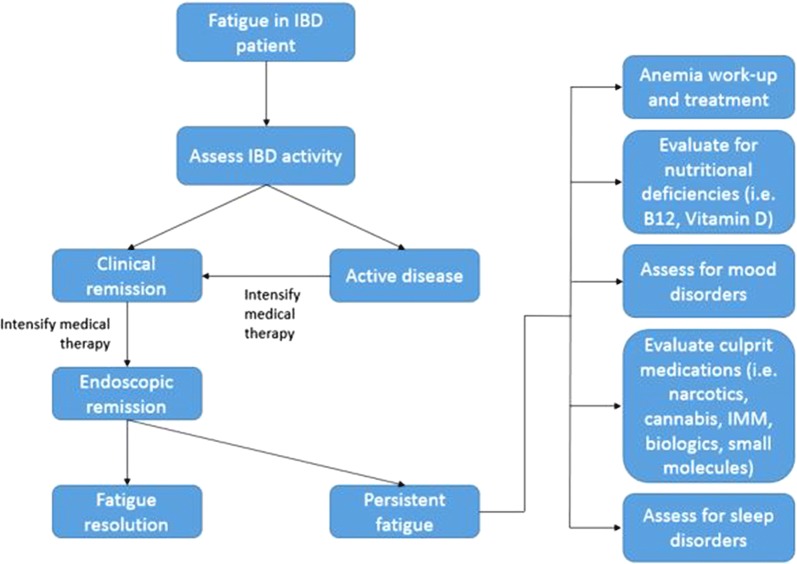
Fatigue is a burdensome, multidimensional, and multifactorial symptom that is associated with a wide array of chronic illnesses, specifically occurring in nearly 50% of patients with inflammatory bowel disease (IBD). Although common, given its subjective nature, physicians often under-recognize and undertreat this debilitating symptom. There are multiple etiologies that can contribute to fatigue in patients with IBD, including disease activity, anemia, medications, psychosomatic symptoms, and alterations to the gut-brain axis. The management of fatigue in IBD can be challenging, as it is often times multifaceted. In this review, we summarize the available tools for the diagnosis and measurement of fatigue, discuss etiologies, and make recommendations for their management. We identify knowledge gaps for the workup and treatment of fatigue and propose an algorithm to aid physicians in the evaluation and management of fatigue in this unique population. However, future research is needed to address several areas of knowledge deficits and improve the management of fatigue in IBD.
Overview
The claims and statistics of this paper haven’t been checked yet.
Free: it reads the open-access text and checks the first 5 claims that cite a source we can check. Create a free account to check every claim.
Integrity signals
Registry
Cites
Statistics
Figures
Verification
Claims the paper makes
The claims and statistics of this paper haven’t been checked yet.
Free: it reads the open-access text and checks the first 5 claims that cite a source we can check. Create a free account to check every claim.
Claims other papers make about this one
Each is checked against this paper’s own text: does it say what the citing paper says it does?
The source backs part of the claim, not all of it — or backs it for a different population, condition or comparison.
In the citing paper
“Крім того, втома була основною скаргою пацієнтів у період загострень і корелювала з рівнем депресії [46].”
From PSYCHO-EMOTIONAL STATUS IN PATIENTS WITH INFLAMMATORY BOWEL DISEASE (2024) · cites this paper as [46]
Experimental — accuracy not yet measuredThe source backs part of the claim, not all of it — or backs it for a different population, condition or comparison.
In the citing paper
“В оглядовій статті Т. Grimstad et al. проаналізовано 156 статей, у яких астенія в осіб із ЗЗК траплялася значно частіше, ніж серед населення загалом.”
From PSYCHO-EMOTIONAL STATUS IN PATIENTS WITH INFLAMMATORY BOWEL DISEASE (2024) · cites this paper as [46]
Experimental — accuracy not yet measured
Self-check
Percentages, sums and reported differences re-computed from the paper’s own numbers.
The self-check needs the paper’s full text.
Citations
Cites
From inflammation to sickness and depression: when the immune system subjugates the brain
Dantzer, R., O'Connor, J. C., Freund, G. G., Johnson, R. W., & Kelley, K. W. (2008) · Nature Reviews Neuroscience · doi:10.1038/nrn2297 · Cited by 7,395
Epidemiology of Obstructive Sleep Apnea: A Population Health Perspective
Young, T., Peppard, P. E., & Gottlieb, D. J. (2002) · American Journal of Respiratory and Critical Care Medicine · doi:10.1164/rccm.2109080 · Cited by 4,244 · cited 1×
“OSA prevalence is estimated to be around 20% in the overall population [109].”
BackgroundSmets, E. M. A., Garssen, B., Bonke, B., & De Haes, J. C. J. M. (1995) · Journal of Psychosomatic Research · doi:10.1016/0022-3999(94)00125-o · Cited by 3,613
Development of a fatigue scale
Chalder, T., Berelowitz, G., Pawlikowska, T., Watts, L., Wessely, S., Wright, D., & Wallace, E. P. (1993) · Journal of Psychosomatic Research · doi:10.1016/0022-3999(93)90081-p · Cited by 3,032 · cited 1×
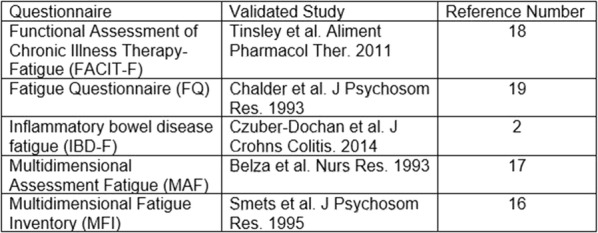
“In the Fatigue Questionnaire (FQ), patients rate themselves between 0 and 3; 0 and 3 indicating better than usual and much worse than usual, respectively, on each of the 11 items pertaining to physical and mental fatigue [19].”
BackgroundInternational Union of Pharmacology. XXVII. Classification of Cannabinoid Receptors
Howlett, A. C., Barth, F., Bonner, T. I., Cabral, G., Casellas, P., Devane, W. A., Felder, C. C., Herkenham, M., Mackie, K., Martin, B. R., et al. (2002) · Pharmacological Reviews · doi:10.1124/pr.54.2.161 · Cited by 2,819
The gut-brain axis: interactions between enteric microbiota, central and enteric nervous systems.
(2015) · PubMed Central · Cited by 2,540
Handbook of clinical neurology
(1986) · Journal of Neuroimmunology · doi:10.1016/0165-5728(86)90030-5 · Cited by 1,849
ACG Clinical Guideline: Management of Crohn's Disease in Adults
Lichtenstein, G. R., Loftus, E. V., Isaacs, K. L., Regueiro, M. D., Gerson, L. B., & Sands, B. E. (2018) · American Journal of Gastroenterology · doi:10.1038/ajg.2018.27 · Cited by 1,421
Sandborn, W. J., van Assche, G., Reinisch, W., Colombel, J., D’Haens, G., Wolf, D. C., Kron, M., Tighe, M. B., Lazar, A., & Thakkar, R. B. (2012) · Gastroenterology · doi:10.1053/j.gastro.2011.10.032 · Cited by 1,269
Certolizumab Pegol for the Treatment of Crohn's Disease
Sandborn, W. J., Feagan, B. G., Stoinov, S., Honiball, P. J., Rutgeerts, P., Mason, D., Bloomfield, R., & Schreiber, S. (2007) · New England Journal of Medicine · doi:10.1056/nejmoa067594 · Cited by 1,143
Vgontzas, A. N., Papanicolaou, D. A., Bixler, E. O., Kales, A., Tyson, K., & Chrousos, G. P. (1997) · The Journal of Clinical Endocrinology & Metabolism · doi:10.1210/jcem.82.5.3950 · Cited by 974
Sleep Deprivation and Activation of Morning Levels of Cellular and Genomic Markers of Inflammation
Irwin, M. R. (2006) · Archives of Internal Medicine · doi:10.1001/archinte.166.16.1756 · Cited by 850 · cited 7×
“One study (n = 288), in which fatigue was assessed during active disease and during deep remission, those in deep remission had no significant difference in immune markers, i.e., calprotectin, C-reactive protein (CRP), IL-17A, IL-6, IL-1b, IL-10, IL8, TNFa, IL-13, IFN, IL-4, and IL-12, between those with fatigue and t…”
BackgroundInfluentialIrvine, E. J., Feagan, B., Rochon, J., Archambault, A., Fedorak, R. N., Groll, A., Kinnear, D., Saibil, F., & McDonald, J. W. D. (1994) · Gastroenterology · doi:10.1016/0016-5085(94)90585-1 · Cited by 712
Dignass, A. U., Gasche, C., Bettenworth, D., Birgegård, G., Danese, S., Gisbert, J. P., Gomollon, F., Iqbal, T., Katsanos, K., Koutroubakis, I., et al. (2015) · Journal of Crohn's and Colitis · doi:10.1093/ecco-jcc/jju009 · Cited by 622
Haack, M., Sanchez, E., & Mullington, J. M. (2007) · Sleep · doi:10.1093/sleep/30.9.1145 · Cited by 615
Effects of sleep and circadian rhythm on human circulating immune cells
Born, J., Lange, T., Hansen, K., Mölle, M., & Fehm, H. L. (1997) · The Journal of Immunology · doi:10.4049/jimmunol.158.9.4454 · Cited by 611
Gut Microbiota’s Effect on Mental Health: The Gut-Brain Axis
Clapp, M., Aurora, N., Herrera, L., Bhatia, M., Wilen, E., & Wakefield, S. (2017) · Clinics and Practice · doi:10.4081/cp.2017.987 · Cited by 608 · cited 1×
“Increased intestinal permeability from inflammation allows contents such as bacteria and bacterial metabolites to cross through the epithelial barriers into the systemic circulation [86].”
BackgroundFatigue and Proinflammatory Cytokine Activity in Breast Cancer Survivors
Bower, J. E., Ganz, P. A., Aziz, N., & Fahey, J. L. (2002) · Psychosomatic Medicine · doi:10.1097/00006842-200207000-00010 · Cited by 540
The Role of Cytokines in Sleep Regulation
Krueger, J. (2008) · Current Pharmaceutical Design · doi:10.2174/138161208786549281 · Cited by 507 · cited 1×
“There is good evidence about the link between sleep deprivation and the activation of the immune system, and the ability to mount an immune response [112].”
BackgroundIron, anaemia, and inflammatory bowel diseases
Gasche, C., Lomer, M. C. E., Cavill, I., & Weiss, G. (2004) · Gut · doi:10.1136/gut.2003.035758 · Cited by 494
Obesity in IBD: epidemiology, pathogenesis, disease course and treatment outcomes
Singh, S., Dulai, P. S., Zarrinpar, A., Ramamoorthy, S., & Sandborn, W. J. (2017) · Nature Reviews Gastroenterology & Hepatology · doi:10.1038/nrgastro.2016.181 · Cited by 452
Correlates of Fatigue in Older Adults with Rheumatoid Arthritis
BELZA, B. L., HENKE, C. J., YELIN, E. H., EPSTEIN, W. V., & GILLISS, C. L. (1993) · Nursing Research · doi:10.1097/00006199-199303000-00006 · Cited by 434
Cannabinoids and the gut: New developments and emerging concepts
Izzo, A. A., & Sharkey, K. A. (2010) · Pharmacology & Therapeutics · doi:10.1016/j.pharmthera.2009.12.005 · Cited by 419
Naftali, T., Bar-Lev Schleider, L., Dotan, I., Lansky, E. P., Sklerovsky Benjaminov, F., & Konikoff, F. M. (2013) · Clinical Gastroenterology and Hepatology · doi:10.1016/j.cgh.2013.04.034 · Cited by 327
Nutrition Assessment of Patients With Inflammatory Bowel Disease
Vagianos, K., Bector, S., McConnell, J., & Bernstein, C. N. (2007) · Journal of Parenteral and Enteral Nutrition · doi:10.1177/0148607107031004311 · Cited by 324
A population-based study of fatigue and sleep difficulties in inflammatory bowel disease
Graff, L. A., Vincent, N., Walker, J. R., Clara, I., Carr, R., Ediger, J., Miller, N., Rogala, L., Rawsthorne, P., Lix, L., et al. (2011) · Inflammatory Bowel Diseases · doi:10.1002/ibd.21580 · Cited by 294
Recombinant tumor necrosis factor and interleukin 1 enhance slow-wave sleep
Shoham, S., Davenne, D., Cady, A. B., Dinarello, C. A., & Krueger, J. M. (1987) · American Journal of Physiology-Regulatory, Integrative and Comparative Physiology · doi:10.1152/ajpregu.1987.253.1.r142 · Cited by 290
Schwab, M. G., Schäffeler, E., Marx, C., Fischer, C., Lang, T., Behrens, C., Gregor, M., Eichelbaum, M. F., Zanger, U. M., & Kaskas, B. (2002) · Pharmacogenetics · doi:10.1097/00008571-200208000-00003 · Cited by 275
Fatigue in IBD: epidemiology, pathophysiology and management
Borren, N. Z., van der Woude, C. J., & Ananthakrishnan, A. N. (2019) · Nature Reviews Gastroenterology & Hepatology · doi:10.1038/s41575-018-0091-9 · Cited by 272
Sleep Disturbance and Risk of Active Disease in Patients With Crohn's Disease and Ulcerative Colitis
Ananthakrishnan, A. N., Long, M. D., Martin, C. F., Sandler, R. S., & Kappelman, M. D. (2013) · Clinical Gastroenterology and Hepatology · doi:10.1016/j.cgh.2013.01.021 · Cited by 259
Systematic review: fatigue in inflammatory bowel disease
Van Langenberg, D. R., & Gibson, P. R. (2010) · Alimentary Pharmacology & Therapeutics · doi:10.1111/j.1365-2036.2010.04347.x · Cited by 241
Romberg-Camps, M. J. L., Bol, Y., Dagnelie, P. C., Hesselink-van de Kruijs, M. A. M., Kester, A. D. M., Engels, L. G. J. B., van Deursen, C., Hameeteman, W. H. A., Pierik, M., Wolters, F., et al. (2010) · Inflammatory Bowel Diseases · doi:10.1002/ibd.21285 · Cited by 240
Micronutrient deficiencies in inflammatory bowel disease: From A to zinc
Hwang, C., Ross, V., & Mahadevan, U. (2012) · Inflammatory Bowel Diseases · doi:10.1002/ibd.22906 · Cited by 233
Dose-dependent effects of endotoxin on human sleep
Mullington, J., Korth, C., Hermann, D. M., Orth, A., Galanos, C., Holsboer, F., & Pollmächer, T. (2000) · American Journal of Physiology-Regulatory, Integrative and Comparative Physiology · doi:10.1152/ajpregu.2000.278.4.r947 · Cited by 226
Occupational distribution of inflammatory bowel disease among German employees.
Sonnenberg, A. (1990) · Gut · doi:10.1136/gut.31.9.1037 · Cited by 224
Loftus, E. V., Feagan, B. G., Colombel, J.-F., Rubin, D. T., Wu, E. Q., Yu, A. P., Pollack, P. F., Chao, J., & Mulani, P. (2008) · The American Journal of Gastroenterology · doi:10.1111/j.1572-0241.2008.02175.x · Cited by 217
Fatigue in chronic inflammation - a link to pain pathways
Louati, K., & Berenbaum, F. (2015) · Arthritis Research & Therapy · doi:10.1186/s13075-015-0784-1 · Cited by 200
The relevance of sleep abnormalities to chronic inflammatory conditions
Ranjbaran, Z., Keefer, L., Stepanski, E., Farhadi, A., & Keshavarzian, A. (2007) · Inflammation Research · doi:10.1007/s00011-006-6067-1 · Cited by 190
Cohen, B. L., Zoëga, H., Shah, S. A., LeLeiko, N., Lidofsky, S., Bright, R., Flowers, N., Law, M., Moniz, H., Merrick, M., et al. (2014) · Alimentary Pharmacology & Therapeutics · doi:10.1111/apt.12659 · Cited by 178
The Effects of Infliximab Therapy on Health-Related Quality of Life in Ulcerative Colitis Patients
Feagan, B. G., Reinisch, W., Rutgeerts, P., Sandborn, W. J., Yan, S., Eisenberg, D., Bala, M., Johanns, J., Olson, A., & Hanauer, S. B. (2007) · The American Journal of Gastroenterology · doi:10.1111/j.1572-0241.2007.01094.x · Cited by 178
Cannabis use amongst patients with inflammatory bowel disease
Lal, S., Prasad, N., Ryan, M., Tangri, S., Silverberg, M. S., Gordon, A., & Steinhart, H. (2011) · European Journal of Gastroenterology & Hepatology · doi:10.1097/meg.0b013e328349bb4c · Cited by 170
Self-reported Symptom Burden in Individuals with Inflammatory Bowel Disease
Farrell, D., McCarthy, G., & Savage, E. (2016) · Journal of Crohn's and Colitis · doi:10.1093/ecco-jcc/jjv218 · Cited by 166
Cytokines and Chronic Fatigue Syndrome
Patarca, R. (2001) · Annals of the New York Academy of Sciences · doi:10.1111/j.1749-6632.2001.tb05824.x · Cited by 164
Irving, P. M., Iqbal, T., Nwokolo, C., Subramanian, S., Bloom, S., Prasad, N., Hart, A., Murray, C., Lindsay, J. O., Taylor, A., et al. (2018) · Inflammatory Bowel Diseases · doi:10.1093/ibd/izy002 · Cited by 164
Sleep deprivation worsens inflammation and delays recovery in a mouse model of colitis
Tang, Y., Preuss, F., Turek, F. W., Jakate, S., & Keshavarzian, A. (2009) · Sleep Medicine · doi:10.1016/j.sleep.2008.12.009 · Cited by 148
Jelsness-Jørgensen, L.-P., Bernklev, T., Henriksen, M., Torp, R., & Moum, B. A. (2011) · Inflammatory Bowel Diseases · doi:10.1002/ibd.21530 · Cited by 148
Tinsley, A., Macklin, E. A., Korzenik, J. R., & Sands, B. E. (2011) · Alimentary Pharmacology & Therapeutics · doi:10.1111/j.1365-2036.2011.04871.x · Cited by 147
Minderhoud, I. (2003) · The American Journal of Gastroenterology · doi:10.1016/s0002-9270(03)00132-1 · Cited by 146
Ali, T., Madhoun, M. F., Orr, W. C., & Rubin, D. T. (2013) · Inflammatory Bowel Diseases · doi:10.1097/mib.0b013e3182a0ea54 · Cited by 142
Melatonin Reduces Inflammatory Injury through Inhibiting NF‐κ B Activation in Rats with Colitis
Li, J.-H., Yu, J.-P., Yu, H.-G., Xu, X.-M., Yu, L.-L., Liu, J., & Luo, H.-S. (2005) · Mediators of Inflammation · doi:10.1155/mi.2005.185 · Cited by 139
Czuber-Dochan, W., Norton, C., Bassett, P., Berliner, S., Bredin, F., Darvell, M., Forbes, A., Gay, M., Nathan, I., Ream, E., et al. (2014) · Journal of Crohn's and Colitis · doi:10.1016/j.crohns.2014.04.013 · Cited by 139
The effects of infliximab maintenance therapy on health-related quality of life
Feagan, B. (2003) · The American Journal of Gastroenterology · doi:10.1016/s0002-9270(03)00659-2 · Cited by 138
An Initial Report of Sleep Disturbance in Inactive Inflammatory Bowel Disease
Keefer, L., Stepanski, E. J., Ranjbaran, Z., Benson, L. M., & Keshavarzian, A. (2006) · Journal of Clinical Sleep Medicine · doi:10.5664/jcsm.26656 · Cited by 138
ASCPRO Recommendations for the Assessment of Fatigue as an Outcome in Clinical Trials
Barsevick, A. M., Cleeland, C. S., Manning, D. C., O'Mara, A. M., Reeve, B. B., Scott, J. A., & Sloan, J. A. (2010) · Journal of Pain and Symptom Management · doi:10.1016/j.jpainsymman.2010.02.006 · Cited by 134
Importance of nutrition in inflammatory bowel disease
Lucendo, A. J., & Rezende, L. C. D. (2009) · World Journal of Gastroenterology · doi:10.3748/wjg.15.2081 · Cited by 128
Leadbeater, B. J., Ames, M. E., & Linden‐Carmichael, A. N. (2019) · Addiction · doi:10.1111/add.14459 · Cited by 126
Aksan, A., Işık, H., Radeke, H. H., Dignass, A., & Stein, J. (2017) · Alimentary Pharmacology & Therapeutics · doi:10.1111/apt.14043 · Cited by 124
The prevalence of anemia and iron deficiency in IBD outpatients in Scandinavia
Bager, P., Befrits, R., Wikman, O., Lindgren, S. C., Moum, B. A., Hjortswang, H., & Dahlerup, J. F. (2010) · Scandinavian Journal of Gastroenterology · doi:10.3109/00365521.2010.533382 · Cited by 123
Practice Bulletin No. 187: Neural Tube Defects
(2017) · Obstetrics & Gynecology · doi:10.1097/aog.0000000000002412 · Cited by 121
Validation of the EuroQol questionnaire in patients with inflammatory bowel disease
König, H.-H., Ulshöfer, A., Gregor, M., von Tirpitz, C., Reinshagen, M., Adler, G., & Leidl, R. (2002) · European Journal of Gastroenterology & Hepatology · doi:10.1097/00042737-200211000-00008 · Cited by 120
Sleep disturbances and inflammatory bowel disease: a potential trigger for disease flare?
Swanson, G. R., Burgess, H. J., & Keshavarzian, A. (2011) · Expert Review of Clinical Immunology · doi:10.1586/eci.10.83 · Cited by 120
The Availability and Nutritional Adequacy of Gluten-Free Bread and Pasta
Allen, B., & Orfila, C. (2018) · Nutrients · doi:10.3390/nu10101370 · Cited by 120
Graff, L. A., Clara, I. P., Walker, J. R., Lix, L. M., Carr, R., Miller, N., Rogala, L., & Bernstein, C. N. (2013) · Clinical Gastroenterology and Hepatology · doi:10.1016/j.cgh.2013.03.031 · Cited by 118
Sleep Duration Affects Risk for Ulcerative Colitis: A Prospective Cohort Study
Ananthakrishnan, A. N., Khalili, H., Konijeti, G. G., Higuchi, L. M., de Silva, P., Fuchs, C. S., Richter, J. M., Schernhammer, E. S., & Chan, A. T. (2014) · Clinical Gastroenterology and Hepatology · doi:10.1016/j.cgh.2014.04.021 · Cited by 117
Chavarría, C. M., Casanova, M. J., Chaparro, M., Acosta, M. B., Ezquiaga, E., Bujanda, L., Rivero, M., Argüelles‐Arias, F., Martín‐Arranz, M. D., Martínez-Montiel, P., et al. (2019) · Journal of Crohn s and Colitis · doi:10.1093/ecco-jcc/jjz024 · Cited by 117
Effects of Sleep on the Production of Cytokines in Humans
Uthgenannt, D., Schoolmann, D., Pietrowsky, R., Fehm, H.-L., & Born, J. (1995) · Psychosomatic Medicine · doi:10.1097/00006842-199503000-00001 · Cited by 112
Fatigue in out-patients with inflammatory bowel disease: Prevalence and predictive factors
Villoria, A., García, V., Dosal, A., Moreno, L., Montserrat, A., Figuerola, A., Horta, D., Calvet, X., & Ramírez-Lázaro, M. J. (2017) · PLOS ONE · doi:10.1371/journal.pone.0181435 · Cited by 109
Jelsness‐Jørgensen, L. ‐., Bernklev, T., Henriksen, M., Torp, R., & Moum, B. A. (2011) · Alimentary Pharmacology & Therapeutics · doi:10.1111/j.1365-2036.2010.04498.x · Cited by 108
Battat, R., Kopylov, U., Szilagyi, A., Saxena, A., Rosenblatt, D. S., Warner, M., Bessissow, T., Seidman, E., & Bitton, A. (2014) · Inflammatory Bowel Diseases · doi:10.1097/mib.0000000000000024 · Cited by 101
Panés, J., Vermeire, S., Lindsay, J. O., Sands, B. E., Su, C., Friedman, G., Zhang, H., Yarlas, A., Bayliss, M., Maher, S., et al. (2018) · Journal of Crohn's and Colitis · doi:10.1093/ecco-jcc/jjx133 · Cited by 100
Fatigue in Newly Diagnosed Inflammatory Bowel Disease
Grimstad, T., Norheim, K. B., Isaksen, K., Leitao, K., Hetta, A. K., Carlsen, A., Karlsen, L. N., Skoie, I. M., Gøransson, L., Harboe, E., et al. (2015) · Journal of Crohn's and Colitis · doi:10.1093/ecco-jcc/jjv091 · Cited by 99
Enns, M. W., Bernstein, C. N., Kroeker, K., Graff, L. A., Walker, J. R., Lix, L. M., Hitchon, C. A., El-Gabalawy, R. M., Fisk, J. D., Marrie, R. A., et al. (2018) · PLoS ONE · doi:10.1371/journal.pone.0198975 · Cited by 99
Managing pain in inflammatory bowel disease.
Docherty, M. J., Jones, R. C. W., & Wallace, M. S. (2011) · Europe PMC (PubMed Central) · Cited by 97
Casellas, F., Barreiro de Acosta, M., Iglesias, M., Robles, V., Nos, P., Aguas, M., Riestra, S., de Francisco, R., Papo, M., & Borruel, N. (2012) · European Journal of Gastroenterology & Hepatology · doi:10.1097/meg.0b013e32835414b2 · Cited by 95
Methotrexate for Inflammatory Bowel Disease: Pharmacology and Preliminary Results
Egan, L. J., & Sandborn, W. J. (1996) · Mayo Clinic Proceedings · doi:10.4065/71.1.69 · Cited by 94
Zimmerman, J. (2003) · Digestive Diseases and Sciences · doi:10.1023/a:1022840910283 · Cited by 90
Nutritional Interventions in the Patient with Inflammatory Bowel Disease
Limketkai, B. N., Wolf, A., & Parian, A. M. (2017) · Gastroenterology Clinics of North America · doi:10.1016/j.gtc.2017.09.007 · Cited by 89
Huppertz-Hauss, G., Høivik, M. L., Jelsness-Jørgensen, L.-P., Opheim, R., Henriksen, M., Høie, O., Hovde, Ø., Kempski-Monstad, I., Solberg, I. C., Jahnsen, J., et al. (2017) · Scandinavian Journal of Gastroenterology · doi:10.1080/00365521.2016.1256425 · Cited by 85 · cited 1×
“Multiple studies have shown that fatigue is associated with disease severity [5, 6].”
BackgroundAnemia in inflammatory bowel disease: A neglected issue with relevant effects
Guagnozzi, D., & Lucendo, A. J. (2014) · World Journal of Gastroenterology · doi:10.3748/wjg.v20.i13.3542 · Cited by 83
Endosonographic Features of Histologically Proven Gastric Ectopic Pancreas
Chou, J., Cheng, K.-S., Ting, C., Feng, C., Lin, Y.-T., & Huang, W.-H. (2014) · Gastroenterology Research and Practice · doi:10.1155/2014/160601 · Cited by 83
Presenteeism in Inflammatory Bowel Diseases: A Hidden Problem with Significant Economic Impact
Zand, A., van Deen, W. K., Inserra, E. K., Hall, L., Kane, E., Centeno, A., Choi, J. M., Ha, C. Y., Esrailian, E., D’Haens, G., et al. (2015) · Inflammatory Bowel Diseases · doi:10.1097/mib.0000000000000399 · Cited by 81
Sleep and physical activity measured by accelerometry in Crohn's disease
van Langenberg, D. R., Papandony, M. C., & Gibson, P. R. (2015) · Alimentary Pharmacology & Therapeutics · doi:10.1111/apt.13160 · Cited by 77
Assessing fatigue in inflammatory bowel disease: comparison of three fatigue scales
Norton, C., Czuber-Dochan, W., Bassett, P., Berliner, S., Bredin, F., Darvell, M., Forbes, A., Gay, M., Ream, E., & Terry, H. (2015) · Alimentary Pharmacology & Therapeutics · doi:10.1111/apt.13255 · Cited by 76
Sleep and Inflammatory Bowel Disease: An Important Bi-Directional Relationship
Qazi, T., & Farraye, F. A. (2019) · Inflammatory Bowel Diseases · doi:10.1093/ibd/izy334 · Cited by 73
Stevens, B. W., Borren, N. Z., Velonias, G., Conway, G., Cleland, T., Andrews, E., Khalili, H., Garber, J. G., Xavier, R. J., Yajnik, V., et al. (2017) · Digestive Diseases and Sciences · doi:10.1007/s10620-016-4356-2 · Cited by 69
Melatonin reduces colon immunological injury in rats by regulating activity of macrophages.
Mei, Q., Yu, J., Xu, J., Wei, W., Xiang, L., & Li, Y. (2002) · PubMed · Cited by 65
Targets for Health Interventions for Inflammatory Bowel Disease-fatigue
Artom, M., Czuber-Dochan, W., Sturt, J., & Norton, C. (2016) · Journal of Crohn's and Colitis · doi:10.1093/ecco-jcc/jjw029 · Cited by 64
Endosonographic Features of Histologically Proven Gastric Ectopic Pancreas
周仁偉, 鄭庚申, 丁俊夫, et al. (2014) · Gastroenterology Research and Practice · Cited by 64
Estevinho, M. M., Rocha, C., Correia, L., Lago, P. M., Ministro, P., Portela, F., Trindade, E., Afonso, J., Peyrin‐Biroulet, L., & Magro, F. (2019) · Clinical Gastroenterology and Hepatology · doi:10.1016/j.cgh.2019.08.063 · Cited by 61
Wilson, R. G., Stevens, B. W., Guo, A. Y., Russell, C. N., Thornton, A., Cohen, M. A., Sturgeon, H. C., Giallourakis, C., Khalili, H., Nguyen, D. D., et al. (2015) · Digestive Diseases and Sciences · doi:10.1007/s10620-015-3580-5 · Cited by 60
Madanchi, M., Fagagnini, S., Fournier, N., Biedermann, L., Zeitz, J., Battegay, E., Zimmerli, L., Vavricka, S. R., Rogler, G., Scharl, M., et al. (2018) · Inflammatory Bowel Diseases · doi:10.1093/ibd/izy054 · Cited by 58
Neuroendocrine Aspects of Chronic Fatigue Syndrome
Papanicolaou, D. A., Amsterdam, J. D., Levine, S., McCann, S. M., Moore, R. C., Newbrand, C. H., Allen, G., Nisenbaum, R., Pfaff, D. W., Tsokos, G. C., et al. (2004) · Neuroimmunomodulation · doi:10.1159/000075315 · Cited by 54
Hashash, J. G., Ramos-Rivers, C., Youk, A., Chiu, W. K., Duff, K., Regueiro, M., Binion, D. G., Koutroubakis, I., Vachon, A., Benhayon, D., et al. (2018) · Journal of Clinical Gastroenterology · doi:10.1097/mcg.0000000000000729 · Cited by 53
Chrobak, A. A., Nowakowski, J., Zwolinska-Wcislo, M. M., Cibor, D., Przybylska-Feluś, M., Ochyra, K., Rzeźnik, M., Dudek, A., Arciszewska, A., Siwek, M., et al. (2018) · Chronobiology International · doi:10.1080/07420528.2018.1463236 · Cited by 53
Is Iron Deficiency in the Absence of Anemia Associated With Fatigue in Inflammatory Bowel Disease?
Goldenberg, B. A., Graff, L. A., Clara, I., Zarychanski, R., Walker, J. R., Carr, R., Rogala, L., Miller, N., & Bernstein, C. N. (2013) · American Journal of Gastroenterology · doi:10.1038/ajg.2013.14 · Cited by 52
Feagan, B. G., Patel, H., Colombel, J. F., Rubin, D. T., James, A., Mody, R., & Lasch, K. L. (2016) · Alimentary Pharmacology & Therapeutics · doi:10.1111/apt.13852 · Cited by 52
Vogelaar, L., de Haar, C., Aerts, B., Peppelenbosch, M., Timman, R., Hansen, B., & van der Woude, J. (2017) · Clinical and Experimental Gastroenterology · doi:10.2147/ceg.s123942 · Cited by 51
Determinants of fatigue in Crohn’s disease patients
Vogelaar, L., van’t Spijker, A., van Tilburg, A. J. P., Kuipers, E. J., Timman, R., & van der Woude, C. J. (2013) · European Journal of Gastroenterology & Hepatology · doi:10.1097/meg.0b013e32835aba83 · Cited by 50
Practical Guideline for Fatigue Management in Inflammatory Bowel Disease
Kreijne, J. E., Lie, M. R. K. L., Vogelaar, L., & van der Woude, C. J. (2016) · Journal of Crohn's and Colitis · doi:10.1093/ecco-jcc/jjv168 · Cited by 47
Fatigue is not associated with vitamin D deficiency in inflammatory bowel disease patients
Frigstad, S. O., Høivik, M. L., Jahnsen, J., Cvancarova, M., Grimstad, T. B., Berset, I. P., Huppertz‐Hauss, G., Hovde, Ø., Bernklev, T., Moum, B. A., et al. (2018) · World Journal of Gastroenterology · doi:10.3748/wjg.v24.i29.3293 · Cited by 47
Practical aspects of actigraphy and approaches in clinical and research domains
Walia, H. K., & Mehra, R. (2019) · Handbook of clinical neurology · doi:10.1016/b978-0-444-64032-1.00024-2 · Cited by 47
Impaired Sleep Quality in Crohn’s Disease Depends on Disease Activity
Gingold-Belfer, R., Peled, N., Levy, S., Katz, N., Niv, Y., Fass, R., Fraser, G., & Dickman, R. (2014) · Digestive Diseases and Sciences · doi:10.1007/s10620-013-2890-8 · Cited by 46
Jonefjäll, B., Simrén, M., Lasson, A., Öhman, L., & Strid, H. (2017) · United European Gastroenterology Journal · doi:10.1177/2050640617703868 · Cited by 45
Swaminath, A. C., Berlin, E. P., Cheifetz, A. S., Hoffenberg, E. J., Kinnucan, J. A. R., Wingate, L., Buchanan, S., Zmeter, N., & Rubin, D. T. (2018) · Inflammatory Bowel Diseases · doi:10.1093/ibd/izy319 · Cited by 45
Self-citationEl-Sherif, Y., Alexakis, C., & Mendall, M. A. (2014) · Gastroenterology Research and Practice · doi:10.1155/2014/762191 · Cited by 44
Review article: treating‐to‐target for inflammatory bowel disease‐associated anaemia
Peyrin‐Biroulet, L., Lopez, A., Cummings, F. J. R., Dignass, A. U., Detlie, T. E., & Danese, S. (2018) · Alimentary Pharmacology & Therapeutics · doi:10.1111/apt.14922 · Cited by 41
Melatonin improves experimental colitis with sleep deprivation
Park, Y.-S., CHUNG, S.-H., Lee, S., KIM, J.-H., KIM, J.-B., Kim, T.-K., Kim, D.-S., & Baik, H. (2015) · International Journal of Molecular Medicine · doi:10.3892/ijmm.2015.2080 · Cited by 40
Cannabis Oil Use by Adolescents and Young Adults With Inflammatory Bowel Disease
Hoffenberg, E. J., McWilliams, S. K., Mikulich‐Gilbertson, S. K., Murphy, B. V., Hoffenberg, A. S., & Hopfer, C. J. (2019) · Journal of Pediatric Gastroenterology and Nutrition · doi:10.1097/mpg.0000000000002189 · Cited by 40
Probert, C. S., Sebastian, S., Gaya, D. R., Hamlin, P. J., Gillespie, G., Rose, A., Tate, H., Wheeler, C., & Irving, P. M. (2018) · BMJ Open Gastroenterology · doi:10.1136/bmjgast-2018-000212 · Cited by 38
Hou, J. K., Gasché, C., Drazin, N., Weaver, S. A., Ehrlich, O. G., Oberai, R., Zapala, S., Siegel, C. A., & Melmed, G. (2016) · Inflammatory Bowel Diseases · doi:10.1097/mib.0000000000000953 · Cited by 37
Sands, B. E., Han, C., Gasink, C., Jacobstein, D., Szapary, P. O., Gao, L.-L., Lang, Y., Targan, S. R., Sandborn, W. J., & Feagan, B. G. (2018) · Journal of Crohn s and Colitis · doi:10.1093/ecco-jcc/jjy055 · Cited by 32
Fatigue and Quality of Sleep in Patients with Immune-Mediated Inflammatory Disease
Graff, L. A., Walker, J. R., RUSSELL, A. S., Bissonnette, R., & Bernstein, C. N. (2011) · Journal of Rheumatology Supplement · doi:10.3899/jrheum.110902 · Cited by 31
Endogenous melatonin profiles in asymptomatic inflammatory bowel disease
Burgess, H. J., Swanson, G. R., & Keshavarzian, A. (2010) · Scandinavian Journal of Gastroenterology · doi:10.3109/00365521003749818 · Cited by 24
Gong, J., Zuo, L., Guo, Z., Zhang, L., Li, Y. Z., Gu, L., Zhao, J., Cao, L., Zhu, W., Li, N., et al. (2014) · Journal of Parenteral and Enteral Nutrition · doi:10.1177/0148607114528360 · Cited by 23
Lucia-Casadonte, C., Brown, J. B., Strople, J. A., Neighbors, K., Fei, L., & Alonso, E. M. (2018) · Journal of Pediatric Gastroenterology and Nutrition · doi:10.1097/mpg.0000000000002057 · Cited by 22
Shitrit, A. B., Chen‐Shuali, C., Adar, T., Koslowsky, B., Shteingart, S., Paz, K., Grisaru‐Granovsky, S., Goldin, E., Shochet, G. E., & Shitrit, D. (2018) · Digestive Diseases and Sciences · doi:10.1007/s10620-018-5207-0 · Cited by 22
Population-based normative data for the inflammatory bowel disease fatigue scale – IBD-F
Bager, P., Vestergaard, C., Juul, T., & Dahlerup, J. F. (2018) · Scandinavian Journal of Gastroenterology · doi:10.1080/00365521.2018.1521868 · Cited by 22
Thiopurines, a previously unrecognised cause for fatigue in patients with inflammatory bowel disease
Lee, T. W. T., Iser, J. H., Sparrow, M., Newnham, E., Headon, B., & Gibson, P. R. (2009) · Journal of Crohn s and Colitis · doi:10.1016/j.crohns.2009.03.004 · Cited by 19
Coombs-positive autoimmune hemolytic anemia in Crohn??s disease
Plikat, K., Rogler, G., & Schölmerich, J. (2005) · European Journal of Gastroenterology & Hepatology · doi:10.1097/00042737-200506000-00011 · Cited by 17
Ibrahim, A., Dahlqvist, P. M., Olsson, T., Lundgren, D. W., Werner, M., Suhr, O. B., & Karling, P. (2017) · Therapeutic Advances in Gastroenterology · doi:10.1177/1756283x17730748 · Cited by 15
Grimstad, T. B., Norheim, K. B., Kvaløy, J. T., Isaksen, K., Leitao, K., Carlsen, A., Karlsen, L., Aabakken, L., & Omdal, R. (2016) · Scandinavian Journal of Gastroenterology · doi:10.1080/00365521.2016.1195869 · Cited by 12
Microbial manipulation as primary therapy for Crohn's disease
Longman, R., & Swaminath, A. (2013) · World Journal of Gastroenterology · doi:10.3748/wjg.v19.i10.1513 · Cited by 6
Self-citationWatson, N. F., Lawlor, C., & Raymann, R. J. E. M. (2019) · Journal of Clinical Sleep Medicine · doi:10.5664/jcsm.7784 · Cited by 2
Sleep dysfunction and inflammatory bowel disease
Sofia, M., Andersen, M. J., & Rubin, D. T. (2018) · Cited by 2
Research works printed but not linked: 1
- Eiden KA Nutritional consideration in inflammatory bowel disease Pract Gastroenterol 2003 27 33 54
Cited by
Rogler, G., Singh, A., Kavanaugh, A., & Rubin, D. T. (2021) · Gastroenterology · doi:10.1053/j.gastro.2021.07.042 · Cited by 869
Pediatric Inflammatory Bowel Disease
Bouhuys, M., Lexmond, W. S., & van Rheenen, P. F. (2022) · PEDIATRICS · doi:10.1542/peds.2022-058037 · Cited by 170
Vollbracht, C., & Kraft, K. (2021) · Nutrients · doi:10.3390/nu13041154 · Cited by 117
Nutritional and lifestyle management of the aging journey: A narrative review
Kassis, A. N., Fichot, M., Horcajada, M.-N., Horstman, A. M. H., Duncan, P. I., Bergonzelli, G. E., Preitner, N., Zimmermann, D., Bosco, N., Vidal, K., et al. (2023) · Frontiers in Nutrition · doi:10.3389/fnut.2022.1087505 · Cited by 98
Toresson, L., Spillmann, T., Pilla, R., Ludvigsson, U., Hellgren, J., Ölmedal, G., & Suchodolski, J. S. (2023) · Veterinary Sciences · doi:10.3390/vetsci10040271 · Cited by 68
Metadata
- Authors
- Nocerino, A., Nguyen, A., Agrawal, M., Mone, A., Lakhani, K., & Swaminath, A.
- Affiliations
- Northwell Health (US)
- Mount Sinai Hospital (US)
- Corresponding author
- Swaminath, Arun
- Venue
- Advances in Therapy
- Published
- 2019-11-23
- Volume
- 37
- Issue
- 1
- Pages
- 97-112
- ISSN
- 0741-238X (ISSN-L)
- 1865-8652
- PMC
- PMC6979464
- OpenAlex
- W2989726173
- Cited by
- 126
- References
- 124
- Citations by year
- 2026: 15 · 2025: 20 · 2024: 18 · 2023: 31 · 2022: 21 · 2021: 16 · 2020: 4
- FWCI
- 1.36
- Type
- journal article
- Language
- en
- Open access
- hybrid
- doi.org
- Licence
- cc-by-nc
- creativecommons.org/licenses/by-nc/4.0 (tdm)
- creativecommons.org/licenses/by-nc/4.0 (vor)
- Locations
- Advances in Therapy (publishedVersion, cc-by-nc)
- PubMed Central (publishedVersion, cc-by-nc)
- PubMed (publishedVersion)
- Topics
- Health Sciences › Medicine › Gastroenterology › Inflammatory Bowel Disease
- Health Sciences › Medicine › Ophthalmology › Ocular Diseases and Behçet’s Syndrome
- Health Sciences › Medicine › Rheumatology › Rheumatoid Arthritis Research and Therapies
- Keywords
- fatigue, inflammatory bowel disease, Crohn's disease, ulcerative colitis, fatigue etiology, fatigue management, anemia, psychosomatic symptoms, gut-brain axis, disease activity, fatigue detection, fatigue measurement, diagnostic algorithm
- MeSH terms
- Chronic Disease, Fatigue, Humans, Inflammatory Bowel Diseases
About these checks
Registry, retraction, Cites and statistics results are computed, not judged, with one exception: a printed reference that no index lists is read once by a model before it counts as a citation error. Claims are extracted by a model and kept only when their quote appears verbatim in the text; each cited source is then checked, with a model’s help, for whether it says what the claim relies on. Those verdicts can be wrong — read the claim’s quote and the cited source before relying on one.
Statistics and arithmetic are recomputed, not judged.
Confidence bands are shown only for fields calibrated on our annotated test set. None is calibrated yet, so no band is shown.
What counts as a claim ›How we measure confidence ›How we check this ›
Are you an author, or do you see a problem with this page? Request a review
Data sources
Bibliographic data: Semantic Scholar, OpenAlex, Crossref.
Contains information from the Semantic Scholar Academic Graph Datasets, made available under the ODC Attribution License (ODC-BY 1.0).
Semantic Scholar’s data is described in: Kinney, R., et al. (2023). The Semantic Scholar Open Data Platform. arXiv:2301.10140.
