

Weight Loss and Maintenance Related to the Mechanism of Action of Glucagon-Like Peptide 1 Receptor Agonists
Open accessThe DOI matches its Crossref record; 73 of the 73 references it cites were found in a registry or an index.
Abstract
Obesity is a chronic disease associated with many complications. Weight loss of 5–15% can improve many obesity-related complications. Despite the benefits of weight reduction, there are many challenges in losing weight and maintaining long-term weight loss. Pharmacotherapy can help people with obesity achieve and maintain their target weight loss, thereby reducing the risk of obesity-related complications. The prevalence of obesity in the USA has been increasing over the past few decades, and despite the availability of approved anti-obesity medications (AOMs), people with obesity may not be accessing or receiving treatment at levels consistent with the disease prevalence. Reasons for low levels of initiation and long-term use of AOMs may include reluctance of public health and medical organizations to recognize obesity as a disease, lack of reimbursement, provider inexperience, and misperceptions about the efficacy and safety of available treatments. This article aims to inform primary care providers about the mechanism of action of one class of AOMs, glucagon-like peptide 1 receptor agonists (GLP-1RAs), in weight loss and longer-term maintenance of weight loss, and the efficacy and safety of this treatment class. GLP-1RA therapy was initially developed to treat type 2 diabetes. Owing to their effectiveness in reducing body weight, once-daily subcutaneous administration of liraglutide 3.0 mg has been approved, and once-weekly subcutaneous administration of semaglutide 2.4 mg is being investigated in phase III trials, for obesity management. Considerations regarding adverse effects and contraindications for different drug classes are provided to help guide treatment decision-making when considering pharmacotherapy for weight management in patients with obesity. Obesity is a growing public health issue that increases the risk of developing heart disease, type 2 diabetes, and osteoarthritis. Weight loss can reduce the risk of developing these health problems but, despite this, levels of obesity remain high. Achieving and maintaining weight loss is challenging for many individuals. There is therefore a need for some patients to take medications to help them lose weight and prevent weight regain. Glucagon-like peptide 1 receptor agonists (GLP-1RAs) are a type of medication originally developed to treat type 2 diabetes, but are now being used for the treatment of obesity because they are effective at helping people to lose weight. One GLP-1RA, liraglutide, has been approved to treat obesity, and another, semaglutide, is in clinical trials. GLP-1RAs work by reducing the appetite and feelings of hunger, slowing the release of food from the stomach, and increasing feelings of fullness after eating. Most people can tolerate GLP-1RAs well. The most common side effects (nausea, vomiting, and diarrhea) are usually mild and occur in the first few weeks of treatment, reducing over time. Because of the difficulties many people face in maintaining weight loss, lifelong treatment may be needed. In clinical trials, GLP-1RAs were well tolerated and effective at helping people prevent weight regain, and may be a good option for long-term weight control and lowering patients’ chances of serious health problems.
Overview
The claims and statistics of this paper haven’t been checked yet.
Free: it reads the open-access text and checks the first 5 claims that cite a source we can check. Create a free account to check every claim.
Integrity signals
Registry
Cites
Statistics
Figures
Verification
Claims the paper makes
The claims and statistics of this paper haven’t been checked yet.
Free: it reads the open-access text and checks the first 5 claims that cite a source we can check. Create a free account to check every claim.
Claims other papers make about this one
Each is checked against this paper’s own text: does it say what the citing paper says it does?
The source backs part of the claim, not all of it — or backs it for a different population, condition or comparison.
In the citing paper
“Some effects, such as delayed gastric emptying, reverse quickly through restored antral motility,31 and central anorexigenic signaling in the hypothalamus may downregulate soon after GLP-1R stimulation ends.32”
From Metabolic rebound after GLP-1 receptor agonist discontinuation: a systematic review and meta-analysis (2025) · cites this paper as [32]
Experimental — accuracy not yet measuredThe cited source says what the claim attributes to it.
In the citing paper
“Within this axis, GLP-1 functions by acting on both the gut and the brain.391”
From Glucagon-like peptide-1 receptor: mechanisms and advances in therapy (2024) · cites this paper as [391]
The cited source says what the claim attributes to it.
In the citing paper
“This activation holds the ability to modulate food consumption by reducing food intake and conveying signals of satiety to the brain.391”
From Glucagon-like peptide-1 receptor: mechanisms and advances in therapy (2024) · cites this paper as [391]
In the citing paper
“acting peripherally and centrally to reduce appetite and promote satiety resulting in significant weight loss.9”
From Randomised trial comparing weight loss through lifestyle and GLP-1 receptor agonist therapy in people with MASLD (2025) · cites this paper as [9]
In the citing paper
“evidence suggests that CR is more effective than exercise alone at reducing body weight and fat mass [115, 122].”
From Targeting Intramyocellular Lipids to Improve Aging Muscle Function (2025) · cites this paper as [122]
2 more claims about this paper
Create a free account to see every claim other papers make about this one.
Self-check
Percentages, sums and reported differences re-computed from the paper’s own numbers.
The self-check needs the paper’s full text.
Citations
Cites
Liraglutide and Cardiovascular Outcomes in Type 2 Diabetes
Marso, S. P., Daniels, G. H., Brown-Frandsen, K., Kristensen, P., Mann, J. F. E., Nauck, M. A., Nissen, S. E., Pocock, S., Poulter, N. R., Ravn, L. S., et al. (2016) · New England Journal of Medicine · doi:10.1056/nejmoa1603827 · Cited by 7,629 · cited 1×
“5 years in patients with type 2 diabetes who had either cardiovascular disease or risk factors for cardiovascular disease [60].”
BackgroundOnce-Weekly Semaglutide in Adults with Overweight or Obesity
Wilding, J. P. H., Batterham, R. L., Calanna, S., Davies, M., Van Gaal, L. F., Lingvay, I., McGowan, B. M., Rosenstock, J., Tran, M. T. D., Wadden, T. A., et al. (2021) · New England Journal of Medicine · doi:10.1056/nejmoa2032183 · Cited by 5,205 · cited 1×
“Rapid weight loss has been associated with gallbladder-related disorders including cholelithiasis and cholecystitis [67, 68], and these adverse events, while rare, have been observed more with GLP-1RAs compared with placebo in clinical trials [21, 38].”
BackgroundProspective Studies Collaboration (2009) · The Lancet · doi:10.1016/s0140-6736(09)60318-4 · Cited by 4,807
Biology of Incretins: GLP-1 and GIP
Baggio, L. L., & Drucker, D. J. (2007) · Gastroenterology · doi:10.1053/j.gastro.2007.03.054 · Cited by 3,639
European Guidelines for Obesity Management in Adults
Yumuk, V., Tsigos, C., Fried, M., Schindler, K., Busetto, L., Micic, D., & Toplak, H. (2015) · Obesity Facts · doi:10.1159/000442721 · Cited by 3,432 · cited 7×
“Given this pattern in weight loss following treatment with an AOM, anti-obesity therapy should be conceptualized as initiating weight loss followed by establishing a new weight plateau and assisting in maintaining this weight in the long term [9, 11].”
BackgroundInfluentialA Randomized, Controlled Trial of 3.0 mg of Liraglutide in Weight Management
Pi-Sunyer, X., Astrup, A., Fujioka, K., Greenway, F., Halpern, A., Krempf, M., Lau, D. C. W., le Roux, C. W., Violante Ortiz, R., Jensen, C. B., et al. (2015) · New England Journal of Medicine · doi:10.1056/nejmoa1411892 · Cited by 2,724 · cited 3×
“…orlistat; placebo) 37%; 14%; 10% (Liraglutide 2.4/3.0 mg vs. orlistat) ‡ 5% weight loss: 52% vs. 29% (p\ 0.001) ‡ 10% weight loss: 26% vs. 16% (p = 0.04) Pi-Sunyer et al., 2015: placebo-controlled, double-blind, randomized, 56-week trial of liraglutide 3.0 mg QD in patients with BMI C 30 kg/m2 (or…”
BackgroundInfluential(2020) · PubMed · Cited by 2,642
Mechanisms of Action and Therapeutic Application of Glucagon-like Peptide-1
Drucker, D. J. (2018) · Cell Metabolism · doi:10.1016/j.cmet.2018.03.001 · Cited by 2,170 · cited 2×
“However, the action of GLP-1 is glucose-dependent and blood glucose is only lowered by GLP-1 if concentrations are above fasting levels [40, 41].”
BackgroundChanges in Energy Expenditure Resulting from Altered Body Weight
Leibel, R. L., Rosenbaum, M., & Hirsch, J. (1995) · New England Journal of Medicine · doi:10.1056/nejm199503093321001 · Cited by 2,012 · cited 1×
“In addition, energy expenditure is decreased following diet-induced weight loss, with the implication that reduced food intake would need to be maintained in the long-term [12].”
BackgroundGarvey, W. T., Mechanick, J. I., Brett, E. M., Garber, A. J., Hurley, D. L., Jastreboff, A. M., Nadolsky, K., Pessah-Pollack, R., & Plodkowski, R. (2016) · Endocrine Practice · doi:10.4158/ep161365.gl · Cited by 1,914 · cited 5×
“These data suggest a potential for long-term benefit of liraglutide treatment in many patients, as weight loss of 5–15% has been shown to improve obesity-related complications including diabetes and cardiovascular disease risk factors [5, 9, 59].”
BackgroundInfluential
Cited by
Items 201–300 of 371
Parker, J., Brennan, J., Johnson, A. H., Peterman, M. A., Patton, C. M., & Turcotte, J. J. (2026) · North American Spine Society Journal (NASSJ) · doi:10.1016/j.xnsj.2026.100882 · Cited by 3
“Glucagon-like peptide-1 receptor agonists (GLP-1 agonists) are increasingly prescribed for the management of T2DM [ 3 ] and obesity [ 4 ].”
Leggieri, F., van Laarhoven, S. N., León‐Muñoz, V. J., Joaquin, M.-A., Akkaya, M., Civinini, R., & Innocenti, M. (2026) · Journal of Bone and Joint Surgery · doi:10.2106/jbjs.25.00879 · Cited by 3
Basta, D., Refaei, A. H. A., Msinjili, L., Frishman, W. H., & Lebovics, E. (2026) · Cardiology in Review · doi:10.1097/crd.0000000000001298 · Cited by 3
Gastaldelli, A., Choi, E., Conde‐Knape, K., Göransson, O., Krook, A., Lehtonen, S. H., Roden, M., Schrauwen, P., Sparks, L. M., & Heni, M. (2026) · Diabetologia · doi:10.1007/s00125-026-06853-9 · Cited by 2
Talay, L., & Vickers, M. (2024) · Obesities · doi:10.3390/obesities4040032 · Cited by 3
Merzeban, D. H., Ali, A. M. E. A., Hammad, R., Elmahdi, M. H., Sofi, M. A., Mahmoud, R., Mizar, S. M., & Elebiary, A. M. (2024) · Journal of Molecular Histology · doi:10.1007/s10735-024-10326-x · Cited by 3
“This effect likely stems from its multi-faceted impact on the central nervous system, including appetite reduction, increased satiety, altered food preferences, and modulation of key appetite-regulating neuropeptides (Ard et al 2021).”
Al-Qudah, A.-A., Al‐Hanaktah, M., & Albadaineh, R. (2025) · Journal of obstetrics and gynaecology research · doi:10.1111/jog.16296 · Cited by 3
Benefits of Supplementing a GLP-1 Type Medication With Physical Activity
Ablah, E. A., Imboden, M. T., Zendell, A. L., Hosking, M., Anderson, R. E., VanHoose, K., Peterson, N. E., Wojcik, J. R., Pronk, N. P., Harber, M., et al. (2025) · American Journal of Health Promotion · doi:10.1177/08901171251357130 · Cited by 3
“23 It is critical that additional research describe the long-term impacts of GLP-1 type medications on various populations.”
Endoscopic gastric remodeling procedures for obesity treatment: a comprehensive review
Ng, S. K. K., & Chiu, P. W. Y. (2025) · Metabolism and Target Organ Damage · doi:10.20517/mtod.2024.112 · Cited by 3
Adding liraglutide to diet and exercise to maintain weight loss – is it worth it?
Doggrell, S. A. (2021) · Expert Opinion on Pharmacotherapy · doi:10.1080/14656566.2021.2019707 · Cited by 3
Weight changes following antidiabetic mediation use: Real‐world evidence from health system data
Lyu, B., Grams, M. E., Inker, L. A., Chang, A. R., Selvin, E., & Shin, J. (2022) · Obesity Science & Practice · doi:10.1002/osp4.600 · Cited by 3
“Metformin results in weight loss mainly by reducing appetite and food intake(32) while GLP1RA reduces the appetite and feelings of hunger, slowing the release of food from the stomach, and increasing feelings of fullness after eating.(34) Combining SGLT2i and metformin or SGLT2i and GLP1RA may achieve greater reductio…”
BackgroundResultHealthy Moms, Healthy Babies: Culinary and Lifestyle Medicine for PCOS and Preconception Health
Thomas, O. W., & Kudesia, R. (2025) · American Journal of Lifestyle Medicine · doi:10.1177/15598276251327923 · Cited by 3
“62 Such data could help elucidate the impact of more substantial weight loss, or among groups with higher starting BMI, on infertility.”
Gripshover, T. C., Treves, R. S., & Hardesty, J. (2025) · American Journal Of Pathology · doi:10.1016/j.ajpath.2025.05.013 · Cited by 3
As, A., Beliy, P. A., Zaslavskaya, K. Y., Rogozhina, E. A., Shcherbakova, V. S., Kazaishvili, Y. G., Таганов, А. В., Геннадьевна, Б. Т., Mishchenko, E. S., Koryanova, K. N., et al. (2025) · Pharmacy & Pharmacology · doi:10.19163/2307-9266-2024-12-3-231-246 · Cited by 3
Zalat, M. M., Alahmadi, H. G., Aljuhani, M. A., & Alahmadi, T. N. (2025) · Saudi Journal of Medical and Pharmaceutical Sciences · doi:10.36348/sjmps.2025.v11i07.007 · Cited by 3
Bieganek, P., Sadłowski, B., Łukaszewicz, S., Pawłowski, P., Rybak, J., Kordialik, J., Koćwin, J., Sarnacka, S., Tokarski, M. P., & Banasiak, A. (2024) · Health Problems of Civilization · doi:10.5114/hpc.2024.140505 · Cited by 3
Bosch, R., Sijbrands, E. J. G., & Snelder, N. (2024) · CPT Pharmacometrics & Systems Pharmacology · doi:10.1002/psp4.13183 · Cited by 4
“1,2 However, a comprehensive understanding of the precise mechanisms underlying the weight loss effects of GLP-1RAs and the long-term impact on body weight (BW) dynamics is still evolving.”
BackgroundAntonello Penna, S., Brunet, L., & Evangelisti, B. (2024) · Revista Chilena de Anestesia · doi:10.25237/revchilanestv53n4-09 · Cited by 3
Nunes, R. S., de Sousa, R. I. M., dos Santos, V. J. H., Neta, J. A. B., Braga, Í. B. F. C., & Pinto, N. B. (2023) · Temas em Saúde · doi:10.29327/213319.23.3-4 · Cited by 2
Kumar, V., B, A. V., Sharma, M., & Saikrupa, B. V. (2025) · Journal of Drug Delivery and Therapeutics · doi:10.22270/jddt.v15i1.6914 · Cited by 2
Víctor de la, O., de Cuevillas, B., Henkrich, M. M., Vizmanos-Lamotte, B., Núñez-García, M., Sajoux, I., de Luis, D. A., & Martínez, J. A. (2025) · Journal of Personalized Medicine · doi:10.3390/jpm15060251 · Cited by 2
“Also, some pharmacological treatments [8,12] or bariatric surgery [13] may provide additional support concerning body weight loss.”
Zhang, Y., Gao, B., Zhang, X., Zhao, L., Han, X., Zhang, M., & Zhang, G. (2025) · BMC Surgery · doi:10.1186/s12893-025-02973-y · Cited by 2
“Improvements in these parameters post-surgery signify effective weight loss, fat reduction, and potentially improved metabolic health [11, 12].”
Tekengne, B. O. T., Eke, C. I., Cumaaran, C., Ozigbo, A. A., Okoyeuzu, C., Okhagbuzo, I. M., Sadiq-Onilenla, R. A., & Okobi, O. E. (2025) · Cureus · doi:10.7759/cureus.91722 · Cited by 2
“GLP-1 receptor agonists are glucose-dependent insulin secretagogues that act like the incretin hormone GLP-1 to stimulate glucose-stimulated insulin secretion, suppress glucagon release, slow gastric emptying, and increase satiety [12,13].”
Byrne, J. P., Hinton, E. C., Humayun, M. A., Pournaras, D. J., Elsworth, R. L., Brunstrom, J. M., Hamilton-Shield, J. P., Sumeray, M. S., Easter, C., & Ashrafian, H. (2025) · Obesity · doi:10.1002/oby.70066 · Cited by 3
VOLTA DOS TRANSTORNOS ALIMENTARES COM O USO DE AGONISTAS DO RECEPTOR DE GLP-1: UMA REVISÃO NARRATIVA
Cavalcante, M. B. Á., & Cavalcante, G. Á. (2025) · Aracê. · doi:10.56238/arev7n12-037 · Cited by 2
Steven, C., Skylynn, T., Bardya, H., Megha, B., Helen, V., Lee, D., Entabi, F., & Pemminati, S. (2026) · Cureus · doi:10.7759/cureus.100704 · Cited by 2
A synbiotic supplement reduces body fat and increases GLP-1 secretion in a pilot clinical study
Lin, C.-W., Zou, H.-B., Chen, R.-A., Li, C.-S., Lin, C.-Y., & Hsu, C.-C. (2026) · Journal of Functional Foods · doi:10.1016/j.jff.2026.107171 · Cited by 2
Li, L., Hou, M., Gao, Q., Zhao, L., & Dong, R. (2026) · Endocrinology and Metabolism · doi:10.3803/enm.2025.2641 · Cited by 2
“Such interpatient variability is not unique to GZR18 but represents a well-documented challenge in obesity pharmacotherapy [31].”
Chakravarti, H. N., Kesavadev, J., KOVIL, R. R., Sanyal, D., Das, S., Roy, N., Kumar, D., Deb, B., Chaudhuri, S. R., & Aneja, P. (2024) · International Journal of Diabetes and Technology · doi:10.4103/ijdt.ijdt_11_24 · Cited by 2
Hossain, A., Banu, H., Morshed, M. S., & Afrine, S. (2023) · IMC Journal of Medical Science · doi:10.55010/imcjms.18.002 · Cited by 2
Comparison of GLP-1RAs vs Other Pharmacotherapy for Obesity: A Clinical Review
Overholser, A., Czech, E. J., Speer, L., Wilson, J., & Overholser, A. (2025) · Translation The University of Toledo Journal of Medical Sciences · doi:10.46570/utjms-2024-1218 · Cited by 2
Airosus, C., Ardabili, N. G., Hyde, A., & Davidson, T. L. (2025) · Physiology & Behavior · doi:10.1016/j.physbeh.2025.114955 · Cited by 2
Narrative Review of Perioperative Glucagon-like Peptide-1 (GLP-1) Agonists in Spine Surgery
Connelly, J. W., Narayanan, R., Ezeonu, T., Kothari, P., Spina, N., Spiker, W. R., Lawrence, B. D., Brodke, D. S., Schroeder, G. D., & Karamian, B. A. (2025) · Clinical Spine Surgery A Spine Publication · doi:10.1097/bsd.0000000000001888 · Cited by 2
Tratamiento de la obesidad desde una perspectiva cardiovascular
Giménez, S., Arrupe, M. F., Renna, N. F., Stival, J. L. R., Cobo, A. L., Forte, E. H., Silveyra, J., Terns, P. P., Alcalá, G., Piskorz, D. L., et al. (2023) · Revista de la Federación Argentina de Cardiología · doi:10.63600/xz3tg433 · Cited by 3
The Case for Bariatric Surgery in Patients with Class 1 Obesity
Scott, A. W., Leslie, D. B., Ikramuddin, S., Dutta, N., Amateau, S. K., & Wise, E. S. (2023) · Current Surgery Reports · doi:10.1007/s40137-023-00355-y · Cited by 2
“GLP-1RAs have an established safety profile and a minimal risk for causing hypoglycemia, even when used for indications not related to glucose control, such as weight loss [81].”
BackgroundInjections for weight loss: what’s new in GLP-1 RAs for obesity treatment – review
Zajac, M., Zaucha, R., Silldorff, J., Anczyk, S., Dudek, M., Fura, T., Felińska, Z., Iszczuk, O., Gajkiewicz, M., & Jaskółka, M. (2024) · Quality in Sport · doi:10.12775/qs.2024.20.53875 · Cited by 1
“Therefore, the introduction of long-term effective treatment methods is crucial for public health [4-5].”
BackgroundSasaki, L. S., COSTA, F. G., Martins, A. B., Vieitas, M. S., Lima, A. L. S., & Monteiro, A. M. Z. A. (2024) · Cuadernos de Educación y Desarrollo · doi:10.55905/cuadv16n13-021 · Cited by 1
Weight control issues: perspectives in aesthetic medicine
Kruglova, L. S., & Вардановна, Т. А. (2024) · Medical alphabet · doi:10.33667/2078-5631-2024-25-8-12 · Cited by 1
Glucagon Like Peptide -1 Receptor Agonists for Weight Loss: A Primary Care Perspective.
Mohr, K., & Butcher, C. (2024) · PubMed Central · Cited by 1
The Role of Naltrexone-Bupropion in Obesity Management: Current State of Knowledge
Grabowska, M., Grabowska, K., Kubicka, J., Wiśniewska, A., Balik, D., Kwaśniewska, A., Kaszyńska, K., Dąbek, J., Kosucka, W., & Lara, J. R. L. (2025) · Quality in Sport · doi:10.12775/qs.2025.40.59421 · Cited by 1
“Effective management requires lifestyle modifications, including diet, exercise, and behavioral interventions 9 .”
InfluentialApproaches to mitigate weight gain associated with antipsychotic use
Tran, F., Barnes, A., Urbonas, R., & Meriden, Z. (2025) · Personalized Medicine in Psychiatry · doi:10.1016/j.pmip.2025.100151 · Cited by 1
Miller, C. K., Young-Hyman, D. L., Wooldridge, J. S., Piatt, G., & Hawkins, J. (2025) · Clinical Diabetes · doi:10.2337/cd25-0020 · Cited by 1
Дунаєва, І. (2025) · Inter Collegas · doi:10.35339/ic.2025.12.2.dun · Cited by 1
Alotaibi, H. F., Alnasrallah, S., Alfadda, A. A., Alquassayer, S. A., Arafat, A. A., AlMuhaidib, S., Alsayer, R. M., Alqahtani, S. A., & Alhazzani, W. A. (2025) · Saudi Journal of Medicine and Medical Sciences · doi:10.4103/sjmms.sjmms_672_24 · Cited by 1
“[14] Four agents have been approved by the Food and Drug Administration for adult weight management, including naltrexone/bupropion, orlistat, and the glucagon‑like peptide‑1 receptor agonists (GLP‑1 RAs) tirzepatide and liraglutide.”
Balancing Benefit and Risk: Continuing Tirzepatide after Allergic Reactions
Beshyah, S. (2025) · Ibnosina Journal of Medicine and Biomedical Sciences · doi:10.1055/s-0045-1811649 · Cited by 1
Semaglutida: mecanismo de acción en la modulación del apetito y la pérdida de peso
Padilla-Zamudio, E. A. (2025) · REMUS - Revista Estudiantil de Medicina de la Universidad de Sonora · doi:10.59420/remus.2.2025.290 · Cited by 1
Vidmar, A. P., Vu, M. H., Martin, M. J., Kim, A. G., Abel, S. A., Wong, H. J., & Samakar, K. (2025) · Surgery for Obesity and Related Diseases · doi:10.1016/j.soard.2025.10.019 · Cited by 1
Fujita, S., Nagata, K., Kinjo, K., Mimata, H., Sonoda, T., Mine, K., Kawashiri, T., Hirota, T., Uchida, M., & Kobayashi, D. (2025) · Clinical and Translational Science · doi:10.1111/cts.70423 · Cited by 1
Amen, T. B., Liimakka, A. P., Rudisill, S. S., Dean, M. W., Torabian, K. A., & Dyer, G. (2026) · Seminars in Arthroplasty JSES · doi:10.1016/j.sart.2026.151556 · Cited by 1
GLP-1 receptor agonists for smoking cessation: a narrative review of weight management potential
Ahmed, G. U., Zehra, E., Rasheed, S., Akhtar, S. O., Raza, A. A., Mujaddadi, K., & Samadi, A. (2026) · Annals of Medicine and Surgery · doi:10.1097/ms9.0000000000004725 · Cited by 1
“Further, these agents improve glycemic control without causing major hypoglycemia [ 13 , 14 ] .”
Weight regain after bariatric surgery: A framework for management
Niedbala, C. G. (2026) · JAAPA · doi:10.1097/01.jaa.0000000000000322 · Cited by 1
Sabagh, A. E., Abdulraheem, A., Jimenez, A., Abujaber, B. A., Afzal, U., Almhanni, G., Bashiri, K., Badr, I., Abdelbaky, N., Qarkash, D., et al. (2026) · JGH Open · doi:10.1002/jgh3.70370 · Cited by 1
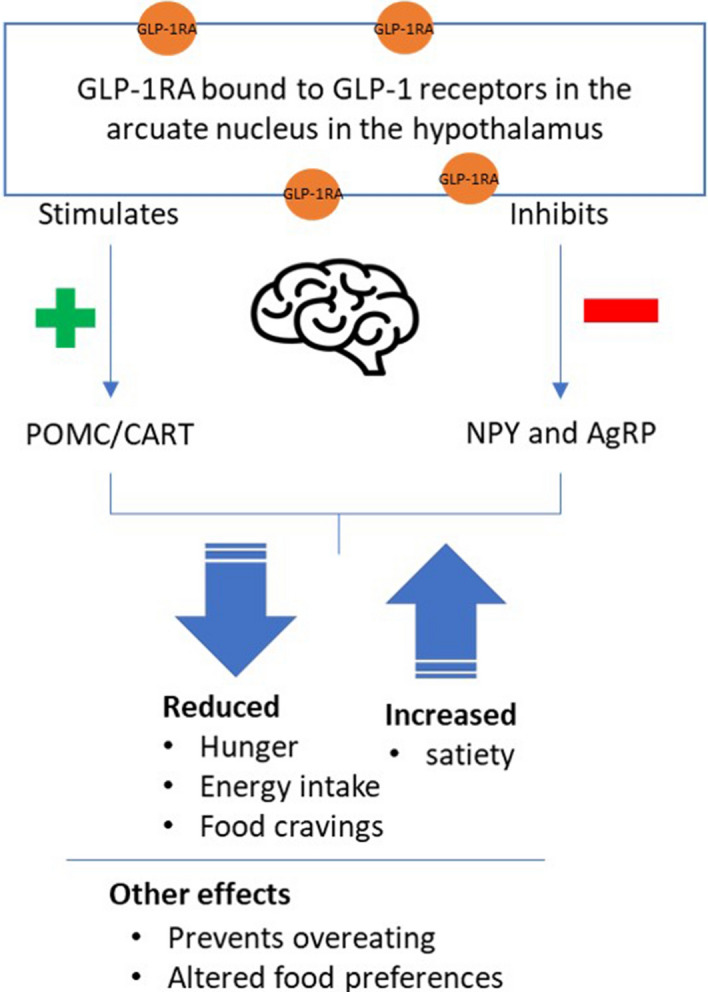
“…have become increasingly prominent in the management of obesity due to their stimulatory effects on proopiomelanocortin and cocaine-and amphetamine-regulated transcript (POMC/CART)- expressing arcuate nucleus neurons (POMC/CART) which leads to increased satiety and decreased caloric intake [2].”
Tabor, H., Ediripolage, F., Akram, N., Afzal, I., & Radha, S. S. (2026) · Cureus · doi:10.7759/cureus.105269 · Cited by 1
Bi, Z., Jiao, Z., Li, J., & Fang, Z. (2026) · BMC Psychiatry · doi:10.1186/s12888-026-08016-x · Cited by 3
Xu, P., Dong, C., Xu, X., Zheng, K., Liu, Q., Duan, Y., Hu, Z., Bao, L., & Zhang, B. (2026) · International Journal of Endocrinology · doi:10.1155/ije/7060233 · Cited by 1
Reganho ponderal e repercussões metabólicas após a descontinuação de terapias baseadas em incretinas
Tessele, B., de Oliveira, A. A., Omizzolo, A. F., Tonial, I. C., de Melo, L. M., Pagnussat, L., Buzzi, M. A., Cabeda, R., Becker, S., & Luzzatto, B. G. (2026) · Revista Eletrônica Acervo Médico · doi:10.25248/reamed.e23715.2026 · Cited by 1
“…descreveram esse processo como progressivo e sustentado, achado consistente com a hipótese de que os GLP-1 RA atuam como moduladores metabólicos crônicos dependentes de administração contínua, e não como intervenções de efeito residual prolongado (ARD J, et al., 2021; BUDINI B, et al., 2025).”
Li, Z., Yao, J., Wang, S., Xu, J., & Wu, X. (2026) · Frontiers in Nutrition · doi:10.3389/fnut.2026.1799041 · Cited by 1
Hundal, J., Linz, M. O., Anikreddy, S., Sengupta, S., Zhou, K., & Maiti, B. (2026) · JCO Oncology Practice · doi:10.1200/op-26-00061 · Cited by 1
Aging and Cardiovascular Health: CVIA State-of-the-Art Review
Liu, N., Wang, W., Miao, R., Zhao, J., Yu, C., Hong, W., Zhao, M., Wan, Z., Peng, J., Zhang, L., et al. (2026) · Cardiovascular Innovations and Applications · doi:10.15212/cvia.2026.0009 · Cited by 1
Pisani, D., Driul, L., Fordellone, M., Cerillo, A., Fatigati, M., Hanulíková, P., Mariniello, A., FRANCISCIS, P. D., Pasquini, L., & Verde, M. L. (2026) · Endocrine · doi:10.1007/s12020-026-04701-9 · Cited by 1
Chugh, R., Treasure, K., Suhail, A., Shahrour, N., Christensen, A., Trivette, M., & Min, M. (2026) · Dermato · doi:10.3390/dermato6030029 · Cited by 1
“This prolongs fullness, causing reduction in meal frequency and portion size, thus supporting adherence to calorie-restricted diets and encouraging long-term weight loss [9].”
Effects of GLP-1 receptor agonists on body weight and cardiovascular outcomes: a review
van Maren, S., van Doorn, E. P. M., Smits, M. M., Tack, C. J., van Rossum, E. F. C., & Messaoudi, S. E. (2026) · Netherlands Heart Journal · doi:10.1007/s12471-026-02073-3 · Cited by 1
高蕾莉, Ma, Y., Zhang, Q., Li, J., Guo, L., Zhang, L., Jin, H., Wang, Y., Jiang, C., He, W., et al. (2026) · Diabetes Obesity and Metabolism · doi:10.1111/dom.71354 · Cited by 1
Anikhindi, S. A., Anikhindi, A., Kumar, A., & Arora, A. (2023) · Journal of Clinical and Experimental Hepatology · doi:10.1016/j.jceh.2023.01.011 · Cited by 1
Schirmer, M., Brandt, S., Zorn, S., & Wabitsch, M. (2023) · Adipositas - Ursachen Folgeerkrankungen Therapie · doi:10.1055/a-2079-9133 · Cited by 1
“In einer klinischen Studie konnte gezeigt werden, dass die Gabe von Liraglutid 3,0 mg über 52 Wochen, in Kombination mit einer begleitenden Lebensstil-modifizierenden Intervention, bei Jugendlichen zu einer durchschnittlichen BMI-Reduktion von 4,6 % führte [1].”
InfluentialComo tratar a obesidade associada à diabetes tipo 2?
Proença, C., Rufino, A. T., Freitas, M., Fernandes, E., LAQV, R. L. D. F., & LAQV, R. L. D. F. (2024) · Revista de Ciência Elementar · doi:10.24927/rce2024.006 · Cited by 1
Pharmacotherapies for Cardiovascular Disease Prevention
Ballard‐Hernandez, J., & Irwin, C. W. (2024) · Springer eBooks · doi:10.1007/978-3-031-53705-9_14 · Cited by 1
Addressing weight loss management in obese gout patients: guidance for future trials
Christensen, R., Haugegaard, T., Morillon, M. B., Gudbergsen, H., Bliddal, H., & Stamp, L. K. (2024) · Exploration of Musculoskeletal Diseases · doi:10.37349/emd.2024.00074 · Cited by 1
Glucagon-like Peptide 1 Receptor Agonists and Obesity Associated with Eating Disorders
Grave, R. D. (2024) · IJEDO · doi:10.32044/ijedo.2024.02 · Cited by 1
Ma, L., Rozjan, A., Duolikun, D., Guo, H., & Yao, Q. (2024) · European Journal of Neuroscience · doi:10.1111/ejn.16583 · Cited by 1
“Recently, orlistat, liraglutide and semaglutide have been approved by the US Food and Drug Administration (FDA) for the treatment of obesity (Ard et al., 2021; Chao et al., 2023; Friedrichsen et al., 2021).”
Eficácia e mecanismos de ação da Semaglutida no controle da obesidade
Souza, M. V. S., França, V. D. S. S., de Souza, G. R., Medeiros, E. D. S. M., Machado, S. H. D. C. V., Bomfim, G. G., do Nascimento, M. P. P., Aguiar, N. K., Vieira, B. H. M., dos Santos, A. P. L., et al. (2025) · Journal of Medical and Biosciences Research. · doi:10.70164/jmbr.v2i1.473 · Cited by 2
Yao, Y., Chen, L., Chen, X., Tian, X., & Zhou, W. J. (2024) · SSRN Electronic Journal · doi:10.2139/ssrn.4901779 · Cited by 1
Ndubuisi, J., & Panjiyar, B. K. (2024) · Preprints.org · doi:10.20944/preprints202407.2397.v1 · Cited by 1
Obesity - Recent Insights and Therapeutic Options
McFarlane, S. I. (2022) · IntechOpen eBooks · doi:10.5772/intechopen.104318
Novel Anti-Obesity Pharmacotherapies
Ghomraoui, F., & Srivastava, G. (2023) · IntechOpen eBooks · doi:10.5772/intechopen.110685
Will Tirzepatide Become a Game-Changer Anti-Obesity Drug?
Kumar, A. (2023) · Journal of Clinical and Experimental Hepatology · doi:10.1016/j.jceh.2023.01.012
Pharmacotherapeutics efficacy in obesity treatment: A systematic review
Tarboush, B. A., Karali, H. F., Zaigham, M. T., Ibrahim, G., & Farhad, E. S. (2023) · International Journal of Advanced Community Medicine · doi:10.33545/comed.2023.v6.i1a.256
“…and other metabolic parameters have been described extensively in the literature; however, previous research into the weight loss benefits of the SGLT2 inhibitor in nondiabetic individuals has been significantly restricted in terms of participant numbers and treatment plans (Ard et al., 2021) [1].”
ResultWatkins, C., Schilling, Z., Kawalec, K., & Hulisz, D. T. (2023) · Current Cardiovascular Risk Reports · doi:10.1007/s12170-023-00724-3
Alhusayni, K. M., Aljuaid, A. M., Alkhammash, A. M., Alzahrani, S. A., Alorabi, A. K., Alotaibi, Y. B., Alhumaidi, N. T., Alharbi, W. K., Harbi, G. A., & Alzahrani, I. (2023) · Open Access Macedonian Journal of Medical Sciences · doi:10.3889/oamjms.2023.11735
Semaglutide’s Trail of Success in Weight Loss Management and HbA1c Reduction: A Systematic Review
Paff, S., Sahibzada, M., & Olivo, J. (2023) · Health · doi:10.4236/health.2023.1510073
Diagnosis and treatment of obesity disease in older adults
Nishikage, S., Hirota, Y., & Ogawa, W. (2023) · Nippon Ronen Igakkai Zasshi Japanese Journal of Geriatrics · doi:10.3143/geriatrics.60.317
Han, T., & Wang, T. (2024) · International Journal of Surgery · doi:10.1097/js9.0000000000001094
“…there are several details that could be further improved to enhance the accuracy of the study and increase clinical guidance: First, the main adverse events of implementing liraglutide in this study were gastrointestinal reactions, which is consistent with most con fi rmed safety reports [2] .”
BackgroundGLP-1 RECEPTORIŲ AGONISTŲ REIKŠMĖ 2 TIPO CUKRINIU DIABETU SERGANČIŲ PACIENČIŲ SVORIO MAŽINIMUI
Viliušytė, M., Maleckas, A., & Malinauskas, M. (2024) · Health Sciences · doi:10.35988/sm-hs.2024.021
“Paminėti šalutiniai reiškiniai paprastai yra lengvi ir neilgai trunkantys, tačiau paūmėja padidinus dozę [20].”
c. Part III: Treatment with Antidiabetes Drugs—Effects on Blood Pressure and Central Hemodynamics
Nilsson, P. M. (2024) · Elsevier eBooks · doi:10.1016/b978-0-443-15512-3.00011-8
The Cardioprotective Effects of Semaglutide in Obese Patients: Literature Review
Pinheiro, E. G. H., de Oliveira, G. F., Moreira, J. P. B., Oliveira, A. S. F., de Figueiredo, A. G., de Carvalho, R. G., Rodrigues, F. S. M., & Fernandes, H. J. (2024) · Journal of Medical Residency Review · doi:10.37497/jmrreview.v3i00.59
The efficacy of oral semaglutide in weight loss and glycemic control
Lopes, C. A., Lima, L. D. S., Eccard, J. V. A. A., & Gama, L. L. (2024) · International Journal of Health Science · doi:10.22533/at.ed.1594552414069
Metabolic and bariatric surgery: an update from 2010
Nasri, B., Lim, R. B., Ellsmere, J. C., Fernandes, A. R., & Jones, D. B. (2024) · Current Problems in Surgery · doi:10.1016/j.cpsurg.2024.101549
Abramov, V. V., & Maksimov, M. L. (2024) · Glavvrač (Chief Medical Officer) · doi:10.33920/med-03-2407-03
Current Approach of Diabetes Mellitus in Obese Patients
Karaburgu, S. (2023) · doi:10.69860/nobel.9786053359111.8
The glucagon-like peptide-1 (GLP-1) drugs poised to conquer obesity
Yin, J., Liu, Y., & Jia, W. (2024) · Chinese Science Bulletin (Chinese Version) · doi:10.1360/tb-2024-0417
Campos, T. B. F. L. B., Junior, C. E. S. T., Freire, V. J., Valle, H. N. D. C., de Oliveira, C. G., Khouri, M. P., Campos, N. B. F. L. B., & Miranda, A. K. P. (2024) · Contribuciones a las Ciencias Sociales · doi:10.55905/revconv.17n.12-281
Ebstein’s Anomaly and Echocardiographic Features
Muthiah, R. (2024) · Clinical Cardiology and Cardiovascular Interventions · doi:10.31579/2641-0419/406
Lessing, Y., Dvir, N., Kanani, F., Eldar, S. M., Keidar, A., Lahat, G., & Abu-Abeid, A. (2025) · Bariatric Surgical Practice and Patient Care · doi:10.1089/bari.2024.0038
Being Overweight: Impact on Disease Conditions
Shanmugham, D., Kabilan, V. R., Nagarajan, P., Gayathiri, E., & Kannan, S. (2025) · Springer eBooks · doi:10.1007/978-3-031-32047-7_38-1
Hyderabad Obesity Trial (HOT): Role of Semaglutide in Obese Non-Diabetic Patients of Hyderabad Sindh
Shaikh, I., Masood, N., Shaikh, J. H., & Sheikh, F. A. (2025) · Medical Forum Monthly · doi:10.60110/36710
Incretins for obesity: closer to a nicotine patch than a silver bullet
Dippel, I., Adelman, M., Olson, K. M., Holt, A., Collins, J., Reddest, A., & Carris, N. W. (2025) · Expert Opinion on Pharmacotherapy · doi:10.1080/14656566.2025.2557458
“GLP-1 receptors located in the hypothalamus help in the regulation of food intake [16].”
InfluentialLiraglutide Increases Gastric Fundus Tonus and Reduces Food Intake in Type 2 Diabetic Rats
Carrêlo, A. C. L., Martins, B. D., Seiça, R. M. F., Ribeiro, C., Matafome, P. N., & Silva, S. (2025) · Diabetology · doi:10.3390/diabetology6090096
Future Directions in Bariatric Surgery
Harmantepe, A. T. (2025) · doi:10.59537/saupress.2402
“Clinical trials and real-world studies have shown that initiating GLP-1 receptor agonists or tirzepatide after surgery is safe and effective in selected individuals (Ard et al., 2021).”
Dieta chetogenica e diabete mellito di tipo 2. Come gestire la terapia diabetologica?
Zanni, E., Boni, S., Caprio, M., Rochira, V., & Greco, C. (2025) · L Endocrinologo · doi:10.1007/s40619-025-01719-5
“Inoltre, i GLP-1RAs mostrano effetti favorevoli sul peso corporeo e sul profilo metabolico, grazie a differenti meccanismi: il rallentamento dello svuotamento gastrico, la riduzione dell’appetito e della fame e l’aumento della sensazione di sazietà [42].”
Metabolik Hastalıkların Yönetiminde Glp-1 Reseptör Agonistlerinin Yeri
Köseoğlu, K., & Karahan, S. G. (2025) · Akademisyen Kitabevi eBooks · doi:10.37609/akya.3838.c1133
Metadata
- Authors
- Ard, J., Fitch, A., Fruh, S., & Herman, L.
- Affiliations
- Atrium Health Wake Forest Baptist (US)
- Harvard University (US)
- University of South Alabama (US)
- University of Lynchburg (US)
- Corresponding author
- Ard, Jamy
- Venue
- Advances in Therapy
- Published
- 2021-05-11
- Volume
- 38
- Issue
- 6
- Pages
- 2821-2839
- ISSN
- 0741-238X (ISSN-L)
- 1865-8652
- PMC
- PMC8189979
- OpenAlex
- W3163721607
- Cited by
- 297
- References
- 73
- Citations by year
- 2026: 46 · 2025: 99 · 2024: 84 · 2023: 47 · 2022: 19 · 2021: 2
- FWCI
- 4.81
- Type
- journal article
- Language
- en
- Open access
- hybrid
- doi.org
- Licence
- cc-by-nc
- creativecommons.org/licenses/by-nc/4.0 (tdm)
- creativecommons.org/licenses/by-nc/4.0 (vor)
- Locations
- Advances in Therapy (publishedVersion, cc-by-nc)
- PubMed Central (publishedVersion, cc-by-nc)
- PubMed (publishedVersion)
- Funders
- Novo Nordisk Inc
- Topics
- Health Sciences › Medicine › Pharmacology (medical) › Pharmacology and Obesity Treatment
- Health Sciences › Medicine › Endocrinology, Diabetes and Metabolism › Diabetes Treatment and Management
- Life Sciences › Neuroscience › Endocrine and Autonomic Systems › Regulation of Appetite and Obesity
- Keywords
- GLP-1 receptor agonists, obesity pharmacotherapy, weight loss, weight maintenance, liraglutide, semaglutide, appetite suppression, anti-obesity drugs, obesity as a disease, barriers to treatment, obesity complications, type 2 diabetes
- MeSH terms
- Glucagon-Like Peptide-1 Receptor, Liraglutide, Diabetes Mellitus, Type 2, Pharmaceutical Preparations, Glucagon-Like Peptides, Humans, Hypoglycemic Agents, Weight Loss
About these checks
Registry, retraction, Cites and statistics results are computed, not judged, with one exception: a printed reference that no index lists is read once by a model before it counts as a citation error. Claims are extracted by a model and kept only when their quote appears verbatim in the text; each cited source is then checked, with a model’s help, for whether it says what the claim relies on. Those verdicts can be wrong — read the claim’s quote and the cited source before relying on one.
Statistics and arithmetic are recomputed, not judged.
Confidence bands are shown only for fields calibrated on our annotated test set. None is calibrated yet, so no band is shown.
What counts as a claim ›How we measure confidence ›How we check this ›
Are you an author, or do you see a problem with this page? Request a review
Data sources
Bibliographic data: Semantic Scholar, OpenAlex, Crossref.
Contains information from the Semantic Scholar Academic Graph Datasets, made available under the ODC Attribution License (ODC-BY 1.0).
Semantic Scholar’s data is described in: Kinney, R., et al. (2023). The Semantic Scholar Open Data Platform. arXiv:2301.10140.
