

Weight Loss and Maintenance Related to the Mechanism of Action of Glucagon-Like Peptide 1 Receptor Agonists
Open accessThe DOI matches its Crossref record; 73 of the 73 references it cites were found in a registry or an index.
Abstract
Obesity is a chronic disease associated with many complications. Weight loss of 5–15% can improve many obesity-related complications. Despite the benefits of weight reduction, there are many challenges in losing weight and maintaining long-term weight loss. Pharmacotherapy can help people with obesity achieve and maintain their target weight loss, thereby reducing the risk of obesity-related complications. The prevalence of obesity in the USA has been increasing over the past few decades, and despite the availability of approved anti-obesity medications (AOMs), people with obesity may not be accessing or receiving treatment at levels consistent with the disease prevalence. Reasons for low levels of initiation and long-term use of AOMs may include reluctance of public health and medical organizations to recognize obesity as a disease, lack of reimbursement, provider inexperience, and misperceptions about the efficacy and safety of available treatments. This article aims to inform primary care providers about the mechanism of action of one class of AOMs, glucagon-like peptide 1 receptor agonists (GLP-1RAs), in weight loss and longer-term maintenance of weight loss, and the efficacy and safety of this treatment class. GLP-1RA therapy was initially developed to treat type 2 diabetes. Owing to their effectiveness in reducing body weight, once-daily subcutaneous administration of liraglutide 3.0 mg has been approved, and once-weekly subcutaneous administration of semaglutide 2.4 mg is being investigated in phase III trials, for obesity management. Considerations regarding adverse effects and contraindications for different drug classes are provided to help guide treatment decision-making when considering pharmacotherapy for weight management in patients with obesity. Obesity is a growing public health issue that increases the risk of developing heart disease, type 2 diabetes, and osteoarthritis. Weight loss can reduce the risk of developing these health problems but, despite this, levels of obesity remain high. Achieving and maintaining weight loss is challenging for many individuals. There is therefore a need for some patients to take medications to help them lose weight and prevent weight regain. Glucagon-like peptide 1 receptor agonists (GLP-1RAs) are a type of medication originally developed to treat type 2 diabetes, but are now being used for the treatment of obesity because they are effective at helping people to lose weight. One GLP-1RA, liraglutide, has been approved to treat obesity, and another, semaglutide, is in clinical trials. GLP-1RAs work by reducing the appetite and feelings of hunger, slowing the release of food from the stomach, and increasing feelings of fullness after eating. Most people can tolerate GLP-1RAs well. The most common side effects (nausea, vomiting, and diarrhea) are usually mild and occur in the first few weeks of treatment, reducing over time. Because of the difficulties many people face in maintaining weight loss, lifelong treatment may be needed. In clinical trials, GLP-1RAs were well tolerated and effective at helping people prevent weight regain, and may be a good option for long-term weight control and lowering patients’ chances of serious health problems.
Overview
The claims and statistics of this paper haven’t been checked yet.
Free: it reads the open-access text and checks the first 5 claims that cite a source we can check. Create a free account to check every claim.
Integrity signals
Registry
Cites
Statistics
Figures
Verification
Claims the paper makes
The claims and statistics of this paper haven’t been checked yet.
Free: it reads the open-access text and checks the first 5 claims that cite a source we can check. Create a free account to check every claim.
Claims other papers make about this one
Each is checked against this paper’s own text: does it say what the citing paper says it does?
The source backs part of the claim, not all of it — or backs it for a different population, condition or comparison.
In the citing paper
“Some effects, such as delayed gastric emptying, reverse quickly through restored antral motility,31 and central anorexigenic signaling in the hypothalamus may downregulate soon after GLP-1R stimulation ends.32”
From Metabolic rebound after GLP-1 receptor agonist discontinuation: a systematic review and meta-analysis (2025) · cites this paper as [32]
Experimental — accuracy not yet measuredThe cited source says what the claim attributes to it.
In the citing paper
“Within this axis, GLP-1 functions by acting on both the gut and the brain.391”
From Glucagon-like peptide-1 receptor: mechanisms and advances in therapy (2024) · cites this paper as [391]
The cited source says what the claim attributes to it.
In the citing paper
“This activation holds the ability to modulate food consumption by reducing food intake and conveying signals of satiety to the brain.391”
From Glucagon-like peptide-1 receptor: mechanisms and advances in therapy (2024) · cites this paper as [391]
In the citing paper
“acting peripherally and centrally to reduce appetite and promote satiety resulting in significant weight loss.9”
From Randomised trial comparing weight loss through lifestyle and GLP-1 receptor agonist therapy in people with MASLD (2025) · cites this paper as [9]
In the citing paper
“evidence suggests that CR is more effective than exercise alone at reducing body weight and fat mass [115, 122].”
From Targeting Intramyocellular Lipids to Improve Aging Muscle Function (2025) · cites this paper as [122]
2 more claims about this paper
Create a free account to see every claim other papers make about this one.
Self-check
Percentages, sums and reported differences re-computed from the paper’s own numbers.
The self-check needs the paper’s full text.
Citations
Cites
Liraglutide and Cardiovascular Outcomes in Type 2 Diabetes
Marso, S. P., Daniels, G. H., Brown-Frandsen, K., Kristensen, P., Mann, J. F. E., Nauck, M. A., Nissen, S. E., Pocock, S., Poulter, N. R., Ravn, L. S., et al. (2016) · New England Journal of Medicine · doi:10.1056/nejmoa1603827 · Cited by 7,629 · cited 1×
“5 years in patients with type 2 diabetes who had either cardiovascular disease or risk factors for cardiovascular disease [60].”
BackgroundOnce-Weekly Semaglutide in Adults with Overweight or Obesity
Wilding, J. P. H., Batterham, R. L., Calanna, S., Davies, M., Van Gaal, L. F., Lingvay, I., McGowan, B. M., Rosenstock, J., Tran, M. T. D., Wadden, T. A., et al. (2021) · New England Journal of Medicine · doi:10.1056/nejmoa2032183 · Cited by 5,205 · cited 1×
“Rapid weight loss has been associated with gallbladder-related disorders including cholelithiasis and cholecystitis [67, 68], and these adverse events, while rare, have been observed more with GLP-1RAs compared with placebo in clinical trials [21, 38].”
BackgroundProspective Studies Collaboration (2009) · The Lancet · doi:10.1016/s0140-6736(09)60318-4 · Cited by 4,807
Biology of Incretins: GLP-1 and GIP
Baggio, L. L., & Drucker, D. J. (2007) · Gastroenterology · doi:10.1053/j.gastro.2007.03.054 · Cited by 3,639
European Guidelines for Obesity Management in Adults
Yumuk, V., Tsigos, C., Fried, M., Schindler, K., Busetto, L., Micic, D., & Toplak, H. (2015) · Obesity Facts · doi:10.1159/000442721 · Cited by 3,432 · cited 7×
“Given this pattern in weight loss following treatment with an AOM, anti-obesity therapy should be conceptualized as initiating weight loss followed by establishing a new weight plateau and assisting in maintaining this weight in the long term [9, 11].”
BackgroundInfluentialA Randomized, Controlled Trial of 3.0 mg of Liraglutide in Weight Management
Pi-Sunyer, X., Astrup, A., Fujioka, K., Greenway, F., Halpern, A., Krempf, M., Lau, D. C. W., le Roux, C. W., Violante Ortiz, R., Jensen, C. B., et al. (2015) · New England Journal of Medicine · doi:10.1056/nejmoa1411892 · Cited by 2,724 · cited 3×
“…orlistat; placebo) 37%; 14%; 10% (Liraglutide 2.4/3.0 mg vs. orlistat) ‡ 5% weight loss: 52% vs. 29% (p\ 0.001) ‡ 10% weight loss: 26% vs. 16% (p = 0.04) Pi-Sunyer et al., 2015: placebo-controlled, double-blind, randomized, 56-week trial of liraglutide 3.0 mg QD in patients with BMI C 30 kg/m2 (or…”
BackgroundInfluential(2020) · PubMed · Cited by 2,642
Mechanisms of Action and Therapeutic Application of Glucagon-like Peptide-1
Drucker, D. J. (2018) · Cell Metabolism · doi:10.1016/j.cmet.2018.03.001 · Cited by 2,170 · cited 2×
“However, the action of GLP-1 is glucose-dependent and blood glucose is only lowered by GLP-1 if concentrations are above fasting levels [40, 41].”
BackgroundChanges in Energy Expenditure Resulting from Altered Body Weight
Leibel, R. L., Rosenbaum, M., & Hirsch, J. (1995) · New England Journal of Medicine · doi:10.1056/nejm199503093321001 · Cited by 2,012 · cited 1×
“In addition, energy expenditure is decreased following diet-induced weight loss, with the implication that reduced food intake would need to be maintained in the long-term [12].”
BackgroundGarvey, W. T., Mechanick, J. I., Brett, E. M., Garber, A. J., Hurley, D. L., Jastreboff, A. M., Nadolsky, K., Pessah-Pollack, R., & Plodkowski, R. (2016) · Endocrine Practice · doi:10.4158/ep161365.gl · Cited by 1,914 · cited 5×
“These data suggest a potential for long-term benefit of liraglutide treatment in many patients, as weight loss of 5–15% has been shown to improve obesity-related complications including diabetes and cardiovascular disease risk factors [5, 9, 59].”
BackgroundInfluential
Cited by
Glucagon-like peptide-1 receptor: mechanisms and advances in therapy
Zheng, Z., Zong, Y., Ma, Y., Tian, Y., Pang, Y., Zhang, C., & Gao, J. (2024) · Signal Transduction and Targeted Therapy · doi:10.1038/s41392-024-01931-z · Cited by 1,036
New Frontiers in Obesity Treatment: GLP-1 and Nascent Nutrient-Stimulated Hormone-Based Therapeutics
Jastreboff, A. M., & Kushner, R. F. (2023) · Annual Review of Medicine · doi:10.1146/annurev-med-043021-014919 · Cited by 158
Bednarz, K., Kowalczyk, K., Cwynar, M., Czapla, D., Czarkowski, W., Kmita, D., Nowak, A., & Madej, P. (2022) · International Journal of Molecular Sciences · doi:10.3390/ijms23084334 · Cited by 148
Sherwin, M., Hamburger, J., Katz, D., & DeMaria, S. (2023) · Canadian Journal of Anesthesia/Journal canadien d'anesthésie · doi:10.1007/s12630-023-02549-5 · Cited by 132
“Glucagon-like peptide-1 receptor agonists are an increasingly popular class of drugs for diabetes mellitus and weight loss management.(3,7) While they are effective in this regard, they induce delayed gastric emptying, which may increase the likelihood that patients do not have an empty stomach when they present for s…”
BackgroundWang, L., Berger, N. A., Kaelber, D. C., & Xu, R. (2024) · Gastroenterology · doi:10.1053/j.gastro.2024.04.029 · Cited by 130
Zhu, H., Zhou, L., Wang, Q., Cai, Q., Yang, F., Jin, H., Chen, Y., Song, Y., & Zhang, C. (2023) · Annals of the Rheumatic Diseases · doi:10.1136/ard-2023-223845 · Cited by 129
Ma, H., Lin, Y.-H., Dai, L.-Z., Lin, C.-S., Huang, Y., & Liu, S.-Y. (2023) · BMJ Open · doi:10.1136/bmjopen-2022-061807 · Cited by 104
Spotlight on the Mechanism of Action of Semaglutide
Papakonstantinou, I. P., Tsioufis, K. P., & Katsi, V. K. (2024) · Current Issues in Molecular Biology · doi:10.3390/cimb46120872 · Cited by 102
Michos, E. D., Lopez‐Jimenez, F., & Gulati, M. (2023) · Journal of the American Heart Association · doi:10.1161/jaha.122.029282 · Cited by 90
GLP-1 agonists for weight loss: pharmacology and clinical implications.
Moore, P. W., Malone, K., VanValkenburg, D., Rando, L. L., Williams, B. C., Matejowsky, H. G., Ahmadzadeh, S., Shekoohi, S., Cornett, E. M., & Kaye, A. D. (2023) · Advances in Therapy · doi:10.1007/s12325-022-02394-w · Cited by 86
“Treatment with GLP-1 agonists is also associated with a ‘‘lower preference for energy-dense foods, alteration in food reward pathways, decrease in food cravings, and improvement in eating control’’ [14].”
BackgroundLiraglutide for Weight Management in Children and Adolescents With Prader–Willi Syndrome and Obesity
Diene, G., Angulo, M., Hale, P. M., Jepsen, C. H., Hofman, P. L., Hokken‐Koelega, A. C. S., Ramesh, C. K., Turan, S., & Tauber, M. (2022) · The Journal of Clinical Endocrinology & Metabolism · doi:10.1210/clinem/dgac549 · Cited by 86
Do GLP-1 Analogs Have a Place in the Treatment of PCOS? New Insights and Promising Therapies
Szczesnowicz, A., Szeliga, A., Niwczyk, O., Bala, G., & Meczekalski, B. (2023) · Journal of Clinical Medicine · doi:10.3390/jcm12185915 · Cited by 83
“When combined with basal insulin, GLP-1 receptor agonists exhibit potent glucose-lowering effects while minimizing weight gain and hypoglycemia when compared with intensified insulin regimens [16].”
BackgroundInfluentialUse of glucagon‐like peptide‐1 receptor agonists in eating disorder populations
Bartel, S., McElroy, S. L., Levangie, D., & Keshen, A. (2024) · International Journal of Eating Disorders · doi:10.1002/eat.24109 · Cited by 81
Aldhaleei, W. A., Abegaz, T. M., & Bhagavathula, A. S. (2024) · Pharmaceuticals · doi:10.3390/ph17020199 · Cited by 80
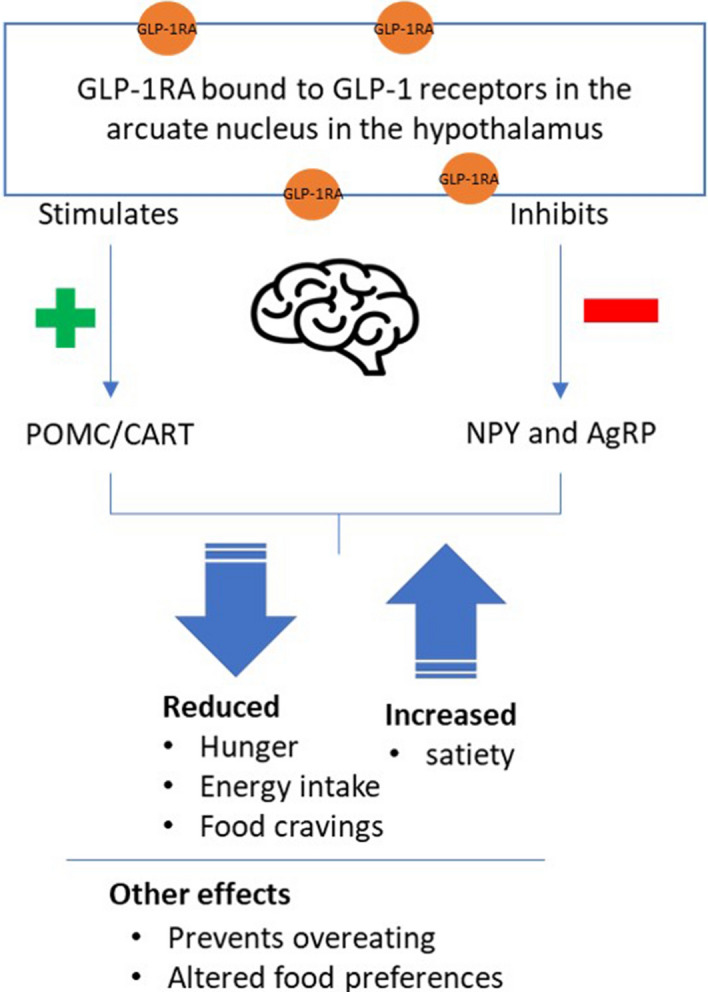
“This occurs through directly stimulating POMC/CART neurons and indirectly inhibiting neuropeptide Y (NPY) and agouti-related peptide (AgRP) neurons, which can lead to reduced energy intake [3].”
A Comprehensive Review on Weight Loss Associated with Anti-Diabetic Medications
Haddad, F., Dokmak, G., Bader, M., & Karaman, R. (2023) · Life · doi:10.3390/life13041012 · Cited by 79
“As a result, they enhance glycemic management and aid in weight loss [107].”
BackgroundInfluentialHaykal, D., Hersant, B., Cartier, H., & Meningaud, J. (2024) · Journal of Cosmetic Dermatology · doi:10.1111/jocd.16716 · Cited by 76
Revised definition of obesity in Asian Indians living in India
Misra, A., Vikram, N. K., Ghosh, A., Ranjan, P., & Gulati, S. (2025) · Diabetes & Metabolic Syndrome Clinical Research & Reviews · doi:10.1016/j.dsx.2024.102989 · Cited by 79
Pediatric Obesity: Complications and Current Day Management
Vajravelu, M. E., Tas, E., & Arslanian, S. A. (2023) · Life · doi:10.3390/life13071591 · Cited by 76
Tzang, C.-C., Wu, P.-H., Luo, C.-A., Chen, Z.-T., Lee, Y.-T., Huang, E. S., Kang, Y.-F., Lin, W.-C., Tzang, B.-S., & Hsu, T.-C. (2025) · EClinicalMedicine · doi:10.1016/j.eclinm.2025.103680 · Cited by 73
“32 In contrast, hormonal changes, including a rise in soluble leptin receptor and sustained free leptin levels, reverse more gradually, which is further followed by behavioral effects.”
GLP-1 agonist to treat obesity and prevent cardiovascular disease: what have we achieved so far
Pedrosa, M. R., Franco, D. R., Gieremek, H. W., Vidal, C. M., Bronzeri, F., de Cassia Rocha, A., de Carvalho Cara, L. G., Fogo, S. L., & Eliaschewitz, F. G. (2022) · Current Atherosclerosis Reports · doi:10.1007/s11883-022-01062-2 · Cited by 68
Nitric Oxide: From Gastric Motility to Gastric Dysmotility
Idrizaj, E., Traini, C., Vannucchi, M. G., & Baccari, M. C. (2021) · International Journal of Molecular Sciences · doi:10.3390/ijms22189990 · Cited by 66
Qassab, M. A., Mneimneh, M., Jradi, A., Derbas, B., Dabboussi, D., Baini, J. K., Katrib, N., Chaarani, N., Attieh, P., Kanaan, A., et al. (2025) · Current Issues in Molecular Biology · doi:10.3390/cimb47040285 · Cited by 64
“GLP-1 agonists are associated with a reduction in triglyceride, either by clearing lipids from circulation through the activation of brown adipose tissue or by impairing lipogenesis in the liver through the AMP-activated protein kinase [84].”
A Closer Look at the Dermatological Profile of GLP-1 Agonists
Persson, C., Eaton, A. C., & MAYROVITZ, H. N. (2025) · Diseases · doi:10.3390/diseases13050127 · Cited by 57
“…receptors (GLP-1Rs) located in the pancreas and the central nervous system as well as in the gastrointestinal tract to trigger insulin secretion enhancement while reducing glucagon release and slowing down gastric emptying, which results in better glycemic control and substantial weight loss [3].”
Aoun, L., Almardini, S., Saliba, F., Haddadin, F., Mourad, O., Jdaidani, J., Morcos, Z., Al Saidi, I., Bou Sanayeh, E., Saliba, S., et al. (2024) · Journal of Clinical & Translational Endocrinology · doi:10.1016/j.jcte.2024.100333 · Cited by 56
“This association emphasizes the potential metabolic impact of BED beyond weight-related outcomes, highlighting the importance of addressing BED in the management of metabolic health [14].”
BackgroundThe Sympathetic Innervation of Adipose Tissues: Regulation, Functions, and Plasticity
Willows, J. W., Blaszkiewicz, M., & Townsend, K. L. (2023) · Comprehensive physiology · doi:10.1002/cphy.c220030 · Cited by 56
The Impact of GLP-1 Receptor Agonists (GLP-1 RAs) on Mental Health: A Systematic Review
Valenta, S. T., Nicastri, A., Perazza, F., Marcolini, F., Beghelli, V., Atti, A. R., & Petroni, M. L. (2024) · Current Treatment Options in Psychiatry · doi:10.1007/s40501-024-00331-y · Cited by 55
Baig, M. U., Piazza, A., Lahooti, A., Johnson, K. E., Rangwani, S., Gouda, Z., Mahadev, S., Newberry, C., Hanscom, M., Sampath, K., et al. (2025) · Gastrointestinal Endoscopy · doi:10.1016/j.gie.2024.12.019 · Cited by 54
Wang, L., Wang, Q., Li, L., Kaelber, D. C., & Xu, R. (2025) · JNCI: Journal of the National Cancer Institute · doi:10.1093/jnci/djae260 · Cited by 53
Ahmed, I. A. B. (2024) · Journal of Obesity · doi:10.1155/2024/8056440 · Cited by 53
“Tey also afect gastric motility by slowing down food release from the stomach into the intestines [21].”
Lavu, M. S., Porto, J. R., Hecht, C. J., Kaelber, D. C., Sculco, P. K., Heckmann, N. D., & Kamath, A. F. (2024) · The Journal of Arthroplasty · doi:10.1016/j.arth.2024.06.008 · Cited by 47
Zhou, Y., Chen, M., Liu, L., & Chen, Z. (2022) · Diabetes, Metabolic Syndrome and Obesity: Targets and Therapy · doi:10.2147/dmso.s348025 · Cited by 46
“6,16 Hence, the GADRs associated with the use of semaglutide or liraglutide may be reported at a lower tolerated dose in a database providing spontaneous reporting.”
BackgroundUrkon, M., Ferencz, E., Szász, J. A., Szabó, M. I. M., Orbán-Kis, K., Szatmári, S., & Nagy, E. E. (2025) · Pharmaceuticals · doi:10.3390/ph18050614 · Cited by 45
Chu, J., Zhang, H., Wu, Y. F., Huang, Y., Zhu, T., Zhou, Z., & Wang, H. (2025) · EClinicalMedicine · doi:10.1016/j.eclinm.2025.103464 · Cited by 46
Hu, E.-H., Tsai, M.-L., Lin, Y., Chou, T.-S., & Chen, T.-H. (2024) · Medicina · doi:10.3390/medicina60030357 · Cited by 43
“GLP-1 RAs yield improvements in cardiovascular (CV) outcomes due to their in-sulinotropic blood pressure reduction and weight-lowering action [44–46].”
BackgroundImpact of Dysfunctional Adipose Tissue Depots on the Cardiovascular System
D’Oria, R., Genchi, V. A., Caccioppoli, C., CALDERONI, I., Marrano, N., Biondi, G., Borrelli, A., Gioia, L. D., Giorgino, F., & Laviola, L. (2022) · International Journal of Molecular Sciences · doi:10.3390/ijms232214296 · Cited by 43
Yuan, D., Sharma, H., Krishnan, A., Vangaveti, V., & Malabu, U. H. (2022) · Diabetes Obesity and Metabolism · doi:10.1111/dom.14776 · Cited by 41
“It is known that GLP1RAs are effective weight loss agents through their actions in controlling gut motility and appetite.(46,47) However, dosages of GLP1-RAs used for weight loss are significantly higher than those used in the management of T2DM and hence it may be that GLP1RA exerts less effect on obesity at lower do…”
BackgroundHropot, T., Herman, R., Janez, A., Lezaic, L., & Jensterle, M. (2023) · International Journal of Molecular Sciences · doi:10.3390/ijms24108592 · Cited by 39
“GLP1-RAs-induced weight loss can be attributed to several proposed mechanisms of action, including reductions in appetite and hunger, alterations in food reward pathways, and improvement in eating control [63].”
BackgroundSEGURANÇA E EFICÁCIA DA SEMAGLUTIDA, LIRAGLUTIDA E SIBUTRAMINA NO AUXÍLIO DO TRATAMENTO DA OBESIDADE
de Castro, B. R., Reis, L. D. S., & da Paixão, J. A. (2022) · Revista Ibero-Americana de Humanidades, Ciências e Educação · doi:10.51891/rease.v8i5.5861 · Cited by 41
Metabolic syndrome and psoriatic arthritis: the role of weight loss as a disease-modifying therapy
Williams, J., Hum, R. M., Rogers, K., Maglio, C., Alam, U., & Zhao, S. S. (2024) · Therapeutic Advances in Musculoskeletal Disease · doi:10.1177/1759720x241271886 · Cited by 39
“88 This alteration to energy balance leads to an improvement in body weight, lipids, C-reactive protein, and blood pressure in type 2 diabetes mellitus (T2DM).”
BackgroundDesai, A., Khataniar, H., Hashash, J. G., Farraye, F. A., Regueiro, M. D., & Kochhar, G. S. (2024) · Inflammatory Bowel Diseases · doi:10.1093/ibd/izae090 · Cited by 39
Glucagon-like Peptide 1 Receptor Agonists Promote Weight Loss Among People With HIV
Nguyen, Q., Wooten, D. A., Lee, D., Moreno, M., Promer, K., Rajagopal, A., Tan, M. Z.-W., Tang, M. E., Duren, K., Yin, J. H., et al. (2024) · Clinical Infectious Diseases · doi:10.1093/cid/ciae151 · Cited by 34
Zhu, J., Han, J., Liu, L., Liu, Y., Xu, W., Li, X., Yang, L., Gu, Y., Tang, W., Shi, Y., et al. (2023) · Diabetes Research and Clinical Practice · doi:10.1016/j.diabres.2023.110568 · Cited by 35
Moolla, A., Poolman, T., Othonos, N., Dong, J., Smith, K., Cornfield, T., White, S., Ray, D. W., Mouchti, S., Mózes, F. E., et al. (2025) · JHEP Reports · doi:10.1016/j.jhepr.2025.101363 · Cited by 33
Arastu, N., Cummins, O., Uribe, W., & Nemec, E. C. (2022) · International Journal of Clinical Pharmacy · doi:10.1007/s11096-022-01428-1 · Cited by 33
Tang, H., Lu, Y., Donahoo, W. T., WESTEN, S. C., Chen, Y., Bian, J., & Guo, J. S. (2025) · Annals of Internal Medicine · doi:10.7326/annals-24-01347 · Cited by 34
“Glucagon-like peptide-1 receptor agonists (GLP-1RAs) have emerged as a promising class of glucose-lowering drug (GLD) for T2D management by offering multiple bene fi ts, including cardiorenal and weight loss bene fi ts (10 – 12).”
Treatments for obstructive sleep apnea: CPAP and beyond
Aboussouan, L. S., Bhat, A., Coy, T., & Kominsky, A. H. (2023) · Cleveland Clinic Journal of Medicine · doi:10.3949/ccjm.90a.23032 · Cited by 33
“33 However, no drugs are approved specifi cally for treating obstructive sleep apnea (see discussion below).”
BackgroundGrosicki, G. J., Dhurandhar, N. V., Unick, J. L., Arent, S. M., Thomas, J. G., Lofton, H., Shepherd, M. C., Kiel, J., Coleman, C., & Jonnalagadda, S. S. (2024) · Current Developments in Nutrition · doi:10.1016/j.cdnut.2024.104486 · Cited by 31
Lim, S. K., Buranapin, S., Bao, X., Quiroga, M., Park, K. H., Kang, J., Rinnov, A. R., & Suwanagool, A. (2025) · The Lancet Diabetes & Endocrinology · doi:10.1016/s2213-8587(25)00164-0 · Cited by 32
Evolution of peptide YY analogs for the management of type 2 diabetes and obesity
Chen, W., Binbin, G., Lidan, S., Zhou, Q., & Han, J. D. J. (2023) · Bioorganic Chemistry · doi:10.1016/j.bioorg.2023.106808 · Cited by 31
Atenção farmacêutica no uso indevido de medicamentos para emagrecimento: revisão sistemática
de Souza, A. P., de Oliveira, B. M., da Silva, E. F. L., Rocha, G. D. S., de Almeida, A. C. G., & Brito, M. A. M. (2023) · Research Society and Development · doi:10.33448/rsd-v12i6.42133 · Cited by 30
Heo, K. Y., Goel, R. K., Woltemath, A., Fuqua, A. A., Hrudka, B. T., Syed, O. Z., Arellano, E., Premkumar, A., & Wilson, J. M. (2024) · The Journal of Arthroplasty · doi:10.1016/j.arth.2024.10.099 · Cited by 30
Sibal, R., Balamurugan, G., Langley, J., Graham, Y., & Mahawar, K. K. (2025) · Nutrients · doi:10.3390/nu17233659 · Cited by 30
“GLP-1 RAs act pharmacologically to slow gastric emptying, suppress appetite, and reduce overall caloric intake, often accompanied by gastrointestinal side effects such as nausea, vomiting, or diarrhoea, which can further limit the variety of food intake in patients [13].”
Once-weekly 2.4 mg Semaglutide for Weight Management in Obesity: A Game Changer?
Colin, I. M., & Gérard, A.-C. (2022) · touchREVIEWS in Endocrinology · doi:10.17925/ee.2022.18.1.35 · Cited by 30
Cai, H., Chen, Q., Duan, Y., Zhao, Y., & Zhang, X. (2023) · Frontiers in Endocrinology · doi:10.3389/fendo.2023.1106868 · Cited by 29
“Another well-known effect of GLP-1RA is weight loss through appetite suppression and reduced food intake (9).”
BackgroundIncretin hormone agonists: Current and emerging pharmacotherapy for obesity management
Alhomoud, I. S., Talasaz, A. H., Chandrasekaran, P., Brown, R., Mehta, A., & Dixon, D. L. (2024) · Pharmacotherapy The Journal of Human Pharmacology and Drug Therapy · doi:10.1002/phar.4607 · Cited by 28
Kim, H., Choi, S., Gu, M., Ko, S., Kwon, J.-H., Han, J., Kim, J. H., & Kim, M. G. (2024) · Diabetes/Metabolism Research and Reviews · doi:10.1002/dmrr.3843 · Cited by 29
“investigated for their potential benefits in obesity and cardio-vascular disease [2].”
Verhey, J. T., Austin, R. P., Tarabichi, S., Paul, B., Deckey, D. G., Christopher, Z. K., Spangehl, M. J., & Bingham, J. S. (2025) · The Journal of Arthroplasty · doi:10.1016/j.arth.2025.03.012 · Cited by 28
Vilarrasa, E., Nicolau, J., de la Cueva, P., Goday, A., Gallardo, F., Martorell, A., & Carrascosa, J. M. (2023) · Actas Dermo-Sifiliográficas · doi:10.1016/j.ad.2023.06.017 · Cited by 28
Shamim, M. A., Patil, A., Amin, U., Roy, T., Tiwari, K., Husain, N., Kumar, J., Chenchula, S., Rao, P. P., Ganesh, V., et al. (2024) · Diabetes Obesity and Metabolism · doi:10.1111/dom.15777 · Cited by 27
Obesity Epidemic and Its Impact on Female Fertility: Current Understanding and Future Directions
Malhotra, R., de Paredes, J. G., Smith, A. C., Chemerinski, A., Doshi, D., & Morelli, S. S. (2025) · Cureus · doi:10.7759/cureus.87283 · Cited by 26
“They work through numerous mechanisms to reduce weight [84,85].”
Epicardial Adipose Tissue—A Novel Therapeutic Target in Obesity Cardiomyopathy
Wiszniewski, K., Grudniewska, A., Szabłowska‐Gadomska, I., Pilichowska‐Paszkiet, E., Zaborska, B., Zgliczyński, W., Dudek, P., Bik, W., Sota, M., & Mrozikiewicz‐Rakowska, B. (2025) · International Journal of Molecular Sciences · doi:10.3390/ijms26167963 · Cited by 25
“Tirzepatide, liraglutide, and semaglutide induce satiety, decrease stomach emptying, suppress appetite, and improve insulin sensitivity and secretion [146].”
Daou, C. A. Z., Hosn, O. A., Ghzayel, L., & Mourad, M. (2025) · Endocrinology Diabetes & Metabolism · doi:10.1002/edm2.70038 · Cited by 26
Jędrysik, M., Wyszomirski, K., Różańska-Walędziak, A. M., Grosicka-Maciąg, E., Walędziak, M. S., & Chełstowska, B. (2024) · Biomedicines · doi:10.3390/biomedicines12010159 · Cited by 24
Glucagon-Like Peptide-1 Agonists: A Practical Overview for Plastic and Reconstructive Surgeons
Stanton, E. W., Manasyan, A., Banerjee, R., Hong, K. M., Koesters, E. C., & Daar, D. A. (2024) · Annals of Plastic Surgery · doi:10.1097/sap.0000000000004089 · Cited by 23
Li, Z., Han, Z., Sun, R., Xuan, X., & Huang, C. (2025) · Diabetes Metabolic Syndrome and Obesity · doi:10.2147/dmso.s539822 · Cited by 23
Siddiqui, H. F., Ali, D., Sajid, M., Qureshi, S., Siddiqui, H., Hasan, A., Ripley, D. P., Ahmed, R., & Waqas, S. A. (2025) · Diabetes Obesity and Metabolism · doi:10.1111/dom.70123 · Cited by 22
“35 – 39 These agents have also demonstrated efficacy in stroke prevention, with findings from the REWIND trial indicating that reductions in HbA1c accounted for 54% of the observed decrease in stroke risk, alongside a linear association between HbA1c improvement and stroke reduction across trials.”
Brauwers, B., Machado, F. V. C., Beijers, R. J. H. C. G., Spruit, M. A., & Franssen, F. M. E. (2023) · Nutrients · doi:10.3390/nu15245136 · Cited by 22
“While previous research has paradoxically shown that mild–moderate obesity has protective effects on survival in patients with advanced COPD [236–240], studies show improved clinical outcomes upon weight loss [36,241].”
ResultHeckmann, N. D., Palmer, R. C., Mayfield, C. K., Gucev, G., Lieberman, J. R., & Hong, K. M. (2024) · Arthroplasty Today · doi:10.1016/j.artd.2024.101327 · Cited by 23
“Speci fi cally, GLP-1 receptor agonists assist in weight loss through 5 distinct mechanisms: (1) increasing insulin biosynthesis and secretion, (2) decreasing hunger, (3) promoting satiety, (4) delaying gastric emptying, and (5) decreasing meal-stimulated gastric acid secretion [98].”
Glucagon-like Peptide-1 Agonists: What the Orthopaedic Surgeon Needs to Know
Chan, P. Y. W., Mika, A. P., Martin, J. R., & Wilson, J. M. (2024) · JBJS Reviews · doi:10.2106/jbjs.rvw.23.00167 · Cited by 21
Khan, T. T. S., Sheikh, Z., Maleknia, S. D., Oveissi, F., Fathi, A., Abrams, T., Ong, H. X., & Traini, D. (2024) · Expert Opinion on Drug Delivery · doi:10.1080/17425247.2024.2387110 · Cited by 21
“…which is currently being investigated for its cardiovascular benefits have shown statistically significant reduction in body weight in a 20-week Phase II clinical trial when administered at various dosages i.e ., 4 mg once weekly, 6 mg once weekly, 6 mg once bi-weekly, and 8 mg once bi-weekly [79].”
Research progress of GLP-1RAs in the treatment of type 2 diabetes mellitus
He, X., Zhao, W., Li, P., Zhang, Y., Li, G., Su, H., Lu, B., & Pang, Z. (2025) · Frontiers in Pharmacology · doi:10.3389/fphar.2024.1483792 · Cited by 21
Cuda, S. E., Censani, M., Kharofa, R. Y., O’Hara, V. M., Conroy, R., Williams, D. R., Paisley, J., Browne, A. F., Karjoo, S., & Browne, N. T. (2022) · Obesity Pillars · doi:10.1016/j.obpill.2022.100048 · Cited by 22
“The mechanism of action (MOA) of liraglutide is that it mimics the action of the GLP-1 incretin, which stimulates post-prandial insulin secretion, reduces glucagon secretion, delays gastric emptying, and induces weight loss through reduction of hunger and food intake [36 – 38].”
BackgroundJolin, J. R., Kwon, M.-S., Brock, E. M., CHEN, J., KOKAN, A., Murdock, R., & Stanford, F. C. (2024) · Milbank Quarterly · doi:10.1111/1468-0009.12693 · Cited by 20
Pharmacotherapy of Weight‐loss and Obesity with a Focus on GLP 1‐Receptor Agonists
Myerson, M. L., & Paparodis, R. D. (2024) · The Journal of Clinical Pharmacology · doi:10.1002/jcph.2487 · Cited by 20
“67”
Medical Nutrition Therapy: Still Relevant in the Era of Pharmacotherapy for Obesity Care
Miller, C. K. (2025) · Journal of the Academy of Nutrition and Dietetics · doi:10.1016/j.jand.2024.06.222 · Cited by 19
Applegate, C. C., Kang, Y., Deng, H., Chen, D., Medina, N. G., Cui, Y., Feng, Y., Kuo, C.-W., Shahoei, S. H., Kim, H., et al. (2025) · Science Advances · doi:10.1126/sciadv.ads3731 · Cited by 19
Machado, M. F., Shunk, T., Hansen, G., Harvey, C., Fulford, B., Hauf, S., Schuh, O., Kaldas, M., Arcaroli, E., Ortiz, J. P., et al. (2024) · Cureus · doi:10.7759/cureus.66691 · Cited by 19
“Glucagon-like-peptide-1 (GLP-1) is a regulatory GI incretin hormone that is secreted in response to oral glucose intake and stimulates the release of insulin from pancreatic beta cells [16-18].”
BackgroundGupta, S., & Chen, M. (2023) · Clinical Medicine · doi:10.7861/clinmed.2023-0183 · Cited by 19
Tan, Y. C. R. S., Zhang, X., Lv, X., Sun, Y.-N., Yang, J., & Xiao, X. (2025) · Digestive and Liver Disease · doi:10.1016/j.dld.2025.03.002 · Cited by 18
Errafii, K., Khalifa, O., Al-Akl, N. S., & Arredouani, A. (2022) · Biomedicines · doi:10.3390/biomedicines10051020 · Cited by 17
Coppin, G., Tord, D. M., Pool, E. R., Locatelli, L., Achaïbou, A., Erdemli, A., Pérez, L. L., Wuensch, L., Cereghetti, D. M., Golay, A., et al. (2023) · International Journal of Obesity · doi:10.1038/s41366-023-01370-w · Cited by 18
“It also differs from what is reported in the literature about the potential nauseating effects of liraglutide [57, 58], which could possibly spoil the pleasure of eating for patients experiencing this side effect.”
Weight Loss Therapies and Hypertension Benefits
Katsi, V. K., Manta, E., Fragoulis, C., & Tsioufis, K. P. (2024) · Biomedicines · doi:10.3390/biomedicines12102293 · Cited by 17
“GLP-1 receptor agonists lower body weight in a variety of ways, notably by enhancing satiety and reducing appetite, which in turn leads to less calorie consumption [45].”
BackgroundEffects of gastric bypass bariatric surgery on gut microbiota in patients with morbid obesity
Amin, U., Huang, D. C., Dhir, A., Shindler, A. E., Franks, A. E., & Thomas, C. J. (2024) · Gut Microbes · doi:10.1080/19490976.2024.2427312 · Cited by 17
Chemerin as a Driver of Cardiovascular Diseases: New Perspectives and Future Directions
Imiela, A. M., Stępnicki, J., Zawadzka, P. S., Bursa, A., & Pruszczyk, P. (2025) · Biomedicines · doi:10.3390/biomedicines13061481 · Cited by 18
“Interestingly, glucagon-like peptide-1 (GLP-1) agonists, which suppress appetite and promote fat loss, can downregulate chemerin expression [19,70,71].”
Ingram, Y., Olujide, O. P., Sheikh, N., Robinson, A., Ho, J. H., Syed, A. A., & Adam, S. (2025) · Current Oncology · doi:10.3390/curroncol32060362 · Cited by 18
“GLP-1RAs bind to the GLP-1 receptors within the central nervous system, pancreas, and gastrointestinal tract and act to increase satiety and reduce appetite, leading to weight loss [98].”
GLP-1 and Its Role in Glycogen Production: A Narrative Review
Lotosky, J., Jean, X., Altankhuyag, A., Khan, S. R., Bernotas, A., Sharafshah, A., Blum, K., Posner, A. R., & Thanos, P. K. (2025) · Biomedicines · doi:10.3390/biomedicines13071610 · Cited by 17
“Acute administration of the GLP-1RA exenatide resulted in reduced feelings of hunger, which is due to an increase in functional connectivity of the nucleus tractus solitarius with the hypothalamus and thalamus [129].”
GLP-1 Receptor Agonists in Orthopaedic Surgery: Implications for Perioperative Care and Outcomes
Ramanathan, R., Lee, J. Y., Dalton, J., Lin, R. T., Lee, I., Gonzalez, C., Shaw, J. D., Schroeder, G. D., Kepler, C. K., Spitnale, M. J., et al. (2025) · Journal of Bone and Joint Surgery · doi:10.2106/jbjs.24.01287 · Cited by 17
“Additionally, post-marketing reports have noted very rare cases of acute pancreatitis associated with liraglutide, which has prompted recommendations for providers to use caution in patients with a history of pancreatitis and to discontinue the medication at the discretion of the provider 42 .”
Moore, S. G., & Butler, T. (2022) · Obesity · doi:10.1002/oby.23524 · Cited by 17
“The efficacy of pharmacological interventions to overcome some of the biological factors that underlie obesity, including appetite [8], highlights this and also emphasizes that supporting clinically significant weight loss requires additional behavioral modifications and psychological support [9].”
BackgroundAdolescents with Type 2 Diabetes: Overcoming Barriers to Effective Weight Management
Salama, M., Biggs, B. K., Creo, A. L., Prissel, R., Nofal, A. A., & Kumar, S. (2023) · Diabetes Metabolic Syndrome and Obesity · doi:10.2147/dmso.s365829 · Cited by 17
Xia, Y., Gao, Z., Hao, Z., Ma, H., Duan, K., & Yang, C. (2023) · Medicine · doi:10.1097/md.0000000000035739 · Cited by 17
“[9] GLP-1RAs are categorized into long-acting agonists and short-acting agonists based on the duration of the effective drug concentration.”
BackgroundRen, R., Pei, Y., Kong, L., & Shi, Y. (2024) · Journal of Diabetes and its Complications · doi:10.1016/j.jdiacomp.2024.108932 · Cited by 16
Targeting Intramyocellular Lipids to Improve Aging Muscle Function
Russ, D. W., Manickam, R., & Tipparaju, S. M. (2025) · Lipids in Health and Disease · doi:10.1186/s12944-025-02622-6 · Cited by 15
Alcohol Use and Antiobesity Medication Treatment
Miller-Matero, L. R., Yeh, H.-H. H., Ma, L., Jones, R. A. P., Nadolsky, S., Medcalf, A., Foster, G. D., & Cardel, M. I. (2024) · JAMA Network Open · doi:10.1001/jamanetworkopen.2024.47644 · Cited by 16
Ukwade, D., Hernandez, L. J., Modi, Z. N., Raza, H. S., Siegel, M., Nwachukwu, D., Sarraf, P., Memon, A. A., Booth, M., Cooper, K., et al. (2025) · Frontiers in Medicine · doi:10.3389/fmed.2025.1638981 · Cited by 15
“GLP-1 receptors are located in the hypothalamus of the brain and upon binding of the GLP-1 peptide, a delay in gastric emptying within the first hour after eating occurs, reducing hunger and increasing satiety (2).”
Ala, M., & Eftekhar, S. P. (2023) · Obesity Reviews · doi:10.1111/obr.13563 · Cited by 15
“Soon, clinical trials unveiled that GLP-1 agonists can bring various advantages other than their beneficial effect on glycemic control.(156) Recently, the prescription of GLP-1 agonists increased thanks to their weight-lowering property and their protective effects on cardiometabolic status.”
BackgroundLi, Y., Cheng, Z., Lu, W., Li, P., Jiang, H., Yang, J., Xu, J., Zhang, C., Zhang, L., Wang, Y., et al. (2023) · Diabetes Obesity and Metabolism · doi:10.1111/dom.15407 · Cited by 14
Alnaser, R. I., Alassaf, F. A., & Abed, M. N. (2024) · Journal of Bone Metabolism · doi:10.11005/jbm.24.739 · Cited by 14
“[93,94] Notably, when body weight decreases, a reduction of lean body mass could occur, which is comprised mainly of skeletal muscle.”
Çelik, Ö., Yazıcı, D., Ciudin, A., Macut, D., Micić, D., Yumuk, V., & Yıldız, B. O. (2025) · Obesity Facts · doi:10.1159/000547055 · Cited by 14
“GLP-1 RAs are involved in regulating appetite and satiety through the gut-brain axis [79, 80].”
Naude, J., Zentner, A., Suresh, P., Bittman, J., & Khan, N. A. (2024) · International Journal of Obesity · doi:10.1038/s41366-024-01526-2 · Cited by 13
RetractedRichardson, K. M., Schembre, S. M., Jospe, M. R., Widmer, A., & Silver, H. J. (2025) · Diabetes Obesity and Metabolism · doi:10.1111/dom.16395 · Cited by 14
“9 As a result, these medications are highly effective for weight management, 10,11 reducing body weight by ≥ 15% over 1 year.”
Metadata
- Authors
- Ard, J., Fitch, A., Fruh, S., & Herman, L.
- Affiliations
- Atrium Health Wake Forest Baptist (US)
- Harvard University (US)
- University of South Alabama (US)
- University of Lynchburg (US)
- Corresponding author
- Ard, Jamy
- Venue
- Advances in Therapy
- Published
- 2021-05-11
- Volume
- 38
- Issue
- 6
- Pages
- 2821-2839
- ISSN
- 0741-238X (ISSN-L)
- 1865-8652
- PMC
- PMC8189979
- OpenAlex
- W3163721607
- Cited by
- 297
- References
- 73
- Citations by year
- 2026: 46 · 2025: 99 · 2024: 84 · 2023: 47 · 2022: 19 · 2021: 2
- FWCI
- 4.81
- Type
- journal article
- Language
- en
- Open access
- hybrid
- doi.org
- Licence
- cc-by-nc
- creativecommons.org/licenses/by-nc/4.0 (tdm)
- creativecommons.org/licenses/by-nc/4.0 (vor)
- Locations
- Advances in Therapy (publishedVersion, cc-by-nc)
- PubMed Central (publishedVersion, cc-by-nc)
- PubMed (publishedVersion)
- Funders
- Novo Nordisk Inc
- Topics
- Health Sciences › Medicine › Pharmacology (medical) › Pharmacology and Obesity Treatment
- Health Sciences › Medicine › Endocrinology, Diabetes and Metabolism › Diabetes Treatment and Management
- Life Sciences › Neuroscience › Endocrine and Autonomic Systems › Regulation of Appetite and Obesity
- Keywords
- GLP-1 receptor agonists, obesity pharmacotherapy, weight loss, weight maintenance, liraglutide, semaglutide, appetite suppression, anti-obesity drugs, obesity as a disease, barriers to treatment, obesity complications, type 2 diabetes
- MeSH terms
- Glucagon-Like Peptide-1 Receptor, Liraglutide, Diabetes Mellitus, Type 2, Pharmaceutical Preparations, Glucagon-Like Peptides, Humans, Hypoglycemic Agents, Weight Loss
About these checks
Registry, retraction, Cites and statistics results are computed, not judged, with one exception: a printed reference that no index lists is read once by a model before it counts as a citation error. Claims are extracted by a model and kept only when their quote appears verbatim in the text; each cited source is then checked, with a model’s help, for whether it says what the claim relies on. Those verdicts can be wrong — read the claim’s quote and the cited source before relying on one.
Statistics and arithmetic are recomputed, not judged.
Confidence bands are shown only for fields calibrated on our annotated test set. None is calibrated yet, so no band is shown.
What counts as a claim ›How we measure confidence ›How we check this ›
Are you an author, or do you see a problem with this page? Request a review
Data sources
Bibliographic data: Semantic Scholar, OpenAlex, Crossref.
Contains information from the Semantic Scholar Academic Graph Datasets, made available under the ODC Attribution License (ODC-BY 1.0).
Semantic Scholar’s data is described in: Kinney, R., et al. (2023). The Semantic Scholar Open Data Platform. arXiv:2301.10140.
