

The DOI matches its Crossref record; 1 of the 1 references it cites were found in a registry or an index.
Genetic analysis of male Hungarian Conquerors: European and Asian paternal lineages of the conquering Hungarian tribes
Abstract
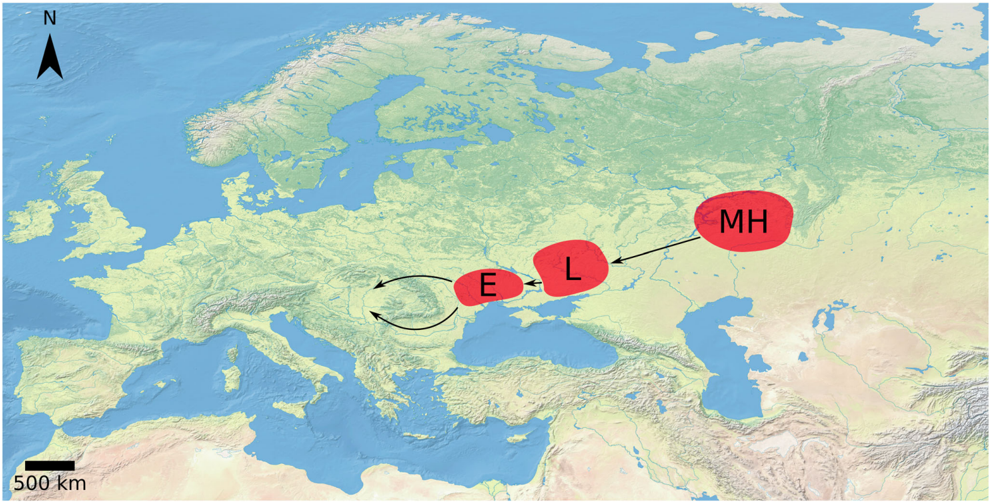
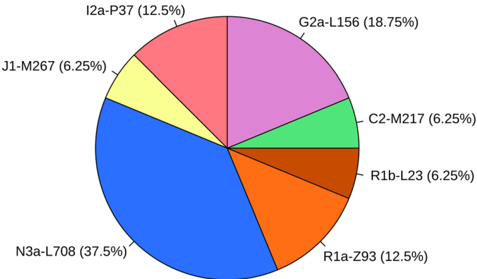
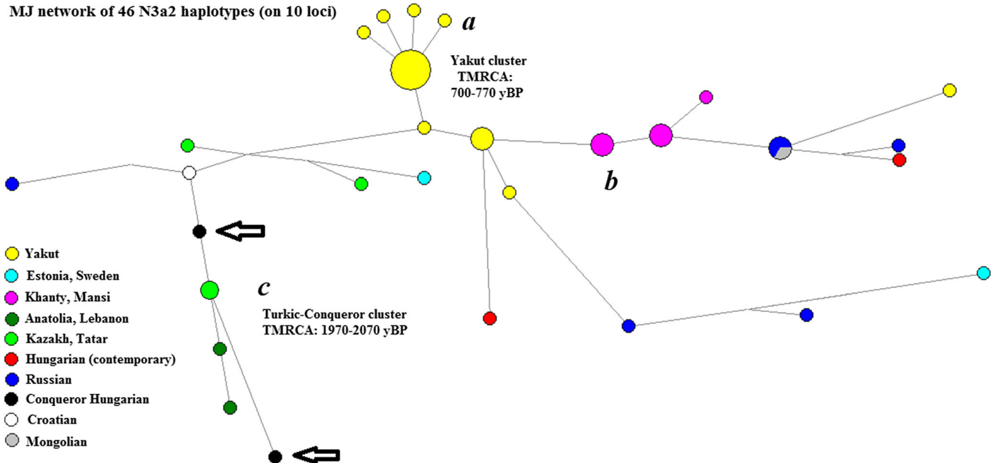
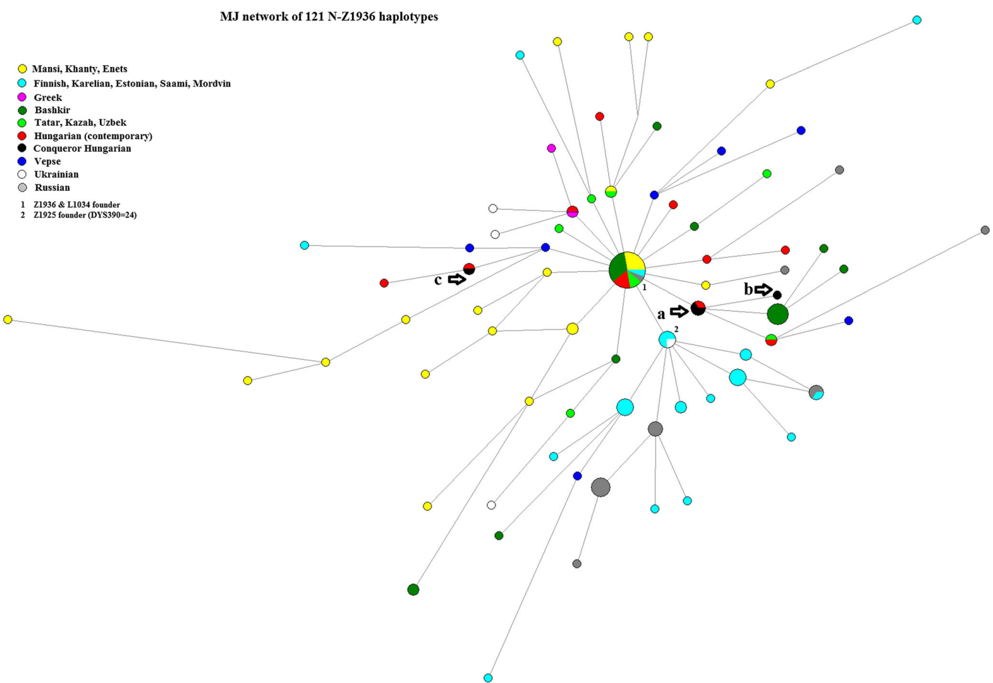
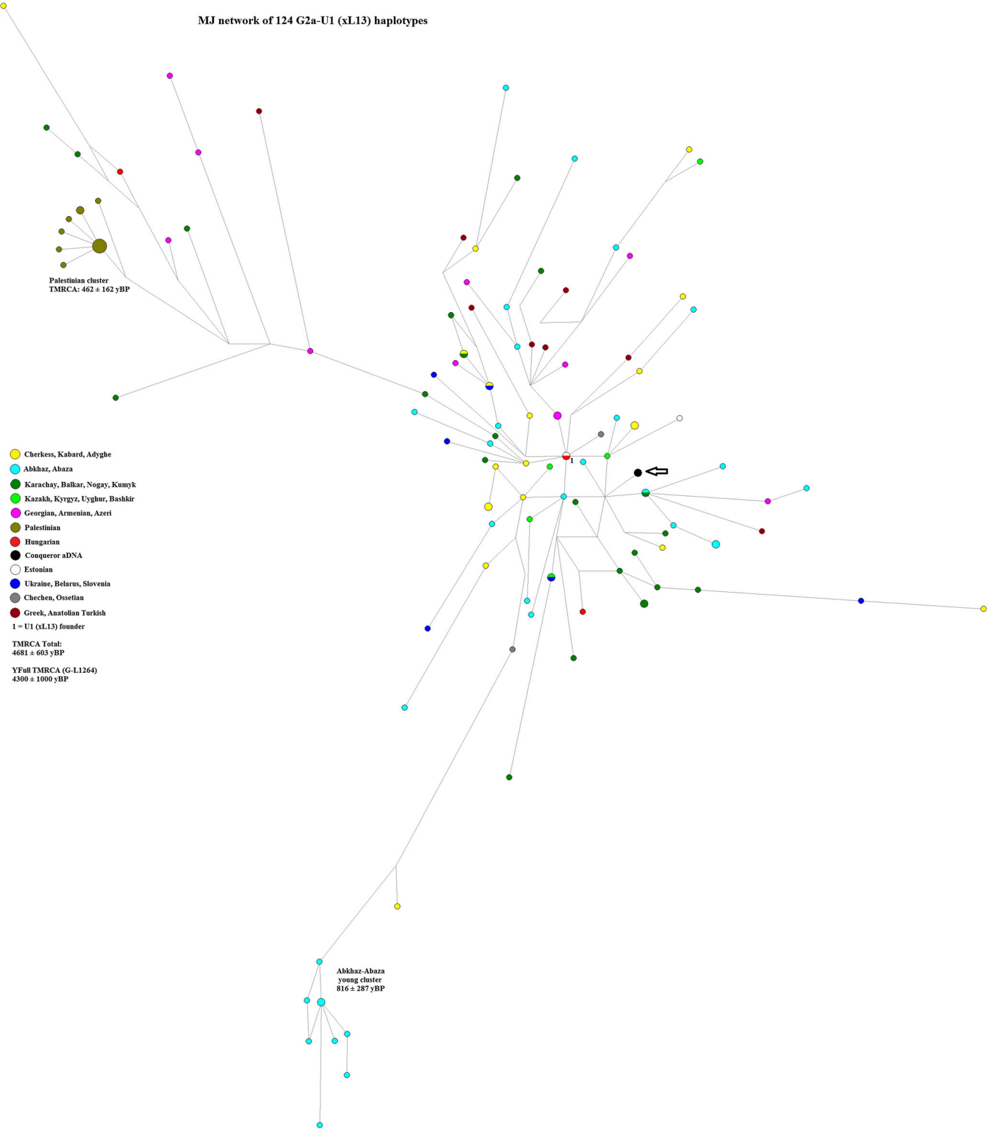
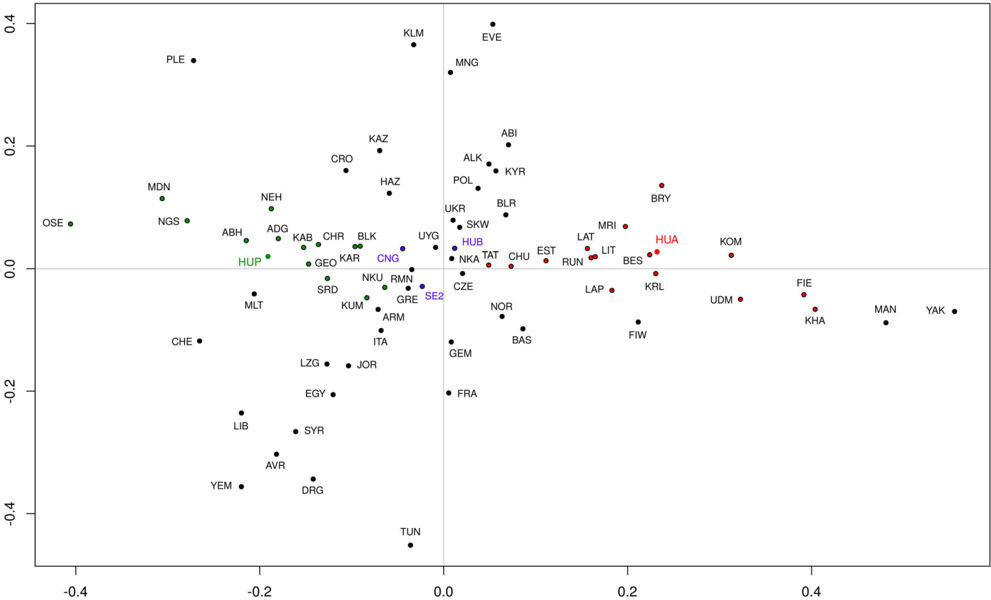
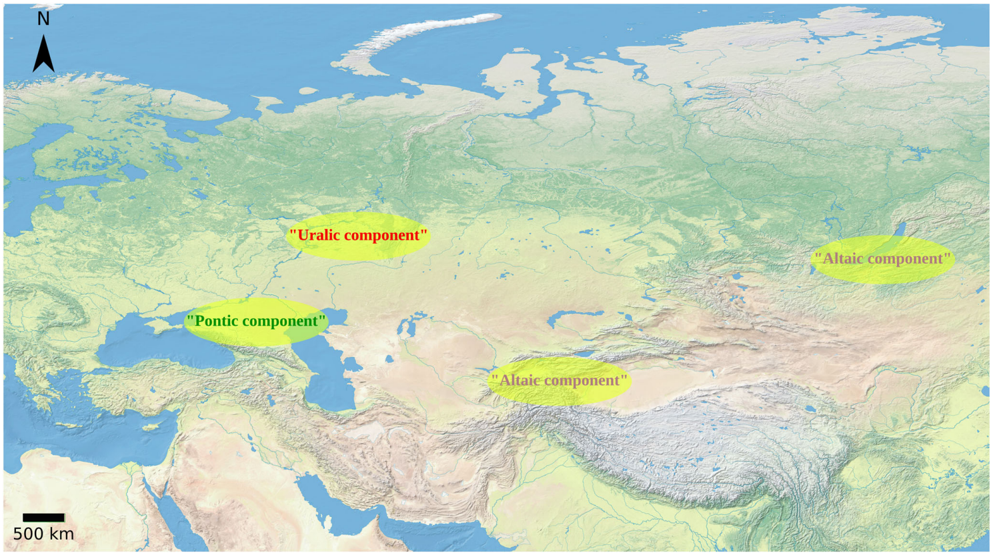
According to historical sources, ancient Hungarians were made up of seven allied tribes and the fragmented tribes that split off from the Khazars, and they arrived from the Eastern European steppes to conquer the Carpathian Basin at the end of the ninth century AD. Differentiating between the tribes is not possible based on archaeology or history, because the Hungarian Conqueror artifacts show uniformity in attire, weaponry, and warcraft. We used Y-STR and SNP analyses on male Hungarian Conqueror remains to determine the genetic source, composition of tribes, and kin of ancient Hungarians. The 19 male individuals paternally belong to 16 independent haplotypes and 7 haplogroups (C2, G2a, I2, J1, N3a, R1a, and R1b). The presence of the N3a haplogroup is interesting because it rarely appears among modern Hungarians (unlike in other Finno-Ugric-speaking peoples) but was found in 37.5% of the Hungarian Conquerors. This suggests that a part of the ancient Hungarians was of Ugric descent and that a significant portion spoke Hungarian. We compared our results with public databases and discovered that the Hungarian Conquerors originated from three distant territories of the Eurasian steppes, where different ethnicities joined them: Lake Baikal-Altai Mountains (Huns/Turkic peoples), Western Siberia-Southern Urals (Finno-Ugric peoples), and the Black Sea-Northern Caucasus (Caucasian and Eastern European peoples). As such, the ancient Hungarians conquered their homeland as an alliance of tribes, and they were the genetic relatives of Asiatic Huns, Finno-Ugric peoples, Caucasian peoples, and Slavs from the Eastern European steppes.
Overview
The claims and statistics of this paper haven’t been checked yet.
Run the check — free, no account needed. It reads the open-access text and checks the sources it cites.
Integrity signals
Registry
Cites
Statistics
Figures
Verification
Claims the paper makes
The claims and statistics of this paper haven’t been checked yet.
Run the check — free, no account needed. It reads the open-access text and checks the sources it cites.
Claims other papers make about this one
Each is checked against this paper’s own text: does it say what the citing paper says it does?
In the citing paper
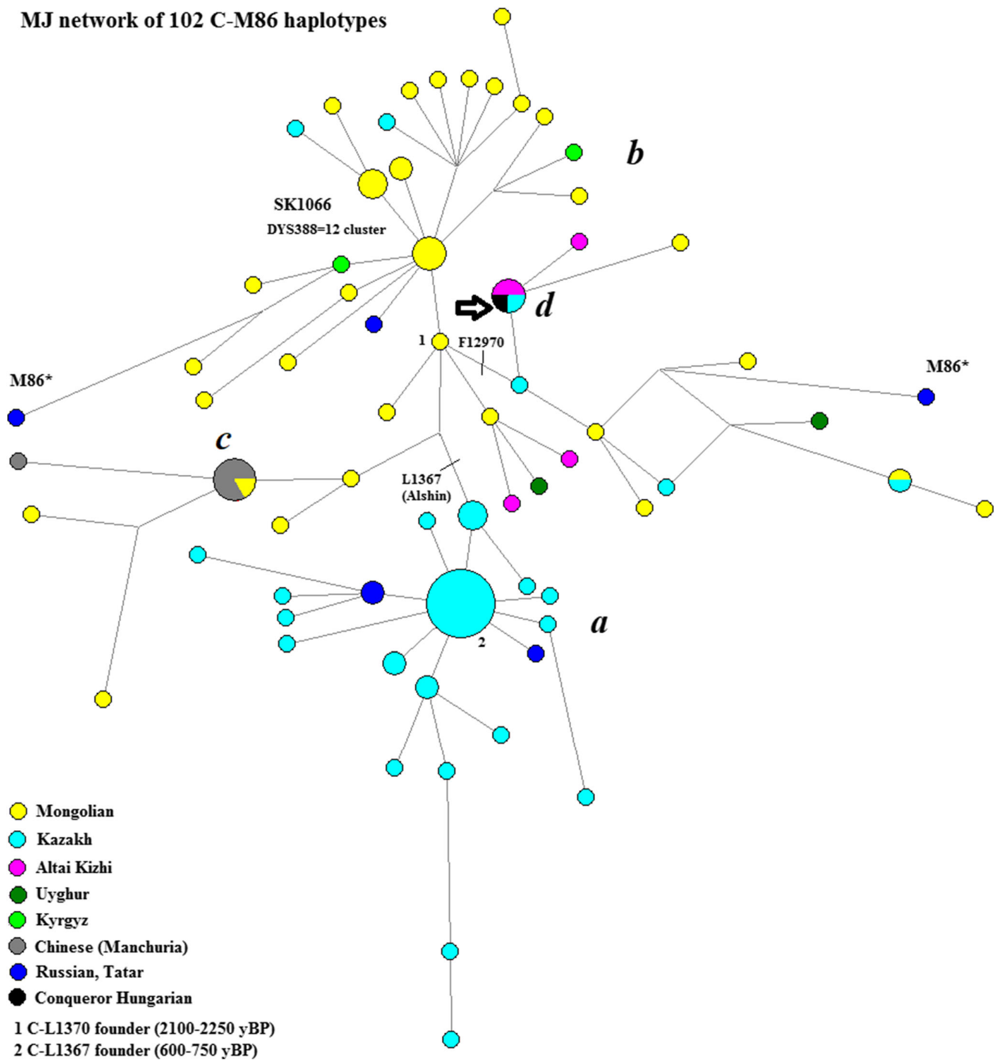
“The westernmost ancient individual with haplogroup C2a1a2-M48 was a Hungarian from the Carpathian Basin, dated to the end of the ninth century AD (Fothi et al., 2020).”
From Y chromosome evidence confirms northeast Asian origin of Xinjiang Kazakhs and genetic influence from 18th century expansion of Kerey clan (2023) · cites this paper as Fothi et al., 2020
Self-check
Percentages, sums and reported differences re-computed from the paper’s own numbers.
The self-check needs the paper’s full text.
Citations
Cites
Population genomics of Bronze Age Eurasia
Allentoft, M. E., Sikora, M., Sjögren, K.-G., Rasmussen, S., Rasmussen, M., Stenderup, J., Damgaard, P. B., Schroeder, H., Ahlström, T., Vinner, L., et al. (2015) · Nature · doi:10.1038/nature14507 · Cited by 1,550
Research works printed but not linked: 58
- Balanovsky O, Dibirova K, Dybo A, Mudrak O, Frolova S, Pocheshkhova E, Haber M, Platt D, Schurr T, Haak W, Kuznetsova M, Radzhabov M, Balaganskaya O, Romanov A, Zakharova T, Soria Hernanz DF, Zalloua P, Koshel S, Ruhlen M, Renfrew C, Wells RS, Tyler-Smith C, Balanovska E, Genographic Consortium (2011) Parallel evolution of genes and languages in the Caucasus region. Mol Biol Evol 28:2905–2920. https://doi.org/10.1093/molbev/msr126 · DOI
- Bálint C (2006) Az etnosz a korai középkorban (A kutatás lehetőségei és gátjai) [Ethnos in the Early Middle Ages (The possibilities and limits of research)]. Századok 140:277–347
- Bandelt HJ, Forster P, Rohl A (1999) Median-joining networks for inferring intraspecific phylogenies. Mol Biol Evol 16:37–48. https://doi.org/10.1093/oxfordjournals.molbev.a026036 · DOI · Paper page
- Bíró A, Fehér T, Bárány G, Pamjav H (2015) Testing Central and Inner Asian admixture among contemporary Hungarians. Forensic Sci Int Genet 15:121–126. https://doi.org/10.1016/j.fsigen.2014.11.007 · DOI
- Crubézy E, Amory S, Keyser C, Bouakaze C, Bodner M, Gibert M, Röck A, Parson W, Alexeev A, Ludes B (2010) Human evolution in Siberia: from frozen bodies to ancient DNA. BMC Evol Biol 10:25. https://doi.org/10.1186/1471-2148-10-25 · DOI
- Csányi B, Bogácsi-Szabó E, Tömöry G, Czibula Á, Priskin K, Csõsz A, Mende B, Langó P, Csete K, Zsolnai A, Conant EK, Downes CS, Raskó I (2008) Y-chromosome analysis of ancient Hungarian and two modern Hungarian-speaking populations from the Carpathian Basin. Ann Hum Genet 72:519–534. https://doi.org/10.1111/j.1469-1809.2008.00440.x · DOI
- Csősz A, Szécsényi-Nagy A, Csákyová V, Langó P, Bódis V, Köhler K, Tömöry G, Nagy M, Mende BG (2016) Maternal genetic ancestry and legacy of 10th century AD Hungarians. Sci Rep 6:33446. https://doi.org/10.1038/srep33446 · DOI
- Damgaard P d B, Marchi N, Rasmussen S, Peyrot M, Renaud G, Korneliussen T, Moreno-Mayar JV, Pedersen MW, Goldberg A, Usmanova E, Baimukhanov N, Loman V, Hedeager L, Pedersen AG, Nielsen K, Afanasiev G, Akmatov K, Aldashev A, Alpaslan A, Baimbetov G, Bazaliiskii VI, Beisenov A, Boldbaatar B, Boldgiv B, Dorzhu C, Ellingvag S, Erdenebaatar D, Dajani R, Dmitriev E, Evdokimov V, Frei KM, Gromov A, Goryachev A, Hakonarson H, Hegay T, Khachatryan Z, Khaskhanov R, Kitov E, Kolbina A, Kubatbek T, Kukushkin A, Kukushkin I, Lau N, Margaryan A, Merkyte I, Mertz IV, Mertz VK, Mijiddorj E, Moiyesev V, Mukhtarova G, Nurmukhanbetov B, Orozbekova Z, Panyushkina I, Pieta K, Smrčka V, Shevnina I, Logvin A, Sjögren K-G, Štolcová T, Taravella AM, Tashbaeva K, Tkachev A, Tulegenov T, Voyakin D, Yepiskoposyan L, Undrakhbold S, Varfolomeev V, Weber A, Wilson Sayres MA, Kradin N, Allentoft ME, Orlando L, Nielsen R, Sikora M, Heyer E, Kristiansen K, Willerslev E (2018) 137 ancient human genomes from across the Eurasian steppes. Nature 557:369–374. https://doi.org/10.1038/s41586-018-0094-2 · DOI · Paper page
- Di Cristofaro J, Pennarun E, Mazières S, Myres NM, Lin AA, Temori SA, Metspalu M, Metspalu E, Witzel M, King RJ, Underhill PA, Villems R, Chiaroni J (2013) Afghan Hindu Kush: where Eurasian sub-continent gene flows converge. PLoS One 8:e76748. https://doi.org/10.1371/journal.pone.0076748 · DOI · Paper page
- Duggan AT, Whitten M, Wiebe V, Crawford M, Butthof A, Spitsyn V, Makarov S, Novgorodov I, Osakovsky V, Pakendorf B (2013) Investigating the prehistory of Tungusic peoples of Siberia and the Amur-Ussuri region with complete mtDNA genome sequences and Y-chromosomal markers. PLoS One 8:e83570. https://doi.org/10.1371/journal.pone.0083570 · DOI
- Éry K (1977) Embertani adatok a Felső-Tiszavidék X. századi népességéhez [Anthropological data for the 10th century CE populations of the Upper Tisza Region]. Anthrop Közl 21:15–30
- Éry K (1983) Újabb összehasonlító statisztikai vizsgálatok a Kárpát-medence 6-12. századi népességének embertanához [further comparative statistical analyses on the 6th-12th centuries CE human populations of the Carpathian Basin]. Veszprém Megyei Múzeumok Közleményei 16:35–85
- Excoffier L, Lischer HEL (2010) Arlequin suite ver 3.5: a new series of programs to perform population genetics analyses under Linux and Windows. Mol Ecol Resour 10:564–567. https://doi.org/10.1111/j.1755-0998.2010.02847.x · DOI
- Fehér T, Németh E, Vándor A, Kornienko IV, Csáji LK, Pamjav H (2015) Y-SNP L1034: limited genetic link between Mansi and Hungarian-speaking populations. Mol Gen Genomics 290:377–386. https://doi.org/10.1007/s00438-014-0925-2 · DOI
- Goedbloed M, Vermeulen M, Fang RN, Lembring M, Wollstein A, Ballantyne K, Lao O, Brauer S, Krüger C, Roewer L, Lessig R, Ploski R, Dobosz T, Henke L, Henke J, Furtado MR, Kayser M (2009) Comprehensive mutation analysis of 17 Y-chromosomal short tandem repeat polymorphisms included in the AmpFlSTR® Yfiler® PCR amplification kit. Int J Legal Med 123:471–482. https://doi.org/10.1007/s00414-009-0342-y · DOI
- Guglielmino CR, De Silvestri A, Beres J (2000) Probable ancestors of Hungarian ethnic groups: an admixture analysis. Ann Hum Genet 64:145–159. https://doi.org/10.1017/S0003480000008010 · DOI
- Hajdú P, Domokos P (1980) Uráli nyelvrokonaink. [Our Uralian language relatives]. Tankönyvkiadó, Budapest
- Hallast P, Batini C, Zadik D, Maisano Delser P, Wetton JH, Arroyo-Pardo E, Cavalleri GL, de Knijff P, Destro Bisol G, Dupuy BM, Eriksen HA, Jorde LB, King TE, Larmuseau MH, Lopez de Munain A, Lopez-Parra AM, Loutradis A, Milasin J, Novelletto A, Pamjav H, Sajantila A, Schempp W, Sears M, Tolun A, Tyler-Smith C, Van Geystelen A, Watkins S, Winney B, Jobling MA (2015) The Y-chromosome tree bursts into leaf: 13,000 high-confidence SNPs covering the majority of known clades. Mol Biol Evol 32:661–673. https://doi.org/10.1093/molbev/msu327 · DOI
- Ilumäe A-M, Reidla M, Chukhryaeva M, Järve M, Post H, Karmin M, Saag L, Agdzhoyan A, Kushniarevich A, Litvinov S, Ekomasova N, Tambets K, Metspalu E, Khusainova R, Yunusbayev B, Khusnutdinova EK, Osipova LP, Fedorova S, Utevska O, Koshel S, Balanovska E, Behar DM, Balanovsky O, Kivisild T, Underhill PA, Villems R, Rootsi S (2016) Human Y chromosome haplogroup N: a non-trivial time-resolved phylogeography that cuts across language families. Am J Hum Genet 99:163–173. https://doi.org/10.1016/j.ajhg.2016.05.025 · DOI · Paper page
- Karachanak S, Grugni V, Fornarino S, Nesheva D, Al-Zahery N, Battaglia V, Carossa V, Yordanov Y, Torroni A, Galabov AS, Toncheva D, Semino O (2013) Y-chromosome diversity in modern Bulgarians: new clues about their ancestry. PLoS One 8:e56779. https://doi.org/10.1371/journal.pone.0056779 · DOI
- Keyser-Tracqui C, Crubézy E, Ludes B (2003) Nuclear and mitochondrial DNA analysis of a 2,000-year-old necropolis in the Egyin Gol Valley of Mongolia. Am J Hum Genet 73:247–260. https://doi.org/10.1086/377005 · DOI · Paper page
- Kim K, Brenner CH, Mair VH, Lee K-H, Kim J-H, Gelegdorj E, Batbold N, Song Y-C, Yun H-W, Chang E-J, Lkhagvasuren G, Bazarragchaa M, Park A-J, Lim I, Hong Y-P, Kim W, Chung S-I, Kim D-J, Chung Y-H, Kim S-S, Lee W-B, Kim K-Y (2010) A western Eurasian male is found in 2000-year-old elite Xiongnu cemetery in Northeast Mongolia. Am J Phys Anthropol 142:429–440. https://doi.org/10.1002/ajpa.21242 · DOI · Paper page
- Klyosov AA, Faleeva T (2017) Excavated DNA from two Khazar burials. Adv Anthropol 07:17–21. https://doi.org/10.4236/aa.2017.71002 · DOI
- Lahermo P, Laitinen V, Sistonen P, Béres J, Karcagi V, Savontaus M-L (2004) MtDNA polymorphism in the Hungarians: comparison to three other Finno-Ugric-speaking populations. Hereditas 132:35–42. https://doi.org/10.1111/j.1601-5223.2000.00035.x · DOI
- Lipták P (1952) New Hungarian skeletal remains of the 10th century from the Danube-Tisza plain. Annls hist-nat Mus natn hung 3:277–287
- Lipták P (1957) Awaren und Magyaren in Donau-Theiss Zwischenstromgebeit (Zur Anthropologie der VII.-XIII. Jahrunderts). Acta Arch VIII:199–268
- Lipták P (1983) Avars and ancient Hungarians. Akadémia Kiadó, Budapest
- Madaras L (2014) Nagykörü. In: Sudár B, Petkes ZS (eds) A honfoglalók viselete [Apparel of the Hungarian Conquerors]. MTA BTK Magyar Őstörténeti Témacsoport – Helikon, Budapest, (Magyar Őstörténet I.), pp 75–81
- Malán M (1956) L’Anthropologie du cimetiere de Bogrogszerdahely (Xe siecle). Crania Hung I:61–74
- Malyarchuk B, Derenko M, Denisova G, Khoyt S, Woźniak M, Grzybowski T, Zakharov I (2013) Y-chromosome diversity in the Kalmyks at the ethnical and tribal levels. J Hum Genet 58:804–881. https://doi.org/10.1038/jhg.2013.108 · DOI · Paper page
- Mendisco F, Keyser C, Hollard C, Seldes V, Nielsen AE, Crubézy E, Ludes B (2011) Application of the iPLEXTM gold SNP genotyping method for the analysis of Amerindian ancient DNA samples: benefits for ancient population studies. Electrophoresis 32:386–393. https://doi.org/10.1002/elps.201000483 · DOI
- Mielnik-Sikorska M, Daca P, Woźniak M, Malyarchuk BA, Bednarek J, Dobosz T, Grzybowski T (2013) Genetic data from Y chromosome STR and SNP loci in Ukrainian population. Forensic Sci Int Genet 7:200–203. https://doi.org/10.1016/j.fsigen.2012.05.007 · DOI
- Mirabal S, Varljen T, Gayden T, Regueiro M, Vujovic S, Popovic D, Djuric M, Stojkovic O, Herrera RJ (2010) Human Y-chromosome short tandem repeats: a tale of acculturation and migrations as mechanisms for the diffusion of agriculture in the Balkan Peninsula. Am J Phys Anthropol 142:380–390. https://doi.org/10.1002/ajpa.21235 · DOI
- Myres NM, Rootsi S, Lin AA, Järve M, King RJ, Kutuev I, Cabrera VM, Khusnutdinova EK, Pshenichnov A, Yunusbayev B, Balanovsky O, Balanovska E, Rudan P, Baldovic M, Herrera RJ, Chiaroni J, Di Cristofaro J, Villems R, Kivisild T, Underhill PA (2011) A major Y-chromosome haplogroup R1b Holocene era founder effect in central and Western Europe. Eur J Hum Genet 19:95–101. https://doi.org/10.1038/ejhg.2010.146 · DOI · Paper page
- Neparáczki E, Juhász Z, Pamjav H, Fehér T, Csányi B, Zink A, Maixner F, Pálfi G, Molnár E, Pap I, Kustár Á, Révész L, Raskó I, Török T (2017) Genetic structure of the early Hungarian conquerors inferred from mtDNA haplotypes and Y-chromosome haplogroups in a small cemetery. Mol Gen Genomics 292:201–214. https://doi.org/10.1007/s00438-016-1267-z · DOI · Paper page
- Neparáczki E, Maróti Z, Kalmár T, Kocsy K, Maár K, Bihari P, Nagy I, Fóthi E, Pap I, Kustár Á, Pálfi G, Raskó I, Zink A, Török T (2018) Correction: Mitogenomic data indicate admixture components of Central-Inner Asian and Srubnaya origin in the conquering Hungarians. PLoS One 13:e0208295. https://doi.org/10.1371/journal.pone.0208295 · DOI
- Neparáczki E, Maróti Z, Kalmár T, Maár K, Nagy I, Latinovics D, Kustár Á, Pálfi G, Molnár E, Marcsik A, Balogh C, Lőrinczy G, Gál SS, Tomka P, Kovacsóczy B, Kovács L, Raskó I, Török T (2019) Y-chromosome haplogroups from Hun, Avar and conquering Hungarian period nomadic people of the Carpathian Basin bioRxiv 597997. doi: https://doi.org/10.1101/597997 · DOI
- Niederstätter H, Rampl G, Erhart D, Pitterl F, Oberacher H, Neuhuber F, Hausner I, Gassner C, Schennach H, Berger B, Parson W (2012) Pasture names with romance and slavic roots facilitate dissection of Y chromosome variation in an exclusively German-Speaking Alpine region. PLoS One 7:e41885. https://doi.org/10.1371/journal.pone.0041885 · DOI
- Olasz J, Seidenberg V, Hummel S, Szentirmay Z, Szabados G, Melegh B, Kásler M (2018) DNA profiling of Hungarian King Béla III and other skeletal remains originating from the Royal Basilica of Székesfehérvár. Archaeol Anthropol Sci 11:1345–1357. https://doi.org/10.1007/s12520-018-0609-7 · DOI
- Pamjav H, Fóthi Á, Fehér T, Fóthi E (2017) A study of the Bodrogköz population in North-Eastern Hungary by Y chromosomal haplotypes and haplogroups. Mol Gen Genomics 292:883–894. https://doi.org/10.1007/s00438-017-1319-z · DOI · Paper page
- Post H, Németh E, Klima L, Flores R, Fehér T, Türk A, Székely G, Sahakyan H, Mondal M, Montinaro F, Karmin M, Saag L, Yunusbayev B, Khusnutdinova EK, Metspalu E, Villems R, Tambets K, Rootsi S (2019) Y-chromosomal connection between Hungarians and geographically distant populations of the Ural Mountain region and West Siberia. Sci Rep 9:7786. https://doi.org/10.1038/s41598-019-44272-6 · DOI
- Rębała K, Martínez-Cruz B, Tönjes A, Kovacs P, Stumvoll M, Lindner I, Büttner A, Wichmann H-E, Siváková D, Soták M, Quintana-Murci L, Szczerkowska Z, Comas D, Genographic Consortium (2013) Contemporary paternal genetic landscape of Polish and German populations: from early medieval Slavic expansion to post-World War II resettlements. Eur J Hum Genet 21:415–422. https://doi.org/10.1038/ejhg.2012.190 · DOI
- Roewer L, Krüger C, Willuweit S, Nagy M, Rodig H, Kokshunova L, Rothämel T, Kravchenko S, Jobling MA, Stoneking M, Nasidze I (2007) Y-chromosomal STR haplotypes in Kalmyk population samples. Forensic Sci Int 173:204–209. https://doi.org/10.1016/j.forsciint.2006.11.013 · DOI · Paper page
- Róna-Tas A (1995) A magyarság korai története [Early history of the Hungarians]. Magy Tört Könyvt 9. Szeged University, Szeged
- Rootsi S, Myres NM, Lin AA, Järve M, King RJ, Kutuev I, Cabrera VM, Khusnutdinova EK, Varendi K, Sahakyan H, Behar DM, Khusainova R, Balanovsky O, Balanovska E, Rudan P, Yepiskoposyan L, Bahmanimehr A, Farjadian S, Kushniarevich A, Herrera RJ, Grugni V, Battaglia V, Nici C, Crobu F, Karachanak S, Kashani BH, Houshmand M, Sanati MH, Toncheva D, Lisa A, Semino O, Chiaroni J, Di Cristofaro J, Villems R, Kivisild T, Underhill PA (2012) Distinguishing the co-ancestries of haplogroup G Y-chromosomes in the populations of Europe and the Caucasus. Eur J Hum Genet 20:1275–1282. https://doi.org/10.1038/ejhg.2012.86 · DOI · Paper page
- Rozhanskii IL, Klyosov AA (2012) Haplogroup R1a, its subclades and branches in Europe during the last 9,000 years. Adv Anthropol 02:139–156. https://doi.org/10.4236/aa.2012.23017 · DOI
- Sarno S, Tofanelli S, De Fanti S, Quagliariello A, Bortolini E, Ferri G, Anagnostou P, Brisighelli F, Capelli C, Tagarelli G, Sineo L, Luiselli D, Boattini A, Pettener D (2016) Shared language, diverging genetic histories: high-resolution analysis of Y-chromosome variability in Calabrian and Sicilian Arbereshe. Eur J Hum Genet 24:600–606. https://doi.org/10.1038/ejhg.2015.138 · DOI
- Semino O, Passarino G, Quintana-Murci L, Liu A, Béres J, Czeizel A, Santachiara-Benerecetti AS (2000) MtDNA and Y chromosome polymorphisms in Hungary: inferences from the palaeolithic, neolithic and Uralic influences on the modern Hungarian gene pool. Eur J Hum Genet 8:339–346. https://doi.org/10.1038/sj.ejhg.5200468 · DOI
- Tambets K, Rootsi S, Kivisild T, Help H, Serk P, Loogväli E-L, Tolk H-V, Reidla M, Metspalu E, Pliss L, Balanovsky O, Pshenichnov A, Balanovska E, Gubina M, Zhadanov S, Osipova L, Damba L, Voevoda M, Kutuev I, Bermisheva M, Khusnutdinova E, Gusar V, Grechanina E, Parik J, Pennarun E, Richard C, Chaventre A, Moisan J-P, Barać L, Peričić M, Rudan P, Terzić R, Mikerezi I, Krumina A, Baumanis V, Koziel S, Rickards O, De Stefano GF, Anagnou N, Pappa KI, Michalodimitrakis E, Ferák V, Füredi S, Komel R, Beckman L, Villems R (2004) The Western and eastern roots of the Saami—the story of genetic “outliers” told by mitochondrial DNA and Y chromosomes. Am J Hum Genet 74:661–682. https://doi.org/10.1086/383203 · DOI · Paper page
- Tambets K, Yunusbayev B, Hudjashov G, Ilumäe A-M, Rootsi S, Honkola T, Vesakoski O, Atkinson Q, Skoglund P, Kushniarevich A, Litvinov S, Reidla M, Metspalu E, Saag L, Rantanen T, Karmin M, Parik J, Zhadanov SI, Gubina M, Damba LD, Bermisheva M, Reisberg T, Dibirova K, Evseeva I, Nelis M, Klovins J, Metspalu A, Esko T, Balanovsky O, Balanovska E, Khusnutdinova EK, Osipova LP, Voevoda M, Villems R, Kivisild T, Metspalu M (2018) Genes reveal traces of common recent demographic history for most of the Uralic-speaking populations. Genome Biol 19:139. https://doi.org/10.1186/s13059-018-1522-1 · DOI
- Tömöry G, Csányi B, Bogácsi-Szabó E, Kalmár T, Czibula Á, Csősz A, Priskin K, Mende B, Langó P, Downes CS, Raskó I (2007) Comparison of maternal lineage and biogeographic analyses of ancient and modern Hungarian populations. Am J Phys Anthropol 134:354–368. https://doi.org/10.1002/ajpa.20677 · DOI
- Tóth T (1981) Anthropological results concerning the ethnogenesis of Hungarians. Anthr Hung 17:5–22
- Underhill PA, Poznik GD, Rootsi S, Järve M, Lin AA, Wang J, Passarelli B, Kanbar J, Myres NM, King RJ, Di Cristofaro J, Sahakyan H, Behar DM, Kushniarevich A, Šarac J, Šaric T, Rudan P, Pathak AK, Chaubey G, Grugni V, Semino O, Yepiskoposyan L, Bahmanimehr A, Farjadian S, Balanovsky O, Khusnutdinova EK, Herrera RJ, Chiaroni J, Bustamante CD, Quake SR, Kivisild T, Villems R (2015) The phylogenetic and geographic structure of Y-chromosome haplogroup R1a. Eur J Hum Genet 23:124–131. https://doi.org/10.1038/ejhg.2014.50 · DOI · Paper page
- Vásáry I (2015) A volgai magyarság: Julianus útja [the Volga Hungarians: Julian’s voyage of discovery]. In: Sudár B, Petkes ZS (eds) Magyarok a honfoglalás korában [Hungarians in the time of the conquest of the homeland]. MTA BTK Magyar Őstörténeti Témacsoport – Helikon, Budapest, (Magyar Őstörténet I.), p 148
- Venables WN, Ripley BD (2002) Modern applied statistics with S, 4th edn. Springer, New York · DOI
- Zerjal T, Dashnyam B, Pandya A, Kayser M, Roewer L, Santos FR, Schiefenhövel W, Fretwell N, Jobling MA, Harihara S, Shimizu K, Semjidmaa D, Sajantila A, Salo P, Crawford MH, Ginter EK, Evgrafov OV, Tyler-Smith C (1997) Genetic relationships of Asians and Northern Europeans, revealed by Y-chromosomal DNA analysis. Am J Hum Genet 60:1174–1183
- Zhao Y-B, Li H-J, Cai D-W, Li C-X, Zhang Q-C, Zhu H, Zhou H (2010) Ancient DNA from nomads in 2500-year-old archeological sites of Pengyang, China. J Hum Genet 55:215–218. https://doi.org/10.1038/jhg.2010.8 · DOI
- Zhong H, Shi H, Qi X-B, Xiao C-J, Jin L, Ma RZ, Su B (2010) Global distribution of Y-chromosome haplogroup C reveals the prehistoric migration routes of African exodus and early settlement in East Asia. J Hum Genet 55:428–435. https://doi.org/10.1038/jhg.2010.40 · DOI · Paper page
Cited by
Genetic Examination of Remains from the Two Largest Mass Burials of 1238 in Yaroslavl Detynets
Moscow Institute of Physics and Technology (National Research University), Mustafin, K. K., Engovatova, A. V., Institute of Archaeology of the Russian Academy of Sciences, Alborova, I. E., Moscow Institute of Physics and Technology (National Research University), Tarasova, A. A., & Institute of Archaeology of the Russian Academy of Sciences (2022) · Povolzhskaya Arkheologiya (The Volga River Region Archaeology) · doi:10.24852/pa2022.2.40.215.230 · Cited by 3
Wang, B., Liang, J., Allen, E., Chang, X., Jiang, Z., Yu, Y., Shi, M., & Wen, S. (2023) · Frontiers in Ecology and Evolution · doi:10.3389/fevo.2023.1264718 · Cited by 1
Metadata
- Authors
- Fóthi, E., Gonzalez, A., Fehér, T., Gugora, A., Fóthi, Á., Biró, O., & Keyser, C.
- ORCID
- Fóthi, Erzsébet
- Venue
- Archaeological and Anthropological Sciences
- Published
- 2020-01
- Volume
- 12
- Issue
- 1
- ISSN
- 1866-9557
- 1866-9565
- Cited by
- 27
- References
- 1
- Language
- en
- Funders
- Avicenna Institute of Middle Eastern Studies (GF/JSZF/814/9/2015)
About these checks
Registry, retraction, Cites and statistics results are computed, not judged, with one exception: a printed reference that no index lists is read once by a model before it counts as a citation error. Claims are extracted by a model and kept only when their quote appears verbatim in the text; each cited source is then checked, with a model’s help, for whether it says what the claim relies on. Those verdicts can be wrong — read the claim’s quote and the cited source before relying on one.
Statistics and arithmetic are recomputed, not judged.
Confidence bands are shown only for fields calibrated on our annotated test set. None is calibrated yet, so no band is shown.
What counts as a claim ›How we measure confidence ›How we check this ›
Are you an author, or do you see a problem with this page? Request a review
