

Antidepressant-like behavior in brain-specific angiogenesis inhibitor 2-deficient mice
Open accessThe DOI matches its Crossref record; 32 of the 32 references it cites were found in a registry or an index.
Abstract
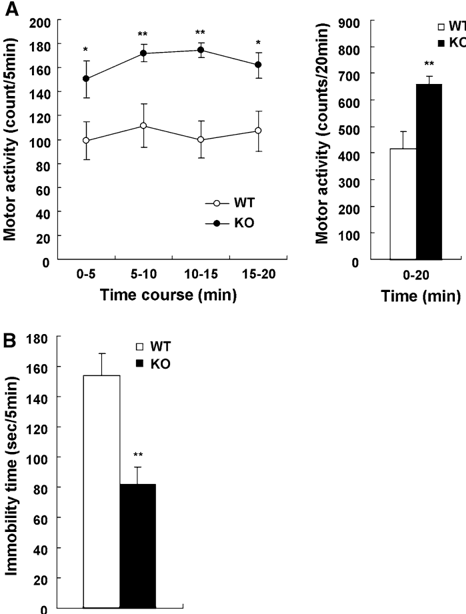
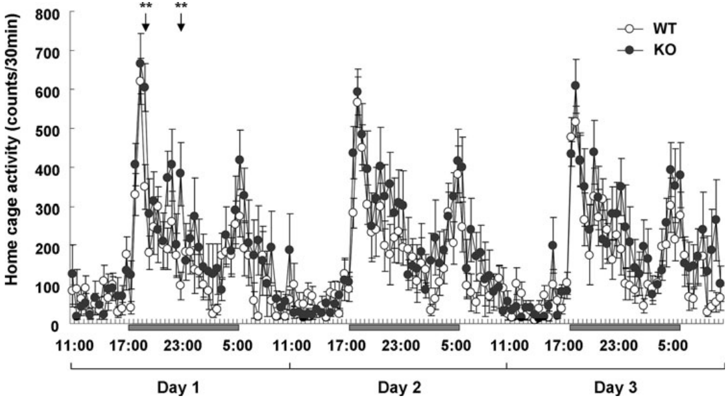
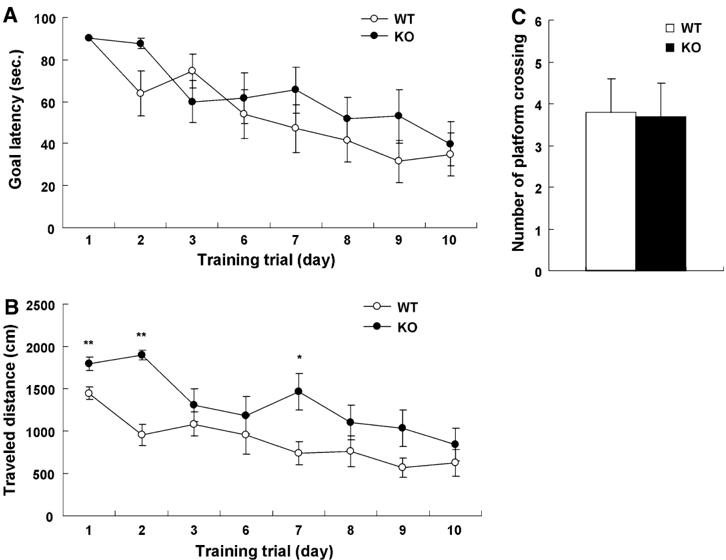
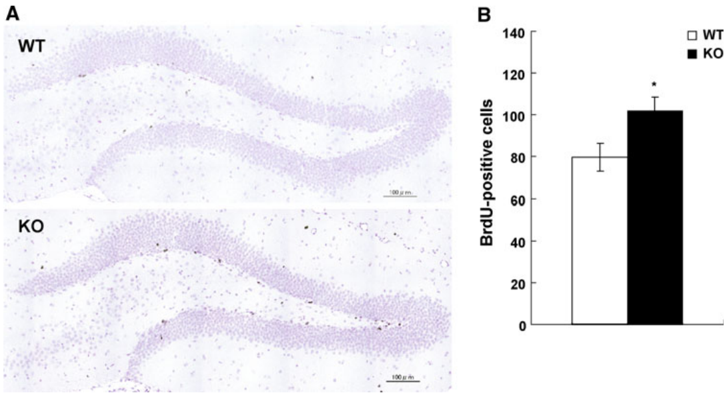
Brain-specific angiogenesis inhibitor 2 (BAI2) is a transmembrane protein that is predominantly expressed in the brain. Although BAI2 is supposed to correlate with antiangiogenesis in the brain, its psychiatric function is still unclear. In this study, we examined the influence of BAI2 gene disruption on mood-related behavior using BAI2-deficient mice. BAI2-deficient mice showed significant antidepressant-like behavior in the social defeat test and in the tail suspension test compared with wild-type mice. On the other hand, BAI2-deficient mice had normal basal locomotor activity in the home cage and in the open field test, and normal learning ability and memory retention in the Morris water maze test. Additionally, we found that hippocampal cell proliferation in BAI2-deficient mice was higher than that in wild-type mice. These results indicate that BAI2 has an important role related to depression and influences the hippocampal neurogenesis. BAI2 may be a novel therapeutic target for mood-related disorders.
Overview
The claims and statistics of this paper haven’t been checked yet.
Free: it reads the open-access text and checks the first 5 claims that cite a source we can check. Create a free account to check every claim.
Integrity signals
Registry
Cites
Statistics
Figures

Verification
Claims the paper makes
The claims and statistics of this paper haven’t been checked yet.
Free: it reads the open-access text and checks the first 5 claims that cite a source we can check. Create a free account to check every claim.
Claims other papers make about this one
Each is checked against this paper’s own text: does it say what the citing paper says it does?
The cited source says what the claim attributes to it.
In the citing paper
“For example, Adgrb2-mutant mice (Tbio) showed significant antidepressant-like behaviour compared with wild-type mice70, whereas the association71 between schizophrenia and Fzd3 mutants (T) remains controversial72,73.”
From Unexplored therapeutic opportunities in the human genome (2018) · cites this paper as [70]
Self-check
Percentages, sums and reported differences re-computed from the paper’s own numbers.
The self-check needs the paper’s full text.
Citations
Cites
Molecular Mechanisms of Depression: Perspectives on New Treatment Strategies
Lang, U. E., & Borgwardt, S. (2013) · Cellular Physiology and Biochemistry · doi:10.1159/000350094 · Cited by 8,475
The tail suspension test: A new method for screening antidepressants in mice
Steru, L., Chermat, R., Thierry, B., & Simon, P. (1985) · Psychopharmacology · doi:10.1007/bf00428203 · Cited by 3,534 · cited 2×
“A tail suspension test for the antidepressant activity was conducted as described elsewhere [12].”
BackgroundMethodChronic antidepressant treatment increases neurogenesis in adult rat hippocampus
Malberg, J. E., Eisch, A. J., Nestler, E. J., & Duman, R. S. (2000) · The Journal of Neuroscience · doi:10.1523/jneurosci.20-24-09104.2000 · Cited by 3,111 · cited 1×
“Stress significantly downregulates neurogenesis in adult hippocampus, and chronic treatment with antidepressant upregulates it [23–25].”
BackgroundVascular niche for adult hippocampal neurogenesis
Palmer, T. D., Willhoite, A. R., & Gage, F. H. (2000) · The Journal of Comparative Neurology · doi:10.1002/1096-9861(20001002)425:4<479::aid-cne2>3.0.co;2-3 · Cited by 1,838 · cited 1×
“Adult hippocampal neurogenesis has been described to occur in the angiogenic niche [30, 31].”
BackgroundVascular endothelial growth factor (VEGF) stimulates neurogenesis in vitro and in vivo
Jin, K., Zhu, Y., Sun, Y., Mao, X. O., Xie, L., & Greenberg, D. A. (2002) · Proceedings of the National Academy of Sciences · doi:10.1073/pnas.182296499 · Cited by 1,507 · cited 1×
“Several growth factors, including fibroblast growth factor-2 (FGF-2), brain-derived neurotrophic factor (BDNF) and VEGF, also stimulate neurogenesis, and they exert antidepressant effects [15, 16, 26, 27].”
BackgroundGould, E., Tanapat, P., McEwen, B. S., Flügge, G., & Fuchs, E. (1998) · Proceedings of the National Academy of Sciences · doi:10.1073/pnas.95.6.3168 · Cited by 1,395 · cited 1×
“Stress significantly downregulates neurogenesis in adult hippocampus, and chronic treatment with antidepressant upregulates it [23–25].”
BackgroundCD36 Mediates the In Vitro Inhibitory Effects of Thrombospondin-1 on Endothelial Cells
Dawson, D. W., Pearce, S. F. A., Zhong, R., Silverstein, R. L., Frazier, W. A., & Bouck, N. P. (1997) · The Journal of Cell Biology · doi:10.1083/jcb.138.3.707 · Cited by 676 · cited 1×
“[28].”
Anhedonia and motivational deficits in rats: Impact of chronic social stress
Rygula, R., Abumaria, N., Flügge, G., Fuchs, E., Rüther, E., & Havemann-Reinecke, U. (2005) · Behavioural Brain Research · doi:10.1016/j.bbr.2005.03.009 · Cited by 554 · cited 1×
“Repeated social defeat causes an increase in depressive behavior, and this effect is recovered by chronic administration of antidepressants [21].”
BackgroundRegulation of adult neurogenesis by antidepressant treatment
Duman, R. (2001) · Neuropsychopharmacology · doi:10.1016/s0893-133x(01)00358-x · Cited by 463 · cited 2×
“Angiogenesis in the hippocampus is stimulated by antidepressant treatments including electroconvulsive seizures, and the treatment of corticosterone that induces a depression-like behavior in rats markedly inhibits endothelial cell proliferation in the hippocampus and the prefrontal cortex [25, 29].”
BackgroundVEGF is an essential mediator of the neurogenic and behavioral actions of antidepressants
Warner-Schmidt, J. L., & Duman, R. S. (2007) · Proceedings of the National Academy of Sciences · doi:10.1073/pnas.0610282104 · Cited by 438 · cited 2×
“Warner-Schmidt and Duman [27] demonstrated that VEGF infusions mimic the action of antidepressants in rats, and it is an essential mediator for the behavioral action of antidepressants.”
Background
Cited by
International Union of Basic and Clinical Pharmacology. XCIV. Adhesion G Protein–Coupled Receptors
Hamann, J., Aust, G., Araç, D., Engel, F. B., Formstone, C., Fredriksson, R., Hall, R. A., Harty, B. L., Kirchhoff, C., Knapp, B., et al. (2015) · Pharmacological Reviews · doi:10.1124/pr.114.009647 · Cited by 486
“In vivo, hippocampal neuron proliferation increases in Adgrb2 (Bai2) knockout mice relative to wild-type animals, although how ADGRB2 (BAI2) inhibits neurogenesis is unclear (Okajima et al., 2011).”
BackgroundInfluentialUnexplored therapeutic opportunities in the human genome
Oprea, T. I., Bologa, C. G., Brunak, S., Campbell, A., Gan, G. N., Gaulton, A., Gomez, S. M., Guha, R., Hersey, A., Holmes, J., et al. (2018) · Nature Reviews Drug Discovery · doi:10.1038/nrd.2018.14 · Cited by 378
Erratum: Unexplored therapeutic opportunities in the human genome
Oprea, T. I., Bologa, C. G., Brunak, S., Campbell, A., Gan, G. N., Gaulton, A., Gomez, S. M., Guha, R., Hersey, A., Holmes, J., et al. (2018) · Nature Reviews Drug Discovery · doi:10.1038/nrd.2018.52 · Cited by 311
Sticky Signaling—Adhesion Class G Protein–Coupled Receptors Take the Stage
Langenhan, T., Aust, G., & Hamann, J. (2013) · Science Signaling · doi:10.1126/scisignal.2003825 · Cited by 267
“BAI2 Mouse Null allele A ntidepressant-like behavior, increased hippocampal cell proliferation Unknown (177)”
BackgroundSigoillot, S. M., Iyer, K., Binda, F., González-Calvo, I., Talleur, M., Vodjdani, G., Isope, P., & Selimi, F. (2015) · Cell Reports · doi:10.1016/j.celrep.2015.01.034 · Cited by 144
“, 2012) or functional studies (Okajima et al., 2011) and could thus directly be involved in the synaptic defects found in these disorders.”
BackgroundDuman, J. G., Tzeng, C. P., Tu, Y.-K., Munjal, T., Schwechter, B., Ho, T. S.-Y., & Tolias, K. F. (2013) · The Journal of Neuroscience · doi:10.1523/jneurosci.3978-12.2013 · Cited by 131
G-protein coupled receptor BAI3 promotes myoblast fusion in vertebrates
Hamoud, N., Tran, V., Croteau, L.-P., Kania, A., & Côté, J.-F. (2014) · Proceedings of the National Academy of Sciences · doi:10.1073/pnas.1313886111 · Cited by 120
“Furthermore, our knockdown and overexpression experiments suggest that BAI2 is unessential for myoblast fusion and mouse null for BAI2 is viable and no defects in muscles were reported (44).”
BackgroundAdhesion G Protein–Coupled Receptors as Drug Targets
Purcell, R. H., & Hall, R. A. (2017) · The Annual Review of Pharmacology and Toxicology · doi:10.1146/annurev-pharmtox-010617-052933 · Cited by 129
Stephenson, J. R., Paavola, K. J., Schaefer, S. A., Kaur, B., Meir, E. G. V., & Hall, R. A. (2013) · Journal of Biological Chemistry · doi:10.1074/jbc.m113.489757 · Cited by 121
“Interestingly, the other two members of the BAI sub-family have also recently been implicated in the regulation of synaptic function and neural development: BAI2-deficient mice have been found to exhibit an enhanced rate of hippocampal neurogenesis (60), and BAI3 has been shown to interact with secreted complement-lik…”
BackgroundLanoue, V, Usardi, A., Sigoillot, S. M., Talleur, M., Iyer, K., Mariani, J., Isope, P., Vodjdani, G., Heintz, N., & Selimi, F. (2013) · Molecular Psychiatry · doi:10.1038/mp.2013.46 · Cited by 90
Adhesion G protein-coupled receptors: structure, signaling, physiology, and pathophysiology
Lala, T., & Hall, R. A. (2022) · Physiological Reviews · doi:10.1152/physrev.00027.2021 · Cited by 91
Krishnan, A., & Schiöth, H. B. (2015) · Journal of Experimental Biology · doi:10.1242/jeb.110312 · Cited by 81
“Gene knockout studies also suggest a role in synaptogenesis for other BAI family members (Jeong et al., 2006; Lanoue et al., 2013; Okajima et al., 2011).”
BackgroundThe BAI subfamily of adhesion GPCRs: synaptic regulation and beyond
Stephenson, J. R., Purcell, R. H., & Hall, R. A. (2014) · Trends in Pharmacological Sciences · doi:10.1016/j.tips.2014.02.002 · Cited by 70
“The BAI2-deficient mice were also found to exhibit increased neurogenesis in the dentate gyrus of the hippocampus [80], which may be related to the depression-resistant phenotype of these mice given that enhanced neurogenesis in the dentate gyrus often correlates with resistance to depression [81].”
BackgroundOrphan G Protein Coupled Receptors in Affective Disorders
Watkins, L. R., & Orlandi, C. (2020) · Genes · doi:10.3390/genes11060694 · Cited by 75
“Moreover, the adult and aged female mice did not show statistically significant differences between genotypes in the OFT and LDT, limiting the role of GPR37 to aged females, and in the EPM only [72].”
BackgroundResultInfluentialAnxiolytic-like effects of mitragynine in the open-field and elevated plus-maze tests in rats
Hazim, A. I., Ramanathan, S., Parthasarathy, S., Mustapha, M., & Mansor, S. M. (2014) · The Journal of Physiological Sciences · doi:10.1007/s12576-014-0304-0 · Cited by 75
“Rats were individually placed at the centre of the arena and allowed to freely explore the apparatus for 5 min [29].”
Adhesion G Protein-Coupled Receptors as Drug Targets for Neurological Diseases
Folts, C. J., Giera, S., Li, T., & Piao, X. (2019) · Trends in Pharmacological Sciences · doi:10.1016/j.tips.2019.02.003 · Cited by 76
Emerging Roles of BAI Adhesion-GPCRs in Synapse Development and Plasticity
Duman, J. G., Tu, Y.-K., & Tolias, K. F. (2016) · Neural Plasticity · doi:10.1155/2016/8301737 · Cited by 60
“BAI2-deficient mice were also shown to exhibit increased neurogenesis in the dentate gyrus of the hippocampus, where BAI2 is highly expressed [47, 48].”
BackgroundDemin, K. A., Lakstygal, A. M., Krotova, N. A., Masharsky, A., Tagawa, N., Chernysh, M. V., Ilyin, N. P., Таранов, А., Galstyan, D. S., Derzhavina, K. A., et al. (2020) · Scientific Reports · doi:10.1038/s41598-020-75855-3 · Cited by 59
GPR56: An adhesion GPCR involved in brain development, neurological disorders and cancer
Ganesh, R. A., Venkataraman, K., & Sirdeshmukh, R. (2020) · Brain Research · doi:10.1016/j.brainres.2020.147055 · Cited by 36
Purcell, R. H., Toro, C., Gahl, W. A., & Hall, R. A. (2017) · Human Mutation · doi:10.1002/humu.23336 · Cited by 39
“resistance to learned helplessness behavior (Okajima et al., 2011).”
New functions and signaling mechanisms for the class of adhesion G protein–coupled receptors
Liebscher, I., Ackley, B. D., Araç, D., Ariestanti, D. M., Aust, G., Bae, B.-I., Bista, B. R., Bridges, J. P., Duman, J. G., Engel, F. B., et al. (2014) · Annals of the New York Academy of Sciences · doi:10.1111/nyas.12580 · Cited by 33
Adhesion GPCR-Related Protein Networks
Knapp, B., & Wolfrum, U. (2016) · Handbook of experimental pharmacology · doi:10.1007/978-3-319-41523-9_8 · Cited by 33
Multiregional profiling of the brain transmembrane proteome uncovers novel regulators of depression
Li, S., Luo, H., Lou, R., Tian, C., Chen, M., Xia, L., Pan, C., Duan, X., Dang, T., Li, H. Z., et al. (2021) · Science Advances · doi:10.1126/sciadv.abf0634 · Cited by 30
Moon, S. Y., Shin, S.-A., Oh, Y., Park, H. H., & Lee, C. S. (2018) · Genes · doi:10.3390/genes9120597 · Cited by 25
“Participation of BAI2 in psychiatric problems has been uncovered in BAI2-deficient mice, which manifested an increase of motor activity in the social defeat test and a decrease of immobility time in the tail suspension test compared to wild-type mice [80].”
GPCR signaling: role in mediating the effects of early adversity in psychiatric disorders
Tiwari, P., Fanibunda, S. E., Kapri, D., Vasaya, S., Pati, S., & Vaidya, V. A. (2021) · FEBS Journal · doi:10.1111/febs.15738 · Cited by 23
“Several studies, including genetic loss of function studies, indicate a role for orphan GPCRs, namely, ADGRB2 (BAI2) [130], GPR37 [133,134] and GPR158 [135] in the regulation of emotional behavior.”
BackgroundLangenhan, T., Anderson, G. R., Araç, D., Aust, G., Avila-Zozaya, M., Bagger, S. M., Barth, P., Berndt, S., Blacklow, S. C., Blanco-Redondo, B., et al. (2016) · Handbook of experimental pharmacology · doi:10.1007/978-3-319-41523-9 · Cited by 19
Maurice, C., Dalvai, M., Lambrot, R., Deschênes, A., Scott‐Boyer, M., McGraw, S., Chan, D., Côté, N., Ziv‐Gal, A., Flaws, J. A., et al. (2021) · Epigenomes · doi:10.3390/epigenomes5020010 · Cited by 18
“In addition to genes associated with Alzheimer’s disease, which decreases the ability to focus on, recall or organize information, we found methylation of other genes that are usually expressed in the brain (Table S17), such as Bai2 involved in spatial and learning memory [77], Dbx1 involved in innate behaviour [78],…”
BackgroundAngiogenesis inhibition and depression in older men
Almeida, O. P., Ford, A. H., Flicker, L. A., Hankey, G. J., Yeap, B. B., Clancy, P., & Golledge, J. (2014) · Journal of Psychiatry and Neuroscience · doi:10.1503/jpn.130158 · Cited by 19
“Mice genetically modified not to express brain-specific angiogenesis inhibitor 2 display antidepressant-like behaviours when exposed to stressful conditions.(10) In addition, recent preliminary findings that higher serum concentration of VEGF is associated with better response to treatment with antidepressants suggest…”
BackgroundAngiogenesis in refractory depression: A possible phenotypic target to avoid the blood brain barrier
Yamada, M. K. (2016) · Drug Discoveries & Therapeutics · doi:10.5582/ddt.2016.01003 · Cited by 16
“Brain-specific angiogenesis inhibitor 2 (BAI2), that correlate with anti-angiogenesis in the brain, might be a candidate target protein, because BAI2 gene disruption in deficient mice showed significant antidepressant-like behavior (33).”
BackgroundAdhesion G protein-coupled receptors
Langenhan, T., Anderson, G. R., Araç, D., Aust, G., Avila-Zozaya, M., Bagger, S. M., Barth, P., Berndt, S., Blacklow, S. C., Blanco-Redondo, B., et al. (2026) · Pharmacological Reviews · doi:10.1016/j.pharmr.2026.100116 · Cited by 16
Sigoillot, S. M., Monk, K. R., Piao, X., Selimi, F., & Harty, B. L. (2016) · Handbook of experimental pharmacology · doi:10.1007/978-3-319-41523-9_12 · Cited by 16
Generation and initial characterization of mice lacking full‐length BAI3 (ADGRB3) expression
Shiu, F. H., Wong, J. C., Bhattacharya, D., Kuranaga, Y., Parag, R. R., Alsharif, H. A., Bhatnagar, S., Meir, E. G. V., & Escayg, A. (2023) · Basic & Clinical Pharmacology & Toxicology · doi:10.1111/bcpt.13917 · Cited by 12
“Adgrb2 / mutants also displayed a higher level of hippocampal neurogenesis and greater antidepressant-like behaviour as assessed by the forced swim test.(43) The behaviour alterations observed with loss of each member of the ADGRB subfamily might reflect, in part, the impact on different associated G-protein independe…”
InfluentialGPR56: A potential therapeutic target for neurological and psychiatric disorders
Qi, W., & Guan, W. (2024) · Biochemical Pharmacology · doi:10.1016/j.bcp.2024.116395 · Cited by 13
War Exposure and DNA Methylation in Syrian Refugee Children and Adolescents
Smeeth, D., Ecker, S., Chervova, O., McEwen, F., Karam, E., Beck, S., & Pluess, M. (2025) · JAMA Psychiatry · doi:10.1001/jamapsychiatry.2024.3714 · Cited by 10
Multitarget botanical pharmacotherapy in major depression: a toxic brain hypothesis
Tang, S. W., Tang, W. H., & Leonard, B. E. (2017) · International Clinical Psychopharmacology · doi:10.1097/yic.0000000000000186 · Cited by 9
“Hippocampal cell proliferation in BAI2-deficient mice was higher than that in wild-type mice (Okajima et al., 2011).”
BackgroundThe adhesion G-protein-coupled receptor mayo/CG11318 controls midgut development in Drosophila
Contreras, F. V., Auger, G. M., Müller, L., Richter, V., Huetteroth, W., Seufert, F., Hildebrand, P. W., Scholz, N., Thum, A. S., Ljaschenko, D., et al. (2024) · Cell Reports · doi:10.1016/j.celrep.2023.113640 · Cited by 9
“76 The function of mayo may therefore contribute to the control over asymmetric mitotic activity of PMECs to yield a fixed EC pool.”
BackgroundWang, J., Wang, J., Miao, Y., Li, Y., Zhu, S., Zhang, Y. M., Yousif, A., Huang, M., Wernig, M., & Südhof, T. C. (2025) · Nature Communications · doi:10.1038/s41467-025-67453-6 · Cited by 8
Parasuraman, R., Jayamurali, D., Manoharan, N., & Govindarajulu, S. N. (2023) · Protein and Peptide Letters · doi:10.2174/0929866530666230419093531 · Cited by 7
Speca, D. J., Trimmer, J. S., Peterson, A. S., & Díaz, E. (2017) · Mammalian Genome · doi:10.1007/s00335-017-9716-5 · Cited by 6
“Moreover, Bai2 mutant mice (Adgrb2tm1Dgen) were shown to have increased hippocampal neurogenesis and were resistant to social defeat stress, consistent with an antidepressant-like phenotype (Okajima et al. 2011).”
Adhesion G-Protein Coupled Receptors in Neurological and Psychiatric Disorders
Lee, B. H., Meyer, C. M., Speca, D. J., & Díaz, E. (2025) · Journal of Psychiatry and Brain Science · doi:10.20900/jpbs.20250017 · Cited by 8
Molecular and behavioral effects of Acamprosate in male rats with sodium salicylate-induced tinnitus
Farrahizadeh, M., Mahmoudian, S., Akbarnejad, Z., Joghataei, M. T., Farhadi, M. R., & Shahbazi, A. (2024) · Behavioural Brain Research · doi:10.1016/j.bbr.2024.115370 · Cited by 3
Xiang, J., Wang, H., Li, L., Yang, X., Xu, G., Yan, J., Li, T., Shi, Z., Xu, C., Wang, R., et al. (2026) · Analytical Chemistry · doi:10.1021/acs.analchem.5c06241 · Cited by 2
Borets, L., Azhikina, T. L., Zubkov, E. A., Tsedilin, A. M., Bychenko, O. S., Grigorov, A., Zorkina, Y., Riabova, O., Abramova, O., Ushakova, V. M., et al. (2025) · ACS Pharmacology & Translational Science · doi:10.1021/acsptsci.5c00653 · Cited by 1
Adhesion Class GPCRs in GtoPdb v.2021.3
Araç, D., Aust, G., Bonner, T. I., Cappallo‐Obermann, H., Formstone, C. J., Hamann, J., Harty, B. L., Heyne, H., Kirchhoff, C., Knapp, B., et al. (2021) · IUPHAR/BPS Guide to Pharmacology CITE · doi:10.2218/gtopdb/f17/2021.3 · Cited by 1
Cell‐Specific Functions of the BAI / ADGRB Subfamily of Adhesion G‐Protein Coupled Receptors
Alsharif, H. A., & Bhatnagar, S. (2025) · Comprehensive physiology · doi:10.1002/cph4.70068 · Cited by 1
“BAI2/ADGRB2 has a role in psychiatric conditions (Okajima et al. 2011).”
InfluentialGenetic-epigenetic Interactions: Sequence-dependent and Independent DNA Nethylation
Ptak, C. (2013) · TSpace (University of Toronto)
Zass, L. J. (2017) · SUNScholar (Stellenbosch University)
Transcriptional effects of mood stabiliser drugs in a serotonergic cell line
Sinha, P. (2019) · Otago University Research Archive (University of Otago)
Adhesion Class GPCRs (version 2019.4) in the IUPHAR/BPS Guide to Pharmacology Database
Araç, D., Aust, G., Bonner, T. I., Cappallo‐Obermann, H., Formstone, C. J., Hamann, J., Harty, B. L., Heyne, H., Kirchhoff, C., Knapp, B., et al. (2019) · IUPHAR/BPS Guide to Pharmacology CITE · doi:10.2218/gtopdb/f17/2019.4
Recent Advances in Orphan GPCRs Research and Therapeutic Potential
Oishi, A., & Jockers, R. (2022) · Wiley eBooks · doi:10.1002/9781119564782.ch2
Adhesion Class GPCRs in GtoPdb v.2023.1
Araç, D., Aust, G., Bonner, T. I., Cappallo‐Obermann, H., Formstone, C. J., Hamann, J., Harty, B. L., Heyne, H., Kirchhoff, C., Knapp, B., et al. (2023) · IUPHAR/BPS Guide to Pharmacology CITE · doi:10.2218/gtopdb/f17/2023.1
Sushi domain proteins during the life of the excitatory synapse in the olivocerebellar network
González-Calvo, I. (2018) · theses.fr (ABES) · doi:10.70675/37e48affz317ez4ae7z8eb0z013b9c8cbd78 · Cited by 2
Moghimyfiroozabad, S. (2023) · theses.fr (ABES) · doi:10.70675/a63763fazd643z4db3z9365zf833c4e01bf3
Vieira Contreras, F. (2023) · Qucosa (Saxon State and University Library Dresden)
Iyer, K. (2015) · theses.fr (ABES) · doi:10.70675/353d8b09zc073z4c13z8f03z8b5656a826be · Cited by 1
Coulter, A., Shepeleva, D. V., Vladimirova, A. V., Johnson, J. L., Kharlamova, A. V., Trut, L. N., Hecht, E. E., Savas, J. N., & Kukekova, A. V. (2026) · Brain Behavior and Evolution · doi:10.1159/bbe/abqag005
Metadata
- Authors
- Okajima, D., Kudo, G., & Yokota, H.
- Affiliations
- Daiichi-Sankyo (Japan) (JP)
- Corresponding author
- Okajima, Daisuke
- Venue
- The Journal of Physiological Sciences
- Publisher
- Elsevier BV
- Published
- 2011-01
- Volume
- 61
- Issue
- 1
- Pages
- 47-54
- ISSN
- 1880-6546 (ISSN-L)
- PMC
- PMC10716985
- OpenAlex
- W2088938098
- Cited by
- 49
- References
- 32
- Citations by year
- 2026: 3 · 2025: 2 · 2024: 4 · 2023: 3 · 2022: 2 · 2021: 4 · 2020: 3 · 2019: 2 · 2018: 3 · 2017: 4 · 2016: 4 · 2015: 4 · 2014: 6 · 2013: 5
- FWCI
- 1.18
- Type
- journal article
- Language
- en
- Open access
- gold
- doi.org
- Licence
- cc-by-nc-nd
- www.elsevier.com/tdm/userlicense/1.0/ (tdm)
- www.elsevier.com/legal/tdmrep-license (tdm)
- creativecommons.org/licenses/by-nc-nd/4.0/ (vor, 5114 d)
- Locations
- The Journal of Physiological Sciences (publishedVersion, cc-by-nc-nd)
- PubMed Central (publishedVersion)
- PubMed (publishedVersion)
- Funders
- Daiichi Sankyo Europe
- Topics
- Health Sciences › Medicine › Pharmacology (medical) › Treatment of Major Depression
- Life Sciences › Neuroscience › Developmental Neuroscience › Neurogenesis and neuroplasticity mechanisms
- Life Sciences › Neuroscience › Cellular and Molecular Neuroscience › Neurotransmitter Receptor Influence on Behavior
- Keywords
- BAI2, antidepressant-like behavior, depression, social defeat, tail suspension test, hippocampal neurogenesis, hippocampal cell proliferation, knockout mice, locomotor activity, learning and memory, mood disorders, therapeutic target
- MeSH terms
- Affect, Affective Disorders, Psychotic, Animals, Behavior, Animal, Brain, Depression, Hippocampus, Male, Membrane Proteins, Memory, Mice, Inbred C57BL, Motor Activity, Nerve Tissue Proteins, Mice, Knockout, Hindlimb Suspension, Cell Proliferation, Mice, Molecular Targeted Therapy
About these checks
Registry, retraction, Cites and statistics results are computed, not judged, with one exception: a printed reference that no index lists is read once by a model before it counts as a citation error. Claims are extracted by a model and kept only when their quote appears verbatim in the text; each cited source is then checked, with a model’s help, for whether it says what the claim relies on. Those verdicts can be wrong — read the claim’s quote and the cited source before relying on one.
Statistics and arithmetic are recomputed, not judged.
Confidence bands are shown only for fields calibrated on our annotated test set. None is calibrated yet, so no band is shown.
What counts as a claim ›How we measure confidence ›How we check this ›
Are you an author, or do you see a problem with this page? Request a review
Data sources
Bibliographic data: Semantic Scholar, OpenAlex, Crossref.
Contains information from the Semantic Scholar Academic Graph Datasets, made available under the ODC Attribution License (ODC-BY 1.0).
Semantic Scholar’s data is described in: Kinney, R., et al. (2023). The Semantic Scholar Open Data Platform. arXiv:2301.10140.
