

A phase IIA randomized, placebo-controlled clinical trial to study the efficacy and safety of the selective androgen receptor modulator (SARM), MK-0773 in female participants with sarcopenia
Open accessThe DOI matches its Crossref record; 50 of the 50 references it cites were found in a registry or an index.
Abstract
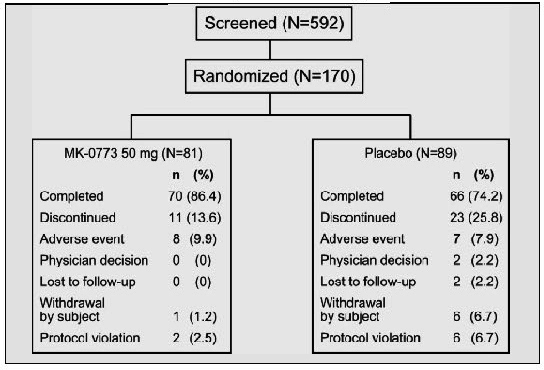
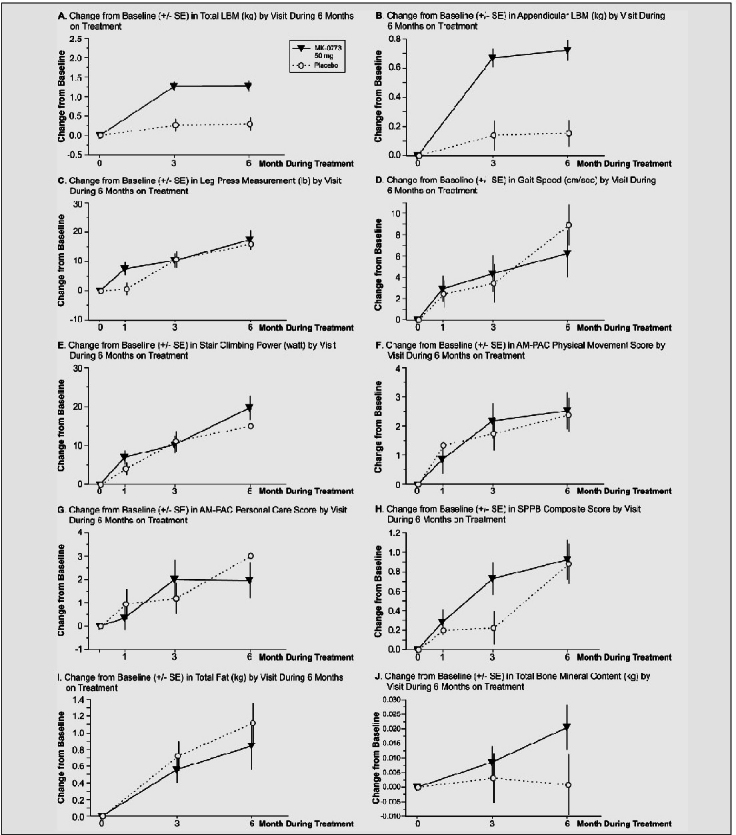
BACKGROUND: Sarcopenia, the age-related loss of muscle mass [defined as appendicular LBM/Height2 (aLBM/ht2) below peak value by>1SD], strength and function, is a major contributing factor to frailty in the elderly. MK-0773 is a selective androgen receptor modulator designed to improve muscle function while minimizing effects on other tissues. OBJECTIVES: The primary objective of this study was to demonstrate an improvement in muscle strength and lean body mass (LBM) in sarcopenic frail elderly women treated with MK-0773 relative to placebo. DESIGN: This was a randomized, double-blind, parallel-arm, placebo-controlled, multicenter, 6-month study. Participants were randomized in a 1:1 ratio to receive either MK-0773 50mg b.i.d. or placebo; all participants received Vitamin D and protein supplementation. SETTING: General community. PARTICIPANTS: 170 Women aged ≥65 with sarcopenia and moderate physical dysfunction. MEASUREMENTS: Dual energy X-ray absorptiometry, muscle strength and power, physical performance measures. RESULTS: Participants receiving MK-0773 showed a statistically significant increase in LBM from baseline at Month 6 vs. placebo (p<0.001). Participants receiving both MK-0773 and placebo showed a statistically significant increase in strength from baseline to Month 6, but the mean difference between the two groups was not significant (p=0.269). Both groups showed significant improvement from baseline at Month 6 in physical performance measures, but there were no statistically significant differences between participants receiving MK-0773 and placebo. A greater number of participants experienced elevated transaminases in the MK-0773 group vs. placebo, which resolved after discontinuation of study therapy. MK-0773 was generally well-tolerated with no evidence of androgenization. CONCLUSIONS: The MK-0773-induced increase in LBM did not translate to improvement in strength or function vs. placebo. The improvement of strength and physical function in the placebo group could be at least partly attributed to protein and vitamin D supplementation.
Overview
The claims and statistics of this paper haven’t been checked yet.
Free: it reads the open-access text and checks the first 5 claims that cite a source we can check. Create a free account to check every claim.
Integrity signals
Registry
Cites
Statistics
Figures
Verification
Claims the paper makes
The claims and statistics of this paper haven’t been checked yet.
Free: it reads the open-access text and checks the first 5 claims that cite a source we can check. Create a free account to check every claim.
Claims other papers make about this one
Each is checked against this paper’s own text: does it say what the citing paper says it does?
The source backs part of the claim, not all of it — or backs it for a different population, condition or comparison.
In the citing paper
“Similarly, a promising treatment for sarcopenia, MK-0773, substantially increased lean body and appendicular mass, but in a randomized clinical trial, the treatment had no effect on leg press strength, gait speed, or other health endpoints [15].”
From Endpoints for geroscience clinical trials: health outcomes, biomarkers, and biologic age (2022) · cites this paper as [15]
Experimental — accuracy not yet measuredThe cited source says what the claim attributes to it.
In the citing paper
“Other studies showed increases in lean mass without improvements in strength or physical performance in patients with sarcopenia428,430.”
From Sarcopenic obesity in older adults: aetiology, epidemiology and treatment strategies (2018) · cites this paper as [430]
The cited source says what the claim attributes to it.
In the citing paper
“SARM treatment in older women with low lean mass, a self-reported mobility disability and a short physical performance battery score between 4 and 9 provided improvements in muscle mass without benefits of improved strength430.”
From Sarcopenic obesity in older adults: aetiology, epidemiology and treatment strategies (2018) · cites this paper as [430]
In the citing paper
“Although there are various approved and effective drugs for diabetes, there is currently no recommended pharmacological intervention for SO, not even for diabetics with SO.”
From Diabetes and Sarcopenic Obesity: Pathogenesis, Diagnosis, and Treatments (2020) · cites this paper as [177]
Self-check
Percentages, sums and reported differences re-computed from the paper’s own numbers.
The self-check needs the paper’s full text.
Citations
Cites
1 retracted
Sato, Y., Iwamoto, J., Kanoko, T., & Satoh, K. (2005) · Cerebrovascular Diseases · doi:10.1159/000087203 · Cited by 410 · cited 1×
“Vitamin D has been shown to increase muscle strength primarily through increases in size and number of type ii muscle fibers (46).”
RetractedGuralnik, J. M., Simonsick, E. M., Ferrucci, L., Glynn, R. J., Berkman, L. F., Blazer, D. G., Scherr, P. A., & Wallace, R. B. (1994) · Journal of Gerontology · doi:10.1093/geronj/49.2.m85 · Cited by 9,792 · cited 1×
“the SPPB is a set of lower-extremity performance-based tests to measure dysfunction in the elderly. it is comprised of standing balance, gait speed, and repeated chair rise, developed and validated in longitudinal aging studies (31).”
Gait speed and survival in older adults.
Studenski, S. (2011) · JAMA · doi:10.1001/jama.2010.1923 · Cited by 4,558 · cited 1×
“Gait speed is a component of the SPPB and important predictor of mobility disability (33, 34), and has been demonstrated to be associated with survival in older adults (35).”
Self-citationLower-extremity function in persons over the age of 70 years as a predictor of subsequent disability
Guralnik, J. M., Ferrucci, L., Simonsick, E. M., Salive, M. E., & Wallace, R. B. (1995) · New England Journal of Medicine · doi:10.1056/nejm199503023320902 · Cited by 4,083
Epidemiology of Sarcopenia among the Elderly in New Mexico
Baumgartner, R. N., Koehler, K. M., Gallagher, D., Romero, L., Heymsfield, S. B., Ross, R. R., Garry, P. J., & Lindeman, R. D. (1998) · American Journal of Epidemiology · doi:10.1093/oxfordjournals.aje.a009520 · Cited by 4,004 · cited 4×
“women aged 65 or older with sarcopenia [defined as appendicular lBM/height 2 (alBM/ht 2 ) below peak value by>1SD] were enrolled in 28 worldwide sites (colombia, Peru, South Africa, Brazil, Sweden, Finland, Denmark, France, Spain, Mexico, israel, chile, new Zealand, uk, hong kong). enrollment at each site ranged betwe…”
InfluentialJanssen, I., Heymsfield, S. B., & Ross, R. (2002) · Journal of the American Geriatrics Society · doi:10.1046/j.1532-5415.2002.50216.x · Cited by 3,139 · cited 1×
“Several longitudinal epidemiological studies have shown that sarcopenia as measured by Dual-emission X-ray absorptiometry (DXA) is associated with an increased likelihood for self-reported physical disability and functional impairment in both genders (2, 3).”
Abellan Van Kan, G., Rolland, Y., Andrieu, S., Bauer, J., Beauchet, O., Bonnefoy, M., Cesari, M., Donini, L. M., Gillette-Guyonnet, S., Inzitari, M., et al. (2009) · The Journal of nutrition, health and aging · doi:10.1007/s12603-009-0246-z · Cited by 2,003 · cited 1×
“Gait speed is a component of the SPPB and important predictor of mobility disability (33, 34), and has been demonstrated to be associated with survival in older adults (35). it was calculated for each participant using distance in meters and time in seconds, derived from the gait speed portion of…”
Invited Review: Aging and sarcopenia
Doherty, T. J. (2003) · Journal of Applied Physiology · doi:10.1152/japplphysiol.00347.2003 · Cited by 1,764 · cited 1×
“improvement in muscle strength with resistance exercise training has been associated with improvement in physical function in the frail elderly (2, 13, 14).”
Muscaritoli, M., Anker, S. D., Argilés, J., Aversa, Z., Bauer, J. M., Biolo, G., Boirie, Y., Bosaeus, I., Cederholm, T., Costelli, P., et al. (2010) · Clinical Nutrition · doi:10.1016/j.clnu.2009.12.004 · Cited by 1,732 · cited 1×
“, coPD) (5-11) nonetheless sarcopenia is distinct from cachexia (12).”
Hughes, V. A., Frontera, W. R., Wood, M., Evans, W. J., Dallal, G. E., Roubenoff, R., & Singh, M. A. F. (2001) · The Journals of Gerontology Series A: Biological Sciences and Medical Sciences · doi:10.1093/gerona/56.5.b209 · Cited by 921 · cited 1×
“improvement in muscle strength with resistance exercise training has been associated with improvement in physical function in the frail elderly (2, 13, 14).”
Cited by
Items 101–200 of 212
Lagojda, A., Kuehne, D., Krug, O., Thomas, A., Wigger, T., Kärst, U., Schänzer, W., & Thevis, M. (2016) · European Journal of Mass Spectrometry · doi:10.1255/ejms.1415 · Cited by 17
Gagliano‐Jucá, T., Tang, E., Bhasin, S., Pencina, K. M., Anderson, S. W., Jara, H. J., Li, Z., Melamud, K., Coleman, S. L., Aakil, A., et al. (2017) · Andrology · doi:10.1111/andr.12392 · Cited by 17
“Most studies in these populations show that androgen therapy increases whole body lean mass, with an average increase of 1–2 kg (Kenny et al., 2010; Srinivas-Shankar et al., 2010; Travison et al., 2011; Papanicolaou et al., 2013), depending upon the testosterone dose.”
BackgroundFielding, R. A., Dao, M. M., Cannon, K., Desvarieux, M., Miller, S. S., Gimness, M. P., Brandon, D. M., Villareal, D. T., Bruyere, O., Bautmans, I., et al. (2025) · Journal of Cachexia, Sarcopenia and Muscle · doi:10.1002/jcsm.13750 · Cited by 16
“…targeting sarcopenic population failed to show an effect on muscle strength and physical performance (Selective Androgen Receptor Modulator [SARM] [7]; Angiotensin Converting Enzyme Inhibitor [Perindopril] [33]; Bimagrumab [monoclonal antibody blocking activin receptor type IIA and IIB [9]]).”
Broberg, M. N., Knych, H. K. D., Bondesson, U., Pettersson, C. E., Stanley, S. D., Thevis, M., & Hedeland, M. (2021) · Metabolites · doi:10.3390/metabo11020085 · Cited by 16
Receptor-Mediated Muscle Homeostasis as a Target for Sarcopenia Therapeutics
Yoon, J. H., & Kwon, K. (2021) · Endocrinology and Metabolism · doi:10.3803/enm.2021.1081 · Cited by 18
“In a phase 2 trial, treatment with MK-0773 in patients with sarcopenia showed a statistically significant improvement in total lean mass [50].”
BackgroundCornelissen, V., Hanssen, H., Hurst, C., Knaier, R., Marqués‐Sulé, E., Moholdt, T. T., Neunhäeuserer, D., Norman, K., Pedretti, R. F. E., Salzwedel, A., et al. (2025) · European Journal of Preventive Cardiology · doi:10.1093/eurjpc/zwaf432 · Cited by 17
Johri, N., Vengat, M., Kumar, D., Nagar, P., John, D., Dutta, S., & Mittal, P. (2023) · Journal of Diabetes & Metabolic Disorders · doi:10.1007/s40200-023-01262-w · Cited by 17
“Clinical trials focusing on Selective Androgen Receptor Modulators (SARMs) have also reported positive outcomes in terms of body composition and functional capacity [86, 87].”
BackgroundYan, R., Huang, W., Zhong, Y., & Du, X. (2025) · Nutrients · doi:10.3390/nu17152392 · Cited by 17
“In comparison, current evidence regarding vitamin D [14], anabolic hormones [15], and pharmacological therapies [16,17] remains insufficient to support their recommendation as first-line interventions.”
Wen, J., Ansari, U., Shehabat, M., Ansari, Z., Syed, B., Razick, A. A., Razick, D., Akhtar, M., & Frezza, E. (2025) · Journal of Diabetes · doi:10.1111/1753-0407.70119 · Cited by 15
SELECTIVE ANDROGEN RECEPTOR MODULATORS AS FUNCTION PROMOTING THERAPIES
Bhasin, S. (2015) · The Journal of Frailty & Aging · doi:10.14283/jfa.2015.65 · Cited by 17
“Subjects receiving the drug also experienced modest increases in transaminases and decreased HDL (6).”
Cruz-Jentoft, A. J. (2013) · Reviews in Clinical Gerontology · doi:10.1017/s0959259813000154 · Cited by 17
Li, H., Chen, X., Zuo, Z., Wang, J., & Guo, Y. (2023) · Journal of Agricultural and Food Chemistry · doi:10.1021/acs.jafc.2c08929 · Cited by 13
Musculoskeletal Health in Premature Ovarian Insufficiency. Part One: Muscle
Samad, N., Nguyen, H. H., Scott, D. S., Ebeling, P. R., & Milat, F. (2020) · Seminars in Reproductive Medicine · doi:10.1055/s-0040-1721797 · Cited by 13
Advances in SARMs anti‐doping analysis
Slíž, K., & Mikuš, P. (2024) · Drug Testing and Analysis · doi:10.1002/dta.3697 · Cited by 10
SELECTIVE ANDROGEN RECEPTOR MODULATORS (SARMs) IN THE CONTEXT OF DOPING
Miklos, A. (2018) · FARMACIA · doi:10.31925/farmacia.2018.5.3 · Cited by 10
Osteosarcopenia: pathogenesis, diagnosis and therapeutic approaches
Grebennikova, T. A., Тамерланович, Ц. Т., Vorobeva, J. R., & Belaya, Z. E. (2020) · Annals of the Russian academy of medical sciences · doi:10.15690/vramn1243 · Cited by 10
Drugs for the Treatment of Muscle Atrophy
Chen, L., Zhang, H., Chi, M., Yang, Q., & Guo, C. (2021) · IntechOpen eBooks · doi:10.5772/intechopen.93503 · Cited by 11
Connecting the dots: Sarcopenia’s roles on chronic condition management toward healthy aging
Chen, L. (2023) · Journal of the Chinese Medical Association · doi:10.1097/jcma.0000000000001027 · Cited by 9
Unravelling the Complexity of Sarcopenia Through a Systems Biology Approach
Ceyhan, A. B., Altay, Ö., Zhang, C., Temel, Ş. G., Türkez, H., & Mardinoğlu, A. (2025) · International Journal of Molecular Sciences · doi:10.3390/ijms26178527 · Cited by 9
“…has received FDA approval; however, several clinical trials are investigating potential therapeutic agents, including ACE-083 [9], GSK-2881078 [10], MK-0773 [11], Testosterone [12], Vitamin D [13], RJx-01 [14], Oestrogen [15], Perindopril [16], MG-132 [17], and Troglitazone [17] among others.”
Sarcopenia: Keeping on Search for the Best Operational Definition
Rolland, Y., & Cruz-Jentoft, A. J. (2023) · The journal of nutrition health & aging · doi:10.1007/s12603-023-1099-1 · Cited by 8
“, European Working Group on Sarcopenia in Older People [EWGSOP] or the Asian Working Group for Sarcopenia [AWGS] criteria) are exceptional (one RCT on Selective Androgen Receptor Modulators (SARMs) (15), one RCT on an Angiotensin Converting Enzyme inhibitor (ACEi) (16), nine RCT on vitamin D (17), and finally two RCT…”
Chen, L., Zheng, J., Ye, B., Huang, Y., & Wang, Z. (2025) · Experimental Gerontology · doi:10.1016/j.exger.2025.112874 · Cited by 7
Pharmacological targeting of age-related changes in skeletal muscle tissue
Leuchtmann, A. B., & Handschin, C. (2019) · Pharmacological Research · doi:10.1016/j.phrs.2019.02.030 · Cited by 9
Guo, W., Pencina, K. M., Furtado, J. D., Sacks, F. M., Vaisar, T., Cheng, M., Sniderman, A. D., Page, S. T., & Bhasin, S. (2022) · Journal of the Endocrine Society · doi:10.1210/jendso/bvac099 · Cited by 8
“In phase 1, 2, and 3 trials, several SARMs have been shown to increase lean body mass, maximal voluntary muscle strength, and stair-climbing power, and decrease adipose tissue mass [1, 4-9].”
BackgroundCorrea‐de‐Araujo, R., & Bhasin, S. (2022) · The Journals of Gerontology Series A · doi:10.1093/gerona/glac181 · Cited by 7
Iseki, Y., Ono, Y., Hibi, C., Tanaka, S., Takeshita, S., Maejima, Y., Kurokawa, J., Murakawa, M., Shimomura, K., & Sakamoto, K. (2020) · Journal of Pharmacology and Experimental Therapeutics · doi:10.1124/jpet.120.000290 · Cited by 6
“been proposed as drug therapies for skeletal muscle wasting, they have not reached clinical application (Papanicolaou et al., 2013; Ono et al., 2020).”
BackgroundHeinze-Milne, S., Hodgins, M. L., & Howlett, S. E. (2025) · Mechanisms of Ageing and Development · doi:10.1016/j.mad.2025.112054 · Cited by 6
“…available clinical literature, where although elevated ALT levels in clinical trials were observed, they were typically of small ( e.g. , 6% for the treatment group versus 1% in the placebo group in Papanicolaou et al., 2013) and resolved while still on drug treatment ( e.g. , Dalton et al., 2011).”
Sarcopenia, Grip Strength, Walking Pace, and New-Onset Stroke Risk: A UK Biobank Study
Tang, L.-L., Huang, Y.-H., Yu-Jia, J., Yang, K., Lin, Q., Zhou, Z., Gao, F., Xiong, B., Yuan, C., & Tong, L. (2026) · Stroke · doi:10.1161/strokeaha.125.052311 · Cited by 5
Sheer drop ahead: reviewing sarcopenia outcomes in elderly patients undergoing bariatric surgery
Stumpf, M. A. M., Cercato, C., de Melo, M. E., & Mancini, M. C. (2025) · Reviews in Endocrine and Metabolic Disorders · doi:10.1007/s11154-025-09946-9 · Cited by 5
“…antibody blockade of activin type II receptor) [83], isolated leucine [82], myostatin inhibitors [84], and selective androgen receptor modulators [85] are not currently supported by systematic review [86], meta-analysis [79] and guidelines [67 ], due to insufficient evidence or failure to…”
Methods for the Determination of Selective Androgen Receptor Modulators
Темердашев, А. З., & Dmitrieva, E. V. (2020) · Journal of Analytical Chemistry · doi:10.1134/s1061934820070187 · Cited by 5
Tripathi, A., Chhabra, A., Rizvi, S., & Tyagi, R. K. (2025) · Molecular and Cellular Endocrinology · doi:10.1016/j.mce.2025.112569 · Cited by 4
Will Selective Androgen Receptor Modulators Ever Reach The Clinic?
Dias, J. P., & Dobs, A. S. (2026) · The Journal of Clinical Endocrinology & Metabolism · doi:10.1210/clinem/dgaf700 · Cited by 4
Molecular Mechanisms and Nutritional Modulation in Sarcopenia: A Narrative Review
Chin, H. S., Liu, L., Liao, P.-J., Wee, A. L. R. M., Kwek, X.-Y., Teh, B. T., & Koh, F. H.-X. (2026) · Nutrients · doi:10.3390/nu18071161 · Cited by 5
Molecular mechanisms of exercise providing therapeutic rationale to counter sarcopenia
Kwon, K. (2021) · Elsevier eBooks · doi:10.1016/b978-0-12-822146-4.00002-8 · Cited by 4
Tabberer, M. M., Williamson, N., Tatlock, S., Gater, A., Grimes, R., Akinseye, C., Neil, D., Mahon, A., & Nelsen, L. M. (2024) · Journal of Patient-Reported Outcomes · doi:10.1186/s41687-024-00712-0 · Cited by 4
Hormone and Metabolic Modulators
Hackney, A. C. (2017) · Elsevier eBooks · doi:10.1016/b978-0-12-813442-9.00007-9 · Cited by 6
Hey, P., & Sinclair, M. J. (2019) · Springer eBooks · doi:10.1007/978-3-030-26226-6_15 · Cited by 4
García, W. S., & Vargas, P. C. (2019) · Pensar en Movimiento Revista de Ciencias del Ejercicio y la Salud · doi:10.15517/pensarmov.v17i1.34449 · Cited by 5
“…y Signorile, 2014; Chen, Chung, Chen, Ho y Wu, 2017; Kemmler et al., 2016; Kim et al., 2012a; Kim et al., 2012b; Kim et al., 2016; Maltais et al., 2016; Papanicolaou et al., 2013; Perreault et al., 2016; Shahar et al., 2013; Wei, Pang, Ng y Ng, 2017; Yamamoto et al., 2017; Zdzieblik et al.,…”
BackgroundInfluentialSarcopenia and Androgens: A Link Between Pathology and Treatment
Basualto-Alarcón, C., Varela, D., Duran, J., Maass, R., & Estrada, M. (2016) · Apple Academic Press eBooks · doi:10.1201/b19985-16 · Cited by 4
Zhang, M., Shen, Y., Gao, Y., Jiang, X., Yue, J., & Hao, Q. (2026) · Journal of the American Medical Directors Association · doi:10.1016/j.jamda.2025.106038 · Cited by 4
Kurczyński, D., Załuczkowski, A., Kalota, H., Przywara-Chowaniec, B., & Tomasik, A. R. (2026) · Nutrients · doi:10.3390/nu18091431 · Cited by 5
“Clinical studies have demonstrated increases in body mass and, in some cases, muscle strength; however, results remain inconsistent, and data in heart failure populations are limited [80,81].”
Heart failure with Sarcopenia: A Bibliometric review from 1995 to 2022
You, Y., Meng, T., Lu, X., Zhu, X., Lv, M., Shou, X., He, Q., & Hu, Y. (2024) · Heliyon · doi:10.1016/j.heliyon.2024.e27913 · Cited by 3
“A clinical trial demonstrated that MK-0773, a selective androgen receptor modulator, increased IGF-1 levels and improved muscle function in women; however, this was terminated because of increased cardiovascular risk [49].”
BackgroundPossibility of small-molecule-based pharmacotherapy for sarcopenia
Watanabe, Y., & Miyagoe‐Suzuki, Y. (2015) · The Journal of Physical Fitness and Sports Medicine · doi:10.7600/jpfsm.4.73 · Cited by 3
Beavers, K. M., Serra, M. C., Weaver, A. A., & Houston, D. K. (2020) · Elsevier eBooks · doi:10.1016/b978-0-12-813073-5.00035-6 · Cited by 6
The Future of Drugs in Sarcopenia
Zazzara, M. B., Penfold, R., & Onder, G. (2021) · Practical issues in geriatrics · doi:10.1007/978-3-030-80038-3_14 · Cited by 4
Bezafibrate attenuates immobilization-induced muscle atrophy in mice
Nakamura, S., Sato, Y., Kobayashi, T., Oya, A., Fujie, A., Matsumoto, M., Nakamura, M., Kanaji, A., & Miyamoto, T. K. (2024) · Scientific Reports · doi:10.1038/s41598-024-52689-x · Cited by 3
“Quinoline analogues and nanocarrier systems: A dual approach to anti-tubercular therapy"
Kumar, S., Kaushik, N., Sahu, J. K., & Jatav, S. (2024) · European Journal of Medicinal Chemistry Reports · doi:10.1016/j.ejmcr.2024.100212 · Cited by 9
Role of Estrogens and Androgens in Osteoporosis
Laurent, M. R. (2018) · Elsevier eBooks · doi:10.1016/b978-0-12-801238-3.65814-2 · Cited by 3
Development of pharmacological interventions for the treatment of sarcopenia
Yang, D., Su, L., Zhang, L., Li, Y., Huang, T., & Huang, X. (2026) · Annals of Translational Medicine · doi:10.21037/atm-2025-1-184 · Cited by 2
“MK-0773 induced an increase in lean body mass (LBM) in older women with sarcopenia and moderate physical dysfunction, but it did not translate to improvement in strength or function compared with placebo (16).”
El valor de la sarcopenia en la prevención de la discapacidad
Montero‐Errasquín, B., & Cruz-Jentoft, A. J. (2019) · Medicina Clínica · doi:10.1016/j.medcli.2019.03.006 · Cited by 4
Reported adverse effects of SARMs in animals and humans: A review
Vasilev, V., & Boyadjiev, N. (2024) · Romanian Medical Journal · doi:10.37897/rmj.2024.4.17 · Cited by 2
“These increases were transient and reversed after discontinuation of the intake [32].”
Ichinose, M., Endo, K., Hirai, N., Kobayashi, E., Ueno, T., Nakanishi, Y., Kondo, S., & Yoshizaki, T. (2025) · Nutrition and Cancer · doi:10.1080/01635581.2025.2466234 · Cited by 2
Landi, F., Onder, G., & Rolland, Y. (2012) · Wiley eBooks · doi:10.1002/9781118338032.ch20 · Cited by 4
Osteosarcopenia: The Modern Geriatric Giant
Zanker, J., Brennan-Olsen, S. L., & Duque, G. (2019) · Elsevier eBooks · doi:10.1016/b978-0-12-801238-3.11421-7 · Cited by 2
Vasilev, V., & Boyadjiev, N. (2020) · Journal of Applied Sports Sciences · doi:10.37393/jass.2020.02.9 · Cited by 2
Selective Androgen Receptor Modulators (SARMs) in Sports: A Review
Vasilev, V., & Boyadjiev, N. (2021) · Athens Journal of Sports · doi:10.30958/ajspo.8-3-4 · Cited by 2
The value of sarcopenia in the prevention of disability
Montero‐Errasquín, B., & Cruz-Jentoft, A. J. (2019) · Medicina Clínica (English Edition) · doi:10.1016/j.medcle.2019.03.014 · Cited by 2
Exercise Therapy for Patients with Heart Failure: Focusing on the Pathophysiology of Skeletal Muscle
Morotomi, N., Sakuma, K., & Sakai, K. (2021) · IntechOpen eBooks · doi:10.5772/intechopen.97291 · Cited by 1
Kanwar, J. (2025) · IntechOpen eBooks · doi:10.5772/intechopen.1009255 · Cited by 1
Puskas, J., Guda, T., Niccoli, S., Rathbone, C. R., Tan‐Johnson, B., Puskas, D., Middleton, R., Otis, J. S., & Lees, S. J. (2025) · Physiological Reports · doi:10.14814/phy2.70463 · Cited by 3
“Previous research in humans has investigated the effects of SARMs on lean body mass and bone mineral density (BMD) via dual energy x-ray absorptiometry (DEXA) with intervention periods ranging from 21 days to 6 months (Basaria et al., 2013; Dalton et al., 2011; Papanicolaou et al., 2013).”
InfluentialXue, F., Hong-yi, X., Yao, X., Wang, J., Yi, J., Li, X., Shen, Y., Chen, B., & Sun, H. (2026) · Molecular Neurobiology · doi:10.1007/s12035-026-06017-1 · Cited by 1
“For instance, the selective androgen receptor modulator MK-0773, in a phase IIA RCT for female sarcopenic patients, increased lean body mass but did not translate into improvements in muscle strength or physical function [29].”
Selective Androgen Receptor Modulators: A Review of Their Therapeutic Promise and Concerns of Misuse
Harris, D. R., Pigg, Q. W., Inoue, D. S., Kendra, J. A., Machek, S. B., & Gomes, M. J. (2026) · Current Sports Medicine Reports · doi:10.1249/jsr.0000000000001352 · Cited by 1
Oh‐Park, M. (2017) · Elsevier eBooks · doi:10.1016/b978-0-323-47904-2.00030-1 · Cited by 1
Rooks, D. (2019) · Current Physical Medicine and Rehabilitation Reports · doi:10.1007/s40141-019-00236-5 · Cited by 1
Diabetes mellitus and sarcopenia
Lee, P., & Tan, M. (2020) · Elsevier eBooks · doi:10.1016/b978-0-12-820605-8.00009-7 · Cited by 1
Background and Management of Muscular Atrophy
Cseri, J. (2020) · IntechOpen eBooks · doi:10.5772/intechopen.90959 · Cited by 2
Barry, D. (2020) · Elsevier eBooks · doi:10.1016/b978-0-323-43044-9.00217-x · Cited by 2
Selective Androgen Receptor Modulators in the Treatment of Hypogonadism and Men’s Health
Sigalos, J. T., Walker, D. T., & Lipshultz, L. I. (2023) · Cambridge University Press eBooks · doi:10.1017/9781009197533.034 · Cited by 2
McGuigan, A. (2025) · Drugs & Therapy Perspectives · doi:10.1007/s40267-025-01141-9 · Cited by 1
Muscle health — the expanding horizon of diabetes care
Madhu, S. V. (2022) · International Journal of Diabetes in Developing Countries · doi:10.1007/s13410-022-01101-3 · Cited by 1
“Possible therapeutic targets could be hormonal interventions such as a transdermal testosterone gel [20] and selective androgen receptor modulators but these are still investigational [21, 22].”
BackgroundFrailty, functional status and quality of life in older patients after surgery for colorectal cancer
Rønning, B. (2017) · NVA (Nasjonalt vitenarkiv)
Impact of Sarcopenia in Healthy Aging and Suggested Interventions
Erdoğan, T., Bahat, G., & Karan, M. A. (2018) · Springer eBooks · doi:10.1007/978-981-13-1699-9_20
Sarkopenie: eine Herausforderung im Alter
Ferrari, U., & Drey, M. (2020) · Aktuelle Ernährungsmedizin · doi:10.1055/a-0965-9892 · Cited by 2
Wolgast, J. V. B. B.-R. (2020) · eDiss (Georg-August-Universität Göttingen) · doi:10.53846/goediss-7924 · Cited by 1
Management of bone health in men with prostate cancer
Taxel, P. (2020) · Elsevier eBooks · doi:10.1016/b978-0-12-813073-5.00057-5
Sarcopenia; An Endemic in the Times of Pandemic in Liver Transplantation
Ullah, H., Iqbal, S., Lizaola‐Mayo, B., & Carey, E. J. (2021) · OBM Transplantation · doi:10.21926/obm.transplant.2103149
“MK-0773 treatment has shown increase in lean body mass but did not improve muscular strength or physical performance [77].”
BackgroundModulation of the Androgen Receptor Axis
Mohler, M. L., & Dalton, J. T. (2021) · Wiley eBooks · doi:10.1002/0471266949.bmc055.pub2
Shi, Y., Stanmore, E., & Todd, C. J. (2022) · Research Square · doi:10.21203/rs.3.rs-1246504/v1
Landi, F., Onder, G., & Rolland, Y. (2021) · Wiley eBooks · doi:10.1002/9781119597896.ch25
Diagnosis and Treatment of Stroke-related Sarcopenia: A Narrative reviewarticle
Chen, S.-H. (2022) · Rehabilitation practice and science · doi:10.6315/tjpmr.202212_50(2).0002
Polo-Ferrero, L. (2023) · Gredos (University of Salamanca) · doi:10.14201/gredos.155732 · Cited by 1
Polo-Ferrero, L. (2024) · Ediciones Universidad de Salamanca eBooks · doi:10.14201/0vi0466
Role of estrogens and androgens in osteoporosis
Laurent, M. R. (2024) · Elsevier eBooks · doi:10.1016/b978-0-443-13825-6.00041-8
Drey, M., & Bauer, J. M. (2023) · Springer Reference Medizin · doi:10.1007/978-3-642-54676-1_101-1
Sarkopene Adipositas im Alter: Ursachen, Folgen und Behandlungsansätze
Rippl, M., Drey, M., & Schluessel, S. (2025) · Adipositas - Ursachen Folgeerkrankungen Therapie · doi:10.1055/a-2492-9415
“Ins-besondere Ins-besondere im langfristigen Verlauf konnten bisher jedoch keine sig nifikanten Verbesserungen gezeigt werden, zudem bestehen Bedenken bezüglich eines erhöhten kardiovaskulären Risikos durch eine Testosteronsubstitution [56].”
Zhuravlyova, L., Кривоносова, О. М., & Zhuravlyova, A. K. (2025) · PROBLEMS OF ENDOCRINE PATHOLOGY · doi:10.21856/j-pep.2025.2.07
Yang, W., Gao, B., Li, J., Meng, X., Cao, H., Huang, C., Li, L., Cui, Y., Gao, H., Qin, L., et al. (2026) · Journal of Orthopaedic Translation · doi:10.1016/j.jot.2026.101252
Selective androgen receptor modulators effect on metabolic indices and sleep duration in male rats
Vasilev, V., Georgiev, N., Kraeva, M. I., Stanchev, P., & Boyadjiev, N. (2025) · Comparative Exercise Physiology · doi:10.1163/17552559-bja10074
Progressive Resistance Training in a Post-Acute, Older, Inpatient Population
Coleman, S. (2020) · Figshare · doi:10.25419/rcsi.10764320
Chen, Y. C., Chen, W.-C., Liu, C.-W., Huang, W.-Y., Lu, I., Lin, C. W., Huang, R. Y., Chen, J. S., & Huang, C. H. (2023) · Figshare · doi:10.6084/m9.figshare.24669893
Tabberer, M. M., Williamson, N., Tatlock, S., Gater, A., Grimes, R., Akinseye, C., Neil, D., Mahon, A., & Nelsen, L. M. (2024) · Figshare · doi:10.6084/m9.figshare.26708681
Tabberer, M. M., Williamson, N., Tatlock, S., Gater, A., Grimes, R., Akinseye, C., Neil, D., Mahon, A., & Nelsen, L. M. (2024) · Figshare · doi:10.6084/m9.figshare.26708684
Pérez, E. G. (2024) · Communities in ADDI (University of the Basque Country)
SARMS vs. anabolic steroids: comparative analysis of mechanisms, effects and health implications
Contreras Melnikova, J. (2025) · Buleria (Universidad de León)
Anabolic medications for rehabilitation after hip fracture in older people
Deacon, C., Busby, C., Rollins, K. E., Cameron, I., Greenhaff, P. L., & Ollivere, B. J. (2026) · Cochrane Database of Systematic Reviews · doi:10.1002/14651858.cd016226
Identification of xenobiotics interfering with 5α-reductase (SRD5A2) activity
Kędzierski, J., van Diest, R. E., Allard, J. A., Erharter, A. M., Odermatt, A., & Smieško, M. (2026) · Toxicology Letters · doi:10.1016/j.toxlet.2026.111859
Selective Androgen Receptor Modulators in Women: What Do We Know, and What Is Still Missing
Vasilev, V., Georgieva, K. N., Kraeva, M. I., Ardasheva, R., Etova, R., & Boyadjiev, N. (2026) · Life · doi:10.3390/life16020359
“Overall, MK-0773 raised safety concerns primarily involving liver function and blood parameters rather than overt androgenic effects [8] (Table 2).”
InfluentialCesbron, N. (2017) · theses.fr (ABES) · doi:10.70675/1b2da96fzac91z4479z8831ze3f4a10345f2 · Cited by 1
Mansoor, M. A. M., Alam, M. T., Lijeron-Herrera, F., & Masternak, M. M. (2026) · Advances in Translational Research · doi:10.1556/1661.2026.00109
Ghrelin Receptor Deletion or Pharmacological Inhibition Improves Muscle Function in Aging Male Mice
Kerr, H. L., Krumm, K., Myree, N., Rybachok, A., Dacek, E., Irwin, B., Jiang, S., Caeiro, L., Anderson, B., Li, T., et al. (2026) · Aging Cell · doi:10.1111/acel.70472
Sex hormones and their receptors in osteoarthritis: current research progress
Wang, Z., Shi, X., Yang, G., Zheng, K., & Xu, R. (2026) · Annals of Joint · doi:10.21037/aoj-2026-1-0003
“Notable examples of SARMs include MK-0773, enzalutamide analogs, and RAD140, many of which are currently undergoing phase II clinical trials (109,137,138).”
Metadata
- Authors
- Papanicolaou, D. A., Ather, S. N., Zhu, H., Zhou, Y., Lutkiewicz, J., Scott, B. B., & Chandler, J.
- Affiliations
- Novartis (United States) (US)
- Merck & Co., Inc., Rahway, NJ, USA (United States) (US)
- Corresponding author
- Papanicolaou, Dimitris A.
- Venue
- The Journal of nutrition, health and aging
- Publisher
- Elsevier BV
- Published
- 2013-06
- Volume
- 17
- Issue
- 6
- Pages
- 533-543
- ISSN
- 1279-7707 (ISSN-L)
- PMC
- PMC12878986
- OpenAlex
- W2064936259
- Cited by
- 196
- References
- 49
- Citations by year
- 2026: 18 · 2025: 19 · 2024: 18 · 2023: 24 · 2022: 11 · 2021: 13 · 2020: 23 · 2019: 15 · 2018: 15 · 2017: 14 · 2016: 9 · 2015: 7 · 2014: 7 · 2013: 2
- FWCI
- 6.03
- Type
- journal article
- Language
- en
- Open access
- hybrid
- doi.org
- Licence
- cc-by-nc-nd
- www.elsevier.com/tdm/userlicense/1.0/ (tdm)
- www.elsevier.com/legal/tdmrep-license (tdm)
- creativecommons.org/licenses/by-nc-nd/4.0/ (vor, 3846 d)
- Locations
- The journal of nutrition health & aging (publishedVersion, cc-by-nc-nd)
- Europe PMC (PubMed Central) (publishedVersion, cc-by-nc-nd)
- PubMed (publishedVersion)
- PubMed Central (publishedVersion, cc-by-nc-nd)
- Topics
- Health Sciences › Medicine › Physiology (medical) › Nutrition and Health in Aging
- Health Sciences › Medicine › Endocrinology, Diabetes and Metabolism › Hormonal and reproductive studies
- Life Sciences › Biochemistry, Genetics and Molecular Biology › Molecular Biology › Muscle Physiology and Disorders
- Keywords
- sarcopenia, selective androgen receptor modulators, lean body mass, muscle strength, physical performance, frail elderly women, protein supplementation, vitamin D supplementation, transaminase elevation, androgenization, muscle mass
- MeSH terms
- Aged, Aged, 80 and over, Azasteroids, Body Composition, Dietary Proteins, Dose-Response Relationship, Drug, Double-Blind Method, Female, Humans, Musculoskeletal Physiological Phenomena, Receptors, Androgen, Vitamin D, Absorptiometry, Photon, Frail Elderly, Muscle, Skeletal, Dietary Supplements, Muscle Strength, Sarcopenia
About these checks
Registry, retraction, Cites and statistics results are computed, not judged, with one exception: a printed reference that no index lists is read once by a model before it counts as a citation error. Claims are extracted by a model and kept only when their quote appears verbatim in the text; each cited source is then checked, with a model’s help, for whether it says what the claim relies on. Those verdicts can be wrong — read the claim’s quote and the cited source before relying on one.
Statistics and arithmetic are recomputed, not judged.
Confidence bands are shown only for fields calibrated on our annotated test set. None is calibrated yet, so no band is shown.
What counts as a claim ›How we measure confidence ›How we check this ›
Are you an author, or do you see a problem with this page? Request a review
Data sources
Bibliographic data: Semantic Scholar, OpenAlex, Crossref.
Contains information from the Semantic Scholar Academic Graph Datasets, made available under the ODC Attribution License (ODC-BY 1.0).
Semantic Scholar’s data is described in: Kinney, R., et al. (2023). The Semantic Scholar Open Data Platform. arXiv:2301.10140.
