

A phase IIA randomized, placebo-controlled clinical trial to study the efficacy and safety of the selective androgen receptor modulator (SARM), MK-0773 in female participants with sarcopenia
Open accessThe DOI matches its Crossref record; 50 of the 50 references it cites were found in a registry or an index.
Abstract
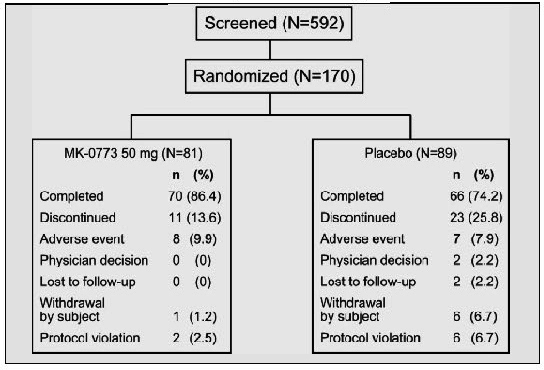
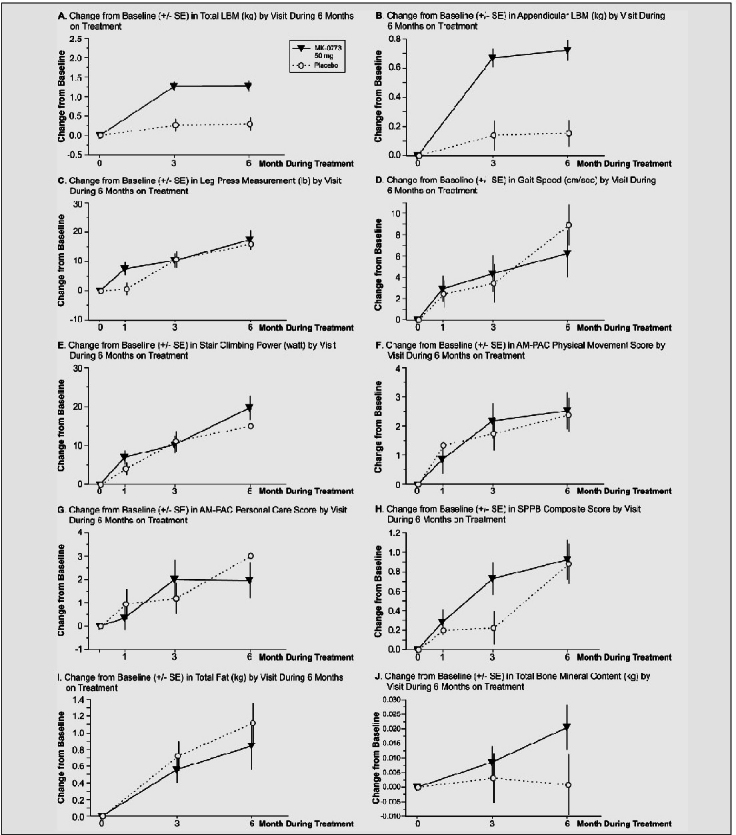
BACKGROUND: Sarcopenia, the age-related loss of muscle mass [defined as appendicular LBM/Height2 (aLBM/ht2) below peak value by>1SD], strength and function, is a major contributing factor to frailty in the elderly. MK-0773 is a selective androgen receptor modulator designed to improve muscle function while minimizing effects on other tissues. OBJECTIVES: The primary objective of this study was to demonstrate an improvement in muscle strength and lean body mass (LBM) in sarcopenic frail elderly women treated with MK-0773 relative to placebo. DESIGN: This was a randomized, double-blind, parallel-arm, placebo-controlled, multicenter, 6-month study. Participants were randomized in a 1:1 ratio to receive either MK-0773 50mg b.i.d. or placebo; all participants received Vitamin D and protein supplementation. SETTING: General community. PARTICIPANTS: 170 Women aged ≥65 with sarcopenia and moderate physical dysfunction. MEASUREMENTS: Dual energy X-ray absorptiometry, muscle strength and power, physical performance measures. RESULTS: Participants receiving MK-0773 showed a statistically significant increase in LBM from baseline at Month 6 vs. placebo (p<0.001). Participants receiving both MK-0773 and placebo showed a statistically significant increase in strength from baseline to Month 6, but the mean difference between the two groups was not significant (p=0.269). Both groups showed significant improvement from baseline at Month 6 in physical performance measures, but there were no statistically significant differences between participants receiving MK-0773 and placebo. A greater number of participants experienced elevated transaminases in the MK-0773 group vs. placebo, which resolved after discontinuation of study therapy. MK-0773 was generally well-tolerated with no evidence of androgenization. CONCLUSIONS: The MK-0773-induced increase in LBM did not translate to improvement in strength or function vs. placebo. The improvement of strength and physical function in the placebo group could be at least partly attributed to protein and vitamin D supplementation.
Overview
The claims and statistics of this paper haven’t been checked yet.
Free: it reads the open-access text and checks the first 5 claims that cite a source we can check. Create a free account to check every claim.
Integrity signals
Registry
Cites
Statistics
Figures
Verification
Claims the paper makes
The claims and statistics of this paper haven’t been checked yet.
Free: it reads the open-access text and checks the first 5 claims that cite a source we can check. Create a free account to check every claim.
Claims other papers make about this one
Each is checked against this paper’s own text: does it say what the citing paper says it does?
The source backs part of the claim, not all of it — or backs it for a different population, condition or comparison.
In the citing paper
“Similarly, a promising treatment for sarcopenia, MK-0773, substantially increased lean body and appendicular mass, but in a randomized clinical trial, the treatment had no effect on leg press strength, gait speed, or other health endpoints [15].”
From Endpoints for geroscience clinical trials: health outcomes, biomarkers, and biologic age (2022) · cites this paper as [15]
Experimental — accuracy not yet measuredThe cited source says what the claim attributes to it.
In the citing paper
“Other studies showed increases in lean mass without improvements in strength or physical performance in patients with sarcopenia428,430.”
From Sarcopenic obesity in older adults: aetiology, epidemiology and treatment strategies (2018) · cites this paper as [430]
The cited source says what the claim attributes to it.
In the citing paper
“SARM treatment in older women with low lean mass, a self-reported mobility disability and a short physical performance battery score between 4 and 9 provided improvements in muscle mass without benefits of improved strength430.”
From Sarcopenic obesity in older adults: aetiology, epidemiology and treatment strategies (2018) · cites this paper as [430]
In the citing paper
“Although there are various approved and effective drugs for diabetes, there is currently no recommended pharmacological intervention for SO, not even for diabetics with SO.”
From Diabetes and Sarcopenic Obesity: Pathogenesis, Diagnosis, and Treatments (2020) · cites this paper as [177]
Self-check
Percentages, sums and reported differences re-computed from the paper’s own numbers.
The self-check needs the paper’s full text.
Citations
Cites
1 retracted
Sato, Y., Iwamoto, J., Kanoko, T., & Satoh, K. (2005) · Cerebrovascular Diseases · doi:10.1159/000087203 · Cited by 410 · cited 1×
“Vitamin D has been shown to increase muscle strength primarily through increases in size and number of type ii muscle fibers (46).”
RetractedGuralnik, J. M., Simonsick, E. M., Ferrucci, L., Glynn, R. J., Berkman, L. F., Blazer, D. G., Scherr, P. A., & Wallace, R. B. (1994) · Journal of Gerontology · doi:10.1093/geronj/49.2.m85 · Cited by 9,792 · cited 1×
“the SPPB is a set of lower-extremity performance-based tests to measure dysfunction in the elderly. it is comprised of standing balance, gait speed, and repeated chair rise, developed and validated in longitudinal aging studies (31).”
Gait speed and survival in older adults.
Studenski, S. (2011) · JAMA · doi:10.1001/jama.2010.1923 · Cited by 4,558 · cited 1×
“Gait speed is a component of the SPPB and important predictor of mobility disability (33, 34), and has been demonstrated to be associated with survival in older adults (35).”
Self-citationLower-extremity function in persons over the age of 70 years as a predictor of subsequent disability
Guralnik, J. M., Ferrucci, L., Simonsick, E. M., Salive, M. E., & Wallace, R. B. (1995) · New England Journal of Medicine · doi:10.1056/nejm199503023320902 · Cited by 4,083
Epidemiology of Sarcopenia among the Elderly in New Mexico
Baumgartner, R. N., Koehler, K. M., Gallagher, D., Romero, L., Heymsfield, S. B., Ross, R. R., Garry, P. J., & Lindeman, R. D. (1998) · American Journal of Epidemiology · doi:10.1093/oxfordjournals.aje.a009520 · Cited by 4,004 · cited 4×
“women aged 65 or older with sarcopenia [defined as appendicular lBM/height 2 (alBM/ht 2 ) below peak value by>1SD] were enrolled in 28 worldwide sites (colombia, Peru, South Africa, Brazil, Sweden, Finland, Denmark, France, Spain, Mexico, israel, chile, new Zealand, uk, hong kong). enrollment at each site ranged betwe…”
InfluentialJanssen, I., Heymsfield, S. B., & Ross, R. (2002) · Journal of the American Geriatrics Society · doi:10.1046/j.1532-5415.2002.50216.x · Cited by 3,139 · cited 1×
“Several longitudinal epidemiological studies have shown that sarcopenia as measured by Dual-emission X-ray absorptiometry (DXA) is associated with an increased likelihood for self-reported physical disability and functional impairment in both genders (2, 3).”
Abellan Van Kan, G., Rolland, Y., Andrieu, S., Bauer, J., Beauchet, O., Bonnefoy, M., Cesari, M., Donini, L. M., Gillette-Guyonnet, S., Inzitari, M., et al. (2009) · The Journal of nutrition, health and aging · doi:10.1007/s12603-009-0246-z · Cited by 2,003 · cited 1×
“Gait speed is a component of the SPPB and important predictor of mobility disability (33, 34), and has been demonstrated to be associated with survival in older adults (35). it was calculated for each participant using distance in meters and time in seconds, derived from the gait speed portion of…”
Invited Review: Aging and sarcopenia
Doherty, T. J. (2003) · Journal of Applied Physiology · doi:10.1152/japplphysiol.00347.2003 · Cited by 1,764 · cited 1×
“improvement in muscle strength with resistance exercise training has been associated with improvement in physical function in the frail elderly (2, 13, 14).”
Muscaritoli, M., Anker, S. D., Argilés, J., Aversa, Z., Bauer, J. M., Biolo, G., Boirie, Y., Bosaeus, I., Cederholm, T., Costelli, P., et al. (2010) · Clinical Nutrition · doi:10.1016/j.clnu.2009.12.004 · Cited by 1,732 · cited 1×
“, coPD) (5-11) nonetheless sarcopenia is distinct from cachexia (12).”
Hughes, V. A., Frontera, W. R., Wood, M., Evans, W. J., Dallal, G. E., Roubenoff, R., & Singh, M. A. F. (2001) · The Journals of Gerontology Series A: Biological Sciences and Medical Sciences · doi:10.1093/gerona/56.5.b209 · Cited by 921 · cited 1×
“improvement in muscle strength with resistance exercise training has been associated with improvement in physical function in the frail elderly (2, 13, 14).”
Wang, C., Cunningham, G., Dobs, A., Iranmanesh, A., Matsumoto, A. M., Snyder, P. J., Weber, T., Berman, N., Hull, L., & Swerdloff, R. S. (2004) · The Journal of Clinical Endocrinology & Metabolism · doi:10.1210/jc.2003-032006 · Cited by 656 · cited 1×
“…exists. however, in clinical trials androgen replacement therapy (Art) has been shown to increase muscle mass and strength in men and in women (15-17). endogenous androgens such as testosterone and 5α-dihydrotestosterone (Dht) modulate metabolic and reproductive functions in both genders and…”
ZADIK, Z., CHALEW, A., McCARTER, R. J., MEISTAS, M., & KOWARSKI, A. A. (1985) · The Journal of Clinical Endocrinology & Metabolism · doi:10.1210/jcem-60-3-513 · Cited by 598
Sarcopenia and Age-Related Changes in Body Composition and Functional Capacity
Evans, W. J., & Campbell, W. W. (1993) · The Journal of Nutrition · doi:10.1093/jn/123.suppl_2.465 · Cited by 549
Vitamin D and bone health in the elderly
Parfitt, A. M., Gallagher, J. C., Heaney, R. P., Johnston, C. C., Neer, R., & Whedon, G. D. (1982) · The American Journal of Clinical Nutrition · doi:10.1093/ajcn/36.5.1014 · Cited by 511
Vitamin D deficiency, muscle function, and falls in elderly people
Janssen, H. C., Samson, M. M., & Verhaar, H. J. (2002) · The American Journal of Clinical Nutrition · doi:10.1093/ajcn/75.4.611 · Cited by 455 · cited 1×
“Vitamin D insufficiency is prevalent in the elderly due to decreased exposure to the sun, decreased oral intake of foods containing vitamin D, and decreased endogenous synthetic capacity of the skin (44, 45).”
High-Velocity Resistance Training Increases Skeletal Muscle Peak Power in Older Women
Fielding, R. A., LeBrasseur, N. K., Cuoco, A., Bean, J., Mizer, K., & Singh, M. A. F. (2002) · Journal of the American Geriatrics Society · doi:10.1046/j.1532-5415.2002.50159.x · Cited by 446 · cited 1×
“the 1-rM bilateral leg press (bilateral knee and hip extension) (FZSlP Signature Seated leg press, life Fitness, Franklin Park, il) procedure measures the maximum amount of weight that the participant can push through his or her full range of motion only one time (28).”
Cellular and molecular mechanisms underlying age-related skeletal muscle wasting and weakness
Ryall, J. G., Schertzer, J. D., & Lynch, G. S. (2008) · Biogerontology · doi:10.1007/s10522-008-9131-0 · Cited by 423 · cited 1×
“Distinct age-related changes in skeletal muscle are largely attributed to the complex interaction of factors affecting neuromuscular transmission, muscle architecture, fiber composition, excitation–contraction coupling, and metabolism (4).”
Muscle power of the ankle flexors predicts functional performance in community-dwelling older women.
Suzuki, T., Bean, J. F., & Fielding, R. A. (2001) · Journal of the American Geriatrics Society · doi:10.1046/j.1532-5415.2001.49232.x · Cited by 343
Paddon-Jones, D., Sheffield-Moore, M., Urban, R. J., Sanford, A. P., Aarsland, A., Wolfe, R. R., & Ferrando, A. A. (2004) · The Journal of Clinical Endocrinology & Metabolism · doi:10.1210/jc.2003-032159 · Cited by 338 · cited 1×
“Several studies have shown protein supplementation can lead to increase in muscle strength, especially in protein malnourished subjects (40-43) therefore, it is plausible that protein supplementation provided in the study led to increased muscle strength in the placebo group.”
Catabolism of aging: is it an inflammatory process?
Roubenoff, R. (2003) · Current Opinion in Clinical Nutrition & Metabolic Care · doi:10.1097/01.mco.0000068965.34812.62 · Cited by 305 · cited 1×
“, coPD) (5-11) nonetheless sarcopenia is distinct from cachexia (12).”
Is stair climb power a clinically relevant measure of leg power impairments in at-risk older adults?
Bean, J. F., Kiely, D. K., LaRose, S., Alian, J., & Frontera, W. R. (2007) · Archives of Physical Medicine and Rehabilitation · doi:10.1016/j.apmr.2007.02.004 · Cited by 278
Dillon, E. L., Sheffield-Moore, M., Paddon-Jones, D., Gilkison, C., Sanford, A. P., Casperson, S. L., Jiang, J., Chinkes, D. L., & Urban, R. J. (2009) · The Journal of Clinical Endocrinology & Metabolism · doi:10.1210/jc.2008-1564 · Cited by 276 · cited 1×
“Several studies have shown protein supplementation can lead to increase in muscle strength, especially in protein malnourished subjects (40-43) therefore, it is plausible that protein supplementation provided in the study led to increased muscle strength in the placebo group.”
Activity Outcome Measurement for Postacute Care
Haley, S. M., Coster, W. J., Andres, P. L., Ludlow, L. H., Ni, P., Bond, T. L. Y., Sinclair, S. J., & Jette, A. M. (2004) · Medical Care · doi:10.1097/01.mlr.0000103520.43902.6c · Cited by 255 · cited 1×
“the Activity Measure for Post Acute care [AM-PAc], an instrument based on computerized adaptive testing [cAt methodology] is a self-reported questionnaire to evaluate functional status in the elderly for the “post-acute care” setting (36) and was administered by the study coordinator at screening (Day -14), randomizat…”
Selective androgen receptor modulators as function promoting therapies
Bhasin, S., & Jasuja, R. (2009) · Current Opinion in Clinical Nutrition and Metabolic Care · doi:10.1097/mco.0b013e32832a3d79 · Cited by 216 · cited 1×
“Selective androgen receptor modulators (SArMs) hold promise as novel oral agents that function in a tissue-specific manner (25, 26).”
Housel, E. L. (1949) · PubMed · Cited by 212
Optimal Vitamin D Status for the Prevention and Treatment of Osteoporosis
Holick, M. F. (2007) · Drugs & Aging · doi:10.2165/00002512-200724120-00005 · Cited by 183
Dobs, A. S., Nguyen, T., Pace, C., & Roberts, C. P. (2002) · The Journal of Clinical Endocrinology & Metabolism · doi:10.1210/jcem.87.4.8362 · Cited by 168
Protein turnover and requirements in the healthy and frail elderly.
Morais, J. A., Chevalier, S., & Gougeon, R. (2006) · PubMed · Cited by 162
Role of Hormones in the Pathogenesis and Management of Sarcopenia
Kamel, H. K., Maas, D. L., & Duthie, E. H. (2002) · Drugs & Aging · doi:10.2165/00002512-200219110-00004 · Cited by 138 · cited 1×
“, coPD) (5-11) nonetheless sarcopenia is distinct from cachexia (12).”
Inflammatory factors in age-related muscle wasting
Roth, S. M., Metter, E. J., Ling, S., & Ferrucci, L. (2006) · Current Opinion in Rheumatology · doi:10.1097/01.bor.0000245722.10136.6d · Cited by 111
Haley, S. M., Coster, W. J., Andres, P. L., Kosinski, M. R., & Ni, P. (2004) · Archives of Physical Medicine and Rehabilitation · doi:10.1016/j.apmr.2003.08.097 · Cited by 94 · cited 1×
“Both domain scores have established reliability and validity in older adults with a variety of medical and surgical conditions, including hip fractures (37, 38).”
Cardiovascular Issues in Hypogonadism and Testosterone Therapy
Shabsigh, R., Katz, M. H., Yan, G., & Makhsida, N. (2005) · The American Journal of Cardiology · doi:10.1016/j.amjcard.2005.10.009 · Cited by 91
Interpreting rehabilitation outcome measurements
Jette, A., Tao, W., Norweg, A., & Haley, S. (2007) · Journal of Rehabilitation Medicine · doi:10.2340/16501977-0119 · Cited by 85
Frailty amplifies the effects of aging on protein metabolism: role of protein intake
Chevalier, S., Gougeon, R., Nayar, K., & Morais, J. A. (2003) · The American Journal of Clinical Nutrition · doi:10.1093/ajcn/78.3.422 · Cited by 82 · cited 1×
“Several mechanisms are thought to be involved in the pathophysiology of sarcopenia, including age-related endocrine changes, chronic inflammation, malnutrition, sedentary life-style and chronic diseases (e.g., coPD) (5-11) nonetheless sarcopenia is distinct from cachexia (12).”
Androgen insufficiency in women: summary of critical issues
Braunstein, G. D. (2002) · Fertility and Sterility · doi:10.1016/s0015-0282(02)02962-x · Cited by 78 · cited 1×
“…syndrome and cardiovascular risk factors (18-20). these data have led to the therapeutic use of androgens for post-menopausal women (PMw) (19, 21). while not widely approved, several countries have approved Art for PMw for the treatment of osteoporosis and sexual dysfunction. notwithstanding…”
Miller, K. K. (2001) · The Journal of Clinical Endocrinology & Metabolism · doi:10.1210/jcem.86.6.7610 · Cited by 70
Gelfand, M. M., & Wiita, B. (1997) · Clinical Therapeutics · doi:10.1016/s0149-2918(97)80125-7 · Cited by 70
The therapeutic use of androgens in women
Davis, S. R. (1999) · The Journal of Steroid Biochemistry and Molecular Biology · doi:10.1016/s0960-0760(99)00054-0 · Cited by 66 · cited 3×
“increasing bone mass, improving body composition and, reducing both pre-menstrual syndrome and cardiovascular risk factors (18-20).”
Schmidt, A., Kimmel, D. B., Bai, C., Scafonas, A., Rutledge, S., Vogel, R. L., McElwee-Witmer, S., Chen, F., Nantermet, P. V., Kasparcova, V., et al. (2010) · Journal of Biological Chemistry · doi:10.1074/jbc.m109.099002 · Cited by 64 · cited 3×
“Mk-0773 is a SArM that has been demonstrated to stimulate bone and muscle formation with minimal androgenic activity in pre-clinical studies (26).”
Dobs, A. S. (2002) · Journal of Clinical Endocrinology & Metabolism · doi:10.1210/jc.87.4.1509 · Cited by 54
Parise, G., & Yarasheski, K. E. (2000) · Current Opinion in Clinical Nutrition and Metabolic Care · doi:10.1097/00075197-200011000-00012 · Cited by 51
Solerte, S. B., Gazzaruso, C., Schifino, N., Locatelli, E., Destro, T. R. D. S., Ceresini, G., Ferrari, E., & Fioravanti, M. (2004) · The American Journal of Cardiology · doi:10.1016/j.amjcard.2003.11.006 · Cited by 45 · cited 1×
“Several studies have shown protein supplementation can lead to increase in muscle strength, especially in protein malnourished subjects (40-43) therefore, it is plausible that protein supplementation provided in the study led to increased muscle strength in the placebo group.”
Larsson, L., Yu, F., Höök, P., Ramamurthy, B., Marx, J. O., & Pircher, P. (2001) · International Journal of Sport Nutrition and Exercise Metabolism · doi:10.1123/ijsnem.11.s1.s28 · Cited by 42 · cited 1×
“, coPD) (5-11) nonetheless sarcopenia is distinct from cachexia (12).”
Diet and Health Outcomes in Vulnerable Populations
Sharkey, J. R. (2008) · Annals of the New York Academy of Sciences · doi:10.1196/annals.1425.020 · Cited by 40 · cited 1×
“Decreased protein intake is common in the elderly (39), leading to protein malnutrition.”
Selective androgen receptor modulators for frailty and osteoporosis.
Kilbourne, E. J., Moore, W. J., Freedman, L. P., & Nagpal, S. (2007) · PubMed · Cited by 39
Androgens, cardiovascular disease and osteoporosis.
Isidori, A. M., Giannetta, E., Pozza, C., Bonifacio, V., & Isidori, A. M. (2005) · PubMed · Cited by 38
Risks of Menopausal Androgen Supplementation
Slayden, S. (1998) · Seminars in Reproductive Medicine · doi:10.1055/s-2007-1016265 · Cited by 25 · cited 1×
“notwithstanding the potential beneficial indications for Art in PMw, concern exists over the potential for deleterious adverse effects including mild androgenization with dermatological changes (mild hirsutism, acne, and seborrhea) to significant virilization (17, 22).”
Miller, K. K. (2001) · The Journal of Clinical Endocrinology & Metabolism · doi:10.1210/jc.86.6.2395 · Cited by 22 · cited 1×
“…effects, including increasing bone mass, improving body composition and, reducing both pre-menstrual syndrome and cardiovascular risk factors (18-20). these data have led to the therapeutic use of androgens for post-menopausal women (PMw) (19, 21). while not widely approved, several…”
Brach, J. S., Kriska, A. M., Newman, A. B., & VanSwearingen, J. M. (2001) · The Journals of Gerontology Series A: Biological Sciences and Medical Sciences · doi:10.1093/gerona/56.12.m767 · Cited by 12 · cited 1×
“Gait speed is a component of the SPPB and important predictor of mobility disability (33, 34), and has been demonstrated to be associated with survival in older adults (35).”
Marcantonio, E. E., Witter, R. E., Yun-Min, D. I. N. G., Xu, Y., Klappenbach, J. A., WANG, Y., Wong, P. H., Liu, F., Chodakewitz, J., Wagner, J. A., et al. (2010) · The Endocrine Society's 92nd Annual Meeting, June 19–22, 2010 - San Diego · doi:10.1210/endo-meetings.2010.part2.p1.p2-2 · Cited by 4
Cited by
Cruz-Jentoft, A. J., & Sayer, A. A. (2019) · The Lancet · doi:10.1016/s0140-6736(19)31138-9 · Cited by 3,905
Sarcopenic obesity in older adults: aetiology, epidemiology and treatment strategies
Batsis, J. A., & Villareal, D. T. (2018) · Nature Reviews Endocrinology · doi:10.1038/s41574-018-0062-9 · Cited by 1,382
Dent, E., Morley, J. E., Cruz-Jentoft, A. J., Arai, H., Kritchevsky, S. B., Guralnik, J., Bauer, J. M., Pahor, M., Clark, B. C., Cesari, M., et al. (2018) · The Journal of nutrition, health and aging · doi:10.1007/s12603-018-1139-9 · Cited by 1,130
Estrogens and androgens in skeletal physiology and pathophysiology
Almeida, M., Laurent, M. R., Dubois, V., Claessens, F., O'Brien, C. A., Bouillon, R., Vanderschueren, D., & Manolagas, S. C. (2017) · Physiological Reviews · doi:10.1152/physrev.00033.2015 · Cited by 860
Sarcopenia and type 2 diabetes mellitus: a bidirectional relationship
Mesinovic, J., Zengin, A., De Courten, B., Ebeling, P. R., & Scott, D. (2019) · Diabetes, Metabolic Syndrome and Obesity: Targets and Therapy · doi:10.2147/dmso.s186600 · Cited by 553
“monal interventions such as a transdermal testosterone gel(116) and selective androgen receptor modulators.(117,118)”
Background
Metadata
- Authors
- Papanicolaou, D. A., Ather, S. N., Zhu, H., Zhou, Y., Lutkiewicz, J., Scott, B. B., & Chandler, J.
- Affiliations
- Novartis (United States) (US)
- Merck & Co., Inc., Rahway, NJ, USA (United States) (US)
- Corresponding author
- Papanicolaou, Dimitris A.
- Venue
- The Journal of nutrition, health and aging
- Publisher
- Elsevier BV
- Published
- 2013-06
- Volume
- 17
- Issue
- 6
- Pages
- 533-543
- ISSN
- 1279-7707 (ISSN-L)
- PMC
- PMC12878986
- OpenAlex
- W2064936259
- Cited by
- 196
- References
- 49
- Citations by year
- 2026: 18 · 2025: 19 · 2024: 18 · 2023: 24 · 2022: 11 · 2021: 13 · 2020: 23 · 2019: 15 · 2018: 15 · 2017: 14 · 2016: 9 · 2015: 7 · 2014: 7 · 2013: 2
- FWCI
- 6.03
- Type
- journal article
- Language
- en
- Open access
- hybrid
- doi.org
- Licence
- cc-by-nc-nd
- www.elsevier.com/tdm/userlicense/1.0/ (tdm)
- www.elsevier.com/legal/tdmrep-license (tdm)
- creativecommons.org/licenses/by-nc-nd/4.0/ (vor, 3846 d)
- Locations
- The journal of nutrition health & aging (publishedVersion, cc-by-nc-nd)
- Europe PMC (PubMed Central) (publishedVersion, cc-by-nc-nd)
- PubMed (publishedVersion)
- PubMed Central (publishedVersion, cc-by-nc-nd)
- Topics
- Health Sciences › Medicine › Physiology (medical) › Nutrition and Health in Aging
- Health Sciences › Medicine › Endocrinology, Diabetes and Metabolism › Hormonal and reproductive studies
- Life Sciences › Biochemistry, Genetics and Molecular Biology › Molecular Biology › Muscle Physiology and Disorders
- Keywords
- sarcopenia, selective androgen receptor modulators, lean body mass, muscle strength, physical performance, frail elderly women, protein supplementation, vitamin D supplementation, transaminase elevation, androgenization, muscle mass
- MeSH terms
- Aged, Aged, 80 and over, Azasteroids, Body Composition, Dietary Proteins, Dose-Response Relationship, Drug, Double-Blind Method, Female, Humans, Musculoskeletal Physiological Phenomena, Receptors, Androgen, Vitamin D, Absorptiometry, Photon, Frail Elderly, Muscle, Skeletal, Dietary Supplements, Muscle Strength, Sarcopenia
About these checks
Registry, retraction, Cites and statistics results are computed, not judged, with one exception: a printed reference that no index lists is read once by a model before it counts as a citation error. Claims are extracted by a model and kept only when their quote appears verbatim in the text; each cited source is then checked, with a model’s help, for whether it says what the claim relies on. Those verdicts can be wrong — read the claim’s quote and the cited source before relying on one.
Statistics and arithmetic are recomputed, not judged.
Confidence bands are shown only for fields calibrated on our annotated test set. None is calibrated yet, so no band is shown.
What counts as a claim ›How we measure confidence ›How we check this ›
Are you an author, or do you see a problem with this page? Request a review
Data sources
Bibliographic data: Semantic Scholar, OpenAlex, Crossref.
Contains information from the Semantic Scholar Academic Graph Datasets, made available under the ODC Attribution License (ODC-BY 1.0).
Semantic Scholar’s data is described in: Kinney, R., et al. (2023). The Semantic Scholar Open Data Platform. arXiv:2301.10140.
