

A phase IIA randomized, placebo-controlled clinical trial to study the efficacy and safety of the selective androgen receptor modulator (SARM), MK-0773 in female participants with sarcopenia
Open accessThe DOI matches its Crossref record; 50 of the 50 references it cites were found in a registry or an index.
Abstract
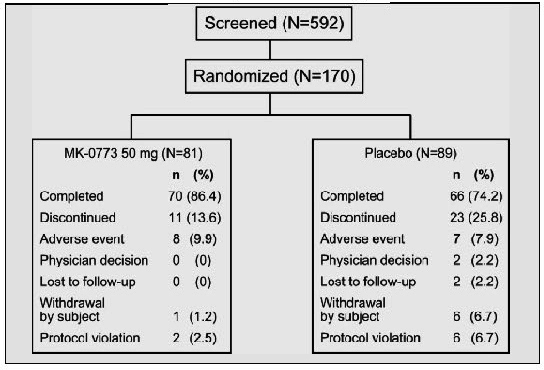
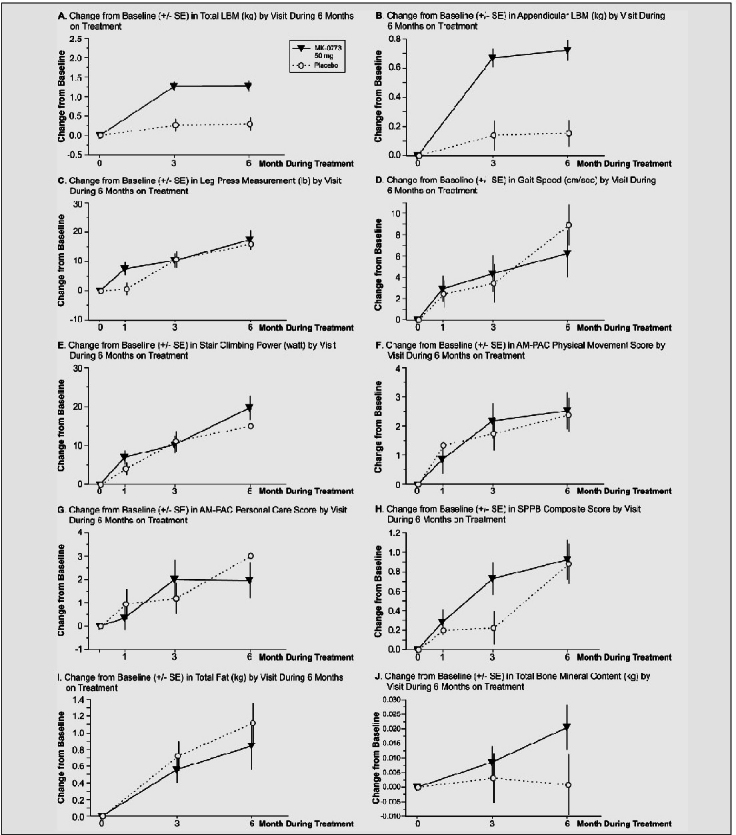
BACKGROUND: Sarcopenia, the age-related loss of muscle mass [defined as appendicular LBM/Height2 (aLBM/ht2) below peak value by>1SD], strength and function, is a major contributing factor to frailty in the elderly. MK-0773 is a selective androgen receptor modulator designed to improve muscle function while minimizing effects on other tissues. OBJECTIVES: The primary objective of this study was to demonstrate an improvement in muscle strength and lean body mass (LBM) in sarcopenic frail elderly women treated with MK-0773 relative to placebo. DESIGN: This was a randomized, double-blind, parallel-arm, placebo-controlled, multicenter, 6-month study. Participants were randomized in a 1:1 ratio to receive either MK-0773 50mg b.i.d. or placebo; all participants received Vitamin D and protein supplementation. SETTING: General community. PARTICIPANTS: 170 Women aged ≥65 with sarcopenia and moderate physical dysfunction. MEASUREMENTS: Dual energy X-ray absorptiometry, muscle strength and power, physical performance measures. RESULTS: Participants receiving MK-0773 showed a statistically significant increase in LBM from baseline at Month 6 vs. placebo (p<0.001). Participants receiving both MK-0773 and placebo showed a statistically significant increase in strength from baseline to Month 6, but the mean difference between the two groups was not significant (p=0.269). Both groups showed significant improvement from baseline at Month 6 in physical performance measures, but there were no statistically significant differences between participants receiving MK-0773 and placebo. A greater number of participants experienced elevated transaminases in the MK-0773 group vs. placebo, which resolved after discontinuation of study therapy. MK-0773 was generally well-tolerated with no evidence of androgenization. CONCLUSIONS: The MK-0773-induced increase in LBM did not translate to improvement in strength or function vs. placebo. The improvement of strength and physical function in the placebo group could be at least partly attributed to protein and vitamin D supplementation.
Overview
The claims and statistics of this paper haven’t been checked yet.
Free: it reads the open-access text and checks the first 5 claims that cite a source we can check. Create a free account to check every claim.
Integrity signals
Registry
Cites
Statistics
Figures
Verification
Claims the paper makes
The claims and statistics of this paper haven’t been checked yet.
Free: it reads the open-access text and checks the first 5 claims that cite a source we can check. Create a free account to check every claim.
Claims other papers make about this one
Each is checked against this paper’s own text: does it say what the citing paper says it does?
The source backs part of the claim, not all of it — or backs it for a different population, condition or comparison.
In the citing paper
“Similarly, a promising treatment for sarcopenia, MK-0773, substantially increased lean body and appendicular mass, but in a randomized clinical trial, the treatment had no effect on leg press strength, gait speed, or other health endpoints [15].”
From Endpoints for geroscience clinical trials: health outcomes, biomarkers, and biologic age (2022) · cites this paper as [15]
Experimental — accuracy not yet measuredThe cited source says what the claim attributes to it.
In the citing paper
“Other studies showed increases in lean mass without improvements in strength or physical performance in patients with sarcopenia428,430.”
From Sarcopenic obesity in older adults: aetiology, epidemiology and treatment strategies (2018) · cites this paper as [430]
The cited source says what the claim attributes to it.
In the citing paper
“SARM treatment in older women with low lean mass, a self-reported mobility disability and a short physical performance battery score between 4 and 9 provided improvements in muscle mass without benefits of improved strength430.”
From Sarcopenic obesity in older adults: aetiology, epidemiology and treatment strategies (2018) · cites this paper as [430]
In the citing paper
“Although there are various approved and effective drugs for diabetes, there is currently no recommended pharmacological intervention for SO, not even for diabetics with SO.”
From Diabetes and Sarcopenic Obesity: Pathogenesis, Diagnosis, and Treatments (2020) · cites this paper as [177]
Self-check
Percentages, sums and reported differences re-computed from the paper’s own numbers.
The self-check needs the paper’s full text.
Citations
Cites
1 retracted
Sato, Y., Iwamoto, J., Kanoko, T., & Satoh, K. (2005) · Cerebrovascular Diseases · doi:10.1159/000087203 · Cited by 410 · cited 1×
“Vitamin D has been shown to increase muscle strength primarily through increases in size and number of type ii muscle fibers (46).”
RetractedGuralnik, J. M., Simonsick, E. M., Ferrucci, L., Glynn, R. J., Berkman, L. F., Blazer, D. G., Scherr, P. A., & Wallace, R. B. (1994) · Journal of Gerontology · doi:10.1093/geronj/49.2.m85 · Cited by 9,792 · cited 1×
“the SPPB is a set of lower-extremity performance-based tests to measure dysfunction in the elderly. it is comprised of standing balance, gait speed, and repeated chair rise, developed and validated in longitudinal aging studies (31).”
Gait speed and survival in older adults.
Studenski, S. (2011) · JAMA · doi:10.1001/jama.2010.1923 · Cited by 4,558 · cited 1×
“Gait speed is a component of the SPPB and important predictor of mobility disability (33, 34), and has been demonstrated to be associated with survival in older adults (35).”
Self-citationLower-extremity function in persons over the age of 70 years as a predictor of subsequent disability
Guralnik, J. M., Ferrucci, L., Simonsick, E. M., Salive, M. E., & Wallace, R. B. (1995) · New England Journal of Medicine · doi:10.1056/nejm199503023320902 · Cited by 4,083
Epidemiology of Sarcopenia among the Elderly in New Mexico
Baumgartner, R. N., Koehler, K. M., Gallagher, D., Romero, L., Heymsfield, S. B., Ross, R. R., Garry, P. J., & Lindeman, R. D. (1998) · American Journal of Epidemiology · doi:10.1093/oxfordjournals.aje.a009520 · Cited by 4,004 · cited 4×
“women aged 65 or older with sarcopenia [defined as appendicular lBM/height 2 (alBM/ht 2 ) below peak value by>1SD] were enrolled in 28 worldwide sites (colombia, Peru, South Africa, Brazil, Sweden, Finland, Denmark, France, Spain, Mexico, israel, chile, new Zealand, uk, hong kong). enrollment at each site ranged betwe…”
InfluentialJanssen, I., Heymsfield, S. B., & Ross, R. (2002) · Journal of the American Geriatrics Society · doi:10.1046/j.1532-5415.2002.50216.x · Cited by 3,139 · cited 1×
“Several longitudinal epidemiological studies have shown that sarcopenia as measured by Dual-emission X-ray absorptiometry (DXA) is associated with an increased likelihood for self-reported physical disability and functional impairment in both genders (2, 3).”
Abellan Van Kan, G., Rolland, Y., Andrieu, S., Bauer, J., Beauchet, O., Bonnefoy, M., Cesari, M., Donini, L. M., Gillette-Guyonnet, S., Inzitari, M., et al. (2009) · The Journal of nutrition, health and aging · doi:10.1007/s12603-009-0246-z · Cited by 2,003 · cited 1×
“Gait speed is a component of the SPPB and important predictor of mobility disability (33, 34), and has been demonstrated to be associated with survival in older adults (35). it was calculated for each participant using distance in meters and time in seconds, derived from the gait speed portion of…”
Invited Review: Aging and sarcopenia
Doherty, T. J. (2003) · Journal of Applied Physiology · doi:10.1152/japplphysiol.00347.2003 · Cited by 1,764 · cited 1×
“improvement in muscle strength with resistance exercise training has been associated with improvement in physical function in the frail elderly (2, 13, 14).”
Muscaritoli, M., Anker, S. D., Argilés, J., Aversa, Z., Bauer, J. M., Biolo, G., Boirie, Y., Bosaeus, I., Cederholm, T., Costelli, P., et al. (2010) · Clinical Nutrition · doi:10.1016/j.clnu.2009.12.004 · Cited by 1,732 · cited 1×
“, coPD) (5-11) nonetheless sarcopenia is distinct from cachexia (12).”
Hughes, V. A., Frontera, W. R., Wood, M., Evans, W. J., Dallal, G. E., Roubenoff, R., & Singh, M. A. F. (2001) · The Journals of Gerontology Series A: Biological Sciences and Medical Sciences · doi:10.1093/gerona/56.5.b209 · Cited by 921 · cited 1×
“improvement in muscle strength with resistance exercise training has been associated with improvement in physical function in the frail elderly (2, 13, 14).”
Cited by
Cruz-Jentoft, A. J., & Sayer, A. A. (2019) · The Lancet · doi:10.1016/s0140-6736(19)31138-9 · Cited by 3,905
Sarcopenic obesity in older adults: aetiology, epidemiology and treatment strategies
Batsis, J. A., & Villareal, D. T. (2018) · Nature Reviews Endocrinology · doi:10.1038/s41574-018-0062-9 · Cited by 1,382
Dent, E., Morley, J. E., Cruz-Jentoft, A. J., Arai, H., Kritchevsky, S. B., Guralnik, J., Bauer, J. M., Pahor, M., Clark, B. C., Cesari, M., et al. (2018) · The Journal of nutrition, health and aging · doi:10.1007/s12603-018-1139-9 · Cited by 1,130
Estrogens and androgens in skeletal physiology and pathophysiology
Almeida, M., Laurent, M. R., Dubois, V., Claessens, F., O'Brien, C. A., Bouillon, R., Vanderschueren, D., & Manolagas, S. C. (2017) · Physiological Reviews · doi:10.1152/physrev.00033.2015 · Cited by 860
Sarcopenia and type 2 diabetes mellitus: a bidirectional relationship
Mesinovic, J., Zengin, A., De Courten, B., Ebeling, P. R., & Scott, D. (2019) · Diabetes, Metabolic Syndrome and Obesity: Targets and Therapy · doi:10.2147/dmso.s186600 · Cited by 553
“monal interventions such as a transdermal testosterone gel(116) and selective androgen receptor modulators.(117,118)”
BackgroundYoshimura, Y., Wakabayashi, H., Yamada, M., Kim, H., Harada, A., & Arai, H. (2017) · Journal of the American Medical Directors Association · doi:10.1016/j.jamda.2017.03.019 · Cited by 365
Epidemiology of sarcopenia and insight into possible therapeutic targets
Dennison, E. M., Sayer, A. A., & Cooper, C. (2017) · Nature Reviews Rheumatology · doi:10.1038/nrrheum.2017.60 · Cited by 294
A review of sarcopenia: Enhancing awareness of an increasingly prevalent disease
Marty, E., Liu, Y., Samuel, A., Or, O., & Lane, J. (2017) · Bone · doi:10.1016/j.bone.2017.09.008 · Cited by 288
Chen, L.-K., Hsiao, F.-Y., Akishita, M., Assantachai, P., Lee, W.-J., Lim, W. S., Muangpaisan, W., Kim, M., Merchant, R. A., Peng, L.-N., et al. (2025) · Nature Aging · doi:10.1038/s43587-025-01004-y · Cited by 262
“Selective androgen receptor modulators increased lean muscle mass in women with sarcopenia, but not muscle strength or physical performance 73 .”
Muscle Wasting and Sarcopenia in Heart Failure and Beyond: Update 2017
Springer, J., Springer, J.-I., & Anker, S. D. (2017) · ESC Heart Failure · doi:10.1002/ehf2.12237 · Cited by 251
Diabetes and Sarcopenic Obesity: Pathogenesis, Diagnosis, and Treatments
Wang, M., Tan, Y., Shi, Y., Wang, X., Liao, Z., & Wei, P. (2020) · Frontiers in Endocrinology · doi:10.3389/fendo.2020.00568 · Cited by 231
Pharmacologic Options for the Treatment of Sarcopenia
Morley, J. E. (2016) · Calcified Tissue International · doi:10.1007/s00223-015-0022-5 · Cited by 225
“In females, it increased IGF-1 as well as stair climbing power and gait speed [124].”
BackgroundSex Differences in Muscle Wasting
Anderson, L. J., Liu, H., & Garcia, J. M. (2017) · Advances in Experimental Medicine and Biology · doi:10.1007/978-3-319-70178-3_9 · Cited by 219
Fuggle, N., Shaw, S., Dennison, E., & Cooper, C. (2017) · Best Practice & Research Clinical Rheumatology · doi:10.1016/j.berh.2017.11.007 · Cited by 101
Current and investigational medications for the treatment of sarcopenia
Rolland, Y., Dray, C., Vellas, B., & Barreto, P. D. S. (2023) · Metabolism · doi:10.1016/j.metabol.2023.155597 · Cited by 195
Management of Frailty: A Systematic Review and Network Meta-analysis of Randomized Controlled Trials
Negm, A. M., Kennedy, C. C., Thabane, L., Veroniki, A.-A., Adachi, J. D., Richardson, J., Cameron, I. D., Giangregorio, A., Petropoulou, M., Alsaad, S. M., et al. (2019) · Journal of the American Medical Directors Association · doi:10.1016/j.jamda.2019.08.009 · Cited by 185
Angulo, J., El Assar, M., & Rodríguez-Mañas, L. (2016) · Molecular Aspects of Medicine · doi:10.1016/j.mam.2016.06.001 · Cited by 182
Rooks, D., Swan, T., Goswami, B., Filosa, L. A., Bunte, O., Panchaud, N., Coleman, L. A., Miller, R. R., Garcia Garayoa, E., Praestgaard, J., et al. (2020) · JAMA Network Open · doi:10.1001/jamanetworkopen.2020.20836 · Cited by 177
Self-citationSarcopenic Obesity: Epidemiologic Evidence, Pathophysiology, and Therapeutic Perspectives
Koliaki, C., Liatis, S., Dalamaga, M., & Kokkinos, A. (2019) · Current Obesity Reports · doi:10.1007/s13679-019-00359-9 · Cited by 176
Kwak, J. Y., & Kwon, K.-S. (2019) · Annals of Geriatric Medicine and Research · doi:10.4235/agmr.19.0028 · Cited by 171
Rheumatoid sarcopenia: loss of skeletal muscle strength and mass in rheumatoid arthritis
Bennett, J. L., Pratt, A. G., Dodds, R., Sayer, A. A., & Isaacs, J. D. (2023) · Nature Reviews Rheumatology · doi:10.1038/s41584-023-00921-9 · Cited by 161
Chen, H., Huang, X., Dong, M., Wen, S., Zhou, L., & Yuan, X. (2023) · Diabetes, Metabolic Syndrome and Obesity · doi:10.2147/dmso.s410834 · Cited by 159
“SARMs have an acceptable safety profile and positive effects on body composition and function in clinical trials.(143,146) Hepatotoxicity and off-target effects on genitalia were major treatment-limiting side effects.”
BackgroundTherapeutic Interventions for Frail Elderly Patients: Part I. Published Randomized Trials
Bibas, L., Levi, M., Bendayan, M., Mullie, L., Forman, D. E., & Afilalo, J. (2014) · Progress in Cardiovascular Diseases · doi:10.1016/j.pcad.2014.07.004 · Cited by 171
Body composition and sarcopenia: The next-generation of personalized oncology and pharmacology?
Hilmi, M., Jouinot, A., Burns, R. G., Pigneur, F., Mounier, R., Gondin, J., Neuzillet, C., & Goldwasser, F. (2018) · Pharmacology & Therapeutics · doi:10.1016/j.pharmthera.2018.12.003 · Cited by 164
Sarcopenia: Current treatments and new regenerative therapeutic approaches
Lo, J. H.-T., U, K. P., Yiu, T., Ong, M. T.-Y., & Lee, W. Y.-W. (2020) · Journal of Orthopaedic Translation · doi:10.1016/j.jot.2020.04.002 · Cited by 130
Espino-González, E., Dalbram, E., Mounier, R., Gondin, J., Farup, J., Jessen, N., & Treebak, J. T. (2024) · Cell Metabolism · doi:10.1016/j.cmet.2024.02.014 · Cited by 154
Chan, R., Leung, J. C. S., & Woo, J. (2016) · Journal of the American Medical Directors Association · doi:10.1016/j.jamda.2015.12.004 · Cited by 148
Management of Sarcopenia: A Network Meta-Analysis of Randomized Controlled Trials
Negm, A. M., Lee, J., Hamidian, R., Jones, C. A., & Khadaroo, R. G. (2022) · Journal of the American Medical Directors Association · doi:10.1016/j.jamda.2022.01.057 · Cited by 137
Skeletal muscle wasting in chronic heart failure
Suzuki, T., Palus, S., & Springer, J. (2018) · ESC Heart Failure · doi:10.1002/ehf2.12387 · Cited by 134
“IGF-1 levels and improve muscle function in women was terminated because of increased cardiovascular risk.(101)”
BackgroundThe wasting continuum in heart failure: from sarcopenia to cachexia
von Haehling, S. (2015) · Proceedings of the Nutrition Society · doi:10.1017/s0029665115002438 · Cited by 130
Sarcopenic Obesity: An Emerging Public Health Problem
Ji, T., Li, Y., & Ma, L. (2022) · Aging and disease · doi:10.14336/ad.2021.1006 · Cited by 124
New understanding of the pathogenesis and treatment of stroke-related sarcopenia
Li, W., Yue, T., & Liu, Y. (2020) · Biomedicine & Pharmacotherapy · doi:10.1016/j.biopha.2020.110721 · Cited by 136
Mitochondrial function is impaired in the skeletal muscle of pre-frail elderly
Andreux, P. A., van Diemen, M. P. J., Heezen, M. R., Auwerx, J., Rinsch, C., Groeneveld, G. J., & Singh, A. (2018) · Scientific Reports · doi:10.1038/s41598-018-26944-x · Cited by 106
Recommendations for the conduct of clinical trials for drugs to treat or prevent sarcopenia
Reginster, J.-Y., Cooper, C., Rizzoli, R., Kanis, J. A., Appelboom, G., Bautmans, I., Bischoff-Ferrari, H. A., Boers, M., Brandi, M. L., Bruyère, O., et al. (2016) · Aging Clinical and Experimental Research · doi:10.1007/s40520-015-0517-y · Cited by 112
“A recently published international phase II study in sarcopenia, which was designed to test the effects of the selective androgen receptor modulator [54], selected women of 65 years old or more, with low ALM (ALM/ height(2) versus reference), self-reported mobility disability and an SPPB score between 4 and 9.”
BackgroundAging of the endocrine system and its potential impact on sarcopenia
Vitale, G., Cesari, M., & Mari, D. (2016) · European Journal of Internal Medicine · doi:10.1016/j.ejim.2016.07.017 · Cited by 125
“of the unpleasant side effects seen with the traditional anabolic agents [28,29].”
Therapies for Musculoskeletal Disease: Can we Treat Two Birds with One Stone?
Girgis, C. M., Mokbel, N., & DiGirolamo, D. J. (2014) · Current Osteoporosis Reports · doi:10.1007/s11914-014-0204-5 · Cited by 110
Mesinovic, J., Fyfe, J. J., Talevski, J., Wheeler, M. J., Leung, G. K. W., George, E. S., Hunegnaw, M. T., Glavas, C., Jansons, P., Daly, R. M., et al. (2023) · Diabetes & Metabolism Journal · doi:10.4093/dmj.2023.0112 · Cited by 115
“6 kg increase in appendicular lean mass relative to placebo, but it did not lead to any improvements in muscle strength or performance [212].”
BackgroundMuscle Wasting Diseases: Novel Targets and Treatments
Furrer, R., & Handschin, C. (2018) · The Annual Review of Pharmacology and Toxicology · doi:10.1146/annurev-pharmtox-010818-021041 · Cited by 103
Dalton, J. T., Taylor, R. P., Mohler, M. L., & Steiner, M. S. (2013) · Current Opinion in Supportive & Palliative Care · doi:10.1097/spc.0000000000000015 · Cited by 91
Detection of SARMs in doping control analysis
Thevis, M., & Schänzer, W. (2017) · Molecular and Cellular Endocrinology · doi:10.1016/j.mce.2017.01.040 · Cited by 91
“The drug candidate comprising of a 4-aza-steroid nucleus has since been developed and underwent phase-IIa clinical trials in 2013 (Papanicolaou et al., 2013), where androgenization was not observed but a significant increase in lean body mass was noted.”
Current pharmacotherapies for sarcopenia
Hardee, J. P., & Lynch, G. S. (2019) · Expert Opinion on Pharmacotherapy · doi:10.1080/14656566.2019.1622093 · Cited by 84
Sarcopenia and Androgens: A Link between Pathology and Treatment
Basualto-Alarcón, C., Varela, D., Duran, J., Maass, R., & Estrada, M. (2014) · Frontiers in Endocrinology · doi:10.3389/fendo.2014.00217 · Cited by 79
“In a recent randomized, double-blind, placebo-controlled study of 170 women aged ≥65 with sarcopenia and moderate physical dysfunction found that 6 months of treatment with MK-0773 significantly improved physical performance measures (98).”
BackgroundThe role of sex steroid hormones in the pathophysiology and treatment of sarcopenia
Kim, Y. J., Tamadon, A., Park, H. T., Kim, H., & Ku, S. (2016) · Osteoporosis and Sarcopenia · doi:10.1016/j.afos.2016.06.002 · Cited by 90
“[246] Papanicolaou DA, Ather S, Zhu H, Zhou Y, Lutkiewicz J, Scott B, et al.”
BackgroundGSK2881078, a SARM, Produces Dose-Dependent Increases in Lean Mass in Healthy Older Men and Women
Neil, D., Clark, R. V., Magee, M., Billiard, J., Chan, A., Xue, Z., & Russell, A. (2018) · The Journal of Clinical Endocrinology & Metabolism · doi:10.1210/jc.2017-02644 · Cited by 68
Cianferotti, L., Bertoldo, F., Carini, M., Kanis, J. А., Lapini, A., Longo, N., Martorana, G. E., Mirone, V. G., Reginster, J., Rizzoli, R., et al. (2017) · Oncotarget · doi:10.18632/oncotarget.17980 · Cited by 80
“In this respect, selective androgen receptor modulators could be employed to maintain the favorable effects of androgens on muscle and bone while reducing undesirable side effects, as demonstrated by in vivo studies in animals [107, 108] and phase II trials in humans for skeletal muscle only [109].”
BackgroundAndrogen effects on skeletal muscle: implications for the development and management of frailty
Wu, F., & O’Connell, M. D. L. (2014) · Asian Journal of Andrology · doi:10.4103/1008-682x.122581 · Cited by 77
Chapter 4 Treatment of sarcopenia
Arai, H., Wakabayashi, H., Yoshimura, Y., Yamada, M., Kim, H., & Harada, A. (2018) · Geriatrics & Gerontology International · doi:10.1111/ggi.13322 · Cited by 72
Advances in research on pharmacotherapy of sarcopenia
Feike, Y., Liu, Z., & Chen, W. (2021) · Aging Medicine · doi:10.1002/agm2.12168 · Cited by 82
Paez, H. G., Pitzer, C. R., & Alway, S. E. (2023) · Cells · doi:10.3390/cells12020249 · Cited by 79
“In female patients with sarcopenia, administration of the SARM MK-0773 for 6 months produced significant enhancements in lean body mass but failed to significantly improve physical function over placebo [246].”
Fonseca, G. W. P. D., Dworatzek, E., Ebner, N., & Von Haehling, S. (2020) · Expert Opinion on Investigational Drugs · doi:10.1080/13543784.2020.1777275 · Cited by 68
Muscle and bone effects of androgen deprivation therapy: current and emerging therapies
Cheung, A. S., Zajac, J. D., & Grossmann, M. (2014) · Endocrine Related Cancer · doi:10.1530/erc-14-0172 · Cited by 73
“MK-0773 in an RCT for elderly women with sarcopenia has shown improvements in LBM, but no change compared with placebo in muscle strength and physical performance measures (Papanicolaou et al. 2013).”
BackgroundCesari, M., Fielding, R. A., Bénichou, O., Bernabei, R., Bhasin, S., Guralnik, J. M., Jette, A. M., Landi, F., Pahor, M., Rodríguez‐Mañas, L., et al. (2015) · The Journal of Frailty & Aging · doi:10.14283/jfa.2015.64 · Cited by 74
“Both the treatment group and placebo group also received Vitamin D and protein supplementation (15).”
MethodThe Therapeutic Intervention of Sex Steroid Hormones for Sarcopenia
Huang, L., & Wang, J. (2021) · Frontiers in Medicine · doi:10.3389/fmed.2021.739251 · Cited by 65
Clark, R. V., Walker, A. C., Andrews, S. M., Turnbull, P., Wald, J. A., & Magee, M. H. (2017) · British Journal of Clinical Pharmacology · doi:10.1111/bcp.13316 · Cited by 67
Vignali, J. D., Pak, K., Beverley, H. R., DeLuca, J. P., Downs, J. W., Kress, A. T., Sadowski, B. W., & Selig, D. J. (2023) · Journal of Xenobiotics · doi:10.3390/jox13020017 · Cited by 64
Kerr, H. L., Krumm, K., Anderson, B., Christiani, A. J., Strait‐Bodey, L., Li, T., Irwin, B., Jiang, S., Rybachok, A., Chen, A. L., et al. (2024) · Journal of Clinical Investigation · doi:10.1172/jci172890 · Cited by 63
“Currently, exercise is the only recognized treatment for sarcopenia (4, 5), while nutritional supplementation (6, 7) and off-label pharmacological interventions (8, 9) have shown limited efficacy in improving muscle strength and physical function (10).”
SUGIYAMA, K., NARITA, Y., MITANI, S., HONDA, K., MASUISHI, T., TANIGUCHI, H., KADOWAKI, S., URA, T., ANDO, M., TAJIKA, M., et al. (2018) · Anticancer Research · doi:10.21873/anticanres.12928 · Cited by 60
Mou, K., Chan, S. M. H., & Vlahos, R. (2024) · Pharmacology & Therapeutics · doi:10.1016/j.pharmthera.2024.108635 · Cited by 59
Endpoints for geroscience clinical trials: health outcomes, biomarkers, and biologic age
Cummings, S. R., & Kritchevsky, S. B. (2022) · GeroScience · doi:10.1007/s11357-022-00671-8 · Cited by 54
Sarcopenia in the era of precision health: Toward personalized interventions for healthy longevity
Chen, L. (2024) · Journal of the Chinese Medical Association · doi:10.1097/jcma.0000000000001164 · Cited by 51
“71 Myostatin pathway inhibitors, including myostatin-neutralizing antibodies and activin receptor blockers, hold promise in early trials, but their effectiveness compared with that of exercise alone remains unclear.”
Development of Pharmacotherapies for the Treatment of Sarcopenia
Rooks, D., & Roubenoff, R. (2019) · The Journal of Frailty & Aging · doi:10.14283/jfa.2019.11 · Cited by 46
“6 kg of appendicular lean body mass over placebo at 3- and 6-months, but did not improve muscle strength or physical performance (assessed by the SPPB, stair climb test and gait speed) compared to placebo (101).”
Frailty screening comes of age
Morley, J. E. (2014) · The journal of nutrition health & aging · doi:10.1007/s12603-014-0457-9 · Cited by 53
Therapeutic Strategies to Target the Androgen Receptor
Xiang, W., & Wang, S. (2022) · Journal of Medicinal Chemistry · doi:10.1021/acs.jmedchem.2c00716 · Cited by 51
Advances in sarcopenia: mechanisms, therapeutic targets, and intervention strategies
Zheng, Y., Feng, J., Yu, Y., Ling, M., & Wang, X. (2024) · Archives of Pharmacal Research · doi:10.1007/s12272-024-01493-2 · Cited by 50
Jung, H., Kim, S., Kim, I., Lim, J., Park, H.-S., Song, W., Yoo, H. J., Jang, H. C., Kim, K., Park, Y., et al. (2018) · Annals of Geriatric Medicine and Research · doi:10.4235/agmr.18.0046 · Cited by 46
Hofbauer, L. C., Witvrouw, R., Varga, Z., Shiota, N., Cremer, M., Tanko, L. B., Rooks, D., Auberson, L. Z., Arkuszewski, M., Fretault, N., et al. (2021) · The Lancet Healthy Longevity · doi:10.1016/s2666-7568(21)00084-2 · Cited by 38
Self-citationThe Current Landscape of Pharmacotherapies for Sarcopenia
Bahat, G., & Özkök, S. (2024) · Drugs & Aging · doi:10.1007/s40266-023-01093-7 · Cited by 48
“In a phase II randomized controlled trial (RCT), MK-0773 showed a significant improvement in lean body mass (LBM) but did not improve muscle strength and functions in older women with sarcopenia [145].”
Muscle wasting: emerging pathways and potential drug targets
Domaniku, A., Bilgiç, Ş. N., & Kır, S. (2023) · Trends in Pharmacological Sciences · doi:10.1016/j.tips.2023.07.006 · Cited by 42
Osteosarcopenia: the Path Beyond Controversy
Zanker, J., & Duque, G. (2020) · Current Osteoporosis Reports · doi:10.1007/s11914-020-00567-6 · Cited by 42
“No difference was observed between treatment groups in terms of strength and physical performance measures [34].”
BackgroundDioh, W., Tourette, C., Del Signore, S., Daudigny, L., Dupont, P., Balducci, C., Dilda, P. J., Lafont, R., & Veillet, S. (2023) · Journal of Cachexia, Sarcopenia and Muscle · doi:10.1002/jcsm.13195 · Cited by 40
Choi, S. M., & Lee, B. (2015) · Expert Opinion on Drug Safety · doi:10.1517/14740338.2015.1094052 · Cited by 41
“In a Phase IIa randomized, double-blind, multicenter, placebo-controlled, 6-month clinical trial with MK0773, women aged 65 or older with sarcopenia were allocated to either placebo or 50 mg MK-0773 treatment [78].”
BackgroundMethodFracture risk and assessment in adults with cancer
Ye, C., & Leslie, W. D. (2022) · Osteoporosis International · doi:10.1007/s00198-022-06631-4 · Cited by 40
Wen, J., Syed, B., Leapart, J., Shehabat, M., Ansari, U., Akhtar, M., Razick, D., & Pai, D. (2024) · Clinical Endocrinology · doi:10.1111/cen.15135 · Cited by 41
“Multiple studies showed potential biases, or lack of information, for allocation concealment methods [13 – 15, 18, 19], blinding of participants and personnel [14, 16, 18 – 20] and blinding of outcome assessment where the participant does not know what intervention they are taking [13 – 20].”
InfluentialBhasin, S., Krishnan, V., Storer, T. W., Steiner, M., & Dobs, A. S. (2023) · The Journals of Gerontology: Series A · doi:10.1093/gerona/glad027 · Cited by 36
Sarcopenia in chronic kidney disease: from bench to bedside
Kim, D. W., & Song, S. H. (2023) · The Korean Journal of Internal Medicine · doi:10.3904/kjim.2022.338 · Cited by 40
“Several SARMs, such as MK-0773, GTx024, and GSK2881078, increased lean body mass in healthy older individuals, but MK-0773 and GTx-024 failed to improve physical performance [90-93].”
Sarcopenia: how to determine and manage
Chung, J. Y., Kim, S., Kim, S. H., & Park, C. H. (2025) · Knee Surgery and Related Research · doi:10.1186/s43019-025-00265-6 · Cited by 38
“A clinical trial was conducted to assess the effectiveness and safety of selective androgen receptor modulators (SARMs) for treating sarcopenia in women aged ≥ 65 years [90].”
Liu, X., Chen, X., & Cui, J. (2025) · Clinical Nutrition · doi:10.1016/j.clnu.2025.06.007 · Cited by 78
Chen, Y. C., Chen, W.-C., Liu, C.-W., Huang, W.-Y., Lu, I., Lin, C. W., Huang, R. Y., Chen, J. S., & Huang, C. H. (2023) · European Review of Aging and Physical Activity · doi:10.1186/s11556-023-00333-4 · Cited by 34
“Novel agents such as bimagrumab (human monoclonal antibody targeting activin type 2 receptors) [100] and MK0733 (selective androgen receptor modulator) [36] have the potential to improve skeletal muscle mass, but our results show no benefit on muscle function and physical performance.”
BackgroundVallejo, J. A., Spence, M., Cheng, A., Brotto, L. S., Edens, N. K., Garvey, S. M., & Brotto, M. (2016) · PLoS ONE · doi:10.1371/journal.pone.0150066 · Cited by 37
“Additionally, pharmacological and dietary interventions have been implemented to counter muscle loss with aging [8,24,25].”
BackgroundLeciejewska, N., Jędrejko, K., Renaud, V. M. G., Manríquez-Núñez, J., Muszyńska, B., & Pokrywka, A. (2023) · European Journal of Clinical Pharmacology · doi:10.1007/s00228-023-03592-3 · Cited by 35
“Summary of selected clinical trials demonstrated in supplementary data [88–91].”
BackgroundLow muscle mass, low muscle function, and sarcopenia in the urban and rural elderly
Moon, S. W., Kim, K.-J., Lee, H. S., Yun, Y. M., Kim, J., Chun, Y. J., & Kim, C. O. (2022) · Scientific Reports · doi:10.1038/s41598-022-18167-y · Cited by 37
Ullrich, T., Sasmal, S., Boorgu, V., Pasagadi, S., Cheera, S., Rajagopalan, S., Bhumireddy, A., Shashikumar, D., Chelur, S., Belliappa, C., et al. (2014) · Journal of Medicinal Chemistry · doi:10.1021/jm5009049 · Cited by 32
Therapeutic considerations of sarcopenia in heart failure patients
Saitoh, M., Ebner, N., von Haehling, S., Anker, S. D., & Springer, J. (2018) · Expert Review of Cardiovascular Therapy · doi:10.1080/14779072.2018.1424542 · Cited by 31
Treating sarcopenia in clinical practice: where are we now?
De Spiegeleer, A., Petrovic, M., Boeckxstaens, P., & Van Den Noortgate, N. (2016) · Acta Clinica Belgica · doi:10.1080/17843286.2016.1168064 · Cited by 27
Gupta, S., Dhillon, R. S., & Hasni, S. (2018) · Rheumatic Disease Clinics of North America · doi:10.1016/j.rdc.2018.03.001 · Cited by 31
Protein therapy of skeletal muscle atrophy and mechanism by angiogenic factor AGGF1
He, Z., Song, Q., Yu, Y., Liu, F., Zhao, J., Waikeong, U., Da, X., Xu, C., Yao, Y., & Wang, Q. K. (2023) · Journal of Cachexia Sarcopenia and Muscle · doi:10.1002/jcsm.13179 · Cited by 28
“MK0773 is a small chemical agent that increases IGF-1 levels, but its clinical trial was terminated because it increased cardiovascular risk in female patients with sarcopenia.(33) Therefore, AGGF1 therapy offers a new potential for treatment of muscle atrophy.”
BackgroundAging, Physical Exercise, Telomeres, and Sarcopenia: A Narrative Review
Hernández-Álvarez, D., Rosado-Pérez, J., Gavia-García, G., Arista-Ugalde, T. L., Aguíñiga-Sánchez, I., Santiago‐Osorio, E., & Mendoza-Núñez, V. M. (2023) · Biomedicines · doi:10.3390/biomedicines11020598 · Cited by 29
Nguyen, T. T., Dao, T., Nguyen, H. T., Park, J.-H., Jeong, S.-J., Kim, S., Jo, Y., Thieu, N. T. H., Zhao, J., Ding, F., et al. (2026) · Endocrinology and Metabolism · doi:10.3803/enm.2025.2656 · Cited by 27
Sarcopenia as the Mobility Phenotype of Aging: Clinical Implications
Ji, S., Jung, H., Baek, J. Y., Jang, I., & Lee, E. (2024) · Journal of Bone Metabolism · doi:10.11005/jbm.2024.31.1.1 · Cited by 27
“[82] SARMs such as enobosarm (MK-2866) [83] and PF-05314882 [84] have been developed, with preliminary clinical trial results showing improvements in muscle mass and physical function.”
Mitochondrial transplantation as a possible therapeutic option for sarcopenia
Türkel, İ., Özerkliğ, B., Yılmaz, M., Ülger, Ö., Kubat, G. B., & Tuncer, M. (2023) · Journal of Molecular Medicine · doi:10.1007/s00109-023-02326-3 · Cited by 27
Gagliano‐Jucá, T., Li, Z., Pencina, K. M., Traustadóttir, T., Travison, T. G., Woodhouse, L. J., Basaria, S. S., Tsitouras, P. D., Harman, S. M., Bhasin, S., et al. (2019) · The Journals of Gerontology Series A · doi:10.1093/gerona/glz167 · Cited by 24
Multimodal nutrition/anabolic therapy for wasting conditions
Balstad, T. R., Kaasa, S., & Solheim, T. S. (2014) · Current Opinion in Clinical Nutrition & Metabolic Care · doi:10.1097/mco.0000000000000045 · Cited by 23
Emerging molecular mediators and targets for age-related skeletal muscle atrophy
Brown, L. A., Guzman, S. D., & Brooks, S. V. (2020) · Translational research · doi:10.1016/j.trsl.2020.03.001 · Cited by 22
Advance in Drug Delivery for Ageing Skeletal Muscle
Li, Y., Chen, M., Zhao, Y.-P., Li, M., Qin, Y., Cheng, S.-H., Yang, Y.-Y., Yin, P., Zhang, L.-C., & Tang, P. (2020) · Frontiers in Pharmacology · doi:10.3389/fphar.2020.01016 · Cited by 21
Borba, V. Z. C., & Costa, T. M. D. R. L. (2024) · Archives of Endocrinology and Metabolism · doi:10.20945/2359-4292-2024-0084 · Cited by 21
“Although SARMs increase lean mass, no improvements in muscle strength or physical performance have been observed in older adults with sarcopenia treated with these agents (78).”
Tseng, L.-Y., Liang, C., Peng, L., Lin, M.-H., Loh, C., Lee, W., Hsiao, F., & Chen, L. (2024) · Clinical Nutrition · doi:10.1016/j.clnu.2024.06.035 · Cited by 24
Morimoto, M., Yamaoka, M., & Hara, T. (2020) · Pharmacology Research & Perspectives · doi:10.1002/prp2.563 · Cited by 24
Prajapati, P., Kumar, A., Chaudary, R., Mangrulkar, S. V., Arya, M., & Kushwaha, S. (2023) · Current Molecular Pharmacology · doi:10.2174/1874467216666230308142137 · Cited by 24
Testa, G., Vescio, A., Zuccalà, D., Petrantoni, V., Amico, M., Russo, G. I., Sessa, G., & Pavone, V. (2020) · Journal of Clinical Medicine · doi:10.3390/jcm9092997 · Cited by 21
“Initial interest in selective androgen receptor modulators is related to small phase I and II trials [18,19].”
BackgroundMethodAndrogens as the “old age stick” in skeletal muscle
Gentile, G., Stefano, F. D., Sorrentino, C., D’Angiolo, R., Lauretta, C., Giovannelli, P., Migliaccio, A., Castoria, G., & Donato, M. D. (2025) · Cell Communication and Signaling · doi:10.1186/s12964-025-02163-6 · Cited by 20
“As an example, the SARM MK-0773 (NCT00529659) increases the lean body mass, but its administration was associated with gastrointestinal disorders and an increase in mortality rates [183].”
Metadata
- Authors
- Papanicolaou, D. A., Ather, S. N., Zhu, H., Zhou, Y., Lutkiewicz, J., Scott, B. B., & Chandler, J.
- Affiliations
- Novartis (United States) (US)
- Merck & Co., Inc., Rahway, NJ, USA (United States) (US)
- Corresponding author
- Papanicolaou, Dimitris A.
- Venue
- The Journal of nutrition, health and aging
- Publisher
- Elsevier BV
- Published
- 2013-06
- Volume
- 17
- Issue
- 6
- Pages
- 533-543
- ISSN
- 1279-7707 (ISSN-L)
- PMC
- PMC12878986
- OpenAlex
- W2064936259
- Cited by
- 196
- References
- 49
- Citations by year
- 2026: 18 · 2025: 19 · 2024: 18 · 2023: 24 · 2022: 11 · 2021: 13 · 2020: 23 · 2019: 15 · 2018: 15 · 2017: 14 · 2016: 9 · 2015: 7 · 2014: 7 · 2013: 2
- FWCI
- 6.03
- Type
- journal article
- Language
- en
- Open access
- hybrid
- doi.org
- Licence
- cc-by-nc-nd
- www.elsevier.com/tdm/userlicense/1.0/ (tdm)
- www.elsevier.com/legal/tdmrep-license (tdm)
- creativecommons.org/licenses/by-nc-nd/4.0/ (vor, 3846 d)
- Locations
- The journal of nutrition health & aging (publishedVersion, cc-by-nc-nd)
- Europe PMC (PubMed Central) (publishedVersion, cc-by-nc-nd)
- PubMed (publishedVersion)
- PubMed Central (publishedVersion, cc-by-nc-nd)
- Topics
- Health Sciences › Medicine › Physiology (medical) › Nutrition and Health in Aging
- Health Sciences › Medicine › Endocrinology, Diabetes and Metabolism › Hormonal and reproductive studies
- Life Sciences › Biochemistry, Genetics and Molecular Biology › Molecular Biology › Muscle Physiology and Disorders
- Keywords
- sarcopenia, selective androgen receptor modulators, lean body mass, muscle strength, physical performance, frail elderly women, protein supplementation, vitamin D supplementation, transaminase elevation, androgenization, muscle mass
- MeSH terms
- Aged, Aged, 80 and over, Azasteroids, Body Composition, Dietary Proteins, Dose-Response Relationship, Drug, Double-Blind Method, Female, Humans, Musculoskeletal Physiological Phenomena, Receptors, Androgen, Vitamin D, Absorptiometry, Photon, Frail Elderly, Muscle, Skeletal, Dietary Supplements, Muscle Strength, Sarcopenia
About these checks
Registry, retraction, Cites and statistics results are computed, not judged, with one exception: a printed reference that no index lists is read once by a model before it counts as a citation error. Claims are extracted by a model and kept only when their quote appears verbatim in the text; each cited source is then checked, with a model’s help, for whether it says what the claim relies on. Those verdicts can be wrong — read the claim’s quote and the cited source before relying on one.
Statistics and arithmetic are recomputed, not judged.
Confidence bands are shown only for fields calibrated on our annotated test set. None is calibrated yet, so no band is shown.
What counts as a claim ›How we measure confidence ›How we check this ›
Are you an author, or do you see a problem with this page? Request a review
Data sources
Bibliographic data: Semantic Scholar, OpenAlex, Crossref.
Contains information from the Semantic Scholar Academic Graph Datasets, made available under the ODC Attribution License (ODC-BY 1.0).
Semantic Scholar’s data is described in: Kinney, R., et al. (2023). The Semantic Scholar Open Data Platform. arXiv:2301.10140.
