

Nutritional follow-Up after discharge prevents readmission to hospital – a randomized clinical trial
Open accessThe DOI matches its Crossref record; 37 of the 38 references it cites were found in a registry or an index.
Abstract
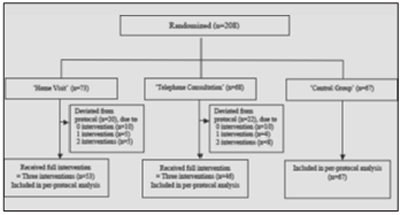
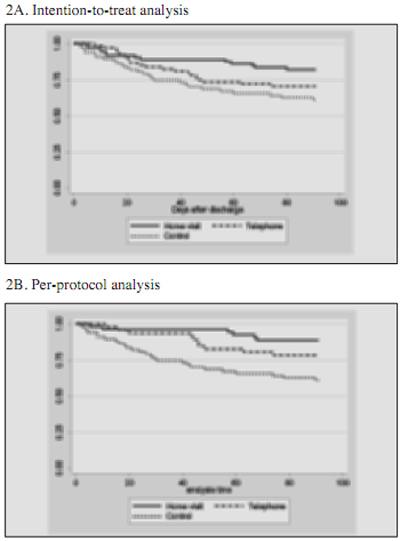
OBJECTIVE: To compare the effects of two individualized nutritional follow-up intervention strategies (home visit or telephone consultation) with no follow-up, with regard to acute readmissions to hospital at two points in time, 30 and 90 days after discharge from hospital. DESIGN: Randomized clinical trial with two intervention groups and one control group, and monitoring on readmission at 30 and 90 days after discharge. SETTING: Intervention in the participants' homes after discharge from hospital. PARTICIPANTS: Inclusion: Malnourished geriatric patients and patients at risk of malnutrition (MNA<24), aged 75 years and older, living at home and alone. Exclusion: Nursing home residents and patients with terminal illnesses or cognitive impairment. Randomization: Upon discharge, the patients were stratified according to nutritional status (MNA), and assigned to one of three groups: 'home visit', 'telephone', or 'control' group. INTERVENTION: Individualized nutritional counselling of the patient and the patient's daily home carer by a clinical dietician one, two, and four weeks after discharge from hospital. The counselling was either in-person at the patient's homes, or over the telephone. All patients received a diet plan on discharge. The control group received standard care, but no follow-up after discharge. MEASUREMENTS: Information on readmissions to hospital and mortality at 30 and 90 days after discharge was obtained from electronic patient records. Intention-to-treat (ITT) and per-protocol (PP) analyses were carried out. RESULTS: Two-hundred and eight participants were randomized, 73 to home visits, 68 to the telephone consultation group, and 67 to the control group. The mean age of the participants was 86.1 years. Home visit participants had a lower risk of readmission to hospital compared to control participants at 30 days after discharge (HR=0.4; 95% CI: 0.2-0.9, p=0.03) and 90 days after discharge (HR=0.4; 95% CI: 0.2-0.8, p<0.01). No significant difference was detected between the telephone consultation group and the control group, at either 30 days (HR=0.6, 95% CI: 0.3-1.3, p=0.18) or 90 days after discharge (HR=0.7, 95% CI: 0.4-1.3, p=0.23). The PP analysis revealed that the risk of readmission was significantly lower in the home visit group compared to the control group and the telephone consultation group compared to the control group, and this was evident at 30 days as well as at 90 days after discharge. CONCLUSION: An individualized nutritional follow-up performed as home visits seems to reduce readmission to hospital 30 and 90 days after discharge. Intervention by telephone consultations may also prevent readmission, but only among participants who receive the full intervention.
Overview
The claims and statistics of this paper haven’t been checked yet.
Free: it reads the open-access text and checks the first 5 claims that cite a source we can check. Create a free account to check every claim.
Integrity signals
Registry
Cites
Statistics
Figures
Verification
Claims the paper makes
The claims and statistics of this paper haven’t been checked yet.
Free: it reads the open-access text and checks the first 5 claims that cite a source we can check. Create a free account to check every claim.
Claims other papers make about this one
Each is checked against this paper’s own text: does it say what the citing paper says it does?
The source backs part of the claim, not all of it — or backs it for a different population, condition or comparison.
In the citing paper
“Only one intervention, reported across four publications by Neelemaat et al [34, 37-39], provided all participants with oral nutritional supplements; whereas five other studies provided them on a case-by-case basis to align with an individualised plan [27, 30, 32, 33, 35, 36].”
From Is telehealth effective in managing malnutrition in community-dwelling older adults? A systematic review and meta-analysis. (2018) · cites this paper as [36]
Experimental — accuracy not yet measuredIn the citing paper
“Only one study included the participants' carers [36].”
From Is telehealth effective in managing malnutrition in community-dwelling older adults? A systematic review and meta-analysis. (2018) · cites this paper as [36]
In the citing paper
“Mortality (incidence) • IG: n= 2/68; CG: n=6/67; groups not compared.”
From Is telehealth effective in managing malnutrition in community-dwelling older adults? A systematic review and meta-analysis. (2018) · cites this paper as [36]
In the citing paper
“Both Lindegaard Pedersen et al. [36] and Lindhard et al. [28] reported significantly decreased hospital readmission in the intervention groups.”
From Is telehealth effective in managing malnutrition in community-dwelling older adults? A systematic review and meta-analysis. (2018) · cites this paper as [36]
Self-check
Percentages, sums and reported differences re-computed from the paper’s own numbers.
The self-check needs the paper’s full text.
Citations
Cites
Vellas, B., Guigoz, Y., Garry, P. J., Nourhashemi, F., Bennahum, D., Lauque, S., & Albarede, J.-L. (1999) · Nutrition · doi:10.1016/s0899-9007(98)00171-3 · Cited by 2,161
The Care Transitions Intervention: Results of a Randomized Controlled Trial
Coleman, E. A., Parry, C., Chalmers, S., & Min, S.-J. (2006) · Archives of Internal Medicine · doi:10.1001/archinte.166.17.1822 · Cited by 1,937 · cited 1×
“In an RCT on care-transition interventions lasting 28 days following discharge (30), readmission rates were also reduced.”
Kaiser, M. J., Bauer, J. M., Rämsch, C., Uter, W., Guigoz, Y., Cederholm, T., Thomas, D. R., Anthony, P. S., Charlton, K. E., Maggio, M., et al. (2010) · Journal of the American Geriatrics Society · doi:10.1111/j.1532-5415.2010.03016.x · Cited by 1,007 · cited 1×
“The prevalence of malnutrition and the risk of developing malnutrition during hospitalization and geriatric rehabilitation is 85-90% (1, 2).”
Identifying the elderly at risk for malnutrition
Guigoz, Y., Lauque, S., & Vellas, B. J. (2002) · Clinics in Geriatric Medicine · doi:10.1016/s0749-0690(02)00059-9 · Cited by 969
Discharge planning from hospital to home
Shepperd, S., Lannin, N. A., Clemson, L. M., McCluskey, A., Cameron, I. D., & Barras, S. L. (2013) · Cochrane Database of Systematic Reviews · doi:10.1002/14651858.cd000313.pub4 · Cited by 847
Schottenfeld, D. (2002) · American Journal of Epidemiology · doi:10.1093/aje/kwf028 · Cited by 622
Epidemiology: An Introduction, (2nd ed.)
Rothman, K. J. (2012) · Cited by 604
Nordic Nutrition Recommendations2004 - integrating nutrition and physical activity
Becker, W., Lyhne, N., Pedersen, A. N., Aro, A., Fogelholm, M., Phórsdottir, P., Alexander, J., Anderssen, S. A., Meltzer, H. M., & Pedersen, J. I. (2004) · Food & Nutrition Research · doi:10.3402/fnr.v48i4.1633 · Cited by 566
GONSETH, J. (2004) · European Heart Journal · doi:10.1016/j.ehj.2004.04.022 · Cited by 467 · cited 1×
“A review of disease management programmes for older patients with heart failure, including education, support, self-management, and active involvement of the patients in the programmes also showed these to be effective in reducing readmission (29).”
Nieuwenhuizen, W. F., Weenen, H., Rigby, P., & Hetherington, M. M. (2010) · Clinical Nutrition · doi:10.1016/j.clnu.2009.09.003 · Cited by 427 · cited 2×
“In addition to the food-related advice, the clinical dietician also addressed personal and environmental factors in the counselling process (15), and identified hurdles that were difficult to overcome.”
Research works printed but not linked: 2
- 21. Sundhedsstyrelsen. Screening og behandling af patienter i ernæringsmæssig risiko. Vejledning til læger, sygeplejersker, social-og sundhedsassistenter, sygehjælpere og kliniske diætister. 2008
- 22. Bekendtgørelse om uddannelse i de erhvervsfaglige fællesindgange. Sundhed, omsorg og pædagogik. Nr. 163 af 7. marts 2008. 2008
Cited by
The effectiveness of teleconsultations in primary care: systematic review
Carrillo de Albornoz, S., Sia, K.-L., & Harris, A. (2022) · Family Practice · doi:10.1093/fampra/cmab077 · Cited by 269
“(42) and Lindegaard-Pedersen et al.(21) reported that attrition was mainly due to deteriorating health problems leading to hospitalisation, nursing home placement and death in their population of older adults.”
BackgroundInfluentialMarx, W., Kelly, J. T., Crichton, M., Craven, D., Collins, J., Mackay, H., Isenring, E., & Marshall, S. (2018) · Maturitas · doi:10.1016/j.maturitas.2018.02.012 · Cited by 91
“study included the participants’ carers [36].”
BackgroundMethodSanson, G., Sadiraj, M., Barbin, I., Confezione, C., De Matteis, D., Boscutti, G., Zaccari, M., & Zanetti, M. (2020) · Clinical Nutrition · doi:10.1016/j.clnu.2019.04.011 · Cited by 72
Baldwin, C., de van der Schueren, M. A., Kruizenga, H. M., & Weekes, C. E. (2021) · Cochrane Database of Systematic Reviews · doi:10.1002/14651858.cd002008.pub5 · Cited by 54
Silver, H. J., Pratt, K. J., Bruno, M., Lynch, J., Mitchell, K. R., & McCauley, S. M. (2017) · Journal of the Academy of Nutrition and Dietetics · doi:10.1016/j.jand.2017.08.111 · Cited by 56
“Failure to include malnutrition care in discharge planning may contribute to postdischarge complications, deterioration of physical and functional status, and thus, hospital readmissions.(56,57) The present data showed that 7.”
BackgroundMunk, T., Svendsen, J. A., Knudsen, A. W., Østergaard, T. B., Thomsen, T., Olesen, S. S., Rasmussen, H. H., & Beck, A. M. (2021) · Clinical Nutrition · doi:10.1016/j.clnu.2021.09.029 · Cited by 42
Terp, R., Jacobsen, K. O., Kannegaard, P., Larsen, A.-M., Madsen, O. R., & Noiesen, E. (2018) · Clinical Rehabilitation · doi:10.1177/0269215518765912 · Cited by 40
Rea, J., Walters, K., & Avgerinou, C. (2019) · European Geriatric Medicine · doi:10.1007/s41999-019-00172-6 · Cited by 27
Sánchez‐Rodríguez, D., Marco, E., Annweiler, C., Ronquillo-Moreno, N., Tortosa, A., Vázquez‐Ibar, O., Escalada, F., Durán, X., & Muniesa, J. M. (2017) · Archives of Gerontology and Geriatrics · doi:10.1016/j.archger.2017.07.010 · Cited by 29
“…condition in older adults, is associated with adverse medical consequences, contributing to frailty, morbidity, mortality, and use of health resources (Agarwal et al., 2013; Chen et al., 2010; Guyonnet, Secher, & Vellas, 2015; Marshall, 2016; Morley, 2015; Shen et al., 2011; Soysal et al., 2017).”
BackgroundIngstad, K., Uhrenfeldt, L., Kymre, I. G., Skrubbeltrang, C., & Pedersen, P. U. (2020) · BMJ Open · doi:10.1136/bmjopen-2020-040439 · Cited by 32
Self-citationSoh, Y. Y., Zhang, H., Toh, J. J. Y., Li, X., & Wu, X. V. (2022) · International Journal of Nursing Studies · doi:10.1016/j.ijnurstu.2022.104428 · Cited by 29
Lindner, S., Wagner, V., Matijevic, A., Herzog, C., Lampl, C., Traub, J., & Roller‐Wirnsberger, R. (2022) · Clinical Interventions in Aging · doi:10.2147/cia.s343307 · Cited by 32
“Author (Year) Country Study Design Setting Duration Study Population and Assessment Tool Sex Ratio Type of Intervention Primary Outcome of Interest Primary Results Lindegaard Pedersen et al (2017)20 Denmark Randomized Controlled Trial Hospital discharge 3 months Malnourished geriatric patients and patients at risk of…”
BackgroundInfluentialLindner, S., Wagner, V., Matijevic, A., Herzog, C., Lampl, C., Traub, J., & Roller‐Wirnsberger, R. (2022) · DOAJ (DOAJ: Directory of Open Access Journals) · Cited by 22
Andersen, A. L., Houlind, M. B., Nielsen, R. L., Jørgensen, L. M., Treldal, C., Damgaard, M., Bengaard, A. K., Juul‐Larsen, H. G., Laursen, L. B., Iversen, E., et al. (2021) · Trials · doi:10.1186/s13063-021-05456-6 · Cited by 28
The Nutritional Issue of Older People Receiving Home-Delivered Meals: A Systematic Review
Fleury, S., Tronchon, P., Rota, J., Meunier, C., Mardiros, O., Wymelbeke-Delannoy, V. V., & Sulmont‐Rossé, C. (2021) · Frontiers in Nutrition · doi:10.3389/fnut.2021.629580 · Cited by 24
Thomsen, K., Fournaise, A., Matzen, L. E., Andersen‐Ranberg, K., & Ryg, J. (2021) · BMJ Open · doi:10.1136/bmjopen-2020-046698 · Cited by 18
Lærum‐Onsager, E., Molin, M., Olsen, C. F., Bye, A., Debesay, J., Hestevik, C. H., Bjerk, M., & Pripp, A. H. (2021) · International Journal of Behavioral Nutrition and Physical Activity · doi:10.1186/s12966-021-01123-w · Cited by 17
“Lindegaard Pedersen et al 2017 [28] Nutrition Intervention: Standard nutritional care during hospitalization including estimation of energy and protein needs, nutritional therapy and recording of food and fluid intake and discharge arrangements (meal service, food delivery, home care).”
BackgroundMethodInfluentialMunk, T., Svendsen, J. A., Knudsen, A. W., Østergaard, T. B., & Beck, A. M. (2020) · Trials · doi:10.1186/s13063-020-04301-6 · Cited by 15
Uses of Virtual Care in Primary Care: Scoping Review
Agarwal, P., Fletcher, G. G., Ramamoorthi, K., Yao, X., & Bhattacharyya, O. K. (2025) · Journal of Medical Internet Research · doi:10.2196/55007 · Cited by 22
S3-Leitlinie Klinische Ernährung und Hydrierung im Alter
Volkert, D., Bauer, J. M., Benzinger, P., Eglseer, D., Frühwald, T., Gehrke, I., Kiesswetter, E., Lenzen-Großimlinghaus, R., Wirth, R., & (DGG), I. Z. M. D. F. W. F. A. K. E. (. F. K. E. D. S. (. G. F. G. E. V. (2025) · Aktuelle Ernährungsmedizin · doi:10.1055/a-2548-7209 · Cited by 13
Lenti, M. V., Croce, G., Brera, A. S., Ballesio, A., Padovini, L., Bertolino, G., Sabatino, A. D., Klersy, C., & Corazza, G. R. (2023) · Clinical Medicine · doi:10.7861/clinmed.2022-0176 · Cited by 14
Visser, M., Mendonça, N., Avgerinou, C., Cederholm, T., Cruz-Jentoft, A. J., Goisser, S., Kiesswetter, E., Siebentritt, H. M., Volkert, D., & Torbahn, G. (2022) · European Geriatric Medicine · doi:10.1007/s41999-022-00617-5 · Cited by 12
Post Hospital Syndrome: Is the Stress of Hospitalization Causing Harm?
Caraballo, C., Dharmarajan, K., & Krumholz, H. M. (2019) · Revista Española de Cardiología (English Edition) · doi:10.1016/j.rec.2019.04.010 · Cited by 22
Blondal, B. S., Geirsdóttir, Ó. G., Halldorsson, T. I., Beck, A. M., Jónsson, P. V., & Ramel, A. (2023) · The journal of nutrition health & aging · doi:10.1007/s12603-023-1962-5 · Cited by 14
The impact of telehealth care on escalation to emergency care: A systematic review and meta-analysis
Scott, A. M., Sanders, S., Atkins, T., van der Merwe, M., Sunner, C., Clark, J. M., & Glasziou, P. (2024) · Journal of Telemedicine and Telecare · doi:10.1177/1357633x241259525 · Cited by 14
Impact of gaps in care for malnourished patients on length of stay and hospital readmission
Ringel, J. B., Jannat‐Khah, D., Chambers, R., Russo, E., Merriman, L., & Gupta, R. (2019) · BMC Health Services Research · doi:10.1186/s12913-019-3918-3 · Cited by 13
Malnourished adults’ receipt of hospital discharge nutrition care instructions: a pilot study
Brooks, M. M., Vest, M. T., Shapero, M., & Papas, M. A. (2019) · Journal of Human Nutrition and Dietetics · doi:10.1111/jhn.12662 · Cited by 14
Steiner, L. M., Osmancevic, S., Hahn, S., Bonetti, L., & Zwakhalen, S. M. G. (2025) · European Journal of Ageing · doi:10.1007/s10433-025-00890-w · Cited by 12
Cramon, M. Ø., Raben, I., Beck, A. M., & Andersen, J. R. (2021) · Pilot and Feasibility Studies · doi:10.1186/s40814-021-00926-9 · Cited by 10
Síndrome poshospitalización. ¿Causa daño el estrés por hospitalización?
Caraballo, C., Dharmarajan, K., & Krumholz, H. M. (2019) · Revista Española de Cardiología · doi:10.1016/j.recesp.2019.04.010 · Cited by 7
Long‐term effects of a computer‐based nutritional training program for inpatient hospital care
Westergren, A., Edfors, E., Norberg, E., Stubbendorff, A., Hedin, G., Wetterstrand, M., & Hagell, P. (2017) · Journal of Evaluation in Clinical Practice · doi:10.1111/jep.12719 · Cited by 6
“Such follow‐ups have shown to improve or maintain independence and activities of daily living (specifically mobility, dressing, and bladder control)(40) and to reduce hospital readmissions.(41)”
BackgroundHansen, M. C., Uhrenfeldt, L., Ingstad, K., & Pedersen, P. U. (2024) · Trials · doi:10.1186/s13063-024-08096-8 · Cited by 4
“Furthermore, they often lack knowledge of the need for increased protein and energy intake regardless of whether they are ill [37].”
BackgroundSelf-citationMarker, M. S., & Jensen, H. I. (2022) · Journal of Interprofessional Education & Practice · doi:10.1016/j.xjep.2022.100580 · Cited by 4
Tian, E. J., Martin, P., Ingram, L. A., & Kumar, S. (2024) · Journal of Multidisciplinary Healthcare · doi:10.2147/jmdh.s489640 · Cited by 2
Impacto da telemedicina no atendimento aos pacientes nos cuidados primários: uma revisão de escopo
Macena, L. B., Ferreira, L. W. L. L., & Melro, A. F. R. L. (2025) · Caderno Pedagógico · doi:10.54033/cadpedv22n6-042 · Cited by 2
Ingstad, K., Uhrenfeldt, L., Kymre, I. G., Skrubbeltrang, C., & Pedersen, P. U. (2019) · BMJ Open · doi:10.1136/bmjopen-2019-032615 · Cited by 2
Self-citationPatient-Reported Fatigue Is Associated with Poor Energy Intake and Readmission to Hospital
Pedersen, J. L., Pedersen, P. U., & Damsgaard, E. M. S. (2020) · Health · doi:10.4236/health.2020.123021 · Cited by 3
“The original RCT study showed that nutritional follow-up performed as home visit prevent deterioration of ADL function and readmission to hospital [20] [21].”
BackgroundSelf-citationKlassen, P. N., Shao, H., Thorlakson, J. J. D., Gramlich, L. M., & Chan, C. B. (2026) · Clinical Nutrition · doi:10.1016/j.clnu.2026.106630 · Cited by 1
A Dietician’s Bedside Supervision in a Geriatric Ward Is Effective
Jensen, M. E. J., Pedersen, J. L., & Gregersen, M. (2018) · Health · doi:10.4236/health.2018.109094 · Cited by 1
“Nutritional follow-up after discharge can increase nutritional and functional status of geriatric patients [29], prevent deterioration of ADL function [30] and prevent hospital readmission [31].”
BackgroundInterventions to Reduce Hospital Readmissions: A Scoping Review
Bahrami, M. A., Kharazmi, E., Golab, F. G., Farhadi, P., & Ahmadi, F. (2024) · Health Scope · doi:10.5812/healthscope-143235 · Cited by 1
Malone, A. M. (2024) · Nutrition in Clinical Practice · doi:10.1002/ncp.11226 · Cited by 1
Family-Centered Care - A Tool to Decrease Malnutrition among Children in Vietnam
Anna, H., Hedvig, F., & Kristina, R. (2019) · International Archives of Nursing and Health Care · doi:10.23937/2469-5823/1510116 · Cited by 1
“Nurses use screening instruments to identify malnutrition [12].”
BackgroundExploring the potential of virtual hospital care
Peters, G. (2024) · doi:10.3990/1.9789036560443 · Cited by 1
Blondal, B. S., Geirsdóttir, Ó. G., Halldorsson, T. I., Beck, A. M., Jónsson, P. V., & Ramel, A. (2025) · The journal of nutrition health & aging · doi:10.1016/j.jnha.2024.100456 · Cited by 1
Due, A., Beck, A. M., Birk, C. B., Justesen, L., Majgaard, M., Lei, M., Langsted, S. K., & Jensen, T. S. (2022) · Clinical Rehabilitation · doi:10.1177/02692155221088777 · Cited by 2
Pu, Y.-C., Chou, H.-C., Huang, C., & Sheng, W. (2023) · BMC Health Services Research · doi:10.1186/s12913-023-09220-1 · Cited by 1
Nutrition Intervention for Older Patients Based on Comprehensive Geriatric Assessment: A Case Report
Park, D., Shin, A.-R., & Park, Y. (2025) · Clinical Nutrition Research · doi:10.7762/cnr.2025.14.2.91
“Additionally, a randomized controlled trial reported that individualized, home-based nutritional counseling substantially reduced 30-and 90-day readmission rates among older adults living alone [13].”
Hansen, M. C., Uhrenfeldt, L., Ingstad, K., & Pedersen, P. U. (2025) · Pilot and Feasibility Studies · doi:10.1186/s40814-025-01745-y · Cited by 3
Self-citationMunk, T., Svendsen, J. A., Knudsen, A. W., Østergaard, T. B., & Beck, A. M. (2020) · Figshare · doi:10.6084/m9.figshare.12211484
Cramon, M. Ø., Raben, I., Beck, A. M., & Andersen, J. R. (2021) · Figshare · doi:10.6084/m9.figshare.17020964
Andersen, A. L., Houlind, M. B., Nielsen, R. L., Jørgensen, L. M., Treldal, C., Damgaard, M., Bengaard, A. K., Juul‐Larsen, H. G., Laursen, L. B., Iversen, E., et al. (2021) · Figshare · doi:10.6084/m9.figshare.16620787
Dewansingh, P., Roodenburg, J. L. N., Gansefort, D., Hendrickx, A. A., van der Schans†, C., & Jager‐Wittenaar, H. (2026) · Journal of Multidisciplinary Healthcare · doi:10.2147/jmdh.s547884
Impact of post-discharge nutritional interventions on hospital readmissions: A systematic review
Lim, D. Y., Chwa, A., & See, K. C. (2026) · World Journal of Meta-Analysis · doi:10.13105/wjma.v14.i1.114237
Fleury, S. (2021) · theses.fr (ABES) · doi:10.70675/c579bda0z7db9z493fzbd8bze43a6409a02c · Cited by 2
Perioperative Nutritional Assessment and Rehabilitation
Sharma, L., Gunjan, Singh, K., & Sharma, D. (2026) · Springer eBooks · doi:10.1007/978-981-92-3294-9_4
Xieyi, W., & Wang, H. (2026) · Frontiers in Nutrition · doi:10.3389/fnut.2026.1980311
Metadata
- Authors
- Lindegaard Pedersen, J., Pedersen, P. U., & Damsgaard, E. M.
- Affiliations
- Aarhus University Hospital (DK)
- Venue
- The Journal of nutrition, health and aging
- Publisher
- Elsevier BV
- Published
- 2017-01
- Volume
- 21
- Issue
- 1
- Pages
- 75-82
- ISSN
- 1279-7707 (ISSN-L)
- PMC
- PMC12879207
- OpenAlex
- W2399141646
- Cited by
- 59
- References
- 38
- Citations by year
- 2026: 5 · 2025: 6 · 2024: 7 · 2023: 3 · 2022: 6 · 2021: 14 · 2020: 4 · 2019: 8 · 2018: 3 · 2017: 3
- FWCI
- 3.76
- Type
- journal article
- Language
- en
- Open access
- hybrid
- doi.org
- Licence
- cc-by-nc-nd
- www.elsevier.com/tdm/userlicense/1.0/ (tdm)
- www.elsevier.com/legal/tdmrep-license (tdm)
- creativecommons.org/licenses/by-nc-nd/4.0/ (vor, 2530 d)
- Locations
- The journal of nutrition health & aging (publishedVersion, cc-by-nc-nd)
- Europe PMC (PubMed Central) (publishedVersion, cc-by-nc-nd)
- PubMed (publishedVersion)
- PubMed Central (publishedVersion, cc-by-nc-nd)
- Topics
- Health Sciences › Medicine › Physiology (medical) › Nutrition and Health in Aging
- Health Sciences › Nursing › Nutrition and Dietetics › Dietetics, Nutrition, and Education
- Health Sciences › Nursing › Nutrition and Dietetics › Clinical Nutrition and Gastroenterology
- Keywords
- nutritional follow-up, hospital readmission, malnutrition, older adults, home visits, telephone consultation, nutrition counseling, diet plan, post-discharge care, mortality, Mini Nutritional Assessment
- MeSH terms
- Aftercare, Aged, Cognition Disorders, Female, Hospitals, House Calls, Humans, Male, Nutritional Status, Patient Care Planning, Patient Discharge, Patient Readmission, Referral and Consultation, Risk Factors, Telephone, Geriatric Assessment, Treatment Outcome, Malnutrition
About these checks
Registry, retraction, Cites and statistics results are computed, not judged, with one exception: a printed reference that no index lists is read once by a model before it counts as a citation error. Claims are extracted by a model and kept only when their quote appears verbatim in the text; each cited source is then checked, with a model’s help, for whether it says what the claim relies on. Those verdicts can be wrong — read the claim’s quote and the cited source before relying on one.
Statistics and arithmetic are recomputed, not judged.
Confidence bands are shown only for fields calibrated on our annotated test set. None is calibrated yet, so no band is shown.
What counts as a claim ›How we measure confidence ›How we check this ›
Are you an author, or do you see a problem with this page? Request a review
Data sources
Bibliographic data: Semantic Scholar, OpenAlex, Crossref.
Contains information from the Semantic Scholar Academic Graph Datasets, made available under the ODC Attribution License (ODC-BY 1.0).
Semantic Scholar’s data is described in: Kinney, R., et al. (2023). The Semantic Scholar Open Data Platform. arXiv:2301.10140.
