

Effect on body weight, quality of life and appetite following individualized, nutritional counselling to home-living elderly after rehabilitation–An open randomized trial
Open accessThe DOI matches its Crossref record; 33 of the 33 references it cites were found in a registry or an index.
Abstract
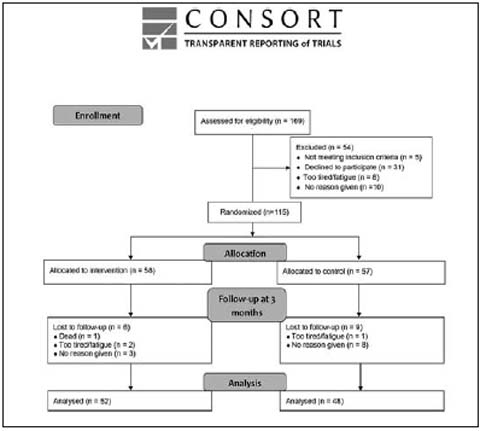
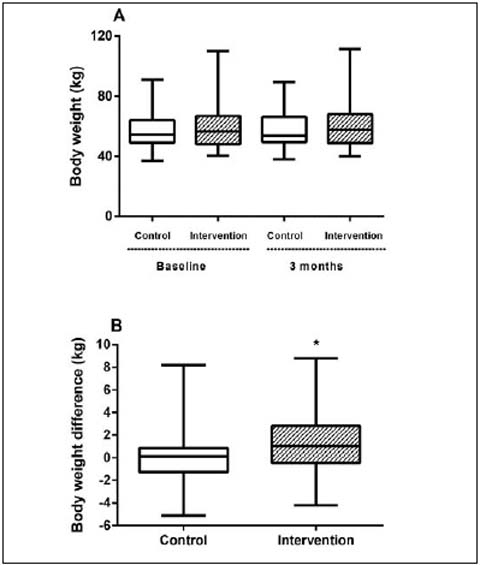
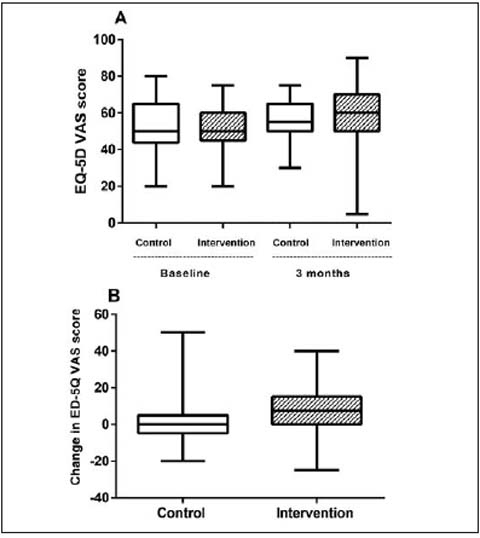
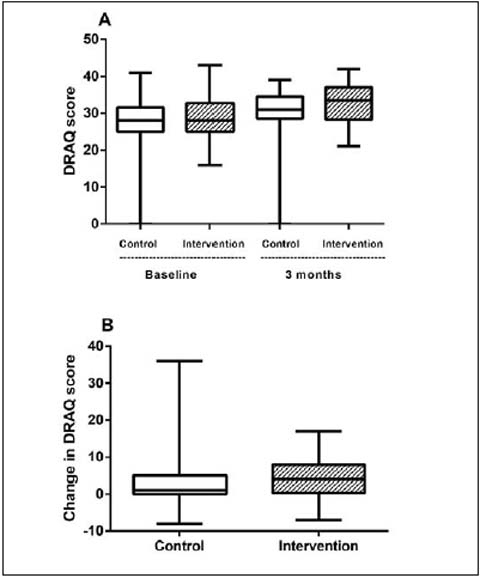
OBJECTIVES: We examined if individually-adapted nutritional counselling could prevent > 5% weight loss among elderly patients 3 months after discharge from a rehabilitation institution. In addition we assessed quality of life (QoL) and appetite. DESIGN: An open, randomized trial. SETTING: Godthaab Health and Rehabilitation Institution in Bærum, Norway. PARTICIPANTS: Patients identified as being undernourished or at risk of disease-related malnutrition using the Nutritional Risk Screening tool NRS-2002. INTERVENTION: Shortly before discharge, patients in the intervention group received an individually-tailored nutrition plan. During the subsequent 3 months these patients were contacted 3 times via telephone calls and they received one visit at their homes, for nutrition counselling. Focus on this counselling was on optimizing meal environment, improving appetite, increasing food intake, advice on food preparation, and motivation and support. MEASUREMENTS: In addition to weight, QoL and appetite were assessed using the EQ-5D questionnaire and a modified version of the Disease-Related Appetite Questionnaire, respectively. RESULTS: Among 115 considered eligible for the study, 100 were enrolled (72 women and 28 men), with a mean age of 75 years and a mean body mass index of 20 kg/m2. Two in the intervention group (n = 52) and 5 in the control group (n = 48) lost > 5% of their body weight, giving an odds ratio of 0.34 (95% CI: 0.064 - 1.86; p = 0.22). We did not detect any significant differences in the QoL- or appetite scores between the two study groups after three months. CONCLUSION: An individually-adapted nutritional counselling did not improve body mass among elderly patients 3 months after discharge from a rehabilitation institution. Neither quality of life nor appetite measures were improved. Possibly, nutritional counselling should be accompanied with nutritional supplementation to be effective in this vulnerable group of elderly. The trial is registered in Clinical Trials (ID: NCT01632072).
Overview
The claims and statistics of this paper haven’t been checked yet.
Free: it reads the open-access text and checks the first 5 claims that cite a source we can check. Create a free account to check every claim.
Integrity signals
Registry
Cites
Statistics
Figures
Verification
Claims the paper makes
The claims and statistics of this paper haven’t been checked yet.
Free: it reads the open-access text and checks the first 5 claims that cite a source we can check. Create a free account to check every claim.
Claims other papers make about this one
Each is checked against this paper’s own text: does it say what the citing paper says it does?
The cited source doesn’t support the claim as written.
In the citing paper
“Four of the six studies which reported quality of life using the EQ-5D, SF-36 or EORTC found improvements in the intervention group [27, 28, 30, 31, 33, 35].”
From Is telehealth effective in managing malnutrition in community-dwelling older adults? A systematic review and meta-analysis. (2018) · cites this paper as [31]
Checked by a reasoning model — may be wrong.
Experimental — accuracy not yet measuredThe cited source says what the claim attributes to it.
In the citing paper
“Weight increased since baseline (p=0.0026; data not provided).”
From Is telehealth effective in managing malnutrition in community-dwelling older adults? A systematic review and meta-analysis. (2018) · cites this paper as [31]
The cited source says what the claim attributes to it.
In the citing paper
“No difference in odds of 5% weight loss OR: 0.34 (95%CI: 0.064-1.86; p=0.22).”
From Is telehealth effective in managing malnutrition in community-dwelling older adults? A systematic review and meta-analysis. (2018) · cites this paper as [31]
The cited source says what the claim attributes to it.
In the citing paper
“The remaining seven interventions were delivered to patients with mixed morbidities following discharge from an inpatient facility [27, 28, 31-35].”
From Is telehealth effective in managing malnutrition in community-dwelling older adults? A systematic review and meta-analysis. (2018) · cites this paper as [31]
The check wasn’t confident either way, so it gives no verdict — never disputed.
In the citing paper
“Although most studies did not compare the groups statistically, four of the eight studies reporting all-cause mortality (range of 1.5-months to 4-years post-baseline) found a higher incidence in the control groups [28-33, 35, 39].”
From Is telehealth effective in managing malnutrition in community-dwelling older adults? A systematic review and meta-analysis. (2018) · cites this paper as [31]
Experimental — accuracy not yet measured
2 more claims about this paper
Create a free account to see every claim other papers make about this one.
Self-check
Percentages, sums and reported differences re-computed from the paper’s own numbers.
The self-check needs the paper’s full text.
Citations
Cites
EQ-SD: a measure of health status from the EuroQol Group
Rabin, R., & Charro, F. D. (2001) · Annals of Medicine · doi:10.3109/07853890109002087 · Cited by 5,613 · cited 1×
“We used the research tool EQ-5D, available in Norwegian, to assess quality of life (QoL) among the patients (15).”
ESPEN Guidelines for Nutrition Screening 2002
Kondrup, J. (2003) · Clinical Nutrition · doi:10.1016/s0261-5614(03)00098-0 · Cited by 3,159 · cited 2×
“Notably, few of the patients were undernourished (NRS 2002 score > 4); whereas most of them had a NRS 2002 score of 3 or 4, thus being at risk of disease-related malnutrition (14).”
KONDRUP, J. (2003) · Clinical Nutrition · doi:10.1016/s0261-5614(02)00214-5 · Cited by 3,063 · cited 2×
“Here we chose to use the NRS-2002 to identify undernourished patients and those at risk of disease-related malnutrition, since this questionnaire is primarily recommended in Norwegian guidelines regarding nutritional assessment in health-institutions (10).”
Bauer, J., Biolo, G., Cederholm, T., Cesari, M., Cruz-Jentoft, A. J., Morley, J. E., Phillips, S., Sieber, C., Stehle, P., Teta, D., et al. (2013) · Journal of the American Medical Directors Association · doi:10.1016/j.jamda.2013.05.021 · Cited by 2,553 · cited 1×
“…protein supplementation have yielded contradictory results regarding maintenance of muscle mass in diverse elderly populations (27, 28); a combination of nutritional counselling and nutritional supplementation should therefore be examined, possibly also in combination with physical activity (29).”
Incidence and recognition of malnutrition in hospital
McWhirter, J. P., & Pennington, C. R. (1994) · BMJ · doi:10.1136/bmj.308.6934.945 · Cited by 1,504 · cited 1×
“Little knowledge, interest and awareness among health professionals with regard to nutritional issues, are major contributing factors to further deterioration of nutritional status following discharge from hospital (5).”
InfluentialDisease-related malnutrition: an evidence-based approach to treatment
(2003) · CABI eBooks · doi:10.1079/9780851996486.0000 · Cited by 876
Wilson, M.-M. G., Thomas, D. R., Rubenstein, L. Z., Chibnall, J. T., Anderson, S., Baxi, A., Diebold, M. R., & Morley, J. E. (2005) · The American Journal of Clinical Nutrition · doi:10.1093/ajcn/82.5.1074 · Cited by 809 · cited 4×
“Our DRAQ scores were not apparently different from those obtained among a cohort of general community-dwelling adults when using the CNAQ tool (17).”
InfluentialTurner, L., Shamseer, L., Altman, D. G., Weeks, L., Peters, J., Kober, T., Dias, S., Schulz, K. F., Plint, A. C., & Moher, D. (2012) · Cochrane Database of Systematic Reviews · doi:10.1002/14651858.mr000030.pub2 · Cited by 740 · cited 1×
“The data are described according to the CONSORT statement of reporting randomized trials (12).”
van Bokhorst-de van der Schueren, M. A. E., Guaitoli, P. R., Jansma, E. P., & de Vet, H. C. W. (2014) · Clinical Nutrition · doi:10.1016/j.clnu.2013.04.008 · Cited by 524 · cited 1×
“There is no universally accepted screening tool for assessing nutritional risk (20).”
Baldwin, C., Spiro, A., Ahern, R., & Emery, P. W. (2012) · JNCI: Journal of the National Cancer Institute · doi:10.1093/jnci/djr556 · Cited by 400 · cited 2×
“Some data indicate that follow-up with nutrition treatment after discharge may improve nutritional status and patient functioning (8, 9).”
Cited by
Assessment and Treatment of the Anorexia of Aging: A Systematic Review
Cox, N. J., Ibrahim, K., Sayer, A. A., Robinson, S. M., & Roberts, H. C. (2019) · Nutrients · doi:10.3390/nu11010144 · Cited by 158
“assessed a three-month education program [30].”
BackgroundMethodInfluentialMarx, W., Kelly, J. T., Crichton, M., Craven, D., Collins, J., Mackay, H., Isenring, E., & Marshall, S. (2018) · Maturitas · doi:10.1016/j.maturitas.2018.02.012 · Cited by 91
Baldwin, C., de van der Schueren, M. A., Kruizenga, H. M., & Weekes, C. E. (2021) · Cochrane Database of Systematic Reviews · doi:10.1002/14651858.cd002008.pub5 · Cited by 54
Kaegi-Braun, N., Kilchoer, F., Dragusha, S., Gressies, C., Faessli, M., Gomes, F., Deutz, N. E., Stanga, Z., Mueller, B., & Schuetz, P. (2022) · Clinical Nutrition · doi:10.1016/j.clnu.2022.09.011 · Cited by 50
ten Cate, D., Ettema, R. G. A., Waal, G. H., Bell, J., Verbrugge, R., Schoonhoven, L., Schuurmans, M. J., & the Basic Care Revisited Group (BCR) (2020) · Journal of Clinical Nursing · doi:10.1111/jocn.15153 · Cited by 58
Riddle, E., Munoz, N., Clark, K., Collins, N., Coltman, A., Nasrallah, L., Nishioka, S., Scollard, T., Simon, J. R., & Moloney, L. (2024) · Journal of the Academy of Nutrition and Dietetics · doi:10.1016/j.jand.2024.03.013 · Cited by 33
Ingstad, K., Uhrenfeldt, L., Kymre, I. G., Skrubbeltrang, C., & Pedersen, P. U. (2020) · BMJ Open · doi:10.1136/bmjopen-2020-040439 · Cited by 32
Nguyen, H. T., Pavey, T., Collins, P. F., Nhung, N. V., Pham, T. D., & Gallegos, D. (2019) · Journal of the Academy of Nutrition and Dietetics · doi:10.1016/j.jand.2019.09.013 · Cited by 33
Moloney, L., & Jarrett, B. (2021) · Journal of the Academy of Nutrition and Dietetics · doi:10.1016/j.jand.2020.09.026 · Cited by 21
How quality of life is measured in studies of nutritional intervention: a systematic review
Pemau, R. C., González-Palacios, P., & Kerr, K. W. (2024) · Health and Quality of Life Outcomes · doi:10.1186/s12955-024-02229-y · Cited by 25
Seid, A. M., & Fentahun, N. (2023) · BMC Geriatrics · doi:10.1186/s12877-023-04433-9 · Cited by 17
“This is consistent with earlier research from Vietnam [45], Netherlands [46], Norway [47], and Finland [48], which found an increase in MNA scores but no appreciable change in body weights or BMI.”
ResultPavlović, J., Račić, M., Ivković, N., & Jatić, Z. (2019) · Materia Socio Medica · doi:10.5455/msm.2019.31.19-24 · Cited by 16
“A few studies have examined differences between elderly people in regards to the place of living and frailty in nutritional status and eating habits (11-13).”
BackgroundDisease Related Malnutrition in Hospital Outpatients, - Time for Action
Holst, M., Nina, Z., Østergaard, T., & Mikkelsen, S. L. (2019) · International Journal of Food Sciences and Nutrition Research · doi:10.31546/ijfsnr.1002 · Cited by 11
Mikkelsen, S. L., Geisler, L., & Holst, M. (2021) · Scandinavian Journal of Caring Sciences · doi:10.1111/scs.13033 · Cited by 8
Alzaben, A. S., Aloudah, A., Almutairi, F., Alshardan, M., Alasmari, S., Alsihman, S., Alshamri, D., Alshlwi, S., & Mortada, E. M. (2024) · Diabetes Metabolic Syndrome and Obesity · doi:10.2147/dmso.s447743 · Cited by 3
Klassen, P. N., Shao, H., Thorlakson, J. J. D., Gramlich, L. M., & Chan, C. B. (2026) · Clinical Nutrition · doi:10.1016/j.clnu.2026.106630 · Cited by 1
Unintended weight loss in hematology outpatients - Work to do
Mikkelsen, S. L., Østergaard, T., Zacher, N., & Holst, M. (2020) · Clinical Nutrition ESPEN · doi:10.1016/j.clnesp.2020.02.016 · Cited by 1
Promoting nurses’ behaviour change in nutritional care
ten Cate, D. (2023) · Utrecht University Repository (Utrecht University) · doi:10.33540/1610 · Cited by 1
Feng, G., Liu, C., Sun, X., Liu, X., Lu, F., Li, Y., & Zhou, Y. (2025) · Frontiers in Nutrition · doi:10.3389/fnut.2025.1606008
Metadata
- Authors
- Andersson, J., Hulander, E., Rothenberg, E., & Iversen, P. O.
- Affiliations
- University of Oslo (NO)
- Kristianstad University (SE)
- Corresponding author
- Iversen, P. Ole
- Venue
- The Journal of nutrition, health and aging
- Publisher
- Elsevier BV
- Published
- 2017-07
- Volume
- 21
- Issue
- 7
- Pages
- 811-818
- ISSN
- 1279-7707 (ISSN-L)
- PMC
- PMC12878511
- OpenAlex
- W2537011390
- Cited by
- 19
- References
- 33
- Citations by year
- 2026: 1 · 2025: 1 · 2024: 3 · 2023: 2 · 2022: 1 · 2021: 2 · 2020: 3 · 2019: 5 · 2018: 1
- FWCI
- 1.61
- Type
- journal article
- Language
- en
- Open access
- hybrid
- doi.org
- Licence
- cc-by-nc-nd
- www.elsevier.com/tdm/userlicense/1.0/ (tdm)
- www.elsevier.com/legal/tdmrep-license (tdm)
- creativecommons.org/licenses/by-nc-nd/4.0/ (vor, 2354 d)
- Locations
- The journal of nutrition health & aging (publishedVersion, cc-by-nc-nd)
- Europe PMC (PubMed Central) (publishedVersion, cc-by-nc-nd)
- PubMed (publishedVersion)
- PubMed Central (publishedVersion, cc-by-nc-nd)
- NORA - Norwegian Open Research Archives (submittedVersion, other-oa)
- Topics
- Health Sciences › Medicine › Physiology (medical) › Nutrition and Health in Aging
- Health Sciences › Nursing › Nutrition and Dietetics › Clinical Nutrition and Gastroenterology
- Health Sciences › Health Professions › Speech and Hearing › Dysphagia Assessment and Management
- Keywords
- nutrition counseling, weight loss prevention, malnutrition, older adults, rehabilitation discharge, quality of life, appetite, home care, meal environment, cooking, dietary supplementation
- MeSH terms
- Aged, Appetite, Body Weight, Counseling, Female, Homes for the Aged, Humans, Male, Norway, Nursing Homes, Patient Discharge, Quality of Life, Surveys and Questionnaires, Body Mass Index, Endpoint Determination, Malnutrition
About these checks
Registry, retraction, Cites and statistics results are computed, not judged, with one exception: a printed reference that no index lists is read once by a model before it counts as a citation error. Claims are extracted by a model and kept only when their quote appears verbatim in the text; each cited source is then checked, with a model’s help, for whether it says what the claim relies on. Those verdicts can be wrong — read the claim’s quote and the cited source before relying on one.
Statistics and arithmetic are recomputed, not judged.
Confidence bands are shown only for fields calibrated on our annotated test set. None is calibrated yet, so no band is shown.
What counts as a claim ›How we measure confidence ›How we check this ›
Are you an author, or do you see a problem with this page? Request a review
Data sources
Bibliographic data: Semantic Scholar, OpenAlex, Crossref.
Contains information from the Semantic Scholar Academic Graph Datasets, made available under the ODC Attribution License (ODC-BY 1.0).
Semantic Scholar’s data is described in: Kinney, R., et al. (2023). The Semantic Scholar Open Data Platform. arXiv:2301.10140.
