

The DOI matches its Crossref record; 30 of the 30 references it cites were found in a registry or an index.
Intrinsic Capacity as a Determinant of Physical Resilience in Older Adults
Open accessAbstract
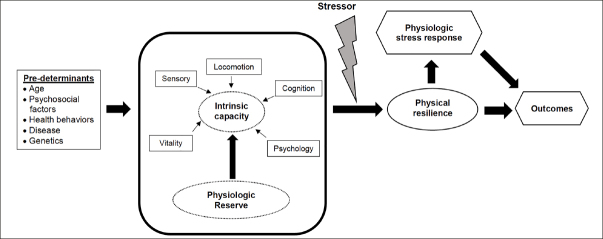
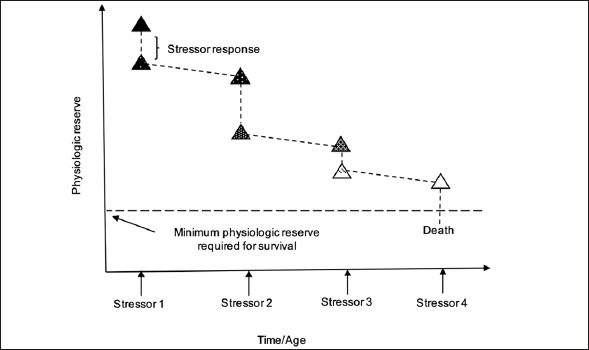
The traditional disease-oriented model of healthcare is inadequate to address the needs of the older population. Greater attention should be given to strategies that promote healthy aging. Recently proposed constructs of intrinsic capacity (IC) and physical resilience (PR) hold great potential to reshape geriatric medicine and aging research. These constructs accentuate the positive health attributes of older people in contrast to the popular frailty construct that is centered on functional deficits. IC was introduced by the World Health Organization (WHO) as a composite of all the physical and mental capacities. WHO has emphasized enhancement of IC throughout the life course so as to maintain functional ability in old age. PR, recently highlighted by the National Institute on Aging, is the ability to successfully cope with stressors. High levels of resilience can result in desirable clinical and functional outcomes after stressors. Therefore, it is important to understand the underlying physiology of PR and the risk factors contributing to diminished PR. The main goal of this article is to explore the potential relationship between IC and PR. Based on a classical theory of aging, we postulate that IC is a determinant of PR and is also a high-level integrative measure of physiologic reserve which is the fundamental factor underlying one's ability to withstand stressors. A major implication of our postulates is that even though IC is only one of the many determinants of PR, it could serve as an important intervenable target for enhancing resilience in older adults.
Overview
The claims and statistics of this paper haven’t been checked yet.
Run the check — free, no account needed. It reads the open-access text and checks the sources it cites.
Integrity signals
Registry
Cites
Statistics
Figures
Verification
Claims the paper makes
The claims and statistics of this paper haven’t been checked yet.
Run the check — free, no account needed. It reads the open-access text and checks the sources it cites.
Claims other papers make about this one
Each is checked against this paper’s own text: does it say what the citing paper says it does?
In the citing paper
“homeostatic capacities providing resilience to stressors may diminish with age [25]”
From Global consensus on optimal exercise recommendations for enhancing healthy longevity in older adults (ICFSR) (2025) · cites this paper as [25]
Self-check
Percentages, sums and reported differences re-computed from the paper’s own numbers.
The self-check needs the paper’s full text.
Citations
Cites
Frailty in Older Adults: Evidence for a Phenotype
Fried, L. P., Tangen, C. M., Walston, J., Newman, A. B., Hirsch, C., Gottdiener, J., Seeman, T., Tracy, R., Kop, W. J., Burke, G., et al. (2001) · The Journals of Gerontology Series A: Biological Sciences and Medical Sciences · doi:10.1093/gerona/56.3.m146 · Cited by 24,907
Conventional wisdom on measurement: A structural equation perspective.
Bollen, K., & Lennox, R. (1991) · Psychological Bulletin · doi:10.1037/0033-2909.110.2.305 · Cited by 3,618
Midlife Hand Grip Strength as a Predictor of Old Age Disability
Rantanen, T. (1999) · JAMA · doi:10.1001/jama.281.6.558 · Cited by 1,505
Fried, L. P. (2001) · Journals of Gerontology Series A-biological Sciences and Medical Sciences · Cited by 1,103
Evidence for the Domains Supporting the Construct of Intrinsic Capacity
Cesari, M., Araujo de Carvalho, I., Amuthavalli Thiyagarajan, J., Cooper, C., Martin, F. C., Reginster, J.-Y., Vellas, B., & Beard, J. R. (2018) · The Journals of Gerontology: Series A · doi:10.1093/gerona/gly011 · Cited by 745
Boyd, C. M., Landefeld, C. S., Counsell, S. R., Palmer, R. M., Fortinsky, R. H., Kresevic, D. M., Burant, C. J., & Covinsky, K. E. (2008) · Journal of the American Geriatrics Society · doi:10.1111/j.1532-5415.2008.02023.x · Cited by 738
Psychological resilience in young and older adults
Gooding, P. A., Hurst, A., Johnson, J., & Tarrier, N. (2011) · International Journal of Geriatric Psychiatry · doi:10.1002/gps.2712 · Cited by 552
Strehler, B. L., & Mildvan, A. S. (1960) · Science · doi:10.1126/science.132.3418.14 · Cited by 498
The concept of symmorphosis: a testable hypothesis of structure-function relationship.
Weibel, E. R., Taylor, C. R., & Hoppeler, H. (1991) · Proceedings of the National Academy of Sciences · doi:10.1073/pnas.88.22.10357 · Cited by 488
The structure and predictive value of intrinsic capacity in a longitudinal study of ageing
Beard, J., Thiyagarajan, J. A., Cesari, M., & de Carvalho, I. A. (2019) · BMJ Open · doi:10.1136/bmjopen-2018-026119 · Cited by 430
Cited by
Sorted by citations
Bao, H., Cao, J., Chen, M., Min, C., Chen, W., Chen, X., Chen, Y., Chen, Y., Chen, Y., Chen, Z., et al. (2023) · Science China Life Sciences · doi:10.1007/s11427-023-2305-0 · Cited by 402
Self-citationIzquierdo, M., de Souto Barreto, P., Arai, H., Bischoff-Ferrari, H. A., Cadore, E. L., Cesari, M., Chen, L.-K., Coen, P. M., Courneya, K. S., Duque, G., et al. (2025) · The Journal of nutrition, health and aging · doi:10.1016/j.jnha.2024.100401 · Cited by 273
Intrinsic Capacity in Older Adults: Recent Advances
Zhou, Y., & Ma, L. (2022) · Aging and Disease · doi:10.14336/ad.2021.0818 · Cited by 148
“Consistent with IC, physical resilience also focuses on positive health attributes, and it targets function instead of diseases [20].”
BackgroundSelf-citationUsability evaluation of mHealth apps for elderly individuals: a scoping review
Wang, Q., Liu, J., Zhou, L., Tian, J., Chen, X., Zhang, W., Wang, H., Zhou, W., & Gao, Y. (2022) · BMC Medical Informatics and Decision Making · doi:10.1186/s12911-022-02064-5 · Cited by 113
“As individuals age, their intrinsic capacities decline, and the risk of multimorbidity increases, resulting in the need for ongoing monitoring or treatment [3].”
BackgroundZhao, J., Chhetri, J. K., Chang, Y., Zheng, Z., Ma, L., & Chan, P. (2021) · Frontiers in Medicine · doi:10.3389/fmed.2021.753295 · Cited by 85
“Individuals with lower physiologic reserve or with impairments in IC (22) could experience poor recovery once exposed to stressors and as a result of the continuum of the aging process and diseases and may be vulnerable to being”
BackgroundSelf-citationMediterranean Diet and Quality of Life in Adults: A Systematic Review
Godos, J., Guglielmetti, M., Ferraris, C., Frías-Toral, E., Azpíroz, I. D., Lipari, V., Mauro, A. D., Furnari, F., Castellano, S., Galvano, F., et al. (2025) · Nutrients · doi:10.3390/nu17030577 · Cited by 94
Resilience And Successful Aging
Merchant, R. A., Aprahamian, I., Woo, J., Vellas, B. J., & Morley, J. E. (2022) · The journal of nutrition health & aging · doi:10.1007/s12603-022-1818-4 · Cited by 71
Intrinsic Capacity to Predict Future Adverse Health Outcomes in Older Adults: A Scoping Review
Zhou, J., Chang, H., Leng, M., & Wang, Z. (2023) · Healthcare · doi:10.3390/healthcare11040450 · Cited by 60
“which is the fundamental factor underlying one’s ability to withstand stressors [37].”
BackgroundKoivunen, K., Schaap, L. S., Hoogendijk, E. O., Schoonmade, L. J., Huisman, M. A., & van Schoor, N. M. (2022) · Ageing Research Reviews · doi:10.1016/j.arr.2022.101685 · Cited by 64
“Two of the articles provided a more detailed conceptual description of the construct (Cesari et al., 2018; Chhetri et al., 2021).”
Andaloro, S., Cacciatore, S., Risoli, A., Comodo, R. M., Brancaccio, V., Calvani, R., Giusti, S., Schlögl, M., D’Angelo, E., Tosato, M., et al. (2025) · Medical Sciences · doi:10.3390/medsci13030089 · Cited by 50
“Understanding hip fracture through the lens of IC allows clinicians and researchers to focus not only on survival or symptom control, but on strategies to restore capacity, support adaptation, and preserve autonomy in the face of adversity [86].”
Muneera, K., Muhammad, T., Pai, M., Ahmed, W., & Althaf, S. (2023) · Scientific Reports · doi:10.1038/s41598-023-37097-x · Cited by 52
Resilience in Older People: A Concept Analysis
Lima, G. S., Figueira, A. L. G., de Carvalho, E. C., Kusumota, L., & Caldeira, S. (2023) · Healthcare · doi:10.3390/healthcare11182491 · Cited by 59
“…The Resilience Scale (Two domains— personal competence; acceptance of self and life) [33,49,51,58,66,75,78,83,103,106,116,125]; Sim-plified Resilience Score = Leave Behind Questionnaire + Resilience Scale [43,105,118]; Brief Resilient Coping Scale…”
Measurements of Intrinsic Capacity in Older Adults: A Scoping Review and Quality Assessment
Liang, Y., Shang, S., Gao, Y., Zhai, J., Cheng, X., Yang, C., & Zhang, R. (2022) · Journal of the American Medical Directors Association · doi:10.1016/j.jamda.2022.09.011 · Cited by 45
Hu, F., Lin, C., Yueh, F.-R., Lo, Y., & Lin, C. (2022) · BMC Geriatrics · doi:10.1186/s12877-022-02918-7 · Cited by 45
“further revised a conceptual model of physical resilience and proposed the pre-determinants of physical resilience, including: age, psychosocial factors, health behaviors, genetics, and diseases [6].”
BackgroundInfluentialLiao, X., Shen, J., & Li, M. (2023) · Experimental Gerontology · doi:10.1016/j.exger.2023.112112 · Cited by 39
Fierro‐Marrero, J., Reina‐Varona, Á., Paris‐Alemany, A., & Touche, R. L. (2025) · Journal of Clinical Medicine · doi:10.3390/jcm14061808 · Cited by 43
“Terms such as “phys-iologic reserve”, “intrinsic capacity”, “physical resilience”, and “functional ability” are key factors that influence health and independence in older adults [14,15].”
Resilience and Intrinsic Capacity in Older Adults: A Review of Recent Literature
Grigoraș, G., Ilie, A. C., Turcu, A.-M., Albişteanu, S.-M., Lungu, I.-D., Ștefăniu, R., Pîslaru, A. I., Gavrilovici, O., & Alexa, I. D. (2025) · Journal of Clinical Medicine · doi:10.3390/jcm14217729 · Cited by 45
Koivunen, K., Hoogendijk, E. O., Schaap, L. S., Huisman, M. A., Heymans, M. W., & van Schoor, N. M. (2023) · Aging Clinical and Experimental Research · doi:10.1007/s40520-023-02366-2 · Cited by 37
Physical resilience in older adults: Potential use in promoting healthy aging
Li, J., Chhetri, J. K., & Ma, L. (2022) · Ageing Research Reviews · doi:10.1016/j.arr.2022.101701 · Cited by 31
Self-citationAssociation between pain, sleep and intrinsic capacity in Chinese older adults: Evidence from CHARLS
Yuan, Q., Xiao, Y., Wang, M., Yang, F., Fu, M., Liu, M., & Hu, C. (2024) · The journal of nutrition health & aging · doi:10.1016/j.jnha.2024.100466 · Cited by 33
“IC is a key indicator of functional ability, playing a crucial role in determining the physical well-being of older adults before the onset of frailty or disability [26,27].”
Laic, R. A. G., Firouzi, M., Claeys, R., Bautmans, I., Swinnen, E., & Beckwée, D. (2024) · Sensors · doi:10.3390/s24072230 · Cited by 25
“When considering the potential of LLEs for assessing, monitoring, and promoting older individuals’ health, it is imperative to contextualize these findings within the broader framework of IC, which has been introduced and discussed as a marker of healthy aging by the WHO [68,69].”
BackgroundAstrone, P., Perracini, M. R., Martin, F. C., Marsh, D., & Cesari, M. (2022) · Aging Clinical and Experimental Research · doi:10.1007/s40520-022-02186-w · Cited by 25
“Changes in IC may represent a surrogate of the individual’s physiologic resilience and measure his/her capacity to successfully cope with stressors over time [56].”
BackgroundFlores-Bello, C., Correa‐Muñoz, E., Sánchez-Rodrı́guez, M. A., & Mendoza-Núñez, V. M. (2024) · Geriatrics · doi:10.3390/geriatrics9010008 · Cited by 23
Liu, W., Qin, R., Zhang, X., Li, G., Qiu, Y., Zhang, G., & Chen, L. (2024) · Journal of Clinical Nursing · doi:10.1111/jocn.17432 · Cited by 22
Sarcopenia and intrinsic capacity in older adults: A systematic review
Sales, W. B., da Silva, P. N. S., Vital, B. S. B., & Câmara, M. (2025) · Archives of Gerontology and Geriatrics · doi:10.1016/j.archger.2025.105875 · Cited by 20
Intrinsic Capacity Declines with Elevated Homocysteine in Community-Dwelling Chinese Older Adults
Lin, S., Wang, F., Zheng, J., Yuan, Y., Huang, F., & Zhu, P. (2022) · Clinical Interventions in Aging · doi:10.2147/cia.s370930 · Cited by 20
“time, instead of an observation indicator at a given moment.(4,5) The statistics data of IC is relatively limited.”
BackgroundIntrinsic capacity in acutely hospitalized older adults
Nagae, M., Umegaki, H., Komiya, H., Nakashima, H., Fujisawa, C., Watanabe, K., Yamada, Y., & Miyahara, S. (2023) · Experimental Gerontology · doi:10.1016/j.exger.2023.112247 · Cited by 20
“Although the mechanism of the relationship between IC and clinical outcomes has not yet clearly understood, recent studies reported that IC was associated with inflammation-related biomarkers and physical resilience (PR) (Chhetri et al., 2021; Lu et al., 2023).”
Lin, S., Huang, M., Yang, L., Chen, S., Huang, X., Zheng, J., Yuan, Y., Li, N., Huang, F., & Zhu, P. (2023) · Experimental Gerontology · doi:10.1016/j.exger.2023.112194 · Cited by 18
Lee, J., Suh, Y., Park, J., Kim, G., & Lee, S. (2022) · Scientific Reports · doi:10.1038/s41598-022-10635-9 · Cited by 16
Merchant, R. A., Chan, Y. H., Anbarasan, D., & Woo, J. (2024) · The Journal of Frailty & Aging · doi:10.14283/jfa.2024.16 · Cited by 14
“Chhetri et al recommended monitoring of IC trajectory to allow for early intervention before the onset of frailty (17).”
Li, Y., Zhang, T., Li, M., Shen, R., Wang, X., Zhuo, C., Wang, Y., Yan, F., Liu, Z., & Huang, Y. (2025) · The journal of nutrition health & aging · doi:10.1016/j.jnha.2025.100526 · Cited by 14
“ICwasanimportantdeterminantoffunctionalperformanceinoldpersons, reflecting their physiological reserves and being associated with adverse health outcomes, highlighting the need for early monitoring [6 – 8].”
Physical Resilience: A novel approach for healthy aging
Chhetri, J. K., Ma, L., & Chan, P. (2022) · Journal of Frailty Sarcopenia and Falls · doi:10.22540/jfsf-07-029 · Cited by 13
Self-citationMather, R. V., Nipp, R. D., Balanza, G. A., Stone, T. A. D., Gutierrez, R., Raje, P., Higuchi, M., Liu, R., Mercado, L. A. S. C., Bittner, E. A., et al. (2024) · Anesthesiology · doi:10.1097/aln.0000000000005315 · Cited by 13
“11 In addition, these tools also do not take into account intraoperative data.”
Positive Aging and Death or Dying: A Scoping Review
Otto, R. B., Fields, N. L., Bennett, M., & Anderson, K. A. (2023) · The Gerontologist · doi:10.1093/geront/gnad006 · Cited by 15
Development of the Clinical pHysical rEsilience assEssment Scale (CHEES) in Chinese Older Adults
Li, J., Liu, P., Zhang, Y., Wang, G., Zhou, Y., Xing, Y., Zhang, L., Li, Y., & Ma, L. (2024) · The Journal of Frailty & Aging · doi:10.14283/jfa.2024.24 · Cited by 10
“Intrinsic capacity emphasizes the positive attributes of physical status in older adults and may be a pivotal determinant of physical resilience (24).”
Self-citationResearch on intrinsic capacity as a predictor of falls and disability in community-dwelling elderly
Liu, A., You, Y., Wang, Y., Li, L., & Yuan, J. (2025) · Frontiers in Aging · doi:10.3389/fragi.2025.1589369 · Cited by 10
Development and validation of a functional ability index for older adults: a multicohort study
Chang, Y., Sapkota, S., Thapa, B., Ma, L., Sheng, L., Wang, C., Chhetri, J. K., & Chan, P. (2024) · Age and Ageing · doi:10.1093/ageing/afae231 · Cited by 9
Self-citationZhu, Y. H., Zhu, Y. B., Li, J., Shi, N., Li, W., Tang, Y., Hua, L., Zhang, H., Yan, F., & Ma, Y. (2025) · Global Health & Medicine · doi:10.35772/ghm.2025.01026 · Cited by 11
Fasting mimicking diet extends lifespan and improves intestinal and cognitive health
Wang, Q., Xu, J., Luo, M., Jiang, Y., Gu, Y., Wang, Q., He, J., Sun, Y., Lin, Y., Feng, L., et al. (2024) · Food & Function · doi:10.1039/d4fo00483c · Cited by 8
Ma, L., Zheng, E., Fang, Y., Chen, H., Cai, S., Luo, F., Jiang, W., Li, Z., Wang, J., Zhou, C., et al. (2024) · Geriatric Nursing · doi:10.1016/j.gerinurse.2024.08.019 · Cited by 9
Self-citationOh, E., Kim, N., Gansukh, L., & Song, R. (2025) · BMC Psychology · doi:10.1186/s40359-025-02854-2 · Cited by 9
“Those with sufficient intrinsic capacity can recover from internal or external stressors with fewer complications [18].”
Zhao, W., Feng, S., Zhao, M., Zhuo, Y., Zhao, X., & Wang, X. (2025) · BMC Public Health · doi:10.1186/s12889-025-24221-x · Cited by 7
Stutsrim, A. E., Brastauskas, I. M., Craven, T. E., Callahan, K. E., Pajewski, N. M., Davis, R. P., Corriere, M. A., Edwards, M. S., & Goldman, M. P. (2022) · The American Surgeon · doi:10.1177/00031348221121547 · Cited by 7
Rico, C. L. V., González-Quirarte, N. H., Compeán-Ortiz, L. G., Castañeda-Hidalgo, H., Campiño-Valderrama, S. M., & Rayas, L. F. (2024) · Annals of Geriatric Medicine and Research · doi:10.4235/agmr.23.0182 · Cited by 7
Editorial: Intrinsic capacity and resilience vs. frailty: On the way to healthy aging
Frolova, E. V., Arosio, B., & Lim, W. S. (2023) · Frontiers in Medicine · doi:10.3389/fmed.2023.1155648 · Cited by 7
“decline after a significant health stressor (8).”
Sun, R., Li, Y., Kang, Y., Xu, X., Zhu, J., Fu, H., Zhang, Y., Liu, Y., & Liu, Y. (2025) · Maturitas · doi:10.1016/j.maturitas.2025.108594 · Cited by 7
Cacciatore, S., Calvani, R., Prokopidis, K., Schlögl, M., Russo, A., Tosato, M., Anton, S. D., Leeuwenburgh, C., Batsis, J. A., Marzetti, E., et al. (2026) · Experimental Gerontology · doi:10.1016/j.exger.2026.113026 · Cited by 6
Bencivenga, L., Strumia, M., Rolland, Y., Guyonnet, S., Parini, A., Cestac, P., Andrieu, S., Barreto, P. D. S., & Rouch, L. (2024) · European Journal of Internal Medicine · doi:10.1016/j.ejim.2024.03.001 · Cited by 7
Hu, F., Li, Y., Chang, C., Lin, T., Lai, P.-H., & Lin, C. (2024) · The journal of nutrition health & aging · doi:10.1016/j.jnha.2024.100250 · Cited by 6
Nunes, P. R. P., Kassiano, W., Castro-e-Souza, P., Camilo, B. D. F., Cristina-Souza, G., Souza, L. M. V., Cyrino, E. S., & Carneiro, M. A. S. (2024) · Archives of Gerontology and Geriatrics · doi:10.1016/j.archger.2024.105474 · Cited by 6
Manning, J., Heselton, H. J., Venema, D. M., Boron, J. B., & Yentes, J. M. (2025) · Scientific Reports · doi:10.1038/s41598-025-92746-7 · Cited by 5
Cui, J., Gu, Y., Pang, J., Gao, H., Zhang, L.-Q., Wu, X., Dang, J., Li, J., Zhu, X., Luo, S., et al. (2026) · GeroScience · doi:10.1007/s11357-026-02111-3 · Cited by 4
“More recently, IC has been considered a determinant of physical resilience and functions as an important target for interventions aimed at enhancing older adults’ ability to withstand stressors and maintain independence [5, 6].”
Metoyer, G. T., Asgar, J. A., D’Adamo, C. R., Wolf, J. H., Katlic, M. R., Svoboda, S. M., & Mavanur, A. A. (2023) · The American Journal of Surgery · doi:10.1016/j.amjsurg.2023.09.011 · Cited by 4
Alodhialah, A. M., Almutairi, A. A., & Almutairi, M. (2025) · Healthcare · doi:10.3390/healthcare13121461 · Cited by 4
“Participants with higher resilience scores were significantly less likely to be classified as frail, independent of physical health indicators [38,39].”
Editorial: Reducing health disparities: promoting vulnerable older adults' psychological health
Guo, Y., Wang, A., & Zheng, R. (2023) · Frontiers in Psychology · doi:10.3389/fpsyg.2023.1187403 · Cited by 4
“Recently, personal intrinsic capacity has attracted increased interest among researchers and is believed to be an important factor for alleviating age-related mental and physical problems (Chhetri et al., 2021).”
BackgroundOptimizing intrinsic capacity to prevent frailty and sarcopenia in old age
Chhetri, J. K., Ma, L., Kang, L., & Chan, P. (2023) · Journal of Frailty Sarcopenia and Falls · doi:10.22540/jfsf-08-136 · Cited by 4
Self-citationGoh, S. H. E., Zhang, D., Tan, K. H., & Koh, S. S. L. (2025) · Journal of Advanced Nursing · doi:10.1111/jan.16729 · Cited by 3
Shang, S., Chen, S., Qi, L., Liu, T., Yang, Y., Yao, X., Lu, D., Cheng, X., Yang, J., Cheng, M., et al. (2025) · BMJ Open · doi:10.1136/bmjopen-2023-082702 · Cited by 3
“66 70 According to the conceptual model constructed by Chhetri et al , 27 the abovementioned preventable factors correspond to the five dimensions of IC, which are influenced by health behaviours, psychosocial factors and disease.”
InfluentialSong, F., Chhetri, J. K., Hu, M., Li, B., Xia, J., & Yin, C. (2025) · The journal of nutrition health & aging · doi:10.1016/j.jnha.2025.100687 · Cited by 3
“Indeed, decline in IC could be a result of certain health-related stressors, which also links IC with the physical resilience concept [31] and a proxy of underlying reserves that are impacted by stressors [32].”
Self-citationAlegre-Tamariz, J., Sánchez-Medina, J., Runzer-Colmenares, F. M., Ávila-Rodríguez, C., Bermejo-Franco, A., & Parodi, J. F. (2025) · BMC Geriatrics · doi:10.1186/s12877-025-06471-x · Cited by 3
Wang, Z., Wang, L., Tang, L., Li, X., Lu, Y. T., Yu, X., Liu, F., & Zhu, X. (2025) · Frontiers in Endocrinology · doi:10.3389/fendo.2025.1738997 · Cited by 3
“…differential impacts of IC changes on CMM risk: First, those with persistent IC impairment face the highest risk, as prolonged core physiological dysfunction (e.g., metabolic regulation) maintains low reserve, failing to counter risks and accelerating cardiometabolic disease accumulation (26, 27).”
Takeda, C., Barreto, P. D. S., & Vellas, B. J. (2024) · Springer eBooks · doi:10.1007/978-3-031-57361-3_5 · Cited by 3
Spiegeleer, A. D., Bronselaer, A., Mahieu, I., Vreys, D., Haslbauer, A., Leibfarth, J.-P., Schoote, L. V., Garedow, A. W., Petrovic, M., Wynendaele, E., et al. (2025) · GeroScience · doi:10.1007/s11357-025-01682-x · Cited by 4
“Physiological reserve can be considered an early marker of functional capacity, with its decline contributing to reduced intrinsic capacity—a broader, higher-order concept—and the development of frailty, which is often positioned at the lower end of the physiological reserve spectrum [3, 4].”
Zhang, L., Li, P., Wu, X., Zhao, D., Huang, H., & Dou, H. (2025) · Geriatric Nursing · doi:10.1016/j.gerinurse.2025.103522 · Cited by 3
Lusardi, M. M. (2023) · Journal of Geriatric Physical Therapy · doi:10.1519/jpt.0000000000000378 · Cited by 3
Büber, B., Artan, T., Arifoğlu, A. T., & ARICI, A. (2024) · Educational Gerontology · doi:10.1080/03601277.2024.2374103 · Cited by 3
“Chhetri et al. (2021) indicated that these factors have an indirect effect on physical resilience and that their impact occurs through intrinsic capacity, emphasizing that intrinsic capacity represents an individual’s overall physical and mental capacities.”
InfluentialUsability evaluation of mHealth Apps for the elderly: A scoping reviewPreprint
Wang, Q., Zhou, L., Liu, J., Tian, J., Chen, X., Zhang, W., Wang, H., Zhou, W., & Gao, Y. (2022) · Research Square · doi:10.21203/rs.3.rs-1515149/v1 · Cited by 3
Belimbegovski, W., Schaap, L. S., Linn, A. J., Medlock, S. K., van Weert, J. C. M., van der Velde, N., & van Schoor, N. M. (2025) · Archives of Gerontology and Geriatrics · doi:10.1016/j.archger.2025.105936 · Cited by 2
Sun, Q., Wang, S.-S., Song, W., Ge, S., Li, X., Ma, L., Zhang, Z., & Mei, Y.-X. (2025) · Journal of Nursing Scholarship · doi:10.1111/jnu.70023 · Cited by 2
Self-citationValue shift in response to aging: a longitudinal study based on healthy aging
Shen, Y., Cao, R., Sang, X., Lin, R., Sun, H., & Yan, C. (2025) · BMC Geriatrics · doi:10.1186/s12877-025-06493-5 · Cited by 2
“Based on the shift in perspective, more studies have begun to focus on the development of older adults’ abilities and the relationship between different abilities [4, 5].”
Li, Y., Han, X., He, S., Chen, X., Liu, L., & Li, P. (2025) · European journal of medical research · doi:10.1186/s40001-025-03353-1 · Cited by 2
Mao, Y., Guo, Z., Gao, W., Zhang, Y., & Jin, J. (2025) · International Journal of Nursing Sciences · doi:10.1016/j.ijnss.2025.12.007 · Cited by 2
“Self-reported health and grip strength are both indicators of quantitative evaluation of physiologic reserve [41].”
Plys, E., Fustinoni, S., Avendano, M., Belloni, G., Blanco, J. M., Seematter‐Bagnoud, L., & Henchoz, Y. (2025) · BMJ Open · doi:10.1136/bmjopen-2024-097424 · Cited by 2
“29 30 As suggested by Koivunen and Schaap 31 and Chhetri et al , 32 this approach closely aligns with the conceptualisation of intrinsic capacity as defined by the WHO, ie, as the composite of all mental and physical capacities of the individual.”
Komiyama, T., Ohi, T., Sato, E., Sato, M., & Hattori, Y. (2026) · The journal of nutrition health & aging · doi:10.1016/j.jnha.2026.100880 · Cited by 2
“The concept of intrinsic capacity was proposed by the World Health Organization (WHO) [2]: five domains — vitality, psychological, cognitive, locomotive, and sensory — were subsequently proposed [23,24].”
(2021) · Signa Vitae · doi:10.22514/sv.2021.094 · Cited by 2
“The current study identified that these predetermined factors could have potential role in reducing the physiological reserve in these patients considering the disease course in ICU and explored the independent risk factors in which the intrinsic capacity to sustain the liberation from IMV is markedly impacted and hav…”
BackgroundWeng, B., Jin, J., Huang, L., Jiao, W., Wang, M., Zhang, X., Tong, X., & Li, Y. (2025) · Clinical Interventions in Aging · doi:10.2147/cia.s501592 · Cited by 2
Liu, Y., Yang, Z., Zhang, L., Liu, J., Wang, J., Feng, W., Shan, P., Tian, S., Jia, C., & Zhu, Y. (2025) · BMJ Open · doi:10.1136/bmjopen-2024-094060 · Cited by 1
“28 Furthermore, IC serves as a comprehensive measure of physiological reserve, which is a fundamental determinant of an individual’s ability to withstand stress.”
Self-Efficacy, Resilience, Motivation and Teachers’ Instructional Leadership Styles
Jamisola, E., & Cabrejas, M. (2025) · Psychology and Education A Multidisciplinary Journal · doi:10.70838/pemj.400604 · Cited by 3
Liu, S., Zheng, J., & Sun, J. (2025) · European Journal of Oncology Nursing · doi:10.1016/j.ejon.2025.103068 · Cited by 1
Wei, J. T. J., Khoo, S. S., Merchant, R. A., Tan, L. F., Jia, L., & Queenstown, O. B. O. T. H. D. @. (2026) · Nutrients · doi:10.3390/nu18060918 · Cited by 1
“Healthy lifestyle behaviours—including balanced nutrition, regular physical activity, social engagement, and avoidance of harmful behaviours such as smoking—have been shown to correlate positively with multiple IC domains [13,14].”
Yuan, Y., Wang, Y., Xu, H., & Pan, M. (2026) · Scientific Reports · doi:10.1038/s41598-026-43255-8 · Cited by 1
“Chhetri et al. showed that intrinsic capacity is an important determinant of body resilience and is able to reflect an individual 's ability to cope with stressors 30 .”
Study of basic psychophysiological indicators in older adults
Karаmova, N., & Kasumov, C. Y. (2025) · Azerbaijan Journal of Physiology · doi:10.59883/ajp.98 · Cited by 1
Chaumont, A., Gould, H., Flamaing, J., Wiseman, D., Vandermeulen, C., Jongert, E., Doherty, T. M., Buchy, P., & Warter, L. (2026) · Expert Review of Clinical Immunology · doi:10.1080/1744666x.2026.2672499 · Cited by 1
“As individuals age, the functional reserve of multiple organ systems progressively decline, affecting their ability to recover physiological stressors (e.g. injury or illness) [23,24].”
Martins, F. M., de Oliveira, A. A., Júnior, G. N. D. O., Carneiro, M. A. S., de Souza, L. R. M. F., Lara, V. C., Nomelini, R. S., Assumpção, C. D. O., Souza, M. V. C., & Orsatti, F. L. (2023) · Muscles · doi:10.3390/muscles2010009 · Cited by 1
“Consequently, low physical resilience is associated with comorbidities [13], lower quality of life [16], and higher risk of death when exposed to agent stressors [14].”
BackgroundWhat Do We Talk About When We Talk About Frailty?
Falchetti, A., & Capodaglio, P. (2021) · Frontiers in Rehabilitation Sciences · doi:10.3389/fresc.2021.633961
Usability evaluation of mHealth Apps for the elderly: A scoping review (Preprint)Preprint
Wang, Q., Liu, J., Chen, X., Zhang, W., Tian, J., Wang, H., Zhou, W., Gao, Y., & Zhou, L. (2021) · doi:10.2196/preprints.34557
Proceedings of the 4th International Evolutionary Health Conference, 2023
Frassetto, L. A., Bastos, P., Cunnane, S., Fasano, A., Hansen, R. G., Mitrovic, I., & Stenvinkel, P. (2022) · Journal of Evolution and Health An Ancestral Health Society Publication · doi:10.15310/j36162718
The impact of intrinsic capacity and physical resilience on health outcomes: a case report
Perez, M., Goulart, B., Zuchen, F., Fonseca, F. L., & Lourenço, R. A. (2023) · Geriatrics Gerontology and Aging · doi:10.53886/gga.e0000070_en
O impacto da capacidade intrínseca e da resiliência física em desfechos de saúde: um relato de caso
Perez, M., Goulart, B., Zuchen, F., Fonseca, F. L., & Lourenço, R. A. (2023) · Geriatrics Gerontology and Aging · doi:10.53886/gga.e0000070_pt
Grigoraș, G., Ștefăniu, R., Pîslaru, A. I., Albişteanu, S.-M., Turcu, A.-M., Sandu, I. A., Alexa, I. D., & Ilie, A. C. (2024) · World Congress on Medical Physics and Biomedical Engineering, September 7 - 12, 2009, Munich, Germany · doi:10.1007/978-3-031-62520-6_75 · Cited by 1
Peng, R., Yang, F., Xia, W. A. N., Xu, Y., & Zhao, Q. (2024) · Research Square · doi:10.21203/rs.3.rs-5476128/v1
АССОЦИАЦИЯ ВОЗРАСТНОЙ ЖИЗНЕСПОСОБНОСТИ С СИСТЕМНЫМ ВОСПАЛЕНИЕМ ПРИ НИЗКОЭНЕРГЕТИЧЕСКИХ ПЕРЕЛОМАХ
Агарков, Н. М., Ибиев, А. С. О., Якунченко, Т. И., & Шорохова, А. А. (2025) · Успехи геронтологии · doi:10.34922/ae.2025.38.2.011
Ju, F., Xu, H., Zhao, M., & Wang, S. (2025) · Frontiers in Public Health · doi:10.3389/fpubh.2025.1659600
Ek, S., Ding, M., Hedström, M., & Modig, K. (2025) · Journal of the American Medical Directors Association · doi:10.1016/j.jamda.2025.105859
Sabzwari, S. R., Fatima, S., Sameen, S., & Maria, N. (2025) · Journal of Aging Research and Lifestyle · doi:10.1016/j.jarlif.2025.100037
“Prior research has also demonstrated that intrinsic capacity impairments contribute to increased dependence, hospitalization, and mortality among older adults [43,45].”
Assessing intrinsic capacity in older adults: A concept analysis
Logvinov, I. I., & Neff, D. F. (2026) · Geriatric Nursing · doi:10.1016/j.gerinurse.2026.103826
Wang, Y., Su, Q., Wu, H., Gan, X., Kong, D., Tang, N., Chen, J., Shao, M., Fu, X., Song, J., et al. (2026) · Aging Clinical and Experimental Research · doi:10.1007/s40520-025-03277-0
“It allows them to focus on strategies for fostering recovery capacity amidst adversity, support - ing adaptation, and maintaining autonomy [22].”
Development of a Multi-Trait Polygenic Score for Intrinsic CapacityPreprint
Beyene, M. B., Visvanathan, R., Alemu, R. G., Sharew, N. T., Theou, O., Benyamin, B., Cesari, M., Beard, J., & Amare, A. T. (2026) · medRxiv · doi:10.64898/2026.02.25.26347054
Tan, L. F., Wei, J. T. J., Tun, S. M., & Merchant, R. A. (2026) · BMC Geriatrics · doi:10.1186/s12877-026-07217-z
“It is therefore important to study the correlation between IC, resilience and quality of life indices, since each of these components may influence one another, and in turn affect health outcomes [19, 20].”
Metadata
- Authors
- Chhetri, J. K., Xue, Q.-L., Ma, L., Chan, P., & Varadhan, R.
- Affiliations
- Johns Hopkins University (US)
- Capital Medical University (CN)
- Corresponding author
- Chhetri, Jagadish K.
- Varadhan, Ravi
- Venue
- The Journal of nutrition, health and aging
- Publisher
- Elsevier BV
- Published
- 2021-09
- Volume
- 25
- Issue
- 8
- Pages
- 1006-1011
- ISSN
- 1279-7707 (ISSN-L)
- PMC
- PMC8035602
- OpenAlex
- W3154807171
- Cited by
- 118
- References
- 30
- Citations by year
- 2026: 28 · 2025: 35 · 2024: 20 · 2023: 17 · 2022: 14 · 2021: 4
- FWCI
- 7.52
- Type
- journal article
- Language
- en
- Open access
- hybrid
- doi.org
- Licence
- Locations
- The journal of nutrition health & aging (publishedVersion, cc-by-nc-nd)
- PubMed (publishedVersion)
- PubMed Central (publishedVersion, cc-by-nc-nd)
- Funders
- National Institutes of Health
- National Institute on Aging (UH3AG056933, UH2AG056933, P30AG021334)
- Topics
- Health Sciences › Medicine › Geriatrics and Gerontology › Frailty in Older Adults
- Health Sciences › Medicine › Public Health, Environmental and Occupational Health › Aging, Health, and Disability
- Social Sciences › Psychology › Developmental and Educational Psychology › Aging and Gerontology Research
- Keywords
- intrinsic capacity, physical resilience, older adults, healthy aging, frailty, physiological reserve, stress coping, theories of aging, geriatrics, resilience interventions
- MeSH terms
- Frailty, Healthy Aging, Activities of Daily Living, Adaptation, Psychological, Aged, Aging, Humans
About these checks
Registry, retraction, Cites and statistics results are computed, not judged, with one exception: a printed reference that no index lists is read once by a model before it counts as a citation error. Claims are extracted by a model and kept only when their quote appears verbatim in the text; each cited source is then checked, with a model’s help, for whether it says what the claim relies on. Those verdicts can be wrong — read the claim’s quote and the cited source before relying on one.
Statistics and arithmetic are recomputed, not judged.
Confidence bands are shown only for fields calibrated on our annotated test set. None is calibrated yet, so no band is shown.
What counts as a claim ›How we measure confidence ›How we check this ›
Are you an author, or do you see a problem with this page? Request a review
