

A Methodology for Sustainable Management of Food Waste
Open accessThe DOI matches its Crossref record; 33 of the 34 references it cites were found in a registry or an index.
Abstract
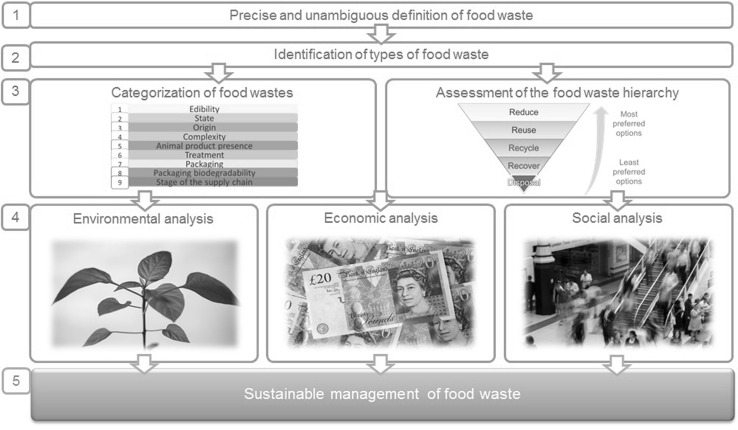
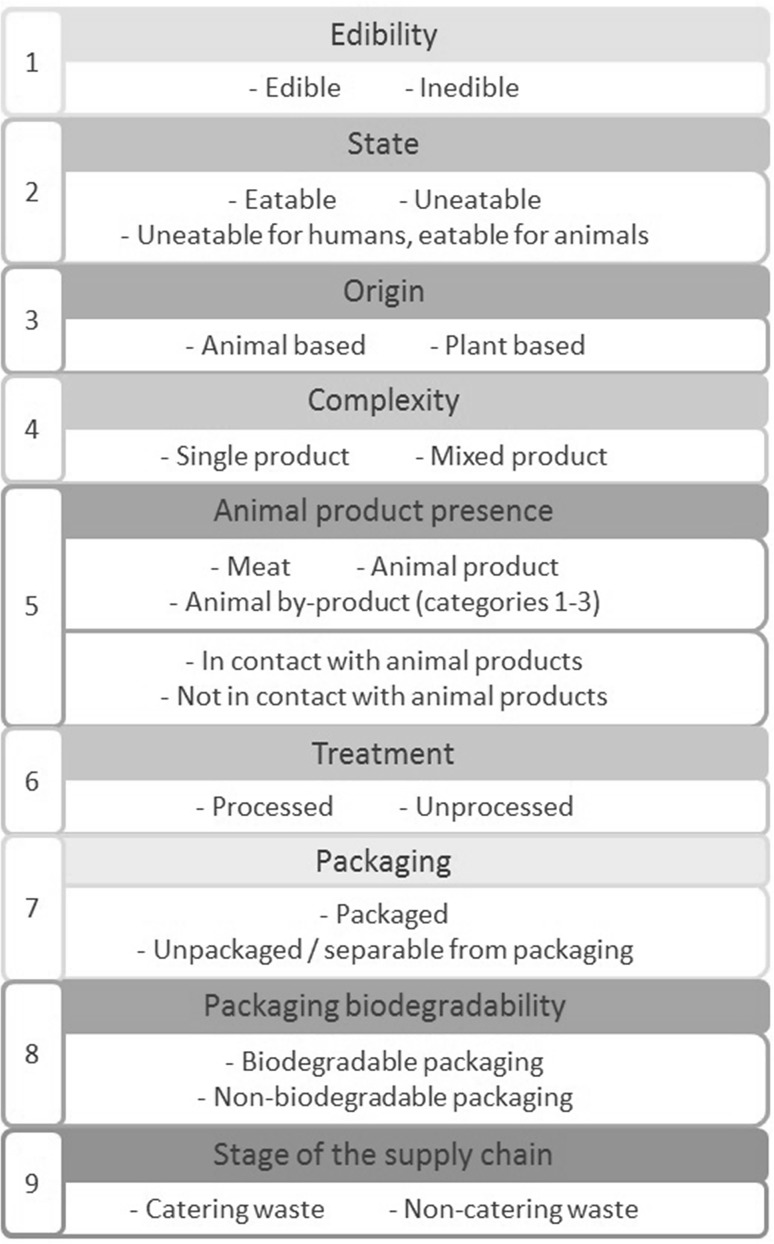
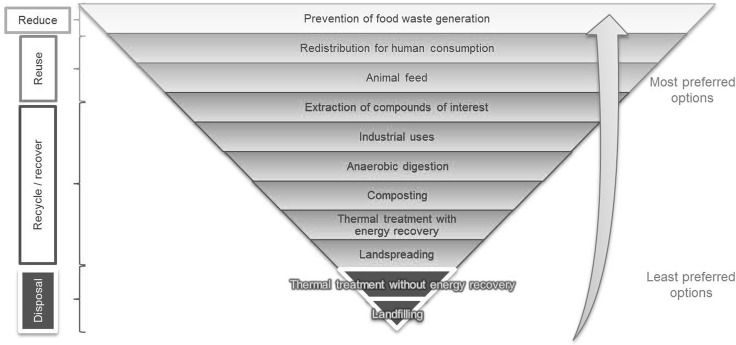
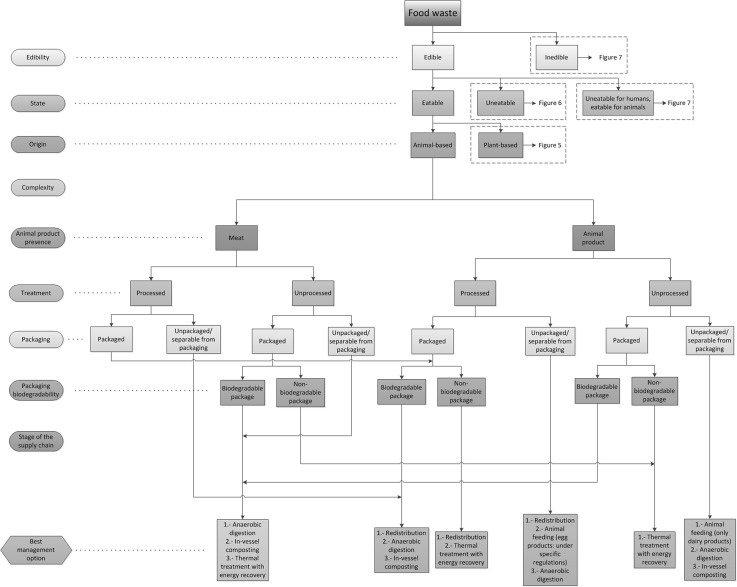
As much as one-third of the food intentionally grown for human consumption is never consumed and is therefore wasted, with significant environmental, social and economic ramifications. An increasing number of publications in this area currently consider different aspects of this critical issue, and generally focus on proactive approaches to reduce food waste, or reactive solutions for more efficient waste management. In this context, this paper takes a holistic approach with the aim of achieving a better understanding of the different types of food waste, and using this knowledge to support informed decisions for more sustainable management of food waste. With this aim, existing food waste categorizations are reviewed and their usefulness are analysed. A systematic methodology to identify types of food waste through a nine-stage categorization is used in conjunction with a version of the waste hierarchy applied to food products. For each type of food waste characterized, a set of waste management alternatives are suggested in order to minimize environmental impacts and maximize social and economic benefits. This decision-support process is demonstrated for two case studies from the UK food manufacturing sector. As a result, types of food waste which could be managed in a more sustainable manner are identified and recommendations are given. The applicability of the categorisation process for industrial food waste management is discussed.
Overview
The claims and statistics of this paper haven’t been checked yet.
Free: it reads the open-access text and checks the first 5 claims that cite a source we can check. Create a free account to check every claim.
Integrity signals
Registry
Cites
Statistics
Figures
Verification
Claims the paper makes
The claims and statistics of this paper haven’t been checked yet.
Free: it reads the open-access text and checks the first 5 claims that cite a source we can check. Create a free account to check every claim.
Self-check
Percentages, sums and reported differences re-computed from the paper’s own numbers.
The self-check needs the paper’s full text.
Citations
Cites
The food waste hierarchy as a framework for the management of food surplus and food waste
Papargyropoulou, E., Lozano, R., K. Steinberger, J., Wright, N., & Ujang, Z. B. (2014) · Journal of Cleaner Production · doi:10.1016/j.jclepro.2014.04.020 · Cited by 1,711
Resolution Adopted By The General Assembly
(1984) · International Legal Materials · doi:10.1017/s002078290003076x · Cited by 1,148
Lin, C. S. K., Pfaltzgraff, L. A., Herrero-Davila, L., Mubofu, E. B., Abderrahim, S., Clark, J. H., Koutinas, A. A., Kopsahelis, N., Stamatelatou, K., Dickson, F., et al. (2013) · Energy & Environmental Science · doi:10.1039/c2ee23440h · Cited by 1,137
Brewers' spent grain: generation, characteristics and potential applications
Mussatto, S. I., Dragone, G., & Roberto, I. C. (2006) · Journal of Cereal Science · doi:10.1016/j.jcs.2005.06.001 · Cited by 1,086 · cited 1×
“, increasing their health benefits [68].”
The causes of food waste in the supplier–retailer interface: Evidences from the UK and Spain
Mena, C., Adenso-Diaz, B., & Yurt, O. (2011) · Resources Conservation and Recycling · doi:10.1016/j.resconrec.2010.09.006 · Cited by 473
Gustafsson, J., Cederberg, C., Sonesson, U., & Emanuelsson, A. (2013) · KTH Publication Database DiVA (KTH Royal Institute of Technology) · Cited by 410
Variability of brewer’s spent grain within a brewery
Santos, M., Jiménez, J. J., Bartolomé, B., Gómez-Cordovés, C., & del Nozal, M. J. (2003) · Food Chemistry · doi:10.1016/s0308-8146(02)00229-7 · Cited by 306 · cited 2×
“Flour can be produced from spent grain following a process that includes drying and grinding [67].”
BackgroundCarbon footprint of food waste management options in the waste hierarchy – a Swedish case study
Eriksson, M., Strid, I., & Hansson, P.-A. (2015) · Journal of Cleaner Production · doi:10.1016/j.jclepro.2015.01.026 · Cited by 304 · cited 1×
“[18] Waste Biomass Valor (2017) 8:2209–2227 2215”
Discussion on the methodology for determining food waste in household waste composition studies
Lebersorger, S., & Schneider, F. (2011) · Waste Management · doi:10.1016/j.wasman.2011.05.023 · Cited by 293 · cited 2×
“A more explicit classification with sub-categories was also suggested by Lebersorger and Schneider [20].”
BackgroundMethodEdjabou, M. E., Jensen, M. B., Götze, R., Pivnenko, K., Petersen, C., Scheutz, C., & Astrup, T. F. (2015) · Waste Management · doi:10.1016/j.wasman.2014.11.009 · Cited by 292 · cited 1×
“[33] included two new factors: vegetable/ animal-derived food waste and avoidable-processed/ avoidable-unprocessed food waste.”
Background
Research works printed but not linked: 3
- Institute of Mechanical Engineers Global Food—Waste Not 2013 London, UK Want Not
- The European Comission Commission Regulation (EU) No 142/2011 of 25 February 2011 Off. J. Eur. Union. L 2011 54 1 254
- Environmental Protection Agency BAT Guidance Note on Best Available Techniques for the Brewing 2008 Wexford (Ireland) Malting & Distilling Sector
Cited by
Items 101–200 of 224
Waste Valorization in Food Industries: A Review of Sustainable Approaches
Sharma, V., Singh, A., Grenier, M., Singh, V., & Thakur, M. (2023) · World sustainability series · doi:10.1007/978-3-031-46046-3_9 · Cited by 14
Nogueira, G. D. R., Silva, P. B., Souza, G. F. M. V., Duarte, C. R., & Barrozo, M. A. S. (2022) · Waste and Biomass Valorization · doi:10.1007/s12649-022-01925-4 · Cited by 10
What Hinders the Development of a Sustainable Compostable Packaging Market?
Kędzia, G., & Turek, J. (2022) · European Journal of Sustainable Development · doi:10.14207/ejsd.2022.v11n4p180 · Cited by 12
“Rising concerns about food waste in face of world demand for food is also an important challenge and packaging may play an important role in minimizing food waste in the supply chains (Varzinskass and Markeviciute 2020, Garcia-Garcia et al. 2017, Verghese et al. 2015).”
BackgroundSeqFLoW: A systematic approach to identify and select food waste valorisation opportunities
Jones, R. E., Renouf, M. A., Speight, R. E., Blinco, J.-A., & O’Hara, I. M. (2022) · Resources Conservation and Recycling · doi:10.1016/j.resconrec.2022.106732 · Cited by 10
Sustainable Food Waste Utilization in the Context of the Indian Hospitality Industry
Singh, S. V., Singh, K., & Kumar, N. (2024) · Advances in hospitality, tourism and the services industry (AHTSI) book series · doi:10.4018/979-8-3693-1814-0.ch014 · Cited by 10
The Piggy Solution: Harnessing Food Waste for Sustainable Hog Farming
Ogwu, M. C., Hills, C. E., & Pietrosemoli, S. (2025) · Global Challenges · doi:10.1002/gch2.202500073 · Cited by 13
Chen, F., Gu, X., & Hou, J. (2022) · Foods · doi:10.3390/foods11091290 · Cited by 10
Current Perceptions of Sustainable Diets in Ireland and the Outlook of Circular Eating Practices
Fox, S., Noci, F., Kenny, O., & Dermiki, M. (2023) · Foods · doi:10.3390/foods12214003 · Cited by 13
Sustainable Management of Food Waste in Saudi Arabia
AlQahtani, S. S., Khan, E., Ahmed, A. E., & AlQahtani, M. A. (2024) · Springer eBooks · doi:10.1007/978-3-031-46704-2_10 · Cited by 10
Dele-Afolabi, T. T., Hanim, M. A. A., Oyekanmi, A. A., Ansari, M. N. M., Sikiru, S., & Ojo-Kupoluyi, O. J. (2024) · Materials Today Sustainability · doi:10.1016/j.mtsust.2024.100824 · Cited by 18
Various Approaches for Food Waste Processing and Its Management
Pandey, A., Tripathi, P. H., Paliwal, A., Tripathi, A. H., Pandey, S. C., Joshi, T., & Pande, V. (2019) · Advances in environmental engineering and green technologies book series · doi:10.4018/978-1-5225-7706-5.ch010 · Cited by 10
Castañeda‐Ruelas, G. M., Ibarra‐Medina, R. K., Niño‐Medina, G., Mora‐Rochín, S., Montes‐Ávila, J., Cuevas‐Rodríguez, E. O., & Jiménez‐Edeza, M. (2021) · Cereal Chemistry · doi:10.1002/cche.10467 · Cited by 10
Biochar production from the pyrolysis of tomato processing residues
Marinos, S., Terpsithea, P., Hamdi, H., Tsangas, M., Zorpas, A. A., & Agapiou, A. (2021) · Elsevier eBooks · doi:10.1016/b978-0-12-822866-1.00002-8 · Cited by 18
Narayanamoorthy, S., Parthasarathy, T. N., Thilagasree, C. S., Pamucar, D. S., Šimić, V., Dınçer, H., & Yüksel, S. (2024) · Computer Modeling in Engineering & Sciences · doi:10.32604/cmes.2024.050954 · Cited by 13
Sayın, B., & Kaban, G. (2024) · Foods · doi:10.3390/foods13142245 · Cited by 13
A fuzzy-digraph matrix-based risk mitigation framework for halal supply chain management
Haleem, A., Khan, S., Khan, M. I., & Ali, S. S. (2024) · Annals of Operations Research · doi:10.1007/s10479-024-06447-x · Cited by 8
Ito, K. R., Sato, T., Goto, H., Sato, K., Watanabe, J., & Yokoo, M. (2022) · The Journal of Poultry Science · doi:10.2141/jpsa.0210087 · Cited by 9
Bertocci, F., & Mannino, G. (2023) · Foods · doi:10.3390/foods12030571 · Cited by 11
Circular food economy: A new perspective on food waste
Diekmann, L., & Germelmann, C. C. (2023) · Projectics / Proyéctica / Projectique · doi:10.3917/proj.034.0069 · Cited by 12
Apple Pomace as a Source of Nutraceuticals
Ezzat, S. M., Salama, M. M., El‐Kersh, D. M., & Salem, M. A. (2022) · Springer eBooks · doi:10.1007/978-3-030-98760-2_5 · Cited by 10
Influential factors affecting the generation of kitchen solid waste in Shanghai, China
Wang, K., Lu, J., & Liu, H. (2021) · Journal of the Air & Waste Management Association · doi:10.1080/10962247.2020.1856215 · Cited by 11
“More than a third of the food that is grown for human consumption is wasted (Garcia-Garcia et al. 2016).”
Backgroundde Almeida, G. D. Á., Aguiar, M. F., & Jugend, D. (2021) · Revista Produção Online · doi:10.14488/1676-1901.v21i3.4321 · Cited by 11
Optimising agri-food supply chains: Managing food waste through harvest and side-stream valorisation
Remijnse, M., Rohmer, S. U. K., Marandi, A., & Woensel, T. V. (2025) · Journal of Cleaner Production · doi:10.1016/j.jclepro.2025.145349 · Cited by 10
Harnessing energy from food waste via anaerobic digestion: A comprehensive review
Zamel, D., Etman, A. E., Ammar, M. M., Elsabagh, N. M., & Elmasry, D. M. (2026) · Applied Food Research · doi:10.1016/j.afres.2026.101914 · Cited by 7
Health and Eco-Innovations in Food Packaging
Cammarelle, A., Bimbo, F., Lombardi, M., & Viscecchia, R. (2021) · Environmental footprints and eco-design of products and processes · doi:10.1007/978-981-16-4609-6_2 · Cited by 8
Gerassimidou, S., Dora, M. K., & Iacovidou, E. (2022) · Resources · doi:10.3390/resources11100080 · Cited by 8
“Incineration is considered a more economically attractive FWM option since FW is typically co-treated with MSW leading to net energy recovery [79].”
BackgroundAl-Tamimi, M., Azure, J. D.-C., & Ramanathan, R. (2023) · Sustainability · doi:10.3390/su15021213 · Cited by 9
Food Waste Management using IoT & Android Interface
Usharani, S., Puneeth, T., Sugavanan, K., & Depuru, S. (2023) · International Conference on Augmented Intelligence and Sustainable Systems (ICAISS) · doi:10.1109/icaiss58487.2023.10250722 · Cited by 7
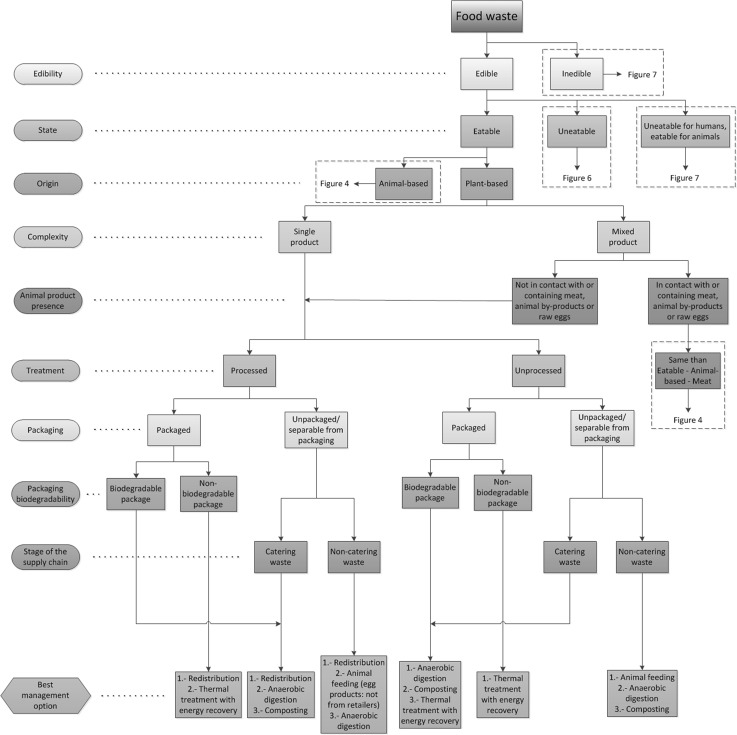
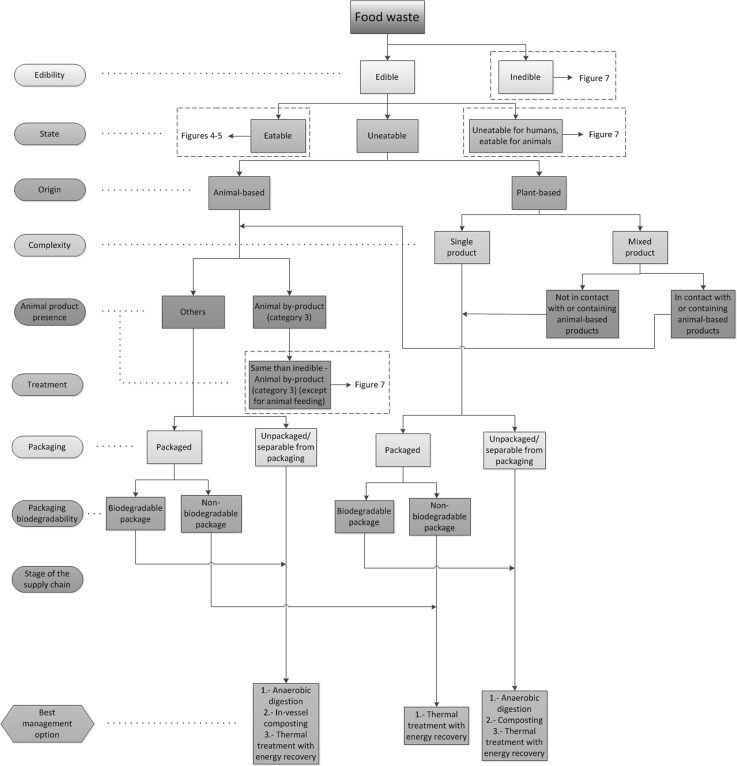
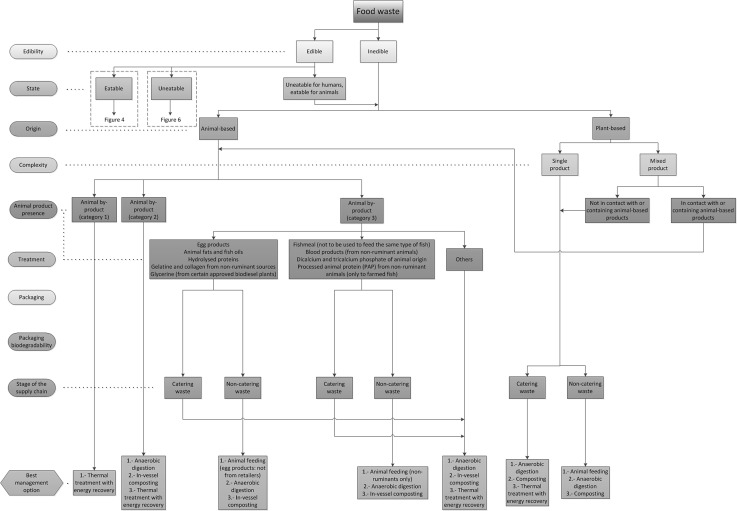
“,et al.[10] explains a systematic approach to classify different categories of food waste and utilize this knowledge to facilitate informed decisions for sustainable management of food waste.”
BackgroundBatista-Barwinski, M. J., Venturieri, G. A., Miller, P. R., Testolin, R. C., Niero, G., Somensi, C. A., Almerindo, G. I., Neto, R. A., Radetski, C. M., & Cotelle, S. (2022) · Environmental Technology · doi:10.1080/09593330.2022.2143291 · Cited by 7
Waste is the Best: An Approach to Circular Economy
Siddiqui, M. W., Akbar, U., Mondol, M. S. A., Abdi, G., Kasote, D. M., & Dar, A. H. (2025) · ACS Food Science & Technology · doi:10.1021/acsfoodscitech.5c00302 · Cited by 9
Chander, M., & Kannadhasan, M. S. (2020) · Organic Agriculture · doi:10.1007/s13165-020-00292-5 · Cited by 9
“Feeding animals and poultry with foods which are not fit for human consumption is the most desirable endpoint (Dou et al. 2016; Garcia-Garcia et al. 2017).”
BackgroundAccounting for the environmental impact of food waste on water resources and climate change
Tang, Y.-T. (2020) · Elsevier eBooks · doi:10.1016/b978-0-12-817121-9.00014-0 · Cited by 9
Microbial Degradation of Biowaste for Hydrogen Production
Asri, O. E., Fadlaoui, S., Ramdani, M., & Errochdi, S. (2021) · Environmental and microbial biotechnology · doi:10.1007/978-981-16-0518-5_17 · Cited by 6
“Inside” versus “outside” trends in consumer research
Camilleri, E., Garg, N., & Miah, S. J. (2023) · Journal of Consumer Psychology · doi:10.1002/jcpy.1349 · Cited by 8
Baiano, A. (2026) · Foods · doi:10.3390/foods15142577 · Cited by 7
“Food waste composition also depends on whether the stream derives from manufacturing, retail, catering, households, or mixed municipal sources, making classification and treatment selection difficult [181].”
Narasimman, K., Pillai, A., Anand, A., Pillai, A., & Mathimani, T. (2025) · Sustainable Energy & Fuels · doi:10.1039/d5se00985e · Cited by 7
GIDA ÜRÜNLERİ ÜRETİMİNDE HİJYEN KAVRAMINA FARKLI BİR BAKIŞ
PARLAK, T. (2020) · OHS ACADEMY · doi:10.38213/ohsacademy.740235 · Cited by 5
Food waste solution at home: conventional and rapid composting techniques
Mohamed Raimi, H. S., Tuan Ismail, T. N. H., Najib, M. Z. M., & Mohamed Yusop, F. (2020) · Food Research · doi:10.26656/fr.2017.4(s6).016 · Cited by 9
“Consequently, Takakura composting approach is, therefore, easily followed at home with variations of safe activators and the processing time is also shorter than other techniques (Garcia-Garcia et al., 2017; JiménezAntillón et al., 2018).”
MethodFood Wastes: Perceptions, Impacts and Management
Unuofin, J. O., Aladekoyi, O. J., & Odeniyi, O. A. (2021) · Springer eBooks · doi:10.1007/978-981-16-2015-7_8 · Cited by 6
Swain, A. A., Oraon, R., Bauddh, K., & Kumar, M. (2022) · Environmental Sustainability · doi:10.1007/s42398-022-00221-0 · Cited by 7
Design and fabrication of a food waste dryer
Rahmani, M., Azadbakht, M., Dastar, B., & Esmaeilzadeh, E. (2021) · Biomass Conversion and Biorefinery · doi:10.1007/s13399-021-01639-y · Cited by 5
From waste to wealth: innovations in the recovery of bioactive compounds from agro-food by-products
Bandara, R. R., Koosha, M., Yang, X., Li, T., Fernando, G. S. N., Alshaal, T., & Kiss, A. (2026) · European Food Research and Technology · doi:10.1007/s00217-025-04943-3 · Cited by 6
“It includes both avoidable waste (such as edible leftovers) and unavoidable waste (such as peels, bones, and shells), with the latter classified as inevitable food waste [ 58 ].”
Alcalase for Food-Protein-Derived Bioactive Peptides: Trends, Gaps, and Translational Opportunities
Pérez‐Flores, J. G., García‐Curiel, L., Pérez-Escalante, E., Contreras‐López, E., Rodríguez-Serrano, G. M., Rivera-Arredondo, M., Ocampo, I. O. S., Sánchez-Franco, J. A., Paz‐Samaniego, R., & Guerrero-Solano, J. A. (2026) · Macromol—A Journal of Macromolecular Research · doi:10.3390/macromol6010016 · Cited by 7
“…while studies in other countries have investigated Alcalase for the valorization of food by-products and improvement of protein functionality [47,48]. https://doi.org/10.3390/macromol6010016 In India and Iran, several investigations have examined the enzymatic hydrolysis of dairy and legume…”
InfluentialImpact of rice husk derived biochar pyrolysis temperature on food waste anaerobic digestion
Valentin, M. T., Kosiorowska, K. E., Siedlecka, A., Świechowski, K., Lochyński, P., Domińska, M., Hamal, K., Demeshkant, V., Wiercik, P., & Białowiec, A. (2026) · Biomass and Bioenergy · doi:10.1016/j.biombioe.2026.109299 · Cited by 4
Environmental impact of food waste
Obersteiner, G., & Scherhaufer, S. (2021) · Elsevier eBooks · doi:10.1016/b978-0-12-821363-6.00011-4 · Cited by 5
Practices of food waste management and its impact on environment
Trivedi, S., Bhoyar, V. T., Belgamwar, V. S., Wadher, K., Raut, N. A., & Dhoble, S. J. (2023) · Elsevier eBooks · doi:10.1016/b978-0-323-90760-6.00001-1 · Cited by 11
Fox, S., Kenny, O., Noci, F., & Dermiki, M. (2023) · Sustainability · doi:10.3390/su152316147 · Cited by 5
“Time may also be required to find new markets for new functional ingredients, and new biobased foods may need to go through novel food legislation before being eligible for sale on the open market [36].”
BackgroundConsumer protection and sustainable development: key green research areas
Paduszyńska, M., & Kozar, Ł. J. (2024) · Ekonomia i Prawo · doi:10.12775/eip.2024.021 · Cited by 9
Household-scale anaerobic digestion of food waste—a community case study from Bozeman, Montana
Ebel, R. H., Eberly, J. O., Grimberg, B. I., Seipel, T. F., & Menalled, F. D. (2025) · Frontiers in Sustainable Food Systems · doi:10.3389/fsufs.2025.1561457 · Cited by 7
Valorization of Bokashi leachate as feed additive in tilapia farming
Lim, L., Tan, K., Fu, M.-Y., Au, H., Ebi, I., Lal, M. T. M., Kawamura, G., Shapawi, R., & Lam, S. S. (2020) · Environmental Research · doi:10.1016/j.envres.2020.110472 · Cited by 5
Hu, P., Toma, L. T., Alam, A., Ahmmed, T., Islam, M. J., Farhana, K., Sultana, M., & Bhuiyan, M. A. (2026) · Frontiers in Sustainable Food Systems · doi:10.3389/fsufs.2025.1710361 · Cited by 7
Kapoor, N., Jauhari, S., & Maheshwari, D. (2021) · Advances in finance, accounting, and economics book series · doi:10.4018/978-1-7998-8678-5.ch010 · Cited by 4
Food Waste: A Critical Review of Causes, Impacts, and Solutions for Sustainable Food Systems
Daga, S., Yadav, K., Devi, J., Singh, P., & Sorokin, A. (2025) · Springer eBooks · doi:10.1007/978-3-031-86688-3_1 · Cited by 4
Bio-alcohol Generation from Agro-industrial Wastes: A Comprehensive Review
Ray, S., Mukherjee, A., & Ghosh, U. (2021) · Journal of Biofuels · doi:10.5958/0976-4763.2021.00002.7 · Cited by 5
Food waste valorization in the context of hydrogen recovery in the State of Kuwait
Tuhl, A., Aleisa, E., Alshawaf, M., & Al-Salem, S. M. (2025) · Journal of Material Cycles and Waste Management · doi:10.1007/s10163-025-02173-z · Cited by 3
“Biological and thermal treatments are two widely used and studied techniques to transform FW into value-added products [23].”
Usability of "Fatchum": A Mobile Application Recipe Recommender System
Cruz, Z. M. C., Alpay, J. J. R., Depeno, J. D. D., Altabirano, M. J. C., & Bringula, R. P. (2017) · ACM Annual Conference on Research in Information Technology (RIIT) · doi:10.1145/3125649.3125650 · Cited by 3
“Globally, more than 30% of the human food is not consumed [13,14,15] which is more than enough to stop hunger [22].”
BackgroundSustainable Physical Methods Used for the Management of Agricultural Waste Biomass
Rahman, F., Aziz, M. A., Quais, M. K., Hossain, M. S., & Khan, M. A. I. (2022) · Wiley eBooks · doi:10.1002/9781119808428.ch2 · Cited by 5
Selected Factors Determining the Disposal of Stale Bread by Polish Consumers
Bilska, B., Tomaszewska, M., & Kołożyn‐Krajewska, D. (2024) · Sustainability · doi:10.3390/su162411029 · Cited by 2
Ally, B., Abdulkadir, A., Mwevura, H., Furu, P., Salukele, F. M., Hirsbak, S., & Remmen, A. (2025) · Tourism and Hospitality · doi:10.3390/tourhosp6050255 · Cited by 2
Gormley, A. R., Deng, Z., Ashburn, B., Bryant, R. W., & Kim, S. W. (2025) · Journal of Animal Science · doi:10.1093/jas/skaf425 · Cited by 4
Abrigo, I. J. V., Cadena, E., & Dewulf, J. (2026) · Future Foods · doi:10.1016/j.fufo.2026.101084 · Cited by 2
Cervera, M. A., Legarda-Macon, J., & Alonso‐Vicario, A. (2026) · Cleaner Waste Systems · doi:10.1016/j.clwas.2026.100556 · Cited by 2
Seminar Sosialisasi Pemanfaatan Limbah Rumah Tangga Melalui Media Daring
Andriani, Y., Noviyanti, A. R., Wiyatna, M. F., & Lili, W. (2022) · Media Kontak Tani Ternak · doi:10.24198/mktt.v3i3.36582 · Cited by 4
Eco-Friendly Dehydrator Machine for Food Recycling: A Waste Management System
Ibrahim, H. M., & El-Mawla, N. A. (2022) · Nile Journal of Communication and Computer Science/Nile Journal of Communication and Computer Science · doi:10.21608/njccs.2022.279497 · Cited by 2
An Overview of the Indian Hotel Industry's Waste Management Initiatives
-, N. C., -, J. S., Dhaundiyal, C., & Bisht, A. (2024) · International Journal For Multidisciplinary Research · doi:10.36948/ijfmr.2024.v06i03.21586 · Cited by 2
Does smartphone use encourage farmers to participate in centralized household waste disposal?
Wu, Z., Olasehinde, T. S., & Chen, F. (2024) · Heliyon · doi:10.1016/j.heliyon.2024.e39683 · Cited by 2
“These findings can be used to develop targeted programs and guidelines for rural waste management, offering practical solutions to the pressing issue of waste disposal in rural areas [22].”
BackgroundNaghshbandi, E. H. (2025) · Computer and decision making. · doi:10.59543/comdem.v2i.11119 · Cited by 2
Advanced techniques for recovery of active compounds from food by-products
Fierăscu, I., Fierăscu, R. C., & Sieniawska, E. (2021) · Elsevier eBooks · doi:10.1016/b978-0-12-824044-1.00004-0 · Cited by 2
Jin, J.-U., Cho, M. S., & Oh, J. (2022) · Journal of the Korean Society of Food Science and Nutrition · doi:10.3746/jkfn.2022.51.6.561 · Cited by 2
Utilização de solvente eutético na carbonização hidrotérmica de resíduo de acerola
Martins, J. (2021) · doi:10.14393/ufu.di.2021.668 · Cited by 3
INVESTIGATION OF SOME QUALITY PARAMETERS OF PICKLED PEPPER PRODUCED BY LOW VALUE DAIRY BY-PRODUCTS
Güneş, R., & Çetin, B. (2020) · GIDA / THE JOURNAL OF FOOD · doi:10.15237/gida.gd19160 · Cited by 2
IMPACT OF FISH PROCESSING BY-PRODUCT AMENDMENT ON SOIL PROPERTIES
Vaisvalavičius, R., Dromantienė, R., Pranckietienė, I., & Aleinikovienė, J. (2022) · RURAL DEVELOPMENT 2019 · doi:10.15544/rd.2021.010 · Cited by 1
New waste management within Russian Universities
Plastinina, I., Berezyuk, M., Rumyantseva, A., & Chaschin, М. (2021) · Russian journal of resources conservation and recycling · doi:10.15862/07ecor321 · Cited by 1
Food Industry as a Source of Waste and By-Products
Czekała, W. (2023) · SpringerBriefs in applied sciences and technology · doi:10.1007/978-3-031-47487-3_1 · Cited by 1
Environmental Aspect of Waste and By-Product from Food Industry and Their Management
Czekała, W. (2023) · SpringerBriefs in applied sciences and technology · doi:10.1007/978-3-031-47487-3_4 · Cited by 1
Food Waste Processing Trends Worldwide and Valorization of Food Waste from Pune City
Soni, A., Patil, S. S., Ghosalkar, A. R., Nandi, S., & Kumbhar, P. (2024) · Journal of Pure and Applied Microbiology · doi:10.22207/jpam.18.3.59 · Cited by 4
Sustainable Management of Waste in the Olive Oil Sector
Garcia‐Garcia, G., Pérez, A., & Calero, M. (2025) · Lecture notes in mechanical engineering · doi:10.1007/978-3-031-93891-7_75 · Cited by 1
Self-citationVărzaru, A. A. (2026) · Foods · doi:10.3390/foods15020403 · Cited by 1
“The persistence of sector-specific variation suggests that economic context and institutional capacity jointly shape waste outcomes [7,40].”
Smart cold chains for food systems: IoT monitoring, predictive analytics, and emerging technologies
Mudoi, N. G., Borah, M. S., & Tiwari, A. (2026) · Academia Engineering · doi:10.20935/acadeng8291 · Cited by 1
Domínguez, I., Astudillo-Pascual, M., Tudor, R., del Río, J. L., Ortiz-Somovilla, V., & Cantos‐Villar, E. (2026) · Frontiers in Nutrition · doi:10.3389/fnut.2026.1868657 · Cited by 1
Economic and Commercialization of Food Waste as Corrosion Inhibitor
Wang, Q., Sun, X., Zhou, X. H., Aslam, R., & Yan, Z. (2024) · Materials horizons · doi:10.1007/978-981-97-1160-4_12 · Cited by 1
Novel Approaches for Greener Synthesis of Extremozymes Using Agro/Food Waste
Shah, F., Ranawat, B., Patel, V., Patidar, S. K., Thomas, R. M., & Mishra, S. (2024) · Springer eBooks · doi:10.1007/978-3-031-58441-1_10 · Cited by 3
Exploring the Interplay Between Industrial Food Production and Sustainable Waste Solutions
Srivastava, S., Singh, P., Pandey, V. K., Habiba, U., Tripathi, G., & Singh, R. (2025) · Springer eBooks · doi:10.1007/978-3-031-78420-0_2 · Cited by 1
Collection as a Critical Step in the Sustainable Management of Food Waste from Housing Estates
Adamcová, D., Vršanská, M., Urbanová, M., & Šourková, M. (2025) · Polish Journal of Environmental Studies · doi:10.15244/pjoes/201933 · Cited by 1
“Sustainable food waste management is a momentous research area that has rapidly grown over recent years [61].”
Doubravský, K., Kocmanová, A., & Dohnal, M. (2018) · Sustainability · doi:10.3390/su10072505 · Cited by 1
“Decision-making tasks related to sustainable problems have been studied for many years (see, e.g., [34–36]).”
BackgroundIndustrially Important Enzymes Production From Food Waste: An Alternative Approach to Land Filling
Bhandwalkar, M. S. (2019) · Advances in environmental engineering and green technologies book series · doi:10.4018/978-1-5225-7706-5.ch003 · Cited by 1
Various Approaches for Food Waste Processing and Its Management
Pandey, A., Tripathi, P. H., Paliwal, A., Tripathi, A. H., Pandey, S. C., Joshi, T., & Pande, V. (2020) · IGI Global eBooks · doi:10.4018/978-1-7998-5354-1.ch029 · Cited by 6
Opportunities for managing horticultural food losses using biorefining approaches
Jones, R. E. (2024) · Queensland University of Technology · doi:10.5204/thesis.eprints.247497 · Cited by 3
Ma, L., Xia, P., & Sun, H. H. (2025) · SSRN Electronic Journal · doi:10.2139/ssrn.5243445 · Cited by 1
EPSRC Centre for Innovative Manufacturing in Food
Foster, T. J., Norton, I. T., & Rahimifard, S. (2018) · Impact · doi:10.21820/23987073.2018.6.6
Self-citationInnovative Technologies in the Semi-smoked Sausage Production
Slozhenkina, M. I., Фергатовна, Г. Л., Struk, A. N., Kruglova, A. F., & Miroshnikova, E. P. (2019) · Lecture notes in networks and systems · doi:10.1007/978-3-030-29586-8_24
Four Innovative Ways to Reduce Food Wasting in Hotel Restaurants
Au‐Yong‐Oliveira, M., Chodilíková, M., Košárková, I., Pšeničková, K., & Lewandowski, P. D. (2020) · Advances in hospitality, tourism and the services industry (AHTSI) book series · doi:10.4018/978-1-7998-5691-7.ch015
Alejos, K. R. E., & Tadeo, K. P. R. (2020) · Universidad Peruana de Ciencias Aplicadas (UPC) · doi:10.19083/tesis/653079
An Initiative for Management of Food Waste: An Observational Study
Gupta, A. (2020) · Indian Journal of Public Health Research & Development · doi:10.37506/ijphrd.v11i8.10920
“Edible food is fit for the human consumption and thus its wastage can be reduced whereas inedible waste are the unavoidable wastes [1].”
BackgroundBhattacharya, D. S., Chatterjee, S. M., Ghosh, S. K., Sachdev, B. K., & Seth, A. (2021) · Galaxy International Interdisciplinary Research Journal
EPSRC Centre for Innovative Manufacturing in Food
(2017) · Food Science and Technology · doi:10.1002/fsat.3101_7.x
Industrially Important Enzymes Production From Food Waste: An Alternative Approach to Land Filling
Bhandwalkar, M. S. (2020) · IGI Global eBooks · doi:10.4018/978-1-7998-5354-1.ch032
(2020) · Food Research · doi:10.26656/fr.2017.4(s6 · Cited by 1
Food waste quantification; Methods and Benefits
Anwar, S., Shahbaz, M., Saeed, A., & Parsad, R. (2022) · International Symposium on Wireless Personal Multimedia Communications (WPMC) · doi:10.1109/wpmc55625.2022.10014706
“[17] Holistic methodology to show FW categories.”
MethodBioethanol production from leftover food by yeasts isolated from fruit at Ambo University, Ethiopia
Sisay, A., Keneni, A., & Kumsa, F. (2023) · Environment Development and Sustainability · doi:10.1007/s10668-023-04023-0
Metadata
- Authors
- Garcia-Garcia, G., Woolley, E., Rahimifard, S., Colwill, J., White, R., & Needham, L.
- Affiliations
- Loughborough University (GB)
- Molson Coors Brewing Company (United States) (US)
- Quorn (United Kingdom) (GB)
- Corresponding author
- Woolley, Elliot
- Venue
- Waste and Biomass Valorization
- Published
- 2016-10-25
- Volume
- 8
- Issue
- 6
- Pages
- 2209-2227
- ISSN
- 1877-2641 (ISSN-L)
- 1877-265X
- PMC
- PMC6961471
- OpenAlex
- W2533730896
- Cited by
- 225
- References
- 34
- Citations by year
- 2026: 21 · 2025: 24 · 2024: 27 · 2023: 24 · 2022: 26 · 2021: 40 · 2020: 27 · 2019: 19 · 2018: 13 · 2017: 4
- FWCI
- 15.11
- Type
- journal article
- Language
- en
- Open access
- hybrid
- doi.org
- Locations
- Waste and Biomass Valorization (publishedVersion, cc-by)
- PubMed Central (publishedVersion, cc-by)
- PubMed (publishedVersion)
- Loughborough University Institutional Repository (Loughborough University) (submittedVersion, cc-by)
- Loughborough University Research Repository (Loughborough University) (submittedVersion, cc-by)
- Funders
- Engineering and Physical Sciences Research Council (EP/K030957/1)
- Topics
- Life Sciences › Agricultural and Biological Sciences › Food Science › Food Waste Reduction and Sustainability
- Physical Sciences › Environmental Science › Ecology › Agriculture Sustainability and Environmental Impact
- Physical Sciences › Environmental Science › Waste Management and Disposal › Waste Management and Recycling
- Keywords
- food waste, waste hierarchy, sustainable waste management, decision support, food manufacturing, environmental impact of food waste, waste management alternatives
About these checks
Registry, retraction, Cites and statistics results are computed, not judged, with one exception: a printed reference that no index lists is read once by a model before it counts as a citation error. Claims are extracted by a model and kept only when their quote appears verbatim in the text; each cited source is then checked, with a model’s help, for whether it says what the claim relies on. Those verdicts can be wrong — read the claim’s quote and the cited source before relying on one.
Statistics and arithmetic are recomputed, not judged.
Confidence bands are shown only for fields calibrated on our annotated test set. None is calibrated yet, so no band is shown.
What counts as a claim ›How we measure confidence ›How we check this ›
Are you an author, or do you see a problem with this page? Request a review
Data sources
Bibliographic data: Semantic Scholar, OpenAlex, Crossref.
Contains information from the Semantic Scholar Academic Graph Datasets, made available under the ODC Attribution License (ODC-BY 1.0).
Semantic Scholar’s data is described in: Kinney, R., et al. (2023). The Semantic Scholar Open Data Platform. arXiv:2301.10140.
