

A Methodology for Sustainable Management of Food Waste
Open accessThe DOI matches its Crossref record; 33 of the 34 references it cites were found in a registry or an index.
Abstract
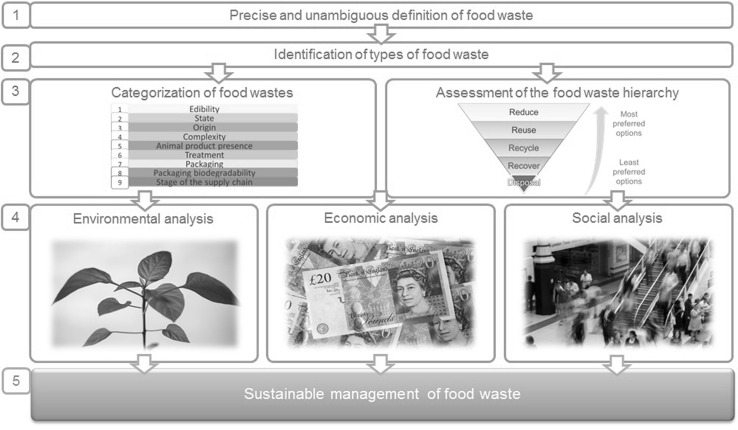
As much as one-third of the food intentionally grown for human consumption is never consumed and is therefore wasted, with significant environmental, social and economic ramifications. An increasing number of publications in this area currently consider different aspects of this critical issue, and generally focus on proactive approaches to reduce food waste, or reactive solutions for more efficient waste management. In this context, this paper takes a holistic approach with the aim of achieving a better understanding of the different types of food waste, and using this knowledge to support informed decisions for more sustainable management of food waste. With this aim, existing food waste categorizations are reviewed and their usefulness are analysed. A systematic methodology to identify types of food waste through a nine-stage categorization is used in conjunction with a version of the waste hierarchy applied to food products. For each type of food waste characterized, a set of waste management alternatives are suggested in order to minimize environmental impacts and maximize social and economic benefits. This decision-support process is demonstrated for two case studies from the UK food manufacturing sector. As a result, types of food waste which could be managed in a more sustainable manner are identified and recommendations are given. The applicability of the categorisation process for industrial food waste management is discussed.
Overview
The claims and statistics of this paper haven’t been checked yet.
Free: it reads the open-access text and checks the first 5 claims that cite a source we can check. Create a free account to check every claim.
Integrity signals
Registry
Cites
Statistics
Figures
Verification
Claims the paper makes
The claims and statistics of this paper haven’t been checked yet.
Free: it reads the open-access text and checks the first 5 claims that cite a source we can check. Create a free account to check every claim.
Self-check
Percentages, sums and reported differences re-computed from the paper’s own numbers.
The self-check needs the paper’s full text.
Citations
Cites
The food waste hierarchy as a framework for the management of food surplus and food waste
Papargyropoulou, E., Lozano, R., K. Steinberger, J., Wright, N., & Ujang, Z. B. (2014) · Journal of Cleaner Production · doi:10.1016/j.jclepro.2014.04.020 · Cited by 1,711
Resolution Adopted By The General Assembly
(1984) · International Legal Materials · doi:10.1017/s002078290003076x · Cited by 1,148
Lin, C. S. K., Pfaltzgraff, L. A., Herrero-Davila, L., Mubofu, E. B., Abderrahim, S., Clark, J. H., Koutinas, A. A., Kopsahelis, N., Stamatelatou, K., Dickson, F., et al. (2013) · Energy & Environmental Science · doi:10.1039/c2ee23440h · Cited by 1,137
Brewers' spent grain: generation, characteristics and potential applications
Mussatto, S. I., Dragone, G., & Roberto, I. C. (2006) · Journal of Cereal Science · doi:10.1016/j.jcs.2005.06.001 · Cited by 1,086 · cited 1×
“, increasing their health benefits [68].”
The causes of food waste in the supplier–retailer interface: Evidences from the UK and Spain
Mena, C., Adenso-Diaz, B., & Yurt, O. (2011) · Resources Conservation and Recycling · doi:10.1016/j.resconrec.2010.09.006 · Cited by 473
Gustafsson, J., Cederberg, C., Sonesson, U., & Emanuelsson, A. (2013) · KTH Publication Database DiVA (KTH Royal Institute of Technology) · Cited by 410
Variability of brewer’s spent grain within a brewery
Santos, M., Jiménez, J. J., Bartolomé, B., Gómez-Cordovés, C., & del Nozal, M. J. (2003) · Food Chemistry · doi:10.1016/s0308-8146(02)00229-7 · Cited by 306 · cited 2×
“Flour can be produced from spent grain following a process that includes drying and grinding [67].”
BackgroundCarbon footprint of food waste management options in the waste hierarchy – a Swedish case study
Eriksson, M., Strid, I., & Hansson, P.-A. (2015) · Journal of Cleaner Production · doi:10.1016/j.jclepro.2015.01.026 · Cited by 304 · cited 1×
“[18] Waste Biomass Valor (2017) 8:2209–2227 2215”
Discussion on the methodology for determining food waste in household waste composition studies
Lebersorger, S., & Schneider, F. (2011) · Waste Management · doi:10.1016/j.wasman.2011.05.023 · Cited by 293 · cited 2×
“A more explicit classification with sub-categories was also suggested by Lebersorger and Schneider [20].”
BackgroundMethodEdjabou, M. E., Jensen, M. B., Götze, R., Pivnenko, K., Petersen, C., Scheutz, C., & Astrup, T. F. (2015) · Waste Management · doi:10.1016/j.wasman.2014.11.009 · Cited by 292 · cited 1×
“[33] included two new factors: vegetable/ animal-derived food waste and avoidable-processed/ avoidable-unprocessed food waste.”
Background
Research works printed but not linked: 3
- Institute of Mechanical Engineers Global Food—Waste Not 2013 London, UK Want Not
- The European Comission Commission Regulation (EU) No 142/2011 of 25 February 2011 Off. J. Eur. Union. L 2011 54 1 254
- Environmental Protection Agency BAT Guidance Note on Best Available Techniques for the Brewing 2008 Wexford (Ireland) Malting & Distilling Sector
Cited by
Teigiserova, D. A., Hamelin, L., & Thomsen, M. (2020) · Science of The Total Environment · doi:10.1016/j.scitotenv.2019.136033 · Cited by 461
Gaur, V. K., Sharma, P., Sirohi, R., Awasthi, M. K., Dussap, C.-G., & Pandey, A. (2020) · Journal of Hazardous Materials · doi:10.1016/j.jhazmat.2020.123019 · Cited by 268
Industrial waste heat recovery: A systematic approach
Woolley, E., Luo, Y., & Simeone, A. (2018) · Sustainable Energy Technologies and Assessments · doi:10.1016/j.seta.2018.07.001 · Cited by 209
Self-citationAdopting the circular economy approach on food loss and waste: The case of Italian pasta production
Principato, L., Ruini, L., Guidi, M., & Secondi, L. (2019) · Resources, Conservation and Recycling · doi:10.1016/j.resconrec.2019.01.025 · Cited by 206
“According to some studies, food loss and waste (FLW) management is one of the world’s major issues (EIU-BCFN, 2018; Garcia-Garcia et al., 2016; Winkler and Aschemann, 2017).”
BackgroundThe valorization of food waste via pyrolysis
Kim, S., Lee, Y., Andrew Lin, K.-Y., Hong, E., Kwon, E. E., & Lee, J. (2020) · Journal of Cleaner Production · doi:10.1016/j.jclepro.2020.120816 · Cited by 208
Food loss and food waste research in the Arab world: a systematic review
Abiad, M. G., & Meho, L. I. (2018) · Food Security · doi:10.1007/s12571-018-0782-7 · Cited by 185
“Literature reviews of FLW studies have previously focused on developed countries (Darlington et al. 2009; Canali et al. 2017; De Steur et al. 2016; Garcia-Garcia et al. 2016; Schneider 2013a, 2013b; Schott et al. 2016; Thyberg et al. 2015), whereas comprehensive and systematic reviews on food waste pertaining to devel…”
BackgroundIngrao, C., Faccilongo, N., Di Gioia, L., & Messineo, A. (2018) · Journal of Cleaner Production · doi:10.1016/j.jclepro.2018.02.267 · Cited by 175
Garcia-Garcia, G., Stone, J., & Rahimifard, S. (2019) · Journal of Cleaner Production · doi:10.1016/j.jclepro.2018.11.269 · Cited by 166
“Both the nine-stage categorisation and the FWMDTwere designed and are explained in detail by Garcia-Garcia et al. (2017).”
MethodSelf-citationInsights into the management of food waste in developing countries: with special reference to India
Sahoo, A., Dwivedi, A., Madheshiya, P., Kumar, U., Sharma, R. K., & Tiwari, S. (2023) · Environmental Science and Pollution Research · doi:10.1007/s11356-023-27901-6 · Cited by 163
“The ideal substitute for foods that are good for animal farming but unfit for human eating is animal feeding with only farm animals such as cattle, sheep, and poultry, being relevant in this category (Garcia-Garcia et al. 2017).”
Sustainable management practices of food waste in Asia: Technological and policy drivers
Joshi, P., & Visvanathan, C. (2019) · Journal of Environmental Management · doi:10.1016/j.jenvman.2019.06.079 · Cited by 163
Perspectives on food waste management: Prevention and social innovations
Al-Obadi, M., Ayad, H., Pokharel, S., & Ayari, M. A. (2022) · Sustainable Production and Consumption · doi:10.1016/j.spc.2022.02.012 · Cited by 162
Soltanian, S., Kalogirou, S. A., Ranjbari, M., Amiri, H., Mahian, O., Khoshnevisan, B., Jafary, T., Nizami, A., Gupta, V. K., Aghaei, S., et al. (2021) · Renewable and Sustainable Energy Reviews · doi:10.1016/j.rser.2021.111975 · Cited by 169
Moshtaghian, H., Bolton, K., & Rousta, K. (2021) · Foods · doi:10.3390/foods10112874 · Cited by 150
Valorization of Food and Agricultural Waste: A Step towards Greener Future
Rao, P., & Rathod, V. (2019) · The Chemical Record · doi:10.1002/tcr.201800094 · Cited by 145
What gets measured gets managed: A new method of measuring household food waste
Elimelech, E., Ayalon, O., & Ert, E. (2018) · Waste Management · doi:10.1016/j.wasman.2018.03.031 · Cited by 139
Thakali, A., & MacRae, J. D. (2021) · Environmental Research · doi:10.1016/j.envres.2020.110635 · Cited by 138
A systematic literature review on food waste/loss prevention and minimization methods
Moraes, N. V., Lermen, F. H., & Echeveste, M. E. S. (2021) · Journal of Environmental Management · doi:10.1016/j.jenvman.2021.112268 · Cited by 168
Valorization of Fish Waste Compost as a Fertilizer for Agricultural Use
Radziemska, M., Vaverková, M. D., Adamcová, D., Brtnický, M., & Mazur, Z. (2018) · Waste and Biomass Valorization · doi:10.1007/s12649-018-0288-8 · Cited by 157
“Sustainable management of food waste is a momentous research area that has rapidly grown over recent years [4].”
BackgroundReview of household food waste quantification methods: Focus on composition analysis
Withanage, S. V., Dias, G. M., & Habib, K. (2020) · Journal of Cleaner Production · doi:10.1016/j.jclepro.2020.123722 · Cited by 134
Recycling bread waste into chemical building blocks using a circular biorefining approach
Narisetty, V., Cox, R., Willoughby, N. A., Aktaş, E., Tiwari, B. K., Matharu, A. S., Salonitis, K., & Kumar, V. (2021) · Sustainable Energy & Fuels · doi:10.1039/d1se00575h · Cited by 124
The digitisation of food manufacturing to reduce waste – Case study of a ready meal factory
Jagtap, S., & Rahimifard, S. (2019) · Waste Management · doi:10.1016/j.wasman.2019.02.017 · Cited by 139
Self-citationRedlingshöfer, B., Barles, S., & Weisz, H. (2020) · Resources Conservation and Recycling · doi:10.1016/j.resconrec.2020.104723 · Cited by 142
Ferraz, E., Gamelas, J. A. F., Coroado, J., Monteiro, C., & Rocha, F. T. (2018) · Materials and Structures · doi:10.1617/s11527-018-1243-7 · Cited by 104
Chaturvedi, P., Kulshreshtha, K., Tripathi, V., & Agnihotri, D. (2022) · Asia-Pacific Journal of Business Administration · doi:10.1108/apjba-09-2021-0456 · Cited by 141
Facchini, F., Silvestri, B., Digiesi, S., & Lucchese, A. (2022) · Innovative Food Science & Emerging Technologies · doi:10.1016/j.ifset.2022.103235 · Cited by 110
Agrawal, K., Goktas, P., Holtkemper, M., Beecks, C., & Kumar, N. (2025) · Frontiers in Nutrition · doi:10.3389/fnut.2025.1553942 · Cited by 79
Reusing Food Waste in Food Manufacturing Companies: The Case of the Tomato-Sauce Supply Chain
Secondi, L., Principato, L., Ruini, L. F., & Guidi, M. (2019) · Sustainability · doi:10.3390/su11072154 · Cited by 87
Romero-Perdomo, F., & González‐Curbelo, M. Á. (2023) · Sustainability · doi:10.3390/su15065026 · Cited by 95
Circular agri-food approaches: will consumers buy novel products made from vegetable waste?
McCarthy, B., Kapetanaki, A. B., & Wang, P. (2019) · Rural Society · doi:10.1080/10371656.2019.1656394 · Cited by 86
“However, evaluating the relative merits of waste management alternatives is a complex task (Garcia-Garcia et al., 2017).”
Backgroundde los Mozos, E. A., Badurdeen, F., & Dossou, P.-E. (2020) · Procedia Manufacturing · doi:10.1016/j.promfg.2020.10.249 · Cited by 66
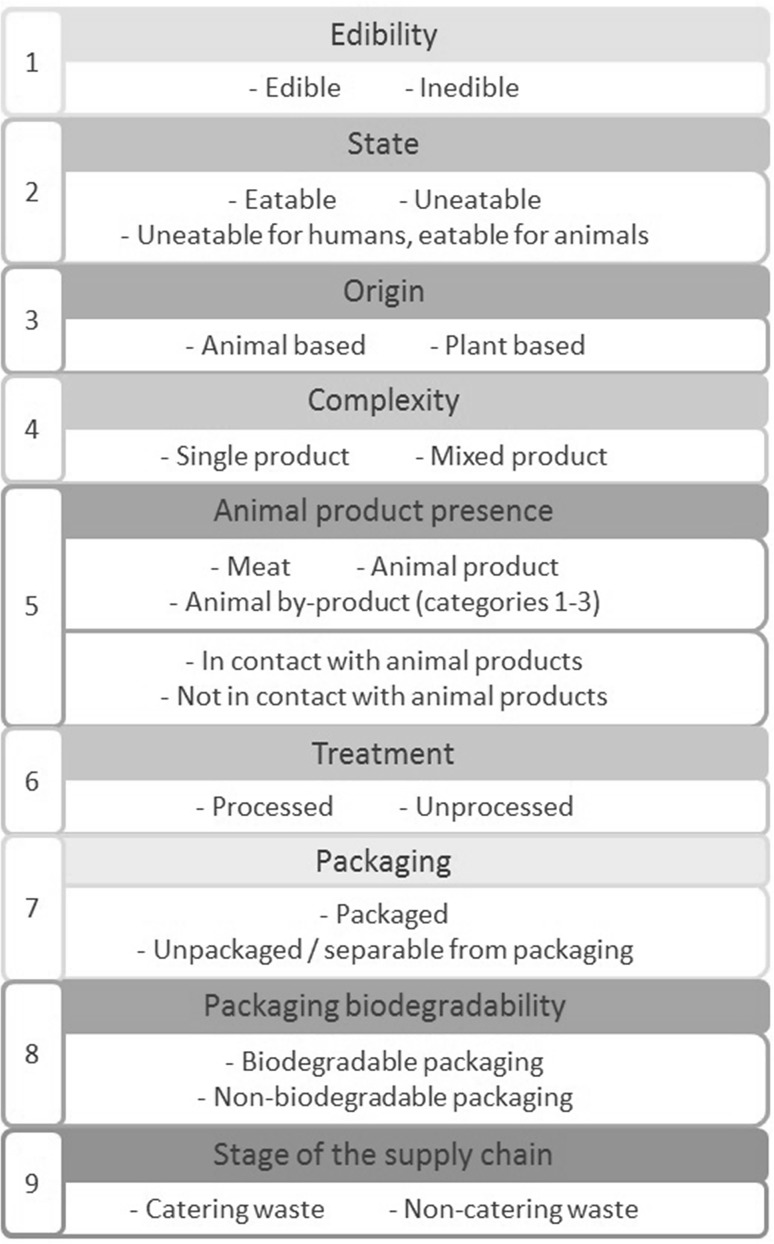
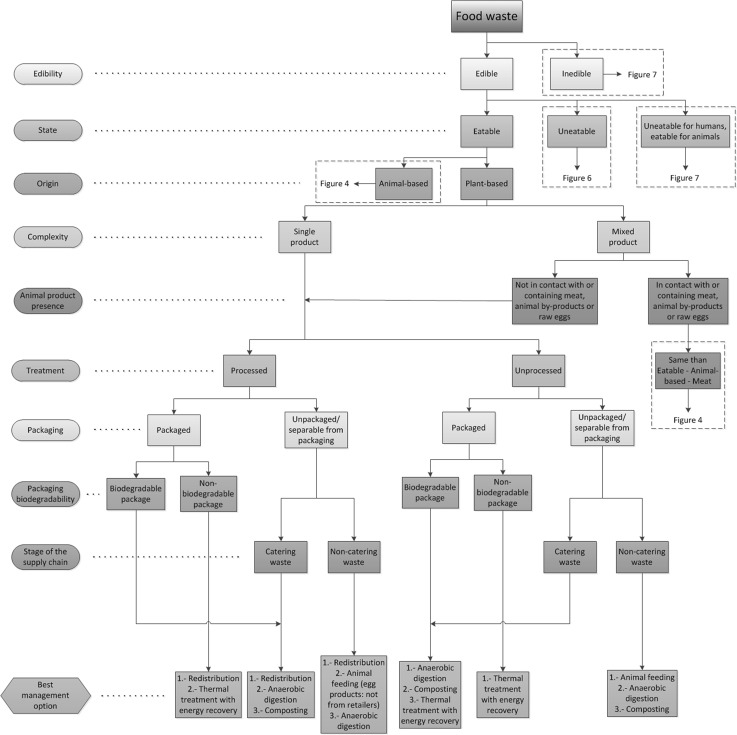
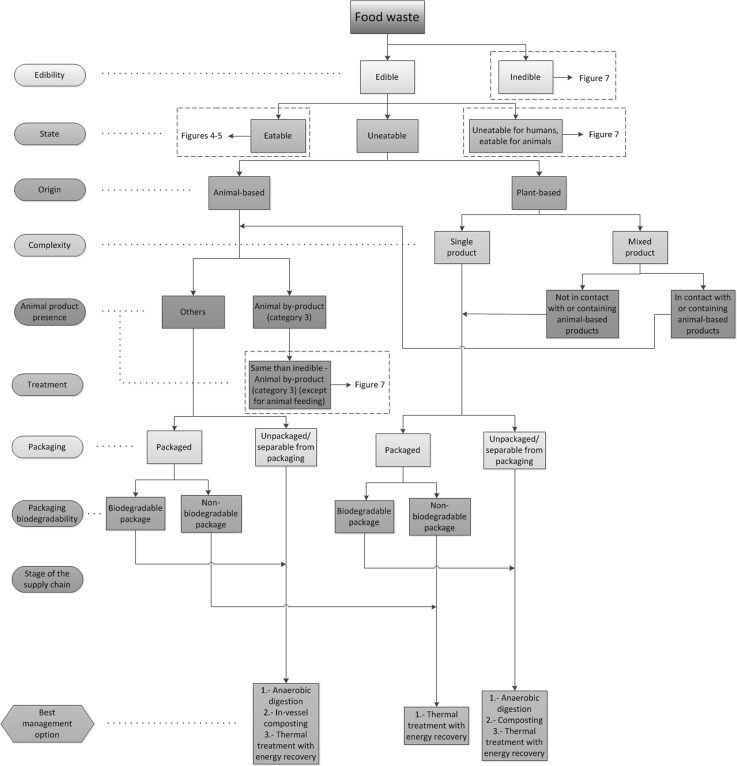
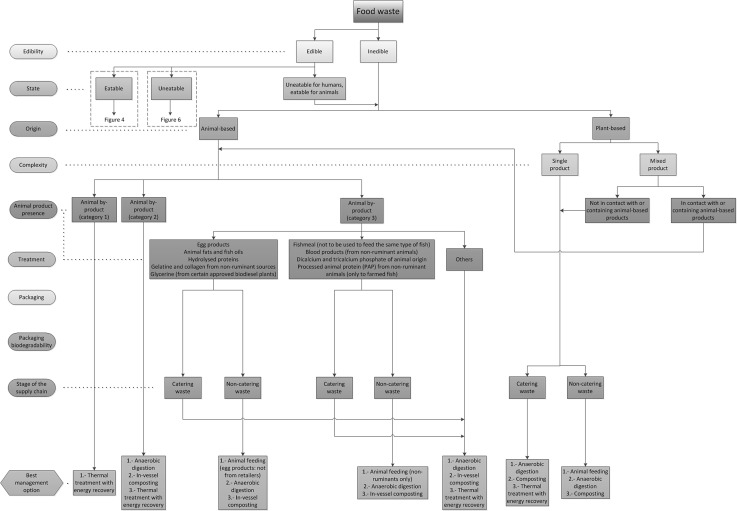
“Nine indicators are defined for categorizing food waste: edibility, state, origin, complexity, presence of animal products, treatment, packaging, packaging biodegradability, and the supply chain stage [21].”
BackgroundFood Waste Management for Biogas Production in the Context of Sustainable Development
Ferdeș, M., Zăbavă, B. Ș., Paraschiv, G., IONESCU, M., Dincă, M., & Moiceanu, G. (2022) · Energies · doi:10.3390/en15176268 · Cited by 83
Ismail, M. H., Ghazi, T. I. M., Hamzah, M. H., Manaf, L. A., Tahir, R. M., Nasir, A. M., & Omar, A. E. (2020) · Sustainability · doi:10.3390/su12218848 · Cited by 79
Impact of information hiding on circular food supply chains in business-to-business context
Mangla, S. K., Börühan, G., Ersoy, P., Kazançoğlu, Y., & Song, M. (2021) · Journal of Business Research · doi:10.1016/j.jbusres.2021.06.013 · Cited by 81
“For this reason, food loss and waste management are some of the most important issues to be tackled throughout the world (Garcia-Garcia et al., 2017).”
BackgroundTaxonomy of antecedents of food waste – A literature review
Bhattacharya, A., Nand, A. A., & Prajogo, D. I. (2021) · Journal of Cleaner Production · doi:10.1016/j.jclepro.2021.125910 · Cited by 55
Intelligent Sensors for Sustainable Food and Drink Manufacturing
Watson, N. J., Bowler, A. L., Rady, A. M., Fisher, O. J., Simeone, A., Escrig, J., Woolley, E., & Adedeji, A. A. (2021) · Frontiers in Sustainable Food Systems · doi:10.3389/fsufs.2021.642786 · Cited by 63
Self-citationNordin, N. H., Kaida, N., Othman, N. A., Akhir, F. N. M., & Hara, H. (2020) · IOP Conference Series Earth and Environmental Science · doi:10.1088/1755-1315/479/1/012035 · Cited by 69
“According to Garcia-Garcia et al. [4], in 2014 the European Commission has classified food waste into three categories food losses: food products lost during the production phase unavoidable food waste is referring to food products lost during the consumption phase (example: banana peels, fruit…”
Addressing food loss and waste prevention
Kör, B., Krawczyk, A., & Wakkee, I. A. M. (2021) · British Food Journal · doi:10.1108/bfj-05-2021-0571 · Cited by 65
Jagtap, S., Garcia‐Garcia, G., Duong, L. N. K., Swainson, M., & Martindale, W. (2021) · Foods · doi:10.3390/foods10081701 · Cited by 65
“It should be recognised that such collection schemes are expensive, and if the food waste hierarchy of preferential solutions to reducing food waste is to be acted on, the localisation of bioconversion must be considered [36].”
BackgroundSelf-citationEnvironmental assessment of the valorisation and recycling of selected food production side flows
Scherhaufer, S., Davis, J., Metcalfe, P., Gollnow, S., Colin, F., Menna, F. D., Vittuari, M., & Östergren, K. (2020) · Resources Conservation and Recycling · doi:10.1016/j.resconrec.2020.104921 · Cited by 58
IoT technologies in the food supply chain
Jagtap, S., Duong, L. N. K., Trollman, H., Bader, F., Garcia‐Garcia, G., Skouteris, G., Li, J., Pathare, P. B., Martindale, W., Swainson, M., et al. (2021) · Elsevier eBooks · doi:10.1016/b978-0-12-821470-1.00009-4 · Cited by 60
Self-citationBiorefining within food loss and waste frameworks: A review
Jones, R. E., Speight, R. E., Blinco, J.-A., & O’Hara, I. M. (2021) · Renewable and Sustainable Energy Reviews · doi:10.1016/j.rser.2021.111781 · Cited by 43
Singh, P. K., Mohanty, P., Mishra, S., & Adhya, T. K. (2022) · Frontiers in Energy Research · doi:10.3389/fenrg.2022.903775 · Cited by 50
Knowledge management for food supply chain synergies – a maturity level analysis of SME companies
Batista, L. C., Dora, M. K., Tóth, J., Molnár, A., Malekpoor, H., & Kumari, S. (2019) · Production Planning & Control · doi:10.1080/09537287.2019.1582104 · Cited by 46
“For example, they can enable learning processes concerning the usefulness (what it can be used for), sources (where it is), availability (how accessible it is), and cost implications (logistics and processing) concerning exchanges and utilisation of food waste and by-products (Garcia-Garcia et al. 2016; Sgarbossa and…”
BackgroundScandurra, F., Salomone, R., Caeiro, S., & Gulotta, T. M. (2023) · Environmental Impact Assessment Review · doi:10.1016/j.eiar.2023.107079 · Cited by 58
Toward the creation of novel food waste management systems: A network approach
Ghinoi, S., Silvestri, F., & Steiner, B. (2019) · Journal of Cleaner Production · doi:10.1016/j.jclepro.2019.118987 · Cited by 43
Formentini, M., Secondi, L., Ruini, L. F., Guidi, M., & Principato, L. (2021) · Journal of Enterprise Information Management · doi:10.1108/jeim-02-2021-0069 · Cited by 51
Bonato, S. V., Pacheco, D. A. D. J., ten Caten, C. S., & Caro, D. (2021) · Journal of Cleaner Production · doi:10.1016/j.jclepro.2021.130275 · Cited by 114
Antasouras, G., Vasios, G. K., Kontogiorgis, C. A., Ioannou, Z., Poulios, E., Deligiannidou, G.-E., Troumbis, A. Y., & Giaginis, C. (2022) · The International Journal of Health Planning and Management · doi:10.1002/hpm.3586 · Cited by 46
Patel, A., Desai, S. S., Mariam, I., Enman, J., Rova, U., Christakopoulos, P., & Μάτσακας, Λ. (2024) · Chemical Engineering Journal · doi:10.1016/j.cej.2024.152990 · Cited by 40
Lelicińska-Serafin, K., Manczarski, P., & Rolewicz-Kalińska, A. (2023) · Energies · doi:10.3390/en16041735 · Cited by 42
Vitale, G., Mosna, D., Bottani, E., Montanari, R., & Vignali, G. (2018) · Sustainable Production and Consumption · doi:10.1016/j.spc.2018.02.001 · Cited by 40
Bastian, G., Buro, D., & Palmer‐Keenan, D. (2021) · Nutrients · doi:10.3390/nu13114170 · Cited by 57
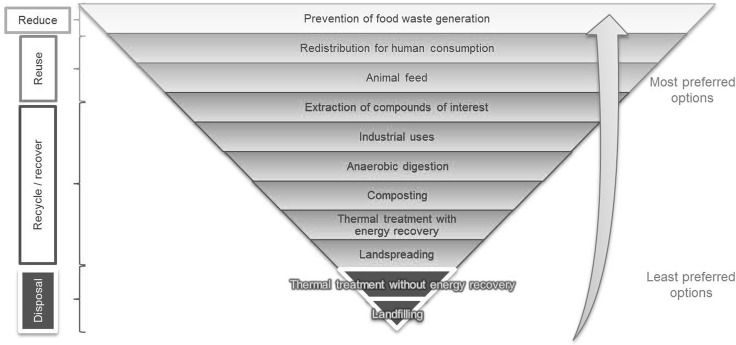
“To assist in the management of food waste more effectively, food waste hierarchies, such as the one in Figure 2, have been developed [86–88].”
Pigment bioproduction by Monascus purpureus using corn bran, a byproduct of the corn industry
de Almeida, A. B., Santos, N. H., de Lima, T. M., Santana, R. V., Filho, J. G. D. O., Peres, D. S., & Egea, M. B. (2021) · Biocatalysis and Agricultural Biotechnology · doi:10.1016/j.bcab.2021.101931 · Cited by 34
Trollman, H., Jagtap, S., Garcia‐Garcia, G., Harastani, R., Colwill, J., & Trollman, F. (2021) · Sustainable Production and Consumption · doi:10.1016/j.spc.2021.03.001 · Cited by 37
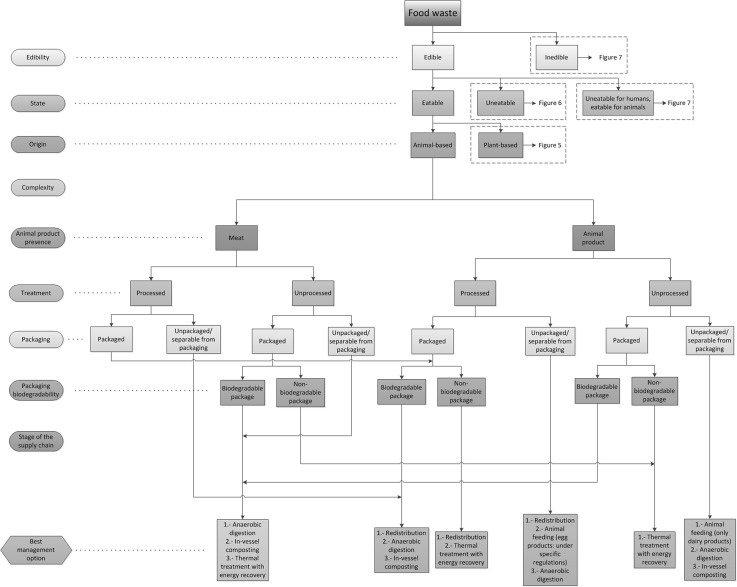
“The impact of food waste was assessed using the Food Waste anagement Decision Tree (FWMDT) ( Garcia-Garcia et al., 2017 ). he amount of food waste was estimated by extrapolating the reponses to the food waste questions to the general population and ssuming the same amount of ingredient would be…”
BackgroundMethodSelf-citationBiohydrogen production by co-digestion of food waste and corn industry wastewater
Vázquez-López, M., & Moreno‐Andrade, I. (2024) · International Journal of Hydrogen Energy · doi:10.1016/j.ijhydene.2024.03.315 · Cited by 37
Taofiq, O., Corrêa, R. C. G., Barros, L., Prieto, M. A., Bracht, A., Peralta, R. M., Gonzaléz‐Paramás, A. M., Barreiro, M. F., & Ferreira, I. C. F. R. (2019) · Food Research International · doi:10.1016/j.foodres.2019.108541 · Cited by 34
Assessment of the Potential of Watermelon Rind Powder for the Value Addition of Noodles
Chakrabarty, N., Mourin, M. M., Islam, N., Haque, A. R., Akter, S., Siddique, A. A., & Sarker, M. (2020) · Journal of Biosystems Engineering · doi:10.1007/s42853-020-00061-y · Cited by 32
“Consequently, the inedible portions of fruits from the processing area are generally discarded for openfield dumping, which causes severe environmental pollution owing to greenhouse gas emission (Garcia-Garcia et al. 2017; Tonini et al. 2018).”
BackgroundQuantifying Food Loss and Waste in Saudi Arabia
Alshabanat, Z., Alkhorayef, A., Haddad, H. B., Mezghani, I., Gouider, A., Tlili, A., Allouche, M. A., & Gannouni, K. A. (2021) · Sustainability · doi:10.3390/su13169444 · Cited by 39
Bioconversion of Starch Base Food Waste into Bioethanol
Onyeaka, H. N., Mansa, R. F., Wong, C., & Miri, T. (2022) · Sustainability · doi:10.3390/su141811401 · Cited by 30
Pant, M., Bisen, D., Kewlani, P., Srivastav, A. L., BHATT, I. D., & Chakma, S. (2025) · Biomass Futures · doi:10.1016/j.bmf.2025.100001 · Cited by 37
Forging New Frontiers in Sustainable Food Manufacturing
Rahimifard, S., Woolley, E., Webb, D. P., Garcia‐Garcia, G., Stone, J. A., Jellil, A., Gimenez-Escalante, P., Jagtap, S., & Trollman, H. (2017) · Smart innovation, systems and technologies · doi:10.1007/978-3-319-57078-5_2 · Cited by 31
Self-citationLópez-Sánchez, A., Luque-Badillo, A. C., Orozco-Nunnelly, D. A., Larios, N. S. A., Ruiz-Gómez, J. A., García‐Cayuela, T., & Hernandez, M. S. G. (2021) · Environmental Challenges · doi:10.1016/j.envc.2021.100327 · Cited by 37
Jarrín-Chacón, J. P., Núñez-Pérez, J., Espín-Valladares, R. C., Manosalvas-Quiroz, L. A., Rodríguez, H., & Pais-Chanfrau, J.-M. (2023) · Foods · doi:10.3390/foods12030590 · Cited by 31
Towards integrating production and consumption to reduce consumer food waste in developed countries
Jellil, A., Woolley, E., & Rahimifard, S. (2018) · International Journal of Sustainable Engineering · doi:10.1080/19397038.2018.1428834 · Cited by 29
“Environmentally and economically, prevention is the best option to manage waste (European Commission 2012; Garcia-Garcia et al. 2016), this research focuses on preventing avoidable and possibly avoidable CFW generated in the household.”
BackgroundSelf-citationA complete decision-support infrastructure for food waste valorisation
Sheppard, P., Garcia‐Garcia, G., Stone, J., & Rahimifard, S. (2019) · Journal of Cleaner Production · doi:10.1016/j.jclepro.2019.119608 · Cited by 27
Self-citationREDUCING FOOD WASTE THROUGH LEAN AND SUSTAINABLE OPERATIONS: A CASE STUDY FROM THE POULTRY INDUSTRY
Kazançoğlu, Y., Ekinci, E., Özkan-Özen, Y. D., & Pala, M. Ö. (2021) · Revista de Administração de Empresas · doi:10.1590/s0034-759020210503 · Cited by 34
Srijuntrapun, P., Sukwong, P., & Marshall, A. (2022) · Heliyon · doi:10.1016/j.heliyon.2022.e11201 · Cited by 47
“Despite some progress over the last few years in finding alternatives, especially in developed countries (Garcia-Garcia et al., 2017), there is an urgent need for guidelines that effectively integrate each process in order to reduce food waste and improve food distribution in hotels.”
BackgroundA Hierarchical Pyramid for Food Waste Based on a Social Innovation Perspective
Lombardi, M., & Costantino, M. (2021) · Sustainability · doi:10.3390/su13094661 · Cited by 22
“Both authors stressed that prevention can be associated with each level of FSC through the use of logistics and management tools or by targeting the education, behavior, and consumption habits of consumers [40].”
BackgroundFrom Quantifying to Managing Food Loss in the Agri-Food Industry Supply Chain
Sánchez-Teba, E. M., Gémar, G., & Soler, I. P. (2021) · Foods · doi:10.3390/foods10092163 · Cited by 28
Hasan, Z., & Lateef, M. (2023) · Environmental Science and Pollution Research · doi:10.1007/s11356-023-30152-0 · Cited by 34
Mihalčová, B., Korauš, A., Prokopenko, O. V., Hvastová, J., Freňáková, M., Gallo, P., & Balogová, B. (2021) · Energies · doi:10.3390/en14144245 · Cited by 21
Towards zero waste: A comprehensive framework for categorizing household food waste
Yusoff, N. I. M., Godsell, J., & Woolley, E. (2024) · Sustainable Production and Consumption · doi:10.1016/j.spc.2024.05.002 · Cited by 31
Self-citationDavoudi, M., Gavlighi, H. A., Javanmardi, F., Benjakul, S., & Nikoo, M. (2024) · Comprehensive Reviews in Food Science and Food Safety · doi:10.1111/1541-4337.13422 · Cited by 22
Understanding Behavior of Household Food Waste Management: Food Waste Hierarchy Context
Ariyani, L., & Ririh, K. R. (2020) · Jurnal Ilmiah Teknik Industri · doi:10.23917/jiti.v19i2.11994 · Cited by 33
“Some researchers propose food waste hierarchy to approach appropriate food waste management (Eriksson et al., 2015; Garcia-Garcia et al., 2017; Papargyropoulou et al., 2014).”
BackgroundMethodReview on Efficient Food Waste Management System Using Internet of Things
Kumar, T. B., & Prashar, D. (2021) · International Journal of Current Research and Review · doi:10.31782/ijcrr.2021.13603 · Cited by 21
Ramadan, L., Duarte, C. R., & Barrozo, M. A. S. (2018) · Waste and Biomass Valorization · doi:10.1007/s12649-018-0247-4 · Cited by 19
Chatzipavlou, M., Karayiannis, D., Chaloulakou, S., Georgakopoulou, E., & Poulia, K. (2024) · Clinical Nutrition ESPEN · doi:10.1016/j.clnesp.2024.03.030 · Cited by 29
Embodied energy in preventable food manufacturing waste in the United Kingdom
Sheppard, P., & Rahimifard, S. (2019) · Resources Conservation and Recycling · doi:10.1016/j.resconrec.2019.03.002 · Cited by 22
“This would require a separate study, but a comprehensive approach to the classification and characterisation of food waste has been proposed and described (Garcia-Garcia et al., 2016), and this could be used to provide such information.”
BackgroundSelf-citationRadziemska, M., Vaverková, M. D., & Mazur, Z. (2017) · Waste and Biomass Valorization · doi:10.1007/s12649-017-0166-9 · Cited by 18
“The currently functioning food systems are very inefficient; for example, it is estimated that as much as half of the produced foods is wasted [1].”
BackgroundMicrobial process in anaerobic digestion of food wastes for biogas production: a review
Mishra, S., Banerjee, A., Chattaraj, S., Samantaray, A., Panigrahi, S., Bauri, K. P., & Thatoi, H. (2024) · Systems Microbiology and Biomanufacturing · doi:10.1007/s43393-024-00303-6 · Cited by 16
“Therefore, thorough evaluations of different types of FW are extremely important to ensure that the unique characteristics of each type of FW are considered, leading to optimized processes [16].”
The Media of Washatiyah Dakwah in Quranic Exegesis Study
Huho, J. M., Kosonei, R. C., & Peter, K. M. (2020) · Budapest International Research and Critics Institute (BIRCI-Journal): Humanities and Social Sciences · doi:10.33258/birci.v3i2.921 · Cited by 16
Advances in biorenewables-resource-waste systems and modelling
Guo, M., Wu, C., Chapman, S. P., Yu, X., Vinestock, T., Hastings, A., Smith, P., & Shah, N. (2023) · Carbon Capture Science & Technology · doi:10.1016/j.ccst.2023.100142 · Cited by 17
The complexities of decision-making in food waste valorization: A critical review
Wei, Y., Rodriguez-Illera, M., Guo, X., Vollebregt, M., Li, X., Rijnaarts, H. H. M., & Chen, W. (2024) · Journal of Environmental Management · doi:10.1016/j.jenvman.2024.120989 · Cited by 22
Rösler, F., Kreyenschmidt, J., & Ritter, G. (2021) · Sustainability · doi:10.3390/su13179569 · Cited by 18
Contreras-Jácquez, V., Virgo-Cruz, J. M., García-Fajardo, J. A., Obregón-Solís, E., Mateos‐Díaz, J. C., & Asaff‐Torres, A. (2022) · Separation and Purification Technology · doi:10.1016/j.seppur.2022.121921 · Cited by 15
Exploring the Opportunities and Challenges of ICT-Mediated Food Sharing in Japan
Yamabe-Ledoux, A. M., Saitô, O., & Hori, K. (2023) · Sustainability · doi:10.3390/su15054584 · Cited by 19
Ghanimeh, S. A., Al-Sanioura, D. N., Saikaly, P. E., & El‐Fadel, M. (2019) · Waste and Biomass Valorization · doi:10.1007/s12649-019-00891-8 · Cited by 14
Production of carotenoid-richHermetia illucens larvae using specific agri-food by-products
Leni, G., Maistrello, L., Pinotti, G., Sforza, S., & Caligiani, A. (2022) · Journal of Insects as Food and Feed · doi:10.3920/jiff2022.0016 · Cited by 18
Farzadkia, M., Jorfi, S., Nikzad, M., & Nazari, S. (2019) · Waste Management & Research The Journal for a Sustainable Circular Economy · doi:10.1177/0734242x19865777 · Cited by 14
“There are few reports about methods of waste management ranking procedure, but a general scheme can be found in Figure 1 (Garcia-Garcia et al., 2017a).”
BackgroundGueboudji, Z. (2024) · Springer eBooks · doi:10.1007/978-3-031-74334-4_2 · Cited by 21
The way towards food sustainability: some insights for pasta supply chain
Faggini, M., Cosimato, S., & Parziale, A. (2021) · Economia Politica · doi:10.1007/s40888-021-00247-3 · Cited by 15
Cook, N., Collins, J., Porter, J. A., & Goodwin, D. M. (2023) · Frontiers in Nutrition · doi:10.3389/fnut.2023.1204980 · Cited by 14
“Therefore, the aims of this study were to use behavior change theories and frameworks to (1) describe the drivers of behavior to complete food and food-related waste audits and (2) identify possible interventions that support the implementation and uptake of these audits.”
BackgroundMethodSingh, A., Tiwari, R., Joshi, P., & Dutt, T. (2019) · Waste Management & Research The Journal for a Sustainable Circular Economy · doi:10.1177/0734242x19886632 · Cited by 13
Identification and Analysis of Attributes for Industrial Food Waste Management Modelling
Garcia‐Garcia, G., Woolley, E., & Rahimifard, S. (2019) · Sustainability · doi:10.3390/su11082445 · Cited by 13
Self-citationCaleja, C., Barros, L., Prieto, M. A., Bento, A. A., Oliveira, M. B. P. P., & Ferreira, I. C. F. R. (2019) · Food & Function · doi:10.1039/c8fo02234h · Cited by 13
Masoumi, A., & Yengejeh, R. J. (2020) · Journal of Environmental Health Science and Engineering · doi:10.1007/s40201-020-00525-5 · Cited by 13
Techno-economic analysis and environmental aspects of food waste management
Rana, M. S., Bhushan, S., Prajapati, S. K., Preethi, & Kavitha, S. K. (2020) · Elsevier eBooks · doi:10.1016/b978-0-12-818353-3.00015-8 · Cited by 17
Ajieh, M. U., Isagba, E. S., Ihoeghian, N. A., Edosa, V. I. O., Amenaghawon, A. N., Oshoma, C. E., Erhunmwunse, N. O., Obuekwe, I. S., Tongo, I., Emokaro, C. O., et al. (2021) · Environment Development and Sustainability · doi:10.1007/s10668-020-01205-y · Cited by 14
Compatibility in cross-city innovation transfer: Importance of existing local experiments
Wang, S., & Bai, X. (2022) · Environmental Innovation and Societal Transitions · doi:10.1016/j.eist.2022.09.003 · Cited by 14
Kalogiannidis, S., Kalfas, D., Papathanasiou, F., & Chatzitheodoridis, F. (2025) · Sustainable Futures · doi:10.1016/j.sftr.2025.101186 · Cited by 18
Metadata
- Authors
- Garcia-Garcia, G., Woolley, E., Rahimifard, S., Colwill, J., White, R., & Needham, L.
- Affiliations
- Loughborough University (GB)
- Molson Coors Brewing Company (United States) (US)
- Quorn (United Kingdom) (GB)
- Corresponding author
- Woolley, Elliot
- Venue
- Waste and Biomass Valorization
- Published
- 2016-10-25
- Volume
- 8
- Issue
- 6
- Pages
- 2209-2227
- ISSN
- 1877-2641 (ISSN-L)
- 1877-265X
- PMC
- PMC6961471
- OpenAlex
- W2533730896
- Cited by
- 225
- References
- 34
- Citations by year
- 2026: 21 · 2025: 24 · 2024: 27 · 2023: 24 · 2022: 26 · 2021: 40 · 2020: 27 · 2019: 19 · 2018: 13 · 2017: 4
- FWCI
- 15.11
- Type
- journal article
- Language
- en
- Open access
- hybrid
- doi.org
- Locations
- Waste and Biomass Valorization (publishedVersion, cc-by)
- PubMed Central (publishedVersion, cc-by)
- PubMed (publishedVersion)
- Loughborough University Institutional Repository (Loughborough University) (submittedVersion, cc-by)
- Loughborough University Research Repository (Loughborough University) (submittedVersion, cc-by)
- Funders
- Engineering and Physical Sciences Research Council (EP/K030957/1)
- Topics
- Life Sciences › Agricultural and Biological Sciences › Food Science › Food Waste Reduction and Sustainability
- Physical Sciences › Environmental Science › Ecology › Agriculture Sustainability and Environmental Impact
- Physical Sciences › Environmental Science › Waste Management and Disposal › Waste Management and Recycling
- Keywords
- food waste, waste hierarchy, sustainable waste management, decision support, food manufacturing, environmental impact of food waste, waste management alternatives
About these checks
Registry, retraction, Cites and statistics results are computed, not judged, with one exception: a printed reference that no index lists is read once by a model before it counts as a citation error. Claims are extracted by a model and kept only when their quote appears verbatim in the text; each cited source is then checked, with a model’s help, for whether it says what the claim relies on. Those verdicts can be wrong — read the claim’s quote and the cited source before relying on one.
Statistics and arithmetic are recomputed, not judged.
Confidence bands are shown only for fields calibrated on our annotated test set. None is calibrated yet, so no band is shown.
What counts as a claim ›How we measure confidence ›How we check this ›
Are you an author, or do you see a problem with this page? Request a review
Data sources
Bibliographic data: Semantic Scholar, OpenAlex, Crossref.
Contains information from the Semantic Scholar Academic Graph Datasets, made available under the ODC Attribution License (ODC-BY 1.0).
Semantic Scholar’s data is described in: Kinney, R., et al. (2023). The Semantic Scholar Open Data Platform. arXiv:2301.10140.
