

A Methodology for Sustainable Management of Food Waste
Open accessThe DOI matches its Crossref record; 33 of the 34 references it cites were found in a registry or an index.
Abstract
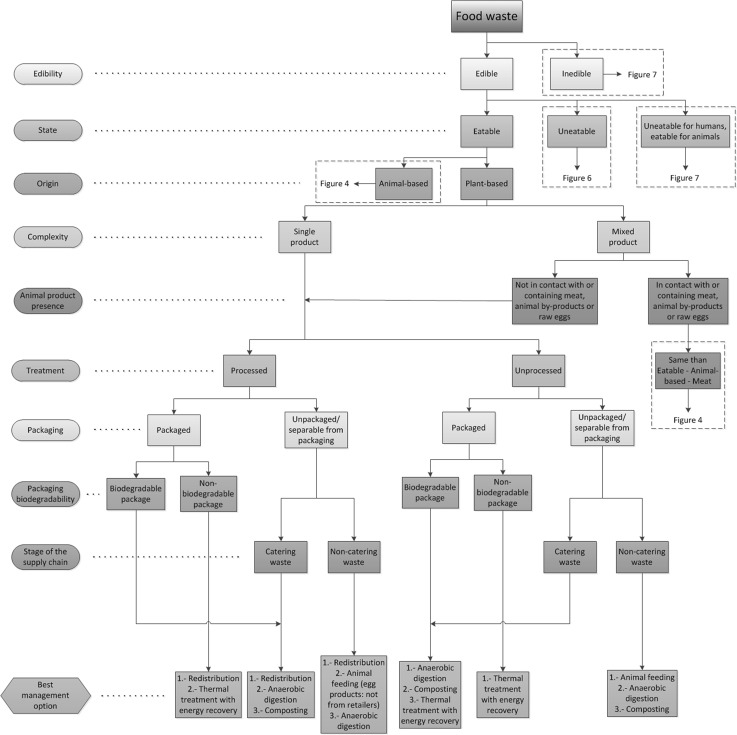
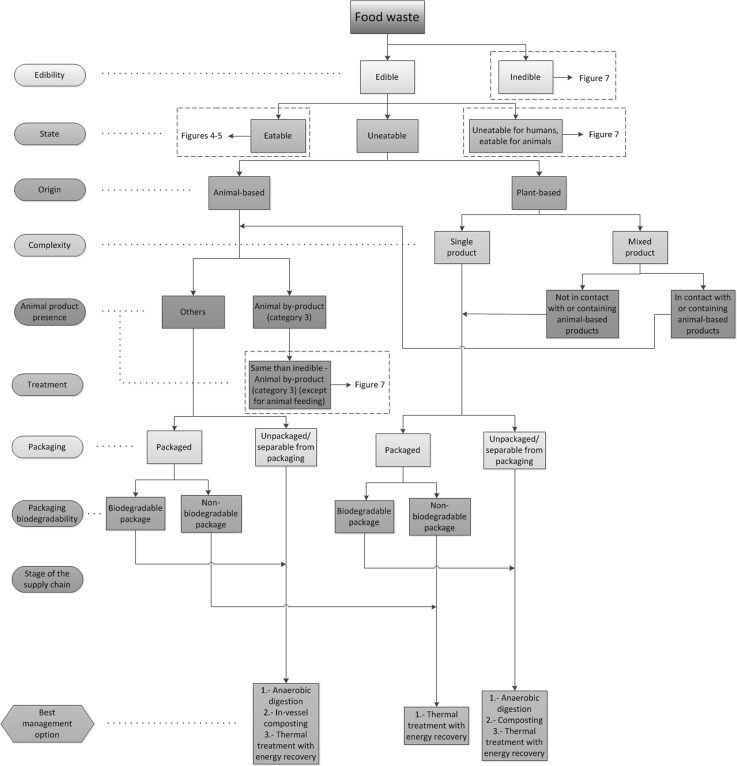
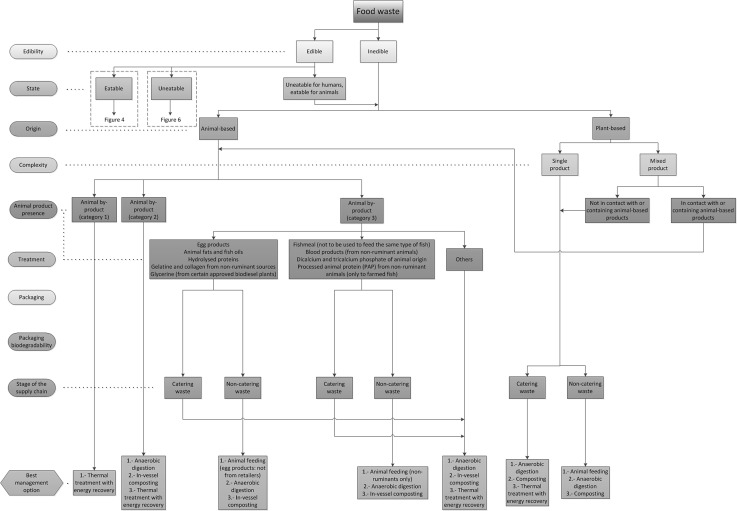
As much as one-third of the food intentionally grown for human consumption is never consumed and is therefore wasted, with significant environmental, social and economic ramifications. An increasing number of publications in this area currently consider different aspects of this critical issue, and generally focus on proactive approaches to reduce food waste, or reactive solutions for more efficient waste management. In this context, this paper takes a holistic approach with the aim of achieving a better understanding of the different types of food waste, and using this knowledge to support informed decisions for more sustainable management of food waste. With this aim, existing food waste categorizations are reviewed and their usefulness are analysed. A systematic methodology to identify types of food waste through a nine-stage categorization is used in conjunction with a version of the waste hierarchy applied to food products. For each type of food waste characterized, a set of waste management alternatives are suggested in order to minimize environmental impacts and maximize social and economic benefits. This decision-support process is demonstrated for two case studies from the UK food manufacturing sector. As a result, types of food waste which could be managed in a more sustainable manner are identified and recommendations are given. The applicability of the categorisation process for industrial food waste management is discussed.
Overview
The claims and statistics of this paper haven’t been checked yet.
Free: it reads the open-access text and checks the first 5 claims that cite a source we can check. Create a free account to check every claim.
Integrity signals
Registry
Cites
Statistics
Figures
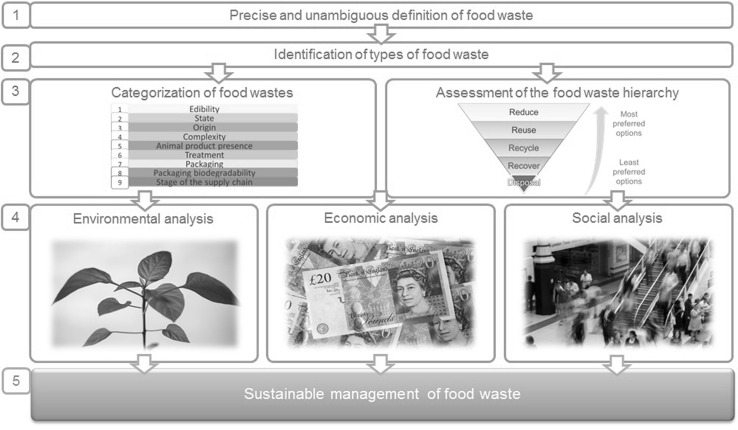
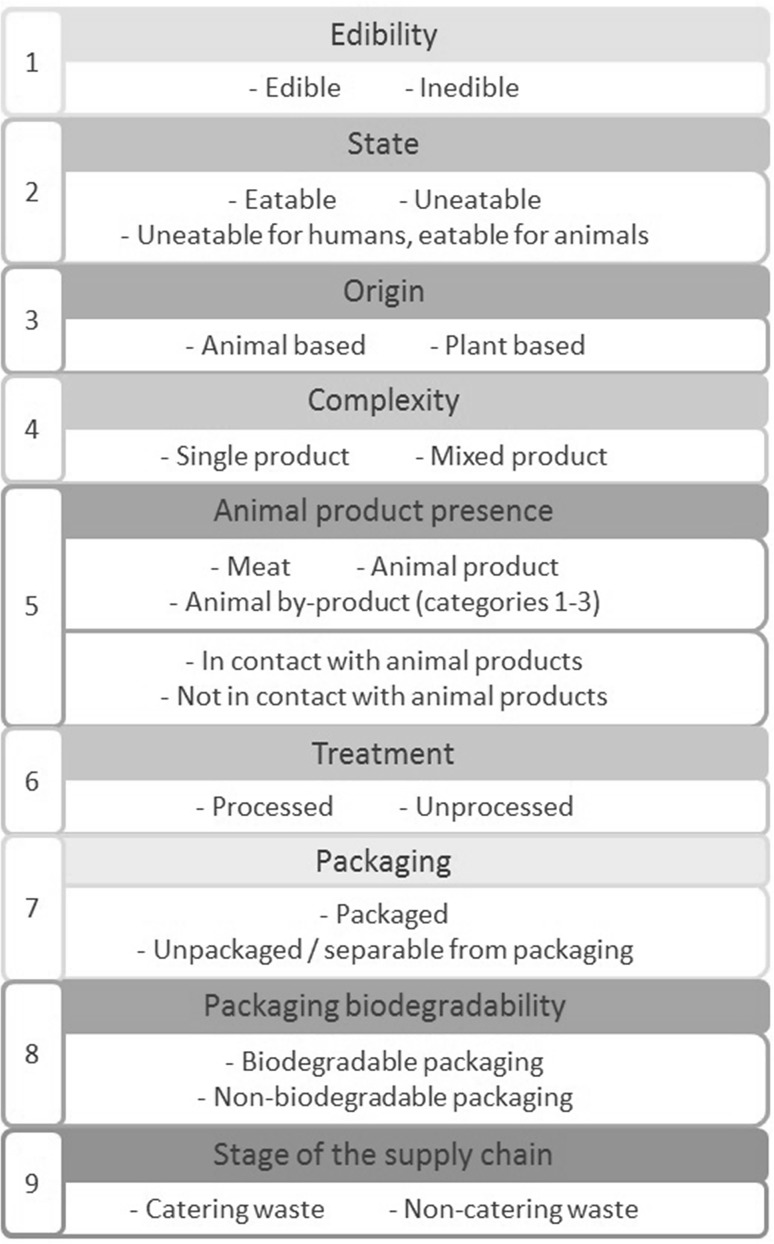
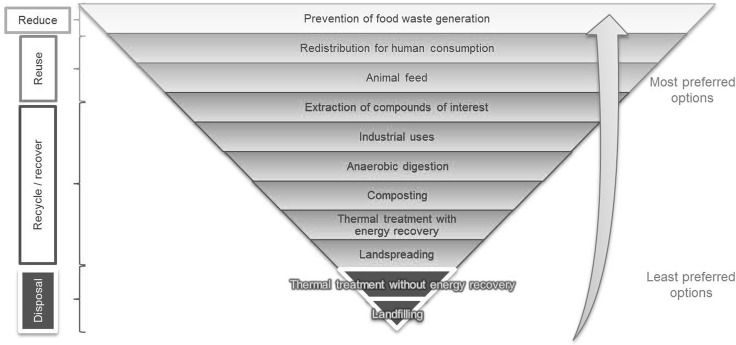
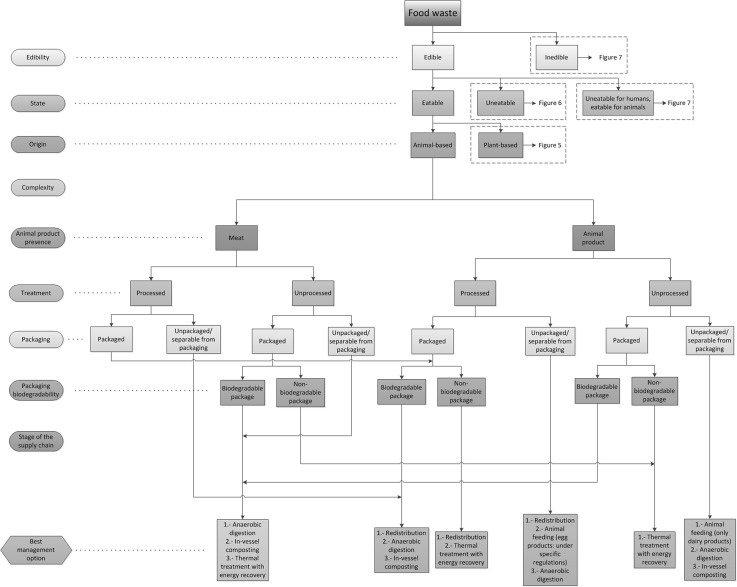
Verification
Claims the paper makes
The claims and statistics of this paper haven’t been checked yet.
Free: it reads the open-access text and checks the first 5 claims that cite a source we can check. Create a free account to check every claim.
Self-check
Percentages, sums and reported differences re-computed from the paper’s own numbers.
The self-check needs the paper’s full text.
Citations
Cites
The food waste hierarchy as a framework for the management of food surplus and food waste
Papargyropoulou, E., Lozano, R., K. Steinberger, J., Wright, N., & Ujang, Z. B. (2014) · Journal of Cleaner Production · doi:10.1016/j.jclepro.2014.04.020 · Cited by 1,711
Resolution Adopted By The General Assembly
(1984) · International Legal Materials · doi:10.1017/s002078290003076x · Cited by 1,148
Lin, C. S. K., Pfaltzgraff, L. A., Herrero-Davila, L., Mubofu, E. B., Abderrahim, S., Clark, J. H., Koutinas, A. A., Kopsahelis, N., Stamatelatou, K., Dickson, F., et al. (2013) · Energy & Environmental Science · doi:10.1039/c2ee23440h · Cited by 1,137
Brewers' spent grain: generation, characteristics and potential applications
Mussatto, S. I., Dragone, G., & Roberto, I. C. (2006) · Journal of Cereal Science · doi:10.1016/j.jcs.2005.06.001 · Cited by 1,086 · cited 1×
“, increasing their health benefits [68].”
The causes of food waste in the supplier–retailer interface: Evidences from the UK and Spain
Mena, C., Adenso-Diaz, B., & Yurt, O. (2011) · Resources Conservation and Recycling · doi:10.1016/j.resconrec.2010.09.006 · Cited by 473
Gustafsson, J., Cederberg, C., Sonesson, U., & Emanuelsson, A. (2013) · KTH Publication Database DiVA (KTH Royal Institute of Technology) · Cited by 410
Variability of brewer’s spent grain within a brewery
Santos, M., Jiménez, J. J., Bartolomé, B., Gómez-Cordovés, C., & del Nozal, M. J. (2003) · Food Chemistry · doi:10.1016/s0308-8146(02)00229-7 · Cited by 306 · cited 2×
“Flour can be produced from spent grain following a process that includes drying and grinding [67].”
BackgroundCarbon footprint of food waste management options in the waste hierarchy – a Swedish case study
Eriksson, M., Strid, I., & Hansson, P.-A. (2015) · Journal of Cleaner Production · doi:10.1016/j.jclepro.2015.01.026 · Cited by 304 · cited 1×
“[18] Waste Biomass Valor (2017) 8:2209–2227 2215”
Discussion on the methodology for determining food waste in household waste composition studies
Lebersorger, S., & Schneider, F. (2011) · Waste Management · doi:10.1016/j.wasman.2011.05.023 · Cited by 293 · cited 2×
“A more explicit classification with sub-categories was also suggested by Lebersorger and Schneider [20].”
BackgroundMethodEdjabou, M. E., Jensen, M. B., Götze, R., Pivnenko, K., Petersen, C., Scheutz, C., & Astrup, T. F. (2015) · Waste Management · doi:10.1016/j.wasman.2014.11.009 · Cited by 292 · cited 1×
“[33] included two new factors: vegetable/ animal-derived food waste and avoidable-processed/ avoidable-unprocessed food waste.”
Background
Research works printed but not linked: 3
- Institute of Mechanical Engineers Global Food—Waste Not 2013 London, UK Want Not
- The European Comission Commission Regulation (EU) No 142/2011 of 25 February 2011 Off. J. Eur. Union. L 2011 54 1 254
- Environmental Protection Agency BAT Guidance Note on Best Available Techniques for the Brewing 2008 Wexford (Ireland) Malting & Distilling Sector
Cited by
Items 201–224 of 224
Gamboa, O. Y. R., San‐Pedro, L., Ricalde-Cab, L., Giácoman‐Vallejos, G., Bassam, A., & Mekaoui, A. E. (2023) · Energy Sustainable Development/Energy for sustainable development · doi:10.1016/j.esd.2023.101339
Sikumbang, I. (2023) · Cities and Urban Development Journal · doi:10.7454/cudj.v1i2.1012
Rohmah, M., Setyono, P., & Utami, T. (2024) · IOP Conference Series Earth and Environmental Science · doi:10.1088/1755-1315/1317/1/012021 · Cited by 2
Iwe, M. O., Uduma, E. O., & Agiriga, A. N. (2024) · Food ScienTech Journal · doi:10.33512/fsj.v6i1.23866
“Food waste is one of the most challenging issues humankind is currently facing worldwide (Garcia-Garcia et al. , 2017).”
BackgroundAndik, S. D. S., & Rakowska, J. (2024) · Research Square · doi:10.21203/rs.3.rs-4977088/v1
Assessment of Food Wastage in Hostel Messes – An Exploratory Qualitative Study
Rajalakshmi, M., & Harshavardhini, S. (2024) · Journal of Medical Evidence · doi:10.4103/jme.jme_118_24
Bölükbaş, R. (2024) · Journal of Tourism and Gastronomy Studies · doi:10.21325/jotags.2024.1526
Ramessur, A., & Bhagwan, R. (2025) · Journal of Law and Sustainable Development · doi:10.55908/sdgs.v13i1.4266
Food Industry Waste Management: Technologies for Value Chain Addition
Hassan, H., Ansari, F. A., Rawat, I., & Bux, F. (2025) · Springer eBooks · doi:10.1007/978-3-031-78420-0_1 · Cited by 1
How Can We Improve the Consumer Acceptance Level for Disposers Considering Regional Characteristics?
Park, S., Ryu, J., Lee, D., & Shin, J. (2025) · Water · doi:10.3390/w17040493
Bujdos, D., Kuzel, Z., & Wood, A. R. (2025) · Royal Society Open Science · doi:10.1098/rsos.240953
Sustainable Management of Food Waste by Composting
Ghatti, V., Archana, S., Shanvaz, H., Mahadev, B. K., Raghu, N., Prasad, S., Kasai, D. R., & Kumar, K. Y. (2025) · Interdisciplinary biotechnological advances · doi:10.1007/978-981-97-8673-2_7
Nghiên cứu các yếu tố ảnh hưởng đến ý định áp dụng kinh tế tuần hoàn trong nông nghiệp tại Hà Nội
Vu, H. V. (2025) · Tạp chí Khoa học Thương mại · doi:10.54404/jts.2025.198v.02
Converting Food Waste into Energy and Valuable Products Through Microbial Processing
Mohammadi, B. (2025) · American Journal of Modern Energy · doi:10.11648/j.ajme.20251105.12
Marketing the Future Plate – The Case of Too Good To Go
Saltão, A. B. F., Gaspar, B., Alves, A. F., & de Abreu, M. M. E. (2026) · Lecture notes in networks and systems · doi:10.1007/978-3-032-12879-9_31
Koulicoff, L. A., Rivera, J. L., Siliveru, K., Aldrich, C. G., & Pezzali, J. G. (2026) · Translational Animal Science · doi:10.1093/tas/txag001
Spent Hops: Utilisation, Impact, and Future Prospects
Carbone, K., & Celi, E. (2026) · Springer eBooks · doi:10.1007/978-3-031-96606-4_8
Soltanian, S., Sarvestani, M. E., Norouzi, O., Maria, F. D., & Dutta, A. (2026) · Energy Conversion and Management · doi:10.1016/j.enconman.2026.121145
Loo, L., Howieson, J., & Jackson, E. (2026) · Cleaner Waste Systems · doi:10.1016/j.clwas.2026.100525 · Cited by 1
Smart Kitchenmate AI: An Intelligent Assistant for Cooking
K, D. V., Abisha, K., & Akshaya, G. (2026) · International Conference on Augmented Intelligence and Sustainable Systems (ICAISS) · doi:10.1109/icaiss68683.2026.11525886
Andik, S. D. S., & Rakowska, J. (2026) · Journal of Material Cycles and Waste Management · doi:10.1007/s10163-026-02691-4
“This is crucial for fostering sustainability and encouraging responsible consumption patterns within the region [71].”
Do Healthy food choices lead to more waste at home? A systematic review
Farinola, L. A., Ananda, J., Mitsis, A., & Pearson, D. (2026) · Future Foods · doi:10.1016/j.fufo.2026.101179
Nutrient Value Loss Framework for Supply Chain Management
Cardini, S., Savio, A., Marchi, B., Zanoni, S., & Zavanella, L. E. (2026) · IFIP advances in information and communication technology · doi:10.1007/978-3-032-38594-9_17
Agyemang, P., Dessureault, M.-A., Kwofie, E. M., Allotey, D. K., Payne, A., Brobbey, M. S., & Mongeon, J. (2026) · Chemical Engineering Journal · doi:10.1016/j.cej.2026.182774
Metadata
- Authors
- Garcia-Garcia, G., Woolley, E., Rahimifard, S., Colwill, J., White, R., & Needham, L.
- Affiliations
- Loughborough University (GB)
- Molson Coors Brewing Company (United States) (US)
- Quorn (United Kingdom) (GB)
- Corresponding author
- Woolley, Elliot
- Venue
- Waste and Biomass Valorization
- Published
- 2016-10-25
- Volume
- 8
- Issue
- 6
- Pages
- 2209-2227
- ISSN
- 1877-2641 (ISSN-L)
- 1877-265X
- PMC
- PMC6961471
- OpenAlex
- W2533730896
- Cited by
- 225
- References
- 34
- Citations by year
- 2026: 21 · 2025: 24 · 2024: 27 · 2023: 24 · 2022: 26 · 2021: 40 · 2020: 27 · 2019: 19 · 2018: 13 · 2017: 4
- FWCI
- 15.11
- Type
- journal article
- Language
- en
- Open access
- hybrid
- doi.org
- Locations
- Waste and Biomass Valorization (publishedVersion, cc-by)
- PubMed Central (publishedVersion, cc-by)
- PubMed (publishedVersion)
- Loughborough University Institutional Repository (Loughborough University) (submittedVersion, cc-by)
- Loughborough University Research Repository (Loughborough University) (submittedVersion, cc-by)
- Funders
- Engineering and Physical Sciences Research Council (EP/K030957/1)
- Topics
- Life Sciences › Agricultural and Biological Sciences › Food Science › Food Waste Reduction and Sustainability
- Physical Sciences › Environmental Science › Ecology › Agriculture Sustainability and Environmental Impact
- Physical Sciences › Environmental Science › Waste Management and Disposal › Waste Management and Recycling
- Keywords
- food waste, waste hierarchy, sustainable waste management, decision support, food manufacturing, environmental impact of food waste, waste management alternatives
About these checks
Registry, retraction, Cites and statistics results are computed, not judged, with one exception: a printed reference that no index lists is read once by a model before it counts as a citation error. Claims are extracted by a model and kept only when their quote appears verbatim in the text; each cited source is then checked, with a model’s help, for whether it says what the claim relies on. Those verdicts can be wrong — read the claim’s quote and the cited source before relying on one.
Statistics and arithmetic are recomputed, not judged.
Confidence bands are shown only for fields calibrated on our annotated test set. None is calibrated yet, so no band is shown.
What counts as a claim ›How we measure confidence ›How we check this ›
Are you an author, or do you see a problem with this page? Request a review
Data sources
Bibliographic data: Semantic Scholar, OpenAlex, Crossref.
Contains information from the Semantic Scholar Academic Graph Datasets, made available under the ODC Attribution License (ODC-BY 1.0).
Semantic Scholar’s data is described in: Kinney, R., et al. (2023). The Semantic Scholar Open Data Platform. arXiv:2301.10140.
