

Does Personality Moderate the Effects of Mindfulness Training for Medical and Psychology Students?
Open accessThe DOI matches its Crossref record; 45 of the 45 references it cites were found in a registry or an index.
Abstract
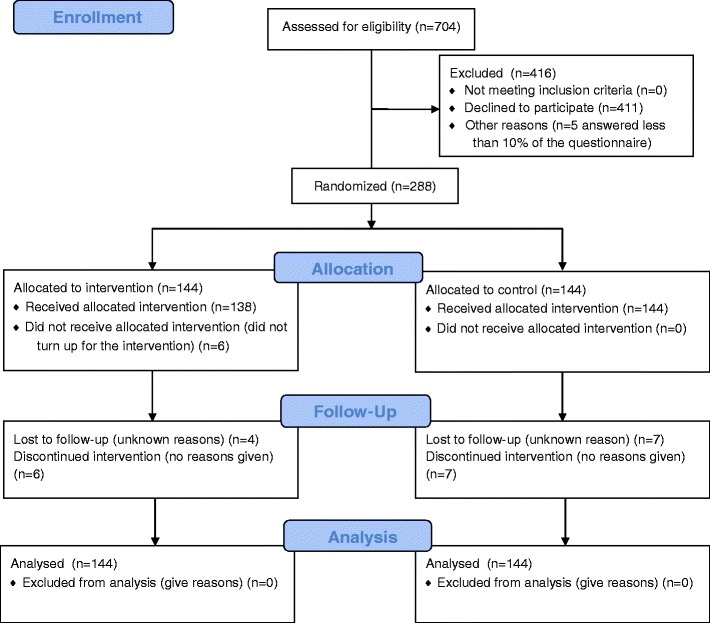
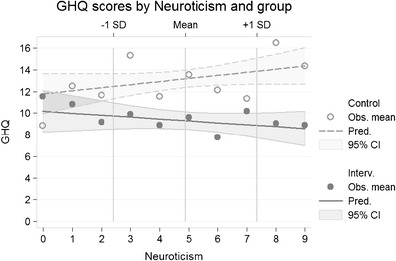
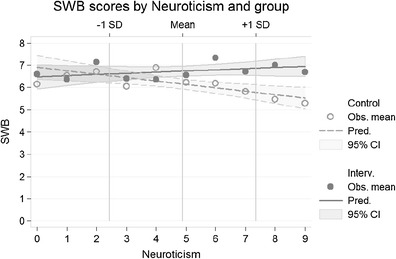
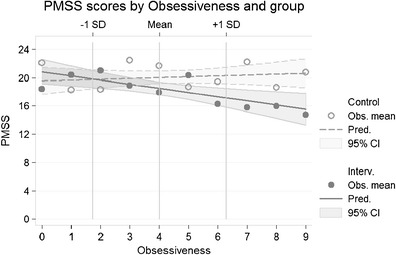
The majority of mindfulness research to date has reported only on the group-level effects of interventions. Therefore, there is a need to better understand who is most likely to benefit from mindfulness interventions. This study reports on moderation analyses from a two-centre randomised controlled trial of mindfulness-based stress reduction (MBSR) among 288 medical and psychology students. The study investigated whether baseline personality factors (neuroticism, conscientiousness and extroversion) and baseline mindfulness moderated effects on mental distress, study stress and subjective well-being measured after the intervention. An increased effect of the intervention on mental distress and subjective well-being was found in students with higher scores on neuroticism. Students with higher scores on conscientiousness showed an increased effect of mindfulness training on study stress. The training protected students against an increase in mental distress and study stress and a decrease in subjective well-being that was seen in the control group. Baseline mindfulness and extroversion did not moderate the effects of the intervention on the outcomes. The majority of the 288 medical and psychology students in the study sample were female. Female participants scored significantly higher on neuroticism and conscientiousness, and they may therefore be an important target group for mindfulness interventions among students.
Overview
The claims and statistics of this paper haven’t been checked yet.
Free: it reads the open-access text and checks the first 5 claims that cite a source we can check. Create a free account to check every claim.
Integrity signals
Registry
Cites
Statistics
Figures
Verification
Claims the paper makes
The claims and statistics of this paper haven’t been checked yet.
Free: it reads the open-access text and checks the first 5 claims that cite a source we can check. Create a free account to check every claim.
Claims other papers make about this one
Each is checked against this paper’s own text: does it say what the citing paper says it does?
The cited source says what the claim attributes to it.
In the citing paper
“In contrast, two studies found that individuals with greater pre-treatment neuroticism experienced a greater reduction in distress (de Vibe et al., 2015) and anxiety (Nyklíček & Irrmischer, 2017) after an MBSR course, independent of pre-treatment mood in one case (Nyklíček & Irrmischer, 2017).”
From Who Benefits Most from a Brief Mindfulness Intervention to Reduce Anxiety During Stereotactic Breast Biopsy: the Moderating Effect of Trait Mindfulness, Spiritual Well-being, and Distress Tolerance (2021) · cites this paper as de Vibe et al., 2015
Self-check
Percentages, sums and reported differences re-computed from the paper’s own numbers.
The self-check needs the paper’s full text.
Citations
Cites
Baron, R. M., & Kenny, D. A. (1986) · Journal of Personality and Social Psychology · doi:10.1037/0022-3514.51.6.1173 · Cited by 91,532
Using Self-Report Assessment Methods to Explore Facets of Mindfulness
Baer, R. A., Smith, G. T., Hopkins, J., Krietemeyer, J., & Toney, L. (2006) · Assessment · doi:10.1177/1073191105283504 · Cited by 7,511 · cited 6×
“The Cronbach’s alpha of 0.79 reported for this study sample was similar to those reported in previous studies (Baer et al. 2006).”
BackgroundResultInfluentialSubjective well-being. The science of happiness and a proposal for a national index
Diener, E. (2000) · American Psychologist · doi:10.1037/0003-066x.55.1.34 · Cited by 7,121
(1988) · NFER-Nelson eBooks · Cited by 5,560
Mindfulness: Theoretical Foundations and Evidence for its Salutary Effects
Brown, K. W., Ryan, R. M., & Creswell, J. D. (2007) · Psychological Inquiry · doi:10.1080/10478400701598298 · Cited by 3,654 · cited 1×
“…and assertiveness) has been linked to subjective well-being and positive emotionality (Diener 2000) and to mindfulness (Baer et al. 2006; Brown et al. 2007), yet a meta-analysis of 11 studies has shown only a moderate positive correlation between extroversion and mindfulness (Giluk…”
BackgroundKotov, R., Gamez, W., Schmidt, F., & Watson, D. (2010) · Psychological Bulletin · doi:10.1037/a0020327 · Cited by 2,677 · cited 1×
“Neuroticism is an expression of emotional vulnerability and has been clearly linked to anxiety and depression in a recent meta-analysis of cross-sectional studies with control groups (Kotov et al. 2010).”
BackgroundAlternative Therapies in Health and Medicine
Bick, D. (1996) · JAMA: The Journal of the American Medical Association · doi:10.1001/jama.1996.03530370072040 · Cited by 1,734
Krasner, M. S. (2009) · JAMA · doi:10.1001/jama.2009.1384 · Cited by 1,650
Relations between personality and coping: A meta-analysis.
Connor-Smith, J. K., & Flachsbart, C. (2007) · Journal of Personality and Social Psychology · doi:10.1037/0022-3514.93.6.1080 · Cited by 1,453 · cited 1×
“…of negative emotional reactivity processes (Feltman et al. 2009), and one may argue that individuals with higher emotional reactivity would benefit more from improving their emotional regulation skills to cope better with their emotional reactivity to stress (Connor-Smith and Flachsbart 2007).”
BackgroundTests of certain linear hypotheses and their application to some educational problems.
Johnson, P. O., & Neyman, J. (1936) · Cited by 1,128
Cited by
Items 101–144 of 144
Rodolfo Morrison, J., Paz-Díaz, C., Monclus, P. G., Frías, C., Espinosa, A., Soto, P., González, A., Díaz, S. M., & López, I. A. (2020) · Revista de la Facultad de Medicina · doi:10.15446/revfacmed.v68n4.77122 · Cited by 10
Strohmaier, S., & Medvedev, O. N. (2025) · Personality and Individual Differences · doi:10.1016/j.paid.2025.113287 · Cited by 3
ODAKLAN, KEŞFET VE FARK ET: YAŞLILAR İLE ÇALIŞMADA BİLİNÇLİ FARKINDALIK TERAPİSİ
Bayram, Y., & Artan, T. (2020) · Toplum ve sosyal hizmet(Online)/Toplum ve sosyal hizmet · doi:10.33417/tsh.746675 · Cited by 4
dethoor, M., Vialatte, F., martinelli, M., peri, P., Lançon, C., & Trousselard, M. (2022) · OBM Integrative and Complementary Medicine · doi:10.21926/obm.icm.2204058 · Cited by 4
Strohmaier, S., Jones, F. W., & Medvedev, O. N. (2026) · Mindfulness · doi:10.1007/s12671-026-02762-5 · Cited by 3
Chen, D.-T., Nien, J., Chen, H., Gill, D. L., Yang, Y.-R., Hsieh, W.-L., Hung, T., & Chang, Y. (2026) · Mindfulness · doi:10.1007/s12671-026-02842-6 · Cited by 2
Andorfer, A., Kraler, S., Kaufmann, P., Pollheimer, E., Spah, C., Fuchshuber, J., Rominger, C., Traunmüller, C., Schwerdtfeger, A. R., & Unterrainer, H. (2023) · Frontiers in Psychiatry · doi:10.3389/fpsyt.2023.1098122 · Cited by 3
“previous research identified neuroticism and conscientiousness as possible moderators of mindfulness based interventions (135).”
MethodWho Benefits Most? Personality Traits as Predictors of Identity Intervention Outcomes in Adolescence
Sandberg, D. J., Frisén, A., Eriksson, P. L., & Syed, M. (2025) · Journal of Youth and Adolescence · doi:10.1007/s10964-025-02163-2 · Cited by 5
Yu, X., Vinci, C., & Potts, G. F. (2025) · Frontiers in Psychology · doi:10.3389/fpsyg.2025.1629282 · Cited by 3
Rodolfo Morrison, J., Paz-Díaz, C., Gutiérrez, P., Frías, C., Espinosa, A., Soto, P., González, A., Mella, S., & López, I. A. (2020) · Redalyc (Universidad Autónoma del Estado de México) · Cited by 2
Thomson, D., Gowing, F., English, M., & Hassenkamp, A.-M. (2017) · International Journal of Practice-based Learning in Health and Social Care · doi:10.18552/ijpblhsc.v5i2.394 · Cited by 3
Effects of personality traits on mindful self-care practices of healthcare workers
Osman, I., & Singaram, V. S. (2023) · South African Journal of Psychiatry · doi:10.4102/sajpsychiatry.v29i0.2019 · Cited by 4
The Impact of Mindfulness Training on the Attention to Facial ExpressionsPreprint
Bi, T., Kou, H., Li, X., He, Y., Chen, S., & Xie, Q. (2021) · Research Square · doi:10.21203/rs.3.rs-753946/v1 · Cited by 2
Johansen, G. M., & Alteren, J. (2021) · Nordisk tidsskrift for helseforskning · doi:10.7557/14.5724 · Cited by 1
The key role of cognitive fusion linking mindfulness and personality: a cross-sectional study
Heppt, D., Bergmann, N., Conell, I., Hahne, I. M., Hahn, E. W., Ta, T. M. T., & Böge, K. (2025) · Scientific Reports · doi:10.1038/s41598-025-18324-z · Cited by 1
Liedtke, C., Schaefer, M., & Enge, S. (2026) · Comprehensive Psychoneuroendocrinology · doi:10.1016/j.cpnec.2026.100361 · Cited by 1
Poormirzaei, M., Bagheri, M., & Askarizadeh, G. (2022) · Quarterly Journal of Child Mental Health · doi:10.52547/jcmh.9.2.8 · Cited by 1
Dixon, H. C., Reynolds, L., & Consedine, N. S. (2023) · The Journal of Sex Research · doi:10.1080/00224499.2023.2196279 · Cited by 2
The impact of mindfulness training on the attention to facial expressions among undergraduates
Bi, T., Qiye, L., Li, X., He, Y., Xie, Q., & Kou, H. (2024) · Psychology in the Schools · doi:10.1002/pits.23199 · Cited by 8
Pérez, R. P. B., Berenzon, S., & Tiburcio, M. (2020) · Psicología Iberoamericana · doi:10.48102/pi.v26i2.22 · Cited by 2
Witkin, J. E., Denkova, E., Zanesco, A. P., Morrison, A. B., Rooks, J. D., Carpenter, J., Baime, M. J., & Jha, A. P. (2022) · OBM Integrative and Complementary Medicine · doi:10.21926/obm.icm.2202016 · Cited by 3
Predicting mental health provider response to BREATHE, a burnout intervention program
Dreison, K. C. (2017) · Purdue University Indianapolis (Indiana University) · doi:10.7912/c2/1124 · Cited by 1
Den högkänsliga personens hälsa och koppling till naturen
Lutvica, N. (2015)
Exploring Individual Profiles in Mindfulness Measures
Eliassen, B. K., & Høifødt, T. S. (2016) · Mindfulness · doi:10.1007/s12671-016-0642-5
Petko, D. J. (2017) · ScholarWorks@UMassAmherst (University of Massachusetts Amherst) · doi:10.7275/10480634 · Cited by 2
van der Wal, R. A. B., Bucx, M. J. L., Scheffer, G., & Prins, J. B. (2016) · European Journal of Anaesthesiology · doi:10.1097/eja.0000000000000501
Sanner, C. M., McGregor, H. A., Preston, A. E., & Neece, C. L. (2020) · International review of research in developmental disabilities · doi:10.1016/bs.irrdd.2020.09.004
Mertens, E. C. A. (2020) · Utrecht University Repository (Utrecht University) · doi:10.33540/63
The Effect of Mindfulness Techniques on Teacher Resilience as Moderated by Conscientiousness
Harris, A. T., & Bostain, N. S. (2021) · Journal of Educational Research and Practice · doi:10.5590/jerap.2020.11.1.06
Khodaparast, S., Abdi, H., Naghibi, S. H., & Rezaei, Z. (2021) · Journal of Research in Behavioural Sciences · doi:10.52547/rbs.19.3.404
Sparacio, A., IJzerman, H., Ropovik, I., Filippo, G., Spiessens, C., Uchino, B. N., Landvatter, J., Tacana, T., Diller, S. J., Derrick, J. L., et al. (2023) · doi:10.31234/osf.io/krbn3
Association of Personality Traits and Future Specialty Preference among MBBS Students
Din, M. U., Aslam, H., Rehman, A., Ali, M. A. M., Junaid, M. R., Naeem, I., & Saira, S. (2025) · Pakistan Journal of Health Sciences · doi:10.54393/pjhs.v6i3.2802
Shi, K., Calia, C., & Takács, Z. K. (2026) · BMC Psychology · doi:10.1186/s40359-026-05331-6
An Apple-watch all day keeps your life astray—or does it?
Meland, E. (2025) · Scandinavian Journal of Public Health · doi:10.1177/14034948251370466
Olarza, A., Nyklíček, I., Mindeguia, R., Soroa, G., & Aritzeta, A. (2025) · Mindfulness · doi:10.1007/s12671-025-02742-1 · Cited by 1
Holopainen, M., Hintsanen, M., Lahti, J. M. T., Vahlberg, T. J., & Volanen, S. (2026) · Mindfulness · doi:10.1007/s12671-025-02744-z · Cited by 1
Khan, A., Laeeque, S. H., & Samdani, H. (2026) · Theoretical Issues in Ergonomics Science · doi:10.1080/1463922x.2026.2622027
Adachi, K., Kurosawa, T., & Takizawa, R. (2026) · Scientific Reports · doi:10.1038/s41598-026-46317-z
(2015) · College student journal · Cited by 54
Self-citation
Metadata
- Authors
- de Vibe, M., Solhaug, I., Tyssen, R., Friborg, O., Rosenvinge, J. H., Sørlie, T., Halland, E., & Bjørndal, A.
- Affiliations
- UiT The Arctic University of Norway (NO)
- University of Oslo (NO)
- Lovisenberg Diakonale Sykehus (NO)
- Center for Child and Adolescent Mental Health, Eastern and Southern Norway (NO)
- Venue
- Mindfulness
- Published
- 2013-10-27
- Volume
- 6
- Issue
- 2
- Pages
- 281-289
- ISSN
- 1868-8527 (ISSN-L)
- 1868-8535
- PMC
- PMC4359274
- OpenAlex
- W2061930649
- Cited by
- 144
- References
- 45
- Citations by year
- 2026: 8 · 2025: 10 · 2024: 11 · 2023: 17 · 2022: 13 · 2021: 19 · 2020: 21 · 2019: 10 · 2018: 9 · 2017: 10 · 2016: 11 · 2015: 3
- FWCI
- 5.19
- Type
- journal article
- Language
- en
- Open access
- hybrid
- doi.org
- Locations
- Mindfulness (publishedVersion, cc-by)
- PubMed Central (publishedVersion, cc-by-nc)
- PubMed (publishedVersion)
- NORA - Norwegian Open Research Archives (submittedVersion, other-oa)
- Funders
- Norske Legeforening
- Topics
- Social Sciences › Psychology › Clinical Psychology › Mindfulness and Compassion Interventions
- Social Sciences › Psychology › Social Psychology › Psychological Well-being and Life Satisfaction
- Social Sciences › Psychology › Developmental and Educational Psychology › Student Stress and Coping
- Keywords
- mindfulness training, mindfulness-based stress reduction, personality moderators, neuroticism, conscientiousness, extraversion, psychological distress, academic stress, subjective well-being, medical students, psychology students, student mental health
About these checks
Registry, retraction, Cites and statistics results are computed, not judged, with one exception: a printed reference that no index lists is read once by a model before it counts as a citation error. Claims are extracted by a model and kept only when their quote appears verbatim in the text; each cited source is then checked, with a model’s help, for whether it says what the claim relies on. Those verdicts can be wrong — read the claim’s quote and the cited source before relying on one.
Statistics and arithmetic are recomputed, not judged.
Confidence bands are shown only for fields calibrated on our annotated test set. None is calibrated yet, so no band is shown.
What counts as a claim ›How we measure confidence ›How we check this ›
Are you an author, or do you see a problem with this page? Request a review
Data sources
Bibliographic data: Semantic Scholar, OpenAlex, Crossref.
Contains information from the Semantic Scholar Academic Graph Datasets, made available under the ODC Attribution License (ODC-BY 1.0).
Semantic Scholar’s data is described in: Kinney, R., et al. (2023). The Semantic Scholar Open Data Platform. arXiv:2301.10140.
