

Does Personality Moderate the Effects of Mindfulness Training for Medical and Psychology Students?
Open accessThe DOI matches its Crossref record; 45 of the 45 references it cites were found in a registry or an index.
Abstract
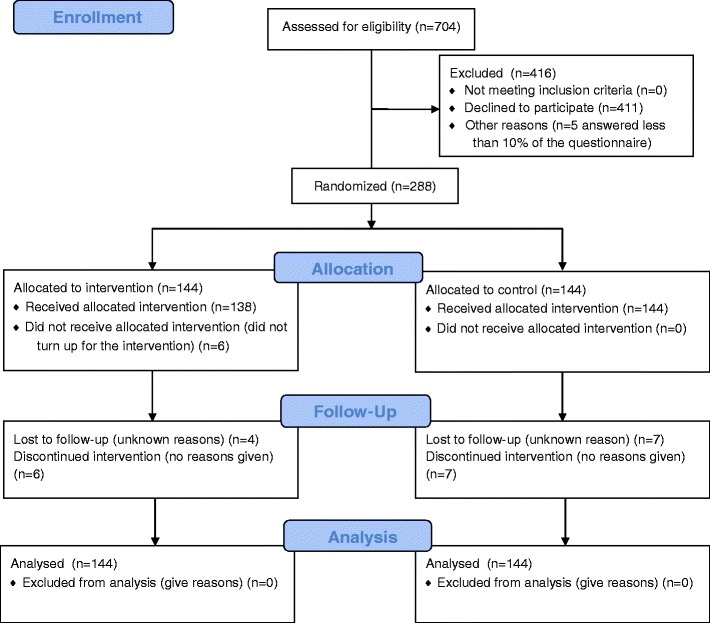
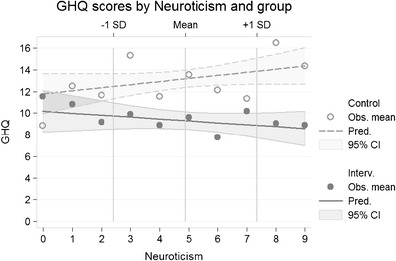
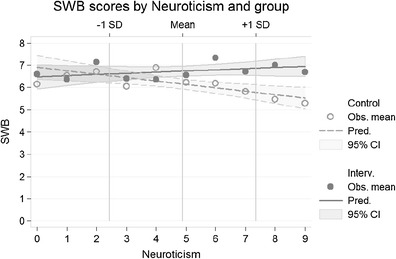
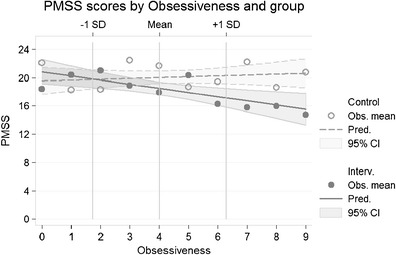
The majority of mindfulness research to date has reported only on the group-level effects of interventions. Therefore, there is a need to better understand who is most likely to benefit from mindfulness interventions. This study reports on moderation analyses from a two-centre randomised controlled trial of mindfulness-based stress reduction (MBSR) among 288 medical and psychology students. The study investigated whether baseline personality factors (neuroticism, conscientiousness and extroversion) and baseline mindfulness moderated effects on mental distress, study stress and subjective well-being measured after the intervention. An increased effect of the intervention on mental distress and subjective well-being was found in students with higher scores on neuroticism. Students with higher scores on conscientiousness showed an increased effect of mindfulness training on study stress. The training protected students against an increase in mental distress and study stress and a decrease in subjective well-being that was seen in the control group. Baseline mindfulness and extroversion did not moderate the effects of the intervention on the outcomes. The majority of the 288 medical and psychology students in the study sample were female. Female participants scored significantly higher on neuroticism and conscientiousness, and they may therefore be an important target group for mindfulness interventions among students.
Overview
The claims and statistics of this paper haven’t been checked yet.
Free: it reads the open-access text and checks the first 5 claims that cite a source we can check. Create a free account to check every claim.
Integrity signals
Registry
Cites
Statistics
Figures
Verification
Claims the paper makes
The claims and statistics of this paper haven’t been checked yet.
Free: it reads the open-access text and checks the first 5 claims that cite a source we can check. Create a free account to check every claim.
Claims other papers make about this one
Each is checked against this paper’s own text: does it say what the citing paper says it does?
The cited source says what the claim attributes to it.
In the citing paper
“In contrast, two studies found that individuals with greater pre-treatment neuroticism experienced a greater reduction in distress (de Vibe et al., 2015) and anxiety (Nyklíček & Irrmischer, 2017) after an MBSR course, independent of pre-treatment mood in one case (Nyklíček & Irrmischer, 2017).”
From Who Benefits Most from a Brief Mindfulness Intervention to Reduce Anxiety During Stereotactic Breast Biopsy: the Moderating Effect of Trait Mindfulness, Spiritual Well-being, and Distress Tolerance (2021) · cites this paper as de Vibe et al., 2015
Self-check
Percentages, sums and reported differences re-computed from the paper’s own numbers.
The self-check needs the paper’s full text.
Citations
Cites
Baron, R. M., & Kenny, D. A. (1986) · Journal of Personality and Social Psychology · doi:10.1037/0022-3514.51.6.1173 · Cited by 91,532
Using Self-Report Assessment Methods to Explore Facets of Mindfulness
Baer, R. A., Smith, G. T., Hopkins, J., Krietemeyer, J., & Toney, L. (2006) · Assessment · doi:10.1177/1073191105283504 · Cited by 7,511 · cited 6×
“The Cronbach’s alpha of 0.79 reported for this study sample was similar to those reported in previous studies (Baer et al. 2006).”
BackgroundResultInfluentialSubjective well-being. The science of happiness and a proposal for a national index
Diener, E. (2000) · American Psychologist · doi:10.1037/0003-066x.55.1.34 · Cited by 7,121
(1988) · NFER-Nelson eBooks · Cited by 5,560
Mindfulness: Theoretical Foundations and Evidence for its Salutary Effects
Brown, K. W., Ryan, R. M., & Creswell, J. D. (2007) · Psychological Inquiry · doi:10.1080/10478400701598298 · Cited by 3,654 · cited 1×
“…and assertiveness) has been linked to subjective well-being and positive emotionality (Diener 2000) and to mindfulness (Baer et al. 2006; Brown et al. 2007), yet a meta-analysis of 11 studies has shown only a moderate positive correlation between extroversion and mindfulness (Giluk…”
BackgroundKotov, R., Gamez, W., Schmidt, F., & Watson, D. (2010) · Psychological Bulletin · doi:10.1037/a0020327 · Cited by 2,677 · cited 1×
“Neuroticism is an expression of emotional vulnerability and has been clearly linked to anxiety and depression in a recent meta-analysis of cross-sectional studies with control groups (Kotov et al. 2010).”
BackgroundAlternative Therapies in Health and Medicine
Bick, D. (1996) · JAMA: The Journal of the American Medical Association · doi:10.1001/jama.1996.03530370072040 · Cited by 1,734
Krasner, M. S. (2009) · JAMA · doi:10.1001/jama.2009.1384 · Cited by 1,650
Relations between personality and coping: A meta-analysis.
Connor-Smith, J. K., & Flachsbart, C. (2007) · Journal of Personality and Social Psychology · doi:10.1037/0022-3514.93.6.1080 · Cited by 1,453 · cited 1×
“…of negative emotional reactivity processes (Feltman et al. 2009), and one may argue that individuals with higher emotional reactivity would benefit more from improving their emotional regulation skills to cope better with their emotional reactivity to stress (Connor-Smith and Flachsbart 2007).”
BackgroundTests of certain linear hypotheses and their application to some educational problems.
Johnson, P. O., & Neyman, J. (1936) · Cited by 1,128
The Developing Structure of Temperament and Personality From Infancy To Adulthood
(2014) · Psychology Press eBooks · doi:10.4324/9781315806853 · Cited by 972
Dimensions of personality: 16, 5 or 3?—Criteria for a taxonomic paradigm
Eysenck, H. J. (1991) · Personality and Individual Differences · doi:10.1016/0191-8869(91)90144-z · Cited by 848
International Journal of Psychology
(2018) · International Journal of Psychology · doi:10.1002/(issn)1464-066x · Cited by 818
Mindfulness, Big Five personality, and affect: A meta-analysis
Giluk, T. L. (2009) · Personality and Individual Differences · doi:10.1016/j.paid.2009.06.026 · Cited by 593 · cited 7×
“2007), yet a meta-analysis of 11 studies has shown only a moderate positive correlation between extroversion and mindfulness (Giluk 2009).”
BackgroundResultInfluentialWilks, S. S., Neyman, J., & Pearson, E. S. (1936) · Journal of the American Statistical Association · doi:10.2307/2278685 · Cited by 546
Mean-Centering Does Not Alleviate Collinearity Problems in Moderated Multiple Regression Models
Echambadi, R., & Hess, J. D. (2007) · Marketing Science · doi:10.1287/mksc.1060.0263 · Cited by 467
Shapiro, S. L., Brown, K. W., Thoresen, C., & Plante, T. G. (2011) · Journal of Clinical Psychology · doi:10.1002/jclp.20761 · Cited by 440 · cited 3×
“A small study of a mindfulness-based stress reduction (MBSR) intervention, using a sample of 30 undergraduate students, found that participants with higher levels of baseline mindfulness showed a larger increase in mindfulness, subjective well-being, empathy and hope and larger declines in perceived stress up to 1 yea…”
BackgroundResultInfluentialGender difference in neural response to psychological stress
Wang, J., Korczykowski, M., Rao, H., Fan, Y., Pluta, J., Gur, R. C., McEwen, B. S., & Detre, J. A. (2007) · Social Cognitive and Affective Neuroscience · doi:10.1093/scan/nsm018 · Cited by 436
de Vibe, M., Solhaug, I., Tyssen, R., Friborg, O., Rosenvinge, J. H., Sørlie, T., & Bjørndal, A. (2013) · BMC Medical Education · doi:10.1186/1472-6920-13-107 · Cited by 398 · cited 2×
“Previously, we have reported that mindfulness training had a moderately large effect on mental distress and subjective well-being and a small effect on study stress among female medical and psychology students (de Vibe et al. 2013).”
BackgroundSelf-citationAdaptive and maladaptive perfectionism in medical students: a longitudinal investigation
Enns, M. W., Cox, B. J., Sareen, J., & Freeman, P. (2001) · Medical Education · doi:10.1046/j.1365-2923.2001.01044.x · Cited by 394
Moderators of Treatment Outcomes: Clinical, Research, and Policy Importance
Kraemer, H. C., Frank, E., & Kupfer, D. J. (2006) · JAMA · doi:10.1001/jama.296.10.1286 · Cited by 310 · cited 1×
“A moderator of an intervention is a pretreatment or baseline variable that identifies subgroups within the population with a different effect of the intervention (Kraemer et al. 2006).”
BackgroundKjeldstadli, K., Tyssen, R., Finset, A., Hem, E., Gude, T., Gronvold, N. T., Ekeberg, O., & Vaglum, P. (2006) · BMC Medical Education · doi:10.1186/1472-6920-6-48 · Cited by 274
Self-citationHandling drop‐out in longitudinal clinical trials: a comparison of the LOCF and MMRM approaches
Lane, P. (2008) · Pharmaceutical Statistics · doi:10.1002/pst.267 · Cited by 262 · cited 2×
“%) were imputed using the last observation carried forward—a conservative statistical method when drop-out rates in the intervention and the control group are equal (Lane 2008).”
MethodTyssen, R., Vaglum, P., Gronvold, N. T., & Ekeberg, O. (2001) · Medical Education · doi:10.1046/j.1365-2923.2001.00770.x · Cited by 258
Self-citationde Vibe, M., Bjørndal, A., Tipton, E., Hammerstrøm, K., & Kowalski, K. (2012) · Campbell Systematic Reviews: Better Evidence for a Better World · doi:10.4073/csr.2012.3 · Cited by 253 · cited 1×
“Research evidence has increasingly demonstrated the positive effects of mindfulness-based interventions on a range of outcomes in clinical and non-clinical populations on a group level (de Vibe et al. 2012).”
BackgroundSelf-citationMedical School Pressures and Their Relationship to Anxiety
VITALIANO, P. P., RUSSO, J., CARR, J. E., & HEERWAGEN, J. H. (1984) · The Journal of Nervous and Mental Disease · doi:10.1097/00005053-198412000-00006 · Cited by 222
Tyssen, R., Dolatowski, F. C., Røvik, J. O., Thorkildsen, R. F., Ekeberg, Ø., Hem, E., Gude, T., Grønvold, N. T., & Vaglum, P. (2007) · Medical Education · doi:10.1111/j.1365-2923.2007.02802.x · Cited by 189
Self-citationBrief meditation training can improve perceived stress and negative mood.
Lane, J. D., Seskevich, J. E., & Pieper, C. F. (2007) · PubMed · Cited by 173
Nerdrum, P., Rustøen, T., & Rønnestad, M. H. (2006) · Scandinavian Journal of Educational Research · doi:10.1080/00313830500372075 · Cited by 151
Bramness, J. G., Fixdal, T. C., & Vaglum, P. (1991) · Acta Psychiatrica Scandinavica · doi:10.1111/j.1600-0447.1991.tb03157.x · Cited by 148
Mindfulness as a moderator of neuroticism–outcome relations: A self-regulation perspective
Feltman, R., Robinson, M. D., & Ode, S. (2009) · Journal of Research in Personality · doi:10.1016/j.jrp.2009.08.009 · Cited by 146
Subjective well-being. Sex-specific effects of genetic and environmental factors
Røysamb, E., Harris, J. R., Magnus, P. M., Vittersø, J., & Tambs, K. (2002) · Personality and Individual Differences · doi:10.1016/s0191-8869(01)00019-8 · Cited by 140
van den Hurk, P. A. M., Wingens, T., Giommi, F., Barendregt, H. P., Speckens, A. E. M., & van Schie, H. T. (2011) · Mindfulness · doi:10.1007/s12671-011-0060-7 · Cited by 135 · cited 1×
“Initial support for this claim can be found in a study comparing conscientiousness levels in 35 experienced mindfulness practitioners and 35 matched controls (van den Hurk et al. 2011).”
BackgroundNeuroticism as a Risk Factor for Behavioral Dysregulation: A Mindfulness-Mediation Perspective
Fetterman, A. K., Robinson, M. D., Ode, S., & Gordon, K. H. (2010) · Journal of Social and Clinical Psychology · doi:10.1521/jscp.2010.29.3.301 · Cited by 115
Hanstede, M., Gidron, Y., & Nyklíček, I. (2008) · Journal of Nervous & Mental Disease · doi:10.1097/nmd.0b013e31818786b8 · Cited by 101
Hypertension labelling, life events and psychological well-being
Moum, T., Næss, S., Sørensen, T., Tambs, K., & Holmen, J. (1990) · Psychological Medicine · doi:10.1017/s0033291700017153 · Cited by 101
Cordon, S. L., Brown, K. W., & Gibson, P. R. (2009) · Journal of Cognitive Psychotherapy · doi:10.1891/0889-8391.23.3.258 · Cited by 82 · cited 1×
“Emotional awareness, acceptance and letting go of negative thoughts—all related to mindfulness practice—are adaptive emotion regulatory strategies (Cordon et al. 2009).”
BackgroundTorgersen, S. (1980) · Acta geneticae medicae et gemellologiae: twin research · doi:10.1017/s0001566000007935 · Cited by 82
The Five Factor Mindfulness Questionnaire in Norway
Dundas, I., Vøllestad, J., Binder, P., & Sivertsen, B. (2013) · Scandinavian Journal of Psychology · doi:10.1111/sjop.12044 · Cited by 77
Grotmol, K. S., Gude, T., Moum, T., Vaglum, P., & Tyssen, R. (2012) · Journal of Affective Disorders · doi:10.1016/j.jad.2012.08.047 · Cited by 72
Self-citationAn alternative five-factor model for personality.
Zuckerman, M. (1994) · Cited by 50
Røvik, J. O., Tyssen, R., Gude, T., Moum, T., Ekeberg, Ø., & Vaglum, P. (2006) · Personality and Individual Differences · doi:10.1016/j.paid.2006.10.004 · Cited by 42
Self-citationPersonality correlates of meditation practice frequency and dropout in an outpatient population
Delmonte, M. M. (1988) · Journal of Behavioral Medicine · doi:10.1007/bf00844908 · Cited by 23
Discomfort with emotion moderates distress reduction in a brief mindfulness intervention.
Sass, S. M., Berenbaum, H., & Abrams, E. M. (2013) · International Journal of Behavioral Consultation and Therapy · doi:10.1037/h0100962 · Cited by 21
Alnæs, R., & Torgersen, S. O. (1990) · European Archives of Psychiatry and Clinical Neuroscience · doi:10.1007/bf01735055 · Cited by 17
Cited by
McConville, J., McAleer, R., & Hahne, A. (2017) · EXPLORE · doi:10.1016/j.explore.2016.10.002 · Cited by 336
Galante, J., Friedrich, C., Dawson, A. F., Modrego-Alarcón, M., Gebbing, P., Delgado-Suárez, I., Gupta, R., Dean, L., Dalgleish, T., White, I. R., et al. (2021) · PLOS Medicine · doi:10.1371/journal.pmed.1003481 · Cited by 319
The Stressful Personality: A Meta-Analytical Review of the Relation Between Personality and Stress
Luo, J., Zhang, B., Cao, M., & Roberts, B. W. (2023) · Personality and Social Psychology Review · doi:10.1177/10888683221104002 · Cited by 170
Development of Subjective Well-Being in Adolescence
Steinmayr, R., Wirthwein, L., Modler, L., & Barry, M. M. (2019) · International Journal of Environmental Research and Public Health · doi:10.3390/ijerph16193690 · Cited by 153
Building resilience: The conceptual basis and research evidence for resilience training programs
Forbes, S., & Fikretoglu, D. (2018) · Review of General Psychology · doi:10.1037/gpr0000152 · Cited by 99
“…& Pond, 1995; Timmerman, Emmelkamp, & Sanderman, 1998; Umanodan et al., 2009; Villani et al., 2013) and 11.8% based on mindfulness theory (de Vibe et al., 2015; Fortney, Luchterhand, Zakletskaia, Zgierska, & Rakel, 2013; Goldhagen, Kingsolver, Stinnett, & Rosdahl, 2015; Jennings, Frank,…”
Influential
Metadata
- Authors
- de Vibe, M., Solhaug, I., Tyssen, R., Friborg, O., Rosenvinge, J. H., Sørlie, T., Halland, E., & Bjørndal, A.
- Affiliations
- UiT The Arctic University of Norway (NO)
- University of Oslo (NO)
- Lovisenberg Diakonale Sykehus (NO)
- Center for Child and Adolescent Mental Health, Eastern and Southern Norway (NO)
- Venue
- Mindfulness
- Published
- 2013-10-27
- Volume
- 6
- Issue
- 2
- Pages
- 281-289
- ISSN
- 1868-8527 (ISSN-L)
- 1868-8535
- PMC
- PMC4359274
- OpenAlex
- W2061930649
- Cited by
- 144
- References
- 45
- Citations by year
- 2026: 8 · 2025: 10 · 2024: 11 · 2023: 17 · 2022: 13 · 2021: 19 · 2020: 21 · 2019: 10 · 2018: 9 · 2017: 10 · 2016: 11 · 2015: 3
- FWCI
- 5.19
- Type
- journal article
- Language
- en
- Open access
- hybrid
- doi.org
- Locations
- Mindfulness (publishedVersion, cc-by)
- PubMed Central (publishedVersion, cc-by-nc)
- PubMed (publishedVersion)
- NORA - Norwegian Open Research Archives (submittedVersion, other-oa)
- Funders
- Norske Legeforening
- Topics
- Social Sciences › Psychology › Clinical Psychology › Mindfulness and Compassion Interventions
- Social Sciences › Psychology › Social Psychology › Psychological Well-being and Life Satisfaction
- Social Sciences › Psychology › Developmental and Educational Psychology › Student Stress and Coping
- Keywords
- mindfulness training, mindfulness-based stress reduction, personality moderators, neuroticism, conscientiousness, extraversion, psychological distress, academic stress, subjective well-being, medical students, psychology students, student mental health
About these checks
Registry, retraction, Cites and statistics results are computed, not judged, with one exception: a printed reference that no index lists is read once by a model before it counts as a citation error. Claims are extracted by a model and kept only when their quote appears verbatim in the text; each cited source is then checked, with a model’s help, for whether it says what the claim relies on. Those verdicts can be wrong — read the claim’s quote and the cited source before relying on one.
Statistics and arithmetic are recomputed, not judged.
Confidence bands are shown only for fields calibrated on our annotated test set. None is calibrated yet, so no band is shown.
What counts as a claim ›How we measure confidence ›How we check this ›
Are you an author, or do you see a problem with this page? Request a review
Data sources
Bibliographic data: Semantic Scholar, OpenAlex, Crossref.
Contains information from the Semantic Scholar Academic Graph Datasets, made available under the ODC Attribution License (ODC-BY 1.0).
Semantic Scholar’s data is described in: Kinney, R., et al. (2023). The Semantic Scholar Open Data Platform. arXiv:2301.10140.
