

Does Personality Moderate the Effects of Mindfulness Training for Medical and Psychology Students?
Open accessThe DOI matches its Crossref record; 45 of the 45 references it cites were found in a registry or an index.
Abstract
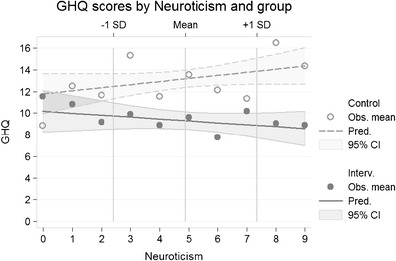
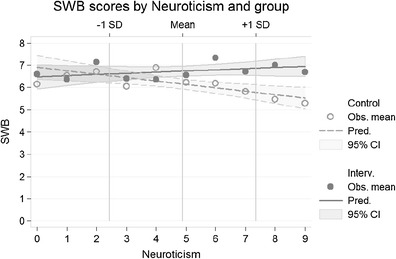
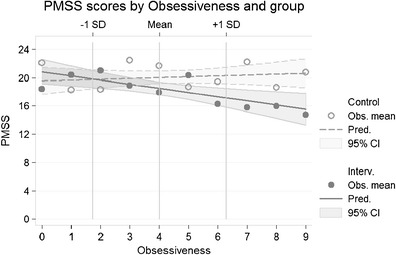
The majority of mindfulness research to date has reported only on the group-level effects of interventions. Therefore, there is a need to better understand who is most likely to benefit from mindfulness interventions. This study reports on moderation analyses from a two-centre randomised controlled trial of mindfulness-based stress reduction (MBSR) among 288 medical and psychology students. The study investigated whether baseline personality factors (neuroticism, conscientiousness and extroversion) and baseline mindfulness moderated effects on mental distress, study stress and subjective well-being measured after the intervention. An increased effect of the intervention on mental distress and subjective well-being was found in students with higher scores on neuroticism. Students with higher scores on conscientiousness showed an increased effect of mindfulness training on study stress. The training protected students against an increase in mental distress and study stress and a decrease in subjective well-being that was seen in the control group. Baseline mindfulness and extroversion did not moderate the effects of the intervention on the outcomes. The majority of the 288 medical and psychology students in the study sample were female. Female participants scored significantly higher on neuroticism and conscientiousness, and they may therefore be an important target group for mindfulness interventions among students.
Overview
The claims and statistics of this paper haven’t been checked yet.
Free: it reads the open-access text and checks the first 5 claims that cite a source we can check. Create a free account to check every claim.
Integrity signals
Registry
Cites
Statistics
Figures
Verification
Claims the paper makes
The claims and statistics of this paper haven’t been checked yet.
Free: it reads the open-access text and checks the first 5 claims that cite a source we can check. Create a free account to check every claim.
Claims other papers make about this one
Each is checked against this paper’s own text: does it say what the citing paper says it does?
The cited source says what the claim attributes to it.
In the citing paper
“In contrast, two studies found that individuals with greater pre-treatment neuroticism experienced a greater reduction in distress (de Vibe et al., 2015) and anxiety (Nyklíček & Irrmischer, 2017) after an MBSR course, independent of pre-treatment mood in one case (Nyklíček & Irrmischer, 2017).”
From Who Benefits Most from a Brief Mindfulness Intervention to Reduce Anxiety During Stereotactic Breast Biopsy: the Moderating Effect of Trait Mindfulness, Spiritual Well-being, and Distress Tolerance (2021) · cites this paper as de Vibe et al., 2015
Self-check
Percentages, sums and reported differences re-computed from the paper’s own numbers.
The self-check needs the paper’s full text.
Citations
Cites
Baron, R. M., & Kenny, D. A. (1986) · Journal of Personality and Social Psychology · doi:10.1037/0022-3514.51.6.1173 · Cited by 91,532
Using Self-Report Assessment Methods to Explore Facets of Mindfulness
Baer, R. A., Smith, G. T., Hopkins, J., Krietemeyer, J., & Toney, L. (2006) · Assessment · doi:10.1177/1073191105283504 · Cited by 7,511 · cited 6×
“The Cronbach’s alpha of 0.79 reported for this study sample was similar to those reported in previous studies (Baer et al. 2006).”
BackgroundResultInfluentialSubjective well-being. The science of happiness and a proposal for a national index
Diener, E. (2000) · American Psychologist · doi:10.1037/0003-066x.55.1.34 · Cited by 7,121
(1988) · NFER-Nelson eBooks · Cited by 5,560
Mindfulness: Theoretical Foundations and Evidence for its Salutary Effects
Brown, K. W., Ryan, R. M., & Creswell, J. D. (2007) · Psychological Inquiry · doi:10.1080/10478400701598298 · Cited by 3,654 · cited 1×
“…and assertiveness) has been linked to subjective well-being and positive emotionality (Diener 2000) and to mindfulness (Baer et al. 2006; Brown et al. 2007), yet a meta-analysis of 11 studies has shown only a moderate positive correlation between extroversion and mindfulness (Giluk…”
BackgroundKotov, R., Gamez, W., Schmidt, F., & Watson, D. (2010) · Psychological Bulletin · doi:10.1037/a0020327 · Cited by 2,677 · cited 1×
“Neuroticism is an expression of emotional vulnerability and has been clearly linked to anxiety and depression in a recent meta-analysis of cross-sectional studies with control groups (Kotov et al. 2010).”
BackgroundAlternative Therapies in Health and Medicine
Bick, D. (1996) · JAMA: The Journal of the American Medical Association · doi:10.1001/jama.1996.03530370072040 · Cited by 1,734
Krasner, M. S. (2009) · JAMA · doi:10.1001/jama.2009.1384 · Cited by 1,650
Relations between personality and coping: A meta-analysis.
Connor-Smith, J. K., & Flachsbart, C. (2007) · Journal of Personality and Social Psychology · doi:10.1037/0022-3514.93.6.1080 · Cited by 1,453 · cited 1×
“…of negative emotional reactivity processes (Feltman et al. 2009), and one may argue that individuals with higher emotional reactivity would benefit more from improving their emotional regulation skills to cope better with their emotional reactivity to stress (Connor-Smith and Flachsbart 2007).”
BackgroundTests of certain linear hypotheses and their application to some educational problems.
Johnson, P. O., & Neyman, J. (1936) · Cited by 1,128
Cited by
McConville, J., McAleer, R., & Hahne, A. (2017) · EXPLORE · doi:10.1016/j.explore.2016.10.002 · Cited by 336
Galante, J., Friedrich, C., Dawson, A. F., Modrego-Alarcón, M., Gebbing, P., Delgado-Suárez, I., Gupta, R., Dean, L., Dalgleish, T., White, I. R., et al. (2021) · PLOS Medicine · doi:10.1371/journal.pmed.1003481 · Cited by 319
The Stressful Personality: A Meta-Analytical Review of the Relation Between Personality and Stress
Luo, J., Zhang, B., Cao, M., & Roberts, B. W. (2023) · Personality and Social Psychology Review · doi:10.1177/10888683221104002 · Cited by 170
Development of Subjective Well-Being in Adolescence
Steinmayr, R., Wirthwein, L., Modler, L., & Barry, M. M. (2019) · International Journal of Environmental Research and Public Health · doi:10.3390/ijerph16193690 · Cited by 153
Building resilience: The conceptual basis and research evidence for resilience training programs
Forbes, S., & Fikretoglu, D. (2018) · Review of General Psychology · doi:10.1037/gpr0000152 · Cited by 99
“…& Pond, 1995; Timmerman, Emmelkamp, & Sanderman, 1998; Umanodan et al., 2009; Villani et al., 2013) and 11.8% based on mindfulness theory (de Vibe et al., 2015; Fortney, Luchterhand, Zakletskaia, Zgierska, & Rakel, 2013; Goldhagen, Kingsolver, Stinnett, & Rosdahl, 2015; Jennings, Frank,…”
InfluentialMindfulness in Healthcare Professionals and Medical Education
Chmielewski, J., Łoś, K., & Łuczyński, W. (2021) · International Journal of Occupational Medicine and Environmental Health · doi:10.13075/ijomeh.1896.01542 · Cited by 96
Improving Mental Health and Well‐Being through Informal Mindfulness Practices: An Intervention Study
Shankland, R., Tessier, D., Strub, L., Gauchet, A., & Baeyens, C. (2021) · Applied Psychology: Health and Well-Being · doi:10.1111/aphw.12216 · Cited by 92
O’Driscoll, M., Byrne, S., Mc Gillicuddy, A., Lambert, S., & Sahm, L. J. (2017) · Psychology, Health & Medicine · doi:10.1080/13548506.2017.1280178 · Cited by 93
“The same authors found that participants with higher baseline conscientiousness levels demonstrated decreased stress post-intervention (p = 0.01) (de Vibe et al., 2015).”
BackgroundInfluentialTang, R., & Braver, T. S. (2020) · Frontiers in Psychology · doi:10.3389/fpsyg.2020.00818 · Cited by 91
Precise Answers to Vague Questions: Issues With Interactions
Rohrer, J. M., & Arslan, R. C. (2021) · Advances in Methods and Practices in Psychological Science · doi:10.1177/25152459211007368 · Cited by 103
“Much in line with our simulated example, de Vibe et al. (2015) investigated whether personality (neuroticism and conscientiousness) moderates the effects of mindfulness training among students.”
BackgroundFor Whom Does Mindfulness-Based Stress Reduction Work? Moderating Effects of Personality
Nyklíček, I., & Irrmischer, M. (2017) · Mindfulness · doi:10.1007/s12671-017-0687-0 · Cited by 81
“These findings are in line with the previous study conducted in students (de Vibe et al. 2015).”
BackgroundResultCharoensukmongkol, P., & Puyod, J. V. (2022) · The Journal of General Psychology · doi:10.1080/00221309.2020.1800582 · Cited by 77
Neto, A. D., Lucchetti, A. L. G., Ezequiel, O. D. S., & Lucchetti, G. (2019) · Journal of General Internal Medicine · doi:10.1007/s11606-019-05284-0 · Cited by 85
“Previous studies with medical and psychology students in Norway have shown that the mindfulness intervention has greater effect on individuals with psychological characteristics of greater conscientiousness and neuroticism.(29) Another factor that can be associated with the lack of positive findings is the use of larg…”
ResultIntervenciones psicológicas basadas en mindfulness y sus beneficios: estado actual de la cuestión
Hervás, G., Cebolla, A., & Soler, J. (2016) · Clínica y Salud · doi:10.1016/j.clysa.2016.09.002 · Cited by 67
“Algunos estudios apuntan que, al menos en población no clínica, el perfil de personalidad que más se puede beneficiar de las IBM es aquel que incluye puntuaciones elevadas en neuroticismo y en responsabilidad (de Vibe et al., 2015), pero hay que seguir estudiando el papel de otros rasgos.”
BackgroundLoving-Kindness Meditation Promotes Mental Health in University Students
Totzeck, C., Teismann, T., Hofmann, S. G., von Brachel, R., Pflug, V., Wannemüller, A., & Margraf, J. (2020) · Mindfulness · doi:10.1007/s12671-020-01375-w · Cited by 63
Han, Y., Jang, J., Cho, E., & Choi, K. (2021) · Personality and Individual Differences · doi:10.1016/j.paid.2021.110786 · Cited by 68
Yüksel, A., & Bahadır Yılmaz, E. (2020) · Nurse Education Today · doi:10.1016/j.nedt.2019.104268 · Cited by 59
Solhaug, I., Eriksen, T. E., de Vibe, M., Haavind, H., Friborg, O., Sørlie, T., & Rosenvinge, J. H. (2016) · Mindfulness · doi:10.1007/s12671-016-0521-0 · Cited by 54
Self-citationGawrysiak, M. J., Grassetti, S. N., Greeson, J. M., Shorey, R. C., Pohlig, R., & Baime, M. J. (2018) · Journal of Clinical Psychology · doi:10.1002/jclp.22521 · Cited by 52
Barkan, T., Hoerger, M., Gallegos, A. M., Turiano, N. A., Duberstein, P. R., & Moynihan, J. A. (2016) · The Journal of Alternative and Complementary Medicine · doi:10.1089/acm.2015.0177 · Cited by 51
Trait mindfulness and cross‐cultural sales performance: The role of perceived cultural distance
Charoensukmongkol, P., & Pandey, A. (2021) · Canadian Journal of Administrative Sciences / Revue Canadienne des Sciences de l'Administration · doi:10.1002/cjas.1638 · Cited by 45
Duan, W., & Ho, S. M. Y. (2017) · Journal of Happiness Studies · doi:10.1007/s10902-017-9864-z · Cited by 54
“…2004), and it is highlighted in Temperance Strength of the three-dimensional model of character strengths (Duan et al. 2012b; Ho et al. 2016). de Vibe et al. (2015) argued that selfregulation should be recognized as an important and interesting factor in mindfulness studies because a high level…”
BackgroundMindfulness in allied health and social care professional education: a scoping review.
Kinsella, E. A., Smith, K., Bhanji, S., Shepley, R., Modor, A., & Bertrim, A. (2020) · Disability and Rehabilitation · doi:10.1080/09638288.2018.1496150 · Cited by 44
Karl, J. A., Johnson, F. N., Bucci, L., & Fischer, R. (2022) · Journal of the Royal Society of New Zealand · doi:10.1080/03036758.2021.1915804 · Cited by 44
“…effects in mindful practice demonstrated that personality differences influence the effect of mindfulness practice on outcomes such as wellbeing (de Vibe et al. 2015; Nyklíček and Irrmischer 2017; Jagielski et al. 2020; Krick and Felfe 2020), which suggests that individual differences shape…”
BackgroundSekhar, P., Tee, Q. X., Ashraf, G., Trinh, D., Shachar, J., Jiang, A., Hewitt, J., Green, S., & Turner, T. (2021) · Cochrane Database of Systematic Reviews · doi:10.1002/14651858.cd013740.pub2 · Cited by 59
Hanley, A. W., de Vibe, M., Solhaug, I., Gonzalez-Pons, K., & Garland, E. L. (2019) · Journal of Research in Personality · doi:10.1016/j.jrp.2019.103859 · Cited by 40
Self-citationCrosswell, A. D., Mayer, S. E., Whitehurst, L. N., Picard, M. A., Zebarjadian, S., & Epel, E. S. (2024) · Psychological Review · doi:10.1037/rev0000453 · Cited by 59
Brown, J. L., Jennings, P. A., Rasheed, D. S., Cham, H., Doyle, S. L., Frank, J. L., Davis, R., & Greenberg, M. T. (2025) · Applied Developmental Science · doi:10.1080/10888691.2023.2268327 · Cited by 38
Why Do People Begin to Meditate and Why Do They Continue?
Sedlmeier, P., & Theumer, J. (2020) · Mindfulness · doi:10.1007/s12671-020-01367-w · Cited by 38
“…there is increasing evidence that personality factors can have a noticeable impact on whether people begin to meditate at all, as well as on the effects of meditation (e.g., Delmonte, 1988; de Vibe et al., 2015; Gu et al., 2015; Mascaro et al., 2013; Noone & Hogan, 2018; O’Connor et al., 2012).”
BackgroundPredicting Individual Preferences in Mindfulness Techniques Using Personality Traits
Tang, R., & Braver, T. S. (2020) · Frontiers in Psychology · doi:10.3389/fpsyg.2020.01163 · Cited by 47
Matz, S., Beck, E. D., Atherton, O. E., White, M. J. D., Rauthmann, J. F., Mroczek, D. K., Kim, M.-H., & Bogg, T. (2023) · Perspectives on Psychological Science · doi:10.1177/17456916231191774 · Cited by 54
The effect of ten versus twenty minutes of mindfulness meditation on state mindfulness and affect
Palmer, R. L., Roos, C. R., Vafaie, N., & Kober, H. (2023) · Scientific Reports · doi:10.1038/s41598-023-46578-y · Cited by 47
Осин, Е. Н., & Turilina, I. I. (2021) · Applied Psychology Health and Well-Being · doi:10.1111/aphw.12293 · Cited by 39
Küchler, A., Kählke, F., Vollbrecht, D., Peip, K., Ebert, D. D., & Baumeister, H. (2022) · Mindfulness · doi:10.1007/s12671-022-01949-w · Cited by 45
Canby, N. K., Eichel, K., Peters, S. I., Rahrig, H., & Britton, W. B. (2020) · Psychosomatic Medicine · doi:10.1097/psy.0000000000000873 · Cited by 37
Goisbault, M., Lienhart, N., Martinent, G., & Doron, J. (2022) · Psychology of sport and exercise · doi:10.1016/j.psychsport.2022.102157 · Cited by 41
Lassander, M., Hintsanen, M., Suominen, S., Mullola, S., Vahlberg, T. J., & Volanen, S. (2021) · Quality of Life Research · doi:10.1007/s11136-021-02868-4 · Cited by 44
Nyklíček, I., van Son, J., Pop, V. J., Denollet, J., & Pouwer, F. (2016) · Journal of Psychosomatic Research · doi:10.1016/j.jpsychores.2016.10.009 · Cited by 28
Tovote, K. A., Schroevers, M. J., Snippe, E., Emmelkamp, P. M. G., Links, T. P., Sanderman, R., & Fleer, J. (2017) · PLOS ONE · doi:10.1371/journal.pone.0179941 · Cited by 28
Kay, A. A., & Young, T. (2021) · Academy of Management Learning and Education · doi:10.5465/amle.2020.0316 · Cited by 37
Sparacio, A., IJzerman, H. R., Ropovik, I., Giorgini, F., Spiessens, C., Uchino, B. N., Landvatter, J., Tacana, T., Diller, S. J., Derrick, J. L., et al. (2024) · Nature Human Behaviour · doi:10.1038/s41562-024-01907-7 · Cited by 31
Rowland, Z., Wenzel, M., & Kubiak, T. (2019) · Mindfulness · doi:10.1007/s12671-019-01204-9 · Cited by 30
“…or conscientiousness to benefit most from practising mindfulness, experiencing decreased anxiety, or increased subjective well-being (e.g. de Vibe et al. 2015; Nyklí č ek and Irrmischer 2017), we first found that the present training instead worked better for participants with low openness…”
BackgroundWhat Mindfulness, and for Whom? And Why Might it Work?
Sedlmeier, P. (2023) · Mindfulness · doi:10.1007/s12671-023-02218-0 · Cited by 30
Fang, Y., Kang, X., Feng, X., Zhao, D., Song, D., & Li, P. (2018) · Psychology Health & Medicine · doi:10.1080/13548506.2018.1492731 · Cited by 32
Effects of an intergenerational program on adolescent self‐concept clarity: A pilot study
Thomas, N. M., Hofer, J., & Kranz, D. (2021) · Journal of Personality · doi:10.1111/jopy.12678 · Cited by 26
Jagielski, C. H., Tucker, D. C., Dalton, S. O., Mrug, S., Würtzen, H., & Johansen, C. (2020) · Journal of Psychosocial Oncology · doi:10.1080/07347332.2019.1626524 · Cited by 20
“In a randomized control trial examining the impact of MBSR on medical and psychology students, participants with higher baseline neuroticism demonstrated greater benefit from the MBSR intervention in terms of lower distress and improved subjective well-being.(40) Since neuroticism involves a focus on negative past eve…”
BackgroundResultPain is prevalent among adolescents and equally related to stress across genders
Østerås, B., Sigmundsson, H., & Haga, M. (2016) · Scandinavian Journal of Pain · doi:10.1016/j.sjpain.2016.05.038 · Cited by 21
Tortella‐Feliu, M., Luís-Reig, J., Gea, J., Cebolla, A., & Soler, J. (2020) · Mindfulness · doi:10.1007/s12671-020-01471-x · Cited by 19
“The latter is in line with two previous studies in which mindfulness did not moderate the effects of MBSR on psychological distress and on psychological well-being (de Vibe et al. 2015; Greeson et al. 2015).”
ResultExtra-role service under pressure in the hospitality industry: The role of mindfulness
Rescalvo‐Martin, E., Gutiérrez, L., & Montes, F. J. L. (2022) · Tourism Management Perspectives · doi:10.1016/j.tmp.2022.101030 · Cited by 27
Investigating Moderators of Compassion Meditation Training in a Community Sample
Goldin, P. R., & Jazaieri, H. (2017) · Mindfulness · doi:10.1007/s12671-017-0857-0 · Cited by 22
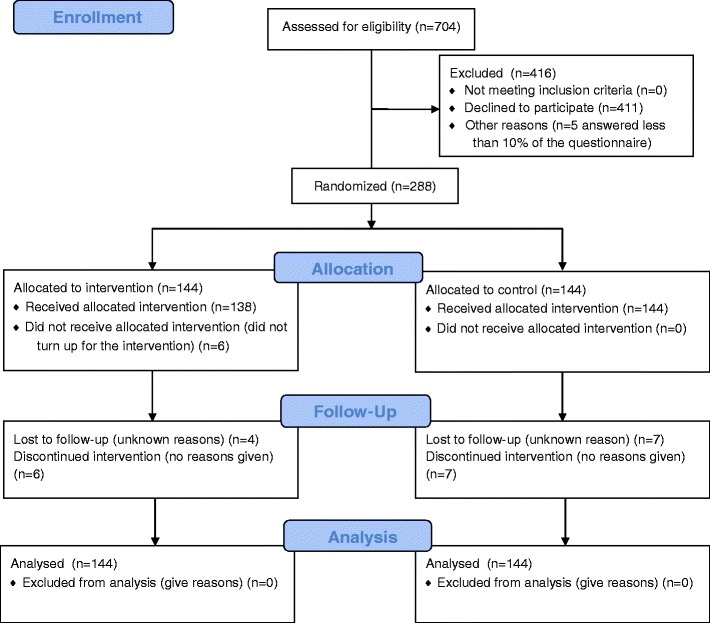
“Personality factors have also been shown to predict the effects of MBSR. de Vibe et al. (2015) randomized 288 first- and second-year medical and psychology students to a 7-week MBSR program (n = 144) or a control group (n = 144).”
BackgroundSaarinen, A., Hintsanen, M., Vahlberg, T., Hankonen, N., & Volanen, S. (2022) · Journal of Adolescence · doi:10.1002/jad.12011 · Cited by 17
Cognitive fusion and personality traits in the context of mindfulness: A cross-sectional study
Pux, S., Hahn, E. W., Bergmann, N., Hahne, I., Pauly, L., Ta, T. M. T., Pijenborg, G. H. M., & Böge, K. (2022) · PLoS ONE · doi:10.1371/journal.pone.0273331 · Cited by 20
Work and mental health in doctors: A short review of Norwegian studies
Tyssen, R. (2019) · Porto Biomedical Journal · doi:10.1097/j.pbj.0000000000000050 · Cited by 19
Self-citationGan, Y., Wang, R., Wang, X., Li, J., & Fan, H. (2023) · International Journal of Sports Science & Coaching · doi:10.1177/17479541231159171 · Cited by 22
Cultivating ambiguity tolerance through mindfulness: An induction randomized controlled trial
Spinelli, C., Ibrahim, M., & Khoury, B. (2022) · Current Psychology · doi:10.1007/s12144-021-02597-4 · Cited by 24
Mediation effect of self-efficacy in the relationship between neuroticism and L2 attainment
Piechurska-Kuciel, E. (2019) · Journal of Multilingual and Multicultural Development · doi:10.1080/01434632.2019.1684929 · Cited by 20
The Role of Mindfulness and Emotional Stability in Error Detection
Eichel, K., & Stähl, J. (2016) · Mindfulness · doi:10.1007/s12671-016-0601-1 · Cited by 19
“Hence, we analyze potential effects of emotional stability on the relationship with mindfulness and Ne/ERN, as previous Ne/ERN studies (Luu et al. 2000; Segalowitz and Dywan 2009) as well as mindfulness studies (de Vibe et al. 2015) gave some evidence that it might be a relevant additional factor.”
MethodPuhlmann, L. M. C., Engert, V., Apostolakou, F., Papassotiriou, I., Chrousos, G. P., Vrtička, P., & Singer, T. (2019) · Scientific Reports · doi:10.1038/s41598-019-55250-3 · Cited by 14
Konrad, A. C., Engert, V., Albrecht, R., Dobel, C., Döring, N. M., Haueisen, J., Klimecki, O., Sandbothe, M., & Kanske, P. (2023) · Scientific Reports · doi:10.1038/s41598-023-34737-0 · Cited by 23
Sparacio, A., Ropovik, I., Jiga‐Boy, G. M., Forscher, P. S., Paris, B., & IJzerman, H. R. (2021) · PsyArXiv (OSF Preprints) · doi:10.31234/osf.io/zpw28 · Cited by 14
Matko, K., Berghöfer, A., Jeitler, M., Sedlmeier, P., & Bringmann, H. C. (2022) · doi:10.31231/osf.io/9rbqe · Cited by 13
Tang, Y., & Tang, R. (2020) · Elsevier eBooks · doi:10.1016/b978-0-12-818266-6.00003-4 · Cited by 17
Robinson, N., Connolly, J., Suddrey, G., & Kavanagh, D. J. (2023) · International Journal of Social Robotics · doi:10.1007/s12369-023-01054-5 · Cited by 18
Mindfulness, job satisfaction and job performance: Mutualrelationships and moderation effect
Vaculík, M., Vytásková, J., Procházka, J., & Záliš, L. (2016) · Veřejné služby Informačního systému (Masarykiana Brunensis Universitas) · Cited by 22
Spreading positive change: Societal benefits of meditation
Engert, V., Klimecki, O., & Kanske, P. (2023) · Frontiers in Psychiatry · doi:10.3389/fpsyt.2023.1038051 · Cited by 25
“This has been shown for intervention effects on well-being and distress (41, 42), but may also be the case for prosocial behavior (39).”
BackgroundVreeling, K., Kersemaekers, W. M., Cillessen, L., van Dierendonck, D., & Speckens, A. E. M. (2019) · BMJ Open · doi:10.1136/bmjopen-2019-031643 · Cited by 19
Hou, L., Chang, L., Chen, L., Fei, J., & Zhou, R. (2022) · International Journal of Public Health · doi:10.3389/ijph.2022.1605074 · Cited by 16
Sedlmeier, P., Beckel, A., Conrad, S., Husmann, J., Kullrich, L., Lange, R., Müller, A.-L., Neumann, A., van der Schaaf, T., Schaub, A., et al. (2023) · Mindfulness · doi:10.1007/s12671-023-02160-1 · Cited by 13
The relationship between neuroticism as a personality trait and mindfulness skills: a scoping review
Angarita‐Osorio, N., Escorihuela, R. M., & Cañete, T. (2024) · Frontiers in Psychology · doi:10.3389/fpsyg.2024.1401969 · Cited by 22
Elkayal, M. M., & Metwaly, S. M. (2022) · Middle East Current Psychiatry · doi:10.1186/s43045-022-00208-x · Cited by 17
Predictors of Improvements in Mental Health From Mindfulness Meditation in Stressed Older Adults.
Oken, B., Goodrich, E., Klee, D., Memmott, T., & Proulx, J. A. (2018) · PubMed · Cited by 14
Matthias, C., Bu, C., Cohen, M., Jones, M. V., & Hearn, J. H. (2024) · BMC Medical Education · doi:10.1186/s12909-024-05810-7 · Cited by 15
Mindfulness training reduces the preference for proenvironmental outcomes
Corbi, Z. L. H., Koch, K., Hölzel, B. K., & Soutschek, A. (2024) · Scientific Reports · doi:10.1038/s41598-024-79137-0 · Cited by 13
Parsons, C. E., Nielsen, T. H., Vermillet, A., Hansen, I. L., & Mitkidis, P. (2020) · Quarterly Journal of Experimental Psychology · doi:10.1177/1747021820958190 · Cited by 12
Chisholm‐Burns, M. A., Berg-Poppe, P. J., Spivey, C. A., Karges-Brown, J. R., & Pithan, A. (2021) · American Journal of Pharmaceutical Education · doi:10.5688/ajpe8608 · Cited by 12
“protective effects for students who score highly on neuroticism.(75,76) Mentioned earlier as a possible intervention to reduce perceived stress, mindfulness training focuses on improving emotional awareness and developing skills related to emotional regulation and therefore may assist students in managing anxiety and…”
BackgroundMindfulness, Heedfulness, and Ethics
Krägeloh, C. U. (2018) · Mindfulness in behavioral health · doi:10.1007/978-3-319-76538-9_5 · Cited by 13
Bitar, Z., Fekih Romdhane, F., Rogoza, R., Ghorab, H. M., Obeid, S., & Hallit, S. (2024) · International Journal of Environmental Health Research · doi:10.1080/09603123.2023.2267483 · Cited by 9
Wagner, I., Noichl, T., Cramer, M., Dlugosch, G. E., & Hosenfeld, I. (2024) · Teaching and Teacher Education · doi:10.1016/j.tate.2024.104576 · Cited by 22
Galvin, J., & Smith, A. P. (2017) · The Journal of Mental Health Training Education and Practice · doi:10.1108/jmhtep-05-2015-0020 · Cited by 18
Psychological distress, burnout and personality traits in Dutch anaesthesiologists
Lapa, T. A. S. C., Carvalho, S. A., & Pinto‐Gouveia, J. (2016) · European Journal of Anaesthesiology · doi:10.1097/eja.0000000000000500 · Cited by 9
Kim, J. S., Jo, W., Oh, H., & Feng, Y. (2024) · International Journal of Tourism Research · doi:10.1002/jtr.2638 · Cited by 8
Elkana, O., Bustanai, N. Y. K., Louzia-Timen, R., Kodesh, E., Franco, M., & Doniger, G. M. (2018) · Personality and Individual Differences · doi:10.1016/j.paid.2018.05.018 · Cited by 10
Liu, Z., Li, M., Jia, Y., Zheng, L., & Chen, L. (2025) · BMC Cancer · doi:10.1186/s12885-025-13679-y · Cited by 7
Hämpke, J., Diller, S. J., Kerry, N., Clifton, J. D. W., & Frey, D. (2024) · International Journal of Applied Positive Psychology · doi:10.1007/s41042-024-00180-3 · Cited by 10
The Factorial Structure of Trait Anxiety and Its Mediating Effect Between Mindfulness and Depression
Wang, T., Li, M., Xu, S., Jiang, C., Gao, D., Wu, T., Lu, F. Y., Liu, B., & Jia, W. (2018) · Frontiers in Psychiatry · doi:10.3389/fpsyt.2018.00514 · Cited by 7
A Deeper Dive Into the Relationship Between Personality, Culture, and Mindfulness
Dreison, K. C., Salyers, M. P., & Sliter, M. T. (2015) · Industrial and Organizational Psychology · doi:10.1017/iop.2015.88 · Cited by 7
“The focal article by Hyland, Lee, and Mills (2015) ends with several important questions and suggestions for future research.”
BackgroundInfluentialTalić, I., Winter, W., & Renner, K. (2023) · Zeitschrift für Psychologie · doi:10.1027/2151-2604/a000539 · Cited by 10
Sprawson, I., Wood, J. S., & Mantzios, M. (2020) · Journal of Cognitive Enhancement · doi:10.1007/s41465-020-00175-3 · Cited by 6
“There are several influences that appear to affect the effectiveness of mindfulness-based interventions, and research is beginning to investigate the role of personality regarding both state and trait mindfulness (de Vibe et al. 2015).”
BackgroundDoctors Well-being, Quality of Patient Care and Organizational Change: Norwegian Experiences
Rø, K. I., Rosta, J., Tyssen, R., & Bååthe, F. (2020) · Aligning perspectives on health, safety and well-being · doi:10.1007/978-3-030-60998-6_7 · Cited by 7
Self-citationRatcliff, C. G., Fowler, S. N., Sinclair, K. L., Prinsloo, S., Chaoul, A., Zepeda, S. G., Spelman, A., Yang, W. T., & Cohen, L. (2021) · Mindfulness · doi:10.1007/s12671-020-01581-6 · Cited by 5
“In contrast, two studies found that individuals with greater pre-treatment neuroticism experienced a greater reduction in distress (de Vibe et al. 2015) and anxiety (Nyklíček and Irrmischer 2017) after an MBSR course, independent of pre-treatment mood in one case (Nyklíček and Irrmischer 2017).”
ResultBanzi, A., Sacco, P. L., Vanutelli, M. E., & Lucchiari, C. (2026) · Behavioral Sciences · doi:10.3390/bs16010116 · Cited by 6
Matiz, A., Pascut, S., Fabbro, F., & Crescentini, C. (2025) · Mindfulness · doi:10.1007/s12671-025-02573-0 · Cited by 7
Individual Differences in Meditation Outcomes
Burić, I., Brazil, I. A., & van Mulukom, V. (2020) · Oxford University Press eBooks · doi:10.1093/oxfordhb/9780198808640.013.26 · Cited by 5
Matiz, A., Fabbro, F., & Crescentini, C. (2024) · Psychology Research and Behavior Management · doi:10.2147/prbm.s441494 · Cited by 10
The Effect of Mindfulness Techniques on Teacher Resilience as Moderated by Conscientiousness
Harris, A. T., & Bostain, N. S. (2021) · Journal of Educational Research and Practice · doi:10.5590/jerap.2021.11.1.06 · Cited by 11
“For instance, De Vibe et al. (2015) collected data before and after a mindfulness intervention to examine if personality traits influenced the use of mindfulness and found that mindfulness had a significant effect on the participants displaying high conscientiousness and neuroticism scores.”
Fahmi, A. Y., Dwidiyanti, M., & Wijayanti, D. Y. (2018) · Holistic Nursing and Health Science · doi:10.14710/hnhs.1.1.2018.1-11 · Cited by 7
Evidência de Validade da Medida de Atenção Plena pela Relação com Outras Variáveis
Pires, J. G., Nunes, C. H. S. D. S., Nunes, M. F. O., Demarzo, M., Bianchi, M. L., Kotzias, M. M., & Maesima, G. M. (2018) · Psico-USF · doi:10.1590/1413-82712018230310 · Cited by 6
Puhlmann, L. M. C., & Engert, V. (2025) · Frontiers in Endocrinology · doi:10.3389/fendo.2025.1415081 · Cited by 5
With or Without Them: Improving Self-Control in Juvenile Offenders
Sroka, I. M., Isemann, S. D., & Walther, E. (2017) · Basic and Applied Social Psychology · doi:10.1080/01973533.2017.1350579 · Cited by 5
Ruiz‐Íñiguez, R., Montero, A. C., Burgos-Julián, F. A., Roche, J. R. F., & Germán, M. Á. S. (2021) · International Journal of Environmental Research and Public Health · doi:10.3390/ijerph18136721 · Cited by 5
Metadata
- Authors
- de Vibe, M., Solhaug, I., Tyssen, R., Friborg, O., Rosenvinge, J. H., Sørlie, T., Halland, E., & Bjørndal, A.
- Affiliations
- UiT The Arctic University of Norway (NO)
- University of Oslo (NO)
- Lovisenberg Diakonale Sykehus (NO)
- Center for Child and Adolescent Mental Health, Eastern and Southern Norway (NO)
- Venue
- Mindfulness
- Published
- 2013-10-27
- Volume
- 6
- Issue
- 2
- Pages
- 281-289
- ISSN
- 1868-8527 (ISSN-L)
- 1868-8535
- PMC
- PMC4359274
- OpenAlex
- W2061930649
- Cited by
- 144
- References
- 45
- Citations by year
- 2026: 8 · 2025: 10 · 2024: 11 · 2023: 17 · 2022: 13 · 2021: 19 · 2020: 21 · 2019: 10 · 2018: 9 · 2017: 10 · 2016: 11 · 2015: 3
- FWCI
- 5.19
- Type
- journal article
- Language
- en
- Open access
- hybrid
- doi.org
- Locations
- Mindfulness (publishedVersion, cc-by)
- PubMed Central (publishedVersion, cc-by-nc)
- PubMed (publishedVersion)
- NORA - Norwegian Open Research Archives (submittedVersion, other-oa)
- Funders
- Norske Legeforening
- Topics
- Social Sciences › Psychology › Clinical Psychology › Mindfulness and Compassion Interventions
- Social Sciences › Psychology › Social Psychology › Psychological Well-being and Life Satisfaction
- Social Sciences › Psychology › Developmental and Educational Psychology › Student Stress and Coping
- Keywords
- mindfulness training, mindfulness-based stress reduction, personality moderators, neuroticism, conscientiousness, extraversion, psychological distress, academic stress, subjective well-being, medical students, psychology students, student mental health
About these checks
Registry, retraction, Cites and statistics results are computed, not judged, with one exception: a printed reference that no index lists is read once by a model before it counts as a citation error. Claims are extracted by a model and kept only when their quote appears verbatim in the text; each cited source is then checked, with a model’s help, for whether it says what the claim relies on. Those verdicts can be wrong — read the claim’s quote and the cited source before relying on one.
Statistics and arithmetic are recomputed, not judged.
Confidence bands are shown only for fields calibrated on our annotated test set. None is calibrated yet, so no band is shown.
What counts as a claim ›How we measure confidence ›How we check this ›
Are you an author, or do you see a problem with this page? Request a review
Data sources
Bibliographic data: Semantic Scholar, OpenAlex, Crossref.
Contains information from the Semantic Scholar Academic Graph Datasets, made available under the ODC Attribution License (ODC-BY 1.0).
Semantic Scholar’s data is described in: Kinney, R., et al. (2023). The Semantic Scholar Open Data Platform. arXiv:2301.10140.
