

Teacher Competence in Mindfulness-Based Cognitive Therapy for Depression and Its Relation to Treatment Outcome
Open accessThe DOI matches its Crossref record; 65 of the 65 references it cites were found in a registry or an index.
Abstract
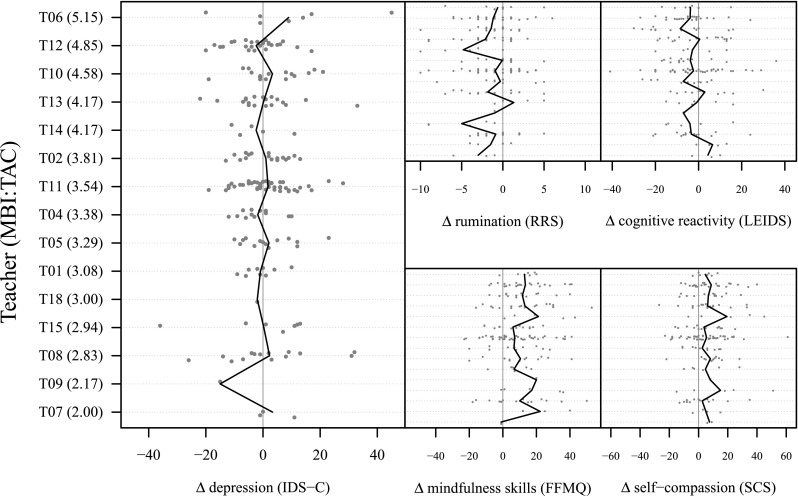
As mindfulness-based cognitive therapy (MBCT) becomes an increasingly mainstream approach for recurrent depression, there is a growing need for practitioners who are able to teach MBCT. The requirements for being competent as a mindfulness-based teacher include personal meditation practice and at least a year of additional professional training. This study is the first to investigate the relationship between MBCT teacher competence and several key dimensions of MBCT treatment outcomes. Patients with recurrent depression in remission ( N = 241) participated in a multi-centre trial of MBCT, provided by 15 teachers. Teacher competence was assessed using the Mindfulness-Based Interventions: Teaching Assessment Criteria (MBI:TAC) based on two to four randomly selected video-recorded sessions of each of the 15 teachers, evaluated by 16 trained assessors. Results showed that teacher competence was not significantly associated with adherence (number of MBCT sessions attended), possible mechanisms of change (rumination, cognitive reactivity, mindfulness, and self-compassion), or key outcomes (depressive symptoms at post treatment and depressive relapse/recurrence during the 15-month follow-up). Thus, findings from the current study indicate no robust effects of teacher competence, as measured by the MBI:TAC, on possible mediators and outcome variables in MBCT for recurrent depression. Possible explanations are the standardized delivery of MBCT, the strong emphasis on self-reliance within the MBCT learning process, the importance of participant-related factors, the difficulties in assessing teacher competence, the absence of main treatment effects in terms of reducing depressive symptoms, and the relatively small selection of videotapes. Further work is required to systematically investigate these explanations.
Overview
The claims and statistics of this paper haven’t been checked yet.
Free: it reads the open-access text and checks the first 5 claims that cite a source we can check. Create a free account to check every claim.
Integrity signals
Registry
Cites
Statistics
Figures
Verification
Claims the paper makes
The claims and statistics of this paper haven’t been checked yet.
Free: it reads the open-access text and checks the first 5 claims that cite a source we can check. Create a free account to check every claim.
Claims other papers make about this one
Each is checked against this paper’s own text: does it say what the citing paper says it does?
The source backs part of the claim, not all of it — or backs it for a different population, condition or comparison.
In the citing paper
“In four of these studies (Huijbers et al. 2017; Kelly et al. 2017; Key et al. 2017; Kingston et al. 2015), the control groups provided a high level of comparison with the intervention group, since the participants were under the care of an outpatient clinic with consistent psychotherapy and/or pharmacotherapy.”
From Effectiveness of Self-Compassion Related Therapies: a Systematic Review and Meta-analysis (2019) · cites this paper as Huijbers et al. 2017
Experimental — accuracy not yet measuredThe source backs part of the claim, not all of it — or backs it for a different population, condition or comparison.
In the citing paper
“However, our preliminary post hoc analysis, in line with previous research, did not find evidence of this factor being influential [290].”
From Mindfulness-based programmes for mental health promotion in adults in nonclinical settings: A systematic review and meta-analysis of randomised controlled trials (2021) · cites this paper as [290]
Experimental — accuracy not yet measuredThe cited source says what the claim attributes to it.
In the citing paper
“Recently, one study showed that trainer competence of MBCT was not associated with treatment outcome for depression (Huijbers et al., 2017), whereas another study showed that higher training levels of teachers were associated with positive outcomes in MBSR (Ruijgrok-Lupton et al., 2018).”
From Mindfulness-Based Intervention for People With Dementia and Their Partners: Results of a Mixed-Methods Study. (2019) · cites this paper as Huijbers et al., 2017
Self-check
Percentages, sums and reported differences re-computed from the paper’s own numbers.
The self-check needs the paper’s full text.
Citations
Cites
The Measurement of Observer Agreement for Categorical Data
Landis, J. R., & Koch, G. G. (1977) · Biometrics · doi:10.2307/2529310 · Cited by 81,148 · cited 1×
“For interpreting the strength of these ICCs, the following cut-off points are used: 0.00 (poor), 0.00–0.20 (slight), 0.21–0.40 (fair), 0.41–0.60 (moderate), 0.61–0.80 (substantial), and 0.81–1.00 (almost perfect) (Landis and Koch 1977).”
InfluentialDiagnostic and Statistical Manual of Mental Disorders, Fourth Edition, Text Revision (DSM-IV-TR)
American Psychiatric Association (2000) · doi:10.1176/appi.books.9780890423349 · Cited by 11,069
Developing and evaluating complex interventions: the new Medical Research Council guidance
Craig, P., Dieppe, P., Macintyre, S., Michie, S., Nazareth, I., & Petticrew, M. (2008) · BMJ · doi:10.1136/bmj.a1655 · Cited by 10,995 · cited 2×
“The UK Medical Research Council recommends that process evaluations, including assessment of integrity, should be nestedwithin clinical trials of complex interventions to better understand the outcomes and interpret the results of these trials in light of the observed integrity (Craig et al. 2008).”
BackgroundUsing Self-Report Assessment Methods to Explore Facets of Mindfulness
Baer, R. A., Smith, G. T., Hopkins, J., Krietemeyer, J., & Toney, L. (2006) · Assessment · doi:10.1177/1073191105283504 · Cited by 7,511 · cited 2×
“of 39 items divided into the subscales observing, describing, acting with awareness, non-judging, and non-reactivity (Baer et al. 2006).”
BackgroundMethod(2008) · Medical Entomology and Zoology · Cited by 7,477
The Development and Validation of a Scale to Measure Self-Compassion
NEFF, K. D. (2003) · Self and Identity · doi:10.1080/15298860309027 · Cited by 6,436 · cited 3×
“The SCS has 26 items measuring three concepts that are related to self-compassion: (a) self-kindness versus self-judgement, (b) common humanity versus isolation, and (c) mindfulness versus overidentification.”
BackgroundMethodInfluentialRumination reconsidered: a psychometric analysis.
Treynor, W., Gonzalez, R., & Nolen-Hoeksema, S. (2003) · Cognitive Therapy and Research · doi:10.1023/a:1023910315561 · Cited by 3,808 · cited 2×
“We selected the brooding subscale because over time, brooding has been related to higher levels of depression, whereas the reflection subscale has been linked to lower levels of depression (Treynor et al. 2003).”
BackgroundMethodClinical Psychology: Science and Practice
(2021) · Clinical Psychology Science and Practice · doi:10.1111/(issn)1468-2850 · Cited by 3,672
Prevention of relapse/recurrence in major depression by mindfulness-based cognitive therapy.
Teasdale, J. D., Segal, Z. V., Williams, J. M. G., Ridgeway, V. A., Soulsby, J. M., & Lau, M. A. (2000) · Journal of Consulting and Clinical Psychology · doi:10.1037/0022-006x.68.4.615 · Cited by 3,236 · cited 1×
“The attrition rate, defined as attending fewer than four out of eight sessions in accordance with previous trials (Kuyken et al. 2008; Teasdale et al. 2000), was 8% (N = 20/241).”
BackgroundMind over Machine: The Power of Human Intuition and Expertise in the Era of the Computer
Dreyfus, H. L., Drey-fus, S. E., & Zadeh, L. A. (1987) · IEEE Expert · doi:10.1109/mex.1987.4307079 · Cited by 3,172 · cited 1×
“Domains can be scored at six competence levels: incompetent (1), beginner (2), advanced beginner (3), competent (4), proficient (5), and advanced (6), analogous to the Dreyfus and Dreyfus competence scale (Dreyfus and Dreyfus 1986).”
Research works printed but not linked: 5
- First MB Gibbon M Spitzer RL Williams JBW User guide for the structured clinical interview for DSM-IV Axis 1 Disorders 1996 Washington, DC American Psychiatric Association
- National Institute for Clinical Excellence Depression: management of depression in primary and secondary care—NICE guidance 2004 London National Institute for Health and Clinical Excellence
- Santorelli, S., Goddard, T., Kabat-Zinn, J., Kesper-Grossman, U., & Reibel, D. (2011). Standards for the formation of MBSR teacher trainers: experience, qualifications, competency and ongoing development. Investigating and Integrating Mindfulness in Medicine, Health Care, and Society 9th Annual International Scientific Conference for Clinicians, Researchers and Educators. Boston, USA.
- Segal ZV Williams JMG Teasdale JD Mindfulness-based cognitive therapy for depression 2012 2 New York Guilford Press
- Spijker J Bockting CLH Meeuwissen JAC vanVliet IM Emmelkamp PMG Hermens MLM Multidisciplinary guidelines depression (third revision). Guidelines for the diagnosis, treatment and monitoring of patients with a depressive disorder 2012 Utrecht Trimbos-instituut
Cited by
Galante, J., Friedrich, C., Dawson, A. F., Modrego-Alarcón, M., Gebbing, P., Delgado-Suárez, I., Gupta, R., Dean, L., Dalgleish, T., White, I. R., et al. (2021) · PLOS Medicine · doi:10.1371/journal.pmed.1003481 · Cited by 319
Effectiveness of Self-Compassion Related Therapies: a Systematic Review and Meta-analysis
Wilson, A. C., Mackintosh, K., Power, K., & Chan, S. W. Y. (2019) · Mindfulness · doi:10.1007/s12671-018-1037-6 · Cited by 301
“In four of these studies (Huijbers et al. 2017; Kelly et al. 2017; Key et al. 2017; Kingston et al. 2015), the control groups provided a high level of comparison with the intervention group, since the participants were under the care of an outpatient clinic with consistent psychotherapy and/or…”
InfluentialDoing no harm in mindfulness-based programs: Conceptual issues and empirical findings
Baer, R., Crane, C., Miller, E., & Kuyken, W. (2019) · Clinical Psychology Review · doi:10.1016/j.cpr.2019.01.001 · Cited by 307
Self-citationBennett–Levy, J. (2018) · Journal of Behavior Therapy and Experimental Psychiatry · doi:10.1016/j.jbtep.2018.08.004 · Cited by 163
Britton, W. B., Davis, J. H., Loucks, E. B., Peterson, B., Cullen, B. H., Reuter, L., Rando, A., Rahrig, H., Lipsky, J., & Lindahl, J. R. (2018) · Behaviour Research and Therapy · doi:10.1016/j.brat.2017.09.010 · Cited by 100
Implementing Mindfulness in the Mainstream: Making the Path by Walking It
Crane, R. S. (2017) · Mindfulness · doi:10.1007/s12671-016-0632-7 · Cited by 81
Self-citationJanssen, L., Kan, C. C., Carpentier, P. J., Sizoo, B., Hepark, S., Schellekens, M. P. J., Donders, A. R. T., Buitelaar, J. K., & Speckens, A. E. M. (2019) · Psychological Medicine · doi:10.1017/s0033291718000429 · Cited by 78
“This may be considered as a limitation; however, a current study did not find robust effects of teacher competence on possible mediators and outcomes in MBCT for recurrent depression (Huijbers et al. 2017).”
BackgroundSelf-citationIntervention Integrity in Mindfulness-Based Research
Crane, R. S., & Hecht, F. M. (2018) · Mindfulness · doi:10.1007/s12671-018-0886-3 · Cited by 75
“In another example, Huijbers et al. (2017) analyzed the links between MBP teacher competence and participant outcome.”
BackgroundSelf-citationMindfulness-based cognitive therapy in patients with depression: current perspectives
MacKenzie, M., Abbott, K., & Kocovski, N. (2018) · Neuropsychiatric Disease and Treatment · doi:10.2147/ndt.s160761 · Cited by 68
“Using the MBI:TAC, Huijbers et al evaluated the impact of teacher competence on the delivery of MBCT at 12 locations in the Netherlands.(51) Patients were all in remission from recurrent depression and had taken antidepressant medication.”
Ruijgrok-Lupton, P. E., Crane, R. S., & Dorjee, D. (2018) · Mindfulness · doi:10.1007/s12671-017-0750-x · Cited by 64
Self-citationMander, J., Blanck, P., Neubauer, A. B., Kröger, P., Flückiger, C., Lutz, W., Barnow, S., Bents, H., & Heidenreich, T. (2019) · Journal of Clinical Psychology · doi:10.1002/jclp.22695 · Cited by 56
Berk, L., Warmenhoven, F., Stiekema, A. P. M., van Oorsouw, K., van Os, J., de Vugt, M., & van Boxtel, M. (2019) · Frontiers in Aging Neuroscience · doi:10.3389/fnagi.2019.00092 · Cited by 45
Cullen, B., Eichel, K., Lindahl, J. R., Rahrig, H., Kini, N., Flahive, J., & Britton, W. B. (2021) · PLOS ONE · doi:10.1371/journal.pone.0244838 · Cited by 43
“Similarly, with more than 20 years of meditation experience and graduate level clinical, research and/or monastic training, the instructors in the current trial were likely more qualified than many MBP instructors, although MBP instructor training has not been clearly linked to outcomes [61].”
BackgroundCrane, R. S., & Kuyken, W. (2019) · Current Opinion in Psychology · doi:10.1016/j.copsyc.2018.10.004 · Cited by 42
“The only study to date on this issue embedded in a randomised trial of MBCT for depression, suggested no relationship between teaching quality (as assessed by the MBI:TAC) and outcome [10].”
BackgroundSelf-citationMindfulness-based interventions for addictive behaviors: implementation issues on the road ahead
Wilson, A. D., Roos, C. R., Robinson, C. S., Stein, E. R., Manuel, J. A., Enkema, M. C., Bowen, S., & Witkiewitz, K. (2017) · Psychology of Addictive Behaviors · doi:10.1037/adb0000319 · Cited by 41
Principles for a Responsible Integration of Mindfulness in Individual Therapy
Michalak, J., Crane, C., Germer, C. K., Gold, E., Heidenreich, T., Mander, J., Meibert, P., & Segal, Z. V. (2019) · Mindfulness · doi:10.1007/s12671-019-01142-6 · Cited by 40
Badaghi, N., Buskbjerg, C. R., Kwakkenbos, L., Bosman, S. J. E., Zachariae, R. H., & Speckens, A. E. M. (2024) · Clinical Psychology Review · doi:10.1016/j.cpr.2024.102505 · Cited by 48
Self-citationCrane, C., Ganguli, P., Ball, S., Taylor, L., Blakemore, S.-J., Byford, S., Dalgleish, T., Ford, T., Greenberg, M., Kuyken, W., et al. (2020) · Global Advances in Health and Medicine · doi:10.1177/2164956120964738 · Cited by 36
Self-citationBisseling, E. M., Schellekens, M. P. J., Spinhoven, P., Compen, F. R., Speckens, A. E. M., & van der Lee, M. L. (2019) · Clinical Psychology & Psychotherapy · doi:10.1002/cpp.2352 · Cited by 31
“This is in line with previous findings that did not show a relationship between therapist competence and treatment outcome in MBCT for recurrent depression (Huijbers et al., 2017).”
BackgroundResultSelf-citationKenny, M., Luck, P., & Koerbel, L. (2020) · Global Advances in Health and Medicine · doi:10.1177/2164956120923975 · Cited by 29
“There is now a range of published articles on mindfulness teacher training pathways as well as preliminary attempts to correlate teacher training pathways with MBP outcomes.(15,16) This body of literature needs to be widened to include evolving mindfulness-based courses and will be usefully informed by articles which…”
BackgroundElices, M., Pérez, V., Pérez‐Aranda, A., Colom, F., Polo, M., Martín‐Lopez, L. M., & Gárriz, M. (2021) · Mindfulness · doi:10.1007/s12671-021-01794-3 · Cited by 31
Burnett‐Zeigler, I., Hong, S. H., Waldron, E. M., Maletich, C., Yang, A., & Moskowitz, J. T. (2019) · The Journal of Alternative and Complementary Medicine · doi:10.1089/acm.2018.0393 · Cited by 24
Can We Agree What Skilled Mindfulness-Based Teaching Looks Like? Lessons From Studying the MBI:TAC
Crane, R. S., Hecht, F. M., Brewer, J. A., Griffith, G. M., Hartogensis, W., Koerbel, L. S., Moran, P. J., Sansom, S. A., Yiangou, A., & Kuyken, W. (2020) · Global Advances in Health and Medicine · doi:10.1177/2164956120964733 · Cited by 20
“The level of reliability developed through this process was better than that of both the previous studies on the MBI: TAC.9,10 There is evidence therefore that this more systematic approach to training hones participants’ skills in using the MBI:TAC reliably.”
BackgroundResultInfluentialSelf-citationLiu, J., Duan, W., Xiao, Z., & Wu, Y. (2024) · Journal of Affective Disorders · doi:10.1016/j.jad.2024.01.223 · Cited by 16
Snippe, E., Schroevers, M. J., Tovote, K. A., Sanderman, R., Emmelkamp, P. M. G., & Fleer, J. (2018) · Clinical Psychology & Psychotherapy · doi:10.1002/cpp.2332 · Cited by 22
Hutchinson, J. K., Jones, F., & Griffith, G. (2021) · Mindfulness · doi:10.1007/s12671-021-01596-7 · Cited by 15
Ewais, T., Begun, J., Kenny, M. A., Headey, A., Tefay, M., & Kisely, S. R. (2020) · BMJ Open · doi:10.1136/bmjopen-2020-041140 · Cited by 19
Crane, R. S. (2018) · Current Opinion in Psychology · doi:10.1016/j.copsyc.2018.09.009 · Cited by 22
Self-citationter Avest, M. J., Greven, C. U., Huijbers, M. J., Wilderjans, T. F., Speckens, A. E. M., & Spinhoven, P. (2020) · Cognitive Therapy and Research · doi:10.1007/s10608-020-10108-1 · Cited by 15
Self-citationAvest, M. M. T., Huijbers, M. J., Horjus, C. S., Römkens, T. E. H., Witteman, E. M., van Dop, W. A., Dresler, M., Donders, A. R. T., Dijkstra, G. D. H., Nissen, L. H. C., et al. (2025) · Inflammatory Bowel Diseases · doi:10.1093/ibd/izaf116 · Cited by 11
“45 In addition, the limitations of the objec-tive sleep assessment should be acknowledged.”
Self-citationA systematic review of the mindful sport performance enhancement program
Minkler, T. O., Oparina, E., & Kostrna, J. R. (2025) · International Review of Sport and Exercise Psychology · doi:10.1080/1750984x.2025.2521774 · Cited by 11
“…are under-researched and mixed regarding potential associations between mindfulness teacher training/competencies and participant outcomes (Huijbers et al., 2017; Hutchinson et al., 2021; Ruijgrok-Lupton et al., 2018), but SEPP and MSPE researchers should report, and possibly study,…”
Serpa, J. G., Shamblen, S. R., Atwood, K., Sangpukdee, A., Whitehead, A. M., & Wolf, C. (2023) · Global Advances in Integrative Medicine and Health · doi:10.1177/27536130231197654 · Cited by 4
Masrun, M., Hariadi, H., & Asnaldi, A. (2022) · Journal Physical Education Health and Recreation · doi:10.24114/pjkr.v7i1.39054 · Cited by 3
Predictors of musculoskeletal disorders among special education teachers in Sabah, Malaysia
Jeffree, M. S., Rahim, A. A. A., Daud, D. M. A., Pang, N. T. P., Sazali, M. F., Sudi, S. B., Liau, S. N., Wong, E. E. L., Peter, H., Amat, S. Z. A., et al. (2024) · Heliyon · doi:10.1016/j.heliyon.2024.e30873 · Cited by 15
Валерьевна, Г. В., Chekanushkina, E. N., KISMETOV, K. L., Akhtarieva, R. F., & Shapirova, R. R. (2019) · PERIÓDICO TCHÊ QUÍMICA · doi:10.52571/ptq.v16.n32.2019.424_periodico32_pgs_406_423.pdf · Cited by 3
Mindfulness Components and Their Clinical Efficacy: A Critical Review of an Ongoing Debate
Lizama-Lefno, A., Mojica, K., Serrat, M., Olivari, C. F., Roco-Videla, Á., & Flores, S. (2026) · Healthcare · doi:10.3390/healthcare14020196 · Cited by 3
“The effectiveness of mindfulness-based interventions is influenced by multiple factors, including the time dedicated to formal and informal practice between sessions [48], the severity of symptoms at baseline [49], and the facilitator’s level of expertise in delivering the program [50,51].”
Meta-Analysis: The Use of Mindfulness-Based Cognitive Therapy for Depression Symptoms
Arisudana, M., & Yudiarso, A. (2024) · Bulletin of Counseling and Psychotherapy · doi:10.51214/00202406894000 · Cited by 2
Hecht, F. M., & Crane, R. S. (2025) · Global Advances in Integrative Medicine and Health · doi:10.1177/27536130251349453 · Cited by 3
Self-citationMontero‐Marín, J., Farley, E.-R., Maloney, S., Crane, R. S., D’Alton, P., Eldridge, R., Giommi, F., Griffith, G. M., Hecht, F. M., Hinze, V., et al. (2025) · Mindfulness · doi:10.1007/s12671-025-02668-8 · Cited by 6
“A previous study with patients with recurrent depression in remission found no robust effects of teacher competence, as measured by the MBI:TAC tool, on outcome variables after receiving MBCT for preventing recurrent depression (Huijbers et al., 2017).”
Self-citationMarx, R. (2019) · Mindfulness · doi:10.1007/s12671-019-01110-0 · Cited by 2
Mindfulness-Based Interventions: Teaching Assessment Criteria (MBI:TAC)
Sansom, S. A., & Crane, R. S. (2025) · Springer eBooks · doi:10.1007/978-3-031-47219-0_129 · Cited by 1
Self-citationMindfulness-Based Interventions: Teaching Assessment Criteria (MBI:TAC)
Sansom, S. A., & Crane, R. S. (2025) · Springer eBooks · doi:10.1007/978-3-030-77644-2_129-1 · Cited by 1
Self-citationSami, P., Emamipoor, S., & Rafiepoor, A. (2022) · Bimonthly Journal of Hormozgan University of Medical Sciences · doi:10.34172/hmj.2022.32 · Cited by 1
“The person learns to allow for thoughts related to the disease and thus reduce the threatening nature of these thoughts, thus increasing the patient’s perception of the disease and following treatment recommendations by increasing the power of acceptance and commitment to treatment (21, 22).”
Masrun, M., Hariadi, H., & Asnaldi, A. (2022) · Journal Physical Education Health and Recreation · doi:10.24114/pjkr.v6i2.37735
Karelse, C.-M. (2023) · Manchester University Press eBooks · doi:10.7765/9781526162076.00023
Warniasih, K., Wijayanti, P. S., Syahruzah, J. K., & Rianto (2023) · PROCEEDING OF THE 7TH INTERNATIONAL CONFERENCE OF SCIENCE, TECHNOLOGY, AND INTERDISCIPLINARY RESEARCH (IC-STAR 2021) · doi:10.1063/5.0105514
สงวนรัมย์, ก., เพียรทอง, ก., & เคนบุปผา, เ. (2023) · The Journal of Thailand Nursing and Midwifery Council · doi:10.60099/jtnmc.v38i03.264204 · Cited by 1
Mindfulness-Based Cognitive Therapy (MBCT): Curriculum, Training, and Clinician Guide
Molnar, C. (2025) · Springer eBooks · doi:10.1007/978-3-032-00353-9_21 · Cited by 1
History and Theoretical Framework of Mindfulness-Based Cognitive Therapy
Tse, B., & Xu, J.-Q. (2025) · The Palgrave Handbook of Third-Wave Psychotherapies · doi:10.1007/978-3-032-00353-9_20
Therapist Competence in the Delivery of Third-Wave Therapies
Griffith, G. M., & Sansom, S. A. (2025) · Springer eBooks · doi:10.1007/978-3-032-00353-9_4
Darling, J. (2026) · Mindfulness · doi:10.1007/s12671-026-02776-z
“Studies such as Huijbers et al. (2017) and Bisseling et al. (2019) reported limited associations between competence ratings and clinical outcomes in MBCT, raising questions regarding the empirical basis for mandating sustained personal practice.”
Lévy, J. J., Dimidjian, S., & Segal, Z. V. (2026) · Mindfulness · doi:10.1007/s12671-026-02924-5
Fidelity of Mindfulness Training and Delivery for Adolescent Mental and Metabolic Health
Perzow, S. E. D., Chen, M., Bothwell, S., Gulley, L. D., Lucas‐Thompson, R. G., Pyle, L., Thompson, T., Sanchez, N., ESTRADA, D. E., Tanofsky‐Kraff, M., et al. (2026) · Mindfulness · doi:10.1007/s12671-026-02975-8
“Likewise, facilitator competence—the skill with which practices are delivered— is often viewed as essential to intervention success, although some evidence suggests its relative importance may diminish when manual adherence is strong (Huijbers et al., 2017).”
Nandarathana, N., & Ranjan, J. K. (2026) · Mental Health Religion & Culture · doi:10.1080/13674676.2026.2691447
Metadata
- Authors
- Huijbers, M. J., Crane, R. S., Kuyken, W., Heijke, L., van den Hout, I., Donders, A. R. T., & Speckens, A. E. M.
- Affiliations
- Radboud University Medical Center (NL)
- Bangor University (GB)
- Warneford Hospital (GB)
- Corresponding author
- Huijbers, Marloes J.
- Venue
- Mindfulness
- Published
- 2017-01-12
- Volume
- 8
- Issue
- 4
- Pages
- 960-972
- ISSN
- 1868-8527 (ISSN-L)
- 1868-8535
- PMC
- PMC5506231
- OpenAlex
- W2578215593
- Cited by
- 54
- References
- 65
- Citations by year
- 2026: 5 · 2025: 9 · 2024: 4 · 2023: 4 · 2022: 3 · 2021: 4 · 2020: 5 · 2019: 7 · 2018: 9 · 2017: 3
- FWCI
- 8.12
- Type
- journal article
- Language
- en
- Open access
- hybrid
- doi.org
- Locations
- Mindfulness (publishedVersion, cc-by)
- PubMed Central (publishedVersion, cc-by)
- PubMed (publishedVersion)
- Radboud Repository (Radboud University) (submittedVersion)
- Bangor University Research Portal (Bangor University) (submittedVersion, cc-by)
- Radboud Repository (Radboud University) (submittedVersion, other-oa)
- Funders
- ZonMW, the Netherlands Organization for Health Research and Development (170992903)
- Topics
- Social Sciences › Psychology › Clinical Psychology › Mindfulness and Compassion Interventions
- Social Sciences › Psychology › Clinical Psychology › Psychotherapy Techniques and Applications
- Social Sciences › Psychology › Experimental and Cognitive Psychology › Anxiety, Depression, Psychometrics, Treatment, Cognitive Processes
- Keywords
- mindfulness-based cognitive therapy, teacher competence, recurrent depression, treatment outcomes, medication adherence, mechanisms of change, rumination, cognitive reactivity, self-compassion, depression relapse
About these checks
Registry, retraction, Cites and statistics results are computed, not judged, with one exception: a printed reference that no index lists is read once by a model before it counts as a citation error. Claims are extracted by a model and kept only when their quote appears verbatim in the text; each cited source is then checked, with a model’s help, for whether it says what the claim relies on. Those verdicts can be wrong — read the claim’s quote and the cited source before relying on one.
Statistics and arithmetic are recomputed, not judged.
Confidence bands are shown only for fields calibrated on our annotated test set. None is calibrated yet, so no band is shown.
What counts as a claim ›How we measure confidence ›How we check this ›
Are you an author, or do you see a problem with this page? Request a review
Data sources
Bibliographic data: Semantic Scholar, OpenAlex, Crossref.
Contains information from the Semantic Scholar Academic Graph Datasets, made available under the ODC Attribution License (ODC-BY 1.0).
Semantic Scholar’s data is described in: Kinney, R., et al. (2023). The Semantic Scholar Open Data Platform. arXiv:2301.10140.
