

Mindfulness-Based Programs in the Workplace: a Meta-Analysis of Randomized Controlled Trials
Open accessThe DOI matches its Crossref record; 155 of the 159 references it cites were found in a registry or an index.
Abstract
Objectives: Given the complex demands of many workplaces, there is growing interest in the potential beneficial effects of mindfulness-based programs (MBPs) for employees. This meta-analysis systematically synthesizes the results of randomized controlled studies conducted in various workplace settings. Methods: Eligible studies were identified by a systematic literature search in four electronic databases and complementary manual search strategies through 11/2018. Random-effects models were used to synthesize data across 56 studies including n = 2689 participants and n = 2472 controls. The validity of synthesized effect size estimates was analyzed for heterogeneity and influential cases (outliers). Risk of bias was assessed following Cochrane recommendations. Results: Analyses of between-group effects indicated that MBPs effectively reduce stress, burnout, mental distress, and somatic complaints, while improving mindfulness, well-being, compassion, and job satisfaction—all with small to large effect sizes ranging from Hedge’s g = 0.32 to 0.77. Results were maintained in follow-up assessments ≤ 12 weeks. Heterogeneity among primary studies was not explained consistently by program or participant characteristics in the exploratory moderator analyses. Results on work engagement and productivity were limited by low numbers of primary studies with outliers among their effect sizes. Conclusions: Our meta-analysis provides evidence that MBPs effectively promote the health and well-being of employees in various occupational settings. Further research is needed to investigate potential benefits on work-related outcomes and effects for longer-term follow-ups.
Overview
The claims and statistics of this paper haven’t been checked yet.
Free: it reads the open-access text and checks the first 5 claims that cite a source we can check. Create a free account to check every claim.
Integrity signals
Registry
Cites
Statistics
Figures
Verification
Claims the paper makes
The claims and statistics of this paper haven’t been checked yet.
Free: it reads the open-access text and checks the first 5 claims that cite a source we can check. Create a free account to check every claim.
Claims other papers make about this one
Each is checked against this paper’s own text: does it say what the citing paper says it does?
The source backs part of the claim, not all of it — or backs it for a different population, condition or comparison.
In the citing paper
“Research has shown that mindfulness-based interventions can effectively decrease participants’ psychological distress (the parameters such as depression, anxiety, and stress) and improve their self-compassion and psychological flexibility”
From A randomized controlled trial of a mindfulness-based intervention in social workers working during the COVID-19 crisis (2022) · cites this paper as Vonderlin et al. 2020
Experimental — accuracy not yet measuredThe source backs part of the claim, not all of it — or backs it for a different population, condition or comparison.
In the citing paper
“Systematic reviews and meta-analyses of mindfulness studies in the work context have demonstrated that both deficit-oriented parameters, such as burnout and depression, as well as resource-oriented parameters, such as job satisfaction and work performance, can be improved through mindfulness-based programs (Bartlett et al., 2019; Lomas et al., 2019; Richardson & Rothstein, 2008; Vonderlin et al.,”
From Mindfulness-Based and Mindfulness-Informed Interventions at the Workplace: A Systematic Review and Meta-Regression Analysis of RCTs (2023) · cites this paper as Vonderlin et al., 2020
Experimental — accuracy not yet measuredThe source backs part of the claim, not all of it — or backs it for a different population, condition or comparison.
In the citing paper
“Mindfulness has been shown to have positive outcomes for those working in health and social care; promoting well-being, increasing self-care and self-compassion, reducing psychological distress, lowering stress, and preventing burnout (Maddock et al., 2021; Vonderlin et al., 2020).”
From A randomised trial of Mindfulness-based Social Work and Self-Care with social workers (2023) · cites this paper as Vonderlin et al., 2020
Experimental — accuracy not yet measuredThe cited source says what the claim attributes to it.
In the citing paper
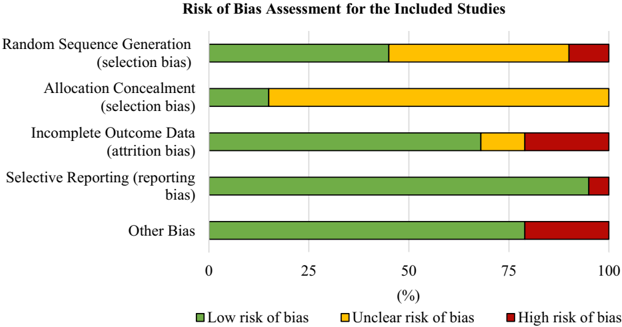
“The risk assessment here may be considered more conservative as in Vonderlin et al. (2020), as they did not judge the risk for two domains that usually result in high risks: performance bias and detection bias. These were included here, however, because some of the analyzed studies (e.g., Cheema et al., 2013) aimed at solving the problem of blinding staff and participants.”
From Mindfulness-Based and Mindfulness-Informed Interventions at the Workplace: A Systematic Review and Meta-Regression Analysis of RCTs (2023) · cites this paper as Vonderlin et al. (2020)
Self-check
Percentages, sums and reported differences re-computed from the paper’s own numbers.
The self-check needs the paper’s full text.
Citations
Cites
R: A Language and Environment for Statistical Computing
R Core Team (2025) · doi:10.32614/r.manuals · Cited by 352,181
Statistical Power Analysis for the Behavioral Sciences
Muller, K. (1989) · Technometrics · doi:10.1080/00401706.1989.10488618 · Cited by 99,167
Measuring inconsistency in meta-analyses
Higgins, J. P. T., Thompson, S. G., Deeks, J. J., & Altman, D. G. (2003) · BMJ · doi:10.1136/bmj.327.7414.557 · Cited by 63,139
Bias in meta-analysis detected by a simple, graphical test
Egger, M., Smith, G. D., Schneider, M., & Minder, C. (1997) · BMJ · doi:10.1136/bmj.315.7109.629 · Cited by 56,722
Preferred reporting items for systematic reviews and meta-analyses: The PRISMA statement
Moher, D., Liberati, A., Tetzlaff, J., Altman, D. G., & the PRISMA Group* (2009) · Annals of Internal Medicine · doi:10.7326/0003-4819-151-4-200908180-00135 · Cited by 37,554
Quantifying heterogeneity in a meta‐analysis
Higgins, J. P. T., & Thompson, S. G. (2002) · Statistics in Medicine · doi:10.1002/sim.1186 · Cited by 36,763
The Cochrane Collaboration's tool for assessing risk of bias in randomised trials
Higgins, J. P. T., Altman, D. G., Gotzsche, P. C., Juni, P., Moher, D., Oxman, A. D., Savovic, J., Schulz, K. F., Weeks, L., Sterne, J. A. C., et al. (2011) · BMJ · doi:10.1136/bmj.d5928 · Cited by 33,817
Cochrane Handbook for Systematic Reviews of Interventions: Cochrane Book Series
(2008) · doi:10.1002/9780470712184 · Cited by 25,048
Conducting Meta-Analyses in R with the metafor Package
Viechtbauer, W. (2010) · Journal of Statistical Software · doi:10.18637/jss.v036.i03 · Cited by 20,464 · cited 2×
“The I2 is a descriptive measure that displays the proportion of total variability, which can be attributed to heterogeneity among the true effects (Viechtbauer 2010).”
BackgroundMethodInfluentialStatistical Methods for Meta-Analysis
Wasserman, S., Hedges, L. V., & Olkin, I. (1988) · Journal of Educational Statistics · doi:10.2307/1164953 · Cited by 10,326
Research works printed but not linked: 5
- OECD (2018). GDP per hour worked (indicator). Organisation for eco- nomic co-operation and development. : https://www.oecd-ilibrary. org/economics/gdp-per-hour-worked/indicator/english_1439e590- en . Accessed 12 Dec 2018.
- Schaufenbuel, K. (2015). Why Google, Target, and General Mills are investing in mindfulness. Harvard Business Review. https:// mindleader.org/wp-content/uploads/2017/08/HARVARD- BUSINESS-REVIEW_Why-Google-is-investing-in-Mindfulness. pdf . Accessed 9 Sep 2019.
- Strub, L., & Tarquinio, C. (2013). Mindfulness-based cognitive therapy (MBCT) program with workers in an industrial setting: a pilot study. Sante Mentale au Quebec, 38(1), 207-225.
- Tagg, R. (2016). Decreasing stress in paraprofessionals working with children with autism using a brief, blended mindfulness intervention. Doctoral Dissertation, Alliant International University, San Diego.
- Wilson, D. M. (2012). Effects of mindfulness-based art processing (MBAP) on the well-being and job performance of working adults: evaluating a novel intervention. Doctoral Dissertation, Sofia University, Paolo Alto.
Cited by
Items 101–200 of 258
Mindfulness in Politics: A Qualitative Study on Mindfulness Training in the UK Parliament
Simonsson, O., Bergljottsdotter, C., Narayanan, J., Fisher, S. D., Bristow, J., Ormston, R., & Chambers, R. (2023) · Mindfulness · doi:10.1007/s12671-023-02156-x · Cited by 11
Houchens, N., Greene, M. T., Sen, S., Harry, E. M., Ratz, D., Fowler, K. E., & Saint, S. K. (2025) · BMJ Quality & Safety · doi:10.1136/bmjqs-2025-018813 · Cited by 8
Li, X., Zhang, C., Li, C., Shi, W., Wang, F., Wang, Q., & Zhang, Y. (2023) · The Journal of Creative Behavior · doi:10.1002/jocb.613 · Cited by 13
Iswarya, V. S., Babima, M., Muhila, M. G., & Dhaneesh, R. (2024) · International Journal of Systems Assurance Engineering and Management · doi:10.1007/s13198-024-02339-2 · Cited by 12
Chen, Y.-H., Chang, Y., & Keng, C. (2025) · Behaviour and Information Technology · doi:10.1080/0144929x.2025.2460599 · Cited by 9
Juul, L., Bonde, E. H., & Fjorback, L. O. (2023) · Frontiers in Psychology · doi:10.3389/fpsyg.2023.1154277 · Cited by 6
Li, X., Zhou, Y., Zhang, C., Wang, H., & Wang, X. (2024) · Frontiers in Neuroscience · doi:10.3389/fnins.2024.1322071 · Cited by 11
Williams, M. S., Ordonez, K., King, D., Solomon, J., Ardito, S., Polo, J., Weiss, S., & Hajizadeh, N. (2024) · OBM Integrative and Complementary Medicine · doi:10.21926/obm.icm.2404060 · Cited by 5
Bai, J., Qing, T., & Sánchez, J. I. (2025) · European Management Journal · doi:10.1016/j.emj.2025.06.004 · Cited by 10
Effectiveness of Digital Interventions in Reducing Occupational Stress: A Systematic Review
Indra, B., Palmasutra, V., & Setyawan, F. A. (2024) · Portuguese Journal of Public Health · doi:10.1159/000540748 · Cited by 17
“Digital intervention can help in reducing stress, improving mental well-being, and enhancing job performance [15 – 17].”
Neate, S. L., Reece, J. C., Hassed, C. S., Chambers, R., Connaughton, S., & Nag, N. (2022) · Frontiers in Public Health · doi:10.3389/fpubh.2022.947898 · Cited by 7
How coaching supervisors experience and use mindfulness within their practice: An IPA study
Assem, B. V. D., Passmore, J., & Dulewicz, V. (2022) · Organisationsberatung Supervision Coaching · doi:10.1007/s11613-022-00782-3 · Cited by 6
“These studies have been wide-ranging from randomized controlled trials to neuroscience and qualitative studies (Frank and Marken 2022; Vonderlin et al. 2020; Tang et al. 2015; Spence et al. 2008).”
BackgroundMOOD: Mindfulness fOr sOftware Developers
Romano, S., Scanniello, G., Marchetto, A., Giorgini, P., Guidetti, G., Converso, D., & Viotti, S. (2024) · Proceedings of the ... ACM-IEEE International Symposium on Empirical Software Engineering and Measurement/International Symposium on Empirical Software Engineering and Measurement · doi:10.1145/3674805.3695392 · Cited by 8
Dagar, C., Agrawal, A., & Pandey, A. (2024) · The International Journal of Management Education · doi:10.1016/j.ijme.2024.101089 · Cited by 9
Bucea-Manea-Țoniş, R., Gurgu, E., Martins, O., & Simion, V. E. (2021) · Studies in Rhythm Engineering · doi:10.1007/978-981-33-6374-8_12 · Cited by 10
Rice, V. J. B., Schroeder, P. J., & Allison, S. C. (2024) · Work · doi:10.3233/wor-230645 · Cited by 6
Puzia, M. E., Green, J., Clarke, C., Cloonan, S., & Huberty, J. (2022) · Environmental and Occupational Health Practice · doi:10.1539/eohp.2022-0001-oa · Cited by 4
Uher, I., Pivovarník, J., Majherová, M., & Chovanová, E. (2022) · Sustainability · doi:10.3390/su14031607 · Cited by 5
Vonderlin, R., Schmidt, B., Biermann, M., Lyssenko, L., Heinzel‐Gutenbrunner, M., Kleindienst, N., Bohus, M., & Müller, G. (2023) · Mindfulness · doi:10.1007/s12671-023-02172-x · Cited by 12
Self-citationWrede, S. J. S., Sobke, S. C., Michaelsen, M. M., & Esch, T. (2024) · Journal of Workplace Behavioral Health · doi:10.1080/15555240.2024.2388646 · Cited by 9
Lagacé, M. B., Lachance‐Grzela, M., Ross‐Plourde, M., & Brassard, A. (2024) · Journal of Marital and Family Therapy · doi:10.1111/jmft.12753 · Cited by 5
Kang, M. J., Gibbs, H. H., Selzer, R., Hudaib, A., Aung, A. K., & Gibbs, J. (2022) · Internal Medicine Journal · doi:10.1111/imj.15351 · Cited by 5
Managing Workplace Mental Health: Multiple Approaches at Patient, Provider, and Systems Levels
Taubman, D. S., Dewa, C. S., & Parikh, S. V. (2023) · Springer eBooks · doi:10.1007/978-3-030-42825-9_9-1 · Cited by 4
Chhajer, R., & Dagar, C. (2024) · Frontiers in Psychology · doi:10.3389/fpsyg.2024.1327119 · Cited by 5
Incorporating Mindfulness Practice for Better Performance in Work and Daily Life
Urcola‐Pardo, F. (2023) · Integrated science · doi:10.1007/978-3-031-15959-6_16 · Cited by 6
Buffering Stress or Building Resources? A Test of Mindfulness Mechanisms in the Workplace
Herms, S., Sutton, A., & Näswall, K. (2025) · Psychological Reports · doi:10.1177/00332941251355190 · Cited by 5
Does Leaders’ Mindfulness Benefit Followers? A Meta‐analytic Review and Research Agenda
Donald, J. N., Nguyen, H., Conigrave, J. H., Johnson, A. M., Adarves‐Yorno, I., Cheng, R., Bedi, A., Lowe, K. B., Lyons, J. L., Devine, E. K., et al. (2025) · British Journal of Management · doi:10.1111/1467-8551.70009 · Cited by 9
Analyzing the stress management intervention impacting the mindfulness and well-being of employees
Rajappan, D., Arun, M., Santhi, I. V., & Narayanan, R. (2024) · Work · doi:10.3233/wor-220410 · Cited by 3
Molina, A., O’Shea, D. E., Michel, A., González‐Morales, M. G., Steidle, A., & Hoppe, A. (2024) · Occupational Health Science · doi:10.1007/s41542-024-00210-1 · Cited by 3
Pérez-Marqués, M. (2024) · Romanian Journal of Applied Psychology · doi:10.2478/rjap-2024-0005 · Cited by 5
Resilience and Mindfulness: Concepts and Interventions for Organizations in Times of Change
Steinebach, C., Langer, A. I., & Nowak, V. (2022) · Springer eBooks · doi:10.1007/978-3-030-97311-7_7 · Cited by 4
Buddhist Practices Enhancing Positive Life: Mindfulness and Beyond
Khanna, P., Singh, K. K., & Dua, S. (2023) · Springer eBooks · doi:10.1007/978-981-99-2397-7_7 · Cited by 3
Realizing the Economic Potential of Meditation and Mindfulness Practices in Mental Health Care
Chhatwal, J., & Fleurence, R. (2025) · Value in Health · doi:10.1016/j.jval.2025.04.2164 · Cited by 3
Isley, S., Johnson, E., Corrick, S., Hyde, A. M., Vandermeer, B., Dolgoy, N. D., Tabert, N., Pituskin, E., & Tandon, P. (2025) · PLOS Digital Health · doi:10.1371/journal.pdig.0000878 · Cited by 5
Öğretimde Bilinçli Farkındalık Ölçeği Türkçe Uyarlama Geçerlik ve Güvenirlik Çalışması
Genç, A., SEYREK, Ö. D., & AYDIN, C. (2020) · Hacettepe University Journal of Education · doi:10.16986/huje.2020063170 · Cited by 3
Protecting those who protect nature by supporting conservationists’ mental healthPreprint
Pienkowski, T., Keane, A. M., y Tickell, S. C., de Lange, E., Hazenbosch, M., Khanyari, M., Arlidge, W. N. S., Baranyi, G., Brittain, S., Kapoor, V., et al. (2022) · Research Square · doi:10.21203/rs.3.rs-1804473/v1 · Cited by 4
An Empirical Study to Evaluate the Impact of Mindfulness on Helpdesk EmployeesPreprint
Jiménez, B. B., Navarrete, I. P., Parejo, J. A., Durán, A., Juzgado, N. J., & Ruiz–Cortés, A. (2022) · Research Square · doi:10.21203/rs.3.rs-2333246/v1 · Cited by 3
Kleszewski, E., Wehrt, W., Otto, K., Matick, E., & Kottwitz, M. U. (2025) · Journal of Business and Psychology · doi:10.1007/s10869-025-10033-8 · Cited by 3
Barbee, A. P., Winters, A. M., Graef, M. I., Purdy, L. M., Antle, B. F., Cunningham, M. R., Taylor, J., Henry, K., & Putnam-Collins, P. (2026) · Children and Youth Services Review · doi:10.1016/j.childyouth.2026.108799 · Cited by 2
Kavaratzis, S., & Choi, E. (2026) · Work & Stress · doi:10.1080/02678373.2026.2631980 · Cited by 3
Khanal, M. K., Saunders, P., Nguyen, K., Hatmi, M. A., Asiri, H. M. A., Shahin, W., Millar, R., Karimi, L., & de Courten, B. V. (2026) · Health Psychology Review · doi:10.1080/17437199.2026.2652892 · Cited by 4
Veliath, P. S., Koppar, R., Wankhar, V., & Mathur, R. C. (2021) · Atna Journal of Tourism Studies · doi:10.12727/ajts.26.2 · Cited by 4
Mindfulness and related factors among Iranian nursing students: A cross-sectional study
Karkhah, S., Bazzi, A., Adyani, S. M., & Ghazanfari, M. J. (2021) · Journal of Current Biomedical Reports · doi:10.52547/jcbior.2.4.185 · Cited by 2
Employee Support During COVID-19 Using Compassionate Mind Training
Rose, A., Tupper, M., & Irons, C. (2023) · OBM Integrative and Complementary Medicine · doi:10.21926/obm.icm.2301015 · Cited by 2
Suffizienz – Psychische Ressourcen – Transformation
Braun, A. (2023) · Organisationsberatung Supervision Coaching · doi:10.1007/s11613-023-00841-3 · Cited by 2
“Wäh-rend Wäh-rend die positiven Auswirkungen z.B. von Achtsamkeitstrainings auf Stresserleben und Arbeitszufriedenheit (zumindest kurz-bis mittelfristig) nachgewiesen sind (z.B. Vonderlin et al. 2020), benötigt eine explizite Nachhaltigkeitswirkung jedoch noch eine empirische Basis.”
Thériault, R., & Dandeneau, S. (2023) · Mindfulness · doi:10.1007/s12671-023-02246-w · Cited by 9
Blume, J. B., & Dettmers, J. (2024) · Frontiers in Psychology · doi:10.3389/fpsyg.2024.1385674 · Cited by 2
The Brave New World of the Neoliberal Market: Mindfulness as a VIP Product (or Not)?
Yavuz, M., & Çeviker, G. (2024) · Emerald Group Publishing Limited eBooks · doi:10.1108/s2051-233320240000010006 · Cited by 2
On Job Demands and Resources in the Italian Software Industry
Romano, S., Conforti, A., Guidetti, G., Viotti, S., Converso, D., & Scanniello, G. (2024) · Lecture notes in computer science · doi:10.1007/978-3-031-78386-9_12 · Cited by 3
Enhancing knowledge workers’ well-Being and productivity: a mindful co-working design approach
Pang, D., & van Woerkom, M. (2025) · Gruppe Interaktion Organisation Zeitschrift für Angewandte Organisationspsychologie (GIO) · doi:10.1007/s11612-025-00802-7 · Cited by 4
Hecht, F. M., & Crane, R. S. (2025) · Global Advances in Integrative Medicine and Health · doi:10.1177/27536130251349453 · Cited by 3
Skorupa, A., Kocur, D. J., Domurat, A., & Paliga, M. (2025) · Mindfulness · doi:10.1007/s12671-025-02617-5 · Cited by 5
Mindfulness for the Mental Health of Working Women: How Effective Is It and What Are the Challenges?
Hapsari, R. K. M. (2025) · Indigenous Jurnal Ilmiah Psikologi · doi:10.23917/indigenous.v10i1.11733 · Cited by 3
Knudsen, R. K., Timmermann, C., Ammentorp, J., Skovbjerg, S., Tousig, C. G., & Storkholm, M. H. (2026) · Mindfulness · doi:10.1007/s12671-026-02808-8 · Cited by 2
Holy be the Lay: A Way to Mindfulness Through Christian Poetry
Kempton, H. M. (2022) · OBM Integrative and Complementary Medicine · doi:10.21926/obm.icm.2201011 · Cited by 4
Managing Differences in the Workplace: Mindfulness-based Interventions
Yavuz, M. (2023) · Emerald Group Publishing Limited eBooks · doi:10.1108/s2051-233320230000009004 · Cited by 2
Kadir, N. B. A., Mohd, R. H., Ismail, W. N. K., Jalil, S. J. A., Abdullah, N.-A., Kasim, A. C., Hoesni, S. M., & Manaf, M. R. A. (2022) · Sustainability · doi:10.3390/su14031925 · Cited by 2
Galante, J., Friedrich, C., Dalgleish, T., White, I. R., & Jones, P. B. (2021) · doi:10.31234/osf.io/3gsv9 · Cited by 2
Vainre, M., Dalgleish, T., Bendriss‐Otiko, T., Butler, M., Kirkpatrick, A., Kosugiyama, N., Martinez‐Sosa, C., Mariscotti, F., Sideri, A., Soenksen, S., et al. (2022) · PsyArXiv (OSF Preprints) · doi:10.31234/osf.io/2vkru · Cited by 4
Mindfulness Training, Cognitive Performance and Stress ReductionPreprint
Charness, G., Bihan, Y. L., & Villeval, M. C. (2023) · SSRN Electronic Journal · doi:10.2139/ssrn.4578420 · Cited by 3
Werneburg, I., Reifegerste, D., & Jäpelt, B. (2021) · Prävention und Gesundheitsförderung · doi:10.1007/s11553-021-00920-2 · Cited by 1
“Neben den gesundheitswissenschaftlichen Studiengängen wurden auch Studierende aus den sozialwissenschaftlichen, pädagogischen und ökologischen Fachrichtungen als offener gegenüber Achtsamkeitsan- geboten eingeschätzt.”
BackgroundInfluentialA rationale and framework for sharing mindfulness in trauma-dense communities in South Africa
Whitesman, S. (2025) · South African Family Practice · doi:10.4102/safp.v67i1.6114 · Cited by 2
Steinebach, C., Knafla, I., & Schär, M. (2025) · Springer eBooks · doi:10.1007/978-3-658-26545-8_4-1 · Cited by 3
Psychological safety in conditions of professional stress
Zinatullina, A. M. (2025) · Journal of Modern Foreign Psychology · doi:10.17759/jmfp.2025140201 · Cited by 1
Aitken, J. A., Zhu, Z., Baines, J. I., Kim, J., Kaplan, S. A., Dalal, R. S., Hassani, J., & Gibson, J. L. (2025) · Occupational Health Science · doi:10.1007/s41542-025-00232-3 · Cited by 1
Effectiveness of a workplace wellness program for adolescents and young adults
Griffin, K. W., Williams, C., & Botvin, G. J. (2025) · Journal of Workplace Behavioral Health · doi:10.1080/15555240.2025.2533995 · Cited by 1
Díaz‐Silveira, C., Burgos-Julián, F. A., Ruiz‐Íñiguez, R., de la Hera, C. M. A., & Germán, M. Á. S. (2025) · Mindfulness · doi:10.1007/s12671-025-02658-w · Cited by 1
Hameed, Z., Kaur, P., Naeem, R. M., Malik, A., & Dhir, A. (2025) · Journal of Managerial Psychology · doi:10.1108/jmp-11-2023-0646 · Cited by 1
Galiana, L., Sánchez‐Ruiz, J., Vidal‐Blanco, G., Guillén-Solà, M., & Sansó, N. (2025) · Mindfulness · doi:10.1007/s12671-025-02663-z · Cited by 1
Reducing stress among nurses: The impact of mindfulness-based stress reduction programs
Truscott, P. L. (2025) · Geriatric Nursing · doi:10.1016/j.gerinurse.2025.103730 · Cited by 1
Wadhen, V., Pavey, L., & Vyas, N. S. (2025) · Applied Psychology · doi:10.1111/apps.70040 · Cited by 3
Convergent to be divergent: the impact of occupational calling on employees’ creativity
Liu, T., Wu, Q., & Han, L. (2026) · Frontiers in Psychology · doi:10.3389/fpsyg.2026.1729967 · Cited by 1
Ruiz‐Íñiguez, R., & de la Hera, C. M. A. (2026) · Cogent Psychology · doi:10.1080/23311908.2026.2626601 · Cited by 1
Impact of a Mindfulness Intervention on Hospice Care Worker Safety and Well-Being
Valley, M., & Stallones, L. F. (2021) · OBM Integrative and Complementary Medicine · doi:10.21926/obm.icm.2103029 · Cited by 1
(En) pleine conscience : revue critique du concept
Kotsou, I., & Leys, C. (2023) · HEGEL - HEpato-GastroEntérologie Libérale · doi:10.3917/heg.132.0146 · Cited by 2
Dinesh, T. K., & Shetty, A. (2023) · Vision The Journal of Business Perspective · doi:10.1177/09722629231191312 · Cited by 2
Dlaza, Z., & Chinyamurindi, W. (2023) · Journal of Public Administration · doi:10.53973/jopa.2023.58.2.a17 · Cited by 2
Hemmatian, F., & Moraveji, M. (2023) · doi:10.61838/kman.jayps.4.9.16 · Cited by 1
Kowalski, L., Finnes, A., Koch, S., Stenling, A., & Bujacz, A. (2024) · BMC Digital Health · doi:10.1186/s44247-024-00120-w · Cited by 4
Verdorfer, A. P., & Arendt, J. F. W. (2024) · Current Psychology · doi:10.1007/s12144-024-07080-4 · Cited by 2
Mindfulness-Based Well-Being Interventions in Organizations and the COVID-19 Pandemic
Şahin, S. (2021) · Advances in psychology, mental health, and behavioral studies (APMHBS) book series · doi:10.4018/978-1-7998-8682-2.ch013 · Cited by 18
Abbas, R. (2023) · Archives of Business Research · doi:10.14738/abr.115.14801 · Cited by 2
Investigating the Effects of Mindfulness Meditation on Motivation
Smyth, A. P. J. (2020) · Carleton University's Institutional Repository (MacOdrum Library, Carleton University) · doi:10.22215/etd/2020-14267 · Cited by 1
Ito, Y., & Sasamori, I. (2020) · Research Square · doi:10.21203/rs.3.rs-113776/v1
Balconi, M., & Angioletti, L. (2020) · Studi e ricerche · doi:10.7359/954-2020-bal6 · Cited by 1
How to manage stress at the workplace: neuroscientific applications
Balconi, M., & Anioletti, L. (2020) · IRCCAN · doi:10.7359/952-2020-bal5
Achtsamkeit — und ihre Rolle in der Arbeitswelt 4.0
Rauls, J., & von Hehn, S. (2021) · Wissensmanagement · doi:10.1007/s43443-021-0219-6
“Dolce far niente” and mindfulness
Dhillon, H., Sasidharan, S., Dhillon, G. K., & Manalikuzhiyil, B. (2022) · MRIMS Journal of Health Sciences · doi:10.4103/mjhs.mjhs_46_21
Quiet Ego Leadership After Covid-19: Releasing Compassion, Confidence and Creativity
Chaskalson, M., Nichols, C., & Hardman, P. (2022) · Future of business and finance · doi:10.1007/978-3-030-84867-5_5 · Cited by 2
How to manage stress at the workplace: neuroscientific applications
Balconi, M., & Anioletti, L. (2020) · IRCCAN · doi:10.7359/945-2020-bal5
Anxiety and employment discrimination: Implications for counseling and return to work practice
Cureton, J. L., Leslie, M. J., McMahon, B. T., Lowe, H. E., Tovey, B. E., & Rumrill, P. D. (2022) · Work · doi:10.3233/wor-223649 · Cited by 2
Wrede, S. J. S., Sobke, S. C., Michaelsen, M. M., & Esch, T. (2022) · Research Square · doi:10.21203/rs.3.rs-2394352/v1
Settings for the Promotion of Psychological Resources for Sustainable Lifestyles
Hunecke, M. (2022) · Springer eBooks · doi:10.1007/978-3-031-16752-2_4 · Cited by 1
A Qualitative Study of Mindfulness and Digital Practice
Harley, D. (2022) · Springer eBooks · doi:10.1007/978-3-031-19407-8_3
Wijaya, D. A., Ernawati, E., Firmansyah, Y., Nathaniel, F., & Budiman, R. A. (2023) · Malahayati Nursing Journal · doi:10.33024/mnj.v5i8.10957 · Cited by 5
Nicolas, E., & Onnée, S. (2023) · Annales des Mines - Gérer et comprendre · doi:10.3917/geco1.153.0003
How Do Dispositional Mindfulness and Statistical Anxiety Affect Student Performance on an Exam?
Diaz, M. (2023) · ISU Red - Research and eData (Illinois State University) · doi:10.30707/etd2023.20231004061827980208.999986
Mindfulness Training, Cognitive Performance and Stress ReductionPreprint
Charness, G., Bihan, Y. L., & Villeval, M. C. (2023) · SSRN Electronic Journal · doi:10.2139/ssrn.4574467
Mindfulness at the Workplace: A Review Report in the Indian Context
Moharkonda, P. S., Rithani, J. M., Shakshitha, S., Balakrishnan, S. M., & Andi, H. K. (2024) · Advances in psychology, mental health, and behavioral studies (APMHBS) book series · doi:10.4018/979-8-3693-2651-0.ch008
Metadata
- Authors
- Vonderlin, R., Biermann, M., Bohus, M., & Lyssenko, L.
- Affiliations
- Heidelberg University (DE)
- Harvard University (US)
- University of Education Freiburg (DE)
- Corresponding author
- Vonderlin, Ruben
- Venue
- Mindfulness
- Published
- 2020-03-02
- Volume
- 11
- Issue
- 7
- Pages
- 1579-1598
- ISSN
- 1868-8527 (ISSN-L)
- 1868-8535
- OpenAlex
- W3009071149
- Cited by
- 259
- References
- 159
- Citations by year
- 2026: 36 · 2025: 41 · 2024: 43 · 2023: 46 · 2022: 37 · 2021: 42 · 2020: 14
- FWCI
- 2.74
- Type
- journal article
- Language
- en
- Open access
- hybrid
- doi.org
- Licence
- cc-by
- creativecommons.org/licenses/by/4.0 (tdm)
- creativecommons.org/licenses/by/4.0 (vor)
- Locations
- Mindfulness (publishedVersion, cc-by)
- Funders
- Zentralinstitut für Seelische Gesundheit (ZI)
- Topics
- Social Sciences › Psychology › Clinical Psychology › Mindfulness and Compassion Interventions
- Health Sciences › Medicine › Public Health, Environmental and Occupational Health › Workplace Health and Well-being
- Social Sciences › Psychology › Social Psychology › Stress and Burnout Research
- Keywords
- mindfulness program, workplace interventions, employee well-being, occupational stress, burnout, psychological distress, job satisfaction, compassion, work engagement, productivity, somatic symptoms
About these checks
Registry, retraction, Cites and statistics results are computed, not judged, with one exception: a printed reference that no index lists is read once by a model before it counts as a citation error. Claims are extracted by a model and kept only when their quote appears verbatim in the text; each cited source is then checked, with a model’s help, for whether it says what the claim relies on. Those verdicts can be wrong — read the claim’s quote and the cited source before relying on one.
Statistics and arithmetic are recomputed, not judged.
Confidence bands are shown only for fields calibrated on our annotated test set. None is calibrated yet, so no band is shown.
What counts as a claim ›How we measure confidence ›How we check this ›
Are you an author, or do you see a problem with this page? Request a review
Data sources
Bibliographic data: Semantic Scholar, OpenAlex, Crossref.
Contains information from the Semantic Scholar Academic Graph Datasets, made available under the ODC Attribution License (ODC-BY 1.0).
Semantic Scholar’s data is described in: Kinney, R., et al. (2023). The Semantic Scholar Open Data Platform. arXiv:2301.10140.
