

Mindfulness-Based Programs in the Workplace: a Meta-Analysis of Randomized Controlled Trials
Open accessThe DOI matches its Crossref record; 155 of the 159 references it cites were found in a registry or an index.
Abstract
Objectives: Given the complex demands of many workplaces, there is growing interest in the potential beneficial effects of mindfulness-based programs (MBPs) for employees. This meta-analysis systematically synthesizes the results of randomized controlled studies conducted in various workplace settings. Methods: Eligible studies were identified by a systematic literature search in four electronic databases and complementary manual search strategies through 11/2018. Random-effects models were used to synthesize data across 56 studies including n = 2689 participants and n = 2472 controls. The validity of synthesized effect size estimates was analyzed for heterogeneity and influential cases (outliers). Risk of bias was assessed following Cochrane recommendations. Results: Analyses of between-group effects indicated that MBPs effectively reduce stress, burnout, mental distress, and somatic complaints, while improving mindfulness, well-being, compassion, and job satisfaction—all with small to large effect sizes ranging from Hedge’s g = 0.32 to 0.77. Results were maintained in follow-up assessments ≤ 12 weeks. Heterogeneity among primary studies was not explained consistently by program or participant characteristics in the exploratory moderator analyses. Results on work engagement and productivity were limited by low numbers of primary studies with outliers among their effect sizes. Conclusions: Our meta-analysis provides evidence that MBPs effectively promote the health and well-being of employees in various occupational settings. Further research is needed to investigate potential benefits on work-related outcomes and effects for longer-term follow-ups.
Overview
The claims and statistics of this paper haven’t been checked yet.
Free: it reads the open-access text and checks the first 5 claims that cite a source we can check. Create a free account to check every claim.
Integrity signals
Registry
Cites
Statistics
Figures
Verification
Claims the paper makes
The claims and statistics of this paper haven’t been checked yet.
Free: it reads the open-access text and checks the first 5 claims that cite a source we can check. Create a free account to check every claim.
Claims other papers make about this one
Each is checked against this paper’s own text: does it say what the citing paper says it does?
The source backs part of the claim, not all of it — or backs it for a different population, condition or comparison.
In the citing paper
“Research has shown that mindfulness-based interventions can effectively decrease participants’ psychological distress (the parameters such as depression, anxiety, and stress) and improve their self-compassion and psychological flexibility”
From A randomized controlled trial of a mindfulness-based intervention in social workers working during the COVID-19 crisis (2022) · cites this paper as Vonderlin et al. 2020
Experimental — accuracy not yet measuredThe source backs part of the claim, not all of it — or backs it for a different population, condition or comparison.
In the citing paper
“Systematic reviews and meta-analyses of mindfulness studies in the work context have demonstrated that both deficit-oriented parameters, such as burnout and depression, as well as resource-oriented parameters, such as job satisfaction and work performance, can be improved through mindfulness-based programs (Bartlett et al., 2019; Lomas et al., 2019; Richardson & Rothstein, 2008; Vonderlin et al.,”
From Mindfulness-Based and Mindfulness-Informed Interventions at the Workplace: A Systematic Review and Meta-Regression Analysis of RCTs (2023) · cites this paper as Vonderlin et al., 2020
Experimental — accuracy not yet measuredThe source backs part of the claim, not all of it — or backs it for a different population, condition or comparison.
In the citing paper
“Mindfulness has been shown to have positive outcomes for those working in health and social care; promoting well-being, increasing self-care and self-compassion, reducing psychological distress, lowering stress, and preventing burnout (Maddock et al., 2021; Vonderlin et al., 2020).”
From A randomised trial of Mindfulness-based Social Work and Self-Care with social workers (2023) · cites this paper as Vonderlin et al., 2020
Experimental — accuracy not yet measuredThe cited source says what the claim attributes to it.
In the citing paper
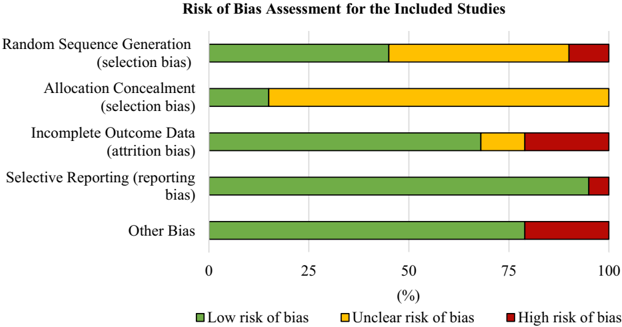
“The risk assessment here may be considered more conservative as in Vonderlin et al. (2020), as they did not judge the risk for two domains that usually result in high risks: performance bias and detection bias. These were included here, however, because some of the analyzed studies (e.g., Cheema et al., 2013) aimed at solving the problem of blinding staff and participants.”
From Mindfulness-Based and Mindfulness-Informed Interventions at the Workplace: A Systematic Review and Meta-Regression Analysis of RCTs (2023) · cites this paper as Vonderlin et al. (2020)
Self-check
Percentages, sums and reported differences re-computed from the paper’s own numbers.
The self-check needs the paper’s full text.
Citations
Cites
R: A Language and Environment for Statistical Computing
R Core Team (2025) · doi:10.32614/r.manuals · Cited by 352,181
Statistical Power Analysis for the Behavioral Sciences
Muller, K. (1989) · Technometrics · doi:10.1080/00401706.1989.10488618 · Cited by 99,167
Measuring inconsistency in meta-analyses
Higgins, J. P. T., Thompson, S. G., Deeks, J. J., & Altman, D. G. (2003) · BMJ · doi:10.1136/bmj.327.7414.557 · Cited by 63,139
Bias in meta-analysis detected by a simple, graphical test
Egger, M., Smith, G. D., Schneider, M., & Minder, C. (1997) · BMJ · doi:10.1136/bmj.315.7109.629 · Cited by 56,722
Preferred reporting items for systematic reviews and meta-analyses: The PRISMA statement
Moher, D., Liberati, A., Tetzlaff, J., Altman, D. G., & the PRISMA Group* (2009) · Annals of Internal Medicine · doi:10.7326/0003-4819-151-4-200908180-00135 · Cited by 37,554
Quantifying heterogeneity in a meta‐analysis
Higgins, J. P. T., & Thompson, S. G. (2002) · Statistics in Medicine · doi:10.1002/sim.1186 · Cited by 36,763
The Cochrane Collaboration's tool for assessing risk of bias in randomised trials
Higgins, J. P. T., Altman, D. G., Gotzsche, P. C., Juni, P., Moher, D., Oxman, A. D., Savovic, J., Schulz, K. F., Weeks, L., Sterne, J. A. C., et al. (2011) · BMJ · doi:10.1136/bmj.d5928 · Cited by 33,817
Cochrane Handbook for Systematic Reviews of Interventions: Cochrane Book Series
(2008) · doi:10.1002/9780470712184 · Cited by 25,048
Conducting Meta-Analyses in R with the metafor Package
Viechtbauer, W. (2010) · Journal of Statistical Software · doi:10.18637/jss.v036.i03 · Cited by 20,464 · cited 2×
“The I2 is a descriptive measure that displays the proportion of total variability, which can be attributed to heterogeneity among the true effects (Viechtbauer 2010).”
BackgroundMethodInfluentialStatistical Methods for Meta-Analysis
Wasserman, S., Hedges, L. V., & Olkin, I. (1988) · Journal of Educational Statistics · doi:10.2307/1164953 · Cited by 10,326
Research works printed but not linked: 5
- OECD (2018). GDP per hour worked (indicator). Organisation for eco- nomic co-operation and development. : https://www.oecd-ilibrary. org/economics/gdp-per-hour-worked/indicator/english_1439e590- en . Accessed 12 Dec 2018.
- Schaufenbuel, K. (2015). Why Google, Target, and General Mills are investing in mindfulness. Harvard Business Review. https:// mindleader.org/wp-content/uploads/2017/08/HARVARD- BUSINESS-REVIEW_Why-Google-is-investing-in-Mindfulness. pdf . Accessed 9 Sep 2019.
- Strub, L., & Tarquinio, C. (2013). Mindfulness-based cognitive therapy (MBCT) program with workers in an industrial setting: a pilot study. Sante Mentale au Quebec, 38(1), 207-225.
- Tagg, R. (2016). Decreasing stress in paraprofessionals working with children with autism using a brief, blended mindfulness intervention. Doctoral Dissertation, Alliant International University, San Diego.
- Wilson, D. M. (2012). Effects of mindfulness-based art processing (MBAP) on the well-being and job performance of working adults: evaluating a novel intervention. Doctoral Dissertation, Sofia University, Paolo Alto.
Cited by
Mindfulness-based interventions: an overall review
Zhang, D., Lee, E. K. P., Mak, E. C. W., Ho, C. Y., & Wong, S. Y. S. (2021) · British Medical Bulletin · doi:10.1093/bmb/ldab005 · Cited by 668
Galante, J., Friedrich, C., Dawson, A. F., Modrego-Alarcón, M., Gebbing, P., Delgado-Suárez, I., Gupta, R., Dean, L., Dalgleish, T., White, I. R., et al. (2021) · PLOS Medicine · doi:10.1371/journal.pmed.1003481 · Cited by 319
Baminiwatta, A., & Solangaarachchi, I. (2021) · Mindfulness · doi:10.1007/s12671-021-01681-x · Cited by 232
Fischer, R., Bortolini, T., Karl, J. A., Zilberberg, M., Robinson, K., Rabelo, A., Gemal, L., Wegerhoff, D., Nguyễn, T. B. T., Irving, B., et al. (2020) · Frontiers in Psychology · doi:10.3389/fpsyg.2020.563876 · Cited by 153
Fleming, W. J. (2024) · Industrial Relations Journal · doi:10.1111/irj.12418 · Cited by 211
Galante, J., Friedrich, C., Collaboration of Mindfulness Trials (CoMinT), Aeamla-Or, N., Arts-de Jong, M., Barrett, B., Bögels, S. M., Buitelaar, J. K., Checovich, M. M., Christopher, M. S., et al. (2023) · Nature Mental Health · doi:10.1038/s44220-023-00081-5 · Cited by 113
“Some evidence from RCTs and AD meta-analyses suggests that MBPs’ effects on men are smaller than those on women, and multiple explanations for this have been proposed 26,38–40 .”
Said, H. K., & Tanova, C. (2021) · International Journal of Hospitality Management · doi:10.1016/j.ijhm.2021.102961 · Cited by 120
Mindfulness, remote engagement and employee morale: conceptual analysis to address the “new normal”
Pattnaik, L., & Jena, L. K. (2020) · International journal of organizational analysis · doi:10.1108/ijoa-06-2020-2267 · Cited by 141
Mindfulness for Global Public Health: Critical Analysis and Agenda
Oman, D. (2025) · Mindfulness · doi:10.1007/s12671-023-02089-5 · Cited by 87
A balanced view of mindfulness at work
Choi, E., Gruman, J. A., & Leonard, C. (2021) · Organizational Psychology Review · doi:10.1177/20413866211036930 · Cited by 90
Michaelsen, M. M., Graser, J., Onescheit, M., Tuma, M. P., Werdecker, L., Pieper, D., & Esch, T. (2023) · Mindfulness · doi:10.1007/s12671-023-02130-7 · Cited by 70
“1 3 where employees and leaders are increasingly encouraged to improve their mindfulness levels directly, or indirectly, through a variety of interventions (Vonderlin et al., 2020).”
InfluentialTrombka, M., Demarzo, M., Campos, D., Antonio, S. B., Cicuto, K., Walcher, A. L., García-Campayo, J., Schuman-Olivier, Z., & Rocha, N. S. (2021) · Frontiers in Psychiatry · doi:10.3389/fpsyt.2021.624876 · Cited by 69
“MBIs have been shown to be feasible and to lead to improved health outcomes in non-clinical populations at the workplace (57), including several high-stress occupations, such as the military (58–62), healthcare providers (63), firefighters (64), and”
BackgroundMindfulness-based programmes to reduce stress and enhance well-being at work: a realist review
Micklitz, K., Wong, G., & Howick, J. (2021) · BMJ Open · doi:10.1136/bmjopen-2020-043525 · Cited by 107
Tran, M. A. Q., Vo‐Thanh, T., Soliman, M. S. A., Hà, T. A., & Pham, M. V. (2022) · Current Psychology · doi:10.1007/s12144-022-03421-3 · Cited by 80
“Previous studies have indicated that increase of mindfulness is related to decrease of anxiety as well as the improvement of psychological well-being (Jazaieri & Shapiro, 2017; Vonderlin et al., 2020 ).”
Mainstreaming regenerative dynamics for sustainability
Fischer, J., Farny, S., Abson, D. J., Zeidler, V. Z., von Salisch, M., Schaltegger, S., Martín‐López, B., Temperton, V. M., & Kümmerer, K. (2024) · Nature Sustainability · doi:10.1038/s41893-024-01368-w · Cited by 77
Bartlett, L., Buscot, M., Bindoff, A. D., Chambers, R., & Hassed, C. S. (2021) · Frontiers in Psychology · doi:10.3389/fpsyg.2021.724126 · Cited by 85
Lo, C. K. M., & Wong, S. Y. (2020) · Attachment & Human Development · doi:10.1080/14616734.2020.1844247 · Cited by 98
Schulte‐Frankenfeld, P. M., & Trautwein, F. (2022) · Applied Psychology: Health and Well-Being · doi:10.1111/aphw.12328 · Cited by 51
“…no significant results for life satisfaction in university students (Dawson et al., 2020); two others found small to medium effects for life satisfaction when reported together with other variables as ‘(positive) well-being’ in working adult populations (Lomas et al., 2019; Vonderlin et al., 2020).”
BackgroundTuấn, L. T. (2021) · Computers in Human Behavior · doi:10.1016/j.chb.2021.107148 · Cited by 72
Huberty, J. L., Espel-Huynh, H. M., Neher, T. L., & Puzia, M. E. (2022) · JMIR mHealth and uHealth · doi:10.2196/38903 · Cited by 44
“The other reported on another key construct in emotional coping–resilience–which refers to one’s ability to bounce back or recover from stress [21,22] and which can serve as a buffer between stressful life events and the development of mental health problems including depression, anxiety, and chronic stress [23].”
BackgroundResultInfluentialXiang, K., Liu, J., Qiao, G., Gao, F., & Zhang, H. (2022) · International Journal of Hospitality Management · doi:10.1016/j.ijhm.2022.103365 · Cited by 54
Walking Our Evidence-Based Talk: The Case of Leadership Development in Business Schools
Leroy, H., Anisman‐Razin, M., Avolio, B. J., Bresman, H. M., Bunderson, J. S., Burris, E. R., Claeys, J., Detert, J. R., Dragoni, L., Giessner, S. R., et al. (2022) · Journal of Leadership & Organizational Studies · doi:10.1177/15480518211062563 · Cited by 62
“Mindfulness practice (Allen et al., 2015; Roche et al., 2020; Vonderlin et al., 2020) 50% Mindfulness is often offered in a surface-level way (e.”
Karl, J. A., Johnson, F. N., Bucci, L., & Fischer, R. (2022) · Journal of the Royal Society of New Zealand · doi:10.1080/03036758.2021.1915804 · Cited by 44
Twenty years of research on mindfulness at work: A structured literature review
Stuart‐Edwards, A., MacDonald, A., & Ansari, M. A. (2023) · Journal of Business Research · doi:10.1016/j.jbusres.2023.114285 · Cited by 58
Monzani, L., Escartín, J., Ceja, L., & Bakker, A. B. (2021) · Human Resource Management Journal · doi:10.1111/1748-8583.12360 · Cited by 51
Mulligan, R., Ramos, J., Martín, P., & Zornoza, A. M. (2021) · Sustainability · doi:10.3390/su13105409 · Cited by 82
Effectiveness of workplace interventions for health promotion
Virtanen, M., Lallukka, T. M., Elovainio, M. J., Steptoe, A., & Kivimäki, M. (2025) · The Lancet Public Health · doi:10.1016/s2468-2667(25)00095-7 · Cited by 76
Acting on Values: A Novel Intervention Enhancing Hedonic and Eudaimonic Well-Being
Bojanowska, A., Kaczmarek, L. D., Urbańska, B., & Puchalska-Kamińska, M. (2022) · Journal of Happiness Studies · doi:10.1007/s10902-022-00585-4 · Cited by 51
Hosseinzadeh Asl, N. R. (2022) · Current Psychology · doi:10.1007/s12144-021-02150-3 · Cited by 34
“…such as depression, anxiety, and stress) and improve their selfcompassion and psychological flexibility, which both are positively and strongly related to mental health (e.g. Vonderlin et al. 2020; Dawson et al. 2020; Zhou et al. 2020; Marshall and Brockman 2016; Inwood and Ferrari 2018).”
Mindfulness training, cognitive performance and stress reduction
Charness, G., Bihan, Y. L., & Villeval, M. C. (2023) · Journal of Economic Behavior & Organization · doi:10.1016/j.jebo.2023.10.027 · Cited by 53
Mindfulness-Based Intervention Development for Children and Adolescents
Saunders, D. C., & Kober, H. (2020) · Mindfulness · doi:10.1007/s12671-020-01360-3 · Cited by 40
O’Connor, M., Stapleton, A., O’Reilly, G., Murphy, E., Connaughton, L., Hoctor, E., & McHugh, L. (2023) · Journal of Contextual Behavioral Science · doi:10.1016/j.jcbs.2023.03.005 · Cited by 40
Tsang, K. K. Y., Shum, K. K., Chan, W. W. L., Li, S. X., Kwan, H. W., Su, M. R., Wong, B. P., & Lam, S. (2021) · Mindfulness · doi:10.1007/s12671-021-01750-1 · Cited by 50
Bonde, E. H., Mikkelsen, E. G., Fjorback, L. O., & Juul, L. (2023) · Frontiers in Psychology · doi:10.3389/fpsyg.2023.1112907 · Cited by 42
Kumprang, K., & Suriyankietkaew, S. (2024) · Administrative Sciences · doi:10.3390/admsci14060121 · Cited by 45
A randomised trial of Mindfulness-based Social Work and Self-Care with social workers
Maddock, A., McGuigan, K., & McCusker, P. (2023) · Current Psychology · doi:10.1007/s12144-023-04410-w · Cited by 27
“Mindfulness has been shown to have positive outcomes for those working in health and social care; promoting well-being, increasing self-care and self-compassion, reducing psychological distress, lowering stress, and preventing burnout (Maddock et al., 2021; Vonderlin et al., 2020).”
BackgroundBartlett, L., Martin, A. J., Kilpatrick, M., Otahal, P., Sanderson, K., & Neil, A. L. (2022) · JMIR mHealth and uHealth · doi:10.2196/30272 · Cited by 28
Priority actions for promoting population mental health and wellbeing
Barry, M. M., Kuosmanen, T., Keppler, T., Dowling, K., & Harte, P. (2023) · Mental Health & Prevention · doi:10.1016/j.mhp.2023.200312 · Cited by 37
Zheng, Y., Gu, X., Jiang, M., & Zeng, X. (2022) · Mindfulness · doi:10.1007/s12671-022-01927-2 · Cited by 33
Krick, A., & Felfe, J. (2023) · Mindfulness · doi:10.1007/s12671-023-02281-7 · Cited by 27
Knudsen, R. K., Ammentorp, J., Storkholm, M. H., Skovbjerg, S., Tousig, C. G., & Timmermann, C. (2023) · Complementary Therapies in Clinical Practice · doi:10.1016/j.ctcp.2023.101805 · Cited by 35
Long-term effects of psychosocial interventions on internet-related disorders: A meta-analysis
Lo, C. K. M., Chan, K. L., Yu, L., Chui, W. W. H., & Ip, P. (2022) · Computers in Human Behavior · doi:10.1016/j.chb.2022.107465 · Cited by 27
de Diego‐Cordero, R., Pérez, M. P. Z., Vargas‐Martínez, A. M., Lucchetti, G., & Vega‐Escaño, J. (2021) · Journal of Nursing Management · doi:10.1111/jonm.13315 · Cited by 26
Rich, R. M., Ogden, J., & Morison, L. (2021) · International Journal of Workplace Health Management · doi:10.1108/ijwhm-04-2020-0046 · Cited by 22
van der Meulen, R. T., Valentin, S., Bögels, S. M., & de Bruin, E. I. (2020) · Mindfulness · doi:10.1007/s12671-020-01557-6 · Cited by 32
Mellner, C., Osika, W., & Niemi, M. (2022) · International Journal of Workplace Health Management · doi:10.1108/ijwhm-07-2021-0146 · Cited by 46
Dinesh, T. K., Shetty, A., Dhyani, V. S., Shwetha, T. S., & Dsouza, K. J. (2022) · Systematic Reviews · doi:10.1186/s13643-022-01956-x · Cited by 21
Wolever, R. Q., Finn, M. T. M., & Shields, D. (2022) · Journal of Medical Internet Research · doi:10.2196/31935 · Cited by 23
Jha, A. P., Zanesco, A. P., Denkova, E., MacNulty, W. K., & Rogers, S. L. (2021) · Journal of Cognitive Enhancement · doi:10.1007/s41465-021-00228-1 · Cited by 27
Wright, M., Galante, J., Corneille, J. S., Grabovac, A. D., Ingram, D. M., & Sacchet, M. D. (2024) · Mindfulness · doi:10.1007/s12671-024-02356-z · Cited by 29
“They are also considered effective tools for corporate well-being (Van Dam et al., 2018; Vonderlin et al., 2020), with one survey finding that 52% of 163 evaluated companies offered mindfulness training that year (Lau, 2020).”
BackgroundChen, Y.-H. (2025) · Universal Access in the Information Society · doi:10.1007/s10209-025-01205-7 · Cited by 23
Tement, S., Zorjan, S., Lavrič, M., Poštuvan, V., & Plohl, N. (2020) · BMC Public Health · doi:10.1186/s12889-020-09691-5 · Cited by 24
Contemplative sciences: A future beyond mindfulness
García‐Campayo, J., del Hoyo, Y. L., & Navarro‐Gil, M. (2021) · World Journal of Psychiatry · doi:10.5498/wjp.v11.i4.87 · Cited by 24
Tam, D. U., & Trang, N. T. M. (2024) · Service Business · doi:10.1007/s11628-024-00565-z · Cited by 19
Kang, M.-J., & Myung, S.-K. (2022) · Issues in Mental Health Nursing · doi:10.1080/01612840.2021.1949765 · Cited by 17
Mindfulness or expectancy? The label of mindfulness leads to expectancy effects
Ghanbari Noshari, M., Kempton, H. M., & Kreplin, U. (2023) · Counselling and Psychotherapy Research · doi:10.1002/capr.12589 · Cited by 16
Short Term Effects of Inner Engineering Completion Online Program on Stress and Well-Being Measures
Upadhyay, P., Joshi, A., Mishra, I., Kelly, L., Novack, L., Hariri, S., Kveraga, K., & Subramaniam, B. (2022) · Frontiers in Psychology · doi:10.3389/fpsyg.2022.814224 · Cited by 18
Chen, S.-H., Chen, P., Lee, C., Wu, Y., Ahorsu, D. K., Griffiths, M. D., & Lin, C. (2023) · Psychology Research and Behavior Management · doi:10.2147/prbm.s412918 · Cited by 17
Marsh, E., Vallejos, E. P., & Spence, A. (2024) · PLoS ONE · doi:10.1371/journal.pone.0295631 · Cited by 28
Ameli, R., Skeath, P. R., Abraham, P. A., Panahi, S., Kazman, J. B., Foote, F. O., Deuster, P. A., Ahmad, N., & Berger, A. M. (2021) · PeerJ · doi:10.7717/peerj.10519 · Cited by 17
Alfurjani, A. M., Al‐Hammouri, M. M., Rababah, J. A., Alhawatmeh, H. N., & Hall, L. A. (2023) · Worldviews on Evidence-Based Nursing · doi:10.1111/wvn.12695 · Cited by 20
Effects of mindfulness-based stress reduction programs on Nurses’ perceived stress levels
Truscott, P. L. (2024) · Geriatric Nursing · doi:10.1016/j.gerinurse.2024.06.026 · Cited by 17
Young, P. A., Chow, V., Haslam, C. O., Wood, A. G., & Barker, J. B. (2022) · Journal of Rational-Emotive & Cognitive-Behavior Therapy · doi:10.1007/s10942-022-00475-x · Cited by 20
Schubin, K., Seinsche, L., Pfaff, H., & Zeike, S. (2023) · Frontiers in Psychology · doi:10.3389/fpsyg.2023.994959 · Cited by 13
Choi, E., Levallet, N., & Bharti, M. (2024) · Personnel Review · doi:10.1108/pr-06-2023-0512 · Cited by 17
Upadhyay, P., Chang, T. F. H., Hariri, S., Rallabandi, S., Yathavakilla, S. K. V., Novack, V., & Subramaniam, B. (2022) · Evidence-based Complementary and Alternative Medicine · doi:10.1155/2022/9001828 · Cited by 21
Exploring an Organizational-Level Mindfulness-Based Intervention in Private Workplace Settings
Bonde, E. H., Mikkelsen, E. G., Fjorback, L. O., & Juul, L. (2024) · Mindfulness · doi:10.1007/s12671-024-02375-w · Cited by 18
Shao, D., Ji, Y., Zhou, R., & Liu, T. (2024) · Asia Pacific Journal of Human Resources · doi:10.1111/1744-7941.12433 · Cited by 18
Verger, N. B., Shankland, R., Strub, L., Kotsou, I., Leys, C., & Steiler, D. (2021) · European Review of Applied Psychology · doi:10.1016/j.erap.2021.100709 · Cited by 17
Bonde, E. H., Mikkelsen, E. G., Fjorback, L. O., & Juul, L. (2022) · Frontiers in Psychology · doi:10.3389/fpsyg.2022.1020454 · Cited by 20
Mahmoud, M. A. S., Mustamil, N. M., & Tey, L. S. (2023) · Journal of Quality Assurance in Hospitality & Tourism · doi:10.1080/1528008x.2023.2168833 · Cited by 23
Psychological Resources for Sustainable Lifestyles
Hunecke, M. (2022) · Springer eBooks · doi:10.1007/978-3-031-16752-2_3 · Cited by 14
Knudsen, R. K., Skovbjerg, S., Pedersen, E. L., Nielsen, C. L., Storkholm, M. H., & Timmermann, C. (2024) · International Journal of Nursing Studies Advances · doi:10.1016/j.ijnsa.2024.100192 · Cited by 11
“In addition, Vonderlin et al. (2019) found that although duration of the program in weeks did not directly relate to the effectiveness, hours of attendance were significantly associated with higher improvements in mindfulness, wellbeing, and reduction of burnout symptoms (Vonderlin et al., 2020).”
BackgroundResultInfluentialHerold, M., Simbula, S., & Gallucci, M. (2024) · Current Psychology · doi:10.1007/s12144-024-06534-z · Cited by 15
The Mindfulness-Based Social Work and Self-Care Programme: A Focus Group Study
Maddock, A., McGuigan, K., McCusker, P., & Kellock, J. (2023) · Clinical Social Work Journal · doi:10.1007/s10615-023-00897-9 · Cited by 13
Wrede, S. J. S., Esch, T., & Michaelsen, M. M. (2025) · BMC Digital Health · doi:10.1186/s44247-025-00186-0 · Cited by 16
Palumbo, R. (2021) · Quality Assurance in Education · doi:10.1108/qae-02-2021-0019 · Cited by 13
Christodoulou, V., Flaxman, P. E., Morris, E. M. J., & Oliver, J. E. (2024) · European Journal of Work and Organizational Psychology · doi:10.1080/1359432x.2024.2314934 · Cited by 15
Unmasking the influence of employees’ coping strategies on workplace bullying
Sigaeva, N., Öztüren, A., & Kılıç, H. (2024) · Service Industries Journal · doi:10.1080/02642069.2024.2349070 · Cited by 12
Hear no evil? investigating relationships between mindfulness and moral disengagement at work
Brendel, W., & Hankerson, S. J. (2021) · Ethics & Behavior · doi:10.1080/10508422.2021.1958331 · Cited by 13
“To be mindful is a natural capability (Brown & Ryan, 2003; Brown et al., 2007), which involves the intentional process (Lau et al., 2006; Vonderlin et al., 2020) of heightening awareness and sustaining attention to external and internal stimuli that arise in real-time (Bishop et al., 2004; Good et…”
InfluentialLipponen, M., Hallikainen, V., & Kilpeläinen, P. (2022) · Journal of Multidisciplinary Healthcare · doi:10.2147/jmdh.s353168 · Cited by 23
An empirical study to evaluate the impact of mindfulness on helpdesk employees
Bernárdez, B., Panach, J. I., Parejo, J. A., Durán, A., Juristo, N., & Ruiz–Cortés, A. (2023) · Science of Computer Programming · doi:10.1016/j.scico.2023.102977 · Cited by 18
Ruchiwit, M., Vuthiarpa, S., Ruchiwit, K., Muijeen, K., & Phanphairoj, K. (2024) · Clinical Practice and Epidemiology in Mental Health · doi:10.2174/0117450179276691231229071003 · Cited by 12
Smyth, A. P. J., & Milyavskaya, M. (2021) · European Journal of Social Psychology · doi:10.1002/ejsp.2770 · Cited by 10
Grace, B., Shawe, J., & Stephenson, J. (2023) · Sexual & Reproductive Healthcare · doi:10.1016/j.srhc.2023.100826 · Cited by 13
Shortland, N. D., McGarry, P., THOMPSON, L. A., Stevens, C., & Alison, L. J. (2021) · Frontiers in Psychology · doi:10.3389/fpsyg.2021.674694 · Cited by 15
Zeng, N., Zhang, M., Fu, S., Xiao, Q., & Javed, T. (2023) · Frontiers in Psychology · doi:10.3389/fpsyg.2022.963439 · Cited by 13
A qualitative exploration of a mindful resiliency program for community healthcare providers
Klockner, K., Crawford, C., Craigie, M. A., Tsai, L., & Hegney, D. G. (2021) · Nursing and Health Sciences · doi:10.1111/nhs.12838 · Cited by 8
Can Mindfulness Buffer Against Negative Effects of Job Demands for Military and Police Personnel?
Krick, A., Felfe, J., & Klebe, L. (2023) · Journal of Occupational and Environmental Medicine · doi:10.1097/jom.0000000000002805 · Cited by 9
Online Mindfulness-Based Intervention Program Improves Mental Health, Well-Being, and Productivity
Ogino, J., Maruyama, T., Umene‐Nakano, W., & Maéno, T. (2024) · Mindfulness · doi:10.1007/s12671-024-02344-3 · Cited by 12
Liu, L. (2020) · Journal of School Administration Research and Development · doi:10.32674/jsard.v5is1.2692 · Cited by 8
Galante, J., Friedrich, C., Dalgleish, T., White, I. R., & Jones, P. B. (2022) · BMJ Open · doi:10.1136/bmjopen-2021-058976 · Cited by 9
Tobias, J. M., Alapati, H. H., & Edginton, T. L. (2025) · Frontiers in Psychology · doi:10.3389/fpsyg.2025.1356057 · Cited by 8
Liu, C., Lin, L.-J., Zhang, K., & Chiou, W. (2025) · Behavioral Sciences · doi:10.3390/bs15070909 · Cited by 15
García‐Campayo, J., Hijar-Aguinaga, R., del Hoyo, Y. L., Magallón-Botaya, R. M., Fernández‐Martínez, S., Barceló‐Soler, A., Soler, J., & Montero‐Marín, J. (2023) · Trials · doi:10.1186/s13063-023-07151-0 · Cited by 10
Díaz‐Silveira, C., Germán, M. Á. S., Burgos-Julián, F. A., Ruiz‐Íñiguez, R., & de la Hera, C. M. A. (2023) · European Journal of Work and Organizational Psychology · doi:10.1080/1359432x.2023.2198706 · Cited by 13
Müller, L., Rapoport, O., & Rahe, M. (2024) · Mindfulness · doi:10.1007/s12671-024-02467-7 · Cited by 10
Asl, N. R. H., & İl, S. (2021) · Journal of Evidence-Based Social Work · doi:10.1080/26408066.2021.1964670 · Cited by 9
El cerebro del meditador de atención plena: de la prospección a la tarea
Lopez, M. A. P., Zuluaga, J. J. L., Andrade, M. J. N., & Becerra-Hernández, L. V. (2021) · Universitas Médica · doi:10.11144/javeriana.umed62-4.brai · Cited by 12
Mindfulness or relaxation: What is more effective for work stress? Literature review
Loziak, A. (2022) · Psychologie a její kontexty (Psychology & Its Contexts) · doi:10.15452/psyx.2022.13.0003 · Cited by 11
Metadata
- Authors
- Vonderlin, R., Biermann, M., Bohus, M., & Lyssenko, L.
- Affiliations
- Heidelberg University (DE)
- Harvard University (US)
- University of Education Freiburg (DE)
- Corresponding author
- Vonderlin, Ruben
- Venue
- Mindfulness
- Published
- 2020-03-02
- Volume
- 11
- Issue
- 7
- Pages
- 1579-1598
- ISSN
- 1868-8527 (ISSN-L)
- 1868-8535
- OpenAlex
- W3009071149
- Cited by
- 259
- References
- 159
- Citations by year
- 2026: 36 · 2025: 41 · 2024: 43 · 2023: 46 · 2022: 37 · 2021: 42 · 2020: 14
- FWCI
- 2.74
- Type
- journal article
- Language
- en
- Open access
- hybrid
- doi.org
- Licence
- cc-by
- creativecommons.org/licenses/by/4.0 (tdm)
- creativecommons.org/licenses/by/4.0 (vor)
- Locations
- Mindfulness (publishedVersion, cc-by)
- Funders
- Zentralinstitut für Seelische Gesundheit (ZI)
- Topics
- Social Sciences › Psychology › Clinical Psychology › Mindfulness and Compassion Interventions
- Health Sciences › Medicine › Public Health, Environmental and Occupational Health › Workplace Health and Well-being
- Social Sciences › Psychology › Social Psychology › Stress and Burnout Research
- Keywords
- mindfulness program, workplace interventions, employee well-being, occupational stress, burnout, psychological distress, job satisfaction, compassion, work engagement, productivity, somatic symptoms
About these checks
Registry, retraction, Cites and statistics results are computed, not judged, with one exception: a printed reference that no index lists is read once by a model before it counts as a citation error. Claims are extracted by a model and kept only when their quote appears verbatim in the text; each cited source is then checked, with a model’s help, for whether it says what the claim relies on. Those verdicts can be wrong — read the claim’s quote and the cited source before relying on one.
Statistics and arithmetic are recomputed, not judged.
Confidence bands are shown only for fields calibrated on our annotated test set. None is calibrated yet, so no band is shown.
What counts as a claim ›How we measure confidence ›How we check this ›
Are you an author, or do you see a problem with this page? Request a review
Data sources
Bibliographic data: Semantic Scholar, OpenAlex, Crossref.
Contains information from the Semantic Scholar Academic Graph Datasets, made available under the ODC Attribution License (ODC-BY 1.0).
Semantic Scholar’s data is described in: Kinney, R., et al. (2023). The Semantic Scholar Open Data Platform. arXiv:2301.10140.
