

Mindfulness-Based Programs in the Workplace: a Meta-Analysis of Randomized Controlled Trials
Open accessThe DOI matches its Crossref record; 155 of the 159 references it cites were found in a registry or an index.
Abstract
Objectives: Given the complex demands of many workplaces, there is growing interest in the potential beneficial effects of mindfulness-based programs (MBPs) for employees. This meta-analysis systematically synthesizes the results of randomized controlled studies conducted in various workplace settings. Methods: Eligible studies were identified by a systematic literature search in four electronic databases and complementary manual search strategies through 11/2018. Random-effects models were used to synthesize data across 56 studies including n = 2689 participants and n = 2472 controls. The validity of synthesized effect size estimates was analyzed for heterogeneity and influential cases (outliers). Risk of bias was assessed following Cochrane recommendations. Results: Analyses of between-group effects indicated that MBPs effectively reduce stress, burnout, mental distress, and somatic complaints, while improving mindfulness, well-being, compassion, and job satisfaction—all with small to large effect sizes ranging from Hedge’s g = 0.32 to 0.77. Results were maintained in follow-up assessments ≤ 12 weeks. Heterogeneity among primary studies was not explained consistently by program or participant characteristics in the exploratory moderator analyses. Results on work engagement and productivity were limited by low numbers of primary studies with outliers among their effect sizes. Conclusions: Our meta-analysis provides evidence that MBPs effectively promote the health and well-being of employees in various occupational settings. Further research is needed to investigate potential benefits on work-related outcomes and effects for longer-term follow-ups.
Overview
The claims and statistics of this paper haven’t been checked yet.
Free: it reads the open-access text and checks the first 5 claims that cite a source we can check. Create a free account to check every claim.
Integrity signals
Registry
Cites
Statistics
Figures
Verification
Claims the paper makes
The claims and statistics of this paper haven’t been checked yet.
Free: it reads the open-access text and checks the first 5 claims that cite a source we can check. Create a free account to check every claim.
Claims other papers make about this one
Each is checked against this paper’s own text: does it say what the citing paper says it does?
The source backs part of the claim, not all of it — or backs it for a different population, condition or comparison.
In the citing paper
“Research has shown that mindfulness-based interventions can effectively decrease participants’ psychological distress (the parameters such as depression, anxiety, and stress) and improve their self-compassion and psychological flexibility”
From A randomized controlled trial of a mindfulness-based intervention in social workers working during the COVID-19 crisis (2022) · cites this paper as Vonderlin et al. 2020
Experimental — accuracy not yet measuredThe source backs part of the claim, not all of it — or backs it for a different population, condition or comparison.
In the citing paper
“Systematic reviews and meta-analyses of mindfulness studies in the work context have demonstrated that both deficit-oriented parameters, such as burnout and depression, as well as resource-oriented parameters, such as job satisfaction and work performance, can be improved through mindfulness-based programs (Bartlett et al., 2019; Lomas et al., 2019; Richardson & Rothstein, 2008; Vonderlin et al.,”
From Mindfulness-Based and Mindfulness-Informed Interventions at the Workplace: A Systematic Review and Meta-Regression Analysis of RCTs (2023) · cites this paper as Vonderlin et al., 2020
Experimental — accuracy not yet measuredThe source backs part of the claim, not all of it — or backs it for a different population, condition or comparison.
In the citing paper
“Mindfulness has been shown to have positive outcomes for those working in health and social care; promoting well-being, increasing self-care and self-compassion, reducing psychological distress, lowering stress, and preventing burnout (Maddock et al., 2021; Vonderlin et al., 2020).”
From A randomised trial of Mindfulness-based Social Work and Self-Care with social workers (2023) · cites this paper as Vonderlin et al., 2020
Experimental — accuracy not yet measuredThe cited source says what the claim attributes to it.
In the citing paper
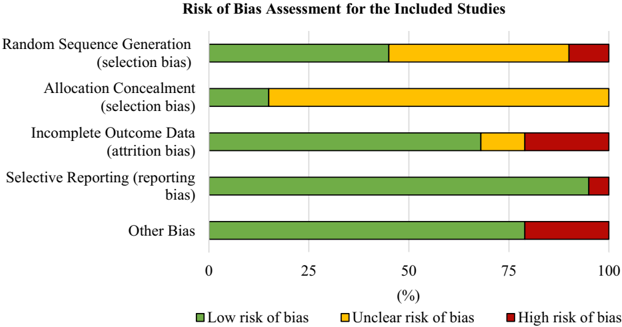
“The risk assessment here may be considered more conservative as in Vonderlin et al. (2020), as they did not judge the risk for two domains that usually result in high risks: performance bias and detection bias. These were included here, however, because some of the analyzed studies (e.g., Cheema et al., 2013) aimed at solving the problem of blinding staff and participants.”
From Mindfulness-Based and Mindfulness-Informed Interventions at the Workplace: A Systematic Review and Meta-Regression Analysis of RCTs (2023) · cites this paper as Vonderlin et al. (2020)
Self-check
Percentages, sums and reported differences re-computed from the paper’s own numbers.
The self-check needs the paper’s full text.
Citations
Cites
R: A Language and Environment for Statistical Computing
R Core Team (2025) · doi:10.32614/r.manuals · Cited by 352,181
Statistical Power Analysis for the Behavioral Sciences
Muller, K. (1989) · Technometrics · doi:10.1080/00401706.1989.10488618 · Cited by 99,167
Measuring inconsistency in meta-analyses
Higgins, J. P. T., Thompson, S. G., Deeks, J. J., & Altman, D. G. (2003) · BMJ · doi:10.1136/bmj.327.7414.557 · Cited by 63,139
Bias in meta-analysis detected by a simple, graphical test
Egger, M., Smith, G. D., Schneider, M., & Minder, C. (1997) · BMJ · doi:10.1136/bmj.315.7109.629 · Cited by 56,722
Preferred reporting items for systematic reviews and meta-analyses: The PRISMA statement
Moher, D., Liberati, A., Tetzlaff, J., Altman, D. G., & the PRISMA Group* (2009) · Annals of Internal Medicine · doi:10.7326/0003-4819-151-4-200908180-00135 · Cited by 37,554
Quantifying heterogeneity in a meta‐analysis
Higgins, J. P. T., & Thompson, S. G. (2002) · Statistics in Medicine · doi:10.1002/sim.1186 · Cited by 36,763
The Cochrane Collaboration's tool for assessing risk of bias in randomised trials
Higgins, J. P. T., Altman, D. G., Gotzsche, P. C., Juni, P., Moher, D., Oxman, A. D., Savovic, J., Schulz, K. F., Weeks, L., Sterne, J. A. C., et al. (2011) · BMJ · doi:10.1136/bmj.d5928 · Cited by 33,817
Cochrane Handbook for Systematic Reviews of Interventions: Cochrane Book Series
(2008) · doi:10.1002/9780470712184 · Cited by 25,048
Conducting Meta-Analyses in R with the metafor Package
Viechtbauer, W. (2010) · Journal of Statistical Software · doi:10.18637/jss.v036.i03 · Cited by 20,464 · cited 2×
“The I2 is a descriptive measure that displays the proportion of total variability, which can be attributed to heterogeneity among the true effects (Viechtbauer 2010).”
BackgroundMethodInfluentialStatistical Methods for Meta-Analysis
Wasserman, S., Hedges, L. V., & Olkin, I. (1988) · Journal of Educational Statistics · doi:10.2307/1164953 · Cited by 10,326
Research works printed but not linked: 5
- OECD (2018). GDP per hour worked (indicator). Organisation for eco- nomic co-operation and development. : https://www.oecd-ilibrary. org/economics/gdp-per-hour-worked/indicator/english_1439e590- en . Accessed 12 Dec 2018.
- Schaufenbuel, K. (2015). Why Google, Target, and General Mills are investing in mindfulness. Harvard Business Review. https:// mindleader.org/wp-content/uploads/2017/08/HARVARD- BUSINESS-REVIEW_Why-Google-is-investing-in-Mindfulness. pdf . Accessed 9 Sep 2019.
- Strub, L., & Tarquinio, C. (2013). Mindfulness-based cognitive therapy (MBCT) program with workers in an industrial setting: a pilot study. Sante Mentale au Quebec, 38(1), 207-225.
- Tagg, R. (2016). Decreasing stress in paraprofessionals working with children with autism using a brief, blended mindfulness intervention. Doctoral Dissertation, Alliant International University, San Diego.
- Wilson, D. M. (2012). Effects of mindfulness-based art processing (MBAP) on the well-being and job performance of working adults: evaluating a novel intervention. Doctoral Dissertation, Sofia University, Paolo Alto.
Cited by
Items 201–258 of 258
New Work und Leadership – ein konzeptioneller Überblick
Werther, S. (2024) · Springer eBooks · doi:10.1007/978-3-658-42932-4_8
The Influence of Yoga and Meditation on Workplace
Balasubramanian, R. (2023) · International Journal of Science and Research (IJSR) · doi:10.21275/sr231204140639
Martínez-Díaz, A., Díaz-Fúnez, P. A., Llopis-Marín, J. M., & Mañas-Rodríguez, M. Á. (2024) · Trends in Psychology · doi:10.1007/s43076-024-00388-x · Cited by 1
Theoretischer Hintergrund des Trainings
Krick, A., & Felfe, J. (2024) · Springer eBooks · doi:10.1007/978-3-662-68670-6_3
Krick, A., & Felfe, J. (2024) · Springer eBooks · doi:10.1007/978-3-662-68670-6_6
Managing Workplace Mental Health: Multiple Approaches at Patient, Provider, and Systems Levels
Taubman, D. S., Dewa, C. S., & Parikh, S. V. (2024) · Springer eBooks · doi:10.1007/978-3-030-51366-5_9
Grossmeier, J. J. (2024) · American Journal of Health Promotion · doi:10.1177/08901171241299608 · Cited by 1
Pause, Presence, and Positive Community: Supporting Spiritual Well-Being in the University Workplace
Stratton, K. J., & Stannard, C. M. (2024) · American Journal of Health Promotion · doi:10.1177/08901171241299608d
-, S. S. M., & Patel, M. (2025) · International Journal For Multidisciplinary Research · doi:10.36948/ijfmr.2025.v07i01.35451
Processus d’appropriation d’une innovation managériale : le cas de la pleine conscience au travail
Desmarais, C., Dubouloz, S., & Françoise, D. (2025) · Management international · doi:10.59876/a-4gq1-k7px · Cited by 2
Brazier, E. (2025) · The Coaching Psychologist · doi:10.53841/bpstcp.2025.20.3.38 · Cited by 5
Kang, M. J., Aung, A. K., Selzer, R., Linck, A., Dias, F. F., Paul, E. M., Tang, J. S. N., Gibbs, J., & Gibbs, H. H. (2025) · Australian Health Review · doi:10.1071/ah24276 · Cited by 11
Tifft, E. D. (2023) · Scholars Archive - University at Albany (University at Albany, State University of New York) · doi:10.54014/naqt-ghda · Cited by 2
Chang, W. A. (2025) · Journal of Workplace Behavioral Health · doi:10.1080/15555240.2025.2534489
Marcus, B. (2025) · Basiswissen Psychologie · doi:10.1007/978-3-662-71525-3_4
Regmi, D., & Cohen, H. L. (2025) · The Egyptian Journal of Radiology and Nuclear Medicine · doi:10.1186/s43055-025-01571-5
Practising mindfulness can help us through the coronavirus pandemic
Cooper, K. J. (2020) · The Conversation · doi:10.64628/aam.jtk5s5ne4
Cerrahi Hastalarında Bilinçli Farkındalık Uygulamalarının Perioperatif Süreçteki Etkileri
Yalçın, C., Muslu, İ. E., & Ongün, P. (2025) · Balıkesir Medical Journal · doi:10.33716/bmedj.1745918 · Cited by 1
A study on the construction of sustainable workplace health indicators in enterprises
Chen, Y., Ciou, B.-H., Chu, H.-C., & Chien, T.-F. (2025) · International Journal of Healthcare Management · doi:10.1080/20479700.2025.2573302 · Cited by 1
Mindful Training: Integrating Mindfulness into Workplace Learning
Randall, J. G., Zajac, S. A., & Hanson, M. D. (2025) · Human Resource Development Review · doi:10.1177/15344843251395914
Askey‐Jones, R., Gaskell, C., & Johnstone, O. K. (2025) · The Cognitive Behaviour Therapist · doi:10.1017/s1754470x25100408
Dinesh, T. K., Shetty, A., Dhyani, V. S., T.S, S., & Dsouza, K. J. (2022) · Figshare · doi:10.6084/m9.figshare.19669903
Dinesh, T. K., Shetty, A., Dhyani, V. S., T.S, S., & Dsouza, K. J. (2022) · Figshare · doi:10.6084/m9.figshare.19669909
Dinesh, T. K., Shetty, A., Dhyani, V. S., T.S, S., & Dsouza, K. J. (2022) · Figshare · doi:10.6084/m9.figshare.19669906
Zhang, N., Li, X., & Yang, F. (2025) · Journal of Construction Engineering and Management · doi:10.1061/jcemd4.coeng-16665
Dinesh, T. K., Shetty, A., & Kini, R. S. (2025) · Economic Research-Ekonomska Istraživanja · doi:10.32728/er-ei.38.2.3 · Cited by 1
MBSR at Work: Perspectives from an Instructor and Software Developers
Romano, S., Conforti, A., Guidetti, G., Viotti, S., Ceschin, R., & Scanniello, G. (2025) · International Conference on Evaluation and Assessment in Software Engineering (EASE) · doi:10.1145/3756681.3757006 · Cited by 3
Abbes, I., & Amari, F. (2026) · Sustainability · doi:10.3390/su18010518 · Cited by 1
Miksch, A., Breuer, L.-A., Stasica, M. A., Streu, N.-R., Mayer, S., Oelerich, C., Schramm, B., Aßmann, M., & Michaelis, R. (2026) · Prävention und Gesundheitsförderung · doi:10.1007/s11553-025-01288-3
Michaelsen, M. M., Langer, L., Sparby, T., & Esch, T. (2026) · Acta Psychologica · doi:10.1016/j.actpsy.2026.106225 · Cited by 1
Ji, R., Tang, M., Vergara, R. C., Zhang, J., Cai, W., & Khoury, B. (2026) · Journal of Personality Assessment · doi:10.1080/00223891.2026.2628575
Achtsamkeit in der Schule: Ein Beitrag zur Resilienzförderung und positiven Schulentwicklung
Steinebach, C. (2026) · Springer eBooks · doi:10.1007/978-3-658-26545-8_105-1
Chen, H.-P., & Kuo-Chung, H. (2026) · Healthcare · doi:10.3390/healthcare14050654
Work-Life Balance: Strategies to Support Providers' Mental Health and Reduce Burnout
Mukhtar, A., & Tabassum, M. (2026) · IGI Global eBooks · doi:10.4018/979-8-3373-2727-3.ch009
StreAM—Stress Reduction and Team Empowerment by Mindfulness for Hospital Staff: A Feasibility Trial
Müller-Käser, I., Thiele, J., Fringer, A., Hediger, H., Nakamura, Y. M., Wittchow, S., Kramer, K., & Schläppi, M. (2026) · Mindfulness · doi:10.1007/s12671-026-02796-9
Evertz, L., Klingenberg, I., & Schwinges-Hess, L. (2026) · Mindfulness · doi:10.1007/s12671-026-02813-x
Rude Awakening: An Examination of the Incivility-Sleep Relationship via Affect
McCord, M. A., Sawhney, G., Savage, N. M., & Fisher, K. M. (2026) · Occupational Health Science · doi:10.1007/s41542-026-00255-4
Eşref, N. A. S., Alparslan, K., & KOŞAN, Y. (2026) · BMC Psychology · doi:10.1186/s40359-026-04601-7 · Cited by 1
Lee, D., Ha, N. H., Oh, C., Lee, U. S., Lee, Y. I., Kang, D., & Choi, S. (2026) · PLoS ONE · doi:10.1371/journal.pone.0345553
Sánchez‐Cardona, I., Pérez, Y. A., Cepeda-Hernández, S., Rivera, C. R., Rivera, J., Cintrón, J. F., Adames, C., & Sánchez-Cesáreo, M. (2026) · Journal of Evidence-Based Social Work · doi:10.1080/26408066.2026.2685132
Damas, S. H., & McCabe, S. A. (2026) · Journalism and Media · doi:10.3390/journalmedia7030131
Kâğıt Endüstrisinde Çalışan Refahı, İş Sağlığı ve Güvenliği: SEKA Örneği
Yaşar, M., Karademir, A., Sakçılar, U., & Demir, T. (2026) · Ağaç ve Orman · doi:10.59751/agacorman.1786664
Goldberg, D. G., Monroe, J., Sempell, P., Cheema, J., Vunnam, S., & Kitsantas, P. (2026) · JMIR Formative Research · doi:10.2196/85388 · Cited by 1
Supervisors in Residential Care for Older Adults, Compassion Fatigue, and Leadership Self-Efficacy
Pandya, S. P. (2026) · Research on Social Work Practice · doi:10.1177/10497315261466594
Selbstfürsorge in der Krise als professionelle Ressource
Luís, D. E. D. C., & Tomoff, M. (2026) · Springer eBooks · doi:10.1007/978-3-662-73383-7_10
Mazur, J., Kosowski, M., Marciniak, J., Chołuj, D., Zarówna, K., Pura, W., Matecka, D., & Śliwiński, W. (2026) · International Journal of Innovative Technologies in Social Science · doi:10.31435/ijitss.3(51).2026.6238
Chen, W., & Shi, L. (2026) · Religions · doi:10.3390/rel17080942
Ethical decision-making under stress: the role of the nonreactive facet of mindfulness
Hanson, S. K., Hollingworth, D., & Valentine, S. R. (2026) · Frontiers in Psychology · doi:10.3389/fpsyg.2026.1879880
Mikkelsen, P., Mikkelsen, E. G., Svendsen, L. K. B., Bonde, E. H., & Juul, L. (2026) · Mindfulness · doi:10.1007/s12671-026-02972-x
Workplace mindfulness demand and mental well-being among employed adults in Singapore
Wilaksono, B., Raithmayr, J., Petroianu, D., Feng, R. H., Quilos, M. M., Ong, M. Y., Savin, M. J., Zahid, M., Amalaraj, J. J. P., Ying, O. J. Y., et al. (2026) · Discover Public Health · doi:10.1186/s12982-026-02831-z
Tan, L. P., & An, N. T. (2026) · International Journal of Conflict Management · doi:10.1108/ijcma-04-2026-0139
Rutten, R. L. J., & Wehrt, W. (2026) · Work & Stress · doi:10.1080/02678373.2026.2722069
Basoglu, K. A., & Stone, D. N. (2026) · Mindfulness · doi:10.1007/s12671-026-02989-2
Effects of Mindfulness and Psychological Capital on Engagement: Analysis from Healthcare
Kumprang, K., Speece, M. W., & Suriyankietkaew, S. (2026) · Administrative Sciences · doi:10.3390/admsci16100469
Cassar, L., Neu, T., & Jansen, P. (2026) · Frontiers in Behavioral Economics · doi:10.3389/frbhe.2026.1875793
Mendiola, S. O. B., Facundo, F. R. G., & Arredondo, J. S. C. (2026) · Politicas Sociales Sectoriales · doi:10.29105/pss4.2-242
Negative Affect Links Negative Feedback to Cognitive and Motivational EngagementPreprint
Hennemann, L., Kotte, S. C., & Scharf, F. (2026) · Research Square · doi:10.21203/rs.3.rs-11076112/v1
Metadata
- Authors
- Vonderlin, R., Biermann, M., Bohus, M., & Lyssenko, L.
- Affiliations
- Heidelberg University (DE)
- Harvard University (US)
- University of Education Freiburg (DE)
- Corresponding author
- Vonderlin, Ruben
- Venue
- Mindfulness
- Published
- 2020-03-02
- Volume
- 11
- Issue
- 7
- Pages
- 1579-1598
- ISSN
- 1868-8527 (ISSN-L)
- 1868-8535
- OpenAlex
- W3009071149
- Cited by
- 259
- References
- 159
- Citations by year
- 2026: 36 · 2025: 41 · 2024: 43 · 2023: 46 · 2022: 37 · 2021: 42 · 2020: 14
- FWCI
- 2.74
- Type
- journal article
- Language
- en
- Open access
- hybrid
- doi.org
- Licence
- cc-by
- creativecommons.org/licenses/by/4.0 (tdm)
- creativecommons.org/licenses/by/4.0 (vor)
- Locations
- Mindfulness (publishedVersion, cc-by)
- Funders
- Zentralinstitut für Seelische Gesundheit (ZI)
- Topics
- Social Sciences › Psychology › Clinical Psychology › Mindfulness and Compassion Interventions
- Health Sciences › Medicine › Public Health, Environmental and Occupational Health › Workplace Health and Well-being
- Social Sciences › Psychology › Social Psychology › Stress and Burnout Research
- Keywords
- mindfulness program, workplace interventions, employee well-being, occupational stress, burnout, psychological distress, job satisfaction, compassion, work engagement, productivity, somatic symptoms
About these checks
Registry, retraction, Cites and statistics results are computed, not judged, with one exception: a printed reference that no index lists is read once by a model before it counts as a citation error. Claims are extracted by a model and kept only when their quote appears verbatim in the text; each cited source is then checked, with a model’s help, for whether it says what the claim relies on. Those verdicts can be wrong — read the claim’s quote and the cited source before relying on one.
Statistics and arithmetic are recomputed, not judged.
Confidence bands are shown only for fields calibrated on our annotated test set. None is calibrated yet, so no band is shown.
What counts as a claim ›How we measure confidence ›How we check this ›
Are you an author, or do you see a problem with this page? Request a review
Data sources
Bibliographic data: Semantic Scholar, OpenAlex, Crossref.
Contains information from the Semantic Scholar Academic Graph Datasets, made available under the ODC Attribution License (ODC-BY 1.0).
Semantic Scholar’s data is described in: Kinney, R., et al. (2023). The Semantic Scholar Open Data Platform. arXiv:2301.10140.
