

Mindfulness-Based and Mindfulness-Informed Interventions at the Workplace: A Systematic Review and Meta-Regression Analysis of RCTs
Open accessThe DOI matches its Crossref record; 139 of the 140 references it cites were found in a registry or an index; 13 of the 21 sources its claims cite were checked for support.
Abstract
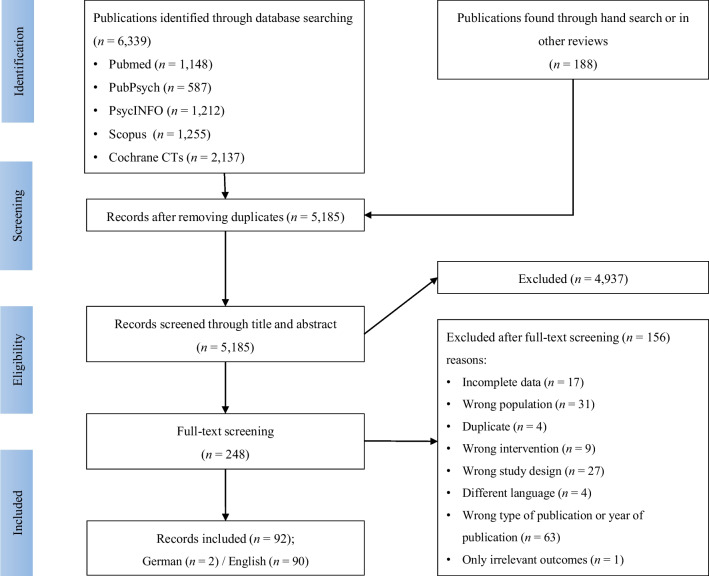
Abstract Objectives Positive effects of mindfulness-based interventions (MBIs) on occupational health have been demonstrated by several systematic review studies during the last two decades. So far, existing reviews excluded mindfulness-informed interventions (MIIs) that build on informal approaches or mixed techniques aiming at improving mindfulness indirectly. To address this research gap, the present comprehensive meta-analysis synthesizes the results of RCTs of MBIs and MIIs conducted in various workplace settings. Method A systematic literature search was conducted in five electronic databases complemented by manual search. Random-effects models were used to synthesize standardized mean differences ( SMDs ) for 25 outcomes and seven overarching categories of outcomes, and to detect various temporal effects. Meta-regressions were run to elucidate average SMDs between mindfulness intervention types and intervention and population characteristics, with the goal of detecting sources of heterogeneity and help guide the selection of the most appropriate mindfulness intervention type. Results Based on 91 eligible studies (from 92 publications), including 4927 participants and 4448 controls, the synthesis shows that MBIs and MIIs significantly improve mindfulness ( SMD = 0.43; 95%- CI [0.33;0.52]), well-being ( SMD = 0.63; 95%- CI [0.34;0.93]), mental health ( SMD = 0.67; 95%- CI [0.48;0.86]), stress ( SMD = 0.72; 95%- CI [0.54;0.90]), resilience ( SMD = 1.06; 95%- CI [−0.22;2.34]), physical health ( SMD = 0.45; 95%- CI [0.32;0.59]), and work-related factors ( SMD = 0.62; 95%- CI [0.14;1.10]). Sensitivity analyses demonstrate a tendency towards smaller effect sizes due to extreme outliers. Effect sizes are stable in short-term follow-up assessments (1-12 weeks) for most outcomes, but not for long-term follow-up assessments (13-52 weeks). Meta-regressions suggest that observable intervention characteristics (e.g., online delivery) and population characteristics (e.g., age of participants), as well as study quality, do not explain the prevalence of heterogeneity in effect sizes. Conclusions Generally effective, mindfulness interventions are a useful tool to enhance aspects of employee health. However, because of heterogeneity and risk of bias, studies aiming at high-quality data collection and thorough reporting are necessary to draw firm conclusions. Preregistration A protocol of this systematic review was registered with PROSPERO (Registration-No. CRD42020159927).
Overview
CoChat Summary
## TL;DR
This systematic review and meta-analysis of 91 randomized controlled trials found that workplace mindfulness-based and mindfulness-informed interventions generally improve mindfulness, well-being, mental health, stress, physical health, and work-related outcomes. However, the authors emphasize that high heterogeneity and generally high risk of bias limit how firmly the average effects can be interpreted.
## Key findings
- Across 91 eligible studies (92 publications), with 4927 participants in intervention arms and 4448 controls, interventions significantly improved all seven pooled outcome categories.
- Post-intervention pooled effects were small to medium for mindfulness (SMD = 0.43), well-being (SMD = 0.63), mental health (SMD = 0.67), stress (SMD = 0.72), physical health (SMD = 0.45), and work-related factors (SMD = 0.62); resilience showed a large but not clearly significant effect (SMD = 1.06, 95% CI [−0.22; 2.34]).
- Short-term follow-up effects remained significant for mindfulness (SMD = 0.53), well-being (0.44), mental health (0.56), stress (0.61), and physical health (0.43), but long-term follow-up effects turned nonsignificant for well-being, subjective mental health, and work-related factors.
- Meta-regressions found no systematic superiority of mindfulness-based over mindfulness-informed interventions overall, though MBSR courses appeared more effective than other formats for some outcomes; online delivery and additional self-practice material did not change effect sizes.
## Methods
- Systematic review and meta-analysis of randomized controlled trials of workplace mindfulness interventions, registered in PROSPERO (CRD42020159927) and reported per PRISMA 2020.
- Search of PubMed, PubPsych, PsycInfo, Scopus, and Cochrane CENTRAL in November 2019, plus manual searches; included individually randomized, English- or German-language peer-reviewed studies from January 2005 to November 2019 involving working adults and workplace-initiated interventions.
- Random-effects meta-analyses estimated standardized mean differences for 25 outcomes grouped into seven categories, with sensitivity analyses for outliers and meta-regressions on intervention and population characteristics (e.g., delivery mode, duration, age, sex, control group).
## Limitations
- The paper states that heterogeneity was large for almost all outcomes, limiting the validity of overall SMDs and making firm conclusions difficult.
- Risk of bias was generally high in the included studies, except in two studies; the authors say this limits the strength of evidence.
- The text makes evident that many analyses relied on a relatively small number of studies for some outcomes and follow-up periods, and some specific outcomes could not be analyzed or were only weakly supported; this is an evident limitation from the reported data.
Model-written summary. Check it against the paper before relying on it.
Integrity signals
Registry
Cites
Statistics
Figures
Verification
Claims the paper makes
7 Valid · 1 Not valid · 3 Not checked · 120 Own results and interpretations
The cited sources support only part of this claim — read each source’s verdict below.
In the paper
“Systematic reviews and meta-analyses of mindfulness studies in the work context have demonstrated that both deficit-oriented parameters, such as burnout and depression, as well as resource-oriented parameters, such as job satisfaction and work performance, can be improved through mindfulness-based programs (Bartlett et al., 2019; Lomas et al., 2019; Richardson & Rothstein, 2008; Vonderlin et al.,”
§ Mindfulness-Based and Mindfulness-Informed Interventions at the Workplace: A Systematic Review and Meta-Regression Analysis of RCTs > Abstract > Supplementary Information
What the sources say
- Partly supportedcites Bartlett et al., 2019 matched to “A systematic review and meta-analysis of workplace mindfulness training randomized controlled trials.” (2019) sourceExperimental — accuracy not yet measured
The Results of the Meta-Analysis (page unavailable) report an initial reduction in depressive symptoms, but the Discussion says it became non-significant after accounting for potential publication bias. Burnout results were not significant, and the Conclusions say improved work performance is not yet supported by the evidence. The retrieved passages do not establish improved job satisfaction; the paper discusses life satisfaction, which is a different outcome. (LLM, conf=0.90)
- Partly supportedcites Lomas et al., 2019 matched to “Mindfulness-based interventions in the workplace: An inclusive systematic review and meta-analysis of their impact upon wellbeing” (2019) sourceExperimental — accuracy not yet measured
The Discussion (page unavailable) reports favorable findings for burnout and job performance, but says the effect on depression did not reach statistical significance. The paper does not report an improvement in job satisfaction; its outcomes include life satisfaction, which is different. (LLM, conf=0.88)
- Partly supportedcites Vonderlin et al., 2020 matched to “Mindfulness-Based Programs in the Workplace: a Meta-Analysis of Randomized Controlled Trials” (2020) sourceExperimental — accuracy not yet measured
The Implications for Practice section (page unavailable) reports evidence that workplace mindfulness-based programs reduce burnout and subsyndromal symptoms, a category that includes depression, and preliminary evidence that they improve job satisfaction. But the same section says performance and productivity measures yielded no robust significant results, so the claim overstates the evidence for improved work performance. (LLM, conf=0.90)
boostedstates a cause- Asserted: passes — The authors put it forward as true.
- Checkable: passes — It can be checked against evidence.
- Load-bearing: passes — The paper’s conclusions depend on it.
- Based: passes — The paper gives a reason why it holds.
- Partly supported
A result the paper reports from its own data — it cites no other source for it, so there is none to check. The quote shows it is in the paper.
In the paper
“Sensitivity analyses demonstrate a tendency towards smaller effect sizes due to extreme outliers.”
§ Mindfulness-Based and Mindfulness-Informed Interventions at the Workplace: A Systematic Review and Meta-Regression Analysis of RCTs > Abstract > Results
boostedstates a cause- Asserted: passes — The authors put it forward as true.
- Checkable: passes — It can be checked against evidence.
- Load-bearing: unclear — It is unclear whether the paper’s conclusions depend on it.
- Based: passes — The paper gives a reason why it holds.
A result the paper reports from its own data — it cites no other source for it, so there is none to check. The quote shows it is in the paper.
In the paper
“stress (SMD = 0.72; 95%-CI [0.54;0.90])”
- Also stated in: § Average SMD Table 2 shows the results of the average SMD calculations for post-intervention measures. Forest plots can be found in Supplementary file S6. Average SMDs were statistically significant for all seven pooled outcome categories. For mindfulness (k = 39, SMD = 0.43, 95%-CI [0.33,0.52], I2 = 98.8%), well-being (k = 35, SMD = 0.63, 95%-CI [0.34,0.93], I2 = 98.9%), mental health (k = 68, SMD = 0.67, 95%-CI [0.48,0.86], I2 = 99.3%), stress (k = 59, SMD = 0.72, 95%-CI [0.54,0.90], I2 = 98.9%), physical health (k = 37, SMD = 0.45, 95%-CI [0.32,0.59], I2 = 99.6%), and work-related factors (k = 29, SMD = 0.62, 95%-CI [0.14,1.10], I2 = 99.1%), we estimated small to medium average effects, which are statistically significant at p < 0.001. For resilience, with a small number of studies (k = 8, SMD = 1.06, 95%-CI [− 0.22,2.34], I2 = 98.8%), we obtained a large average SMD, which was, however, hardly statistically significant. The SMD results in the subcategories are mixed and can be found in Table 2. Small to medium effect sizes were found for life satisfaction (k = 10, SMD = 0.40, 95%-CI [0.15,0.66], I2 = 95.5%), self-compassion (k = 5, SMD = 0.66, 95%-CI [0.18,1.13], I2 = 93.2%), subjective well-being (k = 8, SMD = 0.51, 95%-CI [0.14, 0.89], I2 = 94.0%), affect (k = 14, SMD = 0.93, 95%-CI [0.31, 1.54], I2 = 99.6%), anxiety (k = 23, SMD = 0.53, 95%-CI [0.31,0.74, I2 = 97.8%), burnout (k = 24, SMD = 0.70, 95%-CI [0.33,1.07], I2 = 99.0%), depression (k = 22, SMD = 0.51, 95%-CI [0.29,0.73], I2 = 98.7%), sleep (k = 15, SMD = 0.46, 95%-CI [0.22,0.70], I2 = 98.7%), subjective mental health (k = 15, SMD = 0.60, 95%-CI [0.34,0.85], I2 = 98.7%), heart rate variability (k = 7, SMD = 0.46, 95%-CI [0.15,0.78], I2 = 99.0%), pain (k = 10, SMD = 0.31, 95%-CI [0.11,0.52], I2 = 94.9%), subjective physical health (k = 25, SMD = 0.40, 95%-CI [0.30,0.50], I2 = 96.2%), job satisfaction (k = 20, SMD = 0.47, 95%-CI [0.25,0.68], I2 = 98.6%), and productivity (k = 6, SMD = 0.27, 95%-CI [0.18,0.36], I2 = 40.1%). Smaller or nonsignificant average effect sizes were found for relaxation, self-efficacy, psychological inflexibility, blood pressure, heart rate, absenteeism, and work engagement. The number of these studies, however, has been relatively small (k < 9) compared to the numbers of studies that analyzed the outcomes with small to medium significant effect sizes. Notable is a high level of heterogeneity and large prediction intervals for all outcomes except productivity. In addition, Forest plots showed that some studies have extremely large SMDs, while others have very small effect sizes. Therefore, the average results should be interpreted with caution. Results of sensitivity analyses and meta-regressions are discussed below. Less than half of the studies analyzed outcomes between 1 and 12 weeks after the end of the intervention (Table 3). For the pooled categories mindfulness (k = 11, SMD = 0.53, 95%-CI [0.27,0.80], I2 = 98.3%), well-being (k = 11, SMD = 0.44, 95%-CI [0.30,0.58], I2 = 93.3%), mental health (k = 16, SMD = 0.56, 95%-CI [0.24,0,87], I2 = 99.2%), stress (k = 17, SMD = 0.61, 95%-CI [0.34,0.89], I2 = 99.1%), and physical health (k = 8, SMD = 0.43, 95%-CI [0.14,0.72], I2 = 91.6%), the average SMDs are statistically significant and of small to medium size. Small to medium average SMDs for the subcategories with at least four studies were found for burnout (k = 10, SMD = 0.43, 95%-CI [0.22,0.64], I2 = 93.5%), subjective mental health (k = 5, SMD = 0.55, 95%-CI [− 0.14,1.24], I2 = 90.0%), and subjective physical health (k = 6, SMD = 0.50, 95%-CI [0.07,0.92], I2 = 92.3%). Nonsignificant effect sizes were obtained for depression, job satisfaction, and pooled work-related factors. Average SMDs for long-term follow-ups could only be estimated for a small set of outcomes as the number of studies collecting data after 13 or more weeks was too small (Table 4). Average SMDs for pooled well-being factors and subjective physical health turned nonsignificant, while pooled mental health factors (k = 4, SMD = 0.21, 95%-CI [0.01,0.40], I2 = 89.4%), stress (k = 5, SMD = 0.50, 95%-CI [0.09,0.92], I2 = 92.6%), and pooled physical health factors (k = 4, SMD = 0.33, 95%-CI [0.13,0.54], I2 = 67.3%) have been found to have small and significant effect sizes. A high level of heterogeneity is also present here. · plain
“stress (k = 59, SMD = 0.72, 95%-CI [0.54,0.90], I2 = 98.9%)”
§ Mindfulness-Based and Mindfulness-Informed Interventions at the Workplace: A Systematic Review and Meta-Regression Analysis of RCTs > Abstract > Results
plainstates a cause- Asserted: passes — The authors put it forward as true.
- Checkable: passes — It can be checked against evidence.
- Load-bearing: passes — The paper’s conclusions depend on it.
- Based: passes — The paper gives a reason why it holds.
- Also stated in: § Average SMD Table 2 shows the results of the average SMD calculations for post-intervention measures. Forest plots can be found in Supplementary file S6. Average SMDs were statistically significant for all seven pooled outcome categories. For mindfulness (k = 39, SMD = 0.43, 95%-CI [0.33,0.52], I2 = 98.8%), well-being (k = 35, SMD = 0.63, 95%-CI [0.34,0.93], I2 = 98.9%), mental health (k = 68, SMD = 0.67, 95%-CI [0.48,0.86], I2 = 99.3%), stress (k = 59, SMD = 0.72, 95%-CI [0.54,0.90], I2 = 98.9%), physical health (k = 37, SMD = 0.45, 95%-CI [0.32,0.59], I2 = 99.6%), and work-related factors (k = 29, SMD = 0.62, 95%-CI [0.14,1.10], I2 = 99.1%), we estimated small to medium average effects, which are statistically significant at p < 0.001. For resilience, with a small number of studies (k = 8, SMD = 1.06, 95%-CI [− 0.22,2.34], I2 = 98.8%), we obtained a large average SMD, which was, however, hardly statistically significant. The SMD results in the subcategories are mixed and can be found in Table 2. Small to medium effect sizes were found for life satisfaction (k = 10, SMD = 0.40, 95%-CI [0.15,0.66], I2 = 95.5%), self-compassion (k = 5, SMD = 0.66, 95%-CI [0.18,1.13], I2 = 93.2%), subjective well-being (k = 8, SMD = 0.51, 95%-CI [0.14, 0.89], I2 = 94.0%), affect (k = 14, SMD = 0.93, 95%-CI [0.31, 1.54], I2 = 99.6%), anxiety (k = 23, SMD = 0.53, 95%-CI [0.31,0.74, I2 = 97.8%), burnout (k = 24, SMD = 0.70, 95%-CI [0.33,1.07], I2 = 99.0%), depression (k = 22, SMD = 0.51, 95%-CI [0.29,0.73], I2 = 98.7%), sleep (k = 15, SMD = 0.46, 95%-CI [0.22,0.70], I2 = 98.7%), subjective mental health (k = 15, SMD = 0.60, 95%-CI [0.34,0.85], I2 = 98.7%), heart rate variability (k = 7, SMD = 0.46, 95%-CI [0.15,0.78], I2 = 99.0%), pain (k = 10, SMD = 0.31, 95%-CI [0.11,0.52], I2 = 94.9%), subjective physical health (k = 25, SMD = 0.40, 95%-CI [0.30,0.50], I2 = 96.2%), job satisfaction (k = 20, SMD = 0.47, 95%-CI [0.25,0.68], I2 = 98.6%), and productivity (k = 6, SMD = 0.27, 95%-CI [0.18,0.36], I2 = 40.1%). Smaller or nonsignificant average effect sizes were found for relaxation, self-efficacy, psychological inflexibility, blood pressure, heart rate, absenteeism, and work engagement. The number of these studies, however, has been relatively small (k < 9) compared to the numbers of studies that analyzed the outcomes with small to medium significant effect sizes. Notable is a high level of heterogeneity and large prediction intervals for all outcomes except productivity. In addition, Forest plots showed that some studies have extremely large SMDs, while others have very small effect sizes. Therefore, the average results should be interpreted with caution. Results of sensitivity analyses and meta-regressions are discussed below. Less than half of the studies analyzed outcomes between 1 and 12 weeks after the end of the intervention (Table 3). For the pooled categories mindfulness (k = 11, SMD = 0.53, 95%-CI [0.27,0.80], I2 = 98.3%), well-being (k = 11, SMD = 0.44, 95%-CI [0.30,0.58], I2 = 93.3%), mental health (k = 16, SMD = 0.56, 95%-CI [0.24,0,87], I2 = 99.2%), stress (k = 17, SMD = 0.61, 95%-CI [0.34,0.89], I2 = 99.1%), and physical health (k = 8, SMD = 0.43, 95%-CI [0.14,0.72], I2 = 91.6%), the average SMDs are statistically significant and of small to medium size. Small to medium average SMDs for the subcategories with at least four studies were found for burnout (k = 10, SMD = 0.43, 95%-CI [0.22,0.64], I2 = 93.5%), subjective mental health (k = 5, SMD = 0.55, 95%-CI [− 0.14,1.24], I2 = 90.0%), and subjective physical health (k = 6, SMD = 0.50, 95%-CI [0.07,0.92], I2 = 92.3%). Nonsignificant effect sizes were obtained for depression, job satisfaction, and pooled work-related factors. Average SMDs for long-term follow-ups could only be estimated for a small set of outcomes as the number of studies collecting data after 13 or more weeks was too small (Table 4). Average SMDs for pooled well-being factors and subjective physical health turned nonsignificant, while pooled mental health factors (k = 4, SMD = 0.21, 95%-CI [0.01,0.40], I2 = 89.4%), stress (k = 5, SMD = 0.50, 95%-CI [0.09,0.92], I2 = 92.6%), and pooled physical health factors (k = 4, SMD = 0.33, 95%-CI [0.13,0.54], I2 = 67.3%) have been found to have small and significant effect sizes. A high level of heterogeneity is also present here. · plain
A result the paper reports from its own data — it cites no other source for it, so there is none to check. The quote shows it is in the paper.
In the paper
“the synthesis shows that MBIs and MIIs significantly improve mindfulness (SMD = 0.43; 95%-CI [0.33;0.52])”
- Also stated in: § Average SMD Table 2 shows the results of the average SMD calculations for post-intervention measures. Forest plots can be found in Supplementary file S6. Average SMDs were statistically significant for all seven pooled outcome categories. For mindfulness (k = 39, SMD = 0.43, 95%-CI [0.33,0.52], I2 = 98.8%), well-being (k = 35, SMD = 0.63, 95%-CI [0.34,0.93], I2 = 98.9%), mental health (k = 68, SMD = 0.67, 95%-CI [0.48,0.86], I2 = 99.3%), stress (k = 59, SMD = 0.72, 95%-CI [0.54,0.90], I2 = 98.9%), physical health (k = 37, SMD = 0.45, 95%-CI [0.32,0.59], I2 = 99.6%), and work-related factors (k = 29, SMD = 0.62, 95%-CI [0.14,1.10], I2 = 99.1%), we estimated small to medium average effects, which are statistically significant at p < 0.001. For resilience, with a small number of studies (k = 8, SMD = 1.06, 95%-CI [− 0.22,2.34], I2 = 98.8%), we obtained a large average SMD, which was, however, hardly statistically significant. The SMD results in the subcategories are mixed and can be found in Table 2. Small to medium effect sizes were found for life satisfaction (k = 10, SMD = 0.40, 95%-CI [0.15,0.66], I2 = 95.5%), self-compassion (k = 5, SMD = 0.66, 95%-CI [0.18,1.13], I2 = 93.2%), subjective well-being (k = 8, SMD = 0.51, 95%-CI [0.14, 0.89], I2 = 94.0%), affect (k = 14, SMD = 0.93, 95%-CI [0.31, 1.54], I2 = 99.6%), anxiety (k = 23, SMD = 0.53, 95%-CI [0.31,0.74, I2 = 97.8%), burnout (k = 24, SMD = 0.70, 95%-CI [0.33,1.07], I2 = 99.0%), depression (k = 22, SMD = 0.51, 95%-CI [0.29,0.73], I2 = 98.7%), sleep (k = 15, SMD = 0.46, 95%-CI [0.22,0.70], I2 = 98.7%), subjective mental health (k = 15, SMD = 0.60, 95%-CI [0.34,0.85], I2 = 98.7%), heart rate variability (k = 7, SMD = 0.46, 95%-CI [0.15,0.78], I2 = 99.0%), pain (k = 10, SMD = 0.31, 95%-CI [0.11,0.52], I2 = 94.9%), subjective physical health (k = 25, SMD = 0.40, 95%-CI [0.30,0.50], I2 = 96.2%), job satisfaction (k = 20, SMD = 0.47, 95%-CI [0.25,0.68], I2 = 98.6%), and productivity (k = 6, SMD = 0.27, 95%-CI [0.18,0.36], I2 = 40.1%). Smaller or nonsignificant average effect sizes were found for relaxation, self-efficacy, psychological inflexibility, blood pressure, heart rate, absenteeism, and work engagement. The number of these studies, however, has been relatively small (k < 9) compared to the numbers of studies that analyzed the outcomes with small to medium significant effect sizes. Notable is a high level of heterogeneity and large prediction intervals for all outcomes except productivity. In addition, Forest plots showed that some studies have extremely large SMDs, while others have very small effect sizes. Therefore, the average results should be interpreted with caution. Results of sensitivity analyses and meta-regressions are discussed below. Less than half of the studies analyzed outcomes between 1 and 12 weeks after the end of the intervention (Table 3). For the pooled categories mindfulness (k = 11, SMD = 0.53, 95%-CI [0.27,0.80], I2 = 98.3%), well-being (k = 11, SMD = 0.44, 95%-CI [0.30,0.58], I2 = 93.3%), mental health (k = 16, SMD = 0.56, 95%-CI [0.24,0,87], I2 = 99.2%), stress (k = 17, SMD = 0.61, 95%-CI [0.34,0.89], I2 = 99.1%), and physical health (k = 8, SMD = 0.43, 95%-CI [0.14,0.72], I2 = 91.6%), the average SMDs are statistically significant and of small to medium size. Small to medium average SMDs for the subcategories with at least four studies were found for burnout (k = 10, SMD = 0.43, 95%-CI [0.22,0.64], I2 = 93.5%), subjective mental health (k = 5, SMD = 0.55, 95%-CI [− 0.14,1.24], I2 = 90.0%), and subjective physical health (k = 6, SMD = 0.50, 95%-CI [0.07,0.92], I2 = 92.3%). Nonsignificant effect sizes were obtained for depression, job satisfaction, and pooled work-related factors. Average SMDs for long-term follow-ups could only be estimated for a small set of outcomes as the number of studies collecting data after 13 or more weeks was too small (Table 4). Average SMDs for pooled well-being factors and subjective physical health turned nonsignificant, while pooled mental health factors (k = 4, SMD = 0.21, 95%-CI [0.01,0.40], I2 = 89.4%), stress (k = 5, SMD = 0.50, 95%-CI [0.09,0.92], I2 = 92.6%), and pooled physical health factors (k = 4, SMD = 0.33, 95%-CI [0.13,0.54], I2 = 67.3%) have been found to have small and significant effect sizes. A high level of heterogeneity is also present here. · plain
“For mindfulness (k = 39, SMD = 0.43, 95%-CI [0.33,0.52], I2 = 98.8%)”
§ Mindfulness-Based and Mindfulness-Informed Interventions at the Workplace: A Systematic Review and Meta-Regression Analysis of RCTs > Abstract > Results
plainstates a cause- Asserted: passes — The authors put it forward as true.
- Checkable: passes — It can be checked against evidence.
- Load-bearing: passes — The paper’s conclusions depend on it.
- Based: passes — The paper gives a reason why it holds.
- Also stated in: § Average SMD Table 2 shows the results of the average SMD calculations for post-intervention measures. Forest plots can be found in Supplementary file S6. Average SMDs were statistically significant for all seven pooled outcome categories. For mindfulness (k = 39, SMD = 0.43, 95%-CI [0.33,0.52], I2 = 98.8%), well-being (k = 35, SMD = 0.63, 95%-CI [0.34,0.93], I2 = 98.9%), mental health (k = 68, SMD = 0.67, 95%-CI [0.48,0.86], I2 = 99.3%), stress (k = 59, SMD = 0.72, 95%-CI [0.54,0.90], I2 = 98.9%), physical health (k = 37, SMD = 0.45, 95%-CI [0.32,0.59], I2 = 99.6%), and work-related factors (k = 29, SMD = 0.62, 95%-CI [0.14,1.10], I2 = 99.1%), we estimated small to medium average effects, which are statistically significant at p < 0.001. For resilience, with a small number of studies (k = 8, SMD = 1.06, 95%-CI [− 0.22,2.34], I2 = 98.8%), we obtained a large average SMD, which was, however, hardly statistically significant. The SMD results in the subcategories are mixed and can be found in Table 2. Small to medium effect sizes were found for life satisfaction (k = 10, SMD = 0.40, 95%-CI [0.15,0.66], I2 = 95.5%), self-compassion (k = 5, SMD = 0.66, 95%-CI [0.18,1.13], I2 = 93.2%), subjective well-being (k = 8, SMD = 0.51, 95%-CI [0.14, 0.89], I2 = 94.0%), affect (k = 14, SMD = 0.93, 95%-CI [0.31, 1.54], I2 = 99.6%), anxiety (k = 23, SMD = 0.53, 95%-CI [0.31,0.74, I2 = 97.8%), burnout (k = 24, SMD = 0.70, 95%-CI [0.33,1.07], I2 = 99.0%), depression (k = 22, SMD = 0.51, 95%-CI [0.29,0.73], I2 = 98.7%), sleep (k = 15, SMD = 0.46, 95%-CI [0.22,0.70], I2 = 98.7%), subjective mental health (k = 15, SMD = 0.60, 95%-CI [0.34,0.85], I2 = 98.7%), heart rate variability (k = 7, SMD = 0.46, 95%-CI [0.15,0.78], I2 = 99.0%), pain (k = 10, SMD = 0.31, 95%-CI [0.11,0.52], I2 = 94.9%), subjective physical health (k = 25, SMD = 0.40, 95%-CI [0.30,0.50], I2 = 96.2%), job satisfaction (k = 20, SMD = 0.47, 95%-CI [0.25,0.68], I2 = 98.6%), and productivity (k = 6, SMD = 0.27, 95%-CI [0.18,0.36], I2 = 40.1%). Smaller or nonsignificant average effect sizes were found for relaxation, self-efficacy, psychological inflexibility, blood pressure, heart rate, absenteeism, and work engagement. The number of these studies, however, has been relatively small (k < 9) compared to the numbers of studies that analyzed the outcomes with small to medium significant effect sizes. Notable is a high level of heterogeneity and large prediction intervals for all outcomes except productivity. In addition, Forest plots showed that some studies have extremely large SMDs, while others have very small effect sizes. Therefore, the average results should be interpreted with caution. Results of sensitivity analyses and meta-regressions are discussed below. Less than half of the studies analyzed outcomes between 1 and 12 weeks after the end of the intervention (Table 3). For the pooled categories mindfulness (k = 11, SMD = 0.53, 95%-CI [0.27,0.80], I2 = 98.3%), well-being (k = 11, SMD = 0.44, 95%-CI [0.30,0.58], I2 = 93.3%), mental health (k = 16, SMD = 0.56, 95%-CI [0.24,0,87], I2 = 99.2%), stress (k = 17, SMD = 0.61, 95%-CI [0.34,0.89], I2 = 99.1%), and physical health (k = 8, SMD = 0.43, 95%-CI [0.14,0.72], I2 = 91.6%), the average SMDs are statistically significant and of small to medium size. Small to medium average SMDs for the subcategories with at least four studies were found for burnout (k = 10, SMD = 0.43, 95%-CI [0.22,0.64], I2 = 93.5%), subjective mental health (k = 5, SMD = 0.55, 95%-CI [− 0.14,1.24], I2 = 90.0%), and subjective physical health (k = 6, SMD = 0.50, 95%-CI [0.07,0.92], I2 = 92.3%). Nonsignificant effect sizes were obtained for depression, job satisfaction, and pooled work-related factors. Average SMDs for long-term follow-ups could only be estimated for a small set of outcomes as the number of studies collecting data after 13 or more weeks was too small (Table 4). Average SMDs for pooled well-being factors and subjective physical health turned nonsignificant, while pooled mental health factors (k = 4, SMD = 0.21, 95%-CI [0.01,0.40], I2 = 89.4%), stress (k = 5, SMD = 0.50, 95%-CI [0.09,0.92], I2 = 92.6%), and pooled physical health factors (k = 4, SMD = 0.33, 95%-CI [0.13,0.54], I2 = 67.3%) have been found to have small and significant effect sizes. A high level of heterogeneity is also present here. · plain
A result the paper reports from its own data — it cites no other source for it, so there is none to check. The quote shows it is in the paper.
In the paper
“physical health (SMD = 0.45; 95%-CI [0.32;0.59])”
- Also stated in: § Average SMD Table 2 shows the results of the average SMD calculations for post-intervention measures. Forest plots can be found in Supplementary file S6. Average SMDs were statistically significant for all seven pooled outcome categories. For mindfulness (k = 39, SMD = 0.43, 95%-CI [0.33,0.52], I2 = 98.8%), well-being (k = 35, SMD = 0.63, 95%-CI [0.34,0.93], I2 = 98.9%), mental health (k = 68, SMD = 0.67, 95%-CI [0.48,0.86], I2 = 99.3%), stress (k = 59, SMD = 0.72, 95%-CI [0.54,0.90], I2 = 98.9%), physical health (k = 37, SMD = 0.45, 95%-CI [0.32,0.59], I2 = 99.6%), and work-related factors (k = 29, SMD = 0.62, 95%-CI [0.14,1.10], I2 = 99.1%), we estimated small to medium average effects, which are statistically significant at p < 0.001. For resilience, with a small number of studies (k = 8, SMD = 1.06, 95%-CI [− 0.22,2.34], I2 = 98.8%), we obtained a large average SMD, which was, however, hardly statistically significant. The SMD results in the subcategories are mixed and can be found in Table 2. Small to medium effect sizes were found for life satisfaction (k = 10, SMD = 0.40, 95%-CI [0.15,0.66], I2 = 95.5%), self-compassion (k = 5, SMD = 0.66, 95%-CI [0.18,1.13], I2 = 93.2%), subjective well-being (k = 8, SMD = 0.51, 95%-CI [0.14, 0.89], I2 = 94.0%), affect (k = 14, SMD = 0.93, 95%-CI [0.31, 1.54], I2 = 99.6%), anxiety (k = 23, SMD = 0.53, 95%-CI [0.31,0.74, I2 = 97.8%), burnout (k = 24, SMD = 0.70, 95%-CI [0.33,1.07], I2 = 99.0%), depression (k = 22, SMD = 0.51, 95%-CI [0.29,0.73], I2 = 98.7%), sleep (k = 15, SMD = 0.46, 95%-CI [0.22,0.70], I2 = 98.7%), subjective mental health (k = 15, SMD = 0.60, 95%-CI [0.34,0.85], I2 = 98.7%), heart rate variability (k = 7, SMD = 0.46, 95%-CI [0.15,0.78], I2 = 99.0%), pain (k = 10, SMD = 0.31, 95%-CI [0.11,0.52], I2 = 94.9%), subjective physical health (k = 25, SMD = 0.40, 95%-CI [0.30,0.50], I2 = 96.2%), job satisfaction (k = 20, SMD = 0.47, 95%-CI [0.25,0.68], I2 = 98.6%), and productivity (k = 6, SMD = 0.27, 95%-CI [0.18,0.36], I2 = 40.1%). Smaller or nonsignificant average effect sizes were found for relaxation, self-efficacy, psychological inflexibility, blood pressure, heart rate, absenteeism, and work engagement. The number of these studies, however, has been relatively small (k < 9) compared to the numbers of studies that analyzed the outcomes with small to medium significant effect sizes. Notable is a high level of heterogeneity and large prediction intervals for all outcomes except productivity. In addition, Forest plots showed that some studies have extremely large SMDs, while others have very small effect sizes. Therefore, the average results should be interpreted with caution. Results of sensitivity analyses and meta-regressions are discussed below. Less than half of the studies analyzed outcomes between 1 and 12 weeks after the end of the intervention (Table 3). For the pooled categories mindfulness (k = 11, SMD = 0.53, 95%-CI [0.27,0.80], I2 = 98.3%), well-being (k = 11, SMD = 0.44, 95%-CI [0.30,0.58], I2 = 93.3%), mental health (k = 16, SMD = 0.56, 95%-CI [0.24,0,87], I2 = 99.2%), stress (k = 17, SMD = 0.61, 95%-CI [0.34,0.89], I2 = 99.1%), and physical health (k = 8, SMD = 0.43, 95%-CI [0.14,0.72], I2 = 91.6%), the average SMDs are statistically significant and of small to medium size. Small to medium average SMDs for the subcategories with at least four studies were found for burnout (k = 10, SMD = 0.43, 95%-CI [0.22,0.64], I2 = 93.5%), subjective mental health (k = 5, SMD = 0.55, 95%-CI [− 0.14,1.24], I2 = 90.0%), and subjective physical health (k = 6, SMD = 0.50, 95%-CI [0.07,0.92], I2 = 92.3%). Nonsignificant effect sizes were obtained for depression, job satisfaction, and pooled work-related factors. Average SMDs for long-term follow-ups could only be estimated for a small set of outcomes as the number of studies collecting data after 13 or more weeks was too small (Table 4). Average SMDs for pooled well-being factors and subjective physical health turned nonsignificant, while pooled mental health factors (k = 4, SMD = 0.21, 95%-CI [0.01,0.40], I2 = 89.4%), stress (k = 5, SMD = 0.50, 95%-CI [0.09,0.92], I2 = 92.6%), and pooled physical health factors (k = 4, SMD = 0.33, 95%-CI [0.13,0.54], I2 = 67.3%) have been found to have small and significant effect sizes. A high level of heterogeneity is also present here. · plain
“physical health (k = 37, SMD = 0.45, 95%-CI [0.32,0.59], I2 = 99.6%)”
§ Mindfulness-Based and Mindfulness-Informed Interventions at the Workplace: A Systematic Review and Meta-Regression Analysis of RCTs > Abstract > Results
plainstates a cause- Asserted: passes — The authors put it forward as true.
- Checkable: passes — It can be checked against evidence.
- Load-bearing: passes — The paper’s conclusions depend on it.
- Based: passes — The paper gives a reason why it holds.
- Also stated in: § Average SMD Table 2 shows the results of the average SMD calculations for post-intervention measures. Forest plots can be found in Supplementary file S6. Average SMDs were statistically significant for all seven pooled outcome categories. For mindfulness (k = 39, SMD = 0.43, 95%-CI [0.33,0.52], I2 = 98.8%), well-being (k = 35, SMD = 0.63, 95%-CI [0.34,0.93], I2 = 98.9%), mental health (k = 68, SMD = 0.67, 95%-CI [0.48,0.86], I2 = 99.3%), stress (k = 59, SMD = 0.72, 95%-CI [0.54,0.90], I2 = 98.9%), physical health (k = 37, SMD = 0.45, 95%-CI [0.32,0.59], I2 = 99.6%), and work-related factors (k = 29, SMD = 0.62, 95%-CI [0.14,1.10], I2 = 99.1%), we estimated small to medium average effects, which are statistically significant at p < 0.001. For resilience, with a small number of studies (k = 8, SMD = 1.06, 95%-CI [− 0.22,2.34], I2 = 98.8%), we obtained a large average SMD, which was, however, hardly statistically significant. The SMD results in the subcategories are mixed and can be found in Table 2. Small to medium effect sizes were found for life satisfaction (k = 10, SMD = 0.40, 95%-CI [0.15,0.66], I2 = 95.5%), self-compassion (k = 5, SMD = 0.66, 95%-CI [0.18,1.13], I2 = 93.2%), subjective well-being (k = 8, SMD = 0.51, 95%-CI [0.14, 0.89], I2 = 94.0%), affect (k = 14, SMD = 0.93, 95%-CI [0.31, 1.54], I2 = 99.6%), anxiety (k = 23, SMD = 0.53, 95%-CI [0.31,0.74, I2 = 97.8%), burnout (k = 24, SMD = 0.70, 95%-CI [0.33,1.07], I2 = 99.0%), depression (k = 22, SMD = 0.51, 95%-CI [0.29,0.73], I2 = 98.7%), sleep (k = 15, SMD = 0.46, 95%-CI [0.22,0.70], I2 = 98.7%), subjective mental health (k = 15, SMD = 0.60, 95%-CI [0.34,0.85], I2 = 98.7%), heart rate variability (k = 7, SMD = 0.46, 95%-CI [0.15,0.78], I2 = 99.0%), pain (k = 10, SMD = 0.31, 95%-CI [0.11,0.52], I2 = 94.9%), subjective physical health (k = 25, SMD = 0.40, 95%-CI [0.30,0.50], I2 = 96.2%), job satisfaction (k = 20, SMD = 0.47, 95%-CI [0.25,0.68], I2 = 98.6%), and productivity (k = 6, SMD = 0.27, 95%-CI [0.18,0.36], I2 = 40.1%). Smaller or nonsignificant average effect sizes were found for relaxation, self-efficacy, psychological inflexibility, blood pressure, heart rate, absenteeism, and work engagement. The number of these studies, however, has been relatively small (k < 9) compared to the numbers of studies that analyzed the outcomes with small to medium significant effect sizes. Notable is a high level of heterogeneity and large prediction intervals for all outcomes except productivity. In addition, Forest plots showed that some studies have extremely large SMDs, while others have very small effect sizes. Therefore, the average results should be interpreted with caution. Results of sensitivity analyses and meta-regressions are discussed below. Less than half of the studies analyzed outcomes between 1 and 12 weeks after the end of the intervention (Table 3). For the pooled categories mindfulness (k = 11, SMD = 0.53, 95%-CI [0.27,0.80], I2 = 98.3%), well-being (k = 11, SMD = 0.44, 95%-CI [0.30,0.58], I2 = 93.3%), mental health (k = 16, SMD = 0.56, 95%-CI [0.24,0,87], I2 = 99.2%), stress (k = 17, SMD = 0.61, 95%-CI [0.34,0.89], I2 = 99.1%), and physical health (k = 8, SMD = 0.43, 95%-CI [0.14,0.72], I2 = 91.6%), the average SMDs are statistically significant and of small to medium size. Small to medium average SMDs for the subcategories with at least four studies were found for burnout (k = 10, SMD = 0.43, 95%-CI [0.22,0.64], I2 = 93.5%), subjective mental health (k = 5, SMD = 0.55, 95%-CI [− 0.14,1.24], I2 = 90.0%), and subjective physical health (k = 6, SMD = 0.50, 95%-CI [0.07,0.92], I2 = 92.3%). Nonsignificant effect sizes were obtained for depression, job satisfaction, and pooled work-related factors. Average SMDs for long-term follow-ups could only be estimated for a small set of outcomes as the number of studies collecting data after 13 or more weeks was too small (Table 4). Average SMDs for pooled well-being factors and subjective physical health turned nonsignificant, while pooled mental health factors (k = 4, SMD = 0.21, 95%-CI [0.01,0.40], I2 = 89.4%), stress (k = 5, SMD = 0.50, 95%-CI [0.09,0.92], I2 = 92.6%), and pooled physical health factors (k = 4, SMD = 0.33, 95%-CI [0.13,0.54], I2 = 67.3%) have been found to have small and significant effect sizes. A high level of heterogeneity is also present here. · plain
63 more claims
Create a free account to see all 131 claims and every source verdict.
- Probably not a substantial claim. 29
- It may state two separate claims as one. 41
- The quote only partly states this claim. 1
Citations
Cites
Statistical Power Analysis for the Behavioral Sciences
Muller, K. (1989) · Technometrics · doi:10.1080/00401706.1989.10488618 · Cited by 99,167
Bias in meta-analysis detected by a simple, graphical test
Egger, M., Smith, G. D., Schneider, M., & Minder, C. (1997) · BMJ · doi:10.1136/bmj.315.7109.629 · Cited by 56,722 · cited 1×
“Reporting bias is assessed by funnel plots including Egger’s test (Egger et al., 1997) and p -curves (Simonsohn et al., 2014) also using the dmetar package.”
Statistical Power Analysis for the Behavioral Sciences (2nd ed.).
Lachenbruch, P. A., & Cohen, J. (1989) · Journal of the American Statistical Association · doi:10.2307/2290095 · Cited by 37,395 · cited 1×
“The values determined for Hedges’ g were interpreted according to the guidance by Cohen (1988), where | g |= 0.20–0.49 is a small effect, | g |= 0.50–0.79 is a medium size effect, and | g |≥ 0.80 is a large effect.”
InfluentialBorenstein, M., Hedges, L. V., Higgins, J. P. T., & Rothstein, H. R. (2009) · doi:10.1002/9780470743386 · Cited by 14,225 · cited 1×
“We calculated Hedges’ g using post-intervention measures (Borenstein et al., 2009).”
Page, M. J., Moher, D., Bossuyt, P. M., Boutron, I., Hoffmann, T. C., Mulrow, C. D., Shamseer, L., Tetzlaff, J. M., Akl, E. A., Brennan, S. E., et al. (2021) · BMJ · doi:10.1136/bmj.n160 · Cited by 13,262
Kabat-Zinn, J. (1982) · General Hospital Psychiatry · doi:10.1016/0163-8343(82)90026-3 · Cited by 4,255 · cited 1×
“The particularly well-known “Mindfulness-Based Stress Reduction” (MBSR) program developed by Kabat-Zinn (1982), for example, is one of these methods.”
Hölzel, B. K., Lazar, S. W., Gard, T., Schuman-Olivier, Z., Vago, D. R., & Ott, U. (2011) · Perspectives on Psychological Science · doi:10.1177/1745691611419671 · Cited by 3,024 · cited 1×
“For example, improving mindfulness promotes attention regulation, body awareness, emotion regulation, and self-awareness through neurological or neurophysiological changes (Esch, 2014; Hölzel et al., 2011) beyond the well-known reduction of stress.”
Outlier and influence diagnostics for meta-analysis
Viechtbauer, W., & Cheung, M. W.-L. (2010) · Research Synthesis Methods · doi:10.1002/jrsm.11 · Cited by 2,949 · cited 1×
“For each model, influence analysis was conducted using the dmetar package (version 0.0.9000), which automatically provides leave-one-out analysis as well as influence and Baujat diagnostics as described in Viechtbauer and Cheung (2010).”
InfluentialAttention regulation and monitoring in meditation
Lutz, A., Slagter, H. A., Dunne, J. D., & Davidson, R. J. (2008) · Trends in Cognitive Sciences · doi:10.1016/j.tics.2008.01.005 · Cited by 2,659 · cited 1×
“These techniques can be defined as a family of “complex emotion-and atten-tion-regulatory trainings” that are applied to achieve a variety of goals such as the development of well-being and emotional balance (Lutz et al., 2008, p. 163).”
Meditation Programs for Psychological Stress and Well-being: A Systematic Review and Meta-analysis
Goyal, M., Singh, S., Sibinga, E. M. S., Gould, N. F., Rowland-Seymour, A., Sharma, R., Berger, Z., Sleicher, D., Maron, D. D., Shihab, H. M., et al. (2014) · JAMA Internal Medicine · doi:10.1001/jamainternmed.2013.13018 · Cited by 2,380
Research works printed but not linked: 3
- Esch, T, & Brinkhaus, B. (Eds.). (2021). Integrative Medizin und Gesundheit (1st ed.). MWV Medizinisch Wissenschaftliche Verlagsgesellschaft.
- Higgins, J., Li, T., & Deeks, J. J. (2021). Chapter 6: Choosing effect measures and computing estimates of effect. In J. Higgins, J. Thomas, Chandler, J. Cumpston, M., T. Li, M. J. Page, & V. A. Welch (Eds.), Cochrane handbook for systematic reviews of interventions: version 6.2 (updated February 2021).
- Lefebvre, C., Glanville, J., Briscoe, S., Littlewood, A., Marshall, C., Metzendorf, M.-I., Noel-Storr, A., Rader, T., Shokraneh, F., Thomas, J., & Wieland, L. (2021). Chapter 4: Searching for and selecting studies. In J. Higgins, J. Thomas, Chandler, J. Cumpston, M., T. Li, M. J. Page, & V. A. Welch (Eds.), Cochrane handbook for systematic reviews of interventions: Version 6.2 (updated February 2021).
Cited by
Fleming, W. J. (2024) · Industrial Relations Journal · doi:10.1111/irj.12418 · Cited by 211
Effectiveness of workplace interventions for health promotion
Virtanen, M., Lallukka, T. M., Elovainio, M. J., Steptoe, A., & Kivimäki, M. (2025) · The Lancet Public Health · doi:10.1016/s2468-2667(25)00095-7 · Cited by 76
“Furthermore, regarding mindfulness interventions, a comparison of individual trial overlap between the largest meta-analysis 73 and the other meta-analyses suggests that the largest meta-analysis had broader inclusion criteria, which can partly explain the observed heterogeneity (appendix pp 23–26).”
Kumprang, K., & Suriyankietkaew, S. (2024) · Administrative Sciences · doi:10.3390/admsci14060121 · Cited by 45
“…associated with developing psychological capital, such as hope and optimism (Malinowski and Lim 2015), self-e ffi cacy (Chang et al. 2004; Katan et al. 2019), and resilience (Michaelsen et al. 2023). engagement is the extent to which engagement moves from work to engagement with the organization.”
BackgroundInfluentialEsch, T., Stefano, G. B., & Michaelsen, M. M. (2024) · Stress and Health · doi:10.1002/smi.3387 · Cited by 52
Self-citationShoker, D., Desmet, L., Ledoux, N., & Héron, A. (2024) · Frontiers in Public Health · doi:10.3389/fpubh.2024.1381373 · Cited by 33
Mindfulness and technostress in the workplace: a qualitative approach
Ioannou, A. (2023) · Frontiers in Psychology · doi:10.3389/fpsyg.2023.1252187 · Cited by 51
Digital resilience interventions for healthcare workers: a systematic review
Larsson, M., Ho, D. M., Kirschner, M., Seifritz, E., & Manoliu, A. (2025) · Frontiers in Psychiatry · doi:10.3389/fpsyt.2025.1519670 · Cited by 14
Exploring an Organizational-Level Mindfulness-Based Intervention in Private Workplace Settings
Bonde, E. H., Mikkelsen, E. G., Fjorback, L. O., & Juul, L. (2024) · Mindfulness · doi:10.1007/s12671-024-02375-w · Cited by 18
“Moreover, such online formats have previously been found as effective as in-person delivered MBIs measured on mental health outcomes (Aikens et al., 2014; Michaelsen et al., 2023).”
InfluentialResilience enhancement interventions for disaster rescue workers: a systematic review
Mao, X., Suo, Y., Wei, X., & Luo, Y. (2025) · Scandinavian Journal of Trauma Resuscitation and Emergency Medicine · doi:10.1186/s13049-025-01397-0 · Cited by 25
“However, a review and meta-analysis suggest that work-related stress can be mitigated through mindfulness-based stress reduction and cognitive-behavioral training [51].”
Leka, S., & Jain, A. (2025) · SSRN Electronic Journal · doi:10.2139/ssrn.5114626 · Cited by 10
Does mindfulness matter on employee outcomes? Exploring its effects via perceived stress
Sentin, I., Camgöz, S. M., Karapınar, P. B., Aydın, E. M., & Ekmekci, Ö. T. (2025) · BMC Psychology · doi:10.1186/s40359-025-02626-y · Cited by 23
Cultivating Global Health: Exploring Mindfulness Through an Organisational Psychology Lens
Sutton, A. (2023) · Mindfulness · doi:10.1007/s12671-023-02228-y · Cited by 10
“…different approaches to training are differentially effective, with MBSR, for example, being more effective than many other types of training for improving well-being but meditation courses being more effective than other types of training for improving physical health (Michaelsen et al., 2023).”
InfluentialChristodoulou, E., Poutli, E., Andreou, D., Laoutari, S., Athanasiou, F., Kourkoutas, Y., & Koutelidakis, A. Ε. (2024) · Healthcare · doi:10.3390/healthcare13010009 · Cited by 9
“Among the most promising approaches are mindfulness and lifestyle interventions, particularly those rooted in the Mediterranean lifestyle, both of which have demonstrated the potential to improve mental and physical health outcomes in various contexts [1,2].”
Lin, L.-J., Yu, S.-P., Lin, Y., & Chen, Y. (2024) · Behavioral Sciences · doi:10.3390/bs14110980 · Cited by 7
Ullah, S., Ahmad, T., Shahzad, K., Kukreti, M., Shaukat, M. R., & Sami, A. (2025) · The Learning Organization · doi:10.1108/tlo-02-2024-0043 · Cited by 7
Meditation: A Promising Approach for Alleviating Chronic Pain
Dubey, A., & Muley, P. A. (2023) · Cureus · doi:10.7759/cureus.49244 · Cited by 10
“Increased pain tolerance can lead to improved functionality and a better quality of life [48].”
BackgroundChristodoulou, E., Dimitriadou, M.-E., Mpali, T., & Koutelidakis, A. Ε. (2025) · Psychiatry International · doi:10.3390/psychiatryint6010011 · Cited by 9
Zhang, Z. J., Lo, H. H. M., Au, A. M. L., Wong, S. Y. S., Wong, J. Y. H., Yeung, J. W. K., Lau, E. N. S., Law, R. T. C., & Cho, W. V. (2025) · Mindfulness · doi:10.1007/s12671-025-02594-9 · Cited by 8
“Mindfulness-based intervention (MBI) has emerged as a unique approach in mental health and social care (Goldberg et al., 2018; Johnson et al., 2023; Michaelsen et al., 2023).”
Empathy and Compassion as Fundamental Elements of Social Cognition
Singha, R. (2024) · Advances in medical technologies and clinical practice book series · doi:10.4018/979-8-3693-1265-0.ch003 · Cited by 3
From Clinic to Community: A Public Health Approach to Mindfulness
Medvedev, O. N., & Krägeloh, C. U. (2025) · Mindfulness · doi:10.1007/s12671-025-02550-7 · Cited by 3
“Mindfulness has therefore increasingly found its way into everyday settings including schools (Roeser et al., 2023) and workplaces (Michaelsen et al., 2023), which prompts a timely question: Can mindfulness effectively scale up to address broader public health challenges?”
Schiek, H., Esch, T., Michaelsen, M. M., & Hoetger, C. (2024) · Addiction Science & Clinical Practice · doi:10.1186/s13722-024-00483-5 · Cited by 6
“As a further development of CBT, mindfulness-informed interventions (MIIs) have emerged within the so-called third-wave generation of CBT treatments [30, 31].”
Self-citationJackson, J. G., & Woolmer, C. D. (2024) · Mindfulness · doi:10.1007/s12671-024-02357-y · Cited by 3
“In a recent meta-analysis of 91 eligible randomised controlled trial (RCT) studies, Michaelsen et al. (2023) note that mindfulness-based interventions (MBIs) positively and significantly influence life satisfaction, self-compassion, subjective well-being, physical health, job satisfaction, and…”
Chiu, D. T., Fein, F., Thompson‐Lastad, A., Hartogensis, W., Christian, S. N., Ekman, E., & Chao, M. T. (2025) · Global Advances in Integrative Medicine and Health · doi:10.1177/27536130251347913 · Cited by 2
“8,28,59 Inter-estingly, however, our mixed methods fi ndings were not completely aligned, with some discordance noted with outcome domain, elective arm (12-week vs 6-week), and di-mension (quantitative vs qualitative).”
Özdemir, Ö. (2026) · Archives of Psychiatric Nursing · doi:10.1016/j.apnu.2026.152055 · Cited by 5
Khanal, M. K., Saunders, P., Nguyen, K., Hatmi, M. A., Asiri, H. M. A., Shahin, W., Millar, R., Karimi, L., & de Courten, B. V. (2026) · Health Psychology Review · doi:10.1080/17437199.2026.2652892 · Cited by 4
Uhl, J., Schönfeld, S., Meyer, L., Reus, A., Neumann, C., Langer, L., Michaelsen, M. M., & Esch, T. (2025) · Das Gesundheitswesen · doi:10.1055/a-2517-8263 · Cited by 4
Self-citationPeters, E. K., Sim, S. S.-H., Reb, J. M., Young, J. H., & Young, M. E. (2025) · Mindfulness · doi:10.1007/s12671-025-02581-0 · Cited by 1
“MBIs are increasingly applied in workplace settings to enhance well-being and as a proactive strategy for positive personal development (Michaelsen et al., 2023).”
Time Flow Mindfulness Questionnaire (TFMQ)
Петитта, Л., Sinato, E., Giannelli, M. T., et al. (2025) · Springer eBooks · doi:10.1007/978-3-031-47219-0_111 · Cited by 1
Ruiz‐Íñiguez, R., & de la Hera, C. M. A. (2026) · Cogent Psychology · doi:10.1080/23311908.2026.2626601 · Cited by 1
Denkova, E., Tardibuono, T. K., Zanesco, A. P., Montenegro, C. S., Rooks, J. D., Rogers, S. L., & Jha, A. P. (2026) · Mindfulness · doi:10.1007/s12671-026-02786-x · Cited by 2
Qu, P., Li, F.-B., Zhou, Y.-W., & Pan, F. (2026) · Behavioral Sciences · doi:10.3390/bs16040553 · Cited by 1
“A large body of cross-sectional and longitudinal studies has shown a positive correlation between mindfulness training and subjective well-being (Karakurt & Durmaz, 2025; Ma & Xiang, 2023; Michaelsen et al., 2023).”
Bansal, G., Punia, B. K., & Singh, M. (2025) · International Journal of Systems Assurance Engineering and Management · doi:10.1007/s13198-025-02828-y · Cited by 4
“In addition, by integrating contemplative traditions with neuroscience , the study provides a comprehensive understanding of how workplace mindfulness may influence prosocial service behavior, fostering a positive work environment (Weder 2022; Michaelsen et al. 2023).”
Chen, H.-P., & Kuo-Chung, H. (2025) · International Journal of Business and Social Science · doi:10.30845/ijbss.v16p15
The Physiological Basis of Mind-Body Medicine
Figura, M., & Esch, T. (2023) · THE MIND - Bulletin on Mind-Body Medicine Research · doi:10.61936/themind/202307021
Self-citationThe BERN Framework of Mind-Body Medicine
Esch, T., & Stefano, G. B. (2023) · THE MIND - Bulletin on Mind-Body Medicine Research · doi:10.61936/themind/202307023
Self-citationMindful Awareness Related to Working Memory Capacity and Response Inhibition
McClain, M. L., Armstrong, S. L., et al. (2024) · International Journal of Arts Humanities & Social Science · doi:10.56734/ijahss.v5n8a5
Esch, T., & Michaelsen, M. M. (2024) · Zeitschrift für Komplementärmedizin · doi:10.1055/a-2463-8142 · Cited by 2
Self-citationTime Flow Mindfulness Questionnaire (TFMQ)
Петитта, Л., Sinato, E., Giannelli, M. T., et al. (2025) · Springer eBooks · doi:10.1007/978-3-030-77644-2_111-1
Kloos, T., Elßner, A. C., Berlin, P., Rief, W., & Riecke, J. (2025) · Mindfulness · doi:10.1007/s12671-025-02621-9
“In contrast to the EG, who practiced mindfulness-based interventions primarily aiming to improve present-moment awareness, the aCG practiced mindfulness-informed interventions (progressive muscle relaxation) that primarily promote stress reduction (Michaelsen et al., 2023).”
Cerrahi Hastalarında Bilinçli Farkındalık Uygulamalarının Perioperatif Süreçteki Etkileri
Yalçın, C., Muslu, İ. E., & Ongün, P. (2025) · Balıkesir Medical Journal · doi:10.33716/bmedj.1745918 · Cited by 1
Ram, E., Balachandar, R., & Soundararajan, S. (2025) · Research Square · doi:10.21203/rs.3.rs-7328822/v1 · Cited by 1
Michaelsen, M. M., Uhl, J., Mindrup, L., Neumann, C., Langer, L., & Esch, T. (2025) · BMC Geriatrics · doi:10.1186/s12877-025-06223-x · Cited by 1
“It has been researched extensively [12, 16–18] and is utilized to complement medical and psychological treatments, showing positive effects on psychological well-being and physical health in many different (patient) populations [19].”
Self-citationA study on the construction of sustainable workplace health indicators in enterprises
Chen, Y., Ciou, B.-H., Chu, H.-C., & Chien, T.-F. (2025) · International Journal of Healthcare Management · doi:10.1080/20479700.2025.2573302 · Cited by 1
Askey‐Jones, R., Gaskell, C., & Johnstone, O. K. (2025) · The Cognitive Behaviour Therapist · doi:10.1017/s1754470x25100408
“…has been a growing body of evidence that mindfulness can increase the wellbeing of employees, job satisfaction, productivity and reduce absenteeism (Michaelsen et al ., 2023; Vonderlin et al ., 2020); however, this has not specifically focused upon employees with recurrent depression and the focus…”
Mindfulness and Psychological Growth
Wajanatinapart, P. (2025) · Springer eBooks · doi:10.1007/978-981-95-3133-2_12
Michaelsen, M. M., Langer, L., Sparby, T., & Esch, T. (2026) · Acta Psychologica · doi:10.1016/j.actpsy.2026.106225 · Cited by 1
Self-citationMurphy, T., Thakral, M., Lincoln, N. M., & Brooke, W. (2026) · Holistic Nursing Practice · doi:10.1097/hnp.0000000000000780 · Cited by 1
When Therapy Meets Bars – Delivering Psychosocial Mental Health Care in Indian Prisons
Singh, A., & Vaya, S. L. (2025) · Journal of Contemporary Behavioural and Social Research · doi:10.4103/jcbsr.jcbsr_22_25
Mindfulness-based stress reduction for functional neurological disorder: A feasibility study
Michaelis, R., Meibert, J., Alimov, N., Kleinschnitz, C., & Popkirov, S. (2026) · Journal of Psychosomatic Research · doi:10.1016/j.jpsychores.2026.112581
Moszeik, E. N., & El-Mahdy, C. (2026) · Mindfulness · doi:10.1007/s12671-026-02773-2
Ribeiro, M., Desai, T., Tonks, A., Kumaran, N., Bartlett, S. K., Tari, B., Paschke, S., Watson, E., Jones, I. L., Tachtsidis, I., et al. (2026) · Research Square · doi:10.21203/rs.3.rs-9148366/v1
Rueda-Sánchez, S. I., Navarro‐Gil, M., Aguilar‐Latorre, A., Barceló‐Soler, A., & García‐Campayo, J. (2026) · BMC Psychology · doi:10.1186/s40359-026-04493-7
Mindfulness Meditation Yoga Mantra and Spiritual Practices for Mental Well-Being
Ohri, K., & Dutta, H. (2026) · IGI Global eBooks · doi:10.4018/979-8-3373-4187-3.ch002 · Cited by 1
Trusculescu, L.-M., Kiș, A. M., Popovici, R. A., Sălcudean, A., Pitic, D. E., Feher, A., Enache, A., & Olariu, I. (2026) · Digital · doi:10.3390/digital6020034
Between acceptance and change – a qualitative study about how leaders deal with bureaucracy
Uhl, J., Michaelsen, M. M., Hertzberg, J., Kriegesmann, M., Wallkamm, M., & Esch, T. (2026) · Frontiers in Psychology · doi:10.3389/fpsyg.2026.1739144
Self-citationLeveraging AI deployment and mindful workplace on employee body and mental wellness
Shahreki, J., Kalsoom, G., & Abbas, Z. (2026) · Cogent Business & Management · doi:10.1080/23311975.2026.2674264 · Cited by 1
Sánchez‐Cardona, I., Pérez, Y. A., Cepeda-Hernández, S., Rivera, C. R., Rivera, J., Cintrón, J. F., Adames, C., & Sánchez-Cesáreo, M. (2026) · Journal of Evidence-Based Social Work · doi:10.1080/26408066.2026.2685132
Agustina, H., Abdullah, N. A., Arshad, R., & Omar, A. R. C. (2026) · Pertanika Journal of Youth and Community Development · doi:10.47836/pjycd.1.1.07
Supervisors in Residential Care for Older Adults, Compassion Fatigue, and Leadership Self-Efficacy
Pandya, S. P. (2026) · Research on Social Work Practice · doi:10.1177/10497315261466594
A Movement-Based Pedagogical Perspective on Mindfulness in Embodied Music Learning
Poon, C. H. (2026) · IGI Global eBooks · doi:10.4018/979-8-3373-8006-3.ch007
Selbstfürsorge in der Krise als professionelle Ressource
Luís, D. E. D. C., & Tomoff, M. (2026) · Springer eBooks · doi:10.1007/978-3-662-73383-7_10
Suryantini, N. P. (2026) · INTERNATIONAL JOURNAL OF NURSING AND MIDWIFERY SCIENCE (IJNMS) · doi:10.29082/ijnms/2026/vol10/iss2/833
Sasaki, N., Inoue, A., Iida, M., Watanabe, K., Kobayashi, Y., Sakuraya, A., Eguchi, H., Tsuno, K., Komase, Y., Otsuka, Y., et al. (2026) · JMIR mhealth and uhealth · doi:10.2196/74272 · Cited by 2
“Systematic reviews have shown the effectiveness of face-to-face mindfulness interventions in improving the mental health of HCWs, including individuals with depression, anxiety [9, 10], and emotional exhaustion [11], as well as in promoting their well-being [12].”
InfluentialMikkelsen, P., Mikkelsen, E. G., Svendsen, L. K. B., Bonde, E. H., & Juul, L. (2026) · Mindfulness · doi:10.1007/s12671-026-02972-x
Zhang, Y., Lv, S., Gong, Z., Russell, B. S., Unvala, D., & Bellizzi, K. M. (2026) · Cognitive Therapy and Research · doi:10.1007/s10608-026-10784-5
Li, H., Wang, Y., Li, X., Montag, C., & Zhang, J. (2026) · Journal of Behavioral Addictions · doi:10.1556/2006.2025.00488
App-based daily meditation and menstrual cycle-related effects: a quantitative one-group pilot studyPreprint
Siering, L. A., Koelman, M., Esch, T., & Michaelsen, M. M. (2026) · Research Square · doi:10.21203/rs.3.rs-10715835/v1
Self-citationCassar, L., Neu, T., & Jansen, P. (2026) · Frontiers in Behavioral Economics · doi:10.3389/frbhe.2026.1875793
Metadata
- Authors
- Michaelsen, M. M., Graser, J., Onescheit, M., Tuma, M. P., Werdecker, L., Pieper, D., & Esch, T.
- Affiliations
- Witten/Herdecke University (DE)
- Medizinische Hochschule Brandenburg Theodor Fontane (DE)
- Corresponding author
- Michaelsen, Maren M.
- Venue
- Mindfulness
- Published
- 2023-05-11
- Volume
- 14
- Issue
- 6
- Pages
- 1271-1304
- ISSN
- 1868-8527 (ISSN-L)
- 1868-8535
- PMC
- PMC10172073
- OpenAlex
- W4376137425
- Cited by
- 70
- References
- 140
- Citations by year
- 2026: 28 · 2025: 25 · 2024: 12 · 2023: 5
- FWCI
- 3.54
- Type
- journal article
- Language
- en
- Open access
- hybrid
- doi.org
- Licence
- cc-by
- creativecommons.org/licenses/by/4.0 (tdm)
- creativecommons.org/licenses/by/4.0 (vor)
- Locations
- Mindfulness (publishedVersion, cc-by)
- PubMed Central (publishedVersion, cc-by)
- PubMed (publishedVersion)
- Funders
- Private Universität Witten/Herdecke gGmbH
- Topics
- Social Sciences › Psychology › Clinical Psychology › Mindfulness and Compassion Interventions
- Health Sciences › Medicine › Public Health, Environmental and Occupational Health › Workplace Health and Well-being
- Social Sciences › Psychology › Social Psychology › Psychological Well-being and Life Satisfaction
- Keywords
- workplace interventions, occupational health, well-being, mental health, stress, resilience, physical health, work-related factors, intervention characteristics, online delivery, effect size heterogeneity, long-term follow-up, meta-regression, standardized mean difference, randomized controlled trials, mindfulness-based stress reduction, mindfulness-based cognitive therapy, mindfulness-based eating awareness training
About these checks
Registry, retraction, Cites and statistics results are computed, not judged, with one exception: a printed reference that no index lists is read once by a model before it counts as a citation error. Claims are extracted by a model and kept only when their quote appears verbatim in the text; each cited source is then checked, with a model’s help, for whether it says what the claim relies on. Those verdicts can be wrong — read the claim’s quote and the cited source before relying on one.
The claim verdicts this report counts are experimental: their accuracy is not yet measured.
A language model drew the claims from the paper on 2026-10-10, under version 3 of the claim definition (model deepseek-v4.1-flash, prompt extract-v3).
A second model labelled each claim on 2026-10-10 (model jev-1.13-20260917, definition revision gold-guideline-v0.2).
Cited sources are checked with a language model’s help (gpt-6-sol).
Statistics and arithmetic are recomputed, not judged.
Confidence bands are shown only for fields calibrated on our annotated test set. None is calibrated yet, so no band is shown.
What counts as a claim ›How we measure confidence ›How we check this ›
Are you an author, or do you see a problem with this page? Request a review
Data sources
Bibliographic data: Semantic Scholar, OpenAlex, Crossref.
Contains information from the Semantic Scholar Academic Graph Datasets, made available under the ODC Attribution License (ODC-BY 1.0).
Semantic Scholar’s data is described in: Kinney, R., et al. (2023). The Semantic Scholar Open Data Platform. arXiv:2301.10140.
