

Mindfulness-Based and Mindfulness-Informed Interventions at the Workplace: A Systematic Review and Meta-Regression Analysis of RCTs
Open accessThe DOI matches its Crossref record; 140 of the 140 references it cites were found in a registry or an index; 13 of the 21 sources its claims cite were checked for support.
Abstract
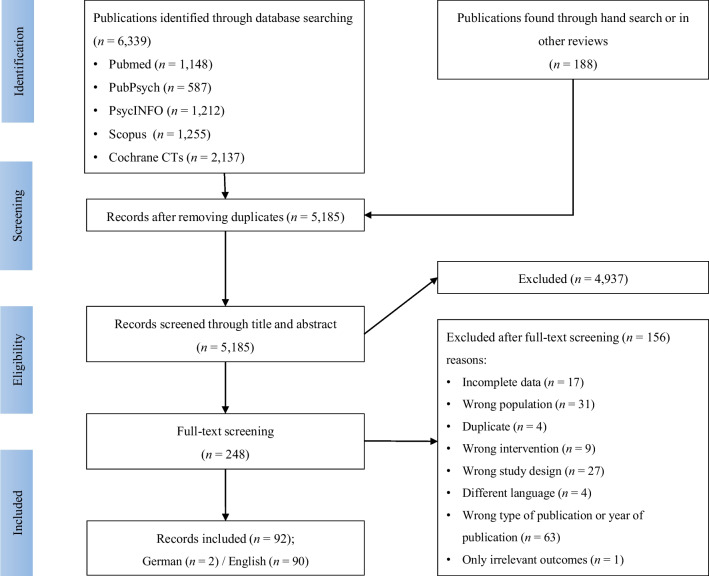
Abstract Objectives Positive effects of mindfulness-based interventions (MBIs) on occupational health have been demonstrated by several systematic review studies during the last two decades. So far, existing reviews excluded mindfulness-informed interventions (MIIs) that build on informal approaches or mixed techniques aiming at improving mindfulness indirectly. To address this research gap, the present comprehensive meta-analysis synthesizes the results of RCTs of MBIs and MIIs conducted in various workplace settings. Method A systematic literature search was conducted in five electronic databases complemented by manual search. Random-effects models were used to synthesize standardized mean differences ( SMDs ) for 25 outcomes and seven overarching categories of outcomes, and to detect various temporal effects. Meta-regressions were run to elucidate average SMDs between mindfulness intervention types and intervention and population characteristics, with the goal of detecting sources of heterogeneity and help guide the selection of the most appropriate mindfulness intervention type. Results Based on 91 eligible studies (from 92 publications), including 4927 participants and 4448 controls, the synthesis shows that MBIs and MIIs significantly improve mindfulness ( SMD = 0.43; 95%- CI [0.33;0.52]), well-being ( SMD = 0.63; 95%- CI [0.34;0.93]), mental health ( SMD = 0.67; 95%- CI [0.48;0.86]), stress ( SMD = 0.72; 95%- CI [0.54;0.90]), resilience ( SMD = 1.06; 95%- CI [−0.22;2.34]), physical health ( SMD = 0.45; 95%- CI [0.32;0.59]), and work-related factors ( SMD = 0.62; 95%- CI [0.14;1.10]). Sensitivity analyses demonstrate a tendency towards smaller effect sizes due to extreme outliers. Effect sizes are stable in short-term follow-up assessments (1-12 weeks) for most outcomes, but not for long-term follow-up assessments (13-52 weeks). Meta-regressions suggest that observable intervention characteristics (e.g., online delivery) and population characteristics (e.g., age of participants), as well as study quality, do not explain the prevalence of heterogeneity in effect sizes. Conclusions Generally effective, mindfulness interventions are a useful tool to enhance aspects of employee health. However, because of heterogeneity and risk of bias, studies aiming at high-quality data collection and thorough reporting are necessary to draw firm conclusions. Preregistration A protocol of this systematic review was registered with PROSPERO (Registration-No. CRD42020159927).
Overview
CoChat Summary
## TL;DR
This systematic review and meta-analysis of 91 randomized controlled trials found that workplace mindfulness-based and mindfulness-informed interventions generally improve mindfulness, well-being, mental health, stress, physical health, and work-related outcomes. However, the authors emphasize that high heterogeneity and generally high risk of bias limit how firmly the average effects can be interpreted.
## Key findings
- Across 91 eligible studies (92 publications), with 4927 participants in intervention arms and 4448 controls, interventions significantly improved all seven pooled outcome categories.
- Post-intervention pooled effects were small to medium for mindfulness (SMD = 0.43), well-being (SMD = 0.63), mental health (SMD = 0.67), stress (SMD = 0.72), physical health (SMD = 0.45), and work-related factors (SMD = 0.62); resilience showed a large but not clearly significant effect (SMD = 1.06, 95% CI [−0.22; 2.34]).
- Short-term follow-up effects remained significant for mindfulness (SMD = 0.53), well-being (0.44), mental health (0.56), stress (0.61), and physical health (0.43), but long-term follow-up effects turned nonsignificant for well-being, subjective mental health, and work-related factors.
- Meta-regressions found no systematic superiority of mindfulness-based over mindfulness-informed interventions overall, though MBSR courses appeared more effective than other formats for some outcomes; online delivery and additional self-practice material did not change effect sizes.
## Methods
- Systematic review and meta-analysis of randomized controlled trials of workplace mindfulness interventions, registered in PROSPERO (CRD42020159927) and reported per PRISMA 2020.
- Search of PubMed, PubPsych, PsycInfo, Scopus, and Cochrane CENTRAL in November 2019, plus manual searches; included individually randomized, English- or German-language peer-reviewed studies from January 2005 to November 2019 involving working adults and workplace-initiated interventions.
- Random-effects meta-analyses estimated standardized mean differences for 25 outcomes grouped into seven categories, with sensitivity analyses for outliers and meta-regressions on intervention and population characteristics (e.g., delivery mode, duration, age, sex, control group).
## Limitations
- The paper states that heterogeneity was large for almost all outcomes, limiting the validity of overall SMDs and making firm conclusions difficult.
- Risk of bias was generally high in the included studies, except in two studies; the authors say this limits the strength of evidence.
- The text makes evident that many analyses relied on a relatively small number of studies for some outcomes and follow-up periods, and some specific outcomes could not be analyzed or were only weakly supported; this is an evident limitation from the reported data.
Model-written summary. Check it against the paper before relying on it.
Integrity signals
Registry
Cites
Statistics
Figures
Verification
Claims the paper makes
7 Valid · 1 Not valid · 3 Not checked · 120 Own results and interpretations
The cited sources support only part of this claim — read each source’s verdict below.
In the paper
“Systematic reviews and meta-analyses of mindfulness studies in the work context have demonstrated that both deficit-oriented parameters, such as burnout and depression, as well as resource-oriented parameters, such as job satisfaction and work performance, can be improved through mindfulness-based programs (Bartlett et al., 2019; Lomas et al., 2019; Richardson & Rothstein, 2008; Vonderlin et al.,”
§ Mindfulness-Based and Mindfulness-Informed Interventions at the Workplace: A Systematic Review and Meta-Regression Analysis of RCTs > Abstract > Supplementary Information
What the sources say
- Partly supportedcites Bartlett et al., 2019 matched to “A systematic review and meta-analysis of workplace mindfulness training randomized controlled trials.” (2019) sourceExperimental — accuracy not yet measured
The Results of the Meta-Analysis (page unavailable) report an initial reduction in depressive symptoms, but the Discussion says it became non-significant after accounting for potential publication bias. Burnout results were not significant, and the Conclusions say improved work performance is not yet supported by the evidence. The retrieved passages do not establish improved job satisfaction; the paper discusses life satisfaction, which is a different outcome. (LLM, conf=0.90)
- Partly supportedcites Lomas et al., 2019 matched to “Mindfulness-based interventions in the workplace: An inclusive systematic review and meta-analysis of their impact upon wellbeing” (2019) sourceExperimental — accuracy not yet measured
The Discussion (page unavailable) reports favorable findings for burnout and job performance, but says the effect on depression did not reach statistical significance. The paper does not report an improvement in job satisfaction; its outcomes include life satisfaction, which is different. (LLM, conf=0.88)
- Partly supportedcites Vonderlin et al., 2020 matched to “Mindfulness-Based Programs in the Workplace: a Meta-Analysis of Randomized Controlled Trials” (2020) sourceExperimental — accuracy not yet measured
The Implications for Practice section (page unavailable) reports evidence that workplace mindfulness-based programs reduce burnout and subsyndromal symptoms, a category that includes depression, and preliminary evidence that they improve job satisfaction. But the same section says performance and productivity measures yielded no robust significant results, so the claim overstates the evidence for improved work performance. (LLM, conf=0.90)
boostedstates a cause- Asserted: passes — The authors put it forward as true.
- Checkable: passes — It can be checked against evidence.
- Load-bearing: passes — The paper’s conclusions depend on it.
- Based: passes — The paper gives a reason why it holds.
- Partly supported
A result the paper reports from its own data — it cites no other source for it, so there is none to check. The quote shows it is in the paper.
In the paper
“Sensitivity analyses demonstrate a tendency towards smaller effect sizes due to extreme outliers.”
§ Mindfulness-Based and Mindfulness-Informed Interventions at the Workplace: A Systematic Review and Meta-Regression Analysis of RCTs > Abstract > Results
boostedstates a cause- Asserted: passes — The authors put it forward as true.
- Checkable: passes — It can be checked against evidence.
- Load-bearing: unclear — It is unclear whether the paper’s conclusions depend on it.
- Based: passes — The paper gives a reason why it holds.
A result the paper reports from its own data — it cites no other source for it, so there is none to check. The quote shows it is in the paper.
In the paper
“stress (SMD = 0.72; 95%-CI [0.54;0.90])”
- Also stated in: § Average SMD Table 2 shows the results of the average SMD calculations for post-intervention measures. Forest plots can be found in Supplementary file S6. Average SMDs were statistically significant for all seven pooled outcome categories. For mindfulness (k = 39, SMD = 0.43, 95%-CI [0.33,0.52], I2 = 98.8%), well-being (k = 35, SMD = 0.63, 95%-CI [0.34,0.93], I2 = 98.9%), mental health (k = 68, SMD = 0.67, 95%-CI [0.48,0.86], I2 = 99.3%), stress (k = 59, SMD = 0.72, 95%-CI [0.54,0.90], I2 = 98.9%), physical health (k = 37, SMD = 0.45, 95%-CI [0.32,0.59], I2 = 99.6%), and work-related factors (k = 29, SMD = 0.62, 95%-CI [0.14,1.10], I2 = 99.1%), we estimated small to medium average effects, which are statistically significant at p < 0.001. For resilience, with a small number of studies (k = 8, SMD = 1.06, 95%-CI [− 0.22,2.34], I2 = 98.8%), we obtained a large average SMD, which was, however, hardly statistically significant. The SMD results in the subcategories are mixed and can be found in Table 2. Small to medium effect sizes were found for life satisfaction (k = 10, SMD = 0.40, 95%-CI [0.15,0.66], I2 = 95.5%), self-compassion (k = 5, SMD = 0.66, 95%-CI [0.18,1.13], I2 = 93.2%), subjective well-being (k = 8, SMD = 0.51, 95%-CI [0.14, 0.89], I2 = 94.0%), affect (k = 14, SMD = 0.93, 95%-CI [0.31, 1.54], I2 = 99.6%), anxiety (k = 23, SMD = 0.53, 95%-CI [0.31,0.74, I2 = 97.8%), burnout (k = 24, SMD = 0.70, 95%-CI [0.33,1.07], I2 = 99.0%), depression (k = 22, SMD = 0.51, 95%-CI [0.29,0.73], I2 = 98.7%), sleep (k = 15, SMD = 0.46, 95%-CI [0.22,0.70], I2 = 98.7%), subjective mental health (k = 15, SMD = 0.60, 95%-CI [0.34,0.85], I2 = 98.7%), heart rate variability (k = 7, SMD = 0.46, 95%-CI [0.15,0.78], I2 = 99.0%), pain (k = 10, SMD = 0.31, 95%-CI [0.11,0.52], I2 = 94.9%), subjective physical health (k = 25, SMD = 0.40, 95%-CI [0.30,0.50], I2 = 96.2%), job satisfaction (k = 20, SMD = 0.47, 95%-CI [0.25,0.68], I2 = 98.6%), and productivity (k = 6, SMD = 0.27, 95%-CI [0.18,0.36], I2 = 40.1%). Smaller or nonsignificant average effect sizes were found for relaxation, self-efficacy, psychological inflexibility, blood pressure, heart rate, absenteeism, and work engagement. The number of these studies, however, has been relatively small (k < 9) compared to the numbers of studies that analyzed the outcomes with small to medium significant effect sizes. Notable is a high level of heterogeneity and large prediction intervals for all outcomes except productivity. In addition, Forest plots showed that some studies have extremely large SMDs, while others have very small effect sizes. Therefore, the average results should be interpreted with caution. Results of sensitivity analyses and meta-regressions are discussed below. Less than half of the studies analyzed outcomes between 1 and 12 weeks after the end of the intervention (Table 3). For the pooled categories mindfulness (k = 11, SMD = 0.53, 95%-CI [0.27,0.80], I2 = 98.3%), well-being (k = 11, SMD = 0.44, 95%-CI [0.30,0.58], I2 = 93.3%), mental health (k = 16, SMD = 0.56, 95%-CI [0.24,0,87], I2 = 99.2%), stress (k = 17, SMD = 0.61, 95%-CI [0.34,0.89], I2 = 99.1%), and physical health (k = 8, SMD = 0.43, 95%-CI [0.14,0.72], I2 = 91.6%), the average SMDs are statistically significant and of small to medium size. Small to medium average SMDs for the subcategories with at least four studies were found for burnout (k = 10, SMD = 0.43, 95%-CI [0.22,0.64], I2 = 93.5%), subjective mental health (k = 5, SMD = 0.55, 95%-CI [− 0.14,1.24], I2 = 90.0%), and subjective physical health (k = 6, SMD = 0.50, 95%-CI [0.07,0.92], I2 = 92.3%). Nonsignificant effect sizes were obtained for depression, job satisfaction, and pooled work-related factors. Average SMDs for long-term follow-ups could only be estimated for a small set of outcomes as the number of studies collecting data after 13 or more weeks was too small (Table 4). Average SMDs for pooled well-being factors and subjective physical health turned nonsignificant, while pooled mental health factors (k = 4, SMD = 0.21, 95%-CI [0.01,0.40], I2 = 89.4%), stress (k = 5, SMD = 0.50, 95%-CI [0.09,0.92], I2 = 92.6%), and pooled physical health factors (k = 4, SMD = 0.33, 95%-CI [0.13,0.54], I2 = 67.3%) have been found to have small and significant effect sizes. A high level of heterogeneity is also present here. · plain
“stress (k = 59, SMD = 0.72, 95%-CI [0.54,0.90], I2 = 98.9%)”
§ Mindfulness-Based and Mindfulness-Informed Interventions at the Workplace: A Systematic Review and Meta-Regression Analysis of RCTs > Abstract > Results
plainstates a cause- Asserted: passes — The authors put it forward as true.
- Checkable: passes — It can be checked against evidence.
- Load-bearing: passes — The paper’s conclusions depend on it.
- Based: passes — The paper gives a reason why it holds.
- Also stated in: § Average SMD Table 2 shows the results of the average SMD calculations for post-intervention measures. Forest plots can be found in Supplementary file S6. Average SMDs were statistically significant for all seven pooled outcome categories. For mindfulness (k = 39, SMD = 0.43, 95%-CI [0.33,0.52], I2 = 98.8%), well-being (k = 35, SMD = 0.63, 95%-CI [0.34,0.93], I2 = 98.9%), mental health (k = 68, SMD = 0.67, 95%-CI [0.48,0.86], I2 = 99.3%), stress (k = 59, SMD = 0.72, 95%-CI [0.54,0.90], I2 = 98.9%), physical health (k = 37, SMD = 0.45, 95%-CI [0.32,0.59], I2 = 99.6%), and work-related factors (k = 29, SMD = 0.62, 95%-CI [0.14,1.10], I2 = 99.1%), we estimated small to medium average effects, which are statistically significant at p < 0.001. For resilience, with a small number of studies (k = 8, SMD = 1.06, 95%-CI [− 0.22,2.34], I2 = 98.8%), we obtained a large average SMD, which was, however, hardly statistically significant. The SMD results in the subcategories are mixed and can be found in Table 2. Small to medium effect sizes were found for life satisfaction (k = 10, SMD = 0.40, 95%-CI [0.15,0.66], I2 = 95.5%), self-compassion (k = 5, SMD = 0.66, 95%-CI [0.18,1.13], I2 = 93.2%), subjective well-being (k = 8, SMD = 0.51, 95%-CI [0.14, 0.89], I2 = 94.0%), affect (k = 14, SMD = 0.93, 95%-CI [0.31, 1.54], I2 = 99.6%), anxiety (k = 23, SMD = 0.53, 95%-CI [0.31,0.74, I2 = 97.8%), burnout (k = 24, SMD = 0.70, 95%-CI [0.33,1.07], I2 = 99.0%), depression (k = 22, SMD = 0.51, 95%-CI [0.29,0.73], I2 = 98.7%), sleep (k = 15, SMD = 0.46, 95%-CI [0.22,0.70], I2 = 98.7%), subjective mental health (k = 15, SMD = 0.60, 95%-CI [0.34,0.85], I2 = 98.7%), heart rate variability (k = 7, SMD = 0.46, 95%-CI [0.15,0.78], I2 = 99.0%), pain (k = 10, SMD = 0.31, 95%-CI [0.11,0.52], I2 = 94.9%), subjective physical health (k = 25, SMD = 0.40, 95%-CI [0.30,0.50], I2 = 96.2%), job satisfaction (k = 20, SMD = 0.47, 95%-CI [0.25,0.68], I2 = 98.6%), and productivity (k = 6, SMD = 0.27, 95%-CI [0.18,0.36], I2 = 40.1%). Smaller or nonsignificant average effect sizes were found for relaxation, self-efficacy, psychological inflexibility, blood pressure, heart rate, absenteeism, and work engagement. The number of these studies, however, has been relatively small (k < 9) compared to the numbers of studies that analyzed the outcomes with small to medium significant effect sizes. Notable is a high level of heterogeneity and large prediction intervals for all outcomes except productivity. In addition, Forest plots showed that some studies have extremely large SMDs, while others have very small effect sizes. Therefore, the average results should be interpreted with caution. Results of sensitivity analyses and meta-regressions are discussed below. Less than half of the studies analyzed outcomes between 1 and 12 weeks after the end of the intervention (Table 3). For the pooled categories mindfulness (k = 11, SMD = 0.53, 95%-CI [0.27,0.80], I2 = 98.3%), well-being (k = 11, SMD = 0.44, 95%-CI [0.30,0.58], I2 = 93.3%), mental health (k = 16, SMD = 0.56, 95%-CI [0.24,0,87], I2 = 99.2%), stress (k = 17, SMD = 0.61, 95%-CI [0.34,0.89], I2 = 99.1%), and physical health (k = 8, SMD = 0.43, 95%-CI [0.14,0.72], I2 = 91.6%), the average SMDs are statistically significant and of small to medium size. Small to medium average SMDs for the subcategories with at least four studies were found for burnout (k = 10, SMD = 0.43, 95%-CI [0.22,0.64], I2 = 93.5%), subjective mental health (k = 5, SMD = 0.55, 95%-CI [− 0.14,1.24], I2 = 90.0%), and subjective physical health (k = 6, SMD = 0.50, 95%-CI [0.07,0.92], I2 = 92.3%). Nonsignificant effect sizes were obtained for depression, job satisfaction, and pooled work-related factors. Average SMDs for long-term follow-ups could only be estimated for a small set of outcomes as the number of studies collecting data after 13 or more weeks was too small (Table 4). Average SMDs for pooled well-being factors and subjective physical health turned nonsignificant, while pooled mental health factors (k = 4, SMD = 0.21, 95%-CI [0.01,0.40], I2 = 89.4%), stress (k = 5, SMD = 0.50, 95%-CI [0.09,0.92], I2 = 92.6%), and pooled physical health factors (k = 4, SMD = 0.33, 95%-CI [0.13,0.54], I2 = 67.3%) have been found to have small and significant effect sizes. A high level of heterogeneity is also present here. · plain
A result the paper reports from its own data — it cites no other source for it, so there is none to check. The quote shows it is in the paper.
In the paper
“the synthesis shows that MBIs and MIIs significantly improve mindfulness (SMD = 0.43; 95%-CI [0.33;0.52])”
- Also stated in: § Average SMD Table 2 shows the results of the average SMD calculations for post-intervention measures. Forest plots can be found in Supplementary file S6. Average SMDs were statistically significant for all seven pooled outcome categories. For mindfulness (k = 39, SMD = 0.43, 95%-CI [0.33,0.52], I2 = 98.8%), well-being (k = 35, SMD = 0.63, 95%-CI [0.34,0.93], I2 = 98.9%), mental health (k = 68, SMD = 0.67, 95%-CI [0.48,0.86], I2 = 99.3%), stress (k = 59, SMD = 0.72, 95%-CI [0.54,0.90], I2 = 98.9%), physical health (k = 37, SMD = 0.45, 95%-CI [0.32,0.59], I2 = 99.6%), and work-related factors (k = 29, SMD = 0.62, 95%-CI [0.14,1.10], I2 = 99.1%), we estimated small to medium average effects, which are statistically significant at p < 0.001. For resilience, with a small number of studies (k = 8, SMD = 1.06, 95%-CI [− 0.22,2.34], I2 = 98.8%), we obtained a large average SMD, which was, however, hardly statistically significant. The SMD results in the subcategories are mixed and can be found in Table 2. Small to medium effect sizes were found for life satisfaction (k = 10, SMD = 0.40, 95%-CI [0.15,0.66], I2 = 95.5%), self-compassion (k = 5, SMD = 0.66, 95%-CI [0.18,1.13], I2 = 93.2%), subjective well-being (k = 8, SMD = 0.51, 95%-CI [0.14, 0.89], I2 = 94.0%), affect (k = 14, SMD = 0.93, 95%-CI [0.31, 1.54], I2 = 99.6%), anxiety (k = 23, SMD = 0.53, 95%-CI [0.31,0.74, I2 = 97.8%), burnout (k = 24, SMD = 0.70, 95%-CI [0.33,1.07], I2 = 99.0%), depression (k = 22, SMD = 0.51, 95%-CI [0.29,0.73], I2 = 98.7%), sleep (k = 15, SMD = 0.46, 95%-CI [0.22,0.70], I2 = 98.7%), subjective mental health (k = 15, SMD = 0.60, 95%-CI [0.34,0.85], I2 = 98.7%), heart rate variability (k = 7, SMD = 0.46, 95%-CI [0.15,0.78], I2 = 99.0%), pain (k = 10, SMD = 0.31, 95%-CI [0.11,0.52], I2 = 94.9%), subjective physical health (k = 25, SMD = 0.40, 95%-CI [0.30,0.50], I2 = 96.2%), job satisfaction (k = 20, SMD = 0.47, 95%-CI [0.25,0.68], I2 = 98.6%), and productivity (k = 6, SMD = 0.27, 95%-CI [0.18,0.36], I2 = 40.1%). Smaller or nonsignificant average effect sizes were found for relaxation, self-efficacy, psychological inflexibility, blood pressure, heart rate, absenteeism, and work engagement. The number of these studies, however, has been relatively small (k < 9) compared to the numbers of studies that analyzed the outcomes with small to medium significant effect sizes. Notable is a high level of heterogeneity and large prediction intervals for all outcomes except productivity. In addition, Forest plots showed that some studies have extremely large SMDs, while others have very small effect sizes. Therefore, the average results should be interpreted with caution. Results of sensitivity analyses and meta-regressions are discussed below. Less than half of the studies analyzed outcomes between 1 and 12 weeks after the end of the intervention (Table 3). For the pooled categories mindfulness (k = 11, SMD = 0.53, 95%-CI [0.27,0.80], I2 = 98.3%), well-being (k = 11, SMD = 0.44, 95%-CI [0.30,0.58], I2 = 93.3%), mental health (k = 16, SMD = 0.56, 95%-CI [0.24,0,87], I2 = 99.2%), stress (k = 17, SMD = 0.61, 95%-CI [0.34,0.89], I2 = 99.1%), and physical health (k = 8, SMD = 0.43, 95%-CI [0.14,0.72], I2 = 91.6%), the average SMDs are statistically significant and of small to medium size. Small to medium average SMDs for the subcategories with at least four studies were found for burnout (k = 10, SMD = 0.43, 95%-CI [0.22,0.64], I2 = 93.5%), subjective mental health (k = 5, SMD = 0.55, 95%-CI [− 0.14,1.24], I2 = 90.0%), and subjective physical health (k = 6, SMD = 0.50, 95%-CI [0.07,0.92], I2 = 92.3%). Nonsignificant effect sizes were obtained for depression, job satisfaction, and pooled work-related factors. Average SMDs for long-term follow-ups could only be estimated for a small set of outcomes as the number of studies collecting data after 13 or more weeks was too small (Table 4). Average SMDs for pooled well-being factors and subjective physical health turned nonsignificant, while pooled mental health factors (k = 4, SMD = 0.21, 95%-CI [0.01,0.40], I2 = 89.4%), stress (k = 5, SMD = 0.50, 95%-CI [0.09,0.92], I2 = 92.6%), and pooled physical health factors (k = 4, SMD = 0.33, 95%-CI [0.13,0.54], I2 = 67.3%) have been found to have small and significant effect sizes. A high level of heterogeneity is also present here. · plain
“For mindfulness (k = 39, SMD = 0.43, 95%-CI [0.33,0.52], I2 = 98.8%)”
§ Mindfulness-Based and Mindfulness-Informed Interventions at the Workplace: A Systematic Review and Meta-Regression Analysis of RCTs > Abstract > Results
plainstates a cause- Asserted: passes — The authors put it forward as true.
- Checkable: passes — It can be checked against evidence.
- Load-bearing: passes — The paper’s conclusions depend on it.
- Based: passes — The paper gives a reason why it holds.
- Also stated in: § Average SMD Table 2 shows the results of the average SMD calculations for post-intervention measures. Forest plots can be found in Supplementary file S6. Average SMDs were statistically significant for all seven pooled outcome categories. For mindfulness (k = 39, SMD = 0.43, 95%-CI [0.33,0.52], I2 = 98.8%), well-being (k = 35, SMD = 0.63, 95%-CI [0.34,0.93], I2 = 98.9%), mental health (k = 68, SMD = 0.67, 95%-CI [0.48,0.86], I2 = 99.3%), stress (k = 59, SMD = 0.72, 95%-CI [0.54,0.90], I2 = 98.9%), physical health (k = 37, SMD = 0.45, 95%-CI [0.32,0.59], I2 = 99.6%), and work-related factors (k = 29, SMD = 0.62, 95%-CI [0.14,1.10], I2 = 99.1%), we estimated small to medium average effects, which are statistically significant at p < 0.001. For resilience, with a small number of studies (k = 8, SMD = 1.06, 95%-CI [− 0.22,2.34], I2 = 98.8%), we obtained a large average SMD, which was, however, hardly statistically significant. The SMD results in the subcategories are mixed and can be found in Table 2. Small to medium effect sizes were found for life satisfaction (k = 10, SMD = 0.40, 95%-CI [0.15,0.66], I2 = 95.5%), self-compassion (k = 5, SMD = 0.66, 95%-CI [0.18,1.13], I2 = 93.2%), subjective well-being (k = 8, SMD = 0.51, 95%-CI [0.14, 0.89], I2 = 94.0%), affect (k = 14, SMD = 0.93, 95%-CI [0.31, 1.54], I2 = 99.6%), anxiety (k = 23, SMD = 0.53, 95%-CI [0.31,0.74, I2 = 97.8%), burnout (k = 24, SMD = 0.70, 95%-CI [0.33,1.07], I2 = 99.0%), depression (k = 22, SMD = 0.51, 95%-CI [0.29,0.73], I2 = 98.7%), sleep (k = 15, SMD = 0.46, 95%-CI [0.22,0.70], I2 = 98.7%), subjective mental health (k = 15, SMD = 0.60, 95%-CI [0.34,0.85], I2 = 98.7%), heart rate variability (k = 7, SMD = 0.46, 95%-CI [0.15,0.78], I2 = 99.0%), pain (k = 10, SMD = 0.31, 95%-CI [0.11,0.52], I2 = 94.9%), subjective physical health (k = 25, SMD = 0.40, 95%-CI [0.30,0.50], I2 = 96.2%), job satisfaction (k = 20, SMD = 0.47, 95%-CI [0.25,0.68], I2 = 98.6%), and productivity (k = 6, SMD = 0.27, 95%-CI [0.18,0.36], I2 = 40.1%). Smaller or nonsignificant average effect sizes were found for relaxation, self-efficacy, psychological inflexibility, blood pressure, heart rate, absenteeism, and work engagement. The number of these studies, however, has been relatively small (k < 9) compared to the numbers of studies that analyzed the outcomes with small to medium significant effect sizes. Notable is a high level of heterogeneity and large prediction intervals for all outcomes except productivity. In addition, Forest plots showed that some studies have extremely large SMDs, while others have very small effect sizes. Therefore, the average results should be interpreted with caution. Results of sensitivity analyses and meta-regressions are discussed below. Less than half of the studies analyzed outcomes between 1 and 12 weeks after the end of the intervention (Table 3). For the pooled categories mindfulness (k = 11, SMD = 0.53, 95%-CI [0.27,0.80], I2 = 98.3%), well-being (k = 11, SMD = 0.44, 95%-CI [0.30,0.58], I2 = 93.3%), mental health (k = 16, SMD = 0.56, 95%-CI [0.24,0,87], I2 = 99.2%), stress (k = 17, SMD = 0.61, 95%-CI [0.34,0.89], I2 = 99.1%), and physical health (k = 8, SMD = 0.43, 95%-CI [0.14,0.72], I2 = 91.6%), the average SMDs are statistically significant and of small to medium size. Small to medium average SMDs for the subcategories with at least four studies were found for burnout (k = 10, SMD = 0.43, 95%-CI [0.22,0.64], I2 = 93.5%), subjective mental health (k = 5, SMD = 0.55, 95%-CI [− 0.14,1.24], I2 = 90.0%), and subjective physical health (k = 6, SMD = 0.50, 95%-CI [0.07,0.92], I2 = 92.3%). Nonsignificant effect sizes were obtained for depression, job satisfaction, and pooled work-related factors. Average SMDs for long-term follow-ups could only be estimated for a small set of outcomes as the number of studies collecting data after 13 or more weeks was too small (Table 4). Average SMDs for pooled well-being factors and subjective physical health turned nonsignificant, while pooled mental health factors (k = 4, SMD = 0.21, 95%-CI [0.01,0.40], I2 = 89.4%), stress (k = 5, SMD = 0.50, 95%-CI [0.09,0.92], I2 = 92.6%), and pooled physical health factors (k = 4, SMD = 0.33, 95%-CI [0.13,0.54], I2 = 67.3%) have been found to have small and significant effect sizes. A high level of heterogeneity is also present here. · plain
A result the paper reports from its own data — it cites no other source for it, so there is none to check. The quote shows it is in the paper.
In the paper
“physical health (SMD = 0.45; 95%-CI [0.32;0.59])”
- Also stated in: § Average SMD Table 2 shows the results of the average SMD calculations for post-intervention measures. Forest plots can be found in Supplementary file S6. Average SMDs were statistically significant for all seven pooled outcome categories. For mindfulness (k = 39, SMD = 0.43, 95%-CI [0.33,0.52], I2 = 98.8%), well-being (k = 35, SMD = 0.63, 95%-CI [0.34,0.93], I2 = 98.9%), mental health (k = 68, SMD = 0.67, 95%-CI [0.48,0.86], I2 = 99.3%), stress (k = 59, SMD = 0.72, 95%-CI [0.54,0.90], I2 = 98.9%), physical health (k = 37, SMD = 0.45, 95%-CI [0.32,0.59], I2 = 99.6%), and work-related factors (k = 29, SMD = 0.62, 95%-CI [0.14,1.10], I2 = 99.1%), we estimated small to medium average effects, which are statistically significant at p < 0.001. For resilience, with a small number of studies (k = 8, SMD = 1.06, 95%-CI [− 0.22,2.34], I2 = 98.8%), we obtained a large average SMD, which was, however, hardly statistically significant. The SMD results in the subcategories are mixed and can be found in Table 2. Small to medium effect sizes were found for life satisfaction (k = 10, SMD = 0.40, 95%-CI [0.15,0.66], I2 = 95.5%), self-compassion (k = 5, SMD = 0.66, 95%-CI [0.18,1.13], I2 = 93.2%), subjective well-being (k = 8, SMD = 0.51, 95%-CI [0.14, 0.89], I2 = 94.0%), affect (k = 14, SMD = 0.93, 95%-CI [0.31, 1.54], I2 = 99.6%), anxiety (k = 23, SMD = 0.53, 95%-CI [0.31,0.74, I2 = 97.8%), burnout (k = 24, SMD = 0.70, 95%-CI [0.33,1.07], I2 = 99.0%), depression (k = 22, SMD = 0.51, 95%-CI [0.29,0.73], I2 = 98.7%), sleep (k = 15, SMD = 0.46, 95%-CI [0.22,0.70], I2 = 98.7%), subjective mental health (k = 15, SMD = 0.60, 95%-CI [0.34,0.85], I2 = 98.7%), heart rate variability (k = 7, SMD = 0.46, 95%-CI [0.15,0.78], I2 = 99.0%), pain (k = 10, SMD = 0.31, 95%-CI [0.11,0.52], I2 = 94.9%), subjective physical health (k = 25, SMD = 0.40, 95%-CI [0.30,0.50], I2 = 96.2%), job satisfaction (k = 20, SMD = 0.47, 95%-CI [0.25,0.68], I2 = 98.6%), and productivity (k = 6, SMD = 0.27, 95%-CI [0.18,0.36], I2 = 40.1%). Smaller or nonsignificant average effect sizes were found for relaxation, self-efficacy, psychological inflexibility, blood pressure, heart rate, absenteeism, and work engagement. The number of these studies, however, has been relatively small (k < 9) compared to the numbers of studies that analyzed the outcomes with small to medium significant effect sizes. Notable is a high level of heterogeneity and large prediction intervals for all outcomes except productivity. In addition, Forest plots showed that some studies have extremely large SMDs, while others have very small effect sizes. Therefore, the average results should be interpreted with caution. Results of sensitivity analyses and meta-regressions are discussed below. Less than half of the studies analyzed outcomes between 1 and 12 weeks after the end of the intervention (Table 3). For the pooled categories mindfulness (k = 11, SMD = 0.53, 95%-CI [0.27,0.80], I2 = 98.3%), well-being (k = 11, SMD = 0.44, 95%-CI [0.30,0.58], I2 = 93.3%), mental health (k = 16, SMD = 0.56, 95%-CI [0.24,0,87], I2 = 99.2%), stress (k = 17, SMD = 0.61, 95%-CI [0.34,0.89], I2 = 99.1%), and physical health (k = 8, SMD = 0.43, 95%-CI [0.14,0.72], I2 = 91.6%), the average SMDs are statistically significant and of small to medium size. Small to medium average SMDs for the subcategories with at least four studies were found for burnout (k = 10, SMD = 0.43, 95%-CI [0.22,0.64], I2 = 93.5%), subjective mental health (k = 5, SMD = 0.55, 95%-CI [− 0.14,1.24], I2 = 90.0%), and subjective physical health (k = 6, SMD = 0.50, 95%-CI [0.07,0.92], I2 = 92.3%). Nonsignificant effect sizes were obtained for depression, job satisfaction, and pooled work-related factors. Average SMDs for long-term follow-ups could only be estimated for a small set of outcomes as the number of studies collecting data after 13 or more weeks was too small (Table 4). Average SMDs for pooled well-being factors and subjective physical health turned nonsignificant, while pooled mental health factors (k = 4, SMD = 0.21, 95%-CI [0.01,0.40], I2 = 89.4%), stress (k = 5, SMD = 0.50, 95%-CI [0.09,0.92], I2 = 92.6%), and pooled physical health factors (k = 4, SMD = 0.33, 95%-CI [0.13,0.54], I2 = 67.3%) have been found to have small and significant effect sizes. A high level of heterogeneity is also present here. · plain
“physical health (k = 37, SMD = 0.45, 95%-CI [0.32,0.59], I2 = 99.6%)”
§ Mindfulness-Based and Mindfulness-Informed Interventions at the Workplace: A Systematic Review and Meta-Regression Analysis of RCTs > Abstract > Results
plainstates a cause- Asserted: passes — The authors put it forward as true.
- Checkable: passes — It can be checked against evidence.
- Load-bearing: passes — The paper’s conclusions depend on it.
- Based: passes — The paper gives a reason why it holds.
- Also stated in: § Average SMD Table 2 shows the results of the average SMD calculations for post-intervention measures. Forest plots can be found in Supplementary file S6. Average SMDs were statistically significant for all seven pooled outcome categories. For mindfulness (k = 39, SMD = 0.43, 95%-CI [0.33,0.52], I2 = 98.8%), well-being (k = 35, SMD = 0.63, 95%-CI [0.34,0.93], I2 = 98.9%), mental health (k = 68, SMD = 0.67, 95%-CI [0.48,0.86], I2 = 99.3%), stress (k = 59, SMD = 0.72, 95%-CI [0.54,0.90], I2 = 98.9%), physical health (k = 37, SMD = 0.45, 95%-CI [0.32,0.59], I2 = 99.6%), and work-related factors (k = 29, SMD = 0.62, 95%-CI [0.14,1.10], I2 = 99.1%), we estimated small to medium average effects, which are statistically significant at p < 0.001. For resilience, with a small number of studies (k = 8, SMD = 1.06, 95%-CI [− 0.22,2.34], I2 = 98.8%), we obtained a large average SMD, which was, however, hardly statistically significant. The SMD results in the subcategories are mixed and can be found in Table 2. Small to medium effect sizes were found for life satisfaction (k = 10, SMD = 0.40, 95%-CI [0.15,0.66], I2 = 95.5%), self-compassion (k = 5, SMD = 0.66, 95%-CI [0.18,1.13], I2 = 93.2%), subjective well-being (k = 8, SMD = 0.51, 95%-CI [0.14, 0.89], I2 = 94.0%), affect (k = 14, SMD = 0.93, 95%-CI [0.31, 1.54], I2 = 99.6%), anxiety (k = 23, SMD = 0.53, 95%-CI [0.31,0.74, I2 = 97.8%), burnout (k = 24, SMD = 0.70, 95%-CI [0.33,1.07], I2 = 99.0%), depression (k = 22, SMD = 0.51, 95%-CI [0.29,0.73], I2 = 98.7%), sleep (k = 15, SMD = 0.46, 95%-CI [0.22,0.70], I2 = 98.7%), subjective mental health (k = 15, SMD = 0.60, 95%-CI [0.34,0.85], I2 = 98.7%), heart rate variability (k = 7, SMD = 0.46, 95%-CI [0.15,0.78], I2 = 99.0%), pain (k = 10, SMD = 0.31, 95%-CI [0.11,0.52], I2 = 94.9%), subjective physical health (k = 25, SMD = 0.40, 95%-CI [0.30,0.50], I2 = 96.2%), job satisfaction (k = 20, SMD = 0.47, 95%-CI [0.25,0.68], I2 = 98.6%), and productivity (k = 6, SMD = 0.27, 95%-CI [0.18,0.36], I2 = 40.1%). Smaller or nonsignificant average effect sizes were found for relaxation, self-efficacy, psychological inflexibility, blood pressure, heart rate, absenteeism, and work engagement. The number of these studies, however, has been relatively small (k < 9) compared to the numbers of studies that analyzed the outcomes with small to medium significant effect sizes. Notable is a high level of heterogeneity and large prediction intervals for all outcomes except productivity. In addition, Forest plots showed that some studies have extremely large SMDs, while others have very small effect sizes. Therefore, the average results should be interpreted with caution. Results of sensitivity analyses and meta-regressions are discussed below. Less than half of the studies analyzed outcomes between 1 and 12 weeks after the end of the intervention (Table 3). For the pooled categories mindfulness (k = 11, SMD = 0.53, 95%-CI [0.27,0.80], I2 = 98.3%), well-being (k = 11, SMD = 0.44, 95%-CI [0.30,0.58], I2 = 93.3%), mental health (k = 16, SMD = 0.56, 95%-CI [0.24,0,87], I2 = 99.2%), stress (k = 17, SMD = 0.61, 95%-CI [0.34,0.89], I2 = 99.1%), and physical health (k = 8, SMD = 0.43, 95%-CI [0.14,0.72], I2 = 91.6%), the average SMDs are statistically significant and of small to medium size. Small to medium average SMDs for the subcategories with at least four studies were found for burnout (k = 10, SMD = 0.43, 95%-CI [0.22,0.64], I2 = 93.5%), subjective mental health (k = 5, SMD = 0.55, 95%-CI [− 0.14,1.24], I2 = 90.0%), and subjective physical health (k = 6, SMD = 0.50, 95%-CI [0.07,0.92], I2 = 92.3%). Nonsignificant effect sizes were obtained for depression, job satisfaction, and pooled work-related factors. Average SMDs for long-term follow-ups could only be estimated for a small set of outcomes as the number of studies collecting data after 13 or more weeks was too small (Table 4). Average SMDs for pooled well-being factors and subjective physical health turned nonsignificant, while pooled mental health factors (k = 4, SMD = 0.21, 95%-CI [0.01,0.40], I2 = 89.4%), stress (k = 5, SMD = 0.50, 95%-CI [0.09,0.92], I2 = 92.6%), and pooled physical health factors (k = 4, SMD = 0.33, 95%-CI [0.13,0.54], I2 = 67.3%) have been found to have small and significant effect sizes. A high level of heterogeneity is also present here. · plain
63 more claims
Create a free account to see all 131 claims and every source verdict.
- Probably not a substantial claim. 29
- It may state two separate claims as one. 41
- The quote only partly states this claim. 1
Citations
Cites
Statistical Power Analysis for the Behavioral Sciences
Muller, K. (1989) · Technometrics · doi:10.1080/00401706.1989.10488618 · Cited by 99,167
Bias in meta-analysis detected by a simple, graphical test
Egger, M., Smith, G. D., Schneider, M., & Minder, C. (1997) · BMJ · doi:10.1136/bmj.315.7109.629 · Cited by 56,722 · cited 1×
“Reporting bias is assessed by funnel plots including Egger’s test (Egger et al., 1997) and p -curves (Simonsohn et al., 2014) also using the dmetar package.”
Statistical Power Analysis for the Behavioral Sciences (2nd ed.).
Lachenbruch, P. A., & Cohen, J. (1989) · Journal of the American Statistical Association · doi:10.2307/2290095 · Cited by 37,395 · cited 1×
“The values determined for Hedges’ g were interpreted according to the guidance by Cohen (1988), where | g |= 0.20–0.49 is a small effect, | g |= 0.50–0.79 is a medium size effect, and | g |≥ 0.80 is a large effect.”
InfluentialBorenstein, M., Hedges, L. V., Higgins, J. P. T., & Rothstein, H. R. (2009) · doi:10.1002/9780470743386 · Cited by 14,225 · cited 1×
“We calculated Hedges’ g using post-intervention measures (Borenstein et al., 2009).”
Page, M. J., Moher, D., Bossuyt, P. M., Boutron, I., Hoffmann, T. C., Mulrow, C. D., Shamseer, L., Tetzlaff, J. M., Akl, E. A., Brennan, S. E., et al. (2021) · BMJ · doi:10.1136/bmj.n160 · Cited by 13,262
Kabat-Zinn, J. (1982) · General Hospital Psychiatry · doi:10.1016/0163-8343(82)90026-3 · Cited by 4,255 · cited 1×
“The particularly well-known “Mindfulness-Based Stress Reduction” (MBSR) program developed by Kabat-Zinn (1982), for example, is one of these methods.”
Hölzel, B. K., Lazar, S. W., Gard, T., Schuman-Olivier, Z., Vago, D. R., & Ott, U. (2011) · Perspectives on Psychological Science · doi:10.1177/1745691611419671 · Cited by 3,024 · cited 1×
“For example, improving mindfulness promotes attention regulation, body awareness, emotion regulation, and self-awareness through neurological or neurophysiological changes (Esch, 2014; Hölzel et al., 2011) beyond the well-known reduction of stress.”
Outlier and influence diagnostics for meta-analysis
Viechtbauer, W., & Cheung, M. W.-L. (2010) · Research Synthesis Methods · doi:10.1002/jrsm.11 · Cited by 2,949 · cited 1×
“For each model, influence analysis was conducted using the dmetar package (version 0.0.9000), which automatically provides leave-one-out analysis as well as influence and Baujat diagnostics as described in Viechtbauer and Cheung (2010).”
InfluentialAttention regulation and monitoring in meditation
Lutz, A., Slagter, H. A., Dunne, J. D., & Davidson, R. J. (2008) · Trends in Cognitive Sciences · doi:10.1016/j.tics.2008.01.005 · Cited by 2,659 · cited 1×
“These techniques can be defined as a family of “complex emotion-and atten-tion-regulatory trainings” that are applied to achieve a variety of goals such as the development of well-being and emotional balance (Lutz et al., 2008, p. 163).”
Meditation Programs for Psychological Stress and Well-being: A Systematic Review and Meta-analysis
Goyal, M., Singh, S., Sibinga, E. M. S., Gould, N. F., Rowland-Seymour, A., Sharma, R., Berger, Z., Sleicher, D., Maron, D. D., Shihab, H. M., et al. (2014) · JAMA Internal Medicine · doi:10.1001/jamainternmed.2013.13018 · Cited by 2,380
Journal of Transpersonal Psychology
(1977) · Journal of Humanistic Psychology · doi:10.1177/002216787701700308 · Cited by 1,732
Gu, J., Strauss, C., Bond, R., & Cavanagh, K. (2015) · Clinical Psychology Review · doi:10.1016/j.cpr.2015.01.006 · Cited by 1,712 · cited 1×
“These skills can contribute to, e.g., enhanced well-being and other beneficial resources (Gu et al., 2015).”
Creswell, J. D. (2017) · Annual Review of Psychology · doi:10.1146/annurev-psych-042716-051139 · Cited by 1,702 · cited 1×
“The field of meditation and mindfulness interventions has experienced a rapid expansion in both general and medical contexts, as evidenced by the growing number of intervention studies and reviews (Creswell, 2017).”
Hülsheger, U. R., Alberts, H. J. E. M., Feinholdt, A., & Lang, J. W. B. (2013) · Journal of Applied Psychology · doi:10.1037/a0031313 · Cited by 1,433
Effects of occupational stress management intervention programs: A meta-analysis.
Richardson, K. M., & Rothstein, H. R. (2008) · Journal of Occupational Health Psychology · doi:10.1037/1076-8998.13.1.69 · Cited by 1,374 · cited 1×
“…deficit-oriented parameters, such as burnout and depression, as well as resource-oriented parameters, such as job satisfaction and work performance, can be improved through mindfulness-based programs (Bartlett et al., 2019; Lomas et al., 2019; Richardson & Rothstein, 2008; Vonderlin et al., 2020).”
The psychological effects of meditation: a meta-analysis
Sedlmeier, P., Eberth, J., Schwarz, M., Zimmermann, D., Haarig, F., Jaeger, S., & Kunze, S. (2012) · Psychological Bulletin · doi:10.1037/a0028168 · Cited by 910 · cited 2×
“…mindfulness programs in general (Eberth & Sedlmeier, 2012; Goyal et al., 2014; Ospina et al., 2007; Querstret et al., 2020), for mental disorders (Sedlmeier et al., 2012; Van-campfort et al., 2021; Virgili, 2015) and for specific medical indications, e.g., chronic pain or breast cancer (Crain et…”
What defines mindfulness-based programs? The warp and the weft
Crane, R. S., Brewer, J., Feldman, C., Kabat-Zinn, J., Santorelli, S., Williams, J. M. G., & Kuyken, W. (2017) · Psychological Medicine · doi:10.1017/s0033291716003317 · Cited by 868 · cited 2×
“MIIs are influenced by the practice and philosophy of mindfulness, as well as other methodologies, that shape programs that are geared towards achieving specific outcomes, such as improving communication skills or physical flexibility (Crane et al., 2017; Griffith et al., 2019).”
Fox, K. C. R., Nijeboer, S., Dixon, M. L., Floman, J. L., Ellamil, M., Rumak, S. P., Sedlmeier, P., & Christoff, K. (2014) · Neuroscience & Biobehavioral Reviews · doi:10.1016/j.neubiorev.2014.03.016 · Cited by 804
Roeser, R. W., Schonert-Reichl, K. A., Jha, A., Cullen, M., Wallace, L., Wilensky, R., Oberle, E., Thomson, K., Taylor, C., & Harrison, J. (2013) · Journal of Educational Psychology · doi:10.1037/a0032093 · Cited by 795
The Effects of Mindfulness Meditation: A Meta-Analysis
Eberth, J., & Sedlmeier, P. (2012) · Mindfulness · doi:10.1007/s12671-012-0101-x · Cited by 791 · cited 2×
“…mindfulness programs in general (Eberth & Sedlmeier, 2012; Goyal et al., 2014; Ospina et al., 2007; Querstret et al., 2020), for mental disorders (Sedlmeier et al., 2012; Van-campfort et al., 2021; Virgili, 2015) and for specific medical indications, e.g., chronic pain or breast cancer (Crain et…”
p -Curve and Effect Size: Correcting for Publication Bias Using Only Significant Results
Simonsohn, U., Nelson, L. D., & Simmons, J. P. (2014) · Perspectives on Psychological Science · doi:10.1177/1745691614553988 · Cited by 717 · cited 1×
“Reporting bias is assessed by funnel plots including Egger’s test (Egger et al., 1997) and p -curves (Simonsohn et al., 2014) also using the dmetar package.”
Mindfulness for Teachers: A Pilot Study to Assess Effects on Stress, Burnout, and Teaching Efficacy
Flook, L., Goldberg, S. B., Pinger, L., Bonus, K., & Davidson, R. J. (2013) · Mind, Brain, and Education · doi:10.1111/mbe.12026 · Cited by 682
Jennings, P. A., Brown, J. L., Frank, J. L., Doyle, S., Oh, Y., Davis, R., Rasheed, D., DeWeese, A., DeMauro, A. A., Cham, H., et al. (2017) · Journal of Educational Psychology · doi:10.1037/edu0000187 · Cited by 645
Stress reduction correlates with structural changes in the amygdala
Hölzel, B. K., Carmody, J., Evans, K. C., Hoge, E. A., Dusek, J. A., Morgan, L., Pitman, R. K., & Lazar, S. W. (2010) · Social Cognitive and Affective Neuroscience · doi:10.1093/scan/nsp034 · Cited by 603 · cited 1×
“Our approach to the amalgamation of mindfulness-based and mindfulness-informed interventions is based on the premise that both formal and informal mindfulness practices have the capacity to modify brain function, including amygdala function, which can have a consequential impact on individuals’ daily life beyond the p…”
Effective and viable mind-body stress reduction in the workplace: A randomized controlled trial.
Wolever, R. Q., Bobinet, K. J., McCabe, K., Mackenzie, E. R., Fekete, E., Kusnick, C. A., & Baime, M. (2012) · Journal of Occupational Health Psychology · doi:10.1037/a0027278 · Cited by 539
Meditation practices for health: state of the research.
(2007) · PubMed Central · Cited by 516
Mindfulness on-the-go: Effects of a mindfulness meditation app on work stress and well-being
Bostock, S., Crosswell, A. D., Prather, A. A., & Steptoe, A. (2019) · Journal of Occupational Health Psychology · doi:10.1037/ocp0000118 · Cited by 465 · cited 1×
“The use of digital formats to promote health and well-being in the workplace has been increasing even prior to the COVID-19 pandemic, as evidenced by the growing amount of studies investigating digital formats (e.g., Bostock et al., 2019; Coelhoso et al., 2019; Lilly et al., 2019).”
A brief mindfulness-based stress reduction intervention for nurses and nurse aides
Mackenzie, C. S., Poulin, P. A., & Seidman-Carlson, R. (2006) · Applied Nursing Research · doi:10.1016/j.apnr.2005.08.002 · Cited by 448
Bartlett, L., Martin, A., Neil, A. L., Memish, K., Otahal, P., Kilpatrick, M., & Sanderson, K. (2019) · Journal of Occupational Health Psychology · doi:10.1037/ocp0000146 · Cited by 426 · cited 10×
“…on the minimum number of four studies per outcomes is in line with other reviews: Lomas et al. (2019) evaluated results from at least five studies, Bartlett et al. (2019) defined a minimum number of three studies, and Vonderlin et al. (2020) evaluated parameters represented by at least four…”
InfluentialSood, A., Prasad, K., Schroeder, D., & Varkey, P. (2011) · Journal of General Internal Medicine · doi:10.1007/s11606-011-1640-x · Cited by 410
Effects of low-dose mindfulness-based stress reduction (MBSR-ld) on working adults
Klatt, M. D., Buckworth, J., & Malarkey, W. B. (2009) · Health Education & Behavior · doi:10.1177/1090198108317627 · Cited by 362
Mindfulness Goes to Work: Impact of an Online Workplace Intervention
Aikens, K. A., Astin, J., Pelletier, K. R., Levanovich, K., Baase, C. M., Park, Y. Y., & Bodnar, C. M. (2014) · Journal of Occupational & Environmental Medicine · doi:10.1097/jom.0000000000000209 · Cited by 338
Gotink, R. A., Meijboom, R., Vernooij, M. W., Smits, M., & Hunink, M. G. M. (2016) · Brain and Cognition · doi:10.1016/j.bandc.2016.07.001 · Cited by 338 · cited 3×
“Our approach to the amalgamation of mindfulness-based and mindfulness-informed interventions is based on the premise that both formal and informal mindfulness practices have the capacity to modify brain function, including amygdala function, which can have a consequential impact on individuals’ daily life beyond the p…”
Kral, T. R. A., Schuyler, B. S., Mumford, J. A., Rosenkranz, M. A., Lutz, A., & Davidson, R. J. (2018) · NeuroImage · doi:10.1016/j.neuroimage.2018.07.013 · Cited by 326 · cited 2×
“Our approach to the amalgamation of mindfulness-based and mindfulness-informed interventions is based on the premise that both formal and informal mindfulness practices have the capacity to modify brain function, including amygdala function, which can have a consequential impact on individuals’ daily life beyond the p…”
Querstret, D., Morison, L., Dickinson, S., Cropley, M., & John, M. (2020) · International Journal of Stress Management · doi:10.1037/str0000165 · Cited by 315 · cited 1×
“…reviews on the overall effectiveness of mindfulness programs in general (Eberth & Sedlmeier, 2012; Goyal et al., 2014; Ospina et al., 2007; Querstret et al., 2020), for mental disorders (Sedlmeier et al., 2012; Van-campfort et al., 2021; Virgili, 2015) and for specific medical…”
How does yoga reduce stress? A systematic review of mechanisms of change and guide to future inquiry
Riley, K. E., & Park, C. L. (2015) · Health Psychology Review · doi:10.1080/17437199.2014.981778 · Cited by 287 · cited 1×
“We thereby followed the description of the authors of the original studies, rather than following the literature on, for example, the mechanisms of yoga or other interventions (such as Riley & Park, 2015).”
Lever Taylor, B., Cavanagh, K., & Strauss, C. (2016) · PLOS ONE · doi:10.1371/journal.pone.0155720 · Cited by 284
Cheema, B. S., Houridis, A., Busch, L., Raschke-Cheema, V., Melville, G. W., Marshall, P. W., Chang, D., Machliss, B., Lonsdale, C., Bowman, J., et al. (2013) · BMC Complementary and Alternative Medicine · doi:10.1186/1472-6882-13-82 · Cited by 281 · cited 1×
“These were included here, however, because some of the analyzed studies (e.g., Cheema et al., 2013) aimed at solving the problem of blinding staff and participants.”
Virgili, M. (2015) · Mindfulness · doi:10.1007/s12671-013-0264-0 · Cited by 273 · cited 1×
“…2012; Goyal et al., 2014; Ospina et al., 2007; Querstret et al., 2020), for mental disorders (Sedlmeier et al., 2012; Van-campfort et al., 2021; Virgili, 2015) and for specific medical indications, e.g., chronic pain or breast cancer (Crain et al., 2017; Cramer et al., 2012a, b; Khoo et al.,…”
Hülsheger, U. R., Feinholdt, A., & Nübold, A. (2015) · Journal of Occupational and Organizational Psychology · doi:10.1111/joop.12115 · Cited by 267
Mindfulness-Based Programs in the Workplace: a Meta-Analysis of Randomized Controlled Trials
Vonderlin, R., Biermann, M., Bohus, M., & Lyssenko, L. (2020) · Mindfulness · doi:10.1007/s12671-020-01328-3 · Cited by 259 · cited 19×
“1 3 where employees and leaders are increasingly encouraged to improve their mindfulness levels directly, or indirectly, through a variety of interventions (Vonderlin et al., 2020).”
InfluentialMichel, A., Bosch, C., & Rexroth, M. (2014) · Journal of Occupational and Organizational Psychology · doi:10.1111/joop.12072 · Cited by 256
Mindfulness-Based Stress Reduction for Breast Cancer—A Systematic Review and Meta-Analysis
Cramer, H., Lauche, R., Paul, A., & Dobos, G. (2012) · Current Oncology · doi:10.3747/co.19.1016 · Cited by 256 · cited 1×
“…2012; Goyal et al., 2014; Ospina et al., 2007; Querstret et al., 2020), for mental disorders (Sedlmeier et al., 2012; Van-campfort et al., 2021; Virgili, 2015) and for specific medical indications, e.g., chronic pain or breast cancer (Crain et al., 2017; Cramer et al., 2012a, b; Khoo et al., 2019).”
Methods for including information from multi-arm trials in pairwise meta-analysis
Rücker, G., Cates, C. J., & Schwarzer, G. (2017) · Research Synthesis Methods · doi:10.1002/jrsm.1259 · Cited by 251 · cited 1×
“Thereby, control group sizes were divided by the number of active interventions in order to not inflate standard errors (Rücker et al., 2017).”
Lomas, T., Medina, J. C., Ivtzan, I., Rupprecht, S., & Eiroa-Orosa, F. J. (2019) · The Journal of Positive Psychology · doi:10.1080/17439760.2018.1519588 · Cited by 236
Brinkborg, H., Michanek, J., Hesser, H., & Berglund, G. (2011) · Behaviour Research and Therapy · doi:10.1016/j.brat.2011.03.009 · Cited by 235
Nurse Leader Mindfulness Meditation Program for Stress Management: A Randomized Controlled Trial
Pipe, T. B., Bortz, J. J., Dueck, A., Pendergast, D., Buchda, V., & Summers, J. (2009) · JONA: The Journal of Nursing Administration · doi:10.1097/nna.0b013e31819894a0 · Cited by 213
An Exploration of Formal and Informal Mindfulness Practice and Associations with Wellbeing
Birtwell, K., Williams, K., van Marwijk, H., Armitage, C. J., & Sheffield, D. (2019) · Mindfulness · doi:10.1007/s12671-018-0951-y · Cited by 205 · cited 2×
“These training effects include, e.g., increased attention in the present moment, an aspect that is also becoming more and more prevalent in everyday activities (Birtwell et al., 2019).”
Hartfiel, N., Havenhand, J., Khalsa, S. B., Clarke, G., & Krayer, A. (2011) · Scandinavian Journal of Work, Environment & Health · doi:10.5271/sjweh.2916 · Cited by 200
Mindfulness-based stress reduction for low back pain. A systematic review
Cramer, H., Haller, H., Lauche, R., & Dobos, G. (2012) · BMC Complementary and Alternative Medicine · doi:10.1186/1472-6882-12-162 · Cited by 193 · cited 1×
“…2012; Goyal et al., 2014; Ospina et al., 2007; Querstret et al., 2020), for mental disorders (Sedlmeier et al., 2012; Van-campfort et al., 2021; Virgili, 2015) and for specific medical indications, e.g., chronic pain or breast cancer (Crain et al., 2017; Cramer et al., 2012a, b; Khoo et al., 2019).”
Shonin, E., Van Gordon, W., Dunn, T. J., Singh, N. N., & Griffiths, M. D. (2014) · International Journal of Mental Health and Addiction · doi:10.1007/s11469-014-9513-2 · Cited by 192
Crain, T. L., Schonert-Reichl, K. A., & Roeser, R. W. (2017) · Journal of Occupational Health Psychology · doi:10.1037/ocp0000043 · Cited by 192 · cited 1×
“…2012; Goyal et al., 2014; Ospina et al., 2007; Querstret et al., 2020), for mental disorders (Sedlmeier et al., 2012; Van-campfort et al., 2021; Virgili, 2015) and for specific medical indications, e.g., chronic pain or breast cancer (Crain et al., 2017; Cramer et al., 2012a, b; Khoo et al., 2019).”
Taylor, C., Harrison, J., Haimovitz, K., Oberle, E., Thomson, K., Schonert-Reichl, K., & Roeser, R. W. (2016) · Mindfulness · doi:10.1007/s12671-015-0425-4 · Cited by 186
Yoga for Self-Care and Burnout Prevention Among Nurses
Alexander, G. K., Rollins, K., Walker, D., Wong, L., & Pennings, J. (2015) · Workplace Health & Safety · doi:10.1177/2165079915596102 · Cited by 180 · cited 1×
“For example, the yoga-based study by Alexander et al. (2015) is included, as their description contains the goal of enhancing self-awareness and one of their primary outcomes is mindfulness.”
Khoo, E.-L., Small, R., Cheng, W., Hatchard, T., Glynn, B., Rice, D. B., Skidmore, B., Kenny, S., Hutton, B., & Poulin, P. A. (2019) · Evidence Based Mental Health · doi:10.1136/ebmental-2018-300062 · Cited by 175
Christopher, M. S., Hunsinger, M., Goerling, L. R. J., Bowen, S., Rogers, B. S., Gross, C. R., Dapolonia, E., & Pruessner, J. C. (2018) · Psychiatry Research · doi:10.1016/j.psychres.2018.03.059 · Cited by 173
The relationship between yoga involvement, mindfulness and psychological well-being
Gaiswinkler, L., & Unterrainer, H. (2016) · Complementary Therapies in Medicine · doi:10.1016/j.ctim.2016.03.011 · Cited by 169 · cited 1×
“These approaches promote mindfulness indirectly in a variety of ways, for example by means of breathing exercises or mindful movement sequences found in practices like yoga , tai chi , or qigong (Gaiswinkler & Unterrainer, 2016; Shelov et al., 2009).”
Crane, C., Crane, R. S., Eames, C., Fennell, M. J. V., Silverton, S., Williams, J. M. G., & Barnhofer, T. (2014) · Behaviour Research and Therapy · doi:10.1016/j.brat.2014.08.015 · Cited by 163
School of Nursing, C. S. U., Yang, J., Tang, S., School of Nursing, C. S. U., Zhou, W., & The Second Xiangya Hospital, C. S. U. (2018) · Psychiatria Danubina · doi:10.24869/spsih.2018.189 · Cited by 163
Sood, A., Sharma, V., Schroeder, D. R., & Gorman, B. (2014) · EXPLORE · doi:10.1016/j.explore.2014.08.002 · Cited by 162
Allexandre, D., Bernstein, A. M., Walker, E., Hunter, J., Roizen, M. F., & Morledge, T. J. (2016) · Journal of Occupational & Environmental Medicine · doi:10.1097/jom.0000000000000680 · Cited by 157
Querstret, D., Cropley, M., & Fife-Schaw, C. (2017) · Journal of Occupational Health Psychology · doi:10.1037/ocp0000028 · Cited by 146
Duchemin, A.-M., Steinberg, B. A., Marks, D. R., Vanover, K., & Klatt, M. (2015) · Journal of Occupational & Environmental Medicine · doi:10.1097/jom.0000000000000371 · Cited by 146
Clinical Trials of Meditation Practices in Health Care: Characteristics and Quality
Ospina, M. B., Bond, K., Karkhaneh, M., Buscemi, N., Dryden, D. M., Barnes, V., Carlson, L. E., Dusek, J. A., & Shannahoff-Khalsa, D. (2008) · The Journal of Alternative and Complementary Medicine · doi:10.1089/acm.2008.0307 · Cited by 140 · cited 2×
“Our present work aims to provide a comprehensive statistical evaluation of a wide body of studies on MBIs and MIIs at the workplace which have been published since the analyses by Ospina et al. (2007, 2008).”
Ireland, M. J., Clough, B., Gill, K., Langan, F., O'Connor, A., & Spencer, L. (2017) · Medical Teacher · doi:10.1080/0142159x.2017.1294749 · Cited by 138
Lin, L., He, G., Yan, J., Gu, C., & Xie, J. (2019) · Workplace Health & Safety · doi:10.1177/2165079918801633 · Cited by 134 · cited 7×
“In addition, the two previous reviews by Bartlett et al. (2019) and Lomas et al. (2019) have not found any workplace mindfulness interventions published before 2005.”
InfluentialLebares, C. C., Guvva, E. V., Olaru, M., Sugrue, L. P., Staffaroni, A. M., Delucchi, K. L., Kramer, J. H., Ascher, N. L., & Harris, H. W. (2019) · JAMA Network Open · doi:10.1001/jamanetworkopen.2019.4108 · Cited by 131
Amutio, A., Martínez-Taboada, C., Hermosilla, D., & Delgado, L. C. (2015) · Psychology, Health & Medicine · doi:10.1080/13548506.2014.986143 · Cited by 130
Mindfulness: Awareness Informed by an Embodied Ethic
Grossman, P. (2015) · Mindfulness · doi:10.1007/s12671-014-0372-5 · Cited by 128 · cited 3×
“Mindfulness is understood as the intentional focus on bodily sensations, emotions, and thoughts, with the aim of developing awareness and nonjudgmental acceptance of these experiences (Grossman, 2015).”
InfluentialPang, D., & Ruch, W. (2019) · Journal of Occupational Health Psychology · doi:10.1037/ocp0000144 · Cited by 127
Worksite stress management training: Moderated effects and clinical significance
Flaxman, P. E., & Bond, F. W. (2010) · Journal of Occupational Health Psychology · doi:10.1037/a0020522 · Cited by 126
Elder, C., Nidich, S., Moriarty, F., & Nidich, R. (2014) · The Permanente Journal · doi:10.7812/tpp/13-102 · Cited by 120
Mistretta, E. G., Davis, M. C., Temkit, M., Lorenz, C., Darby, B., & Stonnington, C. M. (2018) · Journal of Occupational & Environmental Medicine · doi:10.1097/jom.0000000000001285 · Cited by 114
Feicht, T., Wittmann, M., Jose, G., Mock, A., von Hirschhausen, E., & Esch, T. (2013) · Evidence-Based Complementary and Alternative Medicine · doi:10.1155/2013/676953 · Cited by 113 · cited 1×
“Excluded are studies that examined health promotion on, for example, the basis of positive psychology (e.g., Feicht et al., 2013), but which did not pursue mindfulness as a central guiding principle.”
Self-citationReducing Teachers' Psychological Distress through a Mindfulness Training Program
Franco, C., Mañas, I., Cangas, A. J., Moreno, E., & Gallego, J. (2010) · The Spanish journal of psychology · doi:10.1017/s1138741600002328 · Cited by 112
Krick, A., & Felfe, J. (2020) · Journal of Occupational Health Psychology · doi:10.1037/ocp0000159 · Cited by 112
A Pilot Study Measuring the Impact of Yoga on the Trait of Mindfulness
Shelov, D. V., Suchday, S., & Friedberg, J. P. (2009) · Behavioural and Cognitive Psychotherapy · doi:10.1017/s1352465809990361 · Cited by 110 · cited 1×
“These approaches promote mindfulness indirectly in a variety of ways, for example by means of breathing exercises or mindful movement sequences found in practices like yoga , tai chi , or qigong (Gaiswinkler & Unterrainer, 2016; Shelov et al., 2009).”
Cook, C. R., Miller, F. G., Fiat, A., Renshaw, T., Frye, M., Joseph, G., & Decano, P. (2017) · Psychology in the Schools · doi:10.1002/pits.21980 · Cited by 110
Schroeder, D. A., Stephens, E., Colgan, D., Hunsinger, M., Rubin, D., & Christopher, M. S. (2018) · American Journal of Lifestyle Medicine · doi:10.1177/1559827616629121 · Cited by 109
Yoga for reducing perceived stress and back pain at work
Hartfiel, N., Burton, C., Rycroft-Malone, J., Clarke, G., Havenhand, J., Khalsa, S. B., & Edwards, R. T. (2012) · Occupational Medicine · doi:10.1093/occmed/kqs168 · Cited by 108
McConachie, D. A. J., McKenzie, K., Morris, P. G., & Walley, R. M. (2014) · Research in Developmental Disabilities · doi:10.1016/j.ridd.2014.03.005 · Cited by 103
Mindfulness training improves employee well-being: A randomized controlled trial.
Slutsky, J., Chin, B., Raye, J., & Creswell, J. D. (2019) · Journal of Occupational Health Psychology · doi:10.1037/ocp0000132 · Cited by 103
Fang, R., & Li, X. (2015) · Journal of Clinical Nursing · doi:10.1111/jocn.12983 · Cited by 102
Grégoire, S., & Lachance, L. (2014) · Mindfulness · doi:10.1007/s12671-014-0328-9 · Cited by 102
Vancampfort, D., Stubbs, B., Van Damme, T., Smith, L., Hallgren, M., Schuch, F., Deenik, J., Rosenbaum, S., Ashdown-Franks, G., Mugisha, J., et al. (2021) · Journal of Psychiatric Research · doi:10.1016/j.jpsychires.2020.12.048 · Cited by 99 · cited 1×
“, 2020), for mental disorders (Sedlmeier et al., 2012; Vancampfort et al., 2021; Virgili, 2015) and for specific medical indications, e.”
Mindfulness Training Reduces Stress at Work: a Randomized Controlled Trial
Chin, B., Slutsky, J., Raye, J., & Creswell, J. D. (2019) · Mindfulness · doi:10.1007/s12671-018-1022-0 · Cited by 98
Lin, S., Huang, C., Shiu, S., & Yeh, S. (2015) · Worldviews on Evidence-Based Nursing · doi:10.1111/wvn.12097 · Cited by 96
Smith, E. N., Santoro, E., Moraveji, N., Susi, M., & Crum, A. J. (2020) · International Journal of Stress Management · doi:10.1037/str0000137 · Cited by 96
Coelhoso, C. C., Tobo, P. R., Lacerda, S. S., Lima, A. H., Barrichello, C. R. C., Amaro Jr, E., & Kozasa, E. H. (2019) · Journal of Medical Internet Research · doi:10.2196/14269 · Cited by 95 · cited 1×
“The use of digital formats to promote health and well-being in the workplace has been increasing even prior to the COVID-19 pandemic, as evidenced by the growing amount of studies investigating digital formats (e.g., Bostock et al., 2019; Coelhoso et al., 2019; Lilly et al., 2019).”
Feasibility of a Mindfulness-Based Intervention for Surgical Intensive Care Unit Personnel
Steinberg, B. A., Klatt, M., & Duchemin, A.-M. (2017) · American Journal of Critical Care · doi:10.4037/ajcc2017444 · Cited by 94
Be(com)ing Real: a Multi-source and an Intervention Study on Mindfulness and Authentic Leadership
Nübold, A., Van Quaquebeke, N., & Hülsheger, U. R. (2020) · Journal of Business and Psychology · doi:10.1007/s10869-019-09633-y · Cited by 87
Manotas, M., Segura, C., Eraso, M., Oggins, J., & McGovern, K. (2014) · International Journal of Stress Management · doi:10.1037/a0035150 · Cited by 86
Can Stress Management at the Workplace Prevent Depression? A Randomized Controlled Trial
Mino, Y., Babazono, A., Tsuda, T., & Yasuda, N. (2006) · Psychotherapy and Psychosomatics · doi:10.1159/000091775 · Cited by 80
Huang, S.-L., Li, R.-H., Huang, F.-Y., & Tang, F.-C. (2015) · PLOS ONE · doi:10.1371/journal.pone.0138089 · Cited by 78
Rao, M., Metri, K., Raghuram, N., & Hongasandra, N. R. (2017) · PubMed · Cited by 77
Singh, N. N., Lancioni, G. E., Medvedev, O. N., Myers, R. E., Chan, J., McPherson, C. L., Jackman, M. M., & Kim, E. (2020) · Mindfulness · doi:10.1007/s12671-018-0895-2 · Cited by 75 · cited 1×
“In this review, four different research articles (Hartfiel et al., 2017; Singh et al., 2016, 2020; van Dongen et al., 2016) have been included that analyzed distinct cost-effectiveness parameters.”
O'Brien, W. H., Singh, R. (., Horan, K., Moeller, M. T., Wasson, R., & Jex, S. M. (2019) · The Journal of Alternative and Complementary Medicine · doi:10.1089/acm.2019.0087 · Cited by 71
Resonant Breathing Biofeedback Training for Stress Reduction Among Manufacturing Operators
Purwandini Sutarto, A., Abdul Wahab, M. N., & Mat Zin, N. (2012) · International Journal of Occupational Safety and Ergonomics · doi:10.1080/10803548.2012.11076959 · Cited by 70
Maddux, R. E., Daukantaité, D., & Tellhed, U. (2018) · Anxiety, Stress, & Coping · doi:10.1080/10615806.2017.1405261 · Cited by 70
Amutio, A., Martínez-Taboada, C., Delgado, L. C., Hermosilla, D., & Mozaz, M. J. (2015) · Journal of Continuing Education in the Health Professions · doi:10.1097/ceh.0000000000000002 · Cited by 63
Riley, K. E., Park, C. L., Wilson, A., Sabo, A. N., Antoni, M. H., Braun, T. D., Harrington, J., Reiss, J., Pasalis, E., Harris, A. D., et al. (2017) · Journal of Workplace Behavioral Health · doi:10.1080/15555240.2016.1261254 · Cited by 62
(2006) · The Journal of transpersonal psychology · Cited by 62
Singh, N. N., Lancioni, G. E., Karazsia, B. T., Chan, J., & Winton, A. S. W. (2016) · Frontiers in Psychology · doi:10.3389/fpsyg.2016.01549 · Cited by 61 · cited 1×
“In this review, four different research articles (Hartfiel et al., 2017; Singh et al., 2016, 2020; van Dongen et al., 2016) have been included that analyzed distinct cost-effectiveness parameters.”
Watanabe, N., Horikoshi, M., Shinmei, I., Oe, Y., Narisawa, T., Kumachi, M., Matsuoka, Y., Hamazaki, K., & Furukawa, T. A. (2019) · Journal of Affective Disorders · doi:10.1016/j.jad.2019.03.067 · Cited by 61
Effectiveness of a worksite mindfulness-based multi-component intervention on lifestyle behaviors
van Berkel, J., Boot, C. R., Proper, K. I., Bongers, P. M., & van der Beek, A. J. (2014) · International Journal of Behavioral Nutrition and Physical Activity · doi:10.1186/1479-5868-11-9 · Cited by 58
(2011) · Europe PMC (PubMed Central) · Cited by 58
Klatt, M., Norre, C., Reader, B., Yodice, L., & White, S. (2017) · Mindfulness · doi:10.1007/s12671-016-0621-x · Cited by 56 · cited 1×
“…practices have the capacity to modify brain function, including amygdala function, which can have a consequential impact on individuals’ daily life beyond the practice of mind-fulness per se, as demonstrated by previous research (Gotink et al., 2016; Hölzel et al., 2010; Kral et al., 2018).”
Cost-effectiveness of yoga for managing musculoskeletal conditions in the workplace
Hartfiel, N., Clarke, G., Havenhand, J., Phillips, C., & Edwards, R. T. (2017) · Occupational Medicine · doi:10.1093/occmed/kqx161 · Cited by 53 · cited 2×
“In this review, four different research articles (Hartfiel et al., 2017; Singh et al., 2016, 2020; van Dongen et al., 2016) have been included that analyzed distinct cost-effectiveness parameters.”
Effect of a Home-Based Simple Yoga Program in Child-Care Workers: A Randomized Controlled Trial
Sakuma, Y., Sasaki-Otomaru, A., Ishida, S., Kanoya, Y., Arakawa, C., Mochizuki, Y., Seiishi, Y., & Sato, C. (2012) · The Journal of Alternative and Complementary Medicine · doi:10.1089/acm.2011.0080 · Cited by 52
Bartlett, L., Lovell, P., Otahal, P., & Sanderson, K. (2017) · Mindfulness · doi:10.1007/s12671-016-0643-4 · Cited by 42
Baby, M., Gale, C., & Swain, N. (2019) · Health & Social Care in the Community · doi:10.1111/hsc.12636 · Cited by 41 · cited 1×
“In fact, some studies consistently show low to moderate risks of bias for all five domains (e.g., Baby et al., 2019; Dwivedi et al., 2015, 2016).”
Esch, T. (2020) · Bundesgesundheitsblatt - Gesundheitsforschung - Gesundheitsschutz · doi:10.1007/s00103-020-03133-8 · Cited by 40 · cited 2×
“In this review, four different research articles (Hartfiel et al., 2017; Singh et al., 2016, 2020; van Dongen et al., 2016) have been included that analyzed distinct cost-effectiveness parameters.”
Self-citationLilly, M., Calhoun, R., Painter, I., Beaton, R., Stangenes, S., Revere, D., Baseman, J., & Meischke, H. (2019) · Occupational and Environmental Medicine · doi:10.1136/oemed-2018-105598 · Cited by 39
Calder Calisi, C. (2017) · Journal of Holistic Nursing · doi:10.1177/0898010117719207 · Cited by 38
Zen and well-being at the workplace
Baccarani, C., Mascherpa, V., & Minozzo, M. (2013) · The TQM Journal · doi:10.1108/tqm-07-2013-0077 · Cited by 37
Mindfulness, mental health and emotion regulation among workers
Grégoire, S., Lachance, L., & Taylor, G. (2015) · International Journal of Wellbeing · doi:10.5502/ijw.v5i4.444 · Cited by 37
Molek-Winiarska, D., & Żołnierczyk-Zreda, D. (2018) · International Journal of Occupational Safety and Ergonomics · doi:10.1080/10803548.2018.1452843 · Cited by 37
Performance in a Substitution Task and State Anxiety following Yoga in Army Recruits
Telles, S., Bhardwaj, A. K., Kumar, S., Kumar, N., & Balkrishna, A. (2012) · Psychological Reports · doi:10.2466/13.02.16.20.pr0.110.3.963-976 · Cited by 36
de Bruin, M. (2015) · Psychology & Health · doi:10.1080/08870446.2014.960653 · Cited by 36
van Dongen, J. M., van Berkel, J., Boot, C. R. L., Bosmans, J. E., Proper, K. I., Bongers, P. M., van der Beek, A. J., van Tulder, M. W., & van Wier, M. F. (2016) · Journal of Occupational & Environmental Medicine · doi:10.1097/jom.0000000000000736 · Cited by 36 · cited 1×
“In this review, four different research articles (Hartfiel et al., 2017; Singh et al., 2016, 2020; van Dongen et al., 2016) have been included that analyzed distinct cost-effectiveness parameters.”
Arredondo, M., Sabaté, M., Valveny, N., Langa, M., Dosantos, R., Moreno, J., & Botella, L. (2017) · International Journal of Occupational and Environmental Health · doi:10.1080/10773525.2017.1386607 · Cited by 35
Rexroth, M., Michel, A., & Bosch, C. (2017) · Zeitschrift für Arbeits- und Organisationspsychologie A&O · doi:10.1026/0932-4089/a000253 · Cited by 34
Möltner, H., Leve, J., & Esch, T. (2018) · Das Gesundheitswesen · doi:10.1055/s-0043-114004 · Cited by 33
Self-citationValley, M. A., & Stallones, L. (2017) · Journal of Occupational & Environmental Medicine · doi:10.1097/jom.0000000000001090 · Cited by 31
Mindfulness-based stress reduction for managers: a randomized controlled study: Table 1.
Żołnierczyk-Zreda, D., Sanderson, M., & Bedyńska, S. (2016) · Occupational Medicine · doi:10.1093/occmed/kqw091 · Cited by 30 · cited 1×
“Inter-estingly, these outliers are not limited to small-case studies, but also occur in larger-scale studies, such as Pan-dya (2019) and Żołnierczyk-Zreda et al. (2016), who each included more than 90 participants in their studies.”
Dwivedi, U., Kumari, S., Akhilesh, K., & Nagendra, H. (2015) · AYU (An international quarterly journal of research in Ayurveda) · doi:10.4103/0974-8520.190693 · Cited by 27 · cited 1×
“In fact, some studies consistently show low to moderate risks of bias for all five domains (e.g., Baby et al., 2019; Dwivedi et al., 2015, 2016).”
Die neuronale Basis von Meditation und Achtsamkeit
Esch, T. (2014) · SUCHT - Zeitschrift für Wissenschaft und Praxis / Journal of Addiction Research and Practice · doi:10.1024/0939-5911.a000288 · Cited by 26 · cited 1×
“For example, improving mindfulness promotes attention regulation, body awareness, emotion regulation, and self-awareness through neurological or neurophysiological changes (Esch, 2014; Hölzel et al., 2011) beyond the well-known reduction of stress.”
Self-citationMasih, T., Dimmock, J. A., Epel, E. S., & Guelfi, K. J. (2019) · Applied Psychology Health and Well-Being · doi:10.1111/aphw.12179 · Cited by 26
Versluis, A., Verkuil, B., Spinhoven, P., & F Brosschot, J. (2018) · Psychology & Health · doi:10.1080/08870446.2018.1456660 · Cited by 23
Neue Definitionen der Integrativen Medizin: Alter Wein in neuen Schläuchen?
Esch, T., & Brinkhaus, B. (2020) · Complementary Medicine Research · doi:10.1159/000506224 · Cited by 23 · cited 1×
“Mind-body interventions are based on the concept that the mind and body are interconnected and mutually influence one another (Esch & Brinkhaus, 2020).”
Self-citationLacerda, S. S., Little, S. W., & Kozasa, E. H. (2018) · Frontiers in Psychology · doi:10.3389/fpsyg.2018.00668 · Cited by 21
Griffith, G. M., Hastings, R. P., Williams, J. P., Jones, R. S. P., Roberts, J. L., Crane, R. S., Snowden, H., Bryning, L., Hoare, Z., & Edwards, R. T. (2019) · Mindfulness · doi:10.1007/s12671-019-01148-0 · Cited by 19 · cited 1×
“MIIs are influenced by the practice and philosophy of mindfulness, as well as other methodologies, that shape programs that are geared towards achieving specific outcomes, such as improving communication skills or physical flexibility (Crane et al., 2017; Griffith et al., 2019).”
Pandya, S. P. (2019) · Journal of Health Care Chaplaincy · doi:10.1080/08854726.2019.1670539 · Cited by 19
Warum es sich lohnt, gut für sich zu sorgen
Dahl, C. (2018) · Prävention und Gesundheitsförderung · doi:10.1007/s11553-018-0650-5 · Cited by 14
A Systematic Review of Pain-Related Neural Processes in Expert and Novice Meditator
Wang, M. Y., Bailey, N. W., Payne, J. E., Fitzgerald, P. B., & Fitzgibbon, B. M. (2020) · Mindfulness · doi:10.1007/s12671-020-01558-5 · Cited by 13 · cited 1×
“Systematic literature reviews on specific additional aspects exist, for example demonstrating the effectiveness of mindfulness training or meditation in changing neuronal structures (Fox et al., 2014; Gotink et al., 2016; Wang et al., 2021).”
Corporate Yoga and Its Implications
Bhandari, R. B., Acharya, B., & KATIYAR, V. K. (2010) · World Congress on Medical Physics and Biomedical Engineering, September 7 - 12, 2009, Munich, Germany · doi:10.1007/978-3-642-14515-5_75 · Cited by 11
Trivago Flowlab – a Case Study on how to Improve Employees’ Well-Being in a Corporate Environment
Ludwigs, K., Haese, P., Sivy, K., Weber, S., & Schrömgens, R. (2019) · Applied Research in Quality of Life · doi:10.1007/s11482-019-09736-x · Cited by 9
Effect of yoga practices in reducing counterproductive work behavior and its predictors
Dwivedi, U., Kumari, S., & Nagendra, H. R. (2016) · Indian Journal of Psychiatry · doi:10.4103/0019-5545.183778 · Cited by 8 · cited 1×
“In fact, some studies consistently show low to moderate risks of bias for all five domains (e.g., Baby et al., 2019; Dwivedi et al., 2015, 2016).”
Besser leben! Ein Seminar zur Stärkung der Selbstfürsorge von psychosozialen Fachkräften
Dahl, C., & Dlugosch, G. E. (2019) · Prävention und Gesundheitsförderung · doi:10.1007/s11553-019-00735-2 · Cited by 6
Yogic Intervention for Coping with Distress
Bhandari, R. B. (2017) · JOURNAL OF CLINICAL AND DIAGNOSTIC RESEARCH · doi:10.7860/jcdr/2017/29332.10944 · Cited by 4
Research works printed but not linked: 3
- Esch, T, & Brinkhaus, B. (Eds.). (2021). Integrative Medizin und Gesundheit (1st ed.). MWV Medizinisch Wissenschaftliche Verlagsgesellschaft.
- Higgins, J., Li, T., & Deeks, J. J. (2021). Chapter 6: Choosing effect measures and computing estimates of effect. In J. Higgins, J. Thomas, Chandler, J. Cumpston, M., T. Li, M. J. Page, & V. A. Welch (Eds.), Cochrane handbook for systematic reviews of interventions: version 6.2 (updated February 2021).
- Lefebvre, C., Glanville, J., Briscoe, S., Littlewood, A., Marshall, C., Metzendorf, M.-I., Noel-Storr, A., Rader, T., Shokraneh, F., Thomas, J., & Wieland, L. (2021). Chapter 4: Searching for and selecting studies. In J. Higgins, J. Thomas, Chandler, J. Cumpston, M., T. Li, M. J. Page, & V. A. Welch (Eds.), Cochrane handbook for systematic reviews of interventions: Version 6.2 (updated February 2021).
Cited by
Fleming, W. J. (2024) · Industrial Relations Journal · doi:10.1111/irj.12418 · Cited by 207
Effectiveness of workplace interventions for health promotion
Virtanen, M., Lallukka, T. M., Elovainio, M. J., Steptoe, A., & Kivimäki, M. (2025) · The Lancet Public Health · doi:10.1016/s2468-2667(25)00095-7 · Cited by 76
“Furthermore, regarding mindfulness interventions, a comparison of individual trial overlap between the largest meta-analysis 73 and the other meta-analyses suggests that the largest meta-analysis had broader inclusion criteria, which can partly explain the observed heterogeneity (appendix pp 23–26).”
Kumprang, K., & Suriyankietkaew, S. (2024) · Administrative Sciences · doi:10.3390/admsci14060121 · Cited by 45
“…associated with developing psychological capital, such as hope and optimism (Malinowski and Lim 2015), self-e ffi cacy (Chang et al. 2004; Katan et al. 2019), and resilience (Michaelsen et al. 2023). engagement is the extent to which engagement moves from work to engagement with the organization.”
BackgroundInfluentialEsch, T., Stefano, G. B., & Michaelsen, M. M. (2024) · Stress and Health · doi:10.1002/smi.3387 · Cited by 52
Self-citationShoker, D., Desmet, L., Ledoux, N., & Héron, A. (2024) · Frontiers in Public Health · doi:10.3389/fpubh.2024.1381373 · Cited by 33
Metadata
- Authors
- Michaelsen, M. M., Graser, J., Onescheit, M., Tuma, M. P., Werdecker, L., Pieper, D., & Esch, T.
- Affiliations
- Witten/Herdecke University (DE)
- Medizinische Hochschule Brandenburg Theodor Fontane (DE)
- Corresponding author
- Michaelsen, Maren M.
- Venue
- Mindfulness
- Published
- 2023-05-11
- Volume
- 14
- Issue
- 6
- Pages
- 1271-1304
- ISSN
- 1868-8527 (ISSN-L)
- 1868-8535
- PMC
- PMC10172073
- OpenAlex
- W4376137425
- Cited by
- 70
- References
- 140
- Citations by year
- 2026: 28 · 2025: 25 · 2024: 12 · 2023: 5
- FWCI
- 3.54
- Type
- journal article
- Language
- en
- Open access
- hybrid
- doi.org
- Licence
- cc-by
- creativecommons.org/licenses/by/4.0 (tdm)
- creativecommons.org/licenses/by/4.0 (vor)
- Locations
- Mindfulness (publishedVersion, cc-by)
- PubMed Central (publishedVersion, cc-by)
- PubMed (publishedVersion)
- Funders
- Private Universität Witten/Herdecke gGmbH
- Topics
- Social Sciences › Psychology › Clinical Psychology › Mindfulness and Compassion Interventions
- Health Sciences › Medicine › Public Health, Environmental and Occupational Health › Workplace Health and Well-being
- Social Sciences › Psychology › Social Psychology › Psychological Well-being and Life Satisfaction
- Keywords
- workplace interventions, occupational health, well-being, mental health, stress, resilience, physical health, work-related factors, intervention characteristics, online delivery, effect size heterogeneity, long-term follow-up, meta-regression, standardized mean difference, randomized controlled trials, mindfulness-based stress reduction, mindfulness-based cognitive therapy, mindfulness-based eating awareness training
About these checks
Registry, retraction, Cites and statistics results are computed, not judged, with one exception: a printed reference that no index lists is read once by a model before it counts as a citation error. Claims are extracted by a model and kept only when their quote appears verbatim in the text; each cited source is then checked, with a model’s help, for whether it says what the claim relies on. Those verdicts can be wrong — read the claim’s quote and the cited source before relying on one.
The claim verdicts this report counts are experimental: their accuracy is not yet measured.
A language model drew the claims from the paper on 2026-10-10, under version 3 of the claim definition (model deepseek-v4.1-flash, prompt extract-v3).
A second model labelled each claim on 2026-10-10 (model jev-1.13-20260917, definition revision gold-guideline-v0.2).
Cited sources are checked with a language model’s help (gpt-6-sol).
Statistics and arithmetic are recomputed, not judged.
Confidence bands are shown only for fields calibrated on our annotated test set. None is calibrated yet, so no band is shown.
What counts as a claim ›How we measure confidence ›How we check this ›
Are you an author, or do you see a problem with this page? Request a review
Data sources
Bibliographic data: Semantic Scholar, OpenAlex, Crossref.
Contains information from the Semantic Scholar Academic Graph Datasets, made available under the ODC Attribution License (ODC-BY 1.0).
Semantic Scholar’s data is described in: Kinney, R., et al. (2023). The Semantic Scholar Open Data Platform. arXiv:2301.10140.
