

Plant terpenes: defense responses, phylogenetic analysis, regulation and clinical applications
Open accessThe DOI matches its Crossref record; 293 of the 295 references it cites were found in a registry or an index.
Abstract
The terpenoids constitute the largest class of natural products and many interesting products are extensively applied in the industrial sector as flavors, fragrances, spices and are also used in perfumery and cosmetics. Many terpenoids have biological activities and also used for medical purposes. In higher plants, the conventional acetate-mevalonic acid pathway operates mainly in the cytosol and mitochondria and synthesizes sterols, sesquiterpenes and ubiquinones mainly. In the plastid, the non-mevalonic acid pathway takes place and synthesizes hemi-, mono-, sesqui-, and diterpenes along with carotenoids and phytol tail of chlorophyll. In this review paper, recent developments in the biosynthesis of terpenoids, indepth description of terpene synthases and their phylogenetic analysis, regulation of terpene biosynthesis as well as updates of terpenes which have entered in the clinical studies are reviewed thoroughly.
Overview
The claims and statistics of this paper haven’t been checked yet.
Free: it reads the open-access text and checks the first 5 claims that cite a source we can check. Create a free account to check every claim.
Integrity signals
Registry
Cites
Statistics
Figures
Verification
Claims the paper makes
The claims and statistics of this paper haven’t been checked yet.
Free: it reads the open-access text and checks the first 5 claims that cite a source we can check. Create a free account to check every claim.
Claims other papers make about this one
Each is checked against this paper’s own text: does it say what the citing paper says it does?
The cited source says what the claim attributes to it.
In the citing paper
“They present a wide-array of pharmacological properties, which have recently been described in several reviews (Russo, 2011; Singh and Sharma, 2015).”
From Cannabis sativa: The Plant of the Thousand and One Molecules (2016) · cites this paper as Singh and Sharma, 2015
The check wasn’t confident either way, so it gives no verdict — never disputed.
In the citing paper
“β-caryophyllene, a well-known active principle of black pepper and Copaiba balsam, possesses potent anti-inflammatory and gastric cytoprotector activities (Singh and Sharma, 2015).”
From Cannabis sativa: The Plant of the Thousand and One Molecules (2016) · cites this paper as Singh and Sharma, 2015
Experimental — accuracy not yet measuredThe check wasn’t confident either way, so it gives no verdict — never disputed.
In the citing paper
“The hydrolytic enzyme favors the release of active plant growth regulators from the conjugates stored in the plastids, thereby favoring trichome formation, as well as biomass production and leaf area (Singh et al., 2015).”
From Cannabis sativa: The Plant of the Thousand and One Molecules (2016) · cites this paper as Singh et al., 2015
Experimental — accuracy not yet measuredThe check wasn’t confident either way, so it gives no verdict — never disputed.
In the citing paper
“An additional study on A. annua has shown that the expression of a β-glucosidase from Trichoderma reesei increases glandular trichome density and artemisinin production (Singh et al., 2015).”
From Cannabis sativa: The Plant of the Thousand and One Molecules (2016) · cites this paper as Singh et al., 2015
Experimental — accuracy not yet measured
Self-check
Percentages, sums and reported differences re-computed from the paper’s own numbers.
The self-check needs the paper’s full text.
Citations
Cites
Items 201–293 of 293
Lanosterol biosynthesis in plants
Kolesnikova, M. D., Xiong, Q., Lodeiro, S., Hua, L., & Matsuda, S. P. T. (2006) · Archives of Biochemistry and Biophysics · doi:10.1016/j.abb.2005.12.010 · Cited by 101 · cited 1×
“…the chair–boat–chair conformation leads to protosteryl cation intermediate, sterol precursor, via the synthesis of cycloartenol or lanosterol in plants (Koles- nikova et al. 2006; Suzuki et al. 2006), while in contrast to 2,3-oxidosqualene in the chair–chair–chair conformation is cyclized into a…”
BackgroundDécendit, A., Liu, D., Ouelhazi, L., Doireau, P., M�rillon, J.-M., & Rideau, M. (1992) · Plant Cell Reports · doi:10.1007/bf00234369 · Cited by 96 · cited 2×
“In addition, the zeatin stimulates the bioconversion of exogenic secologanin to the terpenoid indole alkaloid ajmalicine, suggesting that cytokinin may also act on other downstream enzymatic steps of the terpenoid indole alka- loid biosynthesis pathway (Decendit et al. 1992).”
BackgroundDifferential Expression of Three Oxidosqualene Cyclase mRNAs in Glycyrrhiza glabra
Hayashi, H., Huang, P., Takada, S., Obinata, M., Inoue, K., Shibuya, M., & Ebizuka, Y. (2004) · Biological and Pharmaceutical Bulletin · doi:10.1248/bpb.27.1086 · Cited by 96 · cited 2×
“…been isolated from various plant species including lanosterol synthase (Baker et al. 1995; Sung et al. 1995), cycloartenol synthase (Bach 1995; Kawano et al. 2002), lupeol synthase (Hayashi et al. 2004; Segura et al. 2000) and b-amyrin synthase (Hayashi et al. 2001; Iturbe-Ormaetxe et al. 2003).”
BackgroundMethodDoblas, V. G., Amorim-Silva, V., Posé, D., Rosado, A., Esteban, A., Arró, M., Azevedo, H., Bombarely, A., Borsani, O., Valpuesta, V., et al. (2013) · The Plant Cell · doi:10.1105/tpc.112.108696 · Cited by 92 · cited 1×
“The HMGR activity, the specific enzyme that catalyzes crucial regula- tory steps of the mevalonic acid pathway, is controlled at the protein level through the activity of protein phosphatase A or by the E3 ubiquitin ligase SUD1 (Leivar et al. 2011; Doblas et al. 2013).”
BackgroundTreatment of symptomatic benign prostatic hyperplasia with β‐sitosterol: an 18‐month follow‐up
Berges, R. R., Kassen, A., & Senge, T. (2000) · British Journal of Urology · doi:10.1046/j.1464-410x.2000.00672.x · Cited by 90 · cited 2×
“It is an ingredient in the cholesterol-lowering margarine which is used to be known as take control (Berges et al. 2000).”
BackgroundCloning and Characterization of Oxidosqualene Cyclases from Kalanchoe daigremontiana
Wang, Z., Yeats, T. H., Han, H. R., & Jetter, R. (2010) · Journal of Biological Chemistry · doi:10.1074/jbc.m109.098871 · Cited by 90 · cited 2×
“It should be noted that similar bio- logical functions had previously been attributed to a few other OSCs, for example, a glutinol synthase and a frie- delin synthase from Kalanchoe daigremontiana (Wang et al. 2010).”
BackgroundSegura, M. J. R., Meyer, M. M., & Matsuda, S. P. T. (2000) · Organic Letters · doi:10.1021/ol006016b · Cited by 89 · cited 2×
“…been isolated from various plant species including lanosterol synthase (Baker et al. 1995; Sung et al. 1995), cycloartenol synthase (Bach 1995; Kawano et al. 2002), lupeol synthase (Hayashi et al. 2004; Segura et al. 2000) and b-amyrin synthase (Hayashi et al. 2001; Iturbe-Ormaetxe et al. 2003).”
BackgroundMethodGuhling, O., Hobl, B., Yeats, T. H., & Jetter, R. (2006) · Archives of Biochemistry and Biophysics · doi:10.1016/j.abb.2005.12.013 · Cited by 89 · cited 4×
“Oxido- squalene cyclases yielded one specific product, such as lupeol synthase (Shibuya et al. 1999; Guhling et al. 2006; Moses et al. 2013), b-amyrin synthase (Kushiro et al. 1998; Kirby et al. 2008; Shibuya et al. 2009) and a-amyrin synthase (Muffler et al. 2011), cycloartenol synthase (Hayashi…”
BackgroundInfluentialBiochemical and Genomic Characterization of Terpene Synthases inMagnolia grandiflora
Lee, S., & Chappell, J. (2008) · PLANT PHYSIOLOGY · doi:10.1104/pp.108.115824 · Cited by 89 · cited 2×
“trichodiene synthase gene and is not spatially oriented similar to the insertion site of the first intron in any of the plant genes including Mg25 (Trapp and Croteau 2001; Lee and Chappel 2008).”
BackgroundGould, M. N., Moore, C. J., Zhang, R., Wang, B.-C., Kennan, W. S., & Haag, J. D. (1994) · PubMed · Cited by 88
Papon, N., Bremer, J., Vansiri, A., Andreu, F., Rideau, M., & Crèche, J. (2005) · Planta Medica · doi:10.1055/s-2005-864163 · Cited by 86 · cited 2×
“When the zeatin and ethylene were added together to the culture medium of Catharanthus roseus cell cultures, the mRNA level of mevalonic acid pathway genes coordi- nately increased in suspension culture cells (Papon et al. 2005).”
BackgroundIrmisch, S., Krause, S. T., Kunert, G., Gershenzon, J., Degenhardt, J., & Köllner, T. G. (2012) · BMC Plant Biology · doi:10.1186/1471-2229-12-84 · Cited by 86 · cited 2×
“MrTPS1, MrTPS2, MrTPS3 and MrTPS5 were found to belong to the TPSa sub-family covering angiosperms, whereas MrTPS4 fell into the TPSb sub-family covering angiosperm monoterpene synthases (Irmisch et al. 2012).”
BackgroundTriterpene synthases from the Okinawan mangrove tribe, Rhizophoraceae
Basyuni, M., Oku, H., Tsujimoto, E., Kinjo, K., Baba, S., & Takara, K. (2007) · FEBS Journal · doi:10.1111/j.1742-4658.2007.06025.x · Cited by 84 · cited 2×
“In MdOSC1 and MdOSC3 cluster, lupeol synthases are more related to bamyrin synthases than to lupeol synthases (Basyuni et al. 2007; Guhling et al. 2006; Brendolise et al. 2011).”
BackgroundZhang, H., Shibuya, M., Yokota, S., & Ebizuka, Y. (2003) · Biological and Pharmaceutical Bulletin · doi:10.1248/bpb.26.642 · Cited by 84 · cited 3×
“All triterpene synthases appear to have diverged from cyclo- artenol synthase gene (Zhang et al. 2003), but an independent origin for b-AS in dicots and monocots has also been reported (Phillips et al. 2003; Moses et al. 2013).”
BackgroundShimada, T., Endo, T., Fujii, H., Hara, M., Ueda, T., Kita, M., & Omura, M. (2003) · Plant Science · doi:10.1016/j.plantsci.2003.07.006 · Cited by 84 · cited 2×
“Many monoterpene and sesquiterpene synthase genes have been reported from terpene accumulating cells and tissues such as leaf glandular trichomes of Citrus and grapes (Picaud et al. 2005; Lücker et al. 2004; Shimada et al. 2004; Kai et al. 2006).”
BackgroundSuire, C., Bouvier, F., Backhaus, R. A., Bégu, D., Bonneu, M., & Camara, B. (2000) · Plant Physiology · doi:10.1104/pp.124.3.971 · Cited by 84 · cited 2×
“All the enzymes of the 2C-methyl-Derythritol-4-phosphate pathway are localized in plastids (Hseih et al. 2008; Surie et al. 2000).”
BackgroundThe Role of Nutraceuticals in Chemoprevention and Chemotherapy and Their Clinical Outcomes
Saldanha, S. N., & Tollefsbol, T. O. (2011) · Journal of Oncology · doi:10.1155/2012/192464 · Cited by 83 · cited 2×
“After reaching these peaks, the plasma concentration decreased according to first-order kinetics (Vigushin et al. 1998; Saldanha and Tollefsbol 2012).”
BackgroundZhao, J. H., Zheng, S.-H., Fujita, K., & Sakai, K. (2004) · Journal of Experimental Botany · doi:10.1093/jxb/erh127 · Cited by 83 · cited 1×
“Genes involved in secolog- anin biosynthesis (Crdxs, Crcpr) were upregulated by methyl jasmonate as well as most of the known other genes of terpenoid indole alkaloid biosynthesis pathway (Hedhili et al. 2007; Siamaru et al. 2007; Zhao et al. 2004).”
BackgroundBastos, V. P. D., Gomes, A. S., Lima, F. J. B., Brito, T. S., Soares, P. M. G., Pinho, J. P. M., Silva, C. S., Santos, A. A., Souza, M. H. L. P., & Magalhães, P. J. C. (2011) · Basic & Clinical Pharmacology & Toxicology · doi:10.1111/j.1742-7843.2010.00622.x · Cited by 82 · cited 1×
“The result that 1,8-cineole, whose ability to activate TRMP8 is lower than methanol, inhibited metha- nol-evoked skin irritation clearly suggests that inhibitory effects of 1,8-cineole are probably due to inhibition of TRPA1, but not activation of TRMP8 (Takashi et al. 2012; Bastos et al. 2011).”
BackgroundBrendolise, C., Yauk, Y., Eberhard, E. D., Wang, M., Chagné, D., André, C. M., Greenwood, D. R., & Beuning, L. L. (2011) · FEBS Journal · doi:10.1111/j.1742-4658.2011.08175.x · Cited by 81 · cited 2×
“In MdOSC1 and MdOSC3 cluster, lupeol synthases are more related to bamyrin synthases than to lupeol synthases (Basyuni et al. 2007; Guhling et al. 2006; Brendolise et al. 2011).”
BackgroundCloning and Heterologous Expression of a Second (+)-δ-Cadinene Synthase from Gossypium arboreum
Chen, X.-Y., Wang, M., Chen, Y., Davisson, V. J., & Heinstein, P. (1996) · Journal of Natural Products · doi:10.1021/np960344w · Cited by 80 · cited 2×
“Terpene synthases of secondary metabolism constitute the most extensively studied TPS sub-families including TPSa, TPSb, TPSd and the distant and possibly ancient TPSf branch containing linalool syn- thase (Bohlmann et al. 1998; Chen et al. 1996).”
BackgroundShibuya, M., Xiang, T., Katsube, Y., Otsuka, M., Zhang, H., & Ebizuka, Y. (2007) · Journal of the American Chemical Society · doi:10.1021/ja066873w · Cited by 80 · cited 2×
“synthases, some multifunctional triterpene synthase have also been characterized from other different plant species (Basyuni et al. 2006; Shibuya et al. 2007).”
BackgroundMolecular-Cloning of the Human Gene Encoding Lanosterol Synthase from a Liver cDNA Library
Baker, C. H., Matsuda, S. P. T., Liu, D. R., & Corey, E. J. (1995) · Biochemical and Biophysical Research Communications · doi:10.1006/bbrc.1995.2110 · Cited by 80 · cited 2×
“Many different types of oxidosqualene synthases have been isolated from various plant species including lanosterol synthase (Baker et al. 1995; Sung et al. 1995), cycloartenol synthase (Bach 1995; Kawano et al.”
BackgroundIdentification of a product specific β-amyrin synthase from Arabidopsis thaliana
Shibuya, M., Katsube, Y., Otsuka, M., Zhang, H., Tansakul, P., Xiang, T., & Ebizuka, Y. (2008) · Plant Physiology and Biochemistry · doi:10.1016/j.plaphy.2008.09.007 · Cited by 79 · cited 2×
“…such as lupeol synthase (Shibuya et al. 1999; Guhling et al. 2006; Moses et al. 2013), b-amyrin synthase (Kushiro et al. 1998; Kirby et al. 2008; Shibuya et al. 2009) and a-amyrin synthase (Muffler et al. 2011), cycloartenol synthase (Hayashi et al. 2000) and cucurbitadienol synthase…”
BackgroundBohlmann, J. (2012) · Tree Physiology · doi:10.1093/treephys/tps065 · Cited by 78 · cited 2×
“It was also observed that volatile emitted from these transgenic plants significantly deterred tobacco hornworms and pine beetles from feeding on leaves (Wu et al. 2006; Bohlmann 2012).”
BackgroundArabidopsis thaliana contains a single gene encoding squalene synthase
Busquets, A., Keim, V., Closa, M., del Arco, A., Boronat, A., Arró, M., & Ferrer, A. (2008) · Plant Molecular Biology · doi:10.1007/s11103-008-9299-3 · Cited by 78 · cited 1×
“…3-hydroxy-3- methylglutaryl CoA reductase and squalene synthase are localized in the endoplasmic reticulum (Leivar et al. 2005; Sapir-Mir et al. 2008; Busquets et al. 2008) while the acetoacetyl CoA is also important enzyme of mevalonic acid pathway, localized in peroxisomes (Reumann et al. 2007).”
BackgroundOryzalexin S structure: a new stemarane-type rice plant phytoalexin and its biogenesis.
Tamogani, S., Mitani, M., Kodama, O., & Akatsuka, T. (1993) · Tetrahedron · doi:10.1016/s0040-4020(01)86302-x · Cited by 77 · cited 2×
“These phytoalexins can be grouped into four types—monilactones A and B (Hwang and Sung 1989), oryzalexins A–F (Peters 2006) and oryzalexin S (Tamongani and Mitani 1993).”
BackgroundHsu, T., Wang, M.-C., Chen, S.-Y., Huang, S., Yeh, Y., Su, W., Chang, W., & Hung, J. (2012) · Molecular Pharmacology · doi:10.1124/mol.112.078485 · Cited by 76 · cited 2×
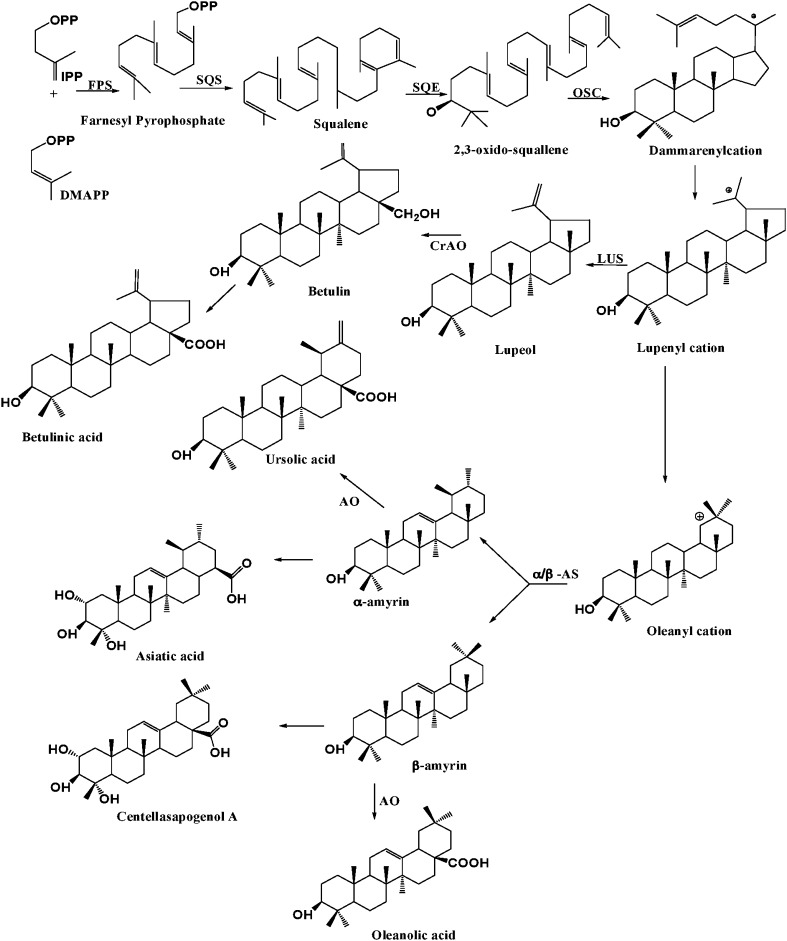
“Betulinic acid Betulinic acid is a naturally occurring pentacyclic triter- pene that exhibits a variety of biological activities includ- ing potent antiviral and anticancer effects (Alakurtti et al. 2006; Hsu et al. 2012).”
BackgroundMatarese, F., Scalabrelli, G., & D’Onofrio, C. (2013) · Functional Plant Biology · doi:10.1071/fp12326 · Cited by 76 · cited 2×
“The geraniol synthase had a peak of expression that started to increase and overcome the lin- alool concentration (Matarese et al. 2013; Chen et al. 2011; Falara et al. 2011).”
BackgroundTraumatic Resin Ducts and Polyphenolic Parenchyma Cells in Conifers
Krokene, P., Nagy, N. E., & Krekling, T. (2008) · Springer eBooks · doi:10.1007/978-1-4020-8182-8_7 · Cited by 75 · cited 1×
“The development of traumatic ducts in xylem of Norawy spruce, induced by the treatment of methyl jasm- onate was similar in fashion, which caused by the attack of fungal elicitation and mechanical wounding (Krokene et al. 2008; Herrera et al. 2005; Martin et al. 2002).”
BackgroundFunctional and structural analysis of genes encoding oxidosqualene cyclases of Lotus japonicus
Sawai, S., Shindo, T., Sato, S., Kaneko, T., Tabata, S., Ayabe, S., & Aoki, T. (2005) · Plant Science · doi:10.1016/j.plantsci.2005.08.027 · Cited by 75 · cited 2×
“The intron patterns and exon lengths of the two S1TTS1 genes are very similar to those of the other oxidosqualene cyclases, while S1TTS2 gene organization most closely resembles OSC3 of Lotus japonicus (Sawai et al. 2006; Wang et al. 2011).”
BackgroundCombinatorial biosynthesis in plants: A (p)review on its potential and future exploitation
Pollier, J., Moses, T., & Goossens, A. (2011) · Natural Product Reports · doi:10.1039/c1np00049g · Cited by 74
Xiang, T., Shibuya, M., Katsube, Y., Tsutsumi, T., Otsuka, M., Zhang, H., Masuda, K., & Ebizuka, Y. (2006) · Organic Letters · doi:10.1021/ol060973p · Cited by 71 · cited 2×
“Another tandem duplicate gene pair At4g15340 and At4g15370, encoding arabidiol syn- thase and baruol synthase, respectively (Xiang et al. 2006; Lodeiro et al. 2007), is located on A. thaliana chromosome 4.”
BackgroundJasmonic acid induces resistance to economically important insect pests in winter wheat
El‐Wakeil, N. E., Volkmar, C., & Sallam, A. A. (2010) · Pest Management Science · doi:10.1002/ps.1906 · Cited by 71 · cited 2×
“From agro- nomic perspective, crop losses due to insect infestation are a significant issue (El-Wakeil et al. 2010).”
BackgroundDucreux, L. J. M., Morris, W. L., Prosser, I. M., Morris, J., Beale, M. H., Wright, F., Shepherd, T., Bryan, G. J., Hedley, P. E., & Taylor, M. A. (2008) · Journal of Experimental Botany · doi:10.1093/jxb/ern264 · Cited by 70 · cited 2×
“This enzyme is highly expressed in potato and correspondence to the difference in tuber flavor between two cultivars of potato (Ducreux et al. 2008; Zapta and Fine 2013).”
BackgroundDonald, P. R., Lamprecht, J. H., Freestone, M., Cf, A., Bouic, P. J., Kotze, D., & van Jaarsveld (1997) · PubMed · Cited by 70
Korth, K. L., Jaggard, D. A. W., & Dixon, R. A. (2000) · The Plant Journal · doi:10.1046/j.1365-313x.2000.00821.x · Cited by 64 · cited 2×
“…from various plant species (gymnosperms and angiosperms), including Picea abies (Martin et al. 2004), Taxus media (Wildung and Croteau 1996), Arabidopsis thaliana (Chen et al. 2003; Degenhardt et al. 2009), Cucumis sativus (Mercke et al. 2004), and Nicotiana attenuata (Facchini and Chappel 1992).”
BackgroundWong, R. J., Cormack, D. K. M., & Russell, D. W. (1982) · Archives of Biochemistry and Biophysics · doi:10.1016/0003-9861(82)90253-3 · Cited by 63 · cited 5×
“Terpene synthases often catalyze the formation of multiple products from a prenyl diphosphate substrate, resulting from a catalytic mechanism that involves highly reactive carbocation intermediates (De- genhardt et al. 2009).”
BackgroundInfluentialRegulation of the terpene moiety biosynthesis of Catharanthus roseus terpene indole alkaloids
Hedhili, S., Courdavault, V., Giglioli‐Guivarc’h, N., & Gantet, P. (2007) · Phytochemistry Reviews · doi:10.1007/s11101-006-9021-5 · Cited by 61 · cited 2×
“Genes involved in secologanin biosynthesis (Crdxs, Crcpr) were upregulated by methyl jasmonate as well as most of the known other genes of terpenoid indole alkaloid biosynthesis pathway (Hedhili et al. 2007; Siamaru et al. 2007; Zhao et al. 2004).”
BackgroundIgual, J. C., González‐Bosch, C., Dopazo, J., & Pérez-Ortín, J. E. (1992) · Journal of Molecular Evolution · doi:10.1007/bf00183226 · Cited by 61 · cited 2×
“3-hydroxy-3-methylglutaryl CoA reductase catalyzes the reduction of 3-hydroxy-3-methylglutaryl CoA to mevalonic acid (Luskey and Stevens 1985; Basson et al. 1988; Igual et al. 1992; Rodwell et al. 2000).”
BackgroundKajikawa, M., Yamato, K. T., Fukuzawa, H., Sakai, Y., Uchida, H., & Ohyama, K. (2005) · Phytochemistry · doi:10.1016/j.phytochem.2005.05.021 · Cited by 61 · cited 2×
“putative OSC (EtOSC—Euphorbia terucalli triterpene synthase) for which no triterpene synthase activity has been detected when it is expressed in yeast (Kajikawa et al. 2005).”
BackgroundMolecular Cloning and Characterization of a cDNA for Glycyrrhiza glabra Cycloartenol Synthase.
Hayashi, H., Hiraoka, N., Ikeshiro, Y., Kushiro, T., MORITA, M., Shibuya, M., & Ebizuka, Y. (2000) · Biological and Pharmaceutical Bulletin · doi:10.1248/bpb.23.231 · Cited by 60 · cited 4×
“…as lupeol synthase (Shibuya et al. 1999; Guhling et al. 2006; Moses et al. 2013), b-amyrin synthase (Kushiro et al. 1998; Kirby et al. 2008; Shibuya et al. 2009) and a-amyrin synthase (Muffler et al. 2011), cycloartenol synthase (Hayashi et al. 2000) and cucurbitadienol synthase (Shi- buya 2004).”
BackgroundMethodInfluentialNagegowda, D. A., Bach, T. J., & Chye, M. (2004) · Biochemical Journal · doi:10.1042/bj20040721 · Cited by 60 · cited 1×
“The enhancement of concentration of terpenoids in response to various abiotic stresses is often is mediated by an increase in transcriptional activity of the specific terpenoid biosynthetic genes (Tholl 2006; Nagegowda et al. 2004, 2010; Xi et al. 2012).”
BackgroundMolecular cloning and expression analysis of the mevalonate kinase gene from Arabidopsis thaliana
Lluch, M., Masferrer, A., Arró, M., Boronat, A., & Ferrer, A. (2000) · Plant Molecular Biology · doi:10.1023/a:1006325630792 · Cited by 59 · cited 2×
“Keywords Terpenes Terpene synthase Phylogenetic analysis Clinical trials”
BackgroundMethodAnnual Plant Reviews, Biochemistry of Plant Secondary Metabolism
Wink, M. (2010) · Cited by 59
Constitutive and Jasmonate-Inducible Traits of Datura wrightii
Hare, J. D., & Walling, L. L. (2006) · Journal of Chemical Ecology · doi:10.1007/s10886-006-9349-8 · Cited by 58 · cited 2×
“The production of acyl sugars on the leaf surface of Datura wrightii plants increased without affecting trichome density (Hare and Walling 2006).”
BackgroundDrew, D. P., Dueholm, B., Weitzel, C., Zhang, Y., Sensen, C. W., & Simonsen, H. T. (2013) · International Journal of Molecular Sciences · doi:10.3390/ijms14059080 · Cited by 58 · cited 2×
“The total numbers of terpene synthases reported from Thapsia laciniata are 8 monoterpene and 5 sesqui- terpene (Drew et al. 2013) which are slightly larger than the number reported in Arabidopsis thaliana and Artemisia annua (Tholl and Lee 2011).”
BackgroundKim, O. T., Bang, K.-H., Jung, S. J., Kim, Y. C., Hyun, D. Y., Kim, S. H., & W., S. (2010) · Biologia Plantarum · doi:10.1007/s10535-010-0007-1 · Cited by 58 · cited 2×
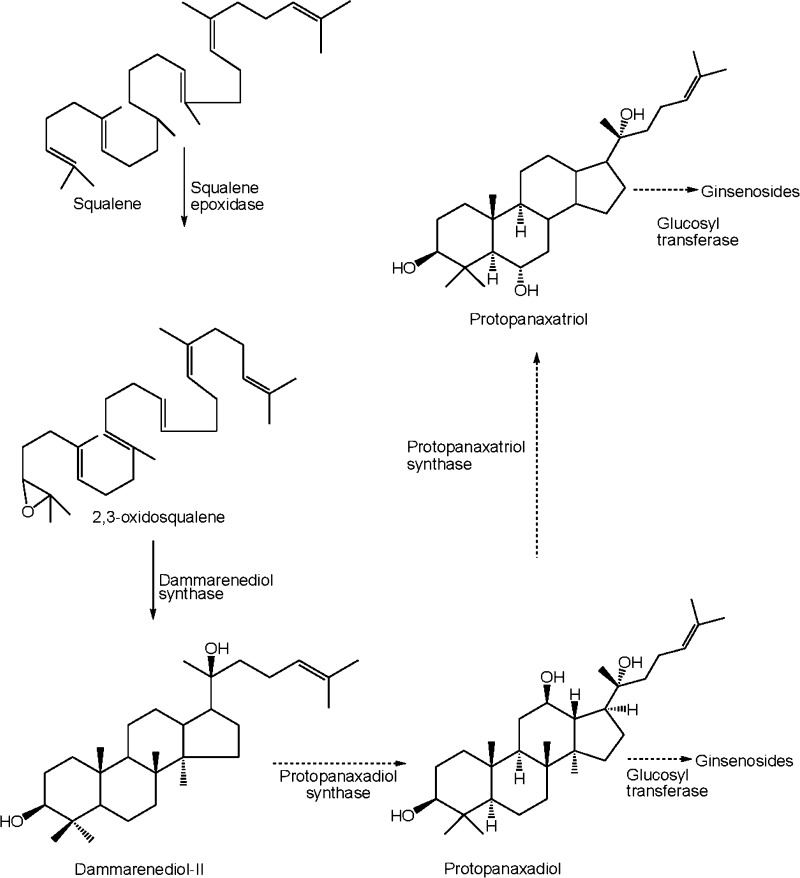
“The cyclization of 2,3- oxidosqualene into dammarenediol and b-amyrin is catalyzed by oxidosqualene cyclases including dammarenediolII synthase and b-amyrin synthase (Han et al. 2006, 2010; Tansakul et al. 2006; Kim et al. 2010).”
MethodMechanism of Mevalonate Pyrophosphate Decarboxylase: Evidence for a Carbocationic Transition State
Dhe-Paganon, S., Magrath, J., & Abeles, R. H. (1994) · Biochemistry · doi:10.1021/bi00249a023 · Cited by 58
Gray, D. W., Breneman, S. R., Topper, L. A., & Sharkey, T. D. (2011) · Journal of Biological Chemistry · doi:10.1074/jbc.m111.237438 · Cited by 57 · cited 2×
“dominated by enzymes producing cyclic monoterpene (Gray et al. 2011).”
BackgroundLi, Z., Wang, X., Chen, F., & Kim, H. (2007) · Journal of Agricultural and Food Chemistry · doi:10.1021/jf062481x · Cited by 54 · cited 2×
“The exogenous treatment of methyl jasmonate affected the production of terpenoids by regulating the terpene synthase genes (Li et al. 2007; Prins et al. 2010).”
BackgroundRieber, M., & RIEBER, M. S. (1998) · DNA and Cell Biology · doi:10.1089/dna.1998.17.399 · Cited by 54
Aoyagi, K., Beyou, A., Moon, K., Fang, L. Y., & Ulrich, T. (1993) · PLANT PHYSIOLOGY · doi:10.1104/pp.102.2.623 · Cited by 53
Kawano, N., Ichinose, K., & Ebizuka, Y. (2002) · Biological and Pharmaceutical Bulletin · doi:10.1248/bpb.25.477 · Cited by 52
Rewiring and regulation of cross-compartmentalized metabolism in protists
Ginger, M. L., McFadden, G. I., & Michels, P. A. M. (2010) · Philosophical Transactions of the Royal Society B: Biological Sciences · doi:10.1098/rstb.2009.0259 · Cited by 52 · cited 2×
“In contrast, the DXP pathway enzymes are localized in plastids of cyanobacteria (Ginger et al. 2010).”
BackgroundMethodLange, B. M., Severin, K., Bechthold, A., & Heide, L. E. (1998) · Planta · doi:10.1007/s004250050252 · Cited by 51 · cited 2×
“2000), but down-regulated by light in Lithospermum erythrorhizon (Lange et al. 1998).”
BackgroundThabet, I., Guirimand, G. G. Y., Courdavault, V., Papon, N., Godet, S., Dutilleul, C., Bouzid, S., Giglioli‐Guivarc’h, N., Clastre, M., & Simkin, A. J. (2011) · Journal of Plant Physiology · doi:10.1016/j.jplph.2011.06.017 · Cited by 49 · cited 1×
“Plant genomes appear to encode various farnesyl diphosphate synthase isoforms that localize to the cytosol, plastids, mitochondria or peroxi- somes (Cunillera et al. 1997; Thabet et al. 2011).”
BackgroundBasyuni, M., Oku, H., Inafuku, M., Baba, S., Iwasaki, H., Oshiro, K., Okabe, T., Shibuya, M., & Ebizuka, Y. (2006) · Phytochemistry · doi:10.1016/j.phytochem.2006.09.016 · Cited by 49 · cited 2×
“synthases, some multifunctional triterpene synthase have also been characterized from other different plant species (Basyuni et al. 2006; Shibuya et al. 2007).”
BackgroundLearned, R. M., & Connolly, E. L. (1997) · The Plant Journal · doi:10.1046/j.1365-313x.1997.11030499.x · Cited by 48 · cited 2×
“The total numbers of terpene synthases reported from Thapsia laciniata are 8 monoterpene and 5 sesqui- terpene (Drew et al. 2013) which are slightly larger than the number reported in Arabidopsis thaliana and Artemisia annua (Tholl and Lee 2011).”
BackgroundChrysolina herbacea Modulates Terpenoid Biosynthesis of Mentha aquatica L.
Zebelo, S. A., Bertea, C. M., Bossi, S., Occhipinti, A., Gnavi, G., & Maffei, M. E. (2011) · PLoS ONE · doi:10.1371/journal.pone.0017195 · Cited by 47 · cited 1×
“Because feeding of herbivores alters the aromatic profile of essential oil-pro- ducing plants like Mentha aquatica, the issue is both economically and ecologically relevant (Burse et al. 2009; Atsbaha Zebelo et al. 2011).”
BackgroundGrauvogel, C., & Petersen, J. (2007) · Gene · doi:10.1016/j.gene.2007.02.020 · Cited by 46 · cited 2×
“paradoxa, both mevalonic acid and DXP pathway run concurrently (Grauvogel and Peterson 2007).”
BackgroundA genomic approach to characterization of the Citrus terpene synthase gene family
Dornelas, M. C., & Mazzafera, P. (2007) · Genetics and Molecular Biology · doi:10.1590/s1415-47572007000500011 · Cited by 43 · cited 3×
“The comparison of Grtps (grape fruit terpene synthases) amino acid sequence with the sequences of other terpene synthase indicated that this Grtps cDNA is truncated at the 50 terminus and that the truncation represents 18 amino acid residues of the pre- sumptive transit peptide region at the N-terminus of the deduced…”
BackgroundInfluentialThabet, I., Guirimand, G. G. Y., Guihur, A., Lanoue, A., Courdavault, V., Papon, N., Bouzid, S., Giglioli‐Guivarc’h, N., Simkin, A. J., & Clastre, M. (2011) · Molecular Biology Reports · doi:10.1007/s11033-011-1091-9 · Cited by 41 · cited 1×
“Isoforms of this enzyme have been reported to occur in plastids, the endoplasmic reticulum and mitochondria (Thabet et al. 2012; Sitthithaworn et al. 2001; Okada et al. 2000; Cheniclet et al. 1992).”
BackgroundSITTHITHAWORN, W., KOJIMA, N., VIROONCHATAPAN, E., SUH, D.-Y., IWANAMI, N., HAYASHI, T., NOJI, M., SAITO, K., NIWA, Y., & SANKAWA, U. (2001) · Chemical and Pharmaceutical Bulletin · doi:10.1248/cpb.49.197 · Cited by 41 · cited 2×
“Isoforms of this enzyme have been reported to occur in plastids, the endoplasmic reticulum and mitochondria (Thabet et al. 2012; Sitthithaworn et al. 2001; Okada et al. 2000; Cheniclet et al. 1992).”
BackgroundBaşay, S., & Ellialtıoğlu, Ş. Ş. (2013) · TURKISH JOURNAL OF BIOLOGY · doi:10.3906/biy-1210-38 · Cited by 39
3-Hydroxy-3-methylglutaryl-CoA Reductase
Rodwell, V. W., Beach, M. J., Bischoff, K. M., Bochar, D. A., Darnay, B. G., Friesen, J. A., Gill, J. F., Hedl, M., Jordan, T. C., Kennelly, P. J., et al. (2000) · Methods in enzymology on CD-ROM/Methods in enzymology · doi:10.1016/s0076-6879(00)24237-7 · Cited by 38 · cited 4×
“The 3-hydroxy-3- methylglutaryl CoA reductase and squalene synthase are localized in the endoplasmic reticulum (Leivar et al. 2005; Sapir-Mir et al. 2008; Busquets et al. 2008) while the acetoacetyl CoA is also important enzyme of mevalonic acid pathway, localized in peroxisomes (Reumann et…”
BackgroundMethodInfluentialMolecular Cloning OF cDNA Encoding Human Lanosterol Synthase.
Sung, C. K., Shibuya, M., Sankawa, U., & Ebizuka, Y. (1995) · Biological and Pharmaceutical Bulletin · doi:10.1248/bpb.18.1459 · Cited by 34 · cited 2×
“Many different types of oxidosqualene synthases have been isolated from various plant species including lanosterol synthase (Baker et al. 1995; Sung et al. 1995), cycloartenol synthase (Bach 1995; Kawano et al.”
BackgroundBurse, A., Frick, S., Discher, S., Tolzin‐Banasch, K., Kirsch, R., Strauß, A., Kunert, M., & Boland, W. (2009) · Phytochemistry · doi:10.1016/j.phytochem.2009.08.002 · Cited by 34 · cited 2×
“Because feeding of herbivores alters the aromatic profile of essential oil-pro- ducing plants like Mentha aquatica, the issue is both economically and ecologically relevant (Burse et al. 2009; Atsbaha Zebelo et al. 2011).”
BackgroundJenner, H. L., Townsend, B., & Osbourn, A. (2004) · Planta · doi:10.1007/s00425-004-1434-z · Cited by 34 · cited 2×
“2,3-oxidosqualene converted to triterpene alcohols or aldehydes by oxidosqualene cyclases (Phillips et al. 2006; Jenner et al. 2005; Haralampidis et al. 2002).”
BackgroundCalisto, B. M., Pérez-Gil, J., Bergua, M., Querol‐Audí, J., Fita, I., & Imperial, S. (2007) · Protein Science · doi:10.1110/ps.072972807 · Cited by 33 · cited 2×
“The 4-cytidine 5-phospho-2C-methyl erythritol converted to 2-C-methyl erythritol 2,4-cyclodiphosphate by the enzyme 2-C-methyl erythritol 2,4-cyclodiphosphate synthase (Rohdich et al. 2000; Steinbacher et al. 2003; Herz et al. 2000; Calisto et al. 2007) (Fig.”
MethodIsoprenoid Biosynthesis in Plants: Pathways, Genes, Regulation and Metabolic Engineering
Liao, Z., ., M. C., Gong, Y., Miao, Z., Sun, X., & Tang, K. (2005) · Journal of Biological Sciences · doi:10.3923/jbs.2006.209.219 · Cited by 33 · cited 2×
“Keywords Terpenes Terpene synthase Phylogenetic analysis Clinical trials”
BackgroundMethodMerret, R., Cirioni, J.-R., Bach, T. J., & Hemmerlin, A. (2007) · FEBS Letters · doi:10.1016/j.febslet.2007.10.023 · Cited by 33 · cited 2×
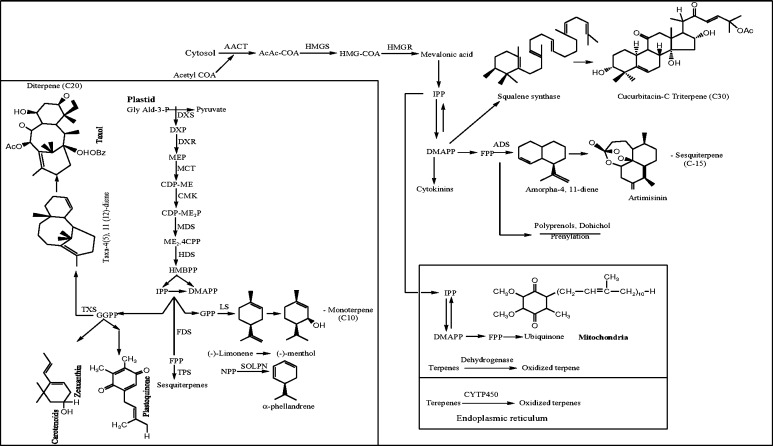
“The mevalonic acid pathway of terpenoid biosynthesis operates in cytosol, the endoplasmic reticulum and peroxisomes (Carrie et al. 2007; Hemmerlin et al. 2003; Dudareva et al. 2006; Leivar et al. 2005; Merret et al. 2007; Sapir-Mir et al. 2008; Simkin et al. 2011; Lange and Ahkami 2013) (Fig.”
BackgroundPoeckel, D., Tausch, L., Altmann, A., Feißt, C., Klinkhardt, U., Graff, J., Harder, S., & Werz, O. (2005) · British Journal of Pharmacology · doi:10.1038/sj.bjp.0706366 · Cited by 32 · cited 1×
“It also caused a pronounced mobilization of Ca2? from internal stores and induced the phosphorylation of p38 MAPK and elicits functional platelet responses (Poeckel et al. 2005).”
BackgroundKai, G., Zhao, L., Zhang, L., Li, Z., Guo, B., Zhao, D., Sun, X., Miao, Z., & Tang, K. (2005) · BMB Reports · doi:10.5483/bmbrep.2005.38.6.668 · Cited by 31 · cited 2×
“Many monoterpene and sesquiterpene synthase genes have been reported from terpene accumulating cells and tissues such as leaf glandular trichomes of Citrus and grapes (Picaud et al. 2005; Lücker et al. 2004; Shimada et al. 2004; Kai et al. 2006).”
BackgroundPoeckel, D., Tausch, L., George, S., Jauch, J., & Werz, O. (2005) · Journal of Pharmacology and Experimental Therapeutics · doi:10.1124/jpet.105.089466 · Cited by 30 · cited 1×
“However, the clinical trials of gum-resin of Boswellia serrata have shown to improve symptoms in patients with osteoarthritis and rheu- matoid arthritis (Poeckel and Werz 2006; Poeckel et al. 2006).”
BackgroundMedical dissolution of gallstones
Igimi, H., Tamura, R., Toraishi, K., Yamamoto, F., Kataoka, A., Ikejiri, Y., Hisatsugu, T., & Shimura, H. (1991) · Digestive Diseases and Sciences · doi:10.1007/bf01300757 · Cited by 30 · cited 1×
“Being a solvent of cholesterol D-limonene has been used to clinically to dissolve cholesterol containing gallstones (Igimi et al. 1991; Rabi and Bishayee 2009a, b).”
BackgroundMolecular Regulation of Induced Terpenoid Biosynthesis in Conifers
Phillips, M. A., Bohlmann, J., & Gershenzon, J. (2006) · Phytochemistry Reviews · doi:10.1007/s11101-006-0001-6 · Cited by 28 · cited 8×
“The investigations of terpene synthases have been an interesting and active area of plant metabolic engineering research and may genes have been isolated from various plant species (gymnosperms and angiosperms), including Picea abies (Martin et al. 2004), Taxus media (Wildung and Croteau 1996), Arabidopsis thaliana (C…”
BackgroundInfluentialTargeting angiogenesis for the treatment of advanced melanoma
Bafaloukos, D. J., & Linardou, H. (2011) · Oncology Reviews · doi:10.1007/s12156-011-0075-2 · Cited by 27
Ultrastructural study of the primary olfactory pathway in Macaca fascicularis
Herrera, L. P., Casas, C. E., Bates, M. L., & Guest, J. D. (2005) · The Journal of Comparative Neurology · doi:10.1002/cne.20588 · Cited by 25 · cited 2×
“The development of traumatic ducts in xylem of Norawy spruce, induced by the treatment of methyl jasm- onate was similar in fashion, which caused by the attack of fungal elicitation and mechanical wounding (Krokene et al. 2008; Herrera et al. 2005; Martin et al. 2002).”
BackgroundCloning and characterization of the maize
Bensen, R. J. (1995) · Medical Entomology and Zoology · Cited by 24
Wang, Y., Yuan, Y., Lu, M., Wu, J., & Jiang, J. (2003) · Biotechnology and Applied Biochemistry · doi:10.1042/ba20020061 · Cited by 22 · cited 2×
“The taxol (sesquiterpenes) is synthesized by the both mevalonic and DXP pathways (Adam and Zapp 1998; Wang et al. 2003).”
BackgroundSequence and characterization of the gcpE gene of Escherichia coli
Baker, J., Franklin, D. B., & Parker, J. (1992) · FEMS Microbiology Letters · doi:10.1016/0378-1097(92)90604-m · Cited by 21
Hwang, B. K. (1989) · Plant Disease · doi:10.1094/pd-73-0748 · Cited by 19 · cited 2×
“These phytoalexins can be grouped into four types—monilactones A and B (Hwang and Sung 1989), oryzalexins A–”
BackgroundMethodCalcification and ocean acidification: new insights from the coccolithophore Emiliania huxleyi
Beardall, J., & Raven, J. A. (2013) · New Phytologist · doi:10.1111/nph.12297 · Cited by 18
Mehrjerdi, M. Z., Bihamta, M. R., Omidi, M., Naghavi, M. R., Soltanloo, H., & Ranjbar, M. (2013) · TURKISH JOURNAL OF BOTANY · doi:10.3906/bot-1206-12 · Cited by 18 · cited 2×
“3-hydroxy-3-methylglutaryl CoA reductase gene expression decreased 1.5-fold at 24 h and then increased threefold by 48 h (Mehjerdi et al. 2013).”
BackgroundInfluentialZapata, F., & Fine, P. V. A. (2013) · Molecular Phylogenetics and Evolution · doi:10.1016/j.ympev.2013.04.024 · Cited by 18 · cited 2×
“This enzyme is highly expressed in potato and correspondence to the difference in tuber flavor between two cultivars of potato (Ducreux et al. 2008; Zapta and Fine 2013).”
BackgroundChéniclet, C., Rafia, F., Saint-Guily, A., Verna, A., & Carde, J. (1992) · Biology of the Cell · doi:10.1016/0248-4900(92)90135-n · Cited by 17 · cited 1×
“Isoforms of this enzyme have been reported to occur in plastids, the endoplasmic reticulum and mitochondria (Thabet et al. 2012; Sitthithaworn et al. 2001; Okada et al. 2000; Cheniclet et al. 1992).”
BackgroundBoswellic acids and protease activities
Rall, B., Ammon, H. P. T., & Safayhi, H. (1996) · Phytomedicine · doi:10.1016/s0944-7113(96)80015-8 · Cited by 16 · cited 2×
“Human leukotriene elastase also stimulates mucus secretion and thus may play a role in cystic fibrosis, chronic bronchitis and acute respiratory distress syndrome (Rall et al. 1996; Safayhi et al. 1997).”
BackgroundSavoie, J., Bernillon, D., & ̈re, F. ̄. ⁄. O. G. (1990) · FEMS Microbiology Letters · doi:10.1016/0378-1097(90)90664-c · Cited by 10
Molecular Cloning and Expression Analysis of a Putative Terpene Synthase Gene from Citrus
Jia, Y., Xia, D., & Louzada, E. S. (2005) · Journal of the American Society for Horticultural Science · doi:10.21273/jashs.130.3.454 · Cited by 7 · cited 2×
“The peptide is found in both monoterpene and diterpene synthases and supposedly facilitates the import of these nuclear encoded gene products into plas- tids, a process that involves cleavage of the preproteins to the mature active enzymes (Mau and West 1994; Vogel et al. 1996; Jia et al. 2005).”
BackgroundTamogami, S., MITANI, M., Kodama, O., & Akatsuka, T. (1993) · ChemInform · doi:10.1002/chin.199325225 · Cited by 6
Wen, C., Tseng, Y., & Chu, F. (2011) · Holzforschung · doi:10.1515/hf.2011.135 · Cited by 5 · cited 2×
“By the phylogenetic analysis, it can be predicted that a-copaene synthase gene is more homologous to germacrene B, germacrene D and valencene synthase gene (Hiltpold and Turlings 2008; Wen et al. 2012).”
BackgroundSequence and characterization of thegcpEgene ofEscherichia coli
Baker, J., Franklin, D. B., & Parker, J. (1992) · FEMS Microbiology Letters · doi:10.1111/j.1574-6968.1992.tb05310.x
Research works printed but not linked: 2
- Juergens UR Stober M Vetter H Steroid like inhibition of monocyte arachidonic acid metabolism and IL-1β production by 1,8-cineole Atemwegs Lungenkrankneitan 1998 24 3 11 9810029
- Pegel KH The importance of sitosterol and sitosterolin in human and animal nutrition S Afr J Sci 1997 93 263 268
Cited by
Cannabis sativa: The Plant of the Thousand and One Molecules
Andre, C. M., Hausman, J.-F., & Guerriero, G. (2016) · Frontiers in Plant Science · doi:10.3389/fpls.2016.00019 · Cited by 1,544
“They present a wide-array of pharmacological properties, which have recently been described in several reviews (Russo, 2011; Singh and Sharma, 2015).”
BackgroundYeshi, K., Crayn, D., Ritmejerytė, E., & Wangchuk, P. (2022) · Molecules · doi:10.3390/molecules27010313 · Cited by 488
“, releasing phytoalexins after pathogen attacks) or indirectly by producing mixtures of volatile organic compounds (VOCs) to attract carnivores of their herbivores [36].”
BackgroundSingh, R., Parihar, P., Singh, M., Bajguz, A., Kumar, J., Singh, S., Singh, V. P., & Prasad, S. M. (2017) · Frontiers in Microbiology · doi:10.3389/fmicb.2017.00515 · Cited by 398
“…upon their five-carbon isoprene unit, terpenoids have been classified into seven groups i.e., hemiterpenes (C5), monoterpenes (C10), sesquiterpenes (C15), diterpenes (C20), triterpenes (C30), tetraterpenes (C40), and polyterpenes (>C40; Keeling and Bohlmann, 2012; Singh and Sharma, 2015; Figure 3).”
BackgroundPlants as Sources of Anti-Inflammatory Agents
Nunes, C. D. R., Barreto Arantes, M., Menezes de Faria Pereira, S., Leandro da Cruz, L., de Souza Passos, M., Pereira de Moraes, L., Vieira, I. J. C., & Barros de Oliveira, D. (2020) · Molecules · doi:10.3390/molecules25163726 · Cited by 381
Abbas, F., Ke, Y., Yu, R., Yue, Y., Amanullah, S., Jahangir, M. M., & Fan, Y. (2017) · Planta · doi:10.1007/s00425-017-2749-x · Cited by 312
“2003; Singh and Sharma 2015).”
Background
Metadata
- Authors
- Singh, B., & Sharma, R. A.
- Affiliations
- Amity University Jaipur (IN)
- University of Rajasthan (IN)
- Corresponding author
- Singh, Bharat
- Venue
- 3 Biotech
- Published
- 2014-04-29
- Volume
- 5
- Issue
- 2
- Pages
- 129-151
- ISSN
- 2190-572X (ISSN-L)
- 2190-5738
- PMC
- PMC4362742
- OpenAlex
- W2048175162
- Semantic Scholar
- 534ff96aa8cad327bf98a004d29dfba7de25c0c8
- Cited by
- 562
- References
- 295
- Citations by year
- 2026: 17 · 2025: 55 · 2024: 50 · 2023: 84 · 2022: 68 · 2021: 77 · 2020: 75 · 2019: 53 · 2018: 42 · 2017: 23 · 2016: 15 · 2015: 2 · 2014: 1
- FWCI
- 5.61
- Type
- journal article
- Language
- en
- Open access
- hybrid
- doi.org
- Locations
- 3 Biotech (publishedVersion, cc-by)
- Europe PMC (PubMed Central) (publishedVersion, cc-by)
- PubMed Central (publishedVersion, cc-by)
- PubMed (publishedVersion)
- Funders
- Amity University
- Topics
- Life Sciences › Biochemistry, Genetics and Molecular Biology › Molecular Biology › Plant biochemistry and biosynthesis
- Life Sciences › Agricultural and Biological Sciences › Plant Science › Plant tissue culture and regeneration
- Physical Sciences › Chemistry › Organic Chemistry › Sesquiterpenes and Asteraceae Studies
- Keywords
- terpenoid biosynthesis, terpene synthase, phylogenetic analysis, methylerythritol phosphate pathway, sesquiterpenes, diterpenoids, carotenoids, plant defense response, biosynthetic regulation, natural products
About these checks
Registry, retraction, Cites and statistics results are computed, not judged, with one exception: a printed reference that no index lists is read once by a model before it counts as a citation error. Claims are extracted by a model and kept only when their quote appears verbatim in the text; each cited source is then checked, with a model’s help, for whether it says what the claim relies on. Those verdicts can be wrong — read the claim’s quote and the cited source before relying on one.
Statistics and arithmetic are recomputed, not judged.
Confidence bands are shown only for fields calibrated on our annotated test set. None is calibrated yet, so no band is shown.
What counts as a claim ›How we measure confidence ›How we check this ›
Are you an author, or do you see a problem with this page? Request a review
Data sources
Bibliographic data: Semantic Scholar, OpenAlex, Crossref.
Contains information from the Semantic Scholar Academic Graph Datasets, made available under the ODC Attribution License (ODC-BY 1.0).
Semantic Scholar’s data is described in: Kinney, R., et al. (2023). The Semantic Scholar Open Data Platform. arXiv:2301.10140.
