

Plant terpenes: defense responses, phylogenetic analysis, regulation and clinical applications
Open accessThe DOI matches its Crossref record; 293 of the 295 references it cites were found in a registry or an index.
Abstract
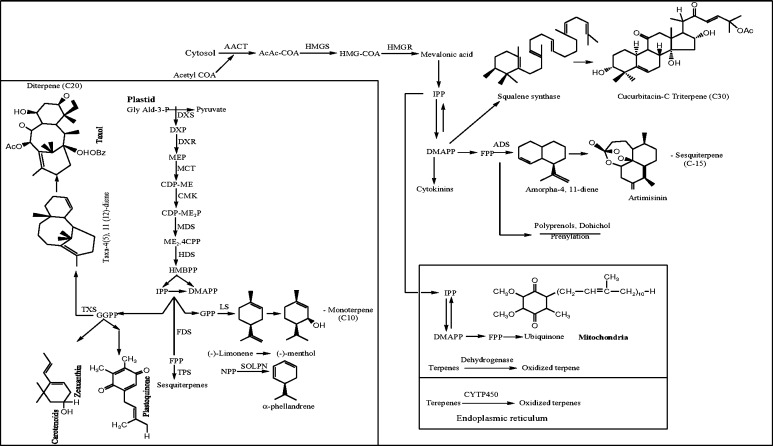
The terpenoids constitute the largest class of natural products and many interesting products are extensively applied in the industrial sector as flavors, fragrances, spices and are also used in perfumery and cosmetics. Many terpenoids have biological activities and also used for medical purposes. In higher plants, the conventional acetate-mevalonic acid pathway operates mainly in the cytosol and mitochondria and synthesizes sterols, sesquiterpenes and ubiquinones mainly. In the plastid, the non-mevalonic acid pathway takes place and synthesizes hemi-, mono-, sesqui-, and diterpenes along with carotenoids and phytol tail of chlorophyll. In this review paper, recent developments in the biosynthesis of terpenoids, indepth description of terpene synthases and their phylogenetic analysis, regulation of terpene biosynthesis as well as updates of terpenes which have entered in the clinical studies are reviewed thoroughly.
Overview
The claims and statistics of this paper haven’t been checked yet.
Free: it reads the open-access text and checks the first 5 claims that cite a source we can check. Create a free account to check every claim.
Integrity signals
Registry
Cites
Statistics
Figures
Verification
Claims the paper makes
The claims and statistics of this paper haven’t been checked yet.
Free: it reads the open-access text and checks the first 5 claims that cite a source we can check. Create a free account to check every claim.
Claims other papers make about this one
Each is checked against this paper’s own text: does it say what the citing paper says it does?
The cited source says what the claim attributes to it.
In the citing paper
“They present a wide-array of pharmacological properties, which have recently been described in several reviews (Russo, 2011; Singh and Sharma, 2015).”
From Cannabis sativa: The Plant of the Thousand and One Molecules (2016) · cites this paper as Singh and Sharma, 2015
The check wasn’t confident either way, so it gives no verdict — never disputed.
In the citing paper
“β-caryophyllene, a well-known active principle of black pepper and Copaiba balsam, possesses potent anti-inflammatory and gastric cytoprotector activities (Singh and Sharma, 2015).”
From Cannabis sativa: The Plant of the Thousand and One Molecules (2016) · cites this paper as Singh and Sharma, 2015
Experimental — accuracy not yet measuredThe check wasn’t confident either way, so it gives no verdict — never disputed.
In the citing paper
“The hydrolytic enzyme favors the release of active plant growth regulators from the conjugates stored in the plastids, thereby favoring trichome formation, as well as biomass production and leaf area (Singh et al., 2015).”
From Cannabis sativa: The Plant of the Thousand and One Molecules (2016) · cites this paper as Singh et al., 2015
Experimental — accuracy not yet measuredThe check wasn’t confident either way, so it gives no verdict — never disputed.
In the citing paper
“An additional study on A. annua has shown that the expression of a β-glucosidase from Trichoderma reesei increases glandular trichome density and artemisinin production (Singh et al., 2015).”
From Cannabis sativa: The Plant of the Thousand and One Molecules (2016) · cites this paper as Singh et al., 2015
Experimental — accuracy not yet measured
Self-check
Percentages, sums and reported differences re-computed from the paper’s own numbers.
The self-check needs the paper’s full text.
Citations
Cites
Ancestral polyploidy in seed plants and angiosperms
Jiao, Y., Wickett, N. J., Ayyampalayam, S., Chanderbali, A. S., Landherr, L., Ralph, P. E., Tomsho, L. P., Hu, Y., Liang, H., Soltis, P. S., et al. (2011) · Nature · doi:10.1038/nature09916 · Cited by 2,226 · cited 2×
“The D3 duplication event is highly likely to have been a tendem duplication that occurred during the ancient Poaceae genome before the q whole genome duplication, which was estimated to have occurred between 117 and 50 mya (Gaut 2002; Yu et al. 2005; Lescot et al. 2008; Jaio et al. 2011).”
BackgroundBIOSYNTHESIS AND ACTION OF JASMONATES IN PLANTS
Creelman, R. A., & Mullet, J. E. (1997) · Annual Review of Plant Physiology and Plant Molecular Biology · doi:10.1146/annurev.arplant.48.1.355 · Cited by 1,779 · cited 2×
“Methyl jasmonate is a cyclopentanone ring bearing lipophilic hormone synthesized in plants from octadecanoid pathway and they play role in development of responses to biotic stress (Creelman and Mullet 1997).”
BackgroundEngineering a mevalonate pathway in Escherichia coli for production of terpenoids
Martin, V. J. J., Pitera, D. J., Withers, S. T., Newman, J. D., & Keasling, J. D. (2003) · Nature Biotechnology · doi:10.1038/nbt833 · Cited by 1,725 · cited 1×
“On the basis of C5 units, we can classify the terpenoids as C5 (hemiterpenes), C10 (monoterpenes), C15 (sesquiterpenes), C20 (diterpenes), C25 (sesterpenes), C30 (triterpenes), C40 (tetraterpenes), [C40 (polyterpenes) (Ashour et al. 2010; Martin et al. 2003).”
Biological activities and distribution of plant saponins
Sparg, S. G., Light, M. E., & van Staden, J. (2004) · Journal of Ethnopharmacology · doi:10.1016/j.jep.2004.05.016 · Cited by 1,446 · cited 2×
“The class of triterpenes includes sterols and triterpe- noids, which can be synthesized as saponins and sapoge- nins sufficient amount in plants (Sparge et al. 2004).”
BackgroundChen, F., Tholl, D., Bohlmann, J., & Pichersky, E. (2011) · The Plant Journal · doi:10.1111/j.1365-313x.2011.04520.x · Cited by 1,446 · cited 5×
“In general, monoterpene synthases are localized on plastids, whereas sesquiterpene synthases are found in the cytosol (Chen et al. 2011; Aharoni et al. 2003).”
BackgroundInfluentialPlant Volatiles: Recent Advances and Future Perspectives
Dudareva, N., Negre, F., Nagegowda, D. A., & Orlova, I. (2006) · Critical Reviews in Plant Sciences · doi:10.1080/07352680600899973 · Cited by 1,395 · cited 4×
“Production of many trichome metabolites is also regulated tightly by transcriptional control, thereby allowing for tem- porally regulated emission of plant volatiles (Dudareva et al. 2006; Glas et al. 2012).”
BackgroundInfluentialPlant terpenoid synthases: Molecular biology and phylogenetic analysis
Bohlmann, J., Meyer-Gauen, G., & Croteau, R. (1998) · Proceedings of the National Academy of Sciences · doi:10.1073/pnas.95.8.4126 · Cited by 1,119 · cited 13×
“…of angiosperm terpene synthases (Bohlmann et al. 1998; Dudareva et al. 2003), the TPSb family contains angiosperm monoterpene synthases (Bohlmann et al. 1998; Dudareva et al. 2003), the TPSb includes angiosperm monoterpene synthases (Bohlmann et al. 1998; Dudareva et al. 2003), TPSd of…”
BackgroundInfluentialMonoterpene and sesquiterpene synthases and the origin of terpene skeletal diversity in plants
Degenhardt, J., Köllner, T. G., & Gershenzon, J. (2009) · Phytochemistry · doi:10.1016/j.phytochem.2009.07.030 · Cited by 1,093 · cited 5×
“Terpene synthases often catalyze the formation of multiple products from a prenyl diphosphate substrate, resulting from a catalytic mechanism that involves highly reactive carbocation intermediates (De- genhardt et al. 2009).”
BackgroundInfluentialThe Genomes of Oryza sativa: A History of Duplications
Yu, J., Wang, J., Lin, W., Li, S., Li, H., Zhou, J., Ni, P., Dong, W., Hu, S., Zeng, C., et al. (2005) · PLoS Biology · doi:10.1371/journal.pbio.0030038 · Cited by 983 · cited 2×
“The D3 duplication event is highly likely to have been a tendem duplication that occurred during the ancient Poaceae genome before the q whole genome duplication, which was estimated to have occurred between 117 and 50 mya (Gaut 2002; Yu et al. 2005; Lescot et al. 2008; Jaio et al. 2011).”
BackgroundORCA3, a Jasmonate-Responsive Transcriptional Regulator of Plant Primary and Secondary Metabolism
van der Fits, L., & Memelink, J. (2000) · Science · doi:10.1126/science.289.5477.295 · Cited by 917 · cited 1×
“Jasmonate was reported to be general inducer of bio- synthesis of plant secondary metabolite (Memelink et al. 2001; van der Fits and Memelink 2000).”
Background
Research works printed but not linked: 2
- Juergens UR Stober M Vetter H Steroid like inhibition of monocyte arachidonic acid metabolism and IL-1β production by 1,8-cineole Atemwegs Lungenkrankneitan 1998 24 3 11 9810029
- Pegel KH The importance of sitosterol and sitosterolin in human and animal nutrition S Afr J Sci 1997 93 263 268
Cited by
Cannabis sativa: The Plant of the Thousand and One Molecules
Andre, C. M., Hausman, J.-F., & Guerriero, G. (2016) · Frontiers in Plant Science · doi:10.3389/fpls.2016.00019 · Cited by 1,544
“They present a wide-array of pharmacological properties, which have recently been described in several reviews (Russo, 2011; Singh and Sharma, 2015).”
BackgroundYeshi, K., Crayn, D., Ritmejerytė, E., & Wangchuk, P. (2022) · Molecules · doi:10.3390/molecules27010313 · Cited by 488
“, releasing phytoalexins after pathogen attacks) or indirectly by producing mixtures of volatile organic compounds (VOCs) to attract carnivores of their herbivores [36].”
BackgroundSingh, R., Parihar, P., Singh, M., Bajguz, A., Kumar, J., Singh, S., Singh, V. P., & Prasad, S. M. (2017) · Frontiers in Microbiology · doi:10.3389/fmicb.2017.00515 · Cited by 398
“…upon their five-carbon isoprene unit, terpenoids have been classified into seven groups i.e., hemiterpenes (C5), monoterpenes (C10), sesquiterpenes (C15), diterpenes (C20), triterpenes (C30), tetraterpenes (C40), and polyterpenes (>C40; Keeling and Bohlmann, 2012; Singh and Sharma, 2015; Figure 3).”
BackgroundPlants as Sources of Anti-Inflammatory Agents
Nunes, C. D. R., Barreto Arantes, M., Menezes de Faria Pereira, S., Leandro da Cruz, L., de Souza Passos, M., Pereira de Moraes, L., Vieira, I. J. C., & Barros de Oliveira, D. (2020) · Molecules · doi:10.3390/molecules25163726 · Cited by 381
Abbas, F., Ke, Y., Yu, R., Yue, Y., Amanullah, S., Jahangir, M. M., & Fan, Y. (2017) · Planta · doi:10.1007/s00425-017-2749-x · Cited by 312
“2003; Singh and Sharma 2015).”
BackgroundThe molecular biology of fruity and floral aromas in beer and other alcoholic beverages
Holt, S., Miks, M. H., de Carvalho, B. T., Foulquié-Moreno, M. R., & Thevelein, J. M. (2019) · FEMS Microbiology Reviews · doi:10.1093/femsre/fuy041 · Cited by 296
Metabolomics as an Emerging Tool for the Study of Plant–Pathogen Interactions
Castro-Moretti, F. R., Gentzel, I. N., Mackey, D., & Alonso, A. P. (2020) · Metabolites · doi:10.3390/metabo10020052 · Cited by 269
Production of secondary metabolites using tissue culture-based biotechnological applications
Ozyigit, I. I., Dogan, I., Hocaoglu-Ozyigit, A., Yalcin, B., Erdogan, A., Yalcin, I. E., Cabi, E., & Kaya, Y. (2023) · Frontiers in Plant Science · doi:10.3389/fpls.2023.1132555 · Cited by 261
“The enzymes, that catalyze the reaction are oxidosqualene cyclases (Singh and Sharma, 2015; Goyal et al., 2022).”
BackgroundLudwiczuk, A., Skalicka-Woźniak, K., & Georgiev, M. I. (2017) · Pharmacognosy · doi:10.1016/b978-0-12-802104-0.00011-1 · Cited by 258
“β-Sitosterol also displayed antioxidant and anti-inflammatory properties in addition to strengthening the immune system [46].”
BackgroundBaron, E. P. (2018) · Headache: The Journal of Head and Face Pain · doi:10.1111/head.13345 · Cited by 251
Jubair, N., Rajagopal, M., Chinnappan, S., Abdullah, N. B., & Fatima, A. (2021) · Evidence-Based Complementary and Alternative Medicine · doi:10.1155/2021/3663315 · Cited by 226
Exploring the multifocal role of phytochemicals as immunomodulators
Behl, T., Kumar, K., Brisc, C., Rus, M., Nistor-Cseppento, D. C., Bustea, C., Aron, R. A. C., Pantis, C., Zengin, G., Sehgal, A., et al. (2021) · Biomedicine & Pharmacotherapy · doi:10.1016/j.biopha.2020.110959 · Cited by 219
Plant Secondary Metabolites: An Opportunity for Circular Economy
Chiocchio, I., Mandrone, M., Tomasi, P., Marincich, L., & Poli, F. (2021) · Molecules · doi:10.3390/molecules26020495 · Cited by 208
“Betulinic acid, a naturally occurring pentacyclic triterpene, exhibited a high variety of biological activities [125], including potent antiviral effects [126].”
BackgroundConstituents of Cannabis Sativa
Rock, E. M., & Parker, L. A. (2020) · Advances in experimental medicine and biology · doi:10.1007/978-3-030-57369-0_1 · Cited by 211
Fungal secondary metabolites and their biotechnological applications for human health
Devi, R., Kaur, T., Guleria, G., Rana, K. L., Kour, D., Yadav, N., Yadav, A. N., & Saxena, A. K. (2020) · Elsevier eBooks · doi:10.1016/b978-0-12-820528-0.00010-7 · Cited by 205
Plant Allelochemicals as Sources of Insecticides
Tlak Gajger, I., & Dar, S. A. (2021) · Insects · doi:10.3390/insects12030189 · Cited by 193
“These units are quite toxic to insects and act as a feeding deterrent [95].”
BackgroundAgarwood Induction: Current Developments and Future Perspectives
Tan, C. S., Isa, N. M., Ismail, I., & Zainal, Z. (2019) · Frontiers in Plant Science · doi:10.3389/fpls.2019.00122 · Cited by 181
“In plastids, the 1-deoxy-D-xylulose-5phosphate (DXP) or known as methylerythritol phosphate (MEP) pathway provides precursors for the production of monoterpenes, diterpenes, and carotenoids (Rohmer, 1999; Dong et al., 2015; Singh and Sharma, 2015).”
BackgroundJiang, S., Jin, J., Sarojam, R., & Ramachandran, S. (2019) · Genome Biology and Evolution · doi:10.1093/gbe/evz142 · Cited by 170
Inclusion of terpenes in cyclodextrins: Preparation, characterization and pharmacological approaches
Lima, P. S. S., Angélica, M., Araújo-Filho, H. G., Menezes, P. D. P., Araújo, A. A. D. S., Quintans‐Júnior, L. J., & Quintans, J. D. S. S. (2016) · Carbohydrate Polymers · doi:10.1016/j.carbpol.2016.06.040 · Cited by 163
Reddy, V. A., Wang, Q., Dhar, N., Kumar, N., Venkatesh, P. N., Rajan, C., Panicker, D., Sridhar, V., Mao, H., & Sarojam, R. (2017) · Plant Biotechnology Journal · doi:10.1111/pbi.12701 · Cited by 165
“They are involved in mediating plant defence responses and plant pollinator attraction and facilitate plant–environment interactions (Bhargava et al., 2013; Pichersky and Gershenzon, 2002; Singh and Sharma, 2015).”
BackgroundThe variability of terpenes in conifers under developmental and environmental stimuli
Kopaczyk, J. M., Warguła, J., & Jelonek, T. (2020) · Environmental and Experimental Botany · doi:10.1016/j.envexpbot.2020.104197 · Cited by 158
Engineering the oleaginous yeast Yarrowia lipolytica for production of α-farnesene
Liu, Y., Jiang, X., Cui, Z., Wang, Z., Qi, Q., & Hou, J. (2019) · Biotechnology for Biofuels · doi:10.1186/s13068-019-1636-z · Cited by 146
Rossi, B., Toschi, A., Piva, A., & Grilli, E. (2020) · Nutrition Research Reviews · doi:10.1017/s0954422420000013 · Cited by 146
Minor tropical fruits as a potential source of bioactive and functional foods
Sarkar, T., Salauddin, M., Roy, A., Sharma, N., Sharma, A., Yadav, S., Jha, V., Ребезов, М. Б., Khayrullin, M., Thiruvengadam, M., et al. (2022) · Critical Reviews in Food Science and Nutrition · doi:10.1080/10408398.2022.2033953 · Cited by 133
Chen, F., Ludwiczuk, A., Wei, G., Chen, X., Crandall‐Stotler, B., & Bowman, J. L. (2018) · Critical Reviews in Plant Sciences · doi:10.1080/07352689.2018.1482397 · Cited by 126
“In seed plants, terpenoid biosynthesis is often regulated by the jasmonate signaling pathway (Singh and Sharma, 2015).”
BackgroundArchaea, tiny helpers of land plants
Jung, J., Kim, J., Taffner, J., Berg, G., & Ryu, C. (2020) · Computational and Structural Biotechnology Journal · doi:10.1016/j.csbj.2020.09.005 · Cited by 120
“Terpene and bacteriocin deter herbivore feeding and microbial colonization, respectively; therefore, these archaea have potential functions for plant defense responses against herbivores and pathogenic bacteria [51,52].”
BackgroundPlant Secondary Metabolites as a Tool to Investigate Biotic Stress Tolerance in Plants: A Review
Jha, Y., & Mohamed, H. I. (2022) · Gesunde Pflanzen · doi:10.1007/s10343-022-00669-4 · Cited by 119
Impact of plant monoterpenes on insect pest management and insect-associated microbes
Qasim, M., Islam, W., Rizwan, M., Hussain, D., Noman, A., Khan, K. A., Ghramh, H. A., & Han, X. (2024) · Heliyon · doi:10.1016/j.heliyon.2024.e39120 · Cited by 120
“Additionally, monoterpenes play a crucial role in attracting pollinators and seed dispersers, facilitating plant-to-plant signaling, and engaging in allelopathy [63,234].”
BackgroundEngineering yeast for the production of plant terpenoids using synthetic biology approaches
Bureau, J.-A., Oliva, M. E., Dong, Y., & Ignea, C. (2023) · Natural Product Reports · doi:10.1039/d3np00005b · Cited by 113
A Review of Bark-Extract-Mediated Green Synthesis of Metallic Nanoparticles and Their Applications
Burlacu, E., Tanase, C., Coman, N.-A., & Berța, L. (2019) · Molecules · doi:10.3390/molecules24234354 · Cited by 112
“It has been found that this class of phytoconstituents act as a biological antioxidants [15,16].”
BackgroundAntidiabetic Potential of Monoterpenes: A Case of Small Molecules Punching above Their Weight
Habtemariam, S. (2017) · International Journal of Molecular Sciences · doi:10.3390/ijms19010004 · Cited by 110
Secondary metabolites in plants: main classes, phytochemical analysis and pharmacological activities
Mera, I. F. G., Falconí, D. E. G., & Morera, V. (2019) · Bionatura · doi:10.21931/rb/2019.04.04.11 · Cited by 114
Navale, G. R., Dharne, M. S., & Shinde, S. S. (2021) · Applied Microbiology and Biotechnology · doi:10.1007/s00253-020-11040-w · Cited by 109
Review on Plant-Based Management in Combating Antimicrobial Resistance - Mechanistic Perspective
Arip, M., Selvaraja, M., Mogana, R., Tan, L. F., Leong, M. Y., Tan, P. L., Yap, V. L., Chinnapan, S., Ng, C. T., Abdullah, M., et al. (2022) · Frontiers in Pharmacology · doi:10.3389/fphar.2022.879495 · Cited by 104
“Several plants and animals also generate terpenes for survival (Paduch et al., 2007) as their pharmacological and biological properties are required by all living organisms (Singh and Sharma, 2015).”
BackgroundPaolinelli, M., Villalobos‐Escobedo, J. M., Rolshausen, P. E., Herrera‐Estrella, A., Galindo‐Sánchez, C. E., Hernández, J. F. L., & Hernández-Martínez, R. (2016) · BMC Genomics · doi:10.1186/s12864-016-2952-3 · Cited by 100
Sheshadri, S. A., Nishanth, M. J., & Simon, B. (2016) · Frontiers in Plant Science · doi:10.3389/fpls.2016.01725 · Cited by 98
On the Evolution and Functional Diversity of Terpene Synthases in the Pinus Species: A Review
Alicandri, E., Paolacci, A. R., Osadolor, S. O., Sorgonà, A., Badiani, M., & Ciaffi, M. (2020) · Journal of Molecular Evolution · doi:10.1007/s00239-020-09930-8 · Cited by 95
“Terpenoids, also referred to as terpenes or isoprenoids, make up the biggest and most diversified class of chemical substances discovered in plants, encompassing over 40,000 individual compounds (Tholl 2015; Singh and Sharma 2015; Abbas et al.”
BackgroundArbuscular mycorrhizal Fungi and Changes in Primary and Secondary Metabolites
Machiani, M. A., Javanmard, A., Machiani, R. H., & Sadeghpour, A. (2022) · Plants · doi:10.3390/plants11172183 · Cited by 95
“It has been reported that jasmonic acid and gibberellic acid enhanced the concentration of terpenoid constituents through increasing the formation of glandular trichomes and sesquiterpenoid biosynthetic gene expression [66].”
BackgroundVolatile organic compounds as mediators of plant communication and adaptation to climate change
Abbas, F., Rothenberg, D. O., Zhou, Y., Ke, Y., & Wang, H. (2022) · Physiologia Plantarum · doi:10.1111/ppl.13840 · Cited by 96
Michael, T. P., Ernst, E., Hartwick, N. T., Chu, P., Bryant, D., Gilbert, S., Ortleb, S., Baggs, E. L., Sree, K. S., Appenroth, K., et al. (2020) · Genome Research · doi:10.1101/gr.266429.120 · Cited by 95
“Because both terpenes and sphingolipids may play a predominant role in plant defense (Singh and Sharma 2015; Huby et al. 2020), it is possible that Wolffia has traded the terpene pathway for sphingolipids or that the aquatic environment favors the latter.”
Discovery and Engineering of Cytochrome P450s for Terpenoid Biosynthesis
Xiao, H., Zhang, Y., & Wang, M. (2018) · Trends in biotechnology · doi:10.1016/j.tibtech.2018.11.008 · Cited by 94
“They not only play vital roles in complex biochemical processes such as stress response and cytophylaxis [1] but also have various bioactivities and extensive applications in the food, cosmetics, and pharmaceutical industries [2,3].”
BackgroundAgarwood—The Fragrant Molecules of a Wounded Tree
Shivanand, P., Arbie, N. F., Krishnamoorthy, S., & Ahmad, N. (2022) · Molecules · doi:10.3390/molecules27113386 · Cited by 96
Grape terpenoids: flavor importance, genetic regulation, and future potential
Mele, M. A., Kang, H.-M., Lee, Y., & Islam, M. Z. (2020) · Critical Reviews in Food Science and Nutrition · doi:10.1080/10408398.2020.1760203 · Cited by 90
Abdelgaleil, S. A. M., Gad, H. A., Ramadan, G. R. M., El-Bakry, A. M., & El-Sabrout, A. M. (2021) · International Journal of Pest Management · doi:10.1080/09670874.2021.1982067 · Cited by 92
“Most importantly, monoterpenes play a key role in attraction of pollinators, seed dispersers, plant-plant signaling and allelopathy (Baldwin et al. 2006 ; Raguso 2008 ; Singh and Sharma 2015 ).”
BackgroundConifers Phytochemicals: A Valuable Forest with Therapeutic Potential
Bhardwaj, K., Sanches-Silva, A. T., Atanassova, M., Sharma, R., Nepovimová, E., Musílek, K., Sharma, R., Alghuthaymi, M. A., Dhanjal, D. S., Nicoletti, M., et al. (2021) · Molecules · doi:10.3390/molecules26103005 · Cited by 89
“The terpenoids can be classified as C5 (hemiterpenes), C15 (sesquiterpenes), C20 (diterpenes), C10 (monoterpenes), C25 (sesterpenes), C40 (tetraterpenes), C40 (polyterpenes), and C30 (triterpenes) on the basis of C5 units [62].”
BackgroundSelf-citationUnderstanding Agarwood Formation and Its Challenges
Rasool, S., & Mohamed, R. (2016) · Tropical forestry · doi:10.1007/978-981-10-0833-7_3 · Cited by 88
Talebi, F., Misaghi, A., Khanjari, A., Kamkar, A., Gandomi, H., & Rezaeigolestani, M. (2018) · LWT · doi:10.1016/j.lwt.2018.05.067 · Cited by 85
Antimicrobial Diterpenes: Recent Development From Natural Sources
Saha, P., Rahman, F. I., Hussain, F., Rahman, S. M. A., & Rahman, M. M. (2022) · Frontiers in Pharmacology · doi:10.3389/fphar.2021.820312 · Cited by 85
Factors influencing yield, chemical composition and efficacy of essential oils
Mugao, L. G. (2024) · International Journal of Multidisciplinary Research and Growth Evaluation · doi:10.54660/.ijmrge.2024.5.4.169-178 · Cited by 85
Forestan, C., Cigliano, R. A., Farinati, S., Lunardon, A., Sanseverino, W., & Varotto, S. (2016) · Scientific Reports · doi:10.1038/srep30446 · Cited by 79
“TPS enzymes are responsible for the synthesis of the various terpenes, molecules involved in plant defense against biotic and abiotic stresses 48,49 .”
Silva, N. H. C. S., Morais, E. S., Freire, C. S. R., Freire, M. G., & Silvestre, A. J. D. (2020) · Molecules · doi:10.3390/molecules25010210 · Cited by 67
Plant species-specific impact of polyethylene microspheres on seedling growth and the metabolome
Bouaicha, O., Tiziani, R., Maver, M., Lucini, L., Miras‐Moreno, B., Zhang, L., Trevisan, M., Cesco, S., Borruso, L., & Mimmo, T. (2022) · The Science of The Total Environment · doi:10.1016/j.scitotenv.2022.156678 · Cited by 74
Role of terpenes in plant defense to biotic stress
Toffolatti, S. L., Maddalena, G., Passera, A., Casati, P., Bianco, P. A., & Quaglino, F. (2021) · Elsevier eBooks · doi:10.1016/b978-0-12-822919-4.00016-8 · Cited by 72
Yang, L., Zhao, Y., Zhang, Q., Cheng, L., Han, M., Ren, Y., & Yang, L. (2019) · Plant Cell Reports · doi:10.1007/s00299-019-02436-8 · Cited by 71
Isah, M. B., Tajuddeen, N., Umar, M. I., Alhafiz, Z. A., Mohammed, A., & Ibrahim, M. A. (2018) · Studies in natural products chemistry · doi:10.1016/b978-0-444-64179-3.00007-4 · Cited by 70
Assmann, C. E., Cadoná, F. C., Bonadiman, B. D. S. R., Dornelles, E. B., Trevisan, G., & da Cruz, I. B. M. (2018) · Biomedicine & Pharmacotherapy · doi:10.1016/j.biopha.2018.04.096 · Cited by 70
Phyto-miRNAs-based regulation of metabolites biosynthesis in medicinal plants
Sabzehzari, M., & Naghavi, M. R. (2018) · Gene · doi:10.1016/j.gene.2018.09.049 · Cited by 69
Antioxidant Molecules from Plant Waste: Extraction Techniques and Biological Properties
Lizárraga-Velázquez, C. E., Leyva‐López, N., Hernández, C., Gutiérrez‐Grijalva, E. P., Salazar‐Leyva, J. A., Osuna‐Ruíz, I., Montaño, E. M., Arrizón, J., Guerrero, A., Benítez-Hernández, A., et al. (2020) · Processes · doi:10.3390/pr8121566 · Cited by 70
“These compounds are formed by the condensation of two subunits of isoprene (C5H8) (hydrocarbon with five atoms of carbon) [8,39].”
BackgroundQuantitative Trait Loci Associated with Anthracnose Resistance in Sorghum
Patil, N. Y., Klein, R. R., Williams, C. L., Collins, S. D., Knoll, J. E., Burrell, A. M., Anderson, W. F., Rooney, W. L., & Klein, P. G. (2017) · Crop Science · doi:10.2135/cropsci2016.09.0793 · Cited by 68
“As part of a plant defense mechanism, in some plant species, sesquiterpenes are produced to act as phytoalexins (Singh and Sharma, 2015).”
BackgroundSarkar, T., Bharadwaj, K. K., Salauddin, M., Pati, S., & Chakraborty, R. (2021) · Applied Biochemistry and Biotechnology · doi:10.1007/s12010-021-03669-8 · Cited by 68
Umer, M., Anwar, N., Mubeen, M., Li, Y., Ali, A., Alshaharni, M. O., & Liu, P. (2025) · Frontiers in Microbiology · doi:10.3389/fmicb.2025.1616273 · Cited by 70
Recchia, G. H., Konzen, E. R., Cassieri, F., Caldas, D. G. G., & Tsai, S. M. (2018) · Frontiers in Microbiology · doi:10.3389/fmicb.2018.01339 · Cited by 67
“AMF form an extensive hyphal network in the soil that heads through the roots depletion zone, therefore becoming able to acquire nutrients (mainly phosphates) and water in a more efficient way than the root system alone (Smith and Smith, 1990; Rapparini and Peñuelas, 2014).”
BackgroundHerbal Extracts—New Trends in Functional and Medicinal Beverages
Rodino, S., & Buțu, M. (2019) · Elsevier eBooks · doi:10.1016/b978-0-12-816397-9.00003-0 · Cited by 70
Himmel, N. J., Letcher, J. M., Sakurai, A., Gray, T. R., Benson, M. N., & Cox, D. N. (2019) · Philosophical Transactions of the Royal Society B Biological Sciences · doi:10.1098/rstb.2019.0369 · Cited by 66
Methods for Rapid Screening of Biologically Active Compounds Present in Plant-Based Extracts
Godlewska, K., Pacyga, P., Szumny, A. J., Szymczycha‐Madeja, A., Wełna, M., & Michalak, I. (2022) · Molecules · doi:10.3390/molecules27207094 · Cited by 69
Ciaglia, E., Malfitano, A. M., Laezza, C., Fontana, A., Nuzzo, G., Cutignano, A., Abate, M., Pelin, M., Sosa, S., Bifulco, M., et al. (2017) · International Journal of Molecular Sciences · doi:10.3390/ijms18081643 · Cited by 65
“These compounds have been found largely in higher plants [17,18] and in lower invertebrates including marine organisms [19–24].”
BackgroundRegulation of terpenoid biosynthesis by miRNA in Persicaria minor induced by Fusarium oxysporum
Samad, A. F. A., Rahnamaie‐Tajadod, R., Sajad, M., Jani, J., Murad, A. M. A., Noor, N. M., & Ismail, I. (2019) · BMC Genomics · doi:10.1186/s12864-019-5954-0 · Cited by 65
Terpene toxicity and oxidative stress
Ağuş, H. H. (2020) · Elsevier eBooks · doi:10.1016/b978-0-12-819092-0.00004-2 · Cited by 65
Najafabadi, A. S., & Naghavi, M. R. (2017) · Gene · doi:10.1016/j.gene.2017.12.035 · Cited by 66
Li, P., Xiao, Z., Xie, X., Li, Z., Yang, H., Ma, X., Sun, J. B., & Li, J. (2021) · Environmental Pollution · doi:10.1016/j.envpol.2021.117246 · Cited by 64
Transgenic approaches for plant disease control: Status and prospects 2021
Collinge, D. B., & Sarrocco, S. (2021) · Plant Pathology · doi:10.1111/ppa.13443 · Cited by 62
Functional and morphological evolution in gymnosperms: A portrait of implicated gene families
Torre, A. R. D. L., Piot, A., Liu, B., Wilhite, B., Weiss, M., & Porth, I. M. (2019) · Evolutionary Applications · doi:10.1111/eva.12839 · Cited by 62
“The plant‐based dirigents (Pickel & Schaller, 2013), cytochrome P450s (Hamberger & Bak, 2013; Renault, Bassard, Hamberger, & Werck‐Reichhart, 2014), and terpenoids (Bohlmann & Keeling, 2008; Singh & Sharma, 2015) have been recognized to hold potential for biotechnology.”
Bibi, S., Saadaoui, I., BiBi, A., Al-Ghouti, M. A., & Abu‐Dieyeh, M. H. (2024) · Bioresource Technology Reports · doi:10.1016/j.biteb.2024.101789 · Cited by 61
Vegetable phytochemicals: An update on extraction and analysis techniques
Sharma, M., & Kaushik, P. (2021) · Biocatalysis and Agricultural Biotechnology · doi:10.1016/j.bcab.2021.102149 · Cited by 60
Buerstmayr, M., Wagner, C., Nosenko, T., Omony, J., Steiner, B., Nußbaumer, T., Mayer, K., & Buerstmayr, H. (2021) · BMC Genomics · doi:10.1186/s12864-021-07800-1 · Cited by 60
Meta-Analysis and Analytical Methods in Cosmetics Formulation: A Review
Rico, F., Mazabel, A. P., Egurrola, G., Pulido, J., BARRIOS, N. A., Márquez, R., & García, J. (2023) · Cosmetics · doi:10.3390/cosmetics11010001 · Cited by 60
“Moreover, new ingredients are being explored, and their microscopic properties and translation into macroscopic performance are being studied [18,19].”
BackgroundBui, H., Greenhalgh, R., Ruckert, A., Gill, G. S., Lee, S., Ramirez, R. A., & Clark, R. M. (2018) · Frontiers in Plant Science · doi:10.3389/fpls.2018.01222 · Cited by 59
“Genes Required for the Production of Volatile Plant Compounds Are Induced by Mite Herbivory In addition to green leaf volatiles and methyl salicylate (MeSA) – volatile organic compounds whose biosynthesis genes were either constitutively expressed or induced by mite herbivory (Figure 6 and Supplementary Figure 8) – te…”
BackgroundTulsani, N. J., Hamid, R., Jacob, F., Umretiya, N. G., Nandha, A. K., Tomar, R. S. S., & Golakiya, B. A. (2019) · Genomics · doi:10.1016/j.ygeno.2019.09.004 · Cited by 59
González-Chavira, M. M., Herrera-Hernández, M. G., Guzmán‐Maldonado, H., & Pons-Hernández, J. L. (2018) · Scientia Horticulturae · doi:10.1016/j.scienta.2018.02.049 · Cited by 58
Chen, S., Xie, P., Li, Y., Wang, X., Liu, H., Wang, S., Han, W., Wu, R., Li, X., Guan, Y., et al. (2021) · Journal of Agricultural and Food Chemistry · doi:10.1021/acs.jafc.1c04378 · Cited by 58
A hybrid multifunctional physicochemical sensor suite for continuous monitoring of crop health
Hossain, N. I., & Tabassum, S. (2023) · Scientific Reports · doi:10.1038/s41598-023-37041-z · Cited by 59
Silva, E. A. P., Carvalho, J. S., Guimarães, A. G., Barreto, R. D. S. S., dos Santos, M. R. V., Barreto, A. S., & Quintans‐Júnior, L. J. (2018) · Expert Opinion on Therapeutic Patents · doi:10.1080/13543776.2019.1558211 · Cited by 58
“Furthermore, many terpenes such as D-limonene, ursolic acid, 1,8-Cineole, betulinic acid and β-sitosterol are currently under clinical trials [64].”
BackgroundTahir, J., Hoyte, S., Bassett, H., Brendolise, C., Chatterjee, A., Templeton, K., Deng, C. H., Crowhurst, R. N., Montefiori, M., Morgan, E. R., et al. (2019) · Horticulture Research · doi:10.1038/s41438-019-0184-9 · Cited by 57
Jaiswal, D., Pandey, A., Mukherjee, A., Agrawal, M., & Agrawal, S. B. (2020) · Environmental and Experimental Botany · doi:10.1016/j.envexpbot.2020.104152 · Cited by 56
He, C., Li, Y., Zhou, J., Yu, X., De, Z., Chen, Y., Ni, D., & Yu, Z. G. (2022) · Foods · doi:10.3390/foods11182880 · Cited by 56
“As metabolites present widely in a variety of plants, terpenes are not only the constituents of the floral fragrance released by plants, but also play a role in plant defense under biotic and abiotic stress [27,28].”
BackgroundCláudio, A. F. M., Cognigni, A., de Faria, E. L. P., Silvestre, A. J. D., Zirbs, R., Freire, M. G., & Bica, K. (2018) · Separation and Purification Technology · doi:10.1016/j.seppur.2018.04.042 · Cited by 56
Iridoids and other monoterpenes in the Alzheimer’s brain: Recent development and future prospects
Habtemariam, S. (2018) · Molecules · doi:10.3390/molecules23010117 · Cited by 55
Analysis of diterpenes and diterpenoids
Eksi, G., Kurbanoğlu, S., & Erdem, S. A. (2020) · Elsevier eBooks · doi:10.1016/b978-0-12-816455-6.00009-3 · Cited by 56
Yang, F., Zhang, Y., Huang, Q., Yin, G., Pennerman, K. K., Yu, J., Liu, Z., Li, D., & Guo, A. (2015) · Scientific Reports · doi:10.1038/srep16500 · Cited by 55
Natural compounds targeting glycolysis as promising therapeutics for gastric cancer: A review
Zhao, M., Feng, W., Sun, G., Wen, Y., Xiang, J., Su, F., Zhan, L., Nian, Q., Chen, Y., & Zeng, J. (2022) · Frontiers in Pharmacology · doi:10.3389/fphar.2022.1004383 · Cited by 54
“More than 50,000 terpenes have been found, which have a wide range of biological functions, including antiinflammatory, anti-allergic, and preventative disease properties, and are used for the treatment of cardiovascular and cerebrovascular diseases (Singh and Sharma, 2015).”
BackgroundBifurcatriol, a New Antiprotozoal Acyclic Diterpene from the Brown Alga Bifurcaria bifurcata
Smyrniotopoulos, V., Merten, C., Kaiser, M., & Taşdemir, D. (2017) · Marine Drugs · doi:10.3390/md15080245 · Cited by 54
“Terpene biosynthesis involves them as intermediates originating from enzymatic elongation and modification of few universal linear and non-chiral isoprenoid precursors [2,3].”
BackgroundKamle, M., Mahato, D. K., Sharma, B., Gupta, A., Shah, A. K., Mahmud, M. M. C., Agrawal, S., Singh, J., Rasane, P., Shukla, A. C., et al. (2024) · Food Chemistry Advances · doi:10.1016/j.focha.2024.100671 · Cited by 55
Prospects of Essential Oils in Controlling Pathogenic Biofilm
Jafri, H., Ansari, F. A., & Ahmad, I. (2018) · Elsevier eBooks · doi:10.1016/b978-0-12-814619-4.00009-4 · Cited by 54
Squara, S., Caratti, A., Fina, A., Liberto, E., Spigolon, N., Genova, G., Castello, G., Cincera, I., Bicchi, C. P., & Cordero, C. E. I. (2023) · Journal of Chromatography A · doi:10.1016/j.chroma.2023.464041 · Cited by 52
Adnan, M., Patel, M. B., Reddy, M. N., & Al-Shammari, E. (2018) · Scientific Reports · doi:10.1038/s41598-018-20237-z · Cited by 52
Neis, F. A., de Costa, F., de Almeida, M. R., Colling, L. C., Junkes, C. F. D. O., Fett, J. P., & Fett‐Neto, A. G. (2019) · Industrial Crops and Products · doi:10.1016/j.indcrop.2019.02.013 · Cited by 52
Medicinal Plants Under Climate Change: Impacts on Pharmaceutical Properties of Plants
Gupta, A., Singh, P. P., Singh, P., Singh, K., Singh, A. V., Singh, S. K., & Kumar, A. (2019) · Elsevier eBooks · doi:10.1016/b978-0-12-816483-9.00008-6 · Cited by 52
Lai, M., Zhang, L., Lei, L., Liu, S., Jia, T., & Yi, M. (2019) · Industrial Crops and Products · doi:10.1016/j.indcrop.2019.112065 · Cited by 51
Yi, M., Jia, T., Dong, L., Zhang, L., Leng, C., Liu, S., & Lai, M. (2020) · Industrial Crops and Products · doi:10.1016/j.indcrop.2020.113141 · Cited by 51
Potential of diterpene compounds as antivirals, a review
Wardana, A. P., Aminah, N. S., Rosyda, M., Abdjan, M. I., Kristanti, A. N., Tun, K. N. W., Choudhary, M. I., & Takaya, Y. (2021) · Heliyon · doi:10.1016/j.heliyon.2021.e07777 · Cited by 51
Metadata
- Authors
- Singh, B., & Sharma, R. A.
- Affiliations
- Amity University Jaipur (IN)
- University of Rajasthan (IN)
- Corresponding author
- Singh, Bharat
- Venue
- 3 Biotech
- Published
- 2014-04-29
- Volume
- 5
- Issue
- 2
- Pages
- 129-151
- ISSN
- 2190-572X (ISSN-L)
- 2190-5738
- PMC
- PMC4362742
- OpenAlex
- W2048175162
- Semantic Scholar
- 534ff96aa8cad327bf98a004d29dfba7de25c0c8
- Cited by
- 562
- References
- 295
- Citations by year
- 2026: 17 · 2025: 55 · 2024: 50 · 2023: 84 · 2022: 68 · 2021: 77 · 2020: 75 · 2019: 53 · 2018: 42 · 2017: 23 · 2016: 15 · 2015: 2 · 2014: 1
- FWCI
- 5.61
- Type
- journal article
- Language
- en
- Open access
- hybrid
- doi.org
- Locations
- 3 Biotech (publishedVersion, cc-by)
- Europe PMC (PubMed Central) (publishedVersion, cc-by)
- PubMed Central (publishedVersion, cc-by)
- PubMed (publishedVersion)
- Funders
- Amity University
- Topics
- Life Sciences › Biochemistry, Genetics and Molecular Biology › Molecular Biology › Plant biochemistry and biosynthesis
- Life Sciences › Agricultural and Biological Sciences › Plant Science › Plant tissue culture and regeneration
- Physical Sciences › Chemistry › Organic Chemistry › Sesquiterpenes and Asteraceae Studies
- Keywords
- terpenoid biosynthesis, terpene synthase, phylogenetic analysis, methylerythritol phosphate pathway, sesquiterpenes, diterpenoids, carotenoids, plant defense response, biosynthetic regulation, natural products
About these checks
Registry, retraction, Cites and statistics results are computed, not judged, with one exception: a printed reference that no index lists is read once by a model before it counts as a citation error. Claims are extracted by a model and kept only when their quote appears verbatim in the text; each cited source is then checked, with a model’s help, for whether it says what the claim relies on. Those verdicts can be wrong — read the claim’s quote and the cited source before relying on one.
Statistics and arithmetic are recomputed, not judged.
Confidence bands are shown only for fields calibrated on our annotated test set. None is calibrated yet, so no band is shown.
What counts as a claim ›How we measure confidence ›How we check this ›
Are you an author, or do you see a problem with this page? Request a review
Data sources
Bibliographic data: Semantic Scholar, OpenAlex, Crossref.
Contains information from the Semantic Scholar Academic Graph Datasets, made available under the ODC Attribution License (ODC-BY 1.0).
Semantic Scholar’s data is described in: Kinney, R., et al. (2023). The Semantic Scholar Open Data Platform. arXiv:2301.10140.
