

The DOI matches its Crossref record; 75 of the 75 references it cites were found in a registry or an index.
Futuristic biosensors for cardiac health care: an artificial intelligence approach
Open accessAbstract
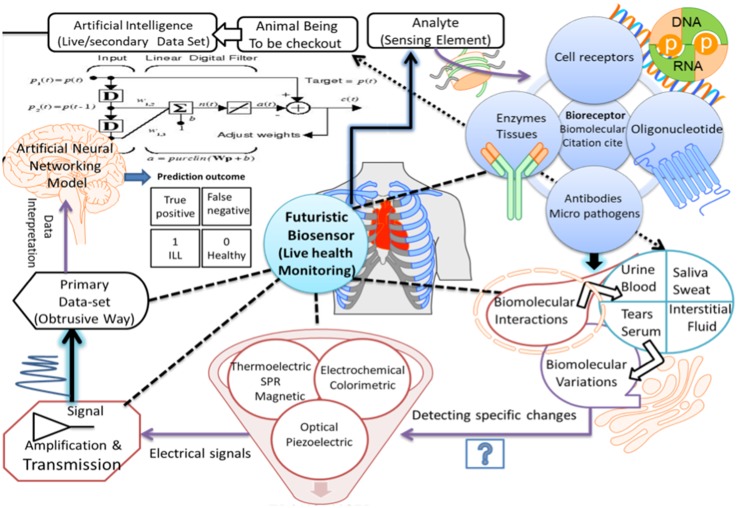
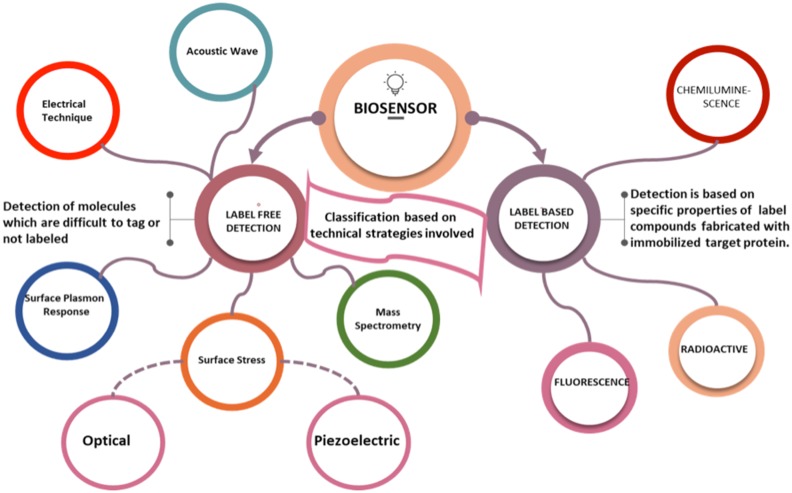
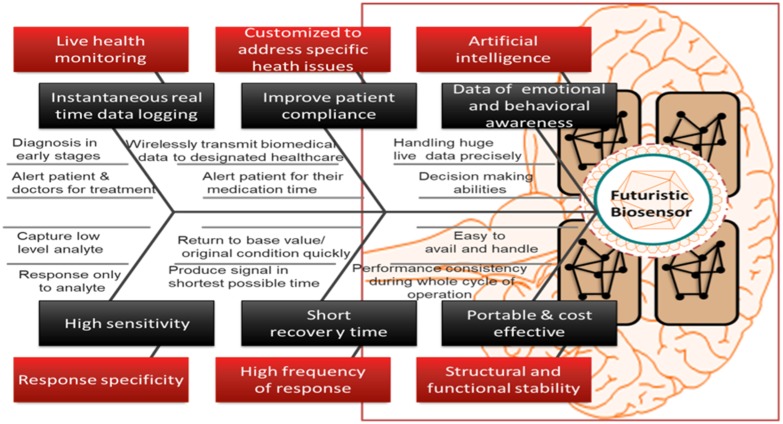
Biosensor-based devices are pioneering in the modern biomedical applications and will be the future of cardiac health care. The coupling of artificial intelligence (AI) for cardiac monitoring-based biosensors for the point of care (POC) diagnostics is prominently reviewed here. This review deciphers the most significant machine-learning algorithms for the futuristic biosensors along with the internet of things, computational techniques and microchip-based essential cardiac biomarkers for real-time health monitoring and improving patient compliance. The present review also discusses the recently developed cardiac biosensors along with technical strategies involved in their mechanism of working and their applications in healthcare. Additionally, it provides a key for the ontogeny of an effective and supportive hierarchical protocol for clinical decision-making about personalized medicine through combinatory information analysis, and integrated multidisciplinary AI approaches.
Overview
The claims and statistics of this paper haven’t been checked yet.
Run the check — free, no account needed. It reads the open-access text and checks the sources it cites.
Integrity signals
Registry
Cites
Statistics
Figures
Verification
Claims the paper makes
The claims and statistics of this paper haven’t been checked yet.
Run the check — free, no account needed. It reads the open-access text and checks the sources it cites.
Claims other papers make about this one
Each is checked against this paper’s own text: does it say what the citing paper says it does?
In the citing paper
“As the biosensors are still in the development stage in monitoring biochemical signals, the technology is yet to sense biological biomarkers continuously, and they need to achieve higher sensitivity, selectivity, and accuracy towards specific biomolecule sensing [14,17].”
From The emergence of AI-based wearable sensors for digital health technology: a review (2023) · cites this paper as [17]
In the citing paper
“DL algorithms have been proven effective in the early detection and preventing of chronic diseases, like diabetes and cardiovascular disease [17,195].”
From The emergence of AI-based wearable sensors for digital health technology: a review (2023) · cites this paper as [17]
In the citing paper
“Integration with smartphones and mobile devices enhances the accessibility of wearable ECG monitors for real-time monitoring, data storage, and cloud-based analytics, enabling seamless integration into telemedicine and remote patient monitoring systems [4,16,17].”
From The emergence of AI-based wearable sensors for digital health technology: a review (2023) · cites this paper as [17]
Self-check
Percentages, sums and reported differences re-computed from the paper’s own numbers.
The self-check needs the paper’s full text.
Citations
Cites
A Real-Time QRS Detection Algorithm
Pan, J., & Tompkins, W. J. (1985) · IEEE Transactions on Biomedical Engineering · doi:10.1109/tbme.1985.325532 · Cited by 7,855
Opportunities and obstacles for deep learning in biology and medicine
Ching, T., Himmelstein, D. S., Beaulieu-Jones, B. K., Kalinin, A. A., Do, B. T., Way, G. P., Ferrero, E., Agapow, P.-M., Zietz, M., Hoffman, M. M., et al. (2018) · Journal of The Royal Society Interface · doi:10.1098/rsif.2017.0387 · Cited by 2,310
Electrochemical biosensors: recommended definitions and classification
Thévenot, D. R., Tóth, K., Durst, R. A., & Wilson, G. S. (2001) · Biosensors and Bioelectronics · doi:10.1016/s0956-5663(01)00115-4 · Cited by 1,858
Machine learning and data mining methods in diabetes research
Kavakiotis, I., Tsave, O., Salifoglou, A., Maglaveras, N., Vlahavas, I., & Chouvarda, I. (2017) · Computational and Structural Biotechnology Journal · doi:10.1016/j.csbj.2016.12.005 · Cited by 1,445
Wearable Chemical Sensors: Present Challenges and Future Prospects
Bandodkar, A. J., Jeerapan, I., & Wang, J. (2016) · ACS Sensors · doi:10.1021/acssensors.6b00250 · Cited by 778 · cited 1×
“These days, scientists are quite interested and engaged in developing of the novel, smart and advanced devices such that more specific, sensitive and stable biosensors for theranostics purposes can be invented (Bandodkar et al. 2016).”
BackgroundEvolving support vector machines using fruit fly optimization for medical data classification
Shen, L., Chen, H., Yu, Z., Kang, W., Zhang, B., Li, H., Yang, B., & Liu, D. (2016) · Knowledge-Based Systems · doi:10.1016/j.knosys.2016.01.002 · Cited by 539
Multiplexed Point-of-Care Testing – xPOCT
Dincer, C., Bruch, R. C., Kling, A., Dittrich, P. S., & Urban, G. A. (2017) · Trends in biotechnology · doi:10.1016/j.tibtech.2017.03.013 · Cited by 508
Machine Learning and Decision Support in Critical Care
Johnson, A. E. W., Ghassemi, M. M., Nemati, S., Niehaus, K. E., Clifton, D. A., & Clifford, G. D. (2016) · Proceedings of the IEEE · doi:10.1109/jproc.2015.2501978 · Cited by 459
Biosensors for cardiac biomarkers detection: A review
Qureshi, A., Gürbüz, Y., & Niazi, J. H. (2012) · Sensors and Actuators B Chemical · doi:10.1016/j.snb.2012.05.077 · Cited by 412
Nanomaterial-based devices for point-of-care diagnostic applications
Quesada-González, D., & Merkoçi, A. (2018) · Chemical Society Reviews · doi:10.1039/c7cs00837f · Cited by 407
Big data analytics to improve cardiovascular care: promise and challenges
Rumsfeld, J. S., Joynt, K. E., & Maddox, T. M. (2016) · Nature Reviews Cardiology · doi:10.1038/nrcardio.2016.42 · Cited by 398
Real-Time Signal Quality-Aware ECG Telemetry System for IoT-Based Health Care Monitoring
Satija, U., Ramkumar, B., & Manikandan, M. S. (2017) · IEEE Internet of Things Journal · doi:10.1109/jiot.2017.2670022 · Cited by 375
Zhang, D., Huang, L., Liu, B., Ni, H., Sun, L., Su, E., Chen, H., Gu, Z., & Zhao, X. (2018) · Biosensors and Bioelectronics · doi:10.1016/j.bios.2018.01.062 · Cited by 344
Progress of new label-free techniques for biosensors: a review
Sang, S., Wang, Y., Feng, Q., Wei, Y., Ji, J., & Zhang, W. (2015) · Critical Reviews in Biotechnology · doi:10.3109/07388551.2014.991270 · Cited by 285
Microfluidics Based Point‐of‐Care Diagnostics
Pandey, C. M., Augustine, S., Kumar, S., Kumar, S., Nara, S., Srivastava, S. K., & Malhotra, B. D. (2017) · Biotechnology Journal · doi:10.1002/biot.201700047 · Cited by 283
Wu, Y., Yao, X., Vespasiani, G., Nicolucci, A., Dong, Y., Kwong, J., Li, L., Sun, X., Tian, H., & Li, S. (2017) · JMIR mHealth and uHealth · doi:10.2196/mhealth.6522 · Cited by 283
Recent advances in cholesterol biosensor
Arya, S. K., Datta, M., & Malhotra, B. D. (2007) · Biosensors and Bioelectronics · doi:10.1016/j.bios.2007.10.018 · Cited by 264
An Iterative Procedure for Removing Random-Valued Impulse Noise
Chan, R. H.-F., Hu, C., & Nikolova, M. (2004) · IEEE Signal Processing Letters · doi:10.1109/lsp.2004.838190 · Cited by 215
Big data analytics for healthcare
Sun, J., & Reddy, C. K. A. (2013) · ACM SIGKDD International Conference on Knowledge Discovery and Data Mining (KDD) · doi:10.1145/2487575.2506178 · Cited by 196
A comprehensive approach to privacy in the cloud-based Internet of Things
Henze, M., Hermerschmidt, L., Kerpen, D., Häußling, R., Rumpe⋆, B., & Wehrle, K. (2015) · Future Generation Computer Systems · doi:10.1016/j.future.2015.09.016 · Cited by 195
Wu, Y., Yao, X., Vespasiani, G., Nicolucci, A., Dong, Y., Kwong, J. S. W., Li, L., Sun, X., Tian, H., & Li, S. (2018) · JMIR mhealth and uhealth · doi:10.2196/mhealth.8789 · Cited by 176
Sarangadharan, I., Regmi, A., Chen, Y.-W., Hsu, C.-P., Chen, P., Chang, W.-H., Lee, G.-Y., Chyi, J., Shiesh, S., Lee, G., et al. (2017) · Biosensors and Bioelectronics · doi:10.1016/j.bios.2017.09.018 · Cited by 172
Automated diagnosis of coronary artery disease (CAD) patients using optimized SVM
Dolatabadi, A. D., Khadem, S. E. Z., & Asl, B. M. (2016) · Computer Methods and Programs in Biomedicine · doi:10.1016/j.cmpb.2016.10.011 · Cited by 167
Zhou, N., Wang, J., Chen, T., Yu, Z., & Li, G. (2006) · Analytical Chemistry · doi:10.1021/ac0605492 · Cited by 158
Wearable technology for cardiology: An update and framework for the future
Pevnick, J. M., Birkeland, K. T., Zimmer, R. J., Elad, Y., & Kedan, I. (2017) · Trends in Cardiovascular Medicine · doi:10.1016/j.tcm.2017.08.003 · Cited by 157
ECG diagnosis of acute ischaemia and infarction: past, present and future
Herring, N. (2006) · QJM · doi:10.1093/qjmed/hcl025 · Cited by 156
A Machine Learning System to Improve Heart Failure Patient Assistance
Guidi, G., Pettenati, M. C., Melillo, P., & Iadanza, E. (2014) · IEEE Journal of Biomedical and Health Informatics · doi:10.1109/jbhi.2014.2337752 · Cited by 155
Effective heart disease prediction system using data mining techniques
Singh, P., Singh, S., & Pandi, G. (2018) · International Journal of Nanomedicine · doi:10.2147/ijn.s124998 · Cited by 151
A Community-Based IoT Personalized Wireless Healthcare Solution Trial
Catherwood, P. A., Steele, D., Little, M., McComb, S., & McLaughlin, J. A. (2018) · IEEE Journal of Translational Engineering in Health and Medicine · doi:10.1109/jtehm.2018.2822302 · Cited by 146
Challenges and Opportunities for Cardiovascular Disease Prevention
Franco, M., Cooper, R., Bilal, U., & Fuster, V. (2011) · The American Journal of Medicine · doi:10.1016/j.amjmed.2010.08.015 · Cited by 142
Zhou, W., Li, K., Wei, Y., Hao, P., Chi, M., Liu, Y., & Wu, Y. (2018) · Biosensors and Bioelectronics · doi:10.1016/j.bios.2018.01.061 · Cited by 139
Detection of Cardiac Biomarkers Using Single Polyaniline Nanowire-Based Conductometric Biosensors
Lee, I., Luo, X., Huang, J., Cui, X. T., & Yun, M. (2012) · Biosensors · doi:10.3390/bios2020205 · Cited by 124
Electrochromic Molecular Imprinting Sensor for Visual and Smartphone-Based Detections
Capoferri, D., Álvarez-Diduk, R., Carlo, M. D., Compagnone, D., & Merkoçi, A. (2018) · Analytical Chemistry · doi:10.1021/acs.analchem.8b00389 · Cited by 112
Hu, B., Li, J., Mou, L., Liu, Y., Deng, J., Qian, W., Sun, J., Cha, R., & Jiang, X. (2017) · Lab on a Chip · doi:10.1039/c7lc00249a · Cited by 109
Cai, X., Gao, X., Wang, L., Wu, Q., & Lin, X. (2013) · Sensors and Actuators B Chemical · doi:10.1016/j.snb.2013.02.050 · Cited by 106
Shrestha, B. K., Ahmad, R., Shrestha, S., Park, C. H., & Kim, C. S. (2017) · Biosensors and Bioelectronics · doi:10.1016/j.bios.2017.03.072 · Cited by 105
Analysis Of Heart Diseases Dataset Using Neural Network Approach
Rani, U. (2011) · International Journal of Data Mining & Knowledge Management Process · doi:10.5121/ijdkp.2011.1501 · Cited by 104
Shanmugam, N. R., Muthukumar, S., Chaudhry, S., Anguiano, J., & Prasad, S. (2016) · Biosensors and Bioelectronics · doi:10.1016/j.bios.2016.10.046 · Cited by 103
Frontiers and Advances in Molecular Spectroscopy
(2017) · Elsevier eBooks · doi:10.1016/c2016-0-01052-5 · Cited by 101
Label-free methods of reporting biomolecular interactions by optical biosensors.
Citartan, M., Gopinath, S., Tominaga, J., & Tang, T.-H. (2013) · In Analysis · doi:10.1039/c3an36828a · Cited by 91
Unsupervised heart-rate estimation in wearables with Liquid states and a probabilistic readout
Das, A. K., Pradhapan, P., Groenendaal, W., Adiraju, P., Rajan, R. T., Catthoor, F., Schaafsma, S., Krichmar, J. L., Dutt, N. D., & Hoof, C. A. V. (2018) · Neural Networks · doi:10.1016/j.neunet.2017.12.015 · Cited by 85
Substrate-gate coupling in ZnO-FET biosensor for cardiac troponin I detection
Fathil, M. F. M., Arshad, M. K. M., Ruslinda, A. R., Gopinath, S. C. B., Nor, M. N. M., Adzhri, R., Hashim, U., & Lam, H. Y. (2016) · Sensors and Actuators B Chemical · doi:10.1016/j.snb.2016.09.131 · Cited by 84
Gupta, S. K., & Shukla, P. (2017) · Frontiers in Pharmacology · doi:10.3389/fphar.2017.00419 · Cited by 81
Self-citationAutomated Diagnosis of Coronary Artery Disease: A Review and Workflow
Mastoi, Q.-U.-A., Wah, T. Y., Raj, R. G., & Iqbal, U. (2018) · Cardiology Research and Practice · doi:10.1155/2018/2016282 · Cited by 79
Silva, B. V. M., Cavalcanti, I. T., de Mattos, A. B., de Moura, P. M. M. F., Sotomayor, M. D. P. T., & Dutra, R. F. (2010) · Biosensors and Bioelectronics · doi:10.1016/j.bios.2010.08.051 · Cited by 76
Label-free RNA aptamer-based capacitive biosensor for the detection of C-reactive protein
Qureshi, A., Gürbüz, Y., Kallempudi, S. S., & Niazi, J. H. (2010) · Physical Chemistry Chemical Physics · doi:10.1039/c004133e · Cited by 75
Advances in point-of-care diagnostic devices in cancers
Gaikwad, P. S., & Banerjee, R. (2018) · The Analyst · doi:10.1039/c7an01771e · Cited by 71
Harnessing the Heart of Big Data
Scruggs, S. B., Watson, K. E., Su, A. I., Hermjakob, H., Yates, J. R., Lindsey, M. L., & Ping, P. (2015) · Circulation Research · doi:10.1161/circresaha.115.306013 · Cited by 66
Fundamental Biomaterials: Polymers
(2018) · Elsevier eBooks · doi:10.1016/c2016-0-03544-1 · Cited by 62
Programmable Bio-nanochip Platform: A Point-of-Care Biosensor System with the Capacity To Learn
McRae, M. P., Simmons, G. W., Wong, J., & McDevitt, J. T. (2016) · Accounts of Chemical Research · doi:10.1021/acs.accounts.6b00112 · Cited by 58
Nanotechnology in Disease Diagnostic Techniques
Savaliya, R., Shah, D., Singh, R., Kumar, A., Shanker, R., Dhawan, A., & Singh, S. (2015) · Current Drug Metabolism · doi:10.2174/1389200216666150625121546 · Cited by 55
Self-citation(2017) · Methods in molecular biology · doi:10.1007/978-1-4939-6848-0 · Cited by 51
Programming models and systems for Big Data analysis
Belcastro, L., Marozzo, F., & Talia, D. (2018) · International Journal of Parallel Emergent and Distributed Systems · doi:10.1080/17445760.2017.1422501 · Cited by 50
Computational biology for cardiovascular biomarker discovery
Azuaje, F. J., Devaux, Y., & Wagner, D. (2009) · Briefings in Bioinformatics · doi:10.1093/bib/bbp008 · Cited by 44
Virtual Nursing Avatars: Nurse Roles and Evolving Concepts of Care
Abbott, M., & Shaw, P. A. (2016) · OJIN The Online Journal of Issues in Nursing · doi:10.3912/ojin.vol21no03ppt39.05 · Cited by 41
Paper‐based point‐of‐care testing for cost‐effective diagnosis of acute flavivirus infections
Bedin, F., Boulet, L., Voilin, E., Theillet, G., Rubens, A., & Rozand, C. (2017) · Journal of Medical Virology · doi:10.1002/jmv.24806 · Cited by 40
Paiva, J. S., Cardoso, J. M. R., & Pereira, T. (2017) · International Journal of Medical Informatics · doi:10.1016/j.ijmedinf.2017.10.011 · Cited by 38
Wang, H., Li, Y., Zhao, K., Chen, S., Wang, Q., Lin, B., Nie, Z., & Yao, S. (2016) · Biosensors and Bioelectronics · doi:10.1016/j.bios.2016.12.065 · Cited by 37
Correlative intravital imaging of cGMP signals and vasodilation in mice
Thunemann, M., Schmidt, K., de Wit, C., Han, X., Jain, R., Fukumura, D., & Feil, R. (2014) · Frontiers in Physiology · doi:10.3389/fphys.2014.00394 · Cited by 29
Dual-cardiac marker capillary waveguide fluoroimmunosensor based on tyramide signal amplification
Niotis, A. E., Mastichiadis, C., Petrou, P. S., Christofidis, I., Kakabakos, S. E., Siafaka‐Kapadai, A., & Μισιακός, Κ. (2009) · Analytical and Bioanalytical Chemistry · doi:10.1007/s00216-009-3278-7 · Cited by 25
Virtual Nursing Avatars: Nurse Roles and Evolving Concepts of Care
Abbott, M., & Shaw, P. A. (2016) · PubMed · doi:10.3912/ojin.vol21no03ppt39,05 · Cited by 25
Shah, R. U., & Rumsfeld, J. S. (2017) · European Heart Journal · doi:10.1093/eurheartj/ehx284 · Cited by 19
Integrated Artificial Intelligence Approaches for Disease Diagnostics
Vashistha, R., Chhabra, D., & Shukla, P. (2018) · Indian Journal of Microbiology · doi:10.1007/s12088-018-0708-2 · Cited by 18
Self-citationLabel-free detection of cardiac biomarker using aptamer based capacitive biosensor
Qureshi, A., Gürbüz, Y., & Niazi, J. H. (2010) · Procedia Engineering · doi:10.1016/j.proeng.2010.09.236 · Cited by 17
Artificial Intelligence in XPRIZE DeepQ Tricorder
Chang, E. Y., Wu, M.-H., Tang, K.-F., Kao, H.-C., & Chou, C. (2017) · International Workshop on Multimedia for Personal Health and Health Care (MMHealth) · doi:10.1145/3132635.3132637 · Cited by 17
Textile-based biomaterials for surgical applications
Gorgieva, S., Zemljič, L. F., Strnad, S., & Kokol, V. (2018) · Elsevier eBooks · doi:10.1016/b978-0-08-102194-1.00009-8 · Cited by 16
Close, M. A., Lytle, L. A., & Viera, A. J. (2016) · Preventive Medicine Reports · doi:10.1016/j.pmedr.2016.10.011 · Cited by 15
Point-of-Care and Implantable Biosensors in Cancer Research and Diagnosis
Siontorou, C. G., Nikoleli, G., Nikolelis, D. P., Karapetis, S. K., Tzamtzis, N., & Bratakou, S. (2017) · Springer eBooks · doi:10.1007/978-981-10-4726-8_5 · Cited by 12
Editorial: ‘Futuristic Protein Engineering: Developments and Avenues’
Shukla, P. (2017) · Current Protein and Peptide Science · doi:10.2174/138920371901171121142734 · Cited by 9
Self-citationFlexible Electronic Devices for Biomedical Applications
Mostafalu, P., Sanati‐Nezhad, A., Nikkhah, M., & Akbari, M. (2016) · Microsystems and nanosystems · doi:10.1007/978-3-319-32180-6_16 · Cited by 8
FRET Microscopy for Real-Time Visualization of Second Messengers in Living Cells
Kraft, A. E., & Nikolaev, V. O. (2017) · Methods in molecular biology · doi:10.1007/978-1-4939-6810-7_6 · Cited by 8
The Development of an At-Risk Biosensor for Cardiovascular Disease
Gonzalez, S. I., & Belle, J. T. L. (2012) · Biosensors Journal · doi:10.4303/bj/235493 · Cited by 7
Hughes, G., Pemberton, R. M., Fielden, P. R., & Hart, J. P. (2017) · Methods in molecular biology · doi:10.1007/978-1-4939-6911-1_1 · Cited by 7
Biosensors: Enhancing the Natural Ability to Sense and Their Dependence on Bioinformatics
Stefano, G. B., & Fernández, E. A. (2017) · Medical Science Monitor · doi:10.12659/msm.905800 · Cited by 7
Biomedical Applications of Surface-Enhanced Raman Scattering Spectroscopy
Wang, R., Chon, H., Lee, S., Ko, J., Hwang, J., Choi, N., Cheng, Z., Wang, X., & Choo, J. (2017) · Elsevier eBooks · doi:10.1016/b978-0-12-811220-5.00009-5 · Cited by 4
Cited by
Sorted by citations
Artificial Intelligence in Healthcare: Review and Prediction Case Studies
Rong, G., Mendez, A., Assi, E. B., Zhao, B., & Sawan, M. (2020) · Engineering · doi:10.1016/j.eng.2019.08.015 · Cited by 590
“With integrated AI, biosensors and related point-of-care testing (POCT) systems can diagnose cardiovascular diseases in the early stage [75].”
BackgroundThe emergence of AI-based wearable sensors for digital health technology: a review
Shajari, S., Kuruvinashetti, K., Komeili, A., & Sundararaj, U. (2023) · Sensors · doi:10.3390/s23239498 · Cited by 535
Artificial Intelligence and Personalized Medicine
Schork, N. J. (2019) · Cancer treatment and research · doi:10.1007/978-3-030-16391-4_11 · Cited by 531
“[83] In addition to exploiting greater speed and computational efficiency, AI-based health products and tools will likely incorporate greater understanding of biology in their formulations in the future.”
BackgroundArtificial intelligence: a survey on evolution, models, applications and future trends
Lu, Y. (2019) · Journal of Management Analytics · doi:10.1080/23270012.2019.1570365 · Cited by 641
Recent developments in biosensors for healthcare and biomedical applications: A review
Mohankumar, P., Ajayan, J., Mohanraj, T., & Yasodharan, R. (2020) · Measurement · doi:10.1016/j.measurement.2020.108293 · Cited by 277
Metadata
- Authors
- Vashistha, R., Dangi, A. K., Kumar, A., Chhabra, D., & Shukla, P.
- Affiliations
- Maharshi Dayanand University (IN)
- Corresponding author
- Shukla, Pratyoosh
- Venue
- 3 Biotech
- Published
- 2018-08
- Volume
- 8
- Issue
- 8
- Pages
- 358-358
- ISSN
- 2190-572X (ISSN-L)
- 2190-5738
- PMC
- PMC6081842
- OpenAlex
- W2885820762
- Cited by
- 113
- References
- 74
- Citations by year
- 2026: 6 · 2025: 15 · 2024: 18 · 2023: 17 · 2022: 19 · 2021: 12 · 2020: 18 · 2019: 8
- FWCI
- 0.77
- Type
- journal article
- Language
- en
- Open access
- hybrid
- doi.org
- Licence
- Locations
- 3 Biotech (publishedVersion, cc-by)
- Europe PMC (PubMed Central) (publishedVersion, cc-by)
- PubMed Central (publishedVersion, cc-by)
- PubMed (publishedVersion)
- Topics
- Physical Sciences › Engineering › Biomedical Engineering › Non-Invasive Vital Sign Monitoring
- Health Sciences › Medicine › Cardiology and Cardiovascular Medicine › ECG Monitoring and Analysis
- Physical Sciences › Computer Science › Information Systems › Internet of Things and AI
- Keywords
- artificial intelligence, machine learning, point-of-care testing, cardiac monitoring, Internet of Things, cardiac biomarkers, real-time health monitoring, medication adherence, personalized medicine, clinical decision-making, wearable sensors
About these checks
Registry, retraction, Cites and statistics results are computed, not judged, with one exception: a printed reference that no index lists is read once by a model before it counts as a citation error. Claims are extracted by a model and kept only when their quote appears verbatim in the text; each cited source is then checked, with a model’s help, for whether it says what the claim relies on. Those verdicts can be wrong — read the claim’s quote and the cited source before relying on one.
Statistics and arithmetic are recomputed, not judged.
Confidence bands are shown only for fields calibrated on our annotated test set. None is calibrated yet, so no band is shown.
What counts as a claim ›How we measure confidence ›How we check this ›
Are you an author, or do you see a problem with this page? Request a review
