

Cocktail of chemical compounds robustly promoting cell reprogramming protects liver against acute injury
Open accessThe DOI matches its Crossref record; 45 of the 45 references it cites were found in a registry or an index.
Abstract
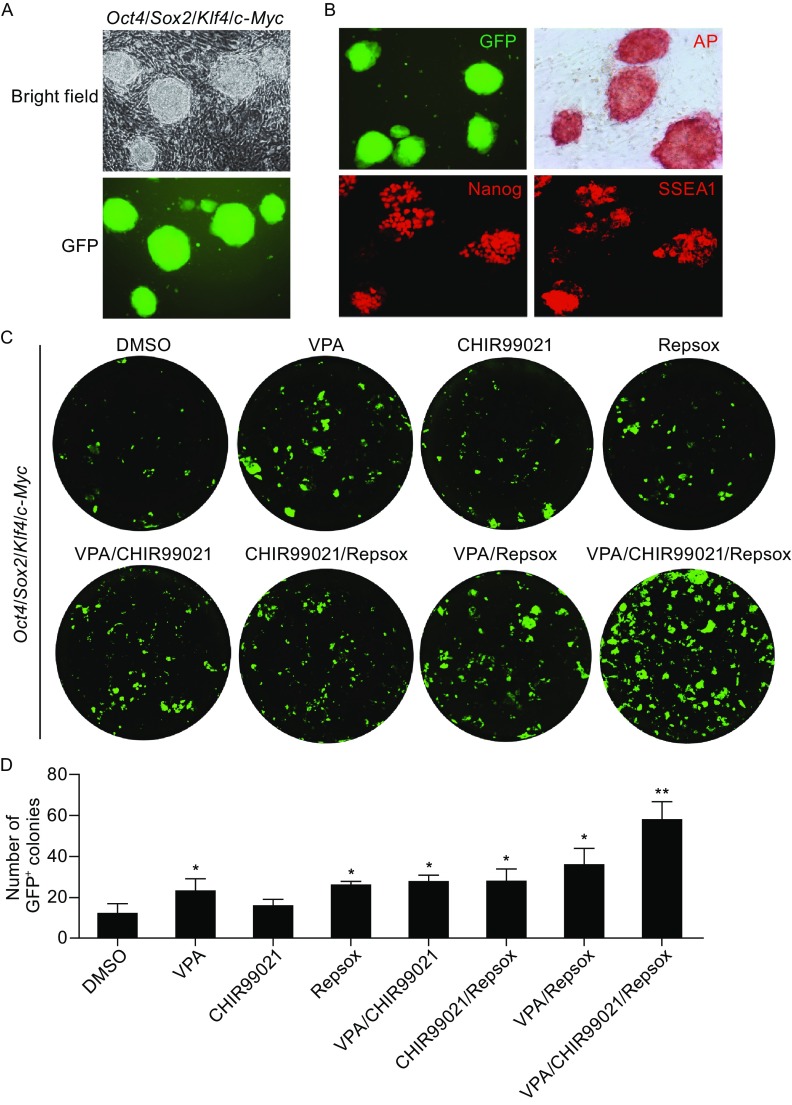
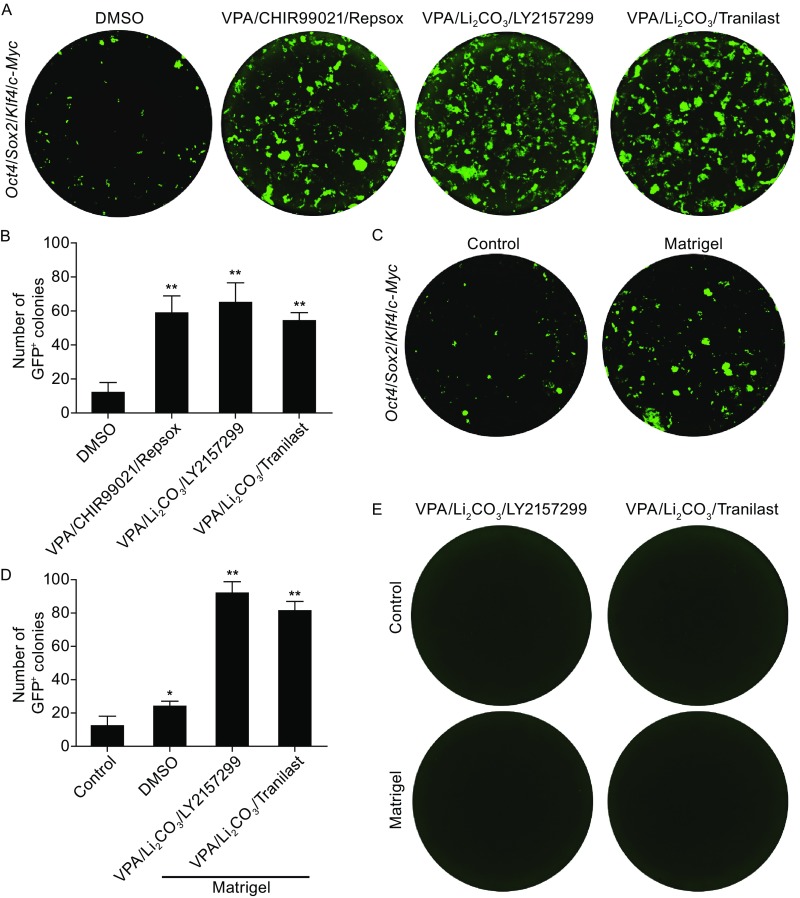
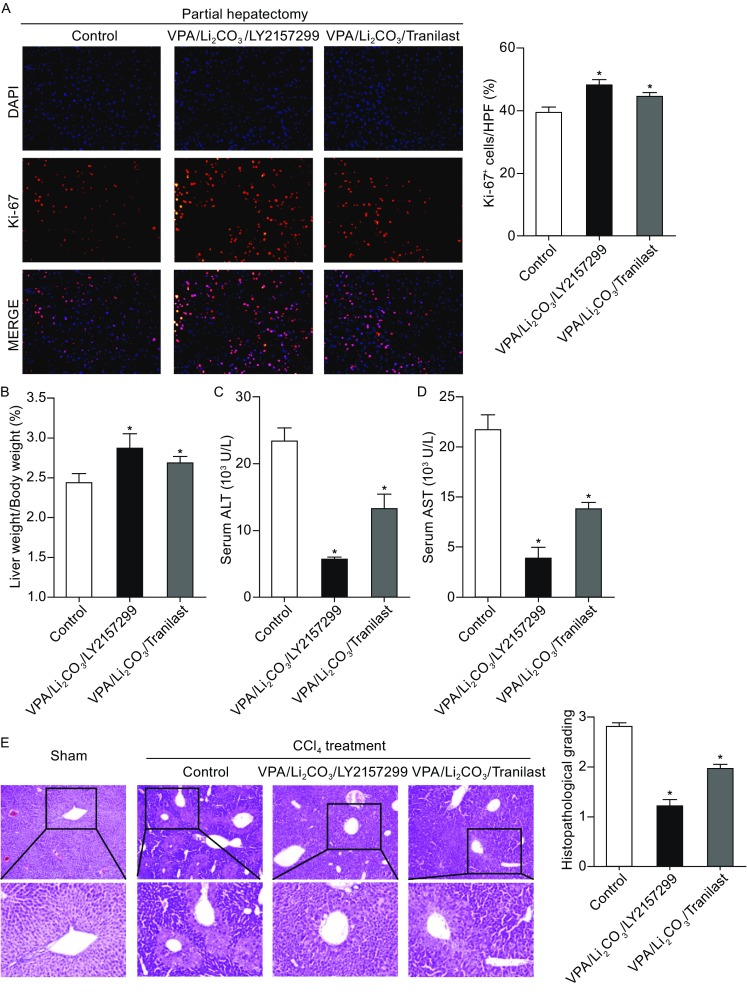
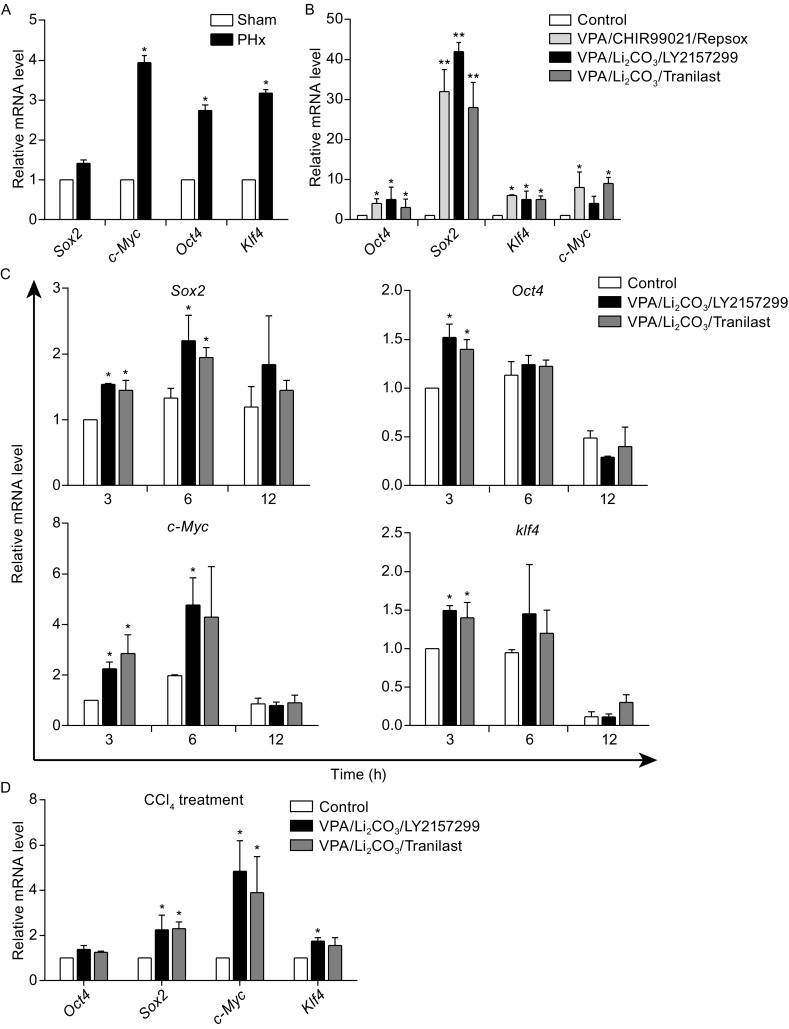
Tissue damage induces cells into reprogramming-like cellular state, which contributes to tissue regeneration. However, whether factors promoting the cell reprogramming favor tissue regeneration remains elusive. Here we identified combination of small chemical compounds including drug cocktails robustly promoting in vitro cell reprogramming. We then administrated the drug cocktails to mice with acute liver injuries induced by partial hepatectomy or toxic treatment. Our results demonstrated that the drug cocktails which promoted cell reprogramming in vitro improved liver regeneration and hepatic function in vivo after acute injuries. The underlying mechanism could be that expression of pluripotent genes activated after injury is further upregulated by drug cocktails. Thus our study offers proof-of-concept evidence that cocktail of clinical compounds improving cell reprogramming favors tissue recovery after acute damages, which is an attractive strategy for regenerative purpose.
Overview
The claims and statistics of this paper haven’t been checked yet.
Free: it reads the open-access text and checks the first 5 claims that cite a source we can check. Create a free account to check every claim.
Integrity signals
Registry
Cites
Statistics
Figures
Verification
Claims the paper makes
The claims and statistics of this paper haven’t been checked yet.
Free: it reads the open-access text and checks the first 5 claims that cite a source we can check. Create a free account to check every claim.
Claims other papers make about this one
Each is checked against this paper’s own text: does it say what the citing paper says it does?
In the citing paper
“A drug cocktail of HDACs, GSK-3β, and TGF-β kinase enabled cell reprogramming in vitro, thus improving liver regeneration and function after acute injuries in mice.194”
From Senescence-induced inflammation: an important player and key therapeutic target in atherosclerosis (2020) · cites this paper as [194]
Self-check
Percentages, sums and reported differences re-computed from the paper’s own numbers.
The self-check needs the paper’s full text.
Citations
Cites
Huangfu, D., Maehr, R., Guo, W., Eijkelenboom, A., Snitow, M., Chen, A. E., & Melton, D. A. (2008) · Nature Biotechnology · doi:10.1038/nbt1418 · Cited by 1,606 · cited 2×
“…that cell reprogramming efficiency can be enhanced by chemical compounds, even reprogramming factors can be partially or completely replaced by combination of small chemical compounds in pluripotent cell generation (Huangfu et al., 2008; Ichida et al., 2009; Esteban et al., 2010; Hou et al., 2013).”
Histone-deacetylase inhibitors: novel drugs for the treatment of cancer
Johnstone, R. W. (2002) · Nature Reviews Drug Discovery · doi:10.1038/nrd772 · Cited by 1,515 · cited 2×
“Since inhibitors of HDACs, GSK-3β, and TGF-β kinase have been applied against diseases including cancer and mental illness in clinic (Johnstone, 2002; Avila and Hernández, 2007; Ikushima and Miyazono, 2010), we further accessed the reprogramming-promoting efficiency of pharmaceutical compounds from these pathways.”
Pluripotent stem cells induced from mouse somatic cells by small-molecule compounds.
Hou, P., Li, Y., Zhang, X., Liu, C., Guan, J., Li, H., Zhao, T., Ye, J., Yang, W., Liu, K., et al. (2013) · Science · doi:10.1126/science.1239278 · Cited by 1,402 · cited 2×
“…that cell reprogramming efficiency can be enhanced by chemical compounds, even reprogramming factors can be partially or completely replaced by combination of small chemical compounds in pluripotent cell generation (Huangfu et al., 2008; Ichida et al., 2009; Esteban et al., 2010; Hou et al., 2013).”
In vivo reprogramming of murine cardiac fibroblasts into induced cardiomyocytes
Qian, L., Huang, Y., Spencer, C. I., Foley, A., Vedantham, V., Liu, L., Conway, S. J., Fu, J.-D., & Srivastava, D. (2012) · Nature · doi:10.1038/nature11044 · Cited by 1,360
TGFβ signalling: a complex web in cancer progression
Ikushima, H., & Miyazono, K. (2010) · Nature Reviews Cancer · doi:10.1038/nrc2853 · Cited by 1,173 · cited 2×
“Since inhibitors of HDACs, GSK-3β, and TGF-β kinase have been applied against diseases including cancer and mental illness in clinic (Johnstone, 2002; Avila and Hernández, 2007; Ikushima and Miyazono, 2010), we further accessed the reprogramming-promoting efficiency of pharmaceutical compounds from these pathways.”
In Vivo Amelioration of Age-Associated Hallmarks by Partial Reprogramming.
Ocampo, A., Reddy, P., Martinez-Redondo, P., Platero-Luengo, A., Hatanaka, F., Hishida, T., Li, M., Lam, D., Kurita, M., Beyret, E., et al. (2016) · Cell · doi:10.1016/j.cell.2016.11.052 · Cited by 988 · cited 1×
“During the preparation of this manuscript, an excellent work by Izpisua Belmonte and colleagues reported partial reprogramming in vivo not only ameliorates signs of aging but also improves regeneration of pancreas and muscle after injury (Ocampo et al., 2016).”
Vitamin C Enhances the Generation of Mouse and Human Induced Pluripotent Stem Cells
Esteban, M. A., Wang, T., Qin, B., Yang, J., Qin, D., Cai, J., Li, W., Weng, Z., Chen, J., Ni, S., et al. (2010) · Cell Stem Cell · doi:10.1016/j.stem.2009.12.001 · Cited by 872 · cited 2×
“…that cell reprogramming efficiency can be enhanced by chemical compounds, even reprogramming factors can be partially or completely replaced by combination of small chemical compounds in pluripotent cell generation (Huangfu et al., 2008; Ichida et al., 2009; Esteban et al., 2010; Hou et al., 2013).”
A Small-Molecule Inhibitor of Tgf-β Signaling Replaces Sox2 in Reprogramming by Inducing Nanog
Ichida, J. K., Blanchard, J., Lam, K., Son, E. Y., Chung, J. E., Egli, D., Loh, K. M., Carter, A. C., Di Giorgio, F. P., Koszka, K., et al. (2009) · Cell Stem Cell · doi:10.1016/j.stem.2009.09.012 · Cited by 808 · cited 2×
“…that cell reprogramming efficiency can be enhanced by chemical compounds, even reprogramming factors can be partially or completely replaced by combination of small chemical compounds in pluripotent cell generation (Huangfu et al., 2008; Ichida et al., 2009; Esteban et al., 2010; Hou et al., 2013).”
Conversion of mouse fibroblasts into cardiomyocytes using a direct reprogramming strategy
Efe, J. A., Hilcove, S., Kim, J., Zhou, H., Ouyang, K., Wang, G., Chen, J., & Ding, S. (2011) · Nature Cell Biology · doi:10.1038/ncb2164 · Cited by 623 · cited 2×
“, 2014), cardiomyocyte (Efe et al., 2011), neural stem cells (Wang et al.”
Tissue damage and senescence provide critical signals for cellular reprogramming in vivo
Mosteiro, L., Pantoja, C., Alcazar, N., Marión, R. M., Chondronasiou, D., Rovira, M., Fernandez-Marcos, P. J., Muñoz-Martin, M., Blanco-Aparicio, C., Pastor, J., et al. (2016) · Science · doi:10.1126/science.aaf4445 · Cited by 589 · cited 2×
“It’s also known that these genes involved are key factors to reprogramming cells into pluripotency in vitro and in vivo (Mosteiro et al., 2016).”
A reproducible and well-tolerated method for 2/3 partial hepatectomy in mice
Mitchell, C., & Willenbring, H. (2008) · Nature Protocols · doi:10.1038/nprot.2008.80 · Cited by 577 · cited 2×
“2/3 partial hepatectomy (PHx) was performed according to previous published protocol (Mitchell and Willenbring, 2008).”
Reprogramming in vivo produces teratomas and iPS cells with totipotency features
Abad, M., Mosteiro, L., Pantoja, C., Cañamero, M., Rayon, T., Ors, I., Graña, O., Megías, D., Domínguez, O., Martínez, D., et al. (2013) · Nature · doi:10.1038/nature12586 · Cited by 547 · cited 2×
“, 2013), although long-term induction of the factors in vivo still can generate induced pluripotent stem cells in situ (Abad et al., 2013).”
Robust cellular reprogramming occurs spontaneously during liver regeneration
Yanger, K., Zong, Y., Maggs, L. R., Shapira, S. N., Maddipati, R., Aiello, N. M., Thung, S. N., Wells, R. G., Greenbaum, L. E., & Stanger, B. Z. (2013) · Genes & Development · doi:10.1101/gad.207803.112 · Cited by 484 · cited 1×
“Then these cells would adaptively redifferentiate into new desirable cells under niche conditions in vivo, which contribute to liver regeneration (Yanger et al., 2013; Jessen et al., 2015).”
Lindroos, P. M., Zarnegar, R., & Michalopoulos, G. K. (1991) · Hepatology · doi:10.1002/hep.1840130422 · Cited by 386 · cited 1×
“Carbon tetrachloride (CCl4) has been used to induce acute or chronic liver injury and leads to liver function failure (Lindroos et al., 1991).”
BackgroundGeneration of iPSCs from mouse fibroblasts with a single gene, Oct4, and small molecules
Li, Y., Zhang, Q., Yin, X., Yang, W., Du, Y., Hou, P., Ge, J., Liu, C., Zhang, W., Zhang, X., et al. (2011) · Cell Research · doi:10.1038/cr.2010.142 · Cited by 363 · cited 2×
“Studies already demonstrate that inhibitors of histone deacetylases (HDACs), glycogen synthase kinase 3 beta (GSK-3β) or transforming growth factor beta (TGF-β) kinase contribute to efficient cell reprogramming (Li et al., 2010).”
A chemical approach to stem-cell biology and regenerative medicine
Xu, Y., Shi, Y., & Ding, S. (2008) · Nature · doi:10.1038/nature07042 · Cited by 336 · cited 1×
“However, small chemical compounds are much safer and have shown more advantageous in modulating cell function and cell fate changes (Xu et al., 2008).”
Injury-Induced Senescence Enables In Vivo Reprogramming in Skeletal Muscle
Chiche, A., Le Roux, I., von Joest, M., Sakai, H., Aguín, S. B., Cazin, C., Salam, R., Fiette, L., Alegria, O., Flamant, P., et al. (2017) · Cell Stem Cell · doi:10.1016/j.stem.2016.11.020 · Cited by 295 · cited 1×
“It has been reported that IL-6 mediates increase of cell reprogramming in vitro and helps enabling cellular reprogramming in vivo (Brady et al., 2013; Chiche et al., 2016; Mosteiro et al., 2016).”
Margariti, A., Winkler, B., Karamariti, E., Zampetaki, A., Tsai, T.-N., Baban, D., Ragoussis, J., Huang, Y., Han, J.-D. J., Zeng, L., et al. (2012) · Proceedings of the National Academy of Sciences · doi:10.1073/pnas.1205526109 · Cited by 258 · cited 2×
“, 2013), and endothelial cells have been generated via this method (Margariti et al., 2012).”
Mouse liver repopulation with hepatocytes generated from human fibroblasts
Zhu, S., Rezvani, M., Harbell, J., Mattis, A. N., Wolfe, A. R., Benet, L. Z., Willenbring, H., & Ding, S. (2014) · Nature · doi:10.1038/nature13020 · Cited by 257 · cited 2×
“Many functional cells including hepatocyte (Zhu et al., 2014), cardiomyocyte (Efe et al.”
Generation of neural progenitor cells by chemical cocktails and hypoxia
Cheng, L., Hu, W., Qiu, B., Zhao, J., Yu, Y., Guan, W., Wang, M., Yang, W., & Pei, G. (2014) · Cell Research · doi:10.1038/cr.2014.32 · Cited by 254 · cited 1×
“These cells then directly differentiate into desirable functional cells without pluripotent state (Cheng et al., 2014; Fu et al., 2015; Tian et al., 2016).”
Self-citationDirect reprogramming of mouse fibroblasts into cardiomyocytes with chemical cocktails.
Fu, Y., Huang, C., Xu, X., Gu, H., Ye, Y., Jiang, C., Qiu, Z., & Xie, X. (2015) · Cell Research · doi:10.1038/cr.2015.99 · Cited by 248 · cited 1×
“These cells then directly differentiate into desirable functional cells without pluripotent state (Cheng et al., 2014; Fu et al., 2015; Tian et al., 2016).”
E-Cadherin-Mediated Cell–Cell Contact Is Critical for Induced Pluripotent Stem Cell Generation
Chen, T., Yuan, D., Wei, B., Jiang, J., Kang, J., Ling, K., Gu, Y., Li, J., Xiao, L., & Pei, G. (2010) · Stem Cells · doi:10.1002/stem.456 · Cited by 234 · cited 3×
“Retrovirus expressing Oct4, Sox2, Klf4 or c-Myc was produced in Plat-E cells as previously described (Chen et al., 2010).”
InfluentialGeneration of integration-free neural progenitor cells from cells in human urine
Wang, L., Wang, L., Huang, W., Su, H., Xue, Y., Su, Z., Liao, B., Wang, H., Bao, X., Qin, D., et al. (2013) · Nature Methods · doi:10.1038/nmeth.2283 · Cited by 222 · cited 2×
“, 2011), neural stem cells (Wang et al., 2013), and endothelial cells have been generated via this method (Margariti et al.”
Suzuki, N., Yamazaki, S., Yamaguchi, T., Okabe, M., Masaki, H., Takaki, S., Otsu, M., & Nakauchi, H. (2013) · Molecular Therapy · doi:10.1038/mt.2013.71 · Cited by 213 · cited 1×
“…through in vivo cell reprogramming, such as cardiomyocytes derived from in situ cardiac fibroblasts and hematopoietic stem cells isolated from teratoma (Qian et al., 2012; Amabile et al., 2013; Suzuki et al., 2013), acquire better cell function than their counterparts from in vitro assays.”
In vivo generation of transplantable human hematopoietic cells from induced pluripotent stem cells
Amabile, G., Welner, R. S., Nombela-Arrieta, C., D'Alise, A. M., Di Ruscio, A., Ebralidze, A. K., Kraytsberg, Y., Ye, M., Kocher, O., Neuberg, D. S., et al. (2013) · Blood · doi:10.1182/blood-2012-06-434407 · Cited by 211 · cited 2×
“Many desirable cells generated through in vivo cell reprogramming, such as cardiomyocytes derived from in situ cardiac fibroblasts and hematopoietic stem cells isolated from teratoma (Qian et al., 2012; Amabile et al., 2013; Suzuki et al., 2013), acquire better cell function than their counterparts from in vitro assay…”
Bueno, L., de Alwis, D. P., Pitou, C., Yingling, J., Lahn, M., Glatt, S., & Trocóniz, I. F. (2008) · European Journal of Cancer · doi:10.1016/j.ejca.2007.10.008 · Cited by 201 · cited 2×
“Among inhibitors of TGF-β, LY2157299 has also been considered as an anti-cancer agent (Bueno et al., 2008), and Tranilast has been widely used as an antioxidant (Holmes et al.”
Solomon, D. A., Ryan, C. E., Keitner, G. I., Miller, I. W., Shea, M. T., Kazim, A., & Keller, M. B. (1997) · The Journal of Clinical Psychiatry · doi:10.4088/jcp.v58n0301 · Cited by 165 · cited 1×
“Li2CO3 (Lithium carbonate, GSK3β inhibitor) has been prescribed against manic and bipolar disorders (Solomon et al., 1997).”
The Role of Cell Plasticity in Tissue Repair: Adaptive Cellular Reprogramming
Jessen, K. R., Mirsky, R., & Arthur‐Farraj, P. (2015) · Developmental Cell · doi:10.1016/j.devcel.2015.09.005 · Cited by 156 · cited 2×
“Tissue damage induces cells into reprogramming-like cellular state, which contributes to tissue regeneration (Jessen et al., 2015).”
Expression of stem cell pluripotency factors during regeneration in newts
Maki, N., Suetsugu‐Maki, R., Tarui, H., Agata, K., Del Rio‐Tsonis, K., & Tsonis, P. A. (2009) · Developmental Dynamics · doi:10.1002/dvdy.21959 · Cited by 130 · cited 1×
“By detecting orthologs of mammalian reprogramming factors in newts, expression of Sox2, Klf4, and c-Myc are upregulated during lens and limb regeneration (Maki et al., 2009).”
BackgroundIsaji, M., Miyata, H., Ajisawa, Y., Takehana, Y., & Yoshimura, N. (1997) · British Journal of Pharmacology · doi:10.1038/sj.bjp.0701493 · Cited by 99 · cited 2×
“…of TGF-β, LY2157299 has also been considered as an anti-cancer agent (Bueno et al., 2008), and Tranilast has been widely used as an antioxidant (Holmes et al., 2000), antiallergic (Kondo et al., 1992), antiangiogenesis (Isaji et al., 1997), and anti-inflammatory agent (Shiota et al., 2010).”
Brady, J. J., Li, M., Suthram, S., Jiang, H., Wong, W. H., & Blau, H. M. (2013) · Nature Cell Biology · doi:10.1038/ncb2835 · Cited by 99 · cited 1×
“It has been reported that IL-6 mediates increase of cell reprogramming in vitro and helps enabling cellular reprogramming in vivo (Brady et al., 2013; Chiche et al., 2016; Mosteiro et al., 2016).”
GSK-3 inhibitors for Alzheimer’s disease
Avila, J., & Hernández, F. (2007) · Expert Review of Neurotherapeutics · doi:10.1586/14737175.7.11.1527 · Cited by 95 · cited 2×
“…inhibitors of HDACs, GSK-3β, and TGF-β kinase have been applied against diseases including cancer and mental illness in clinic (Johnstone, 2002; Avila and Hernández, 2007; Ikushima and Miyazono, 2010), we further accessed the reprogramming-promoting efficiency of pharmaceutical compounds…”
Holmes, D. R., Fitzgerald, P. J., Goldberg, S., Lablanche, J. M., Lincoff, A. M., Savage, M. P., Serruys, P. W. J. C., Willerson, J. T., Granett, J. R., Chan, R. H., et al. (2000) · American Heart Journal · doi:10.1016/s0002-8703(00)90304-1 · Cited by 88 · cited 2×
“…of TGF-β, LY2157299 has also been considered as an anti-cancer agent (Bueno et al., 2008), and Tranilast has been widely used as an antioxidant (Holmes et al., 2000), antiallergic (Kondo et al., 1992), antiangiogenesis (Isaji et al., 1997), and anti-inflammatory agent (Shiota et al., 2010).”
Hepatoprotective effects of berberine on carbon tetrachloride-induced acute hepatotoxicity in rats
Feng, Y., Siu, K.-Y., Ye, X., Wang, N., Yuen, M., Leung, C., Tong, Y., & Kobayashi, S. (2010) · Chinese Medicine · doi:10.1186/1749-8546-5-33 · Cited by 88 · cited 1×
“Histopathological analysis of liver was performed according to previous reports (Feng et al., 2010).”
MethodCharacterization of Proliferating Neural Progenitors after Spinal Cord Injury in Adult Zebrafish
Hui, S. P., Nag, T. C., & Ghosh, S. (2015) · PLoS ONE · doi:10.1371/journal.pone.0143595 · Cited by 74 · cited 1×
“In adult zebrafish, expression of Oct4 and Sox2 is upregulated in injured spinal cord as shown by time course analysis (Hui et al., 2015).”
BackgroundReprogramming of the chick retinal pigmented epithelium after retinal injury
Luz-Madrigal, A., Grajales‐Esquivel, E., McCorkle, A., DiLorenzo, A. M., Barbosa-Sabanero, K., Tsonis, P. A., & Rio‐Tsonis, K. D. (2014) · BMC Biology · doi:10.1186/1741-7007-12-28 · Cited by 65
Small-Molecule-Based Lineage Reprogramming Creates Functional Astrocytes
Tian, E., Sun, G., Sun, G., Chao, J., Ye, P., Warden, C., Riggs, A. D., & Shi, Y. (2016) · Cell Reports · doi:10.1016/j.celrep.2016.06.042 · Cited by 62 · cited 1×
“These cells then directly differentiate into desirable functional cells without pluripotent state (Cheng et al., 2014; Fu et al., 2015; Tian et al., 2016).”
Zhu, S., Wang, H., & Ding, S. (2015) · Nature Protocols · doi:10.1038/nprot.2015.059 · Cited by 55 · cited 2×
“A32727, 1:1000 dilution) at room temperature (RT) for 2 h. Images were taken under a fluorescent microscope (Zeiss Axio Observer”
In Vivo Cell Reprogramming towards Pluripotency by Virus-Free Overexpression of Defined Factors
Yilmazer, A., de Lázaro, I., Bussy, C., & Kostarelos, K. (2013) · PLoS ONE · doi:10.1371/journal.pone.0054754 · Cited by 45 · cited 2×
“…injection only reprogram hepatocytes towards pluripotency transiently without disruption of host liver function and without teratoma formation (Yilmazer et al., 2013), although long-term induction of the factors in vivo still can generate induced pluripotent stem cells in situ (Abad et al.,…”
Bhave, V. S., Paranjpe, S., Bowen, W. C., Donthamsetty, S., Bell, A. W., Khillan, J. S., & Michalopoulos, G. K. (2011) · Hepatology · doi:10.1002/hep.24507 · Cited by 40 · cited 5×
“Furthermore, genes related with cell reprogramming are activated and play important role during the regeneration process after damage (Bhave et al., 2011).”
InfluentialRodríguez-Jiménez, F. J., Alastrue‐Agudo, A., Erceg, S., Stojković, M., & Moreno‐Manzano, V. (2012) · Stem Cells · doi:10.1002/stem.1189 · Cited by 36 · cited 1×
“Importantly, it is shown that chemical compound FM19G11 increased the expression of Sox2, Oct4, and Nanog in a dose-responsive manner, which can promote the regeneration after spinal cord injury (Rodriguez-Jimnez et al., 2012).”
Shiota, N., Kovanen, P. T., Eklund, K., Shibata, N., Shimoura, K., Niibayashi, T., Shimbori, C., & Okunishi, H. (2010) · British Journal of Pharmacology · doi:10.1111/j.1476-5381.2009.00561.x · Cited by 36 · cited 2×
“…of TGF-β, LY2157299 has also been considered as an anti-cancer agent (Bueno et al., 2008), and Tranilast has been widely used as an antioxidant (Holmes et al., 2000), antiallergic (Kondo et al., 1992), antiangiogenesis (Isaji et al., 1997), and anti-inflammatory agent (Shiota et al., 2010).”
Kondo, N., Fukutomi, O., Kameyama, T., & Orii, T. (1992) · Clinical & Experimental Allergy · doi:10.1111/j.1365-2222.1992.tb00146.x · Cited by 18 · cited 2×
“, 2000), antiallergic (Kondo et al., 1992), antiangiogenesis (Isaji et al.”
Expression and role of Oct3/4, Nanog and Sox2 in regeneration of rat tracheal epithelium
Song, N., Jia, X., Jia, L., Ma, X. ‐., Li, F., Wang, E. ‐., & Li, X. (2009) · Cell Proliferation · doi:10.1111/j.1365-2184.2009.00653.x · Cited by 17 · cited 1×
“Except for neural system, expression of the above three pluripotent genes is also detected at early time then decreased gradually in rat tracheal epithelium injured by 5-fluorouracil in vivo, which indicates the important role of these factors during tracheal regeneration (Song et al., 2010).”
A dose-escalating phase I study with valproic acid (VPA) in patients (pts) with advanced cancer
Atmaca, A., Maurer, A. B., Heinzel, T., Göttlicher, M., Neumann, A., Al-Batran, S. E., Martin, E., Bartsch, I., Knuth, A. K., & Jaeger, E. (2004) · Journal of Clinical Oncology · doi:10.1200/jco.2004.22.14_suppl.3169 · Cited by 11 · cited 1×
“VPA has been used clinically against cancer (Atmaca et al., 2004), thus it is remained for ongoing test.”
Cited by
Senescence-induced inflammation: an important player and key therapeutic target in atherosclerosis
Stojanović, S. D., Fiedler, J., Bauersachs, J., Thum, T., & Sedding, D. G. (2020) · European Heart Journal · doi:10.1093/eurheartj/ehz919 · Cited by 188
“ase enabled cell reprogramming in vitro, thus improving liver regeneration and function after acute injuries in mice.(194) The authors attributed this effect to the up-regulation of pluripotency genes.”
BackgroundCellular Reprogramming as a Therapeutic Target in Cancer
Xiong, S., Ye, F., & Cheng, L. (2019) · Trends in Cell Biology · doi:10.1016/j.tcb.2019.05.001 · Cited by 54
Self-citationChemical reprogramming ameliorates cellular hallmarks of aging and extends lifespan
(2025) · doi:10.1038/s44321-025-00265-9 · Cited by 49
“…regeneration in the liver and heart, thus providing proof-of-principle that treatment with these reprogramming-associated chemicals could bene fi t tissue repair and, more recently, enable autologous islet replacement in type 1 diabetes (Tang and Cheng, 2017; Huang et al, 2018; Wang et al, 2024).”
Chemical reprogramming ameliorates cellular hallmarks of aging and extends lifespan
(2022) · doi:10.1101/2022.08.29.505222 · Cited by 49
Toward a Unified Theory of Aging and Regeneration
West, M. D., Sternberg, H., Labat, I., Janus, J., Chapman, K. B., Malik, N. N., de Grey, A. D. N. J., & Larocca, D. (2019) · Regenerative Medicine · doi:10.2217/rme-2019-0062 · Cited by 51
Metadata
- Authors
- Tang, Y., & Cheng, L.
- Affiliations
- Shanghai Jiao Tong University (CN)
- Corresponding author
- Cheng, Lin
- Venue
- Protein & Cell
- Publisher
- Oxford University Press (OUP)
- Published
- 2017-02-11
- Volume
- 8
- Issue
- 4
- Pages
- 273-283
- ISSN
- 1674-800X (ISSN-L)
- 1674-8018
- PMC
- PMC5359186
- OpenAlex
- W2587087824
- Cited by
- 22
- References
- 45
- Citations by year
- 2026: 3 · 2025: 4 · 2023: 2 · 2022: 5 · 2021: 2 · 2019: 4 · 2018: 2
- FWCI
- 1.01
- Type
- journal article
- Language
- en
- Open access
- gold
- doi.org
- Licence
- Locations
- Protein & Cell (publishedVersion, cc-by-nc)
- PubMed Central (publishedVersion, cc-by)
- PubMed (publishedVersion)
- DOAJ (DOAJ: Directory of Open Access Journals) (submittedVersion)
- Funders
- Natural Science Foundation of Shanghai
- Second Military Medical University
- Shanghai Rising-Star Program (16QA1402800)
- Topics
- Health Sciences › Medicine › Hepatology › Liver physiology and pathology
- Life Sciences › Biochemistry, Genetics and Molecular Biology › Molecular Biology › Pluripotent Stem Cells Research
- Life Sciences › Pharmacology, Toxicology and Pharmaceutics › Pharmacology › Drug-Induced Hepatotoxicity and Protection
- Keywords
- cellular reprogramming, drug mixtures, liver regeneration, acute liver injury, partial hepatectomy, hepatotoxicity, tissue regeneration, chemical compounds
- MeSH terms
- Cellular Reprogramming Techniques, Animals, Mice, Induced Pluripotent Stem Cells, Cellular Reprogramming
About these checks
Registry, retraction, Cites and statistics results are computed, not judged, with one exception: a printed reference that no index lists is read once by a model before it counts as a citation error. Claims are extracted by a model and kept only when their quote appears verbatim in the text; each cited source is then checked, with a model’s help, for whether it says what the claim relies on. Those verdicts can be wrong — read the claim’s quote and the cited source before relying on one.
Statistics and arithmetic are recomputed, not judged.
Confidence bands are shown only for fields calibrated on our annotated test set. None is calibrated yet, so no band is shown.
What counts as a claim ›How we measure confidence ›How we check this ›
Are you an author, or do you see a problem with this page? Request a review
Data sources
Bibliographic data: Semantic Scholar, OpenAlex, Crossref.
Contains information from the Semantic Scholar Academic Graph Datasets, made available under the ODC Attribution License (ODC-BY 1.0).
Semantic Scholar’s data is described in: Kinney, R., et al. (2023). The Semantic Scholar Open Data Platform. arXiv:2301.10140.
